

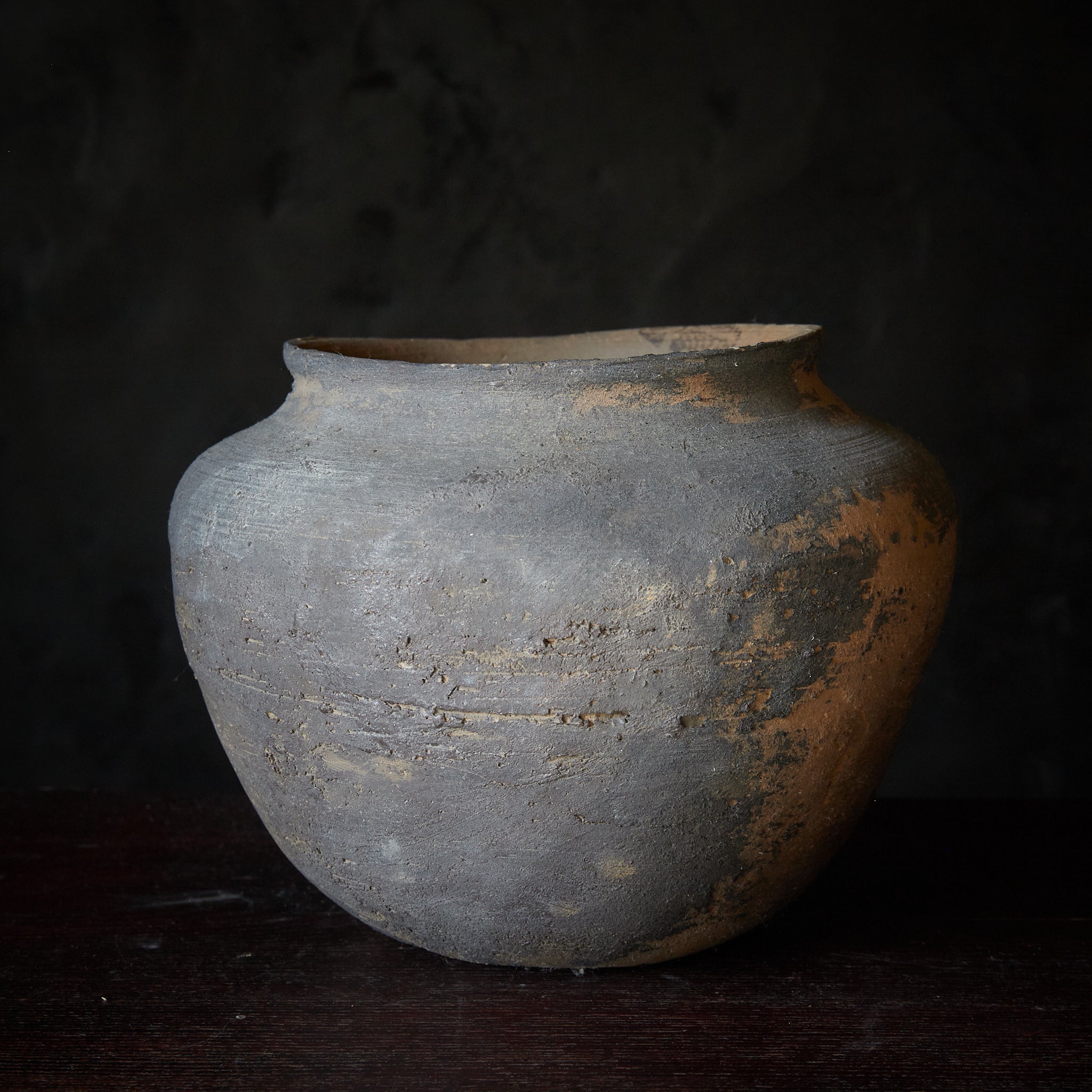
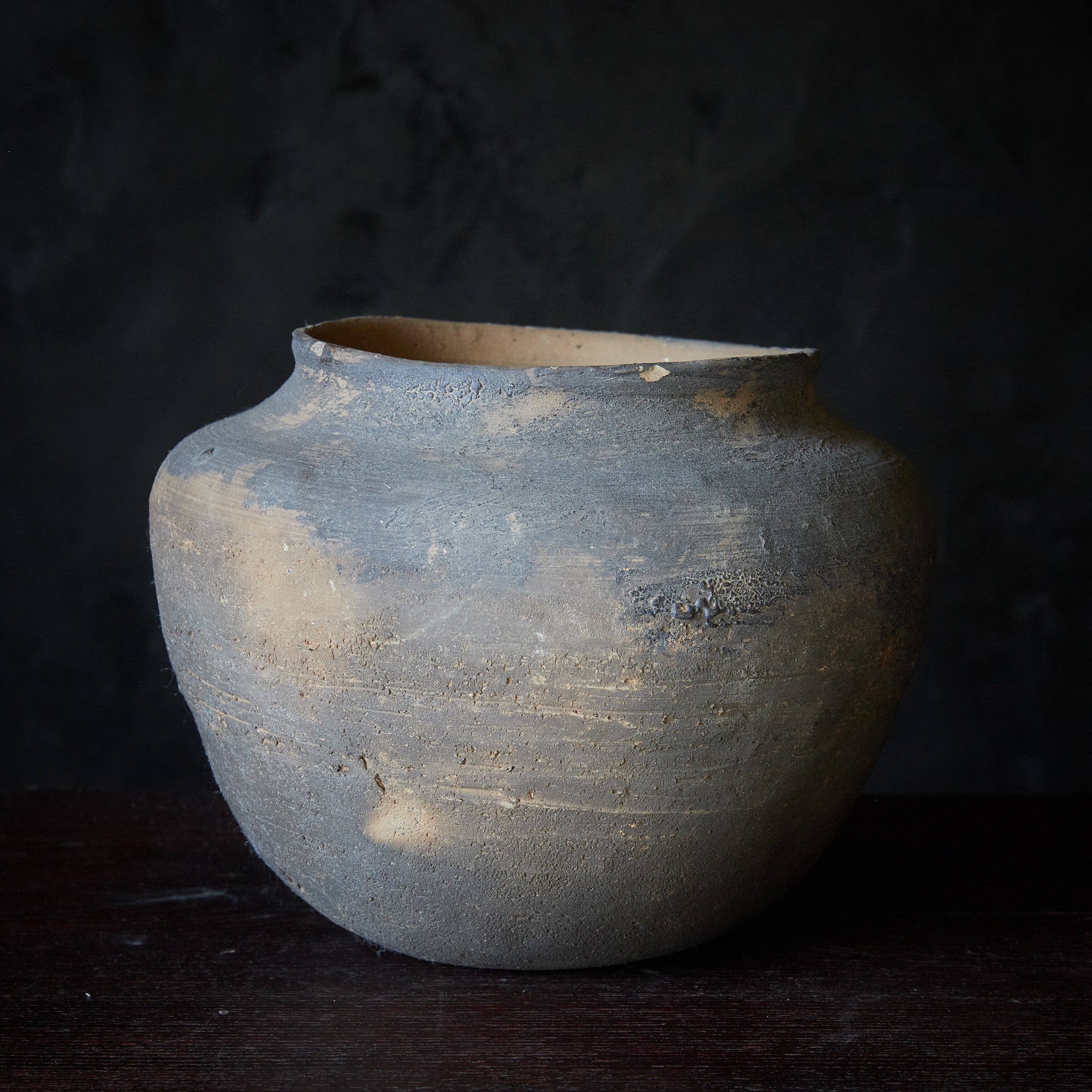
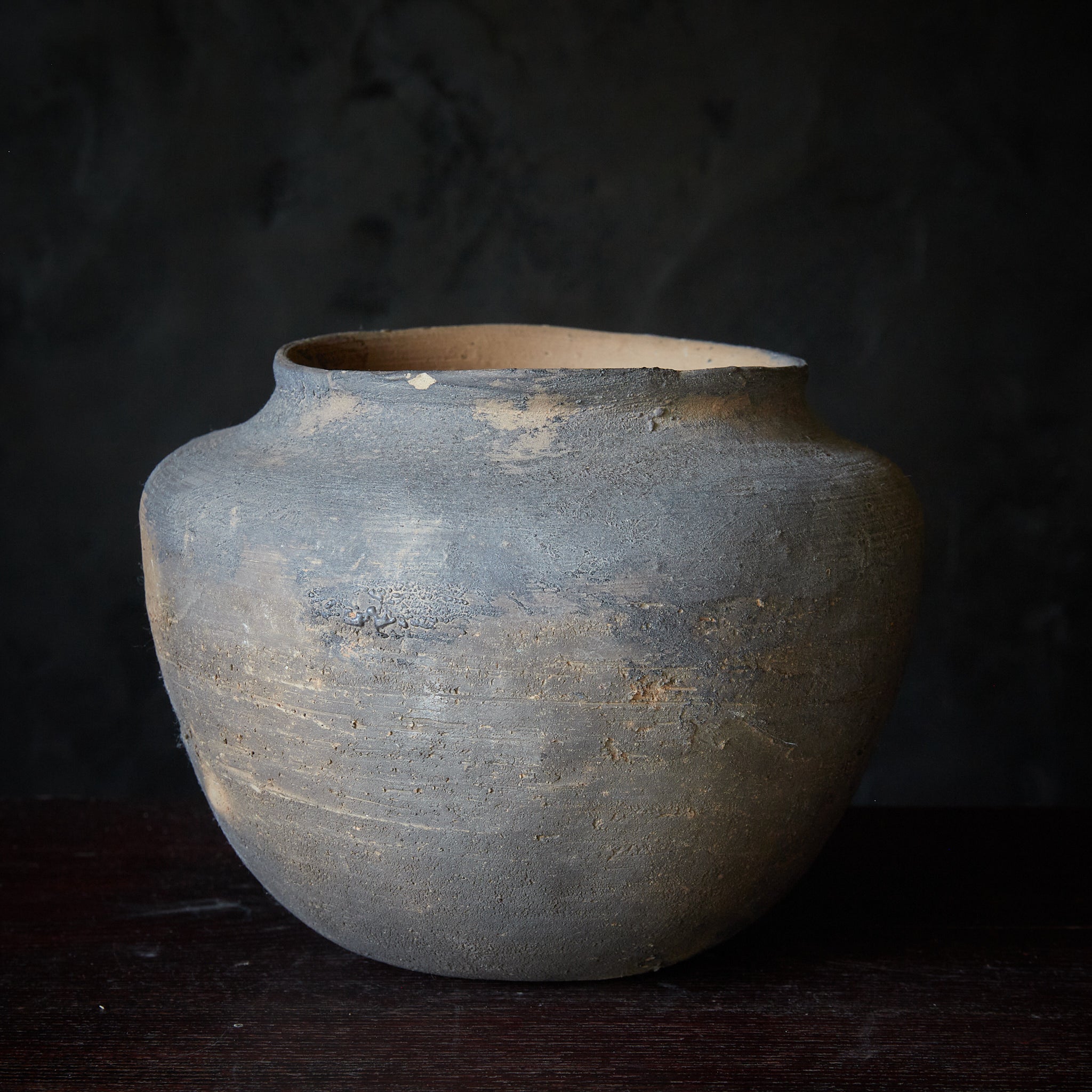
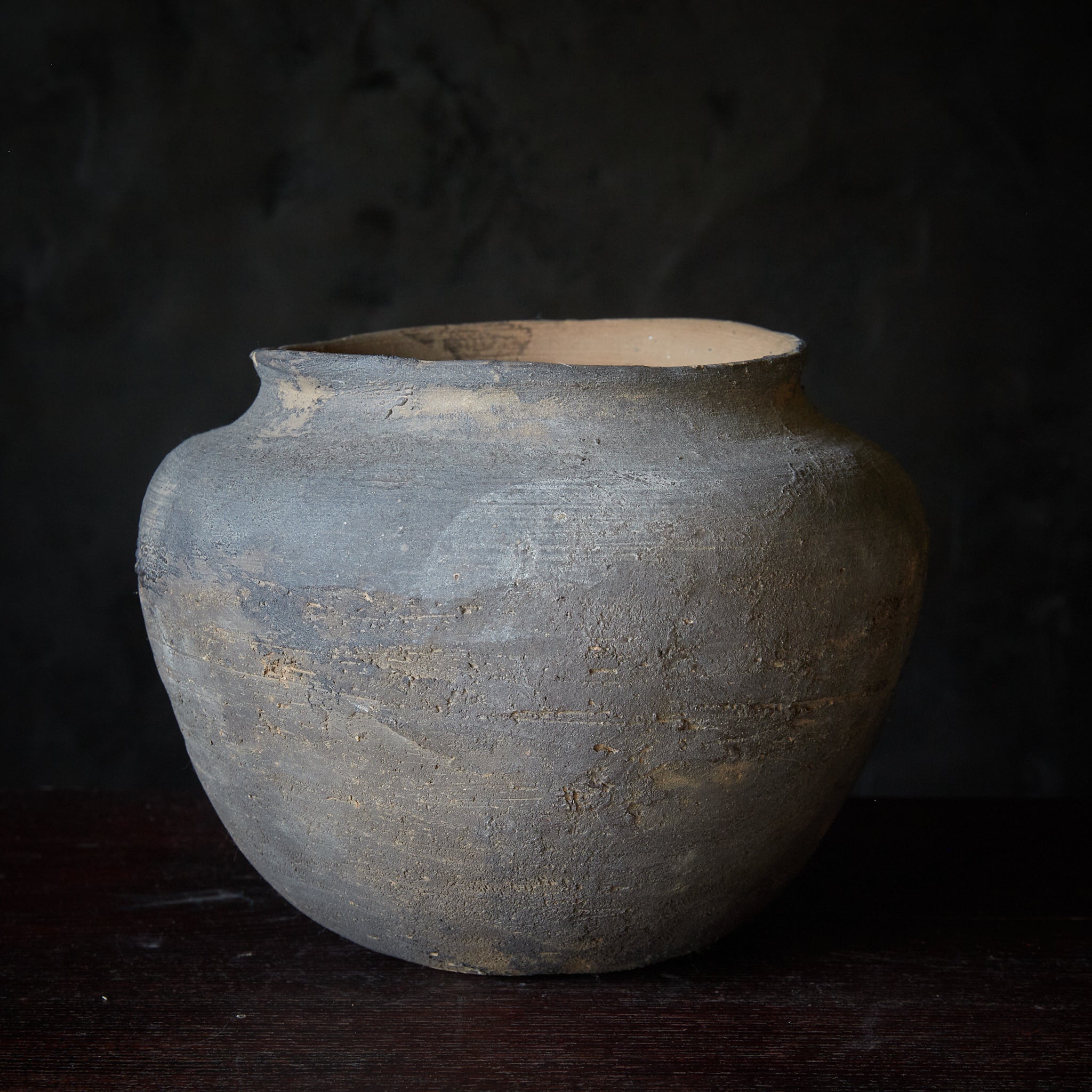
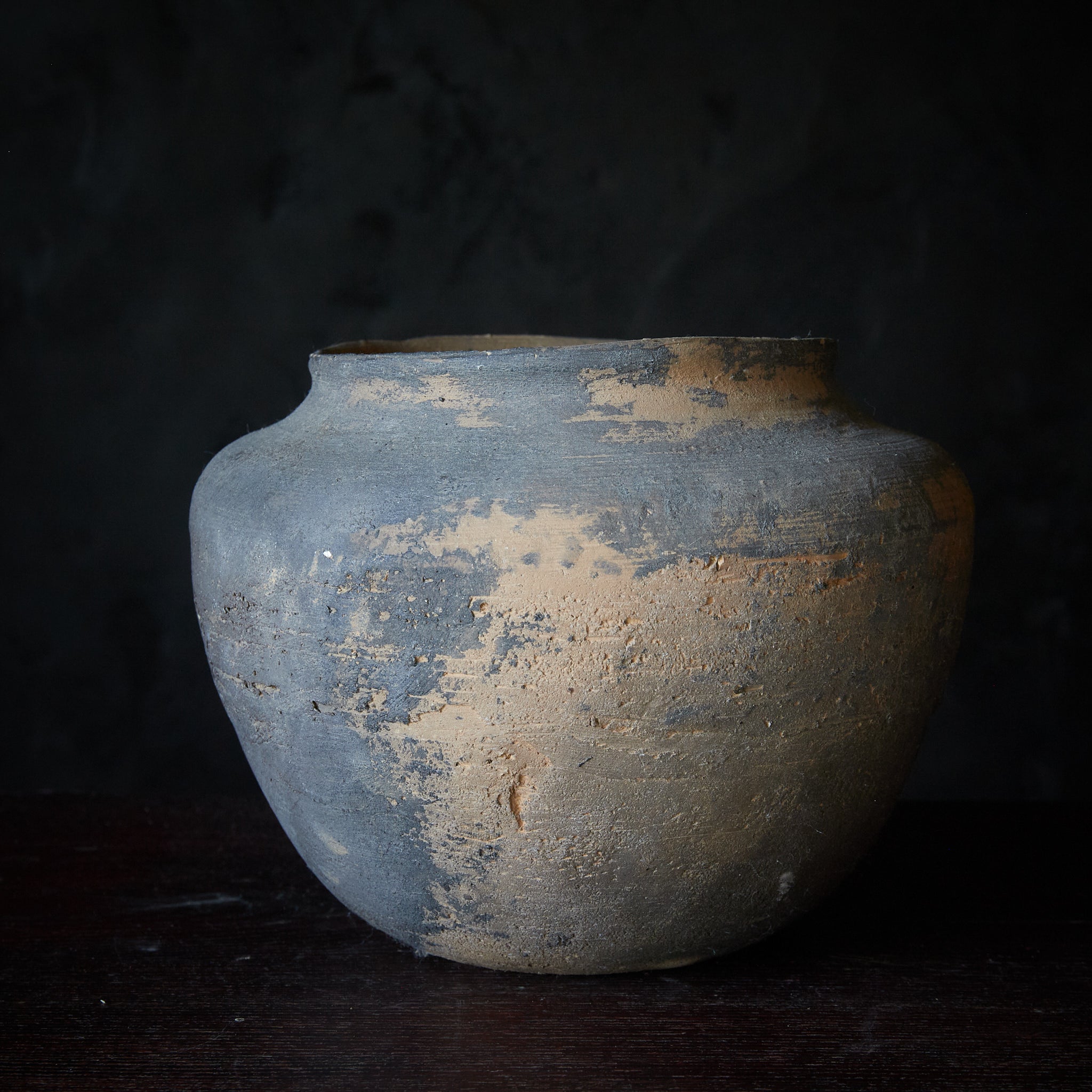
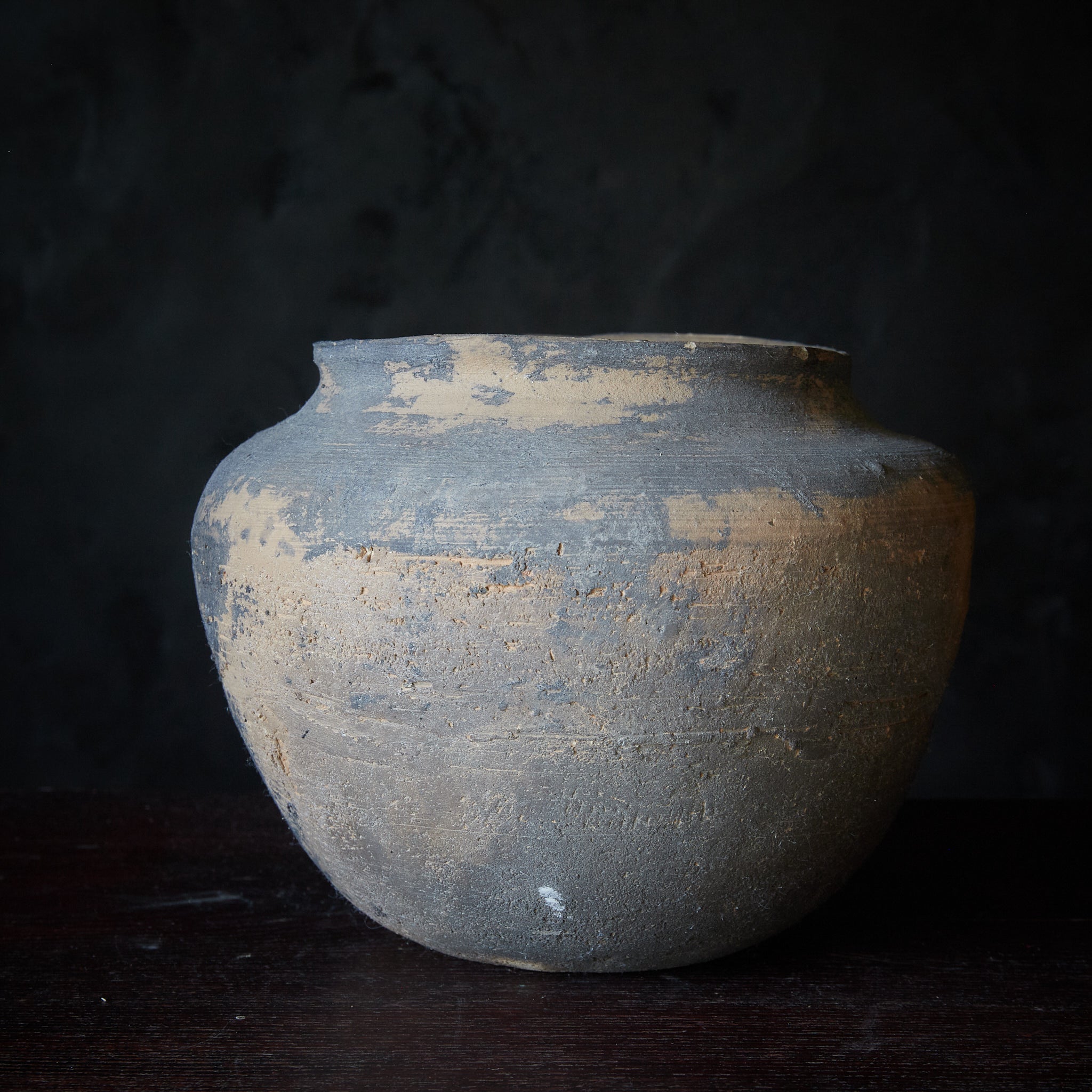
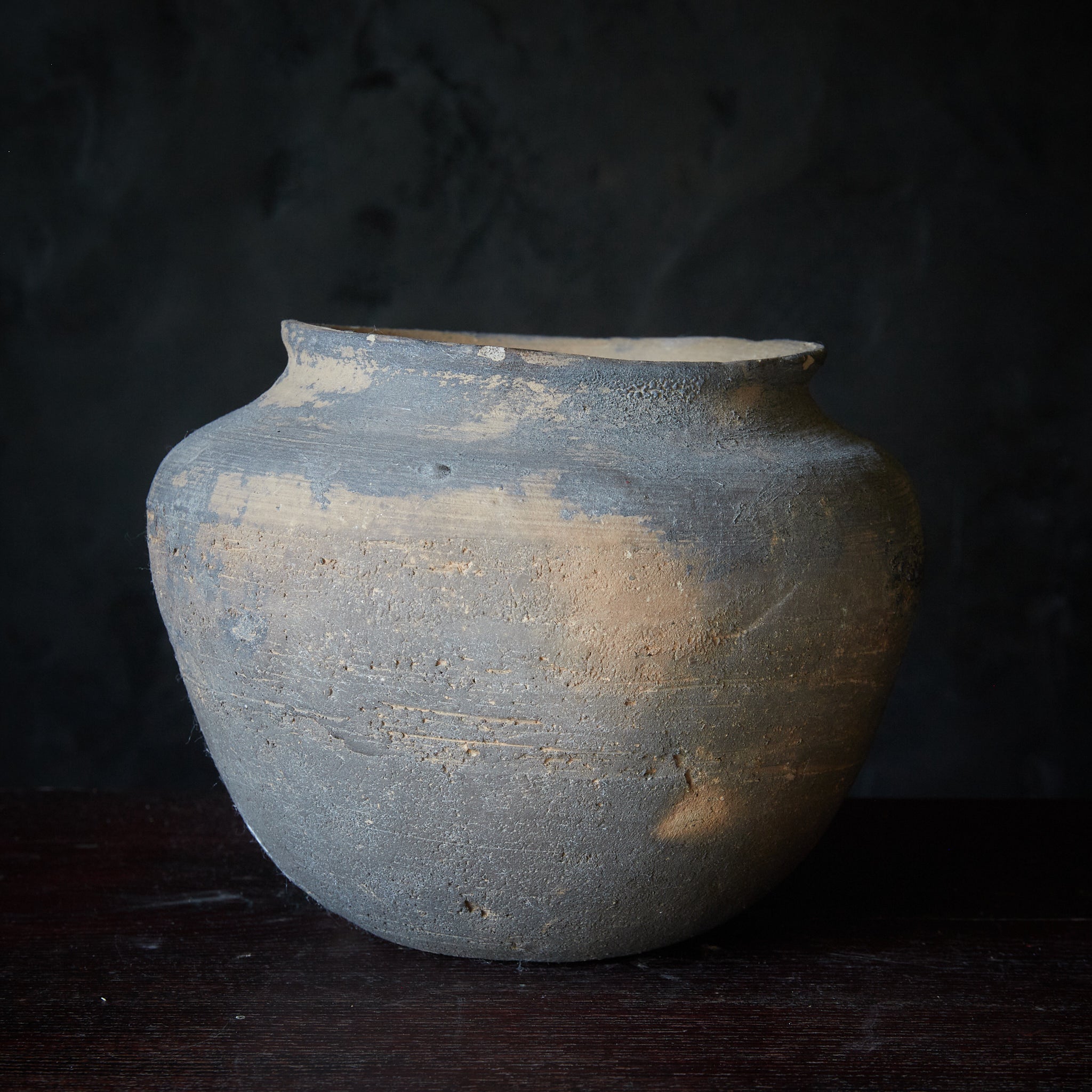
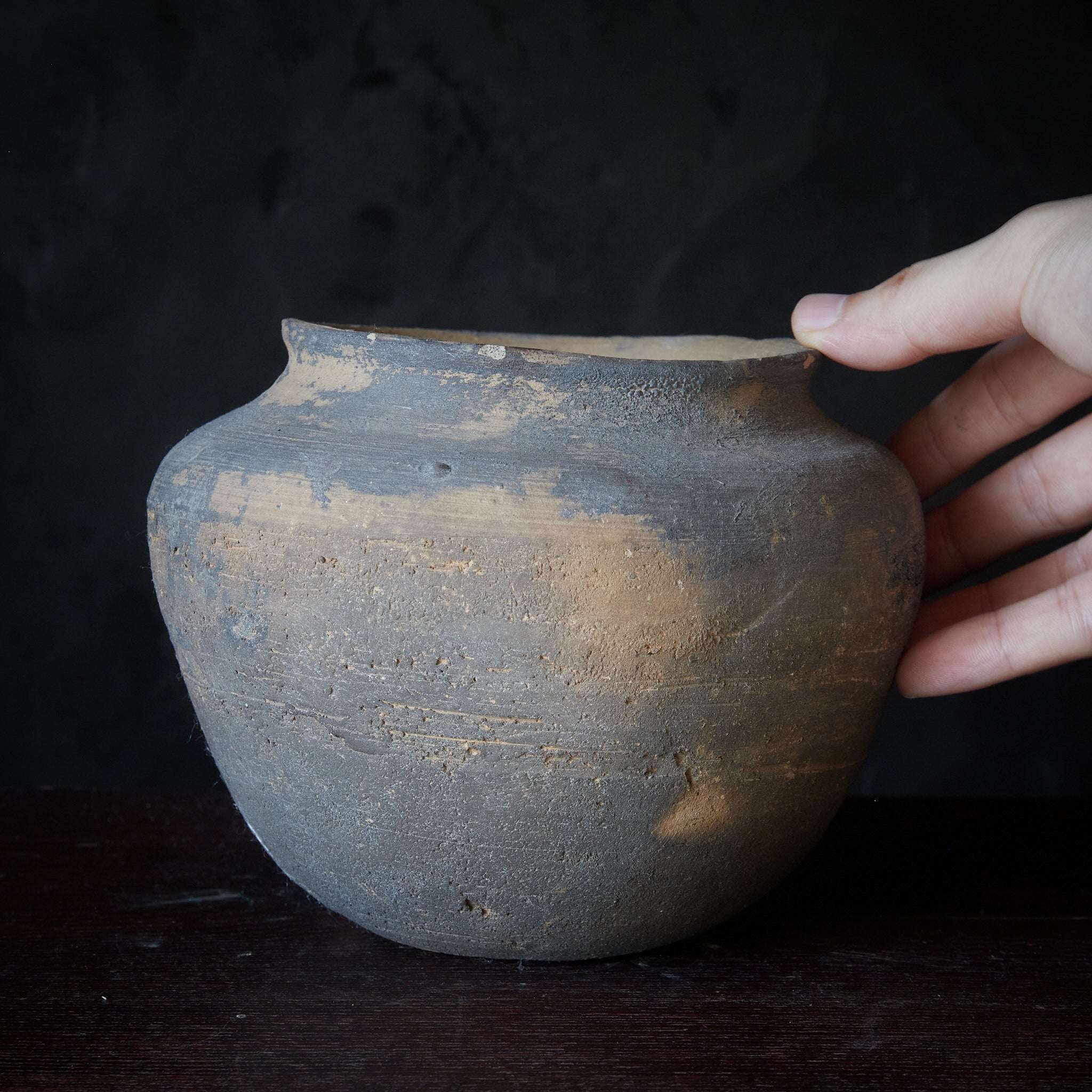
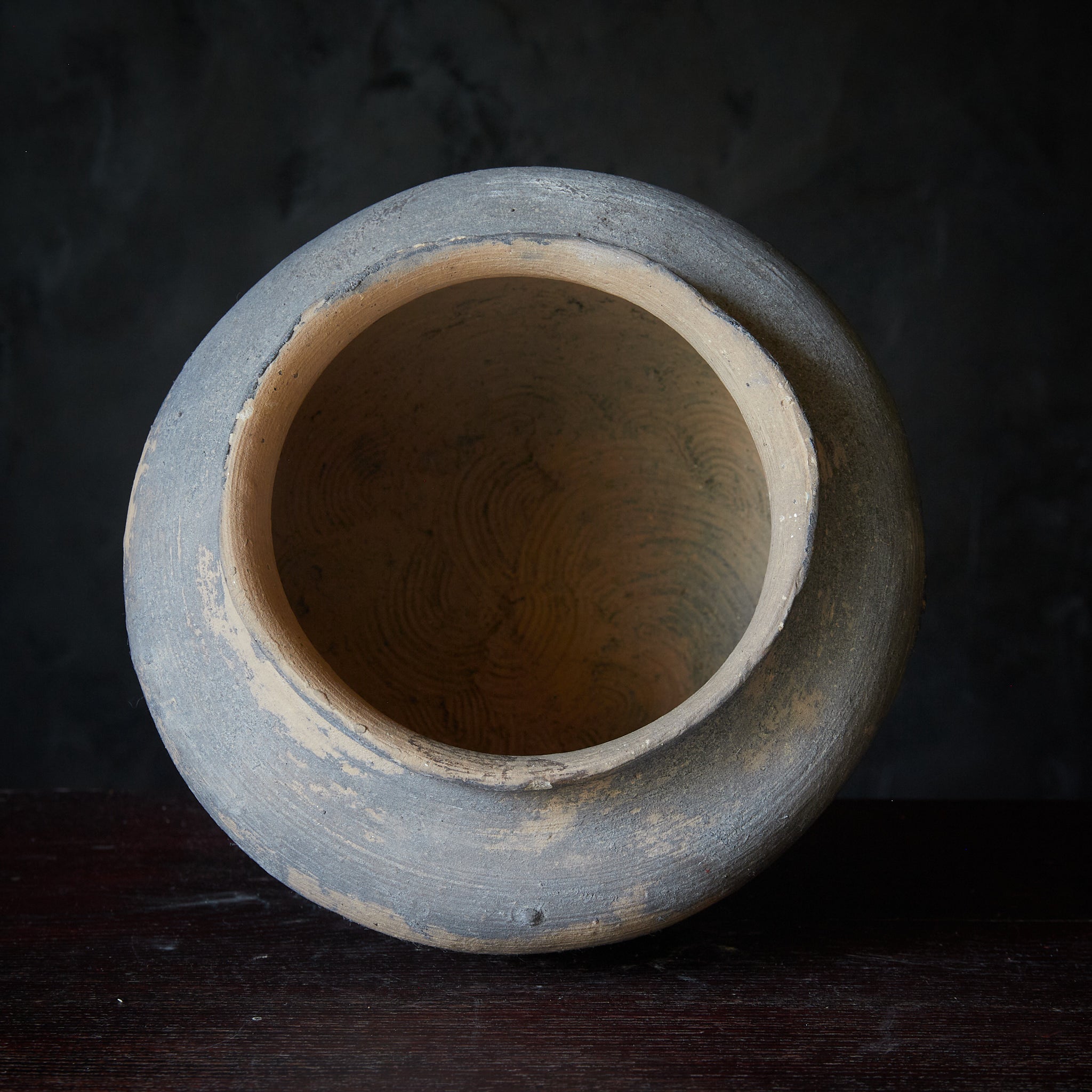
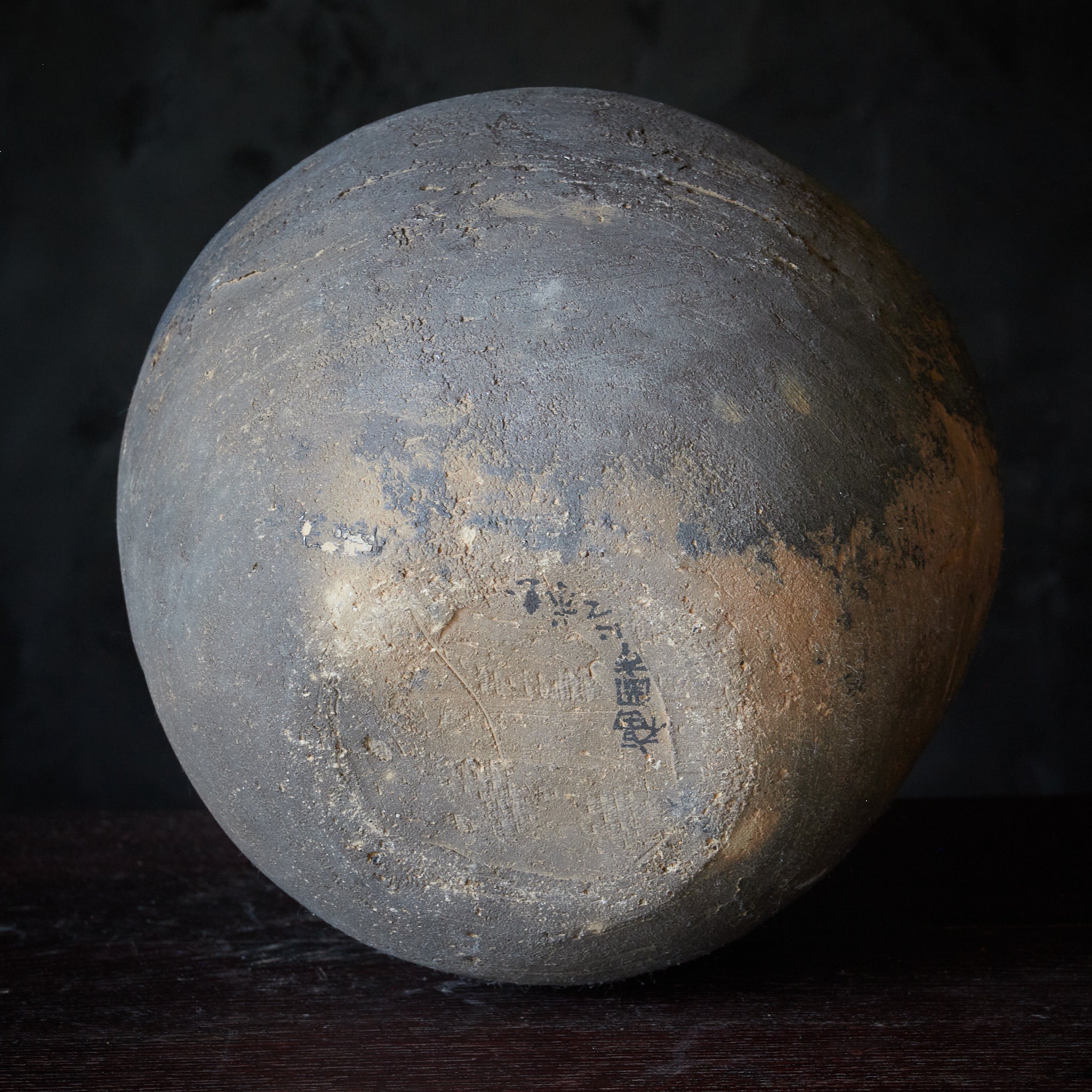
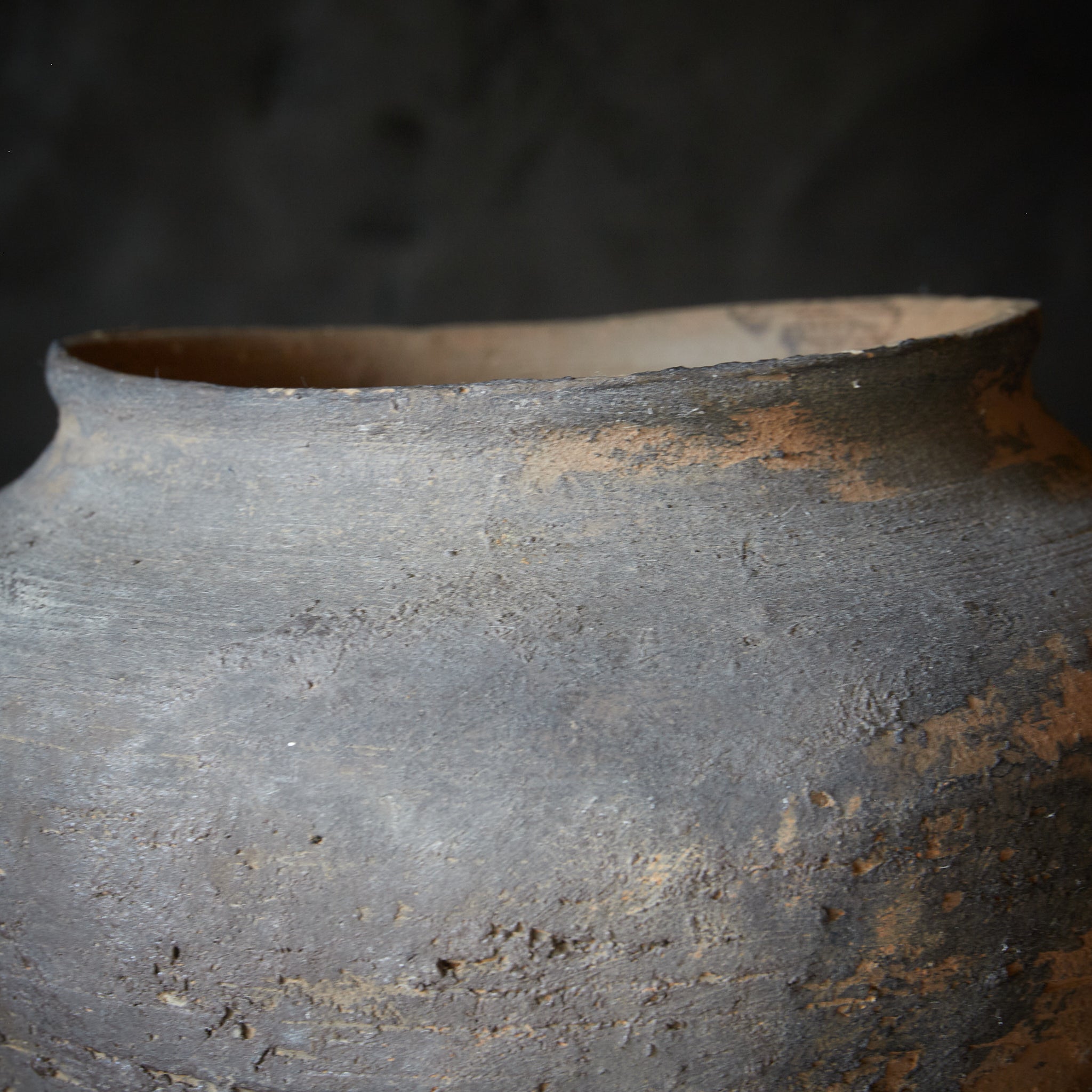
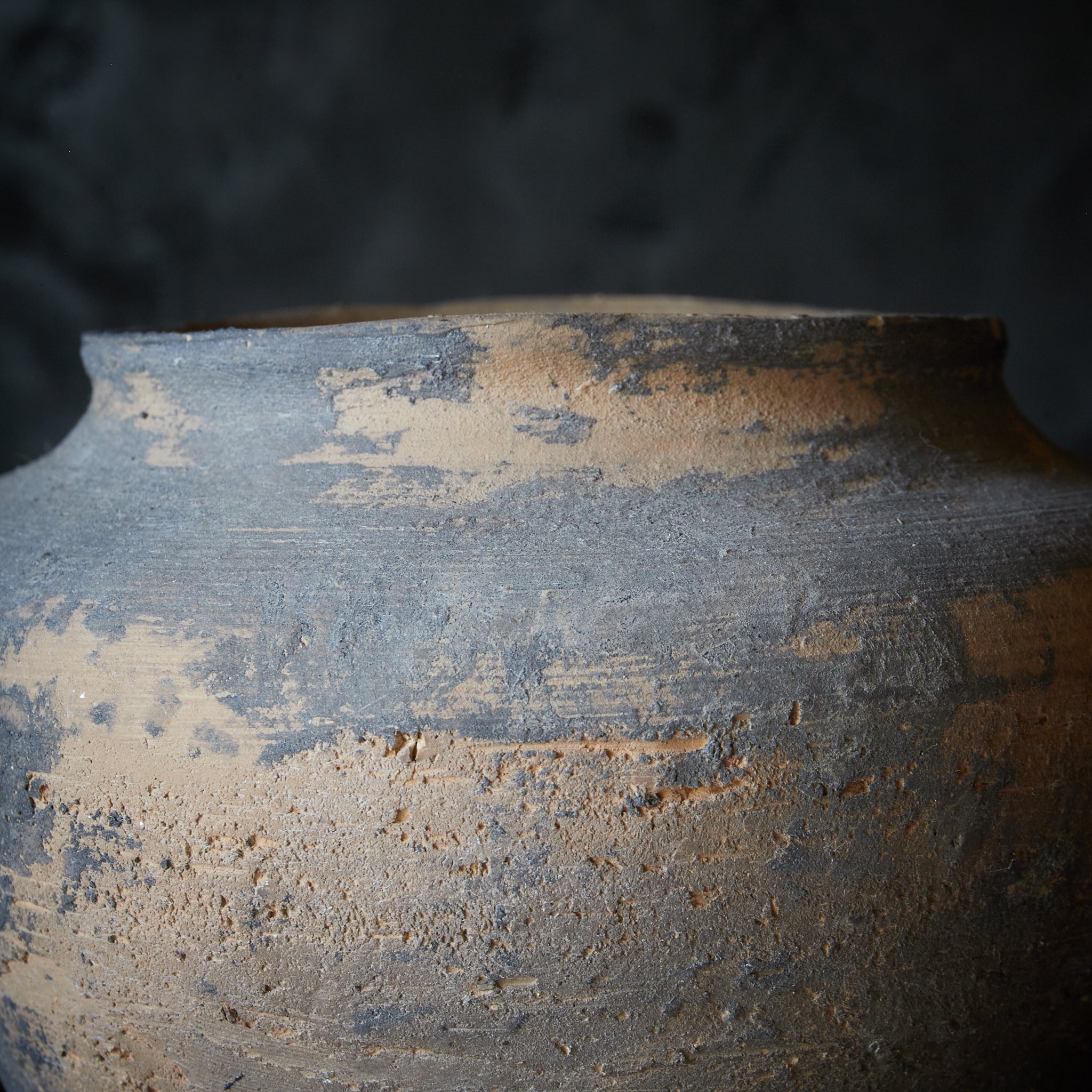
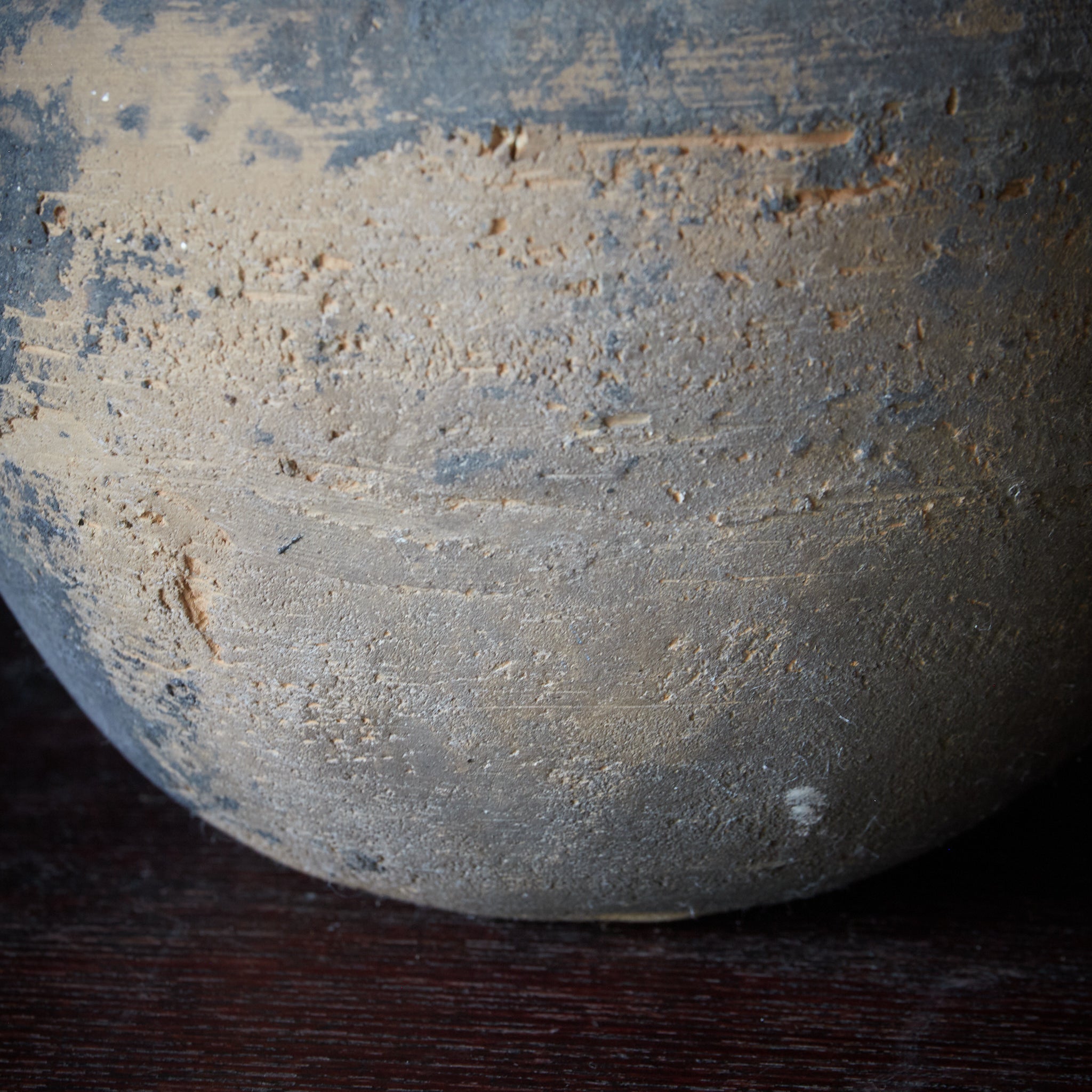
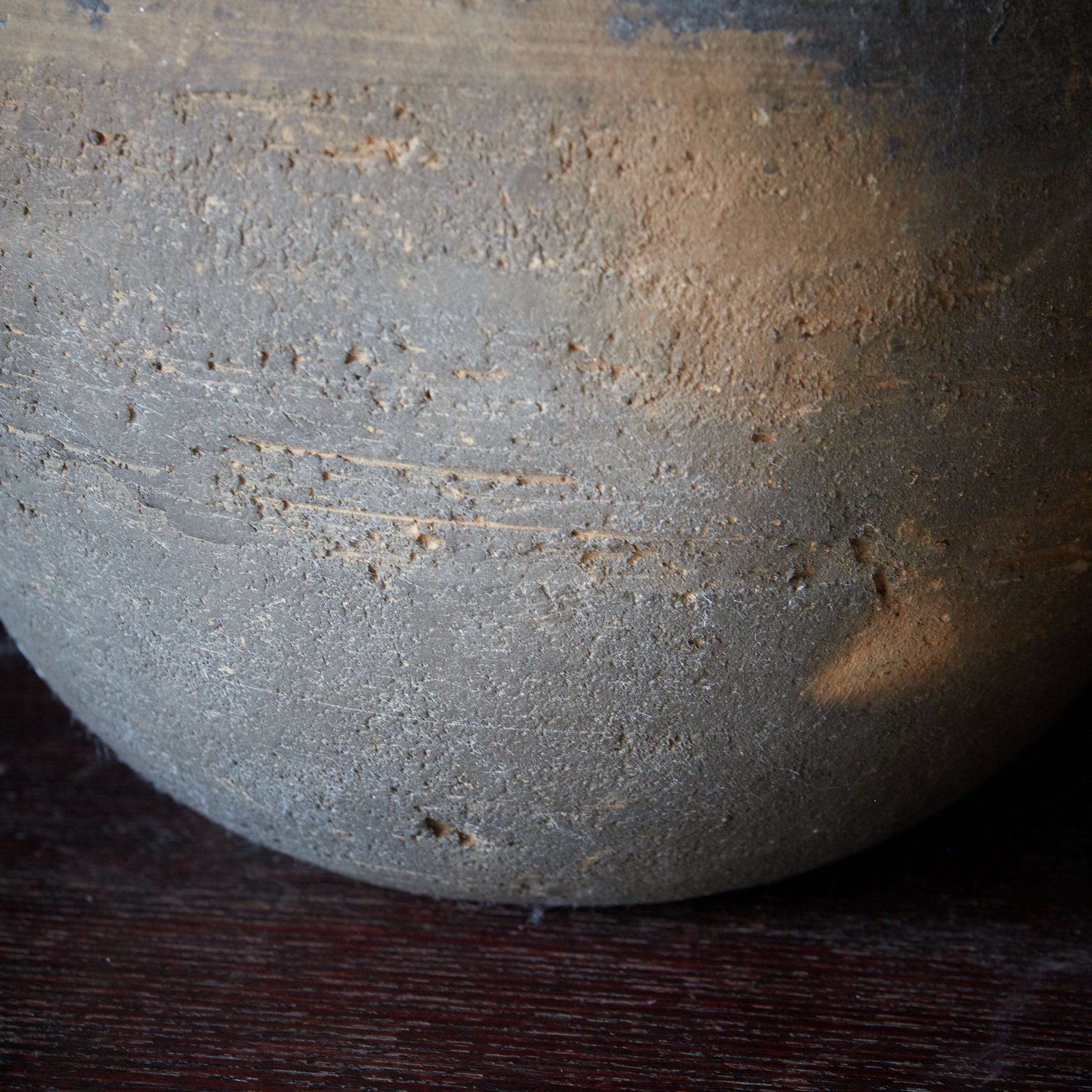
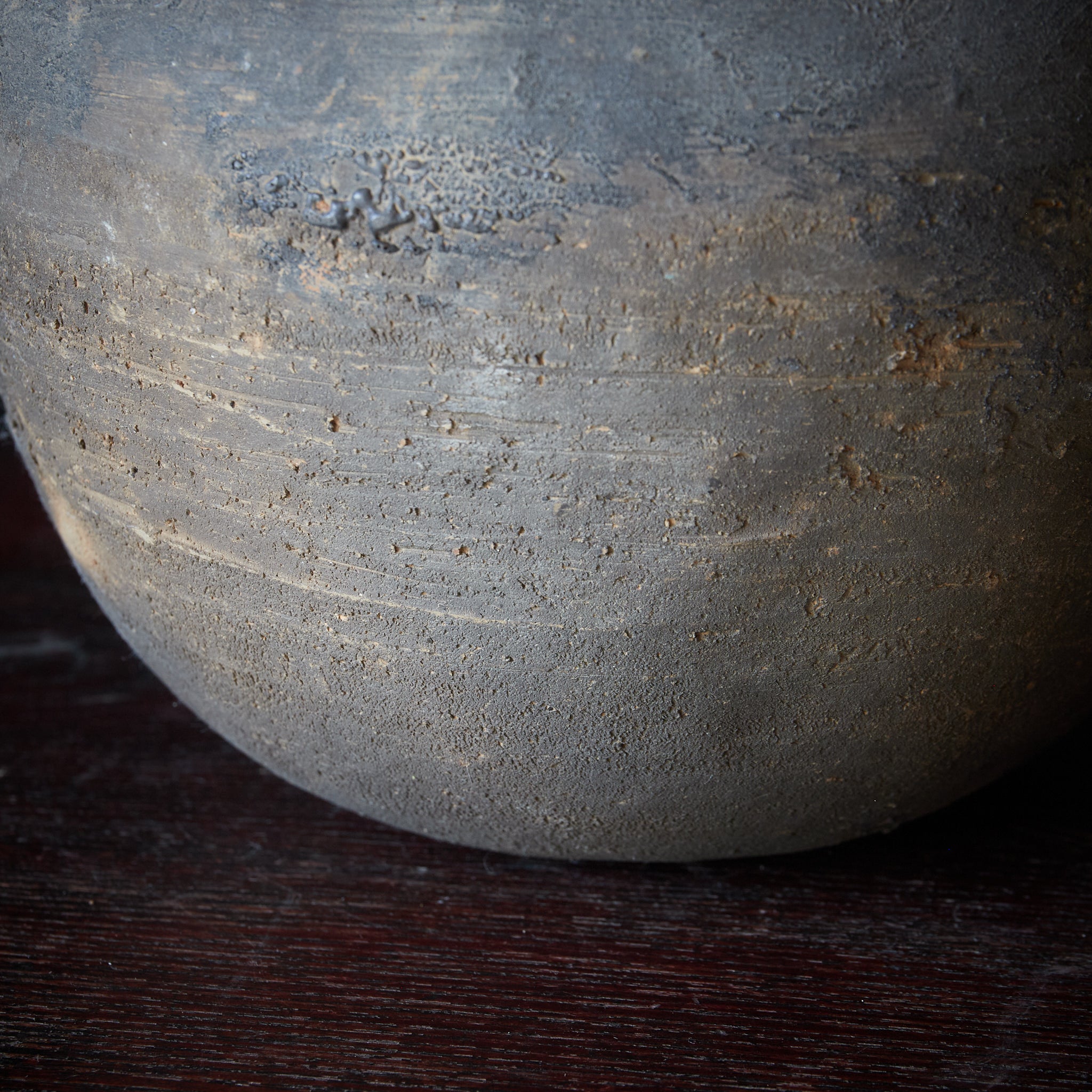
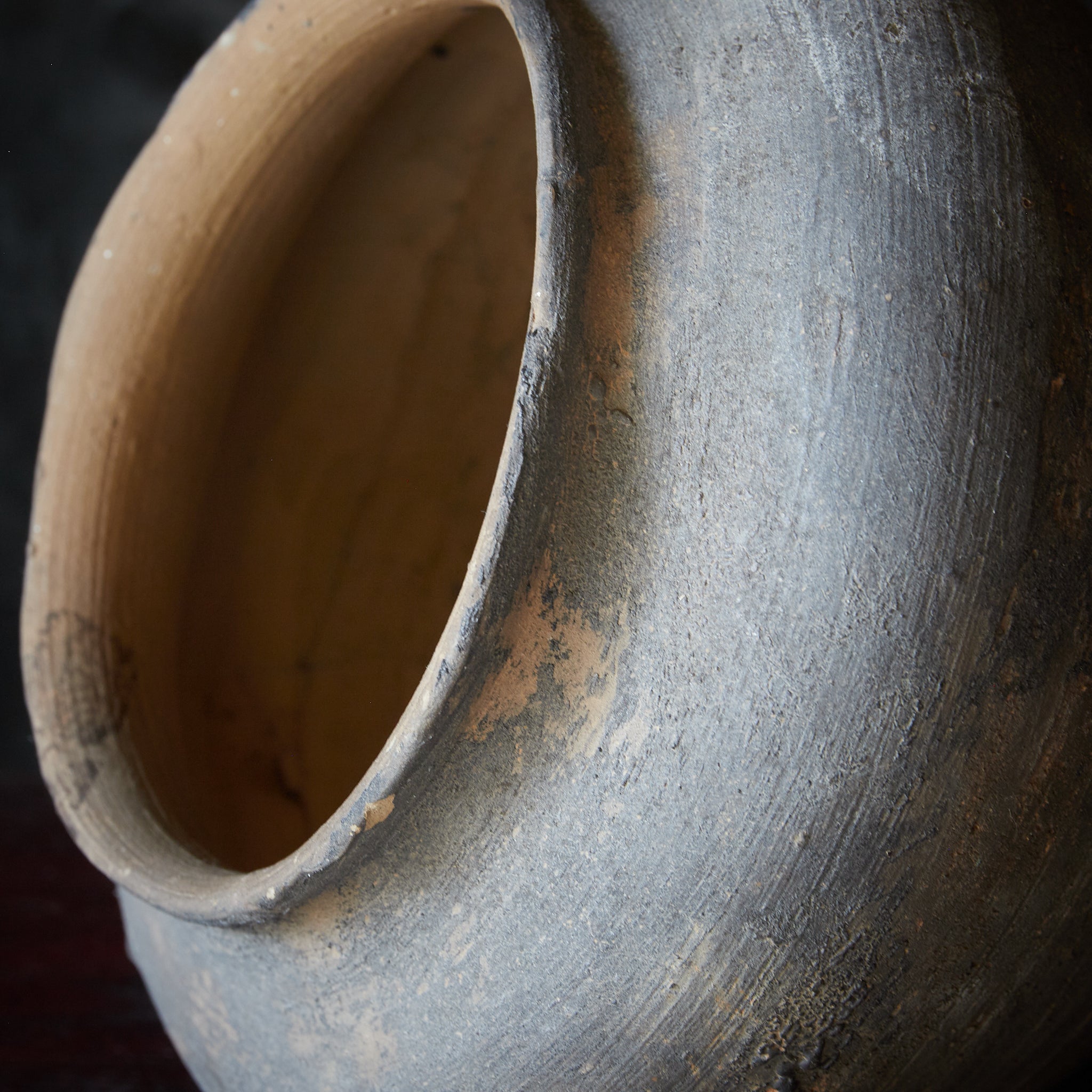
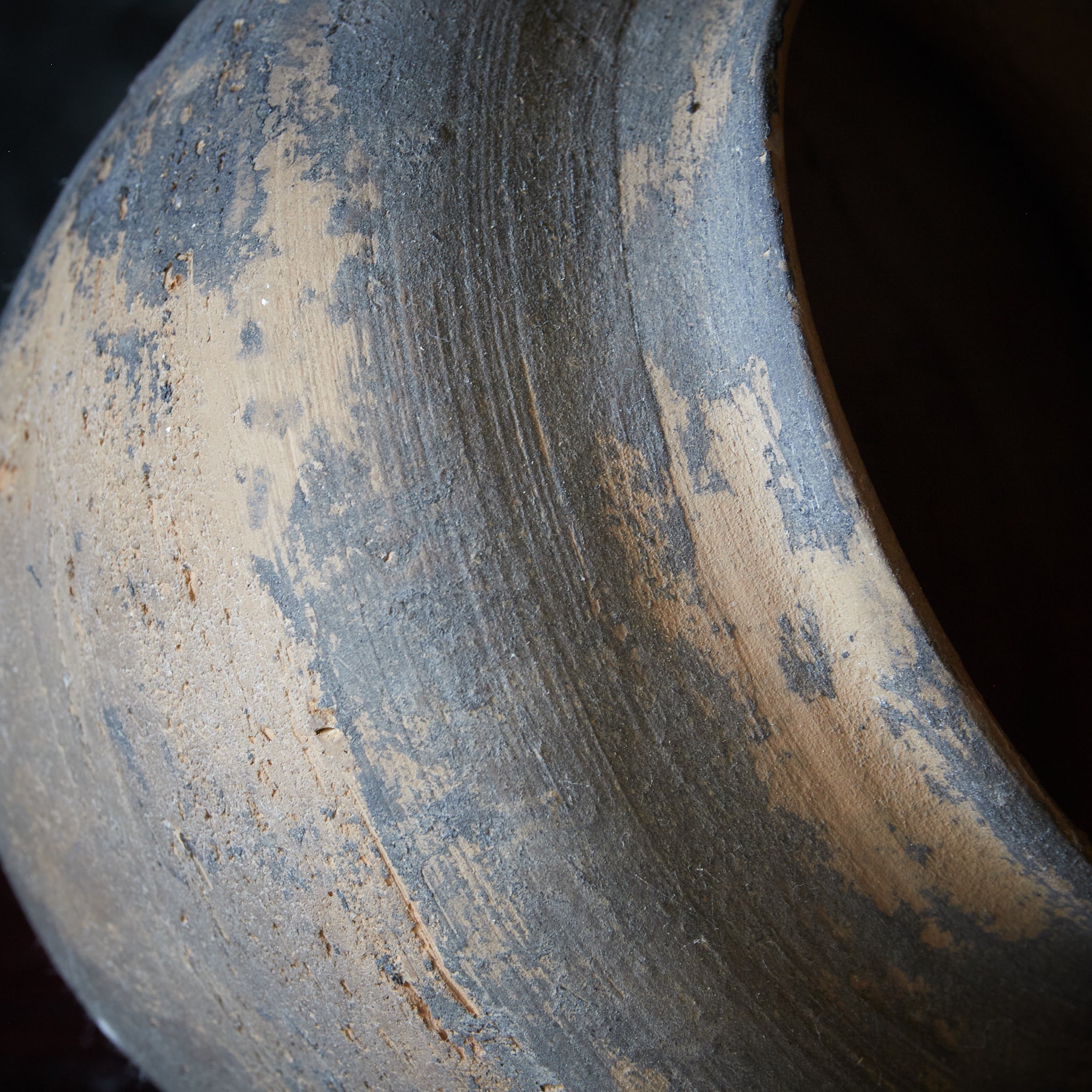
JAR, Sue Ware, with impressed design, Nara–Heian Period (710–1185 CE)
Tax excluded. Import duties may apply. Shipping costs are calculated at checkout.
Each piece is carefully packed for international delivery.
Numerous product photos are available for you to examine the details and condition. Should you have any questions, please do not hesitate to contact us.
> Inquire about this productSue ware is a type of high-fired pottery that emerged in Japan during the early 5th century, evolving from techniques introduced from the Gaya region of the Korean Peninsula. Utilizing iron-rich clay, this pottery was fired in climbing kilns dug into hillside slopes, resulting in robust vessels with a blue-gray hue rather than the typical red clay. The introduction of the potter's wheel allowed for precise shaping. Initially, these wares were used as prestige items interred in the tombs of the ruling elite, but their applications gradually expanded to temples, government offices, and everyday life, transforming in meaning and value over time.
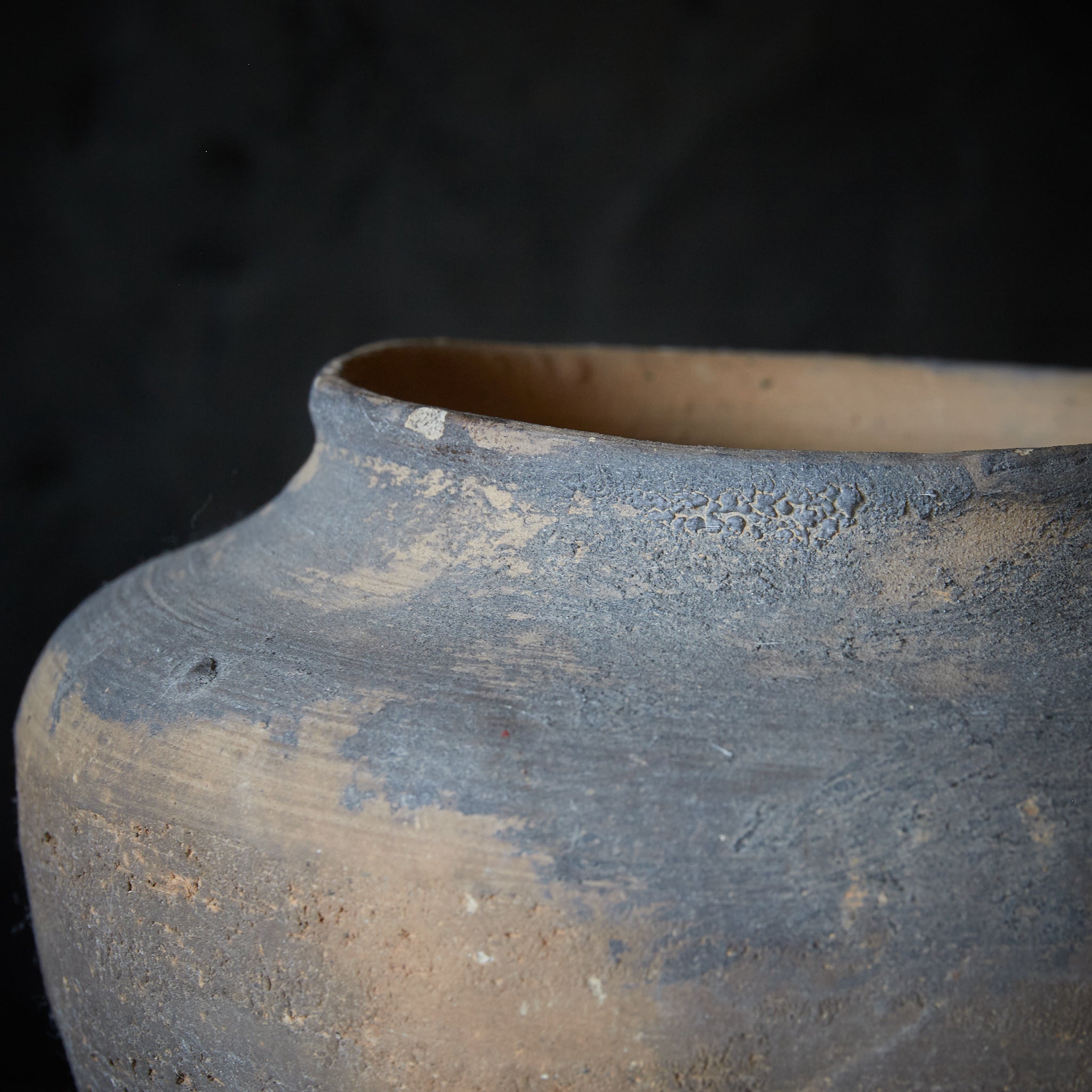
This piece is a jar-shaped vessel from the Nara–Heian period, excavated from the Fukuoka region, one of the largest production centers of Sue ware. The form, characterized by a pronounced shoulder tapering down to the body, hints at stylistic developments that would later influence medieval ceramics, embodying a unique blend of softness and tension typical of transitional periods.
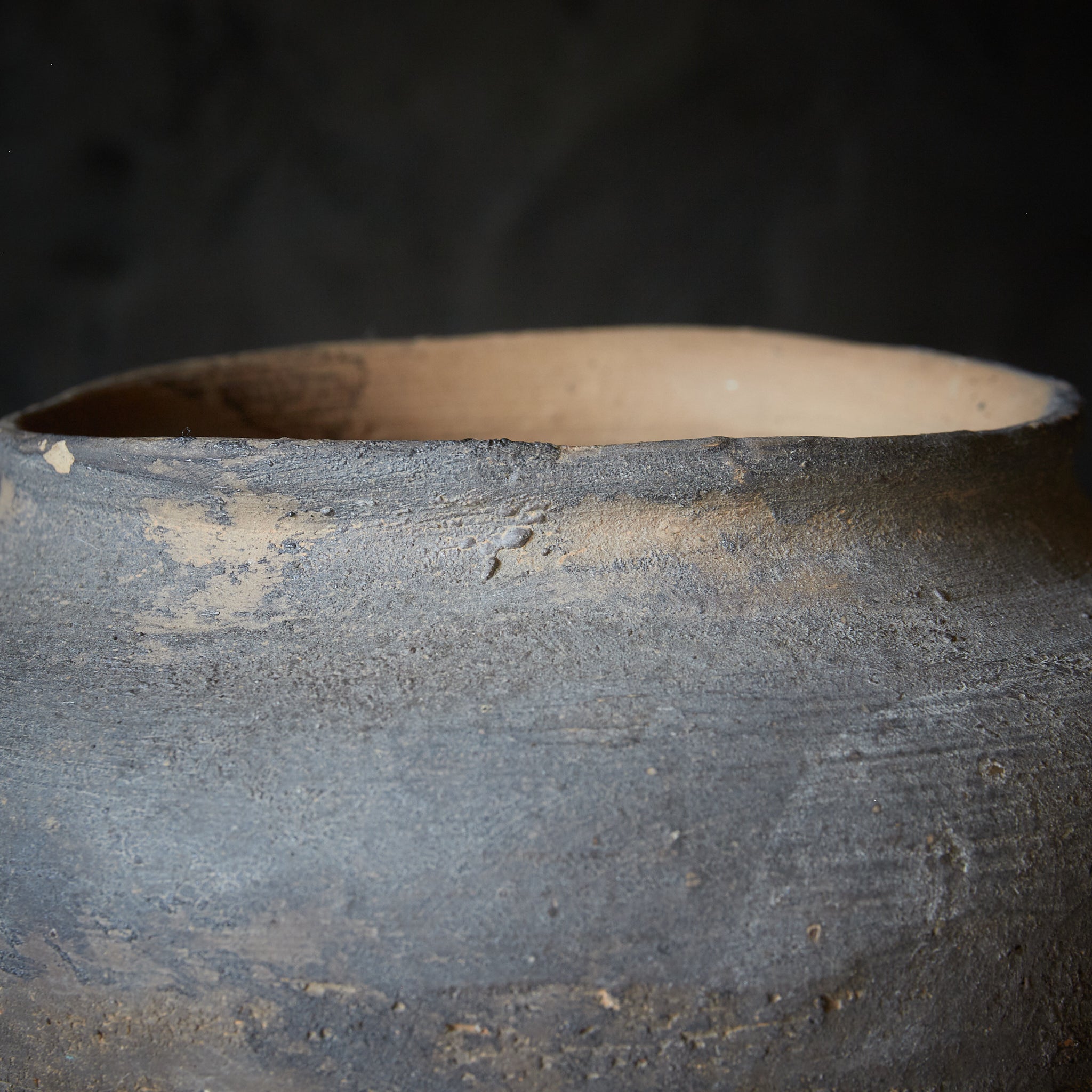
The exterior features a blue-gray surface, achieved through a reduction firing process that limited oxygen during firing, with browning effects from fire alteration and years of weathering creating a serene landscape. The spiral patterns and the slightly warped rim, resulting from the potter's hand and the serendipitous effects of the kiln, impart a rustic and rich character to the piece.
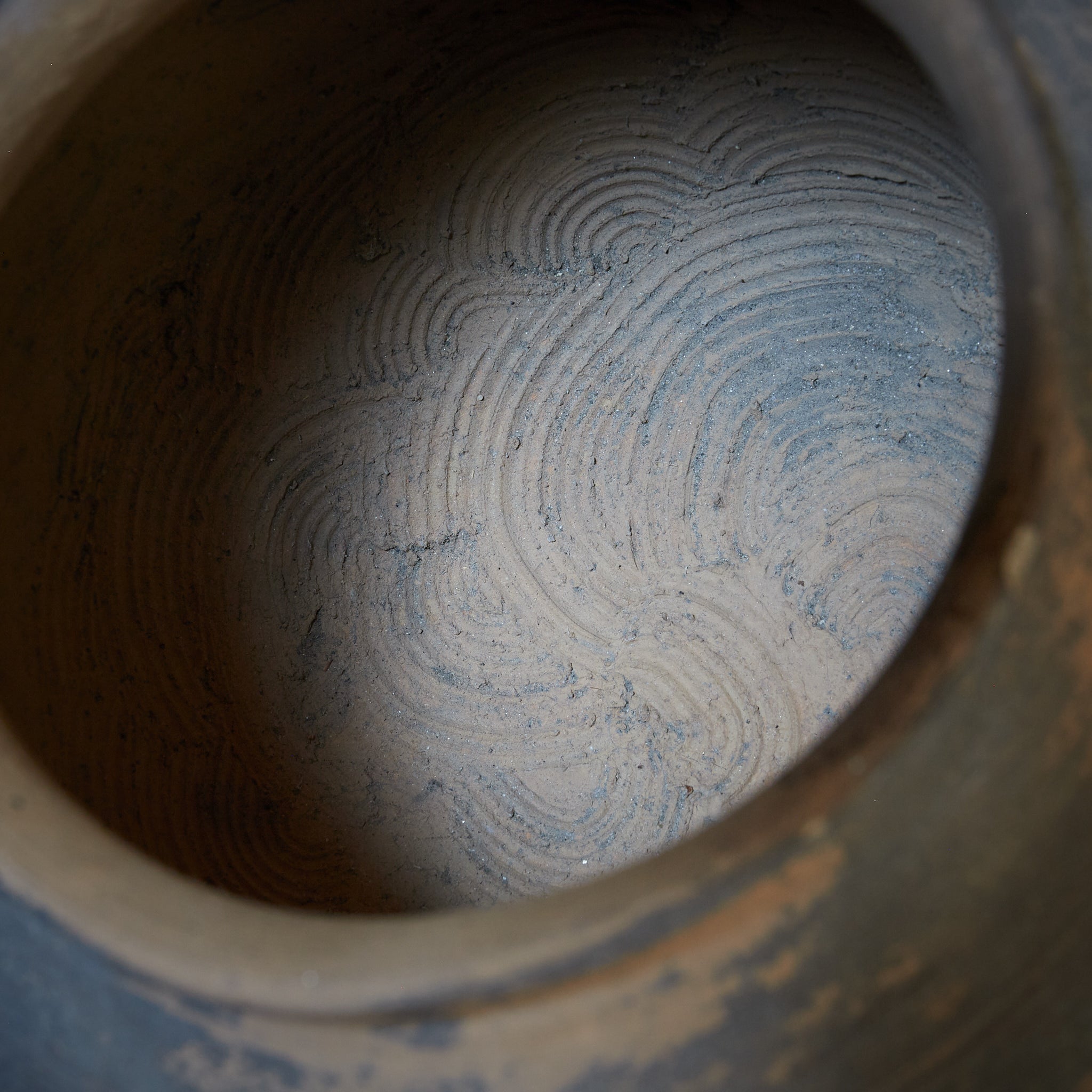
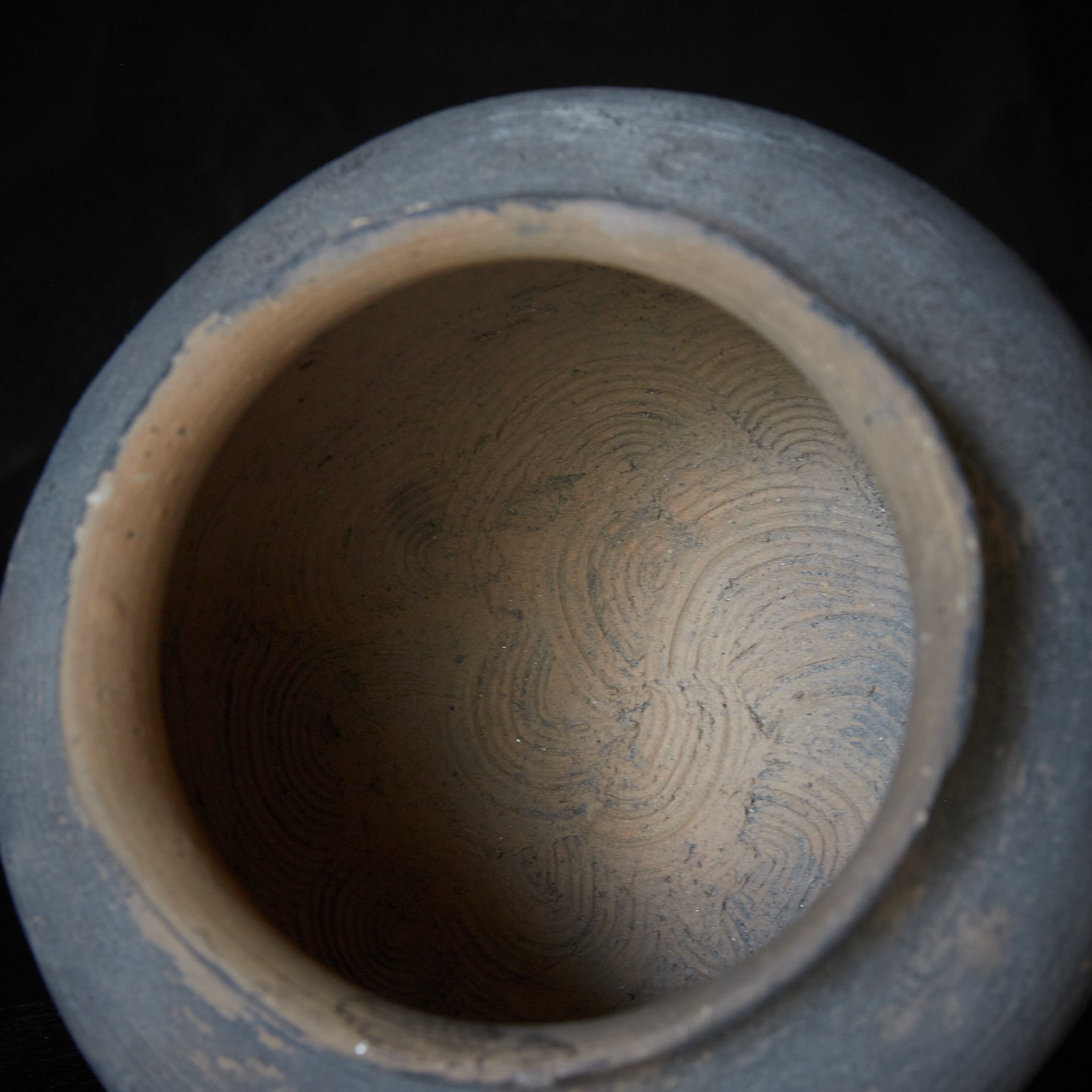
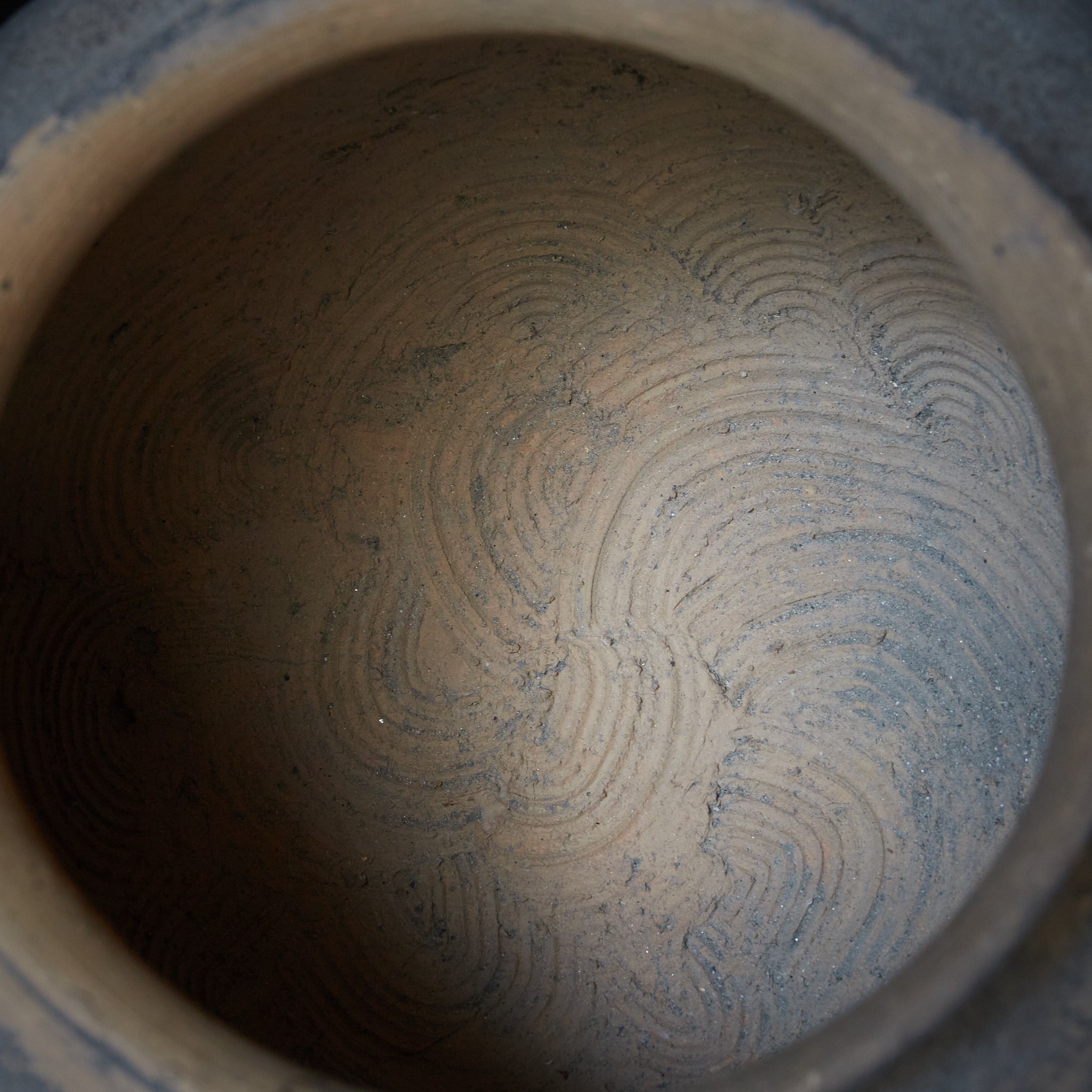
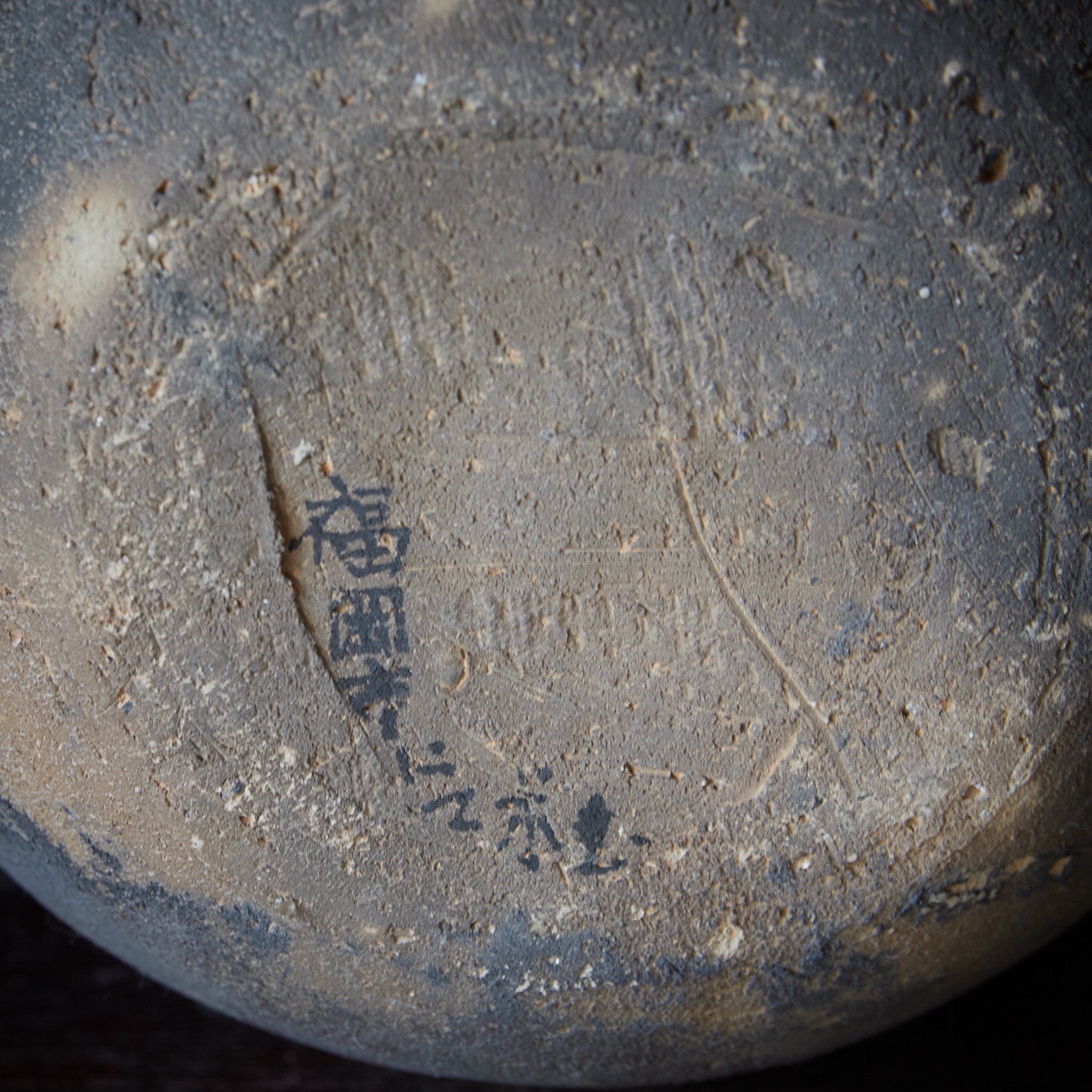
Particularly striking is the spiral motif that emerges across the entire inner base of the vessel. While "punched patterns" in Sue ware typically appear on the exterior, this piece showcases concentric circular impressions created by a comb-like tool or a disk with incised lines, reminiscent of a melodic repetition within the vessel.
These impressions likely served a functional purpose, preventing cracks during drying and ensuring uniformity in the vessel walls. However, viewed through a contemporary lens, they appear as if the artisan has unconsciously left behind sketches within the clay. As the Heian period progressed, Sue ware gradually permeated the lives of the populace, with jars and vessels becoming everyday items within communities. As the role of these wares shifted from official to domestic use, their forms became simpler in accordance with function, yet it is within this simplicity that a universal beauty resides. The beauty hidden within unintentional processes can be seen as a quiet testament to the emergence of the craft philosophy that would later be termed "the beauty of utility," already taking root during this era.
Choose options
Tax excluded. Import duties may apply. Shipping costs are calculated at checkout.
Change language
