

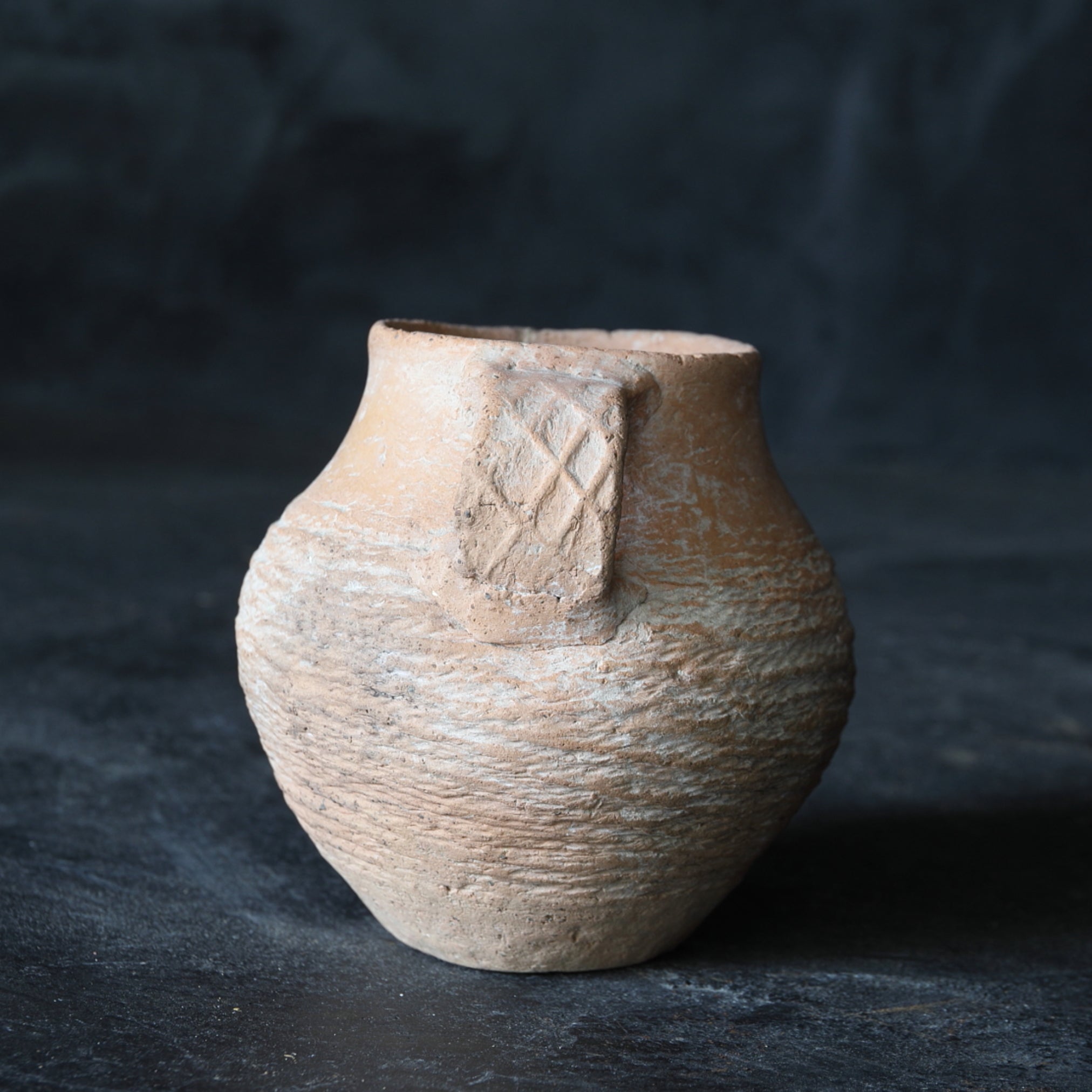

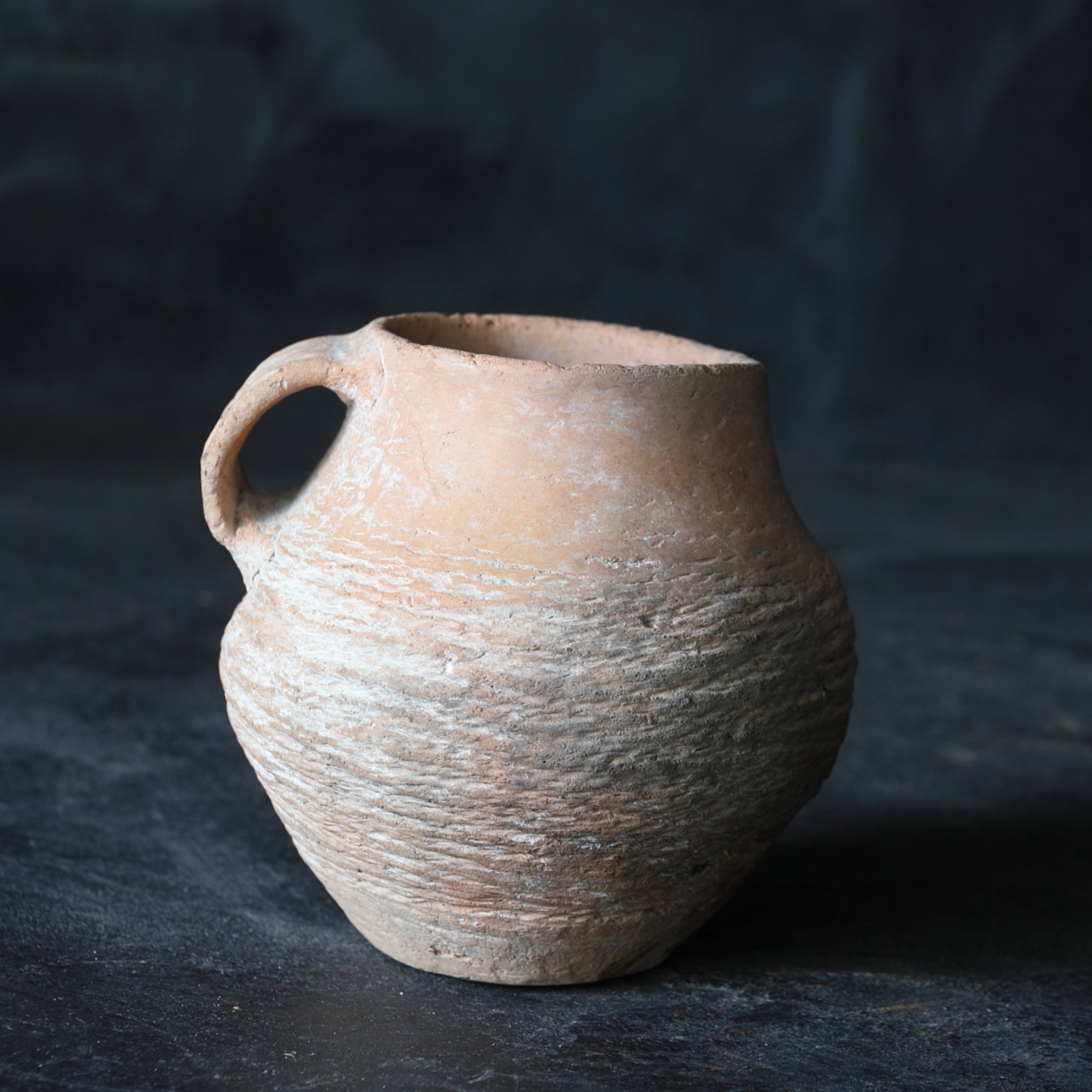


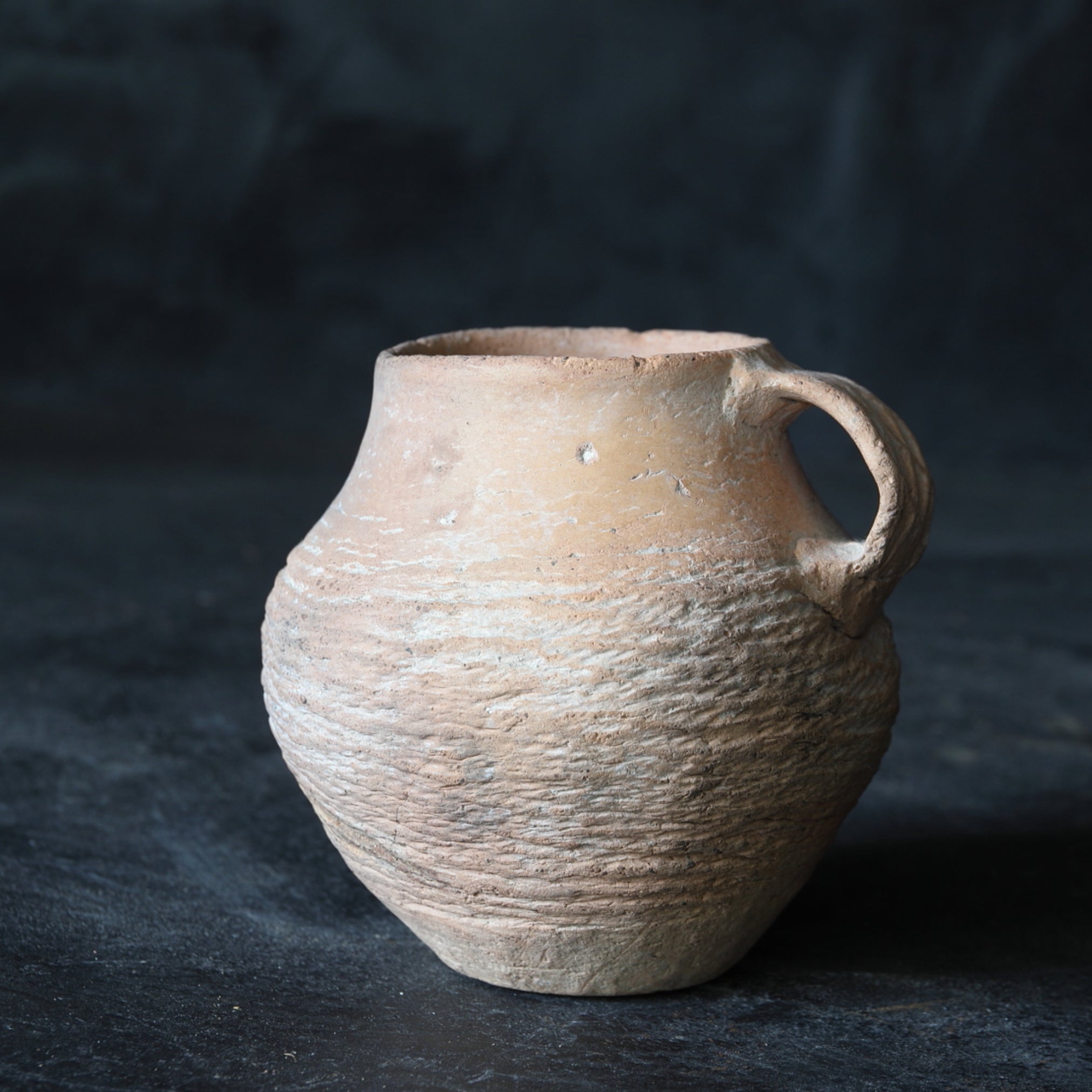


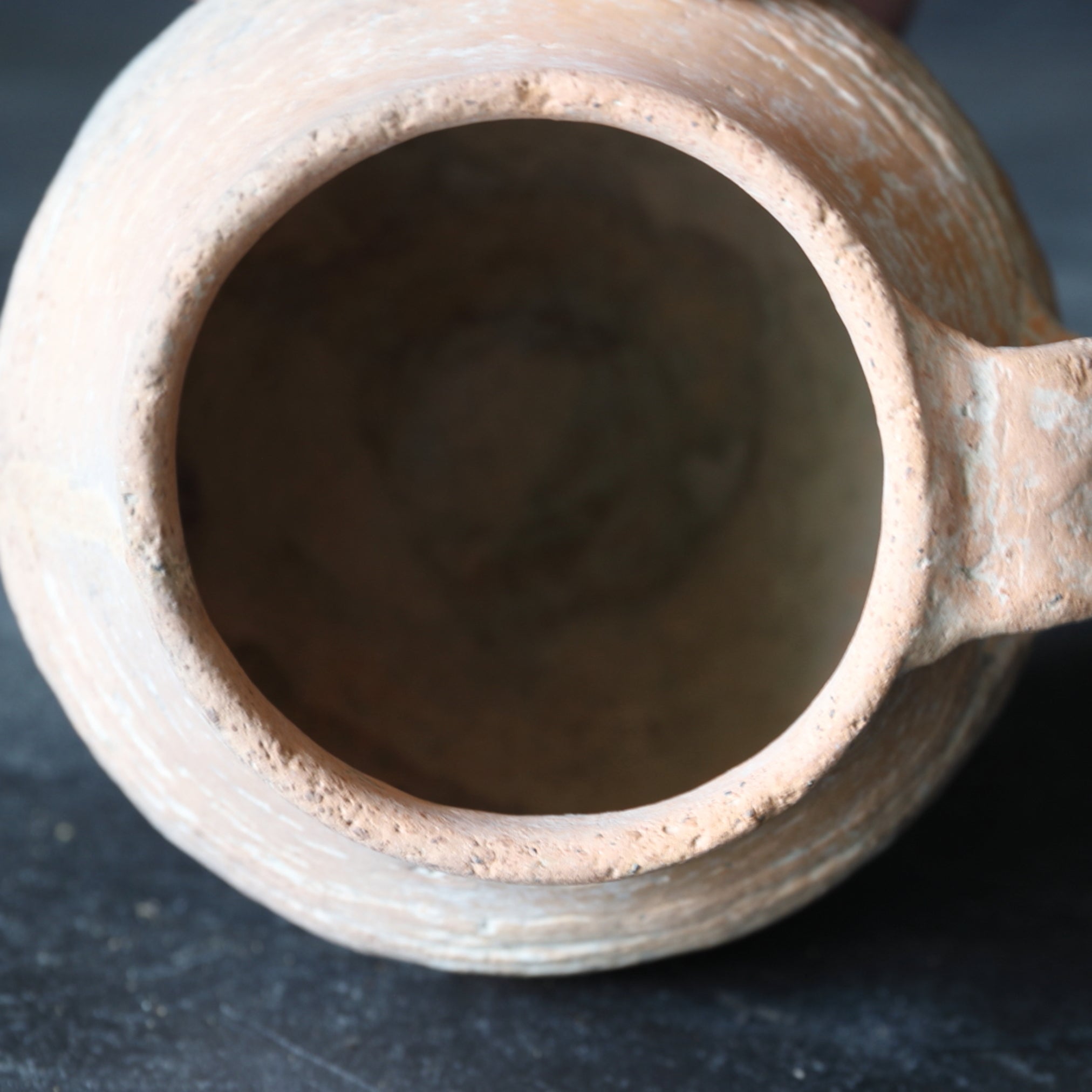


VESSEL, Unusual shaped earthenware, Jomon Period (10000–300 BCE)
Tax excluded. Import duties may apply. Shipping costs are calculated at checkout.
Each piece is carefully packed for international delivery.
Numerous product photos are available for you to examine the details and condition. Should you have any questions, please do not hesitate to contact us.
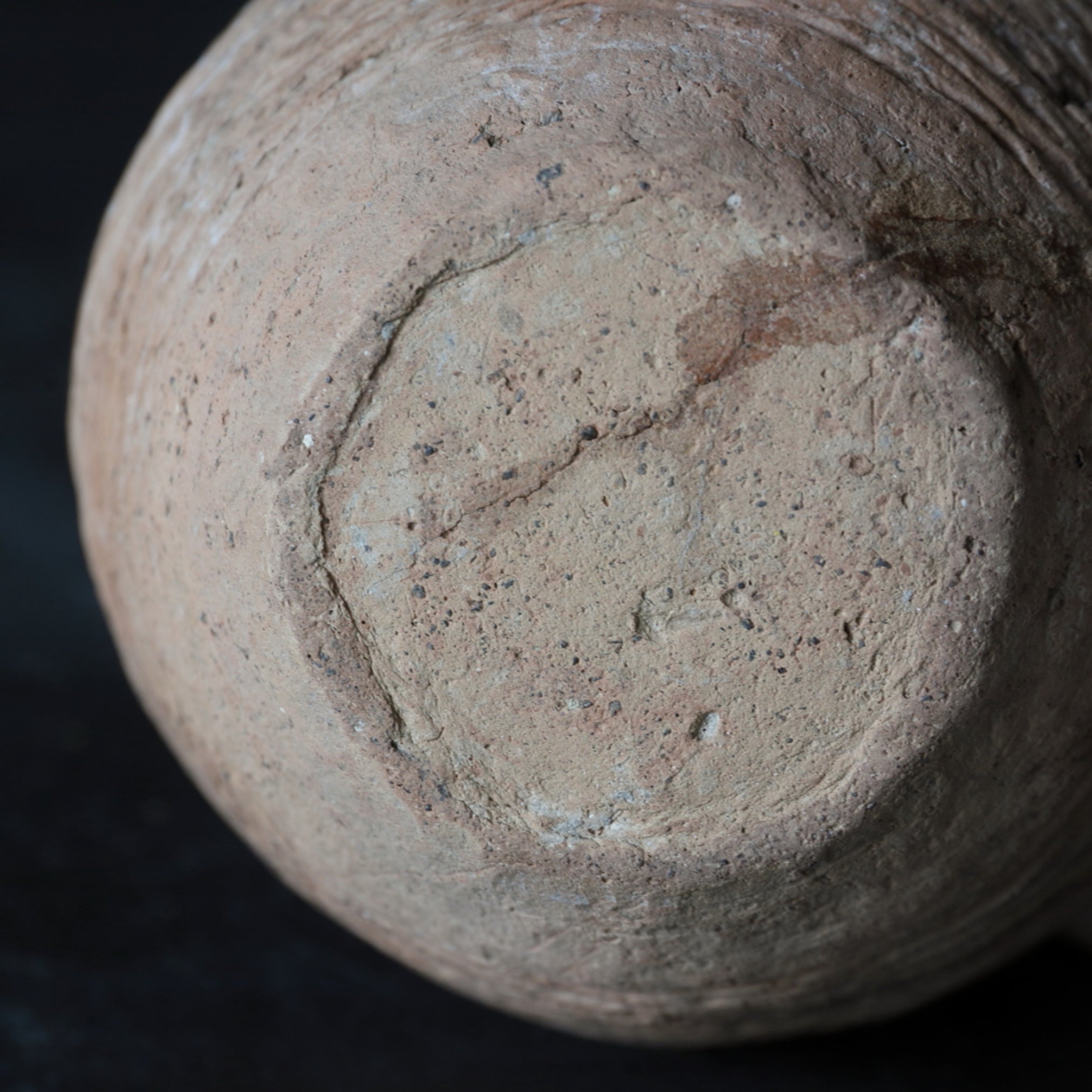
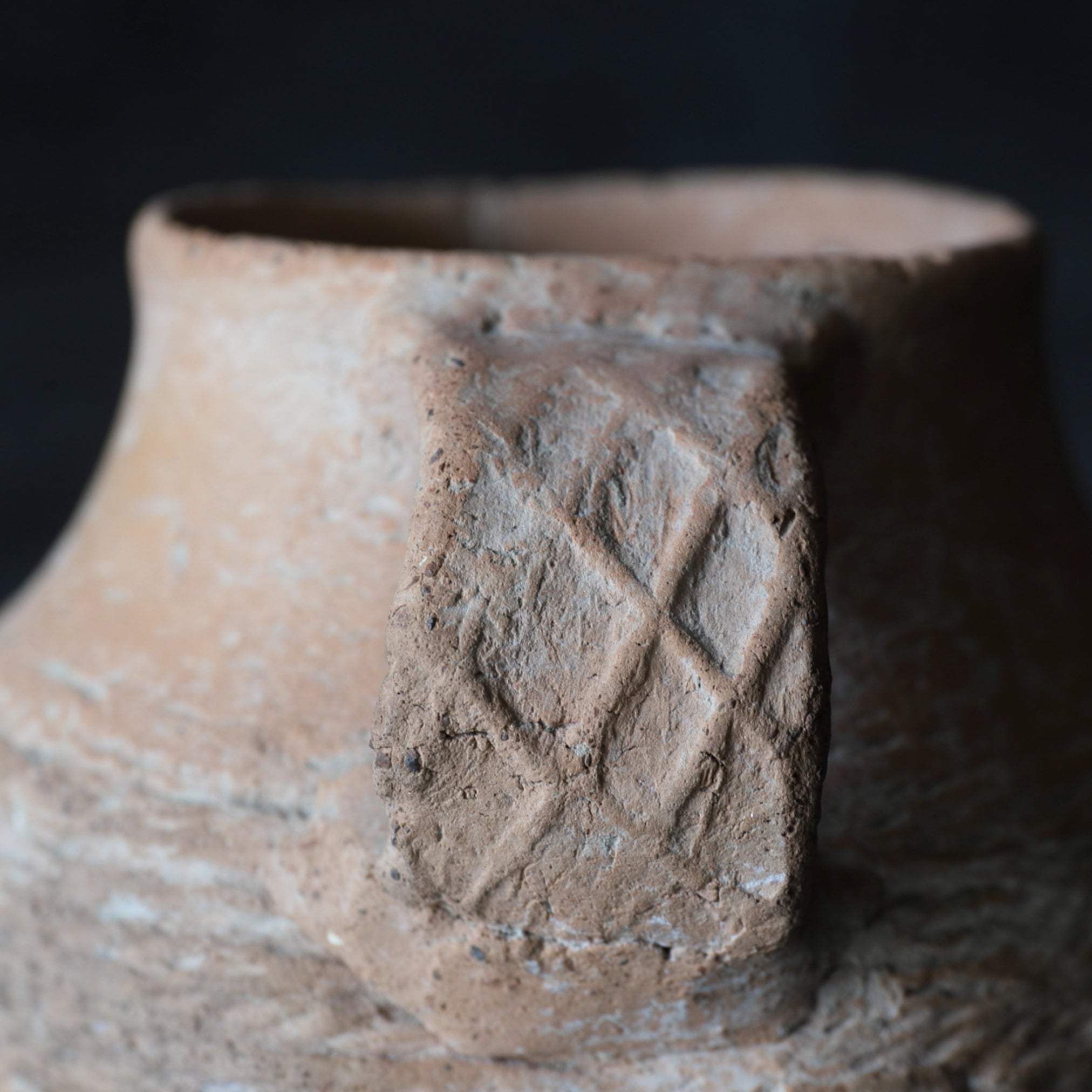
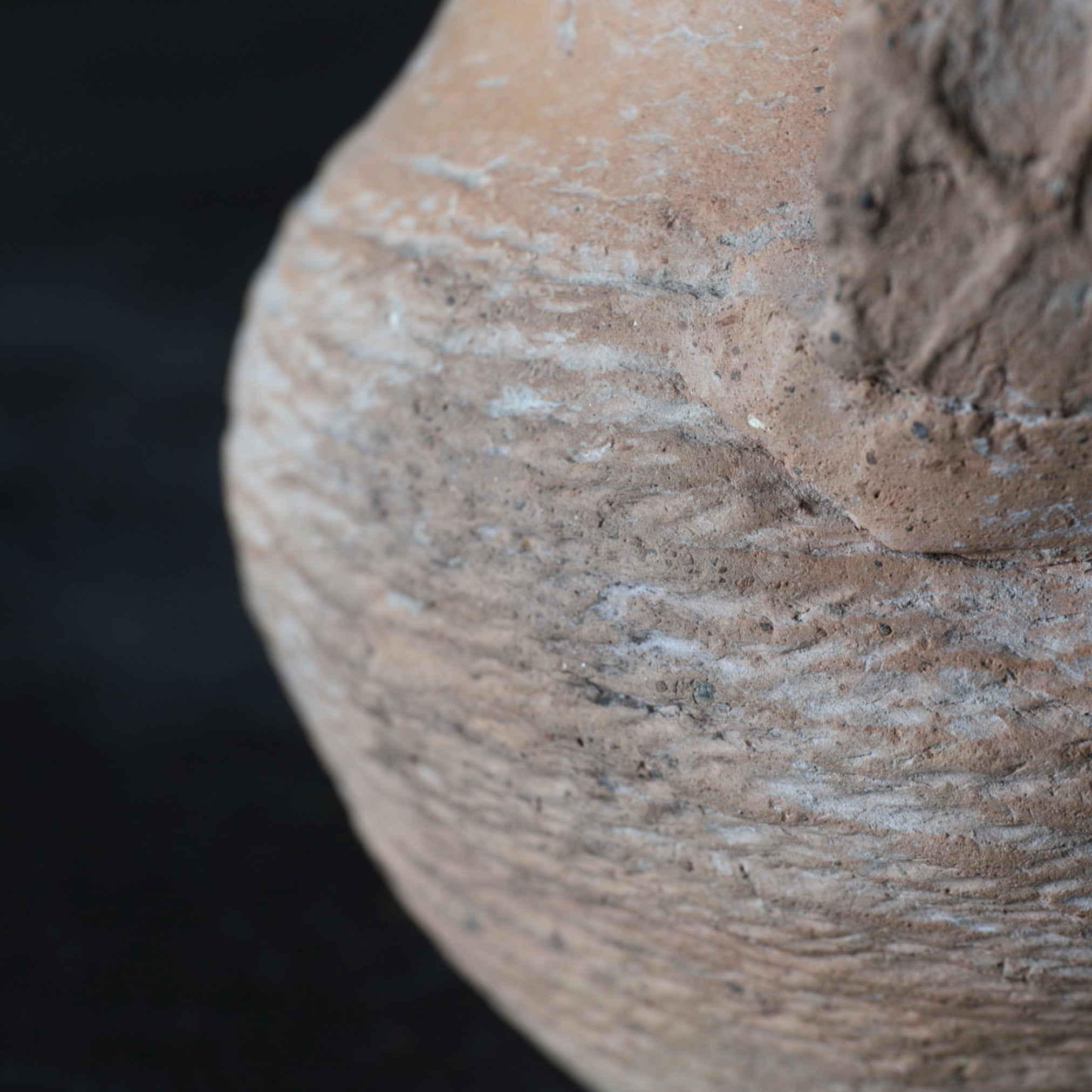
> Inquire about this productThis is an unusually shaped earthenware vessel from the Jomon Period, adorned with a decorative handle featuring a snake-head motif. The entire body is enveloped in diagonal cord markings. Despite its modest size, it possesses a striking presence. There are some repairs on the body, yet it remains in good condition and retains its complete form. Consider adding this piece to your collection.

Jomon pottery was made without the potter’s wheel, using a coiling method in which rolls of clay were built up to form the vessel. This handwork remains on the surface as variations in thickness and subtle irregularities, conveying the tactile reality of the clay body even today. Shell, fiber, and mica were also mixed into the clay to help prevent cracking during open firing at 600–900°C.
During the Early Jomon period (roughly 16,500–5,000 BCE), deep bowls with rounded bases predominated, practical forms valued for cooking and storage. As settlement became more established, bases gradually became flat so that vessels could stand securely on the ground.
The Middle Jomon period (3500–2500 BCE) that followed may be called the golden age of Jomon culture. Complex three-dimensional ornament, including flame-style and crown-style forms, came to dominate, and more than seventy regional styles were established. These vessels became symbols of communities, spirituality, and nature worship, while dogu clay figures concentrated ideas of fertility and prayer.
In the Final Jomon period (2500–300 BCE), everyday utility again came to the fore. Spouted vessels and thin, tablet-like dogu became more common, changes that may relate to shrinking settlements and climatic shifts. This transformation points toward the transition to Yayoi society.
Across these three phases, Jomon pottery traces a distinctive cycle: from “utilitarian object,” to an elevation into “ornament and spirituality,” and then back once more to “everyday life.” When I touch a pottery fragment and sense the smell of earth, a layered dialogue between people and nature, seasons and memory, rises in my mind. That feeling of familiarity may be evidence that the continuity of life woven through this archipelago for more than ten thousand years has also been woven into me. Seen this way, Jomon pottery may be a grand historical guidepost, asking where we came from and where we are going.
Choose options
Tax excluded. Import duties may apply. Shipping costs are calculated at checkout.
Change language
