


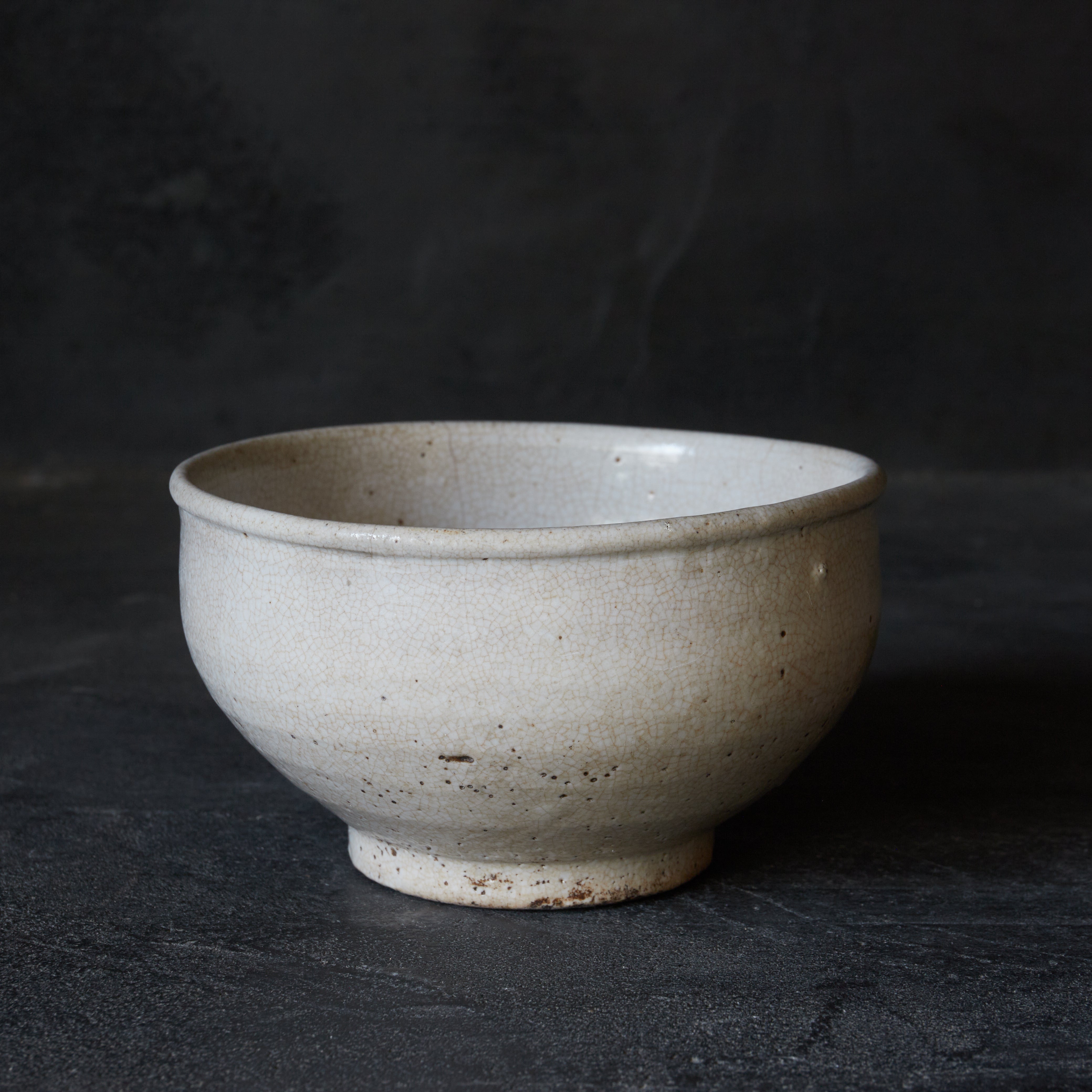
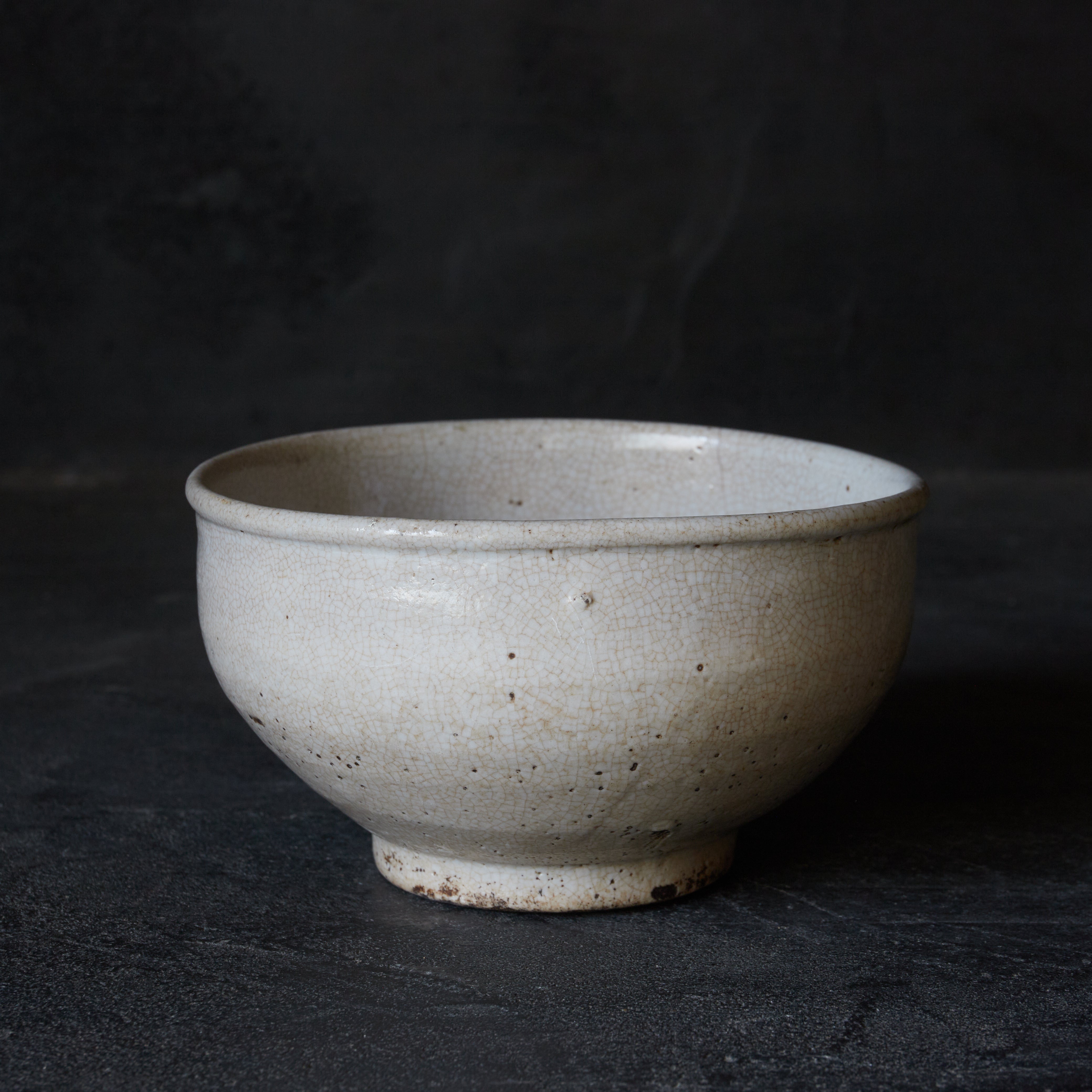
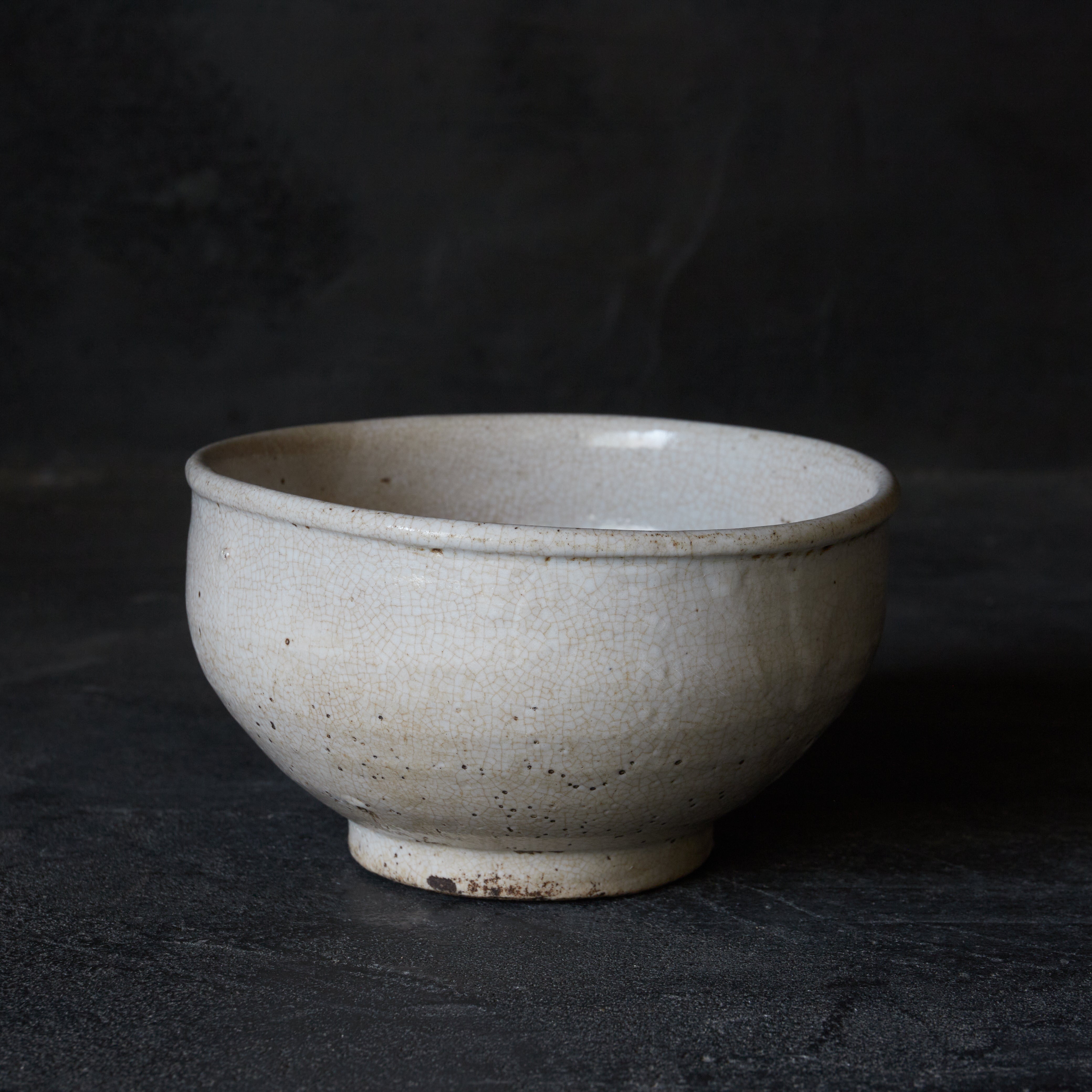


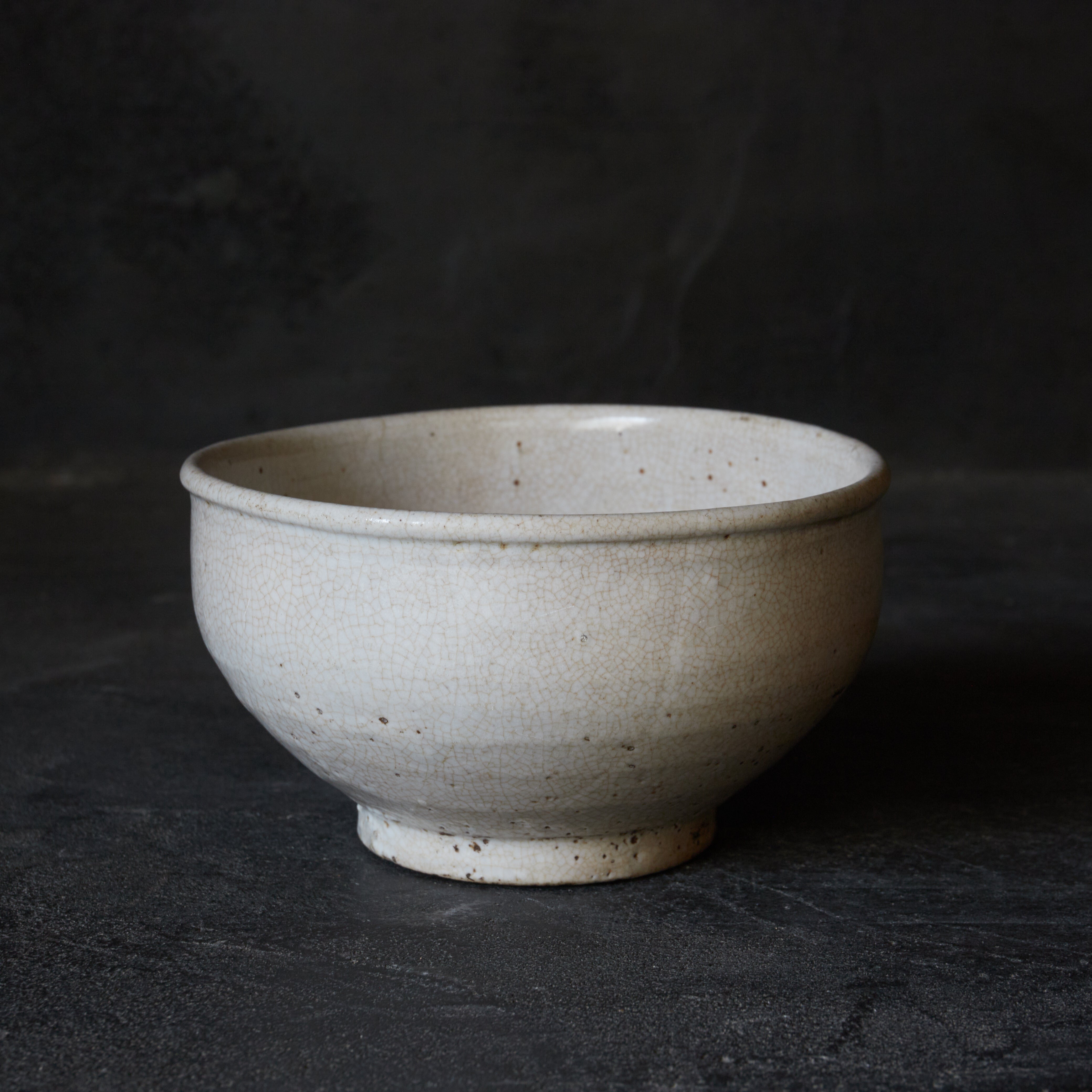
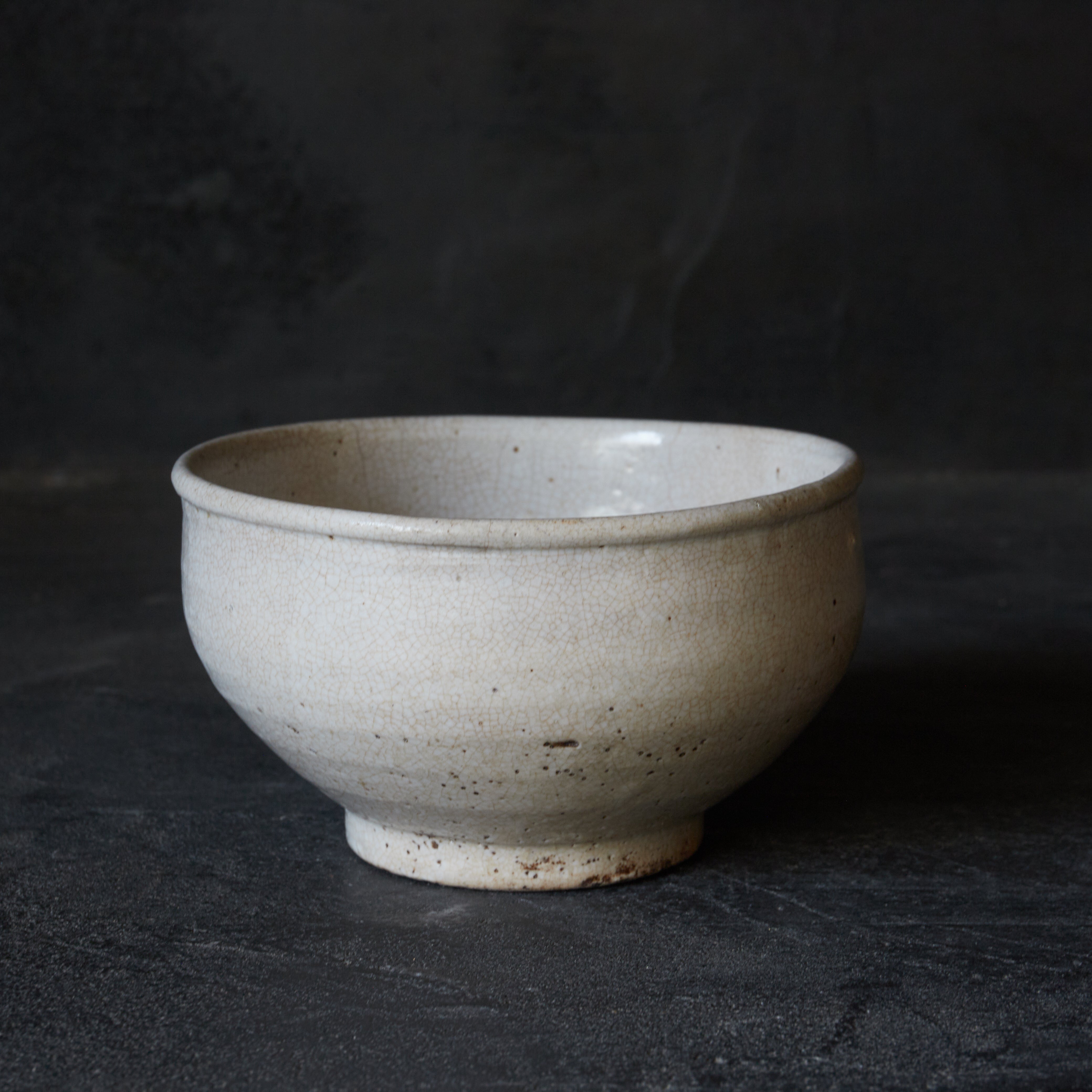




TEA BOWL, Katade, Joseon Dynasty (1392–1897 CE)
Each piece is carefully packed for international delivery.
This item has been sold. If you are looking for a similar piece or another work from the same period, please feel free to contact us.
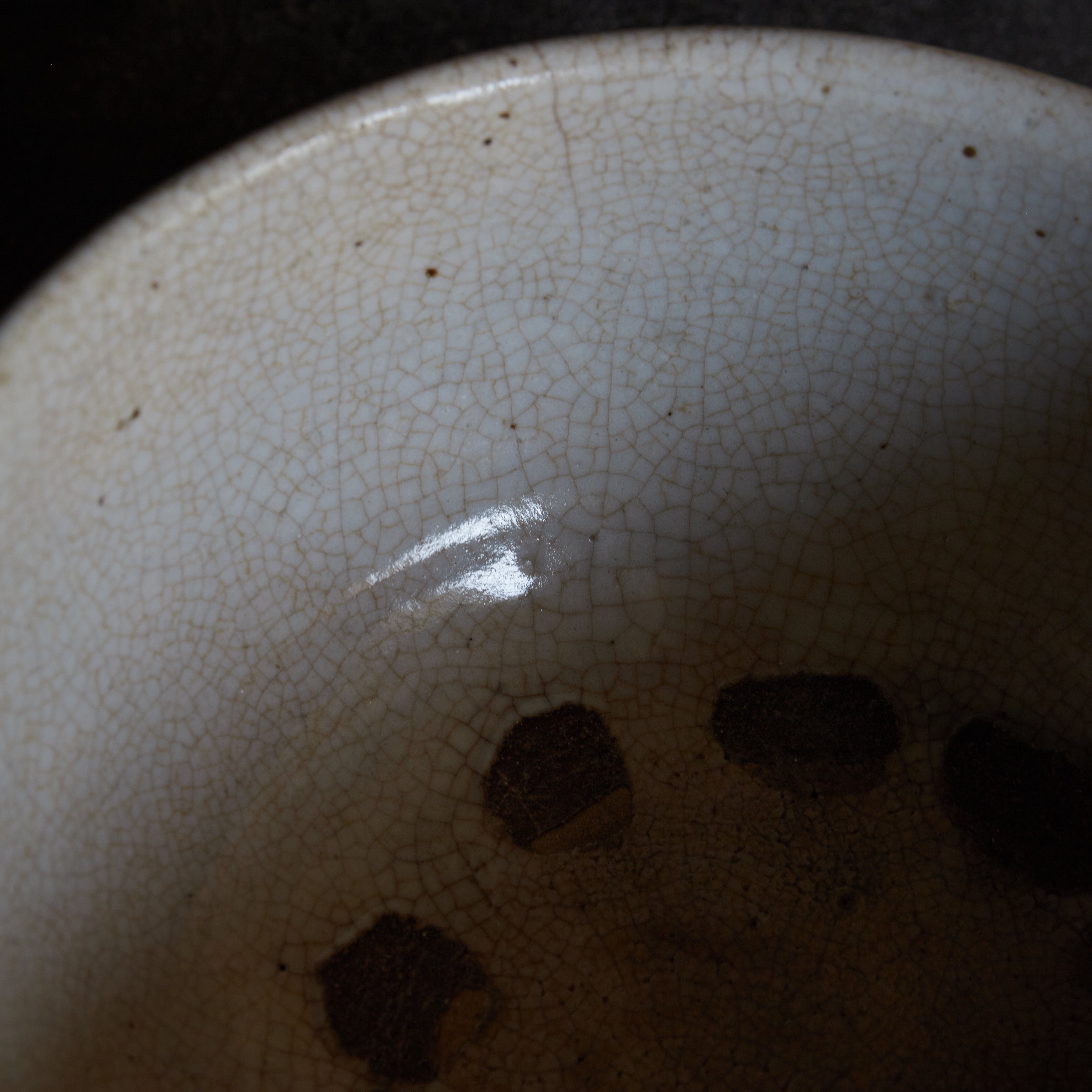
> Inquire about this or a similar itemThis piece is a Katade tea bowl from the late Joseon Dynasty. It features a slightly flared rim and a gently curving, plump form reminiscent of the shapes often seen in Goryeo tea bowls. The subtly irregular shape of the vessel fits comfortably in the hand, evoking the unpretentious craftsmanship of a seasoned potter. The foot is robustly carved, and the color of the iron-rich clay peeking through the foot's base creates a serene contrast with the soft, milky white glaze that envelops the entire bowl, resulting in a rustic yet powerful presence. The interior bears nine marks, a characteristic trace often found on late Joseon folk pottery, arising from the necessity of stacking vessels during firing in the kiln.
The term "Katade" refers to vessels made from clay or stoneware that have been fired to a hard finish, a designation given by Japanese tea practitioners to the white-glazed wares of the Joseon period. This aesthetic of unpretentious beauty, which does not flaunt technique, stands in stark contrast to the ornate Chinese tea bowls, yet resonates deeply with the spirit of wabi-sabi. Particularly in the realm of tea ceremony, these bowls were cherished as "Goryeo tea bowls." During that time, numerous commissioned pieces were brought over from the Japanese trading post in Busan. This bowl, however, possesses a pleasing demeanor as an ordinary utilitarian vessel, distinct from that lineage.

Its aesthetic placed emphasis not on surface splendor or technical virtuosity, but on forms and modes of being that quietly support a person’s inner life. Vessels and furniture were not simply tools for use; they may also have served as a kind of “place of self-cultivation,” ordering one’s daily conduct and state of mind. A plain jar in a scholar’s study, a simple desk, an undecorated brush rest—these were objects before the eye, but also mirrors of one’s posture and thought.
It is no accident that crafts from the Joseon period possess a presence that “does not say too much.” They were made to accompany the inner life—not to overwhelm the viewer, but to breathe alongside us and quietly restore a sense of order.
In white porcelain, for example, such “unintended phenomena” as the slight flow of glaze, variations in the clay body, or slight irregularities of form were accepted as they were. They embody a spirit of broad acceptance, unlike the modern aesthetic that treats perfection and uniformity as the highest values. This view reconsiders the boundaries between nature and human making, beauty and imperfection, object and mind; it is not an exaggeration to say that it existed beyond the frame of craft as the spirit of an age.
If we were to name it, the beauty of Joseon is not a “beauty of display” but a “beauty of resonance.” Its beauty lies not solely in the attraction of the object itself, but in the opportunity it gives us to reconsider how a person ought to be through the object. For this reason, an object must not speak too much; it must contain intervals, open space, and silence. I cannot help feeling that such thought runs beneath the making of these objects.
These values eventually crossed the sea and took deep root in Japan. In the world of chanoyu in particular, Joseon white porcelain and buncheong ware were already being used by the Momoyama period. Their simple, quiet character—different from the solemn grandeur of Chinese karamono—came to be embraced. The tea aesthetic of “clearing the mind before what does not speak” resonated deeply with the silence and imperfection held in Joseon vessels, nurturing a gaze that found in them the spirit of wabi-sabi.
With the arrival of the modern era, thinkers of the Mingei movement such as Yanagi Sōetsu and Kawai Kanjirō found in Joseon vessels “the power to purify a person” and “a form of life as it ought to be.” At a time when craft was being forgotten, these objects were welcomed not merely as old vessels but, with profound sympathy and respect, as presences reflecting a way of living itself.
When I, living in the present day, encounter the crafts of Joseon, I am moved once again by their stillness. They contain the thought of an age that asked how a person should live and how one should be. That thought has not faded; it continues to resonate clearly even now.
Choose options
Change language
