

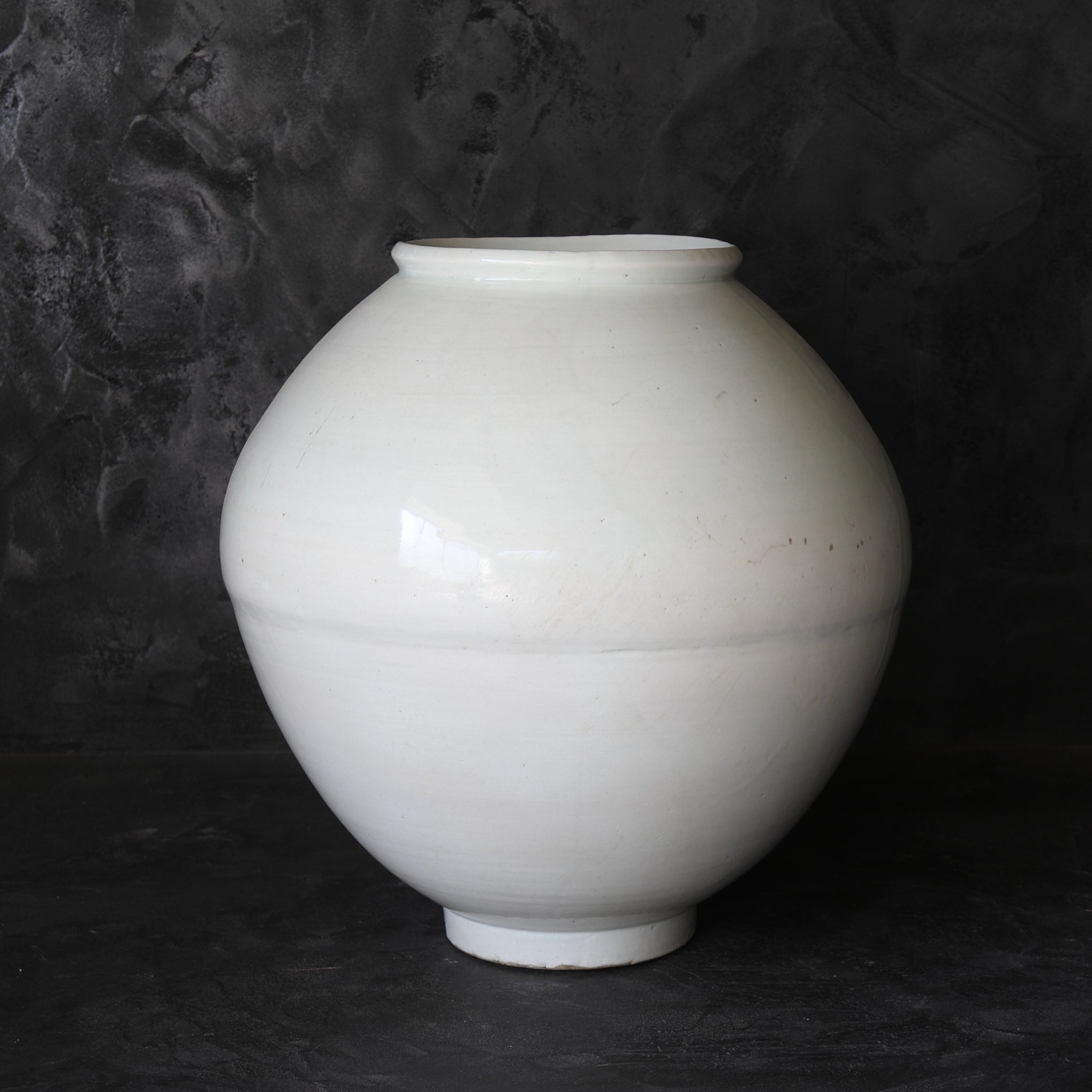
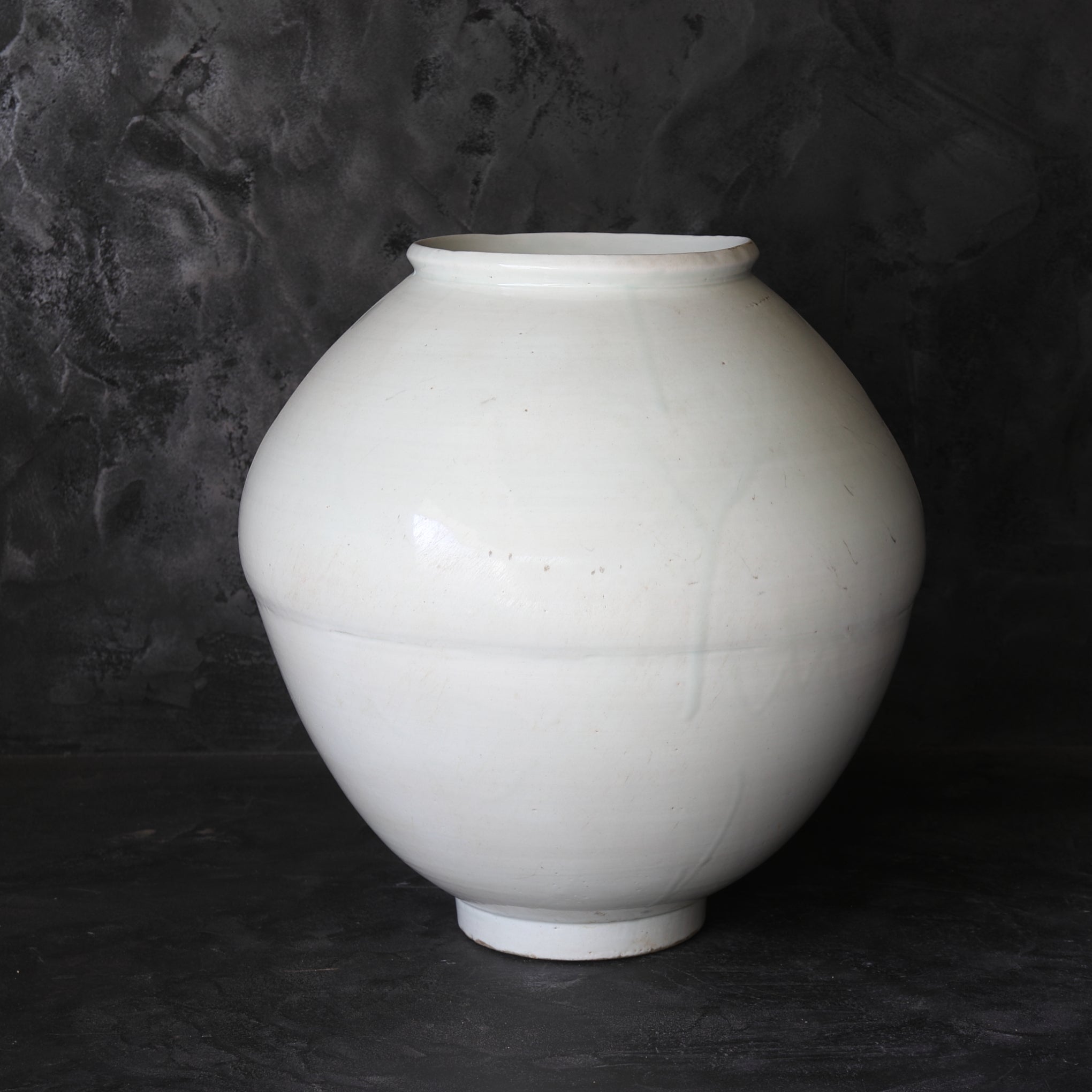
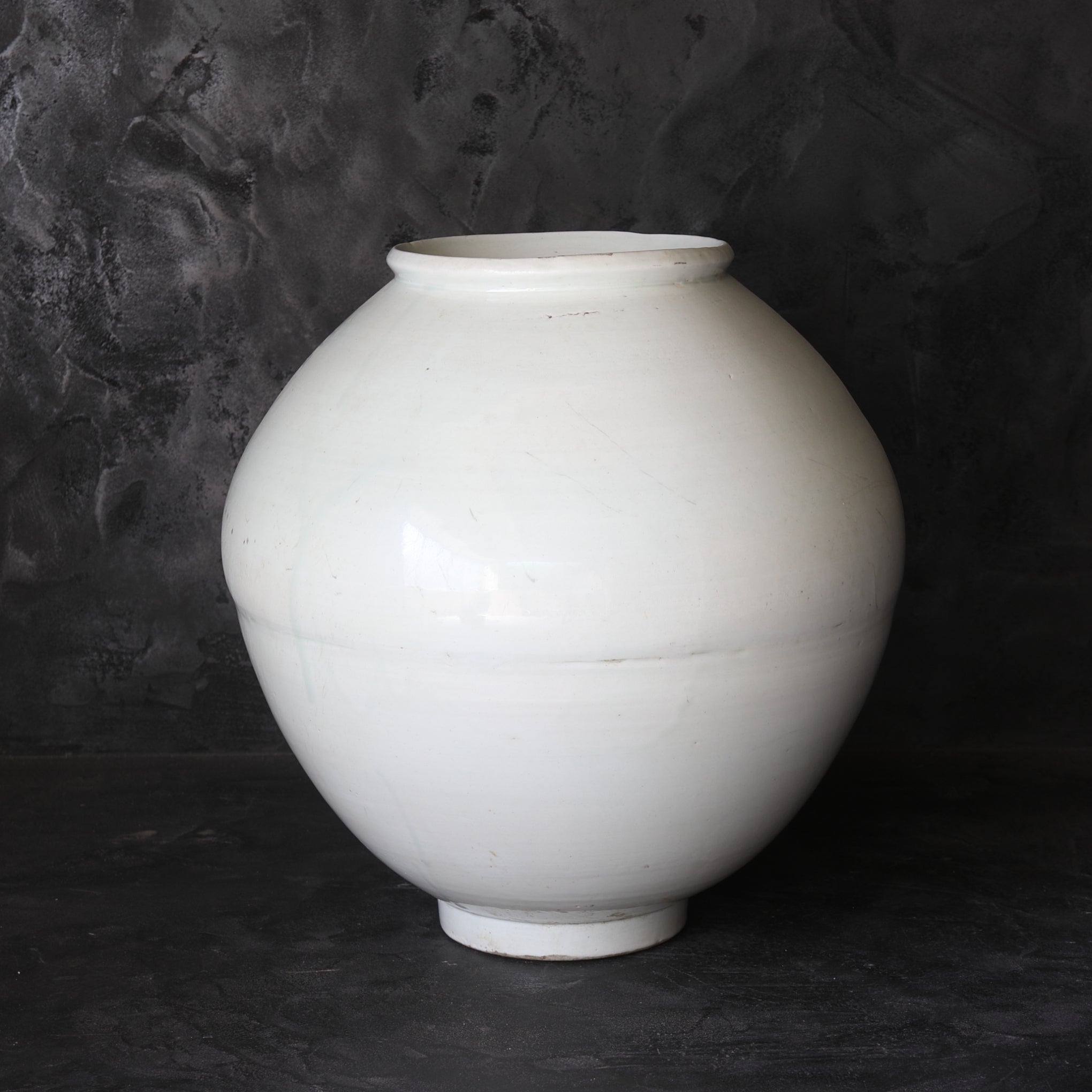
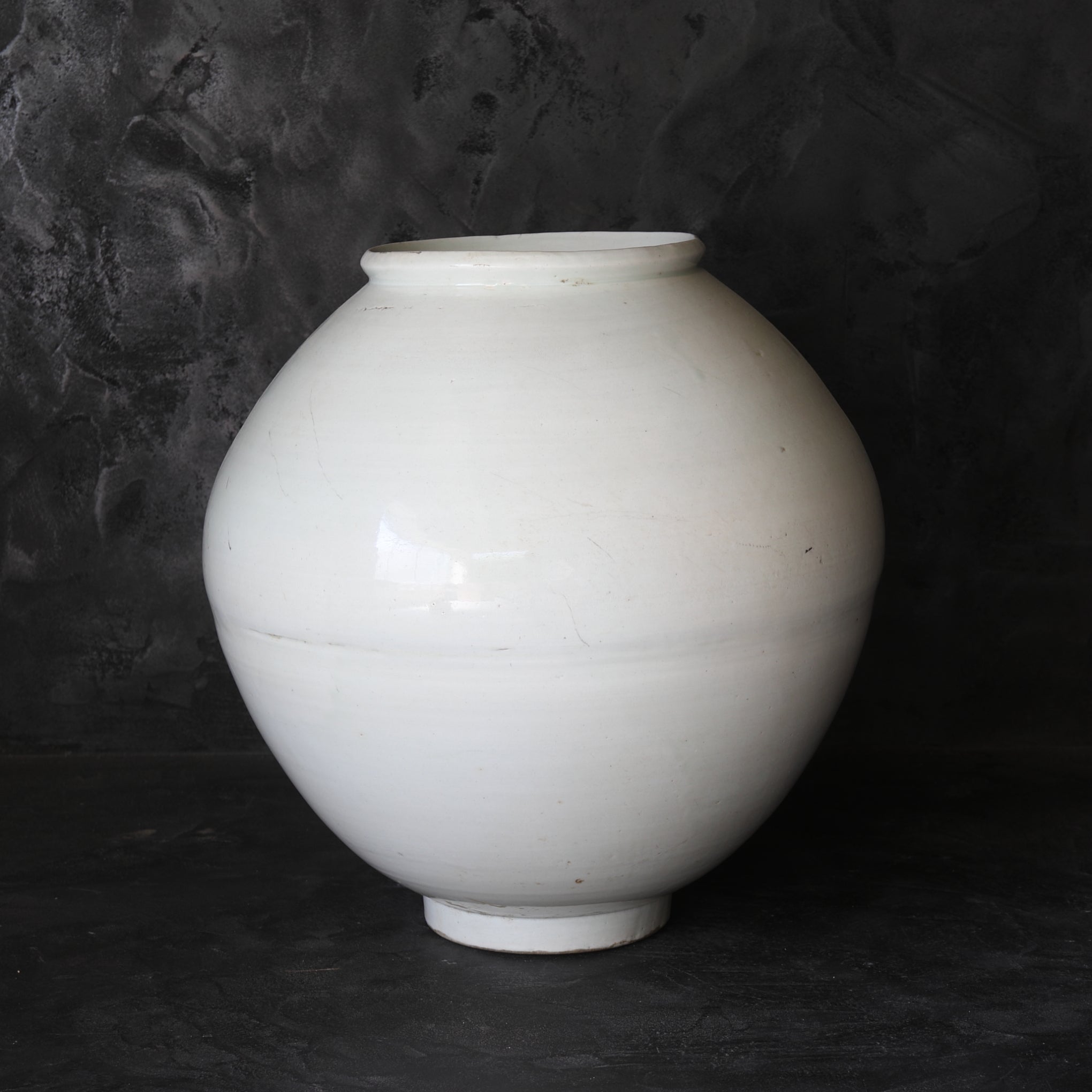

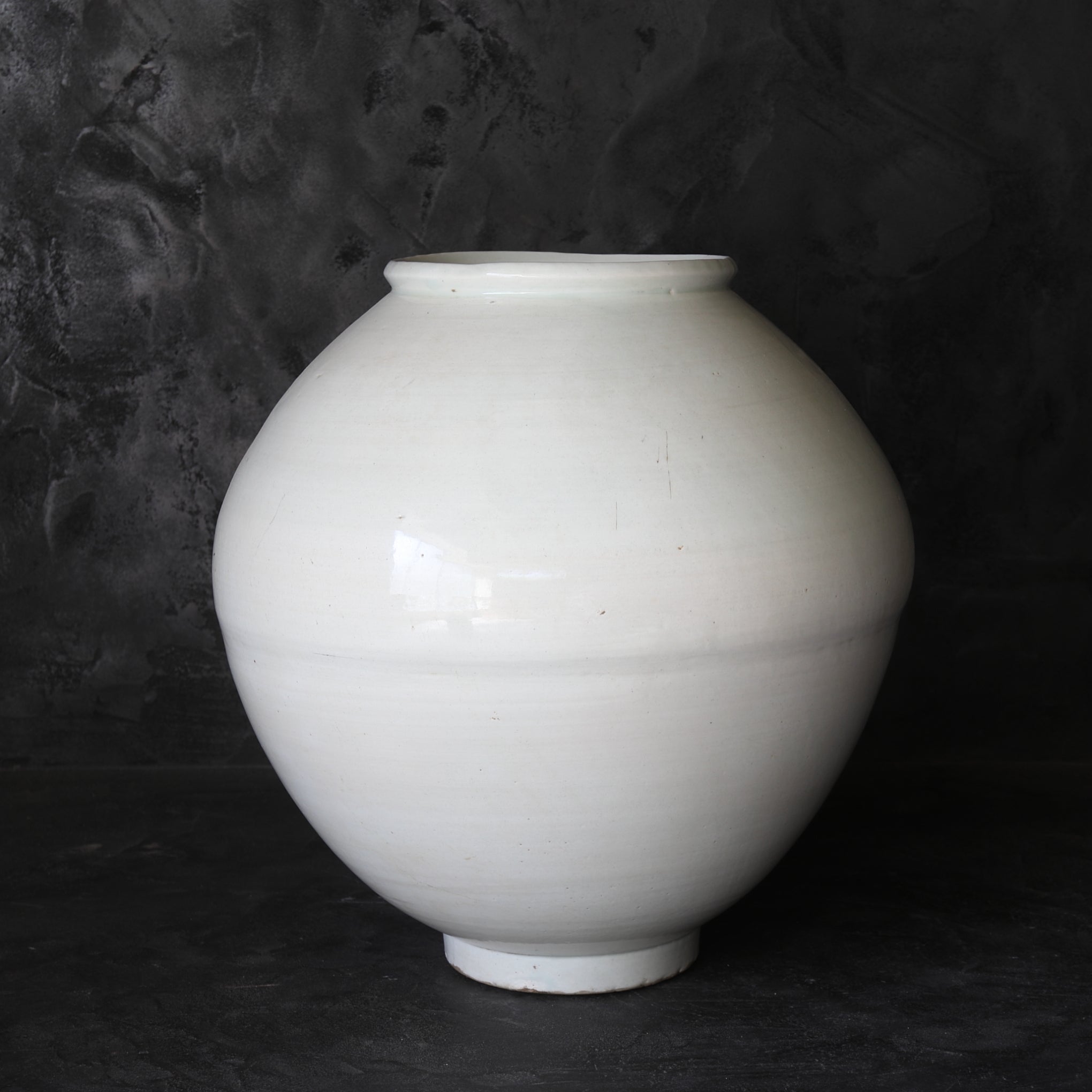


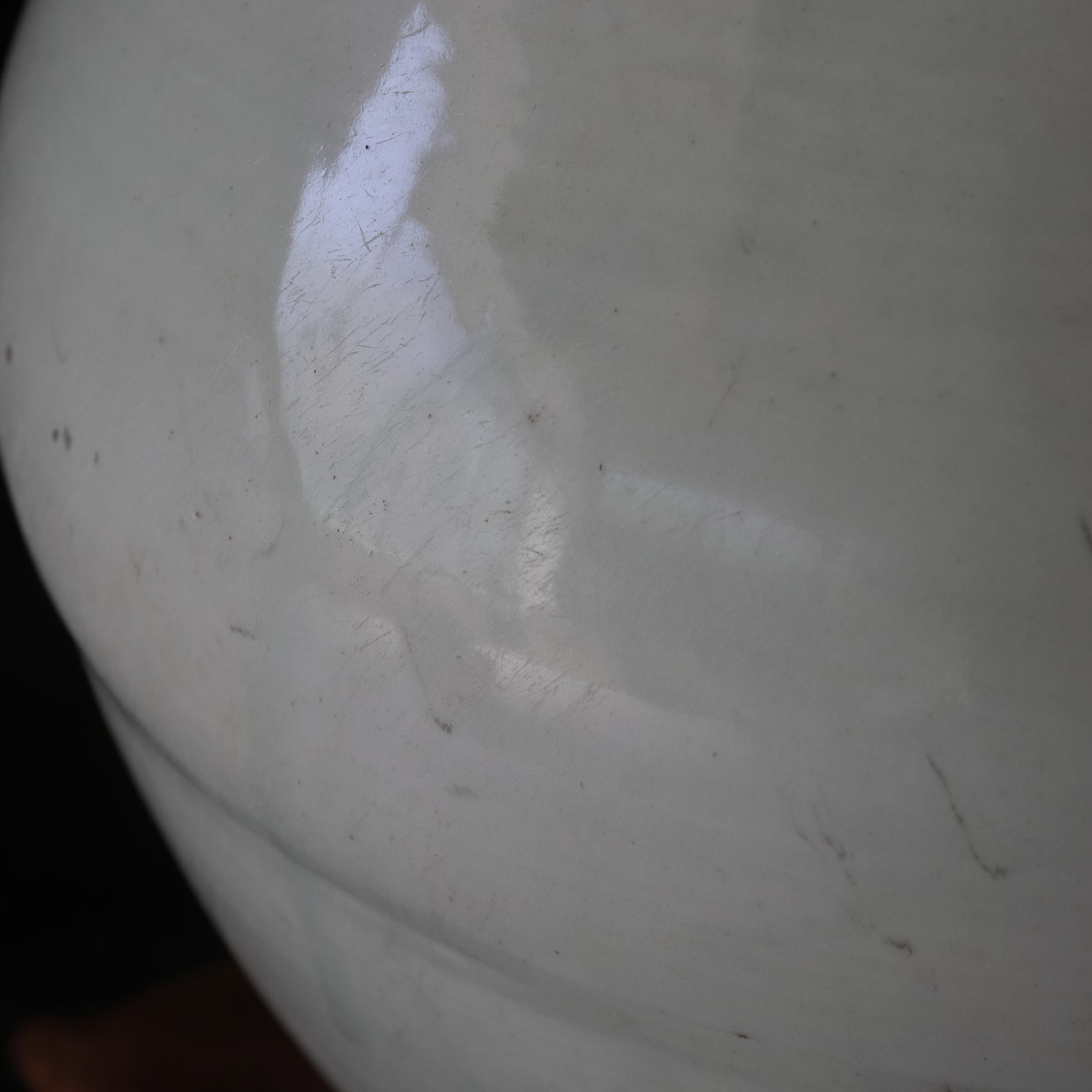
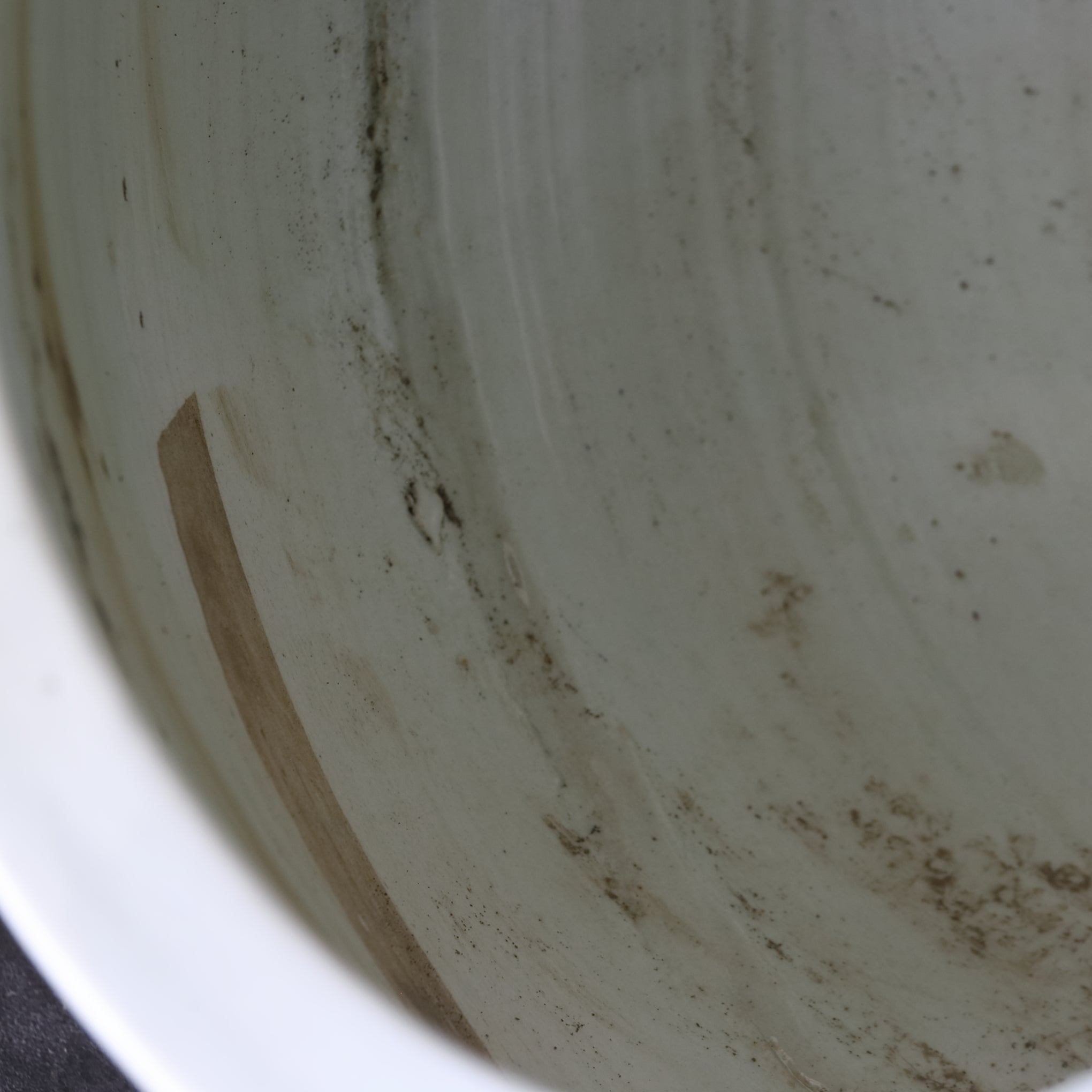
MOON JAR, White porcelain, Joseon Dynasty (1392–1897 CE)
Tax excluded. Import duties may apply. Shipping costs are calculated at checkout.
Each piece is carefully packed for international delivery.
Numerous product photos are available for you to examine the details and condition. Should you have any questions, please do not hesitate to contact us.
> Inquire about this productThe Moon Jar is a distinguished piece crafted during the mid-Joseon Dynasty, also known as the Lantern Jar or Full Moon Jar (Dalhanari). The Joseon period was heavily influenced by Confucian thought, which fostered a sensitivity in the arts that emphasized the beauty of pure white porcelain, characterized by its restrained decoration. The hallmark of porcelain from this era is its pristine white hue, with subtle variations that are rarely identical, classified into shades such as milky white, snow white, grayish white, and bluish white.
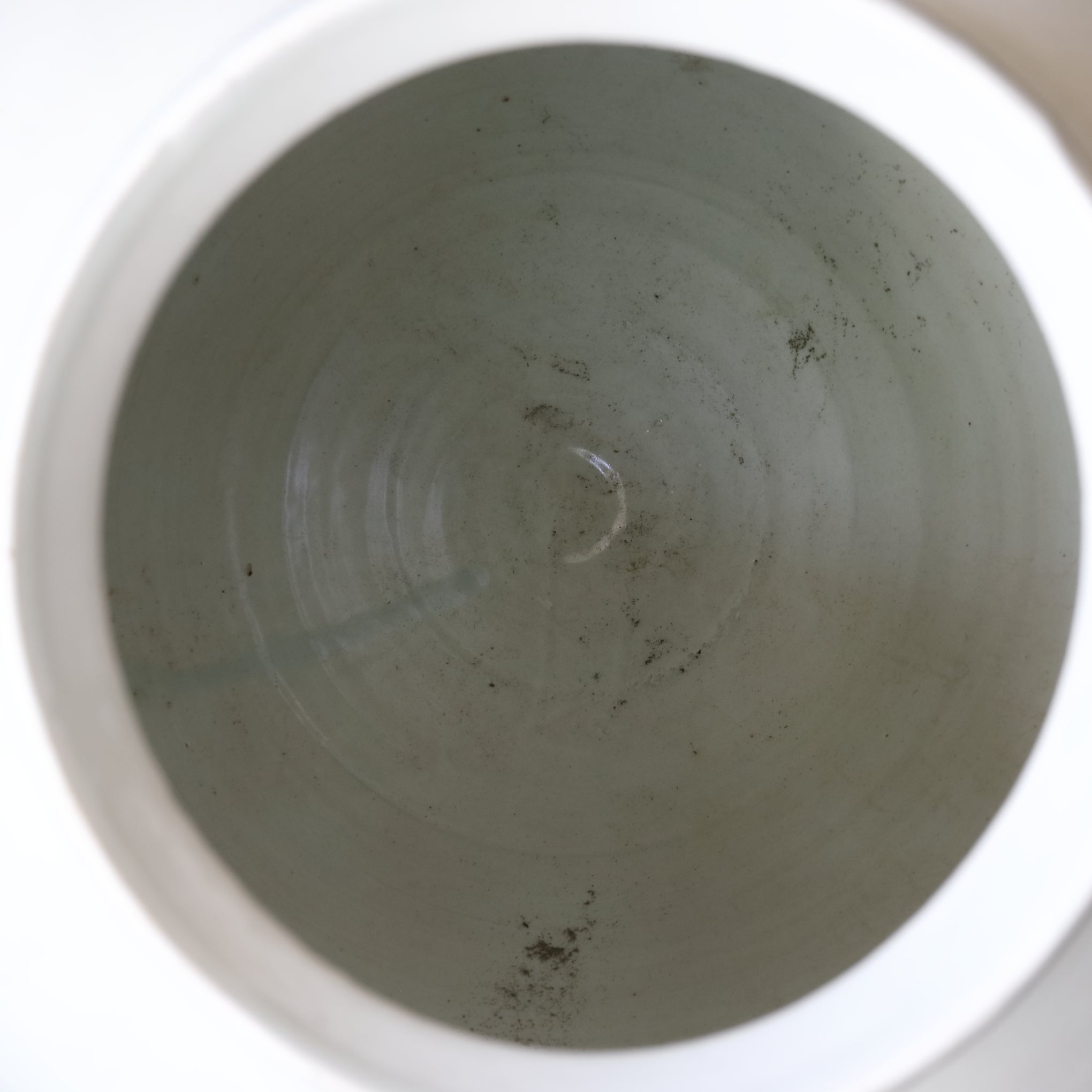
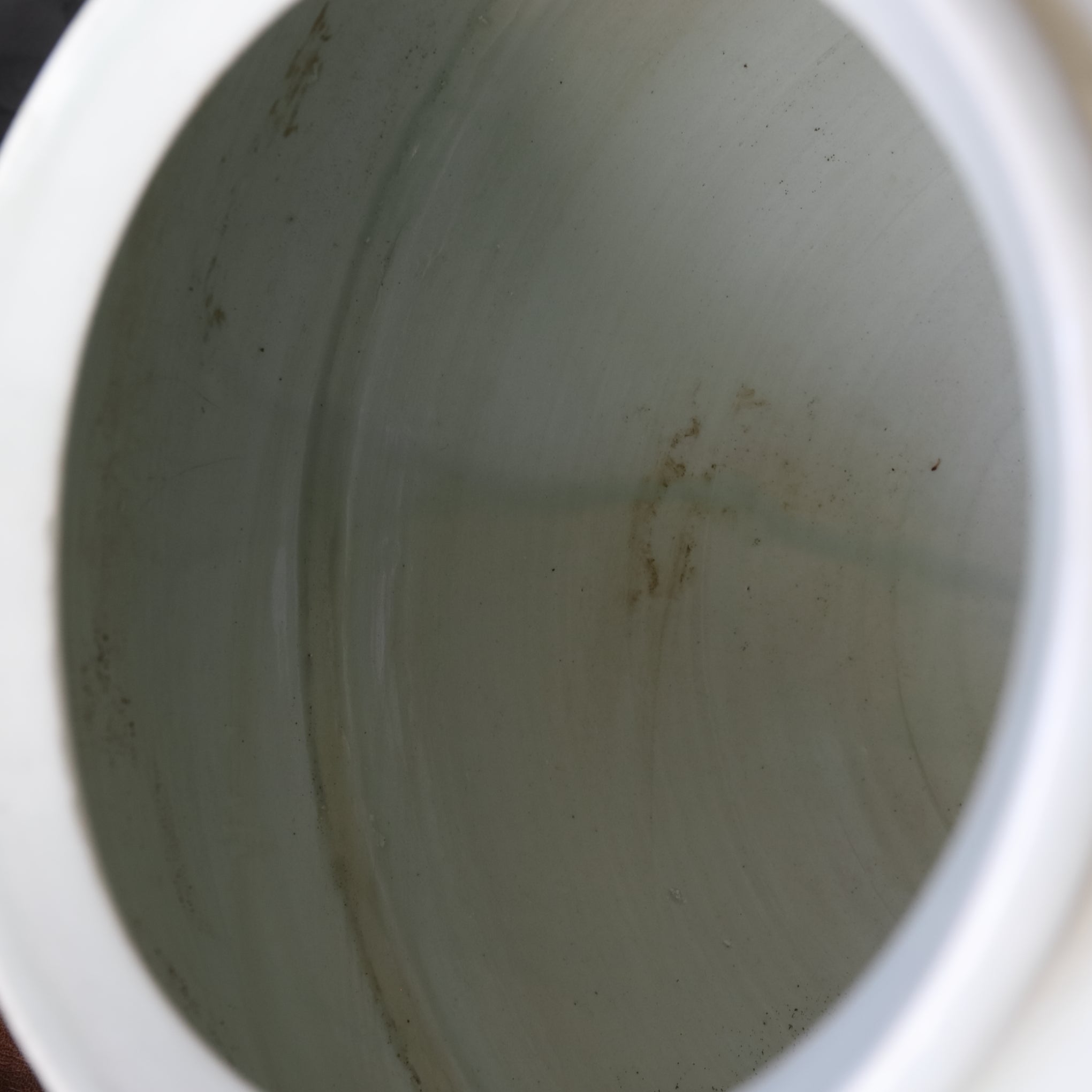
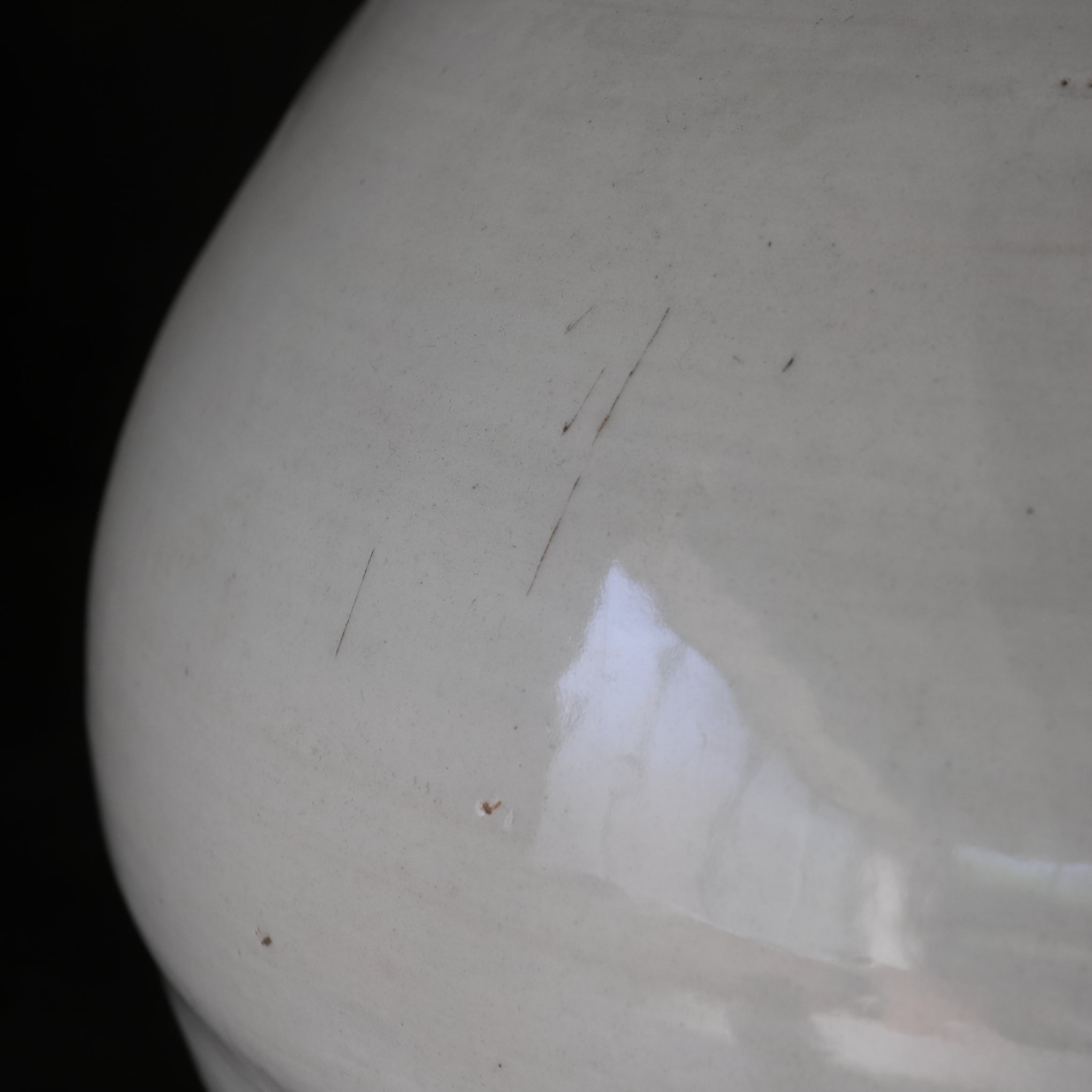
The name "Moon Jar" was bestowed by the Korean abstract painter Kim Whanki, inspired by its rounded form reminiscent of a full moon. Its soft, flowing curves and robust body evoke a sense of both grandeur and tranquility. Such forms were predominantly produced in the 17th century. The white of the Moon Jar does not conform to the pure white typical of early Joseon porcelain, nor does it align with the grayish whites of mid-Joseon ceramics, or the bluish tones frequently produced at the Bunwon kiln. While often described as milky white, not all Moon Jars exhibit this quality; many display a variety of white tones within a single vessel. Additionally, one may observe yellowish spots resulting from oxidation or incomplete combustion, as well as discoloration from liquid absorption in jars that were used for storage.
The Moon Jar consistently reveals diverse shades of white, subtly shifting over time. This organic transformation of white, along with its tonal variety, may be what captivates us. Furthermore, it is exceedingly rare to find large jars in global ceramics that are entirely devoid of decoration. The expansive white sphere of the Moon Jar represents a blank canvas, stimulating our innate desire for simplicity. Once any form of painting or ornamentation is applied to its surface, it ceases to be regarded as a Moon Jar. This emptiness is a perfect expression of moderation and anonymity, devoid of desire or self-centeredness. The randomness inherent in its form possesses a compelling allure. The diverse thoughts and inspirations evoked by the Moon Jar’s solemn yet delicate surface embody the aesthetic sensibilities and beauty appreciated by people of its time.
This particular piece is in excellent condition, maintaining an almost flawless form. It exhibits a rich milky white hue. Due to its size, the Moon Jar is typically too large to be formed as a single piece on a potter's wheel; thus, it is often constructed by joining an upper and lower hemisphere, as is the case with this jar. This method of joining the two hemispheres is believed to have originated in the early Ming Dynasty (1368–1644) and is highly effective for creating large jars. Most large Chinese jars made using this technique are smoothly trimmed, rendering the connection line at the center of the body nearly invisible.
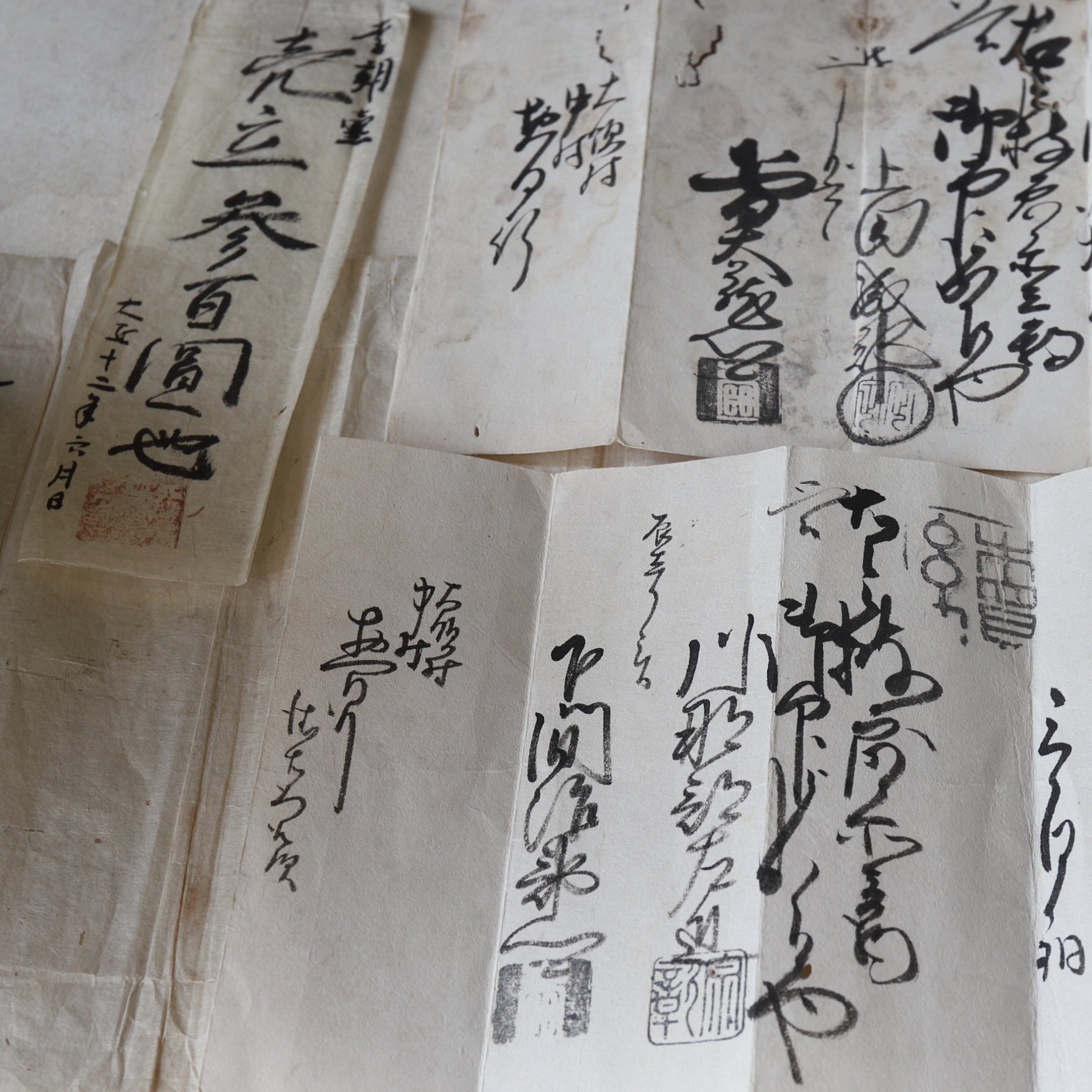
Conversely, the joining lines of Korean Moon Jars tend to crack or warp during firing, often resulting in an inability to form a perfect sphere, as seen in this piece. This slight irregularity leads most Moon Jars to take on the shape of a waning moon rather than a full moon. However, this asymmetry contributes to its beauty, embodying a beauty of randomness that evokes the subtle changes and movements found in nature. This piece comes with a purchase slip from the Taisho era, indicating it was acquired by a previous collector from an antique shop. The condition of the paper is poor, with signs of insect damage.

Its aesthetic placed emphasis not on surface splendor or technical virtuosity, but on forms and modes of being that quietly support a person’s inner life. Vessels and furniture were not simply tools for use; they may also have served as a kind of “place of self-cultivation,” ordering one’s daily conduct and state of mind. A plain jar in a scholar’s study, a simple desk, an undecorated brush rest—these were objects before the eye, but also mirrors of one’s posture and thought.
It is no accident that crafts from the Joseon period possess a presence that “does not say too much.” They were made to accompany the inner life—not to overwhelm the viewer, but to breathe alongside us and quietly restore a sense of order.
In white porcelain, for example, such “unintended phenomena” as the slight flow of glaze, variations in the clay body, or slight irregularities of form were accepted as they were. They embody a spirit of broad acceptance, unlike the modern aesthetic that treats perfection and uniformity as the highest values. This view reconsiders the boundaries between nature and human making, beauty and imperfection, object and mind; it is not an exaggeration to say that it existed beyond the frame of craft as the spirit of an age.
If we were to name it, the beauty of Joseon is not a “beauty of display” but a “beauty of resonance.” Its beauty lies not solely in the attraction of the object itself, but in the opportunity it gives us to reconsider how a person ought to be through the object. For this reason, an object must not speak too much; it must contain intervals, open space, and silence. I cannot help feeling that such thought runs beneath the making of these objects.
These values eventually crossed the sea and took deep root in Japan. In the world of chanoyu in particular, Joseon white porcelain and buncheong ware were already being used by the Momoyama period. Their simple, quiet character—different from the solemn grandeur of Chinese karamono—came to be embraced. The tea aesthetic of “clearing the mind before what does not speak” resonated deeply with the silence and imperfection held in Joseon vessels, nurturing a gaze that found in them the spirit of wabi-sabi.
With the arrival of the modern era, thinkers of the Mingei movement such as Yanagi Sōetsu and Kawai Kanjirō found in Joseon vessels “the power to purify a person” and “a form of life as it ought to be.” At a time when craft was being forgotten, these objects were welcomed not merely as old vessels but, with profound sympathy and respect, as presences reflecting a way of living itself.
When I, living in the present day, encounter the crafts of Joseon, I am moved once again by their stillness. They contain the thought of an age that asked how a person should live and how one should be. That thought has not faded; it continues to resonate clearly even now.
Choose options
Tax excluded. Import duties may apply. Shipping costs are calculated at checkout.
Change language
