

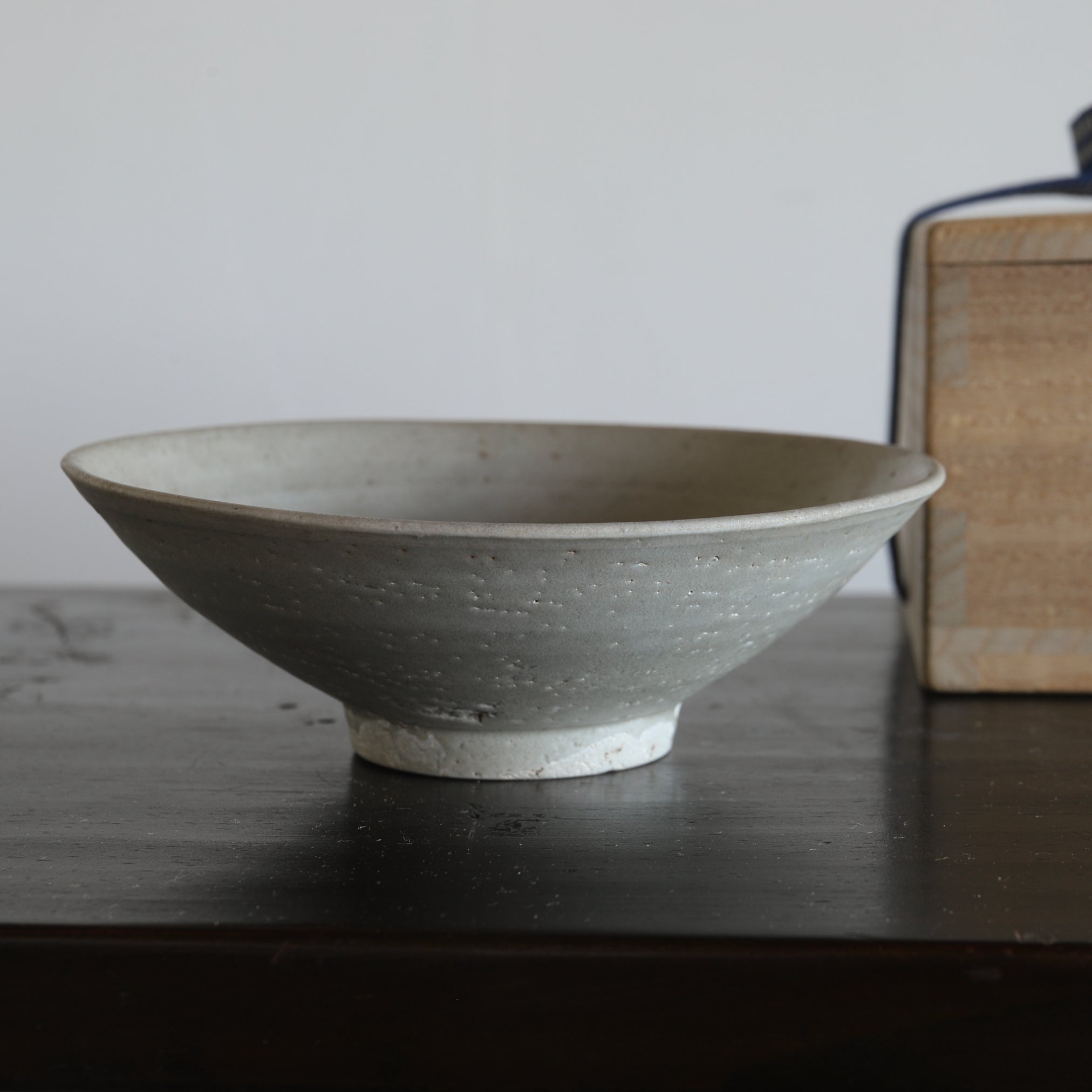
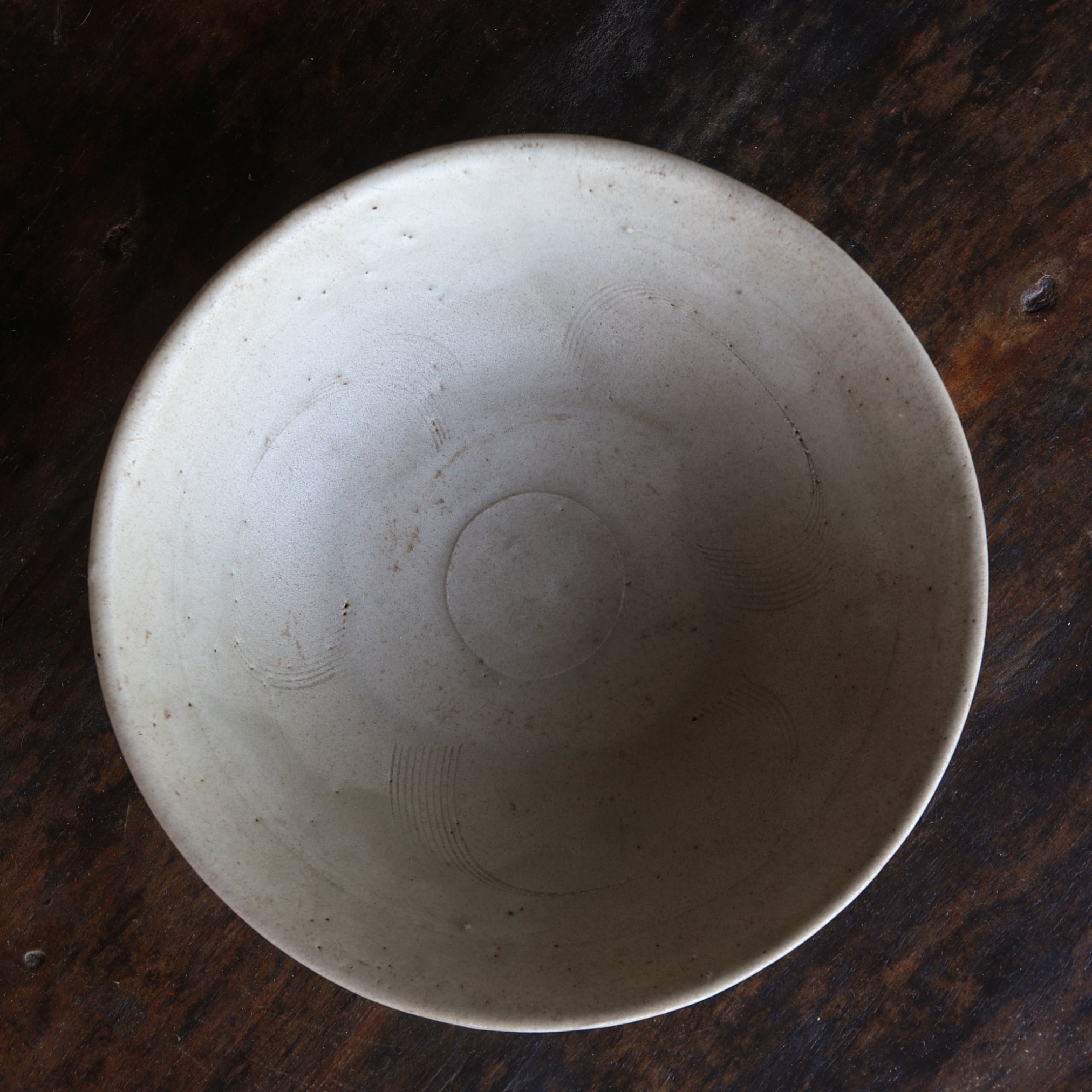
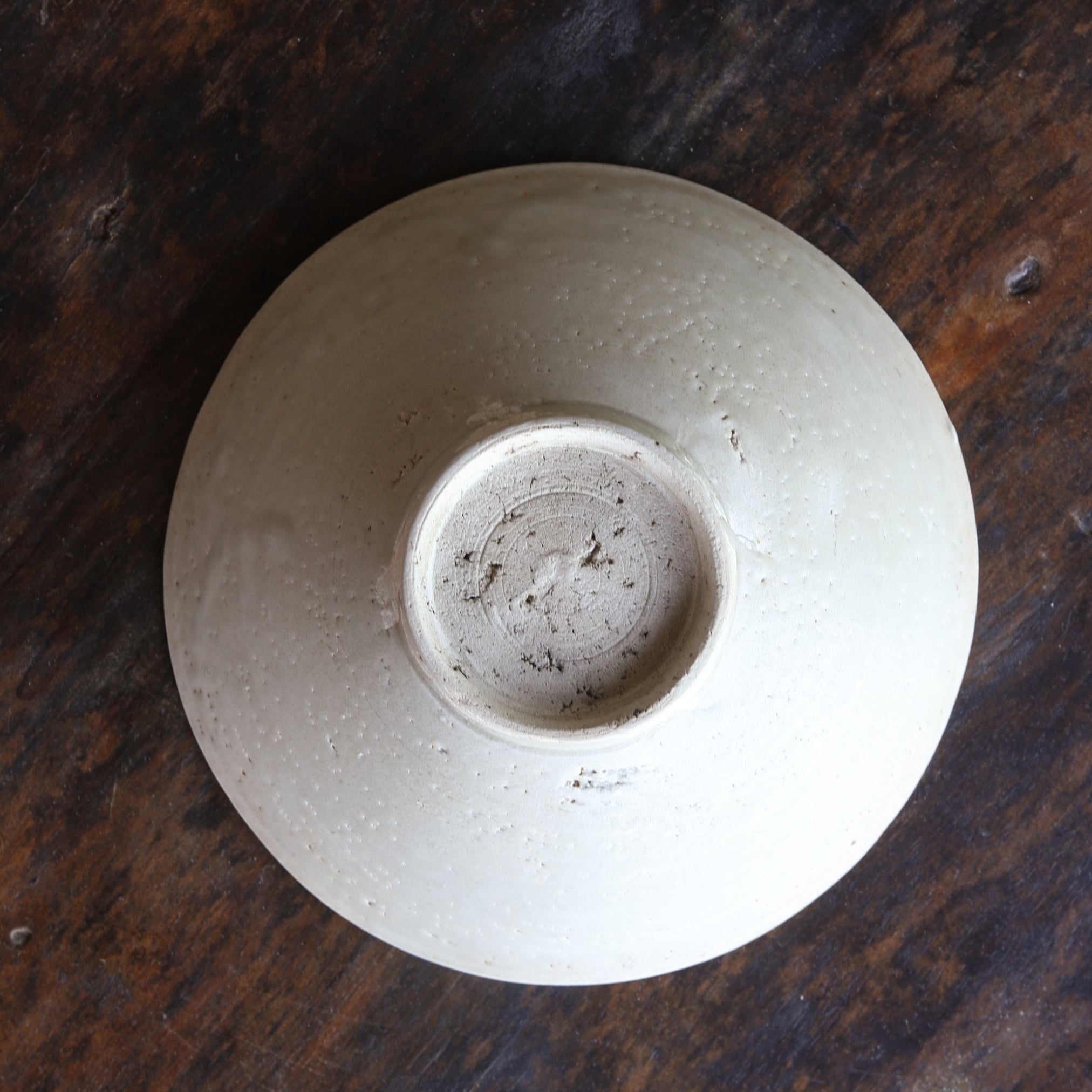
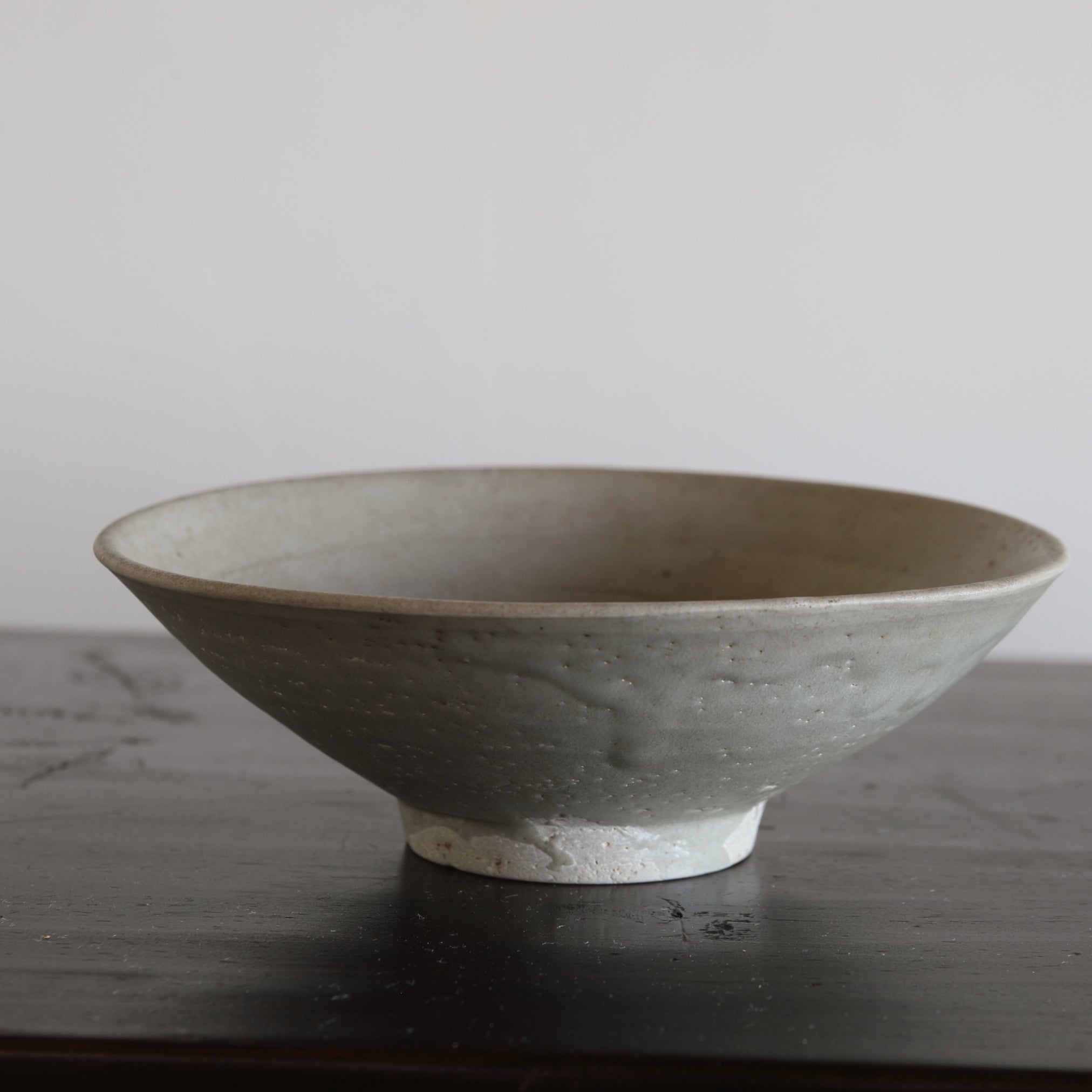
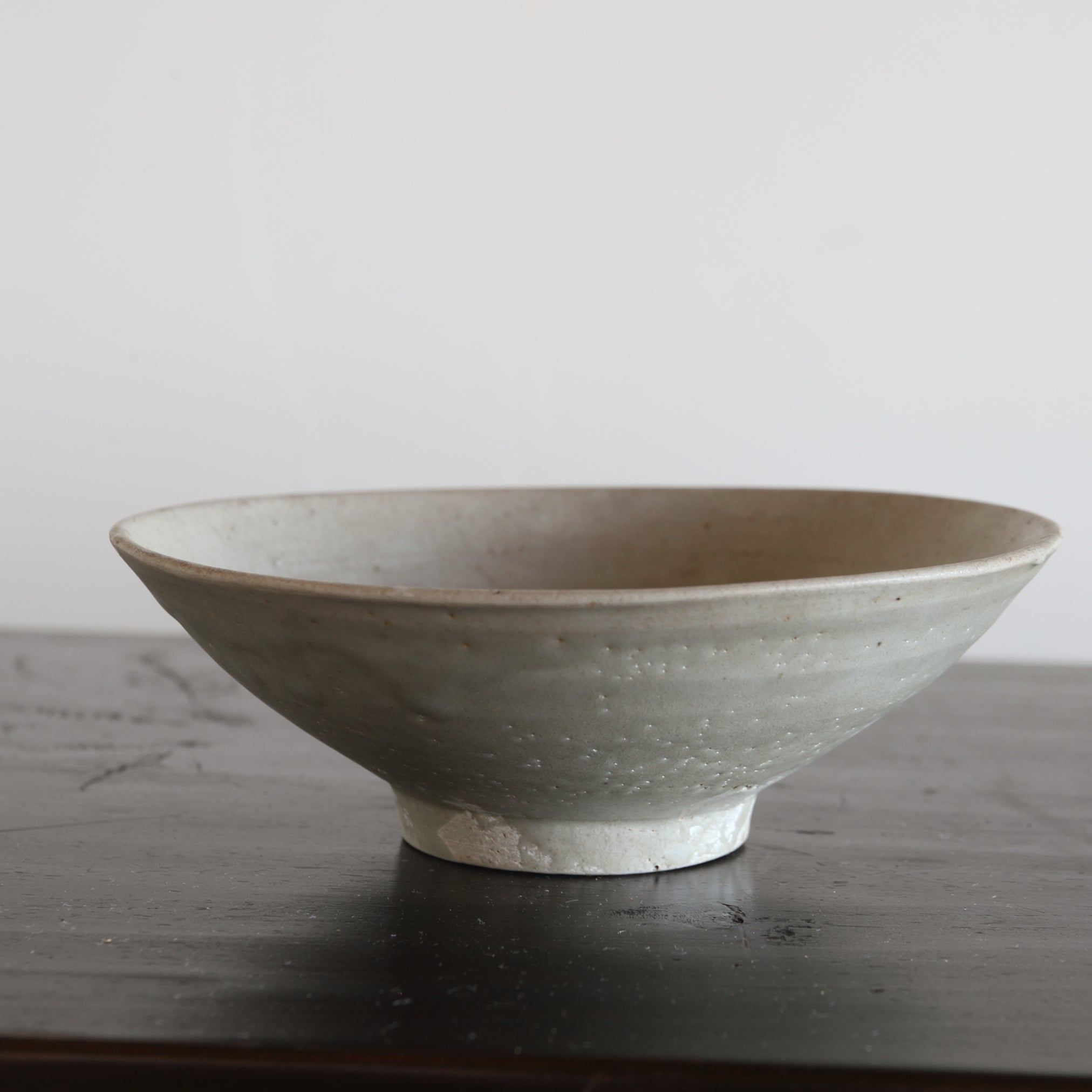
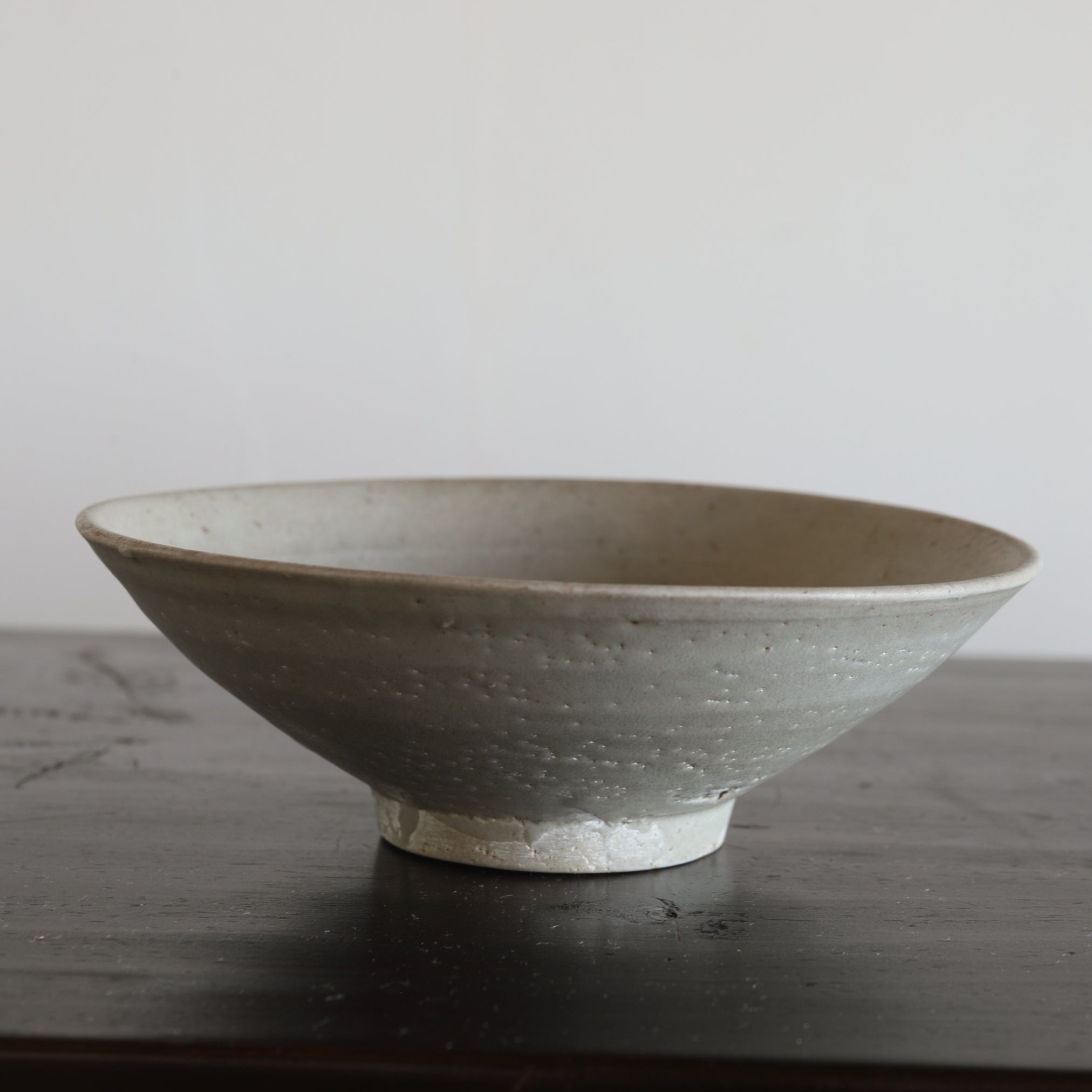
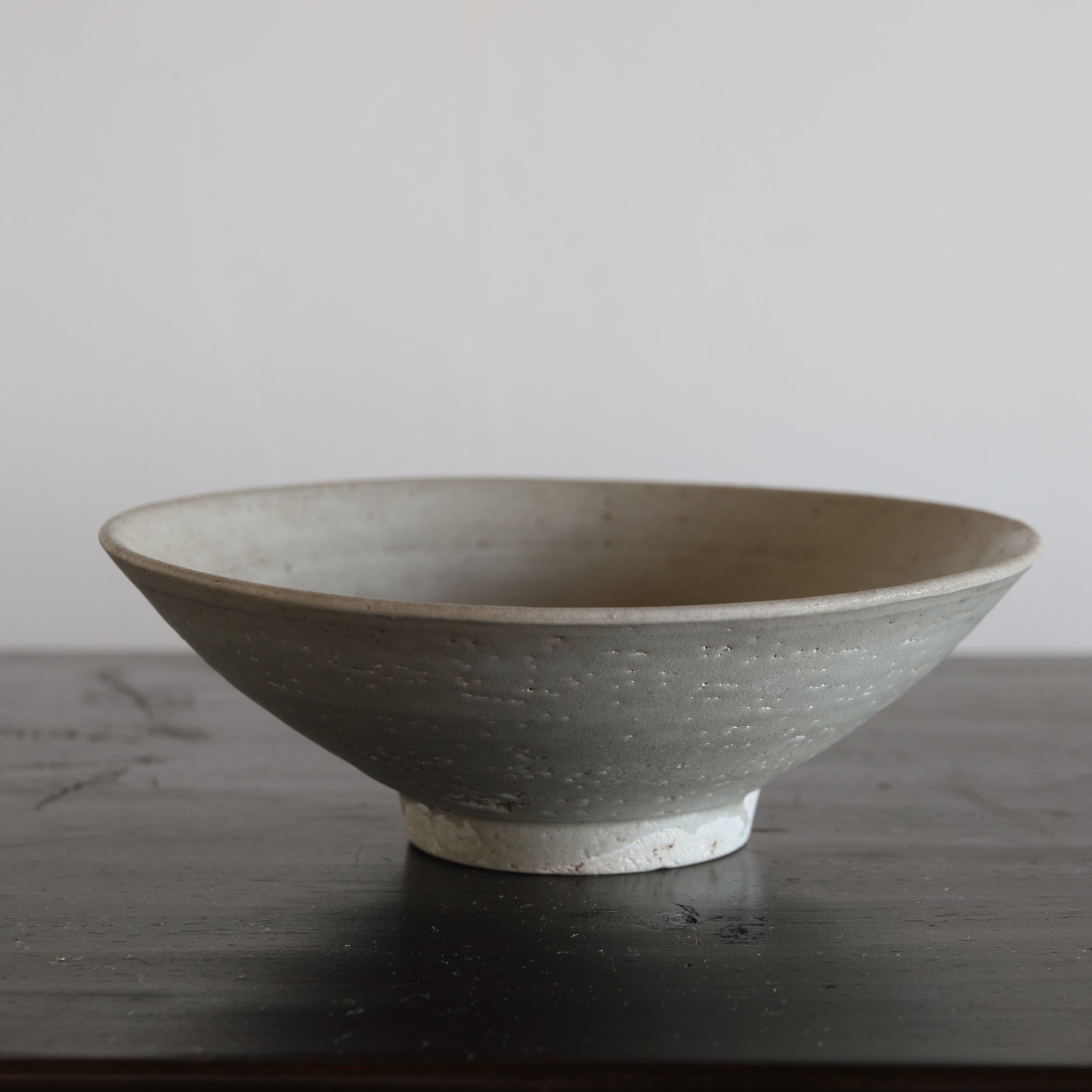
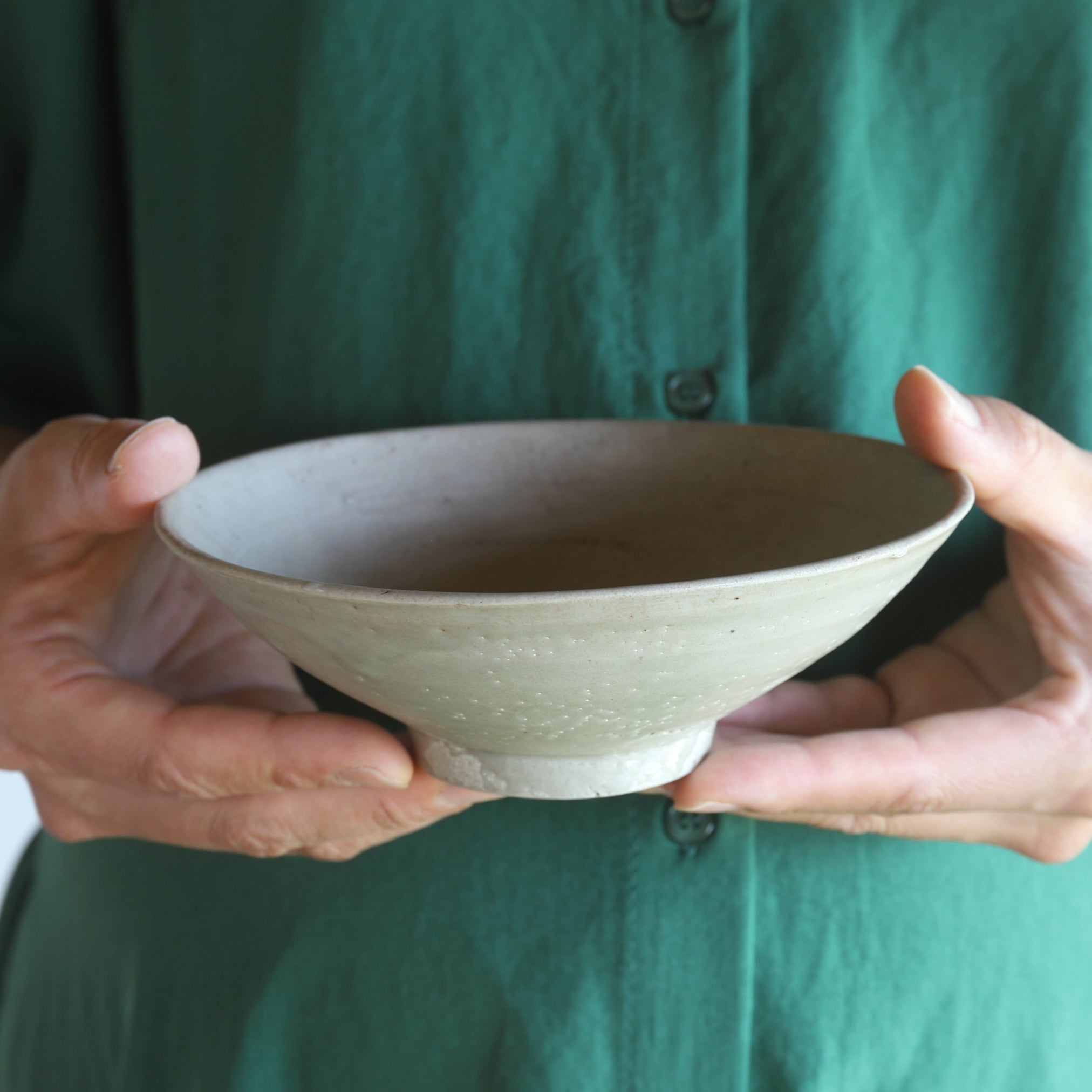
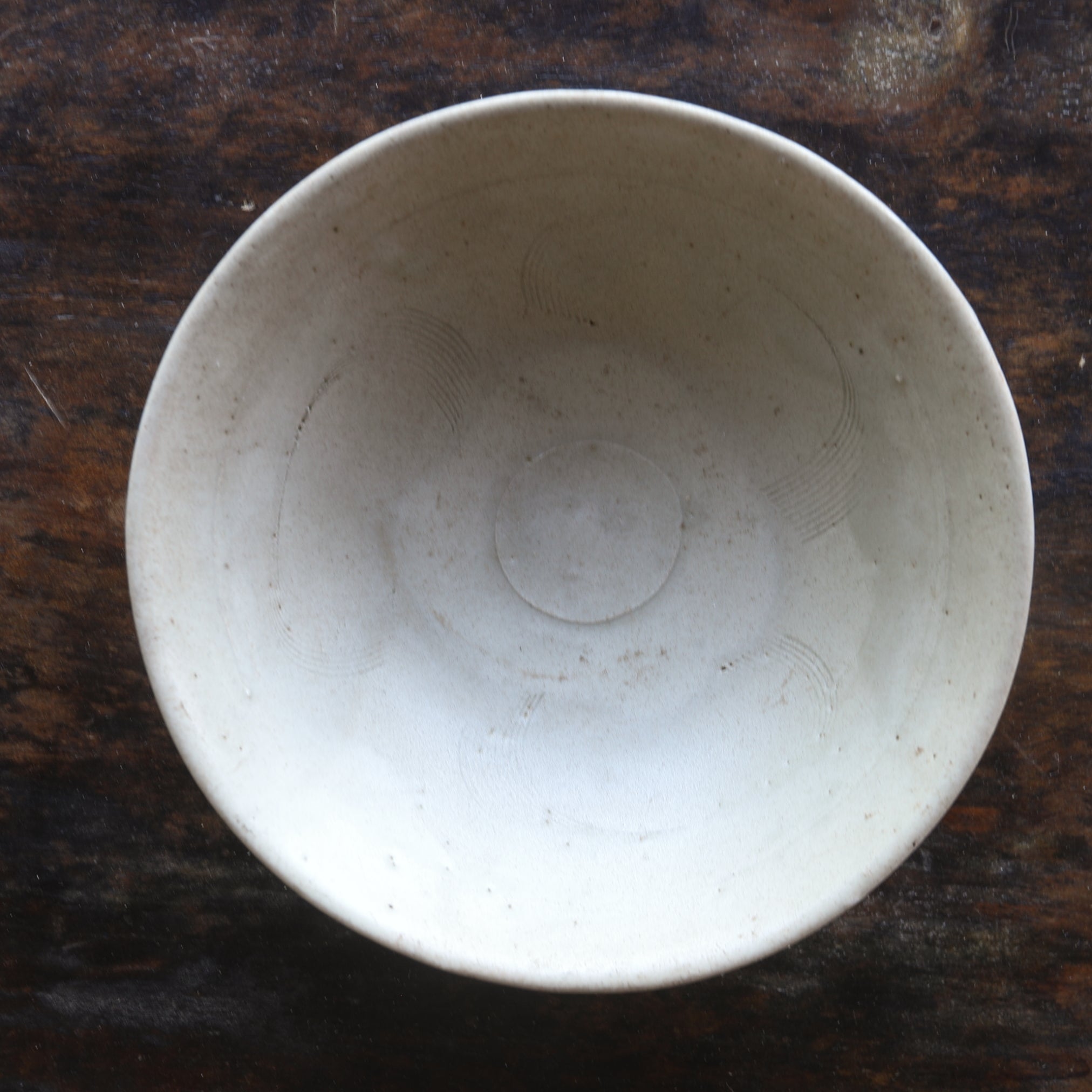
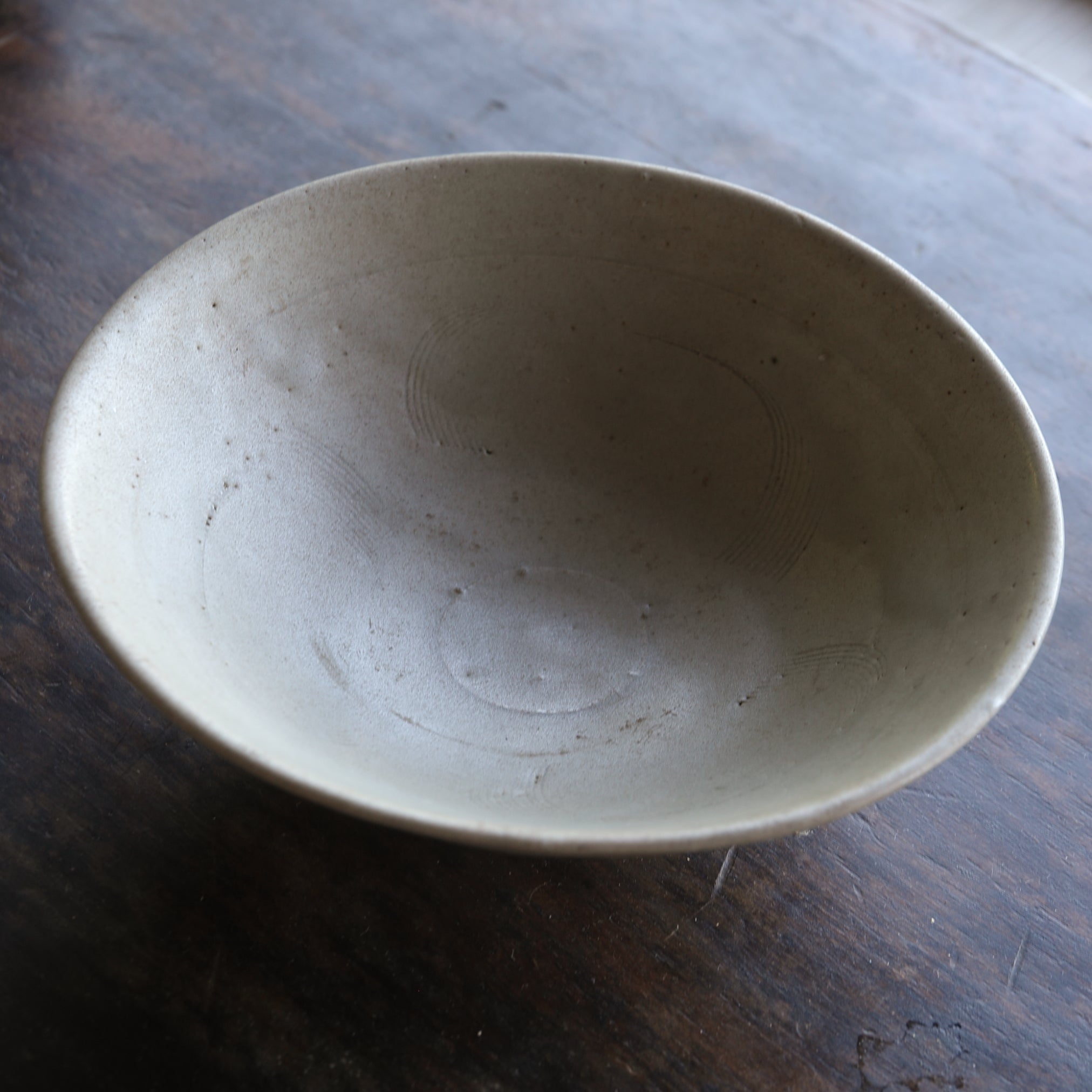
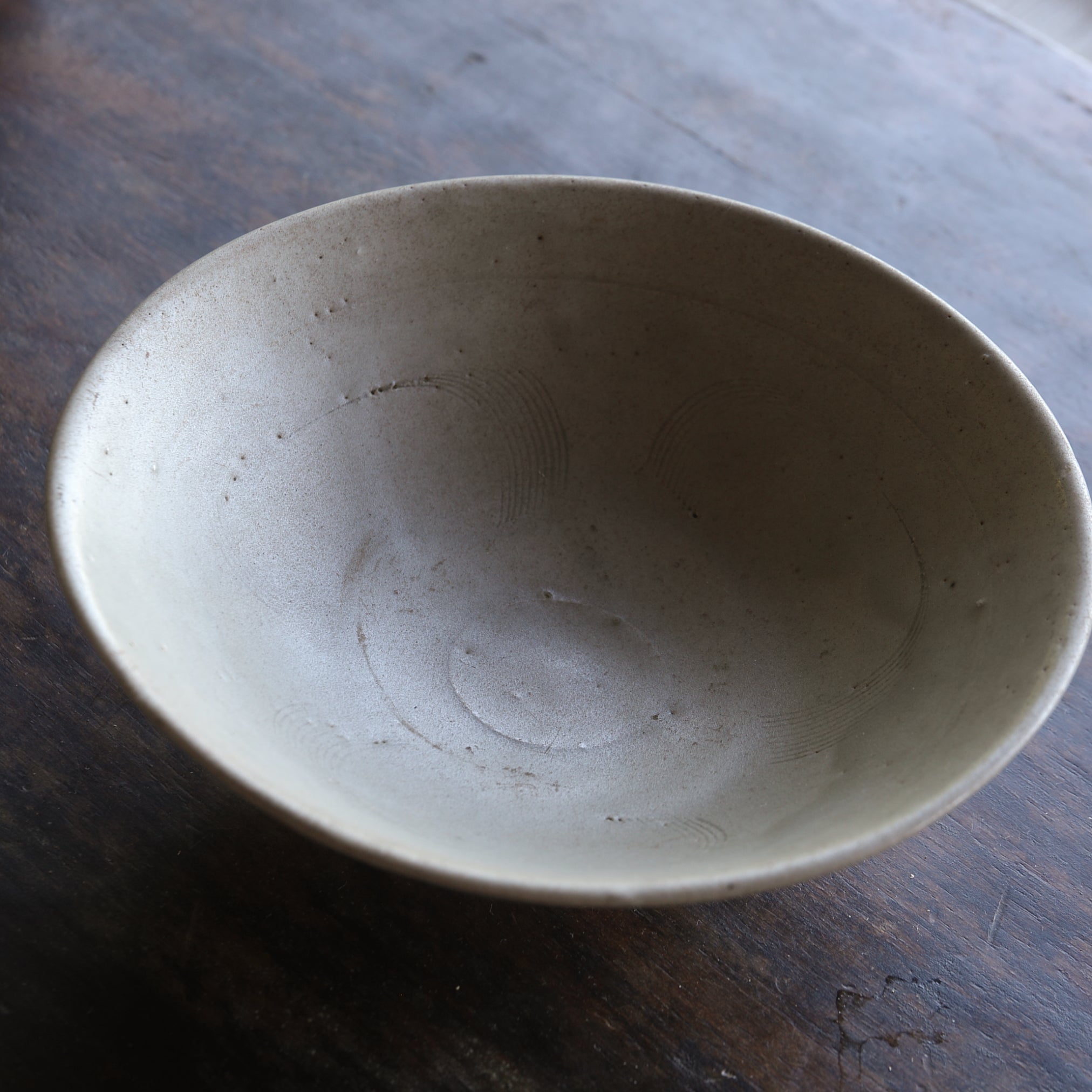
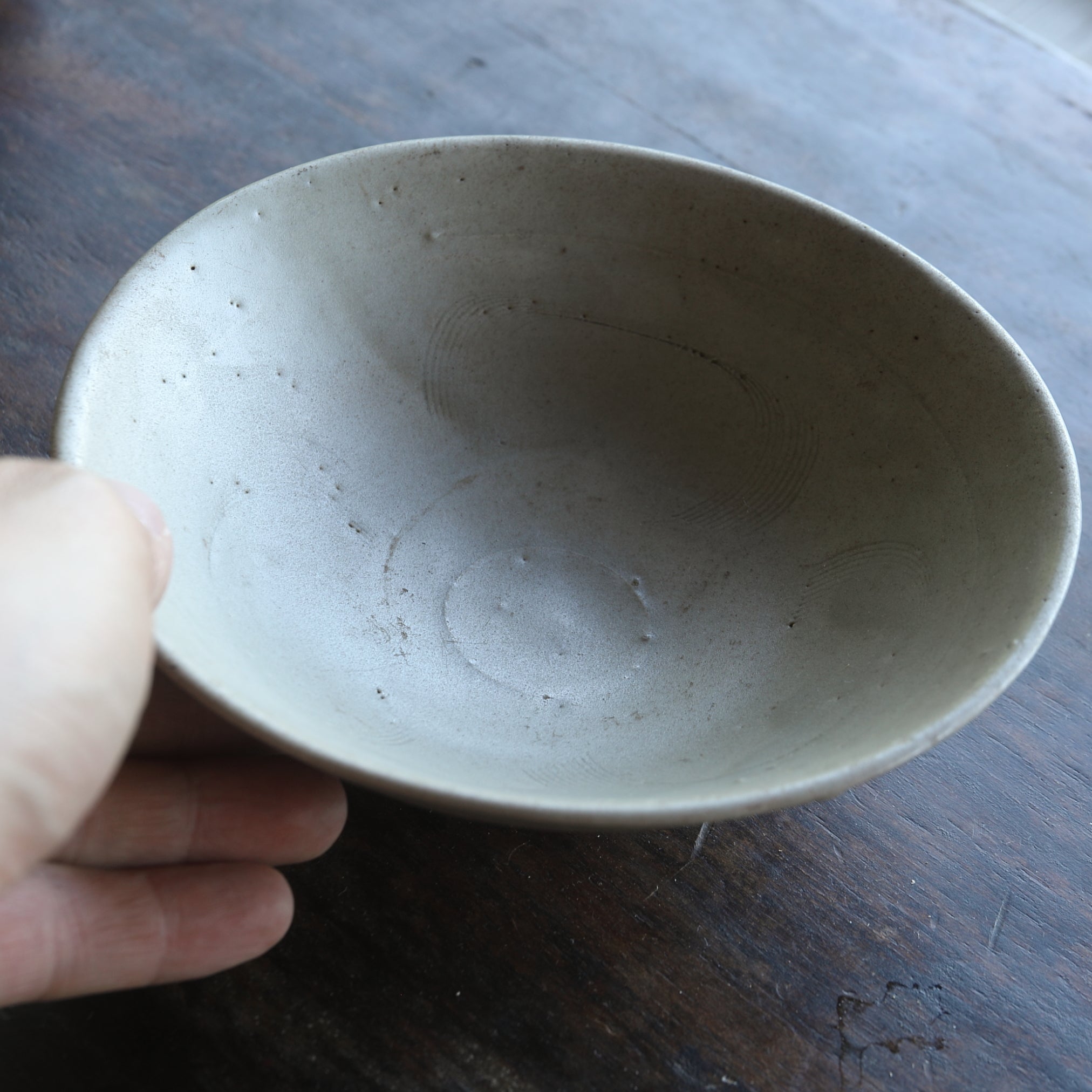
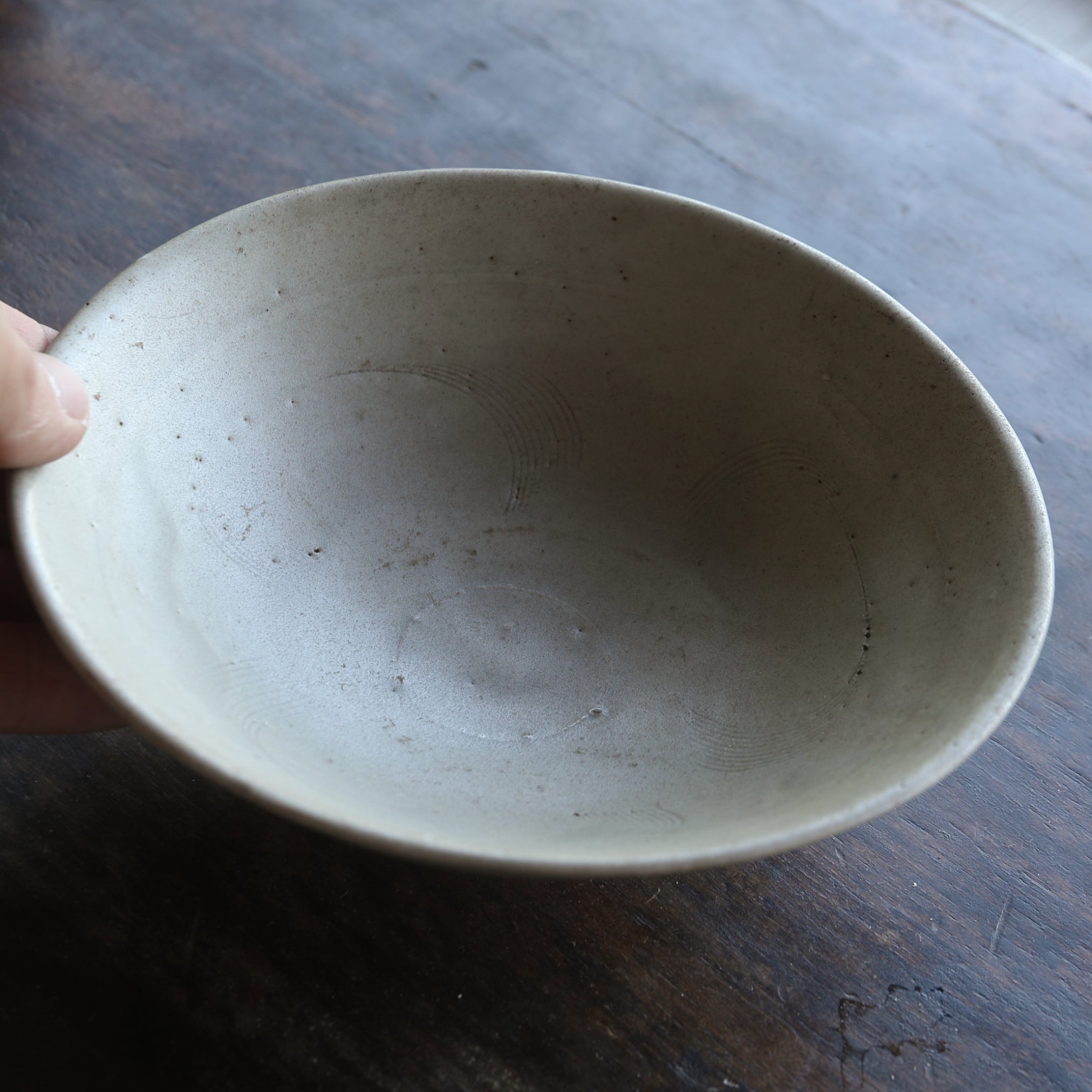
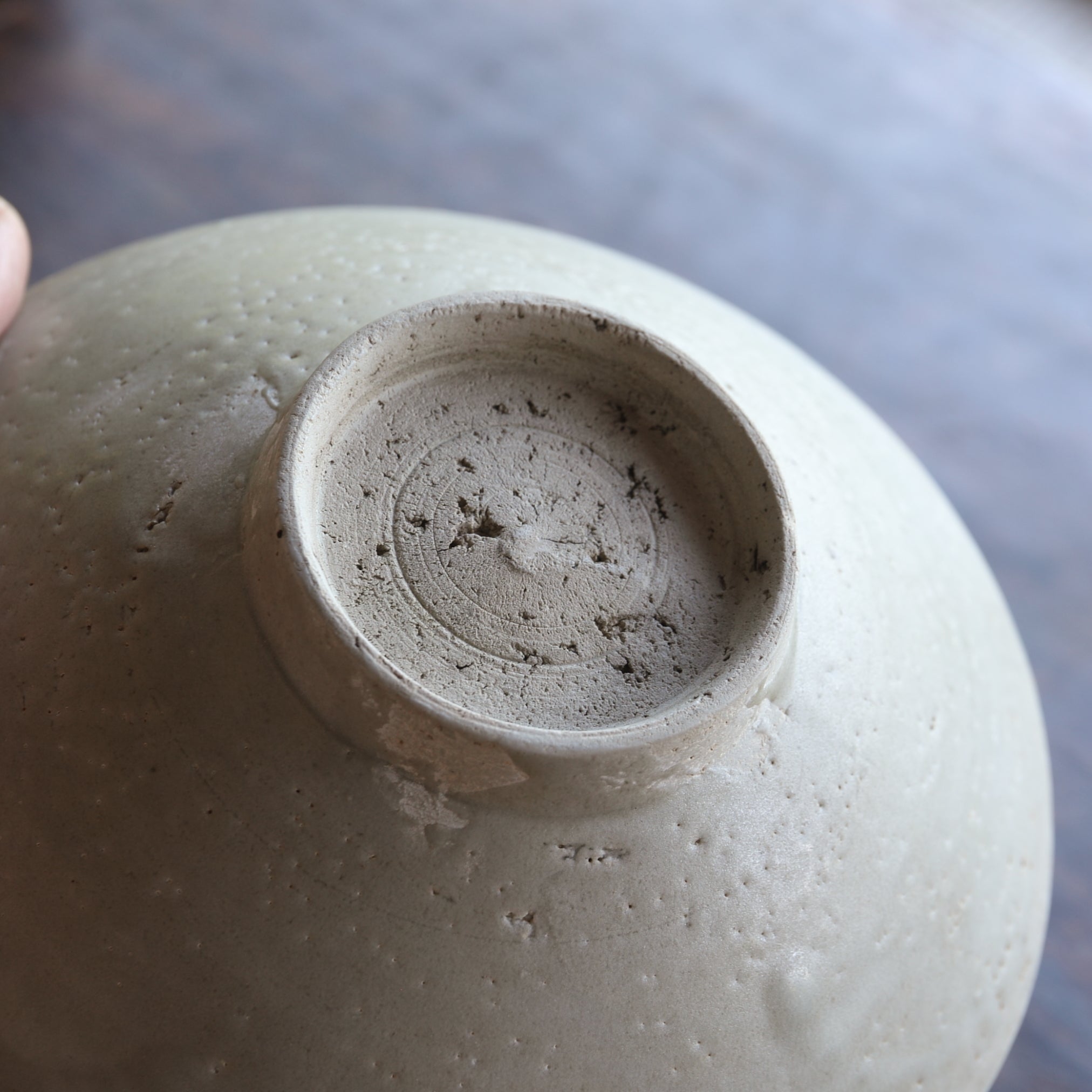
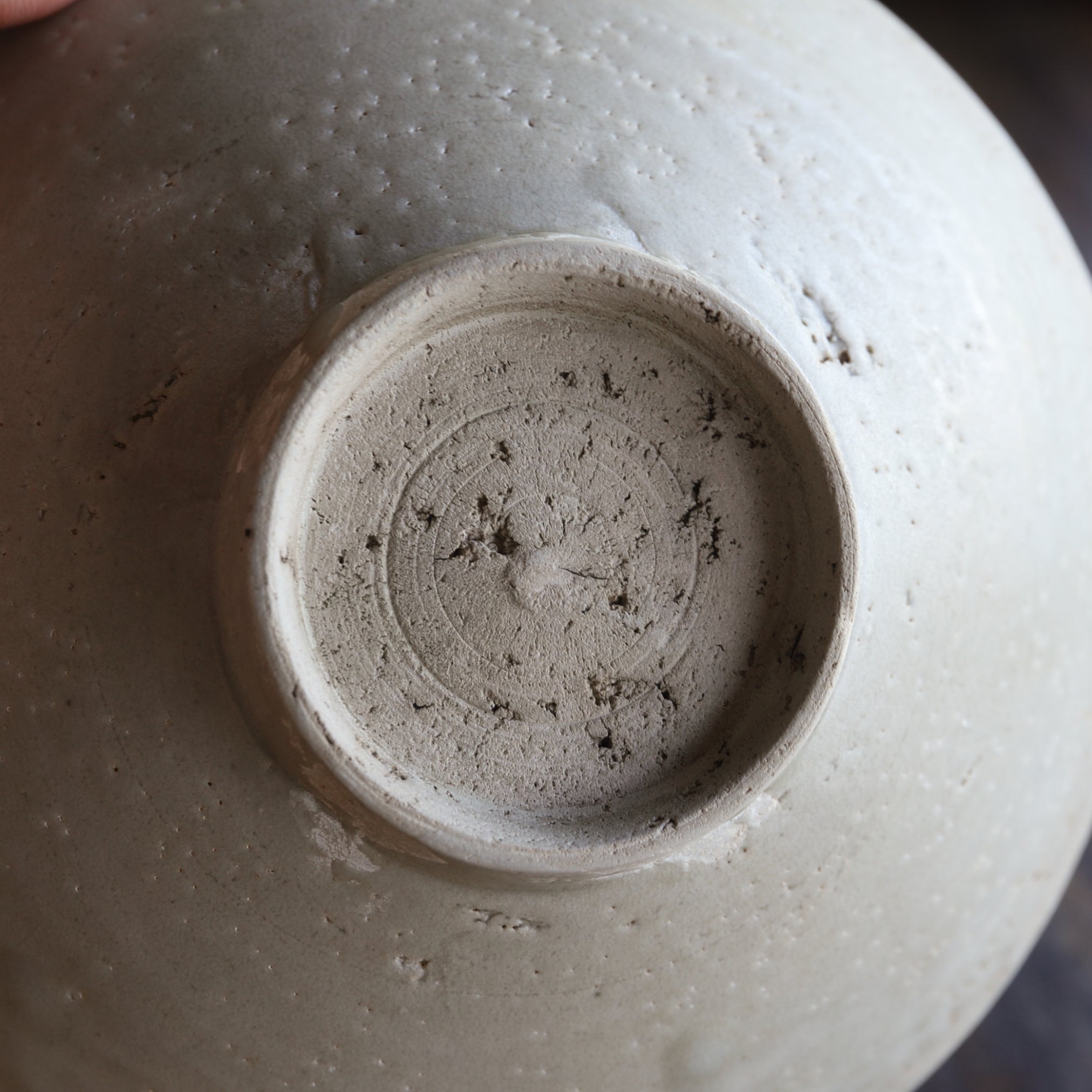
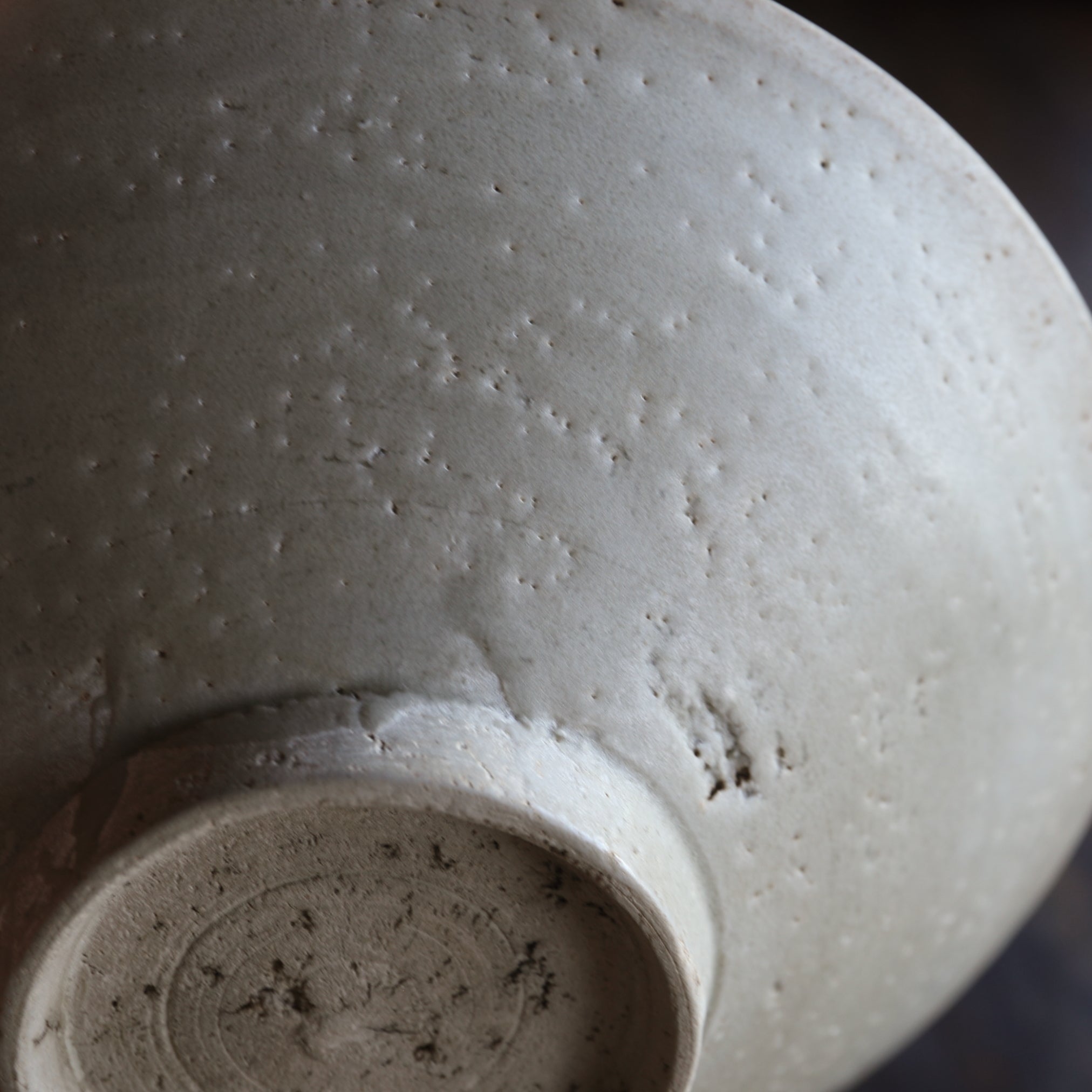
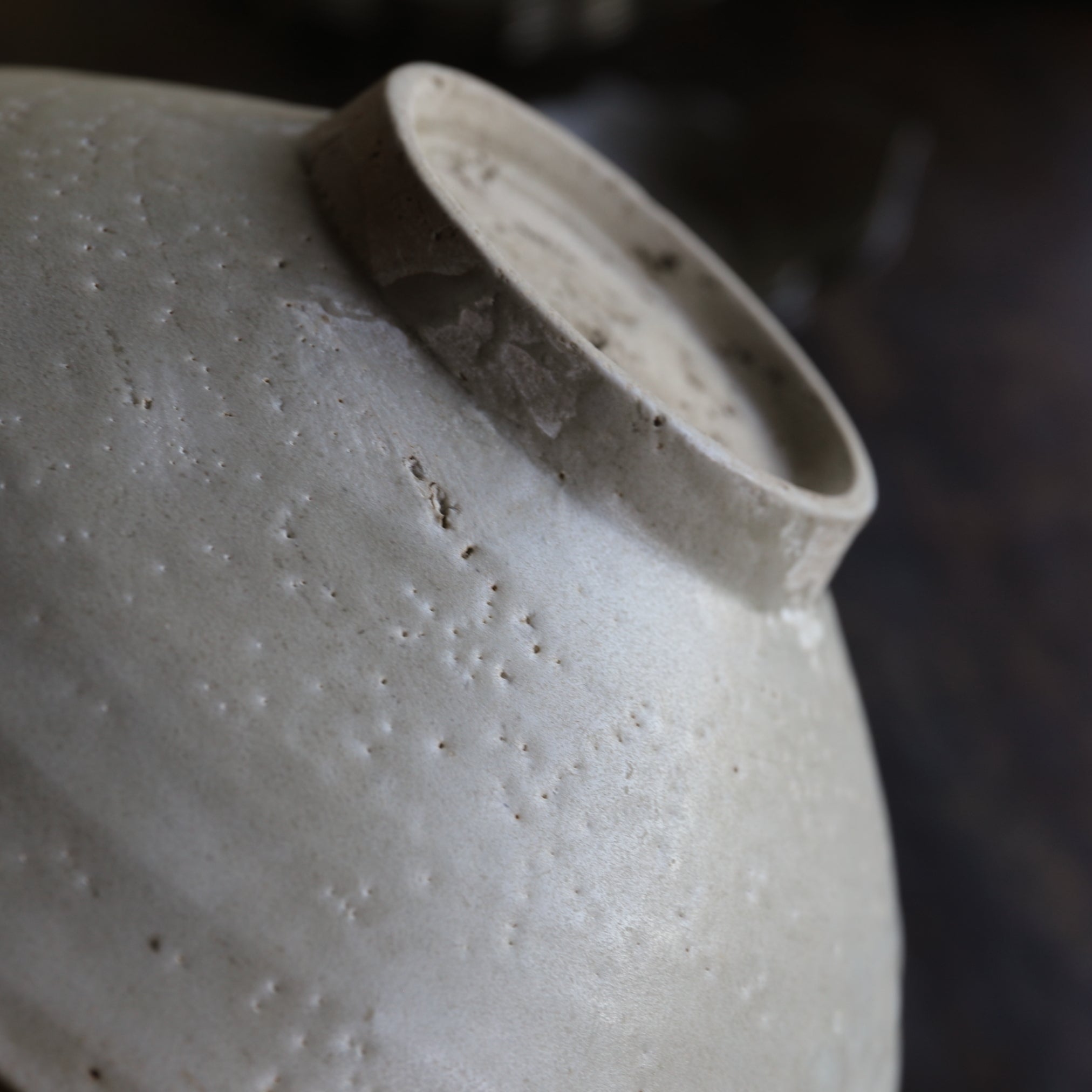
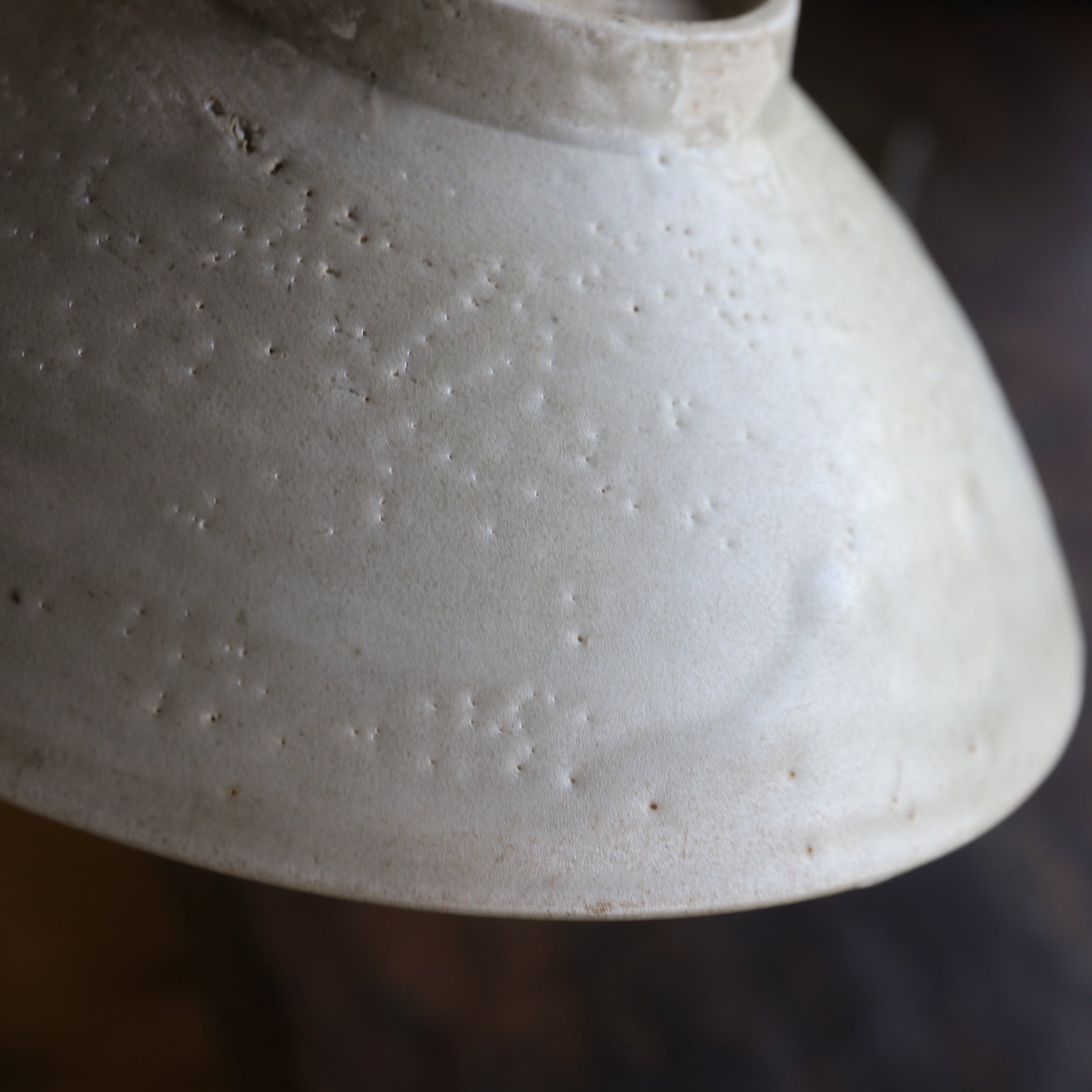
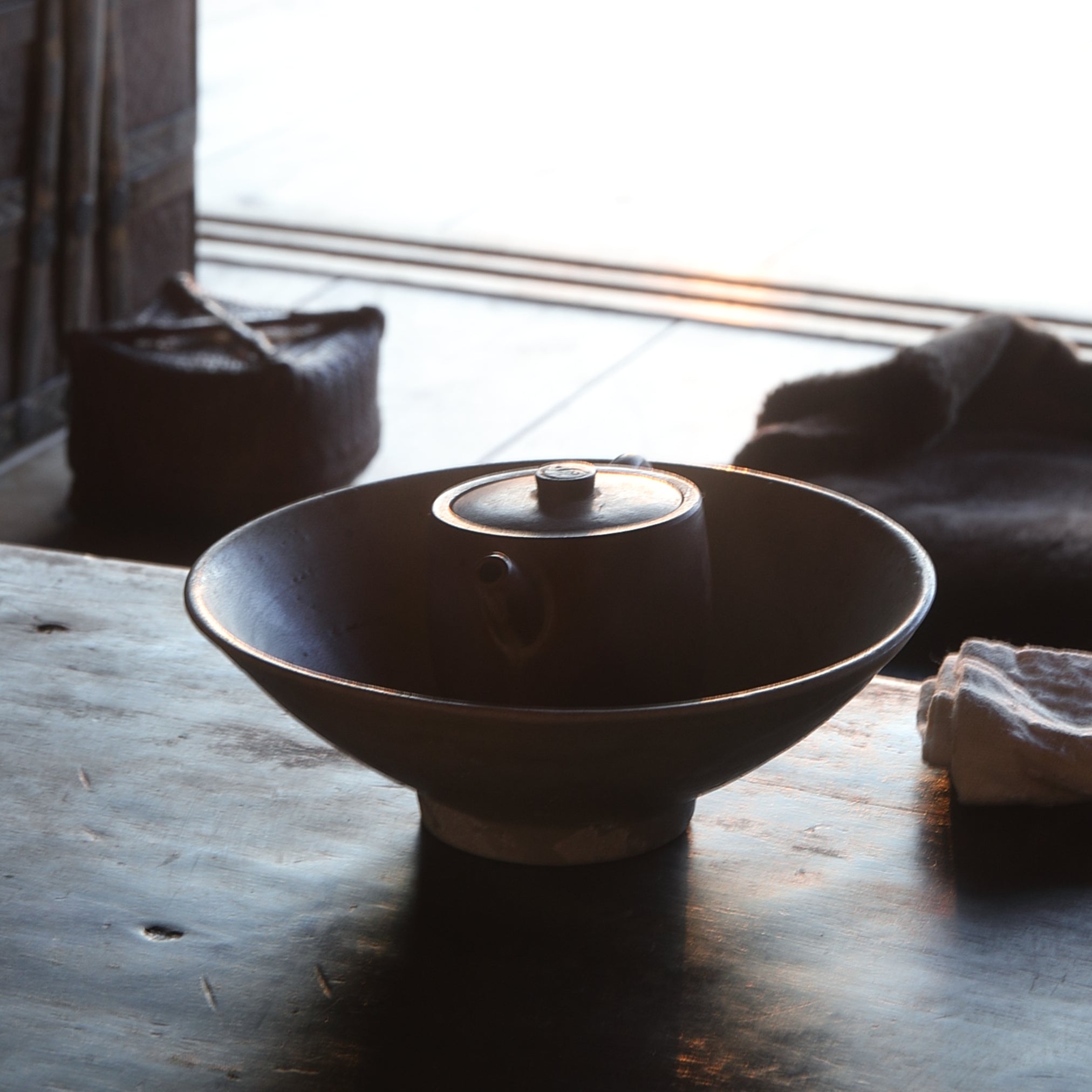
TEA BOWL, Jukō Celadon with comb design, Song Dynasty (960–1279 CE)
Each piece is carefully packed for international delivery.
This item has been sold. If you are looking for a similar piece or another work from the same period, please feel free to contact us.
> Inquire about this or a similar itemDuring the Muromachi period, Murata Jukō (1423-1502 CE) introduced a novel concept to the Japanese tea scene known as "wabi-cha."
In contrast to the opulent Chinese tea utensils that dominated the era, Jukō favored more humble pieces, such as the mass-produced celadon known as Jukō celadon and the imperfectly fired tenmoku bowls referred to as Jukō tenmoku.
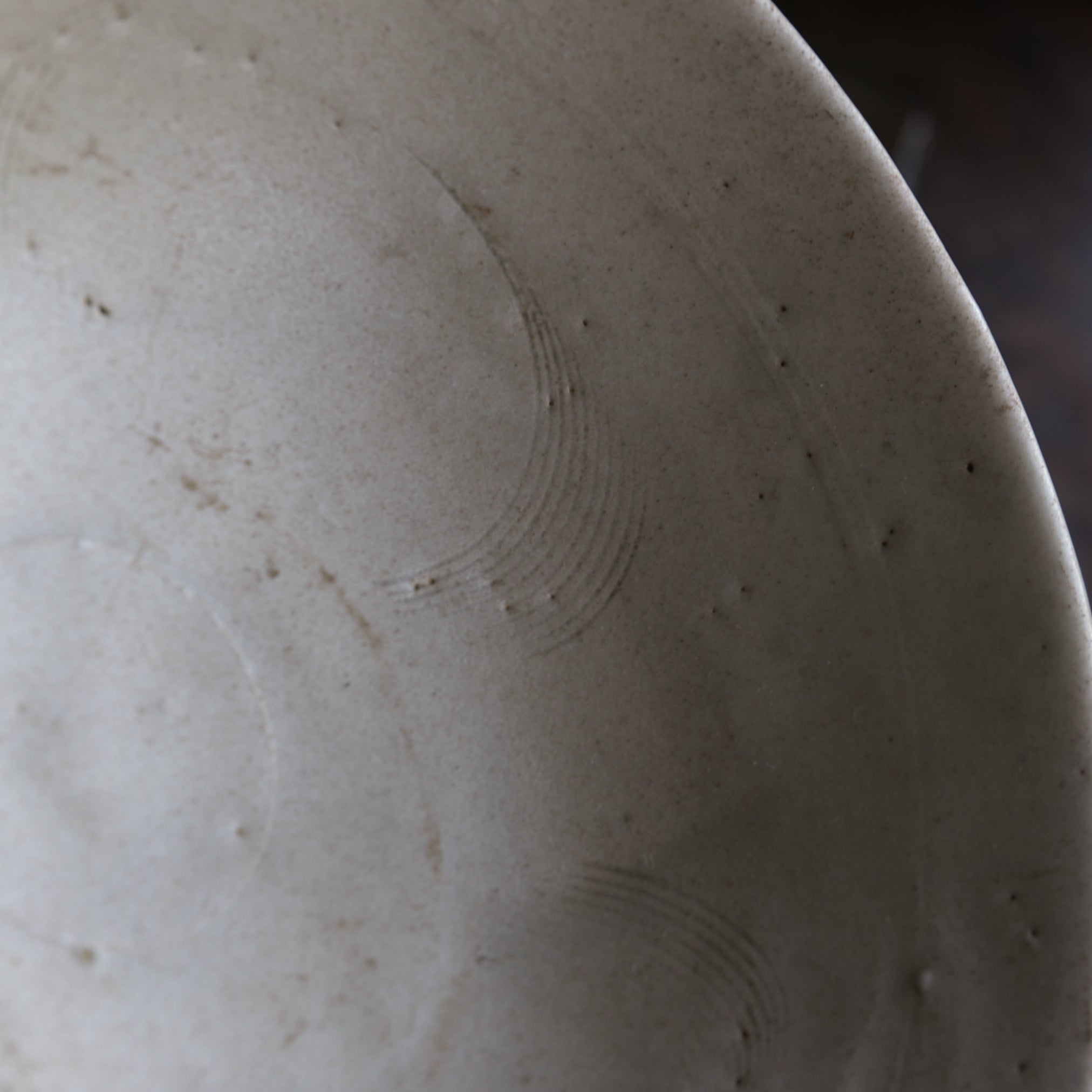
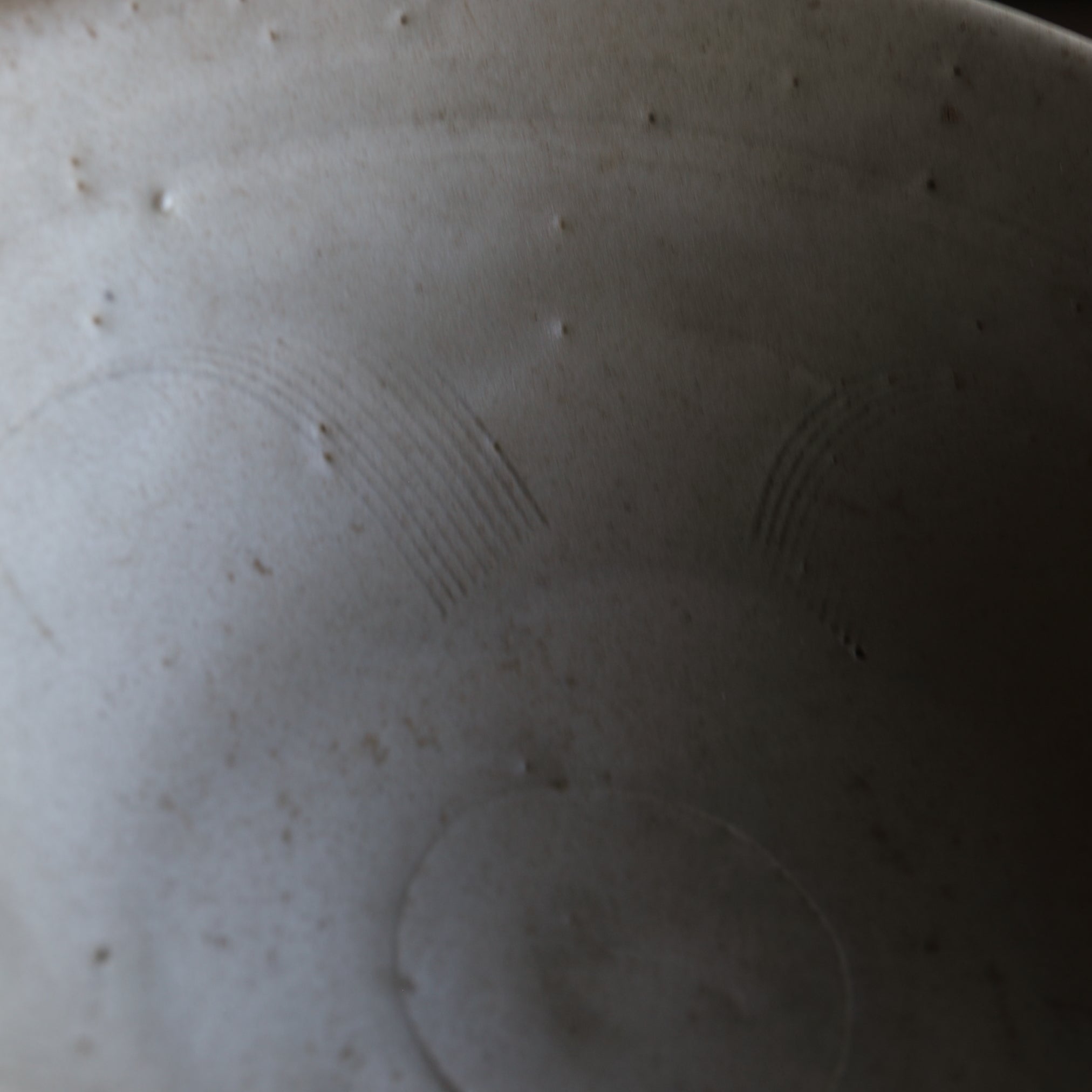
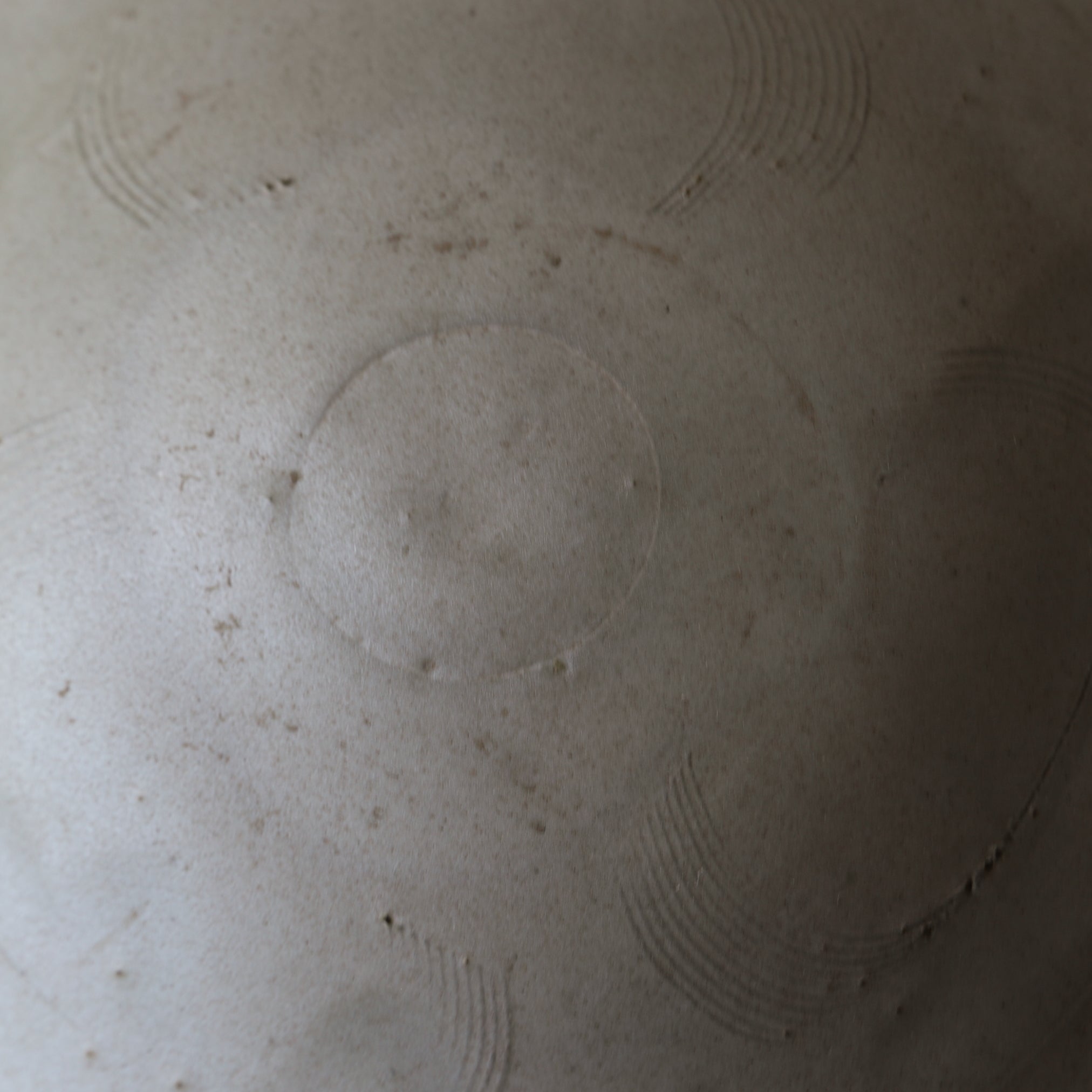
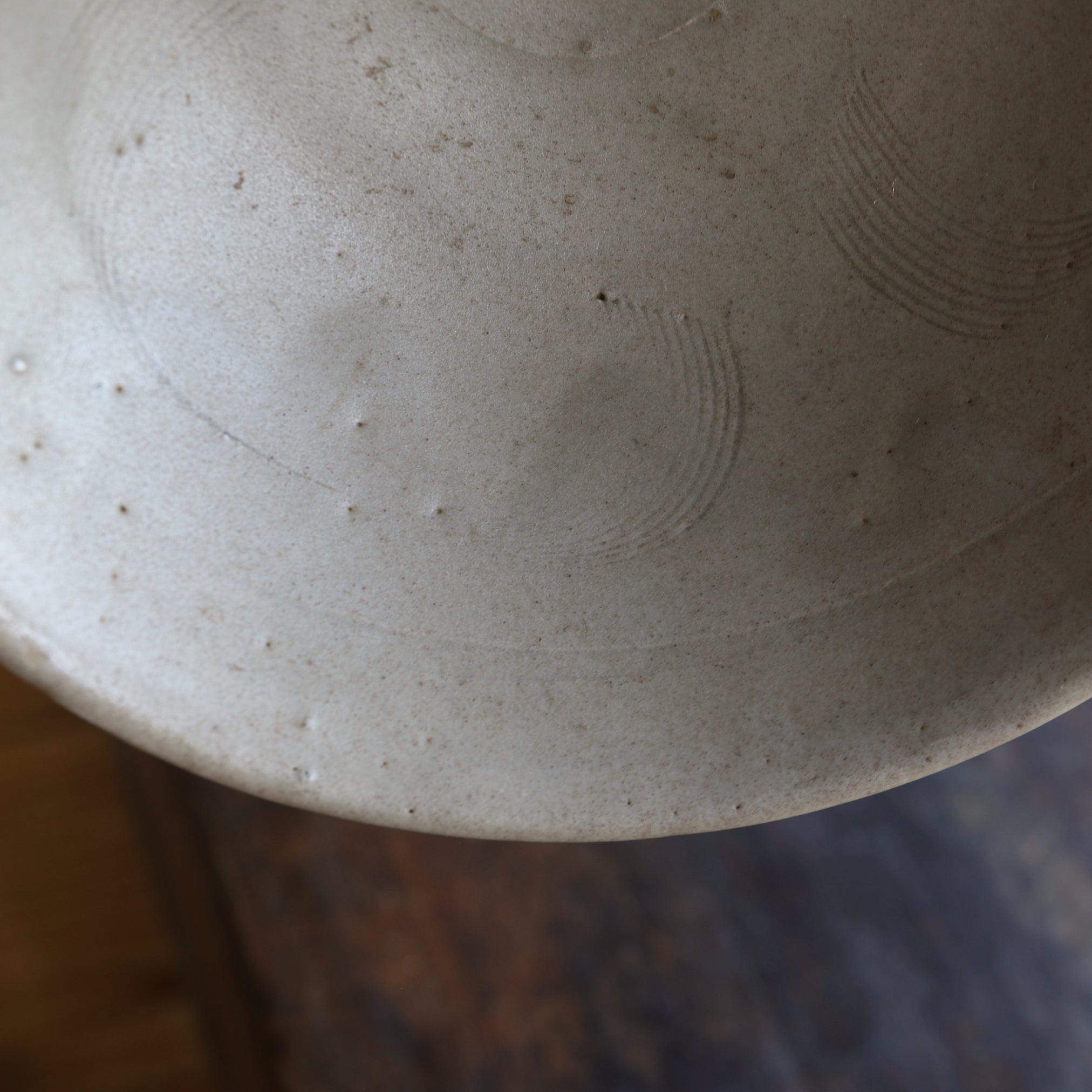
This piece is a quintessential example of Jukō celadon tea bowl. Characteristic of Jukō celadon, it exhibits a dark green or yellow-brown hue, adorned with a comb pattern known as "neko-kaki" in the interior.
This bowl was fired in a kiln located in the Fujian province during the Song and Yuan dynasties.
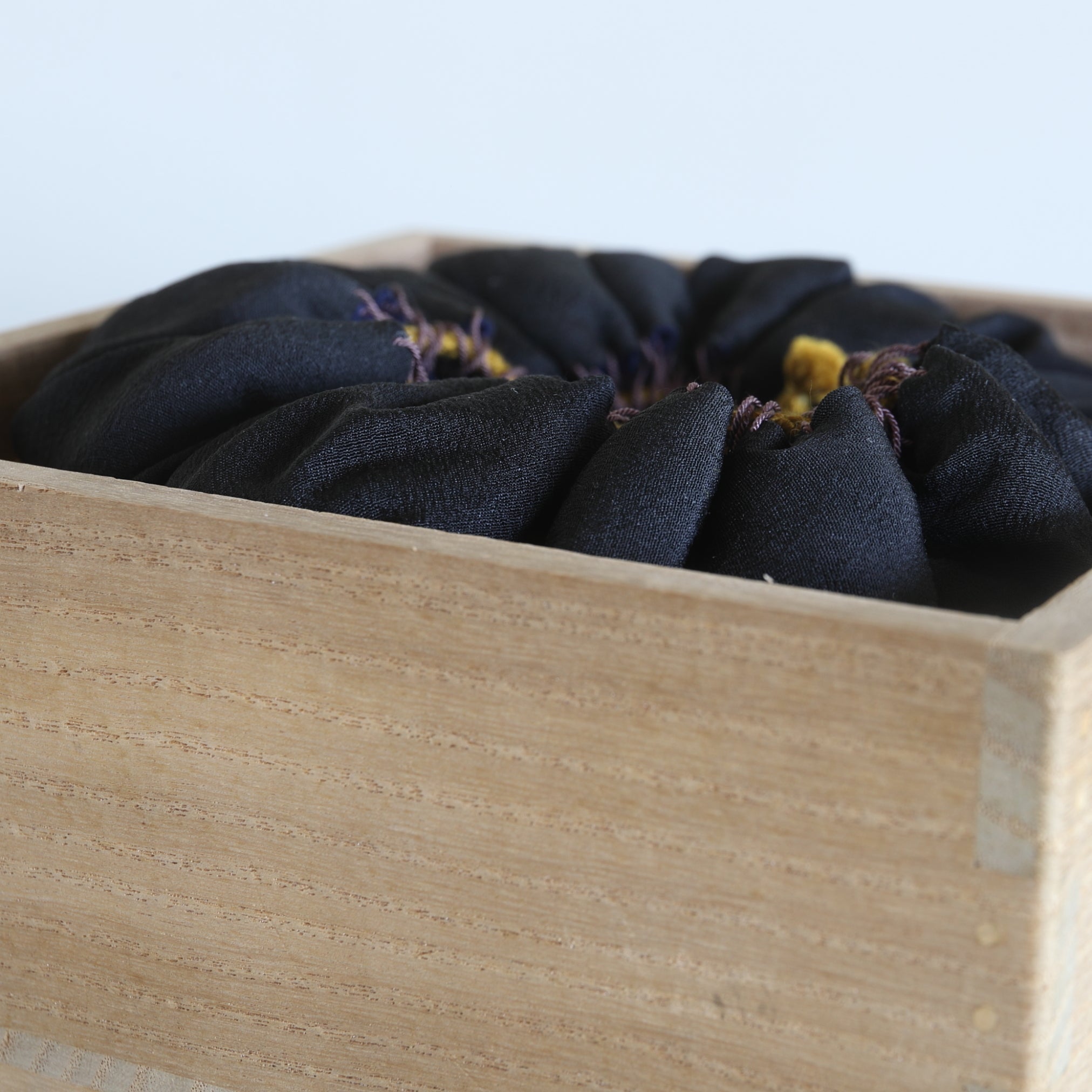
In excellent condition, it is a tea bowl that one would cherish as part of a tea ceremony. It comes with a wooden box and protective cover.
Choose options
Change language
