

BANDAJI CHEST, Joseon Dynasty (1392–1897 CE)
This item has been sold. If you are looking for a similar piece or another work from the same period, please feel free to contact us.
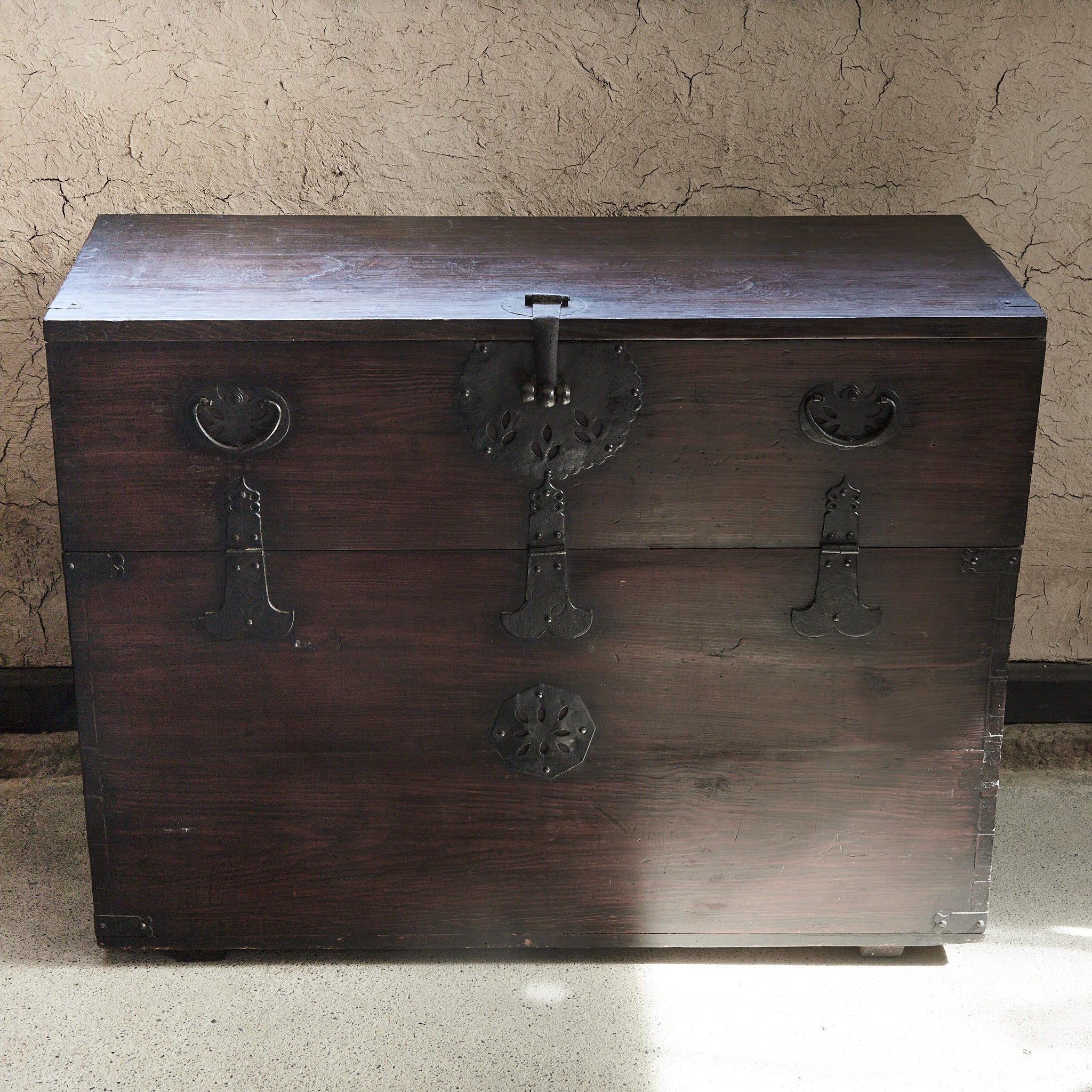
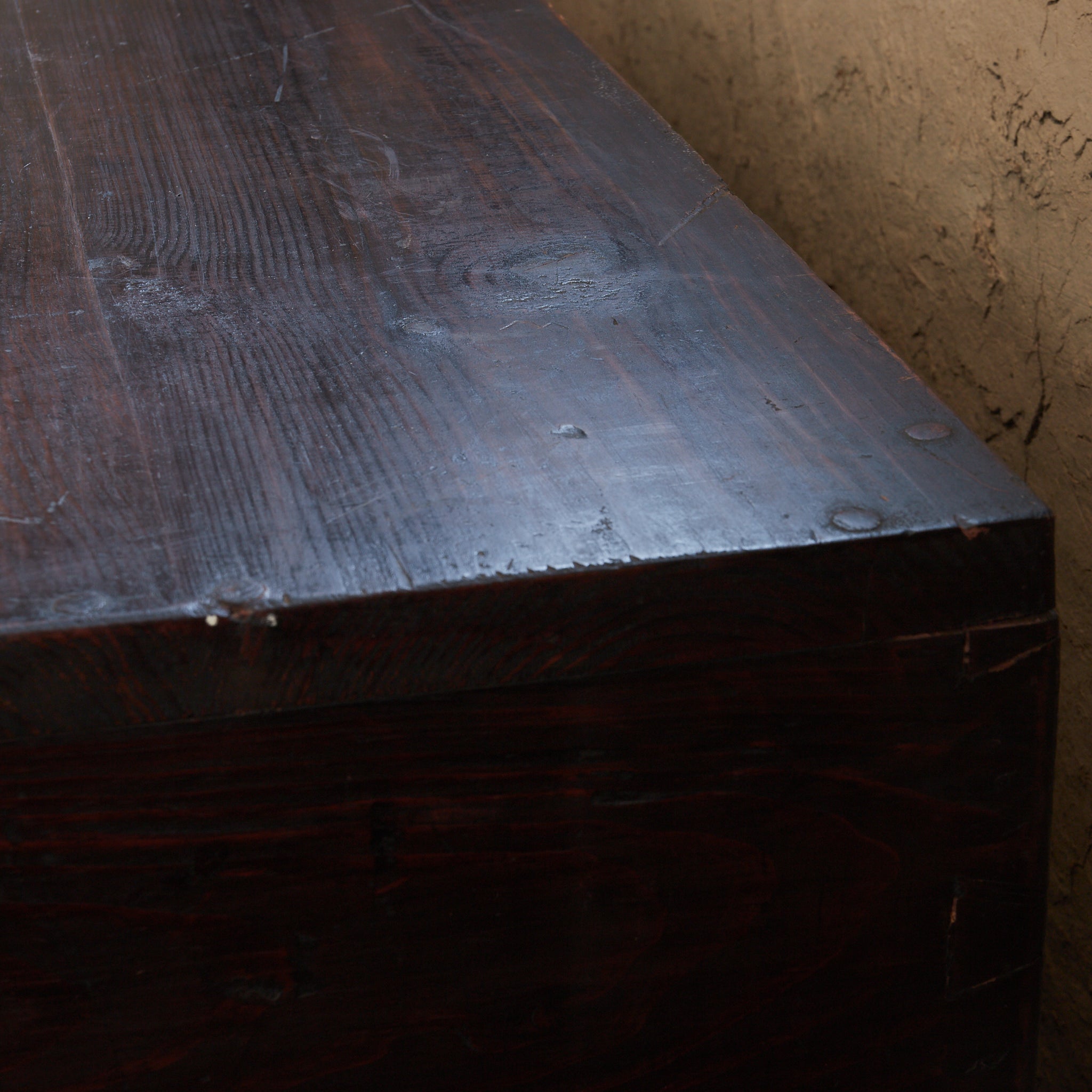
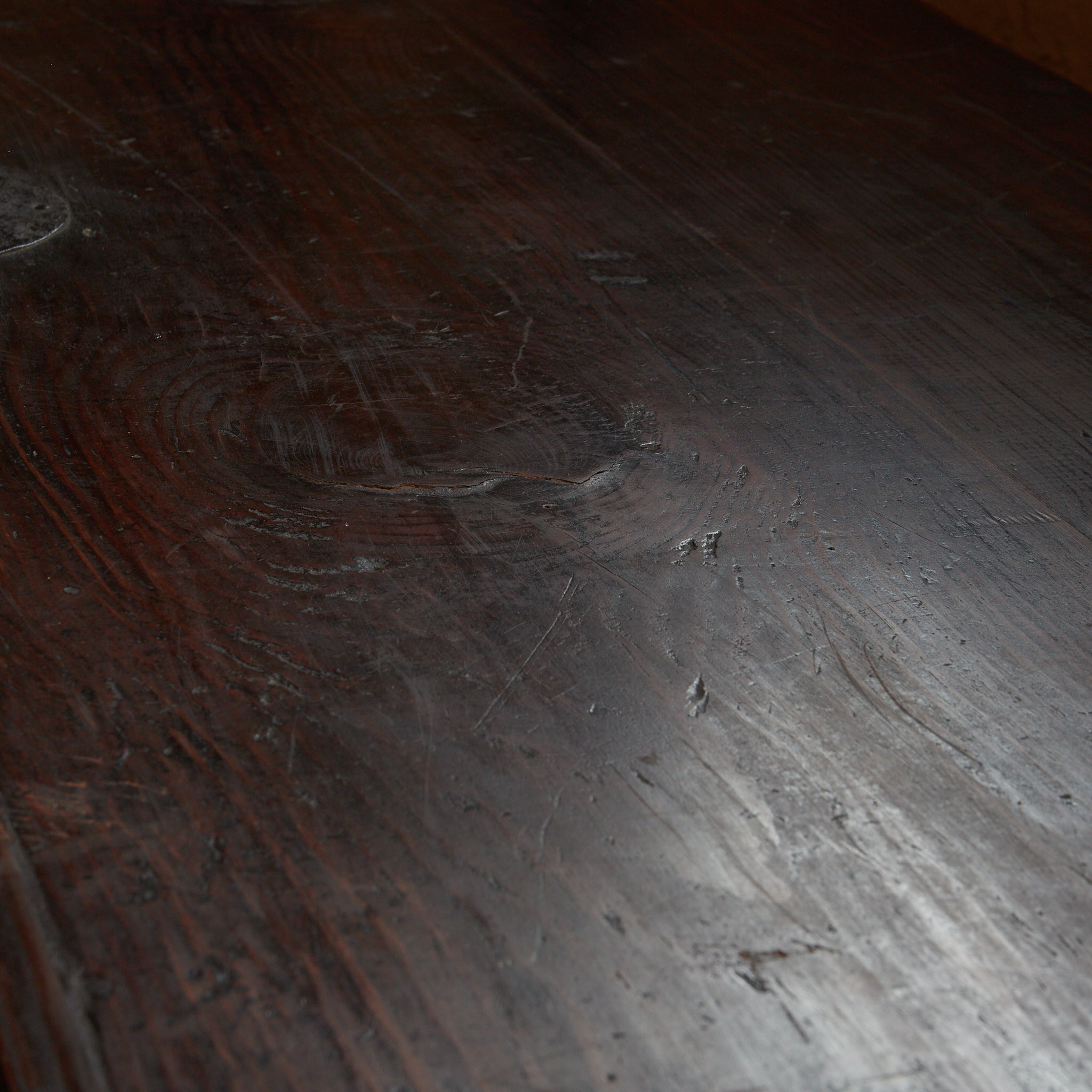
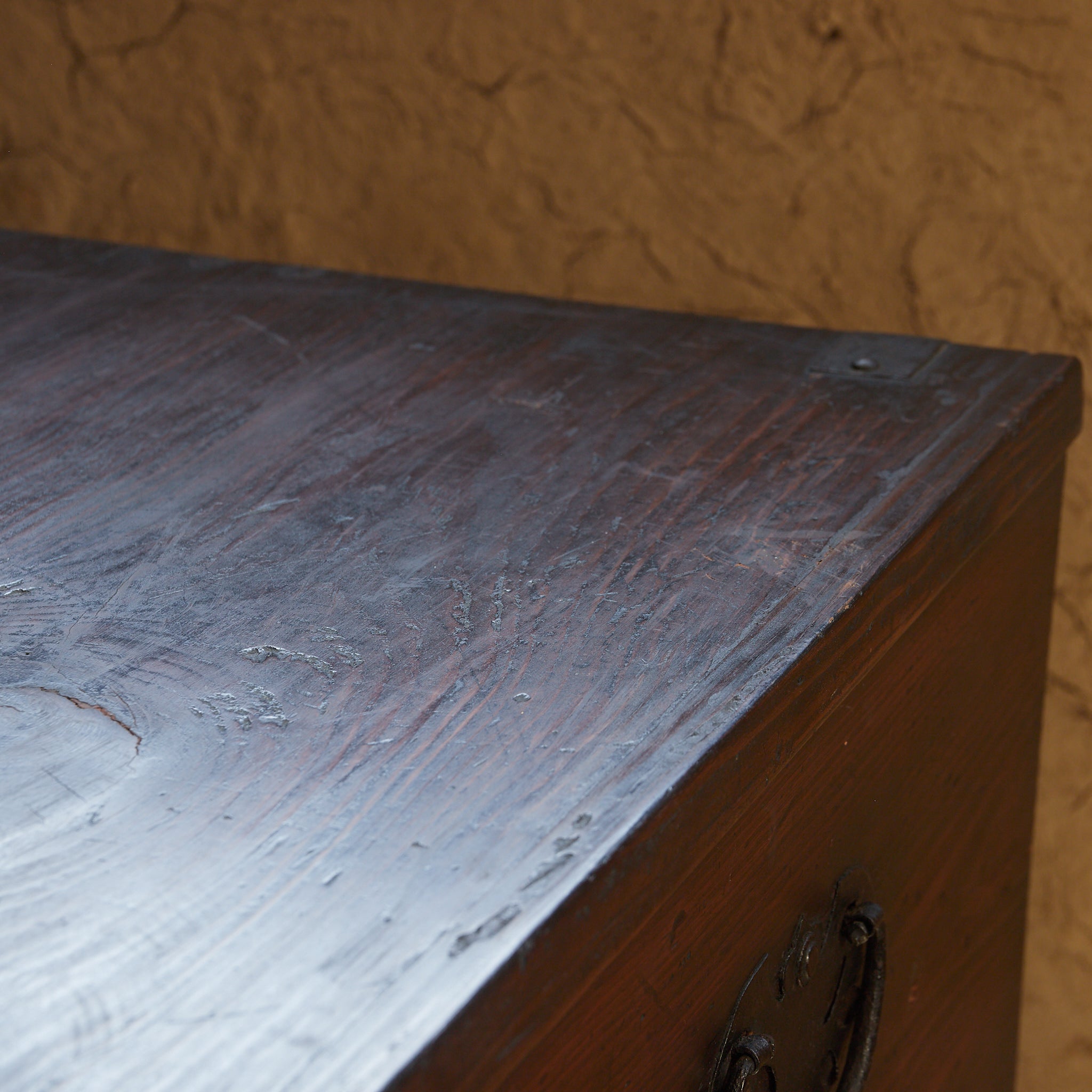
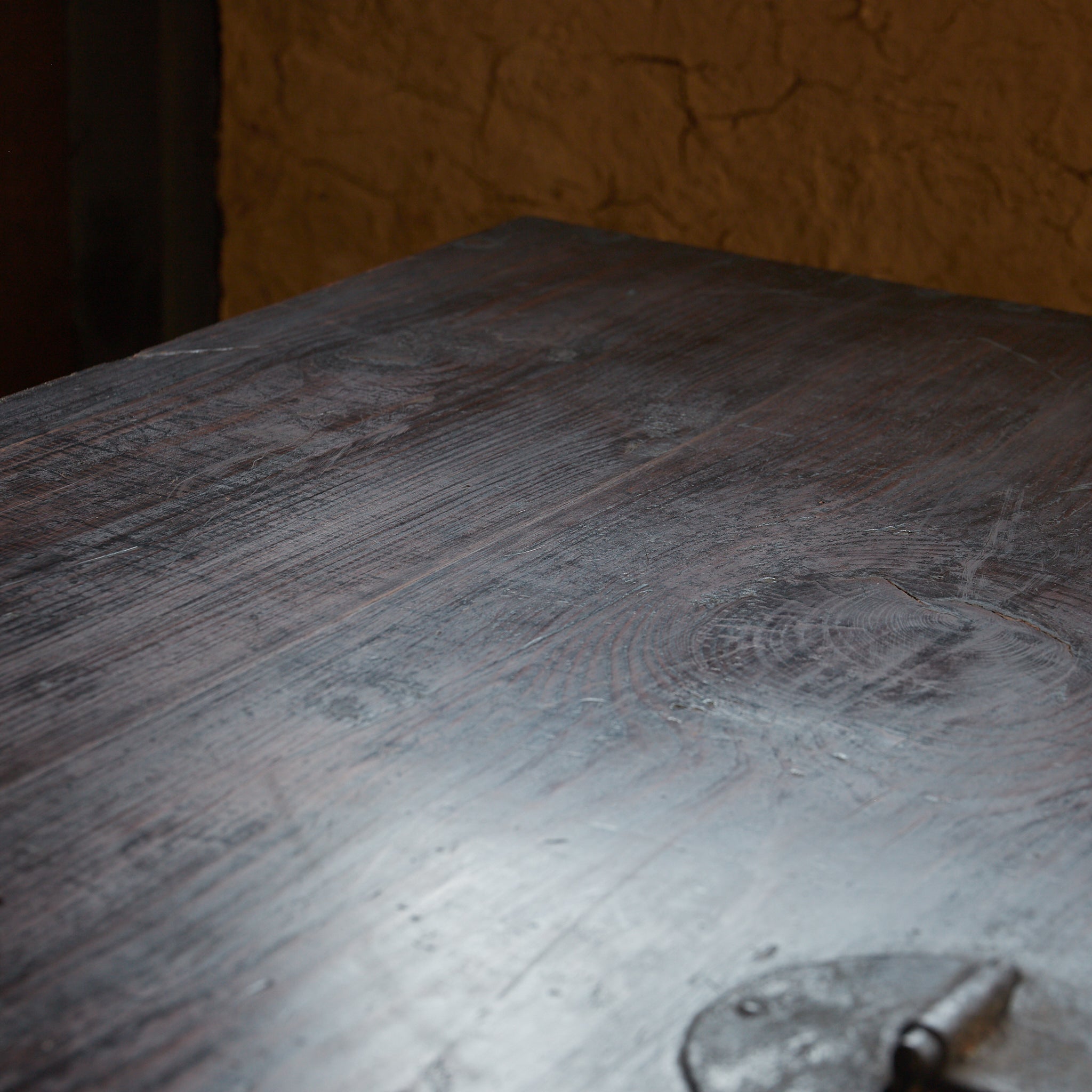
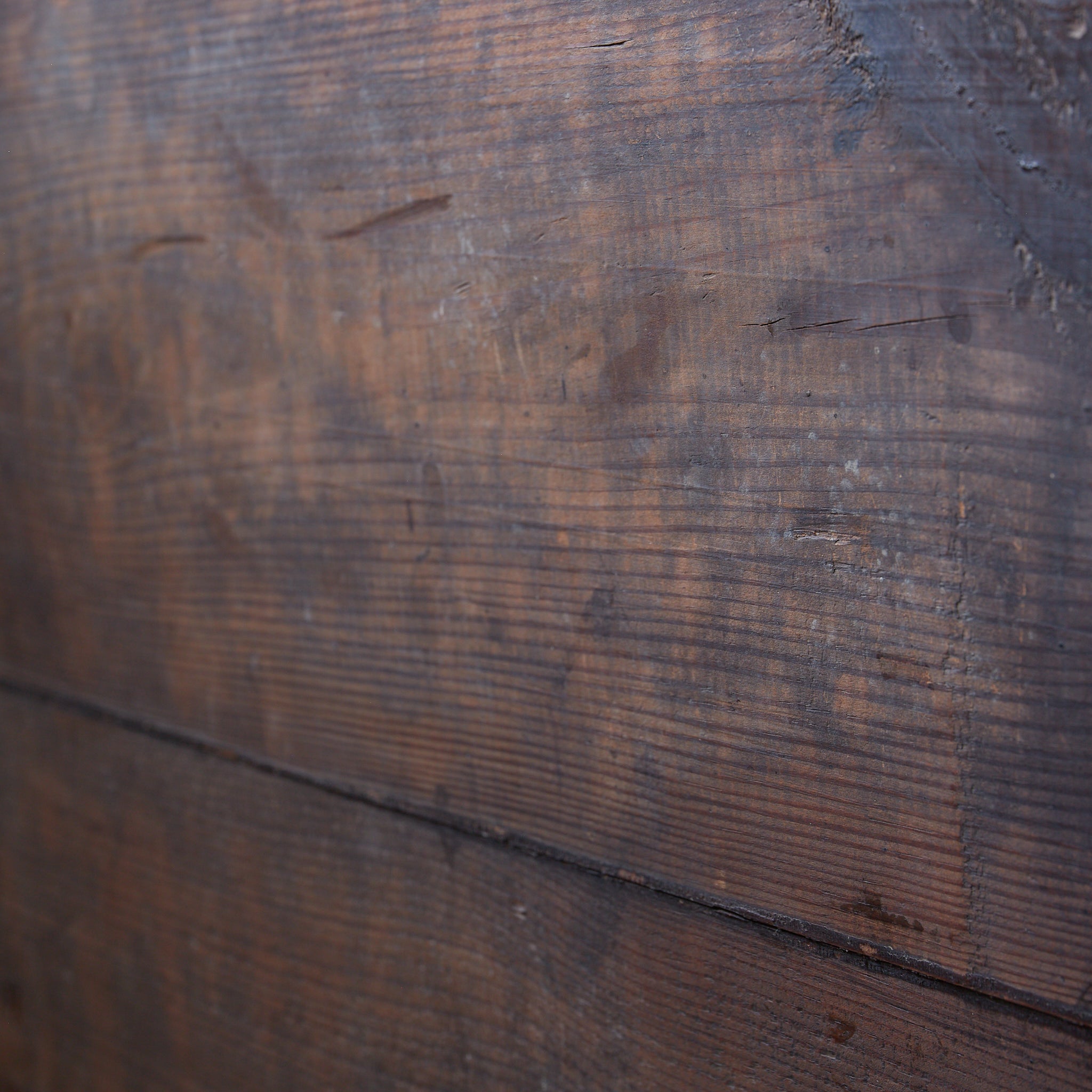
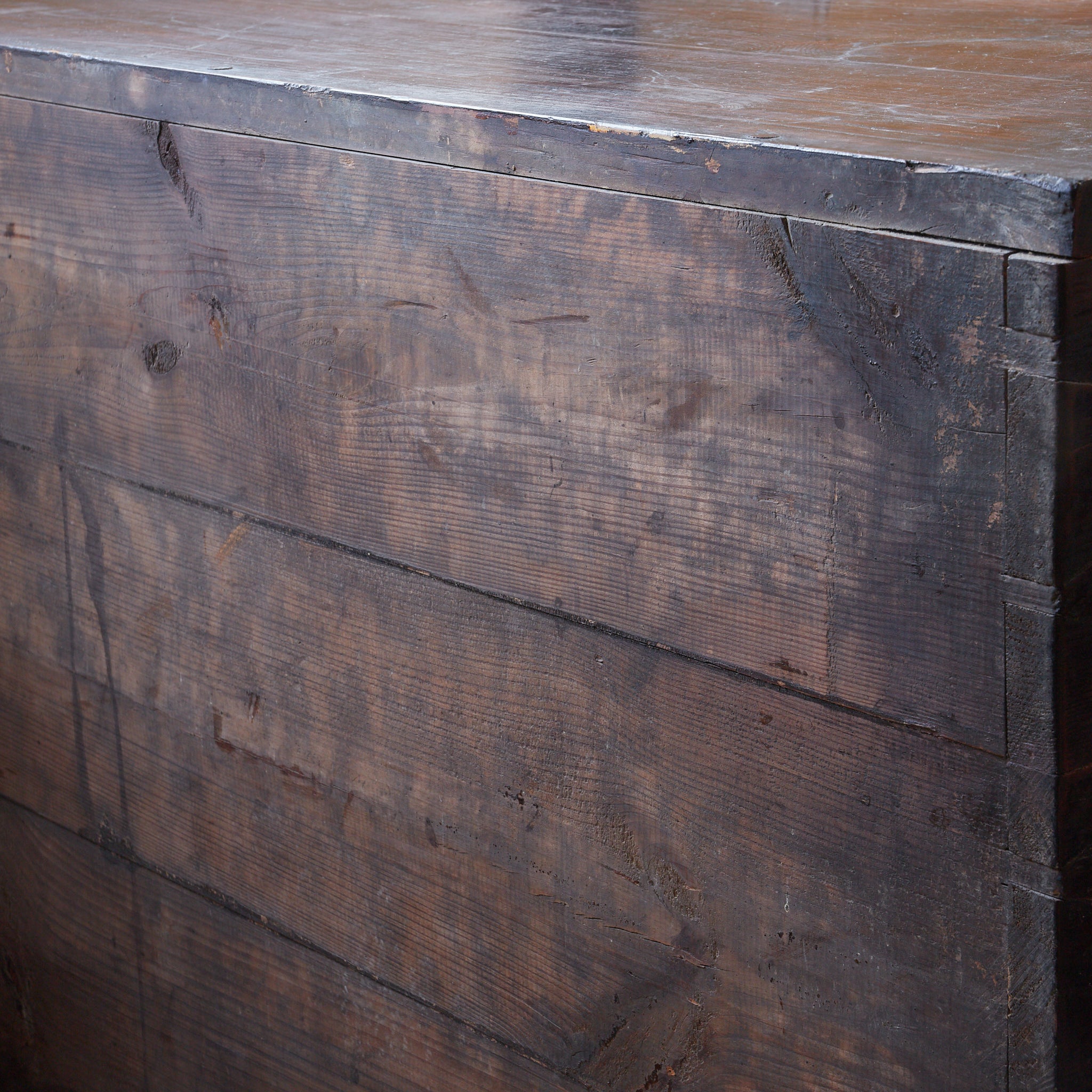
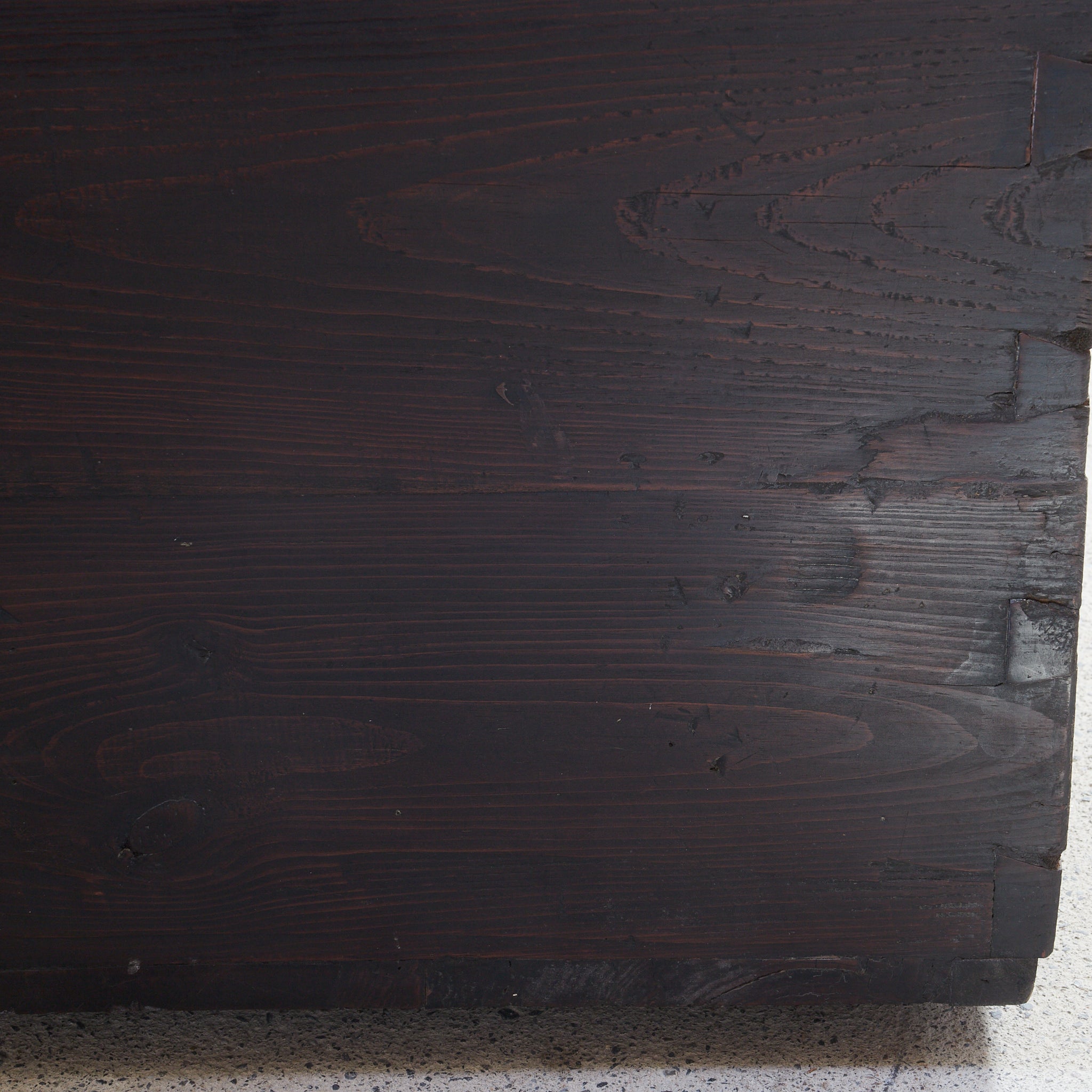
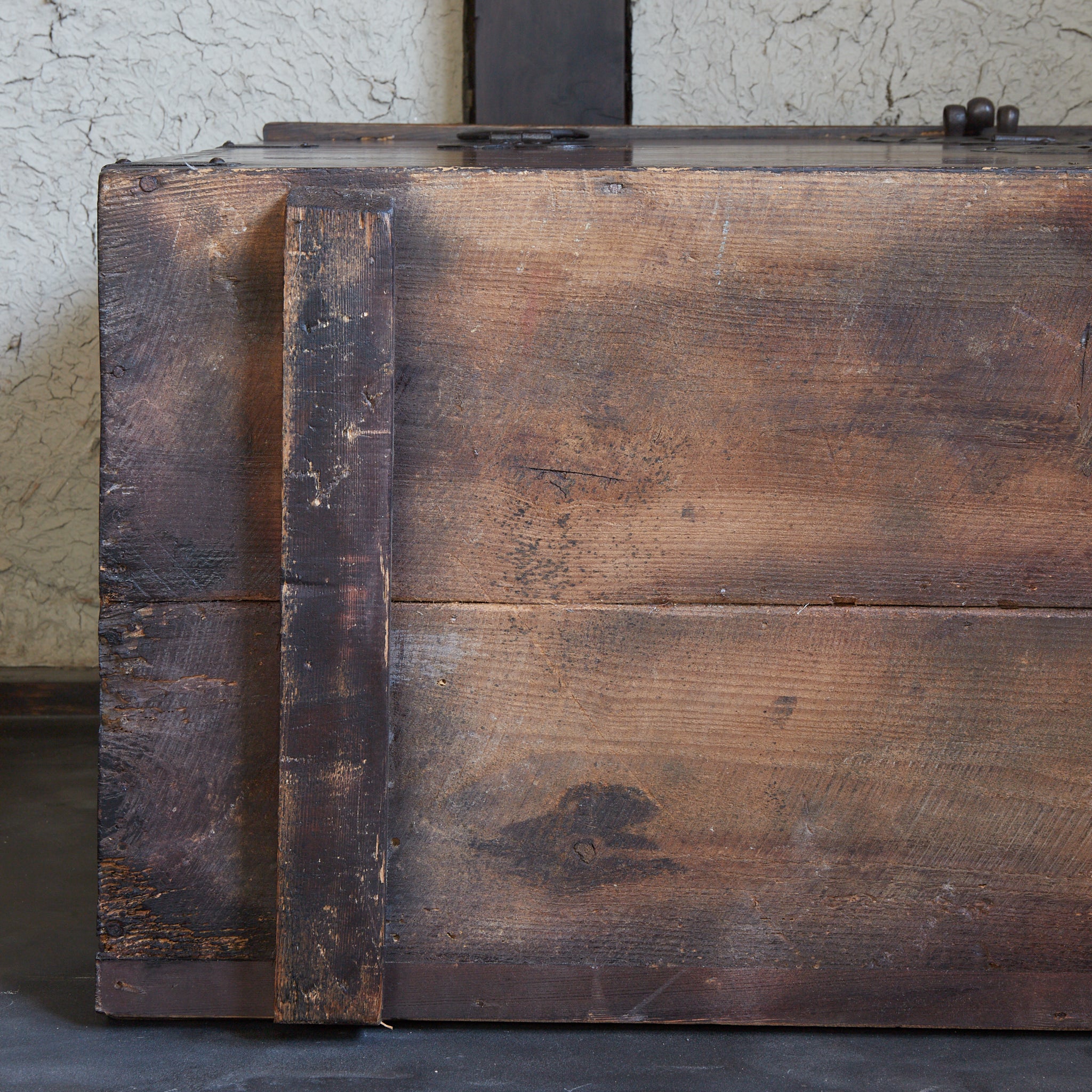
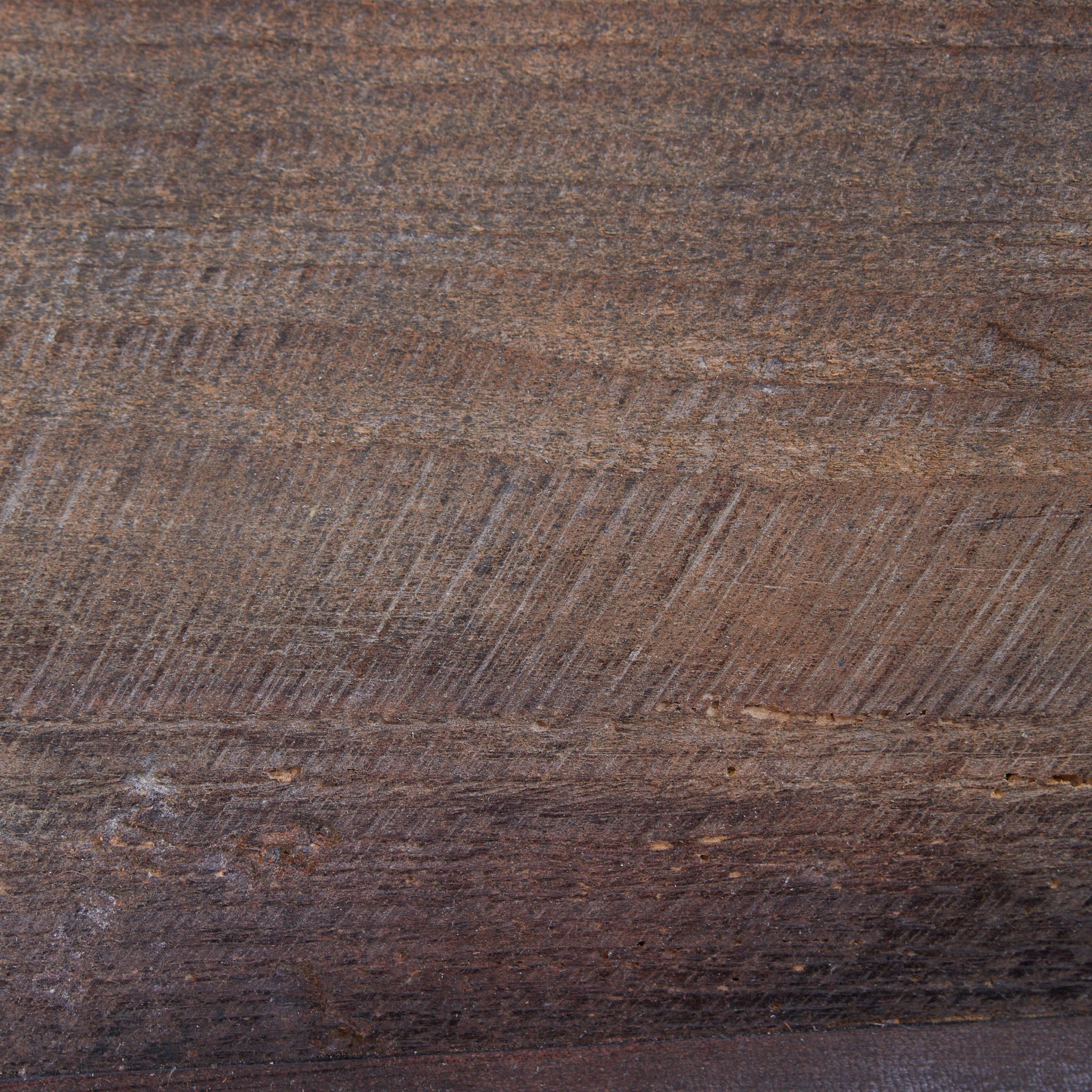
> Inquire about this or a similar itemA bandaji (half-closed chest) from the Joseon dynasty, notable for its fine wood grain.
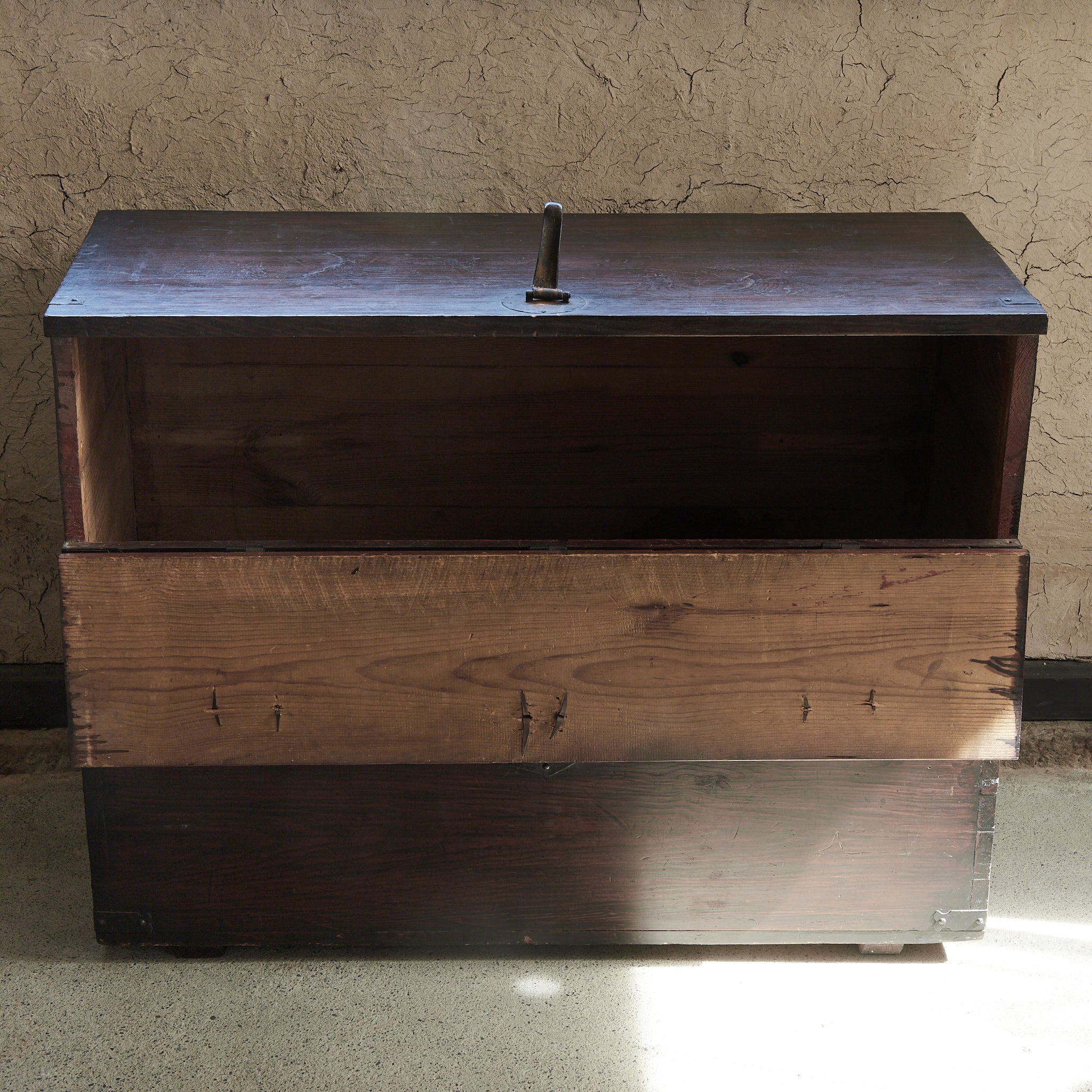
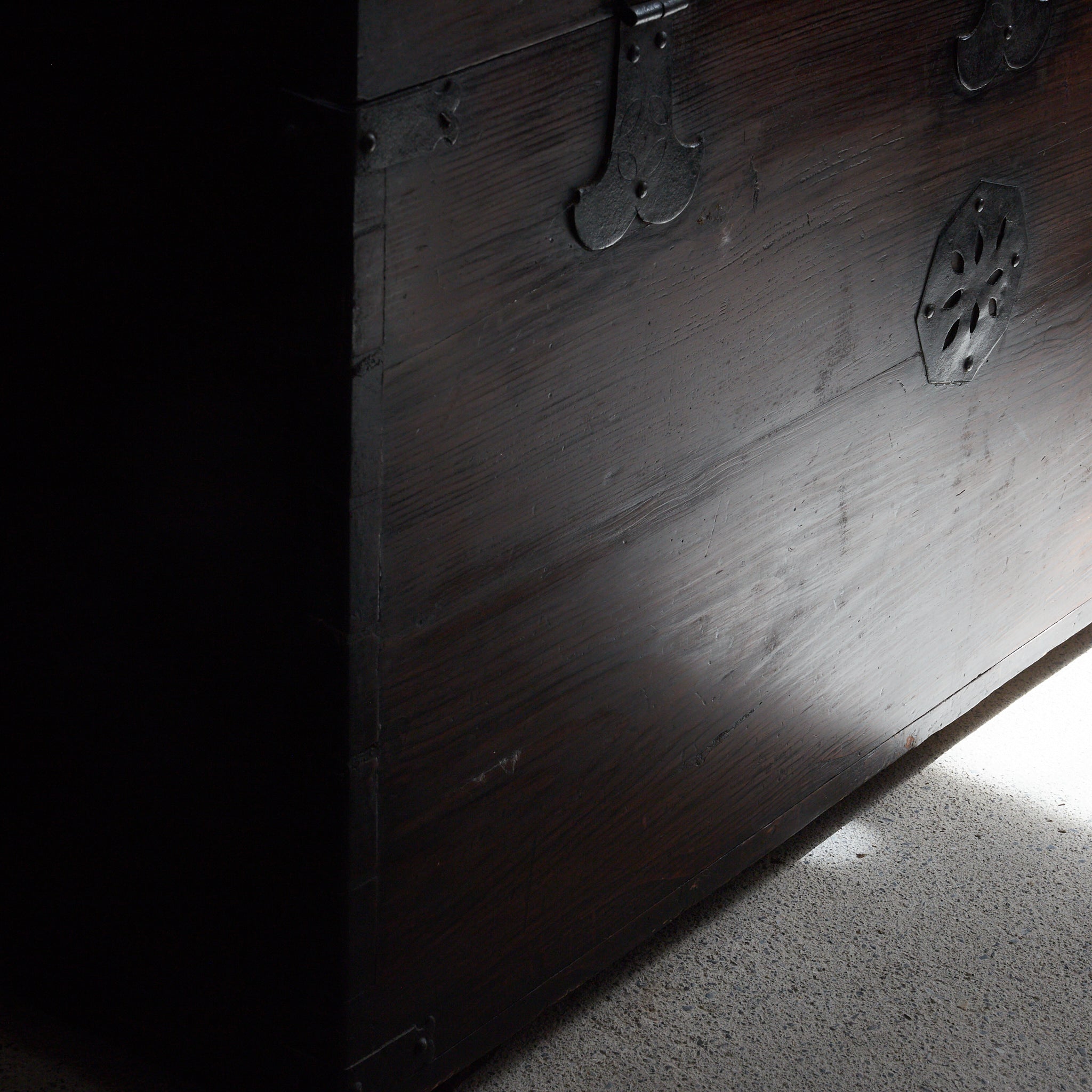
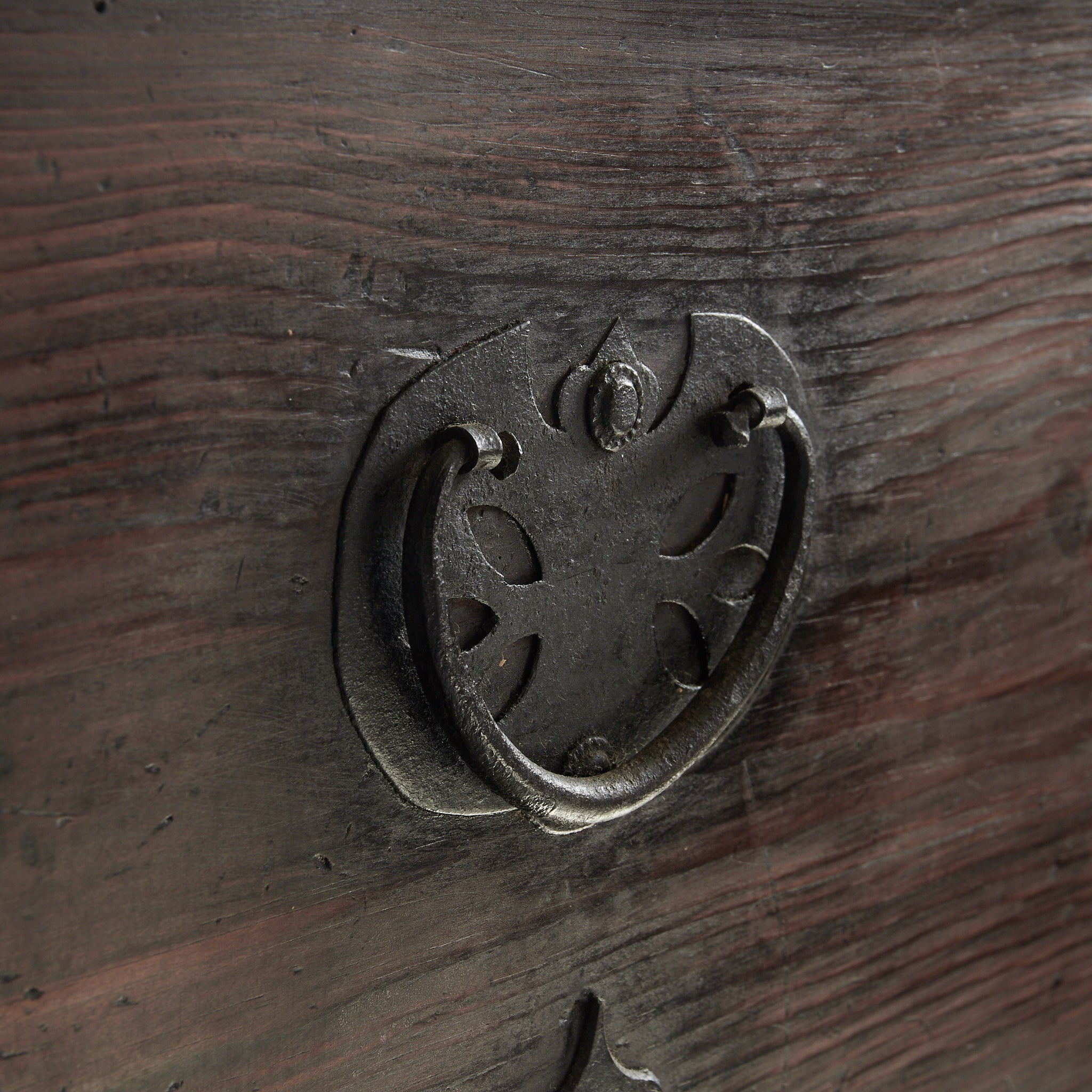
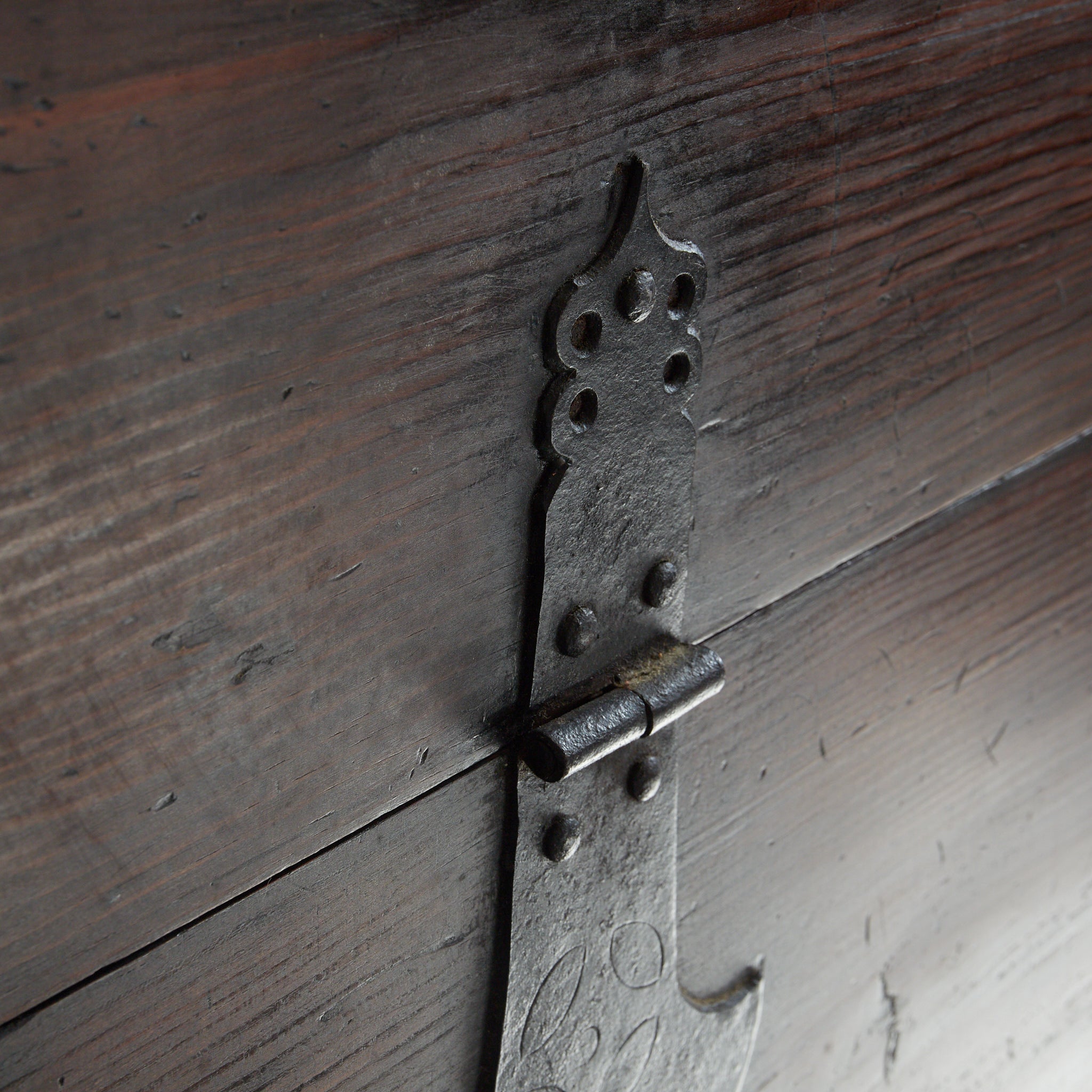
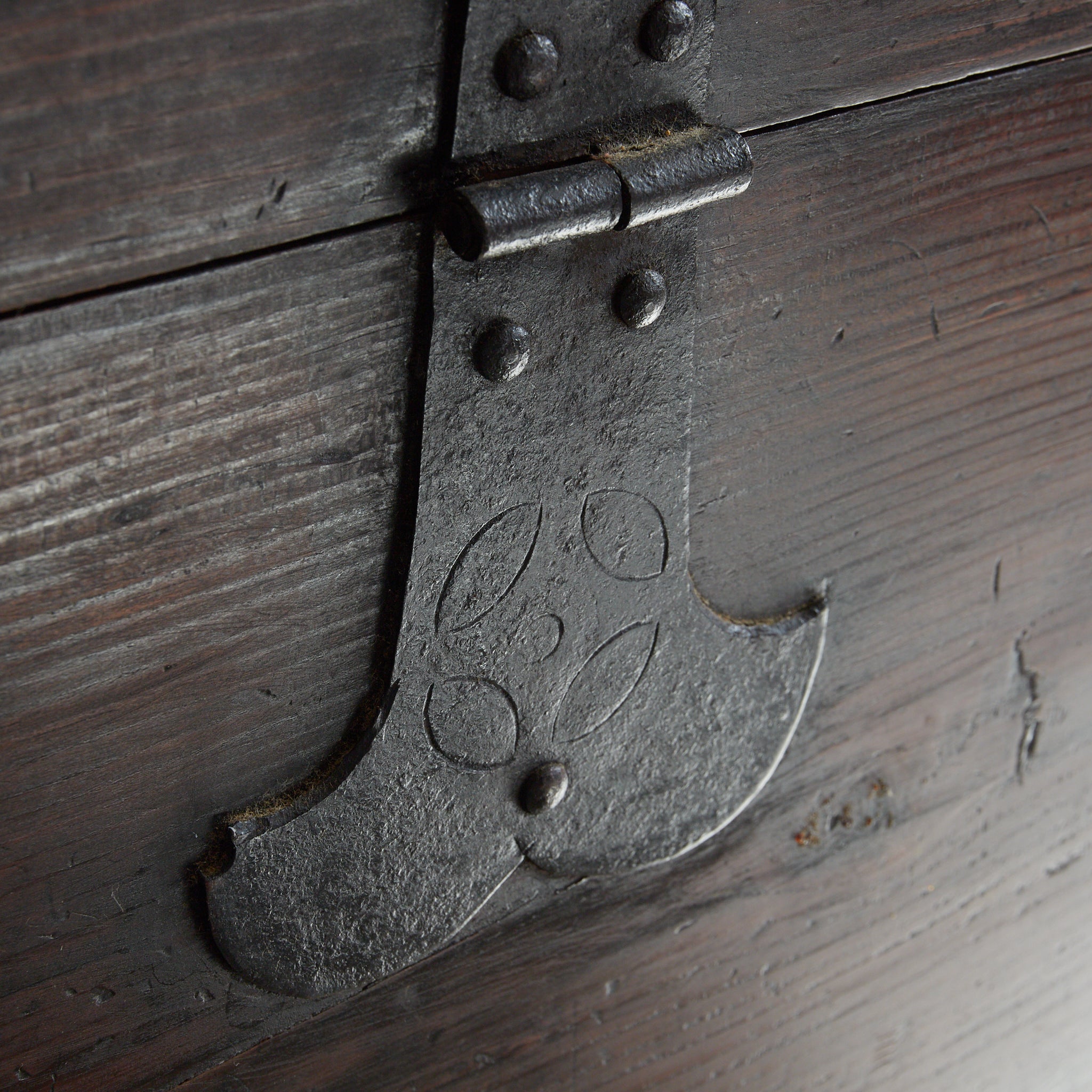
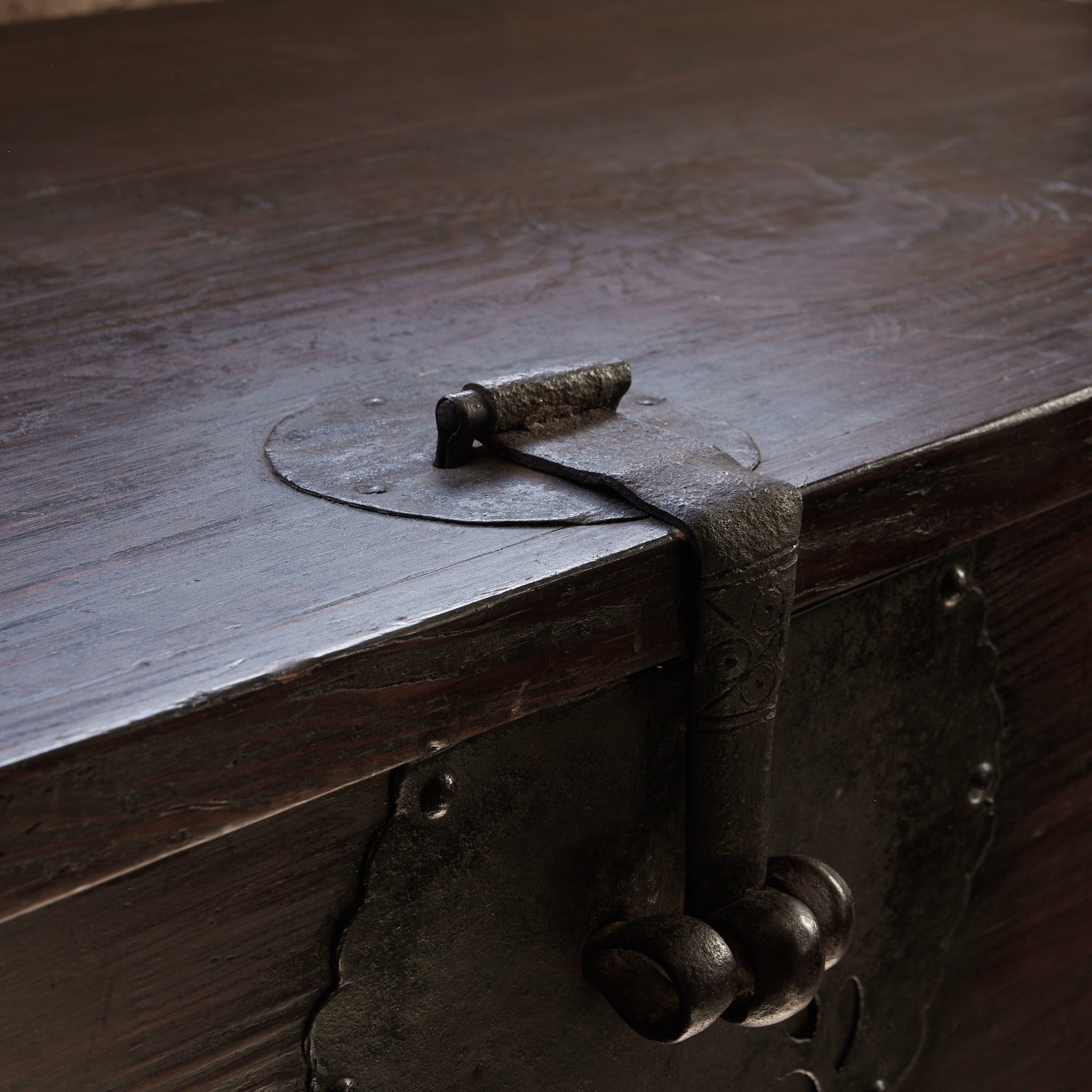
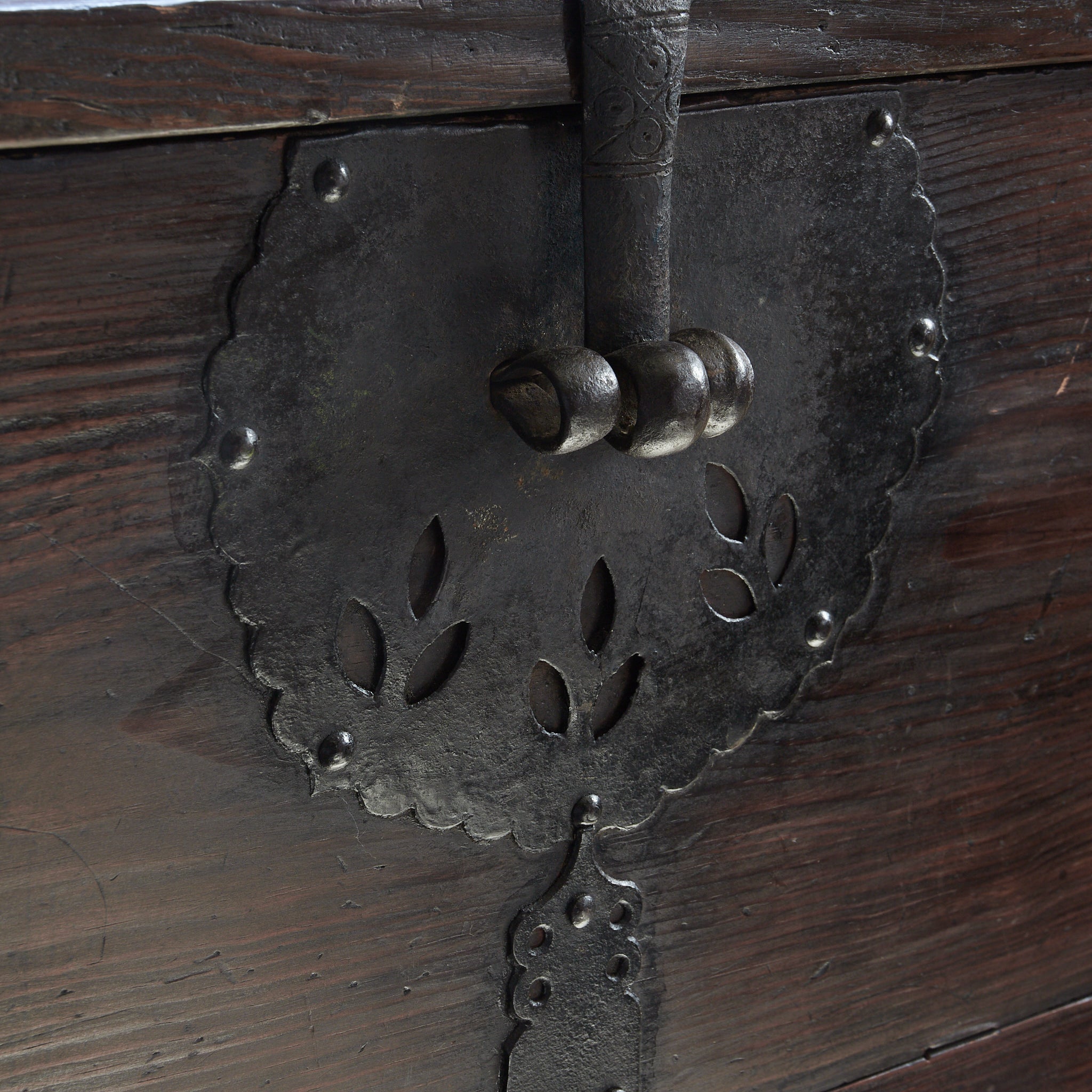
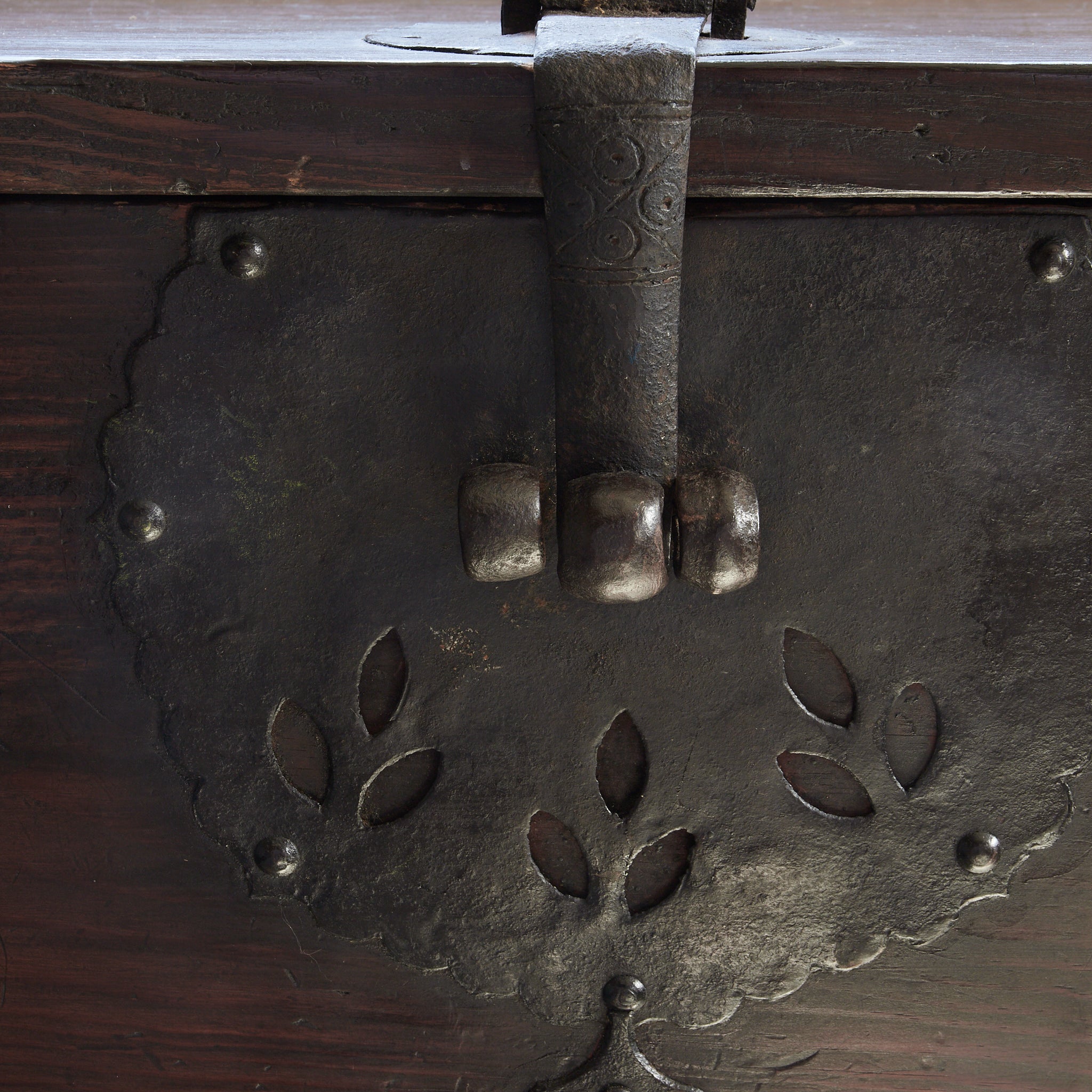
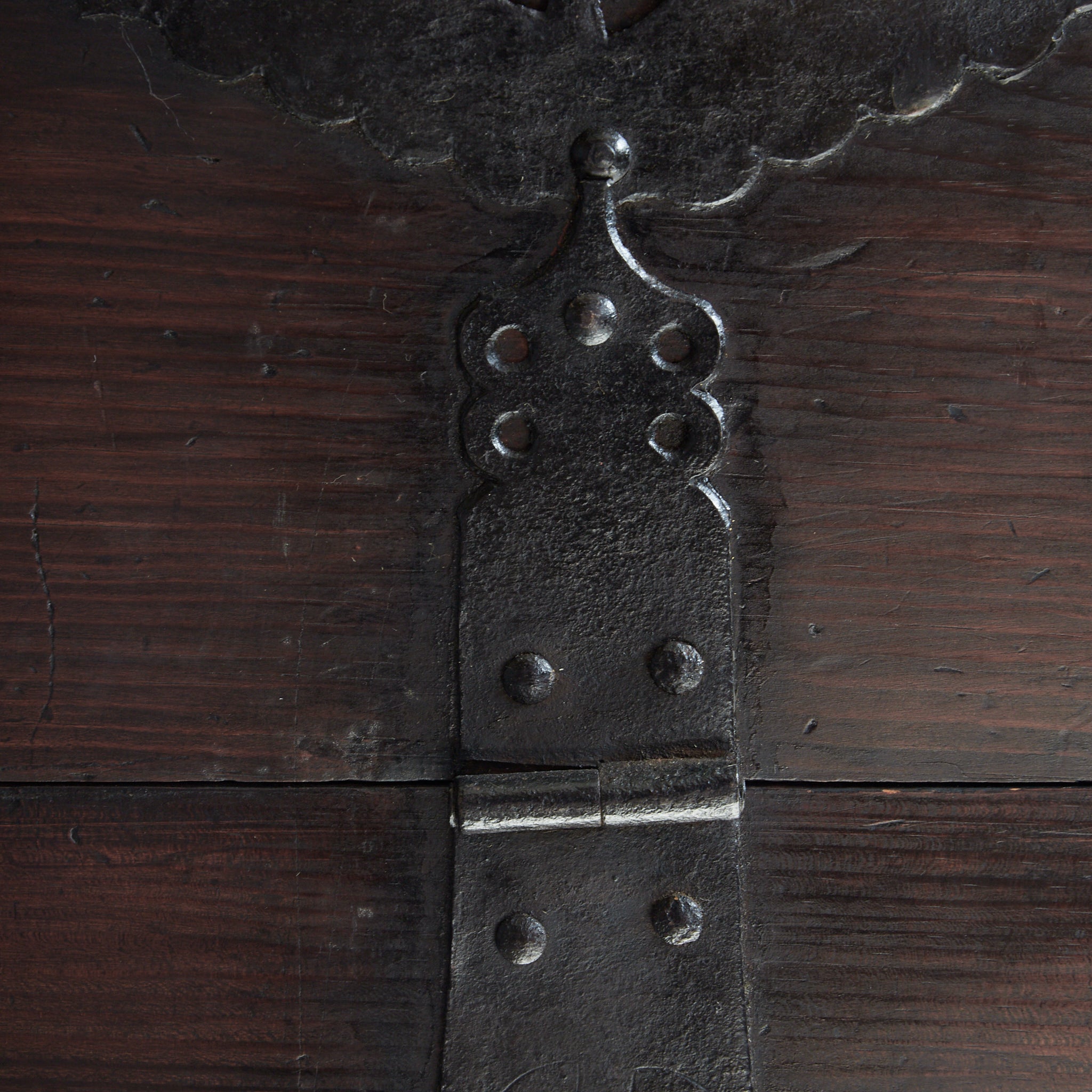
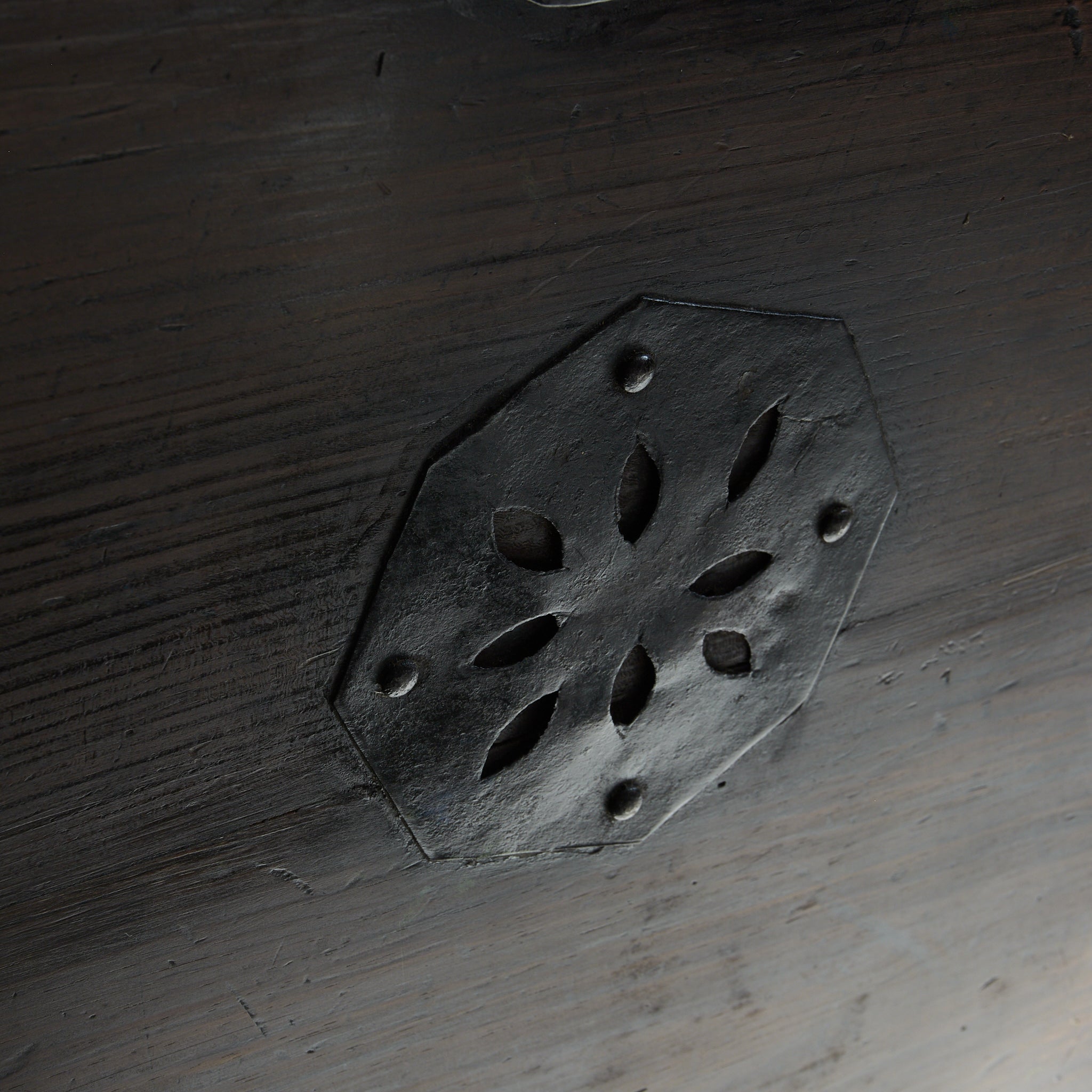
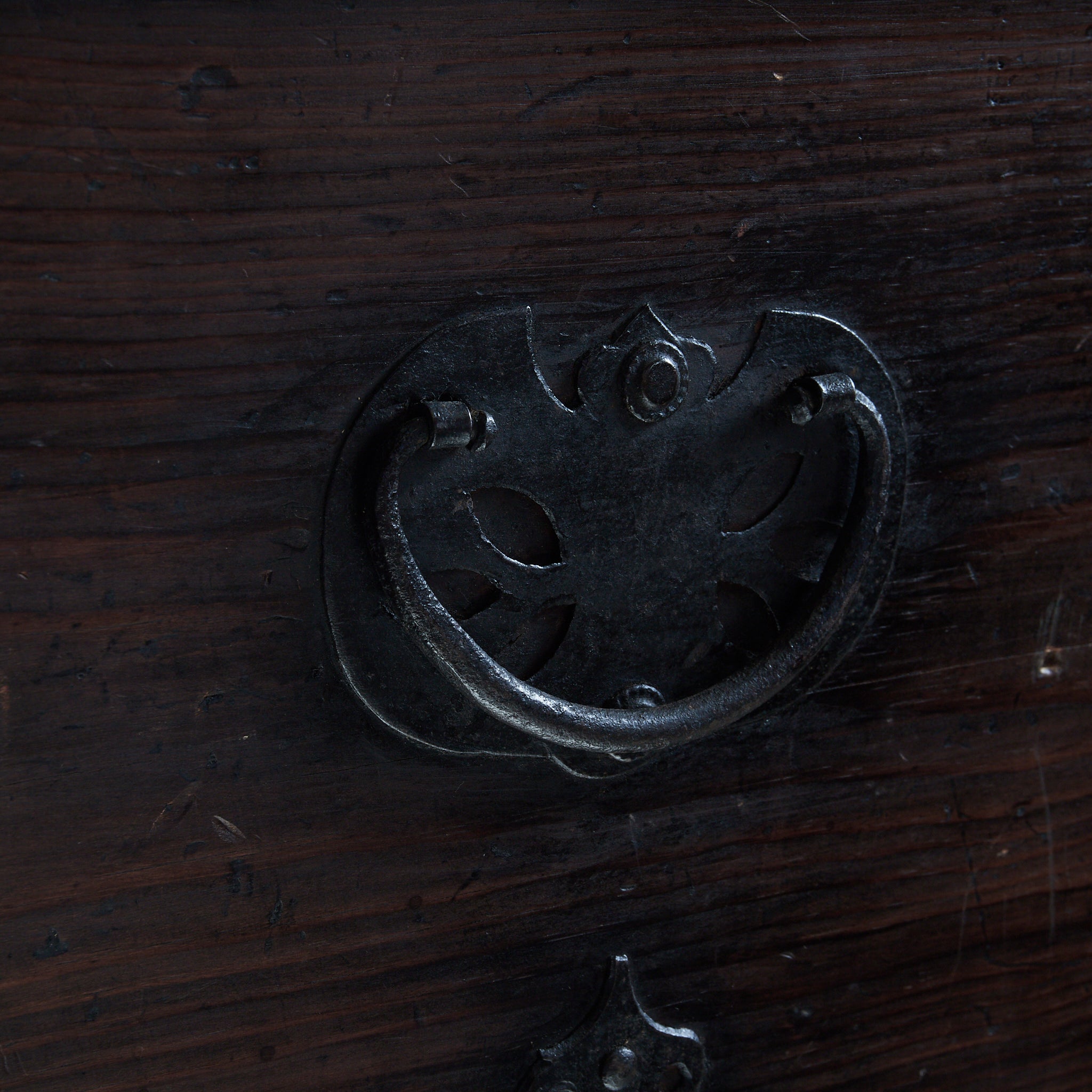
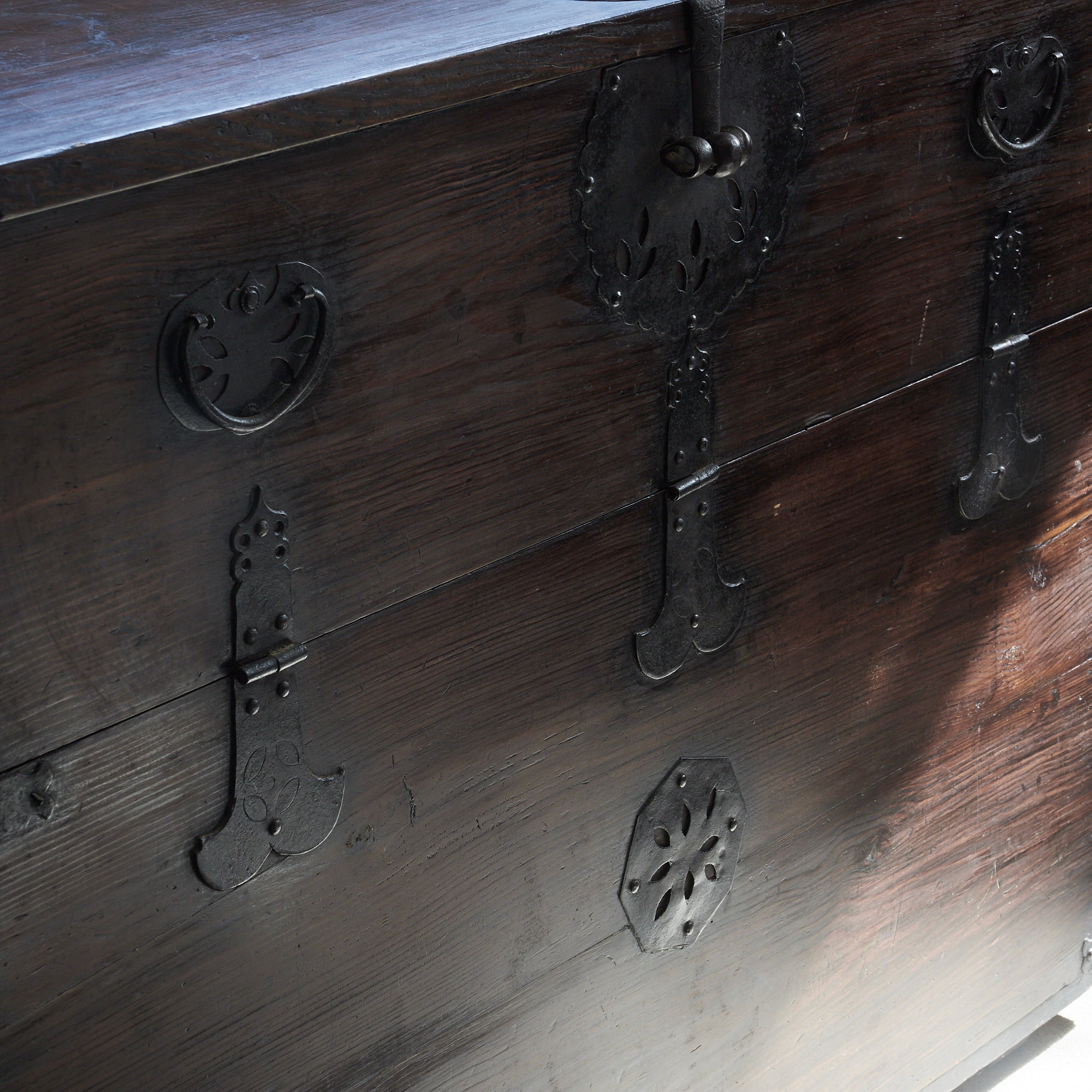
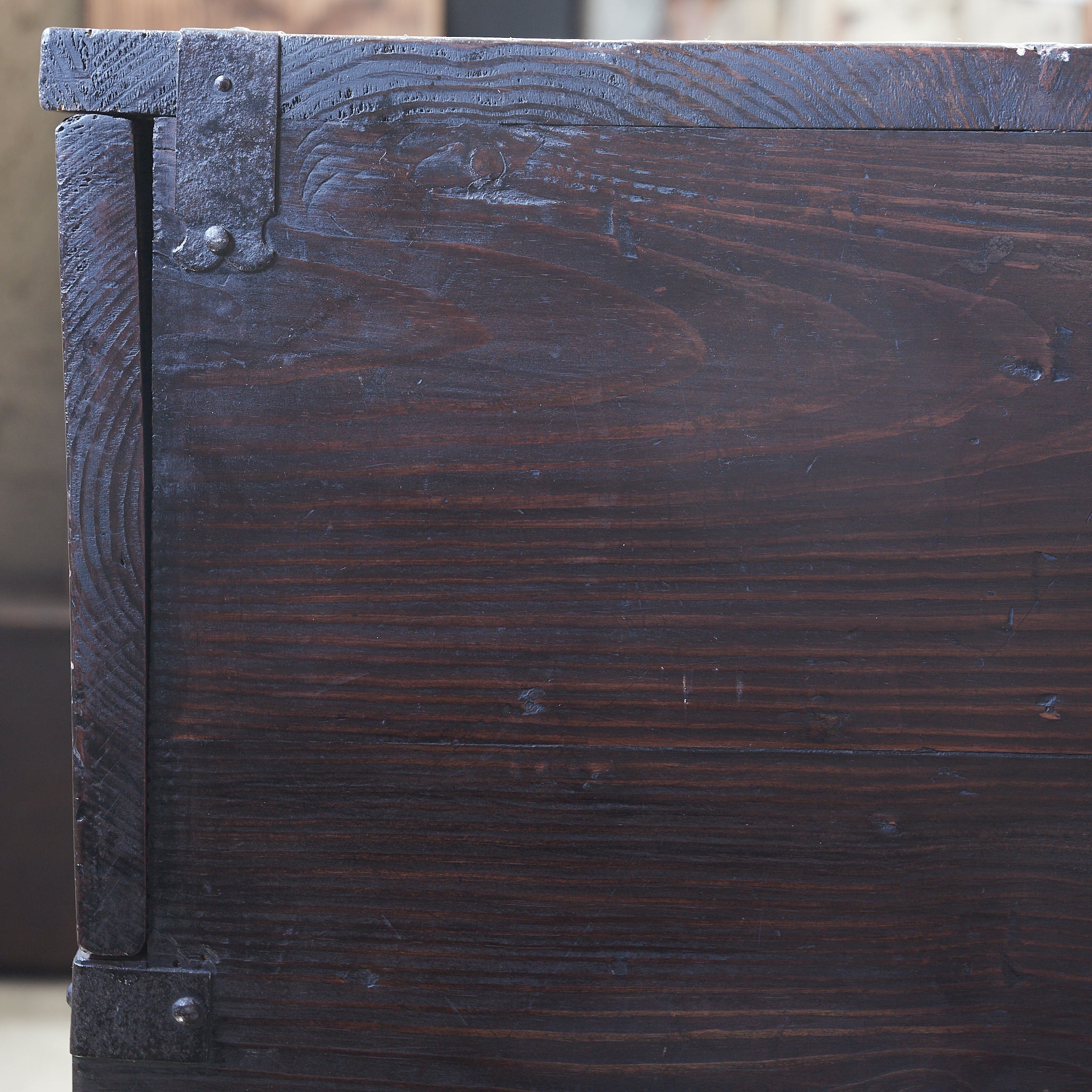
The front is divided into upper and lower sections, the upper panel tilting forward to open and close. A lock plate is set at the center, flanked by ring handles and three hinge fittings, and an octagonal metal fitting is positioned at the lower edge.
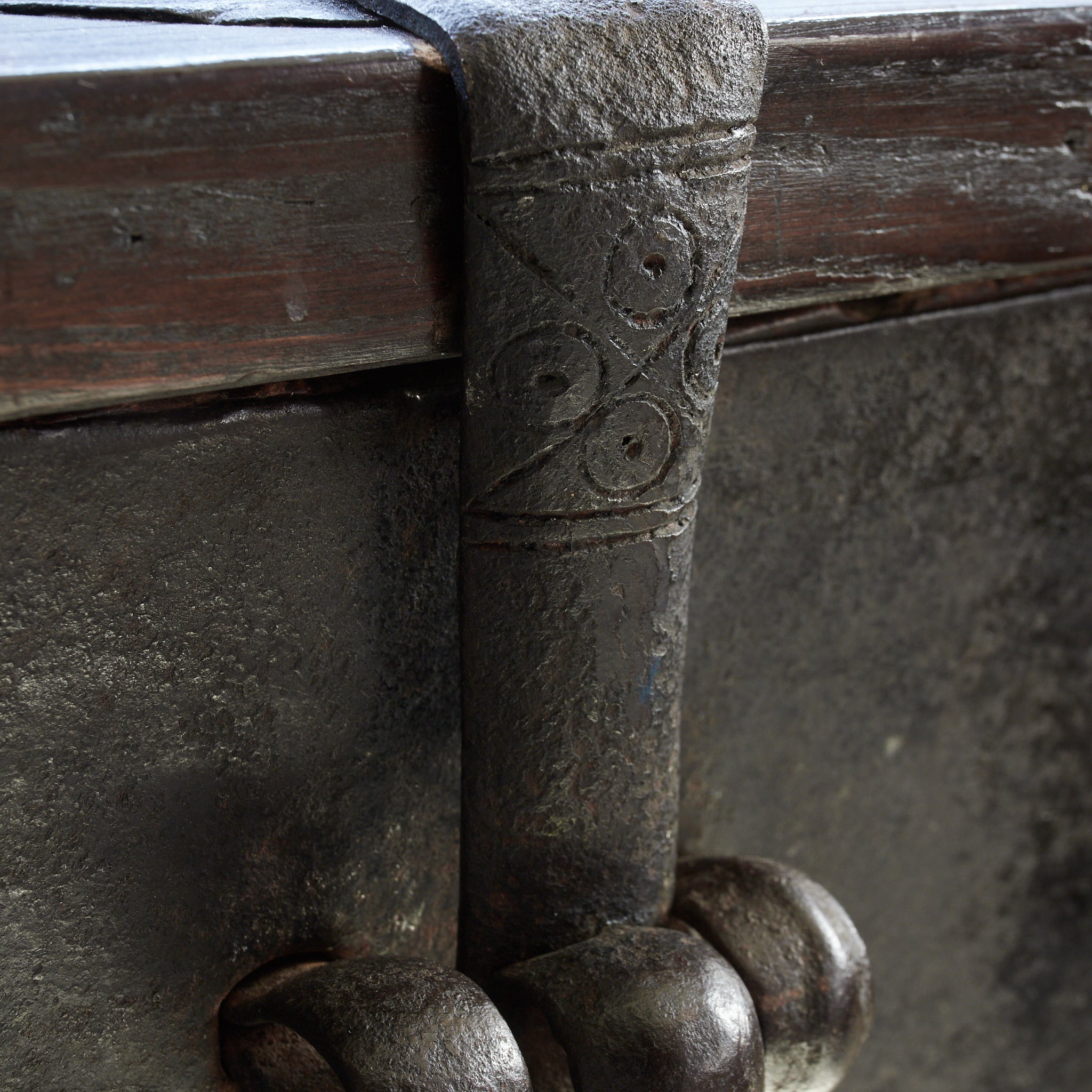
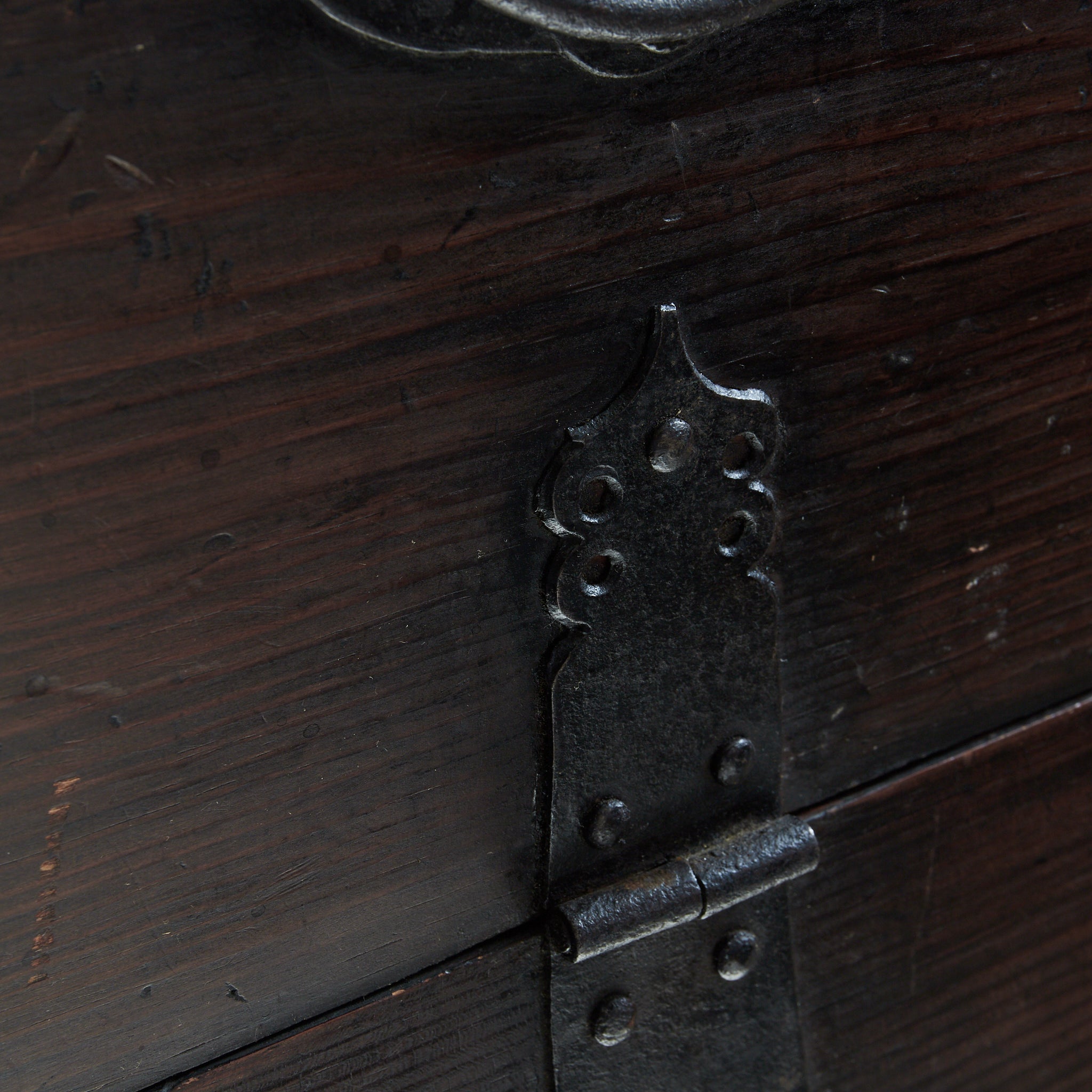
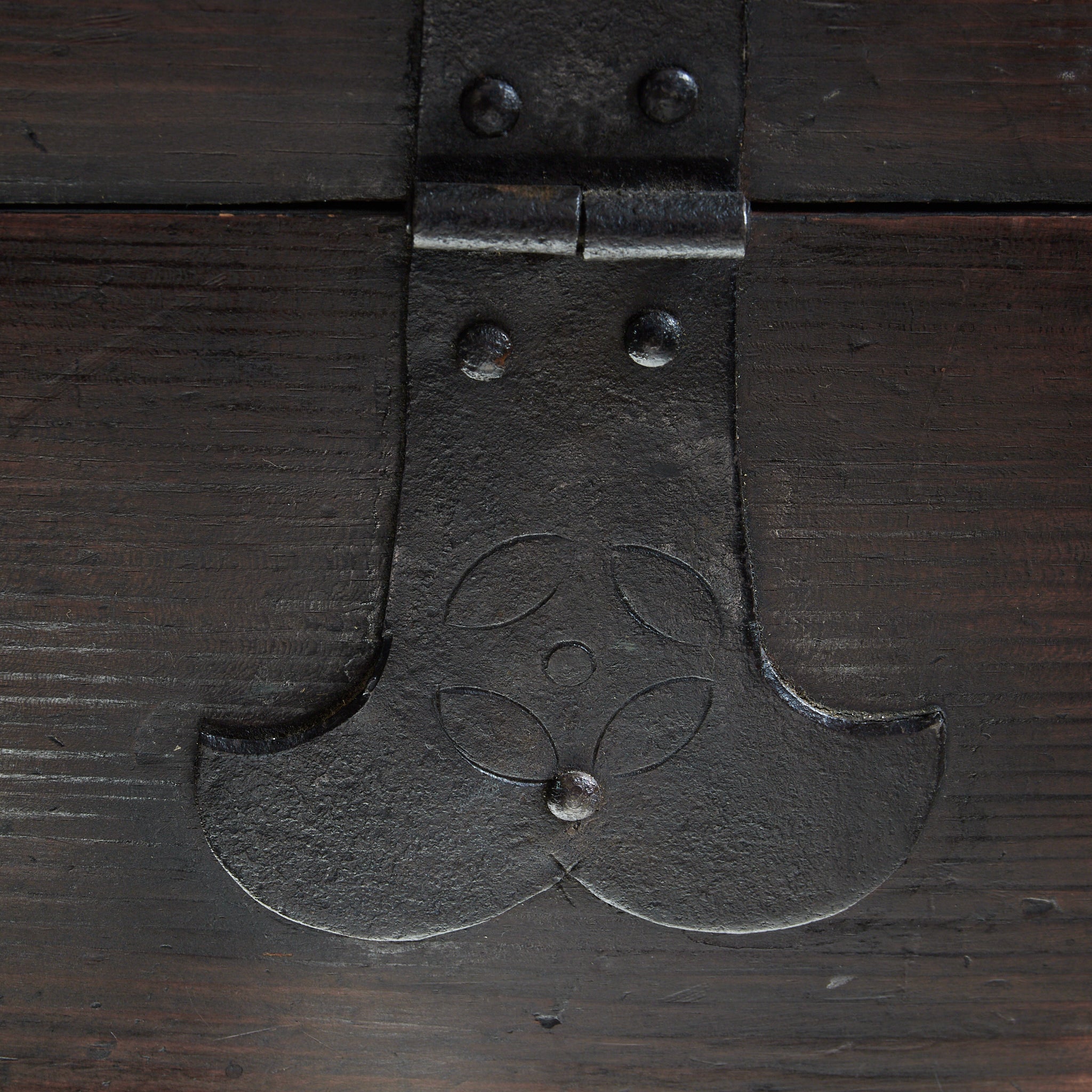
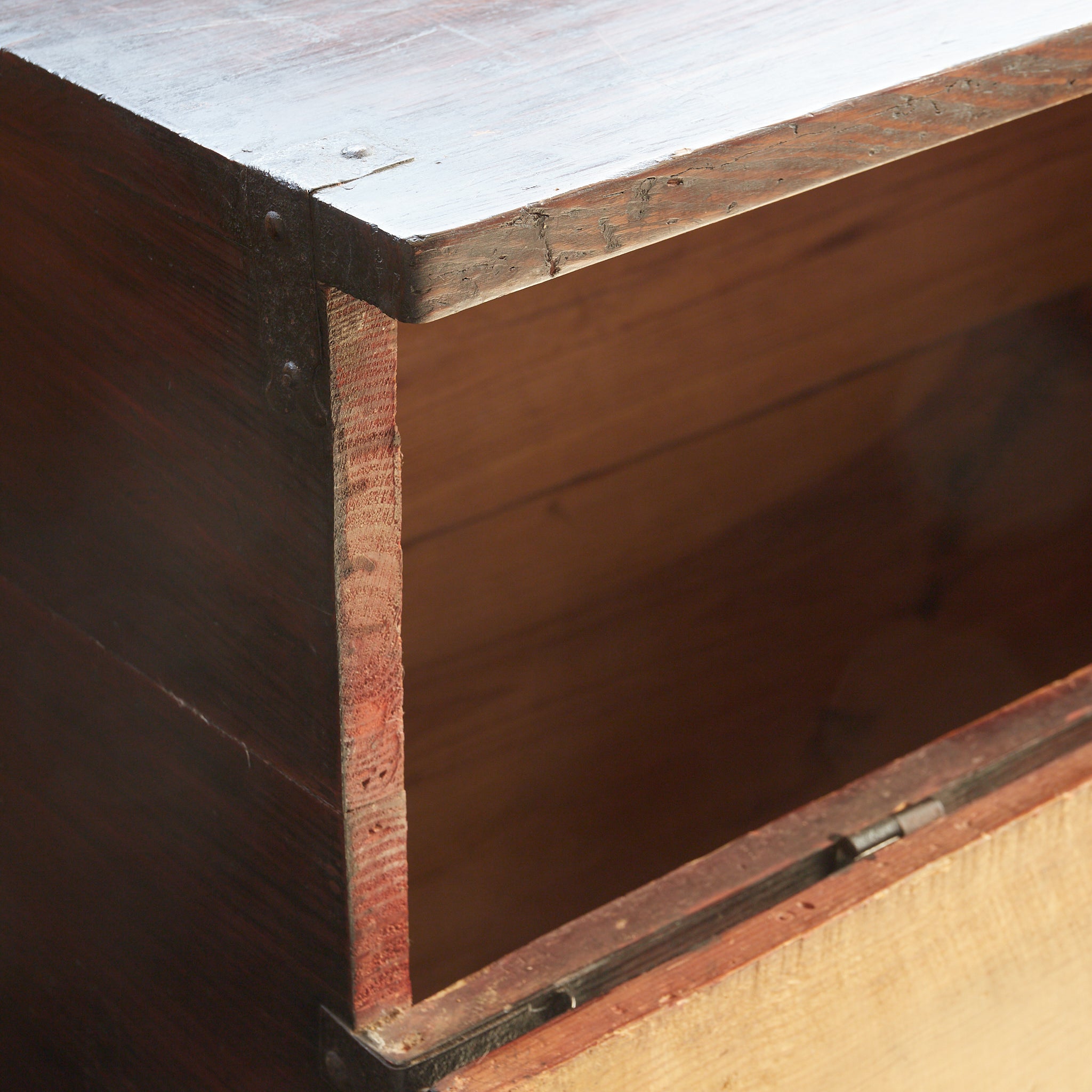
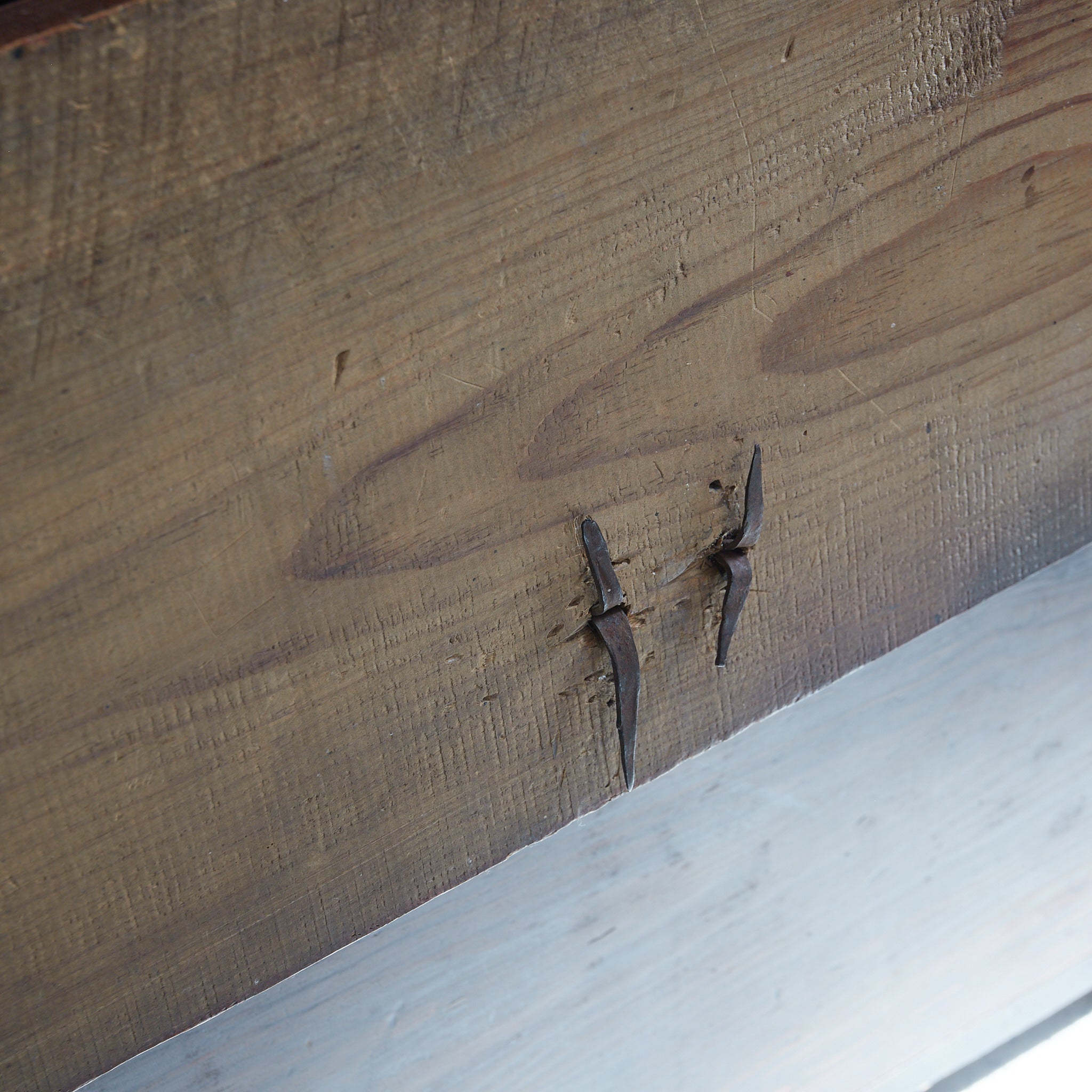
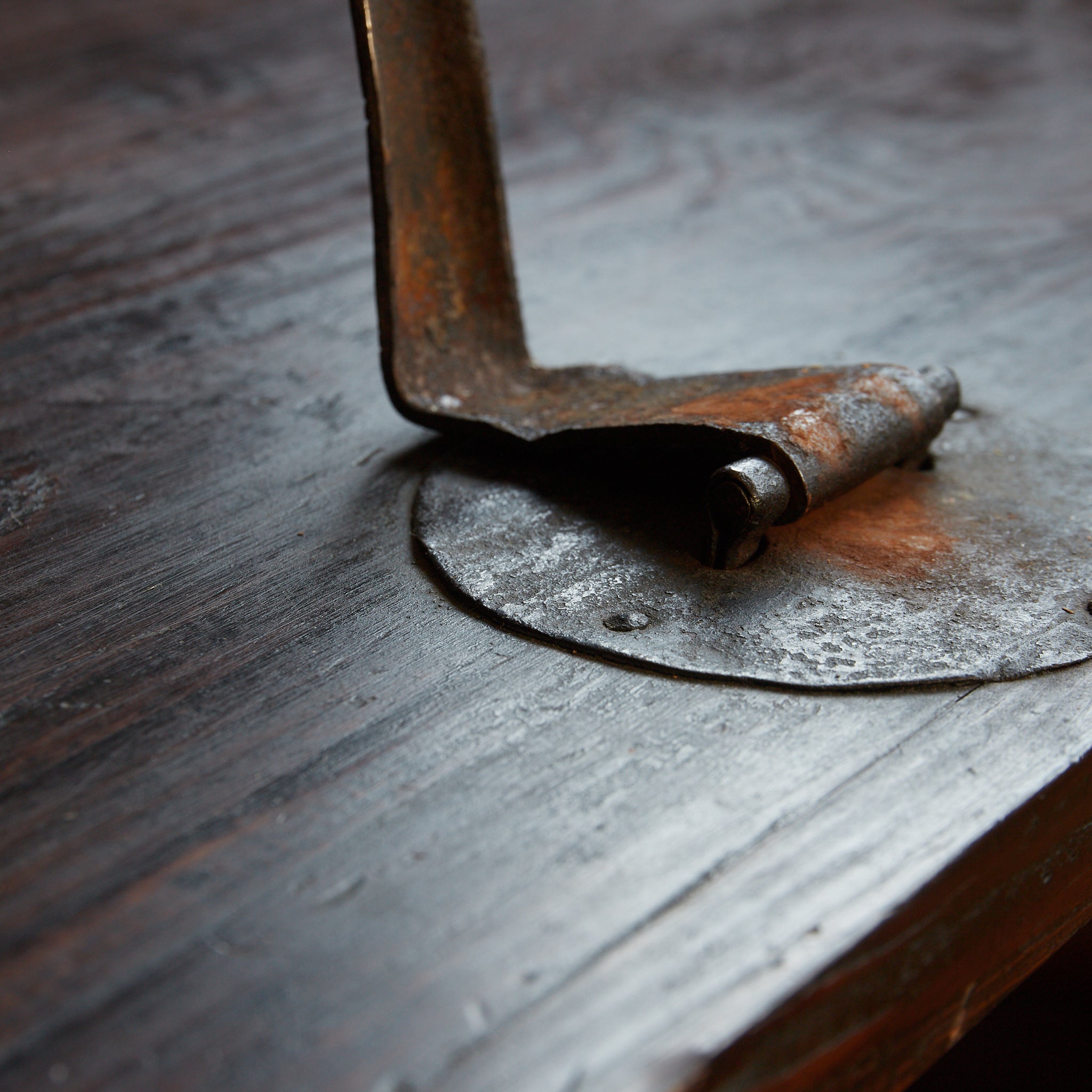
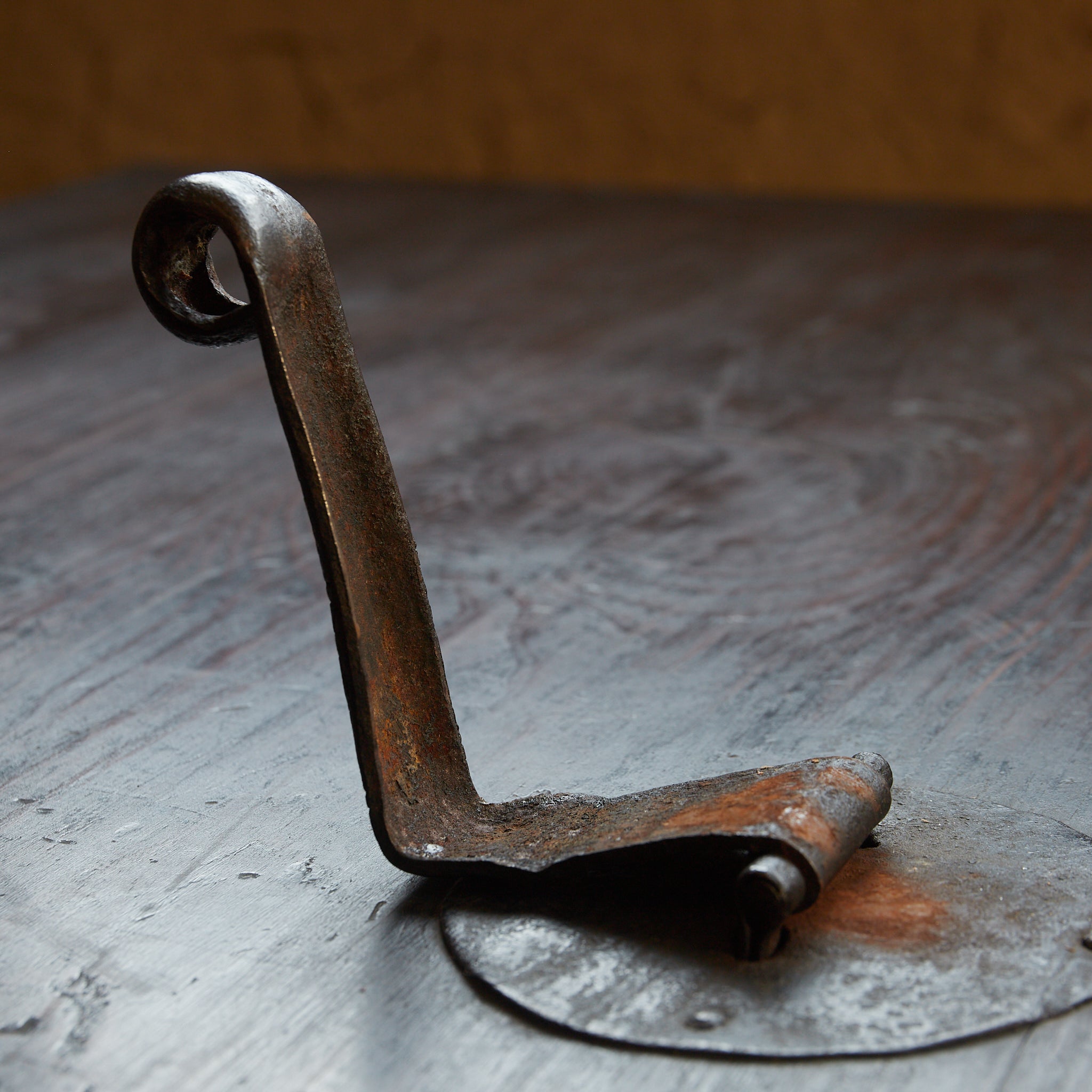
The central metal fitting features leaf-shaped openwork, while the octagonal fittings are pierced with radiating patterns; the tips of the hinges are finished with outlined ornament. The band leading to the lock plate is incised with circular motifs, an ironwork executed with meticulous attention to detail.
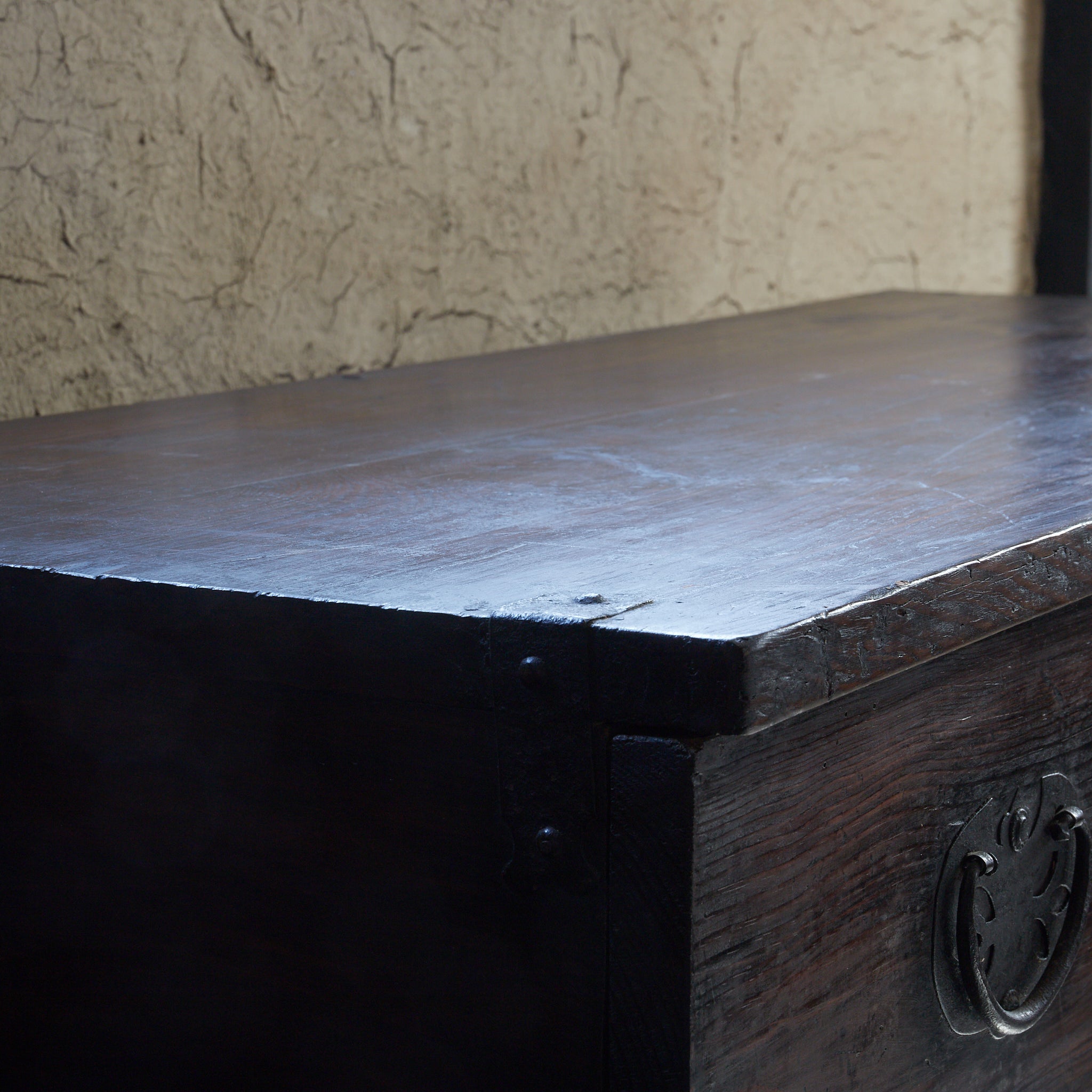
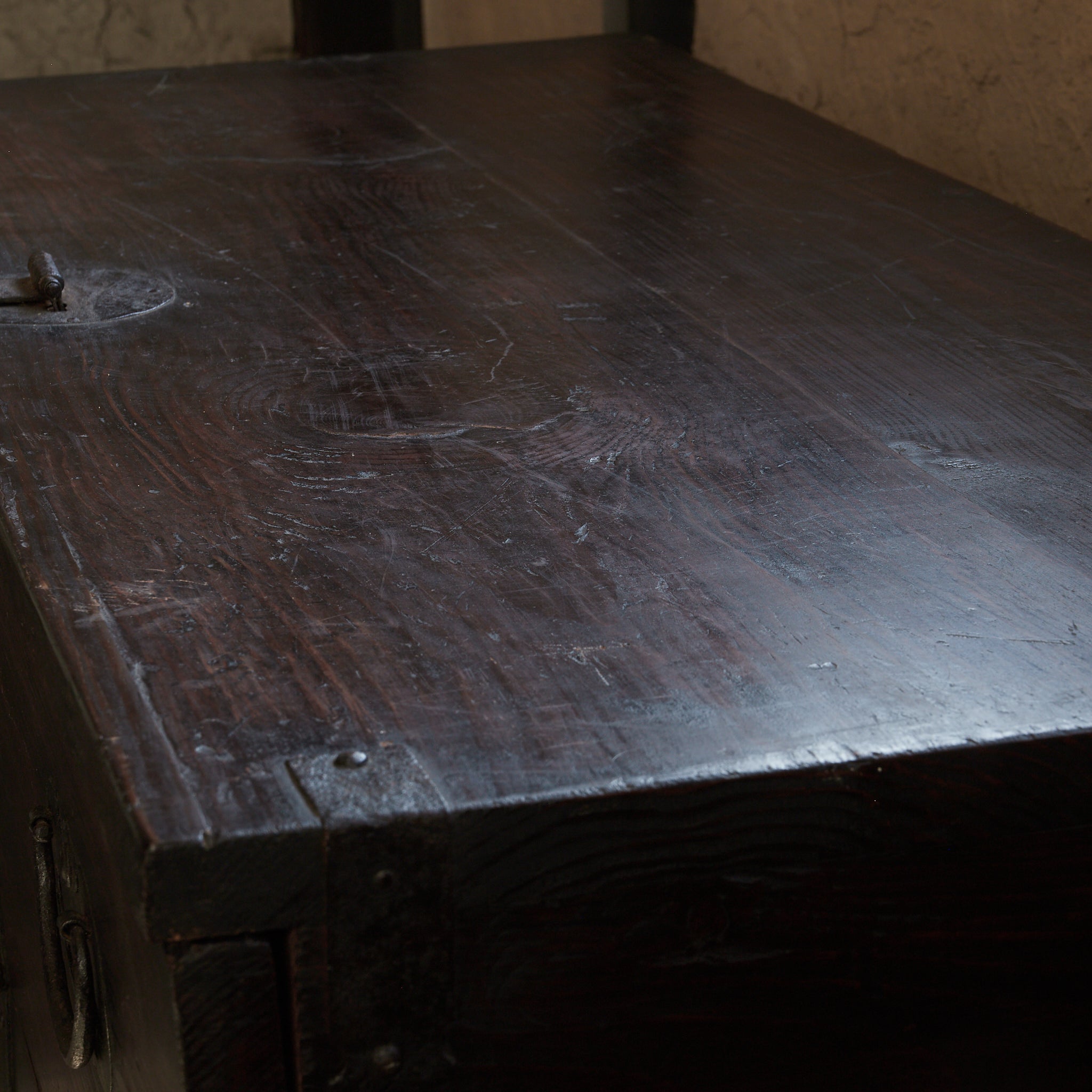
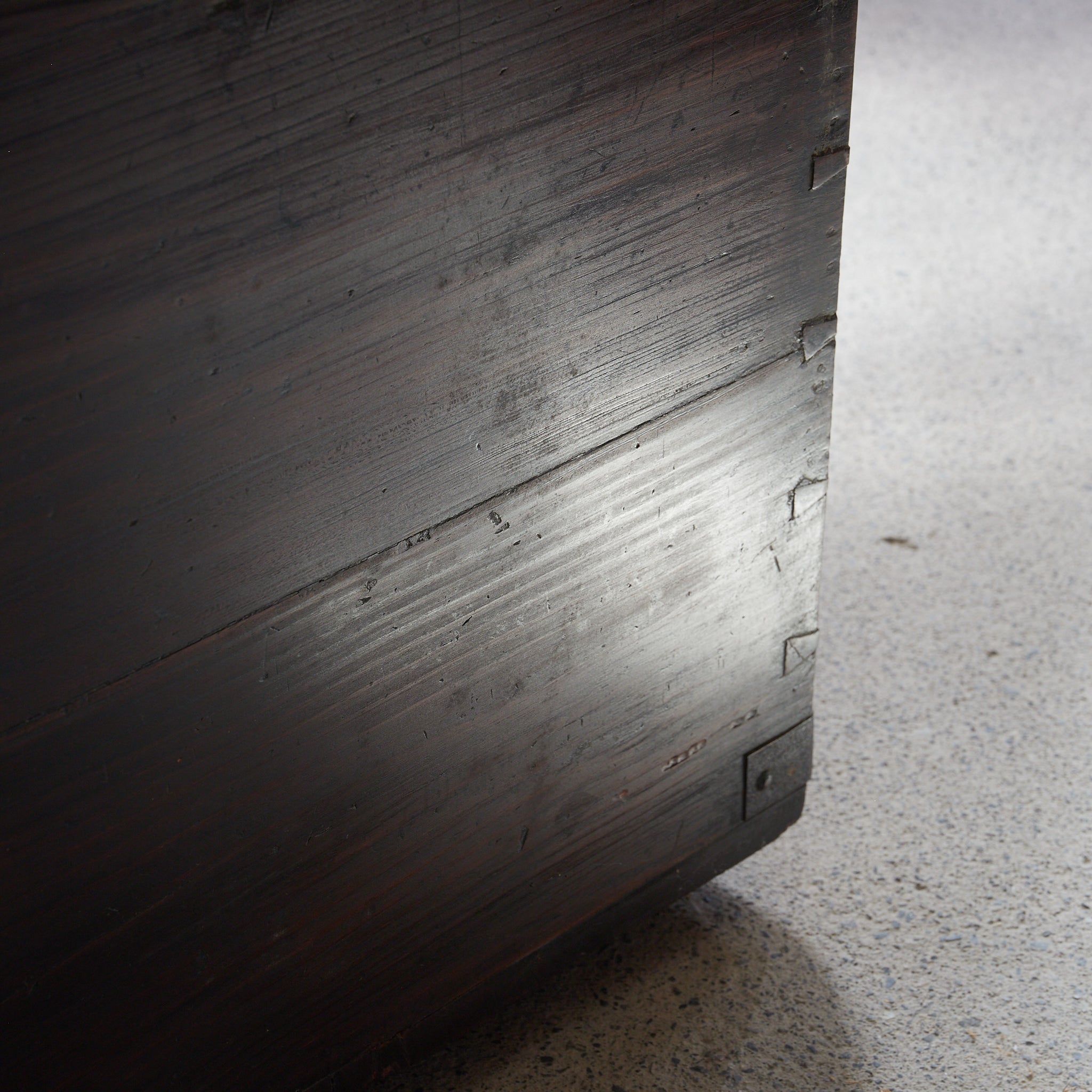
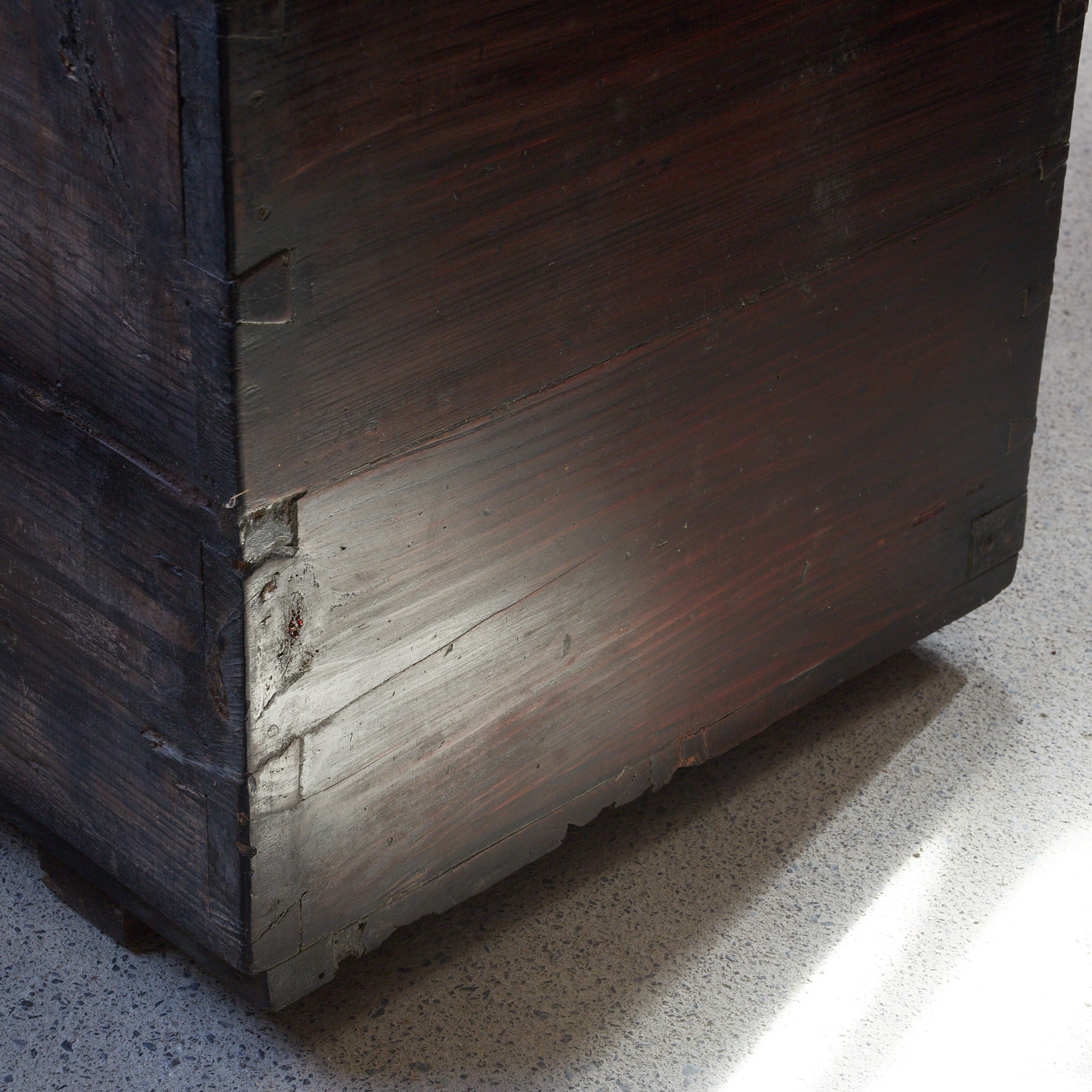
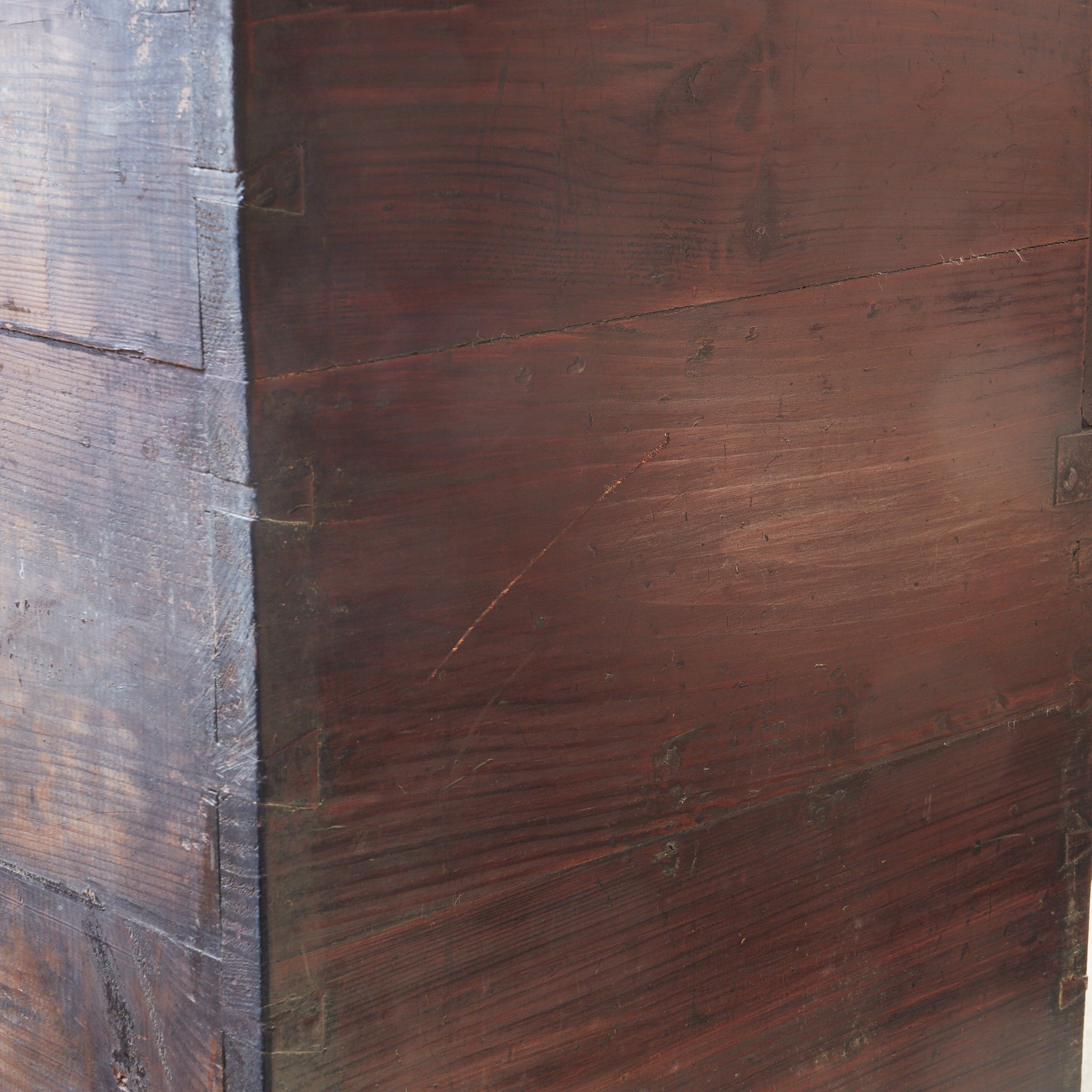
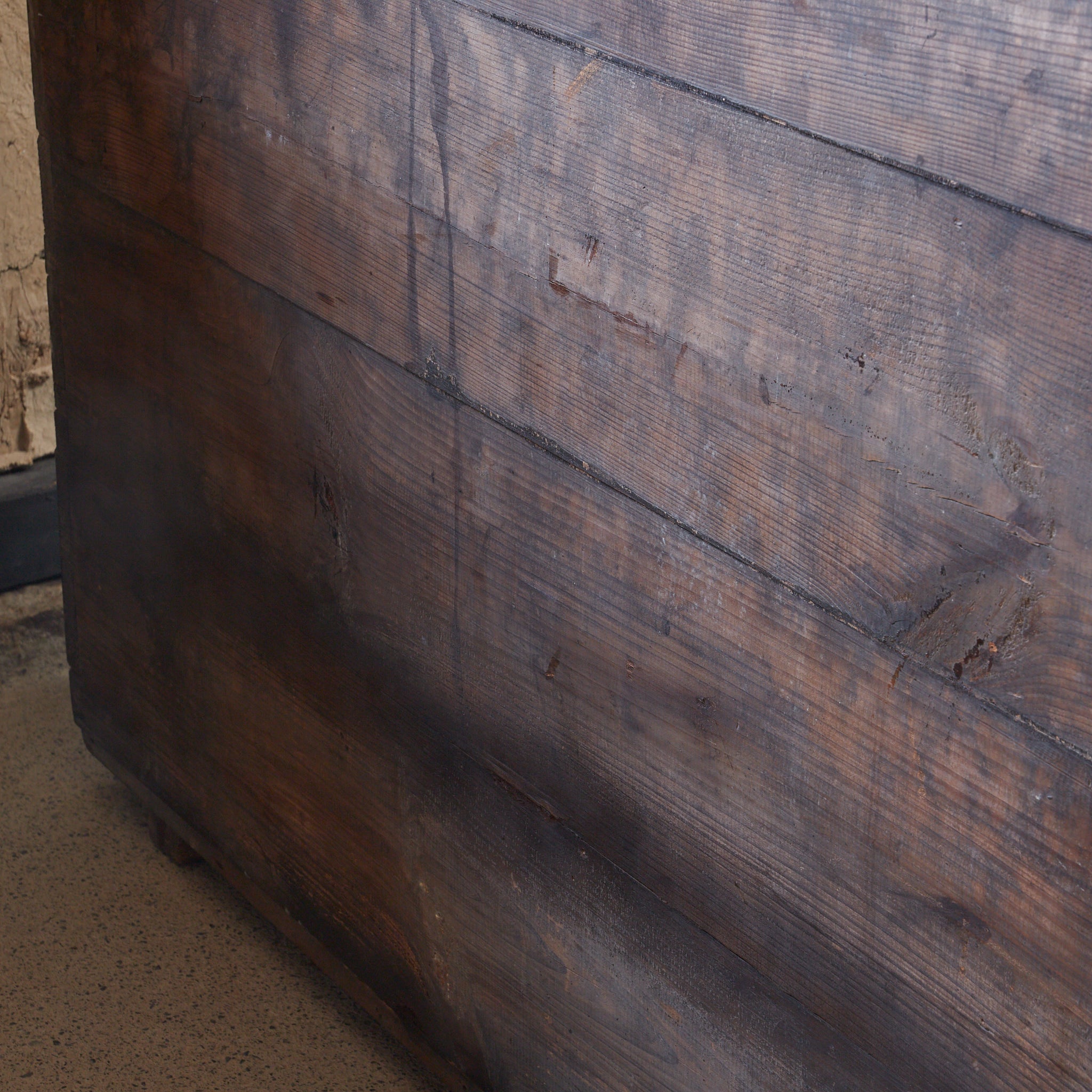
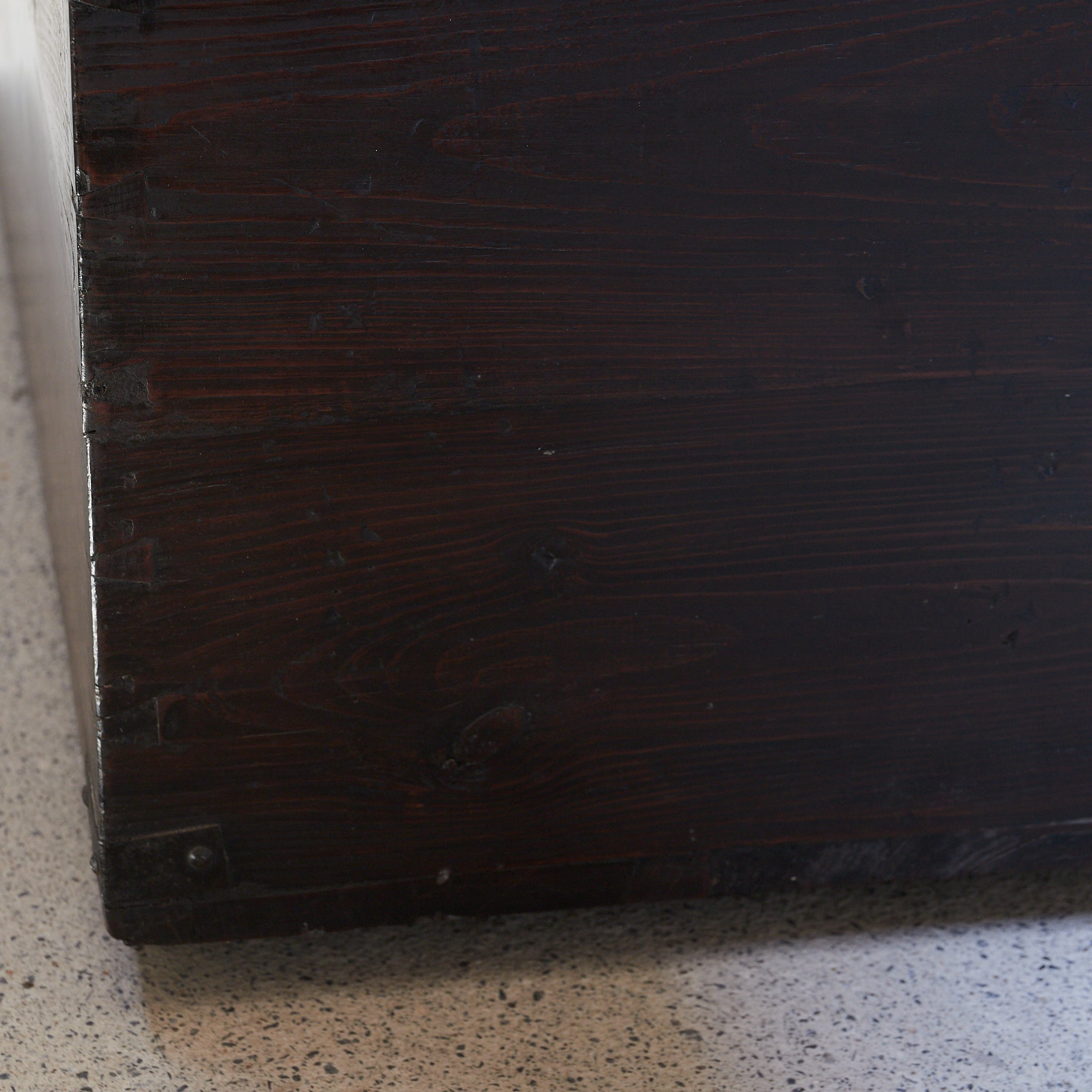
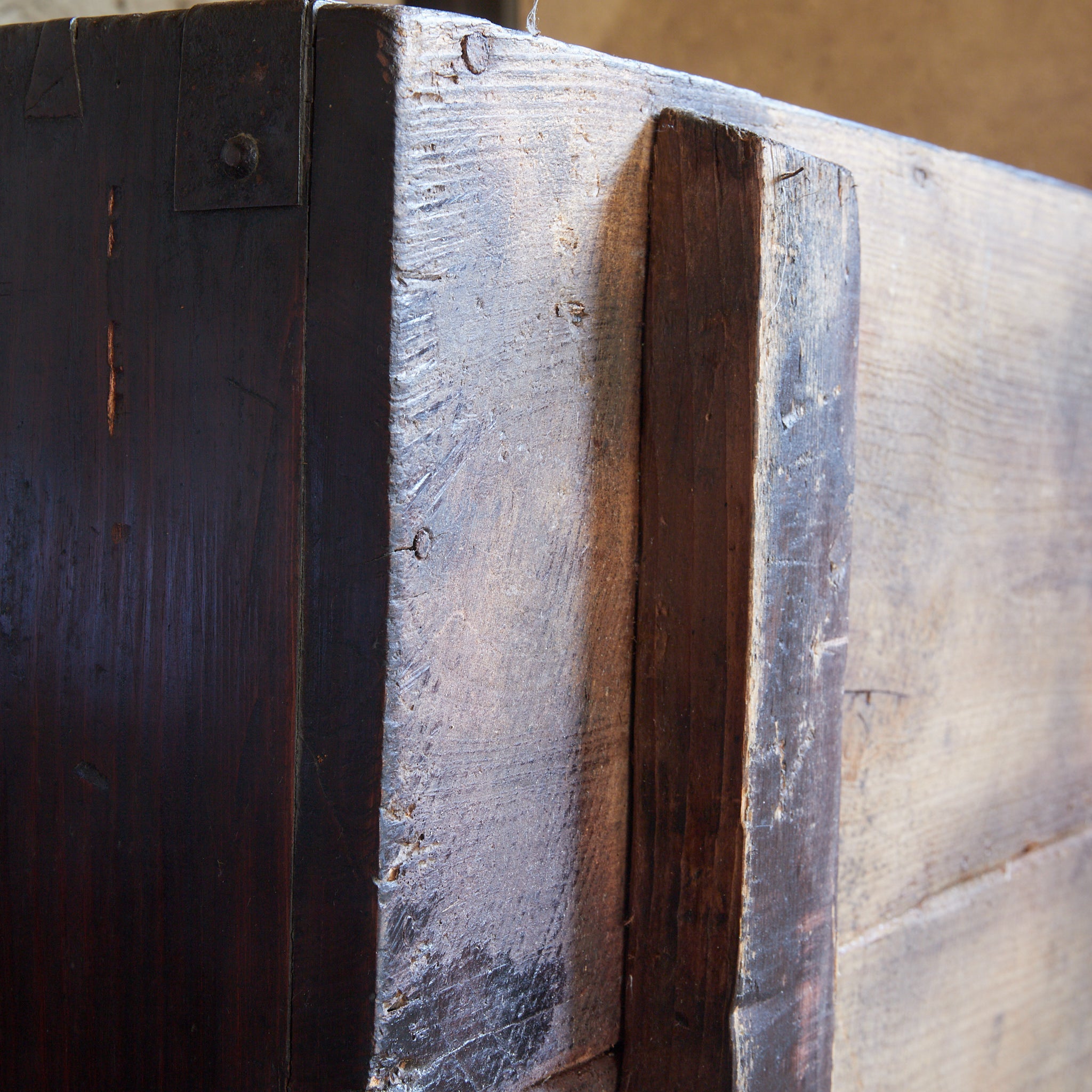
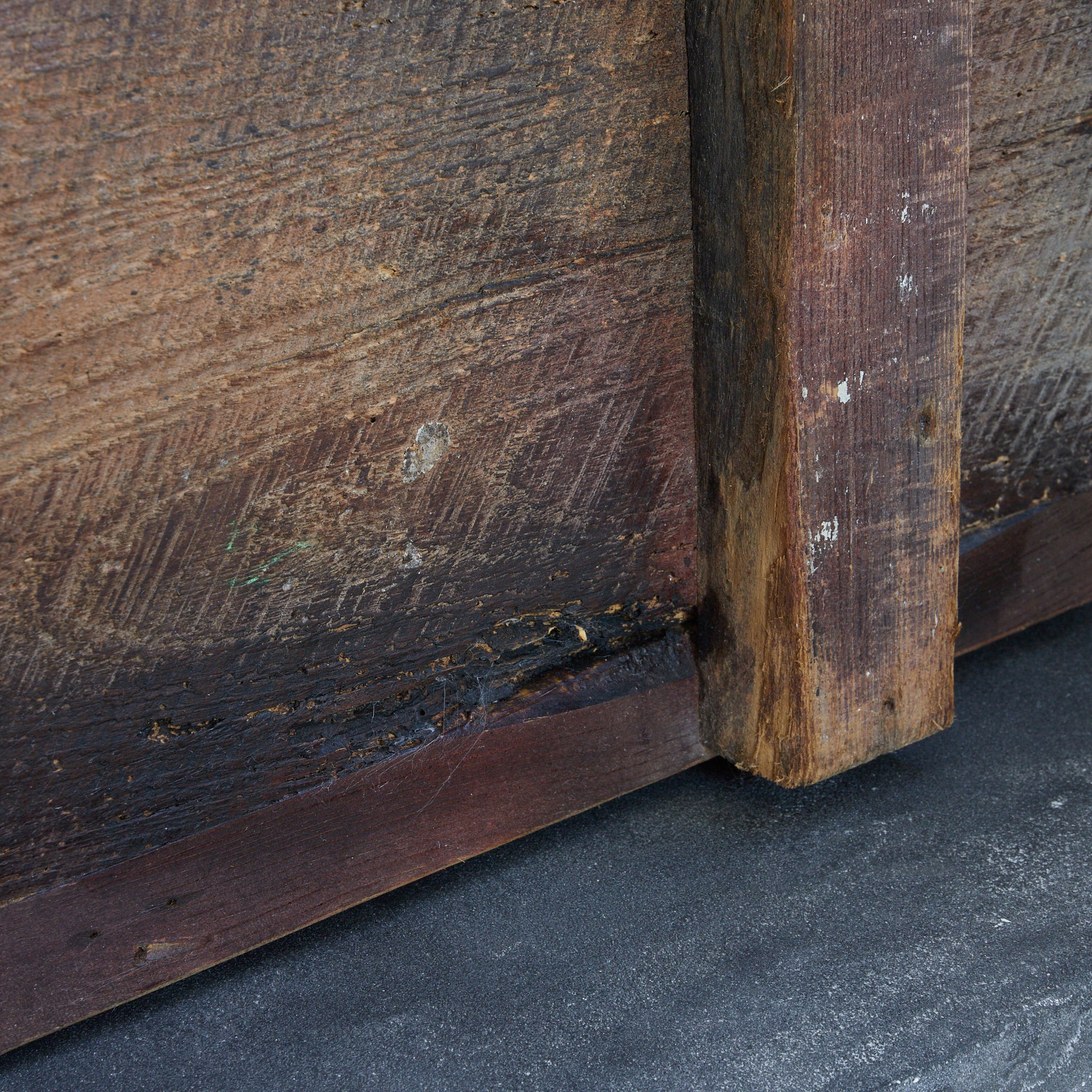
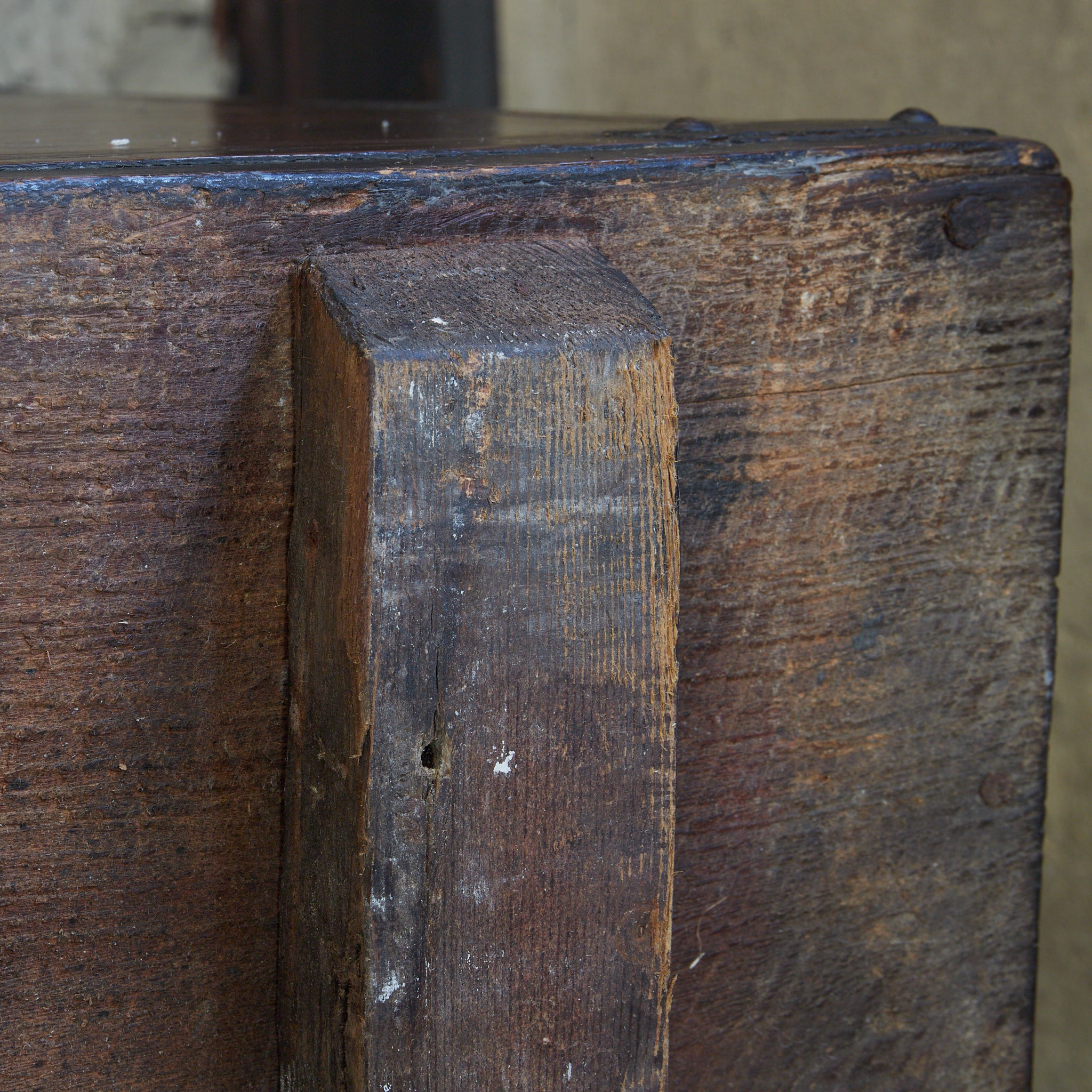
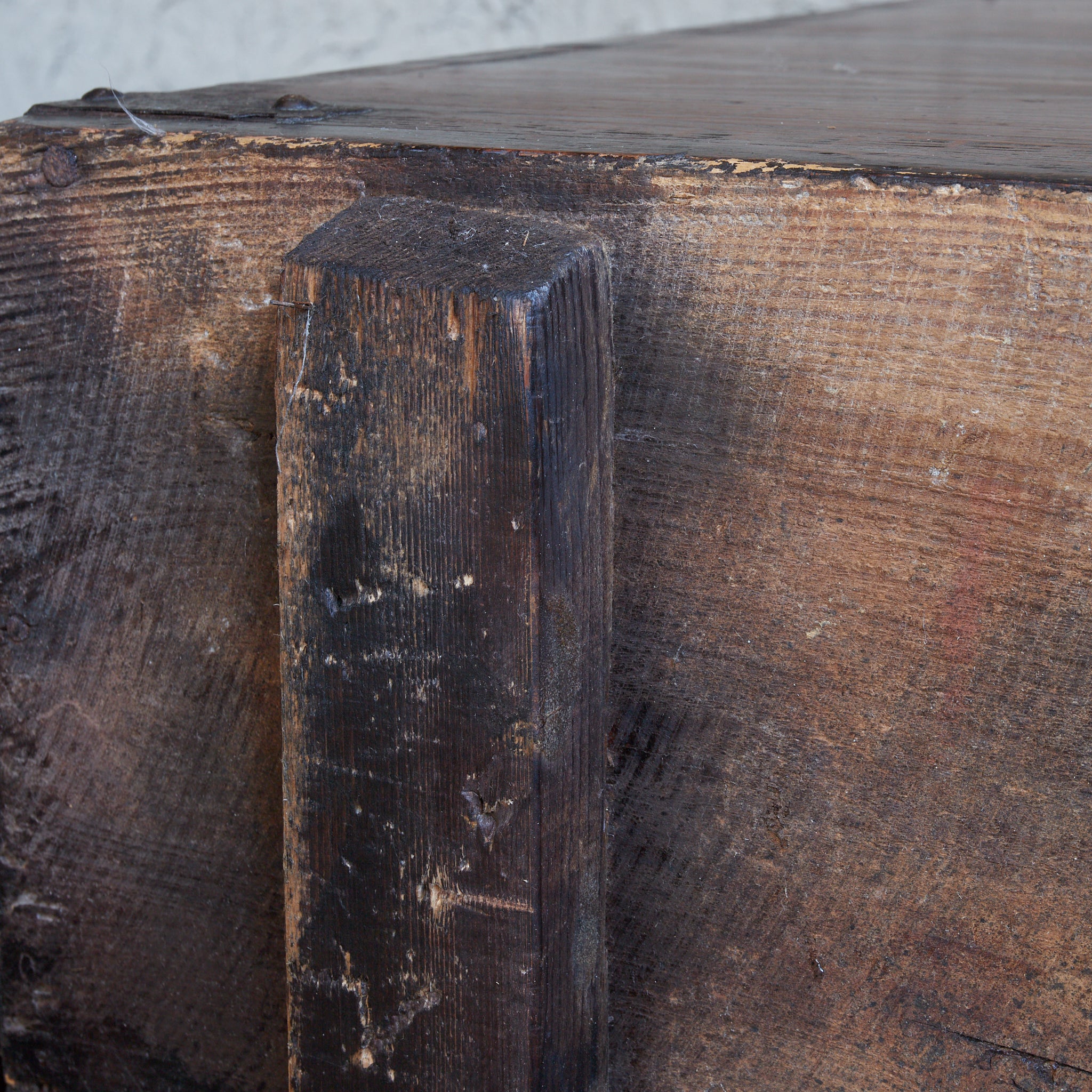
The wood has darkened to a deep brown; the top and front panels show scuffs, minor scratches, and a burnished sheen from use. The black metal fittings harmonize with the wood, giving the piece the subdued, composed appearance characteristic of antique Joseon furniture.
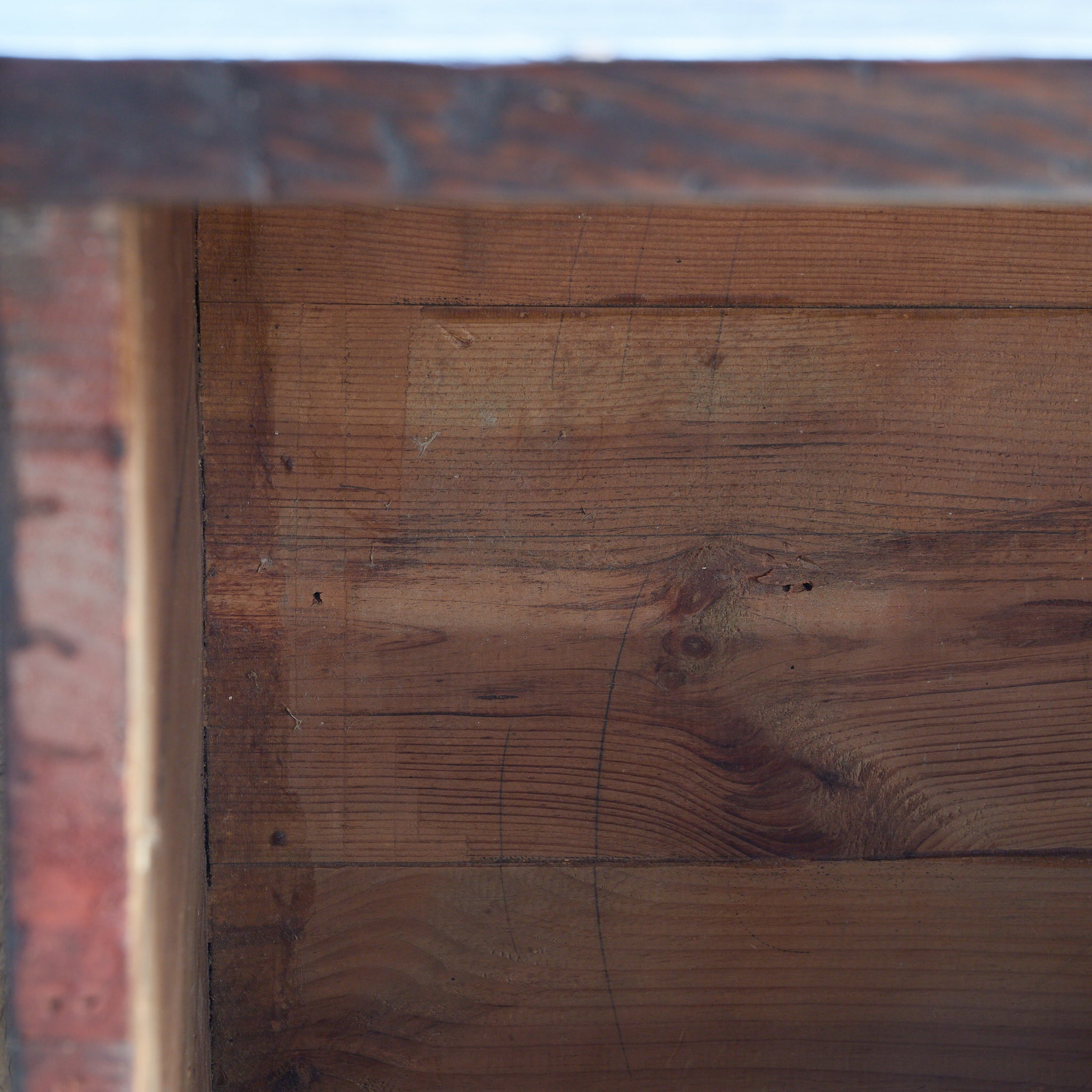
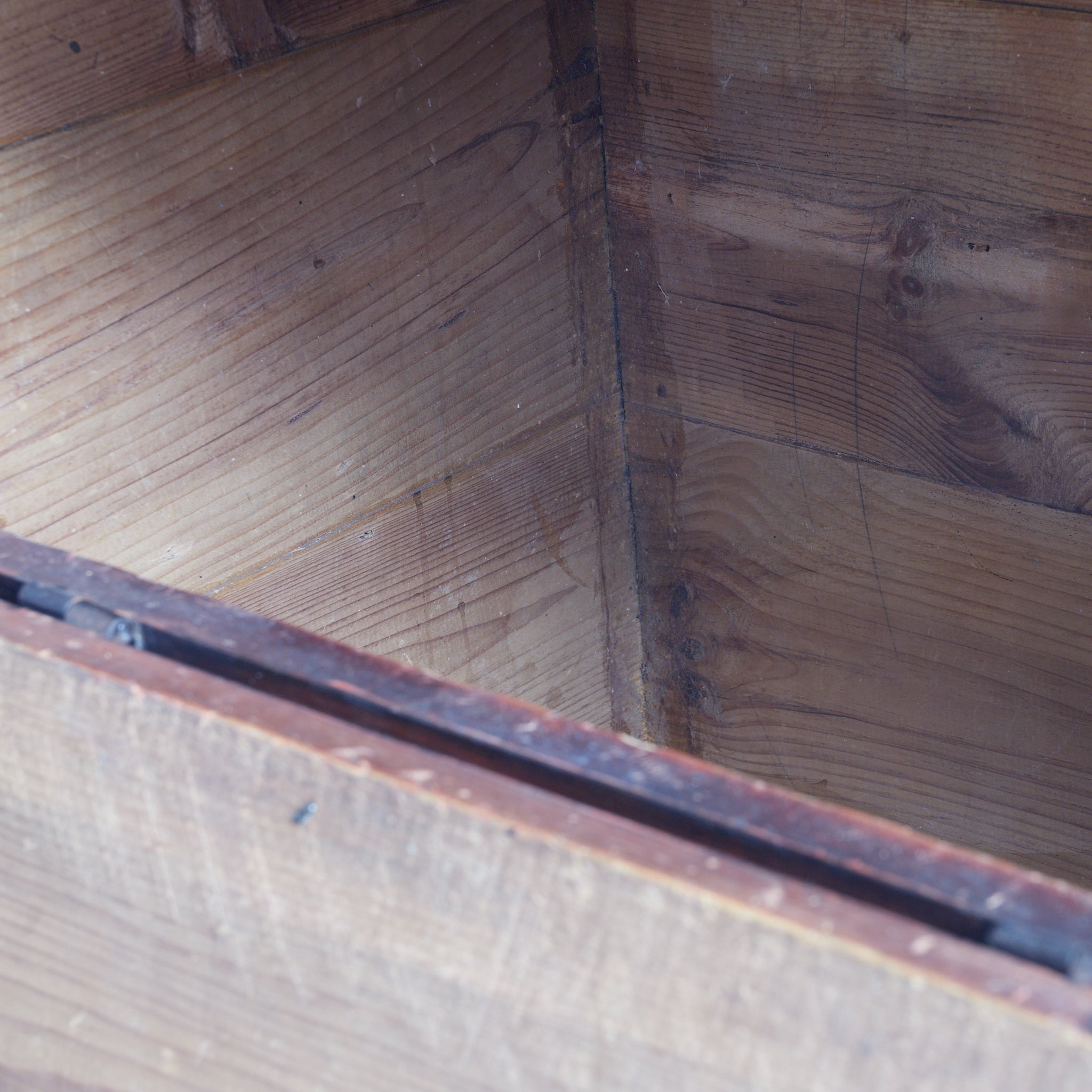
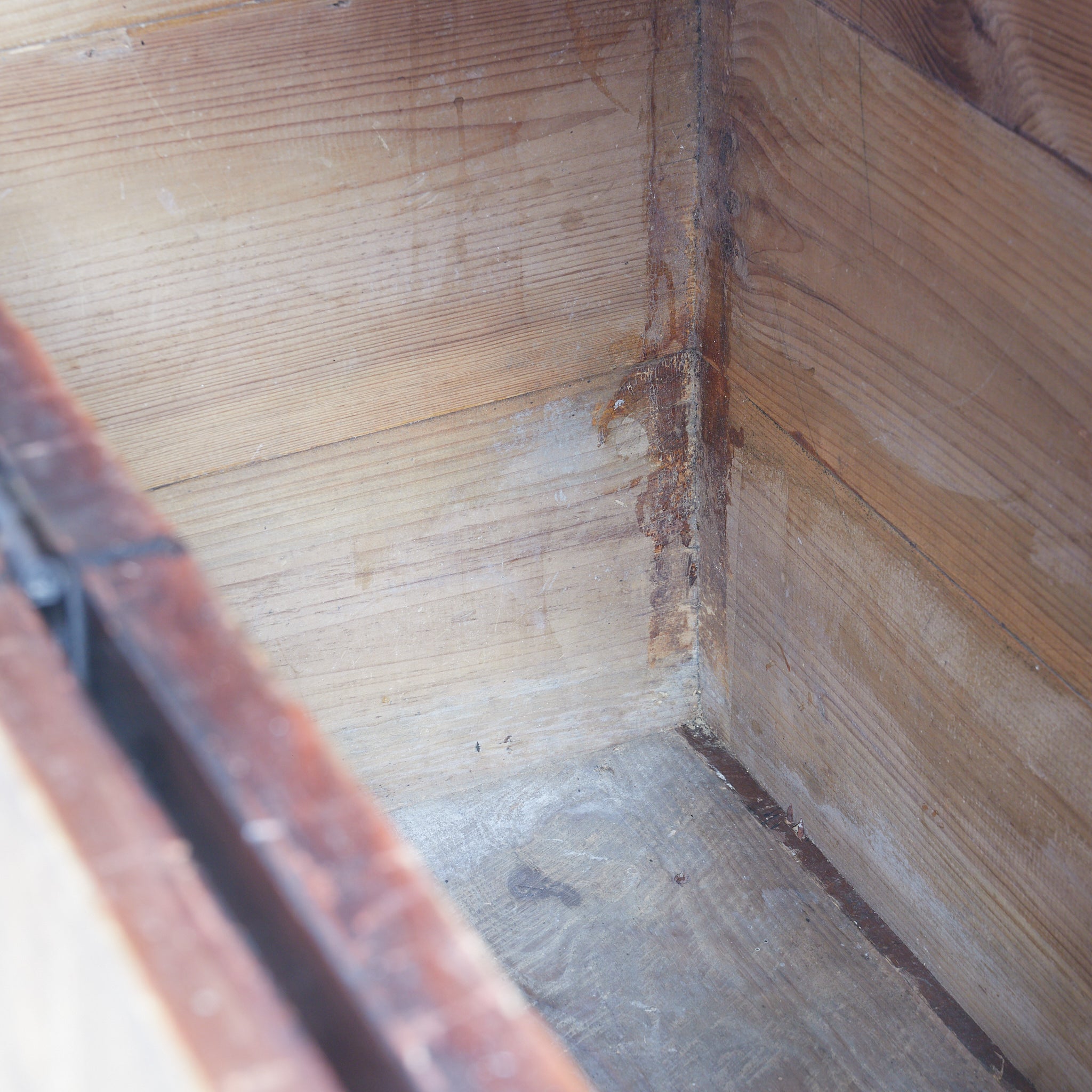
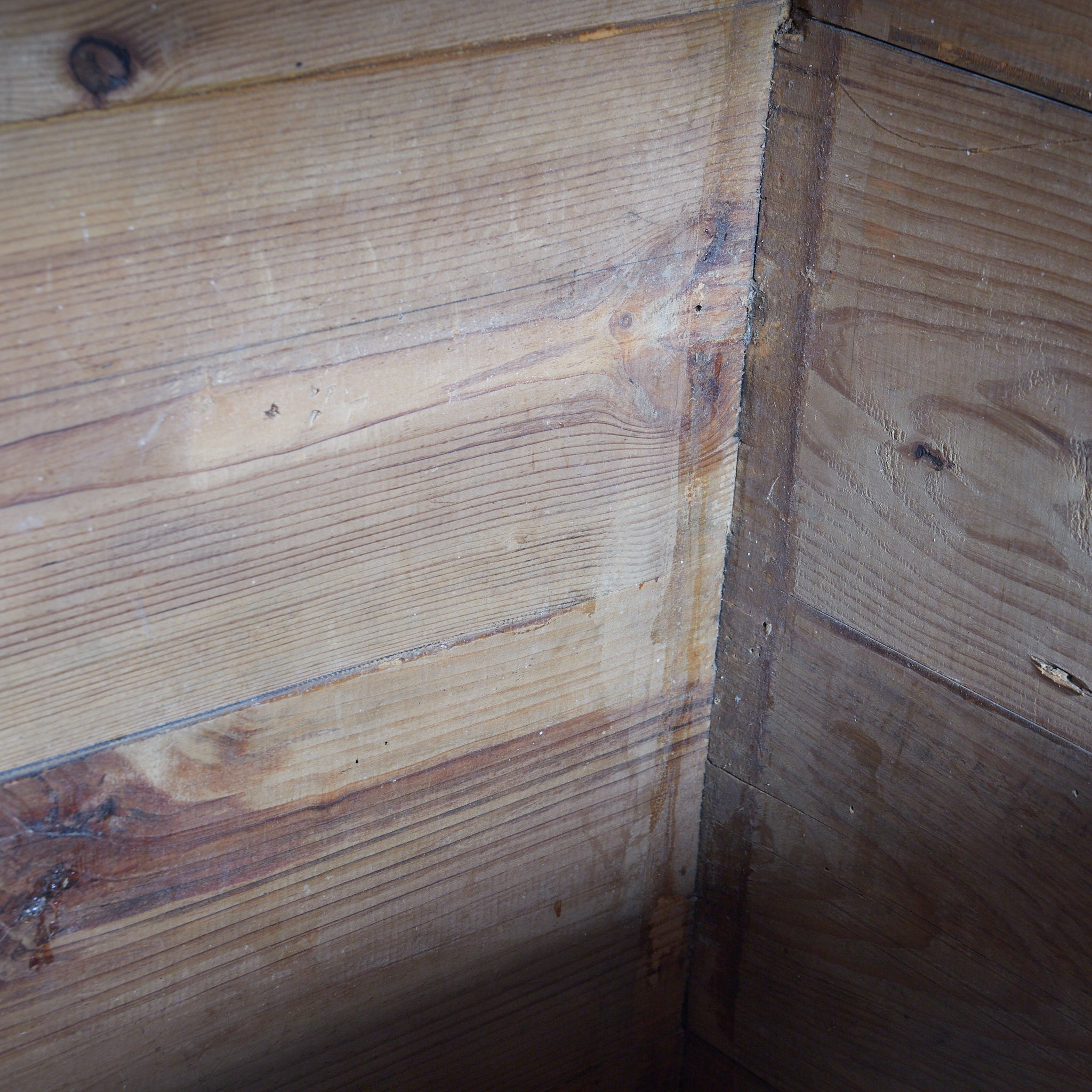
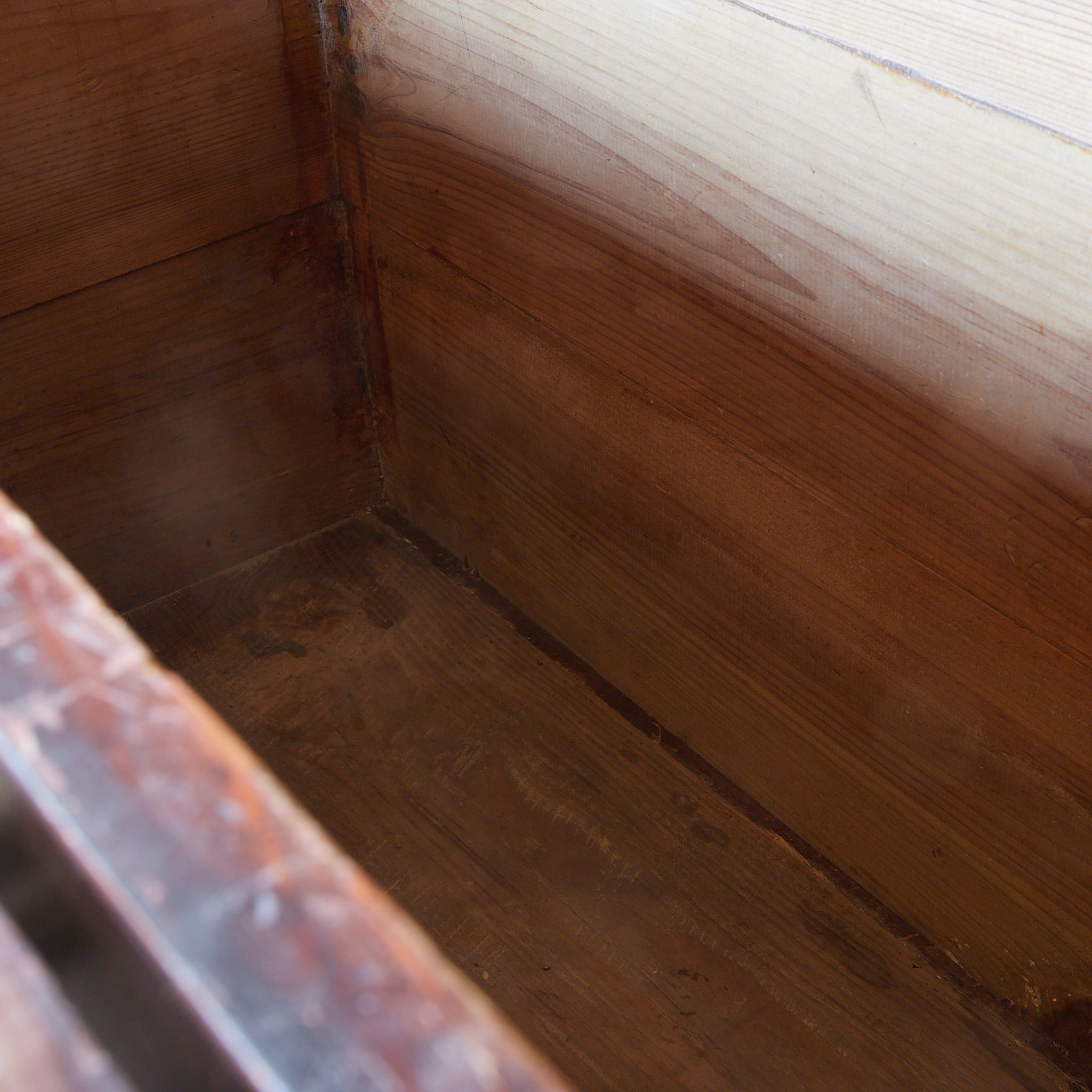
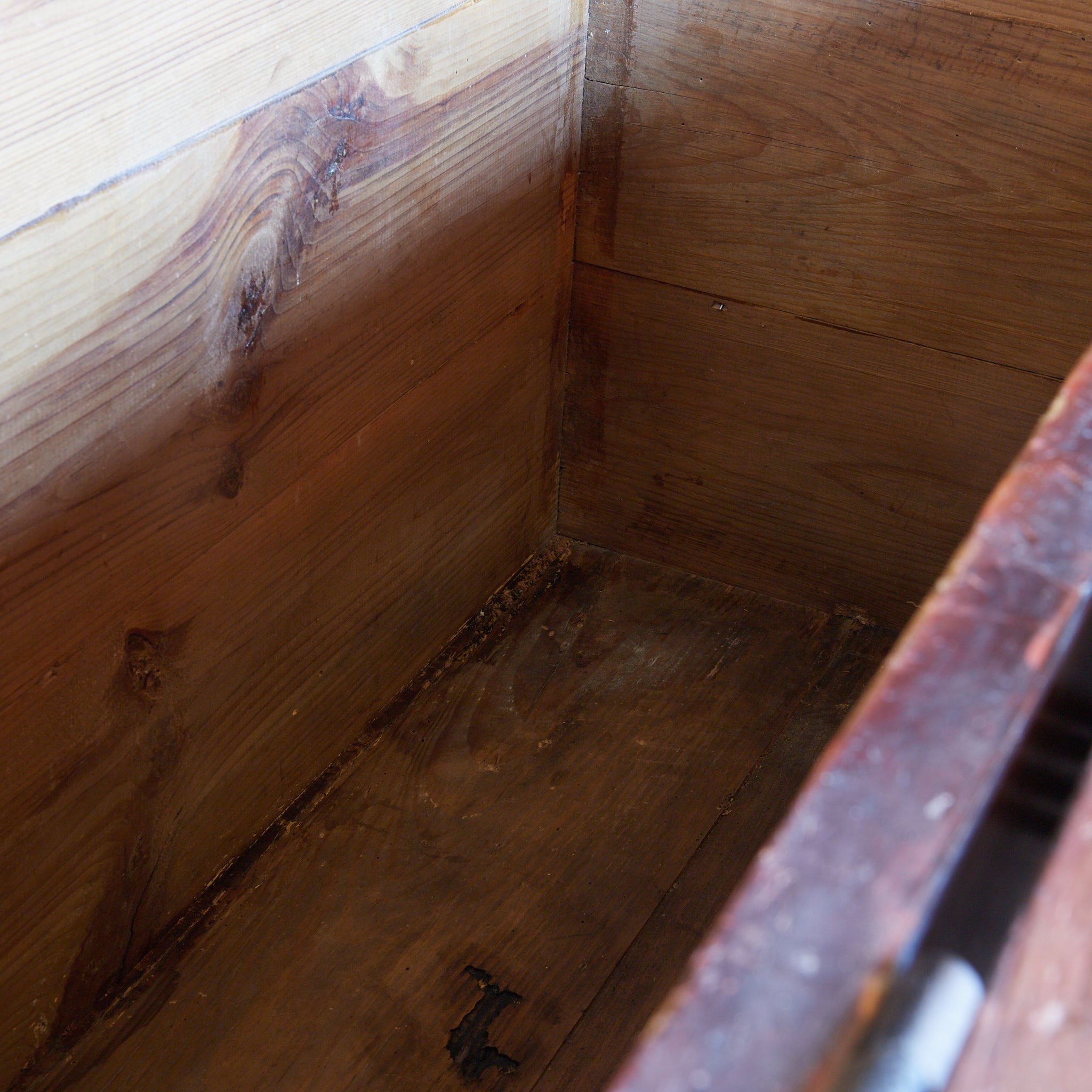
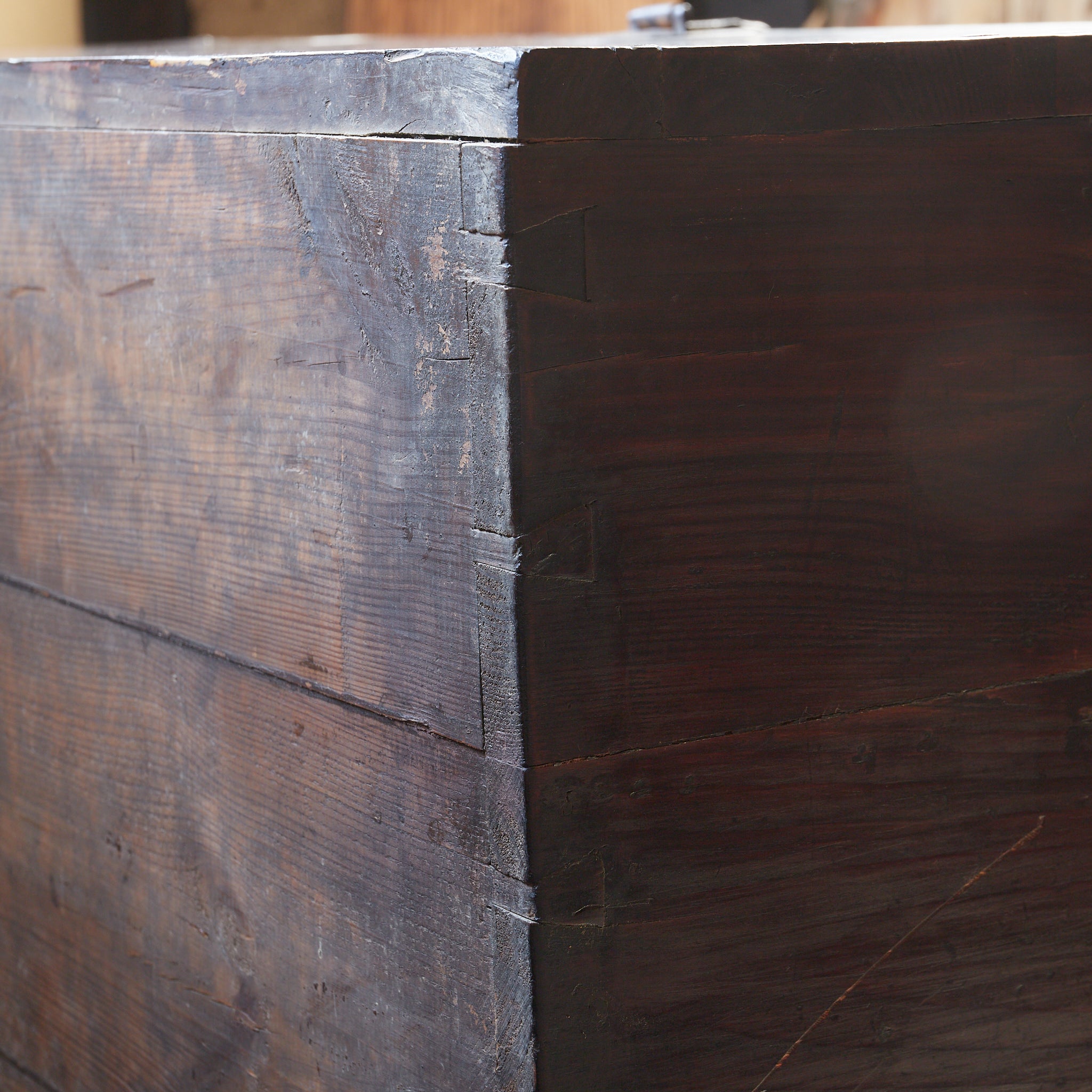
When the top panel is opened, the interior reveals a single large storage compartment. The piece was used to house clothing and textiles, and its construction remains fully suitable for use as storage today.
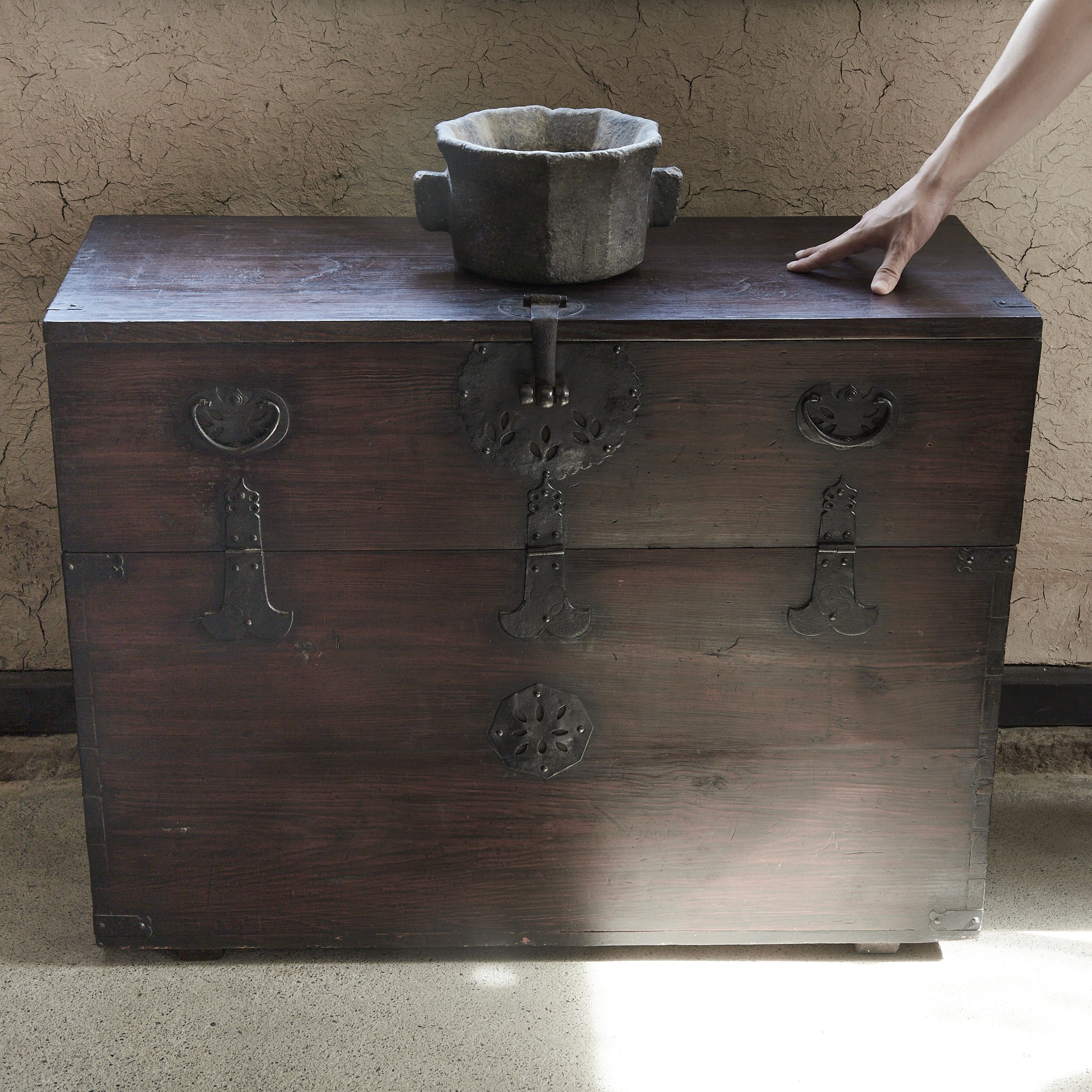
Width approximately 97.5cm and height approximately 74.5cm. The top surface is well suited to displaying antique pottery and flower vases, and the dimensions make it easy to integrate into interior spaces.
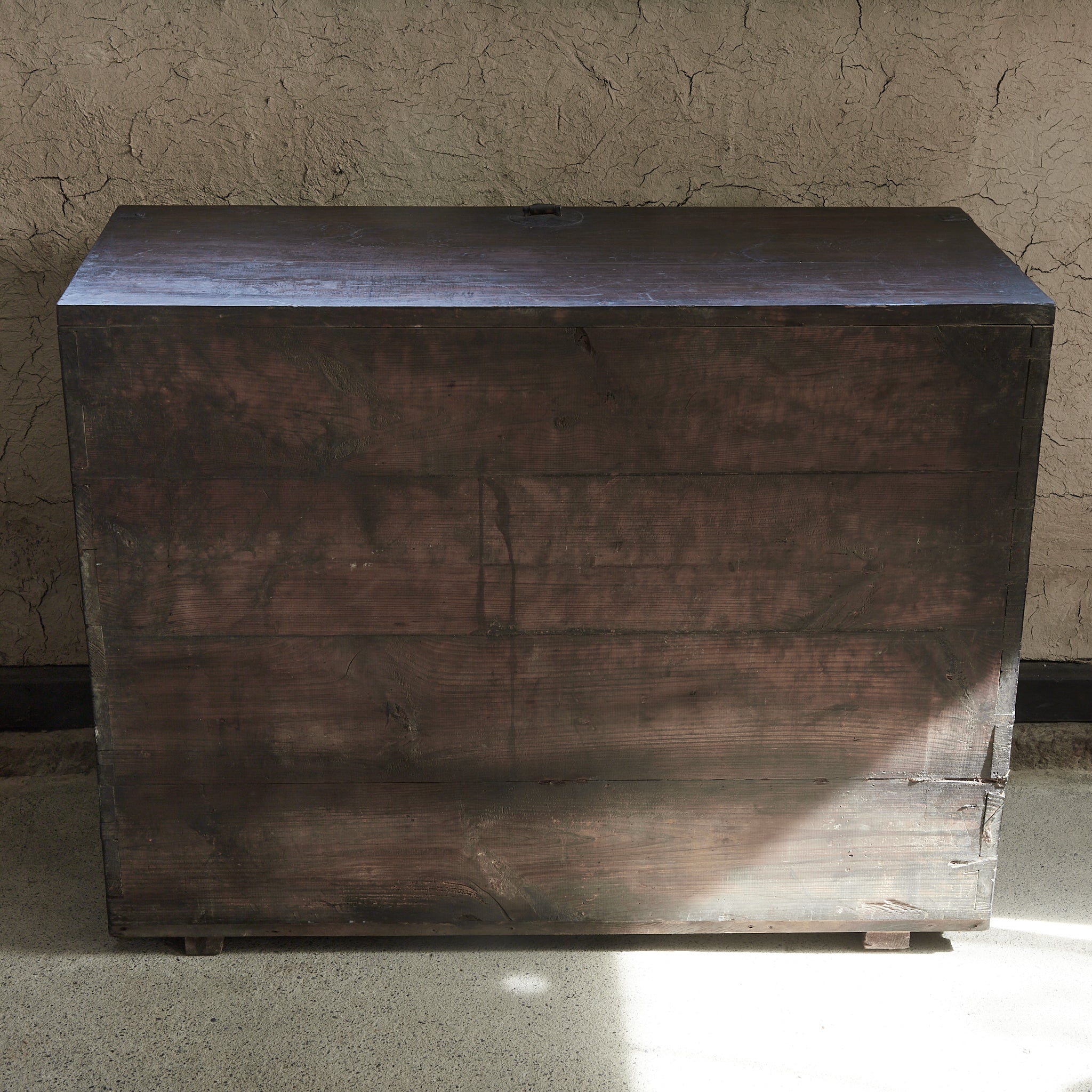
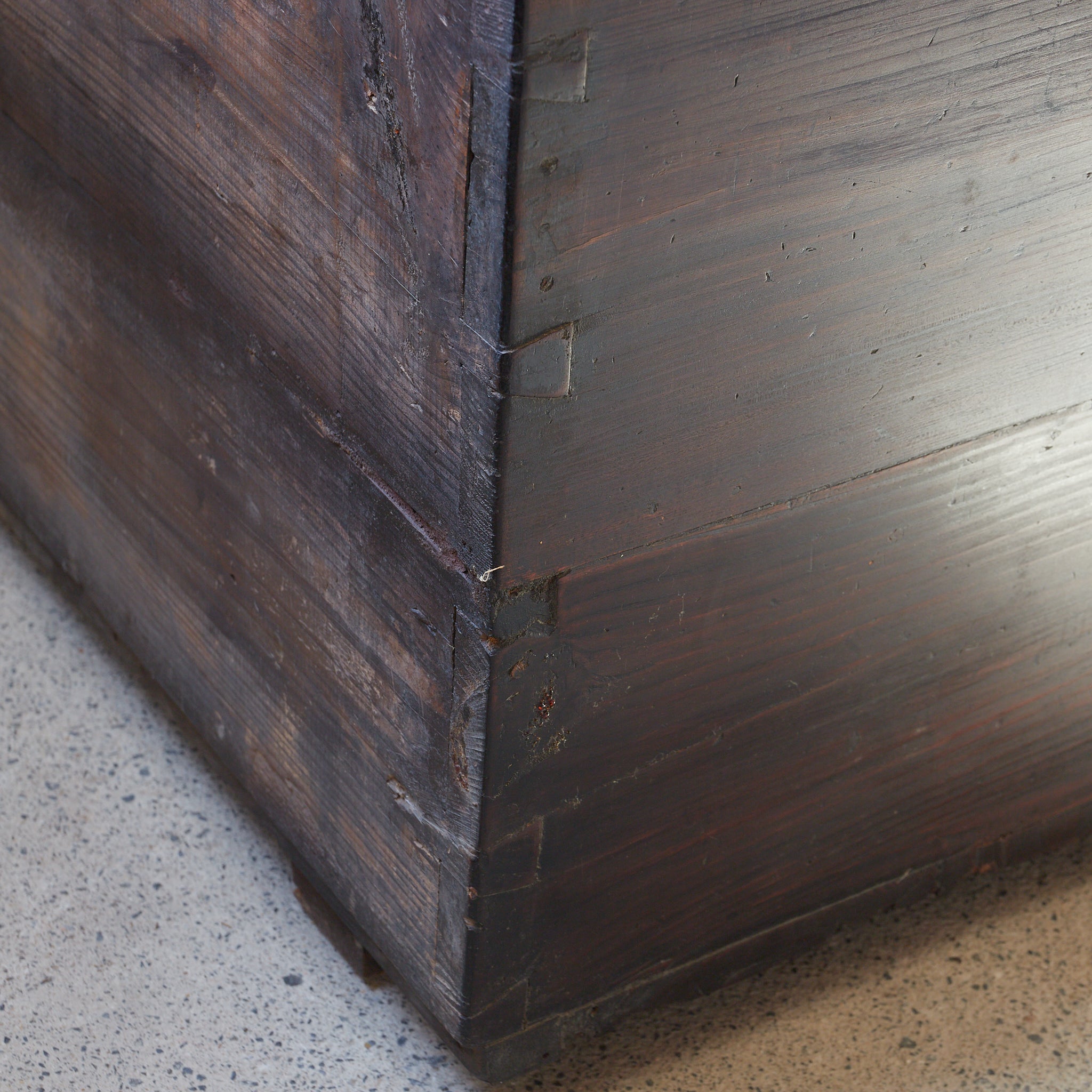
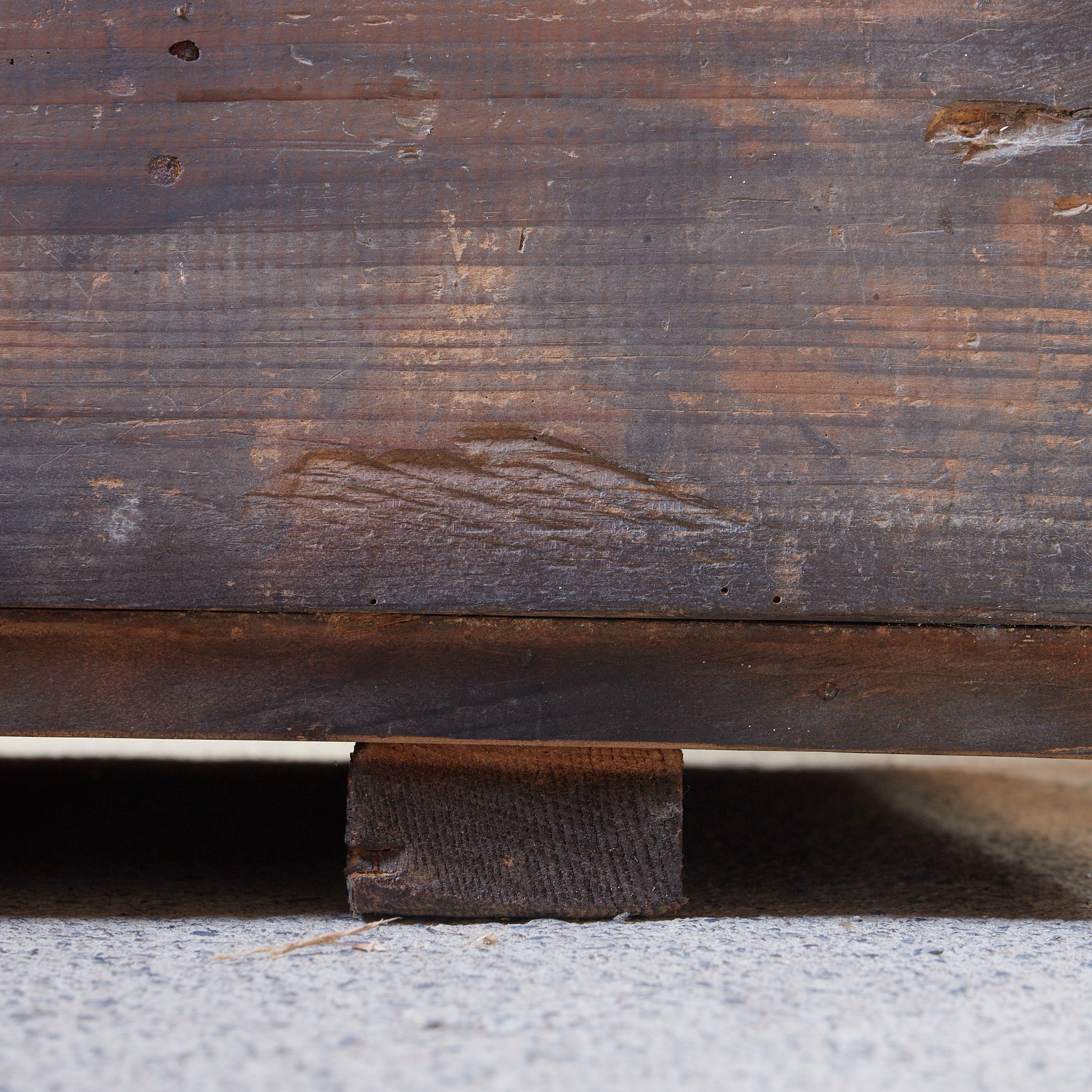
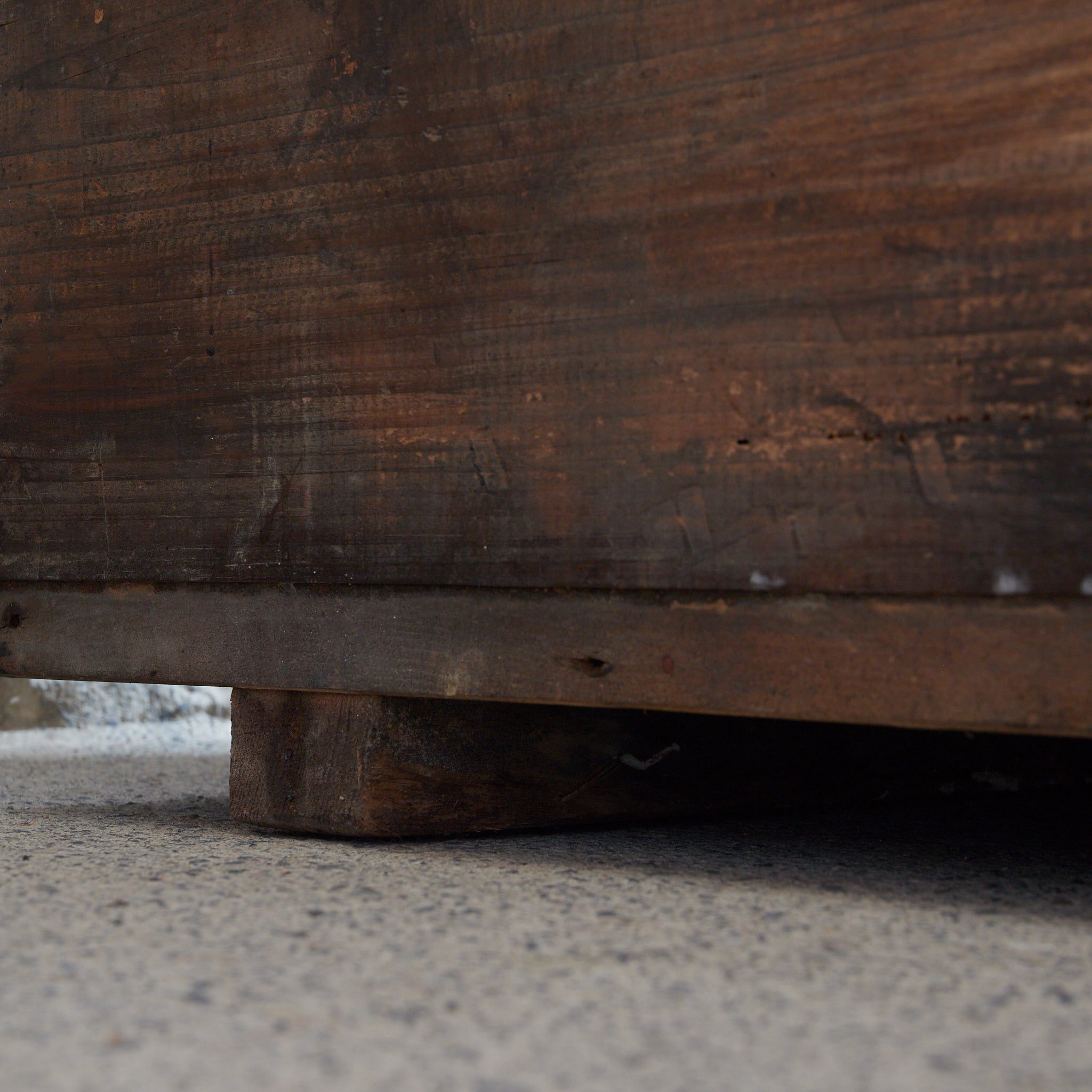
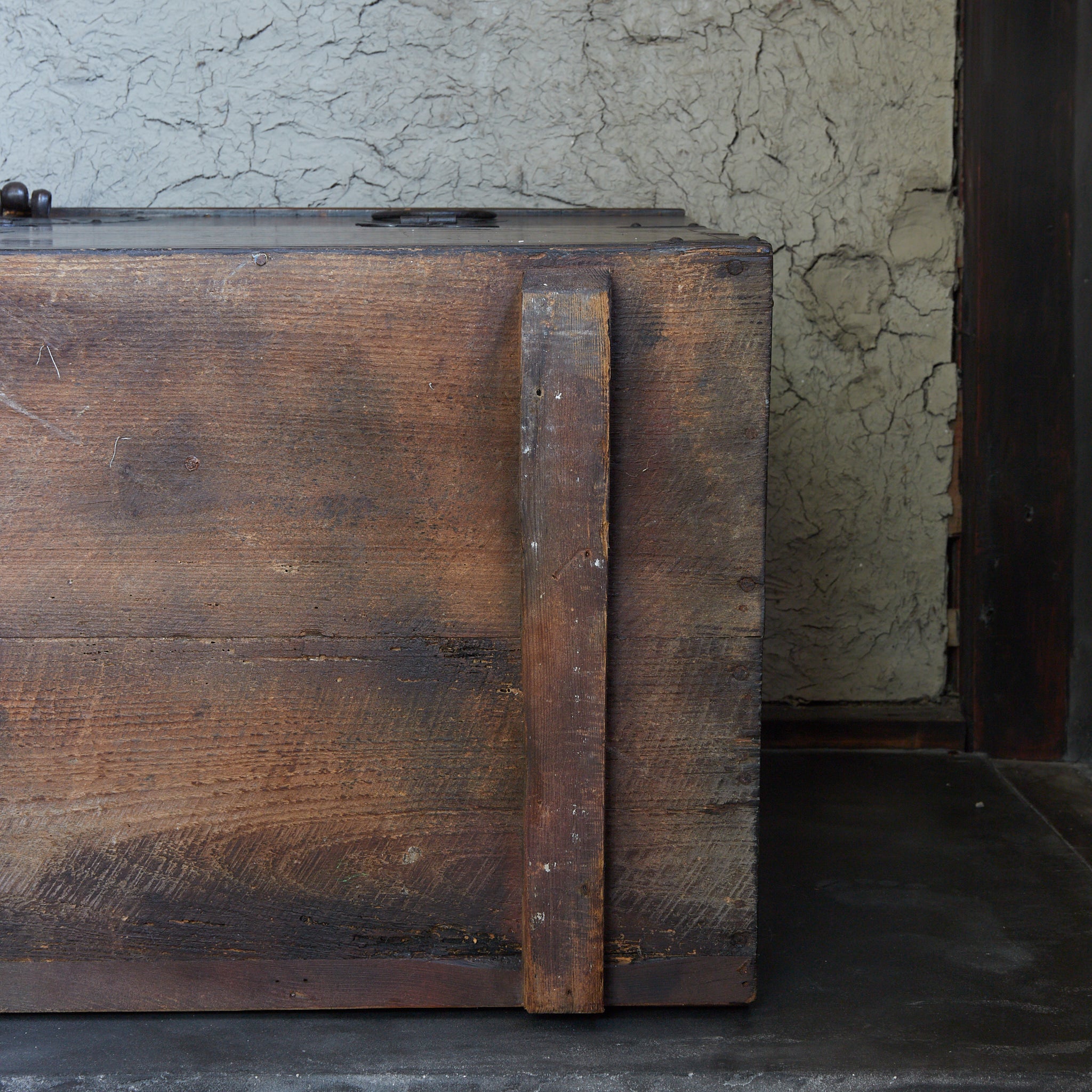
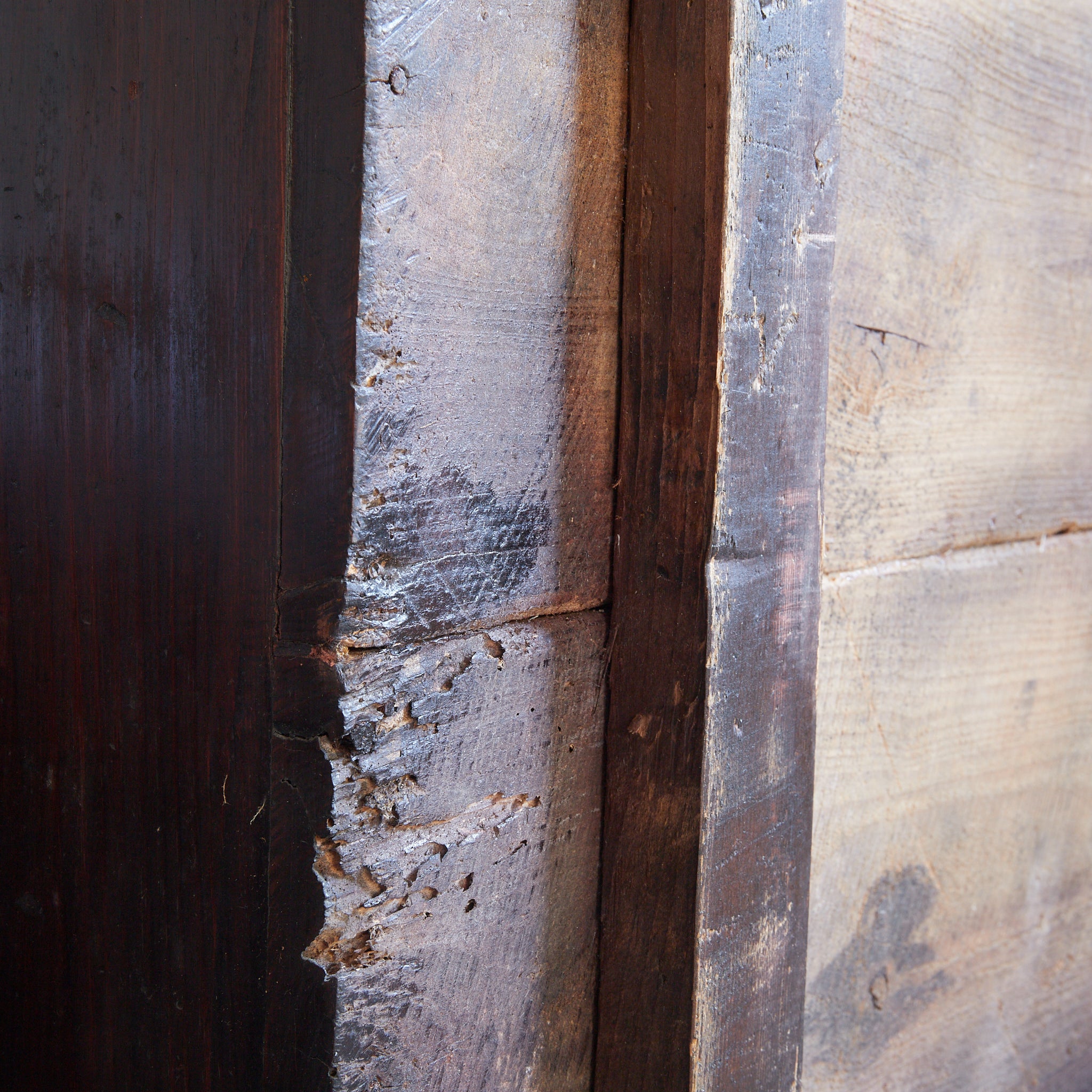
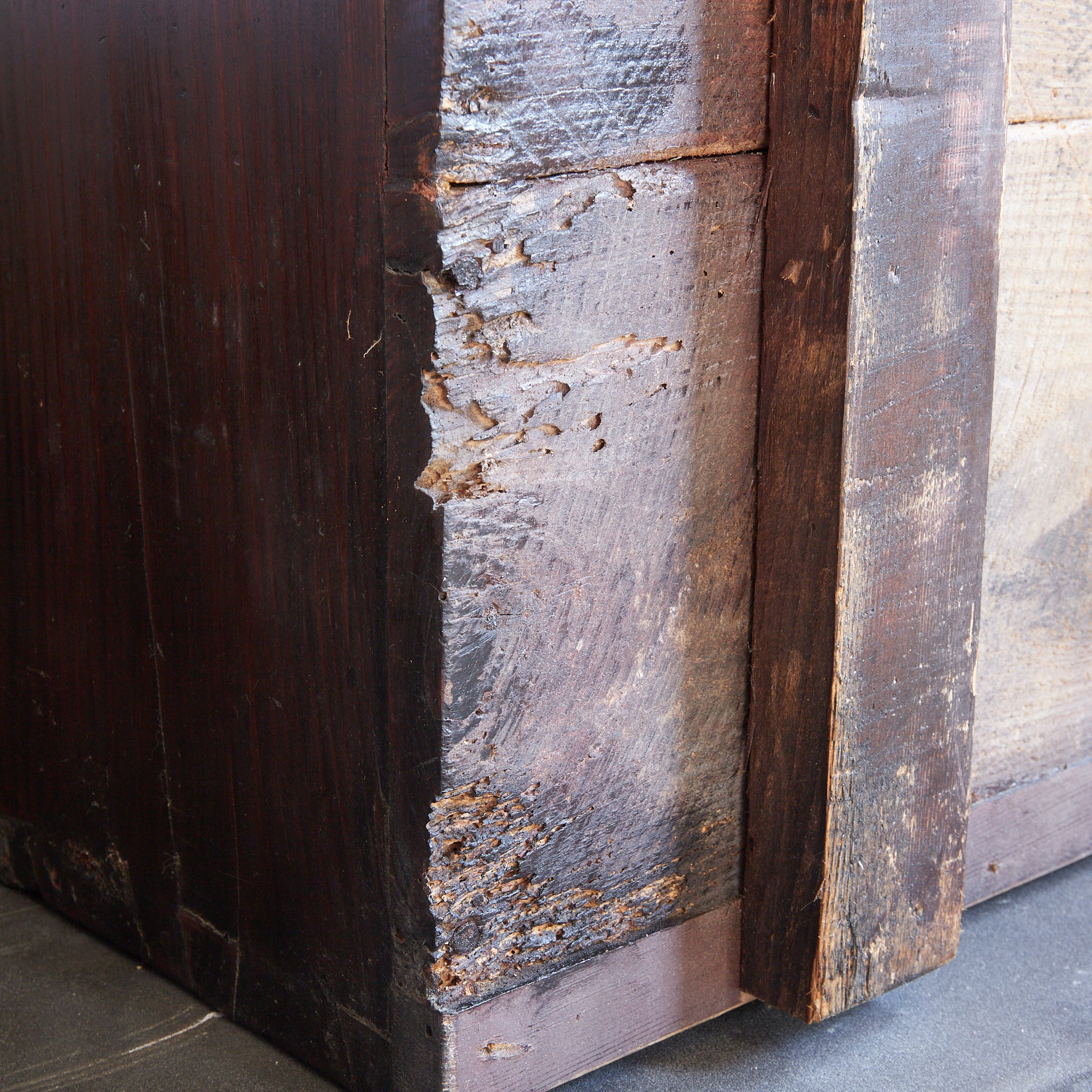
The wooden components show scuffs, scratches, gaps, and traces of old repairs, while the iron fittings exhibit rust and wear. This semi-enclosed chest invites appreciation of the wood’s well-worn surface together with the fine workmanship of its iron fittings.

Its aesthetic placed emphasis not on surface splendor or technical virtuosity, but on forms and modes of being that quietly support a person’s inner life. Vessels and furniture were not simply tools for use; they may also have served as a kind of “place of self-cultivation,” ordering one’s daily conduct and state of mind. A plain jar in a scholar’s study, a simple desk, an undecorated brush rest—these were objects before the eye, but also mirrors of one’s posture and thought.
It is no accident that crafts from the Joseon period possess a presence that “does not say too much.” They were made to accompany the inner life—not to overwhelm the viewer, but to breathe alongside us and quietly restore a sense of order.
In white porcelain, for example, such “unintended phenomena” as the slight flow of glaze, variations in the clay body, or slight irregularities of form were accepted as they were. They embody a spirit of broad acceptance, unlike the modern aesthetic that treats perfection and uniformity as the highest values. This view reconsiders the boundaries between nature and human making, beauty and imperfection, object and mind; it is not an exaggeration to say that it existed beyond the frame of craft as the spirit of an age.
If we were to name it, the beauty of Joseon is not a “beauty of display” but a “beauty of resonance.” Its beauty lies not solely in the attraction of the object itself, but in the opportunity it gives us to reconsider how a person ought to be through the object. For this reason, an object must not speak too much; it must contain intervals, open space, and silence. I cannot help feeling that such thought runs beneath the making of these objects.
These values eventually crossed the sea and took deep root in Japan. In the world of chanoyu in particular, Joseon white porcelain and buncheong ware were already being used by the Momoyama period. Their simple, quiet character—different from the solemn grandeur of Chinese karamono—came to be embraced. The tea aesthetic of “clearing the mind before what does not speak” resonated deeply with the silence and imperfection held in Joseon vessels, nurturing a gaze that found in them the spirit of wabi-sabi.
With the arrival of the modern era, thinkers of the Mingei movement such as Yanagi Sōetsu and Kawai Kanjirō found in Joseon vessels “the power to purify a person” and “a form of life as it ought to be.” At a time when craft was being forgotten, these objects were welcomed not merely as old vessels but, with profound sympathy and respect, as presences reflecting a way of living itself.
When I, living in the present day, encounter the crafts of Joseon, I am moved once again by their stillness. They contain the thought of an age that asked how a person should live and how one should be. That thought has not faded; it continues to resonate clearly even now.
Choose options
Change language
