

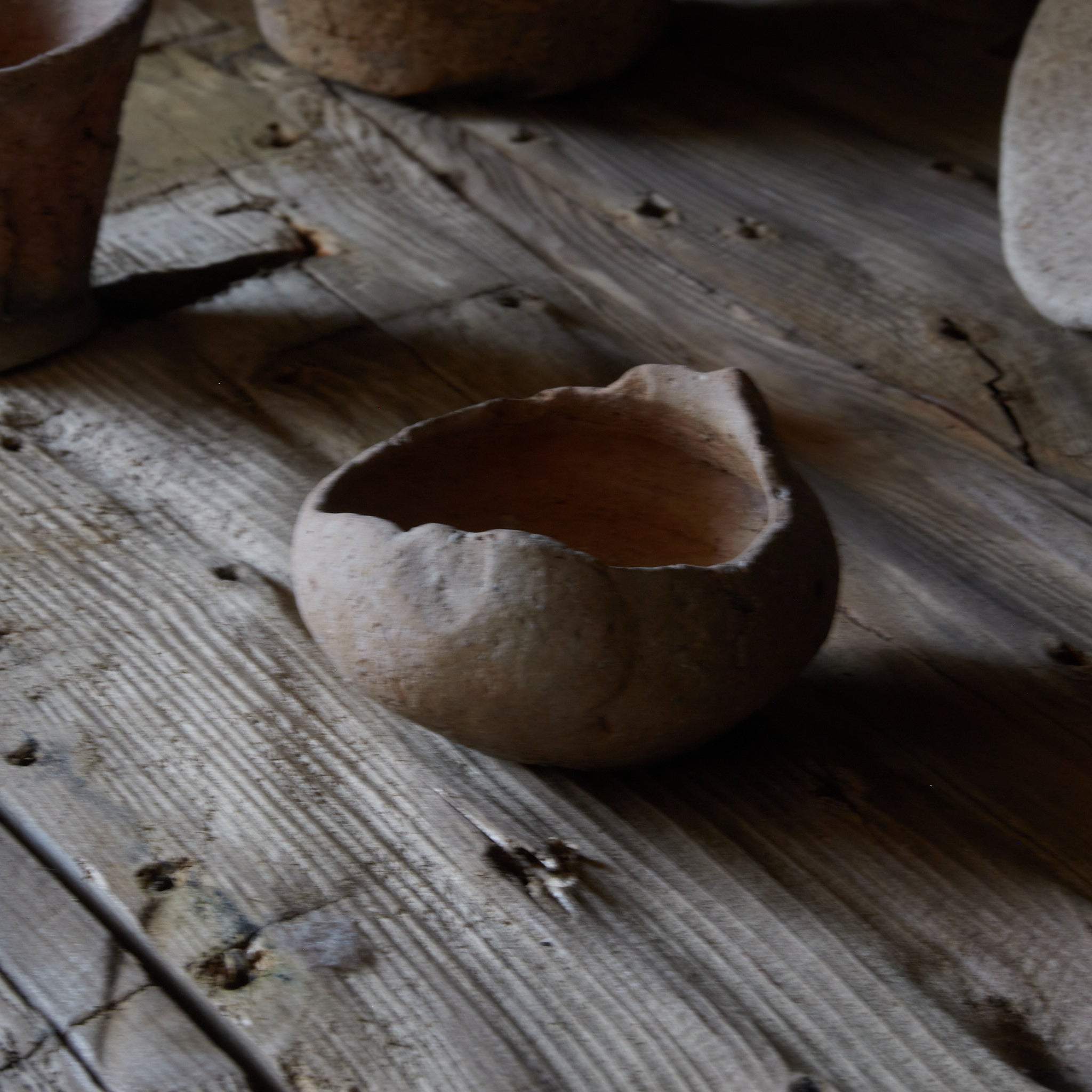
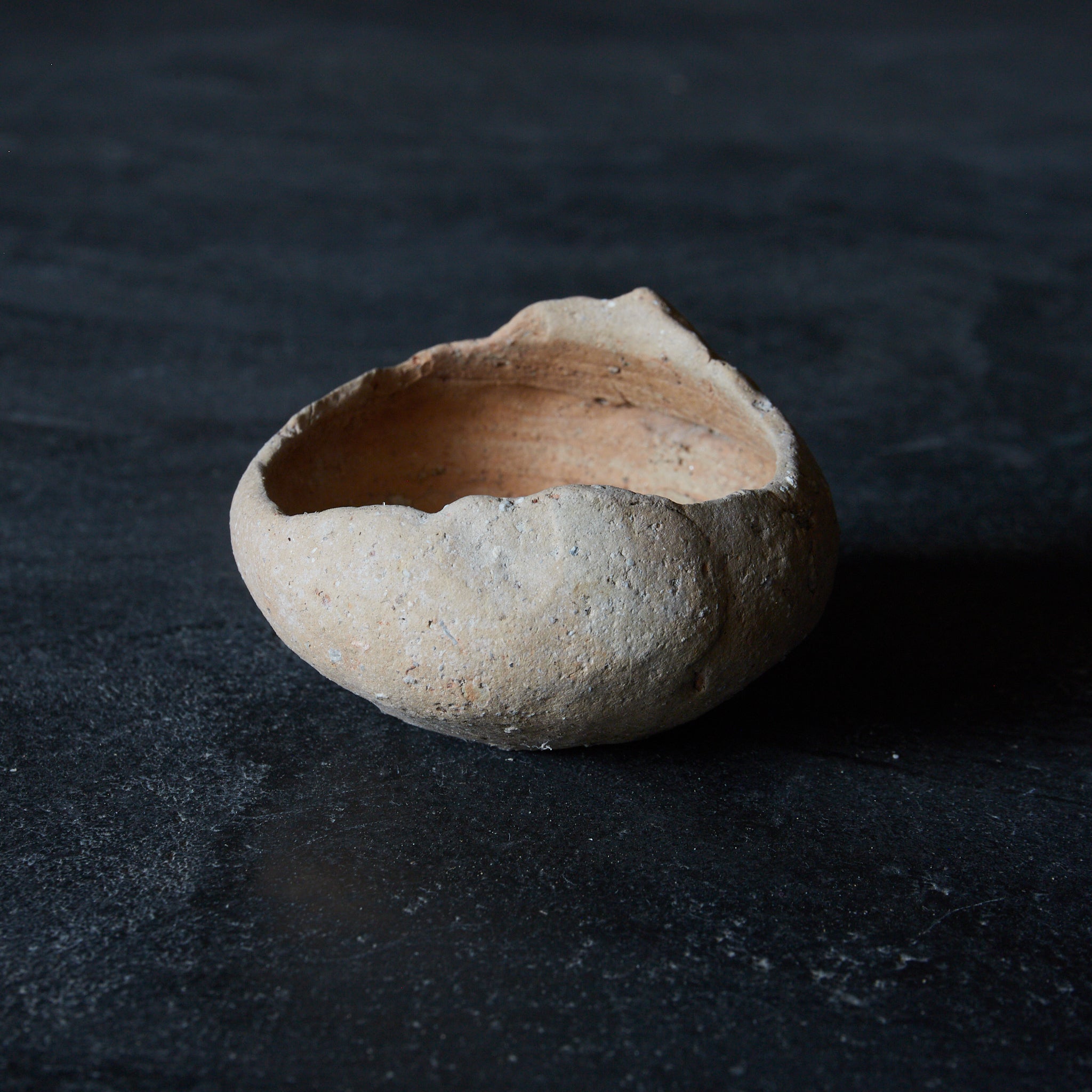


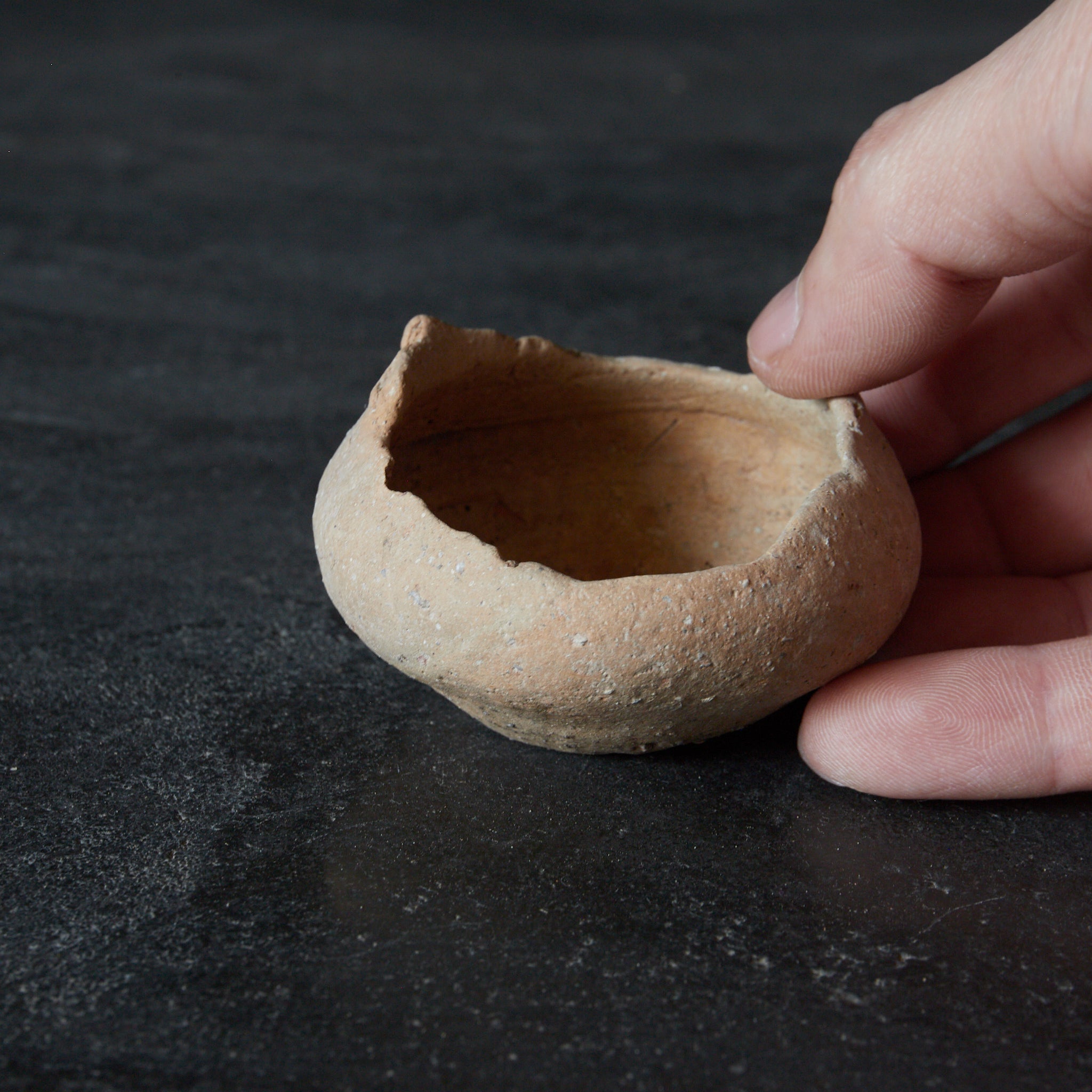


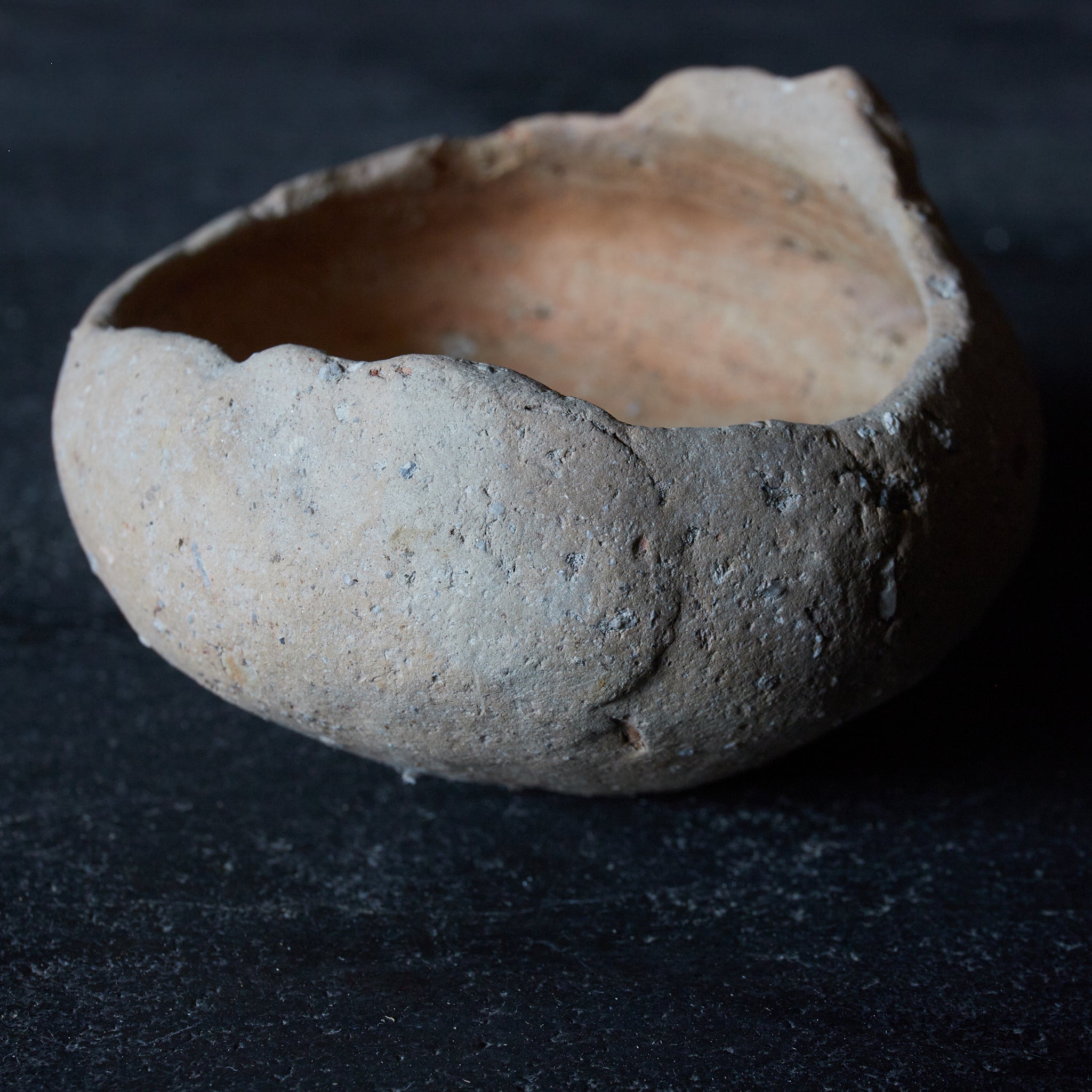


WIDE-MOUTHED JAR, Earthenware, Haji Ware, Yayoi–Kofun Period (300 BCE–581 CE)
However, we may respond individually to certain customers after reviewing the circumstances.
Please contact us for further details.
Shipping to the United Kingdom and Switzerland remains available.
This item has been sold. If you are looking for a similar piece or another work from the same period, please feel free to contact us.
> Inquire about this or a similar itemDuring the Yayoi period, earthenware vessels such as jars, pots, and bowls were produced in standardized forms tailored to various uses. These items were crafted continuously over a millennium, coinciding with the establishment of rice cultivation through paddy farming.
This piece is originally a funnel-shaped vessel characterized by its wide mouth. Over time, it has gradually returned to the earth, with its rim decaying and its shape becoming irregular, embodying the essence of wabi-sabi. Its presence evokes the charm of wildflowers. Consider using it as a flower vase, perhaps with small cups nestled within.

In early Yayoi settlements of northern Kyushu, iron axes and arrowheads believed to have arrived via the Korean Peninsula have been excavated, and their introduction supported the development of land clearing and agriculture. Pottery techniques also advanced. While inheriting the Jomon coiling method, surfaces were smoothed with clay slip and forms became organized according to use. Jars and pots for storage, spouted vessels for pouring hot water, and pedestal dishes used for food or ritual became increasingly formalized as vessels grew more deeply intertwined with society.
During the Middle Yayoi period, the introduction of covered firing made high-temperature firing at around 1000°C possible, leading to the mass production of thin, hard, reddish-brown pottery. Iron tools and weapons, including arrowheads and spears have been excavated around Lake Biwa and in the San’in region, revealing the spread of a social structure in which agriculture and warfare coexisted. At the same time, pottery retaining Jomon elements continued to be made from northern Kyushu to eastern Japan, suggesting a cultural fusion between agricultural migrants from the continent and local Jomon potters.
By the Late Yayoi period, domestic casting of iron implements had become established, and swords, arrowheads, axes, and other tools have been found across the country. Pottery retained its thin, reddish-brown forms and, used alongside iron farming implements, secured its place as indispensable equipment for cultivation, storage, and cooking. Its role expanded from that of a simple household tool to a form of social infrastructure supporting communal order, ritual, and technical systems.
Implements corresponding to “chopsticks” also appeared during this period. Sites dating to the Late Yayoi period have yielded oribashi—pieces of bamboo folded in half into a tweezer-like form—which are thought initially to have been used in religious rites and ceremonies. Chopsticks did not become widespread for ordinary meals until after the Asuka period, but the fact that the basic form of chopsticks had already been adopted in Yayoi society suggests changes in food ritual and ideas of hygiene.
Such inventions of form and technique created a broad current leading onward to the pottery and Sue ware of the Kofun and Heian periods. That current continues unbroken even today. “The beauty of use” was repeatedly emphasized by Yanagi Sōetsu, founder of the Mingei movement, yet its origins can be found in the Yayoi period. These vessels, which accompanied social transformation, speak as evidence of lives once lived. When I hold a piece of pottery weathered by time, unnamed makers and flames rising brightly against the mountains come to mind.
Choose options
Change language
