

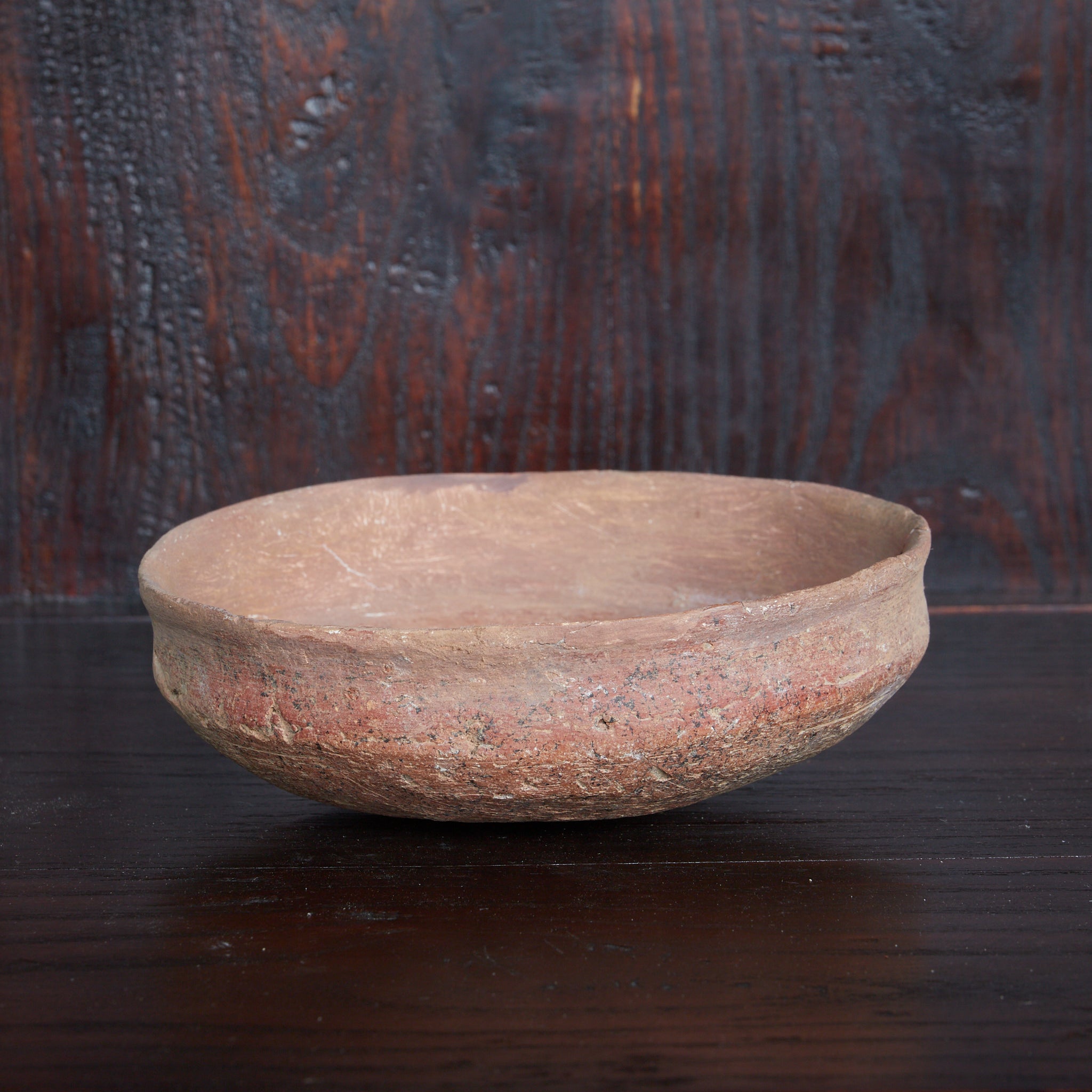
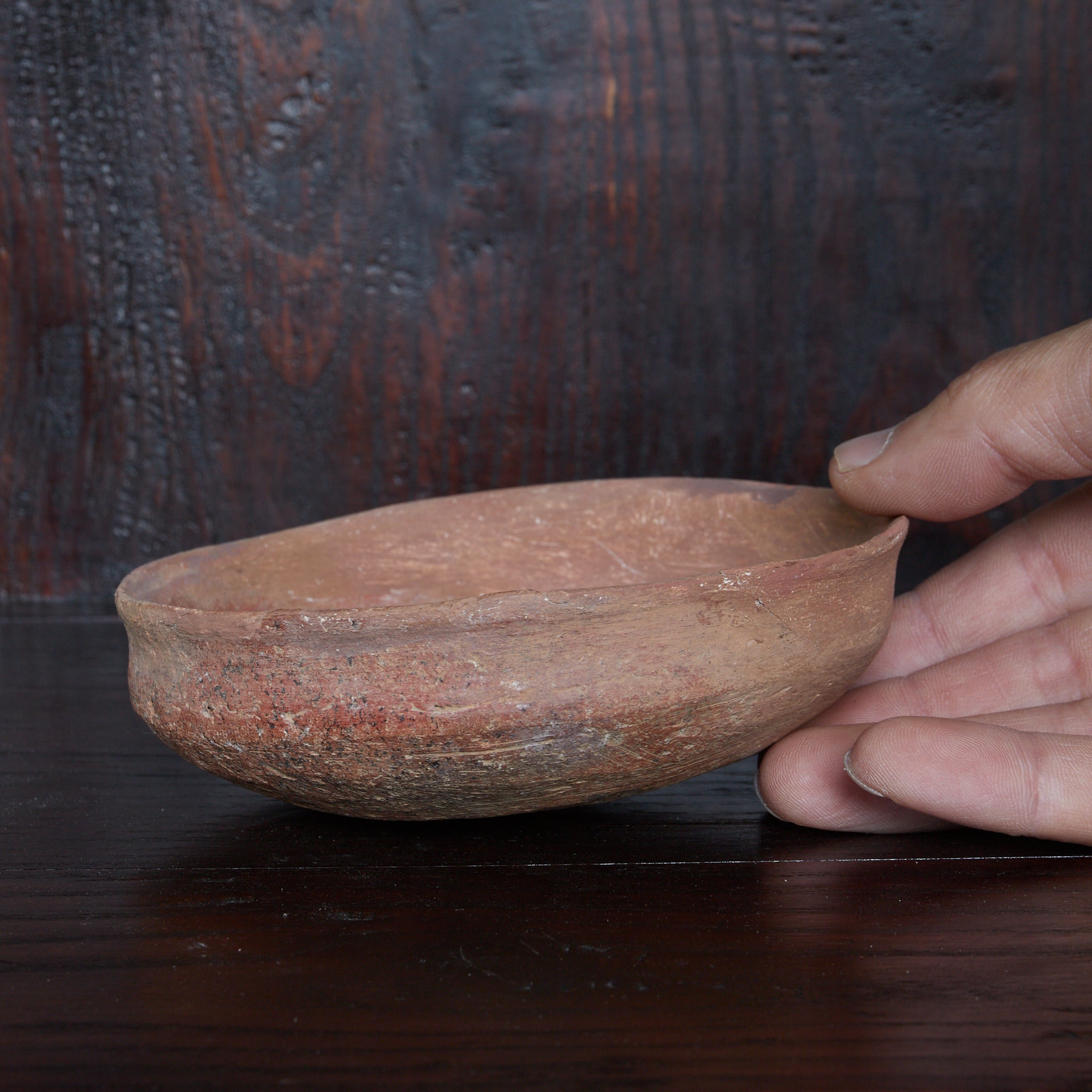
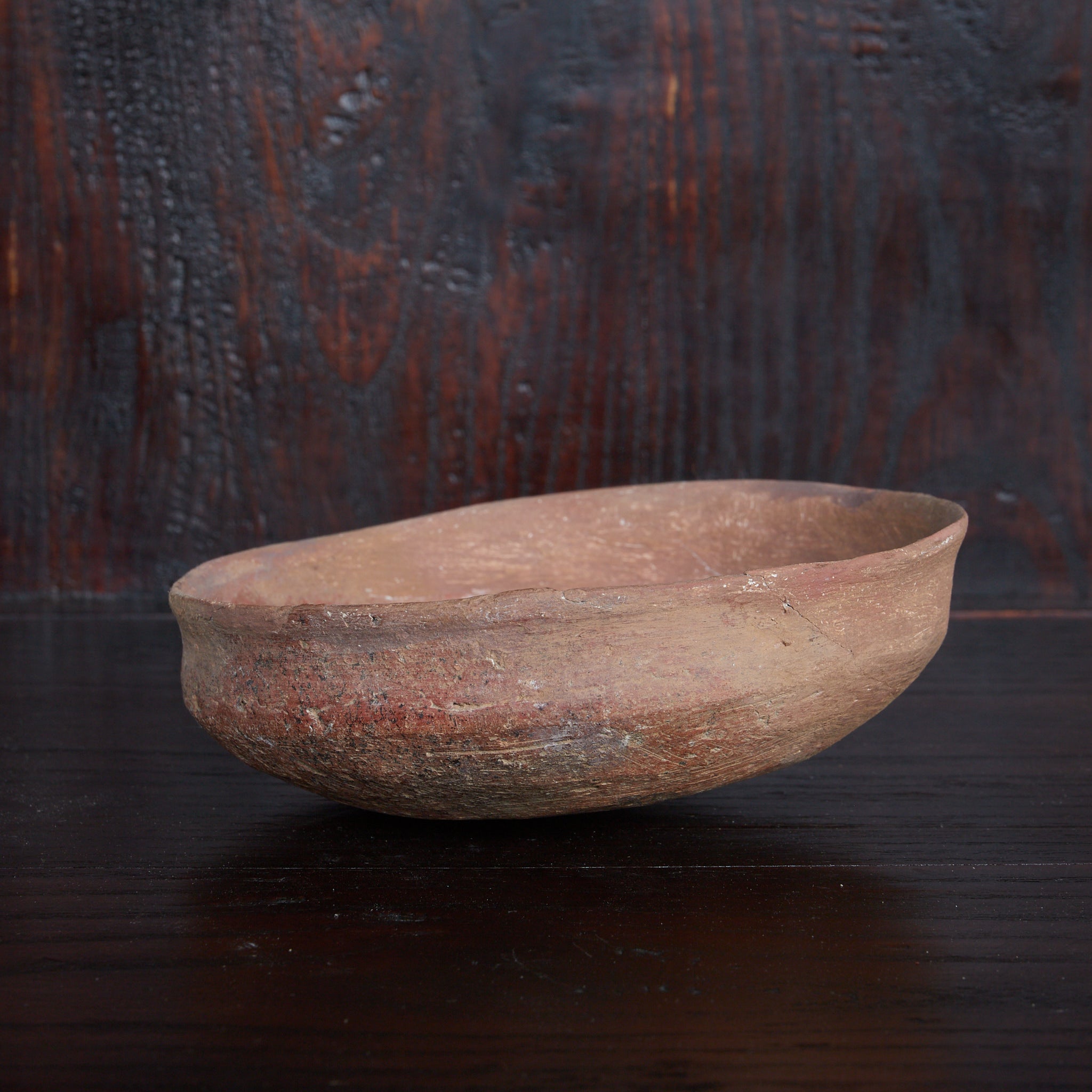
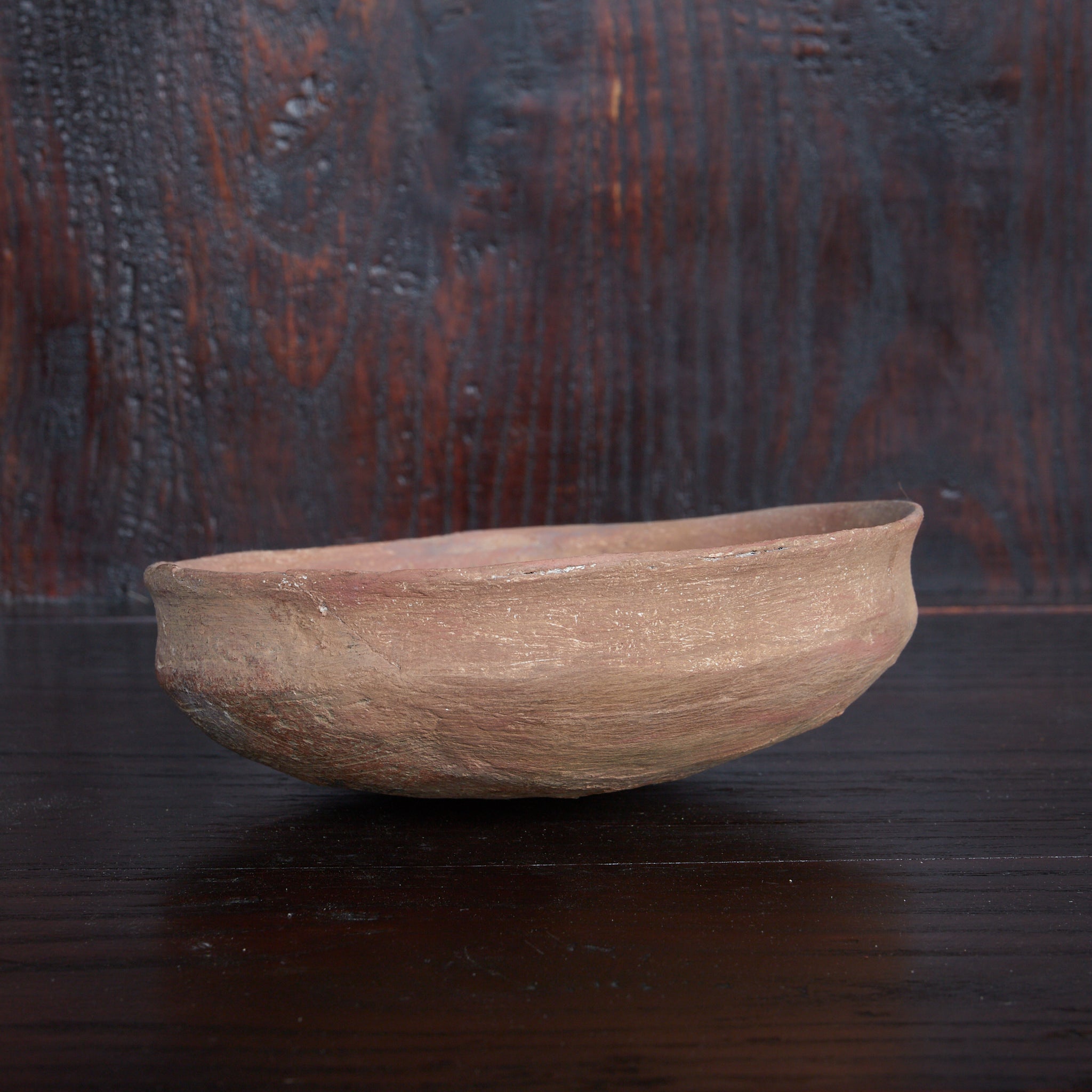
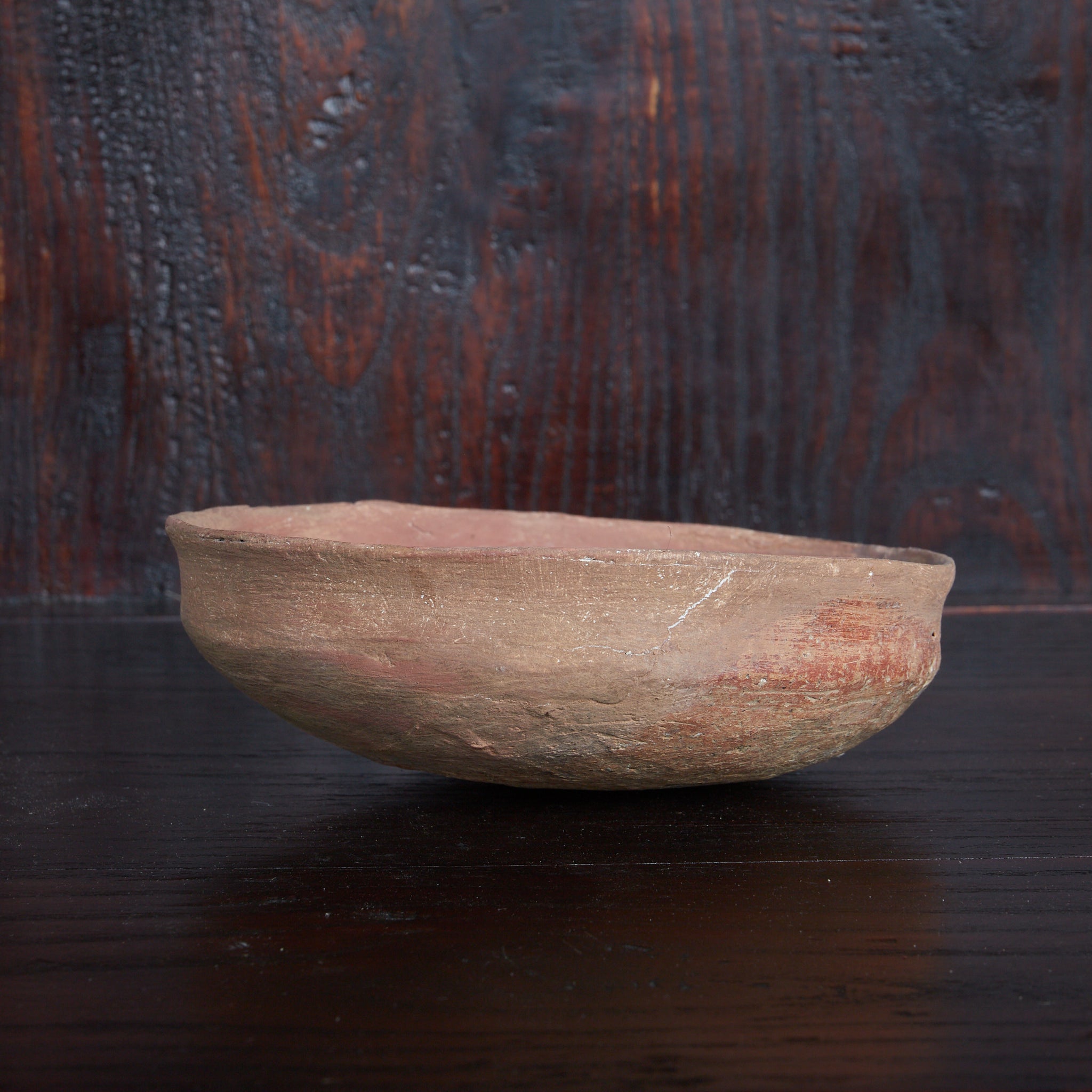
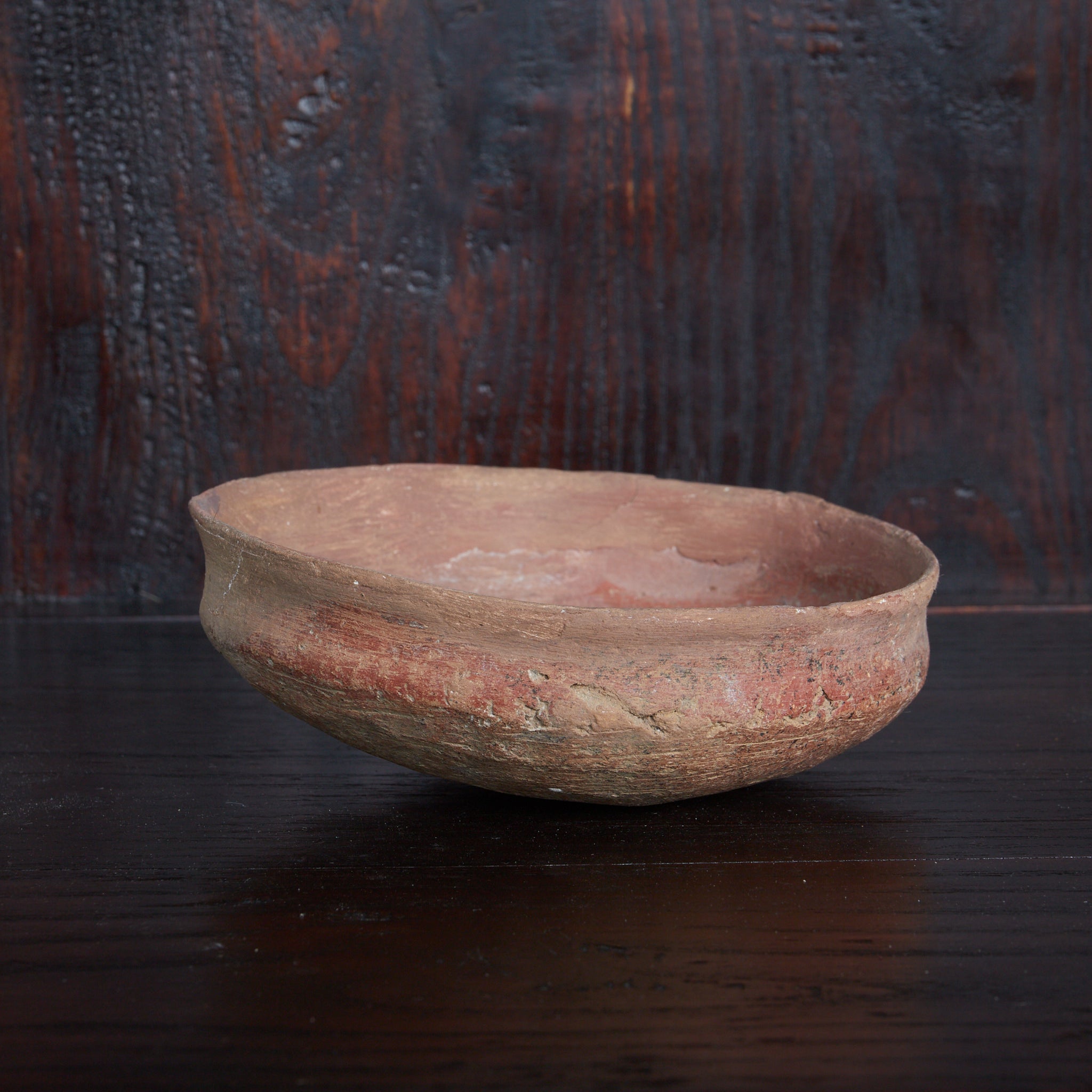
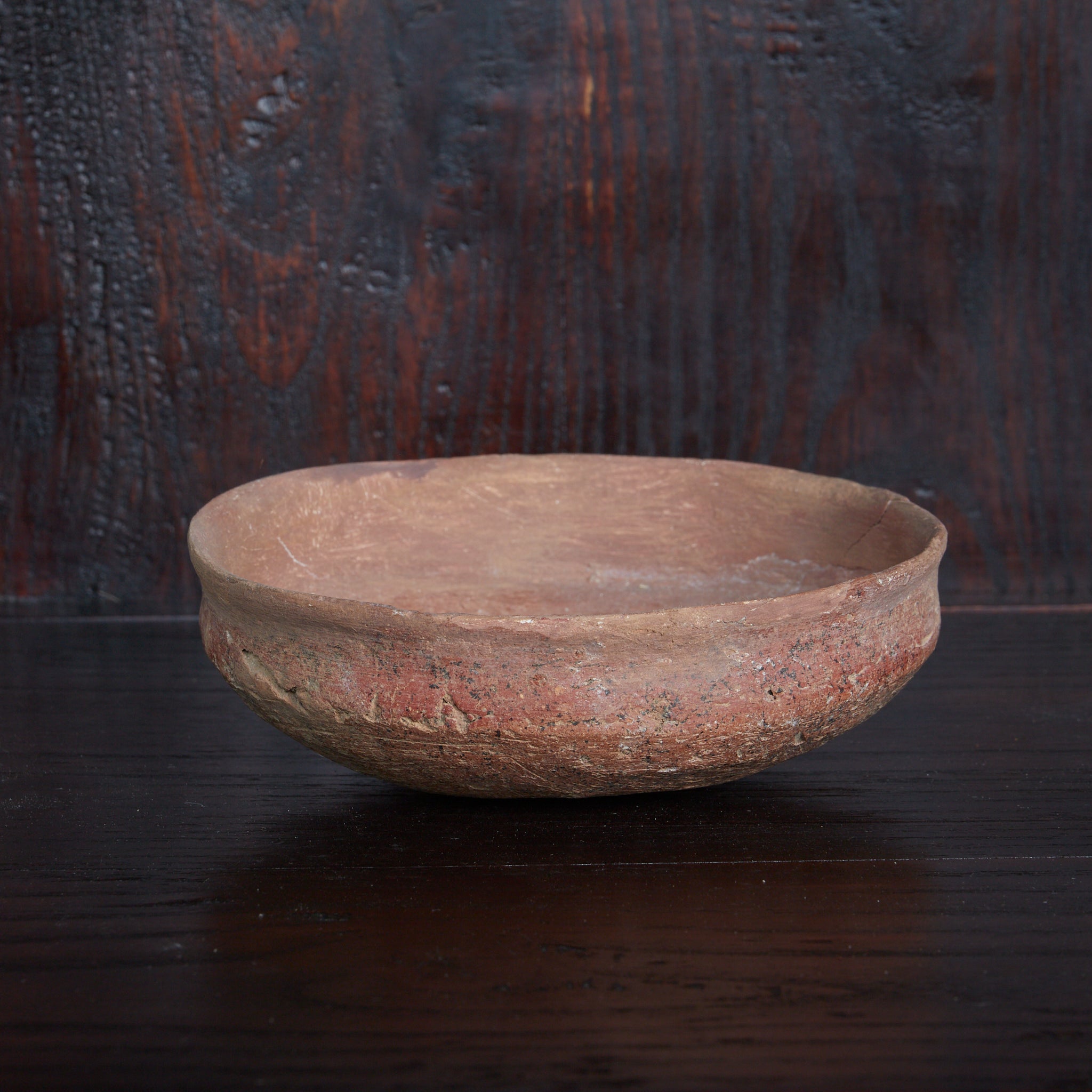
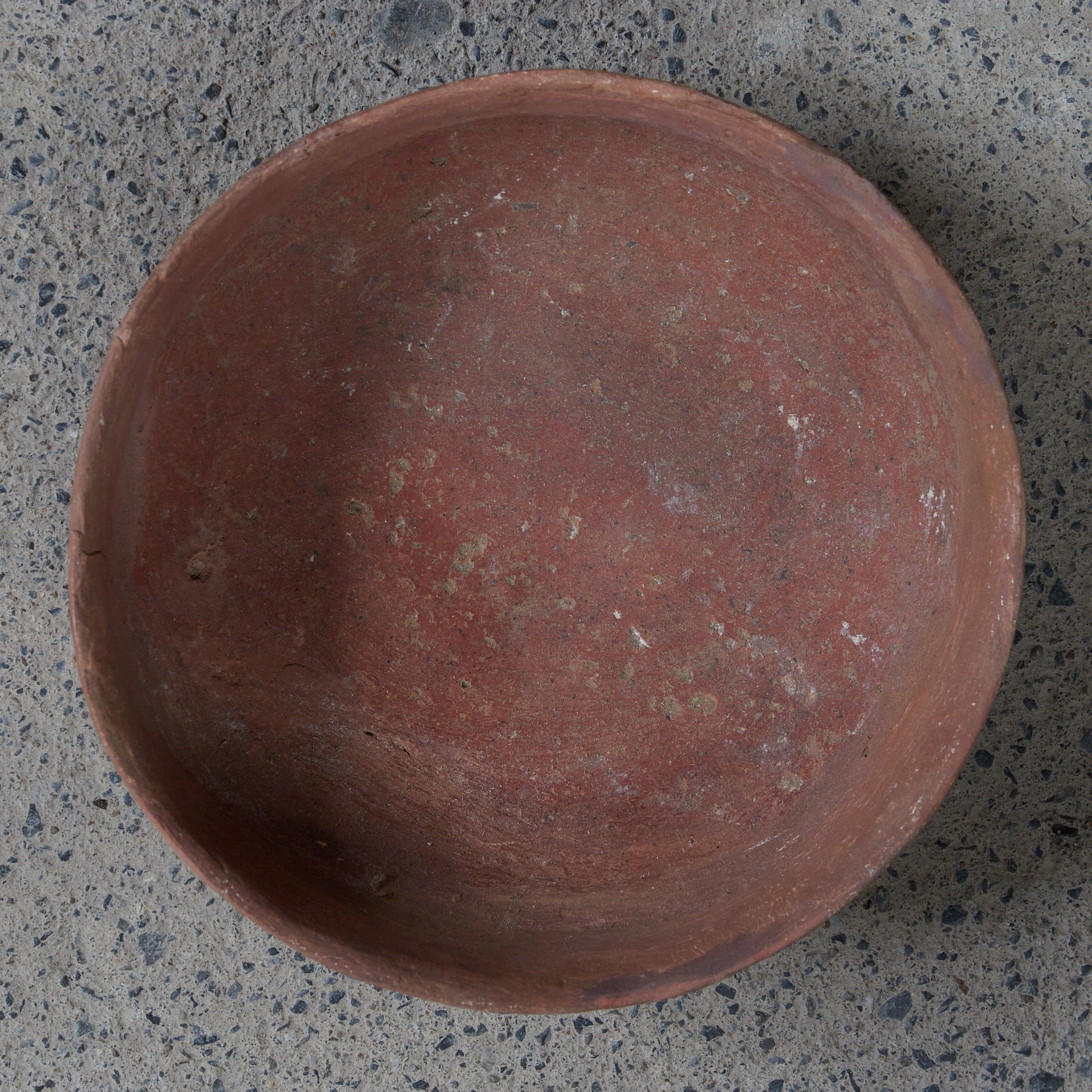
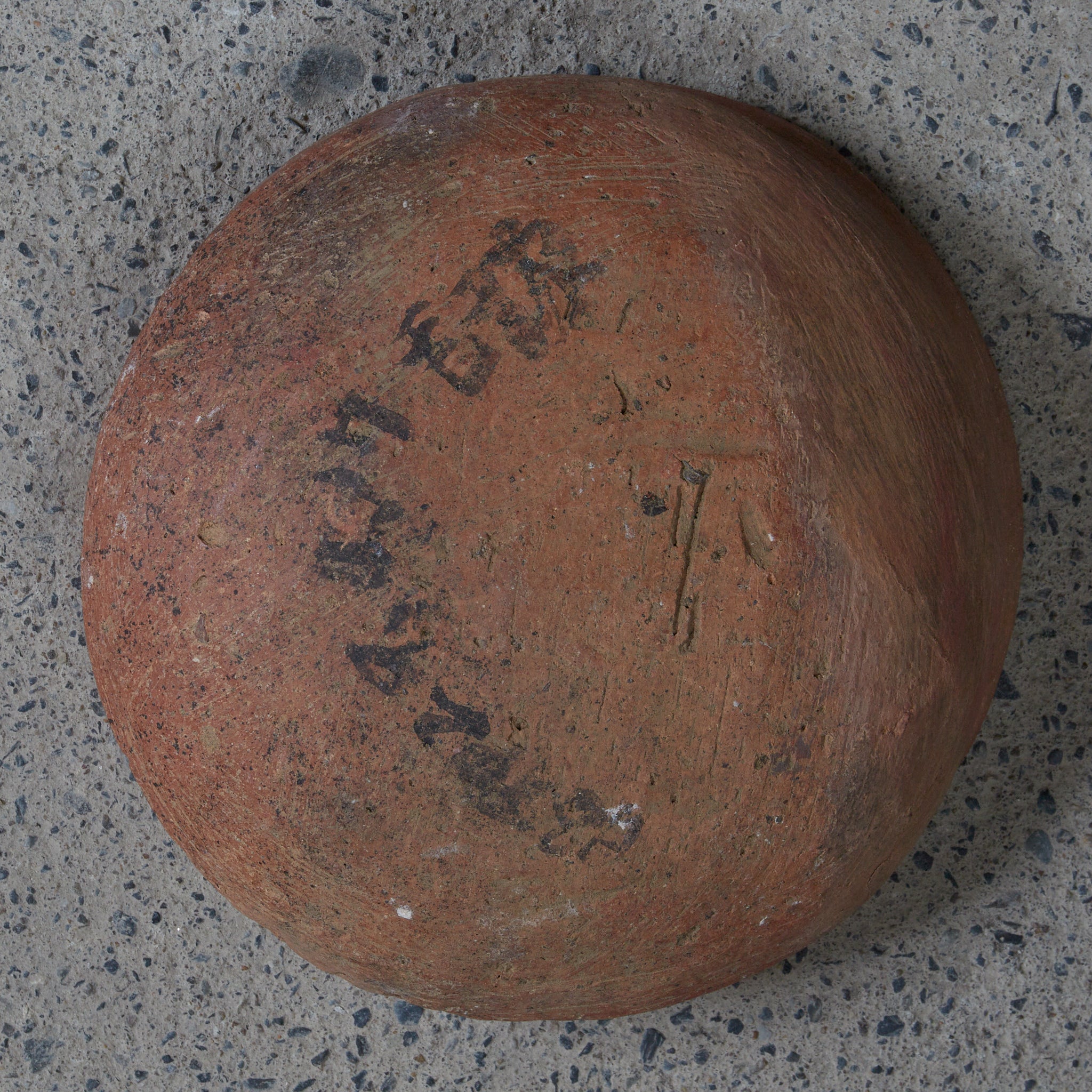
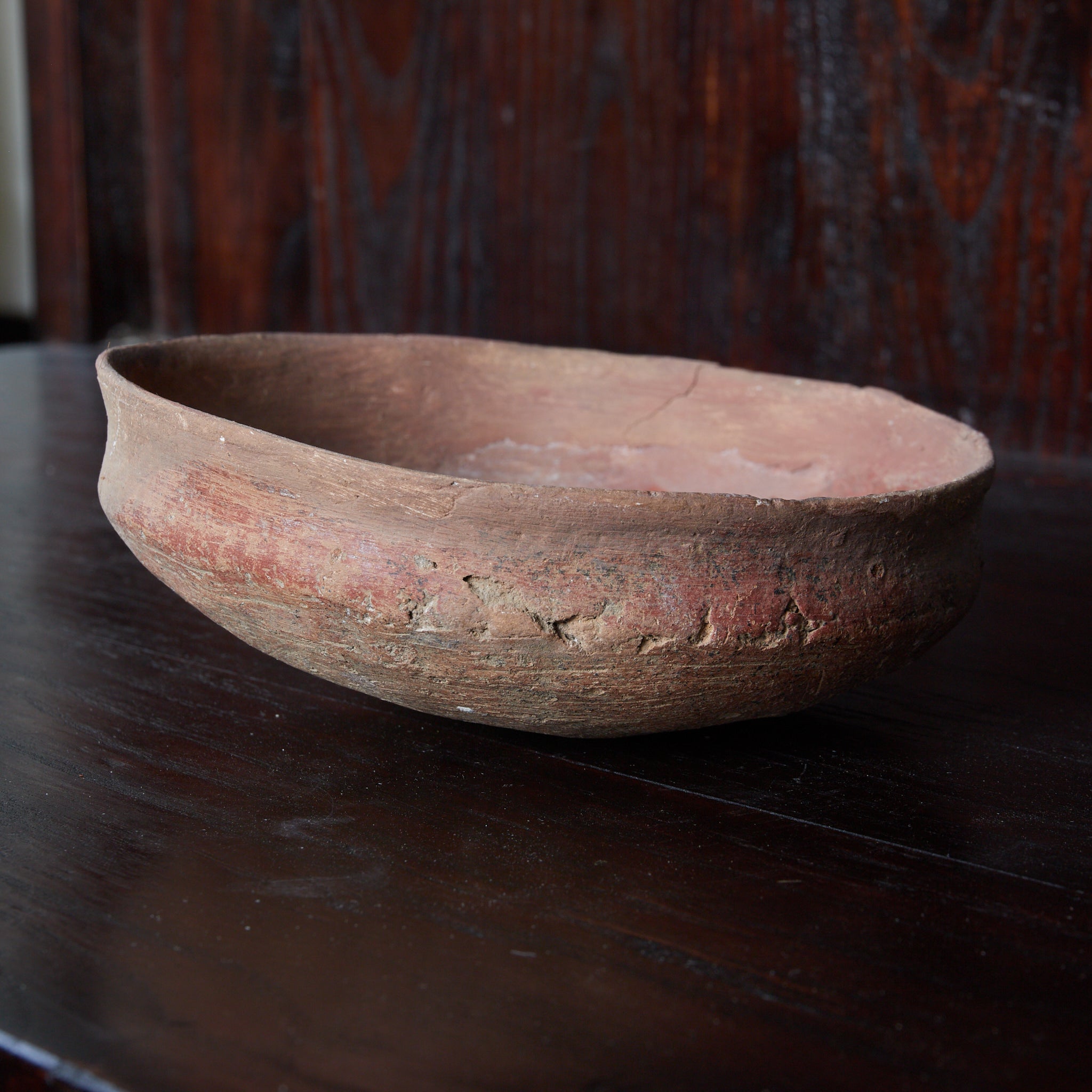
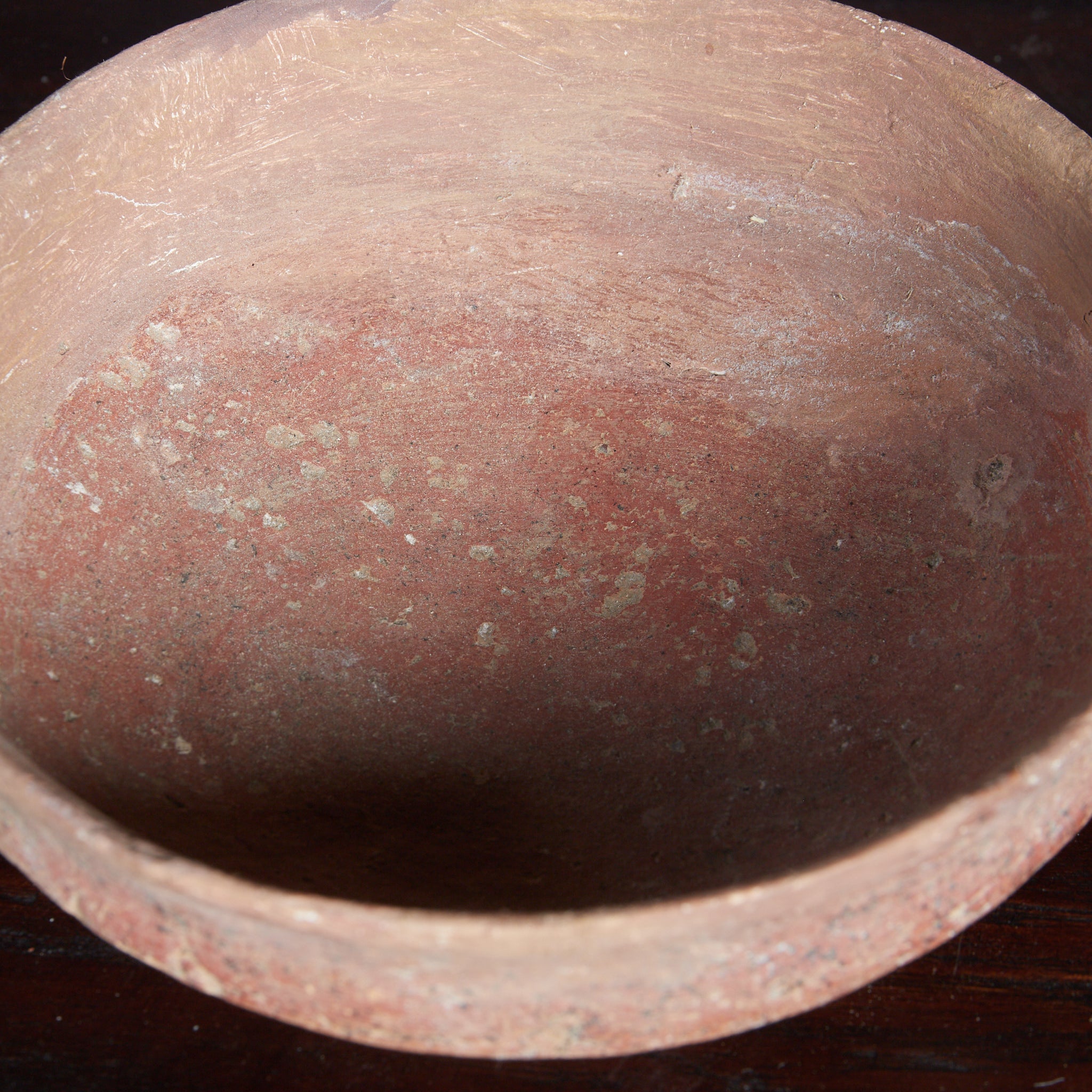
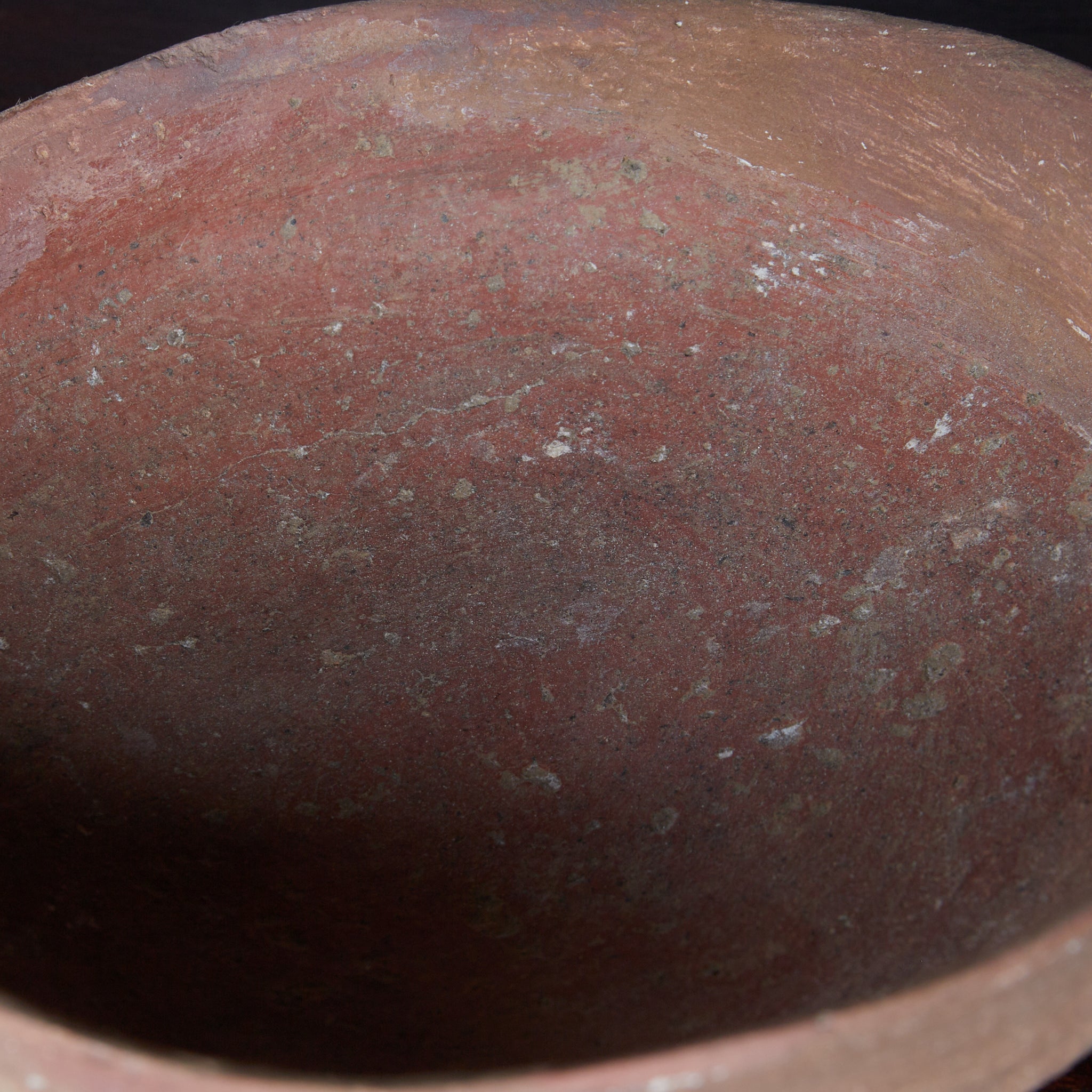
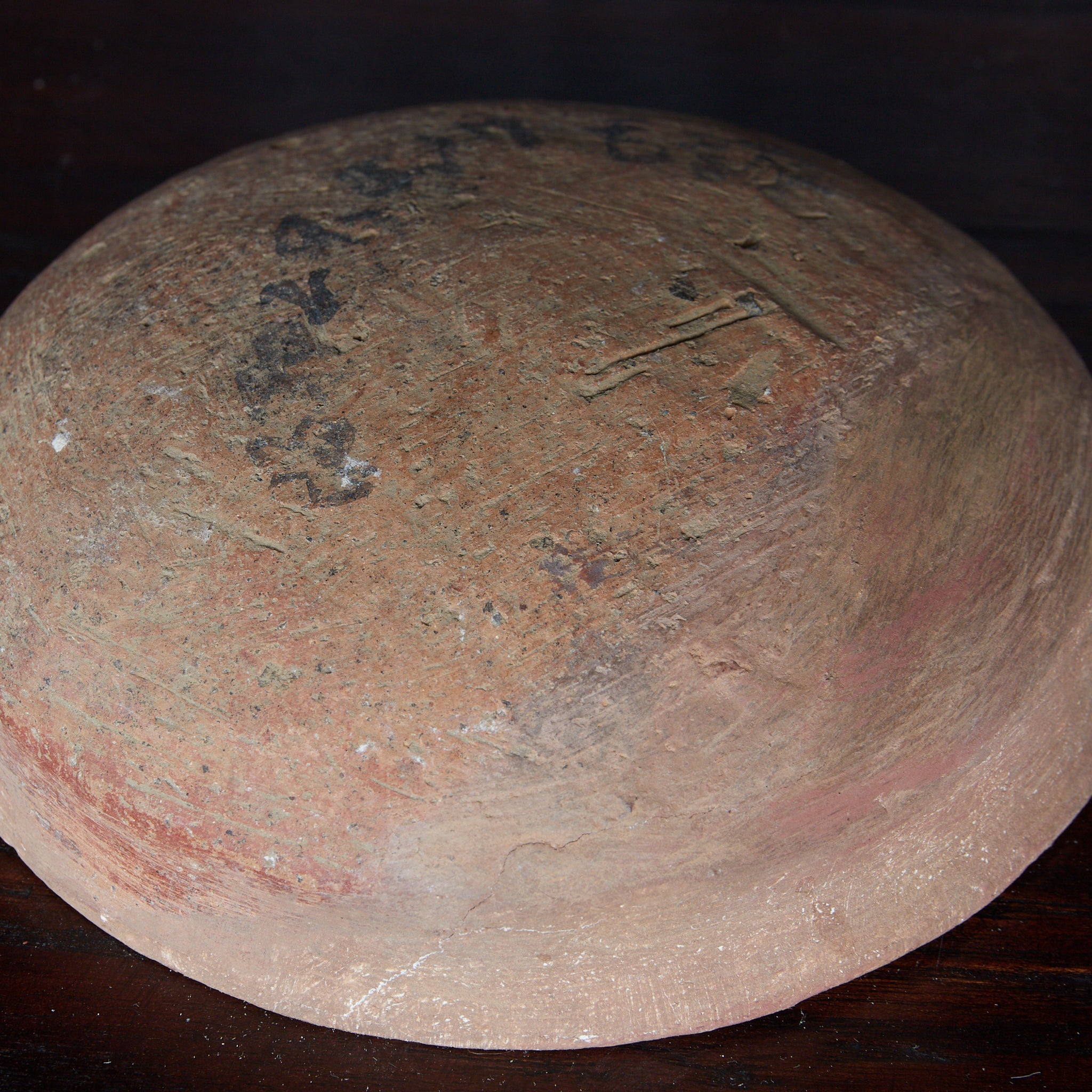
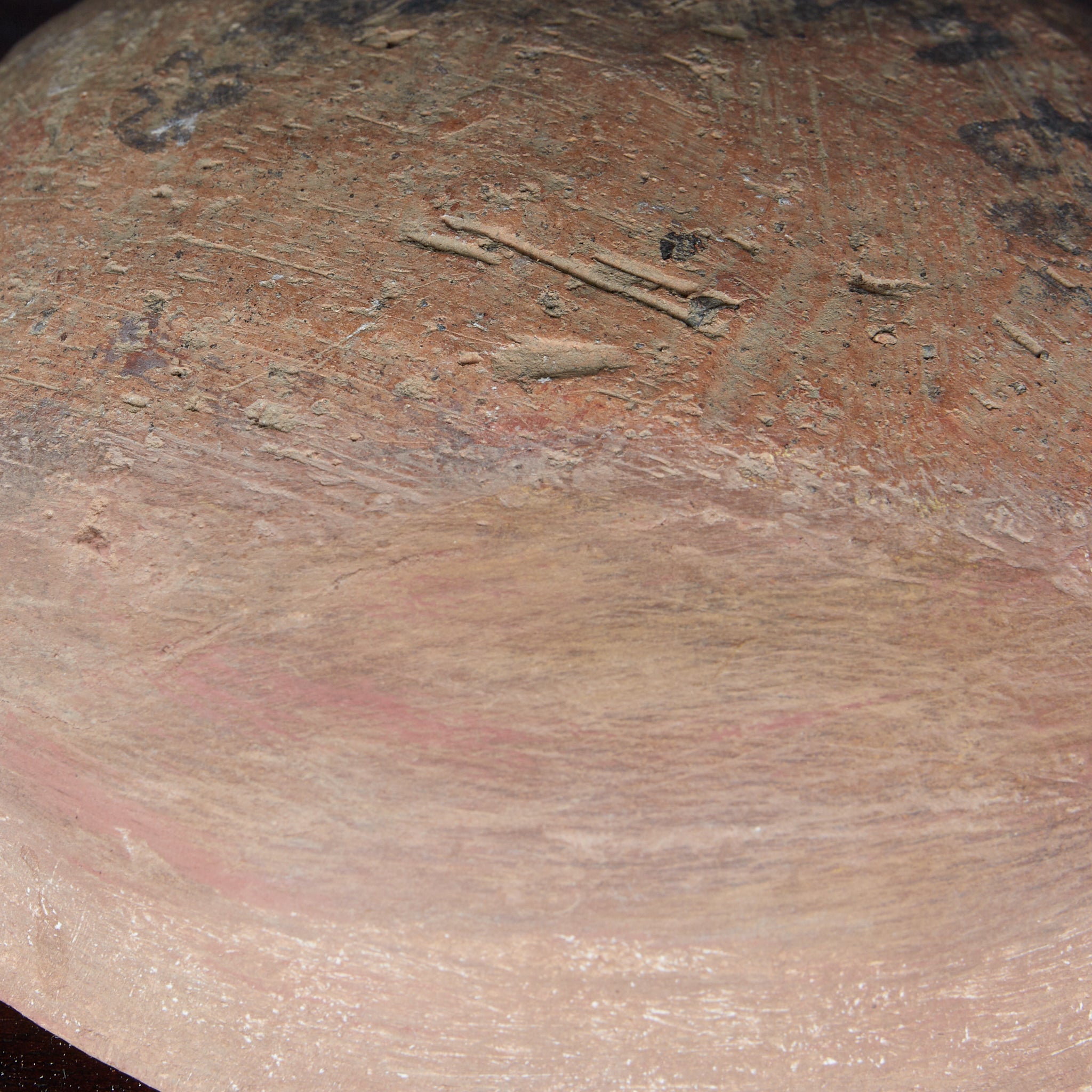
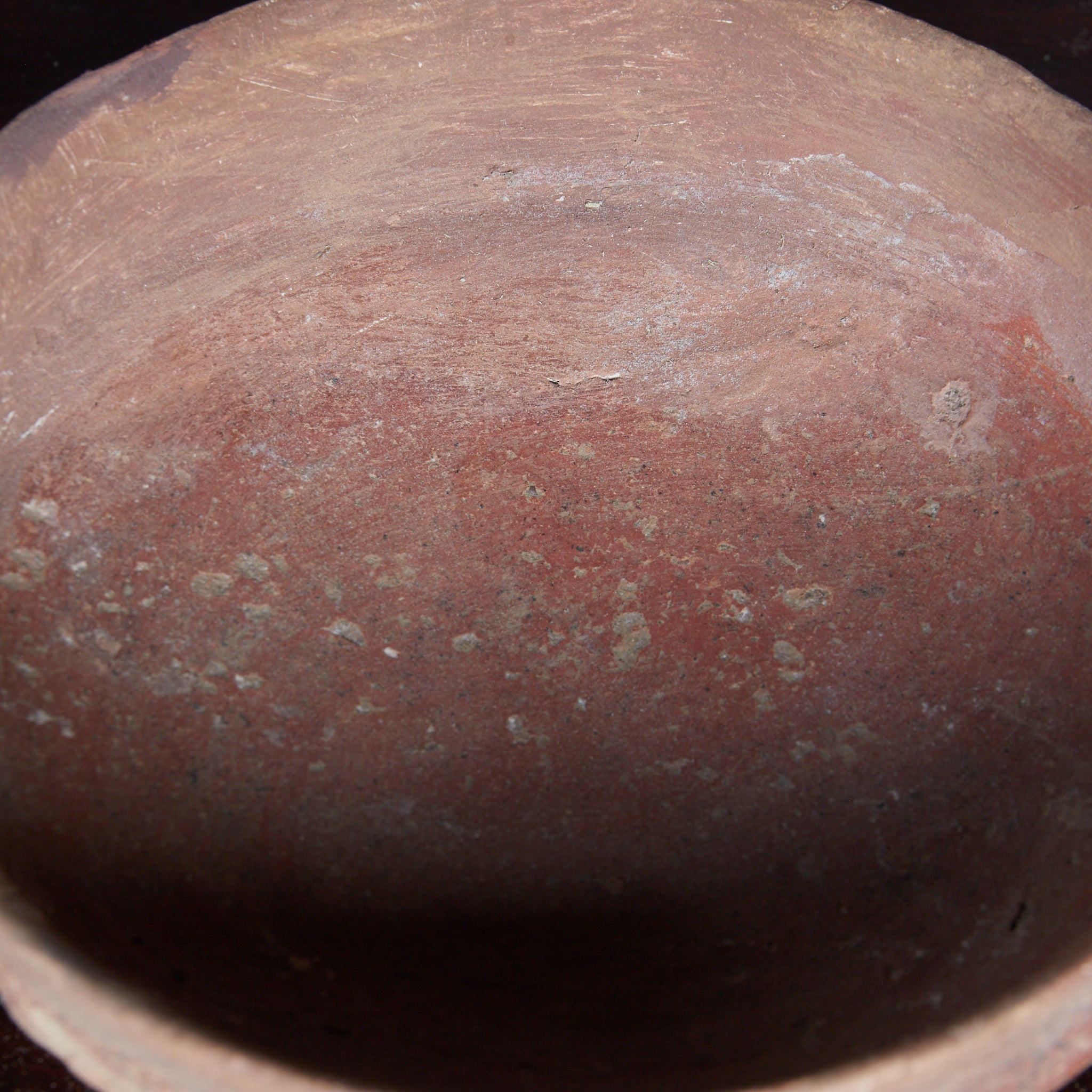
SMALL BOWL, Earthenware, Yayoi Period (300 BCE–250 CE)
However, we may respond individually to certain customers after reviewing the circumstances.
Please contact us for further details.
Shipping to the United Kingdom and Switzerland remains available.
This item has been sold. If you are looking for a similar piece or another work from the same period, please feel free to contact us.
> Inquire about this or a similar itemA bowl-shaped earthenware vessel from the Yayoi period.
This shallow, bowl-shaped earthenware, approximately 12.5 cm wide, features a low, spreading profile and a slightly upturned rim. Small in scale yet extending pleasingly sideways, it invites close appreciation of the surface of ancient pottery.
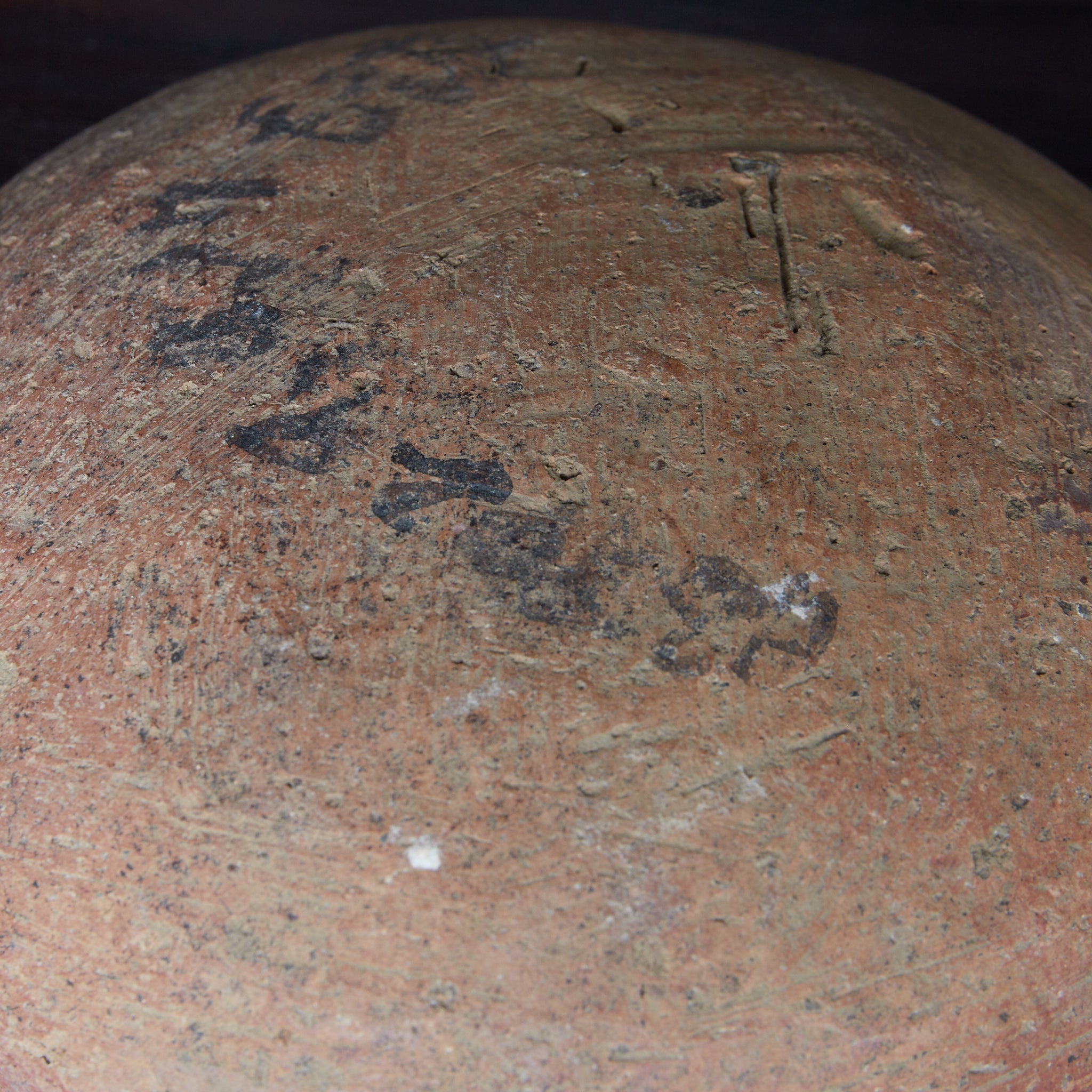
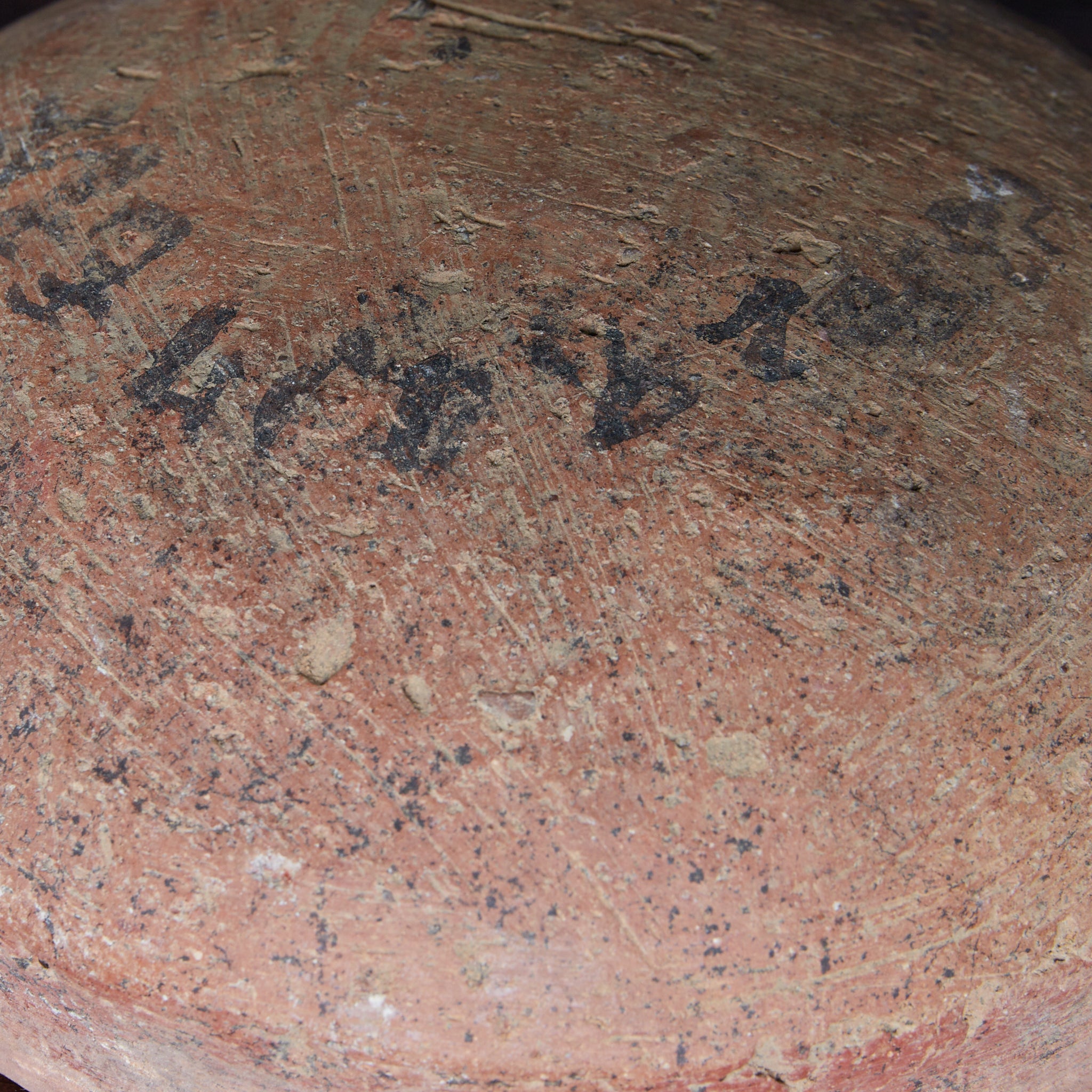
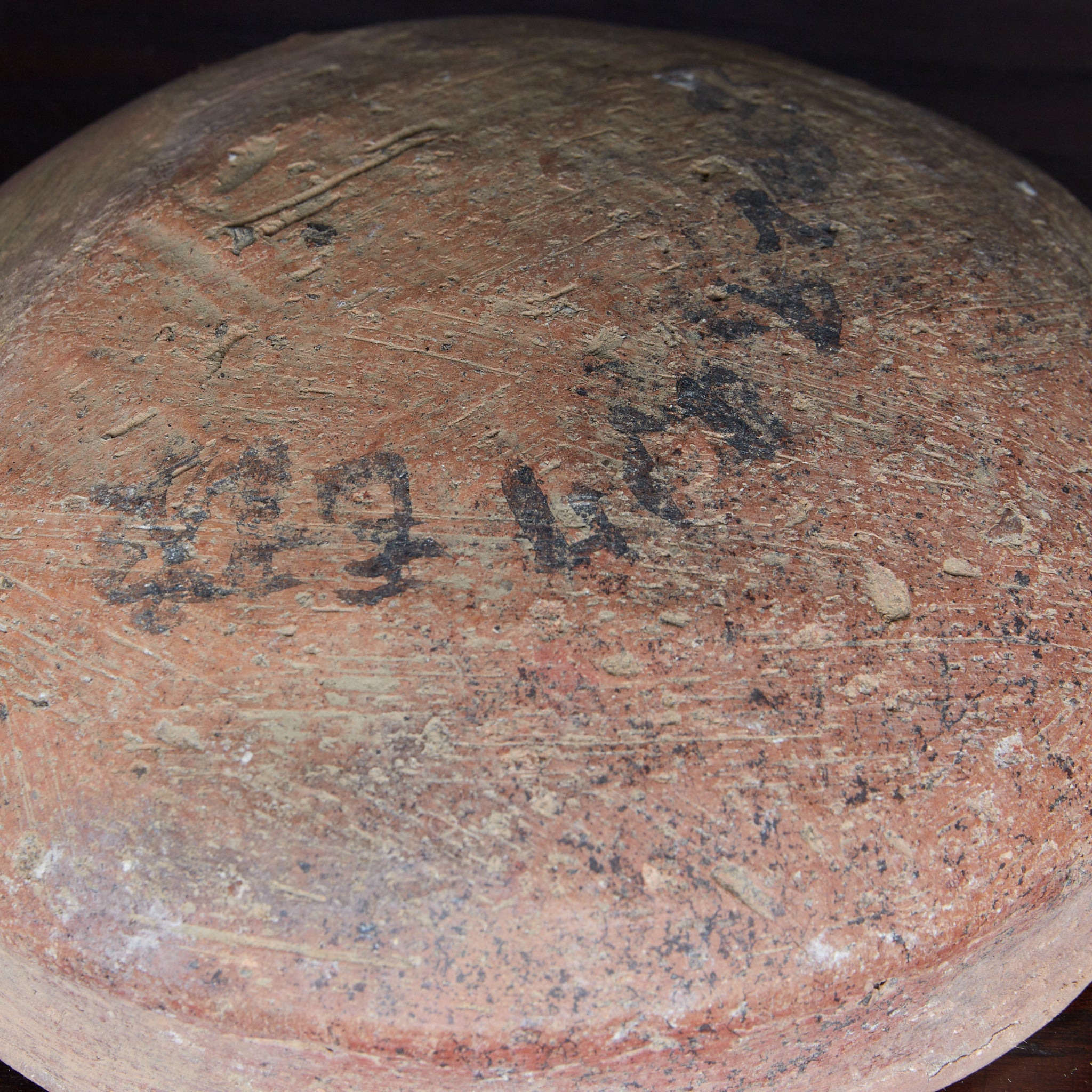
The surface retains the reddish-brown hue characteristic of Yayoi earthenware; the exterior shows abrasion, soil staining, and adherent deposits. Faint finger marks and traces from forming remain, giving it the plain, earthy character of a utilitarian vessel. It is not highly decorative, yet the thinly drawn rim and the gently curving lines of the body possess the quiet appeal of an ancient everyday vessel.
During the Yayoi period, many earthenware vessels rooted in daily life were produced—storage jars, pots, footed dishes, bowls, and bowl-shaped forms. Unlike the complex ornamentation of Jomon pottery, shapes moved toward simpler, more practical forms. This piece clearly expresses that straightforward Yayoi form and the tactile quality of the clay itself.
On the base there is an ink inscription, believed to have been added by a former owner, relating to the object's excavation. It does not definitively establish a detailed provenance, but remains as evidence that the piece has long been regarded as Yayoi-period pottery.
Repairs are visible from the rim down to the body. The surface also shows abrasion, soil staining, adhering deposits, small chips, and general age-related wear. Despite the restorations, the bowl-shaped form is retained; the piece readily conveys the rustic clay texture and the quiet charm of the shallow profile typical of Yayoi pottery.

In early Yayoi settlements of northern Kyushu, iron axes and arrowheads believed to have arrived via the Korean Peninsula have been excavated, and their introduction supported the development of land clearing and agriculture. Pottery techniques also advanced. While inheriting the Jomon coiling method, surfaces were smoothed with clay slip and forms became organized according to use. Jars and pots for storage, spouted vessels for pouring hot water, and pedestal dishes used for food or ritual became increasingly formalized as vessels grew more deeply intertwined with society.
During the Middle Yayoi period, the introduction of covered firing made high-temperature firing at around 1000°C possible, leading to the mass production of thin, hard, reddish-brown pottery. Iron tools and weapons, including arrowheads and spears have been excavated around Lake Biwa and in the San’in region, revealing the spread of a social structure in which agriculture and warfare coexisted. At the same time, pottery retaining Jomon elements continued to be made from northern Kyushu to eastern Japan, suggesting a cultural fusion between agricultural migrants from the continent and local Jomon potters.
By the Late Yayoi period, domestic casting of iron implements had become established, and swords, arrowheads, axes, and other tools have been found across the country. Pottery retained its thin, reddish-brown forms and, used alongside iron farming implements, secured its place as indispensable equipment for cultivation, storage, and cooking. Its role expanded from that of a simple household tool to a form of social infrastructure supporting communal order, ritual, and technical systems.
Implements corresponding to “chopsticks” also appeared during this period. Sites dating to the Late Yayoi period have yielded oribashi—pieces of bamboo folded in half into a tweezer-like form—which are thought initially to have been used in religious rites and ceremonies. Chopsticks did not become widespread for ordinary meals until after the Asuka period, but the fact that the basic form of chopsticks had already been adopted in Yayoi society suggests changes in food ritual and ideas of hygiene.
Such inventions of form and technique created a broad current leading onward to the pottery and Sue ware of the Kofun and Heian periods. That current continues unbroken even today. “The beauty of use” was repeatedly emphasized by Yanagi Sōetsu, founder of the Mingei movement, yet its origins can be found in the Yayoi period. These vessels, which accompanied social transformation, speak as evidence of lives once lived. When I hold a piece of pottery weathered by time, unnamed makers and flames rising brightly against the mountains come to mind.
Choose options
Change language
