

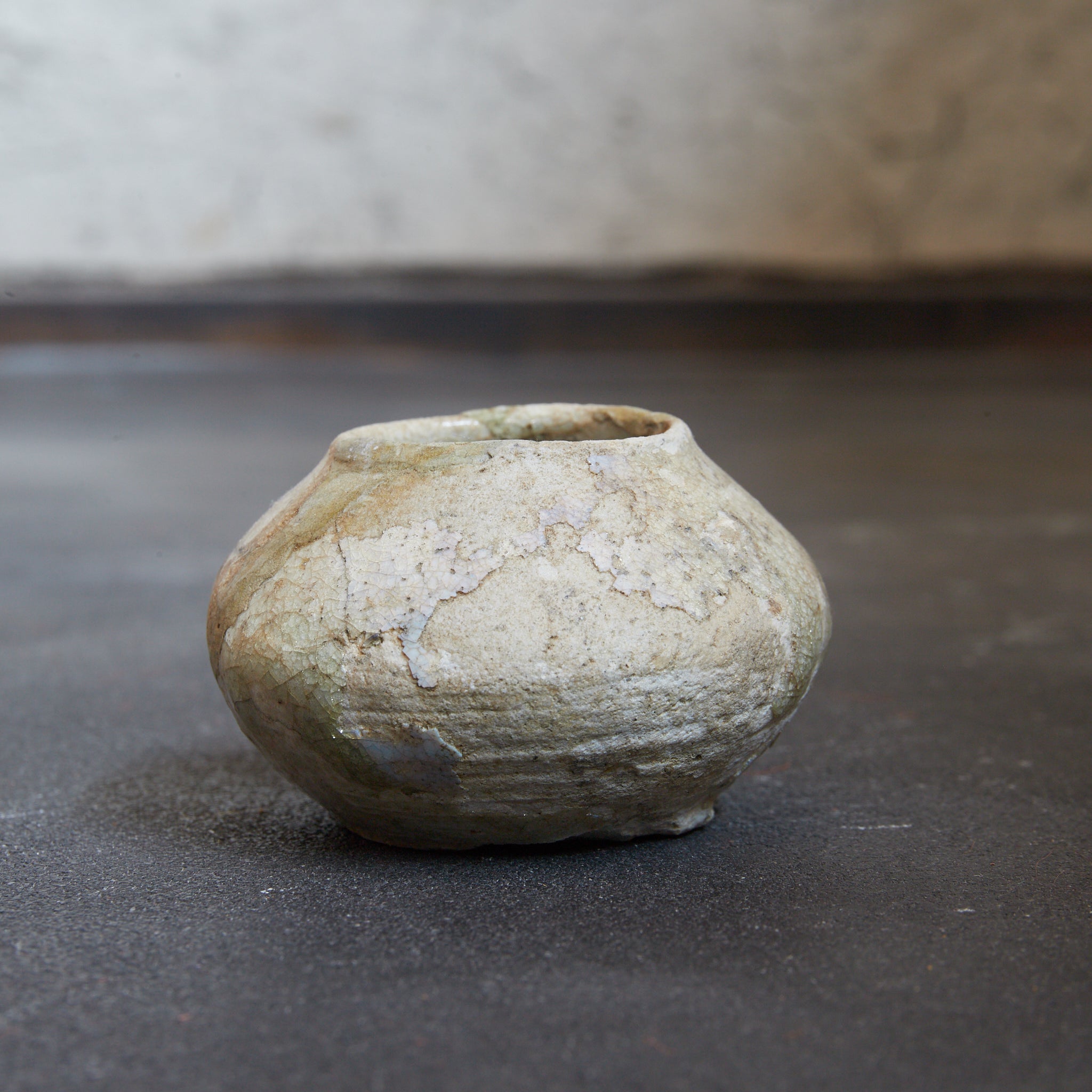
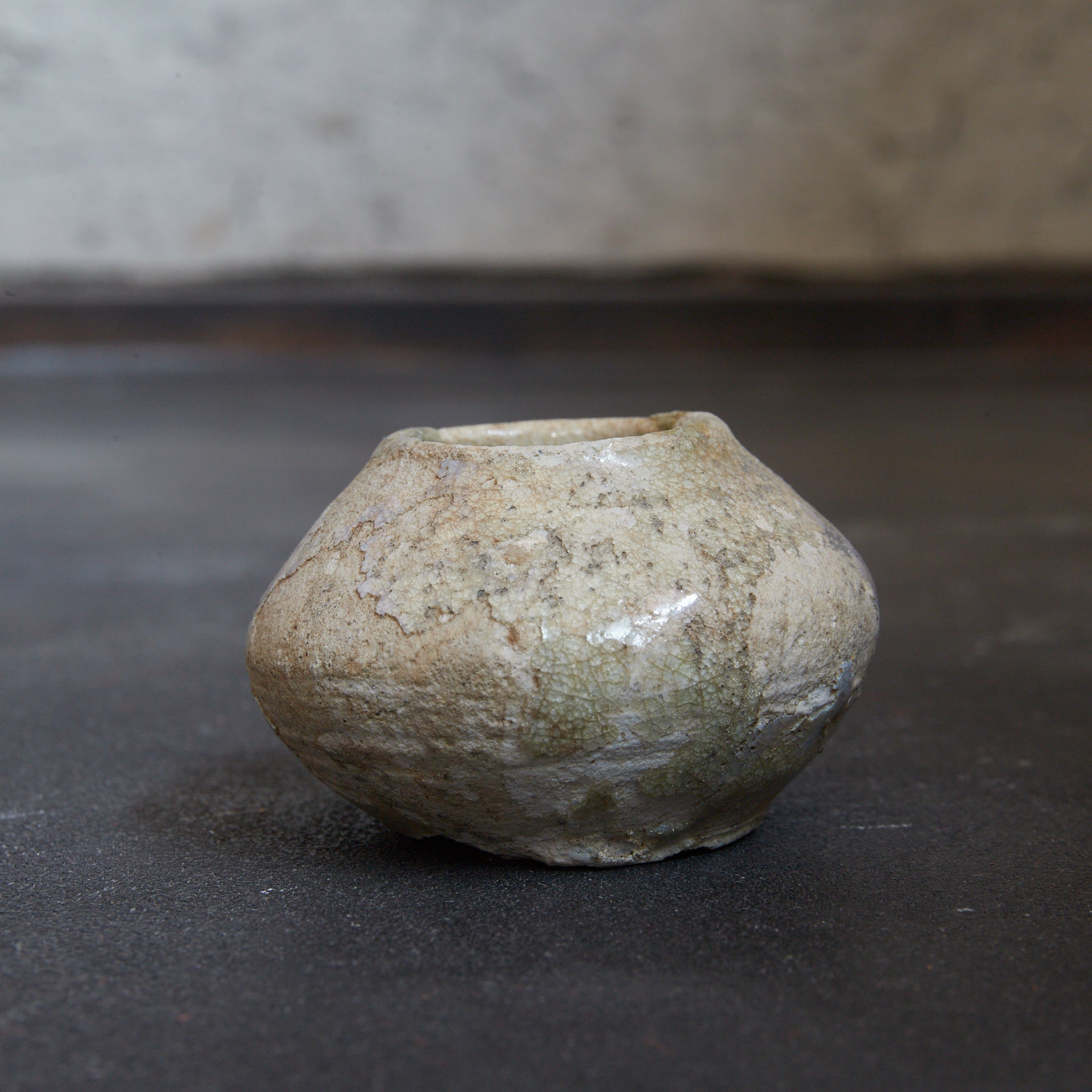
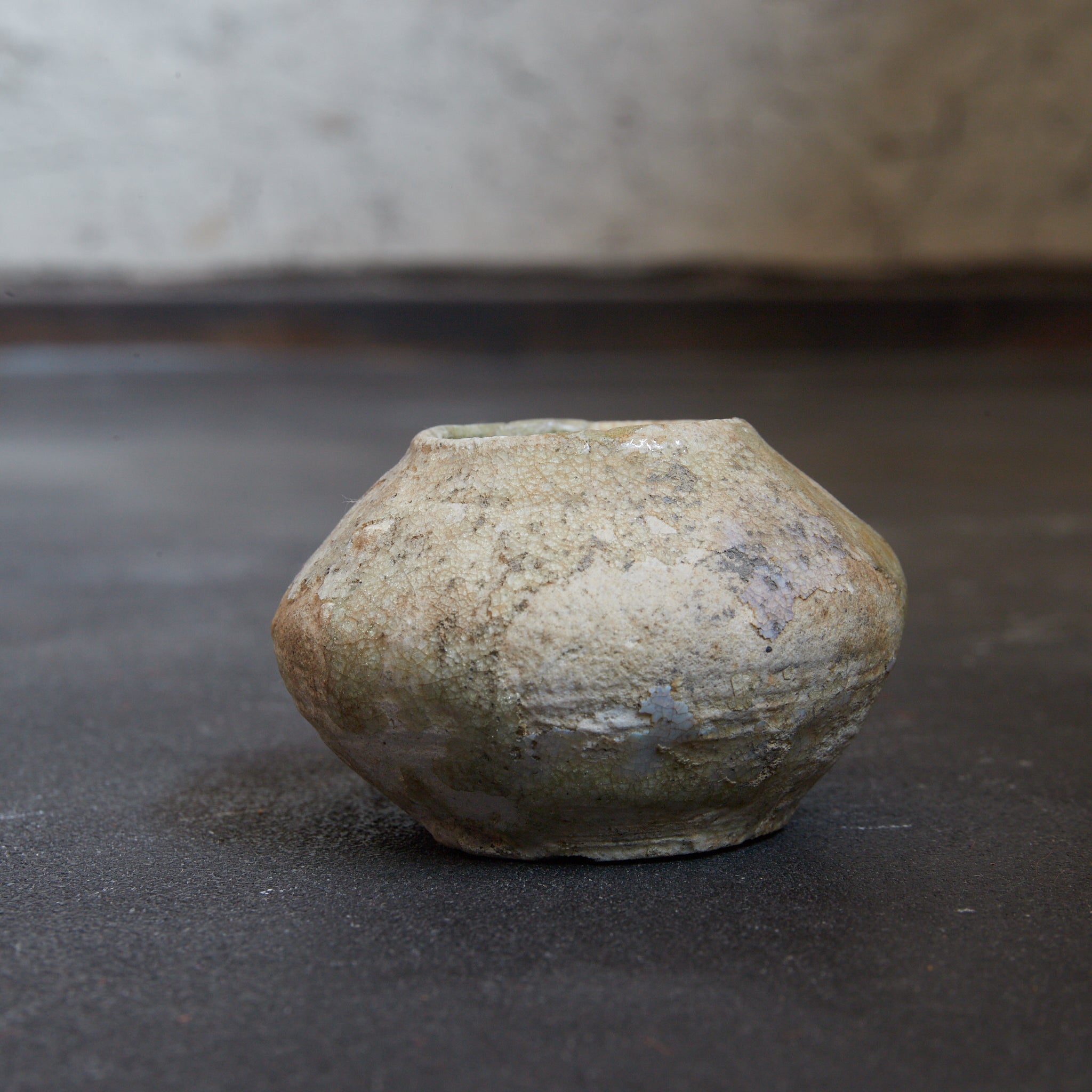
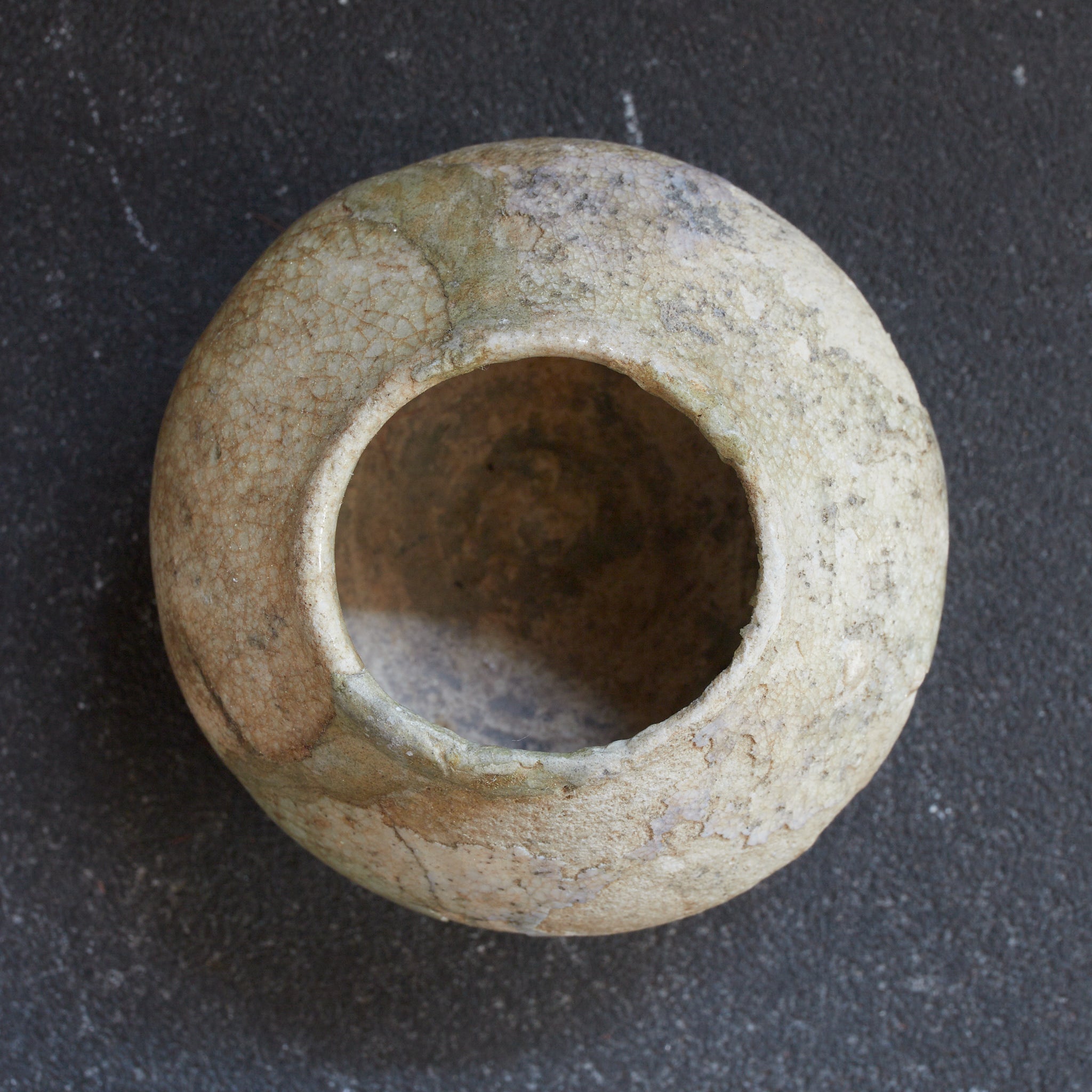
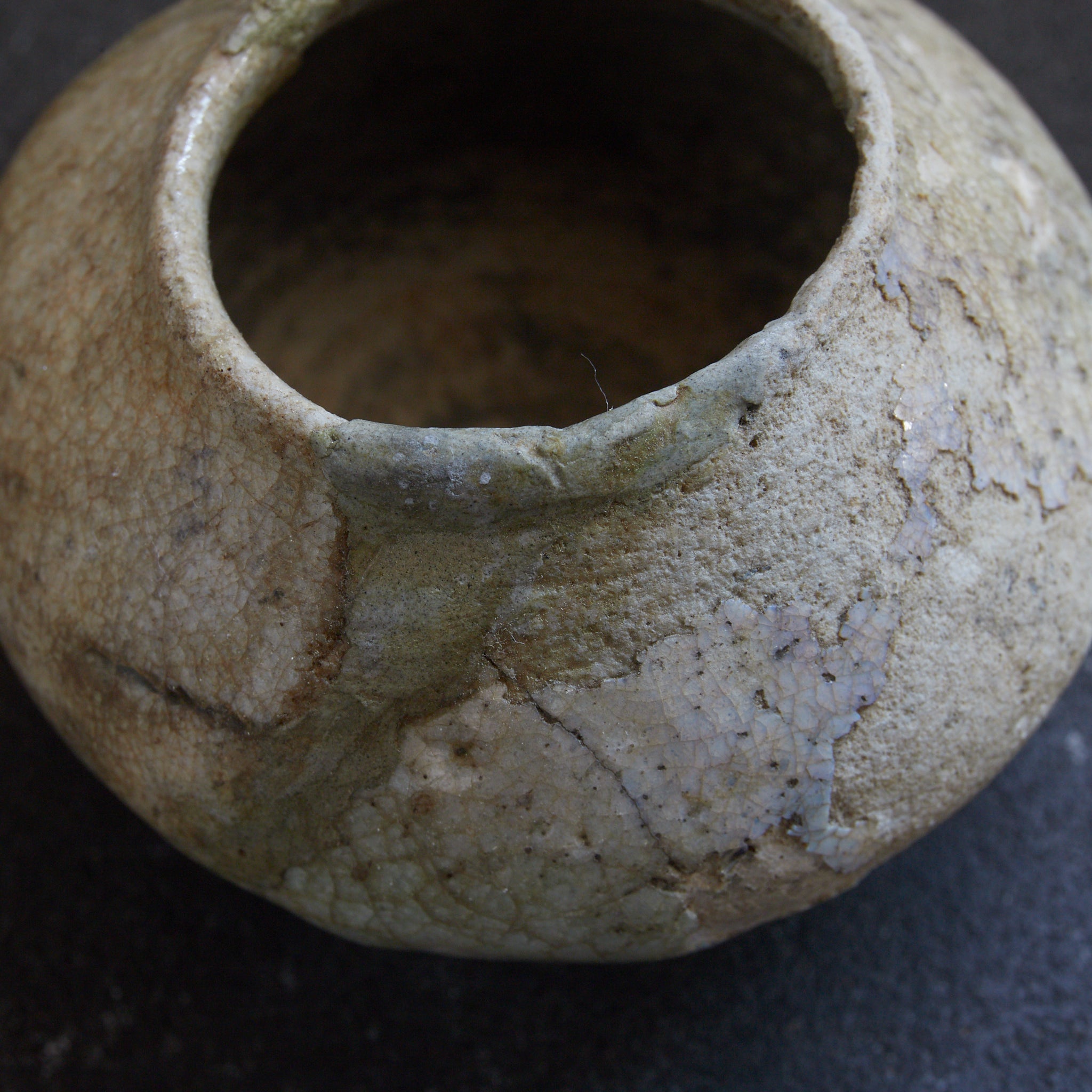
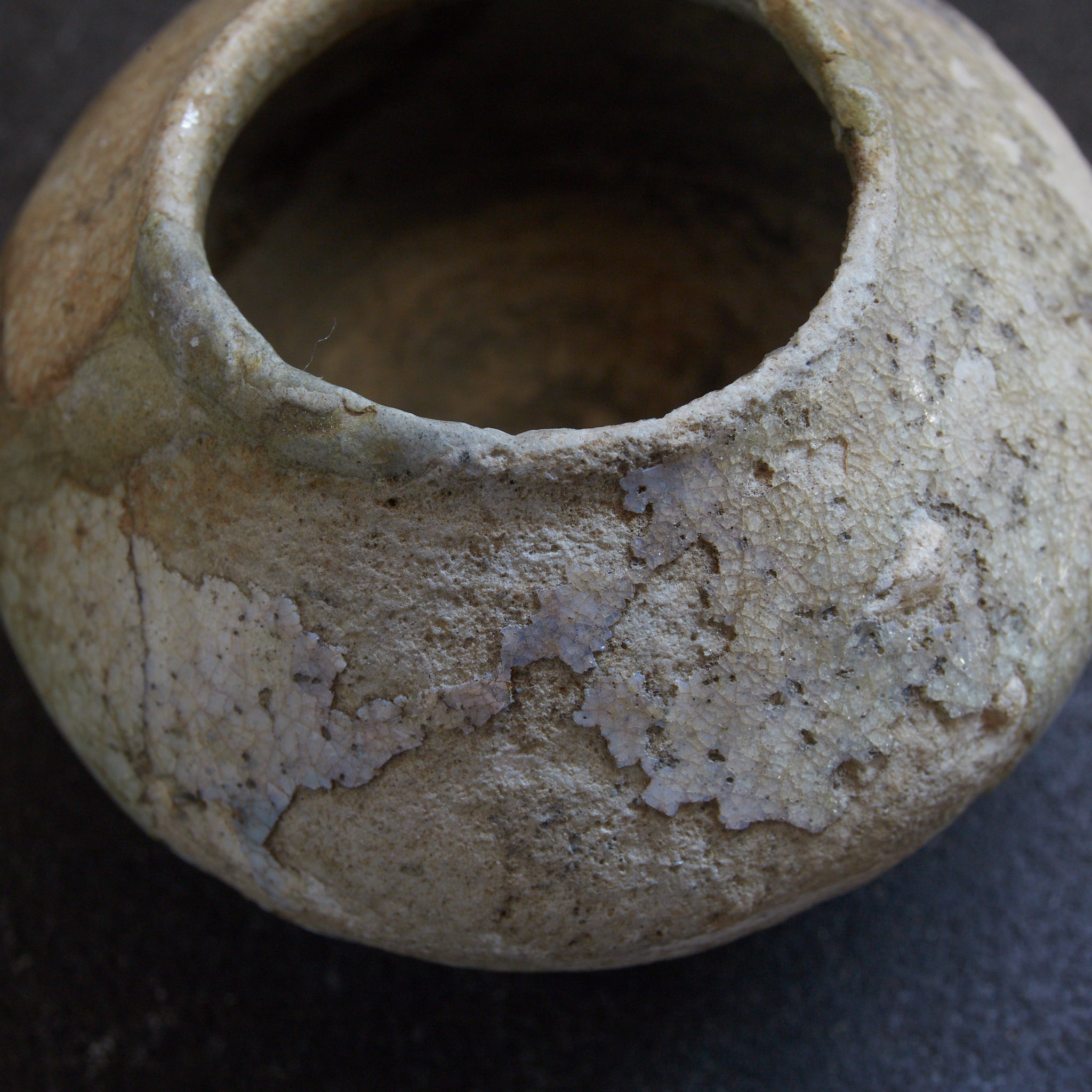
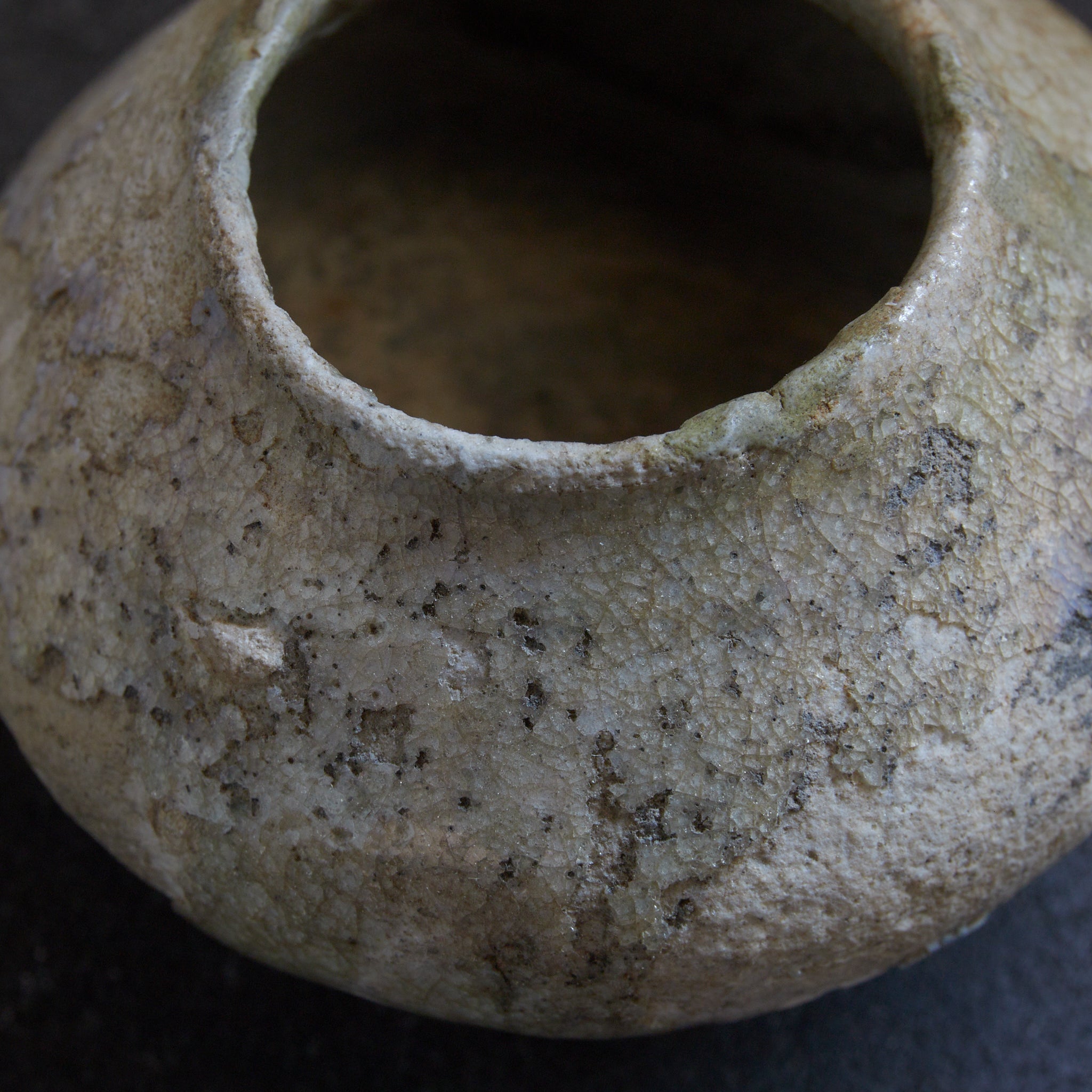
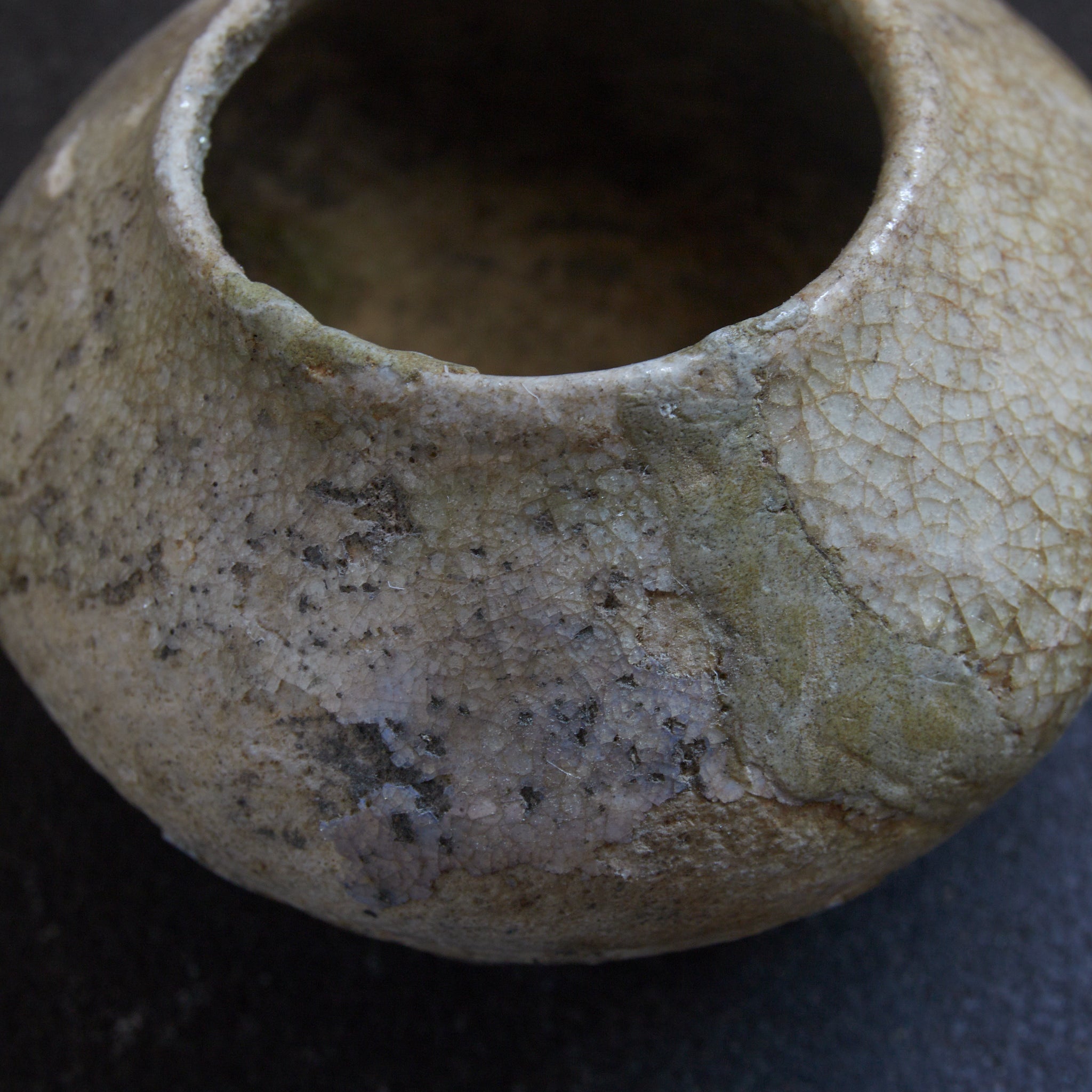
LIDDED BOX BASE, Ko-Seto, ash-glazed, Kamakura Period (1185–1333 CE)
Tax excluded. Import duties may apply. Shipping costs are calculated at checkout.
However, we may respond individually to certain customers after reviewing the circumstances.
Please contact us for further details.
Shipping to the United Kingdom and Switzerland remains available.
Numerous product photos are available for you to examine the details and condition. Should you have any questions, please do not hesitate to contact us.
> Inquire about this productThis is the base of an ash-glazed Ko-Seto lidded box from the Kamakura period.
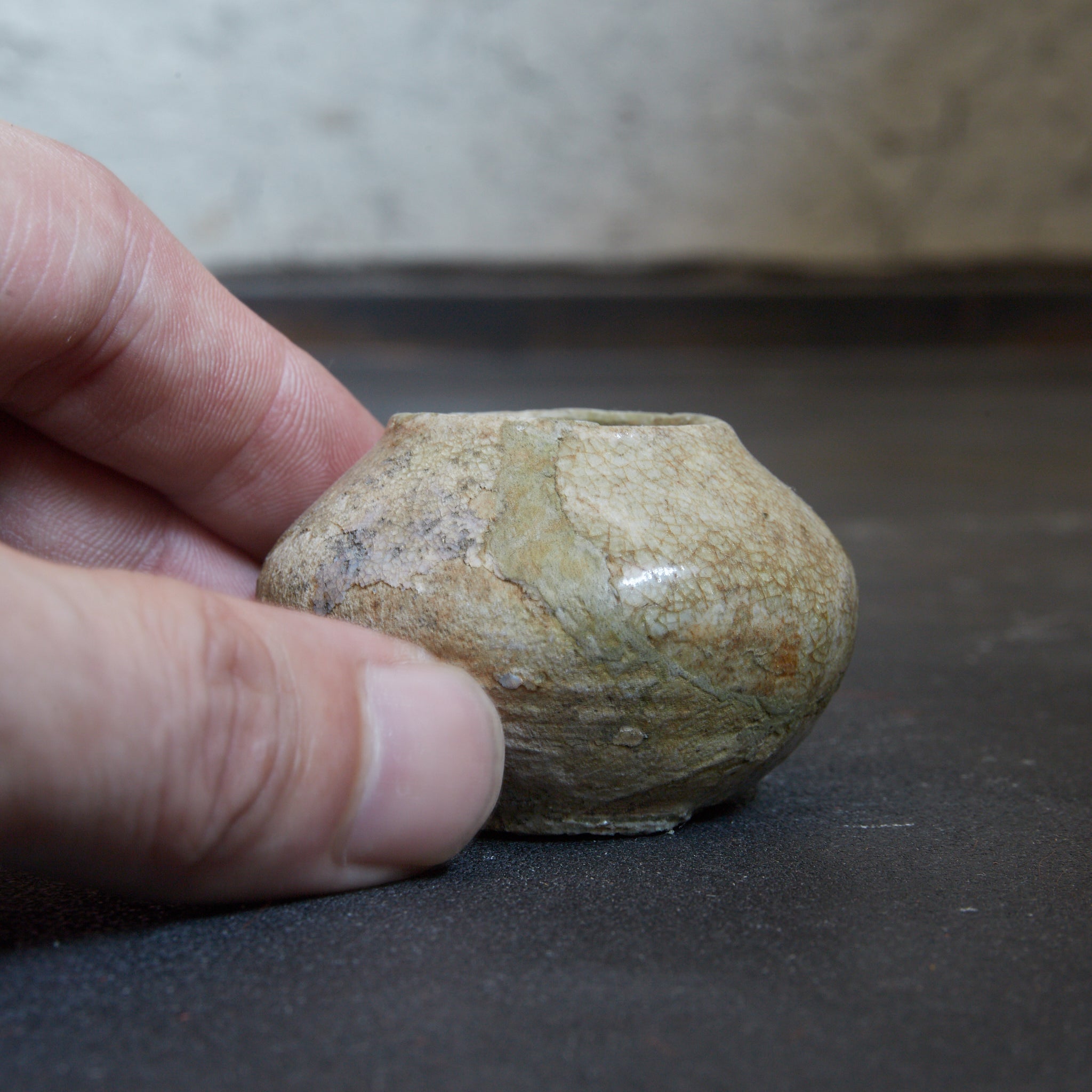
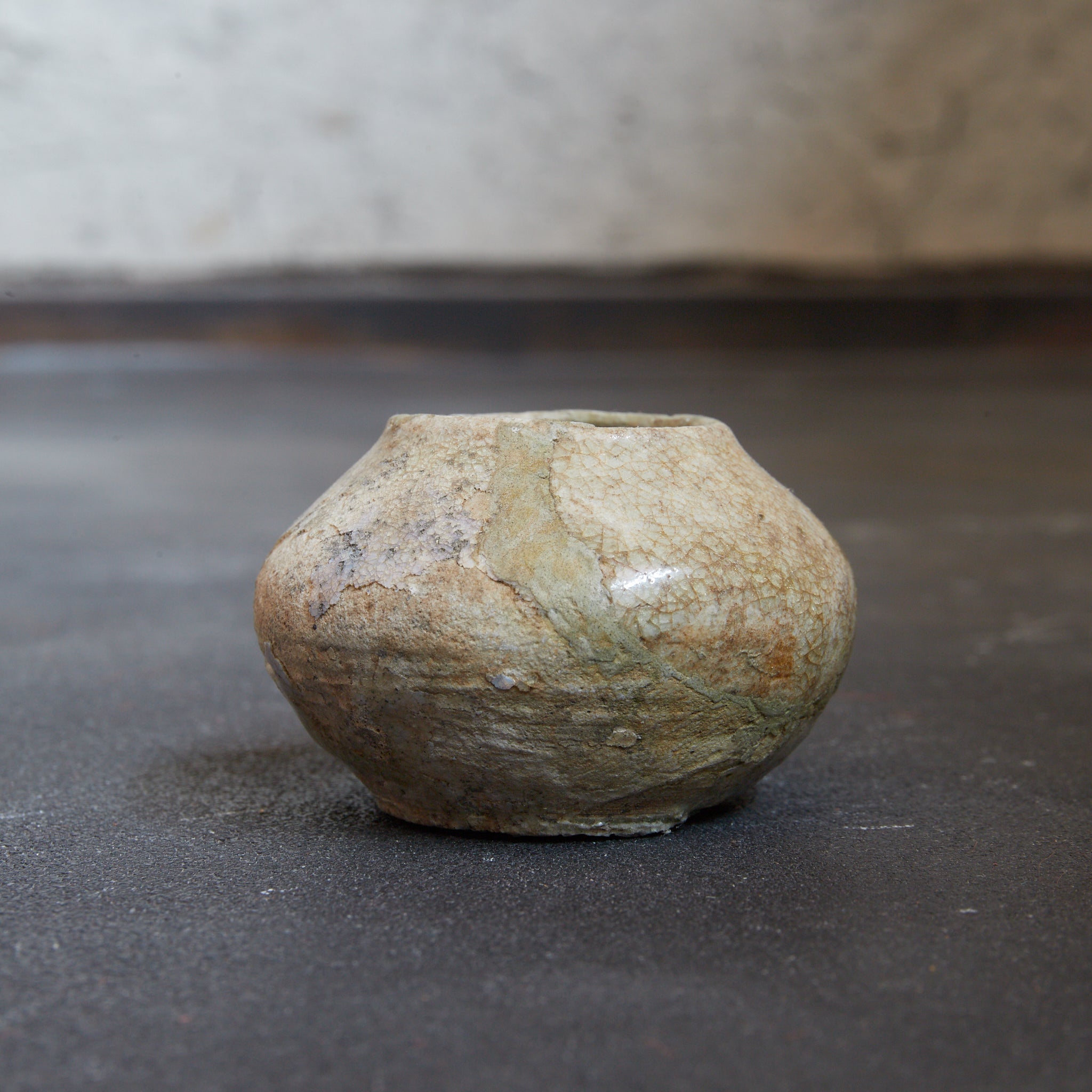
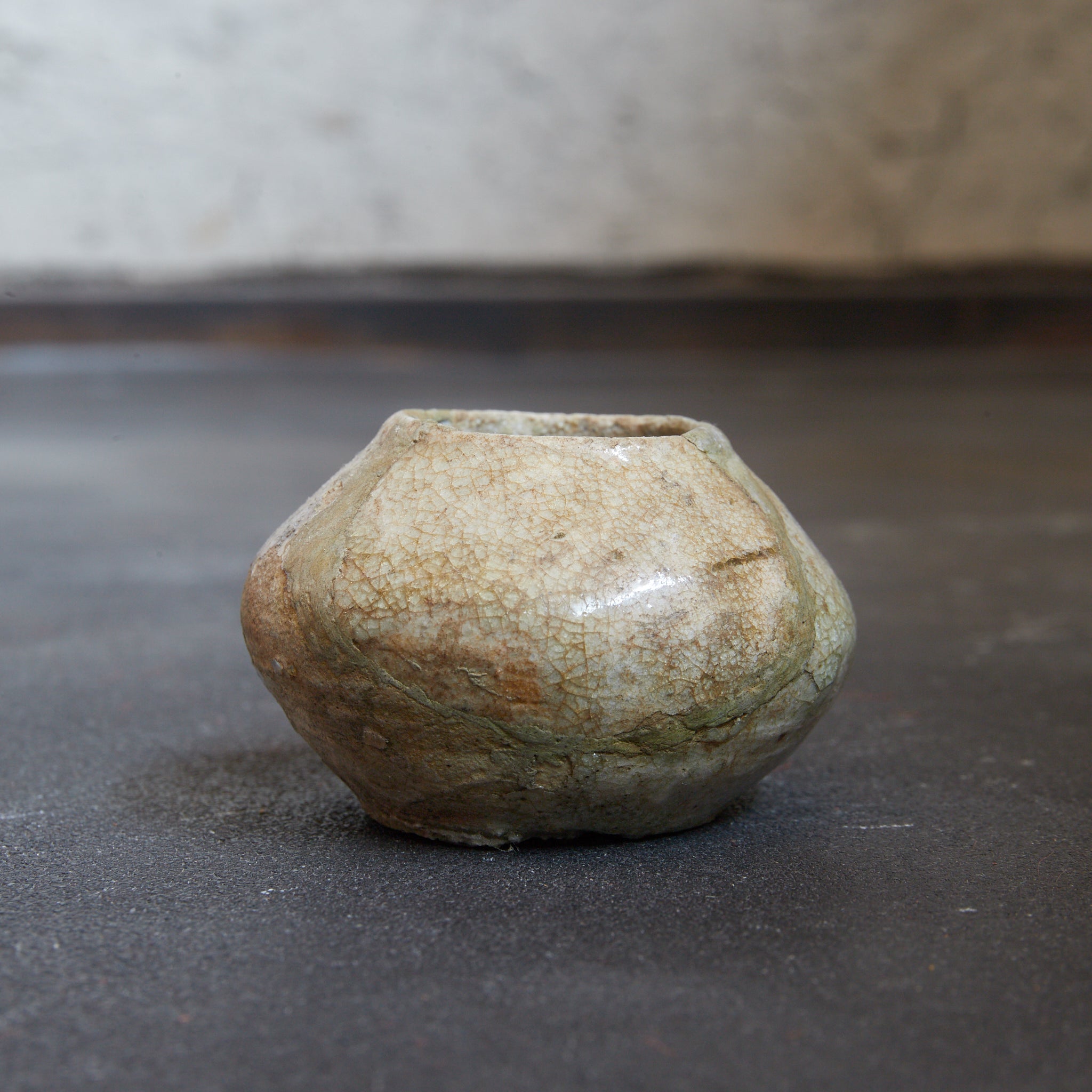
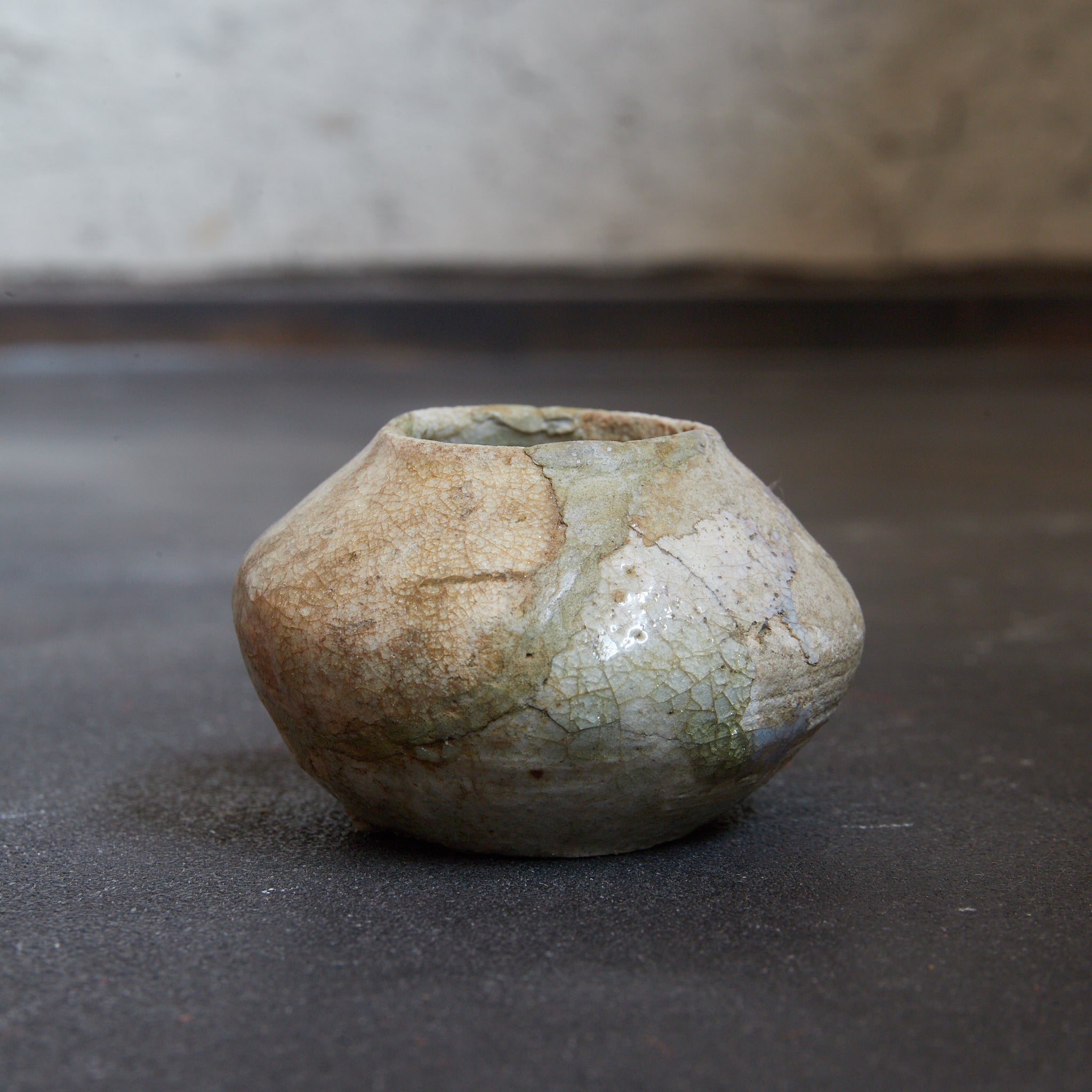
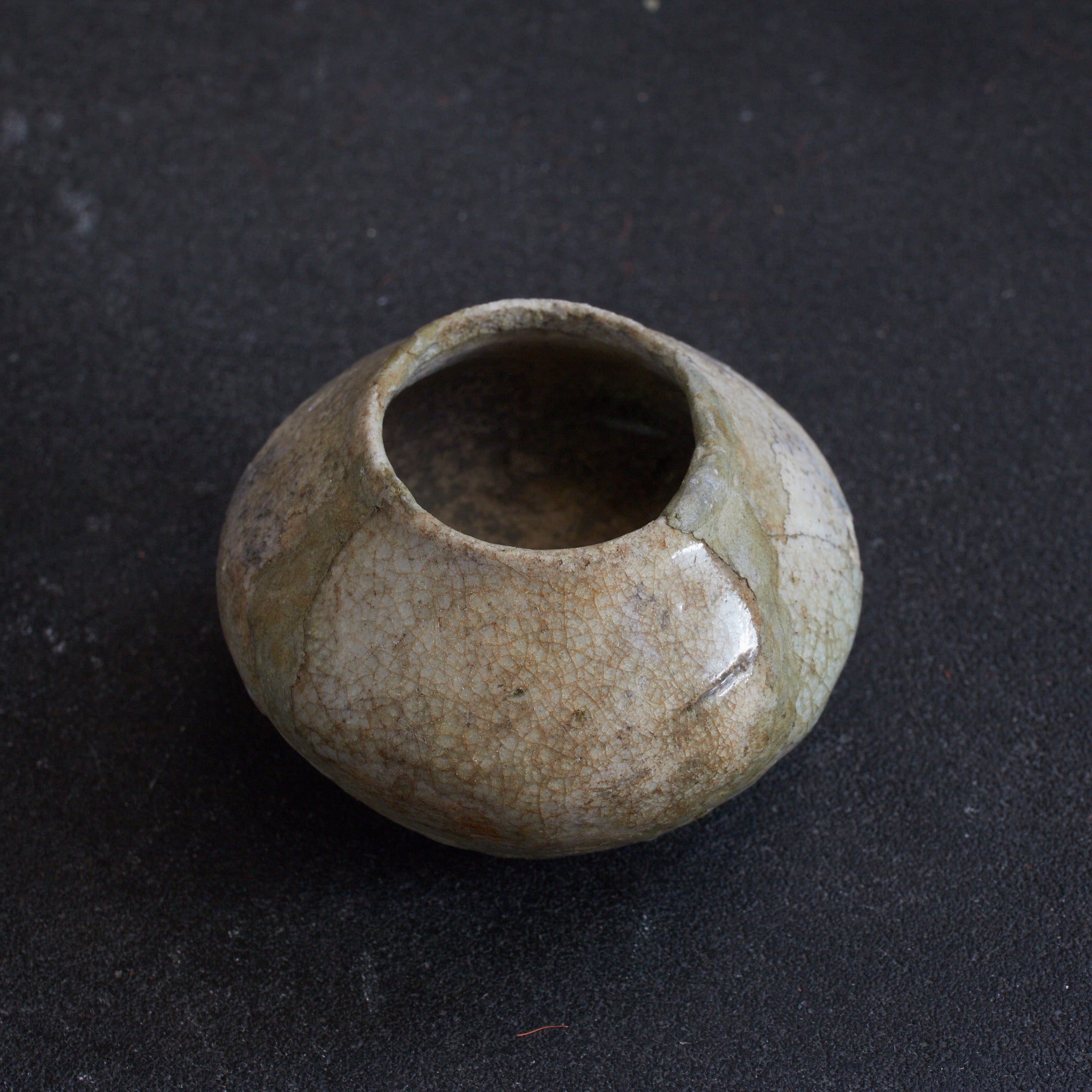
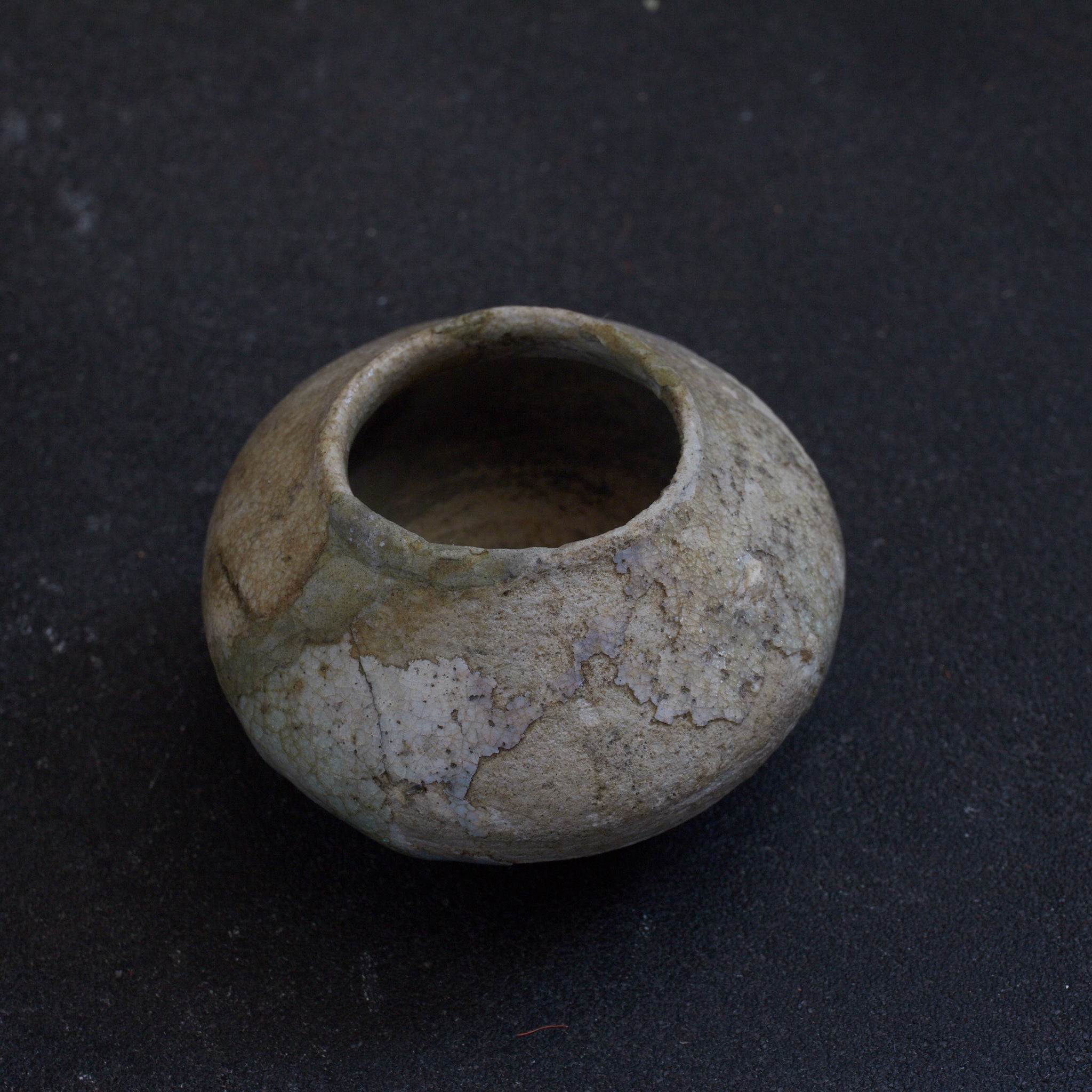
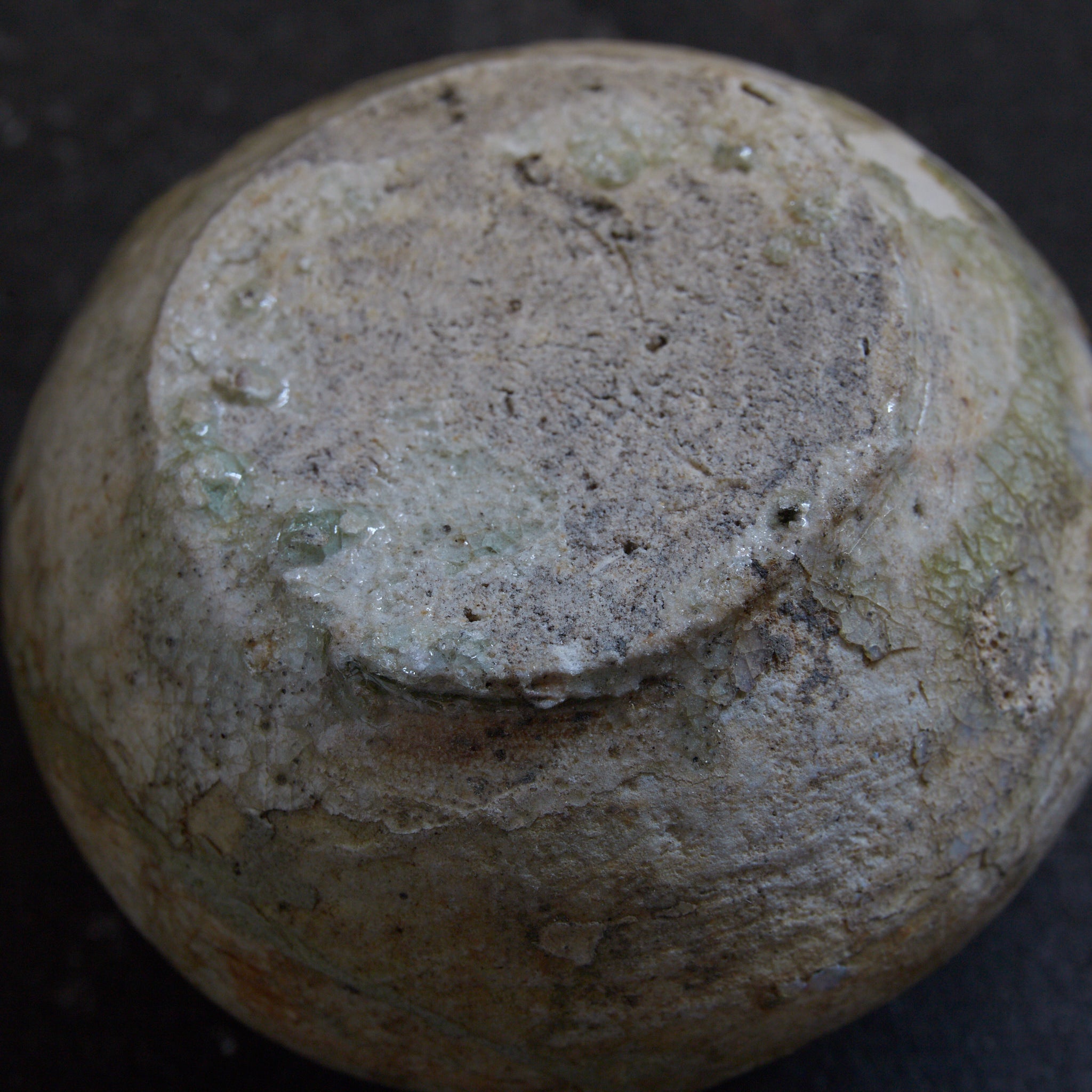
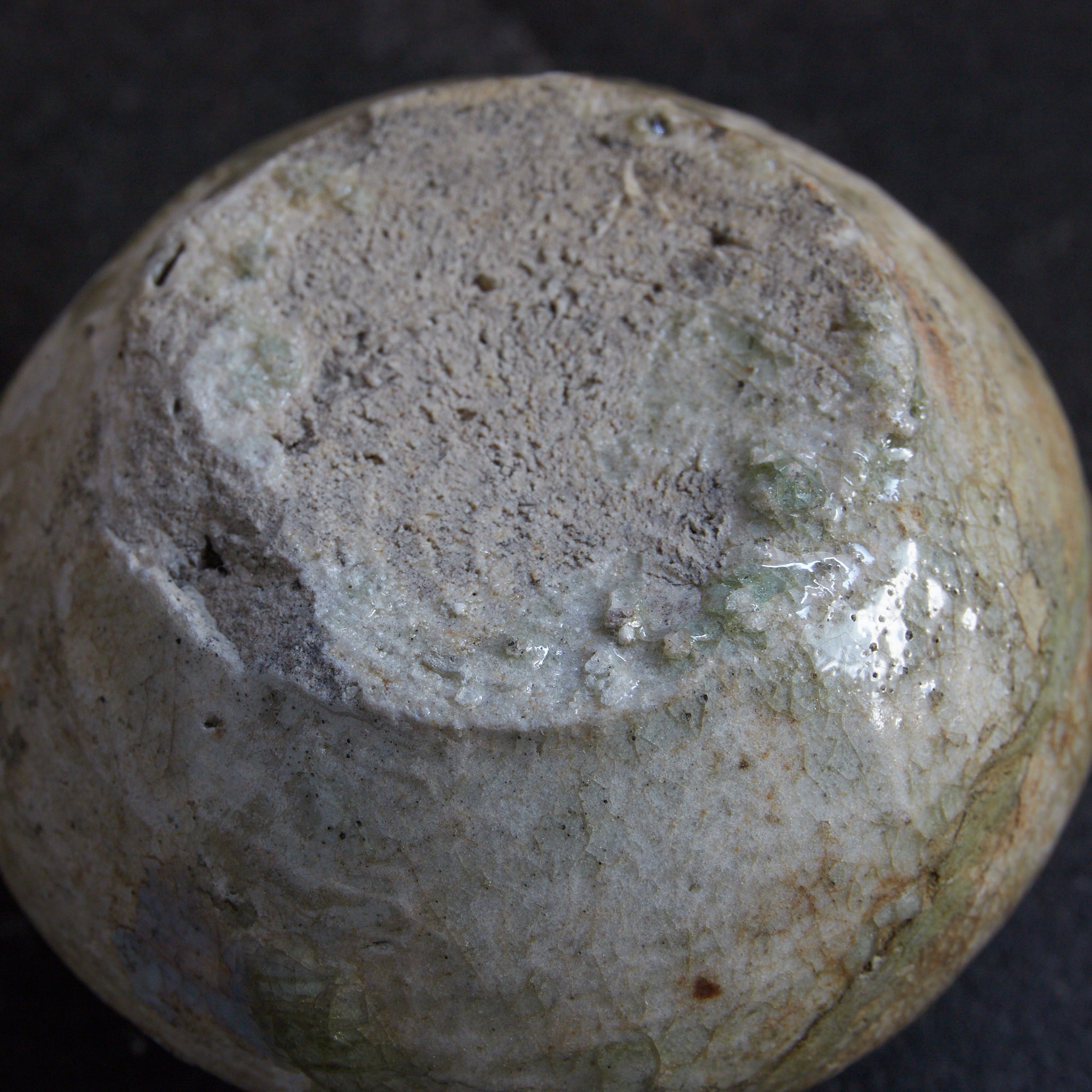
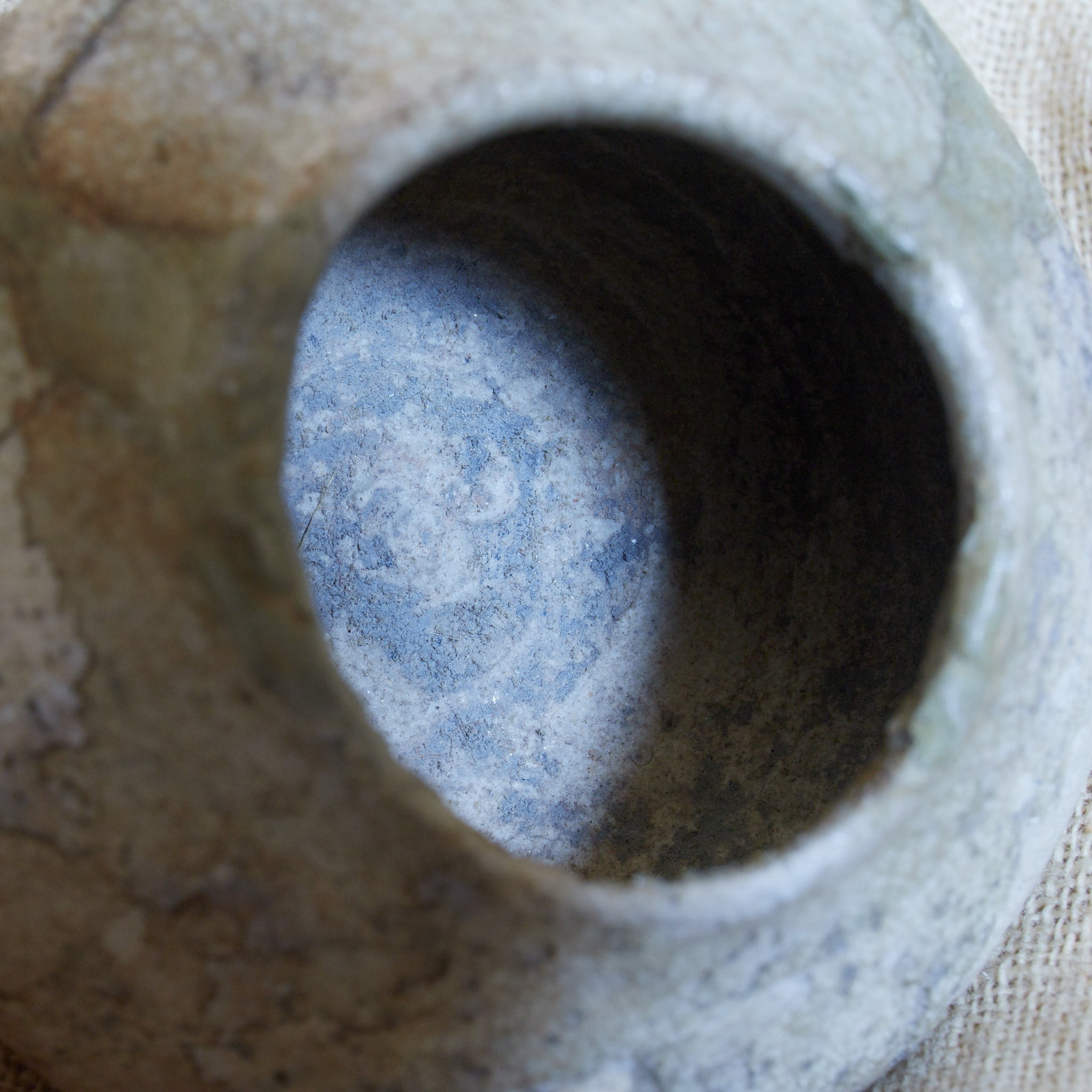
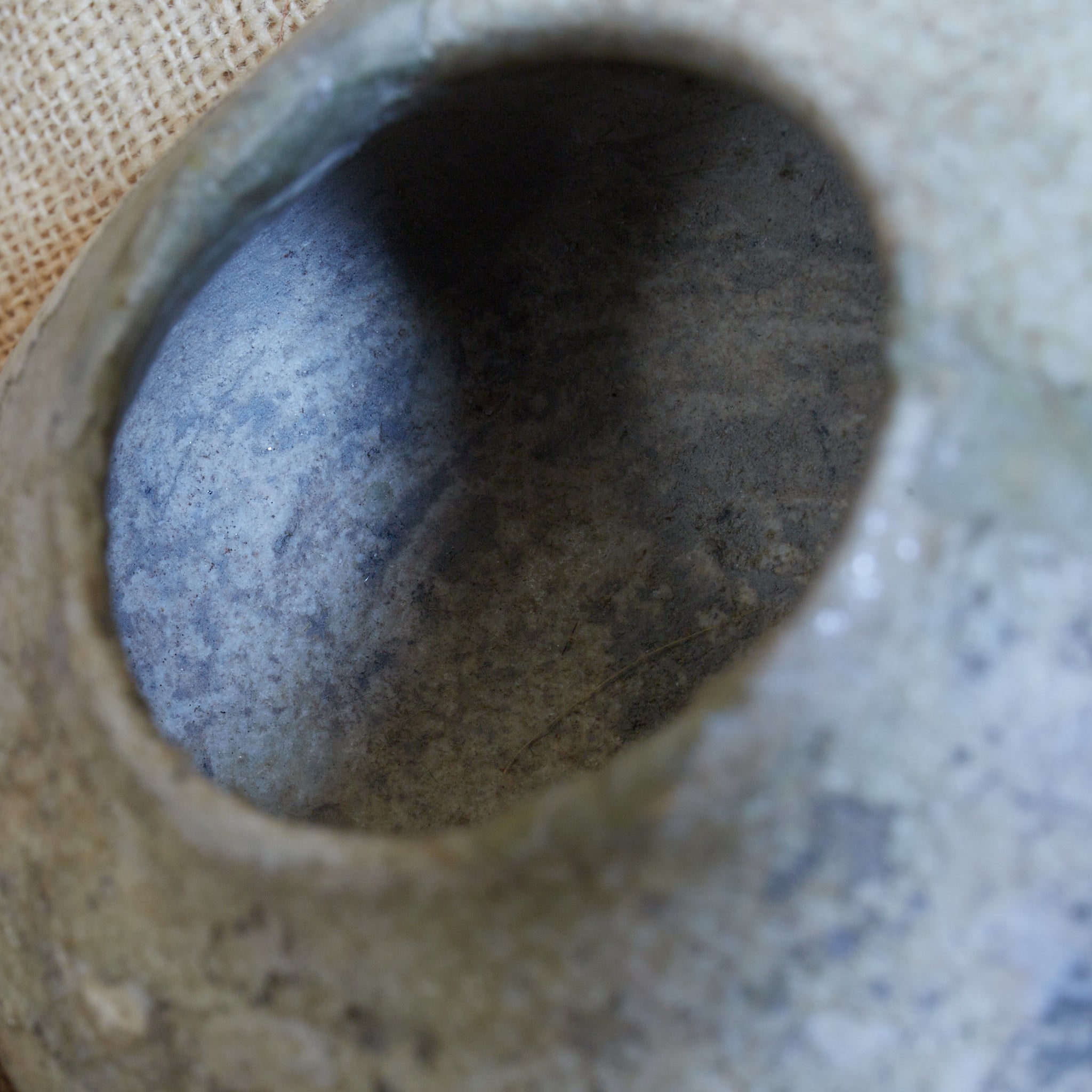
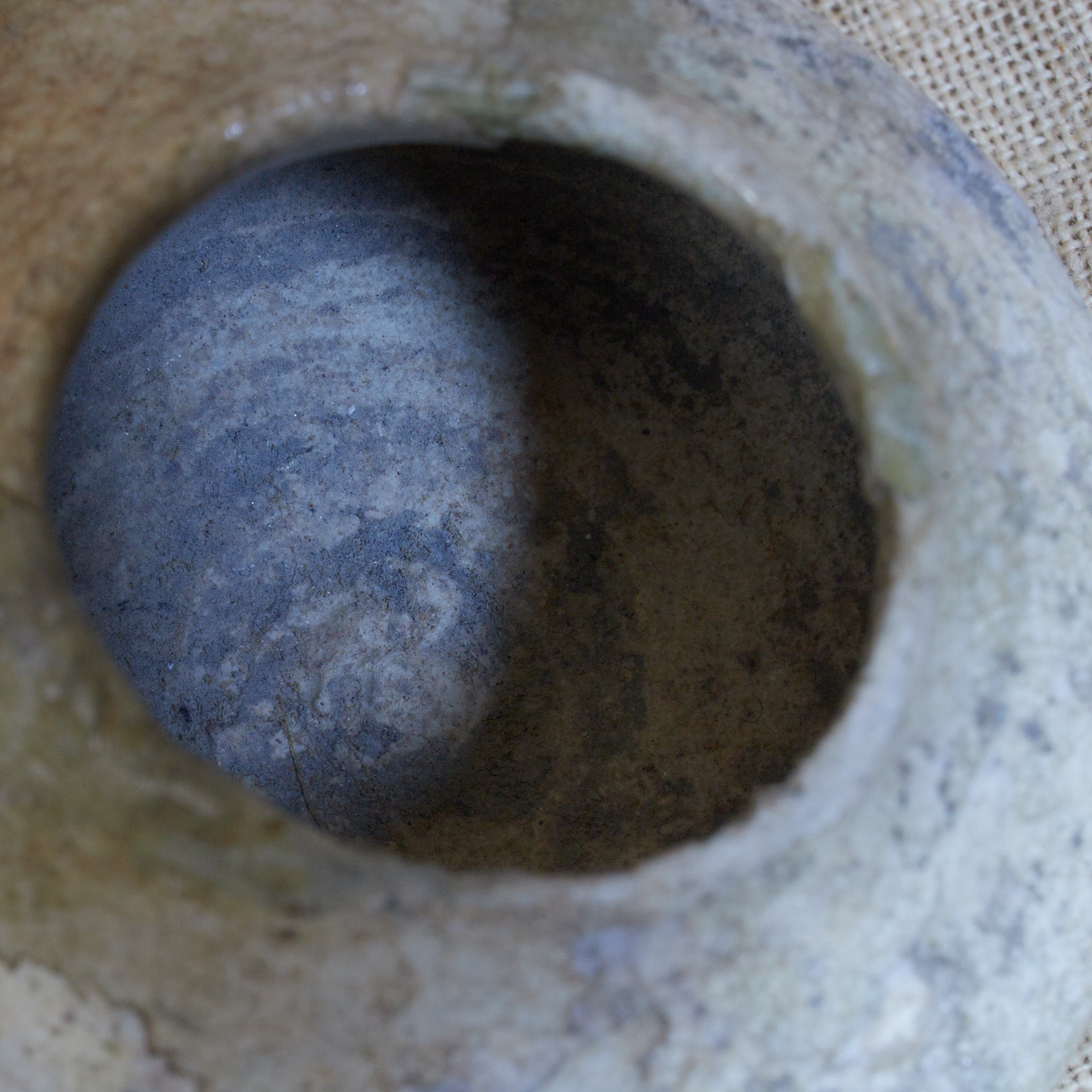
This is the body of a gose, originally made to accompany a lid. It has a wide mouth, a rounded, swelling body, and a low, compact profile. Although a small piece, only about 5cm wide, the thickness of the clay and the mass of the body give it a substantial presence and a rustic simplicity characteristic of Ko-Seto.
Ko-Seto denotes pottery from the Seto kilns that produced fully glazed ceramics in medieval Japan. Ash-glazed jars, bottles, and lidded boxes were produced for use in temples, shrines, and samurai households. This example is undecorated; its clay surface, ash glaze, and firing-induced irregularities remain plainly visible.
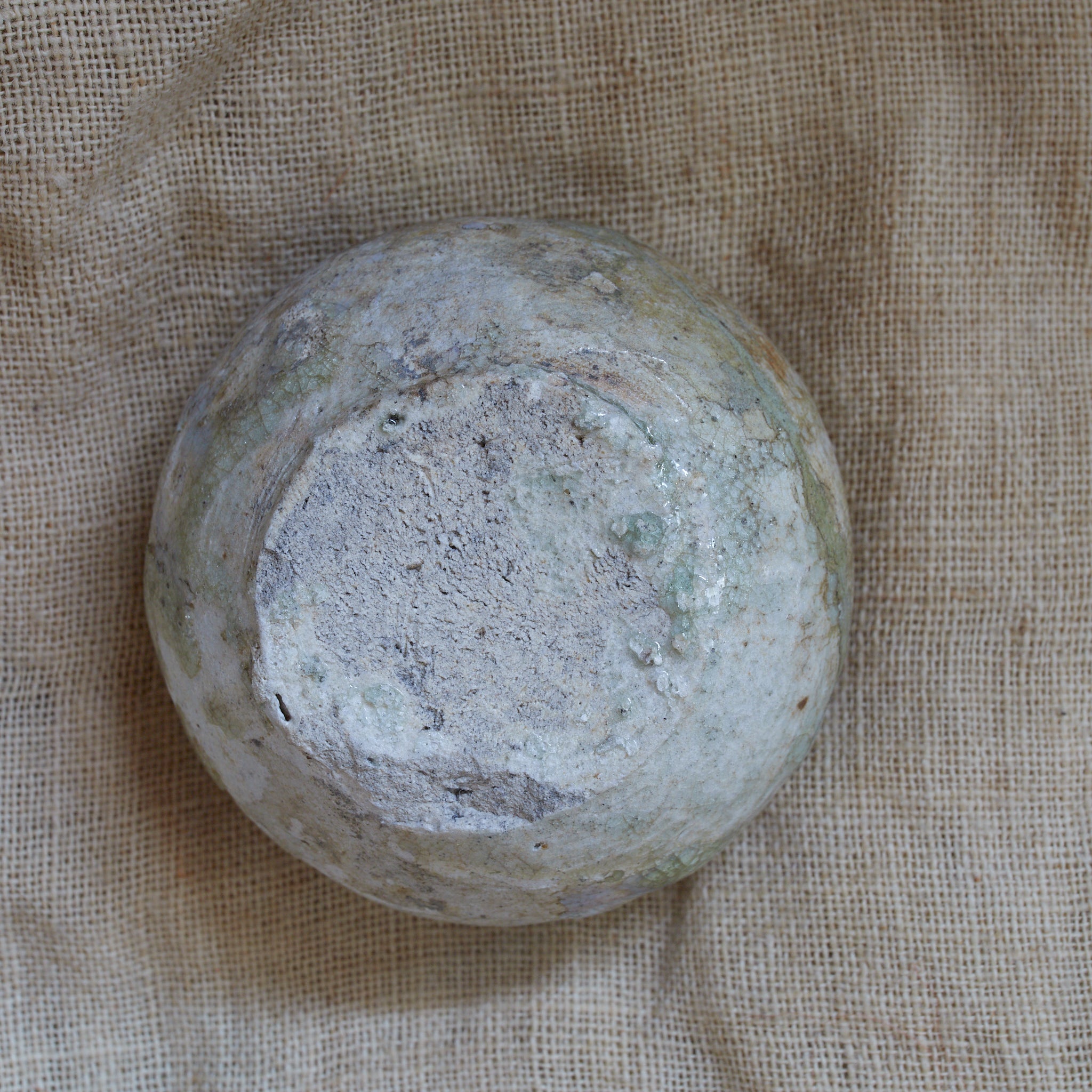
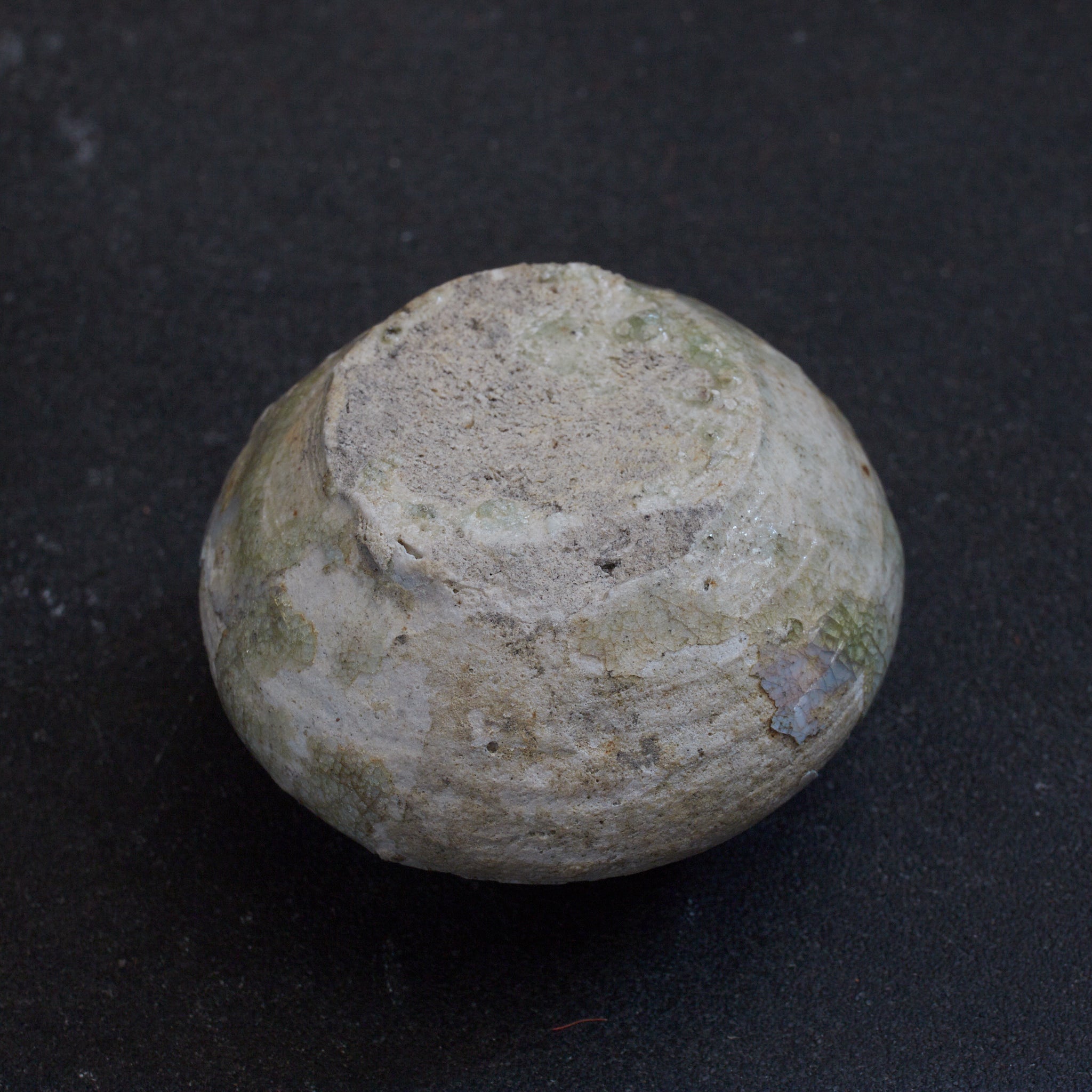
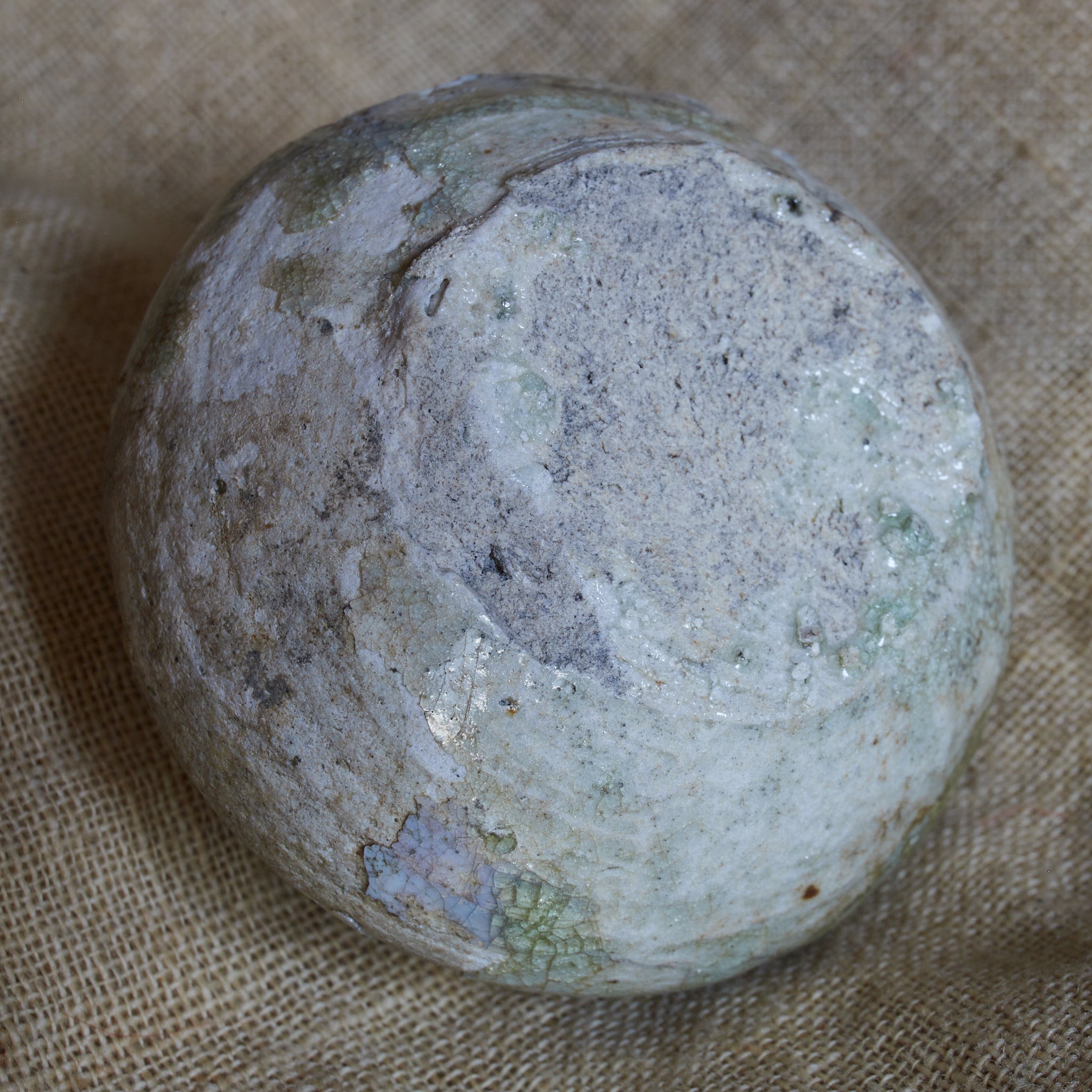
A thin veil of ash glaze remains on the surface, producing a mixture of pale green, yellow-tinged white, and the brown of the clay. Where the glaze persists there is fine crazing; in areas where it has flaked off, the coarse texture of the clay is exposed. In this small vessel the ash glaze’s delicate coloration and the clay’s coarseness are clearly expressed.
The lid is missing; the rim and body show chips, abrasion, and areas of glaze loss. The base exhibits adhering soil and glaze pooling. It retains the earthy character and ash‑glaze expression typical of medieval Ko‑Seto.
Choose options
Tax excluded. Import duties may apply. Shipping costs are calculated at checkout.
Change language
