

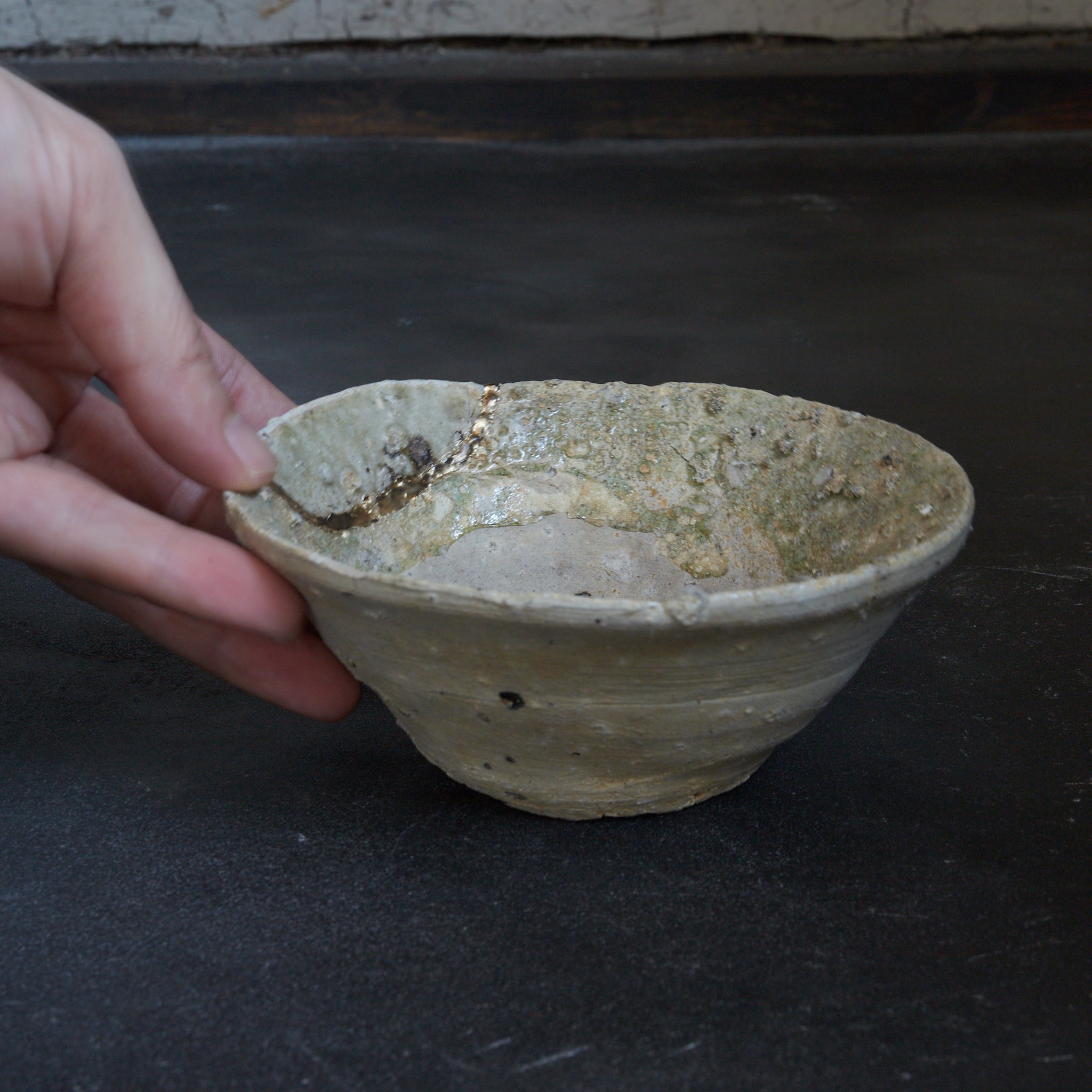
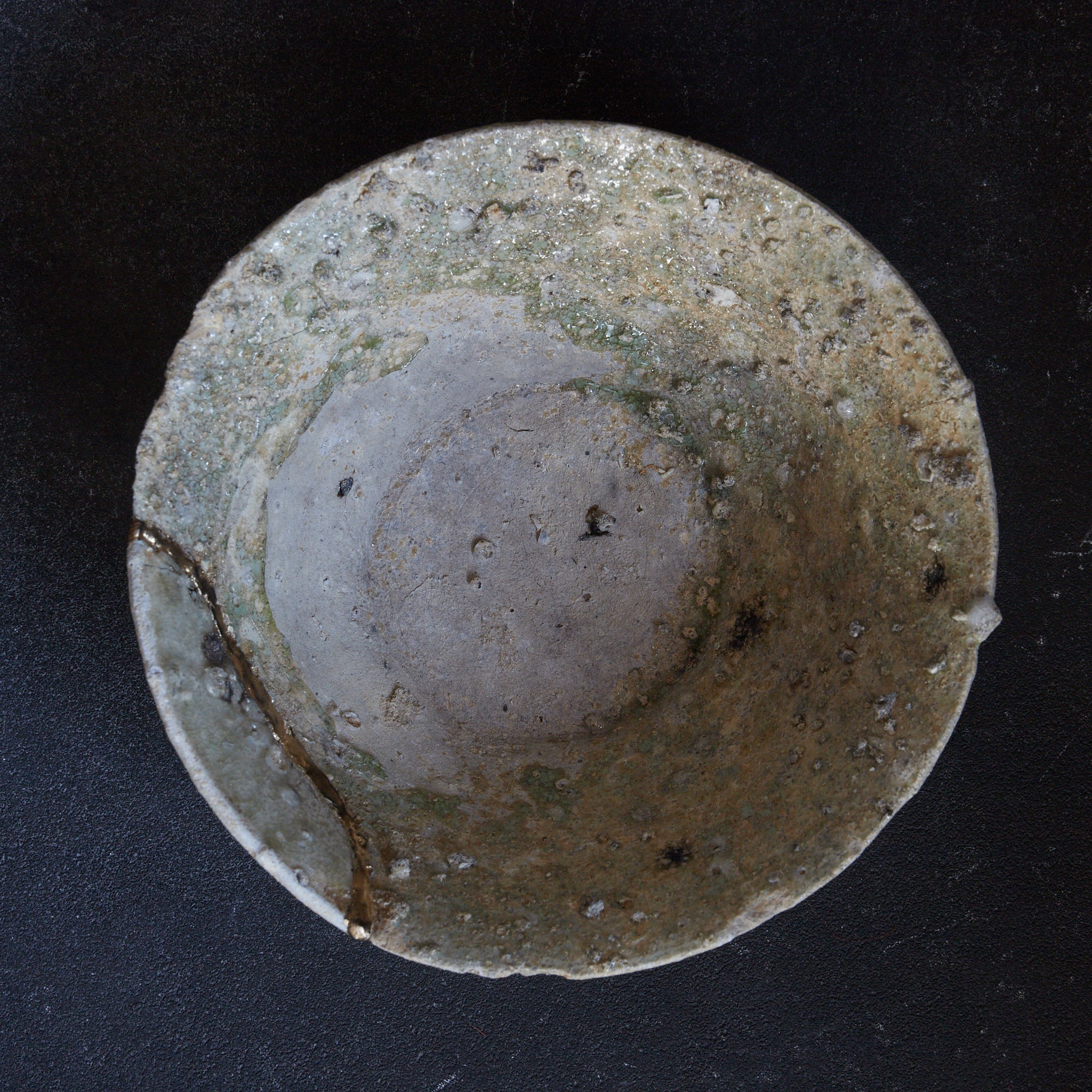
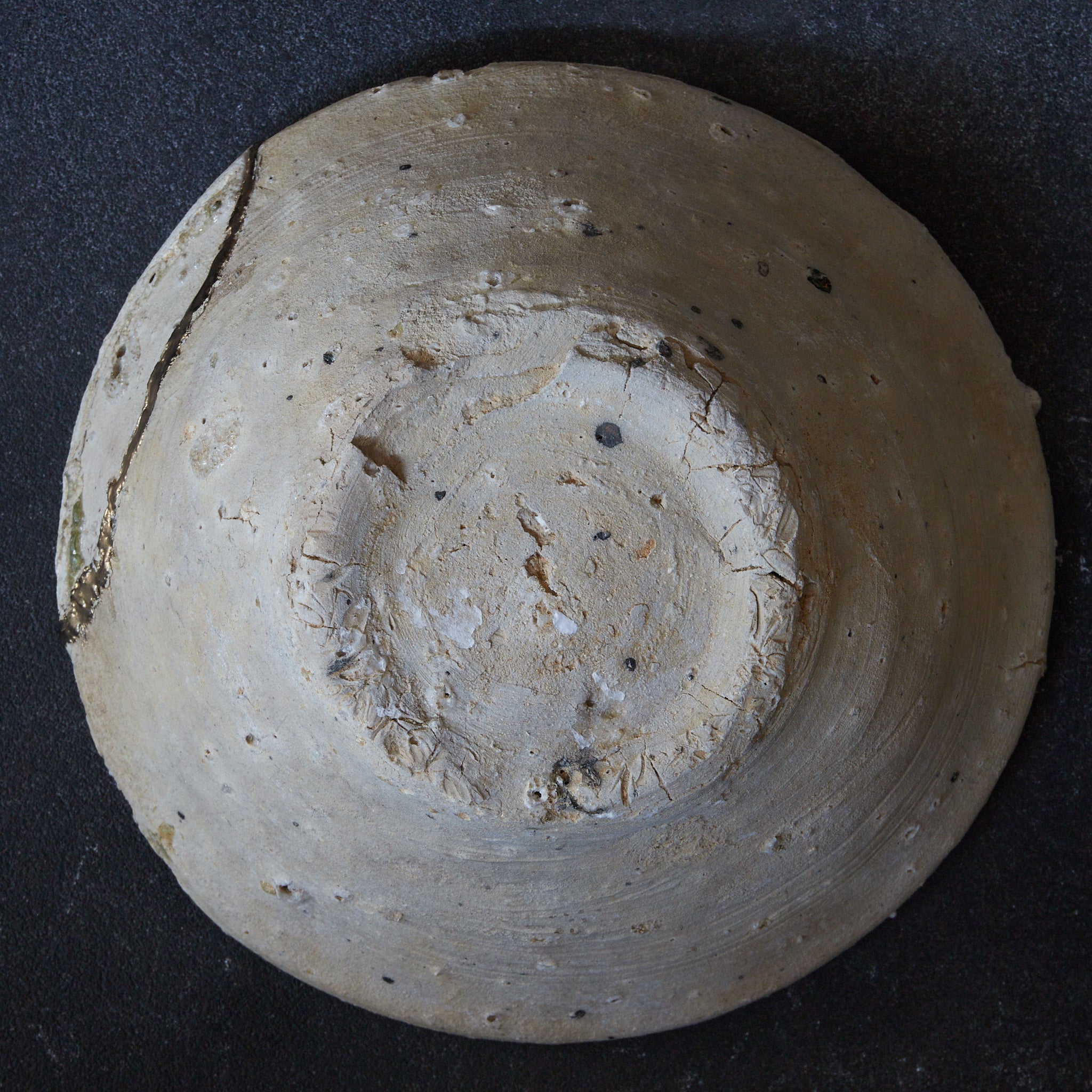
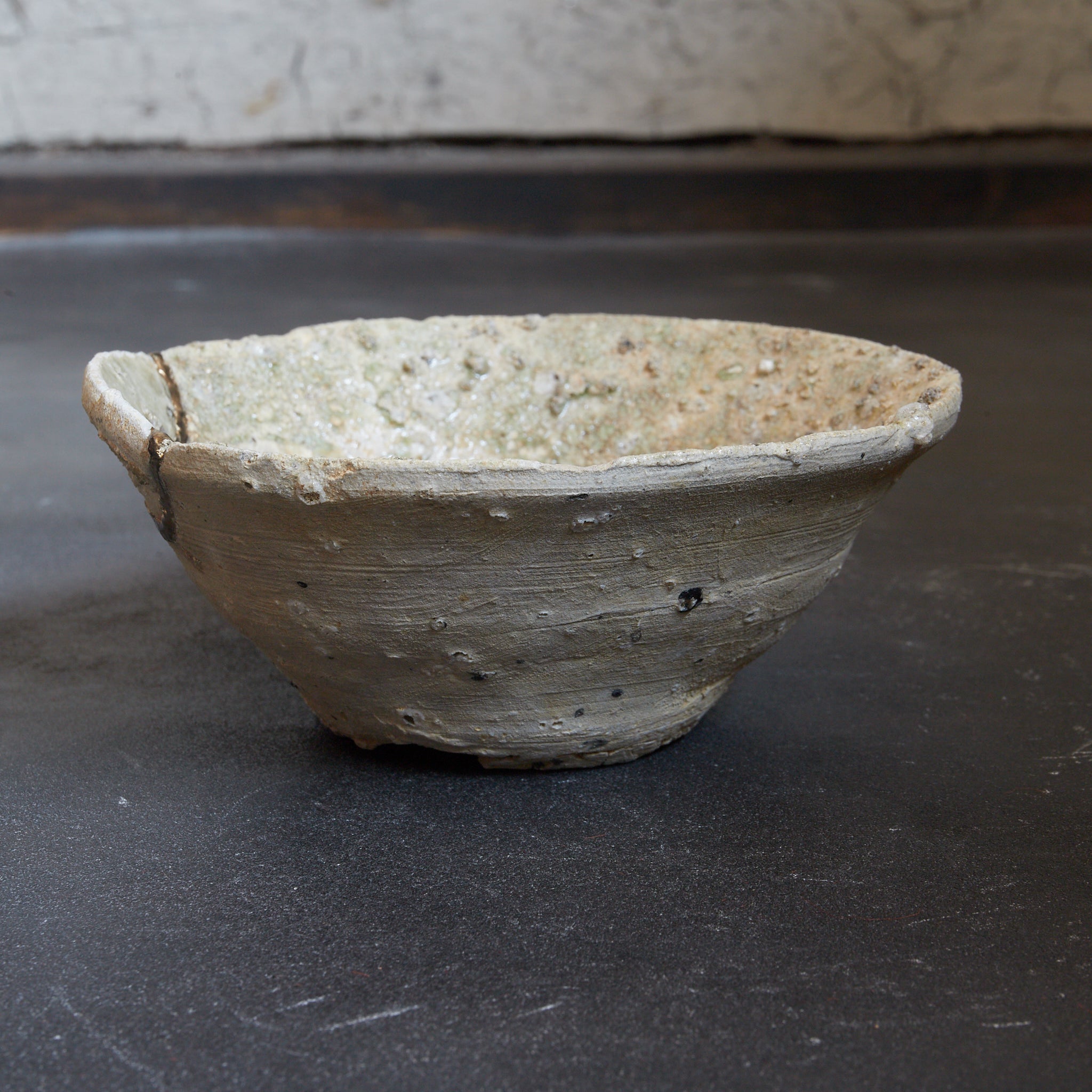
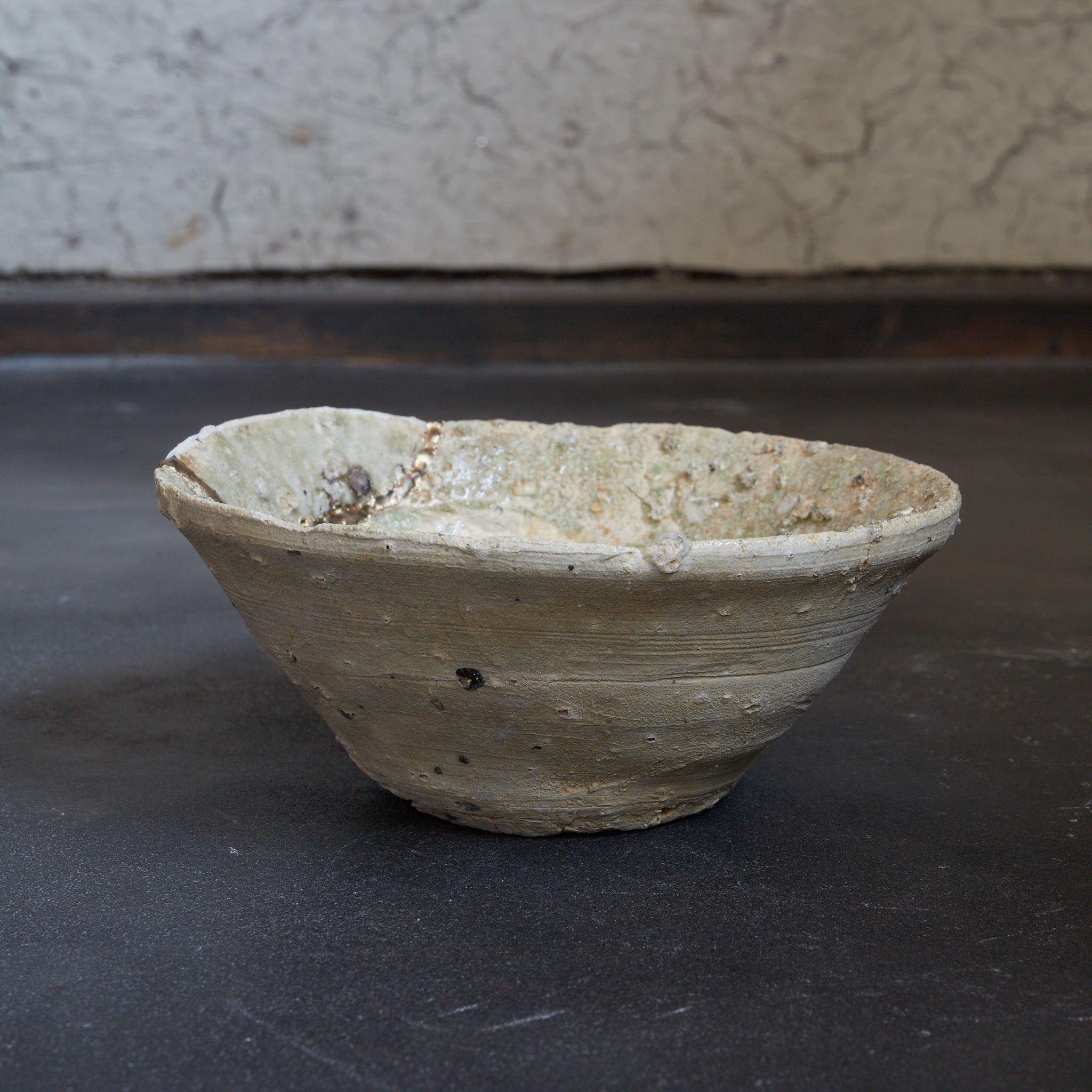
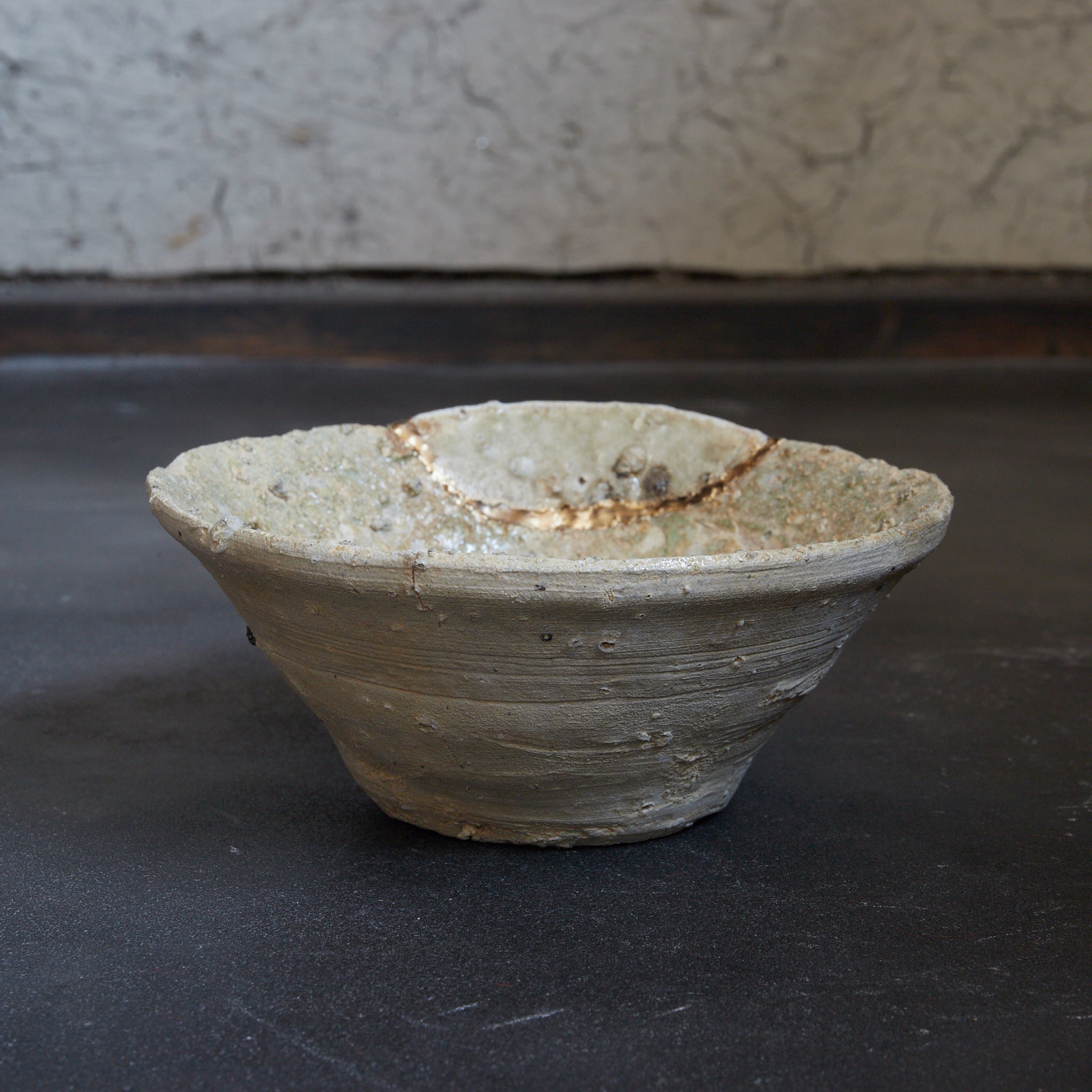
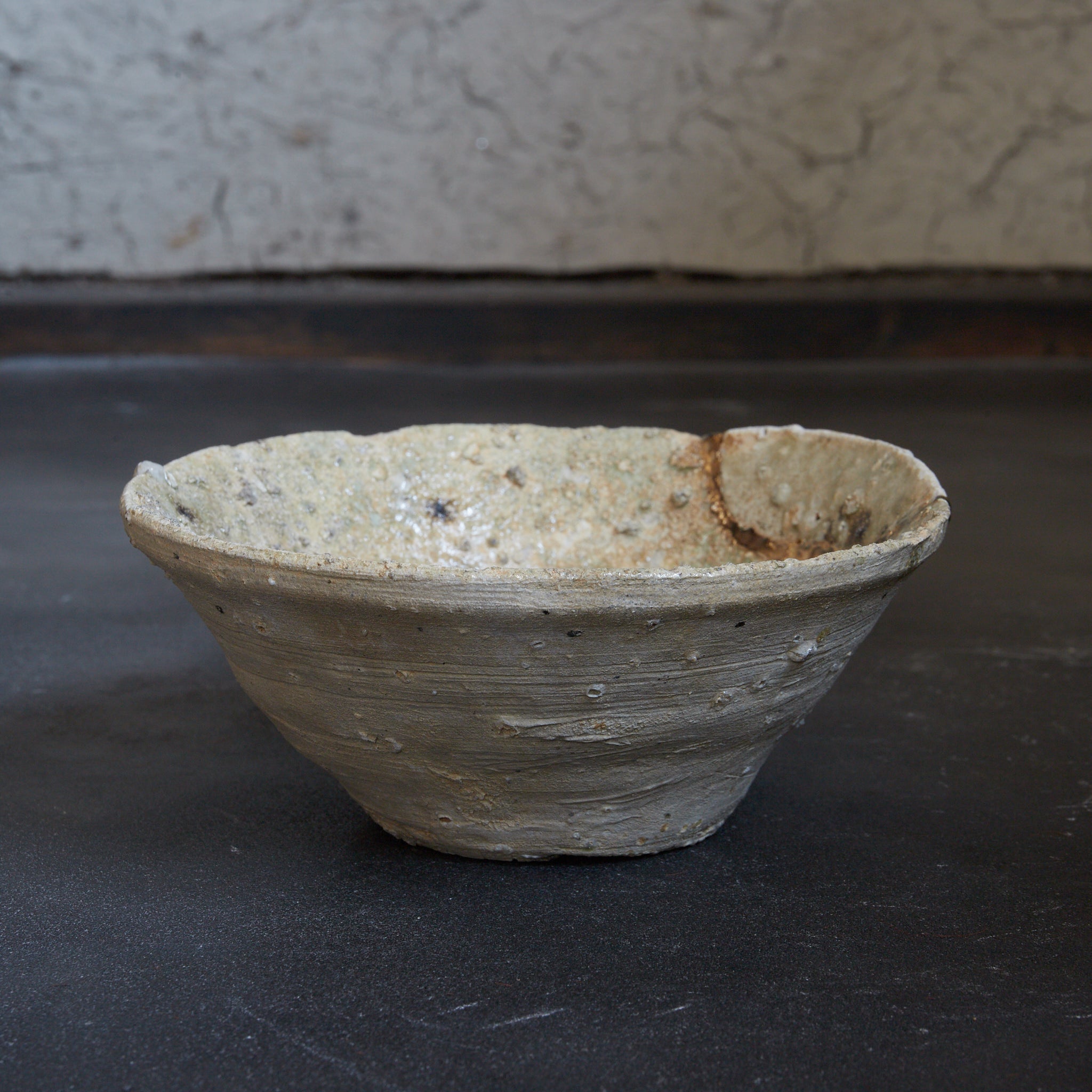
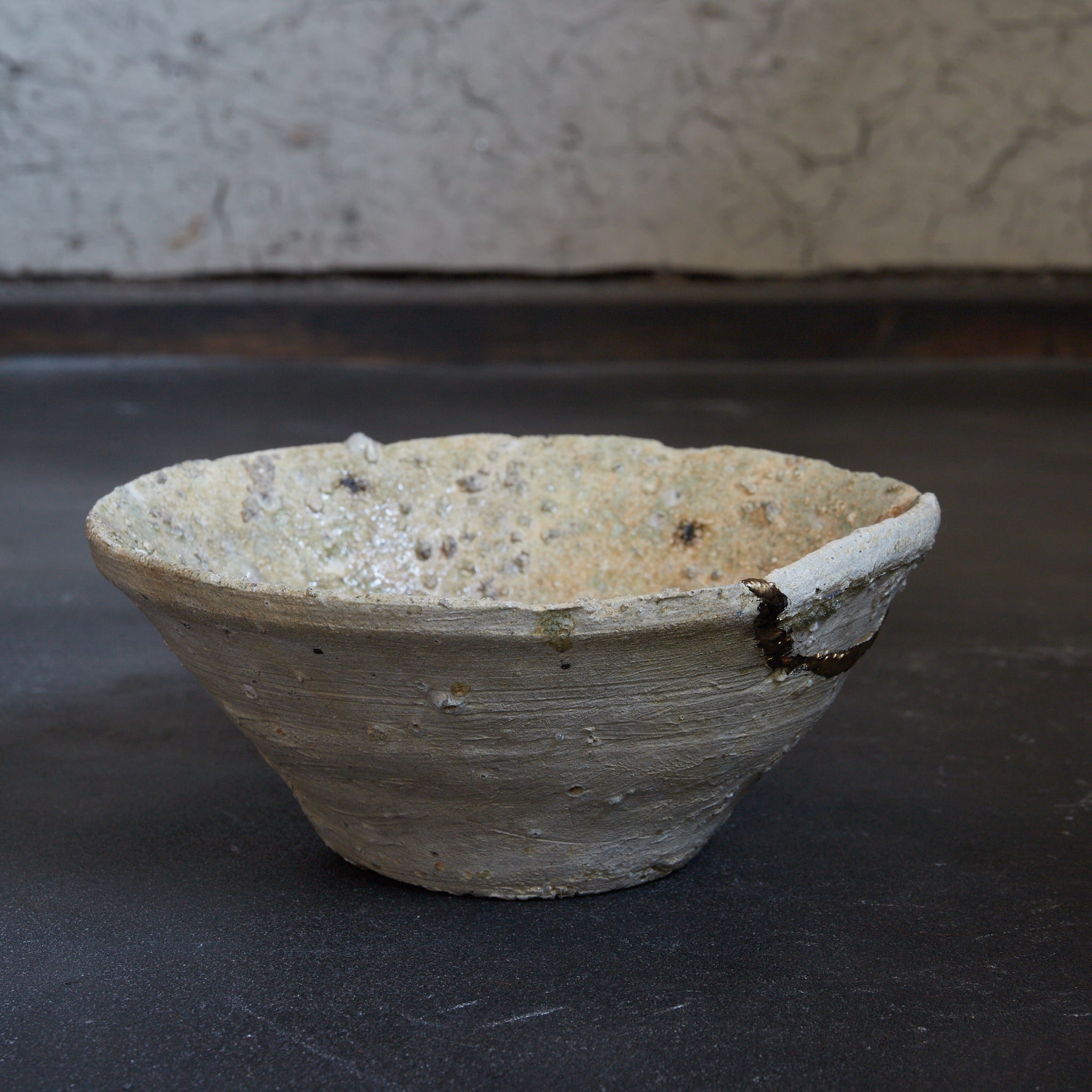
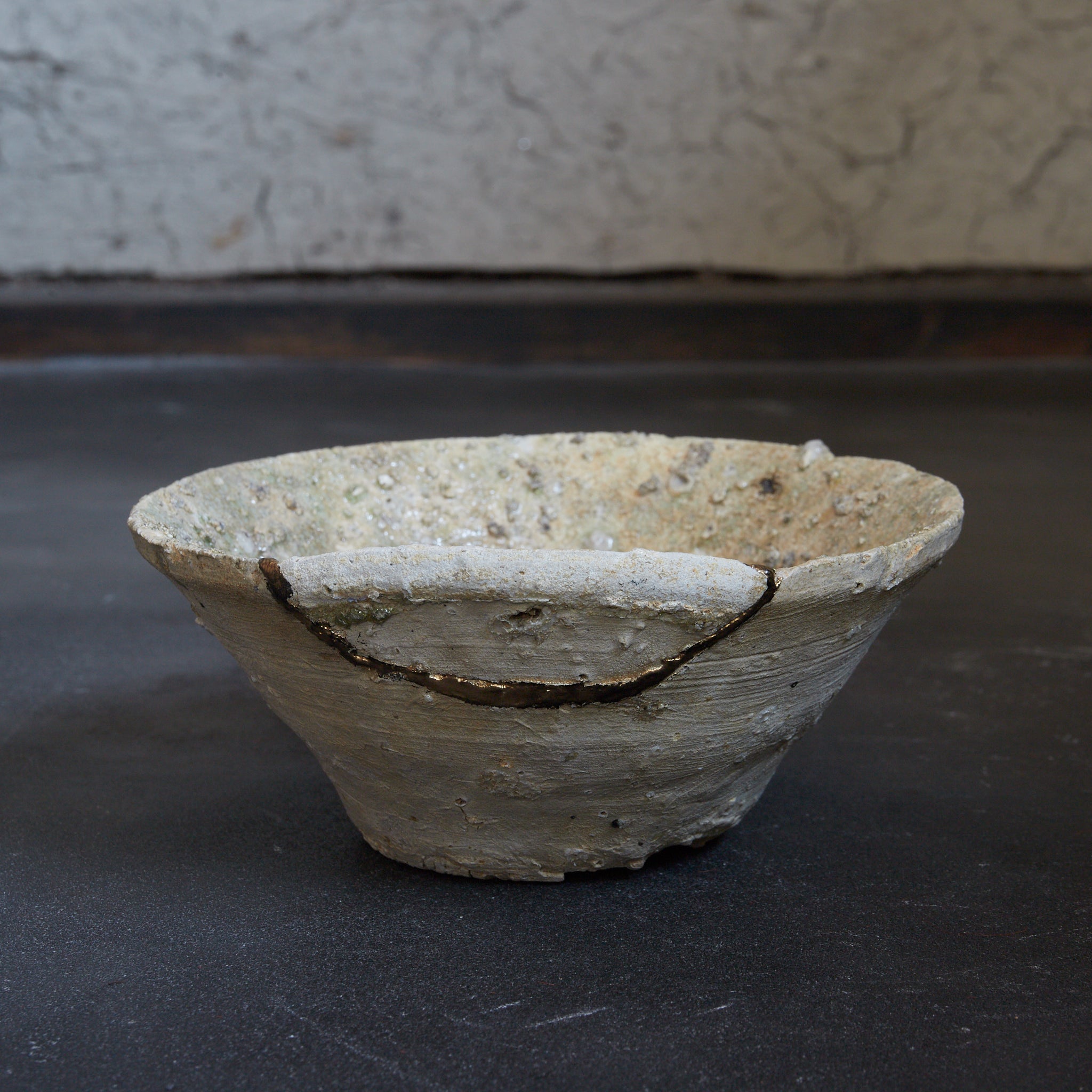
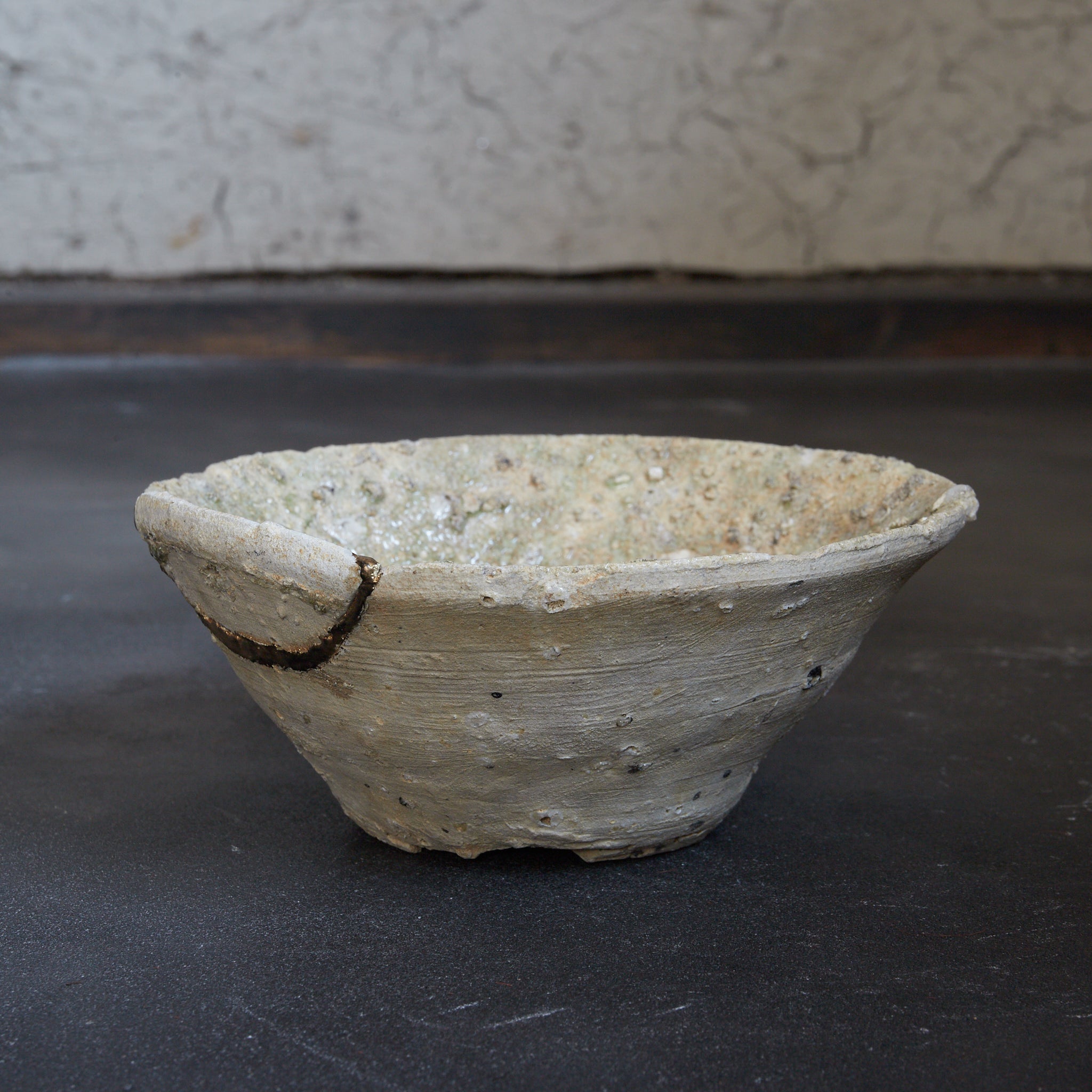
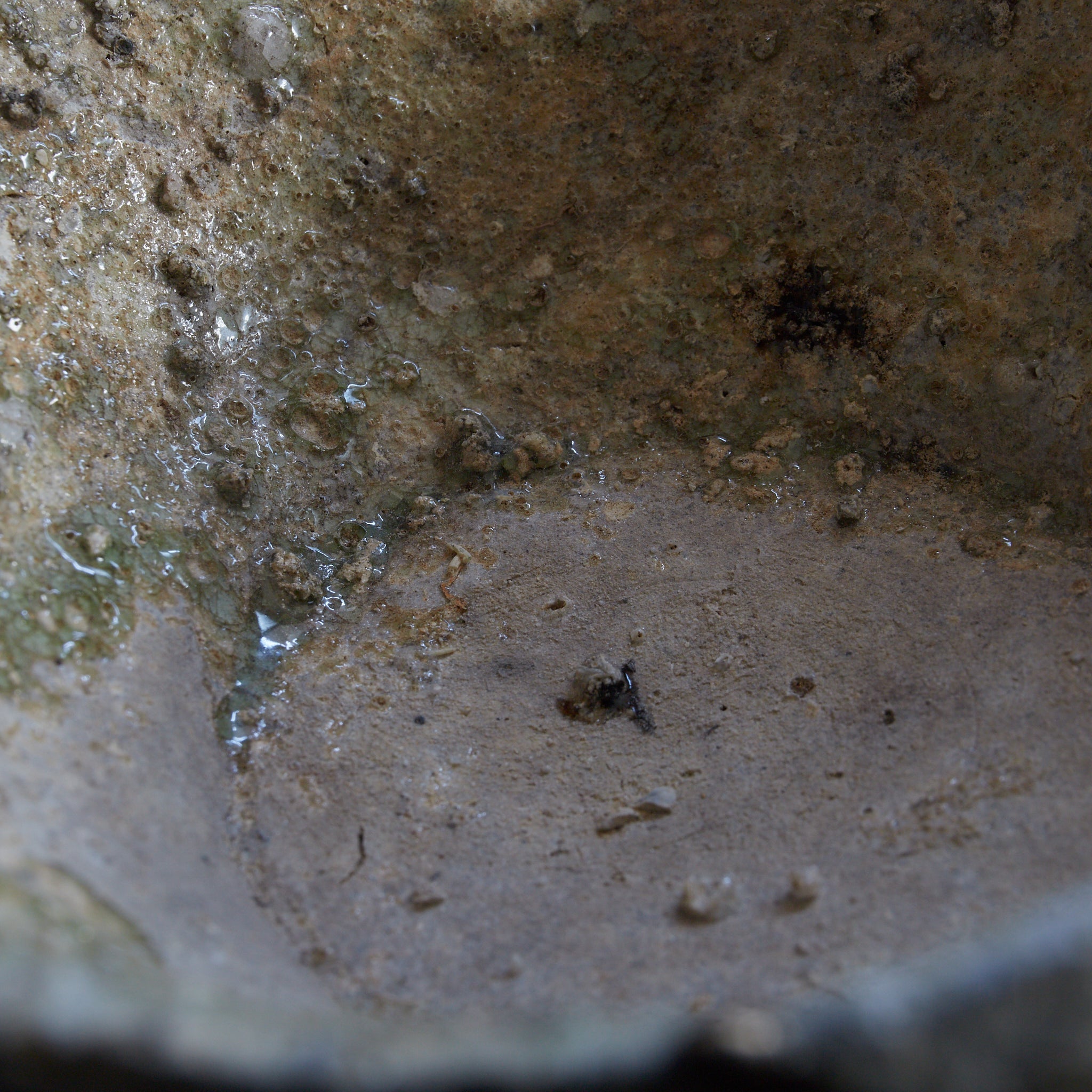
YAMACHAWAN (MOUNTAIN TEA BOWL), Sanage, ash-glazed, A, Kamakura Period (1185–1333 CE)
Tax excluded. Import duties may apply. Shipping costs are calculated at checkout.
However, we may respond individually to certain customers after reviewing the circumstances.
Please contact us for further details.
Shipping to the United Kingdom and Switzerland remains available.
Numerous product photos are available for you to examine the details and condition. Should you have any questions, please do not hesitate to contact us.
> Inquire about this productAn ash-glazed Sanage mountain tea bowl of the Kamakura Period (1185–1333 CE).
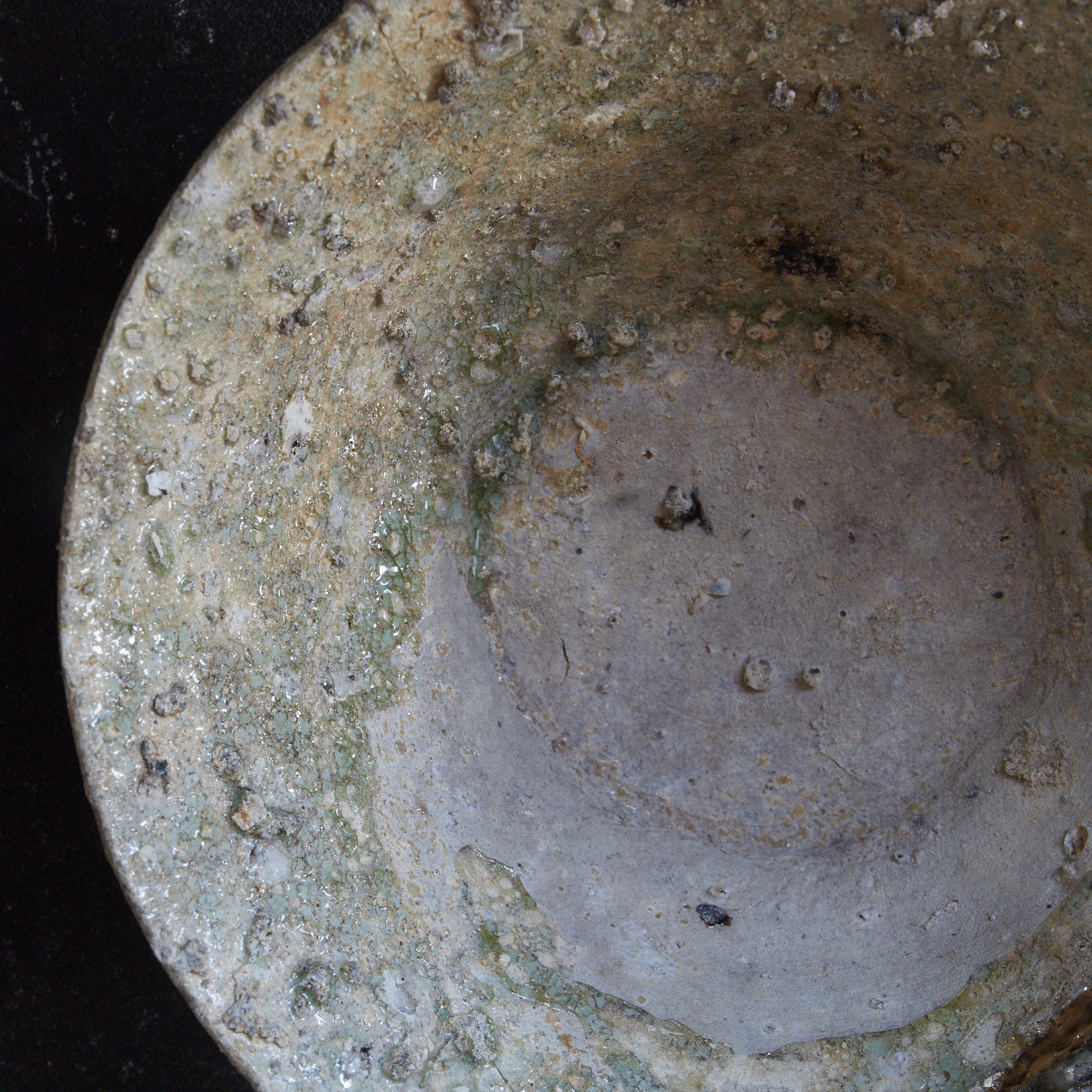
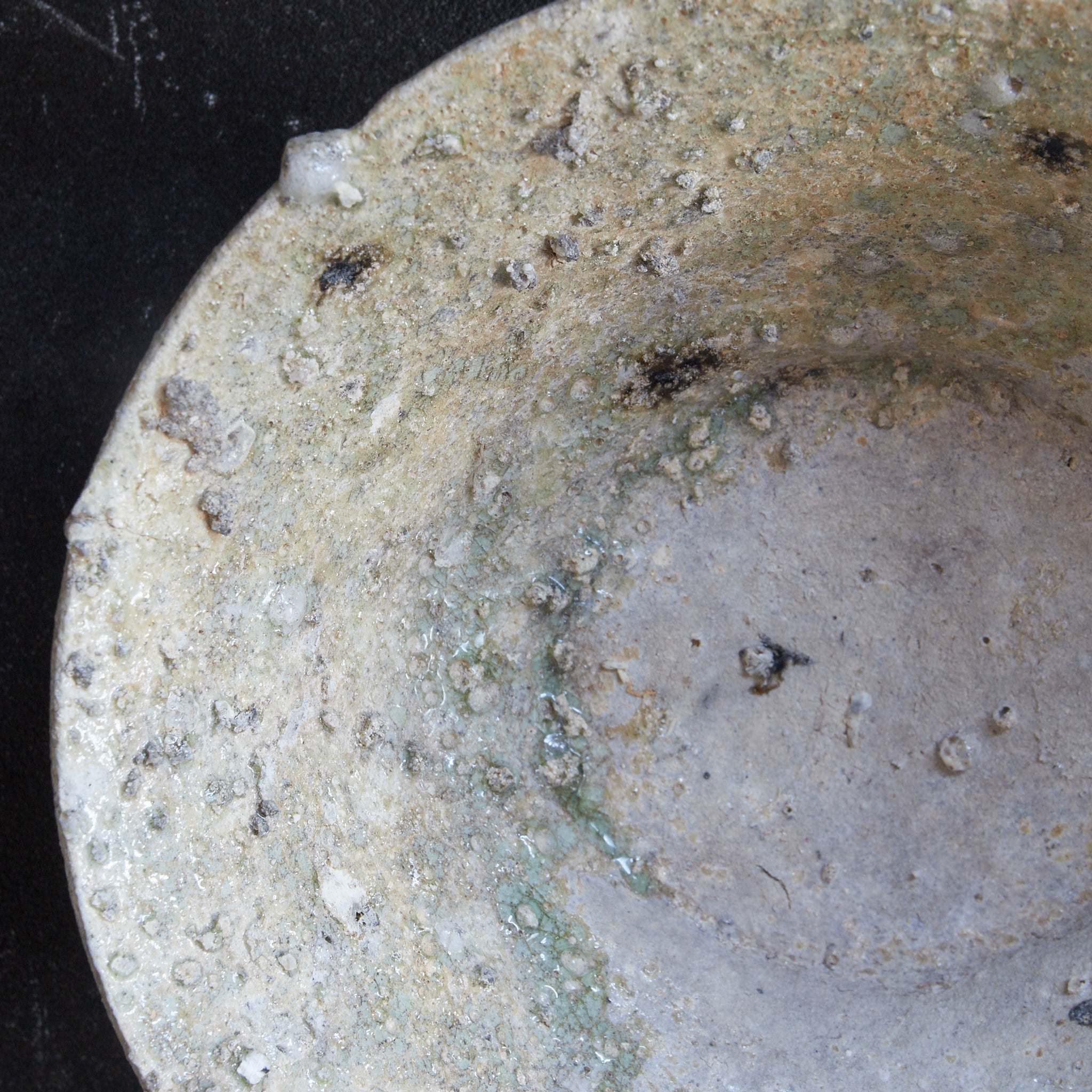
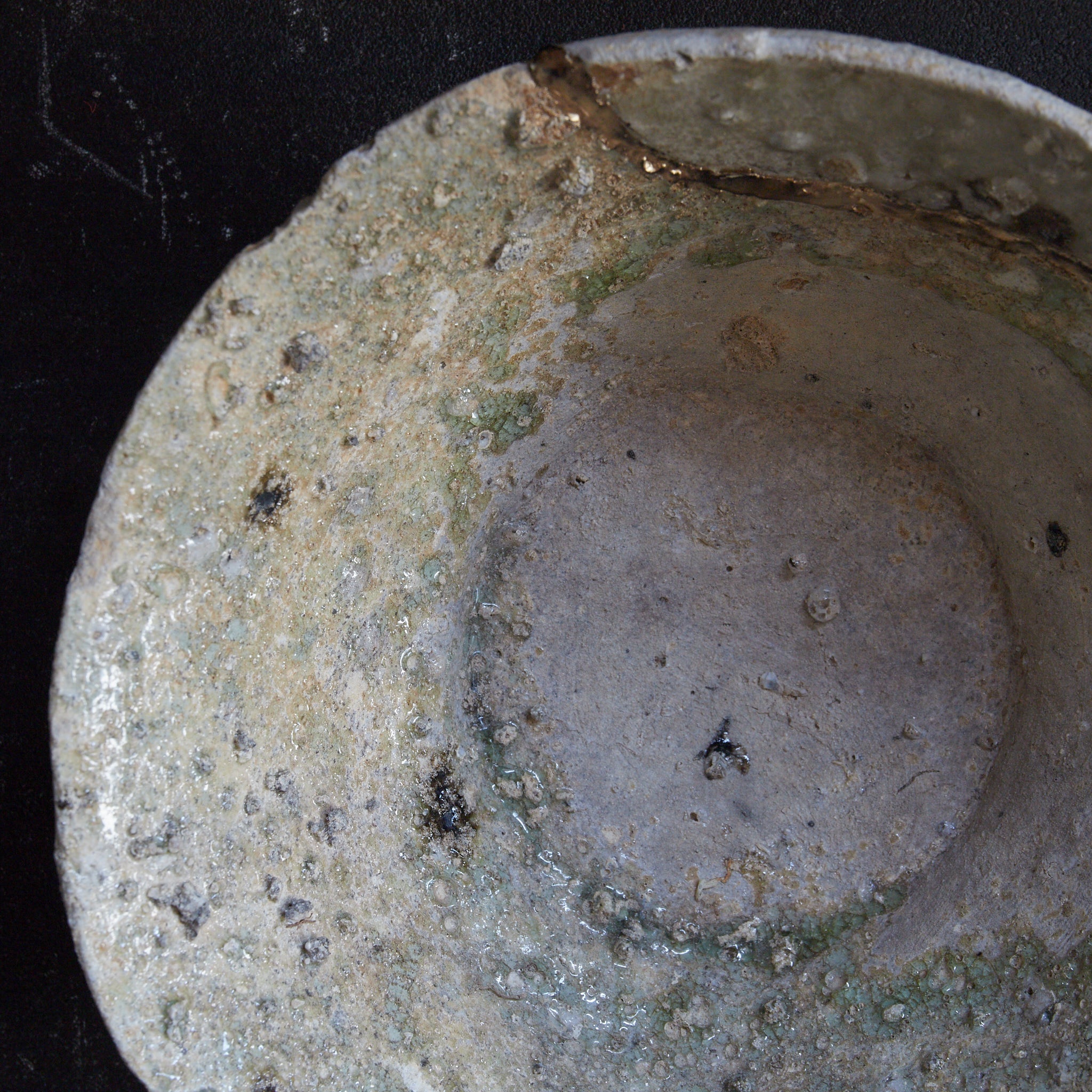
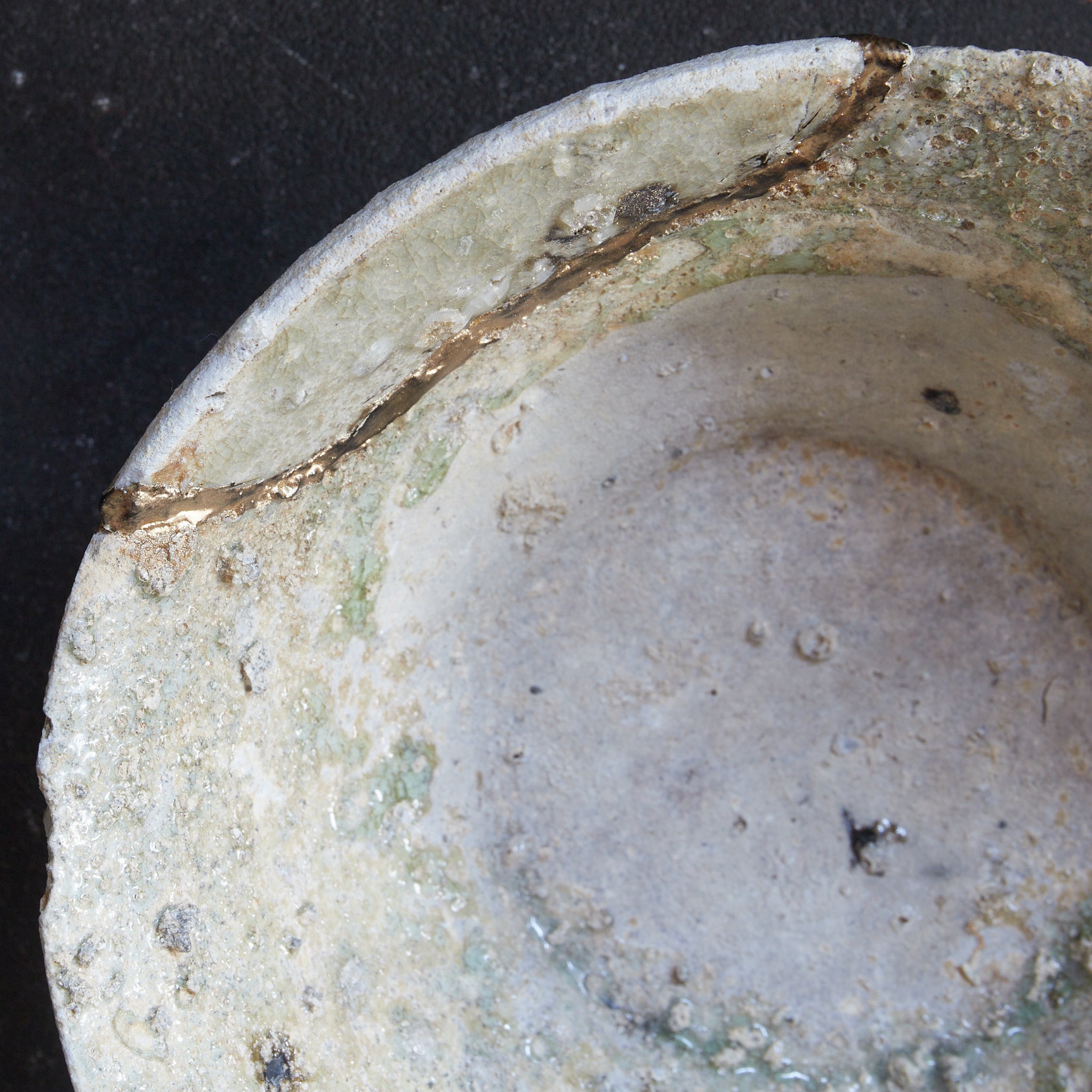
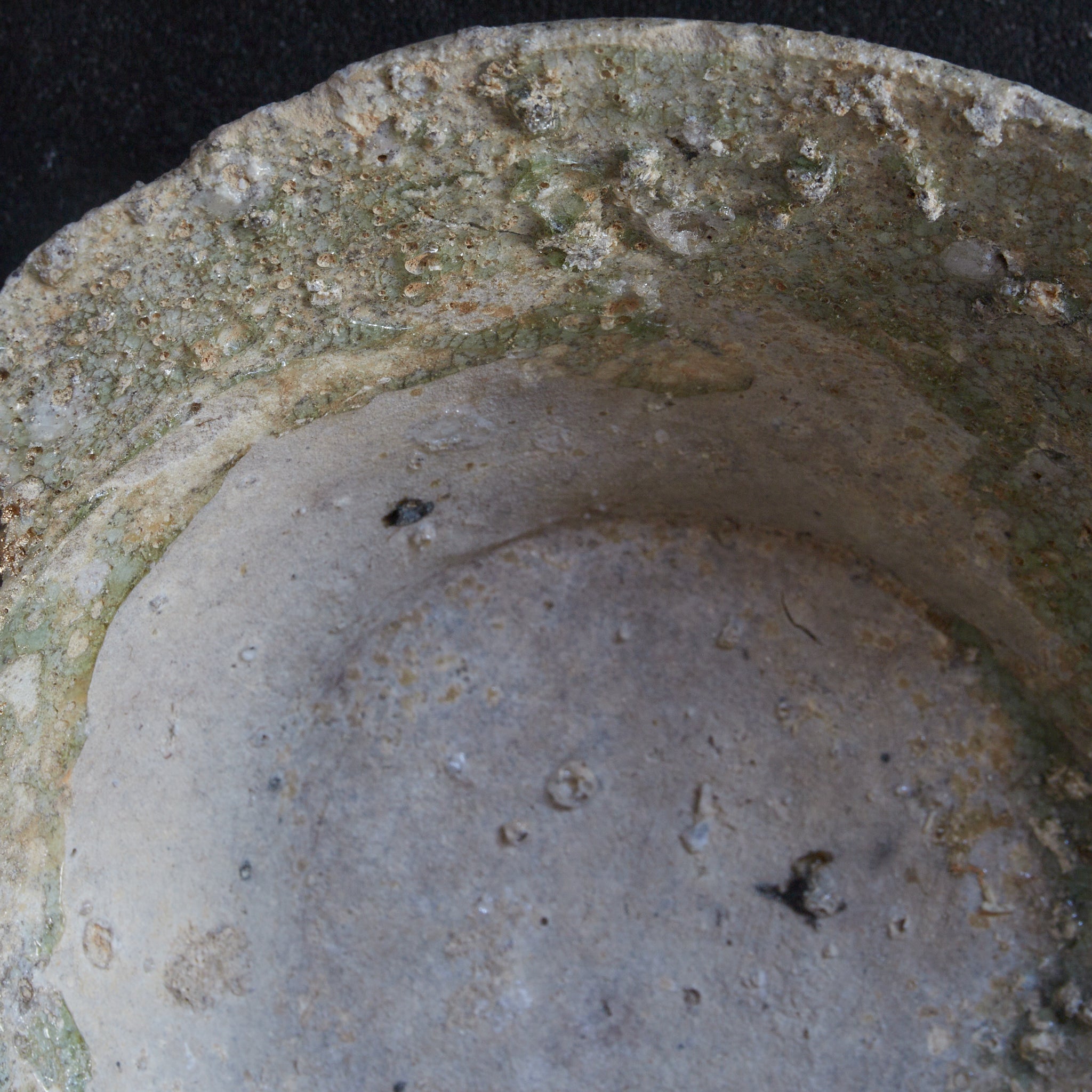
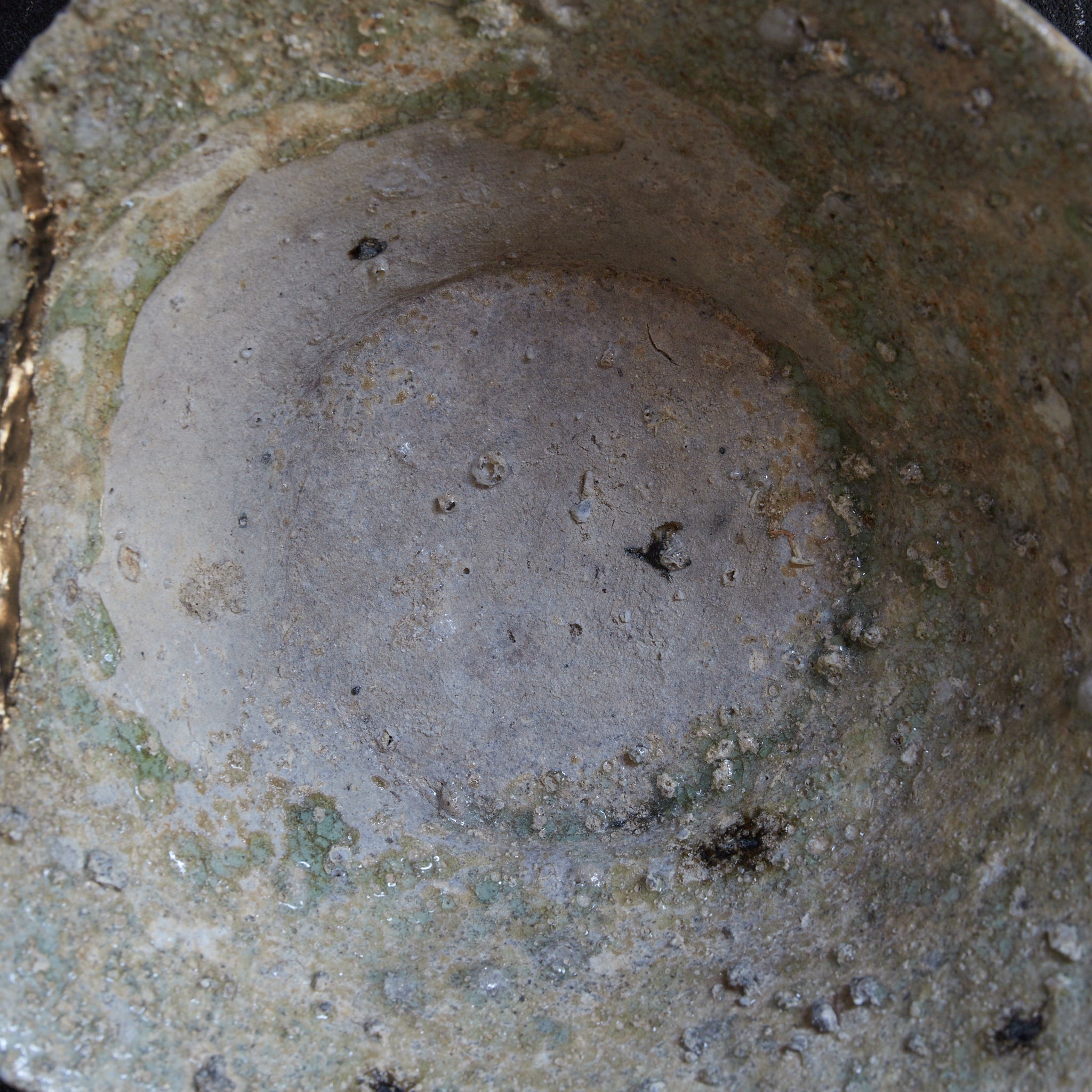
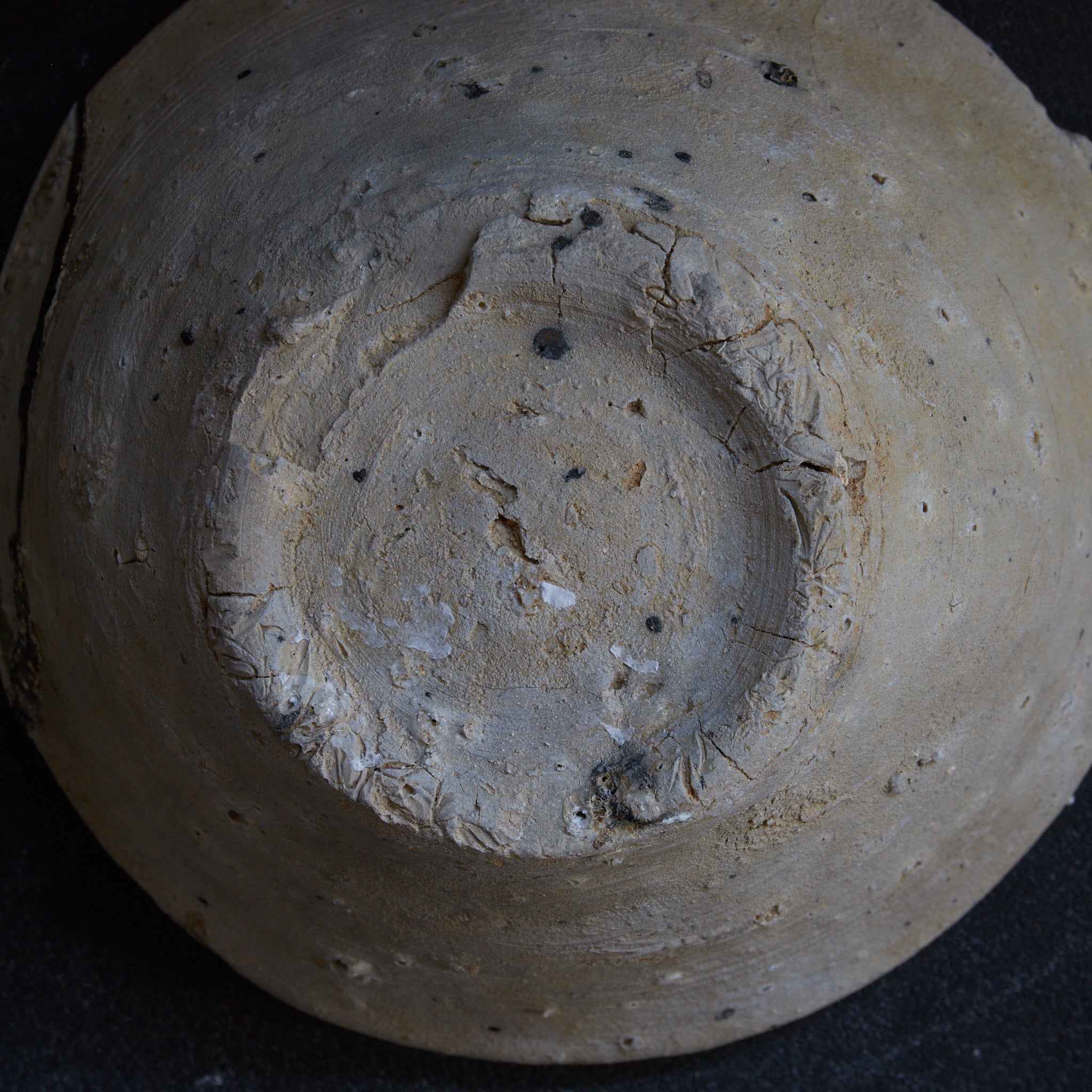
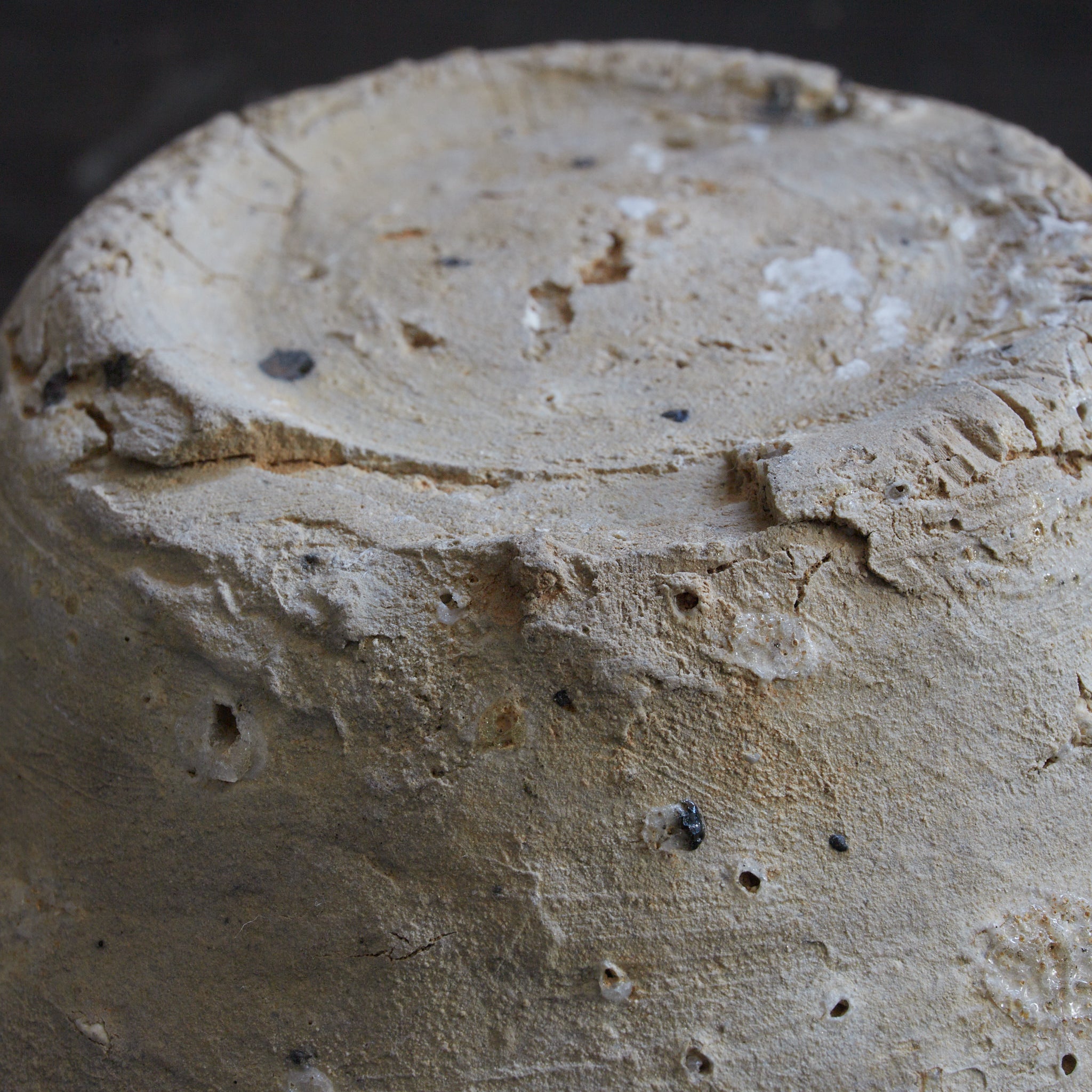
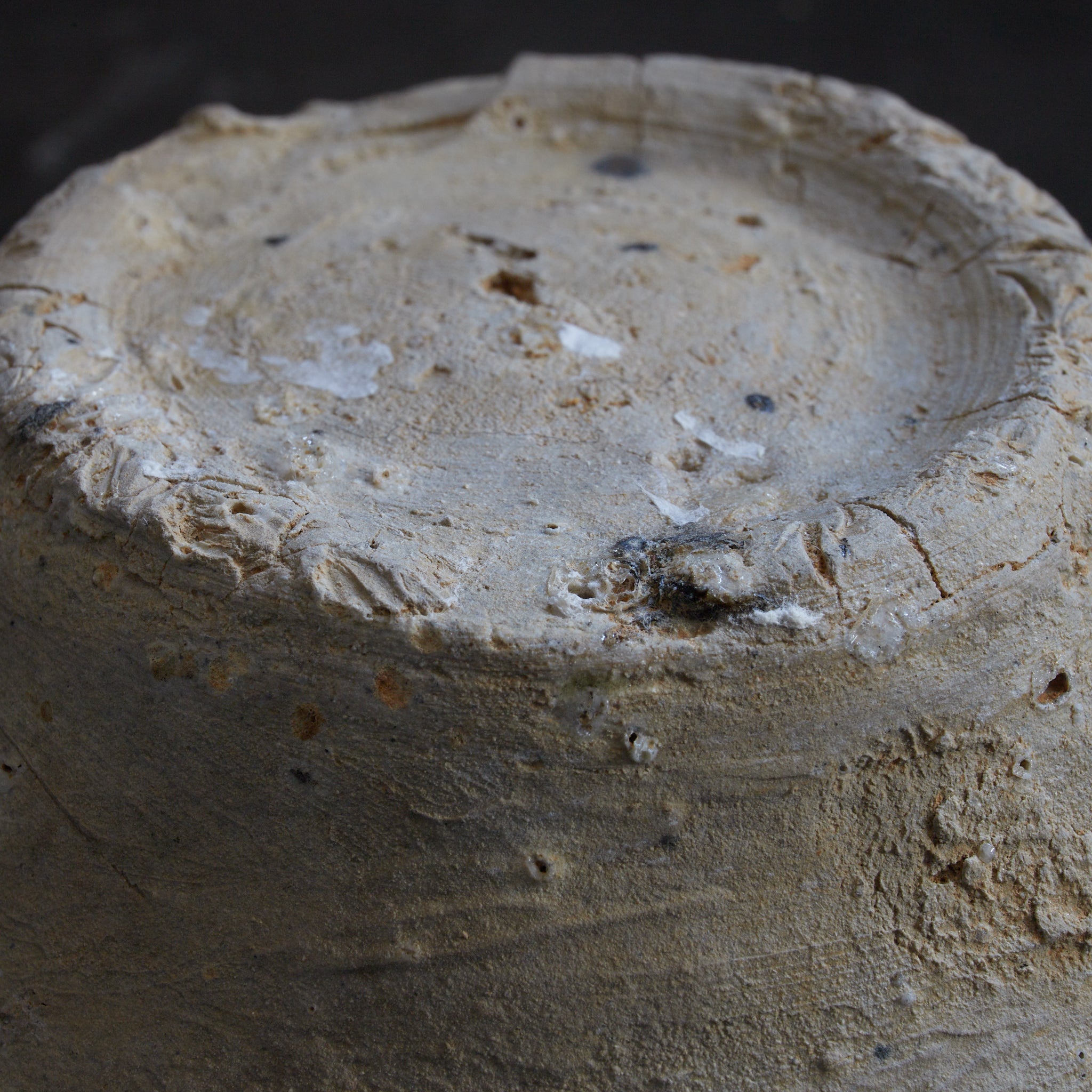
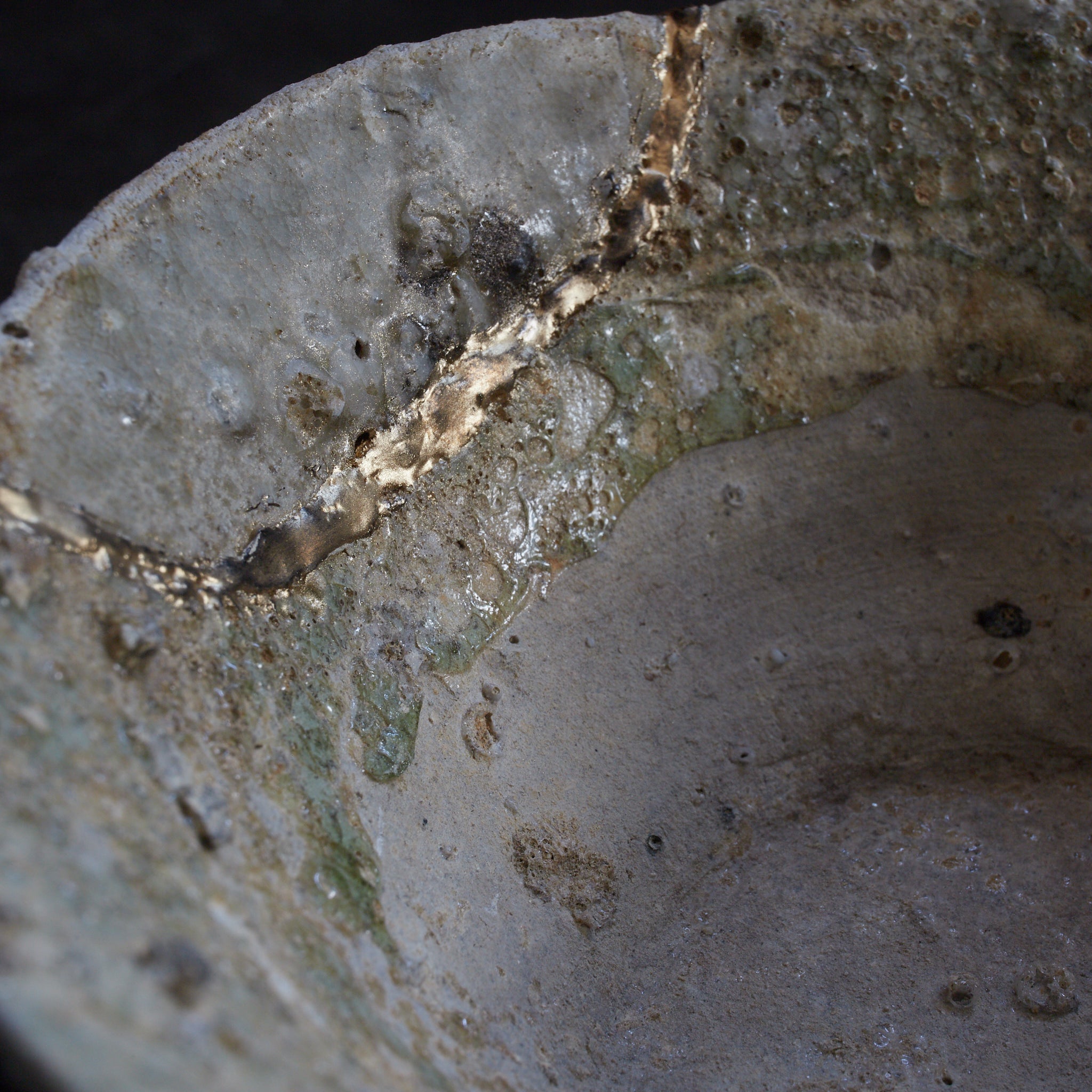
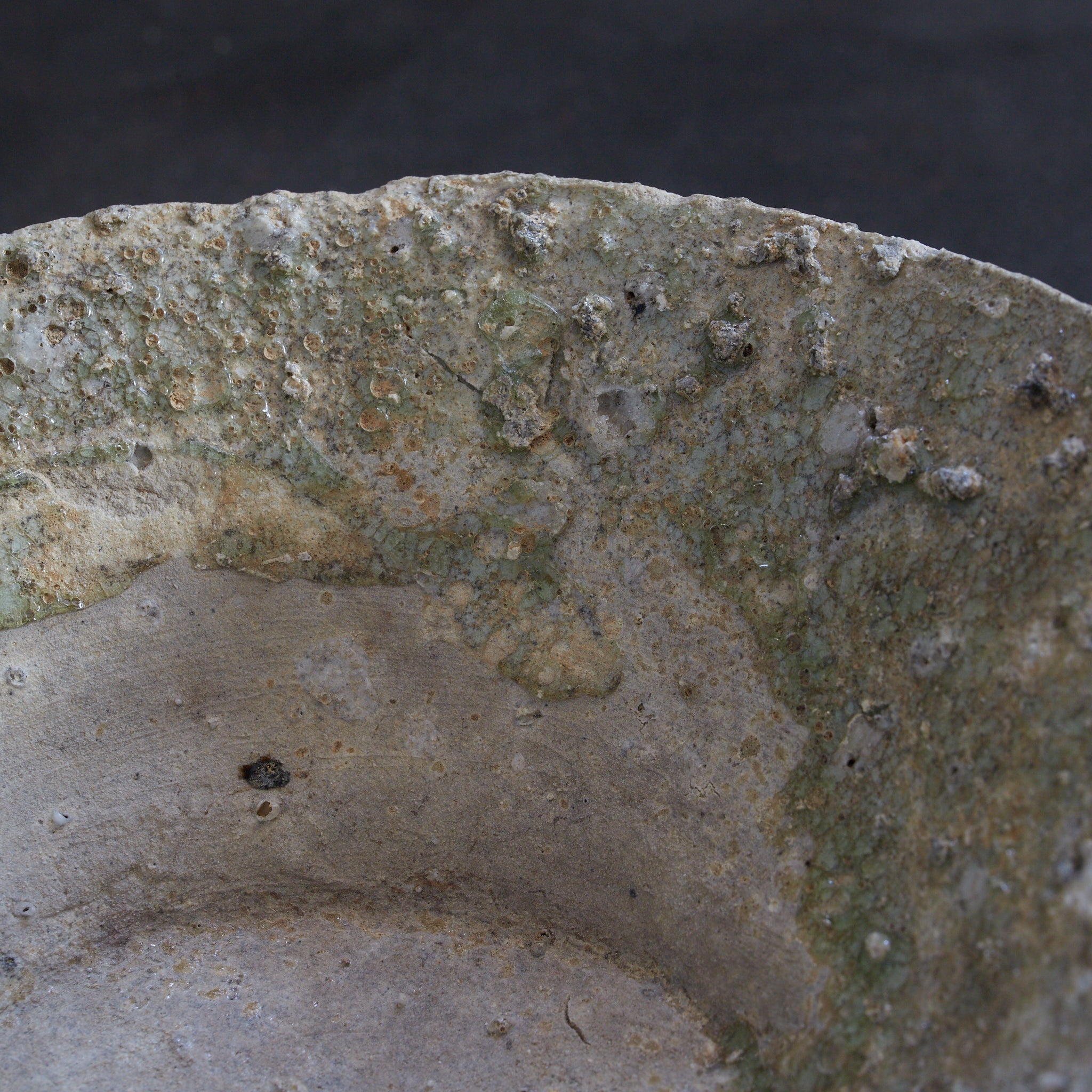
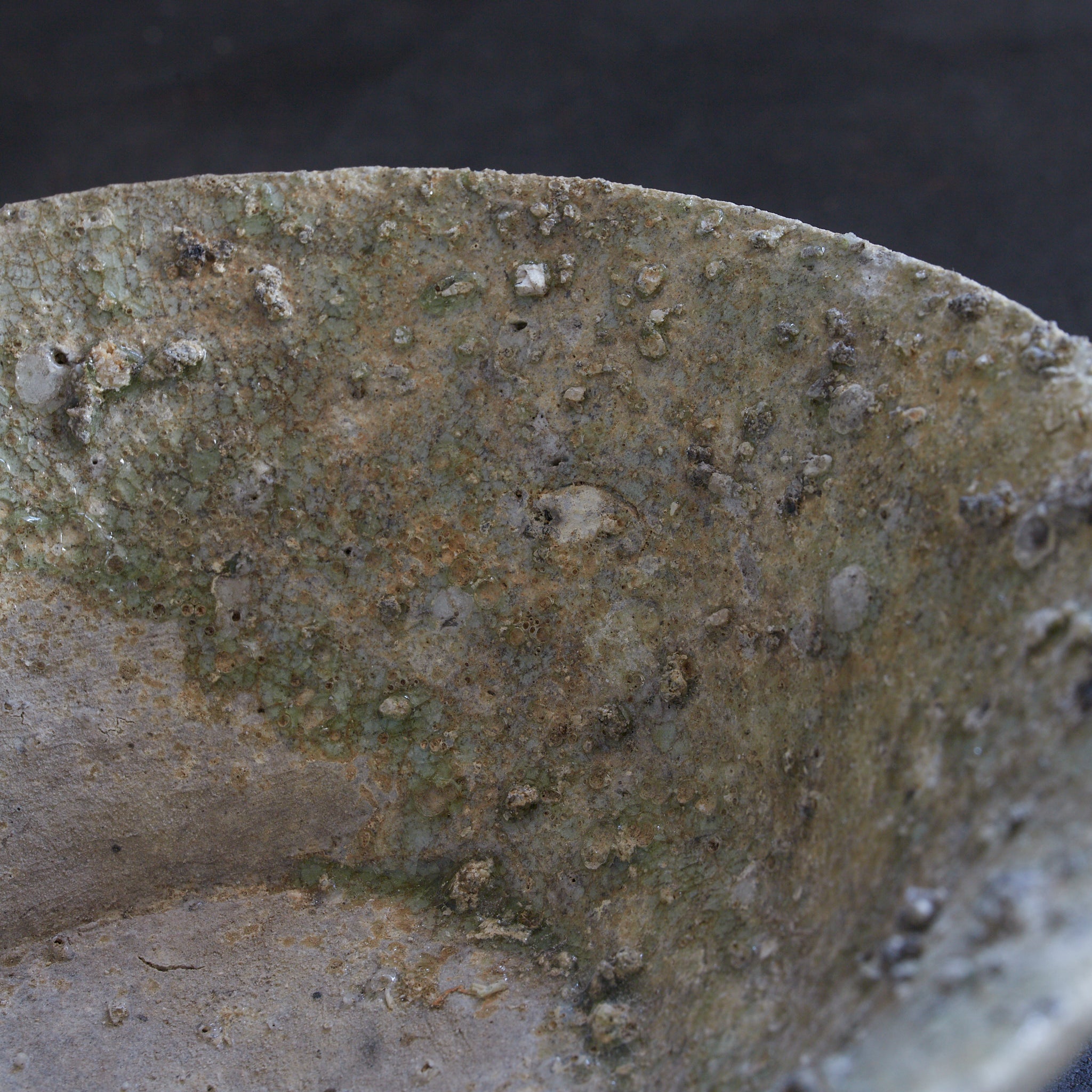
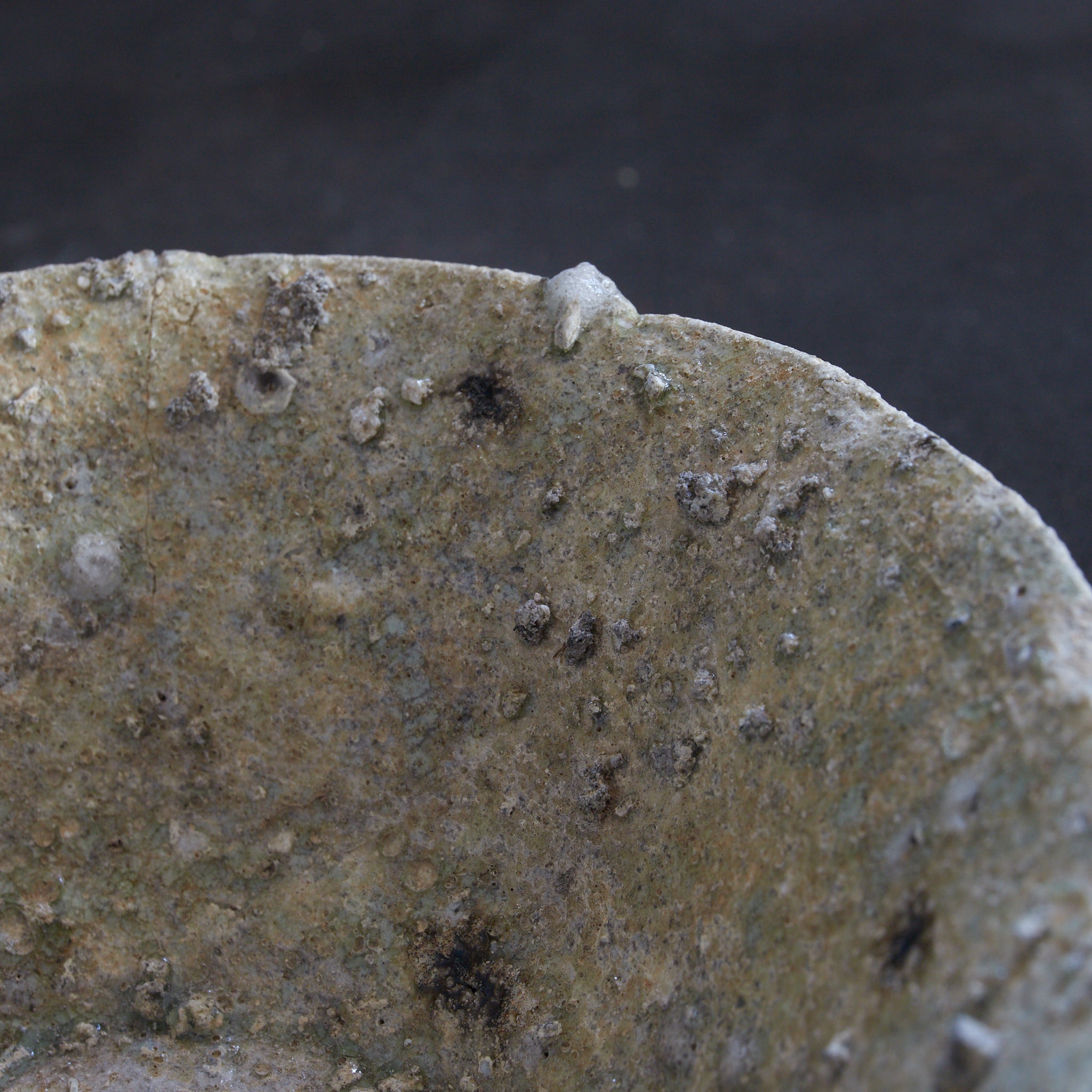
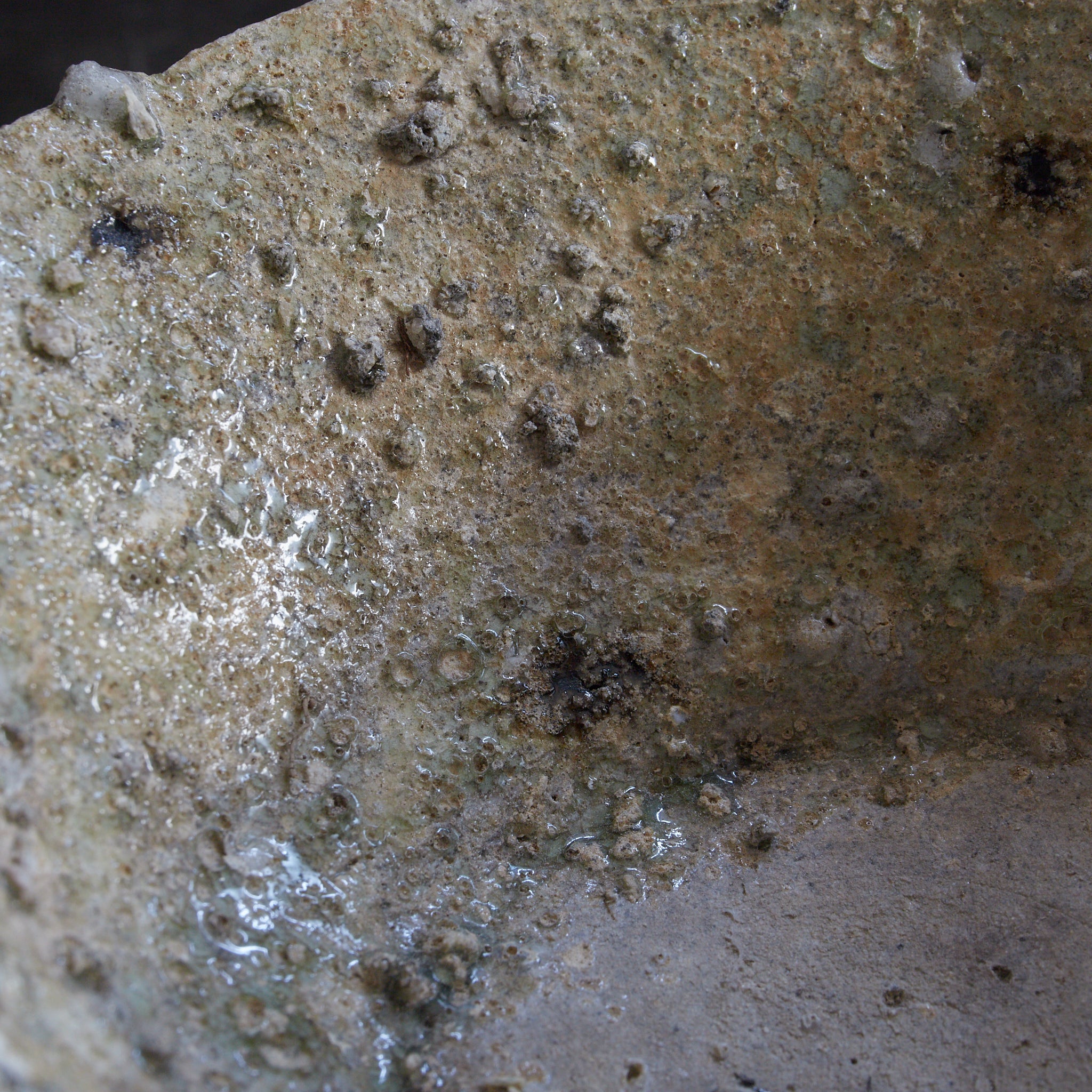
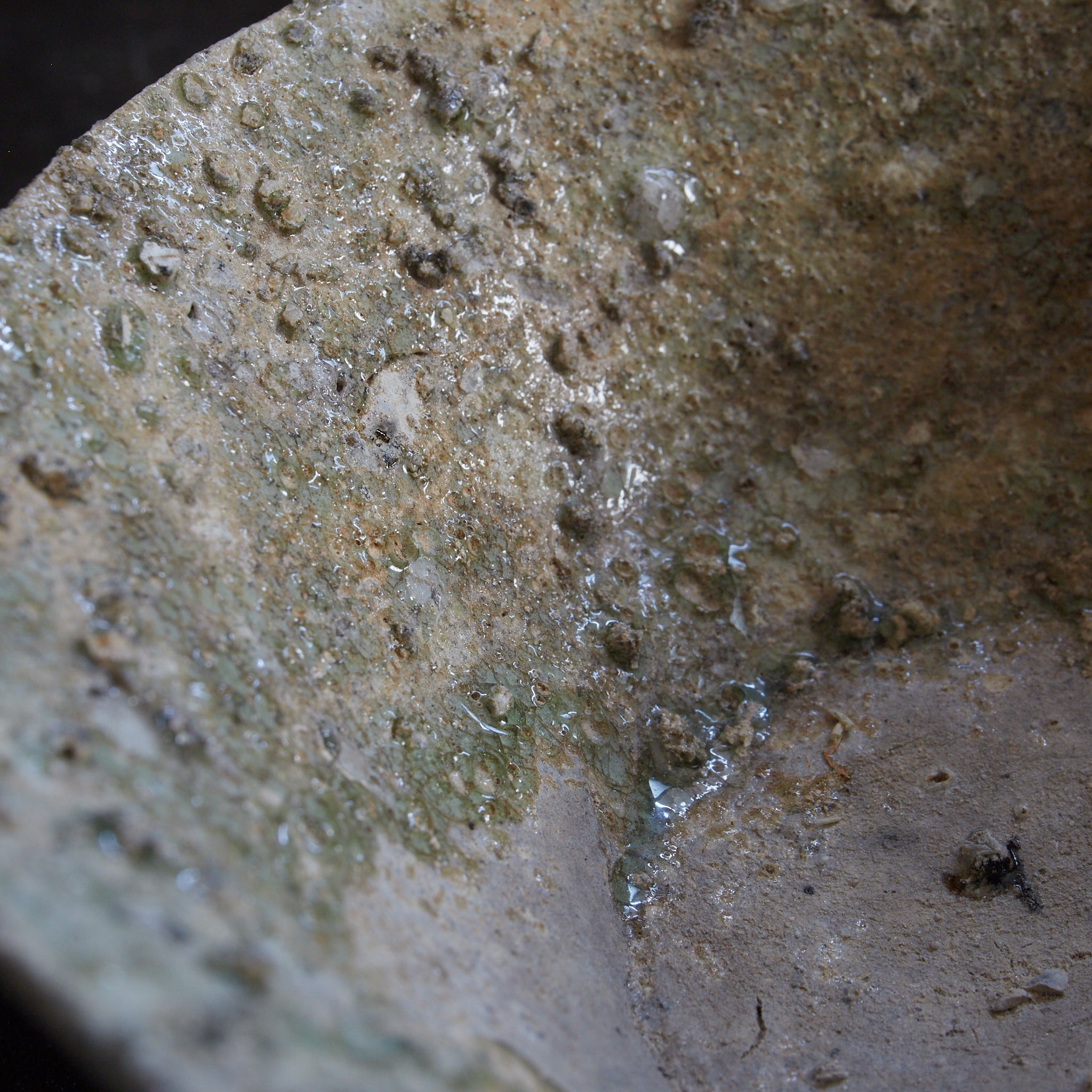
A shallow mountain tea bowl with a gently rising profile; wheel marks circle the exterior and the coarse texture of the clay remains evident. Width 13.3cm, height 6cm. The form is straightforward, typical of an everyday bowl, yet the interior shows a thickly melted ash glaze, producing a rough glaze surface distinct from that of ordinary mountain tea bowls.
The Sanage kilns form an ancient group of kilns extending from what is now eastern Aichi Prefecture into western Mikawa. Beginning with Sue ware in the Kofun period, they produced ash‑glazed and green‑glazed ceramics in the Heian period and, in the medieval era, shifted to the production of mountain tea bowls. Kamakura‑period mountain tea bowls are plain, utilitarian vessels; those that received ash during firing often show natural glaze or ash‑glaze–like melting from the kiln.
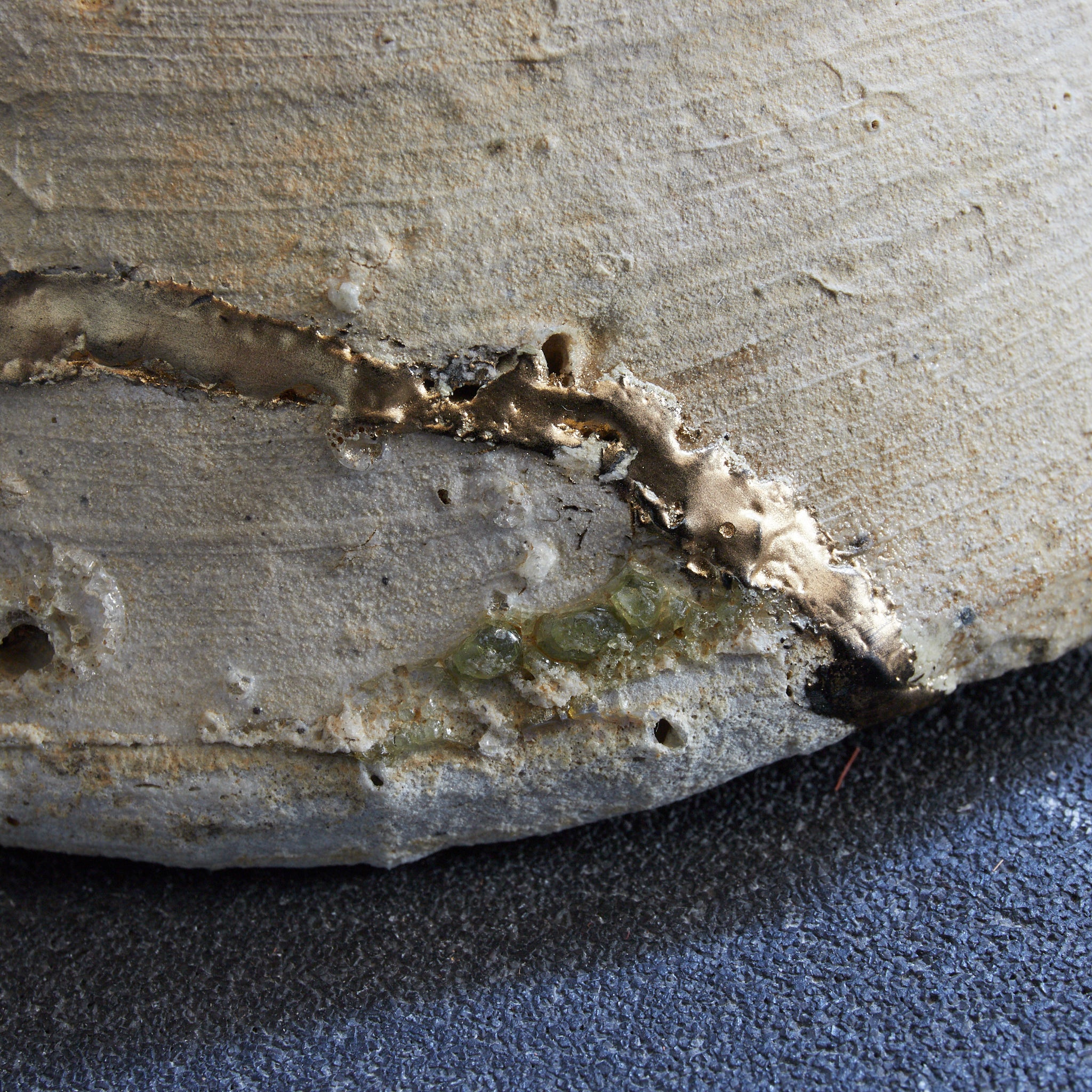
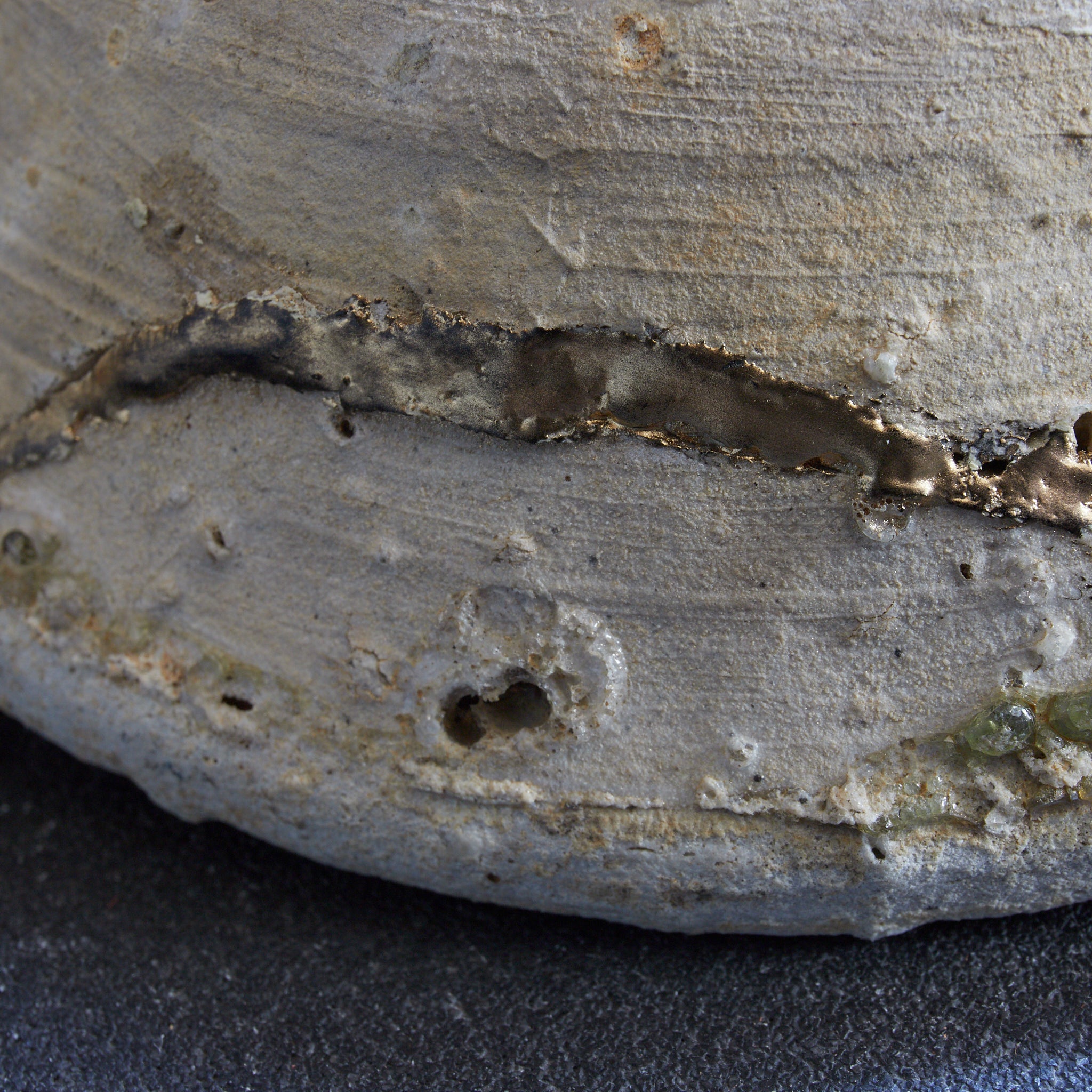
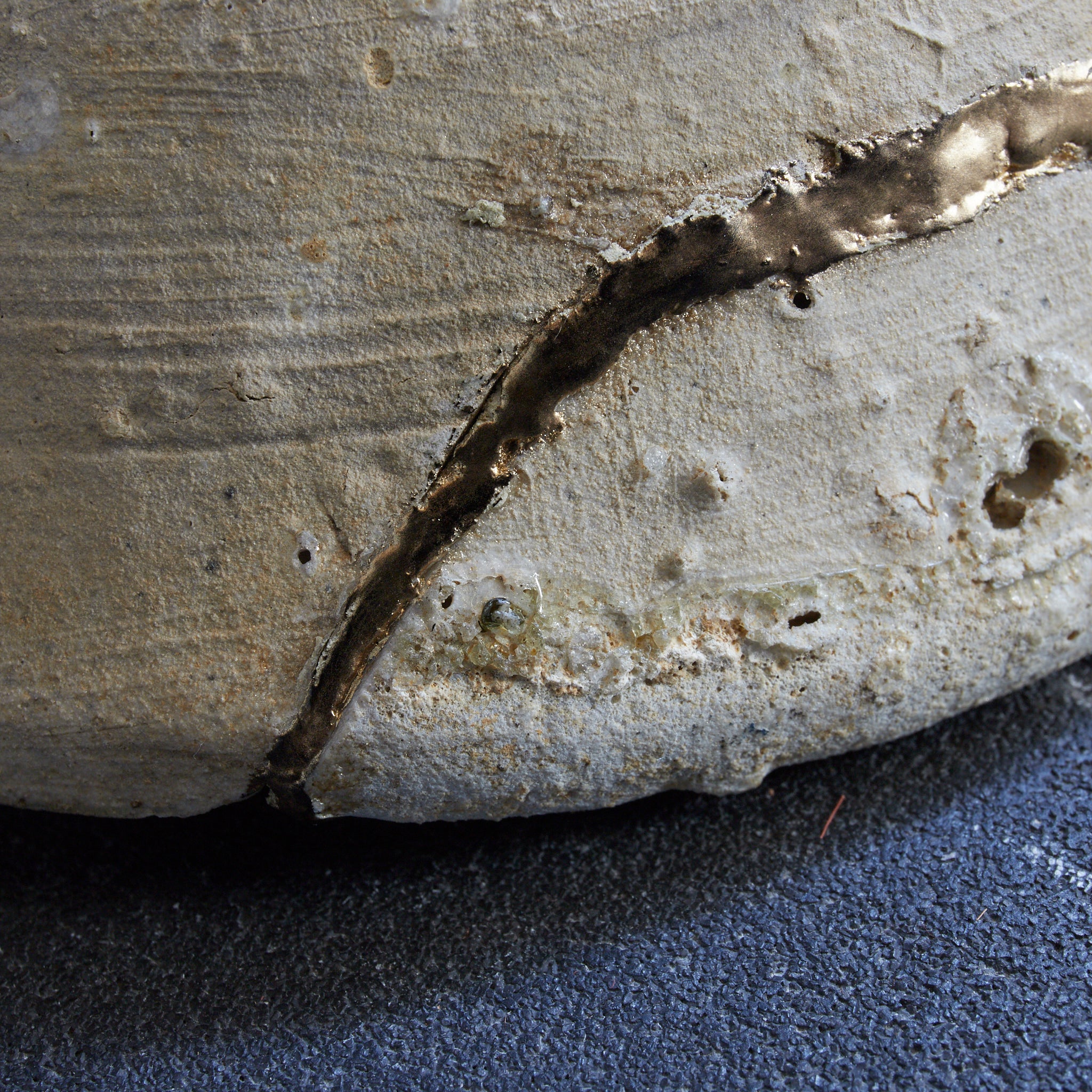
This piece was fired near the kiln crown, and ash glaze has flowed thickly from the bowl’s well toward the rim. Pale gray-green, yellow-tinged white, and the color of fired clay mingle, and the interior shows granules of glaze and pebble-like accretions. The exterior is sparingly glazed, leaving wheel marks and the clay surface visible. A portion of the rim has been rejoined and repaired with kintsugi.
Choose options
Tax excluded. Import duties may apply. Shipping costs are calculated at checkout.
Change language
