

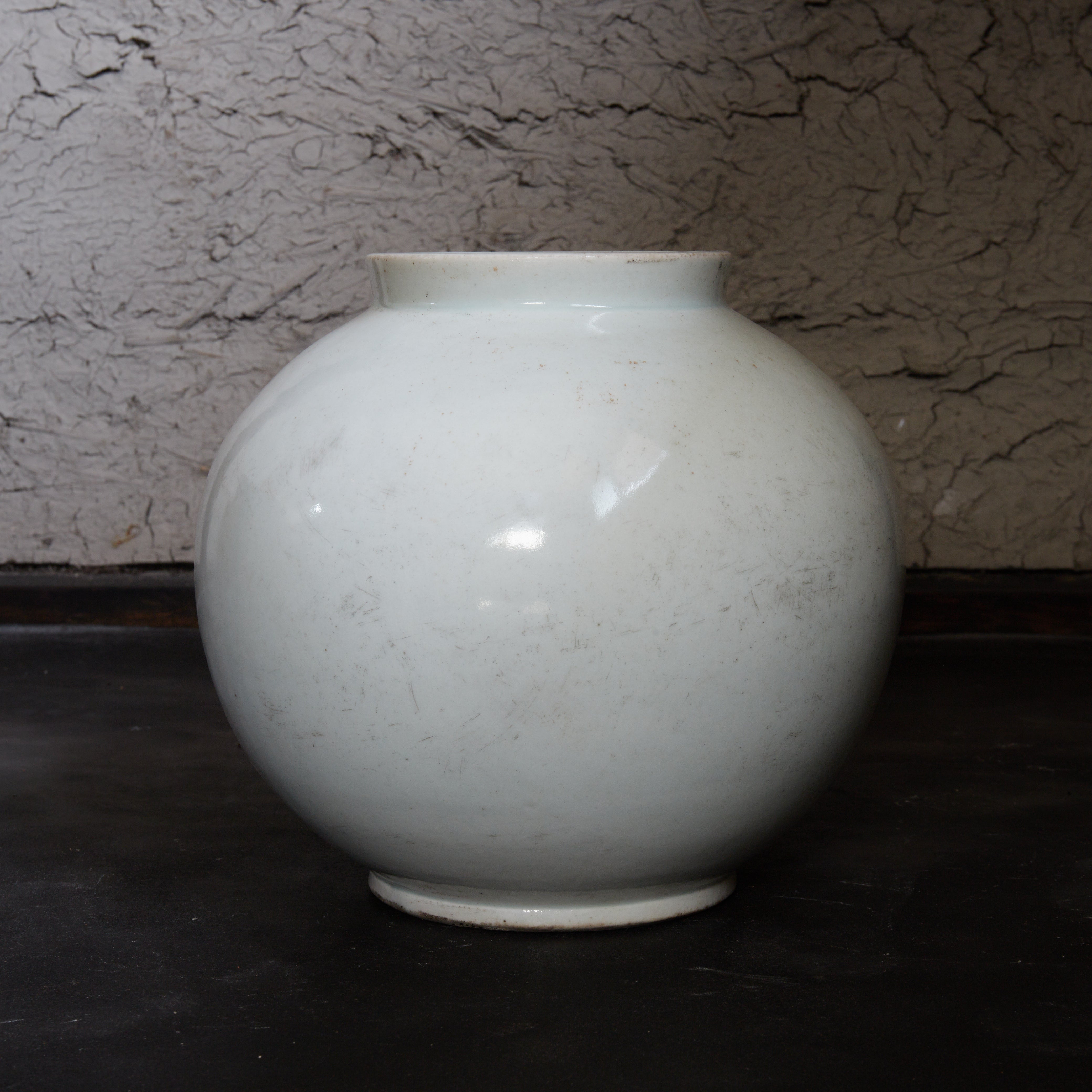
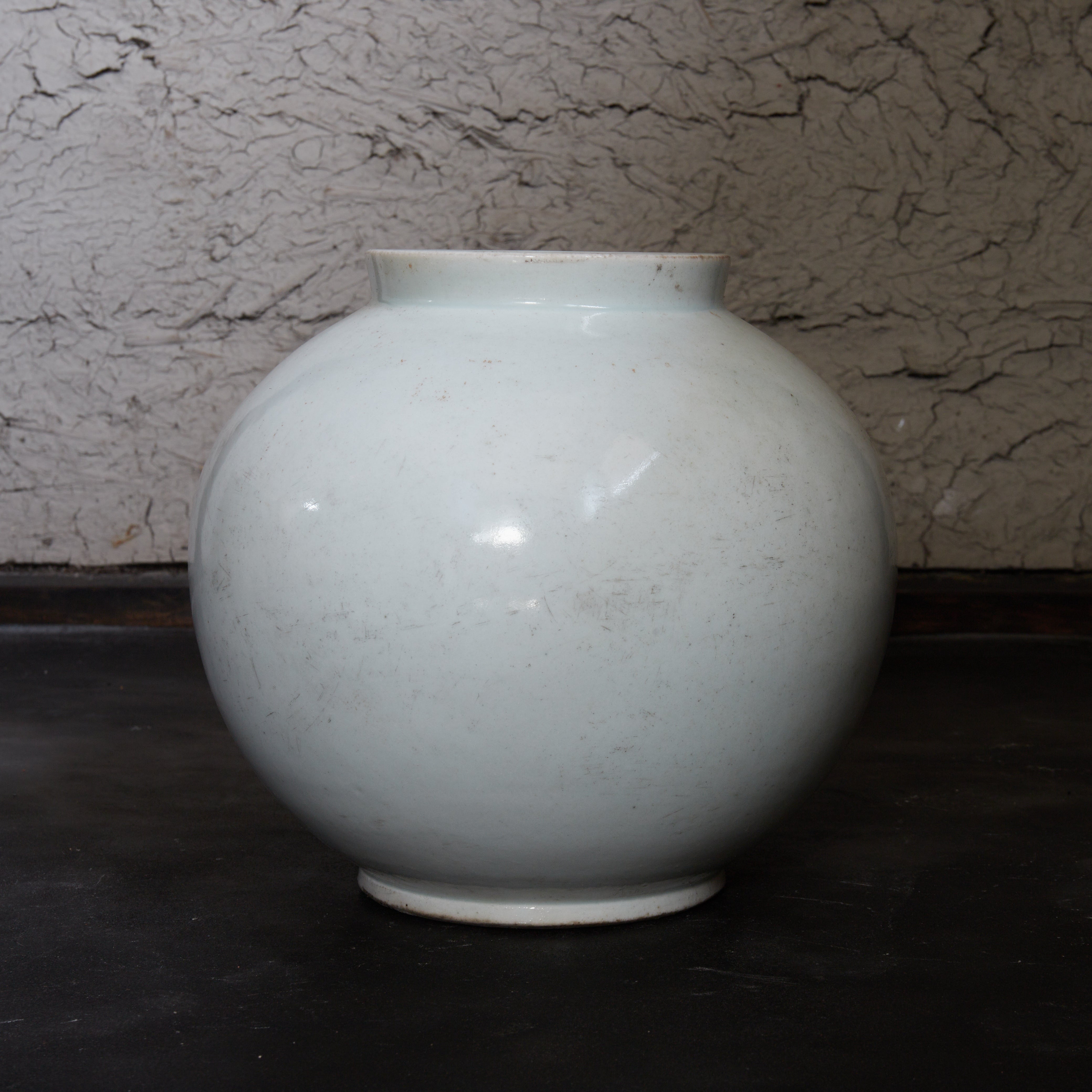
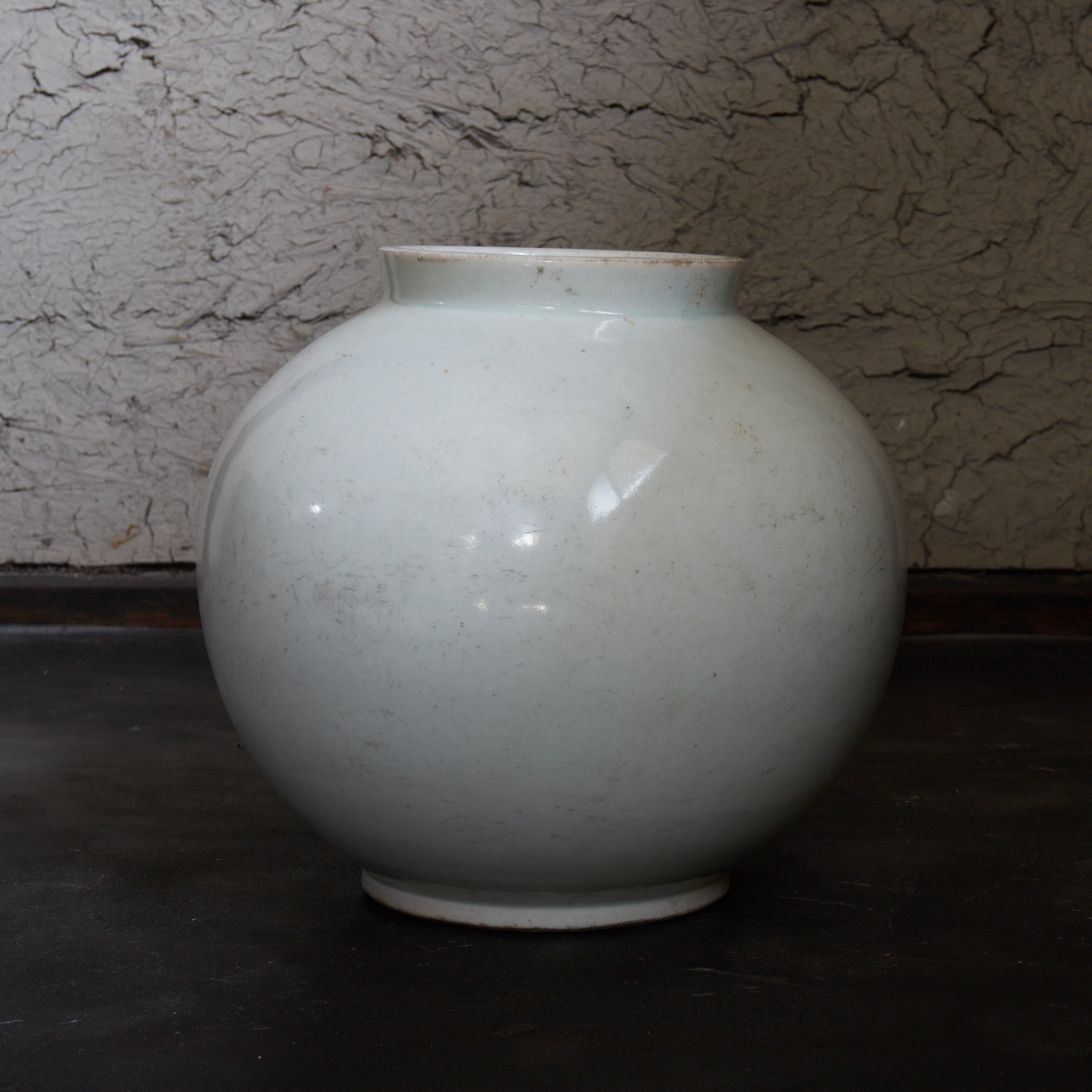
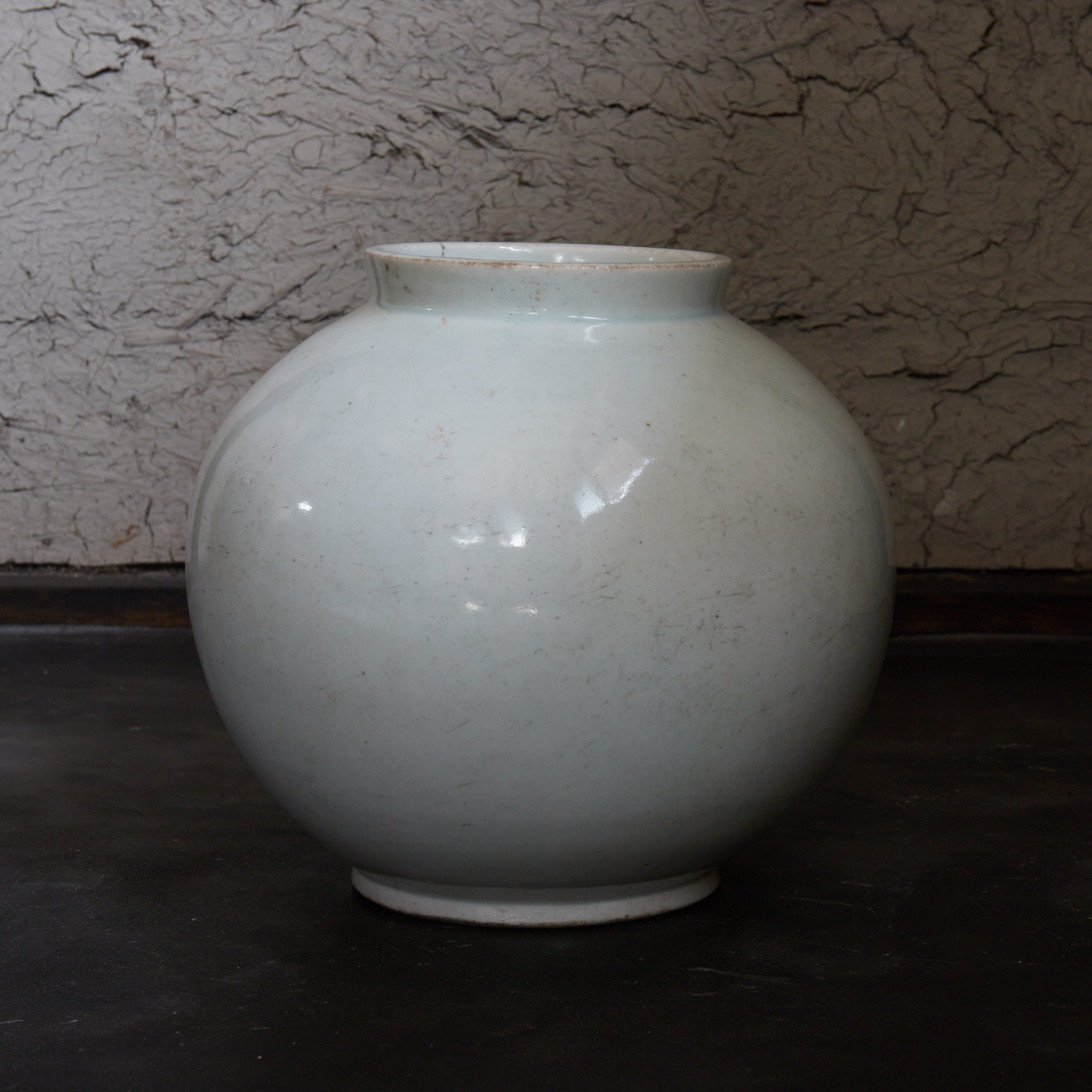

JAR, White porcelain, Joseon Dynasty (1392–1897 CE)
Tax excluded. Import duties may apply. Shipping costs are calculated at checkout.
However, we may respond individually to certain customers after reviewing the circumstances.
Please contact us for further details.
Shipping to the United Kingdom and Switzerland remains available.
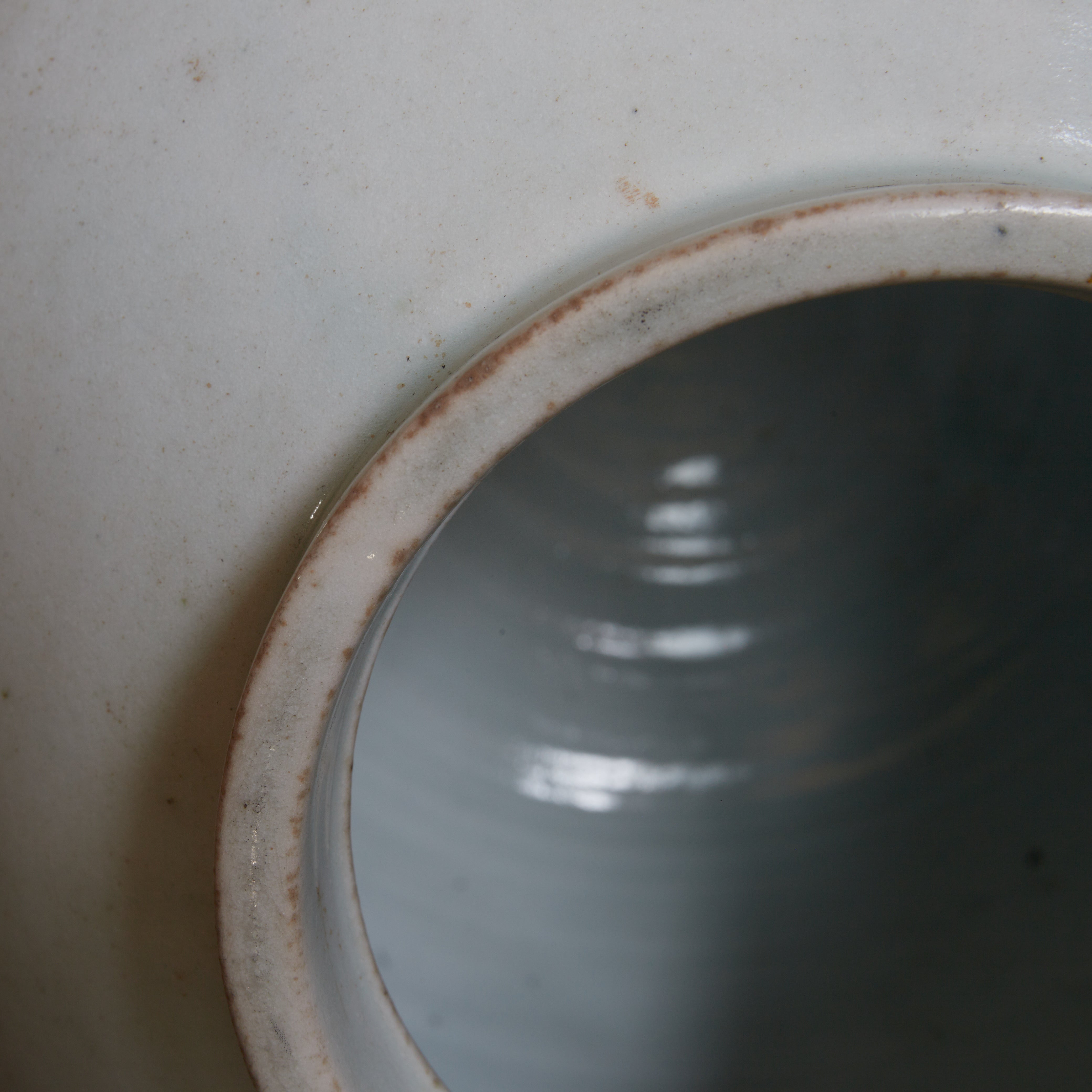
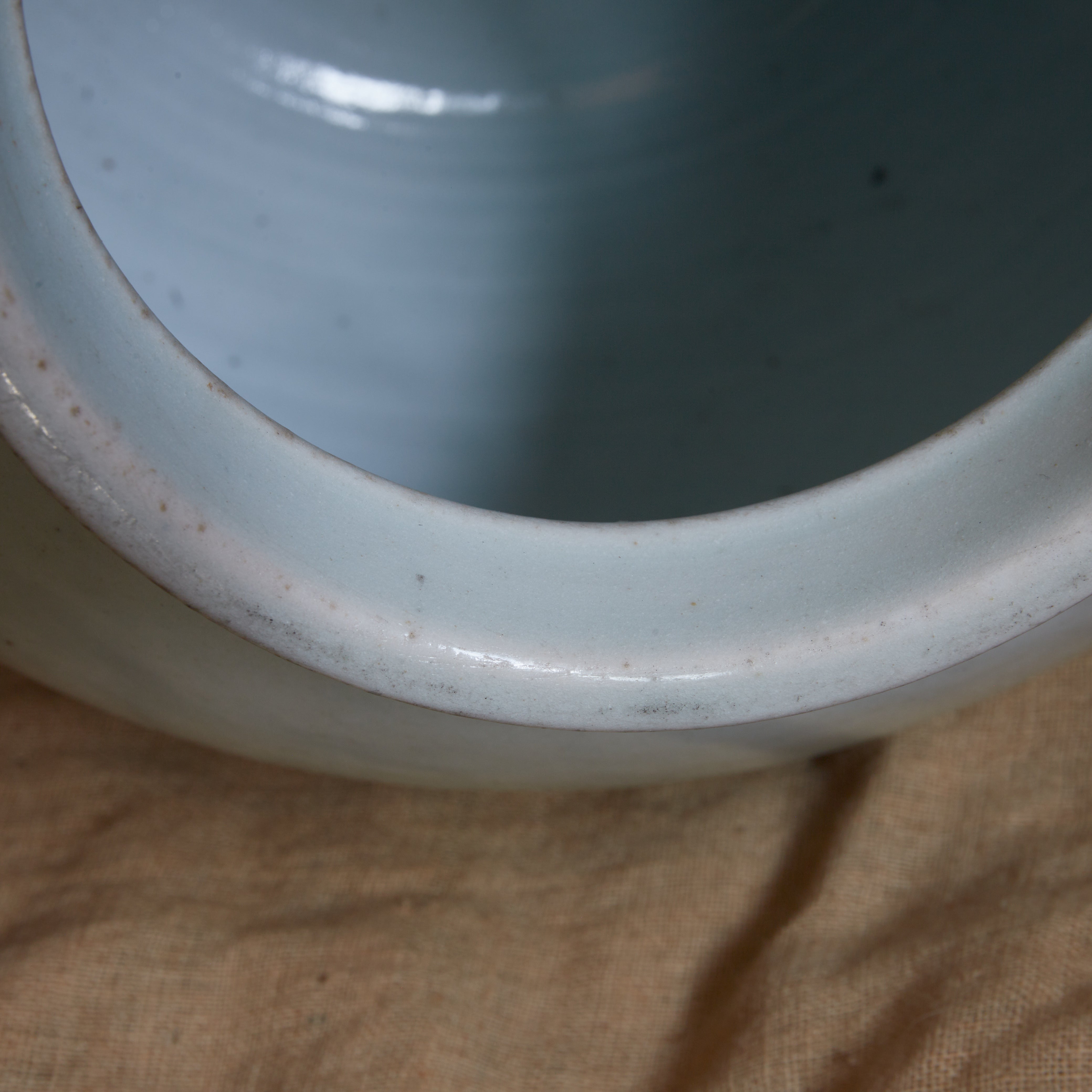
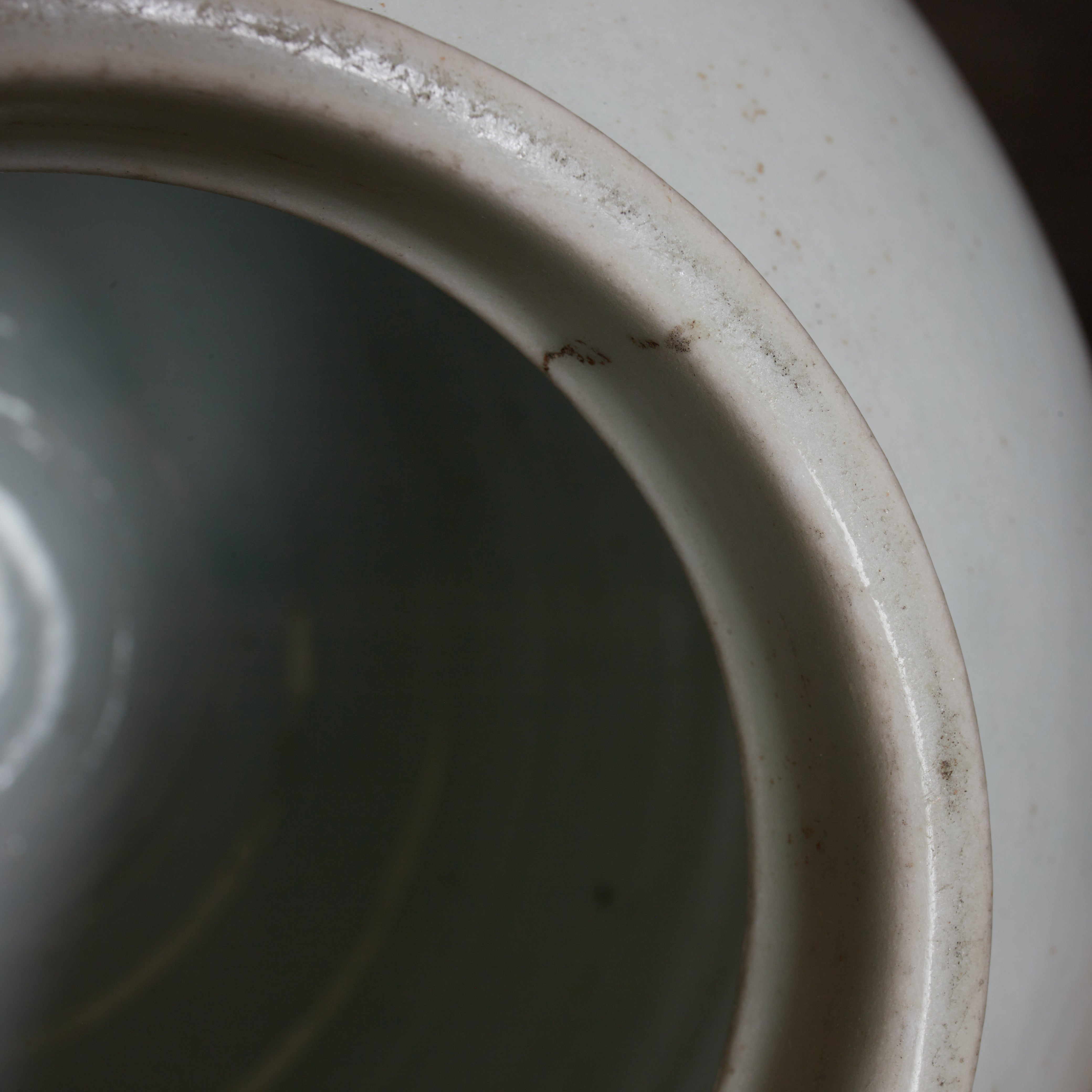
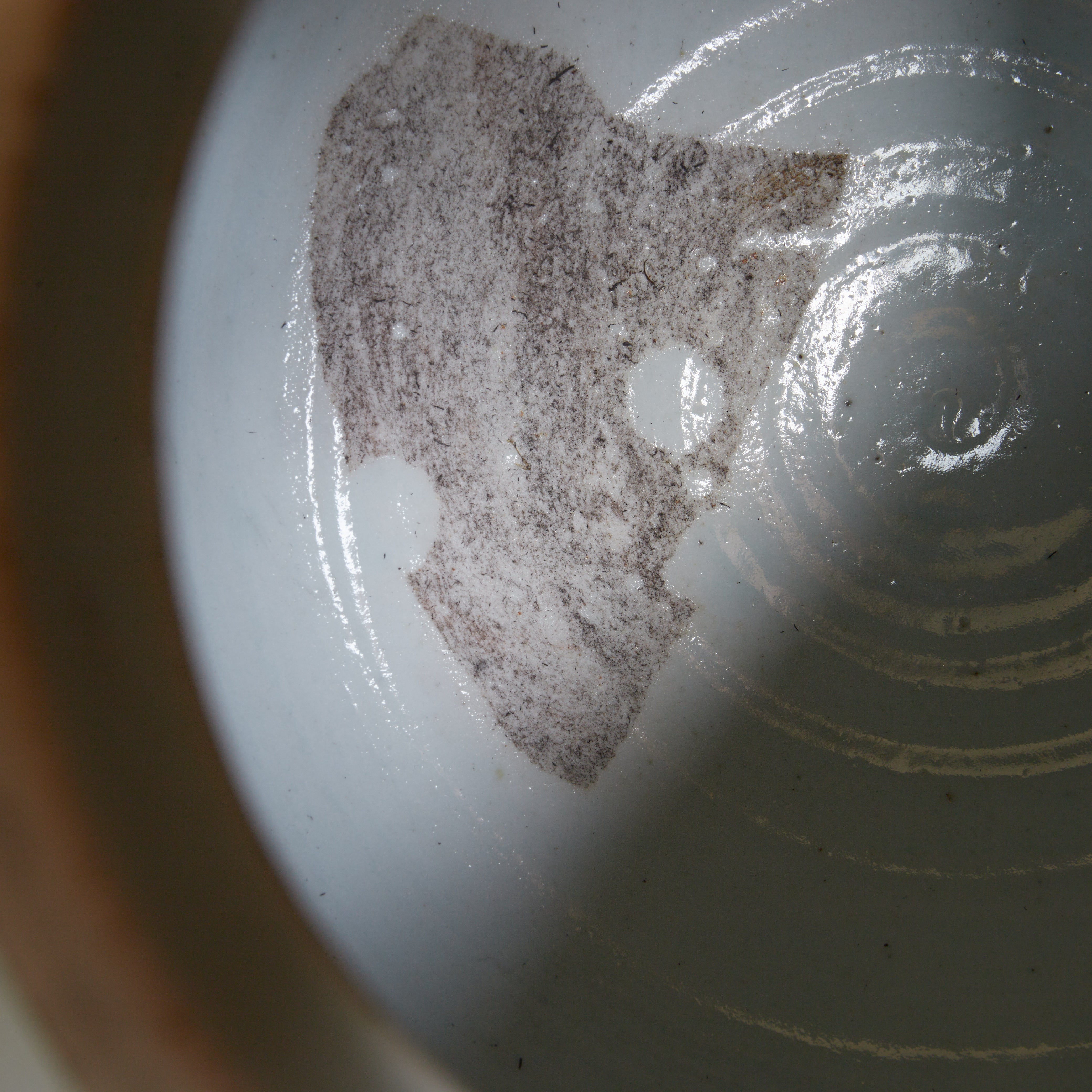
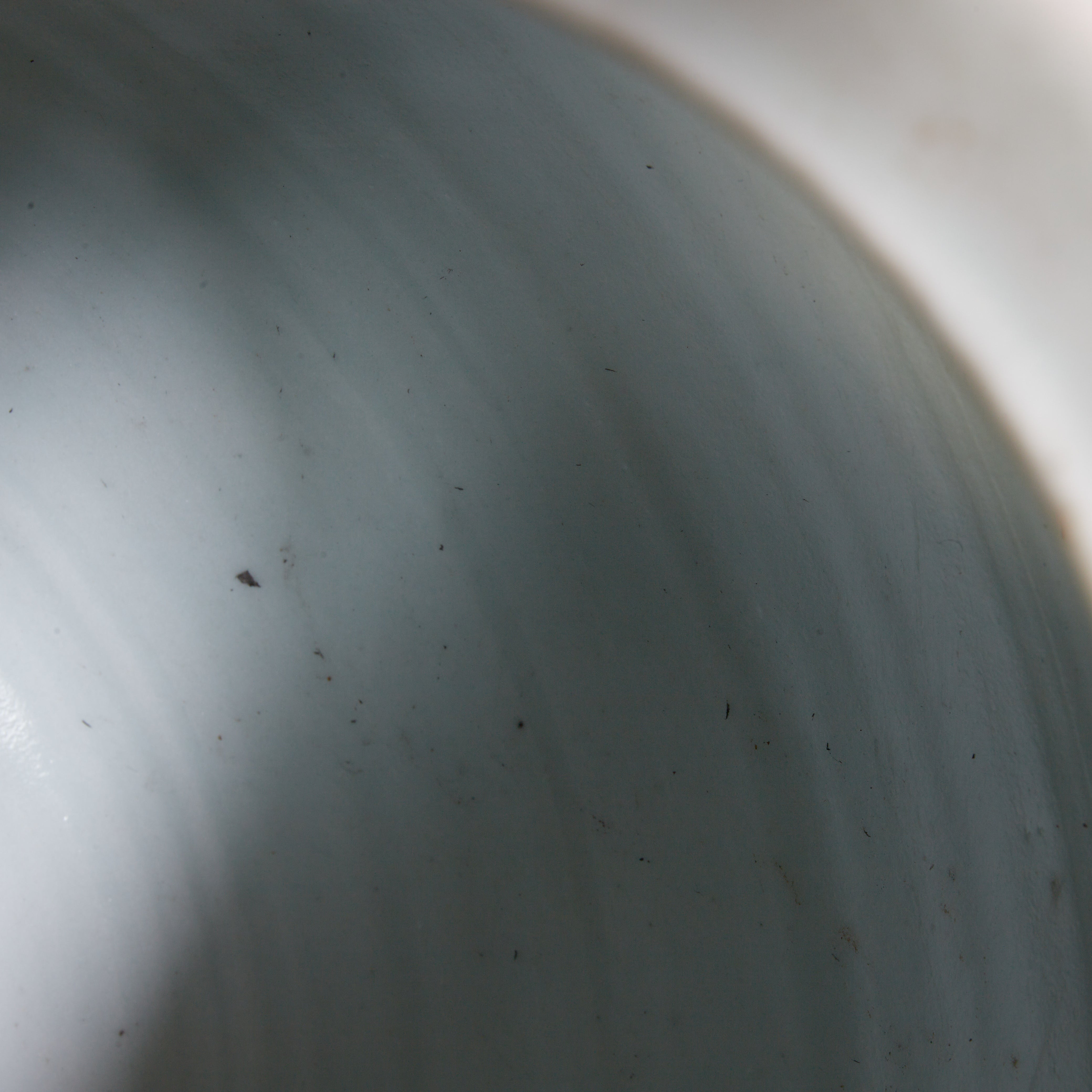
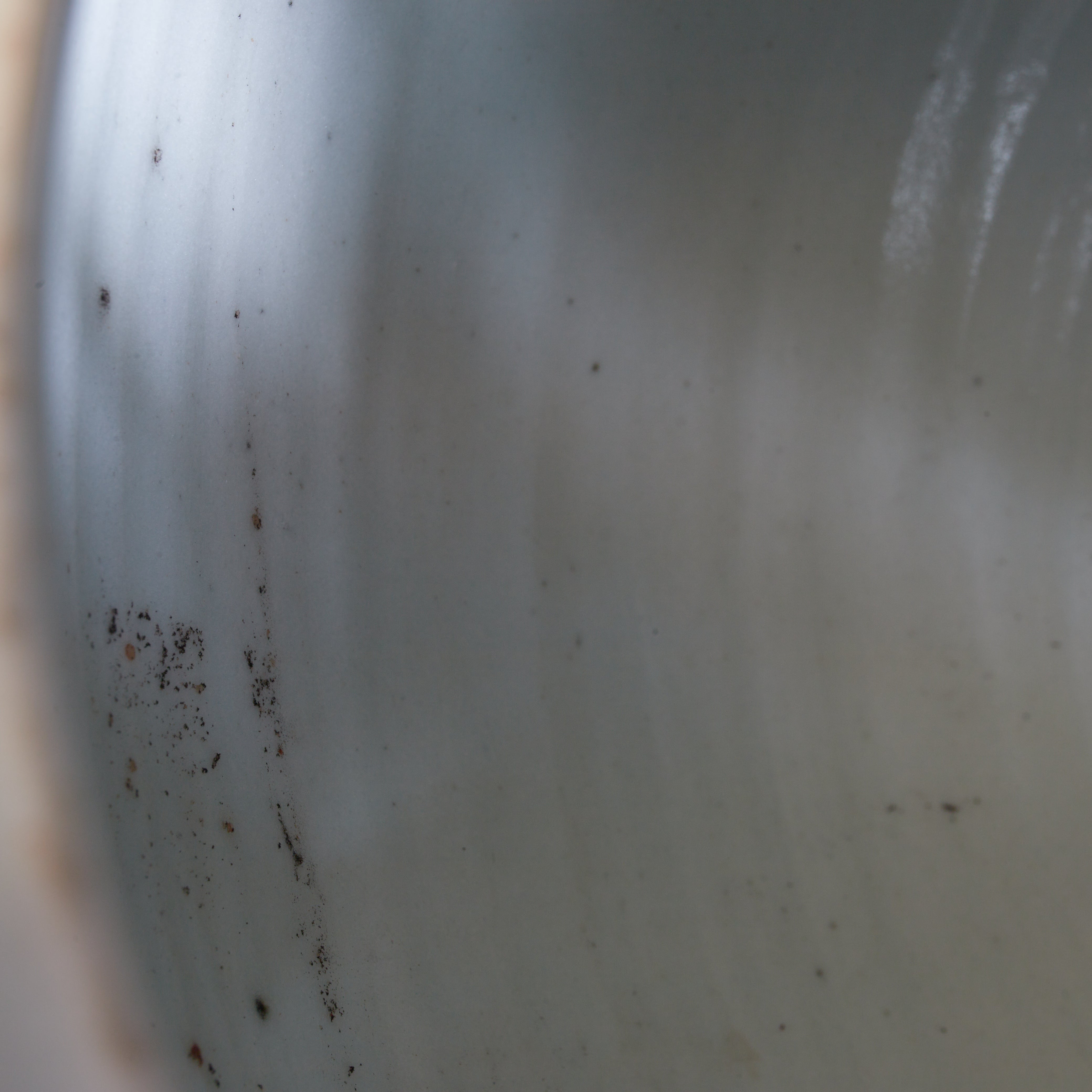
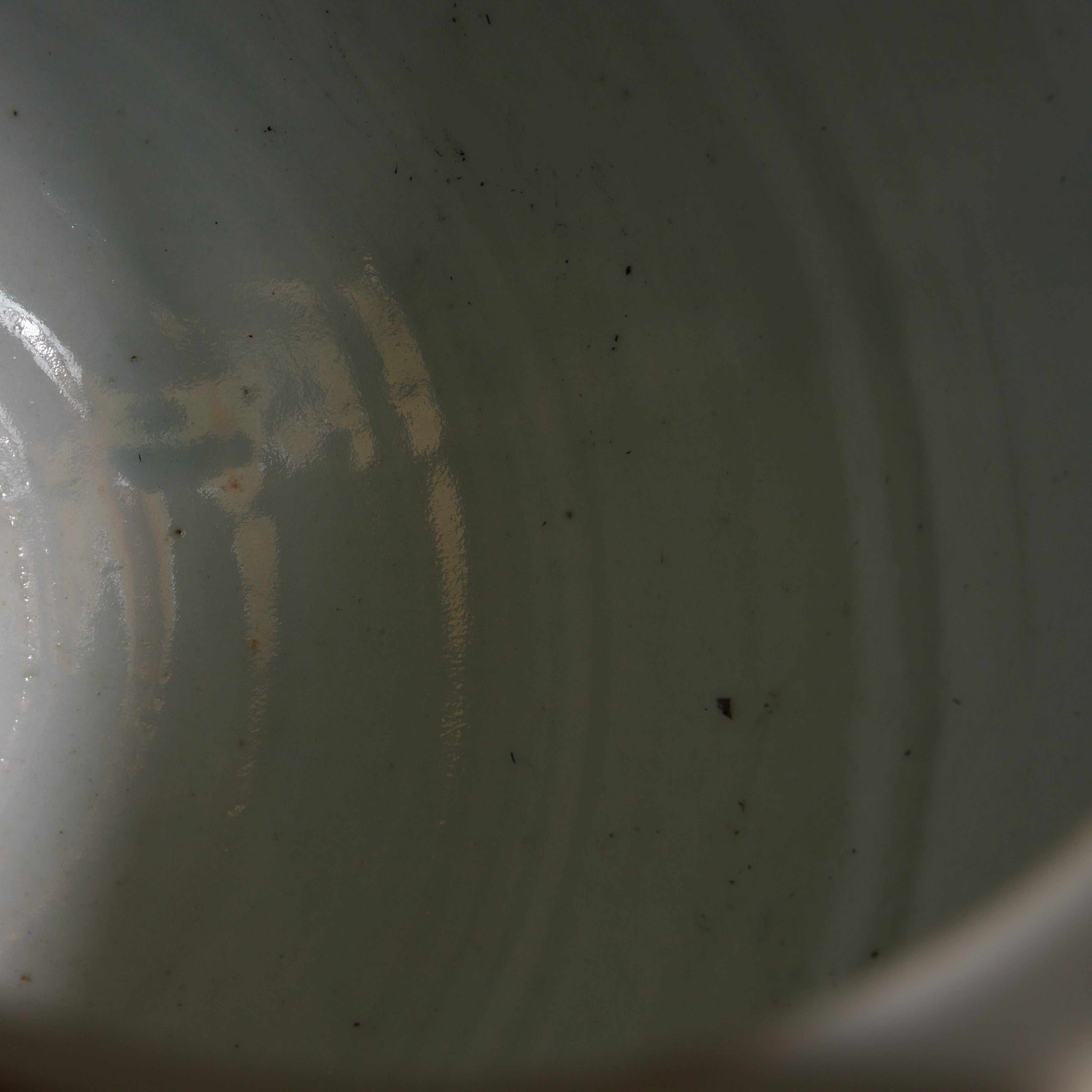
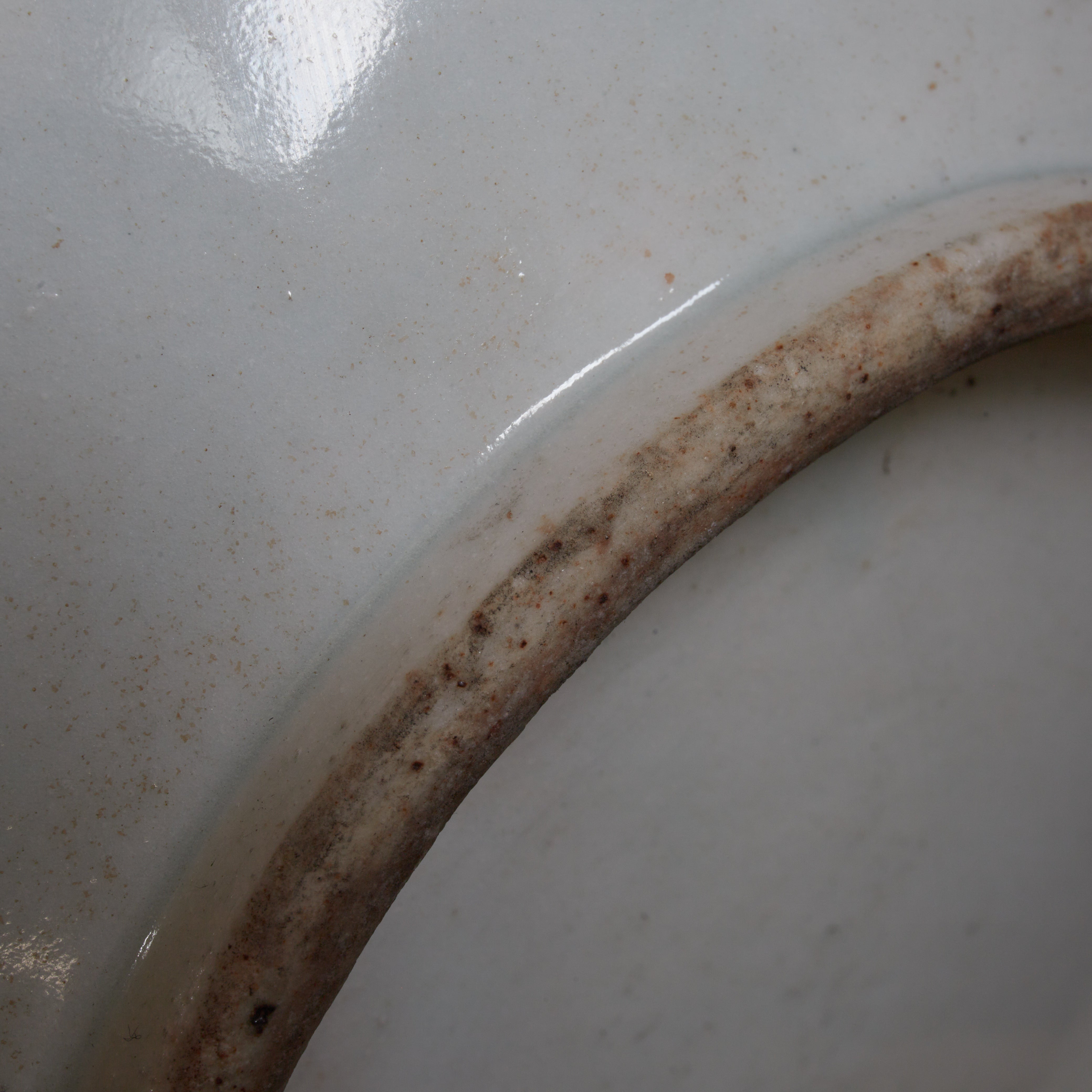
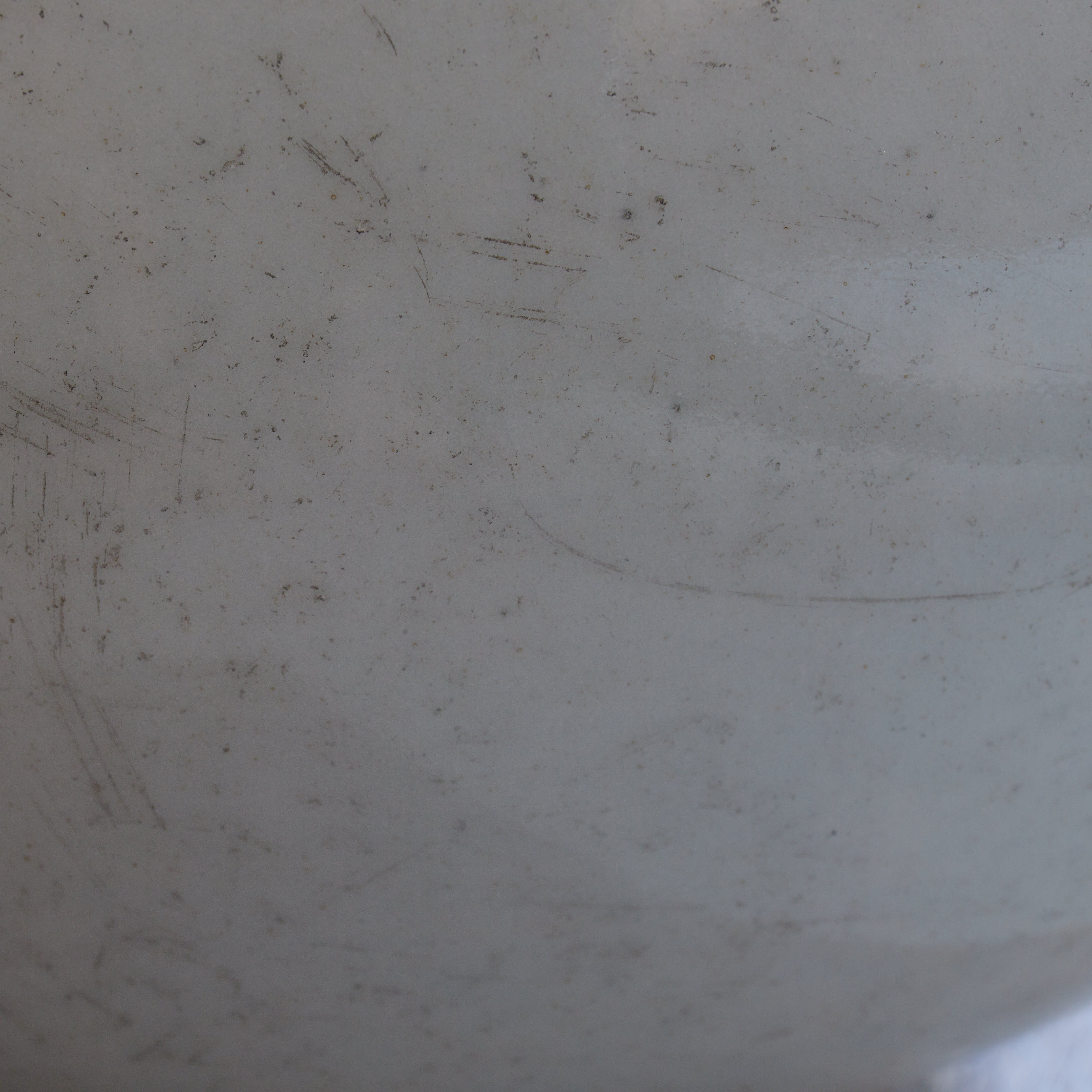
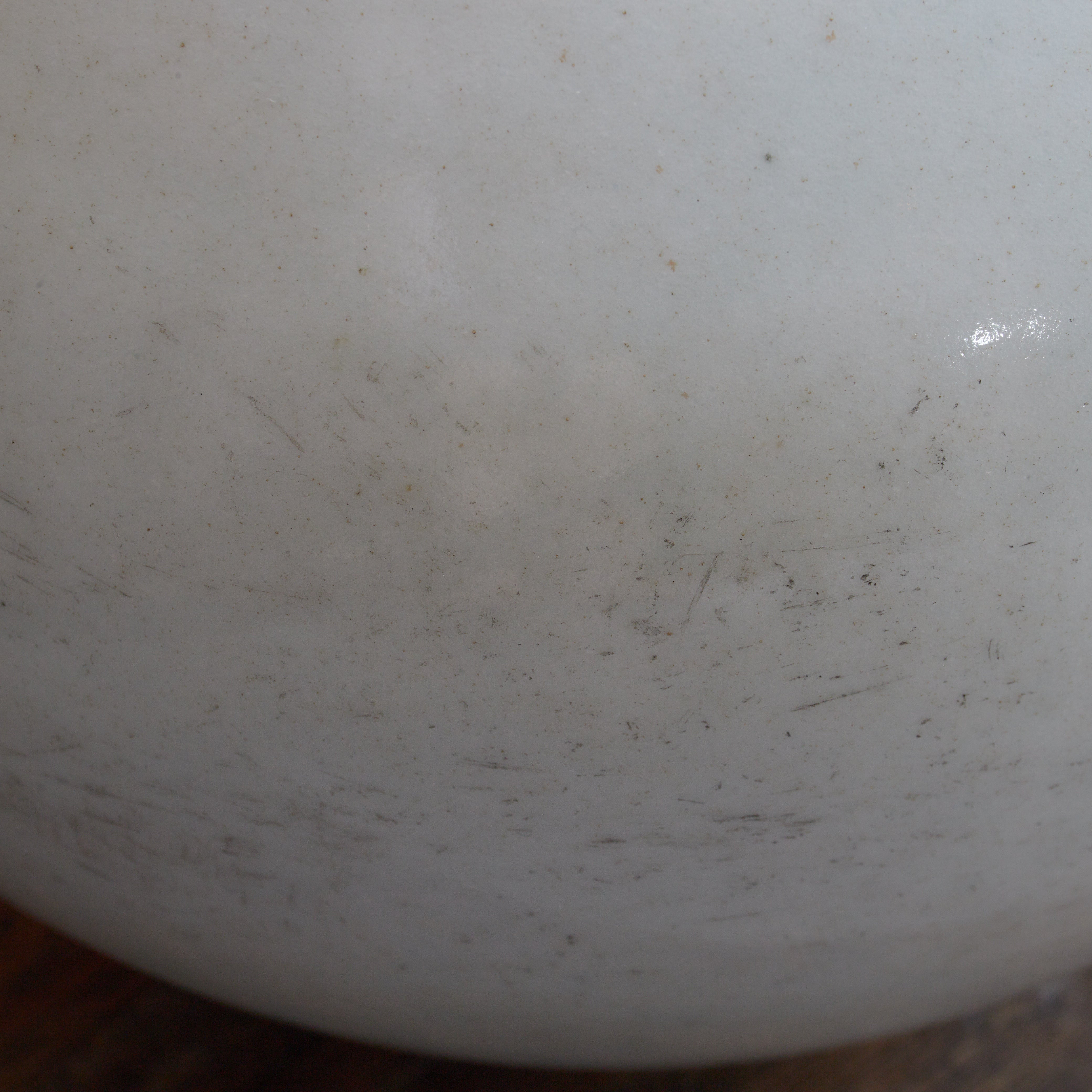
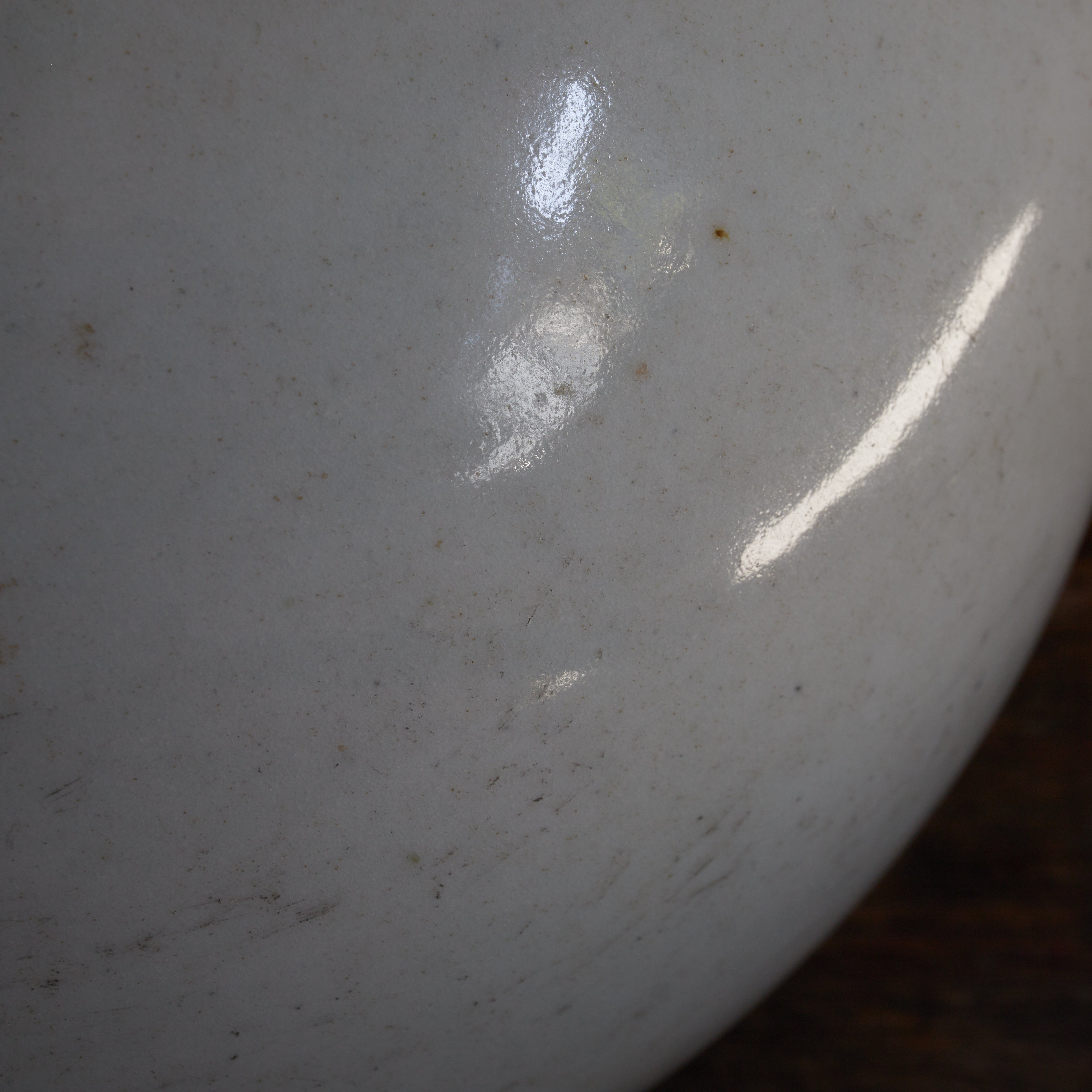
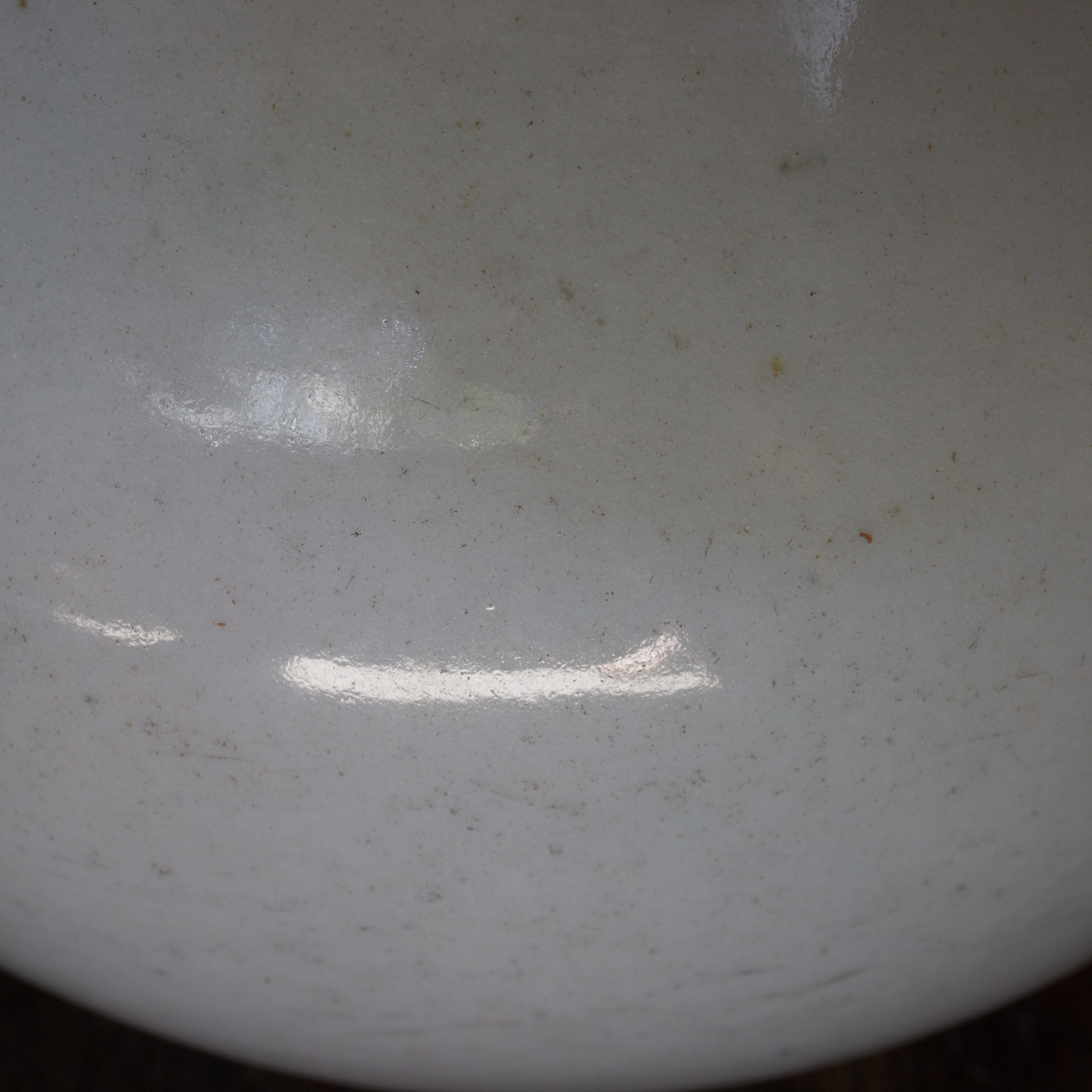
Numerous product photos are available for you to examine the details and condition. Should you have any questions, please do not hesitate to contact us.
> Inquire about this productWhite porcelain jar from the Joseon Dynasty.
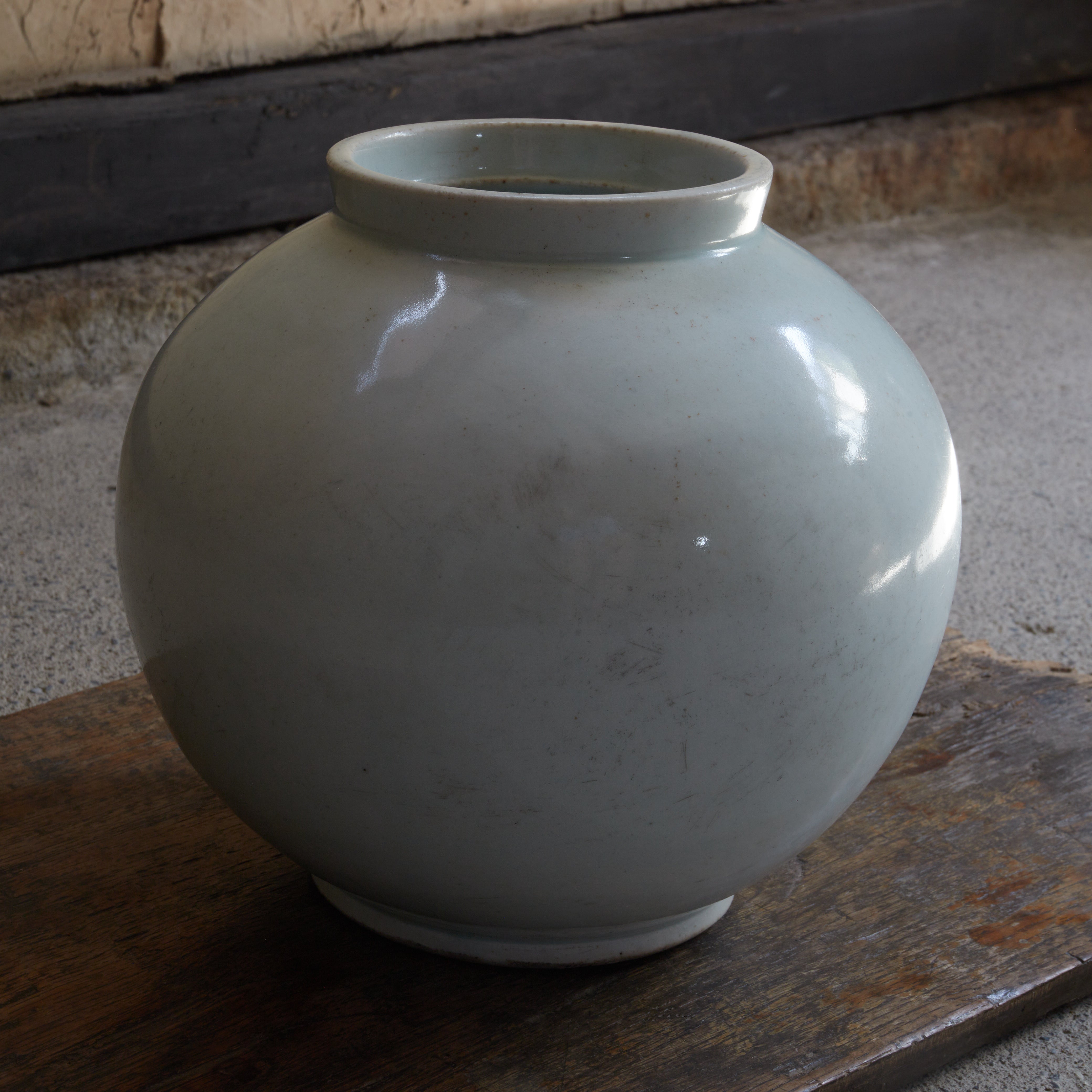
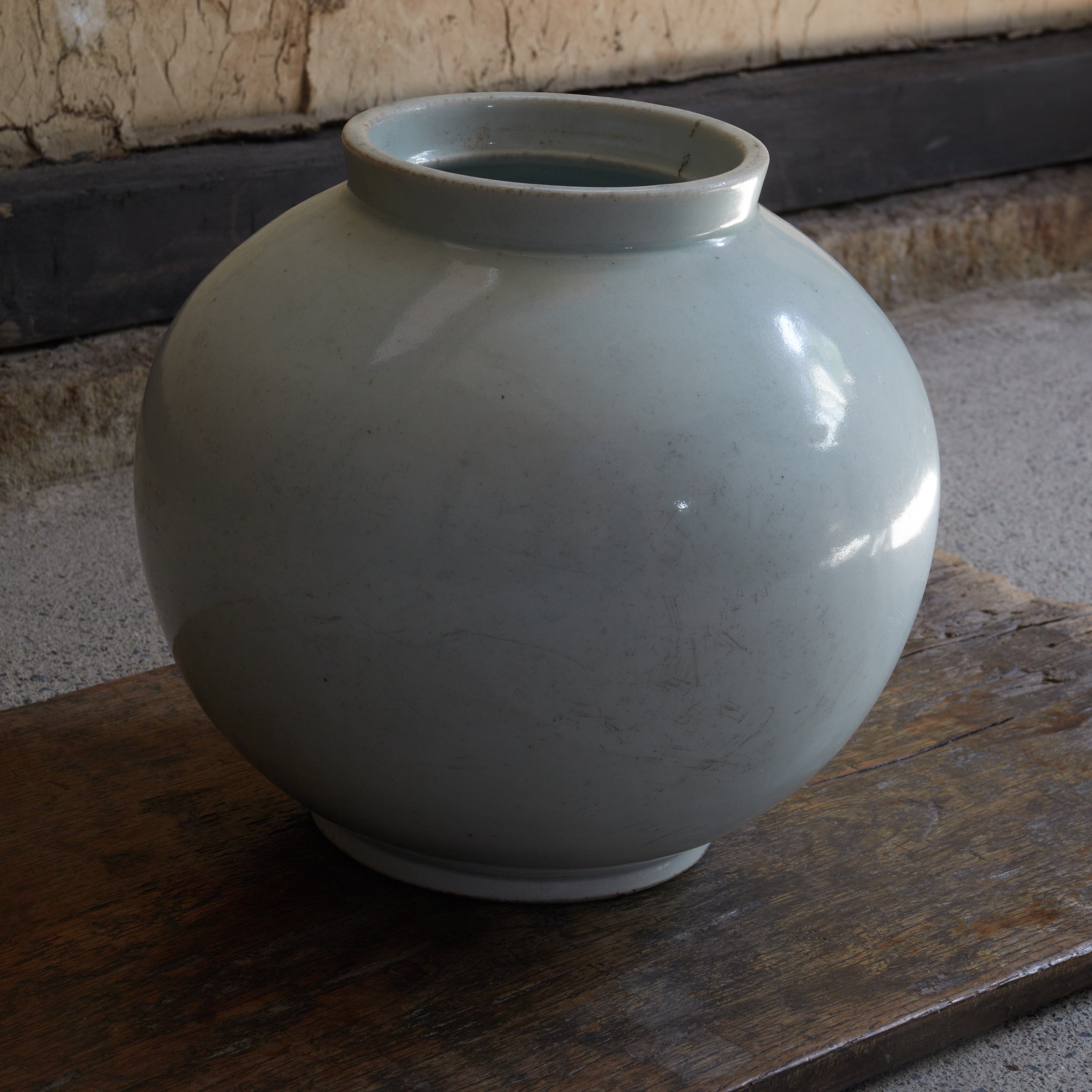
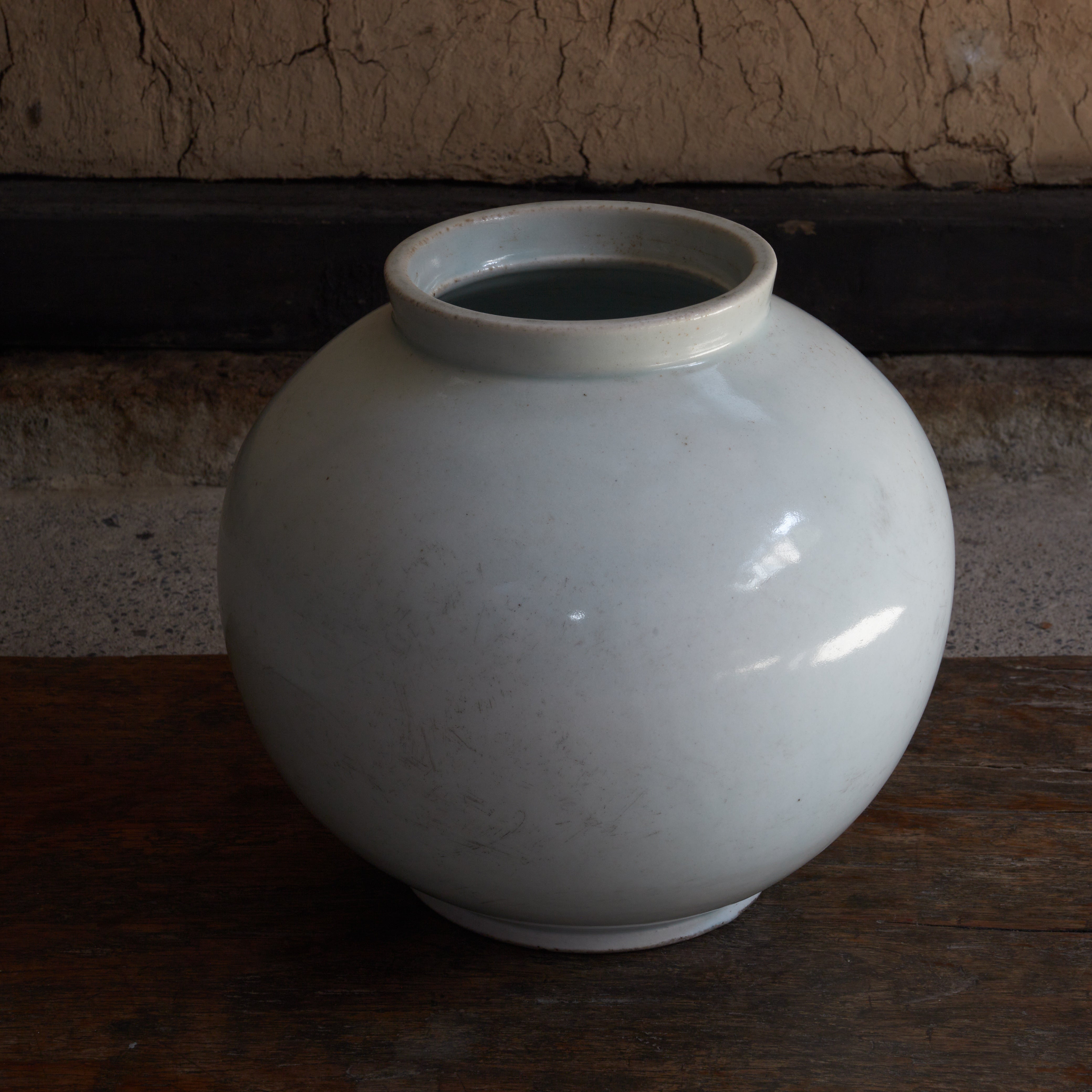
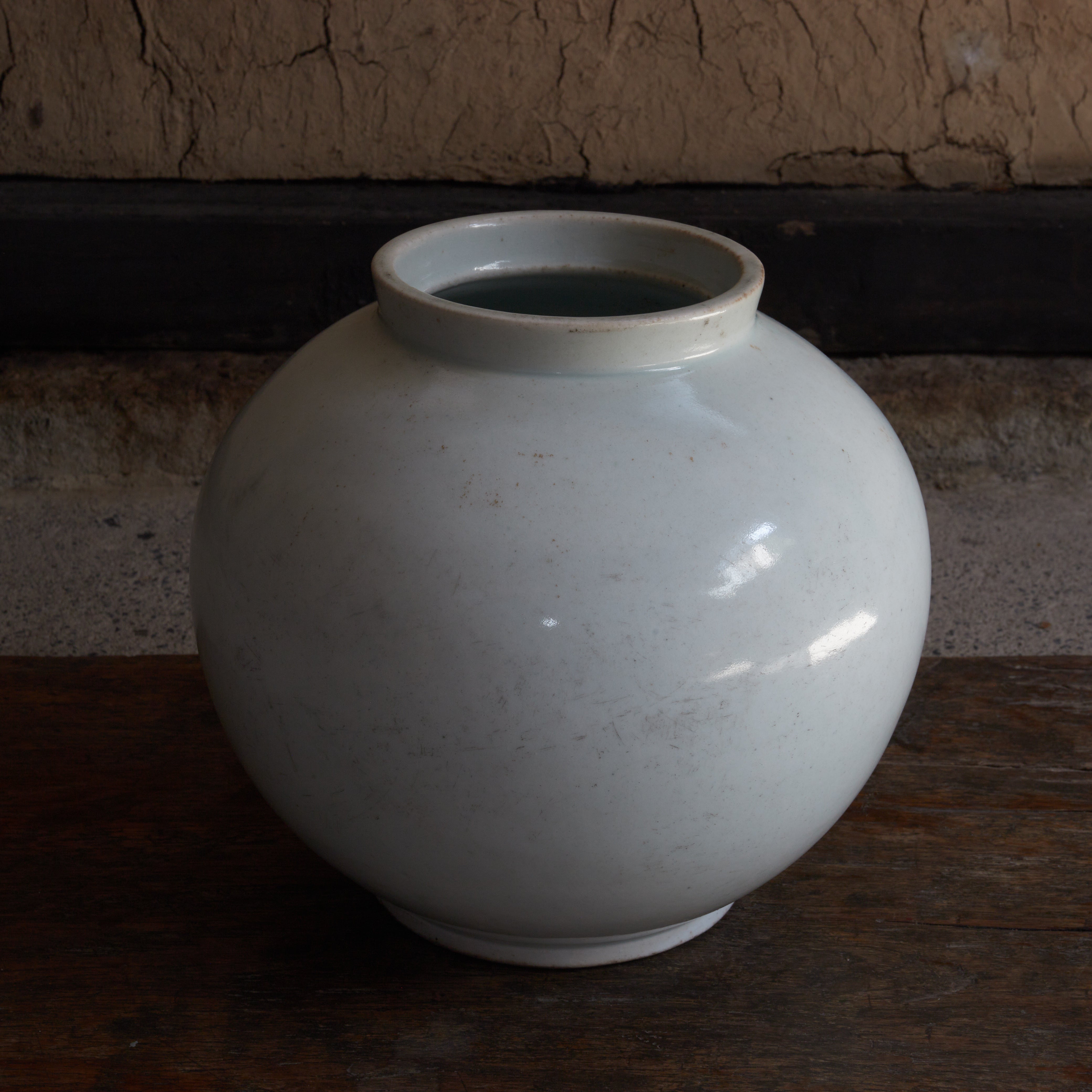
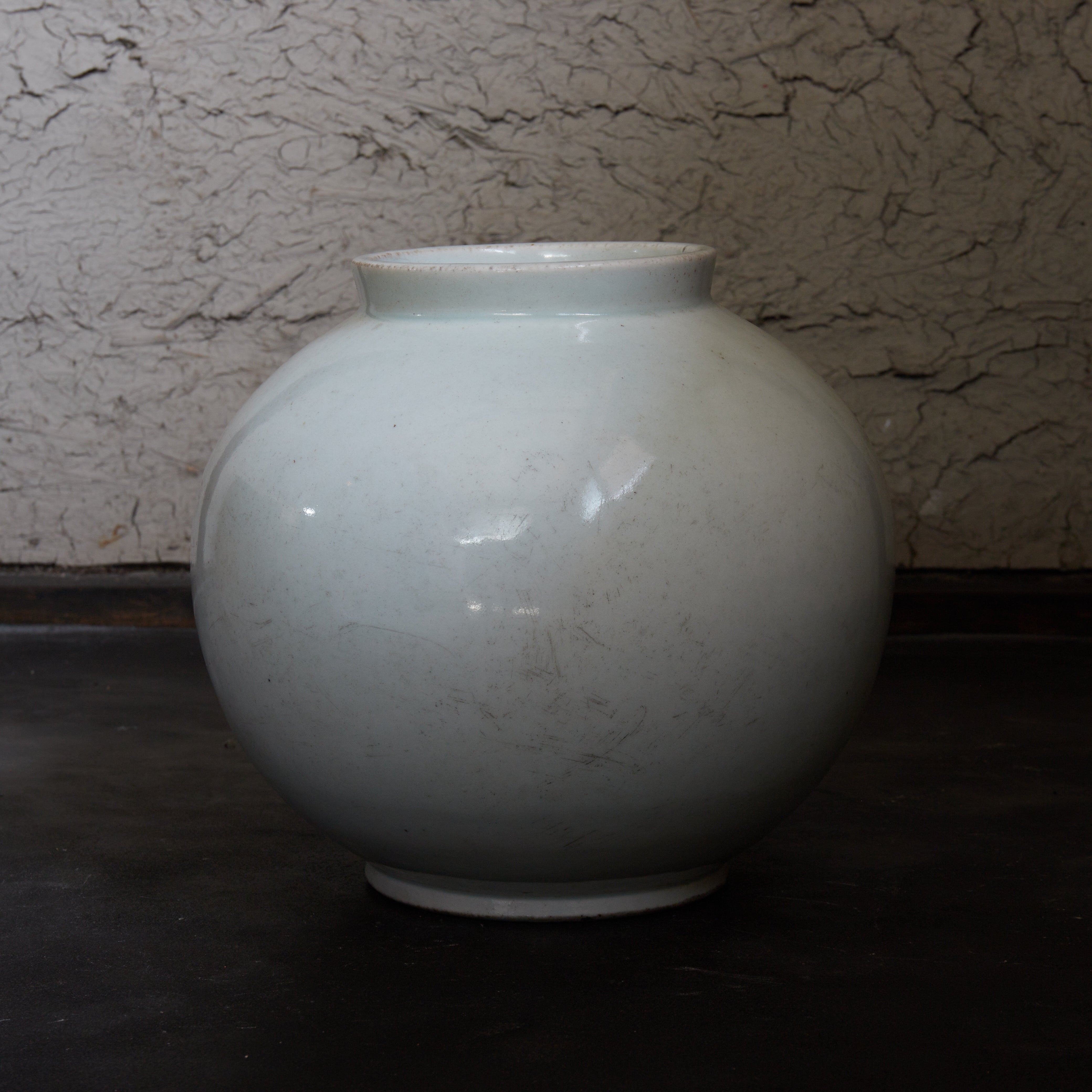
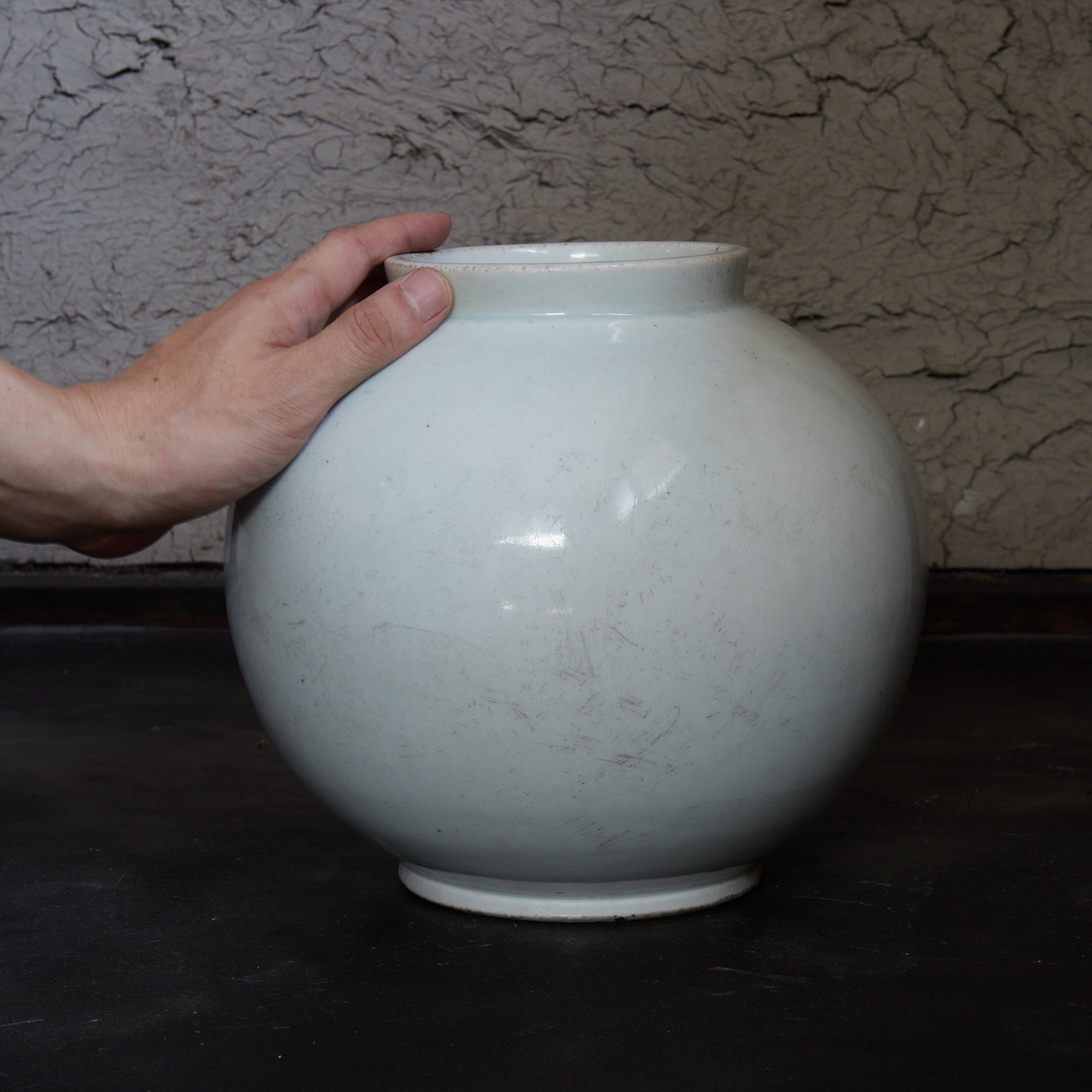
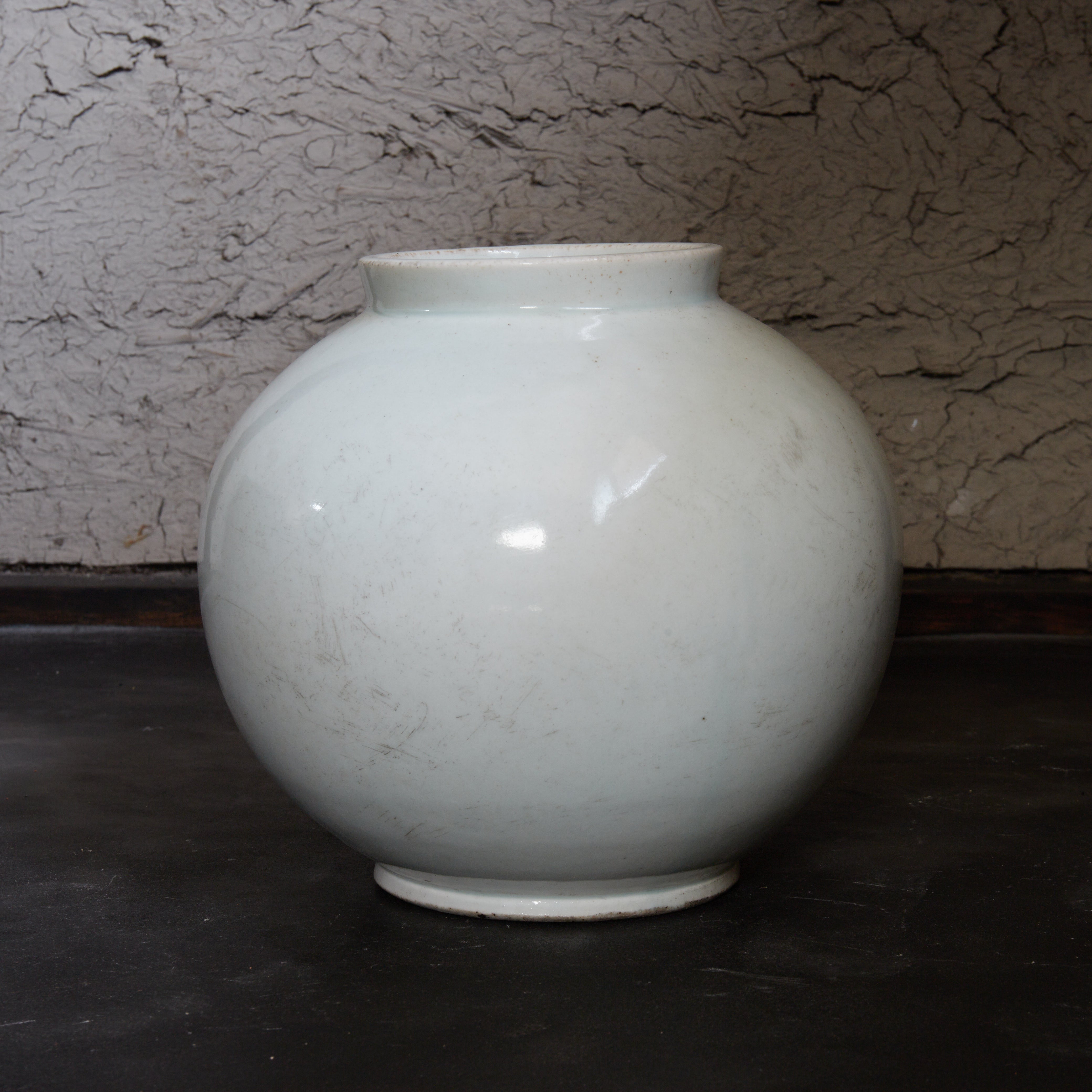
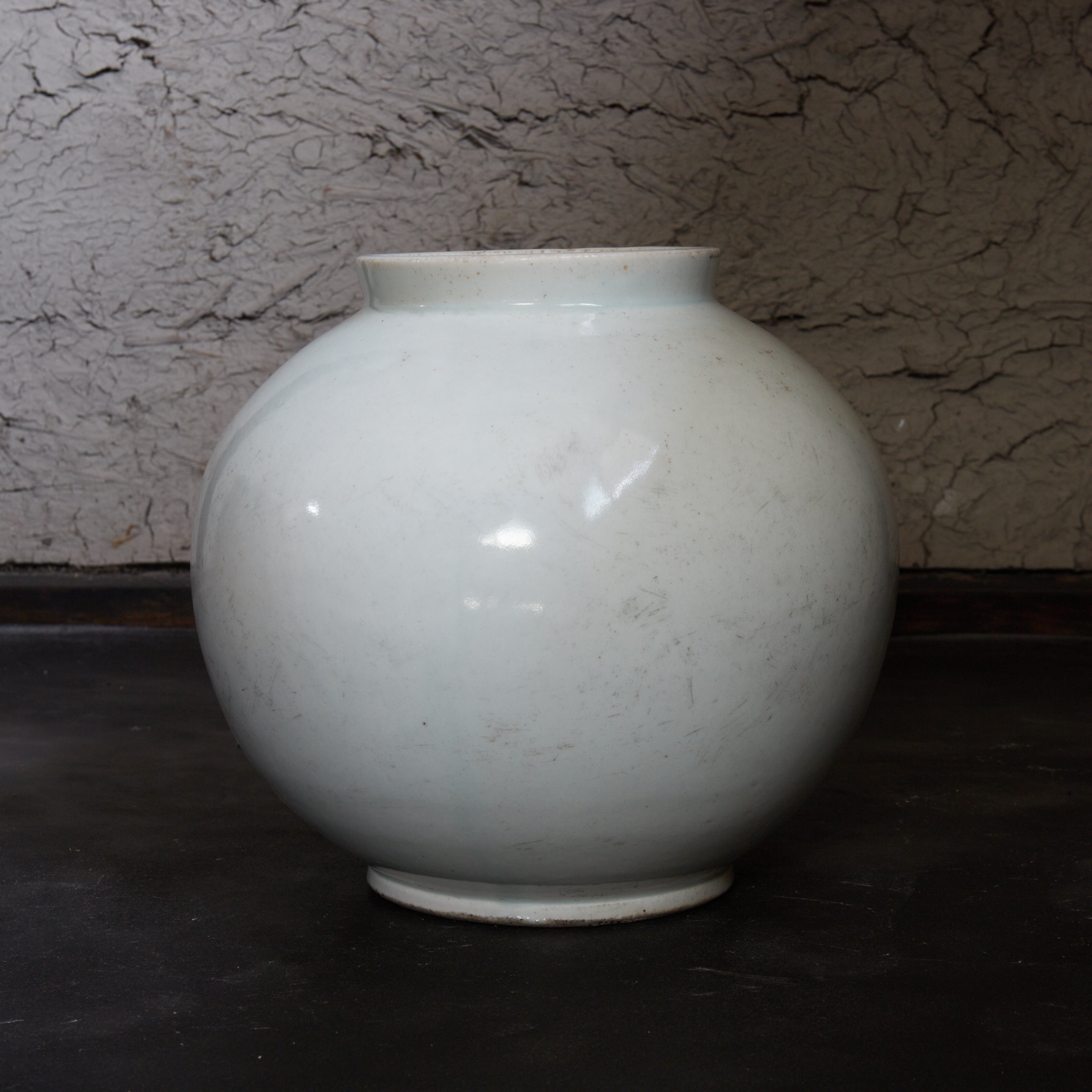
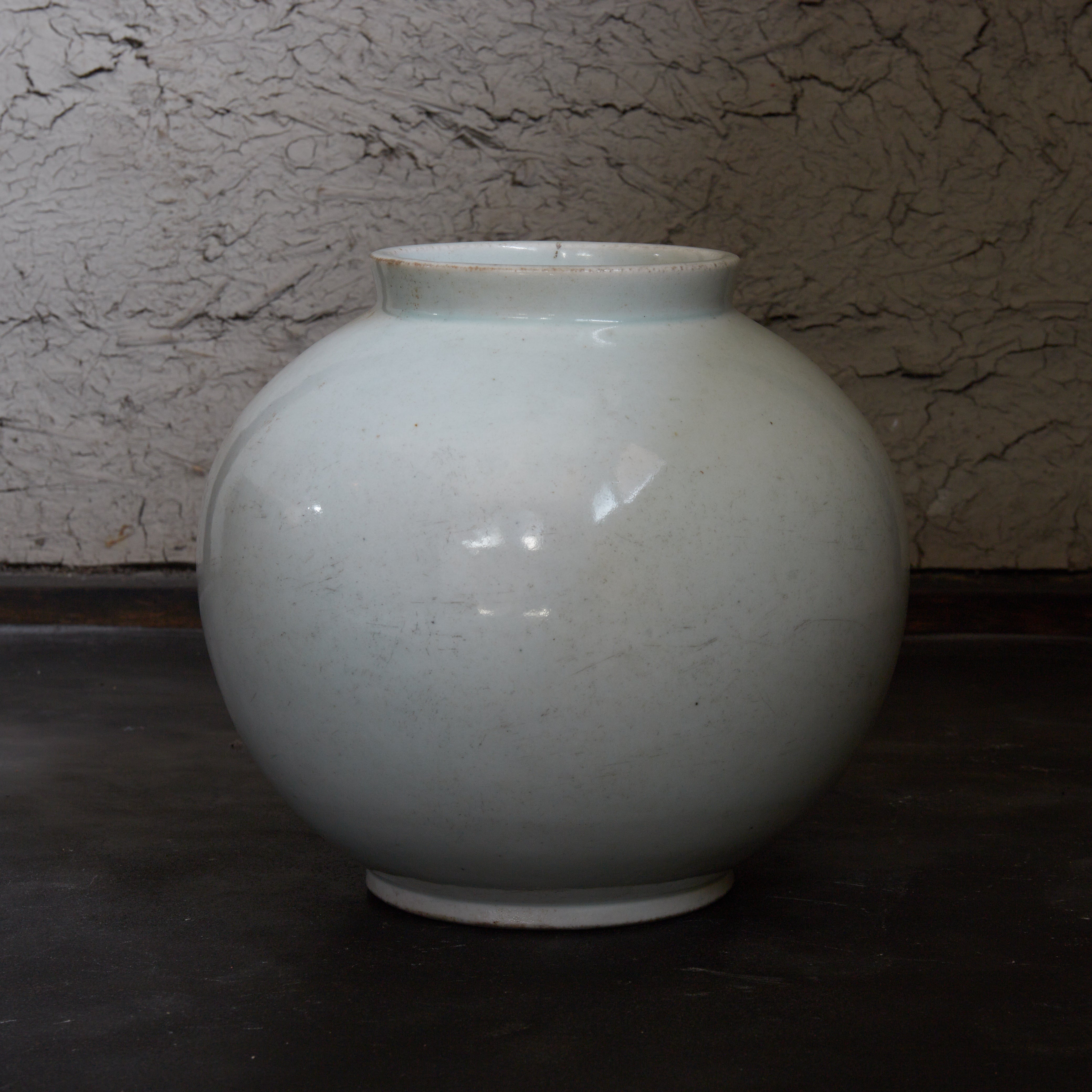
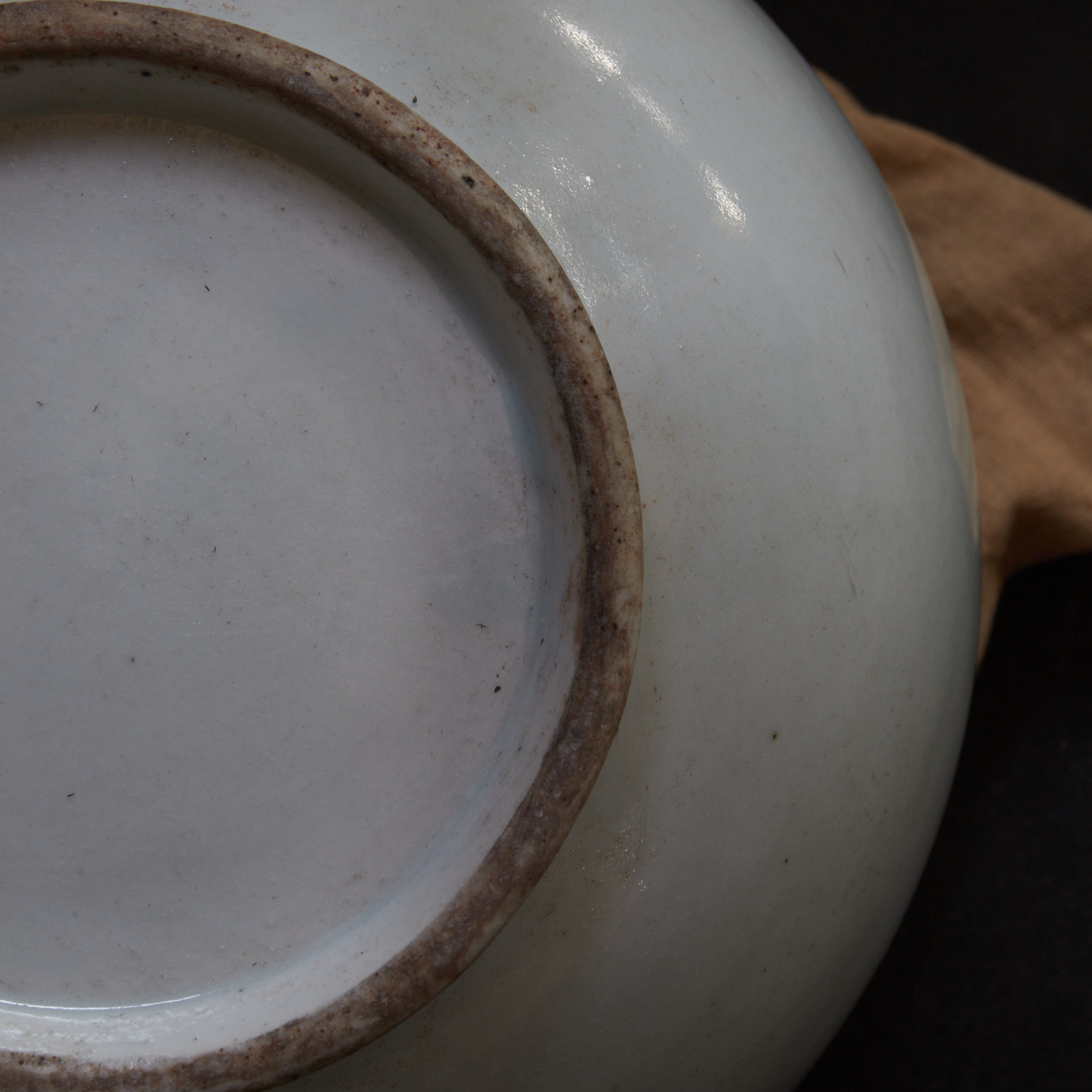
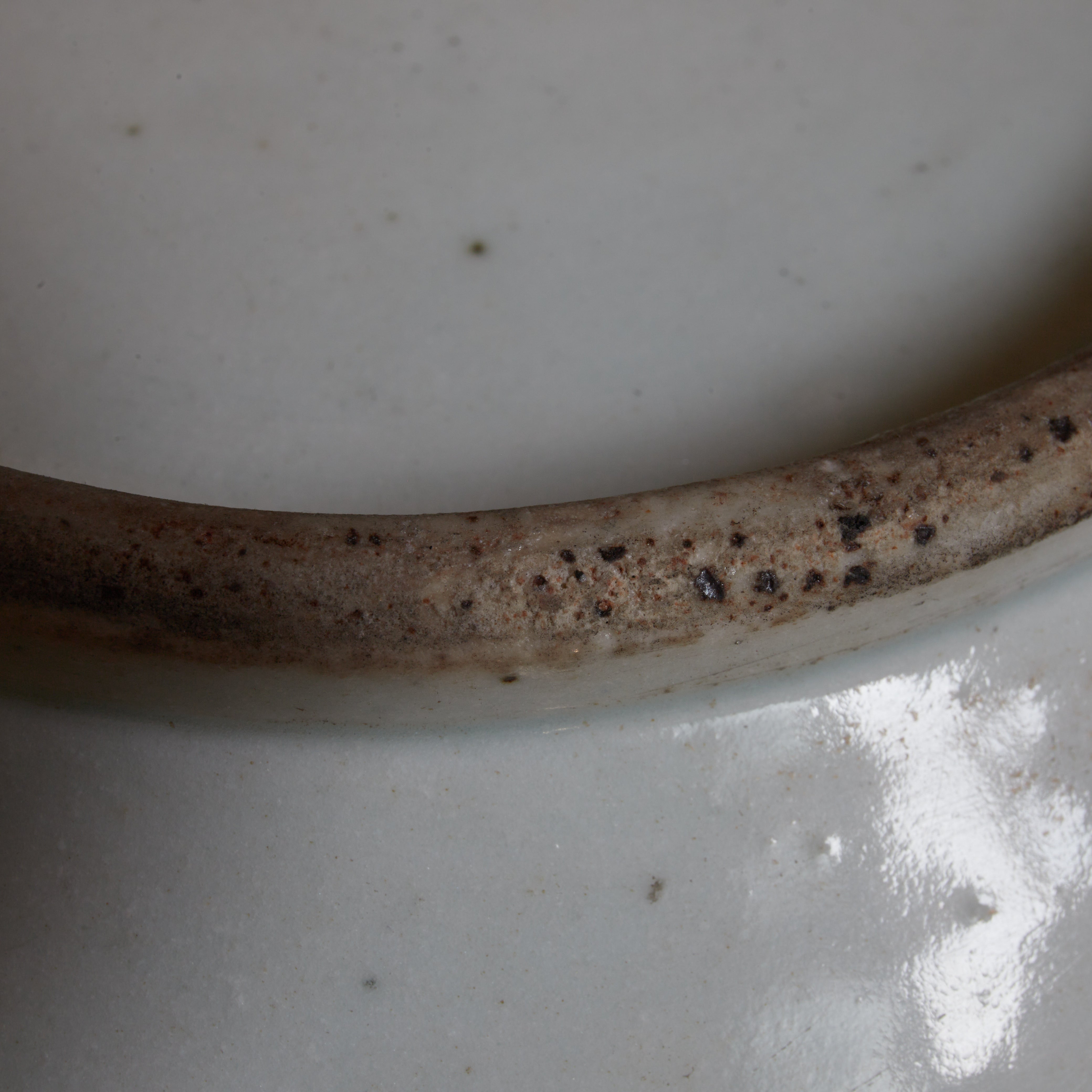
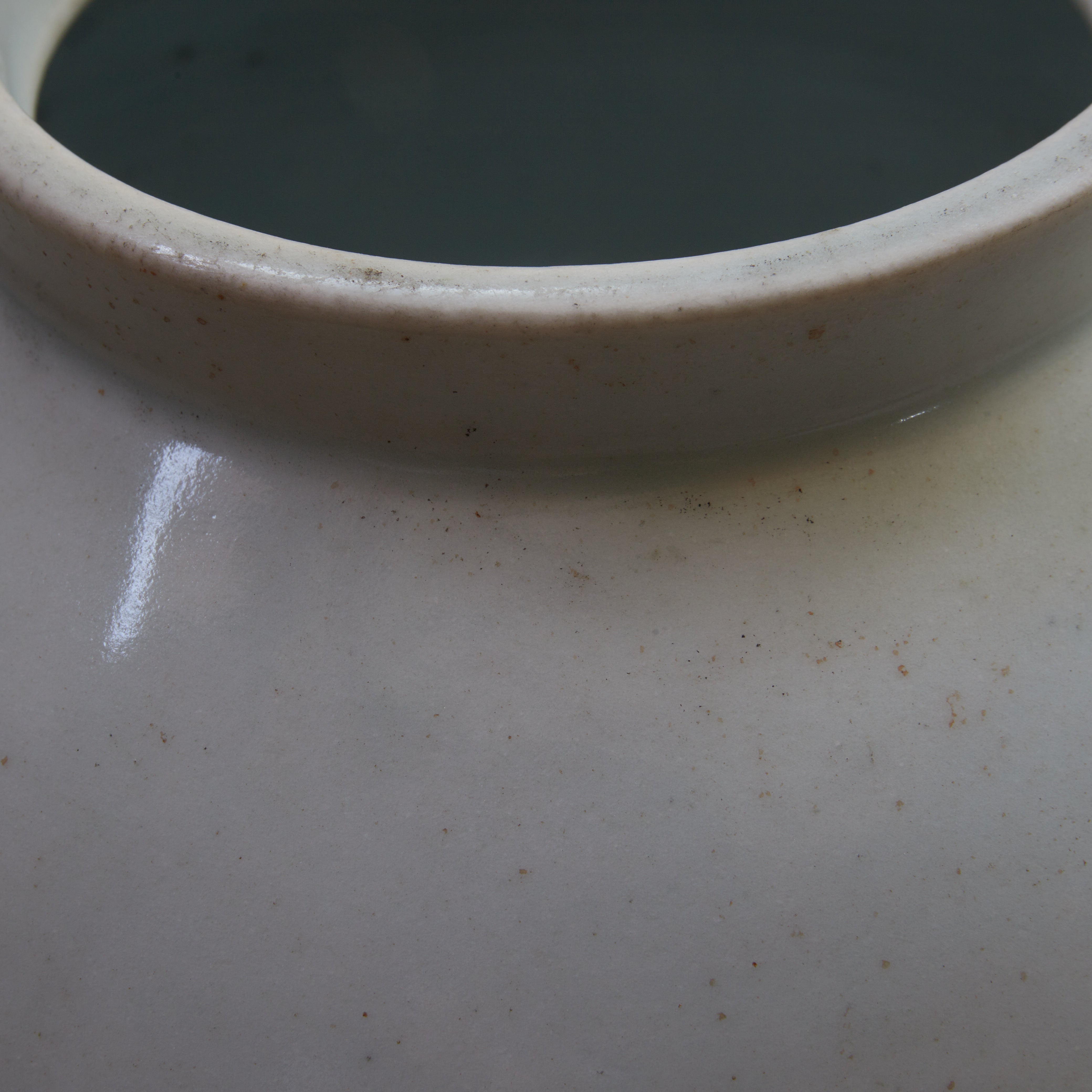
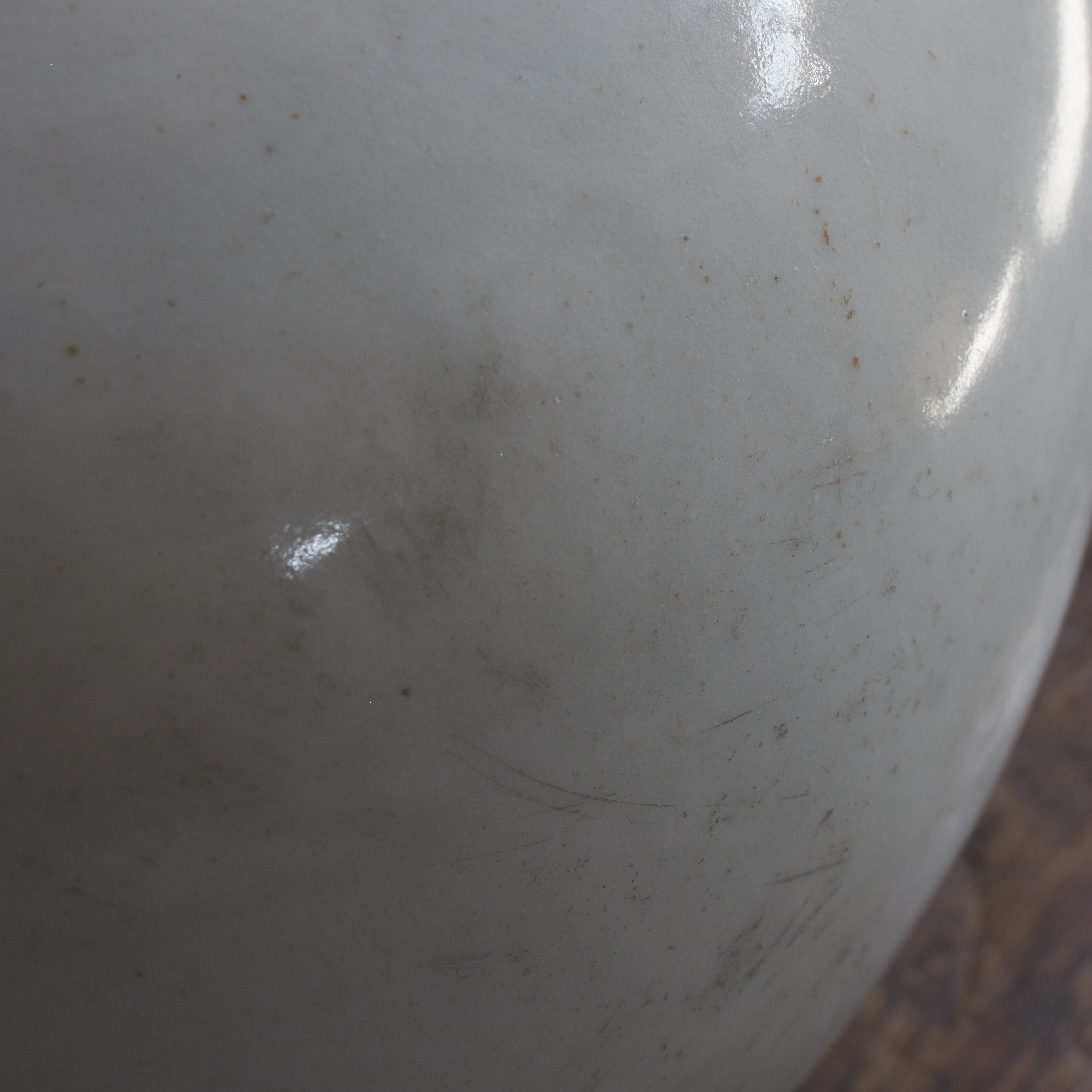
This white porcelain jar has a low foot, a rounded, swelling body, and a short neck. Height 22.1 cm. Its proportions make it easy to place in an alcove or on a shelf, yet the body carries a generous sense of mass, suggesting the rounded forms of Joseon whiteware that culminate in the full-moon jar. Rather than a taut profile, it possesses a slightly relaxed roundness, and the quiet white glaze is naturally at one with the wear and old imperfections accumulated with age.
From the late 15th century onward, white porcelain became the focus of Korean ceramics under the Joseon dynasty. Unlike celadon or buncheong ware, which show themselves through surface decoration, white porcelain relies on form, subtle tonalities of white, and the slight variations produced in firing to convey character. Not only pure, crystalline white but also bluish or grayish tinges, iron specks, and the earthy tones at the glaze’s edge combine to form a unified surface; it is in this cohesion that the depth of Joseon white porcelain is revealed.
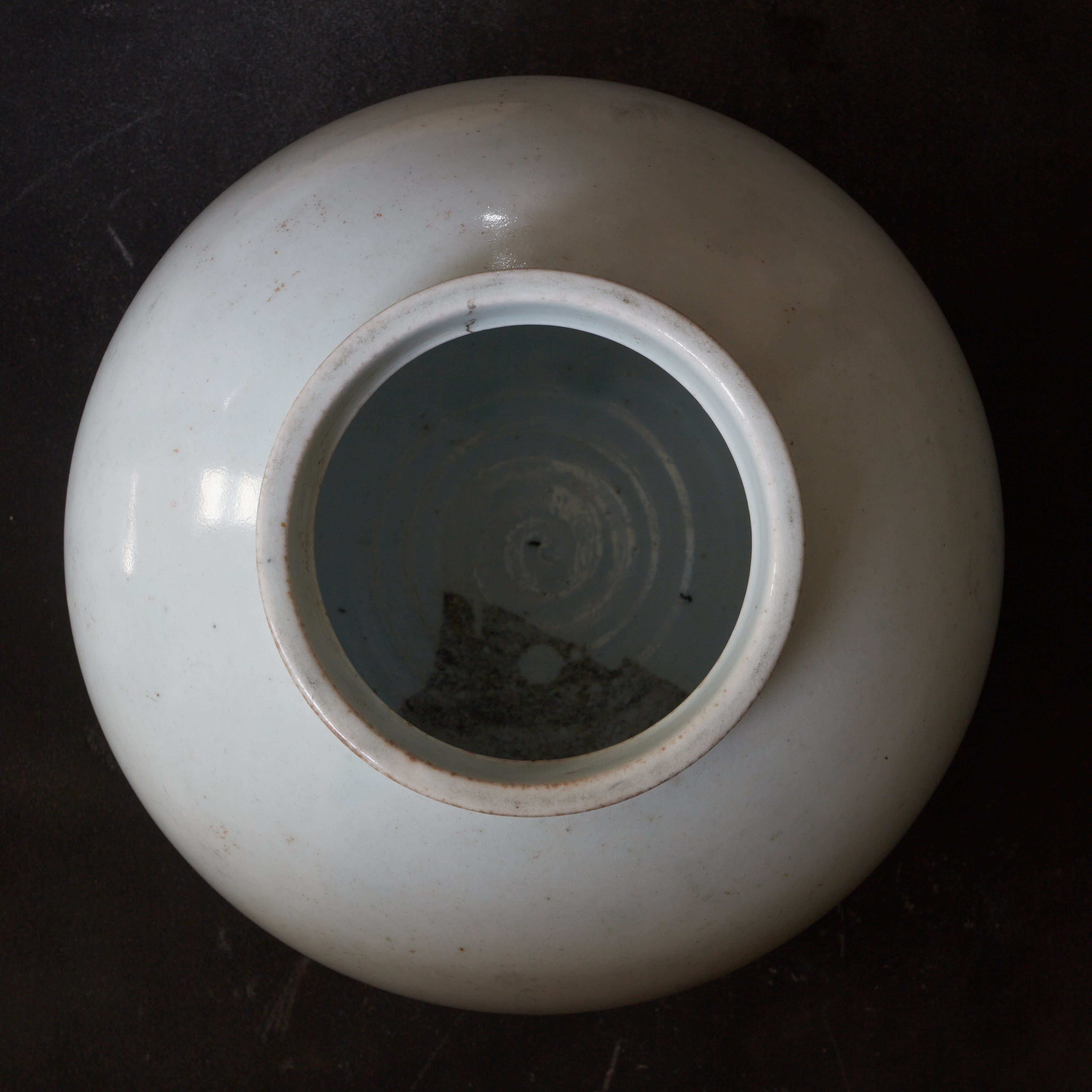
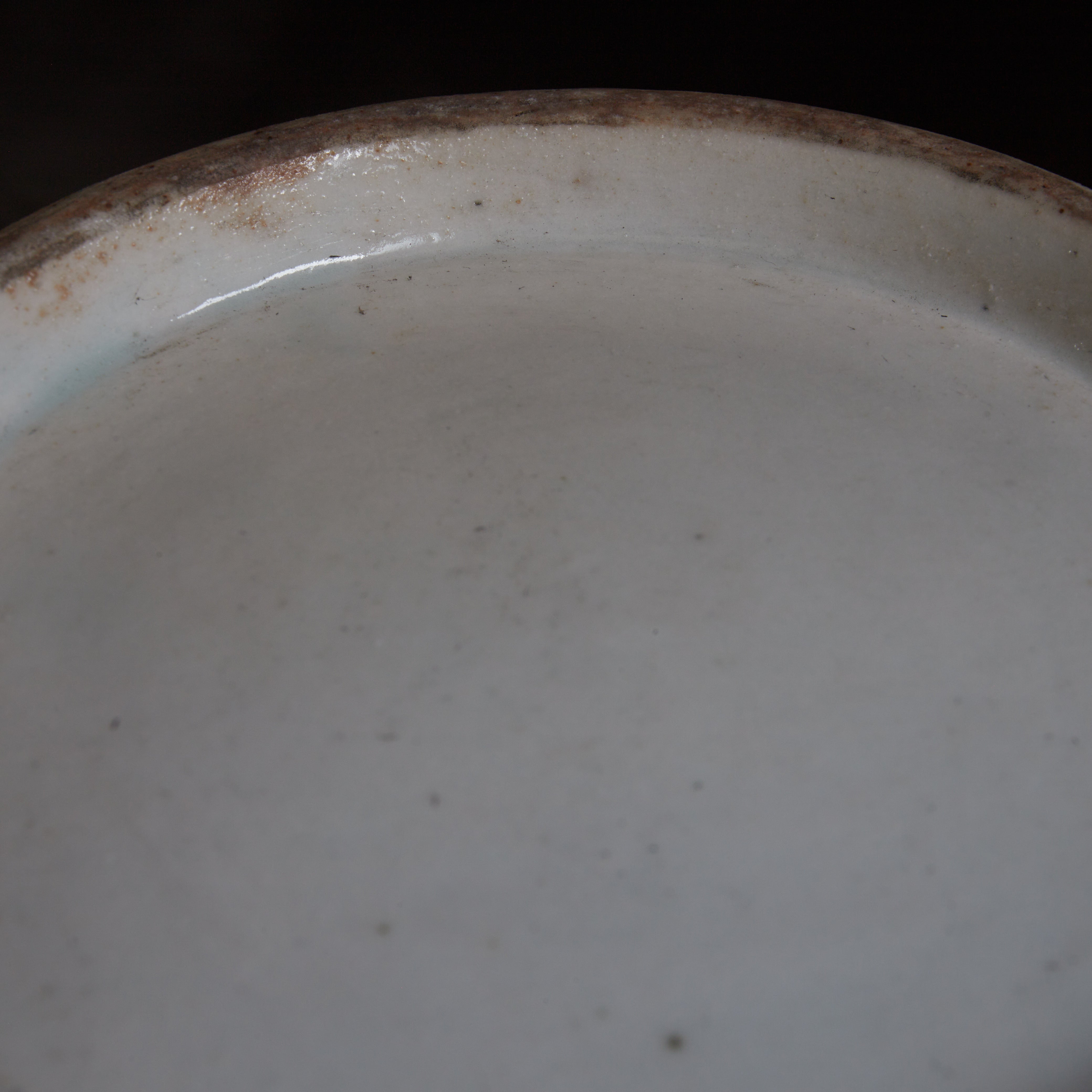
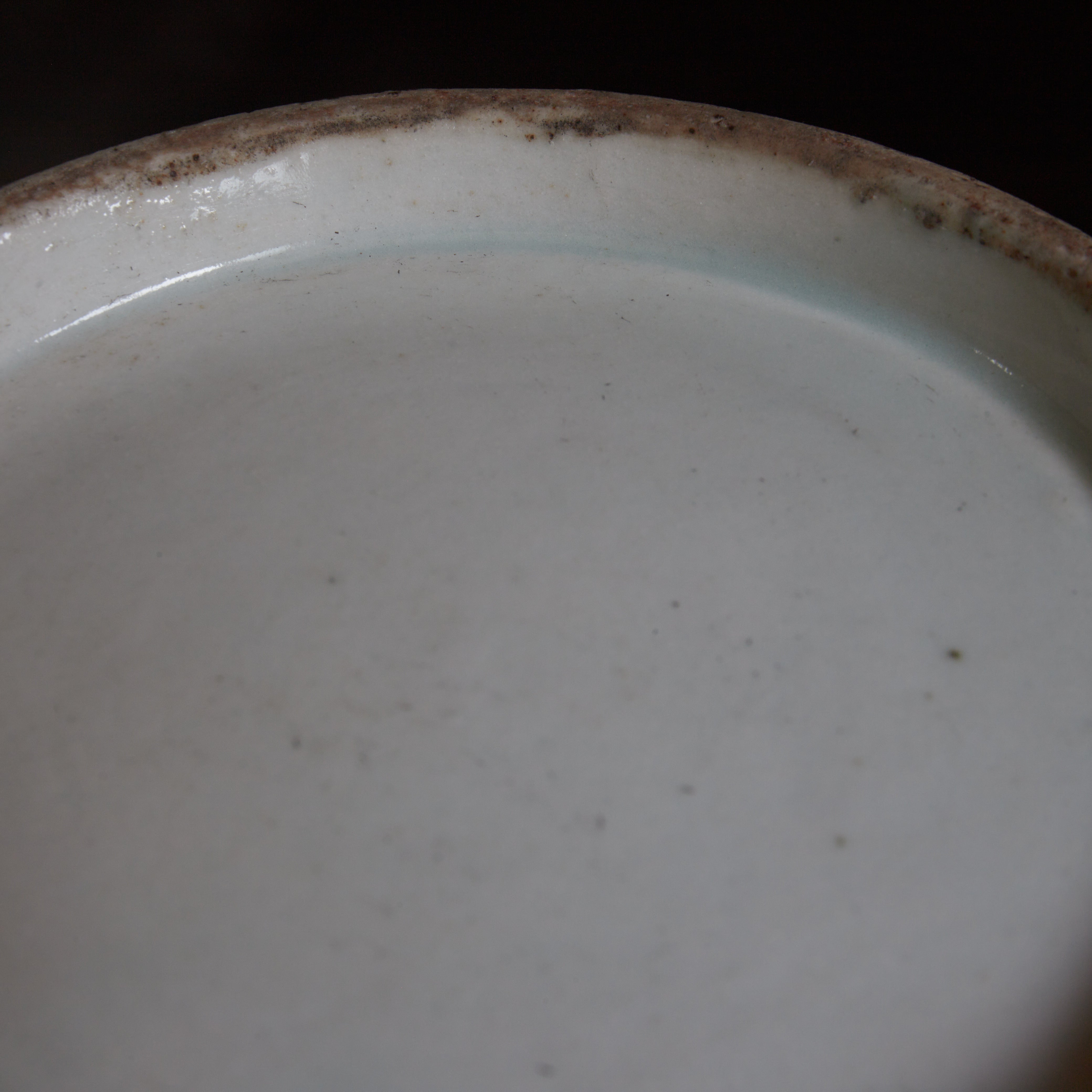
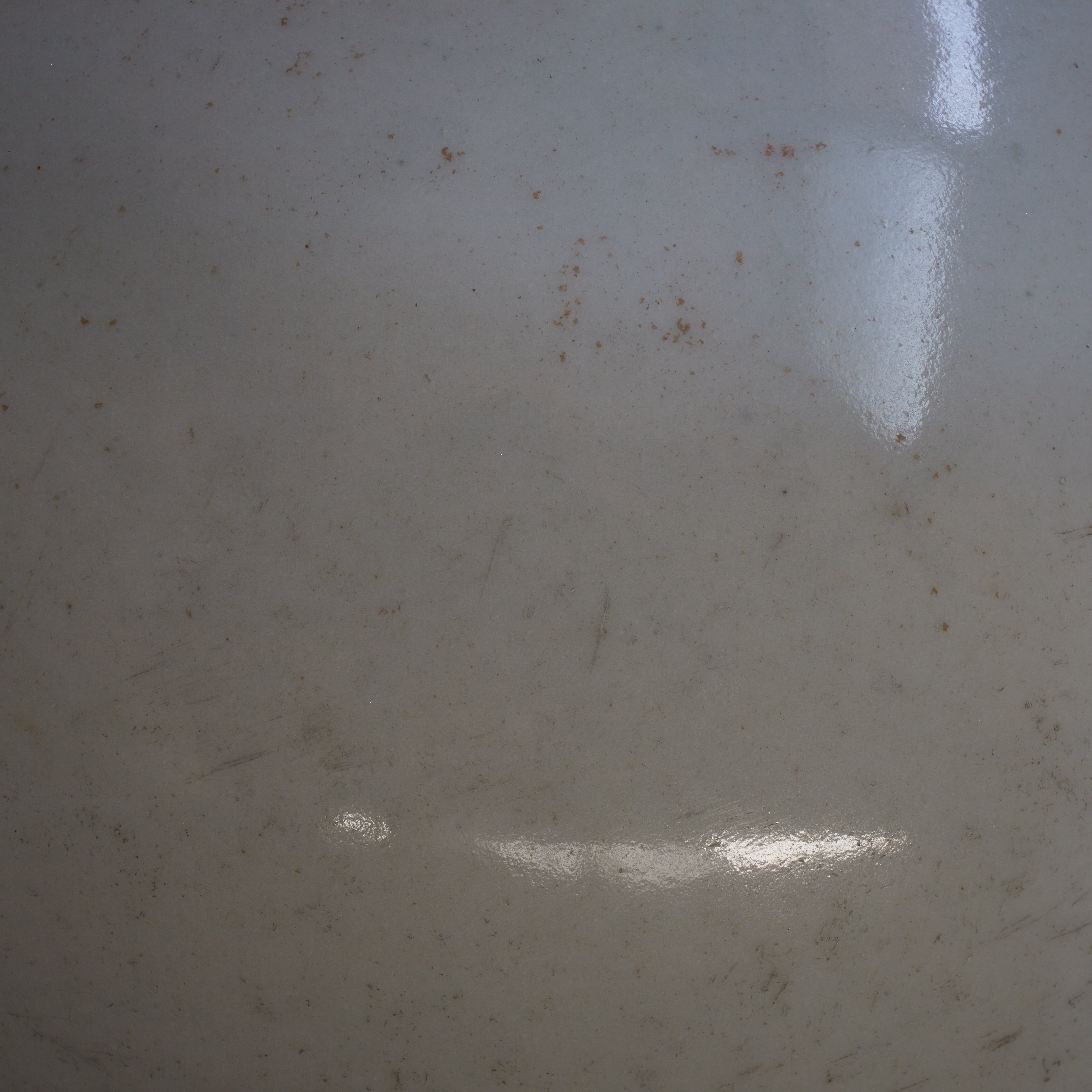
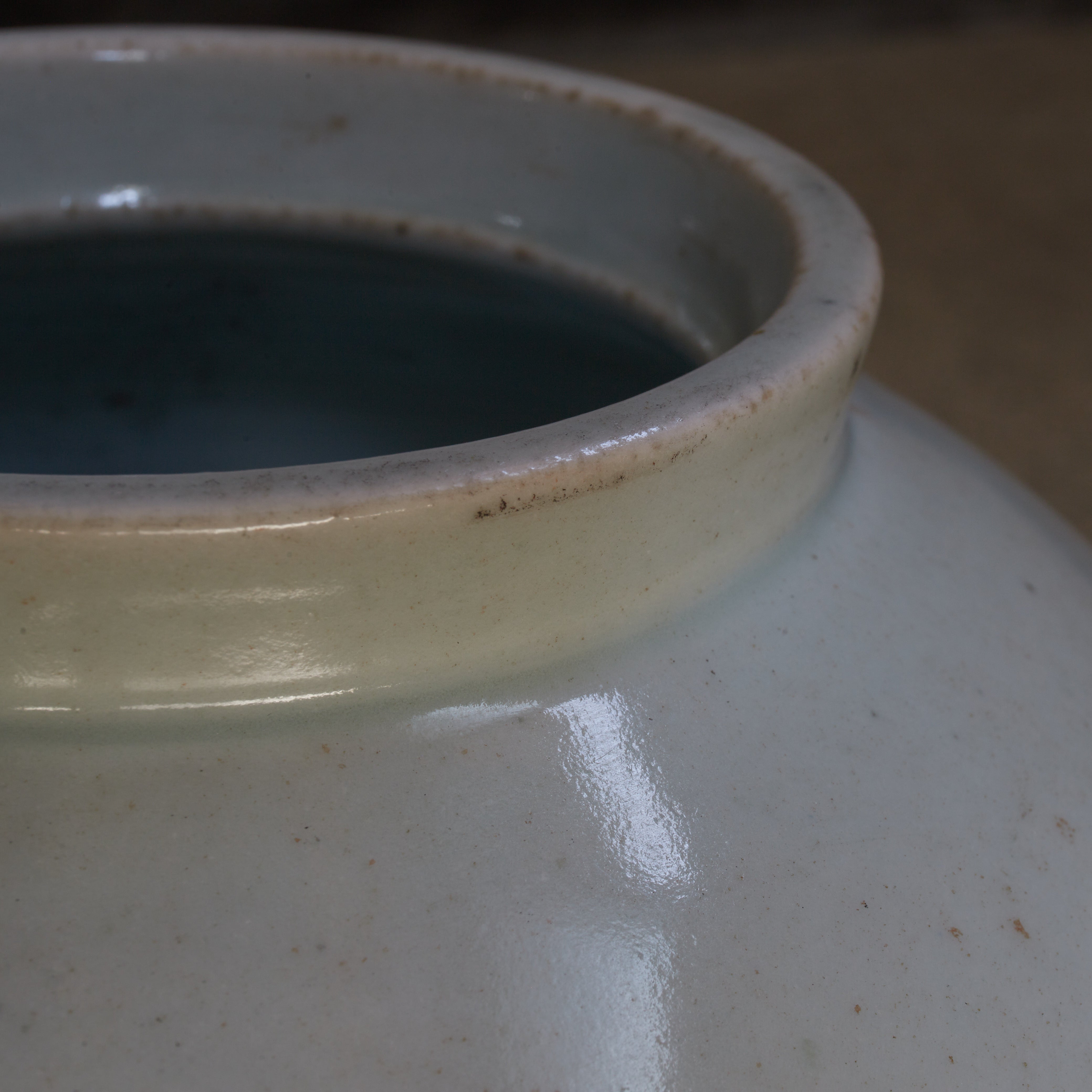
The glaze is a grayish white with a faint bluish cast. Rather than a bright white, it is a soft, muted tone that forms gentle gradations along the rounded surfaces of the body. The thickened rim, the restrained shoulder, and the plump continuity of the body are all resolved without awkwardness. Precisely because the jar is undecorated, the fullness of its form and the subtle quality of the glaze quietly come forward.
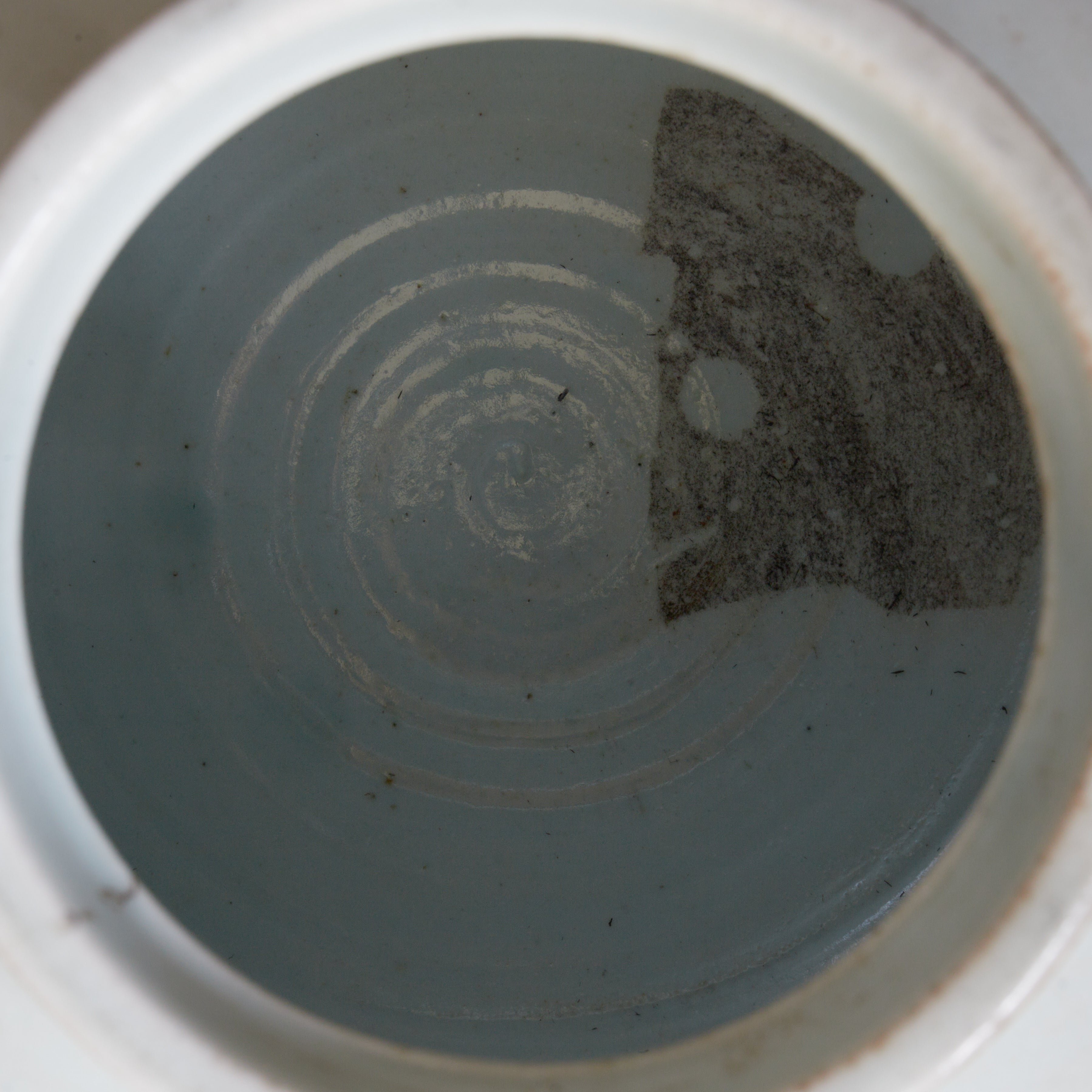
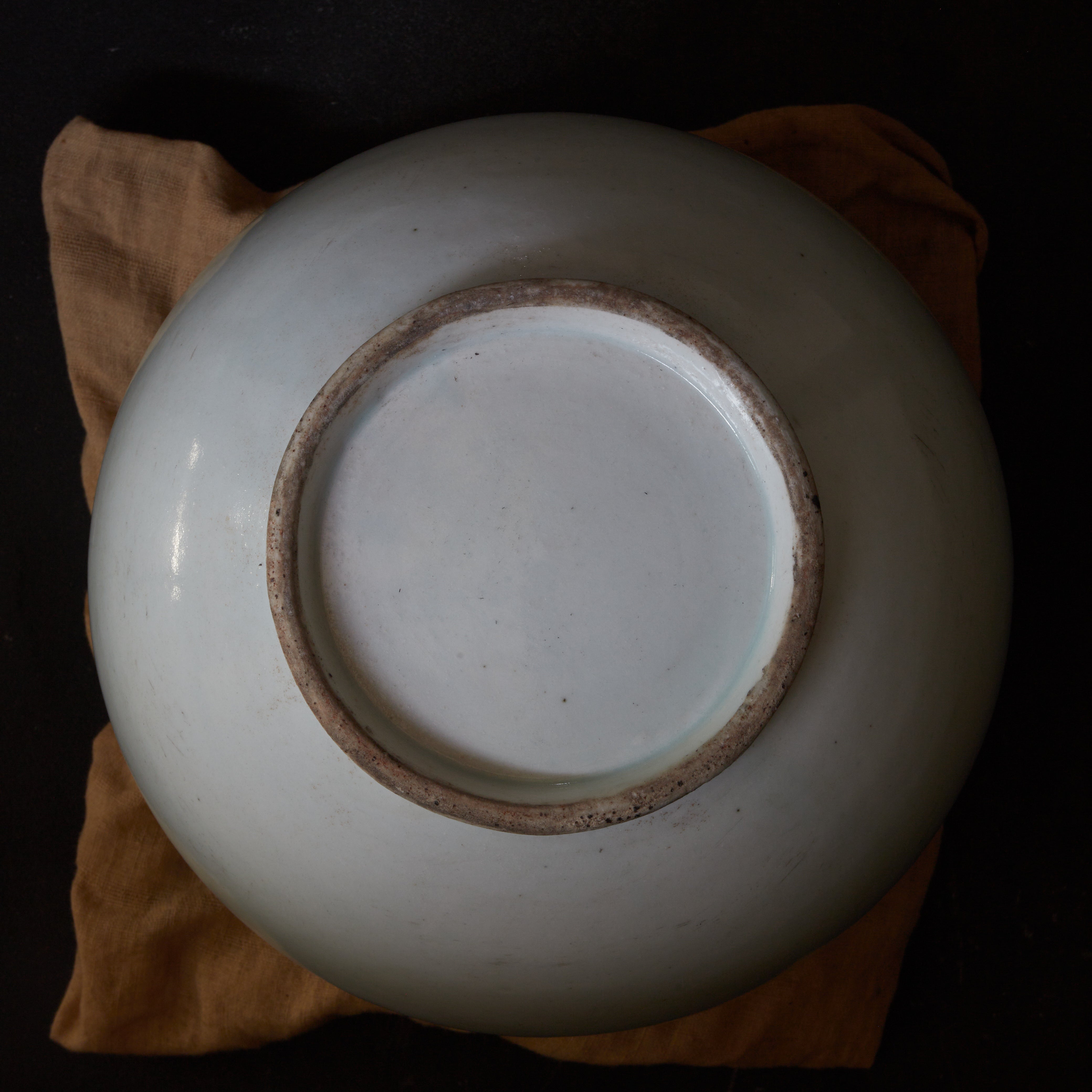
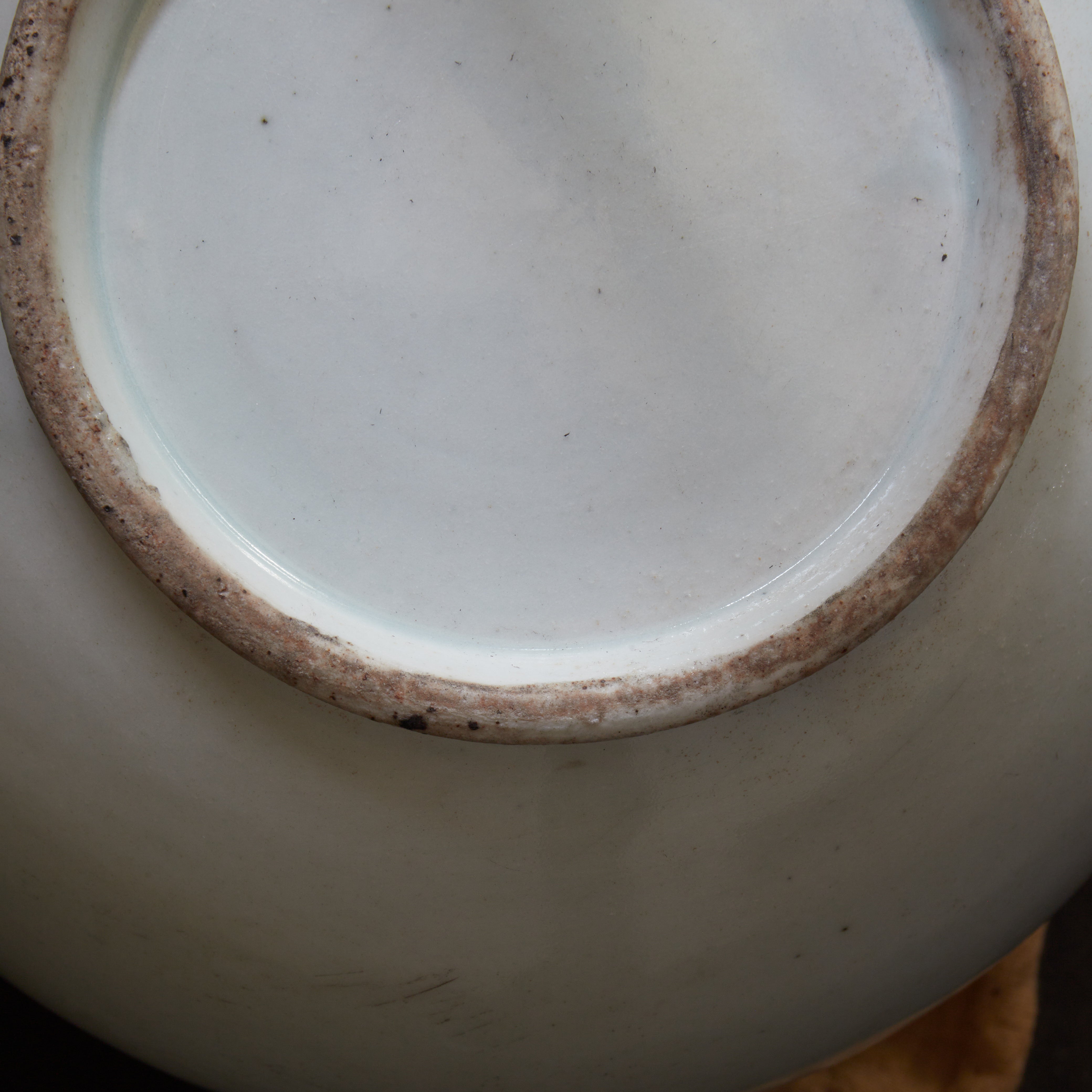
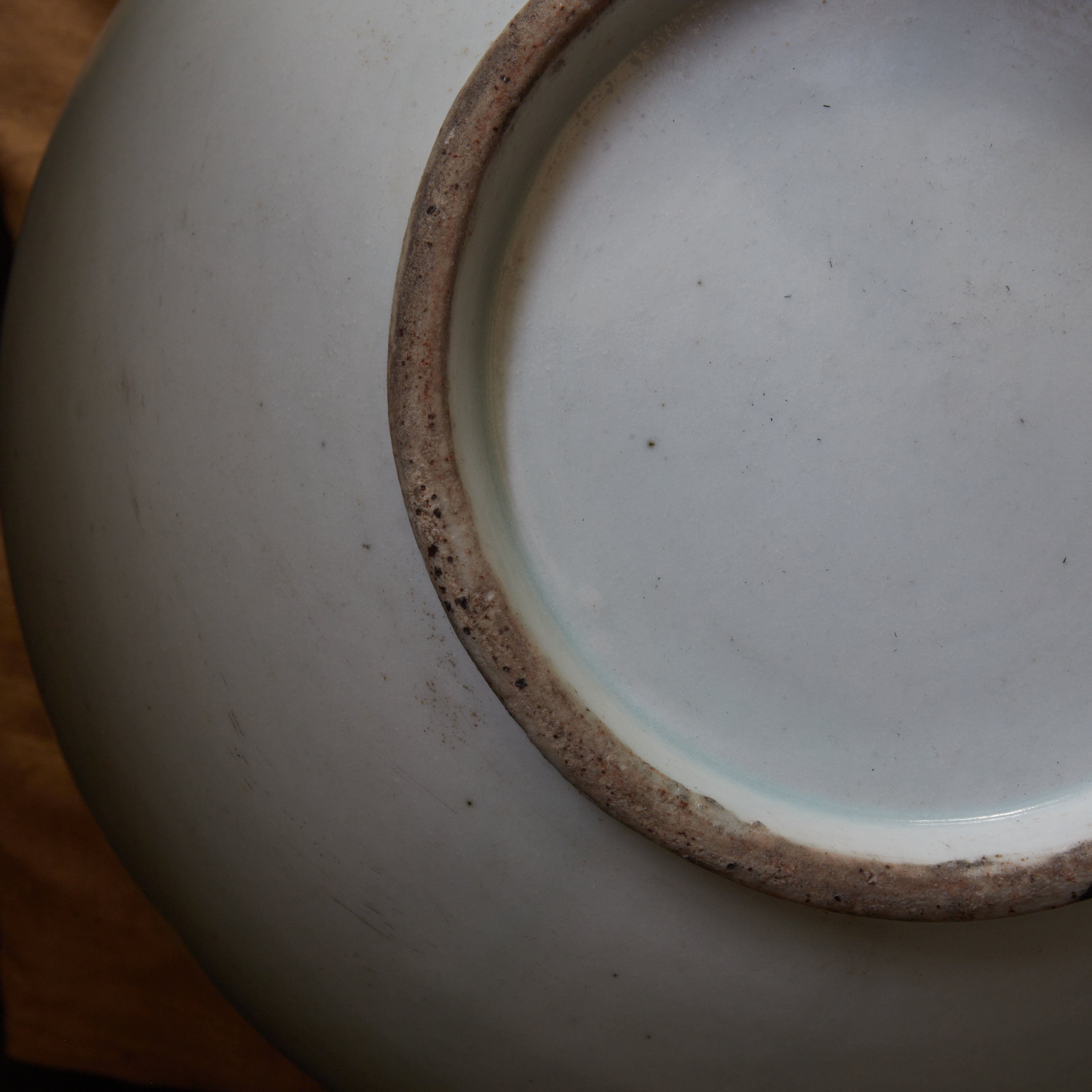
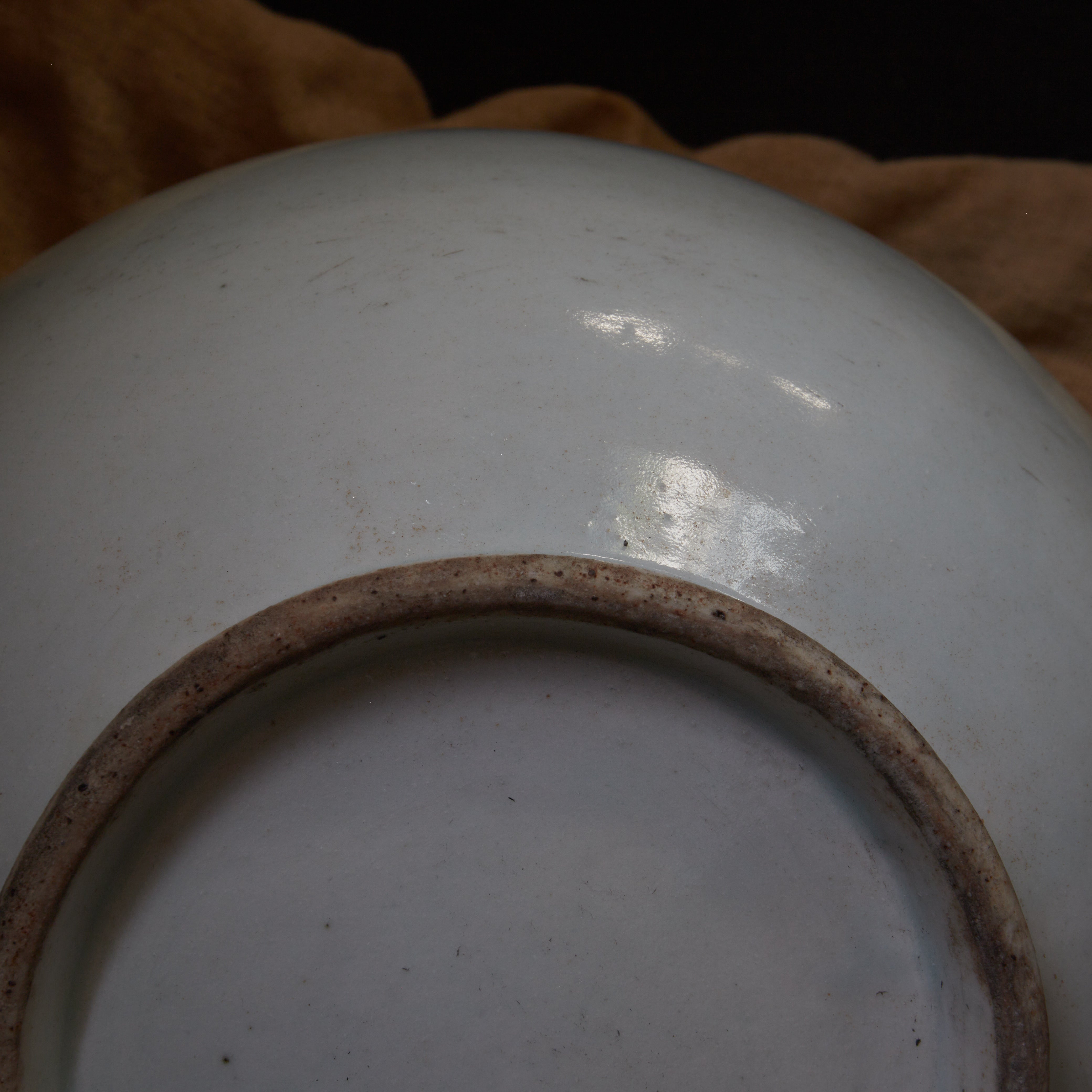
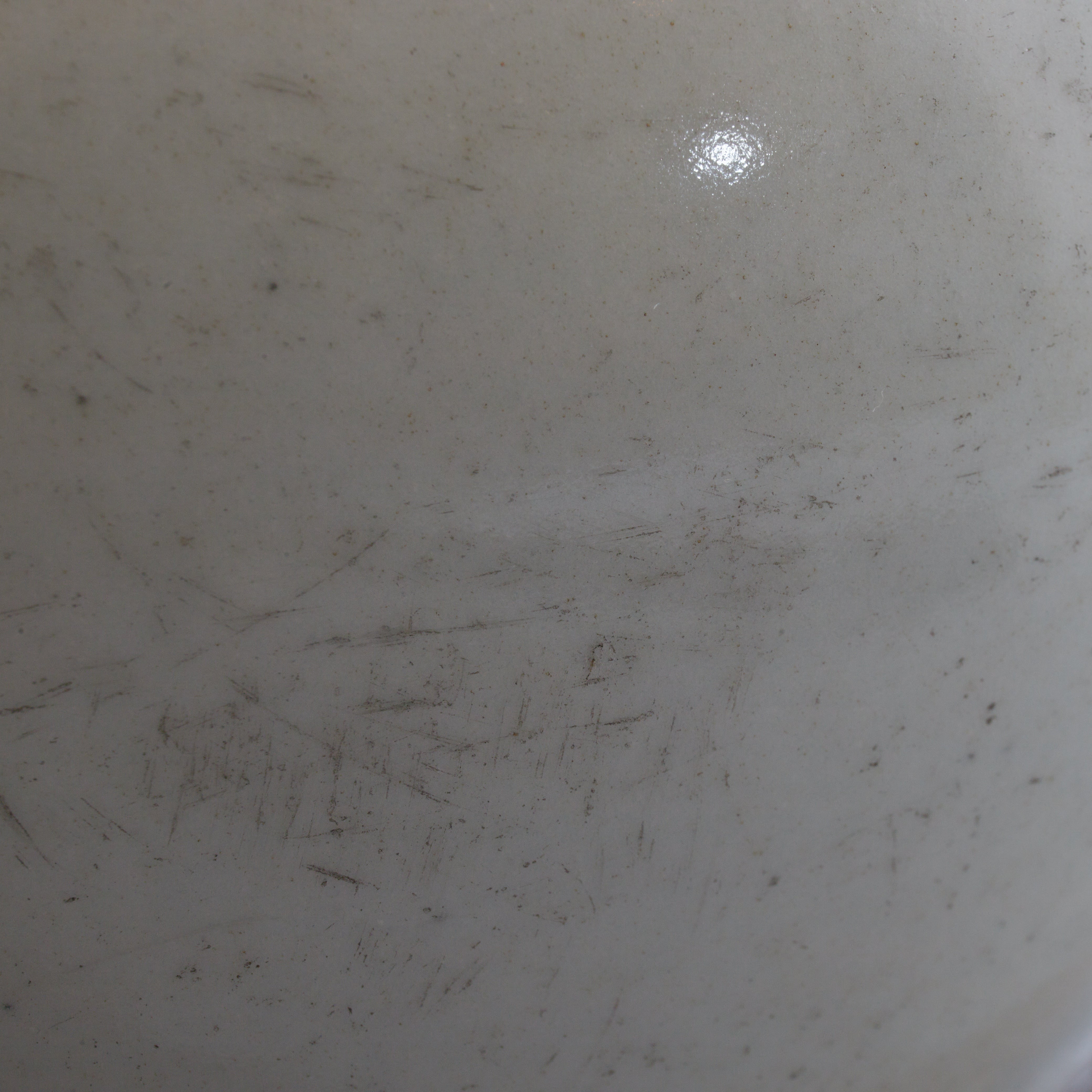
The interior shows bluish glaze pooling, and the base retains wheel-throwing marks. Around the foot, variations at the glaze edge and the texture of the clay are visible, presenting a fired expression distinct from the whiteness of the body. The body and rim bear abrasion, small iron specks, and age-related soiling, all of which harmonize with the jar’s whiteness.
A white porcelain jar defined by its unadorned character, rounded form, and softly white glazed surface. Well suited to display on an alcove or shelf, it readily conveys the quiet charm of Joseon white porcelain.

Its aesthetic placed emphasis not on surface splendor or technical virtuosity, but on forms and modes of being that quietly support a person’s inner life. Vessels and furniture were not simply tools for use; they may also have served as a kind of “place of self-cultivation,” ordering one’s daily conduct and state of mind. A plain jar in a scholar’s study, a simple desk, an undecorated brush rest—these were objects before the eye, but also mirrors of one’s posture and thought.
It is no accident that crafts from the Joseon period possess a presence that “does not say too much.” They were made to accompany the inner life—not to overwhelm the viewer, but to breathe alongside us and quietly restore a sense of order.
In white porcelain, for example, such “unintended phenomena” as the slight flow of glaze, variations in the clay body, or slight irregularities of form were accepted as they were. They embody a spirit of broad acceptance, unlike the modern aesthetic that treats perfection and uniformity as the highest values. This view reconsiders the boundaries between nature and human making, beauty and imperfection, object and mind; it is not an exaggeration to say that it existed beyond the frame of craft as the spirit of an age.
If we were to name it, the beauty of Joseon is not a “beauty of display” but a “beauty of resonance.” Its beauty lies not solely in the attraction of the object itself, but in the opportunity it gives us to reconsider how a person ought to be through the object. For this reason, an object must not speak too much; it must contain intervals, open space, and silence. I cannot help feeling that such thought runs beneath the making of these objects.
These values eventually crossed the sea and took deep root in Japan. In the world of chanoyu in particular, Joseon white porcelain and buncheong ware were already being used by the Momoyama period. Their simple, quiet character—different from the solemn grandeur of Chinese karamono—came to be embraced. The tea aesthetic of “clearing the mind before what does not speak” resonated deeply with the silence and imperfection held in Joseon vessels, nurturing a gaze that found in them the spirit of wabi-sabi.
With the arrival of the modern era, thinkers of the Mingei movement such as Yanagi Sōetsu and Kawai Kanjirō found in Joseon vessels “the power to purify a person” and “a form of life as it ought to be.” At a time when craft was being forgotten, these objects were welcomed not merely as old vessels but, with profound sympathy and respect, as presences reflecting a way of living itself.
When I, living in the present day, encounter the crafts of Joseon, I am moved once again by their stillness. They contain the thought of an age that asked how a person should live and how one should be. That thought has not faded; it continues to resonate clearly even now.
Choose options
Tax excluded. Import duties may apply. Shipping costs are calculated at checkout.
Change language
