

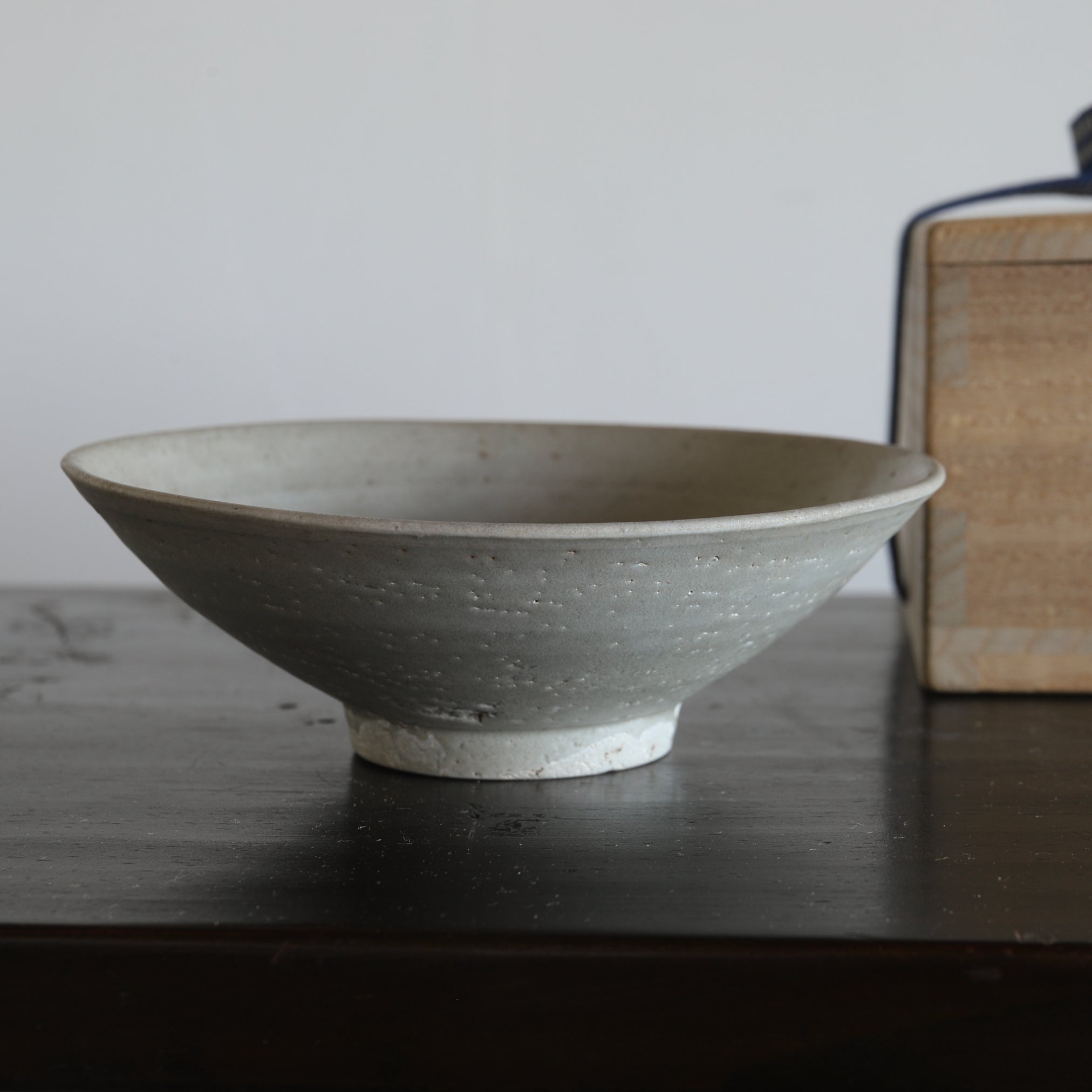
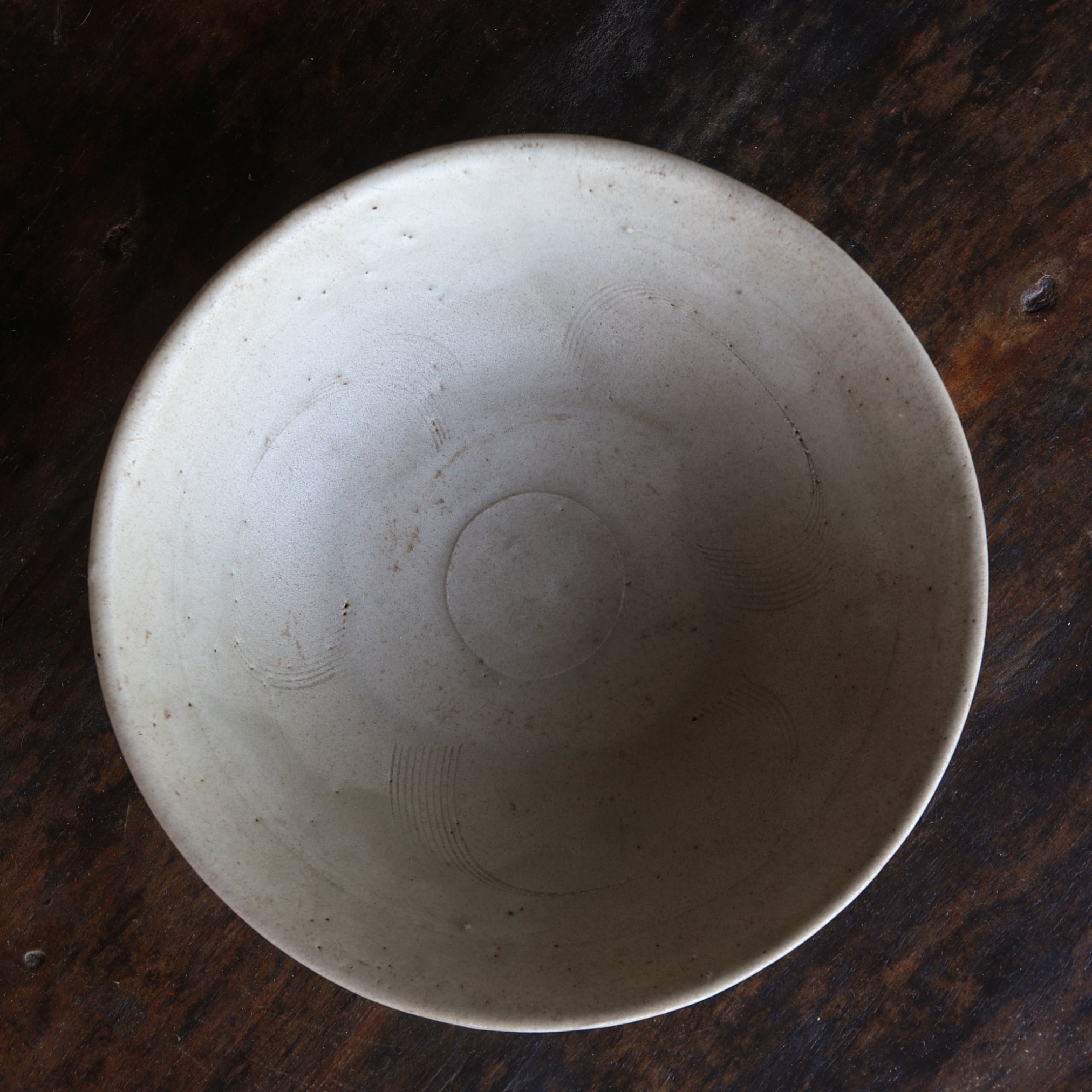
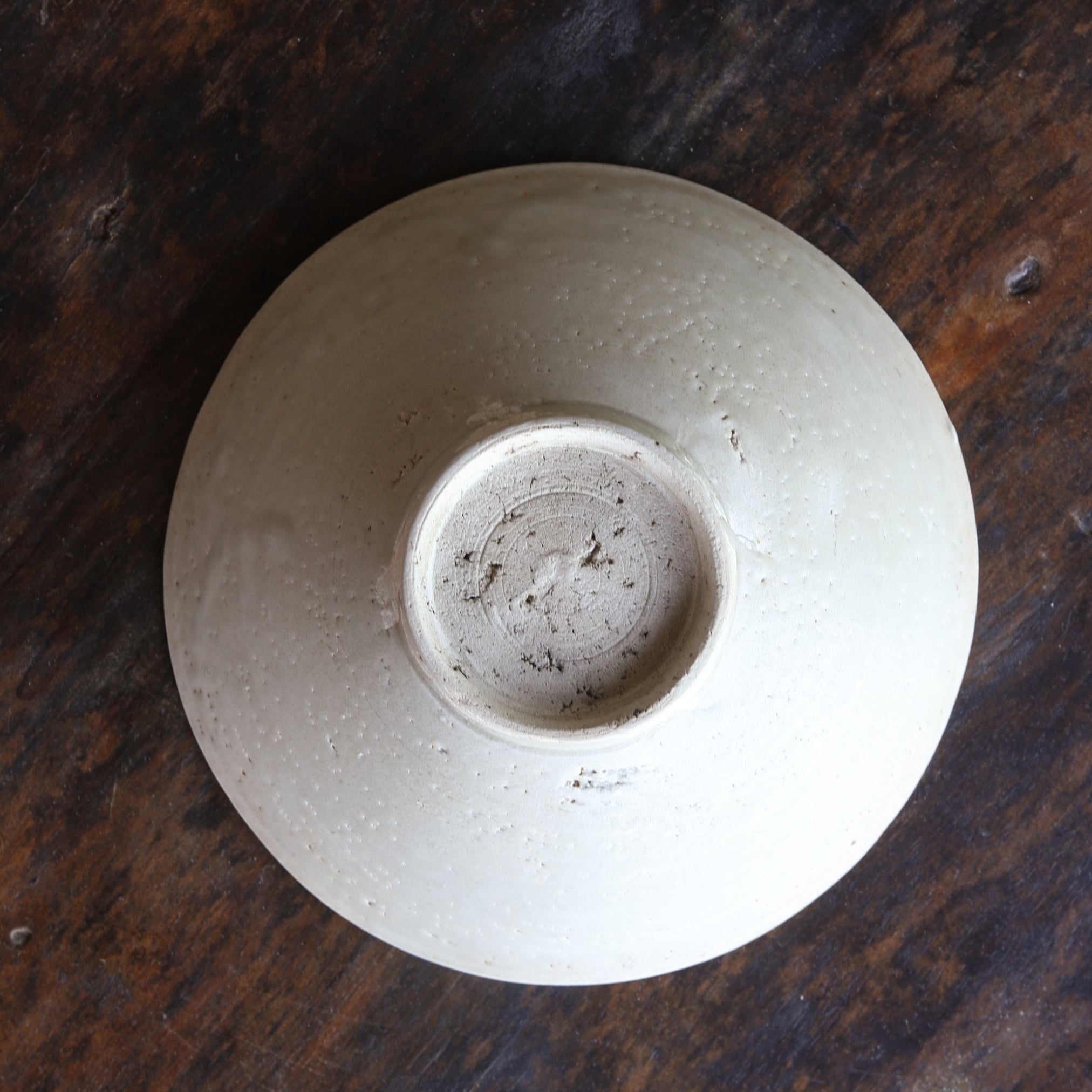
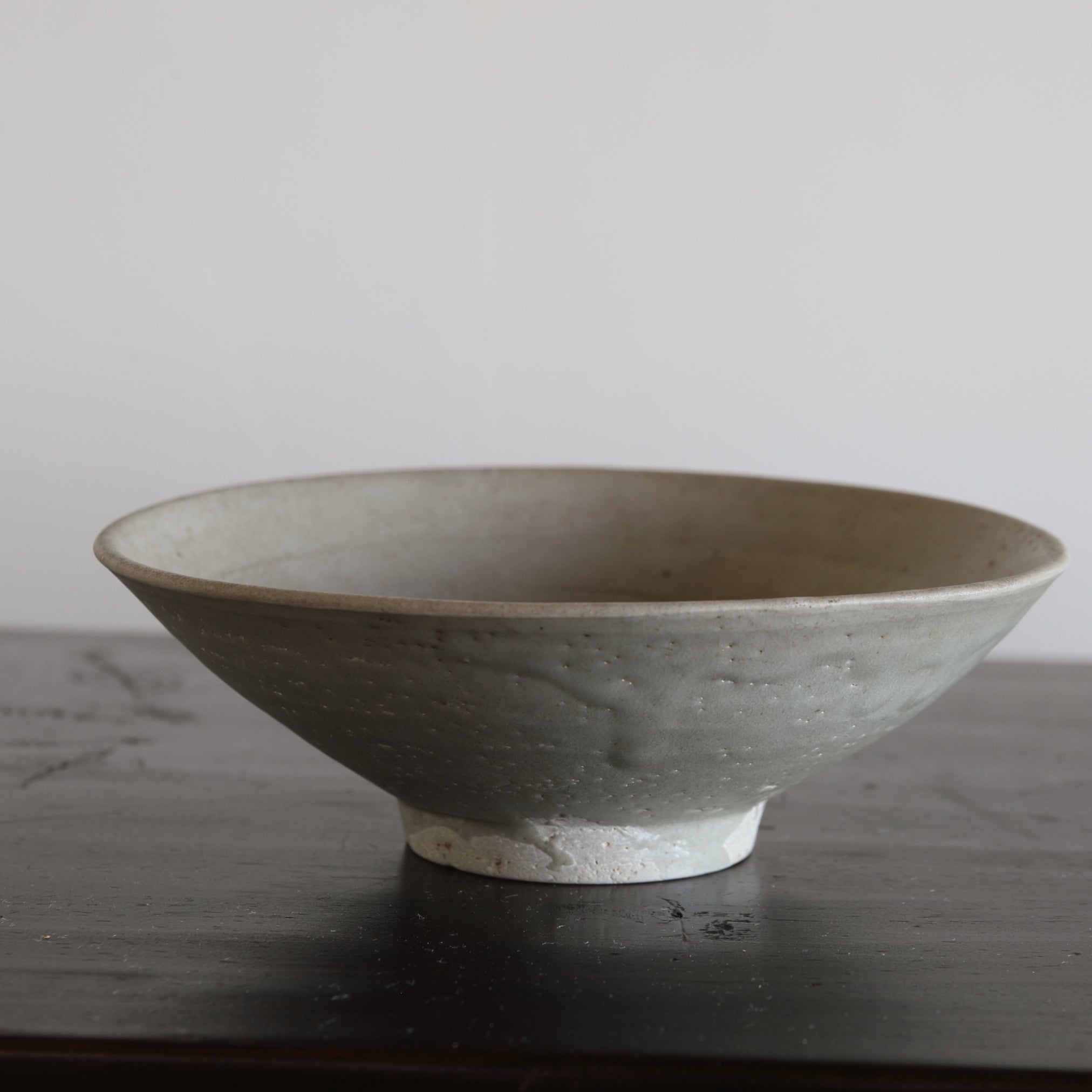
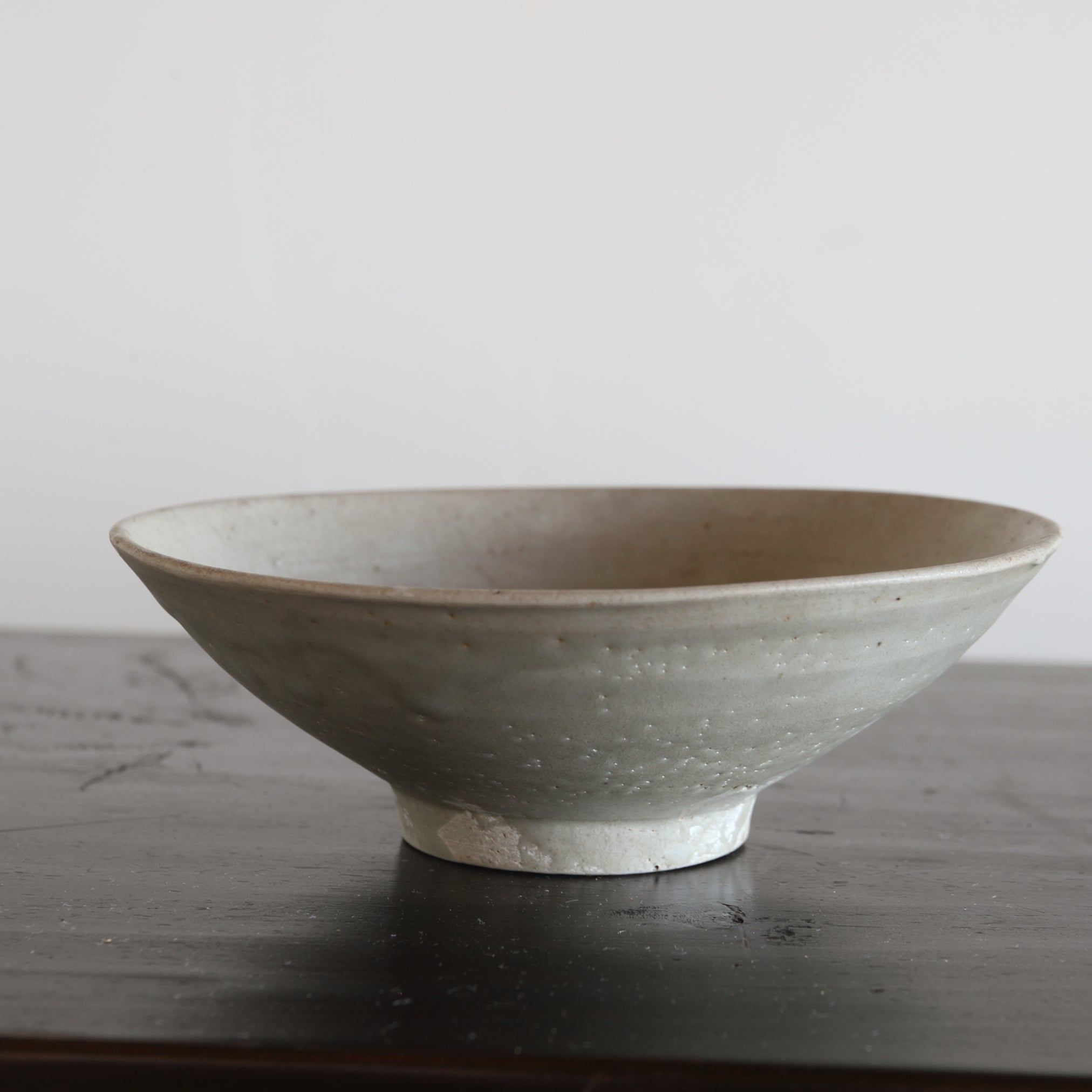
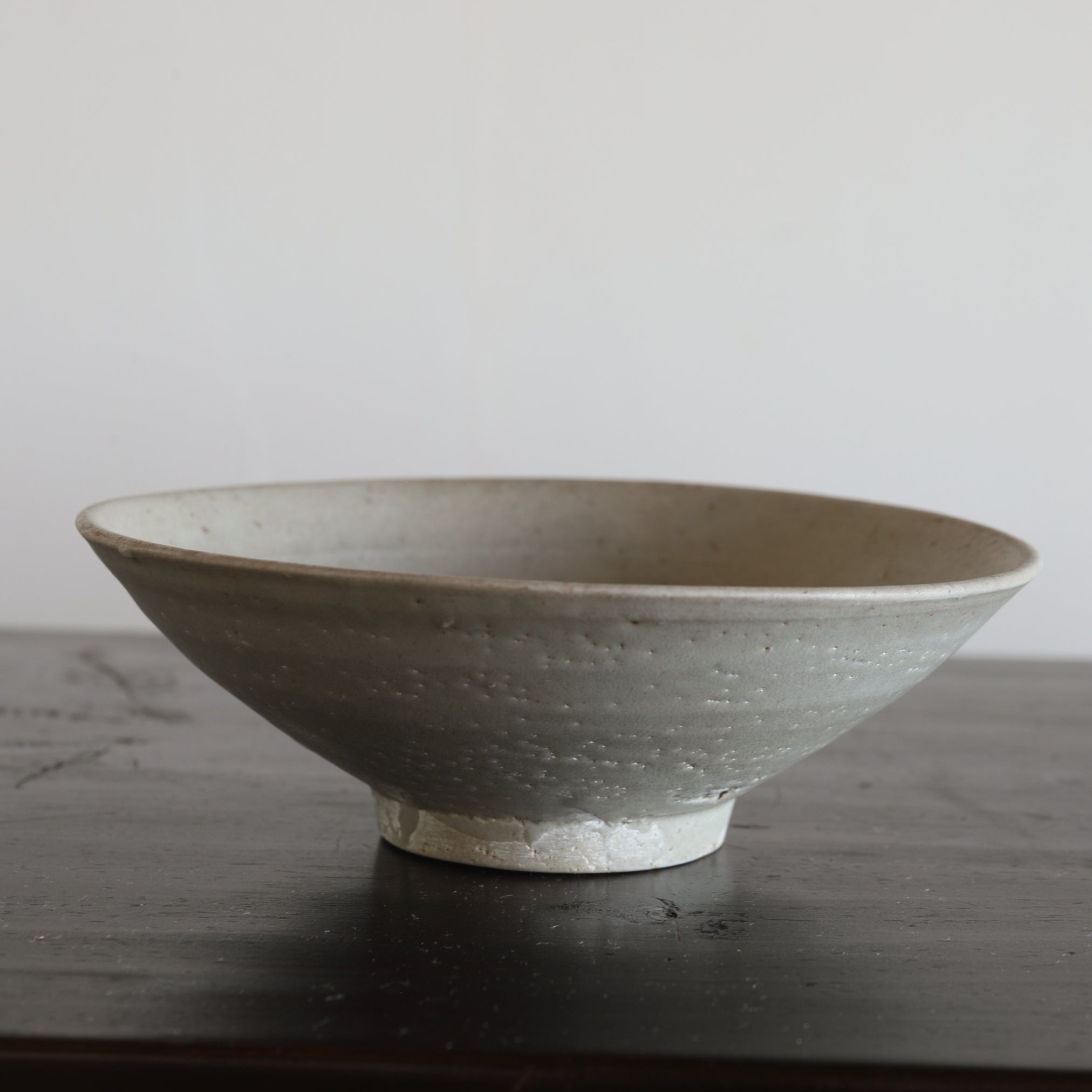
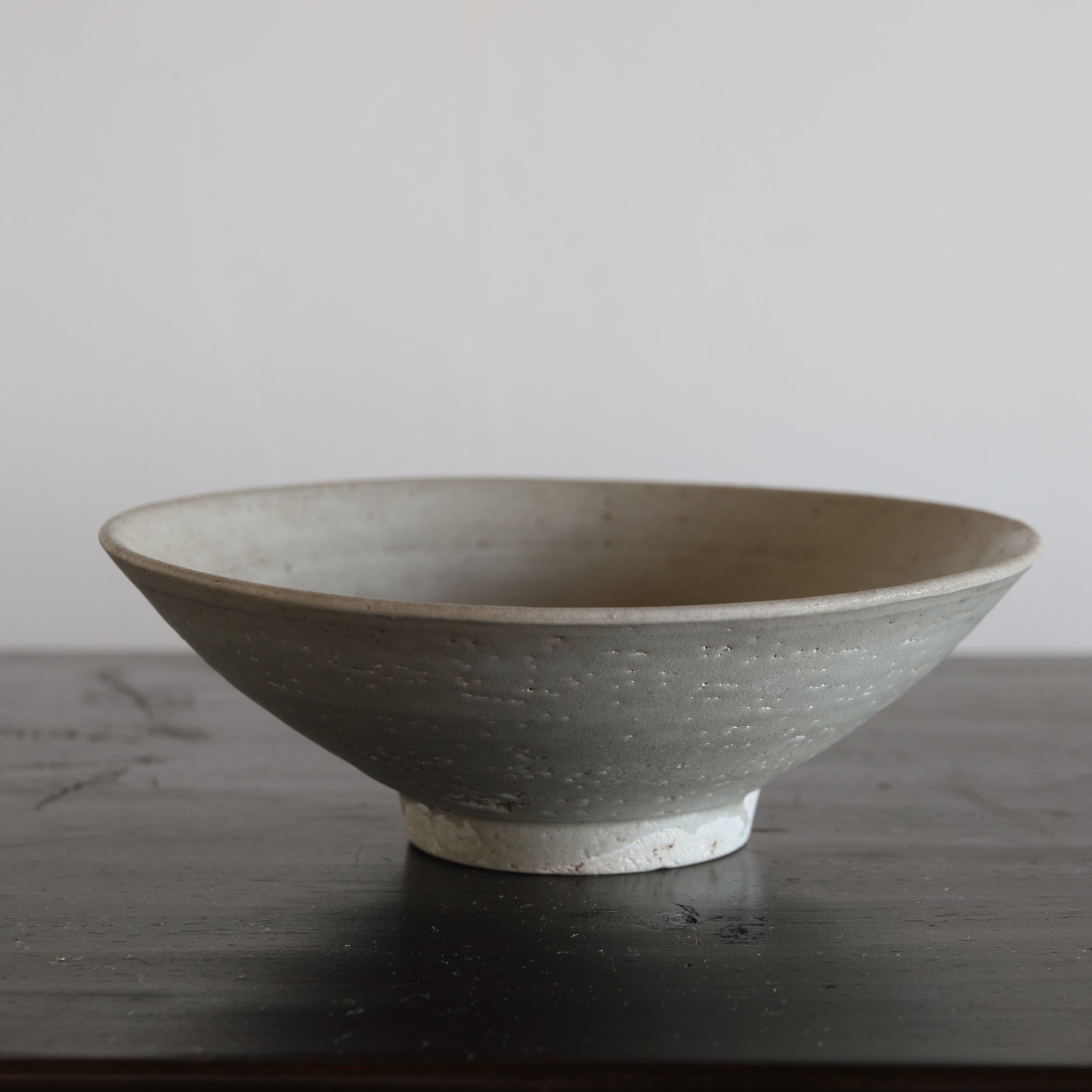
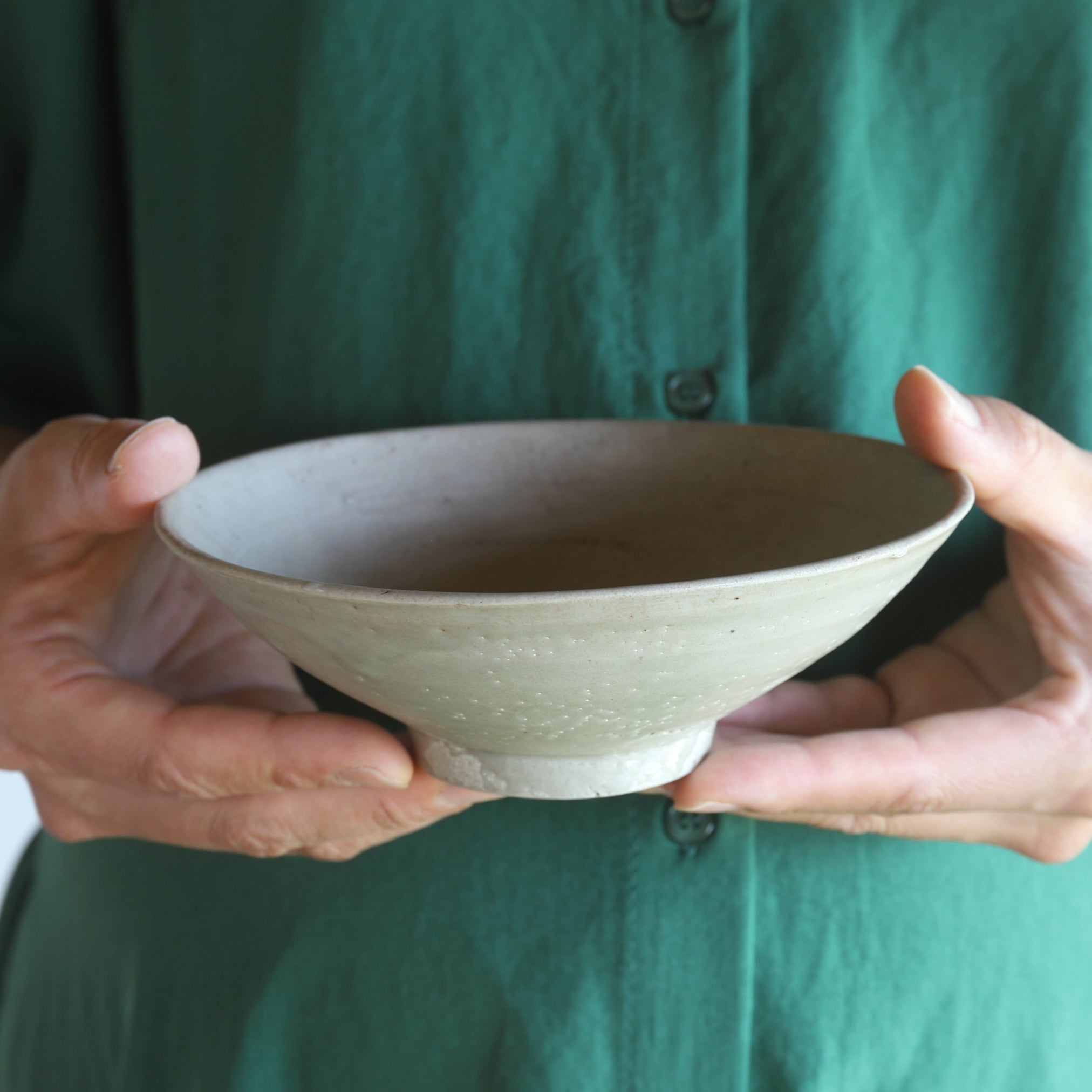
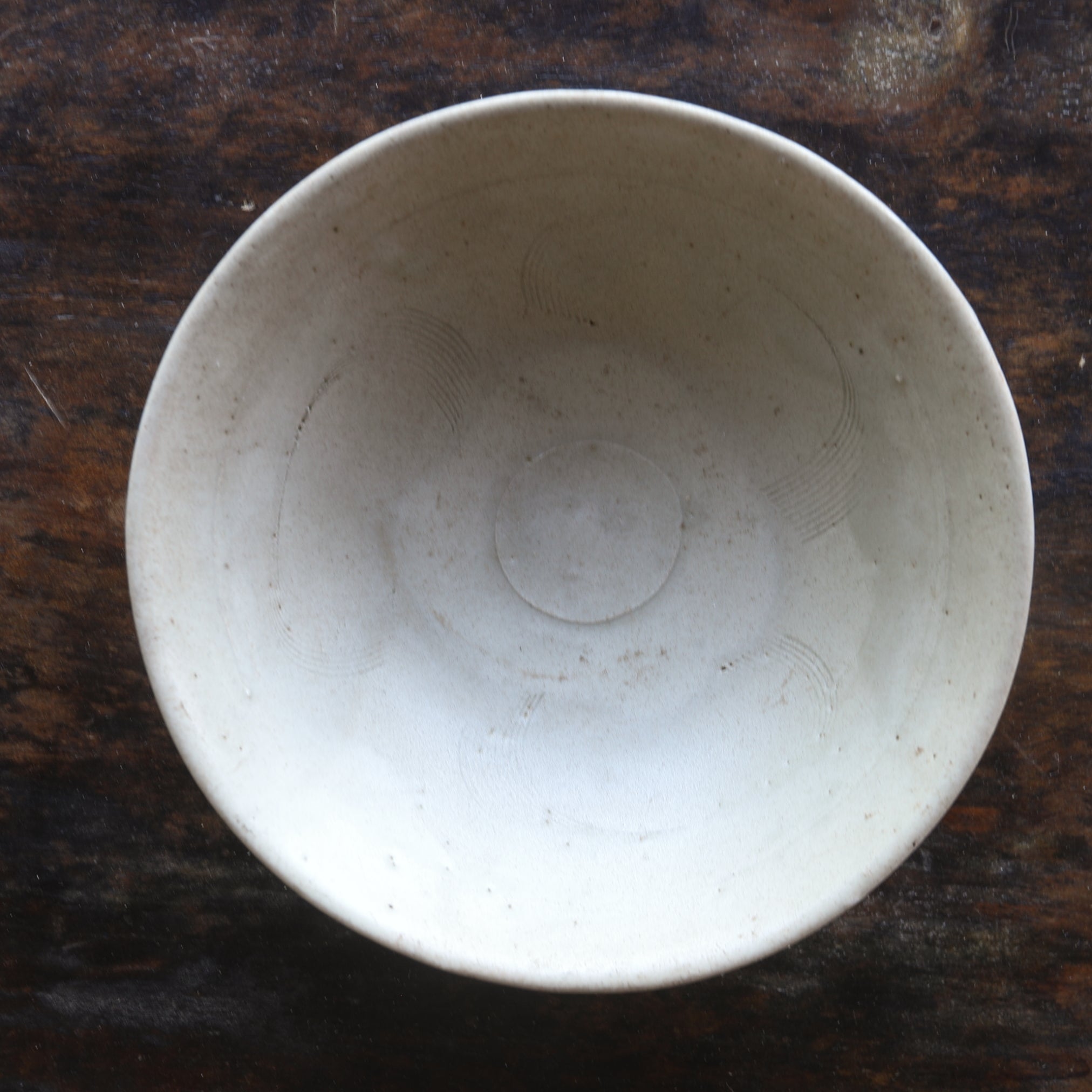
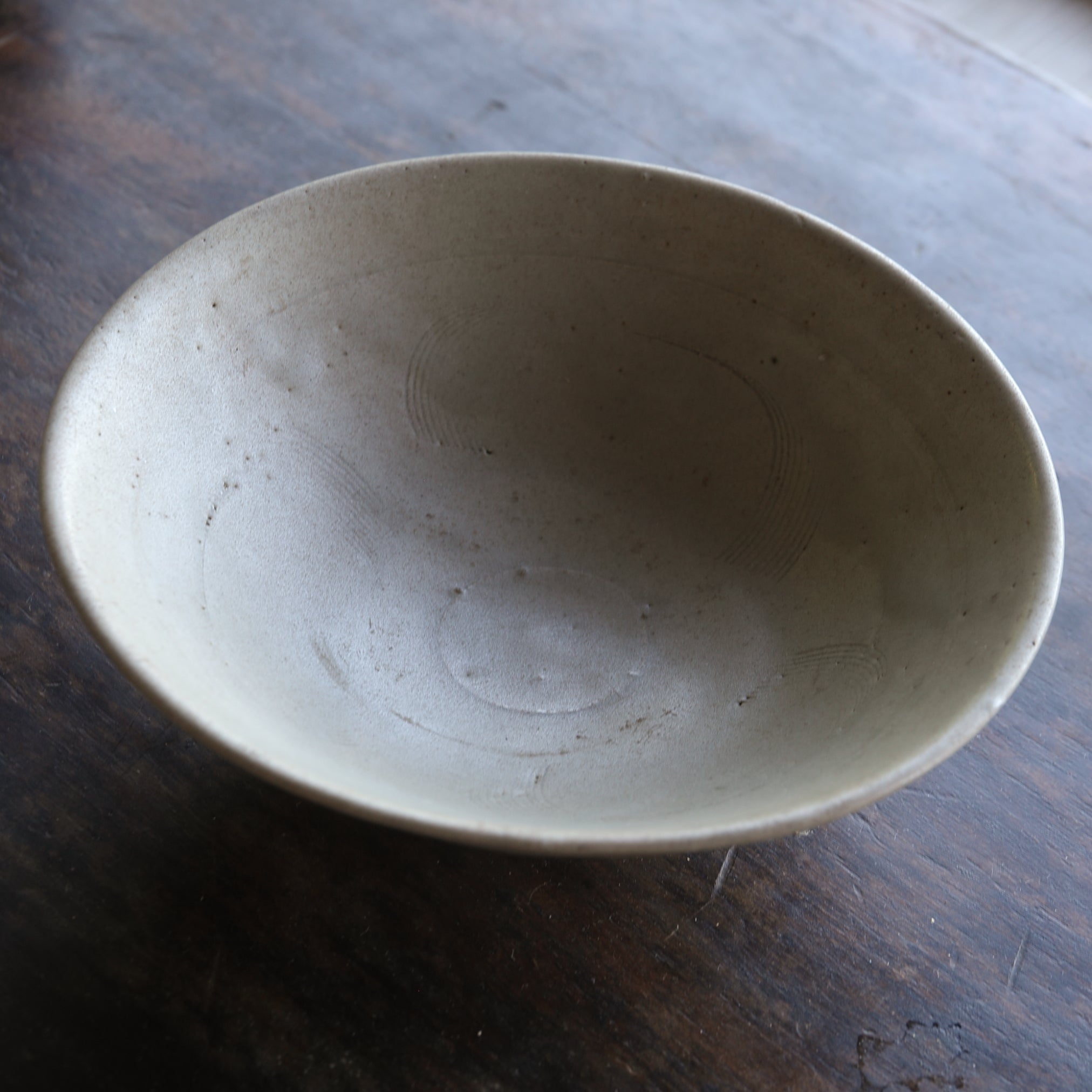
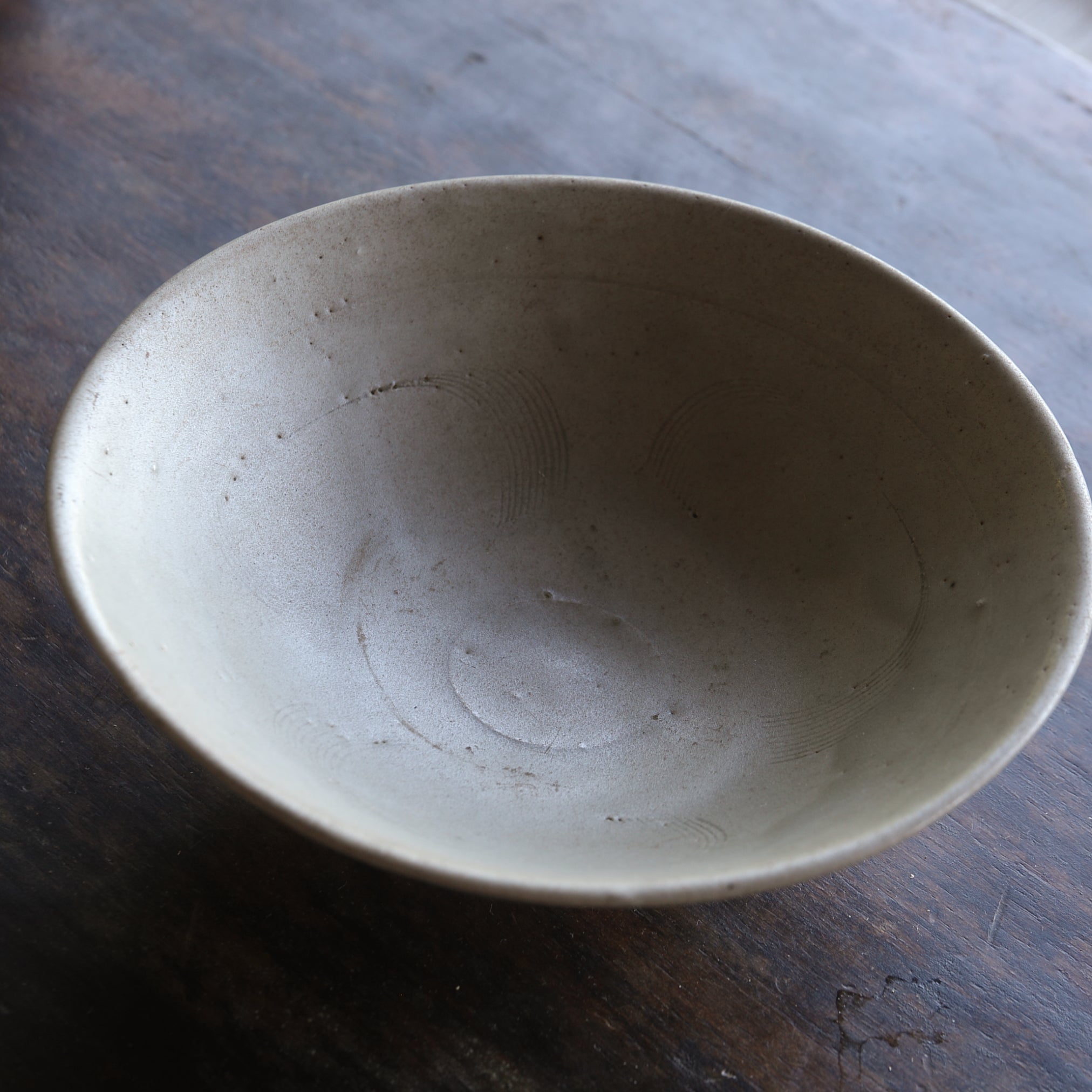
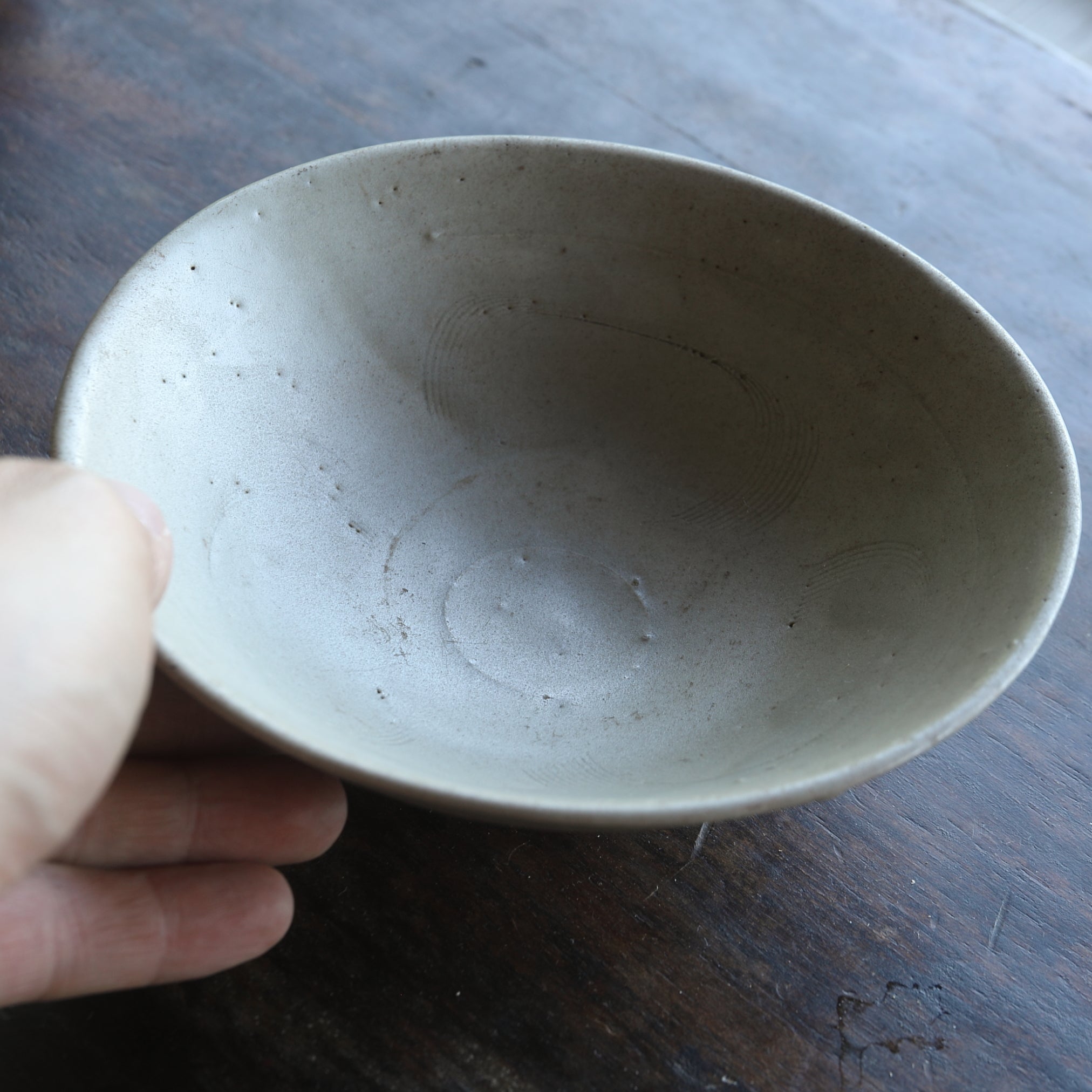
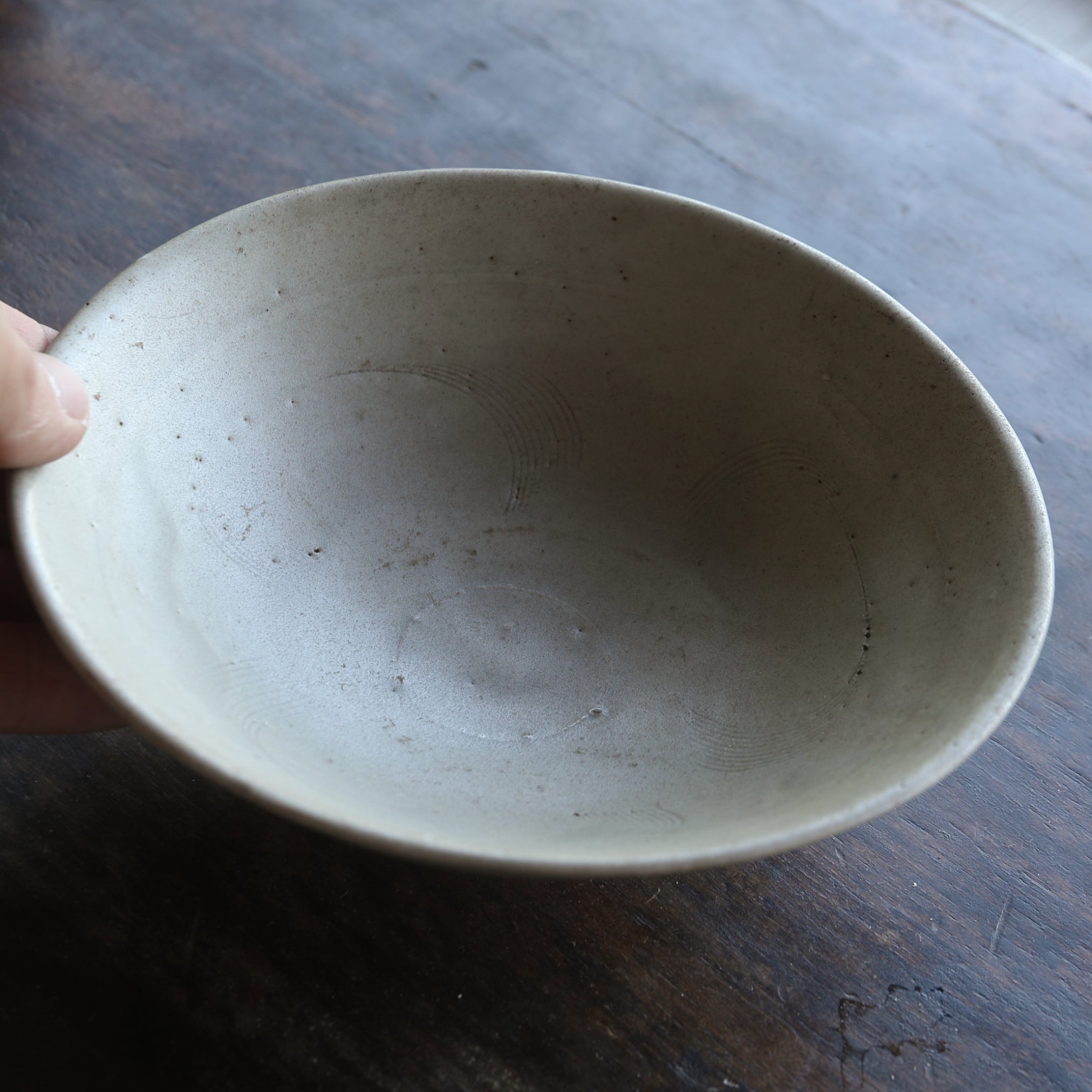
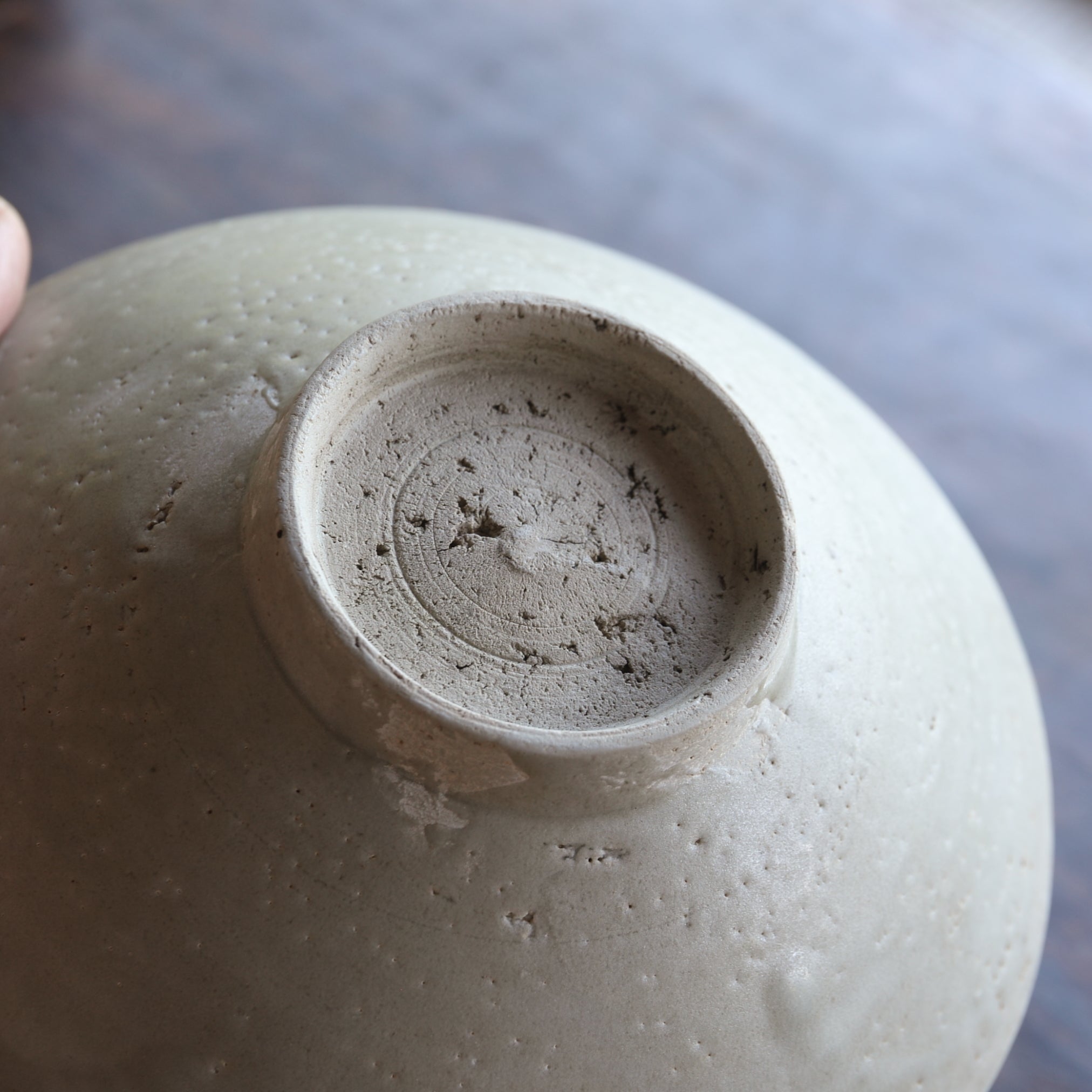
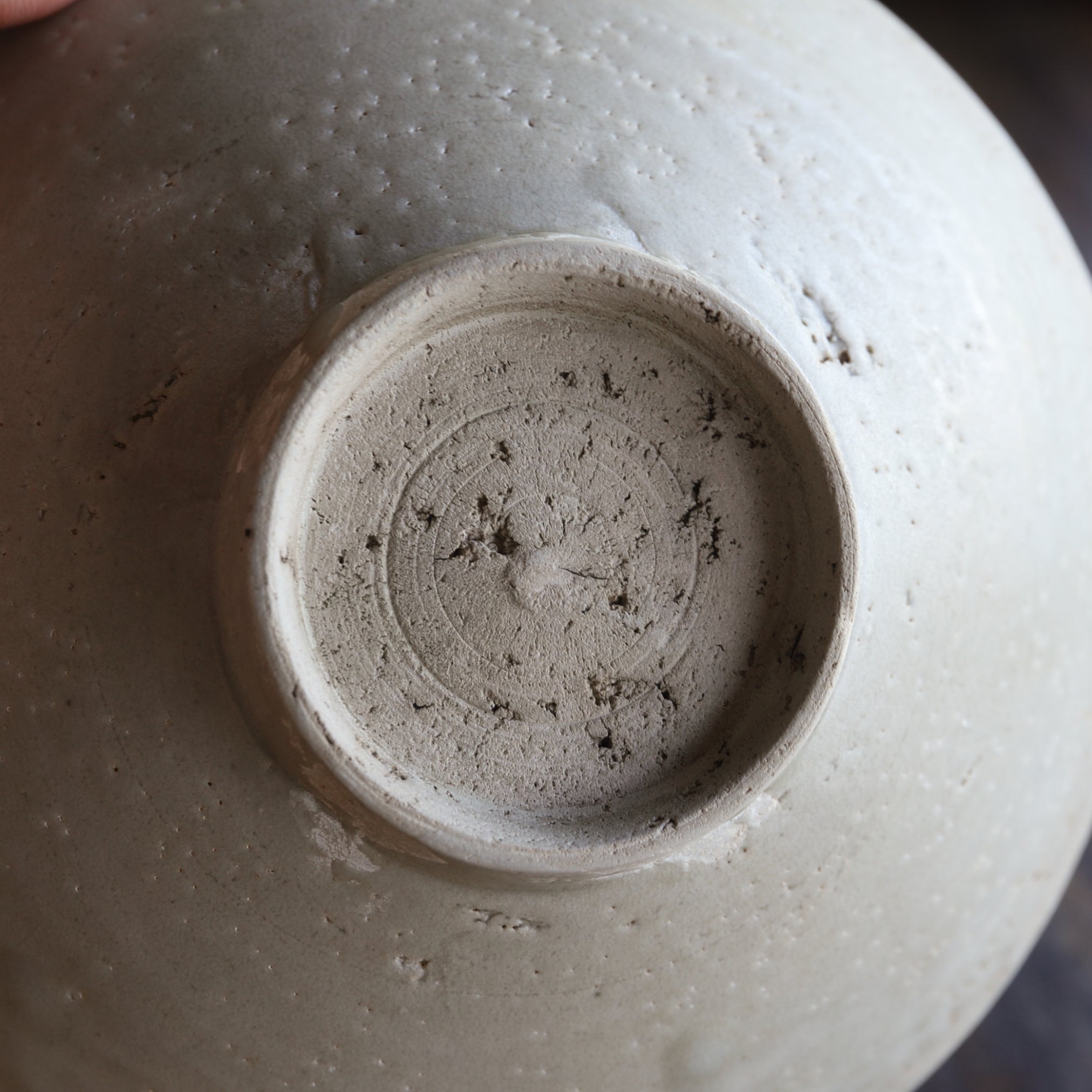
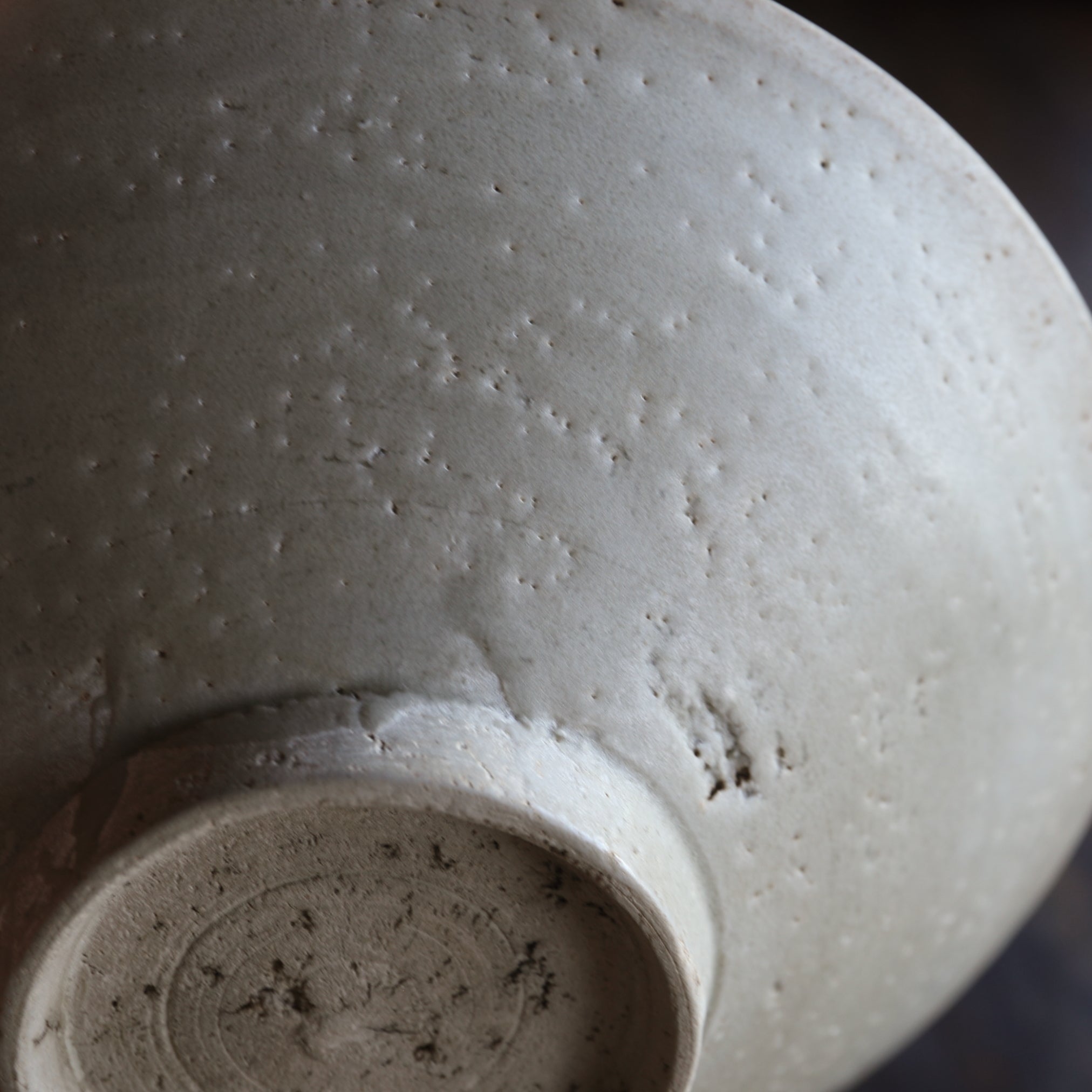
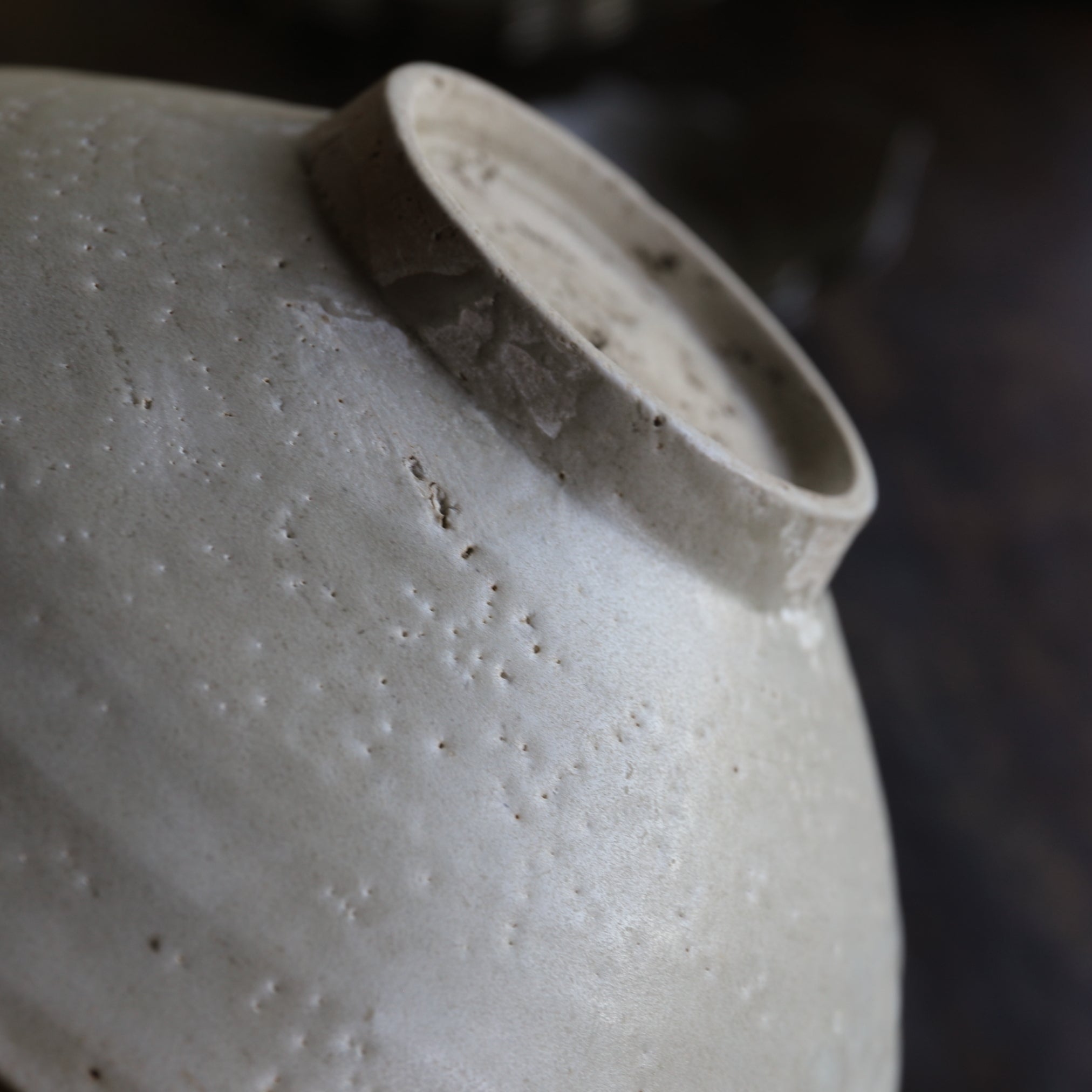
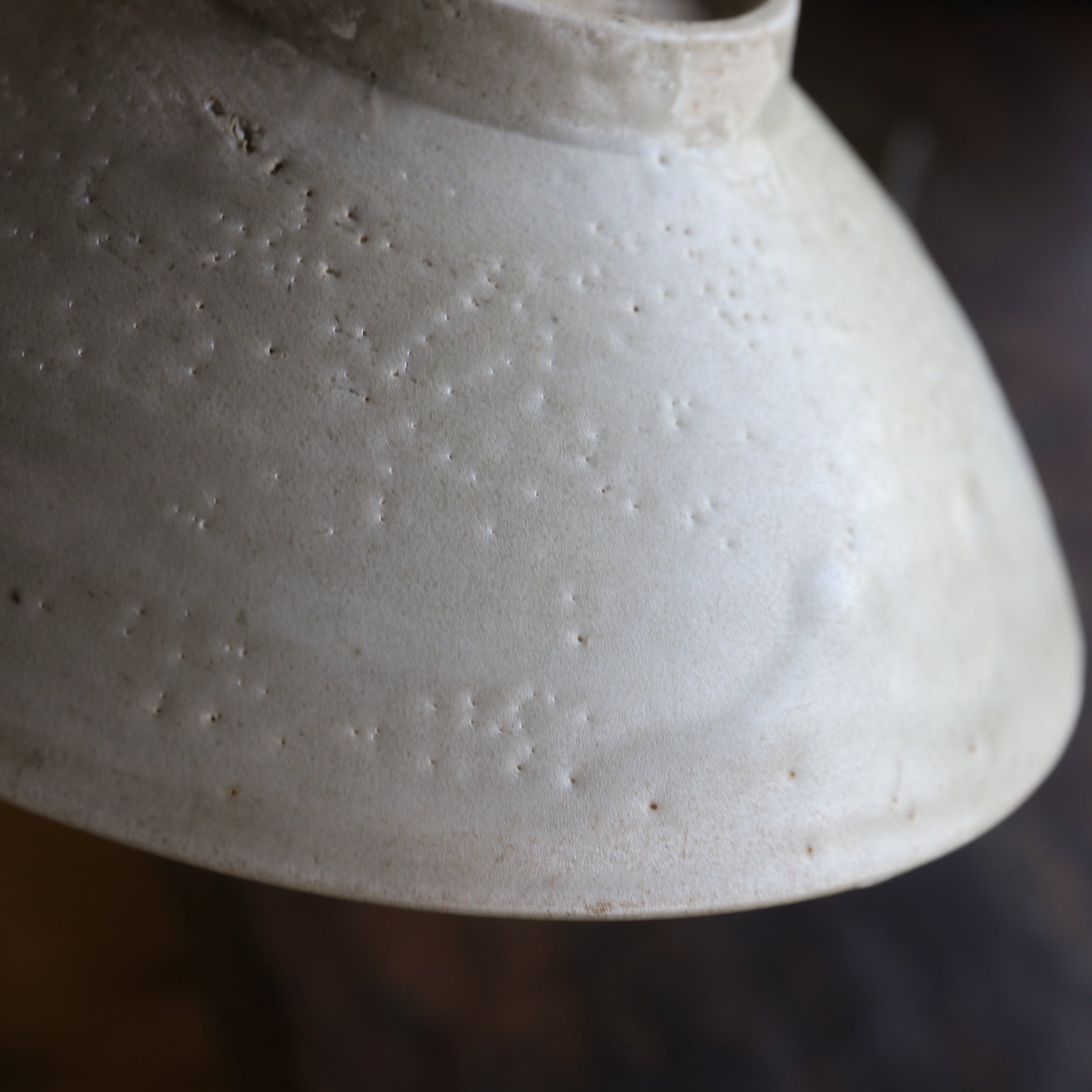
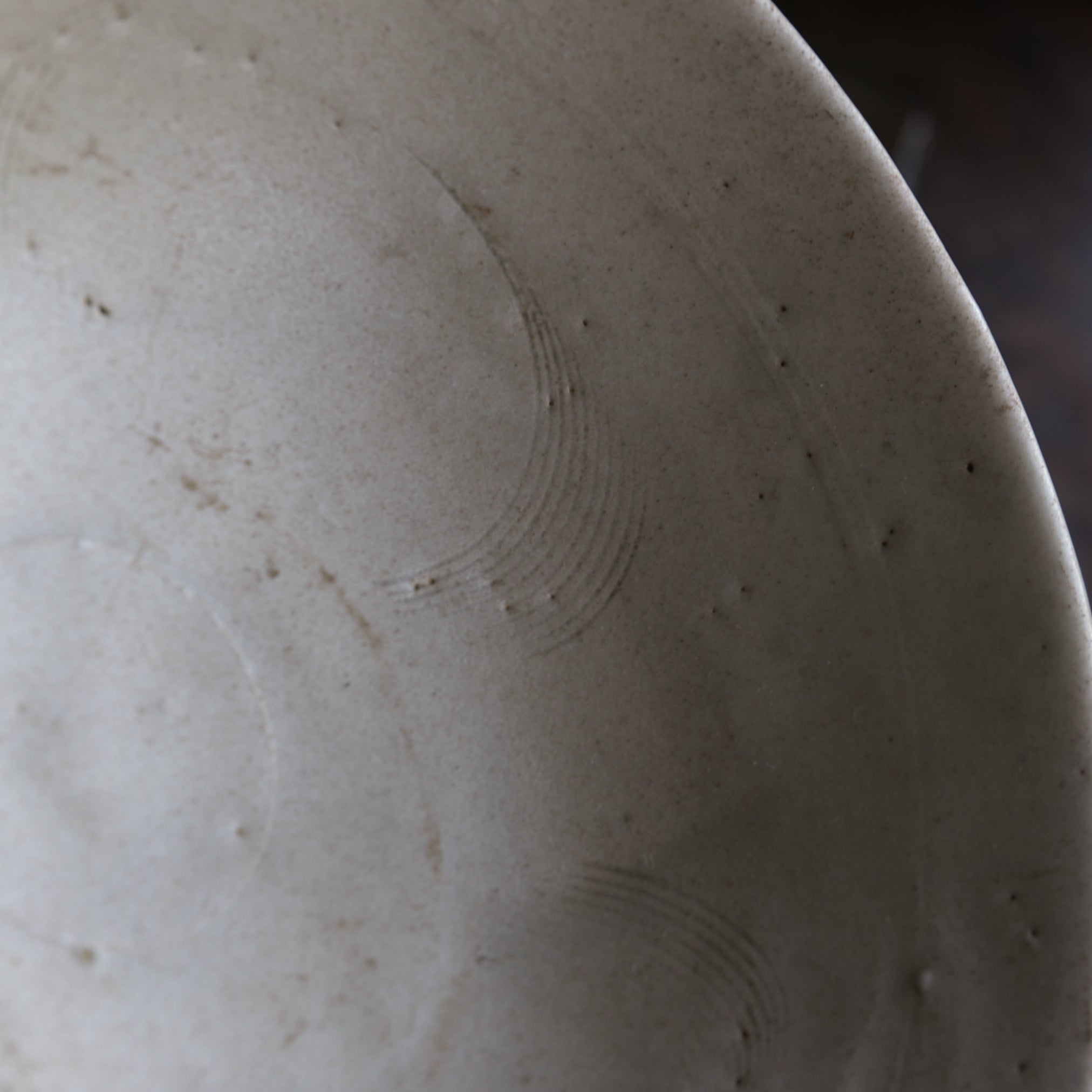
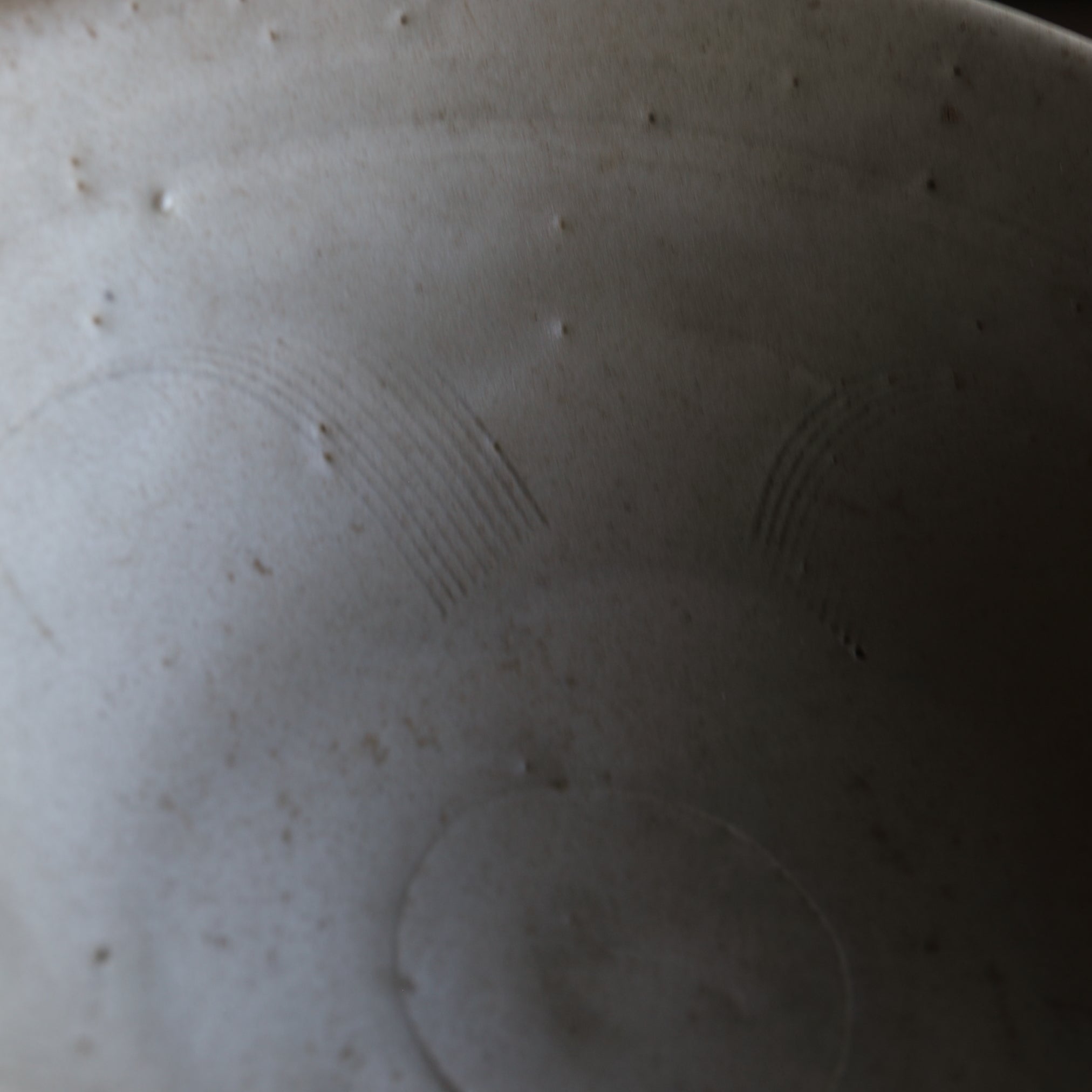
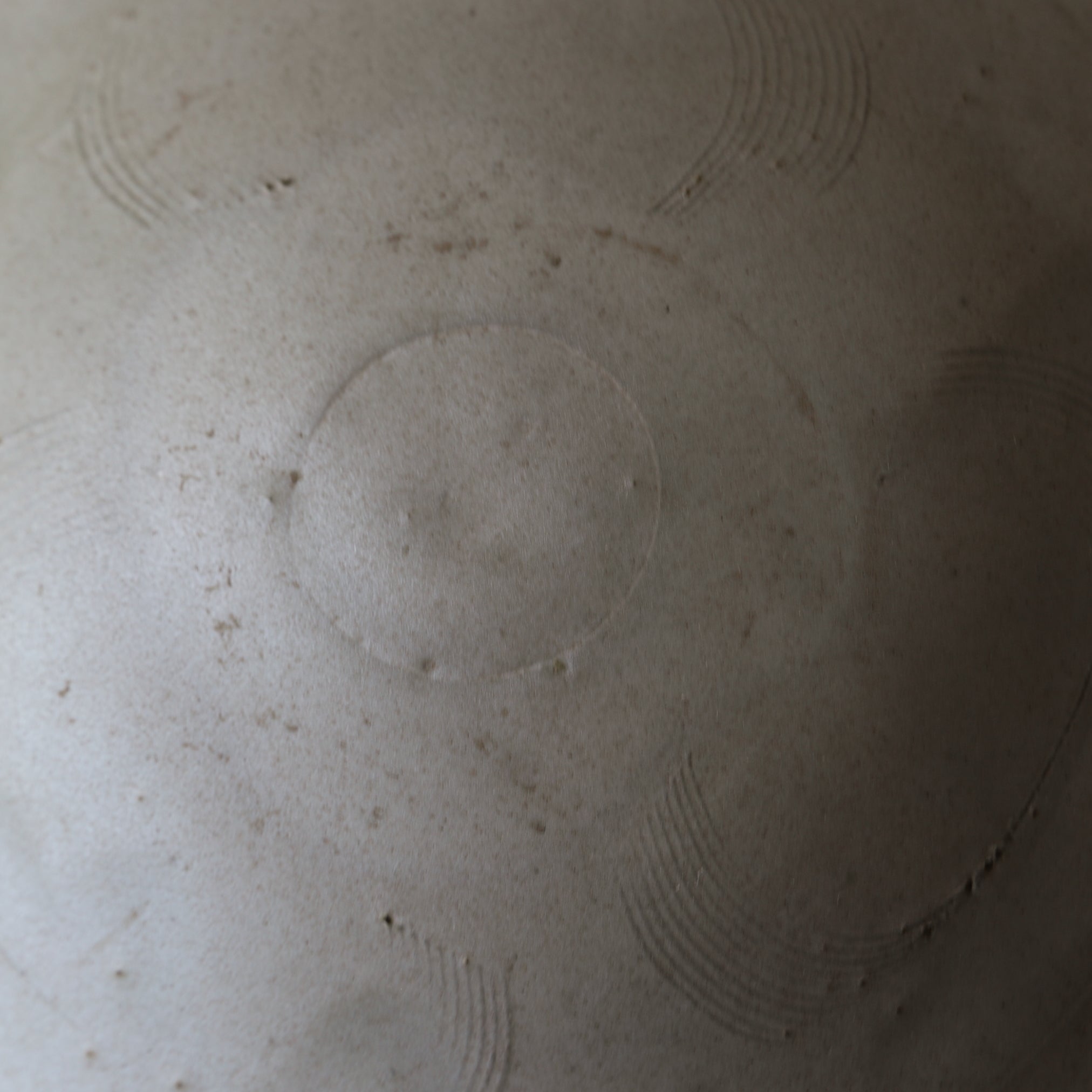
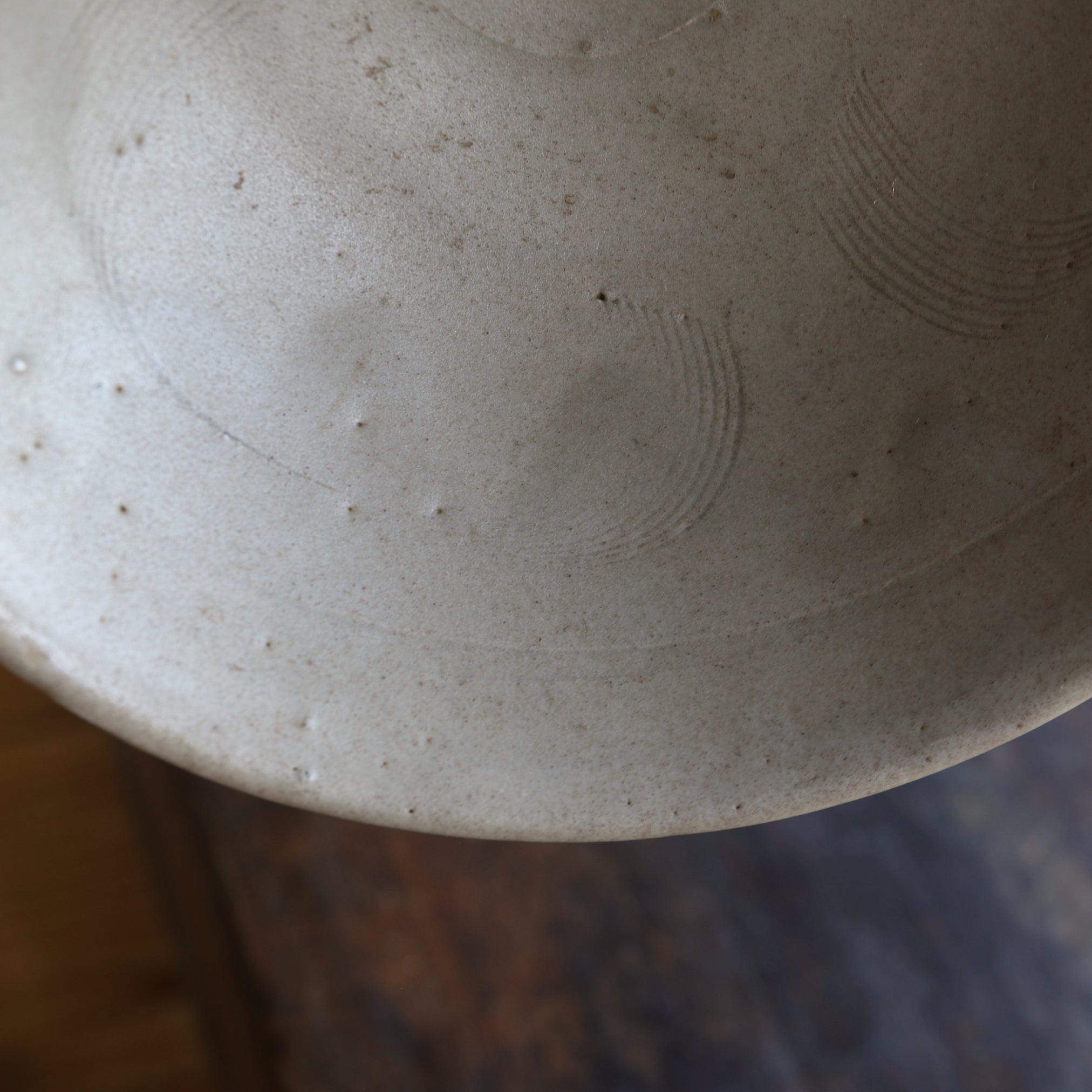
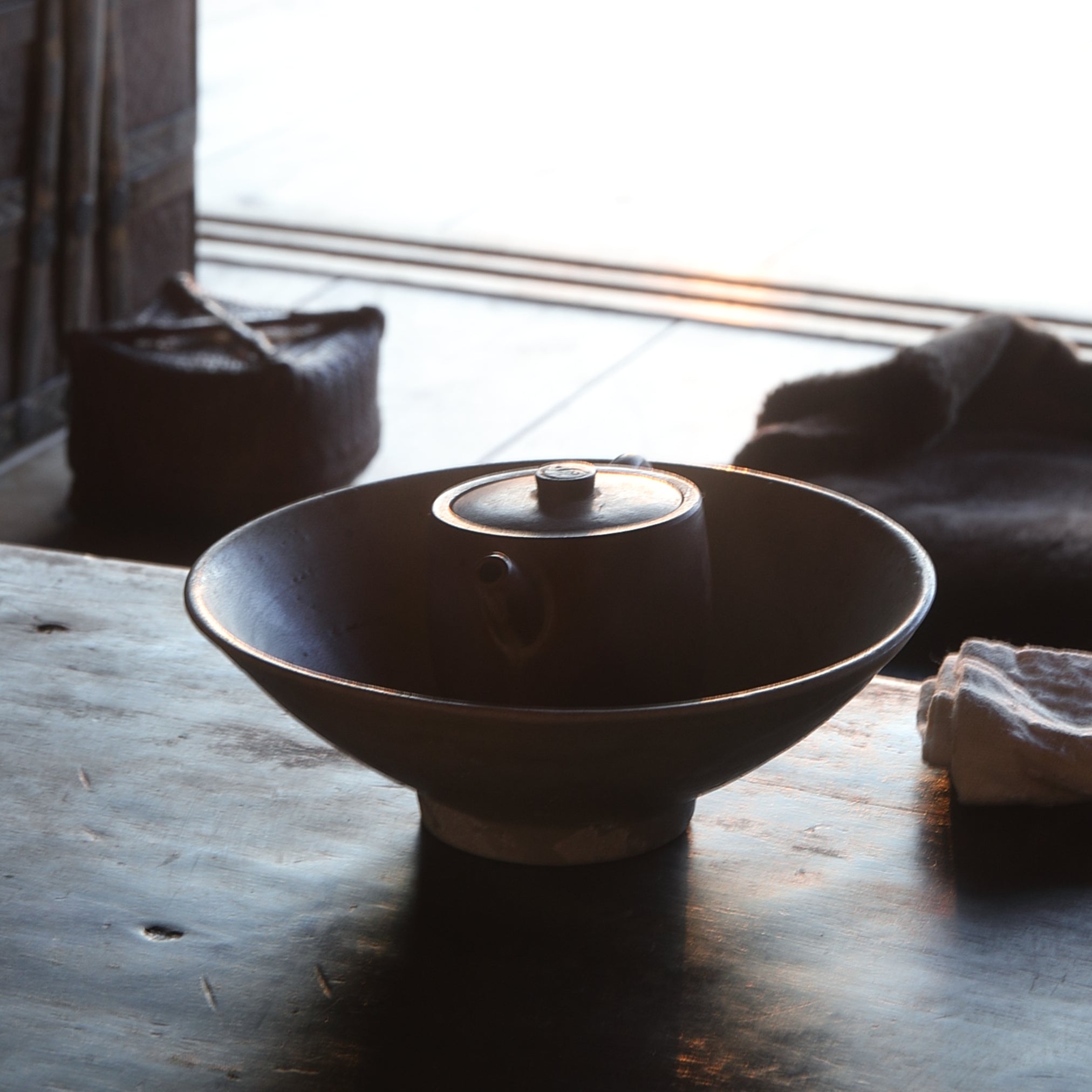
TEA BOWL, Jukō Celadon with comb design, Song Dynasty (960–1279 CE)
However, we may respond individually to certain customers after reviewing the circumstances.
Please contact us for further details.
Shipping to the United Kingdom and Switzerland remains available.
This item has been sold. If you are looking for a similar piece or another work from the same period, please feel free to contact us.
> Inquire about this or a similar itemDuring the Muromachi period, Murata Jukō (1423-1502 CE) introduced a novel concept to the Japanese tea scene known as "wabi-cha."
In contrast to the opulent Chinese tea utensils that dominated the era, Jukō favored more humble pieces, such as the mass-produced celadon known as Jukō celadon and the imperfectly fired tenmoku bowls referred to as Jukō tenmoku.
This piece is a quintessential example of Jukō celadon tea bowl. Characteristic of Jukō celadon, it exhibits a dark green or yellow-brown hue, adorned with a comb pattern known as "neko-kaki" in the interior.
This bowl was fired in a kiln located in the Fujian province during the Song and Yuan dynasties.
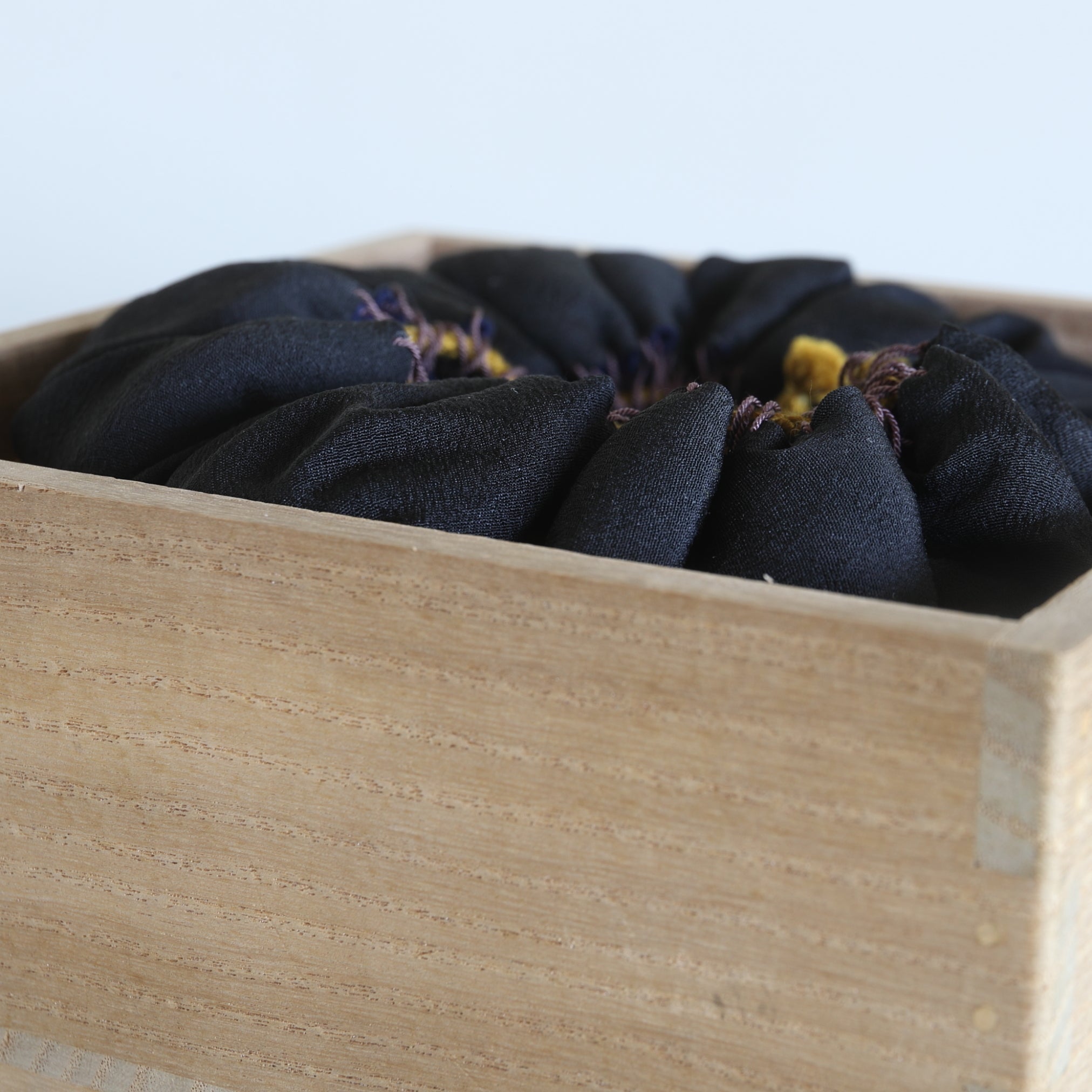
In excellent condition, it is a tea bowl that one would cherish as part of a tea ceremony. It comes with a wooden box and protective cover.
Choose options
Change language
