

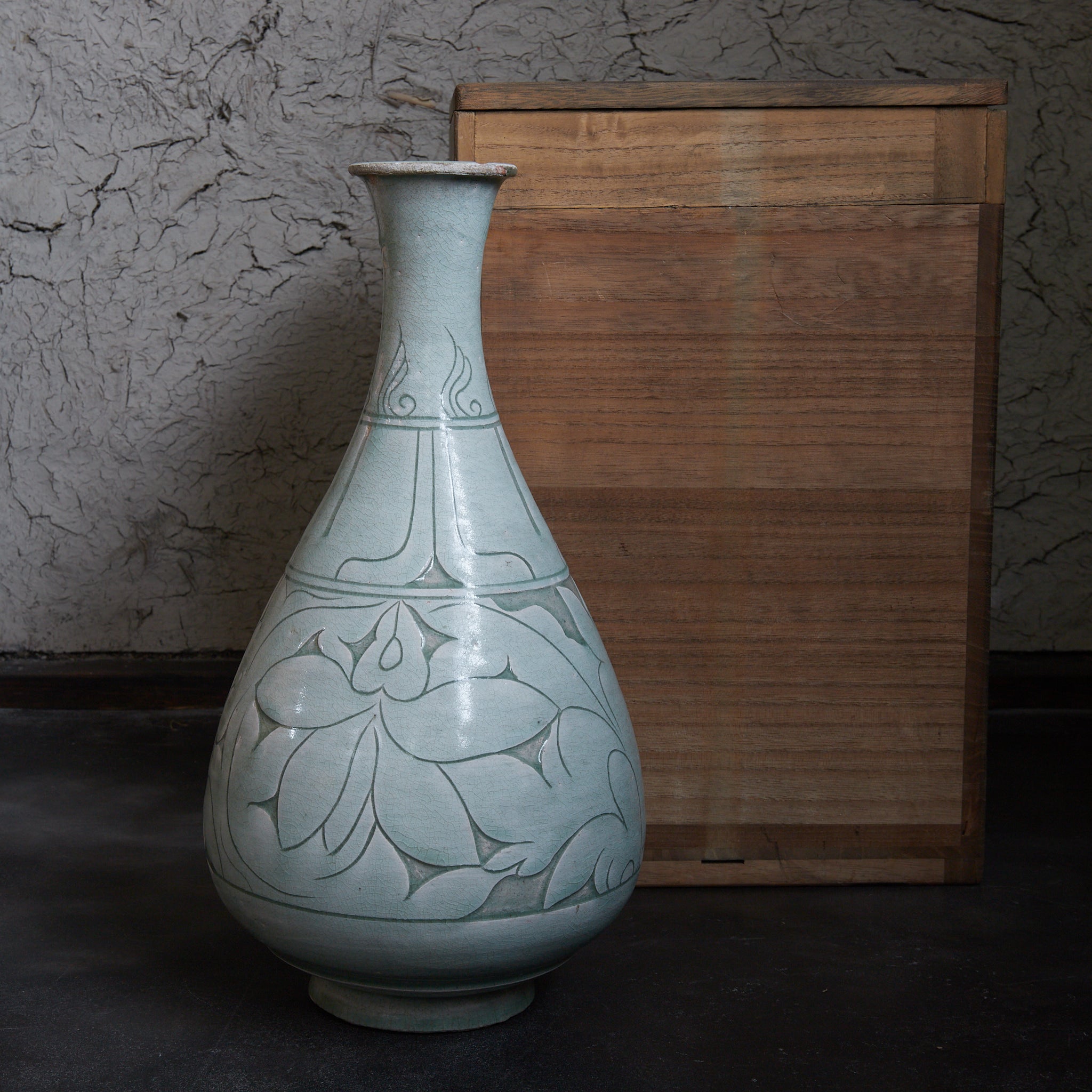
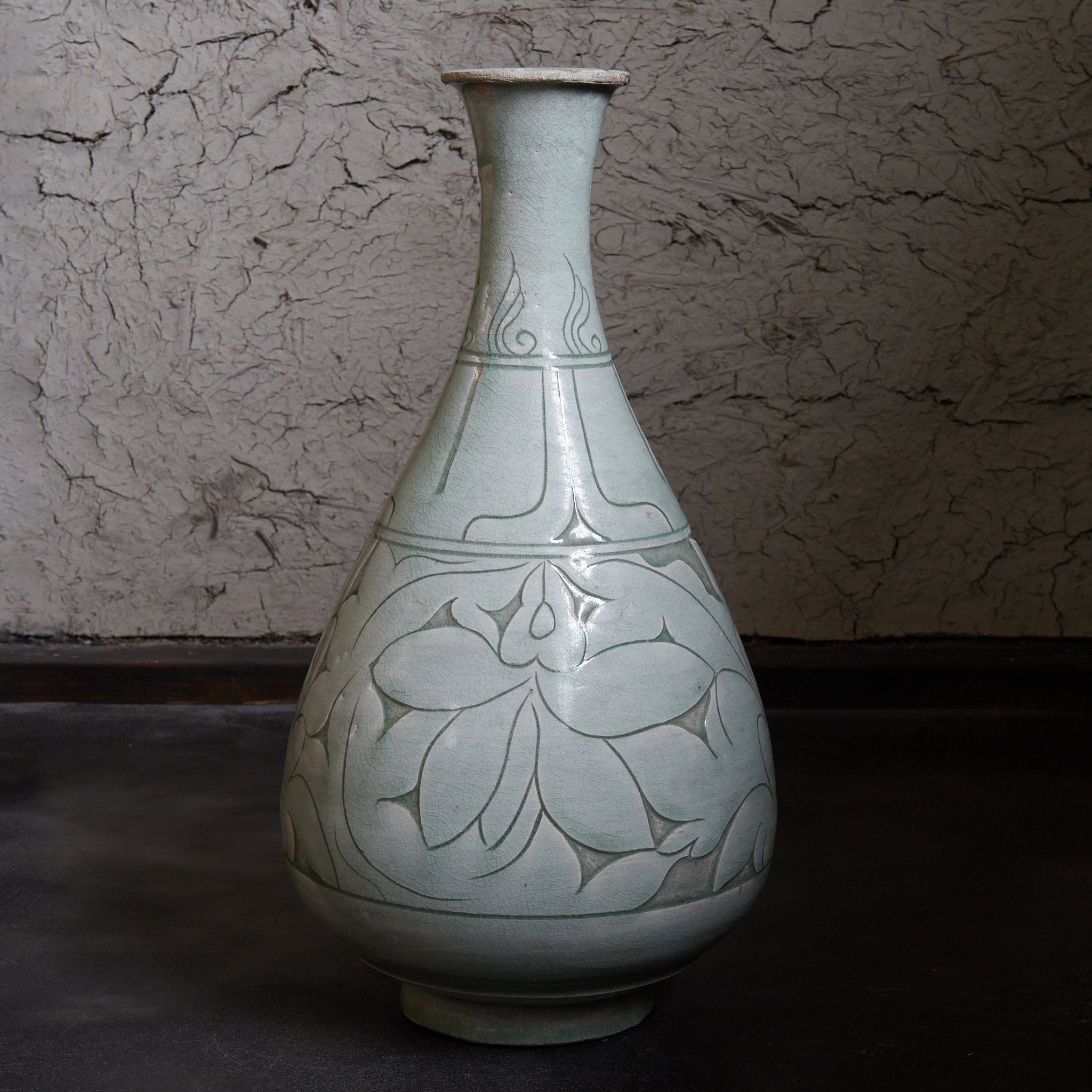
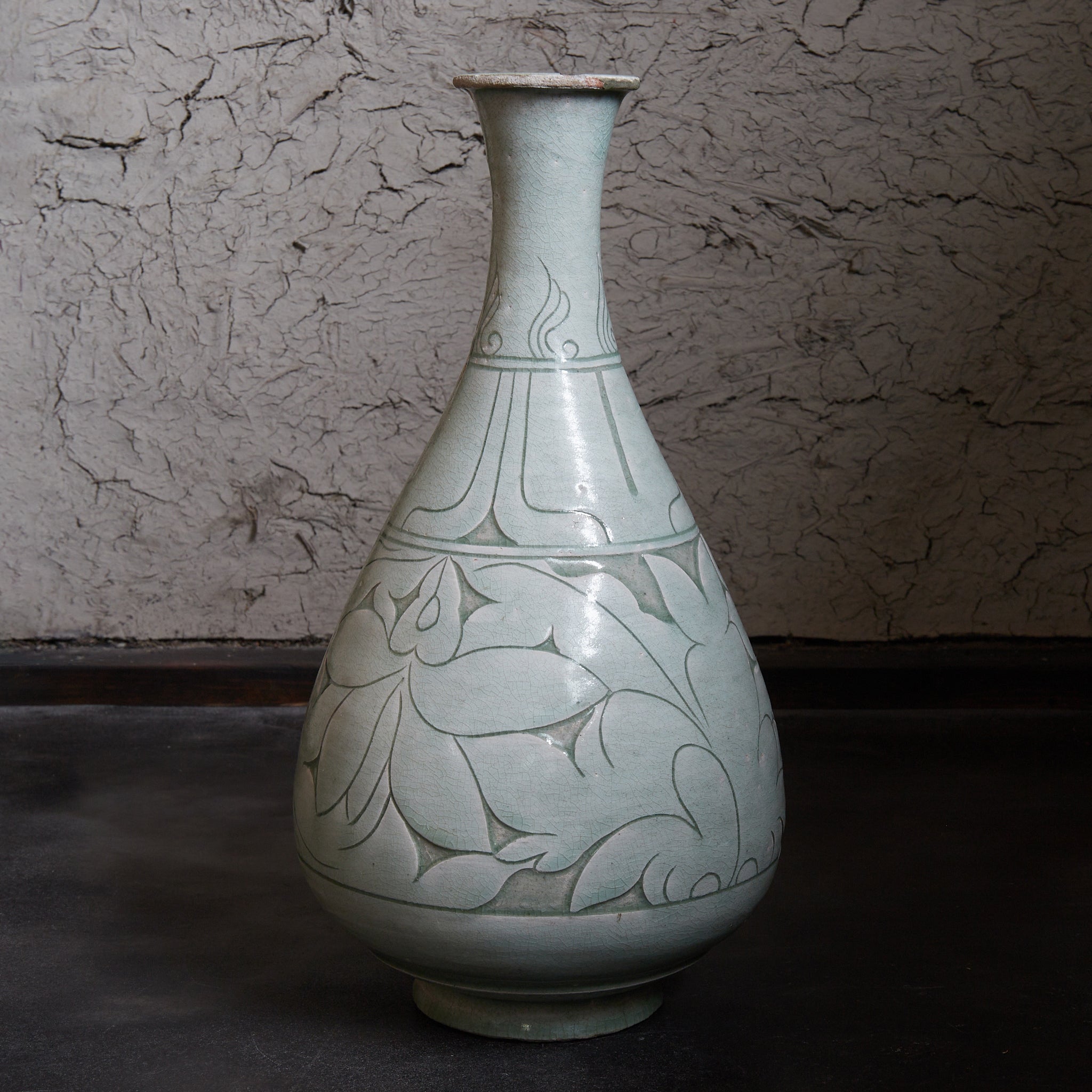
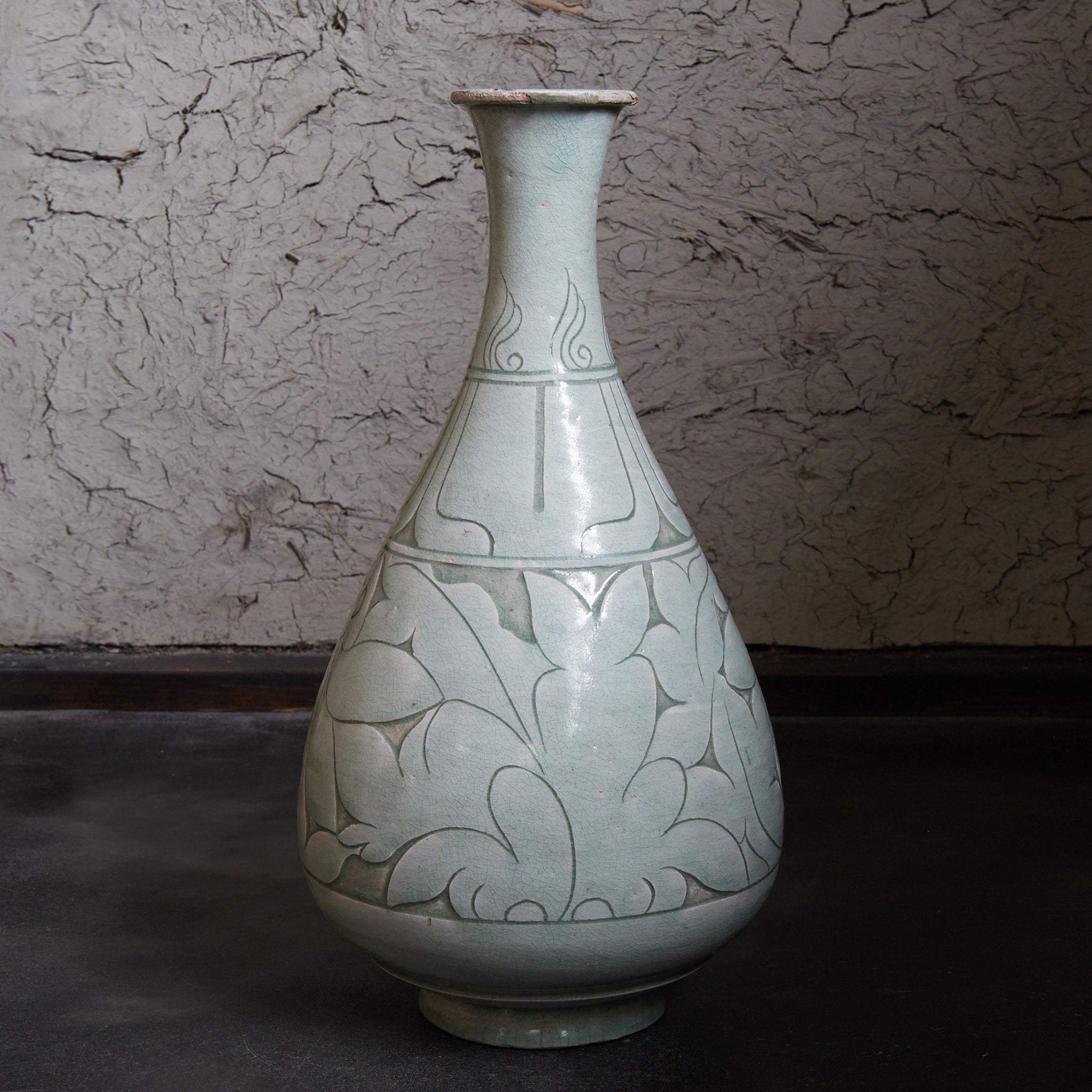
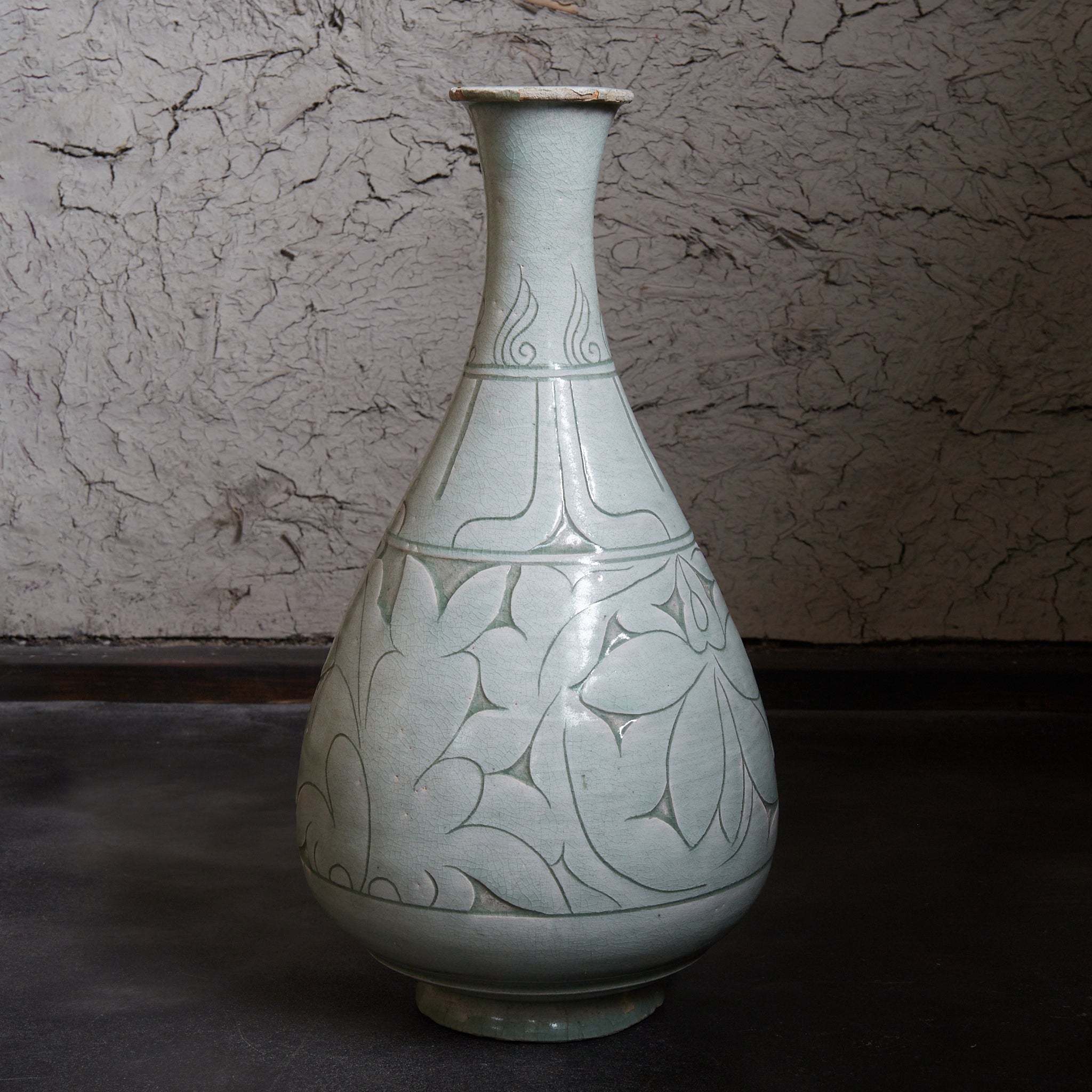
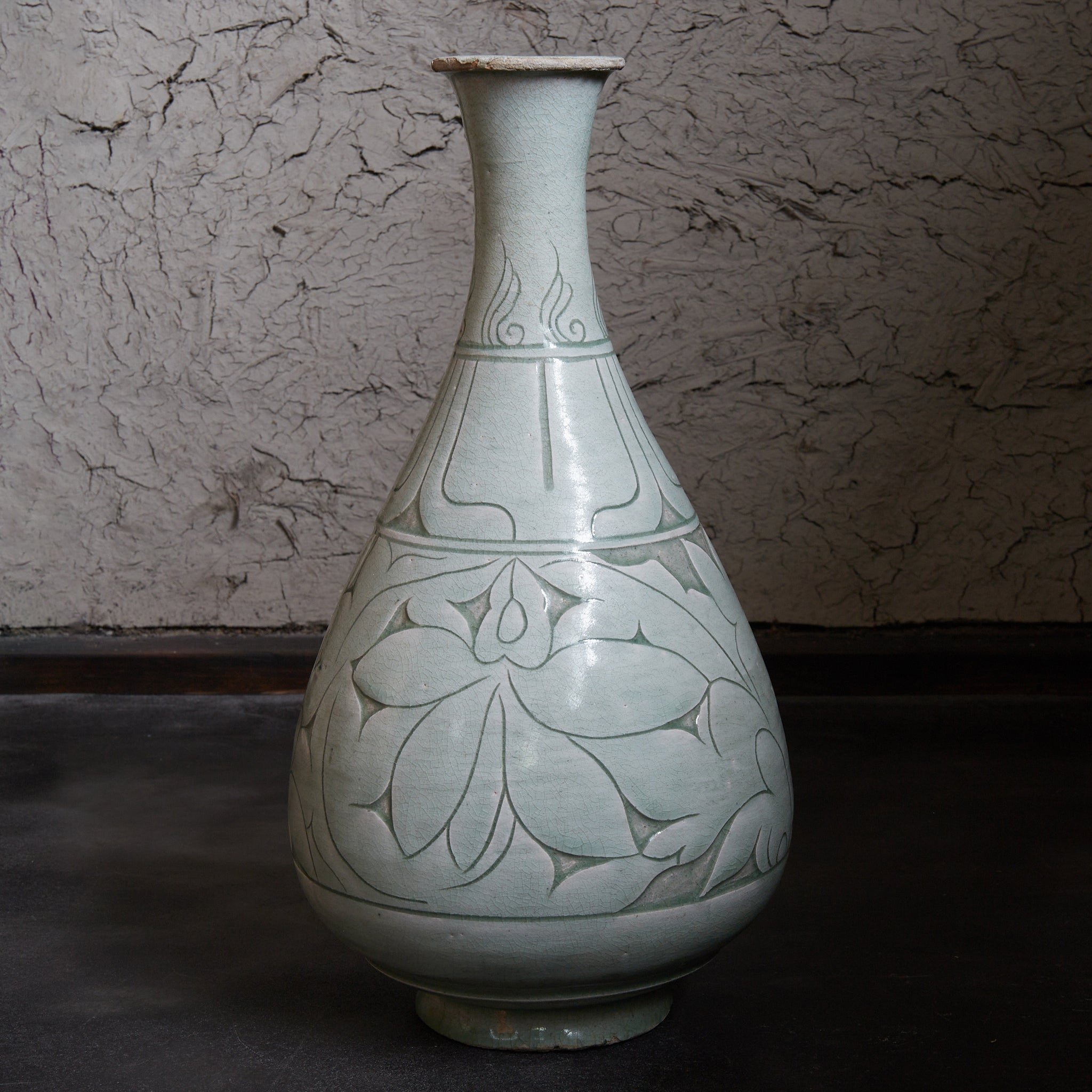
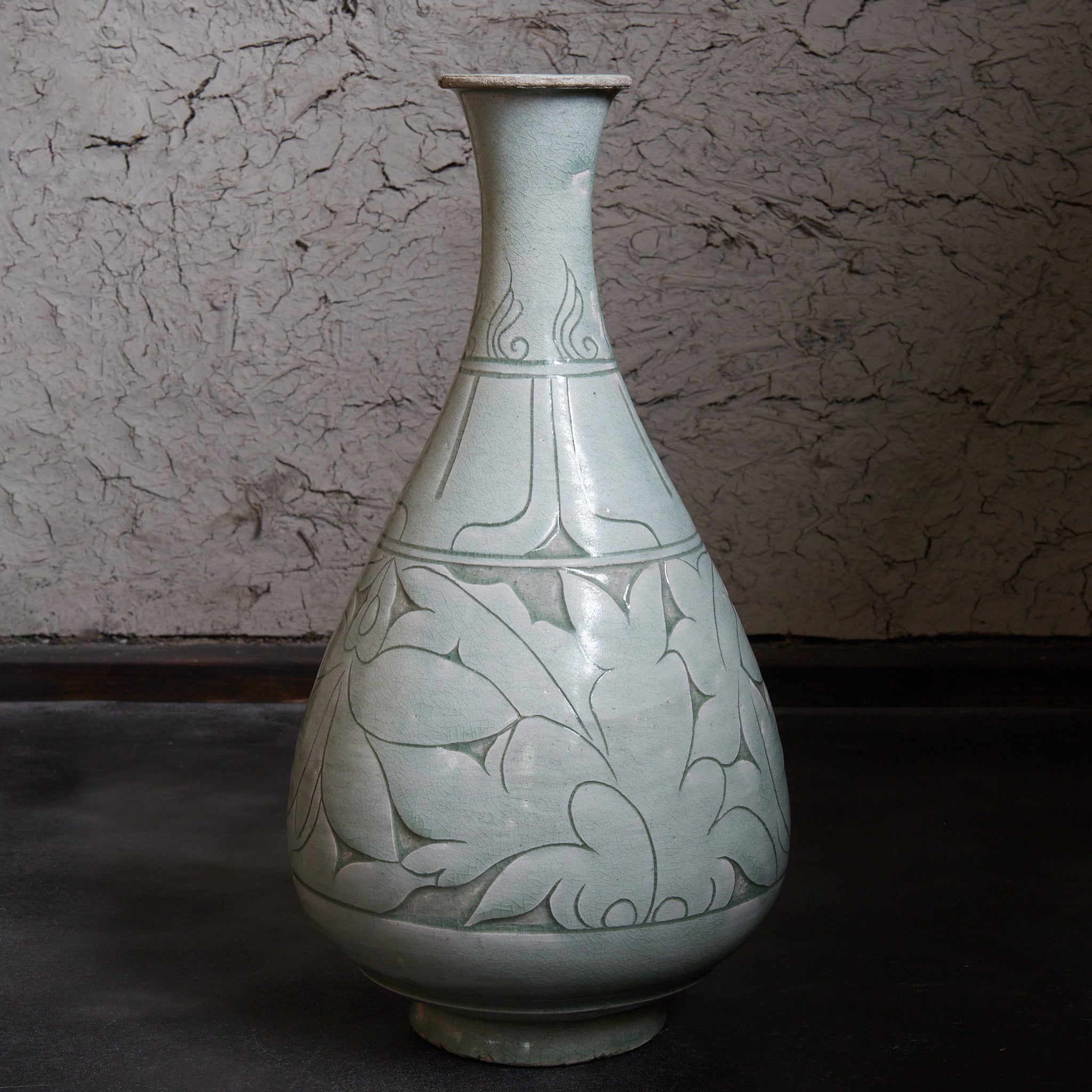
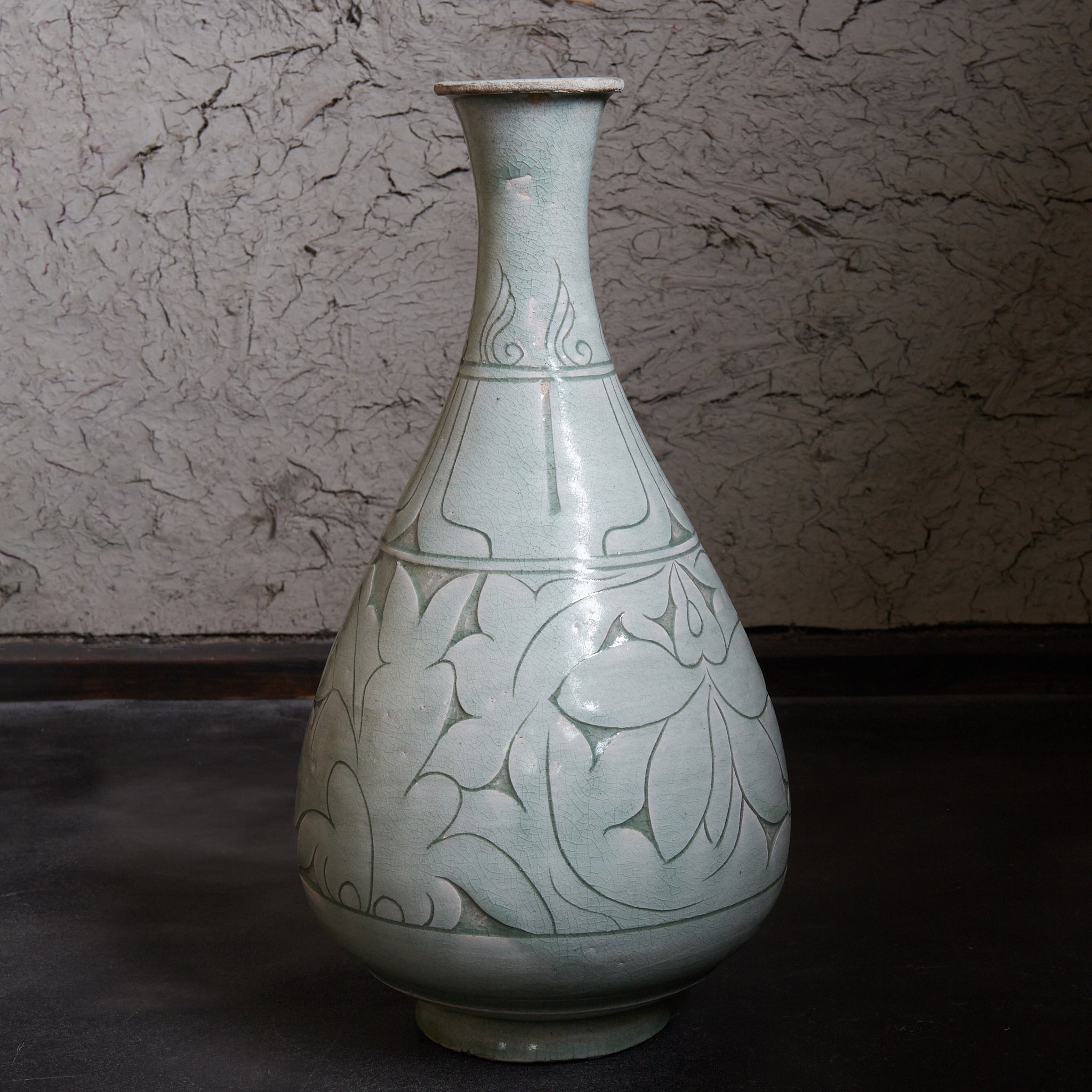
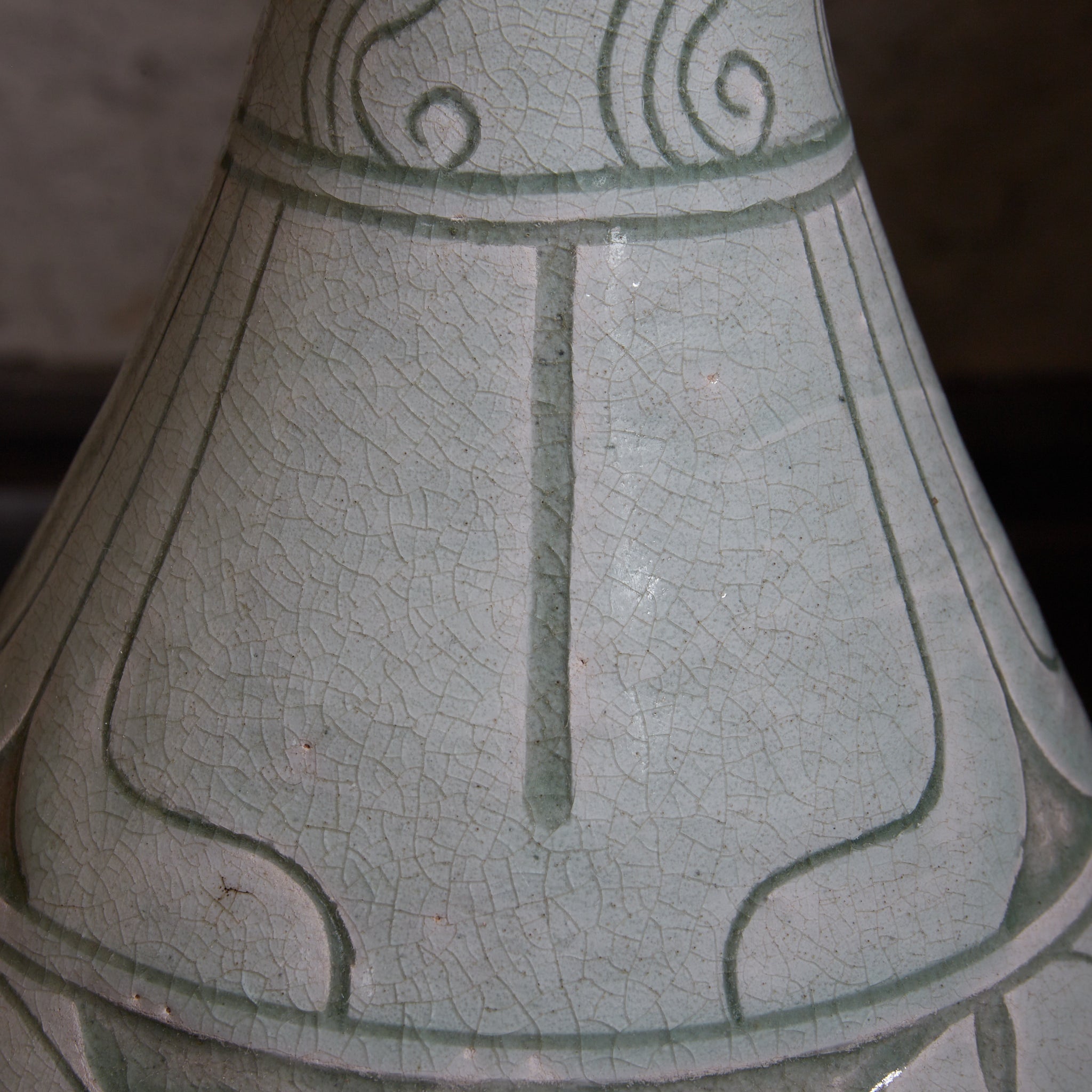
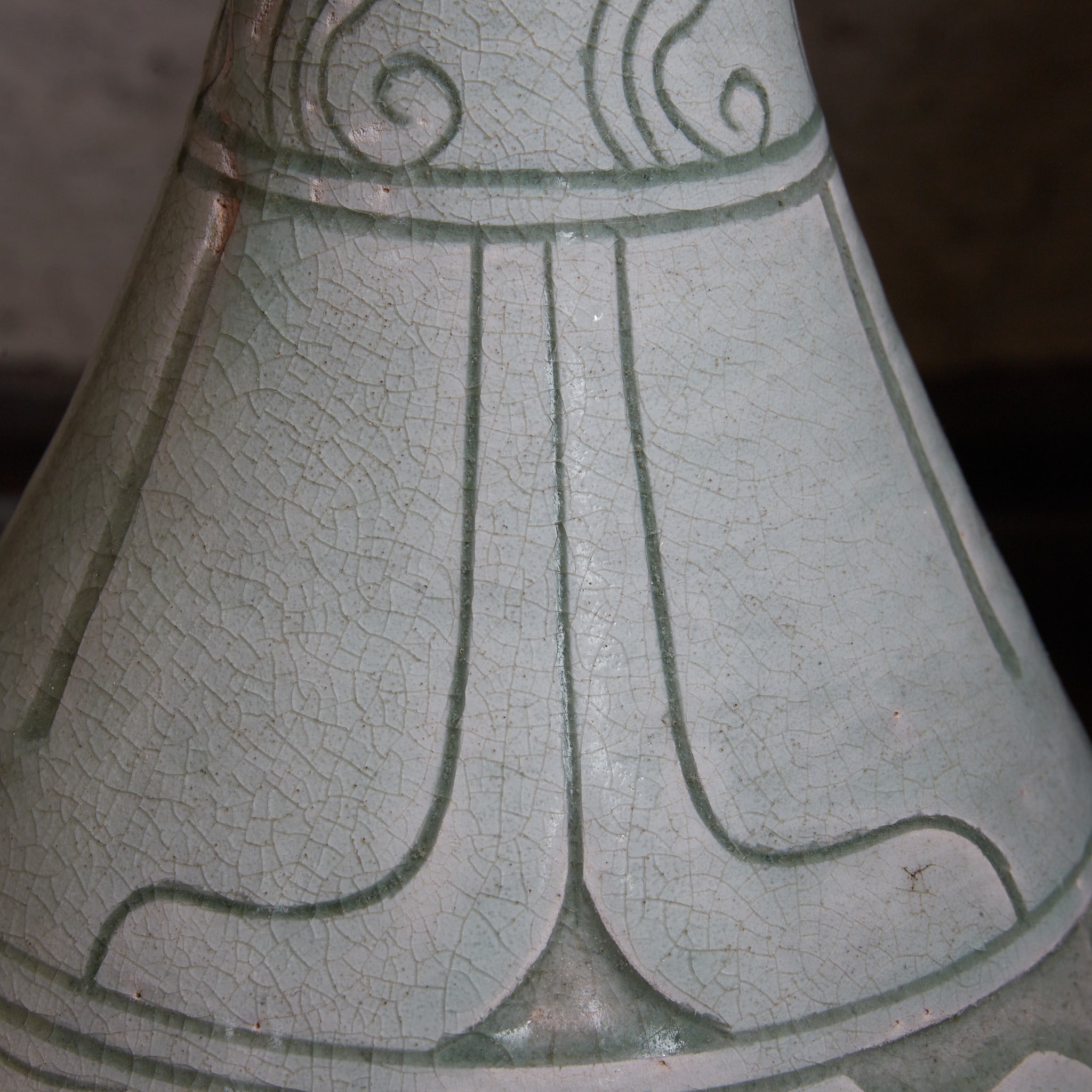
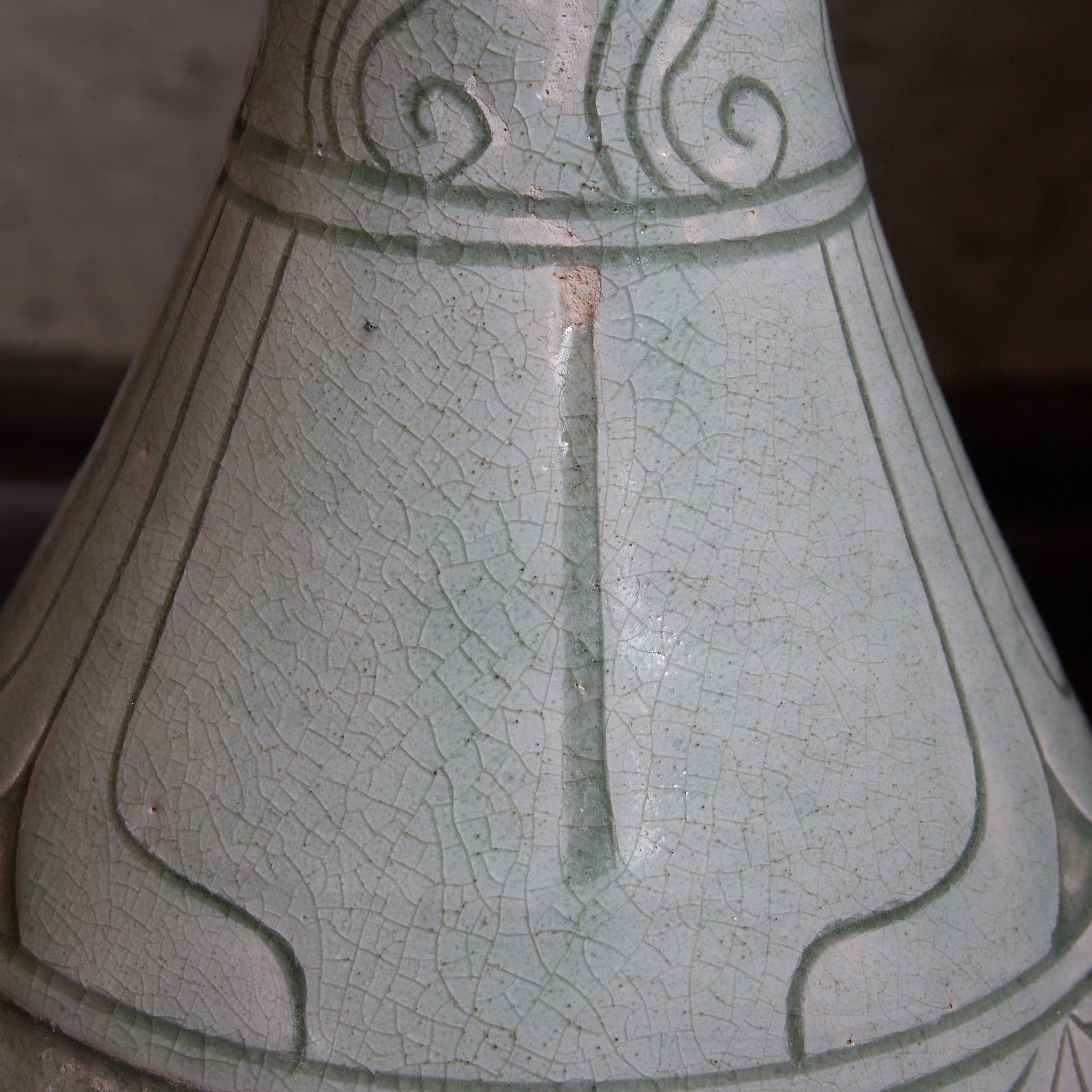
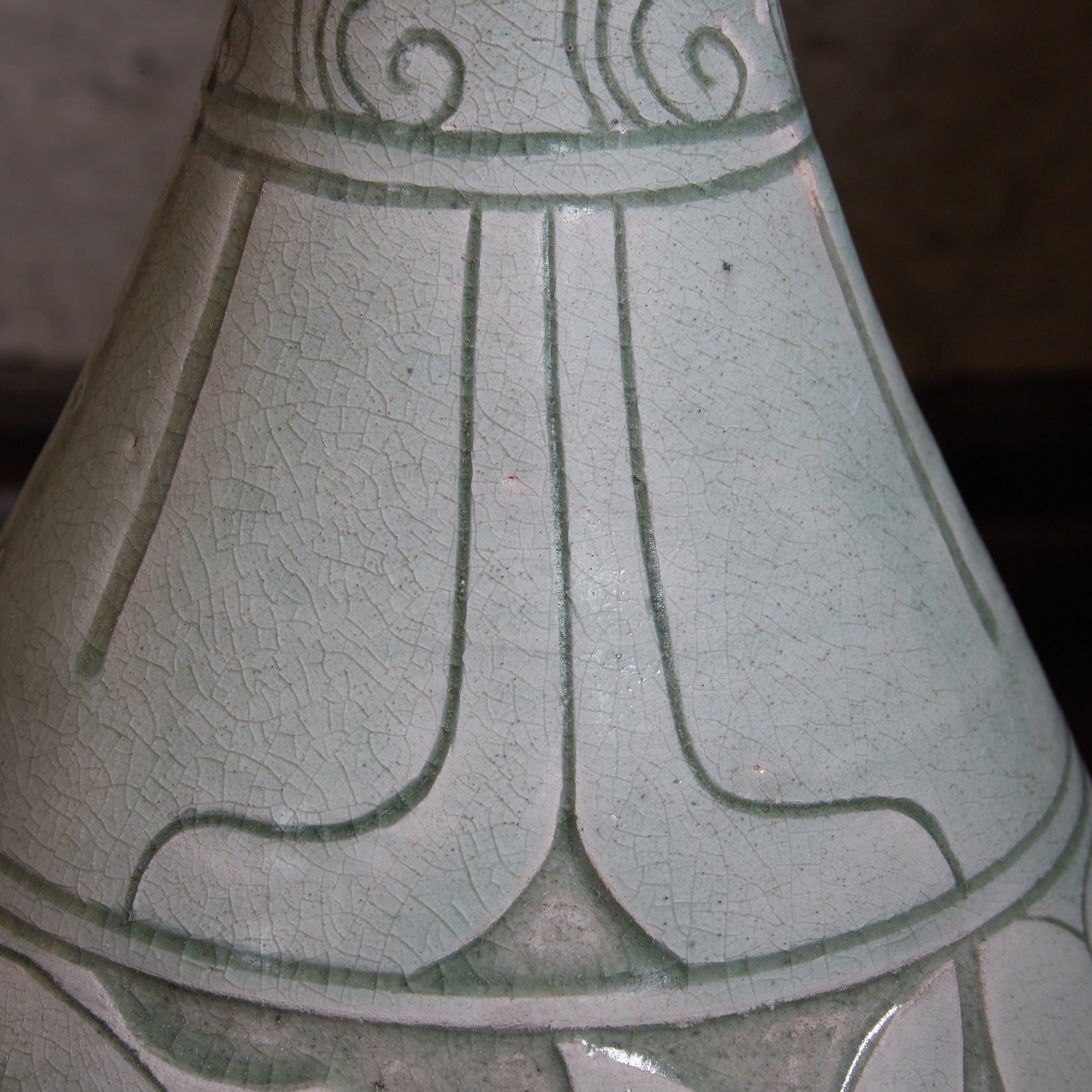
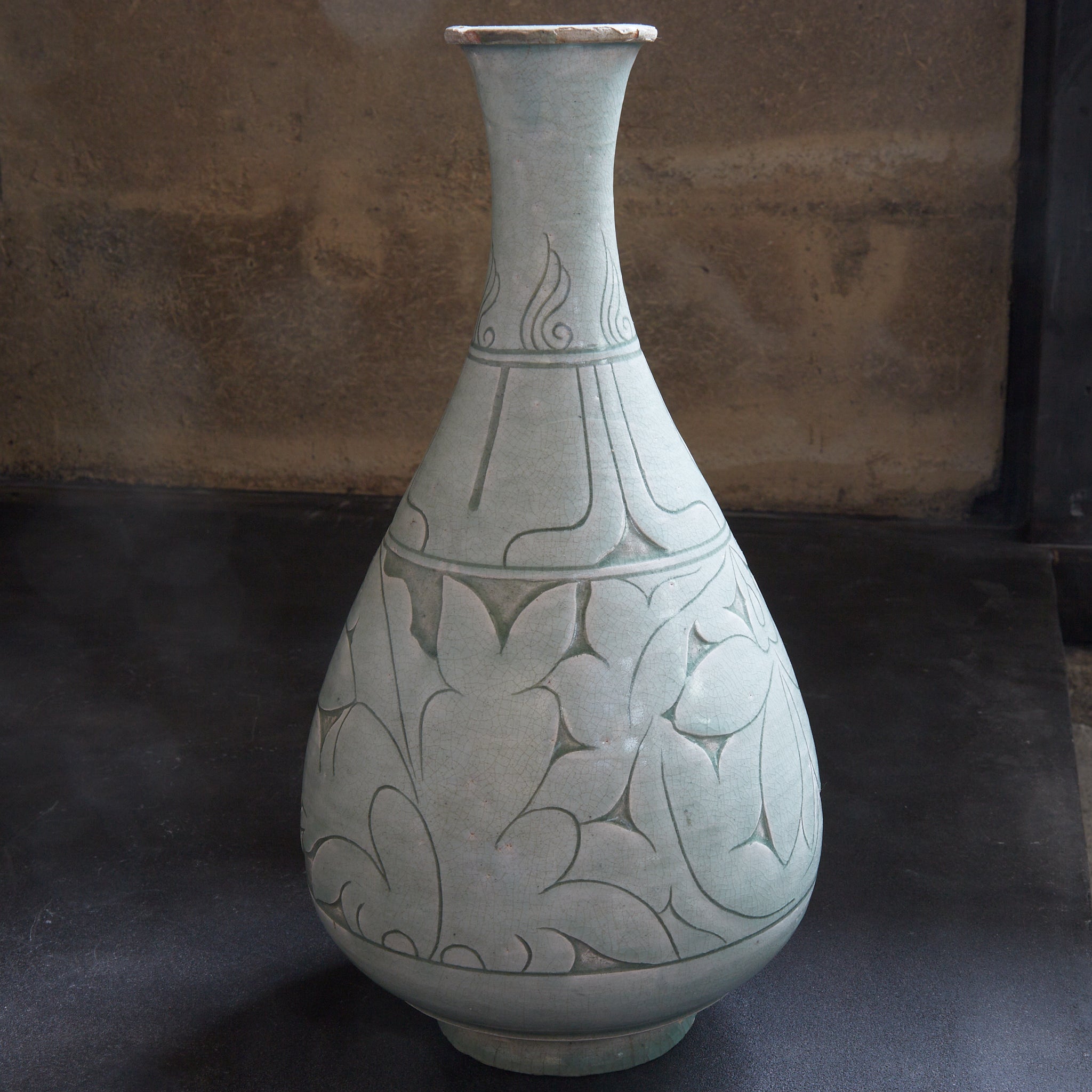
BOTTLE, Buncheong ware with sgraffito lotus flower pattern, With wooden box, Joseon Dynasty (1392–1897 CE)
Tax excluded. Import duties may apply. Shipping costs are calculated at checkout.
Each piece is carefully packed for international delivery.
Numerous product photos are available for you to examine the details and condition. Should you have any questions, please do not hesitate to contact us.
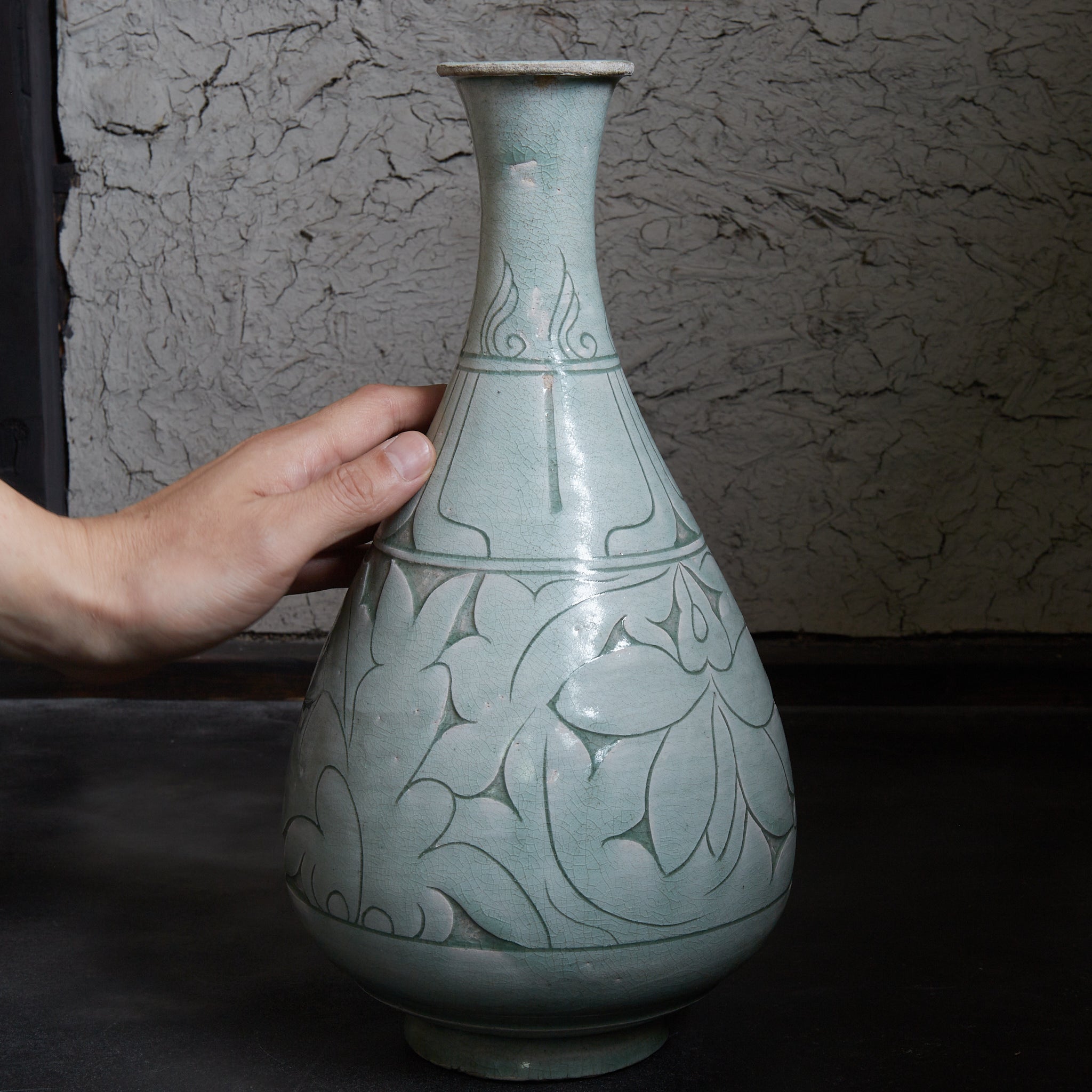
> Inquire about this productA bottle from the early Joseon period in buncheong ware, decorated with a sgraffito lotus motif.
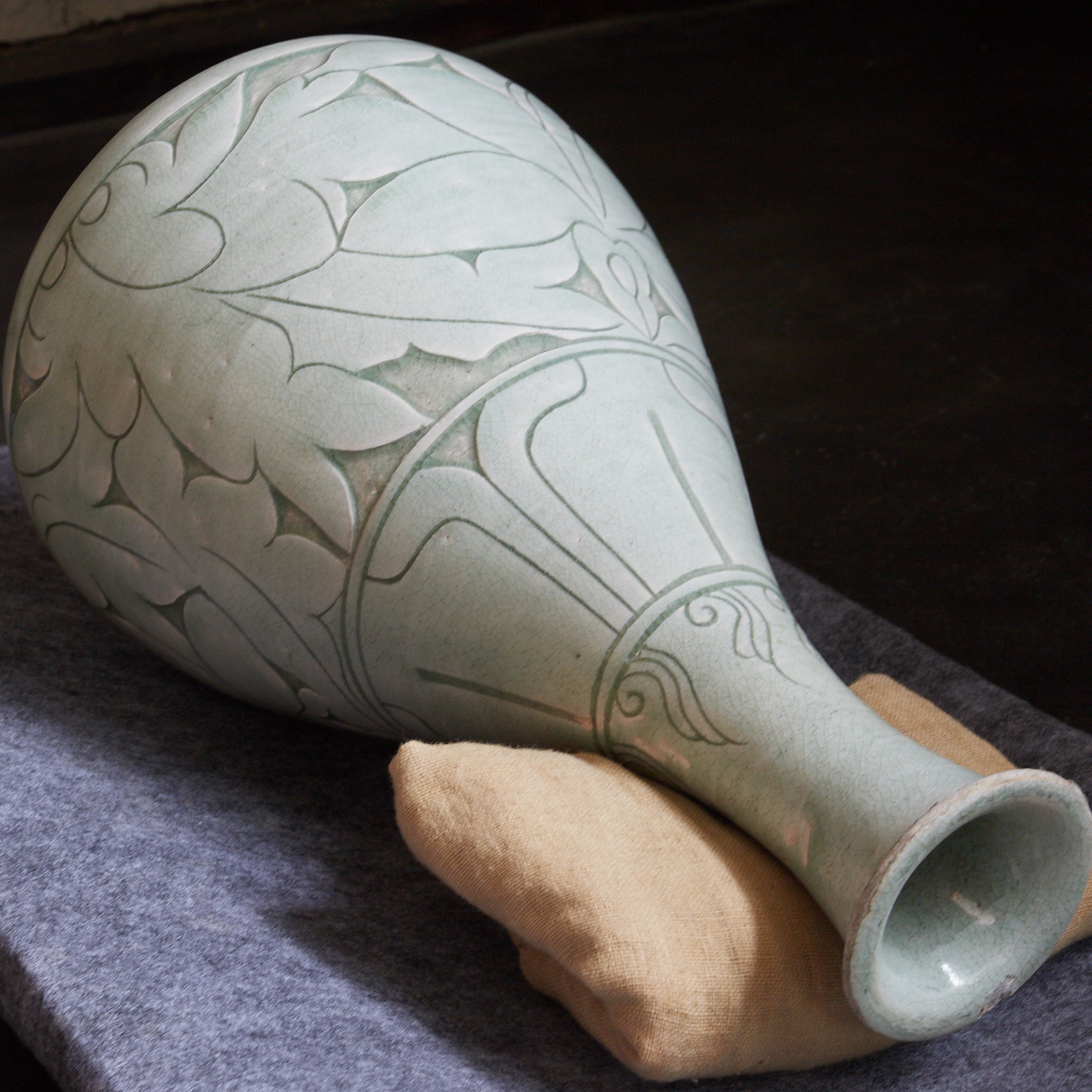
Among 15th-century buncheong wares, this is an example with a pronounced porcelain-like quality. In Korean scholarship, such pieces are sometimes described as porcelain-like buncheong. Although produced as buncheong, it has a clear surface approaching white porcelain and, unlike the strong earthiness typical of ordinary buncheong, conveys a taut, restrained stillness.
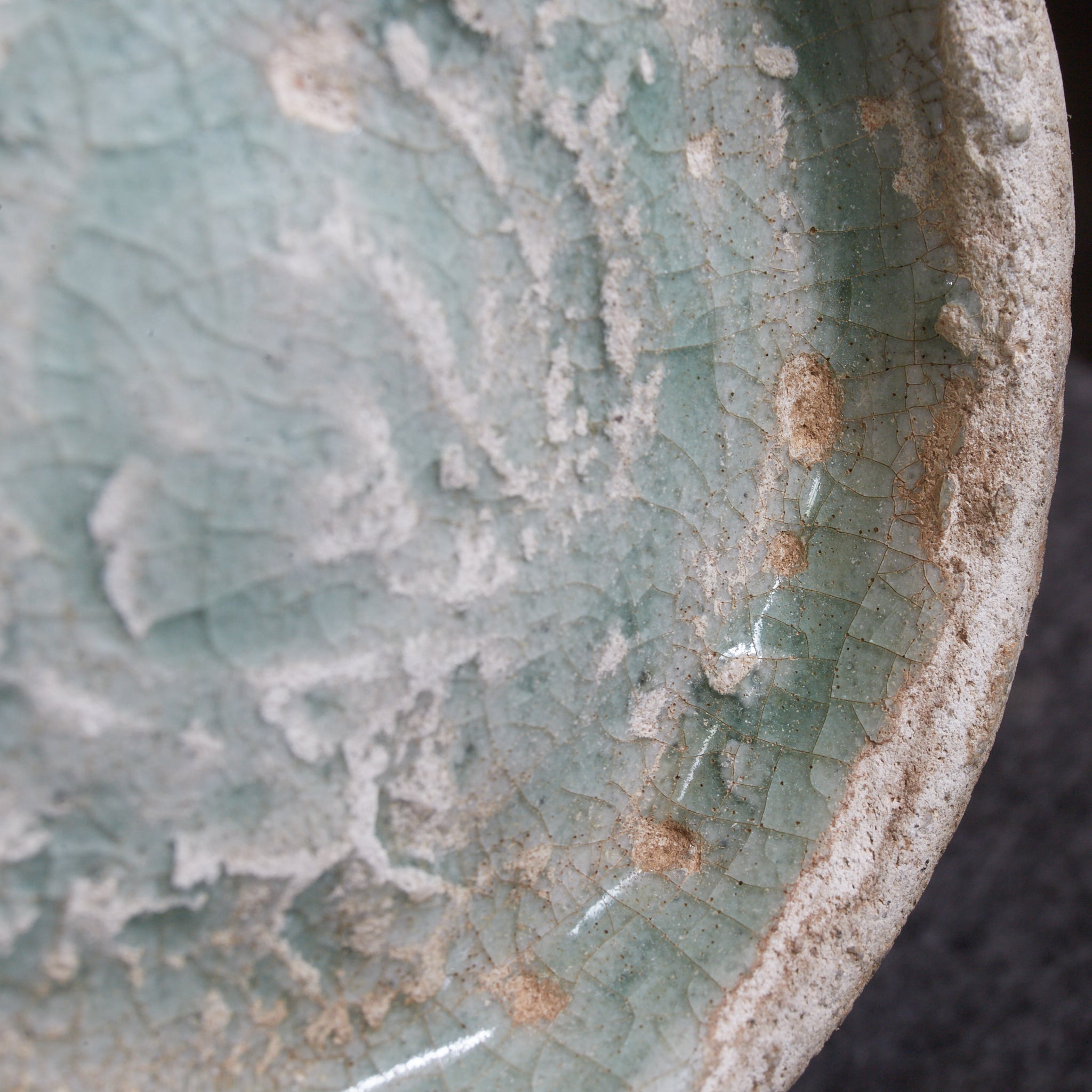
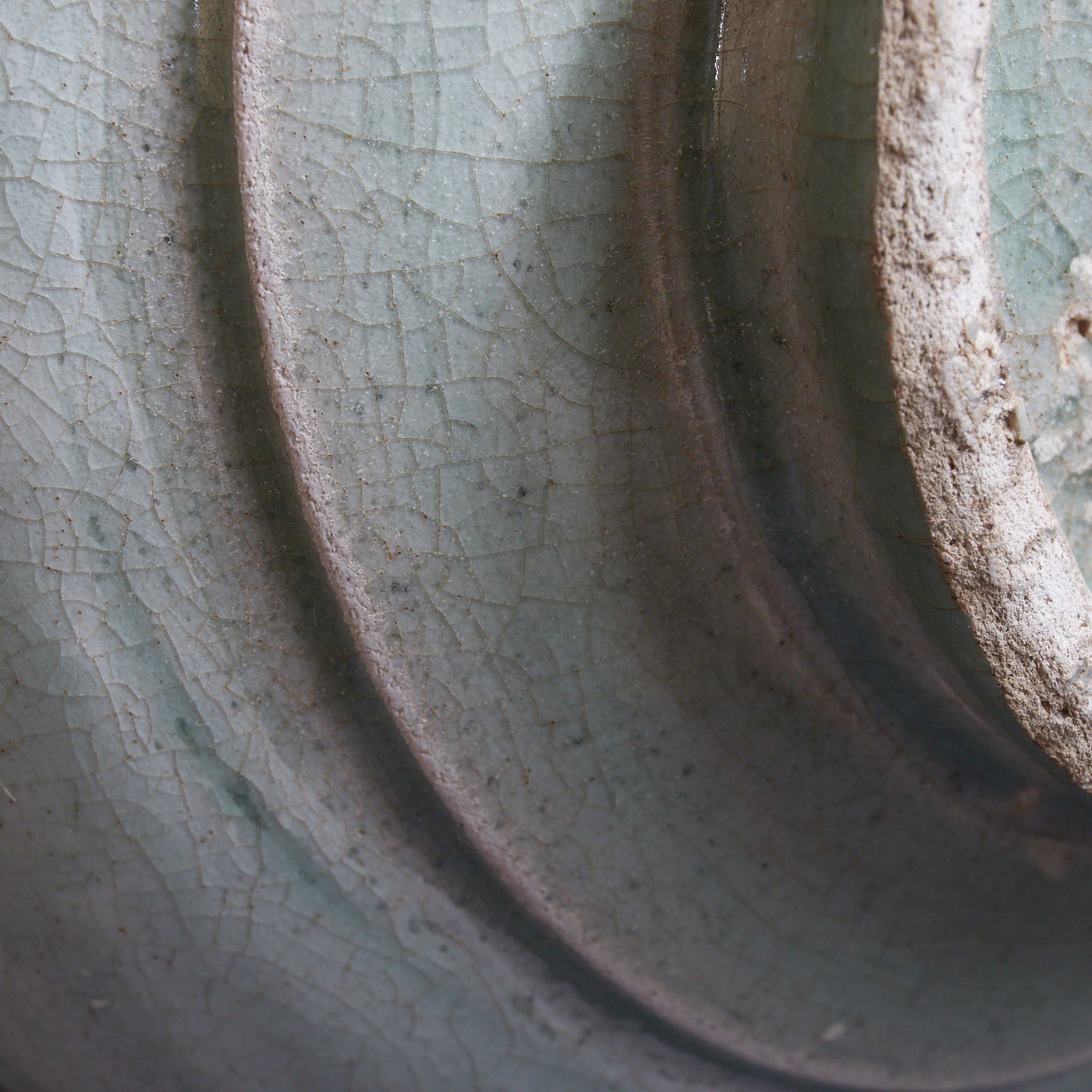
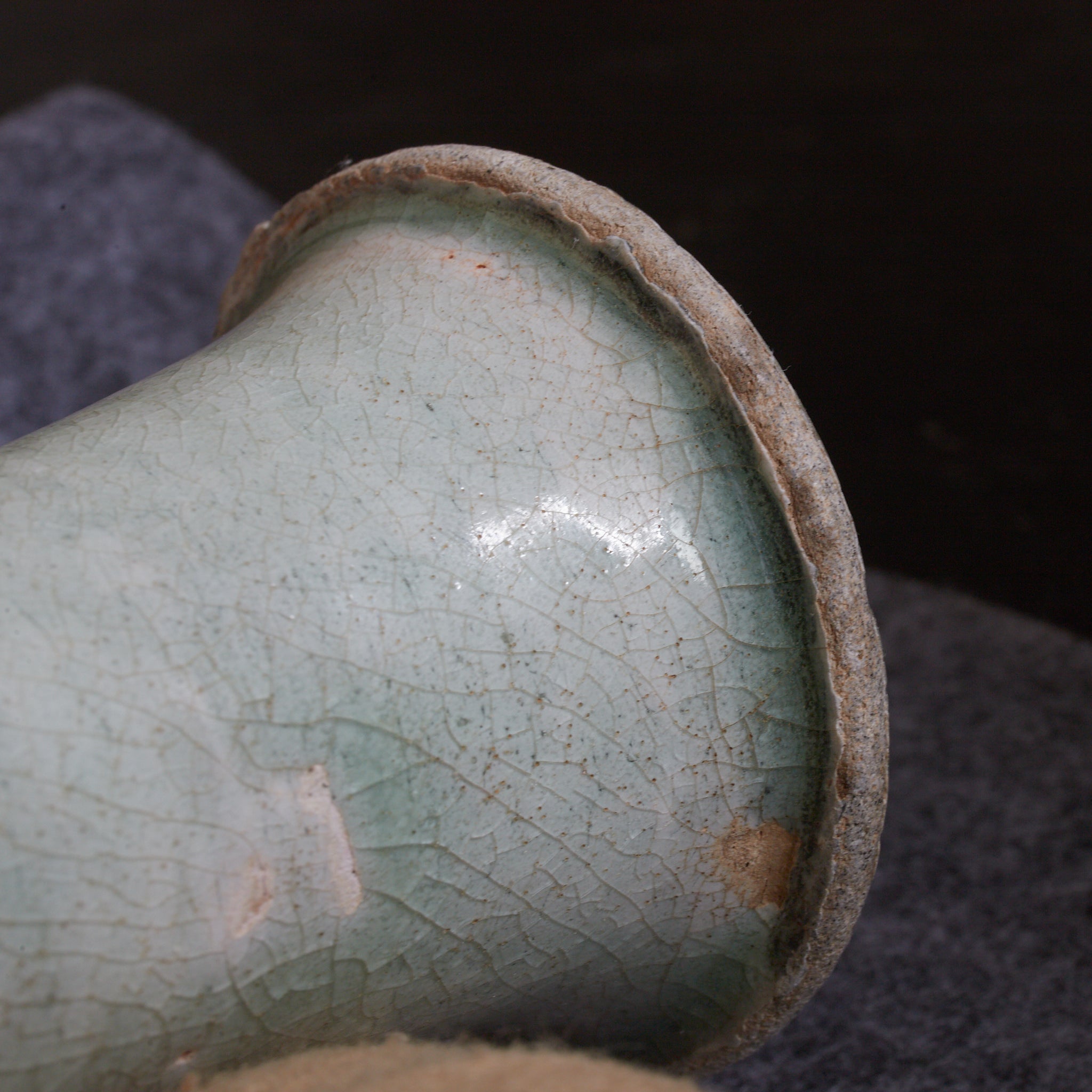
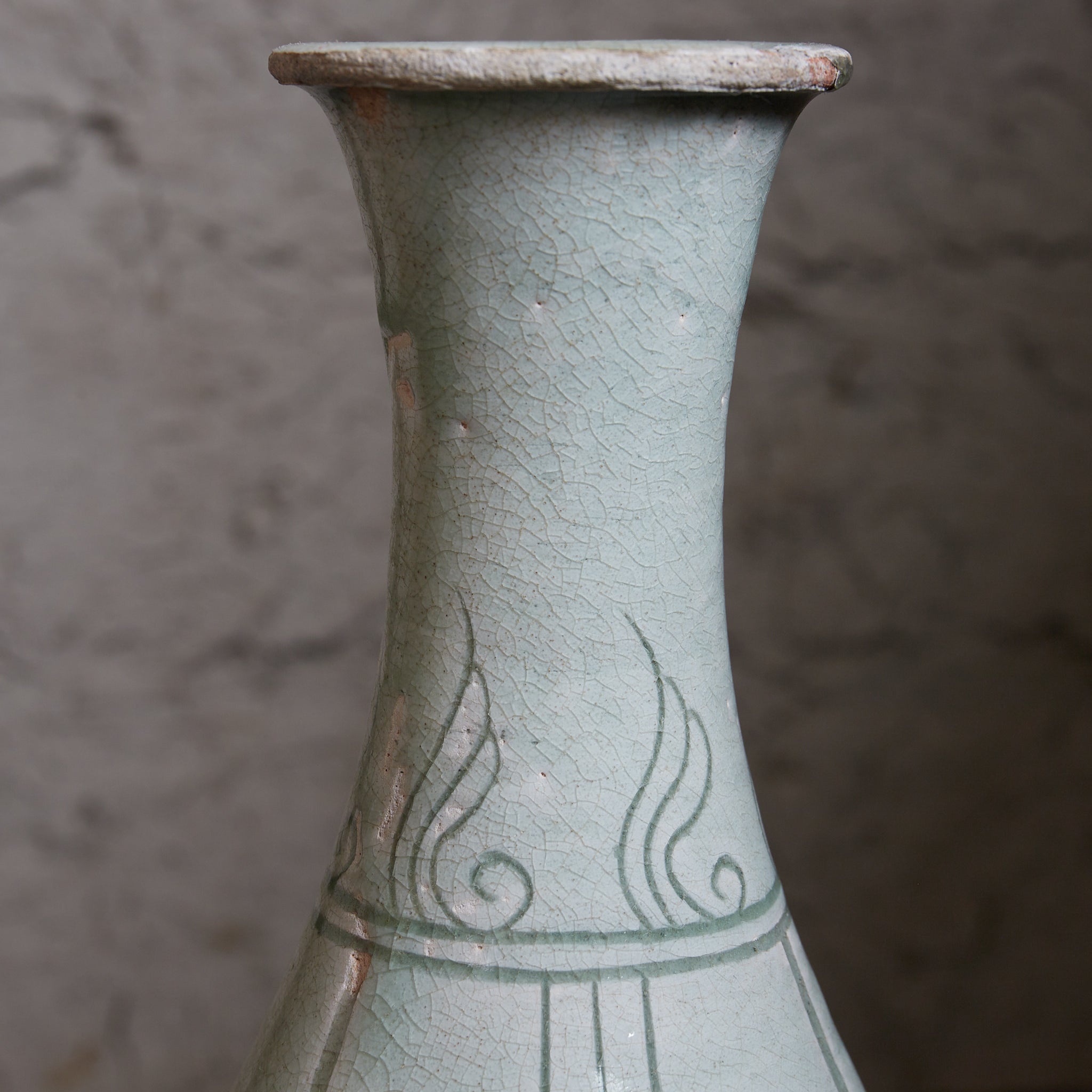
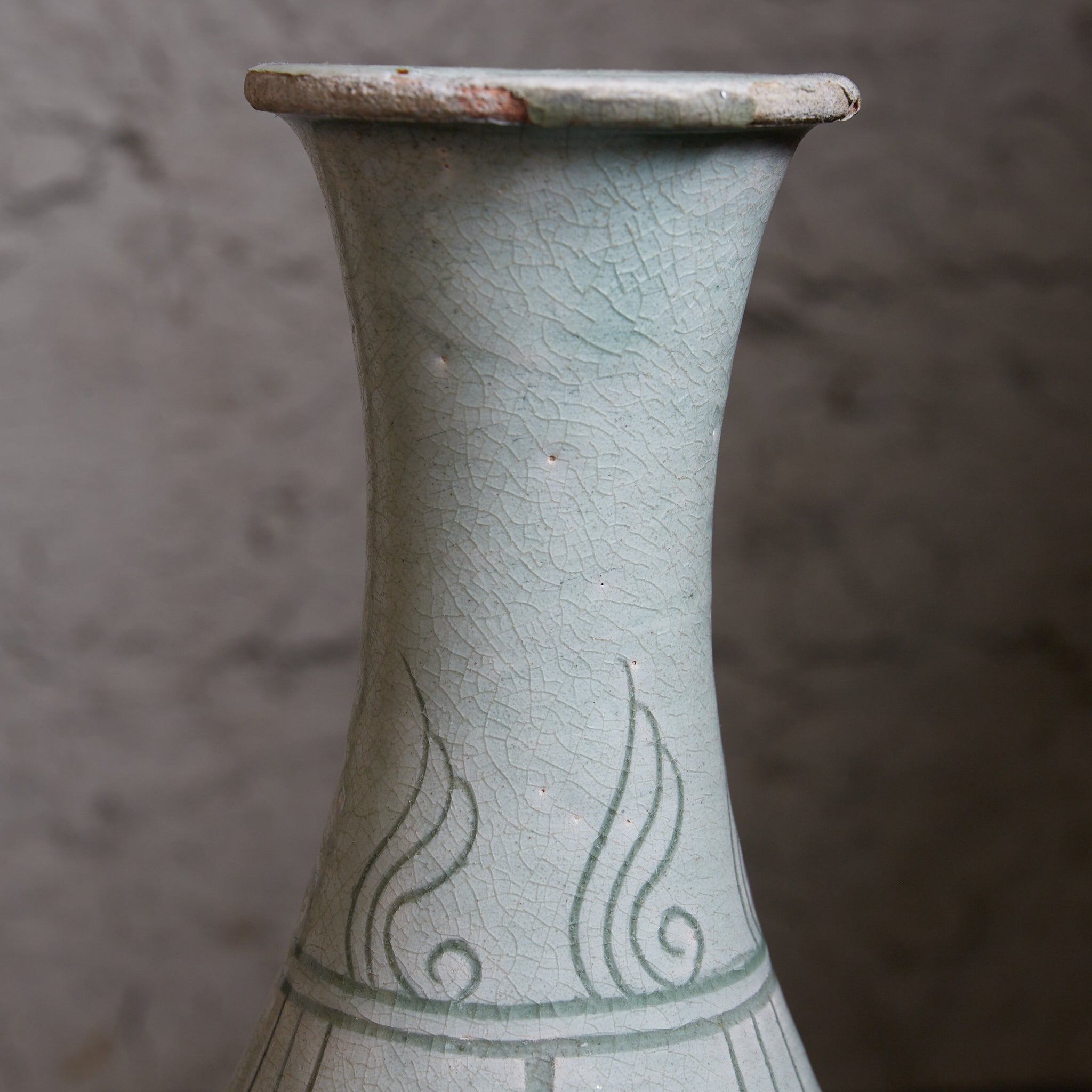
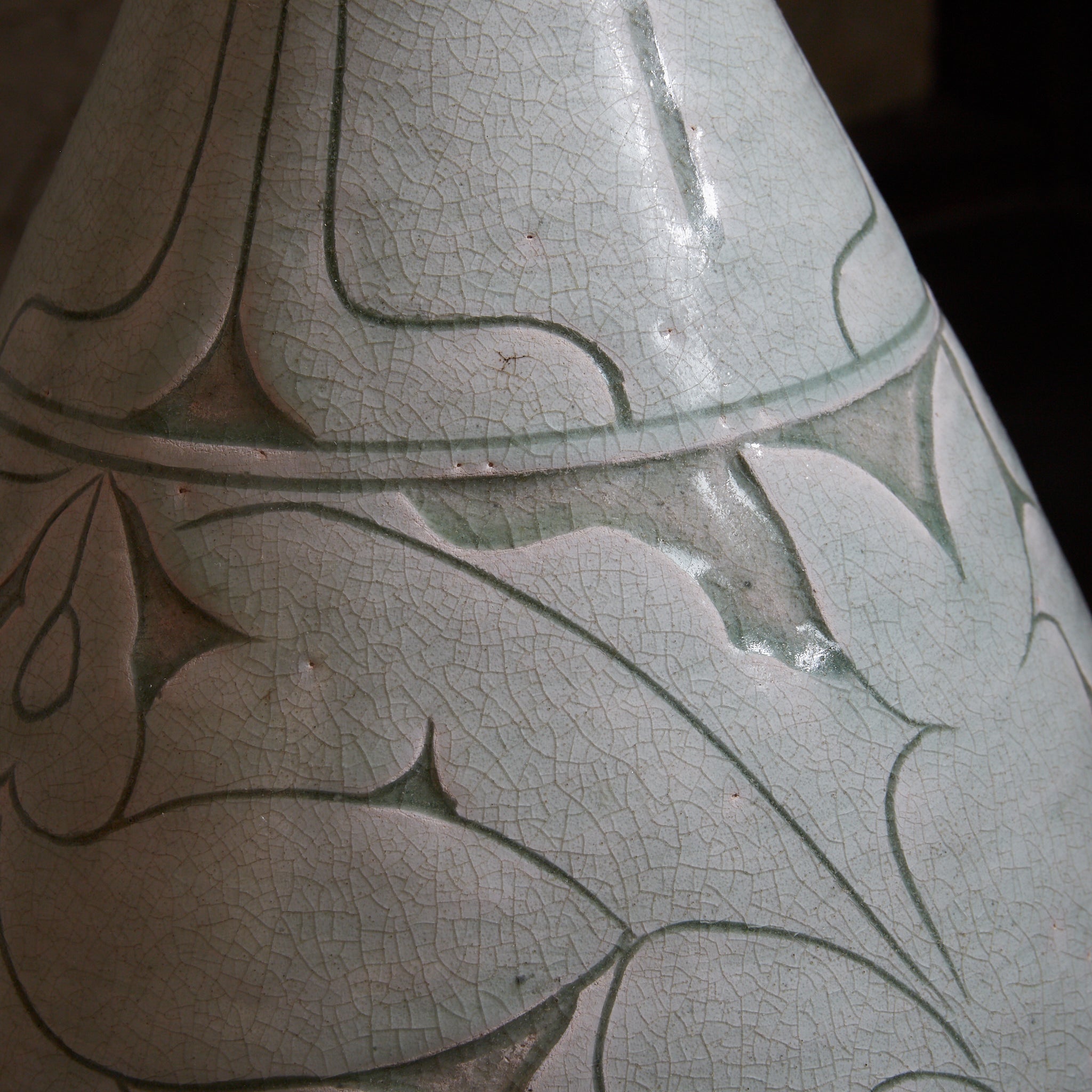
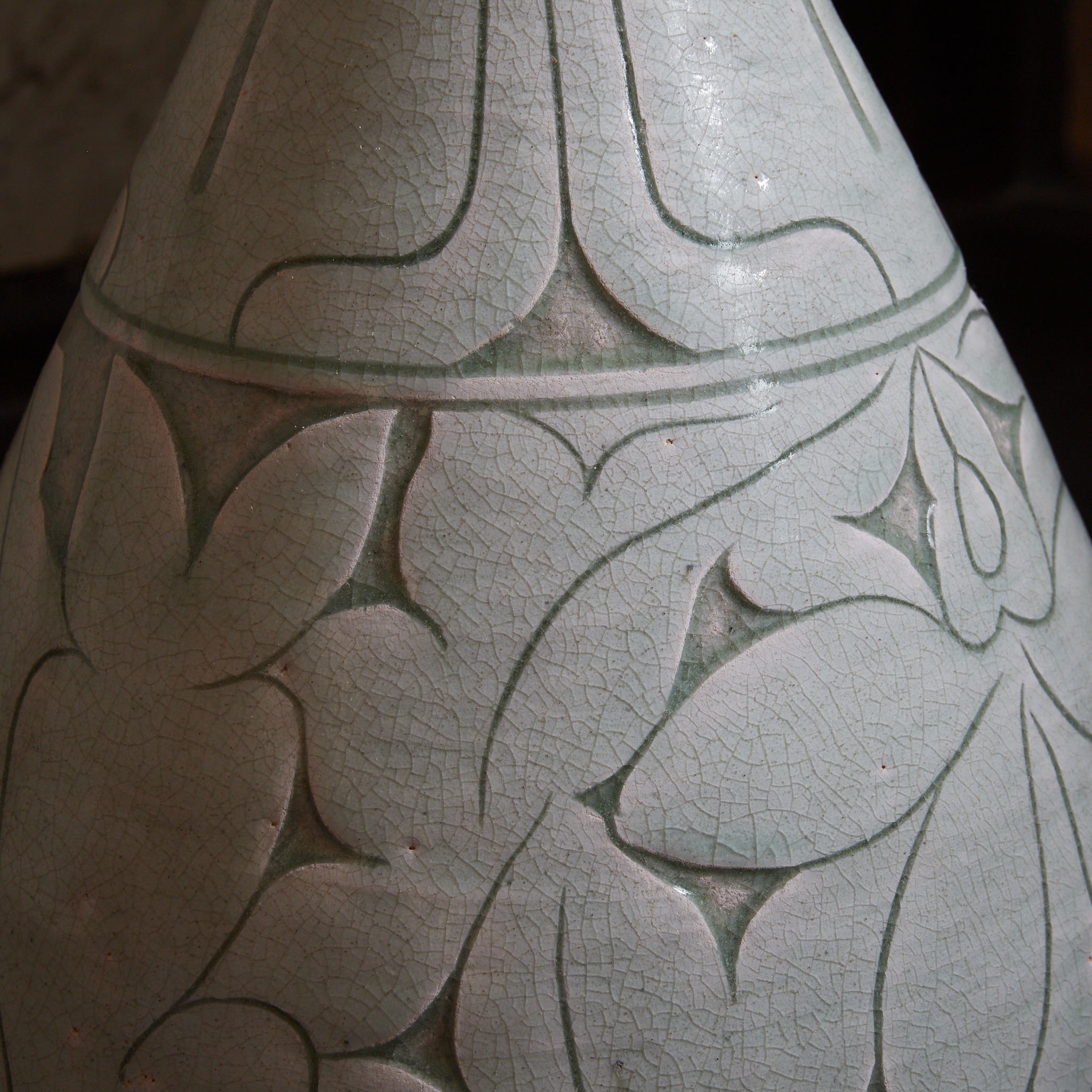
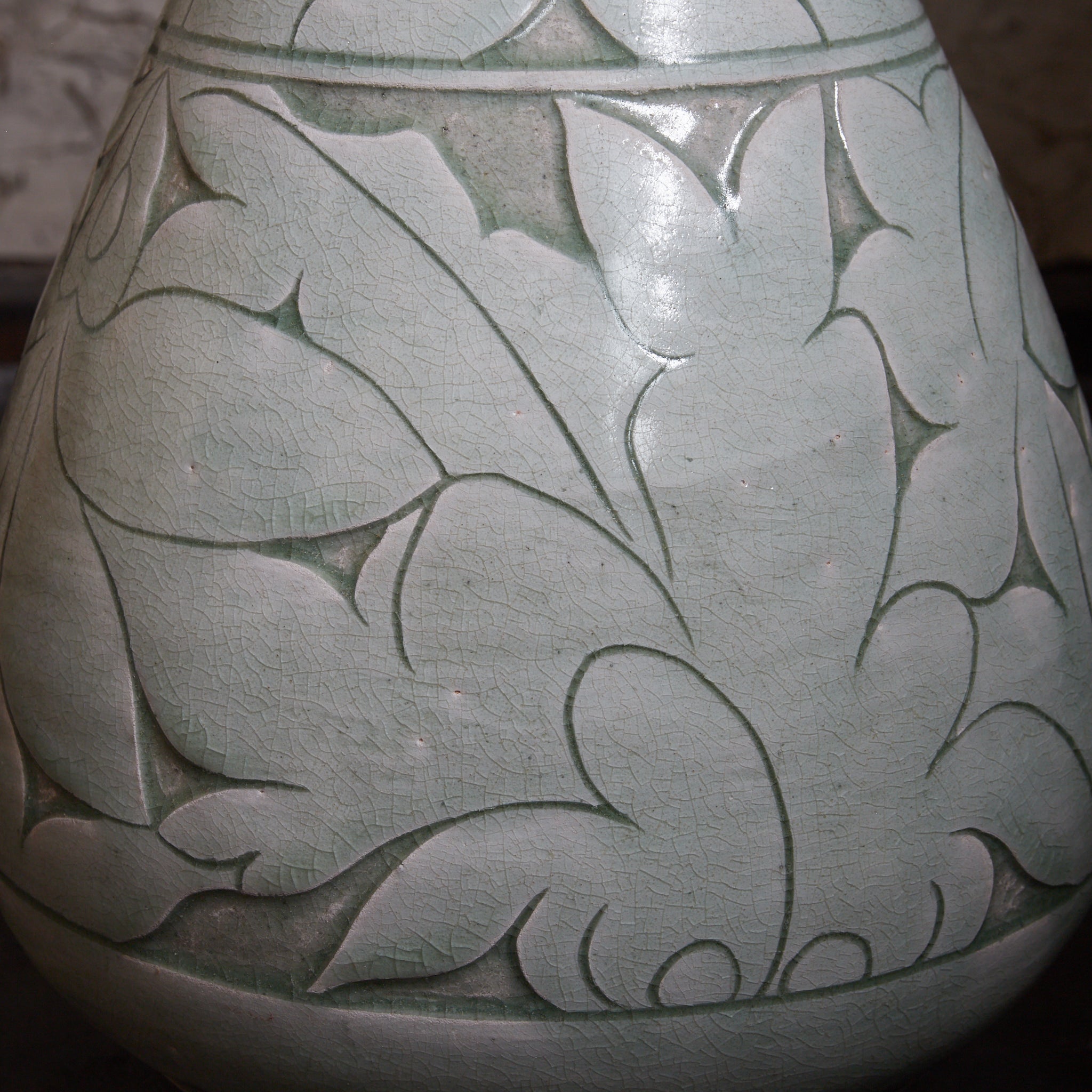
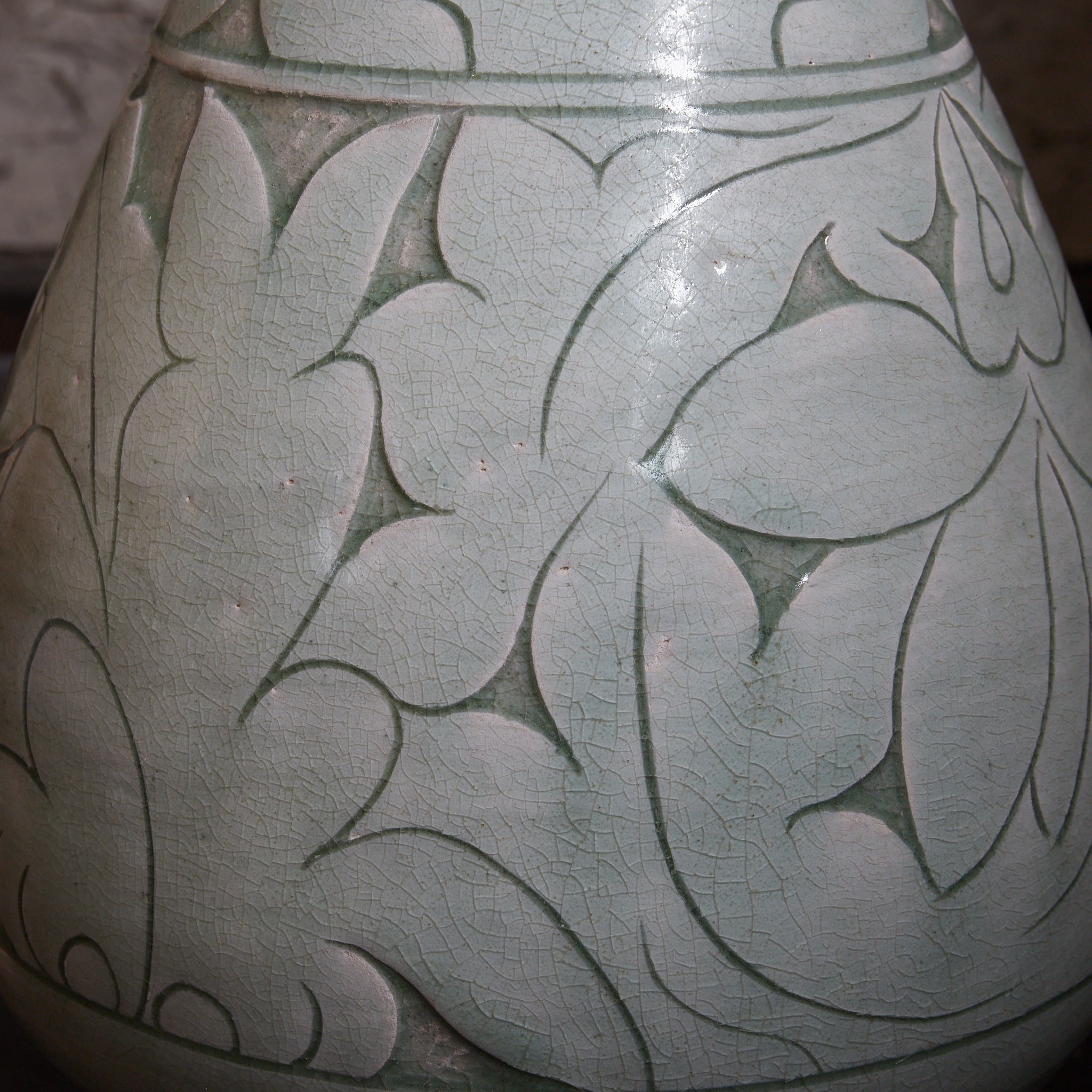
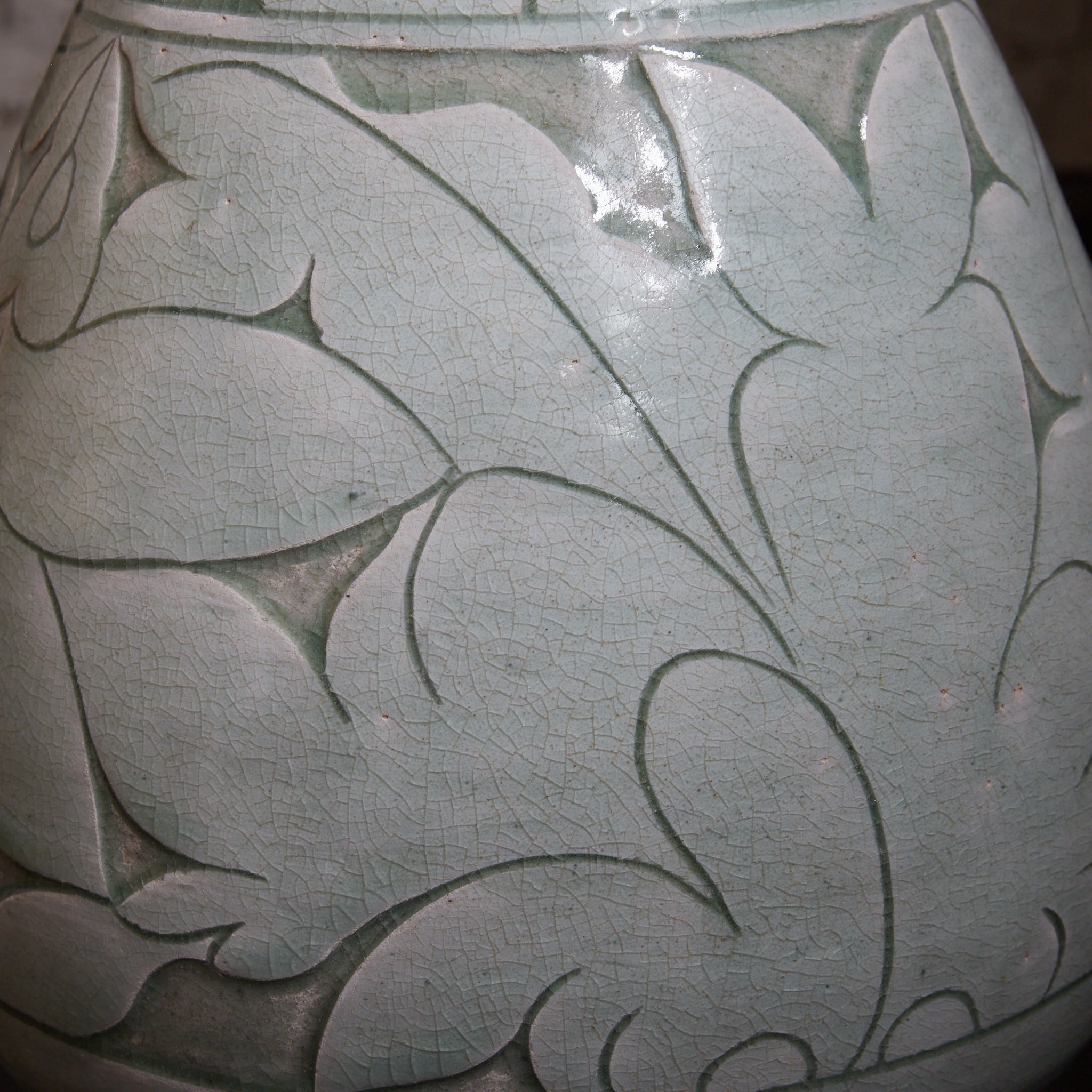
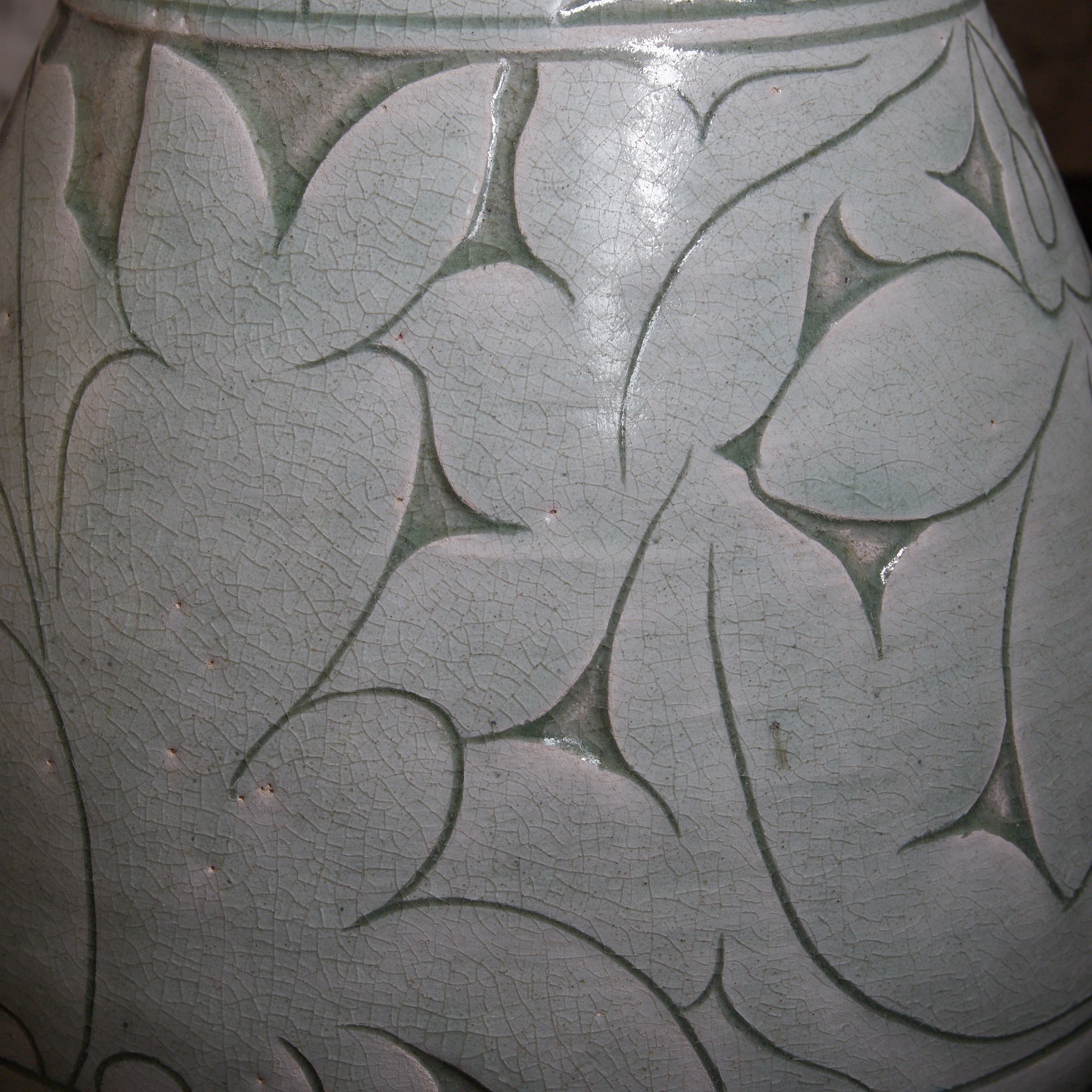
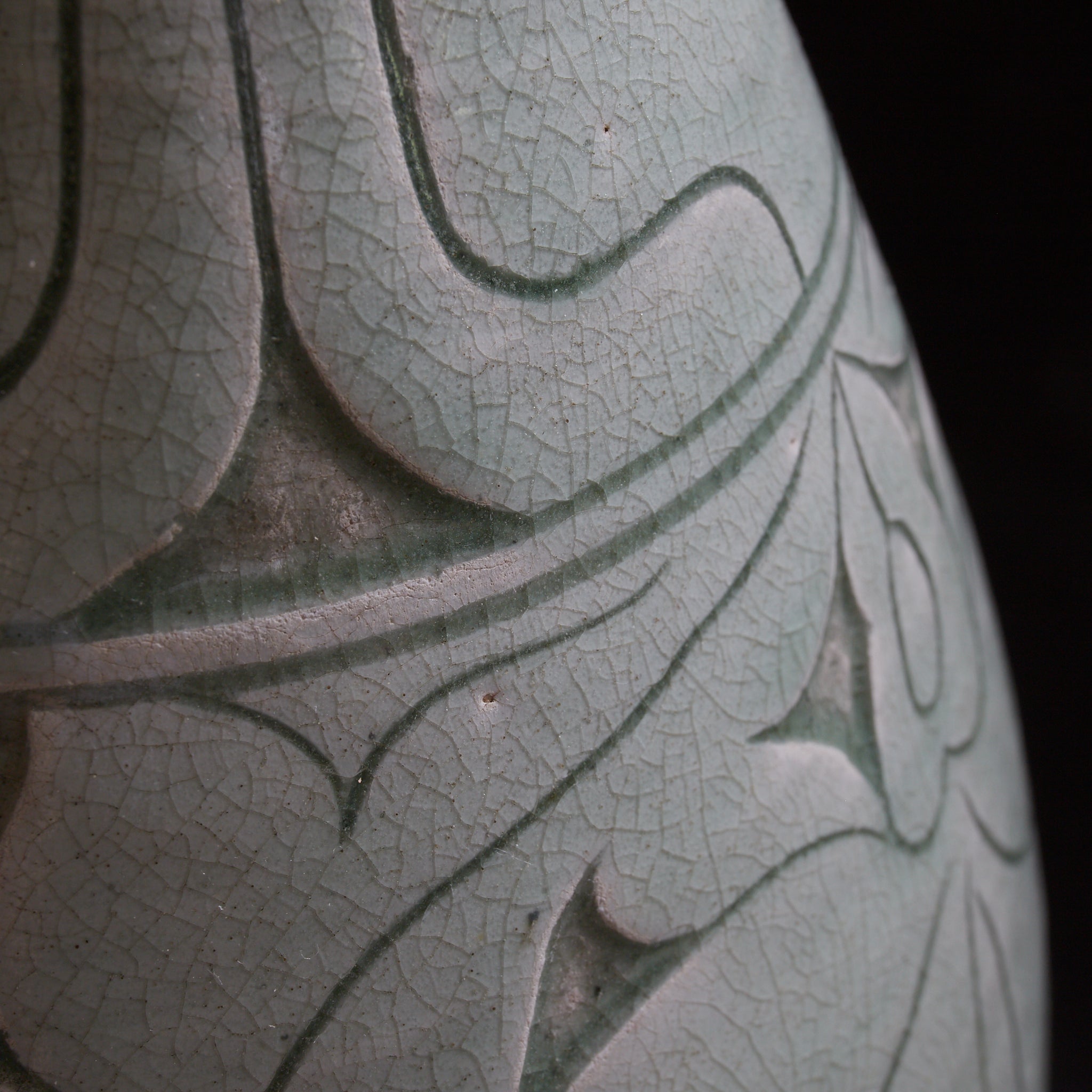
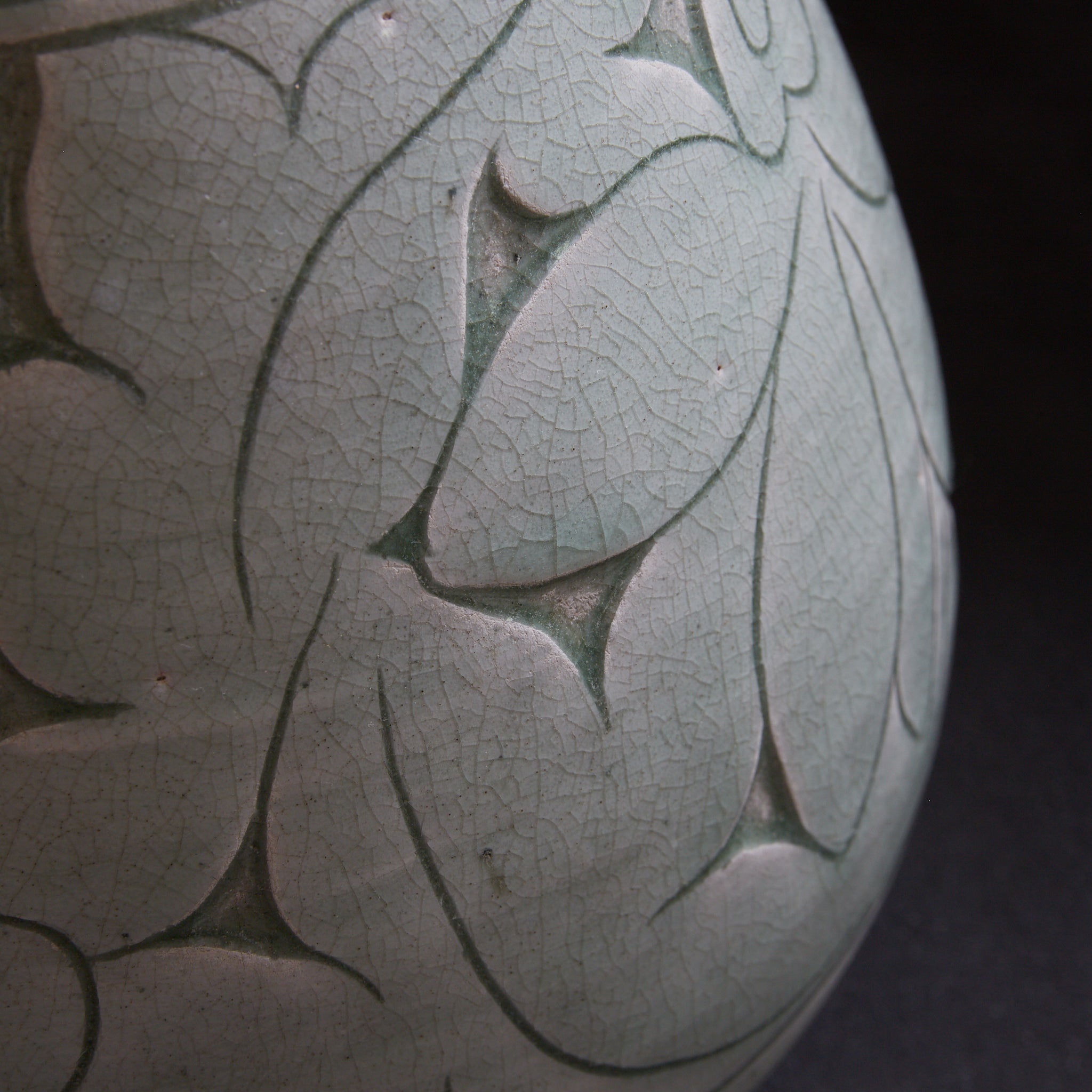
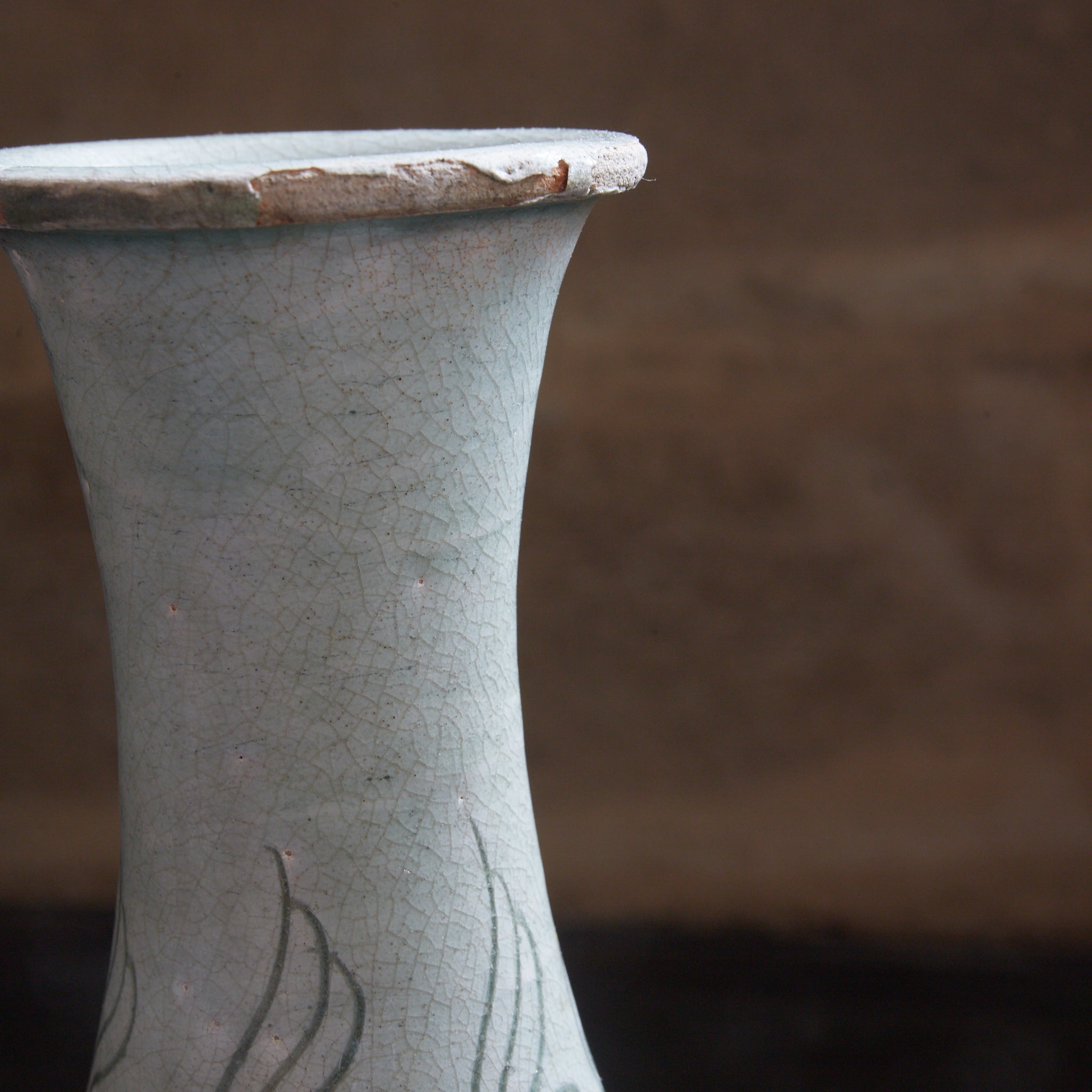
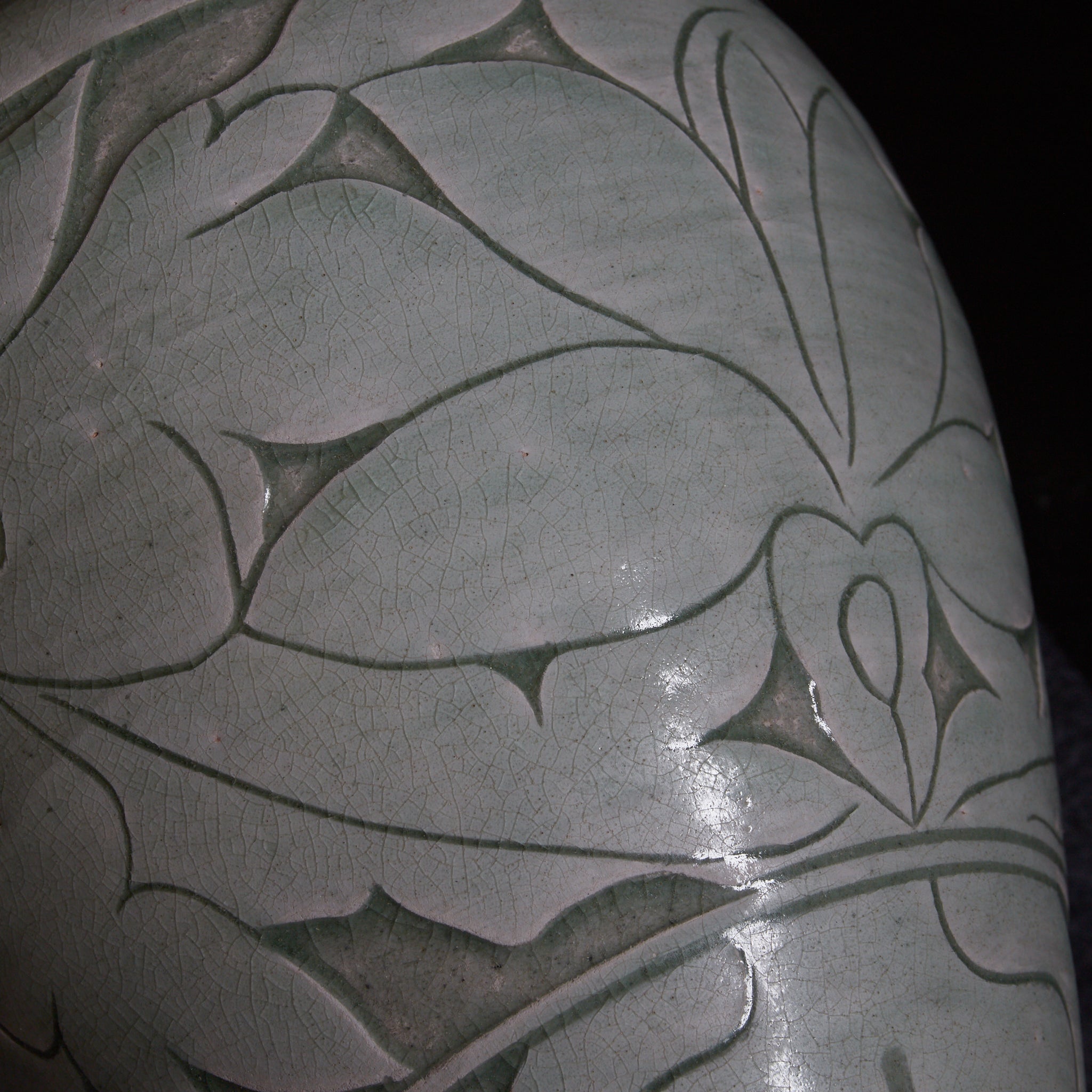
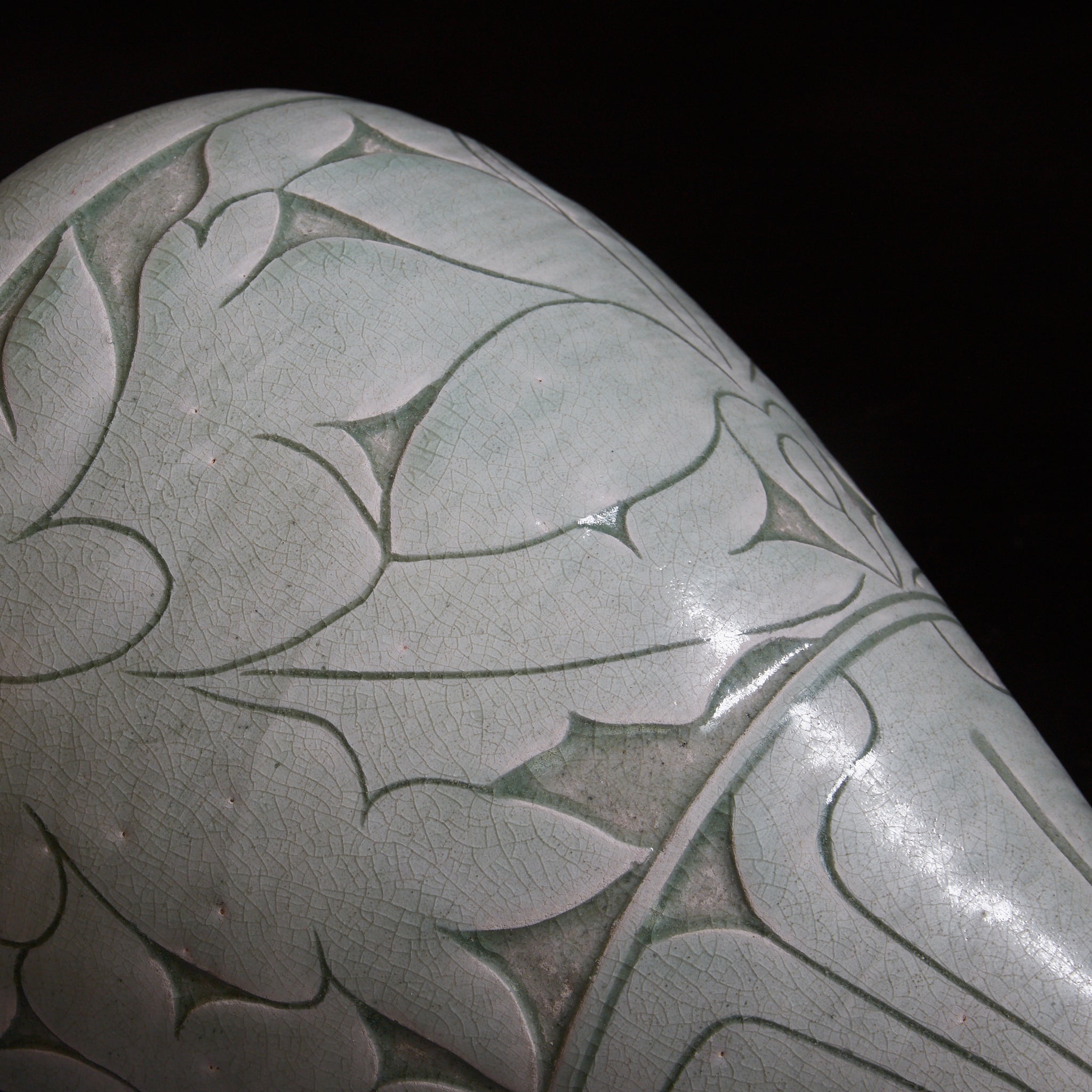
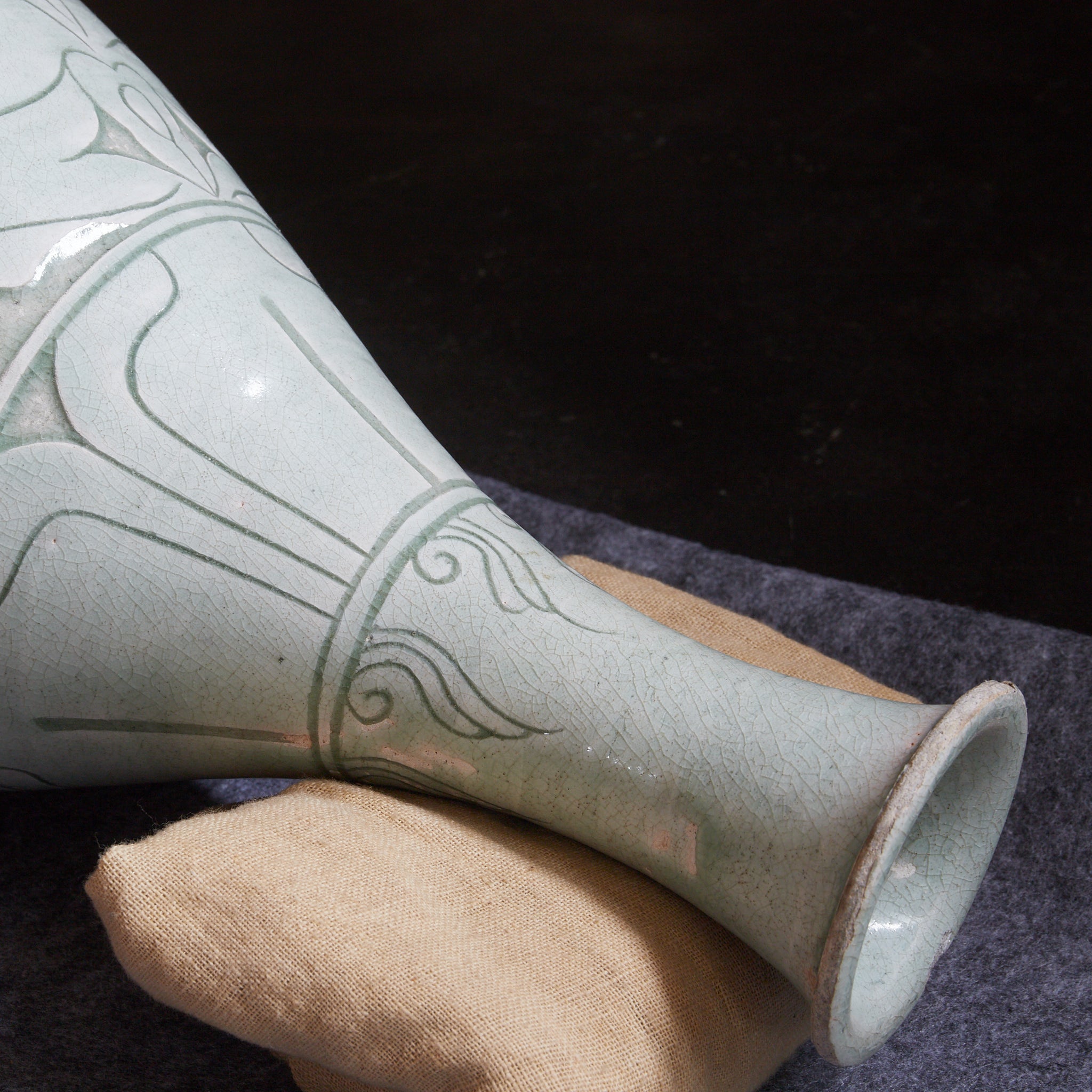
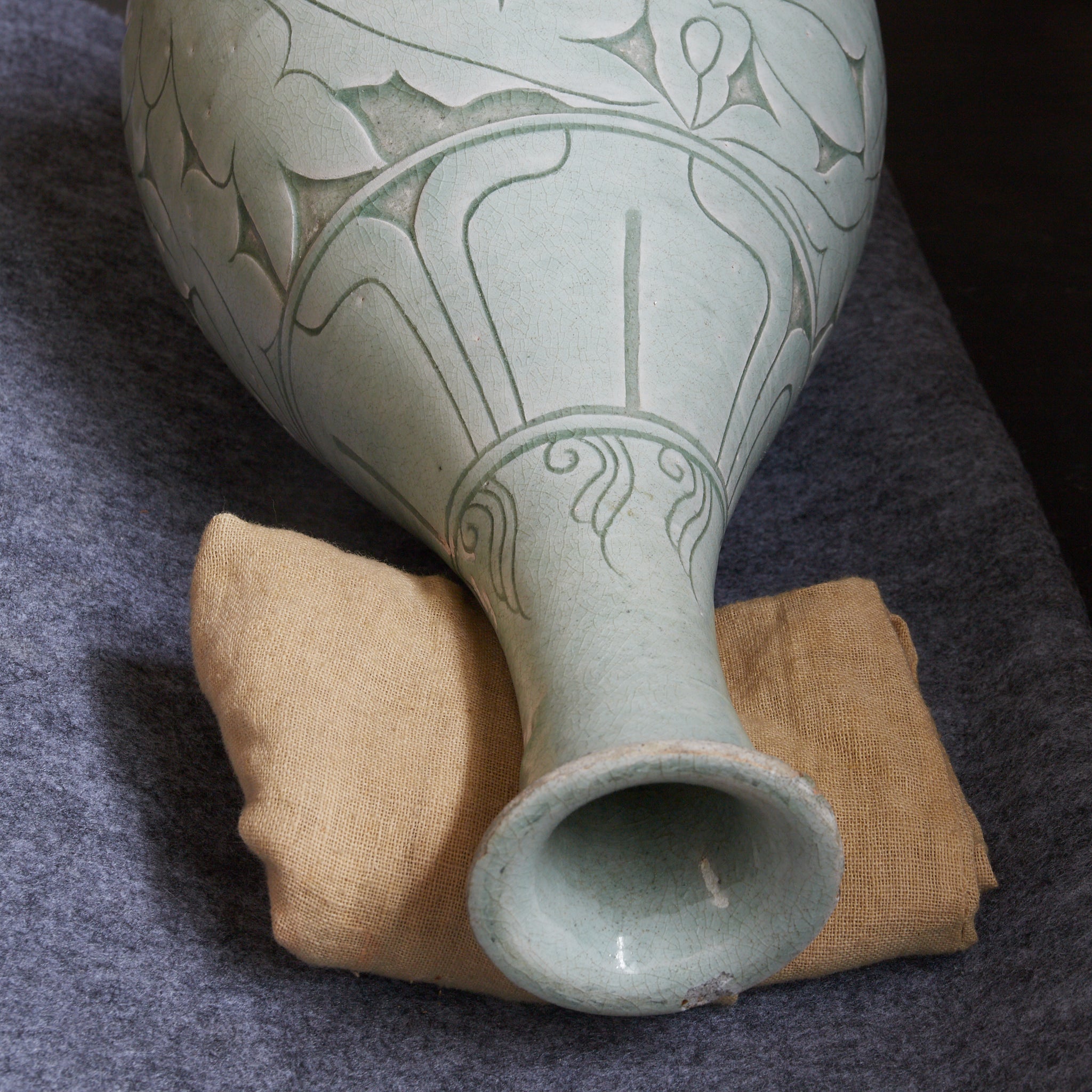
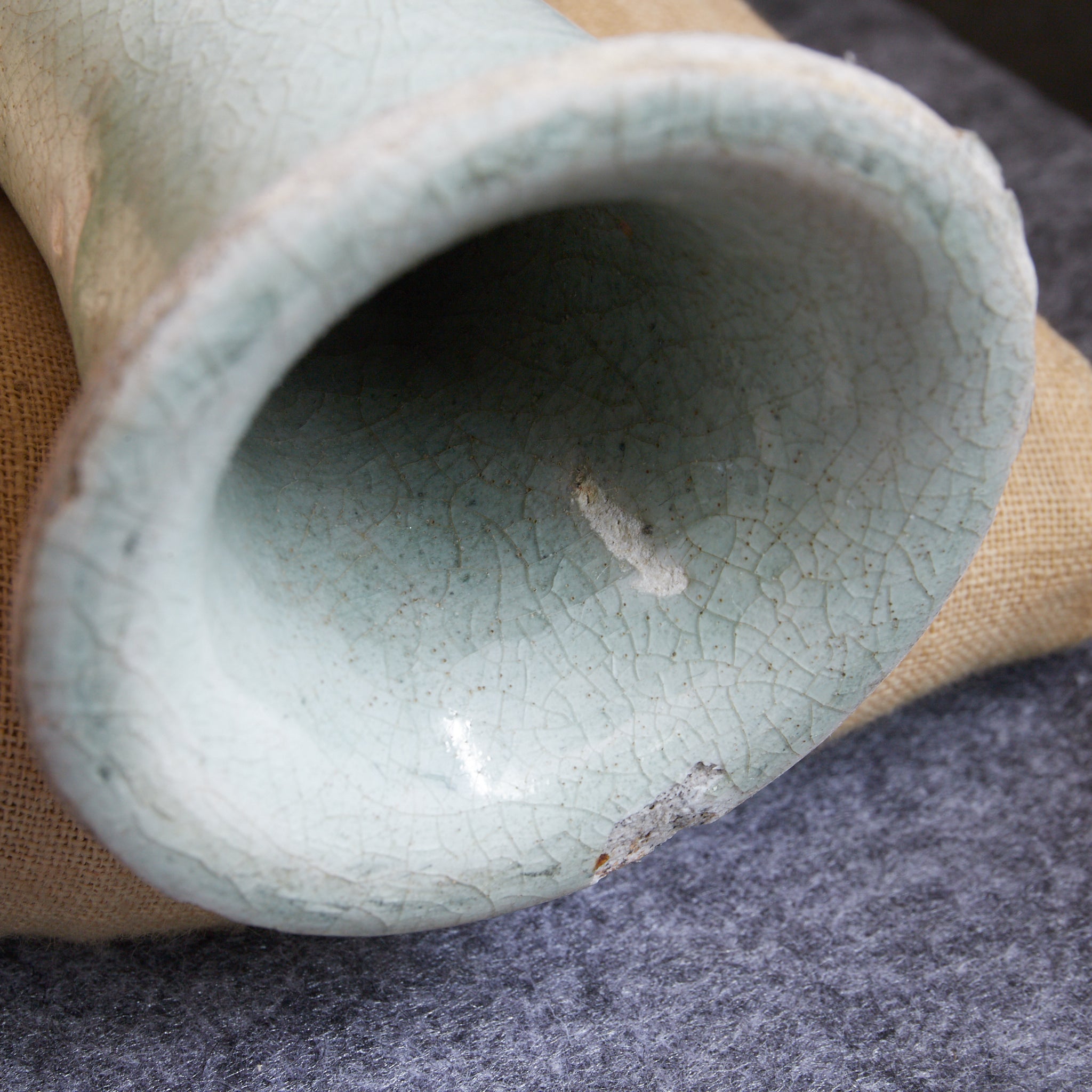
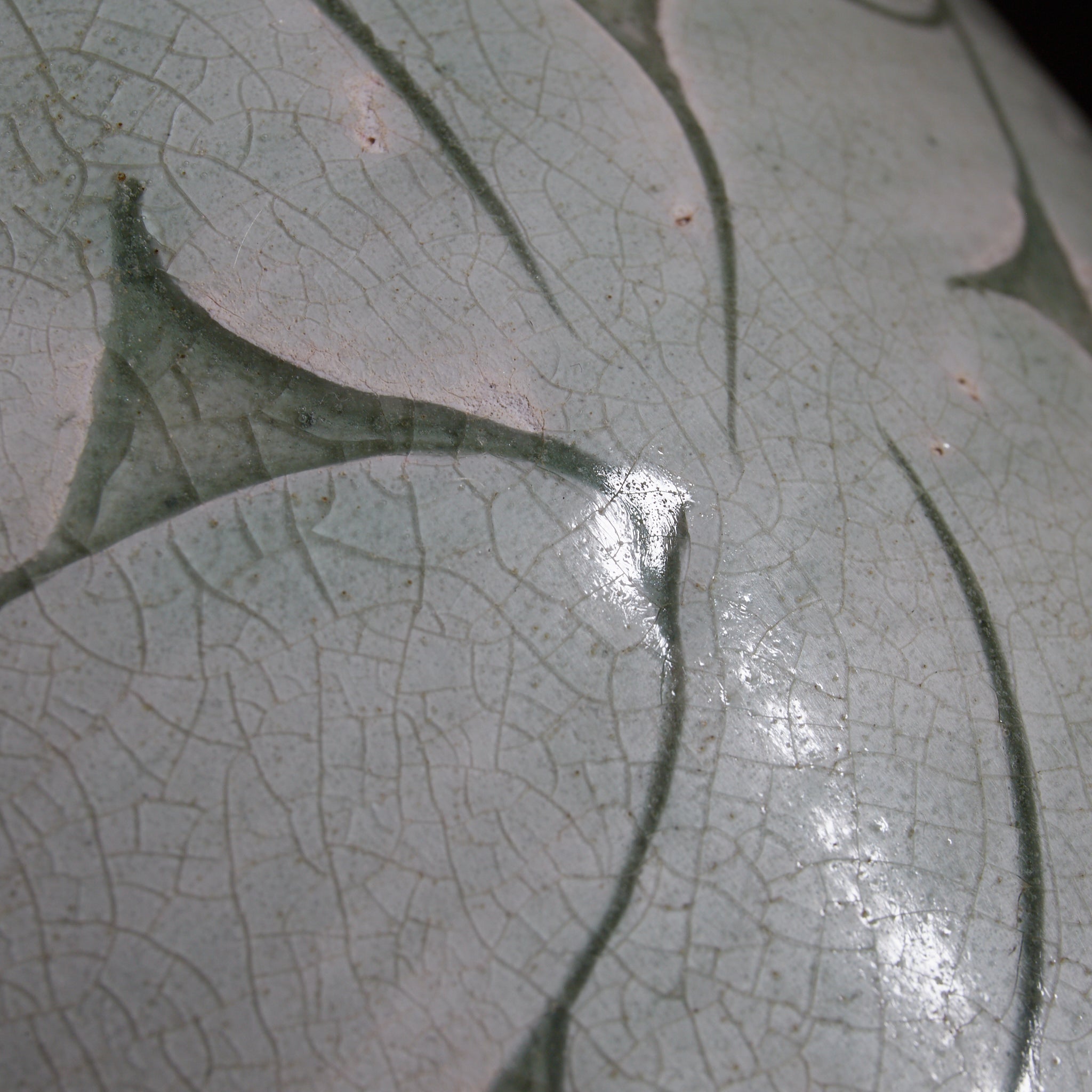
The vessel takes the form of a bottle, rising from a gently swelling body to a slender, elongated neck. Set against the body’s fullness, the neck is neatly tapered, and the rim opens outward slightly, producing an overall composed silhouette. The glaze is a pale white with a bluish cast and is covered with fine all-over crackle; when struck by light it reveals a cool beauty that evokes celadon.
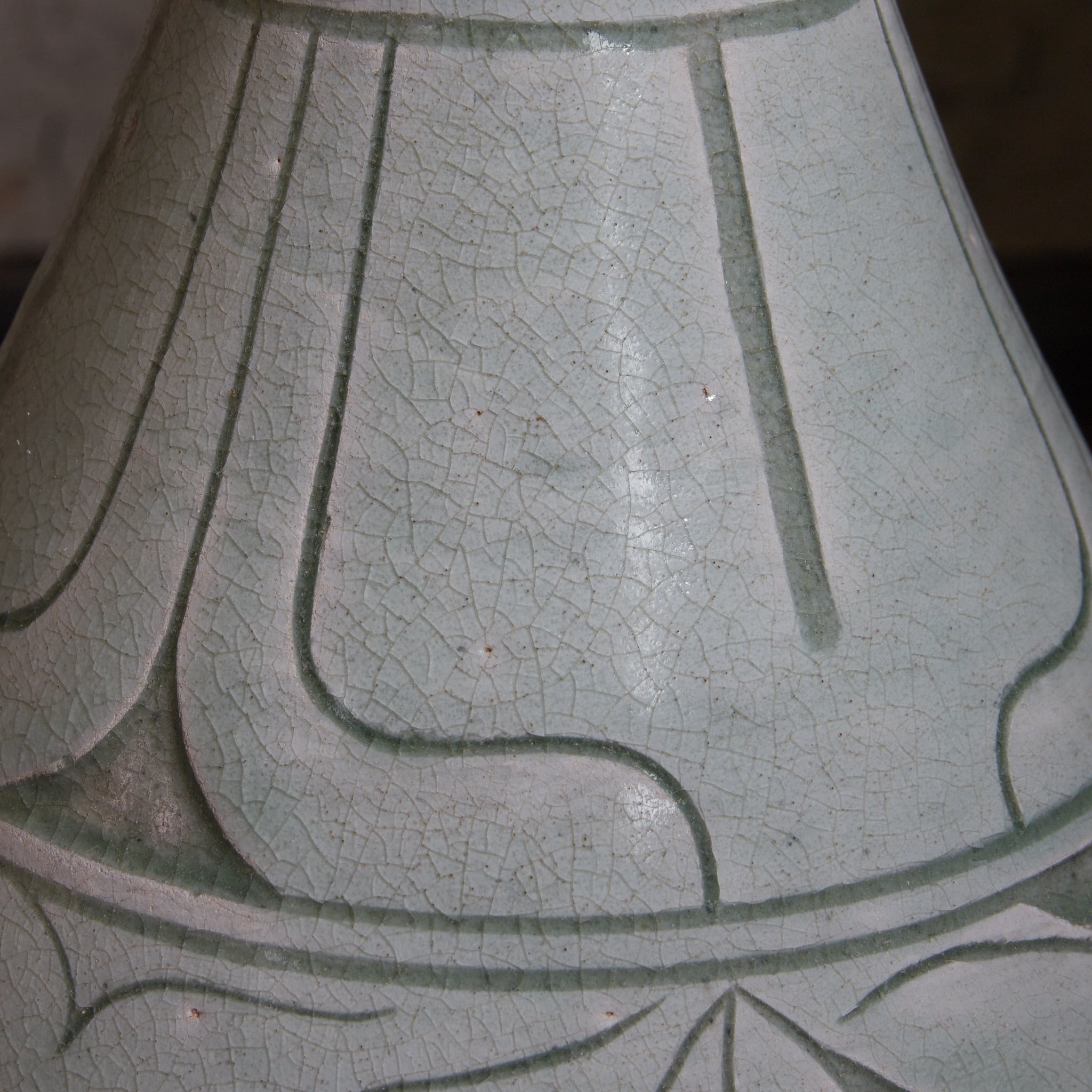
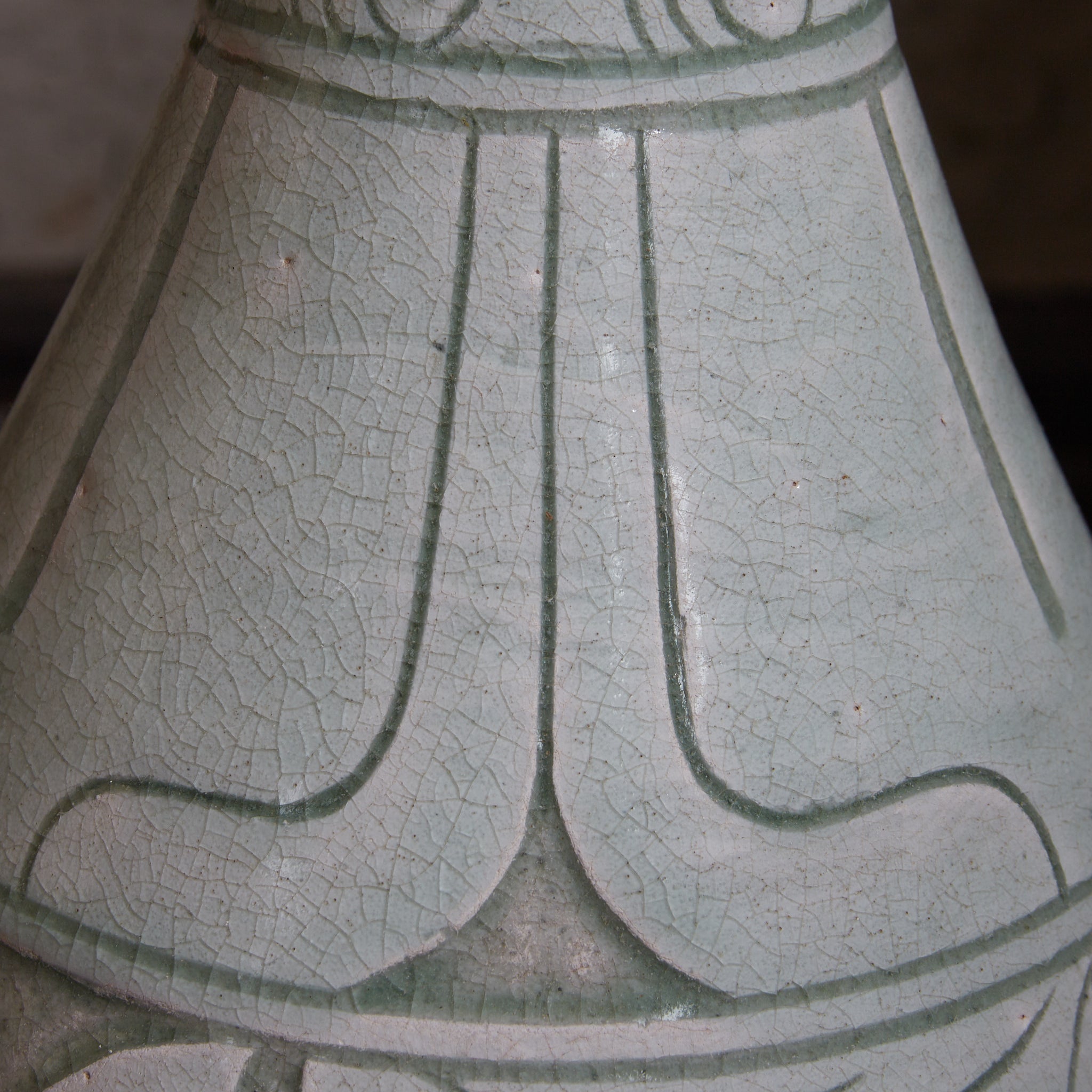
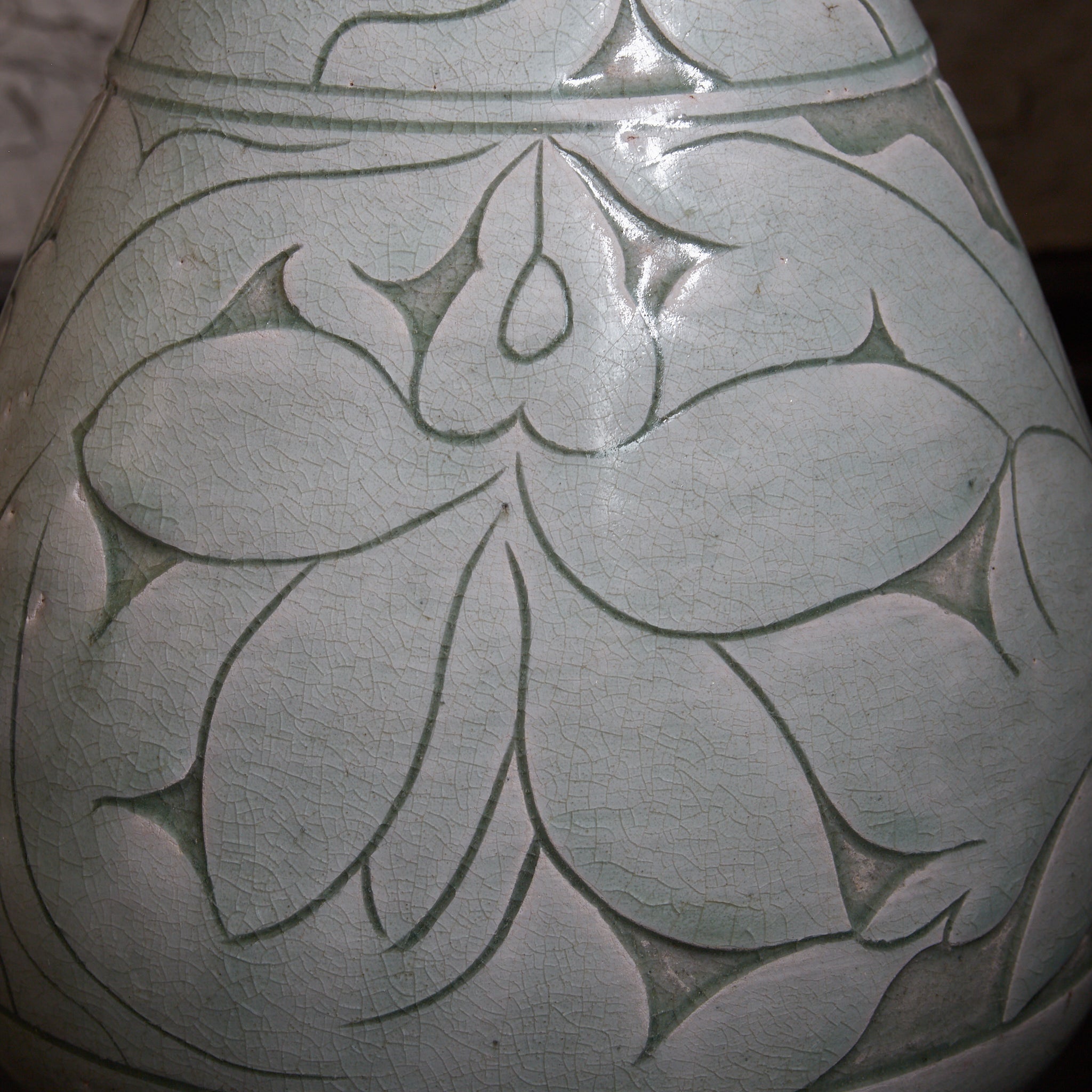
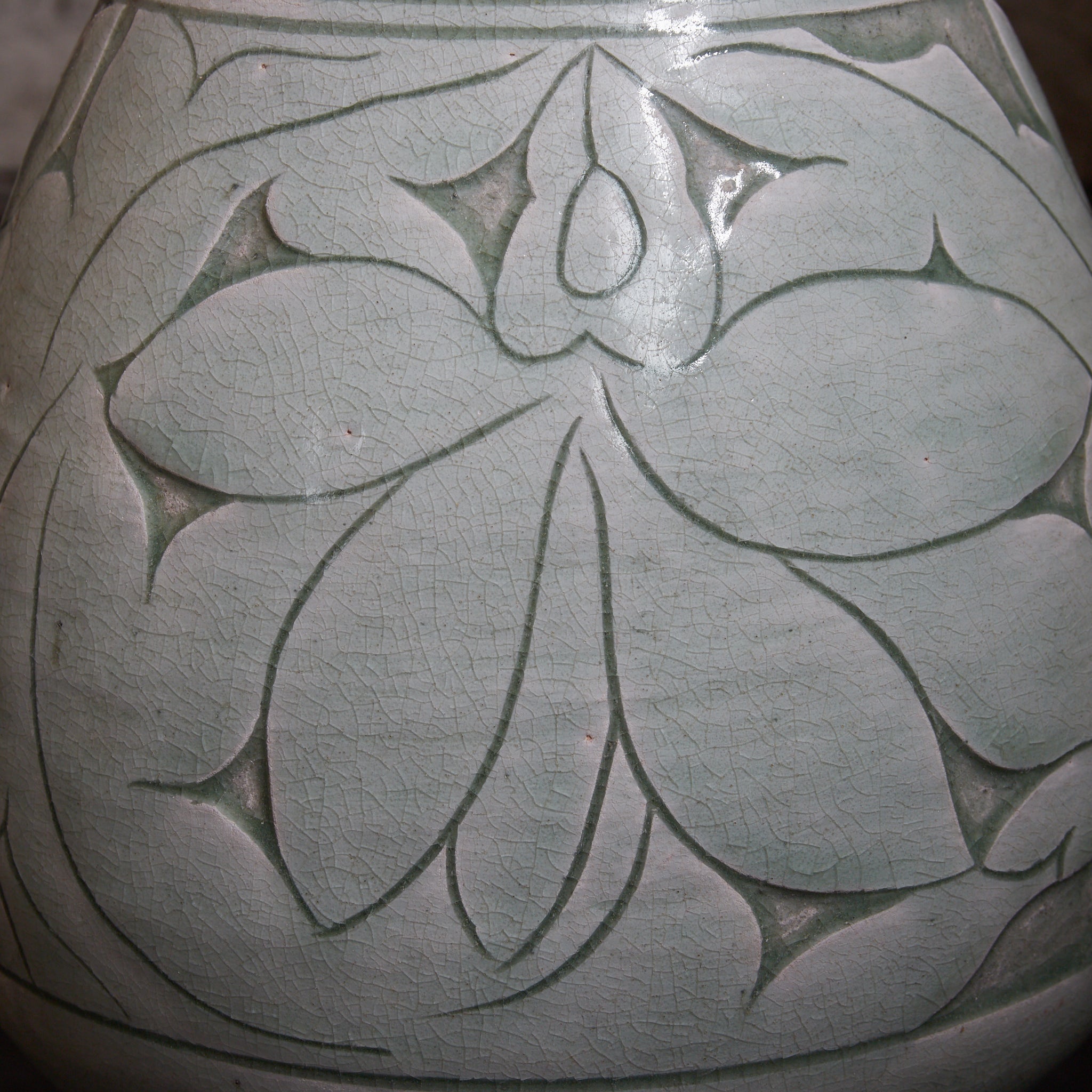
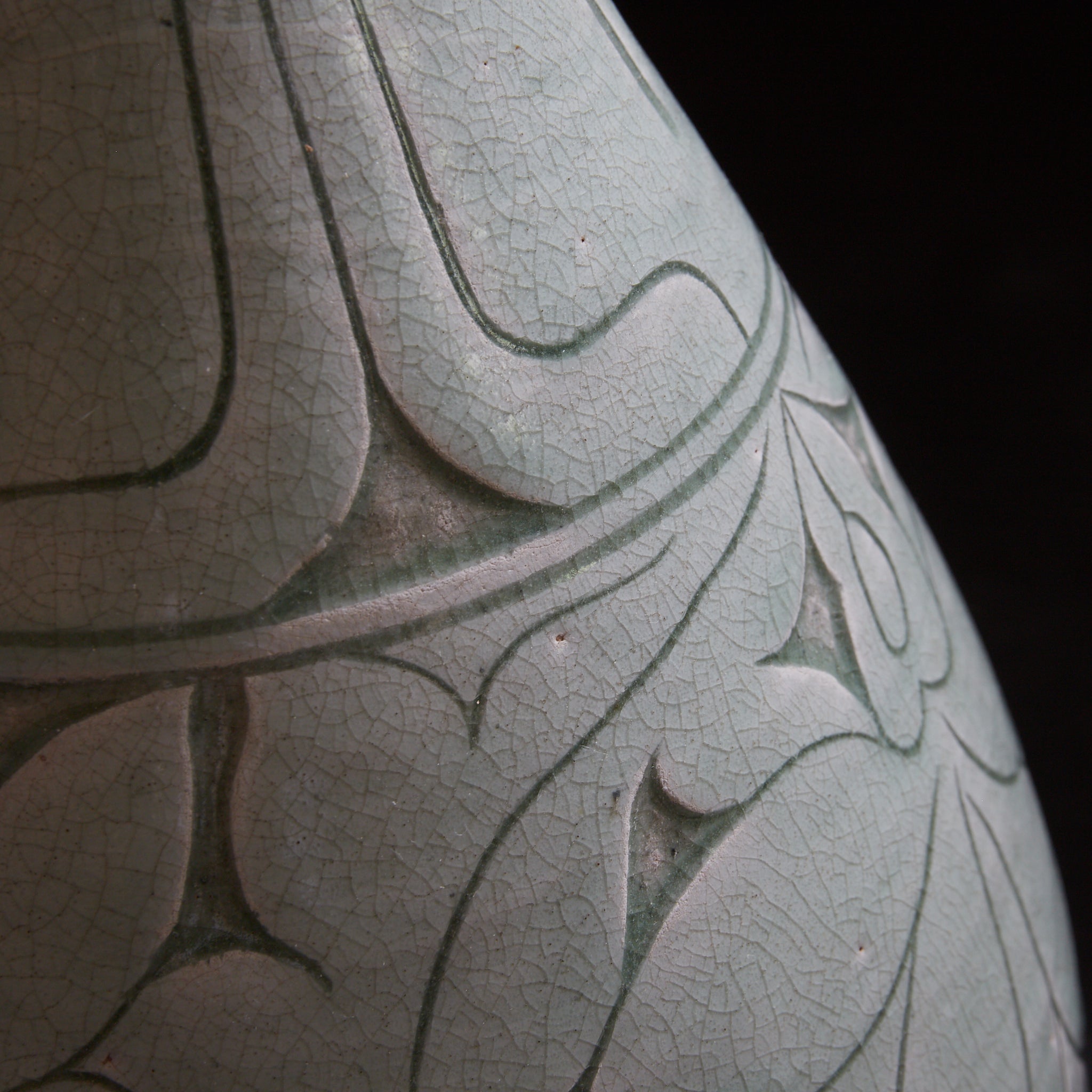
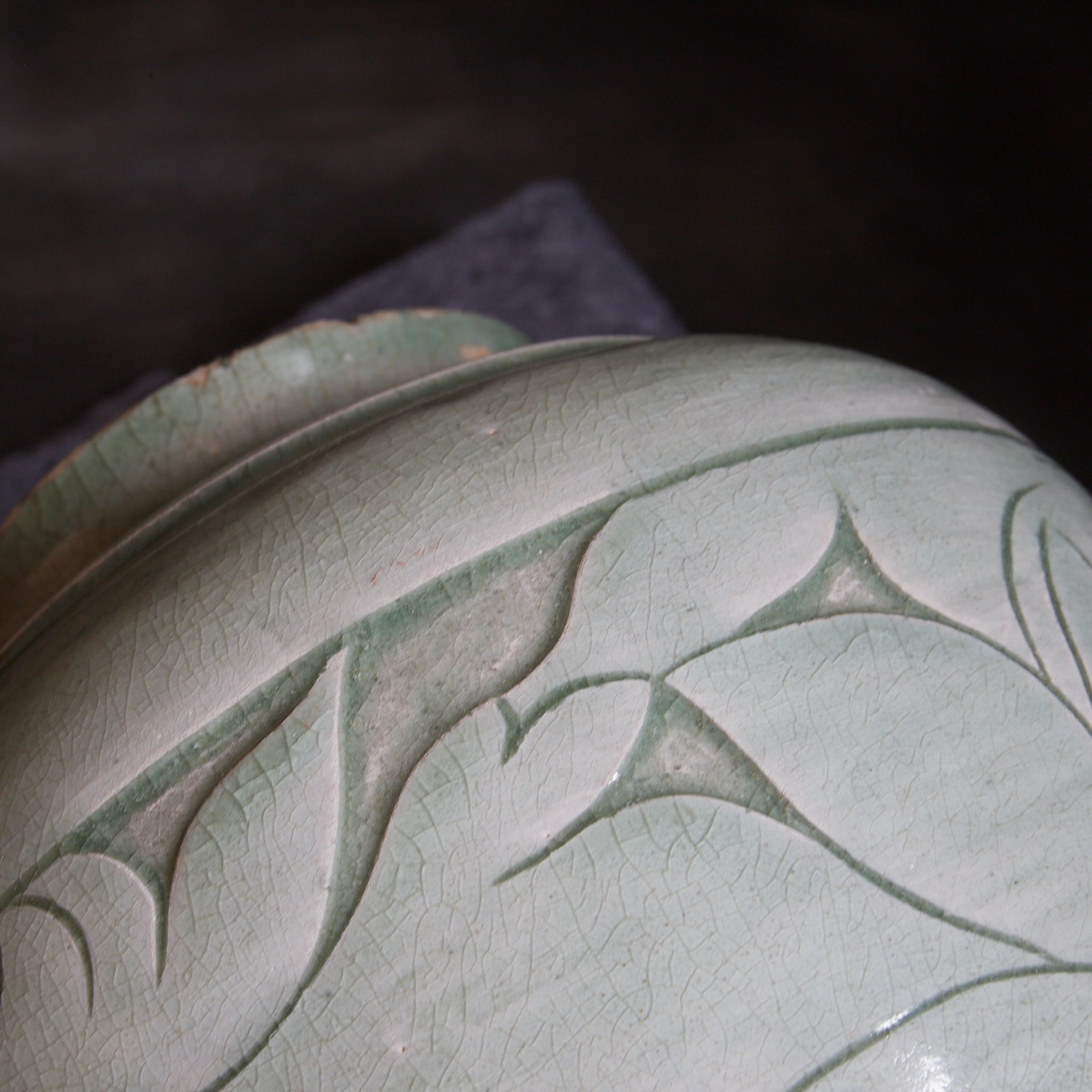
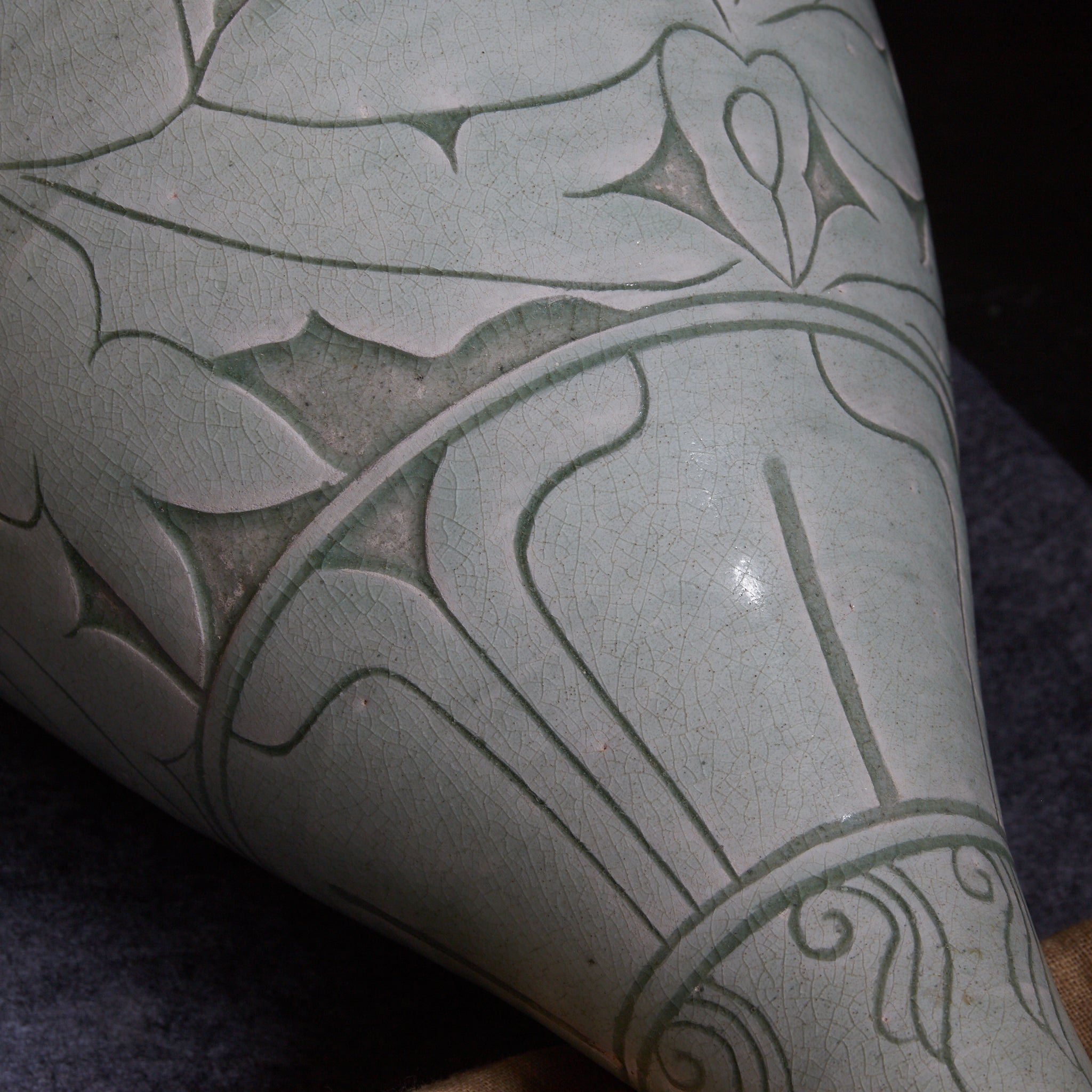
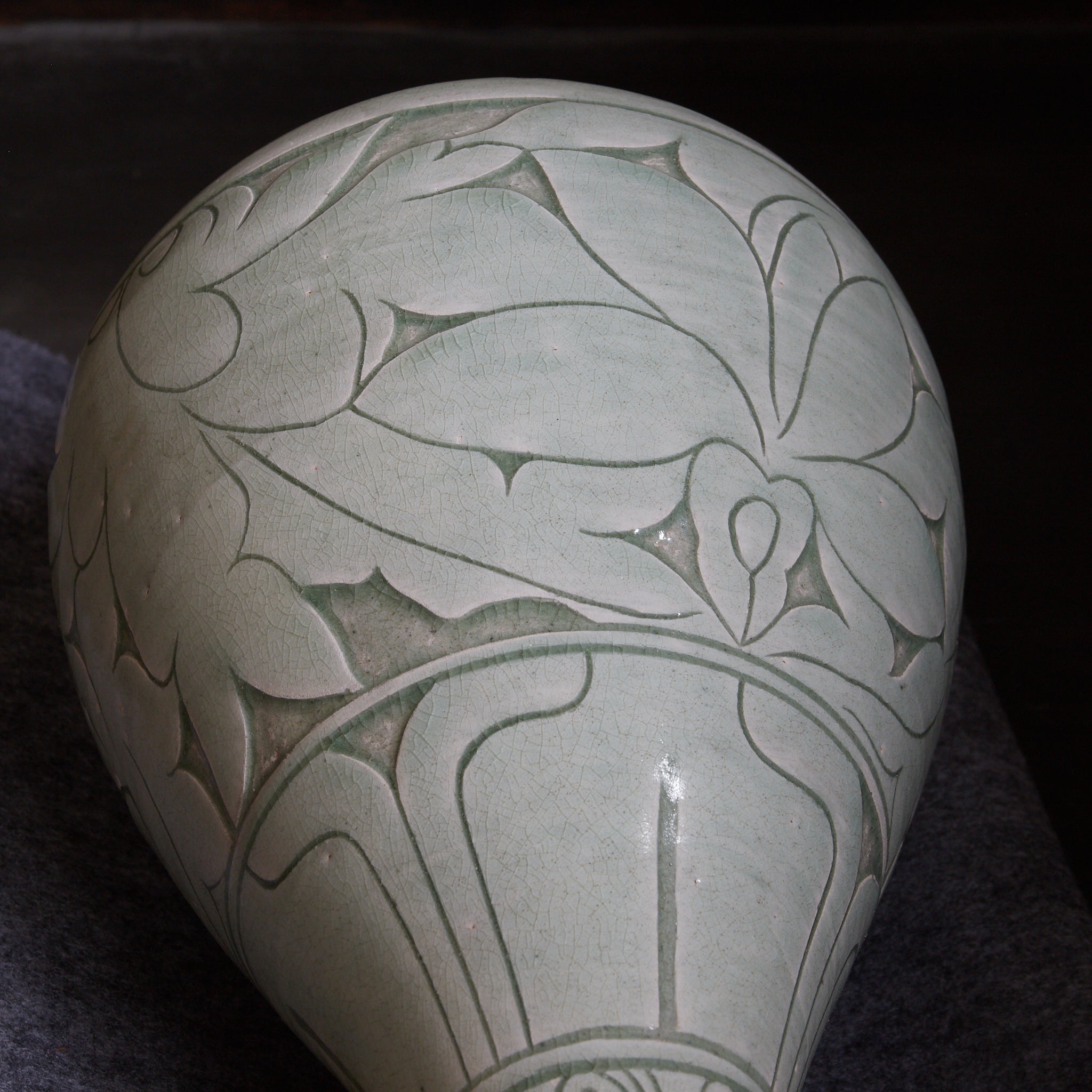
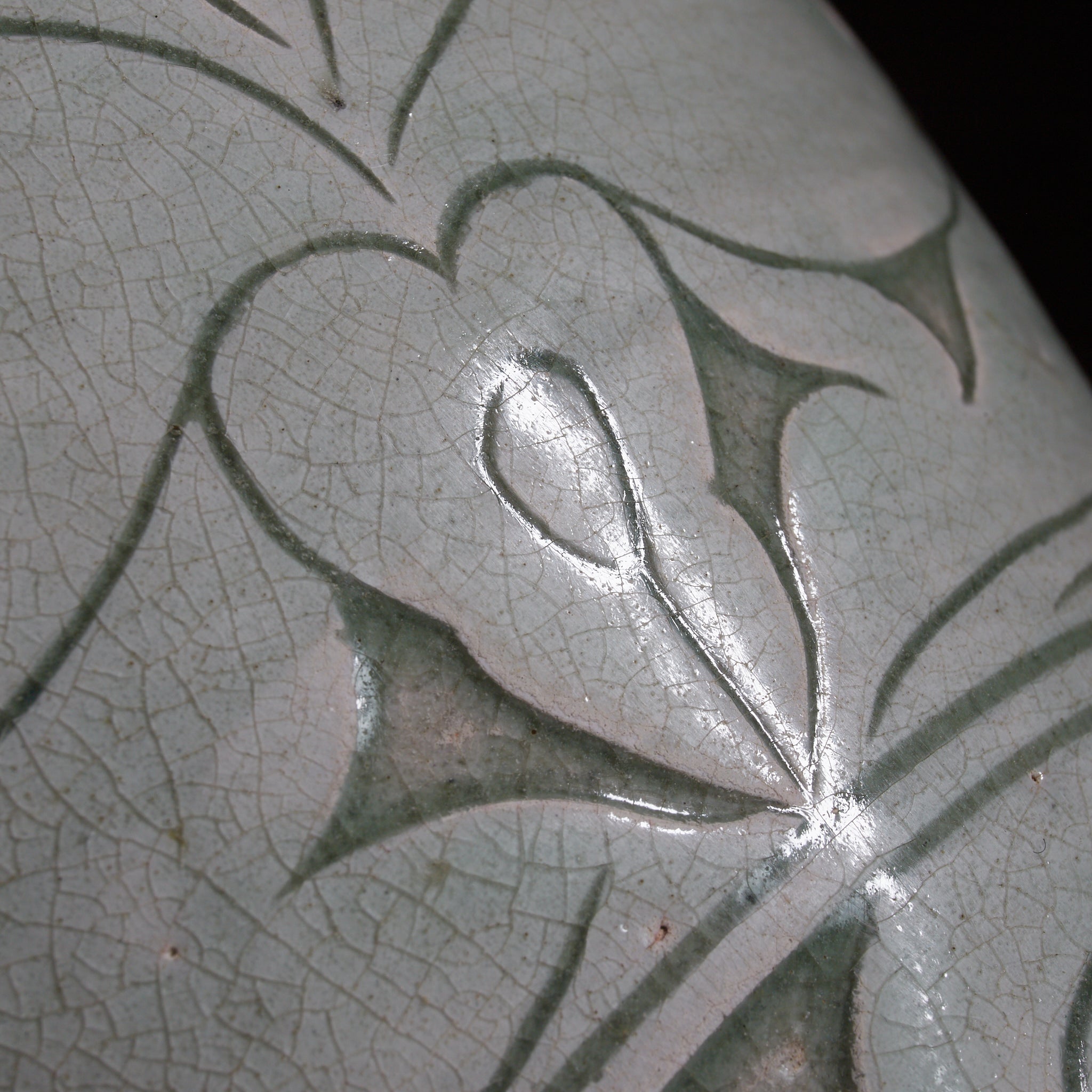
The body is broadly encircled with lotus motifs. The pattern’s contours have been scratched away in sgraffito, and the contrast between the petals left white and the bluish‑green ground allows the lotus to appear quietly. The lines are expansive, and the overlapping petals show no stiffness; the boldness characteristic of early Joseon powder‑blue wares coexists with the serene clarity of the white, porcelain‑like surface.
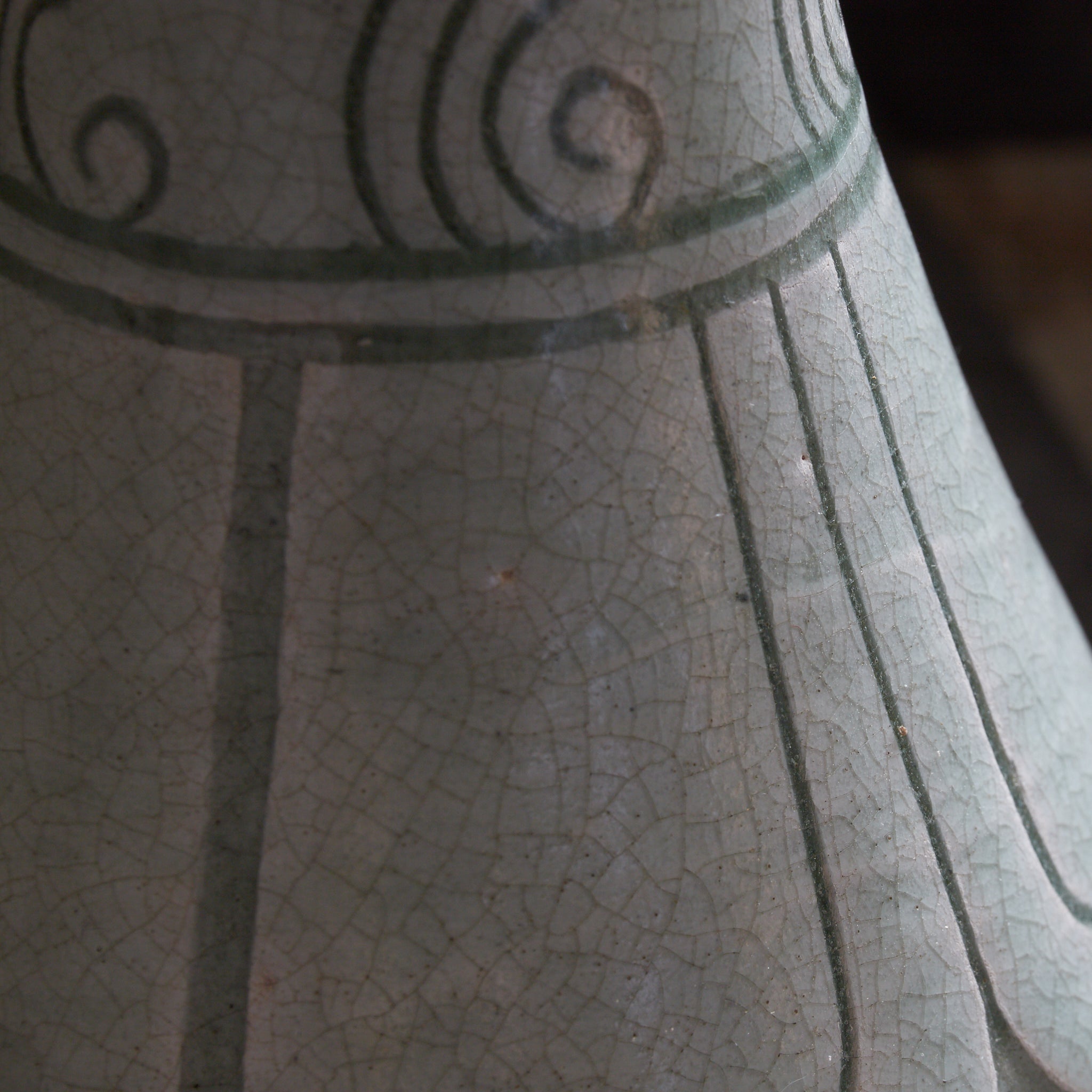
Banded compartments are arranged from the shoulder to the neck, above which a flame‑shaped motif encircles the form. Complementing the lotus design on the body, the composition is resolved with attention to the smallest details, imparting a measured tension to the vessel as a whole.
The decoration unfolds broadly, yet the palette is restrained, and rather than ostentation a composed, dignified air comes forward. The free decorative quality of buncheong and the refined, near-white surface that anticipates white porcelain overlap within a single vessel, aptly illustrating the appeal of early Joseon ceramics.
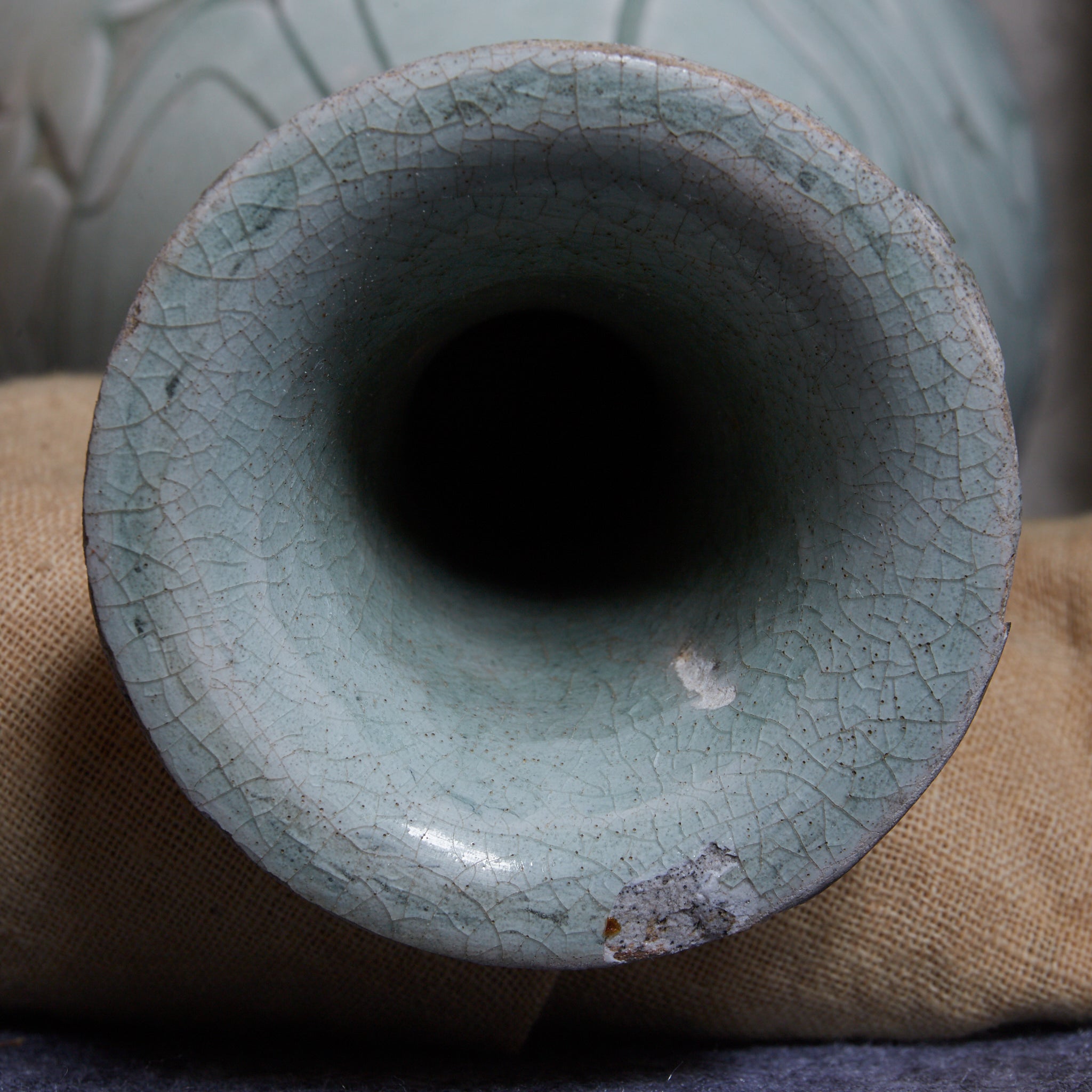
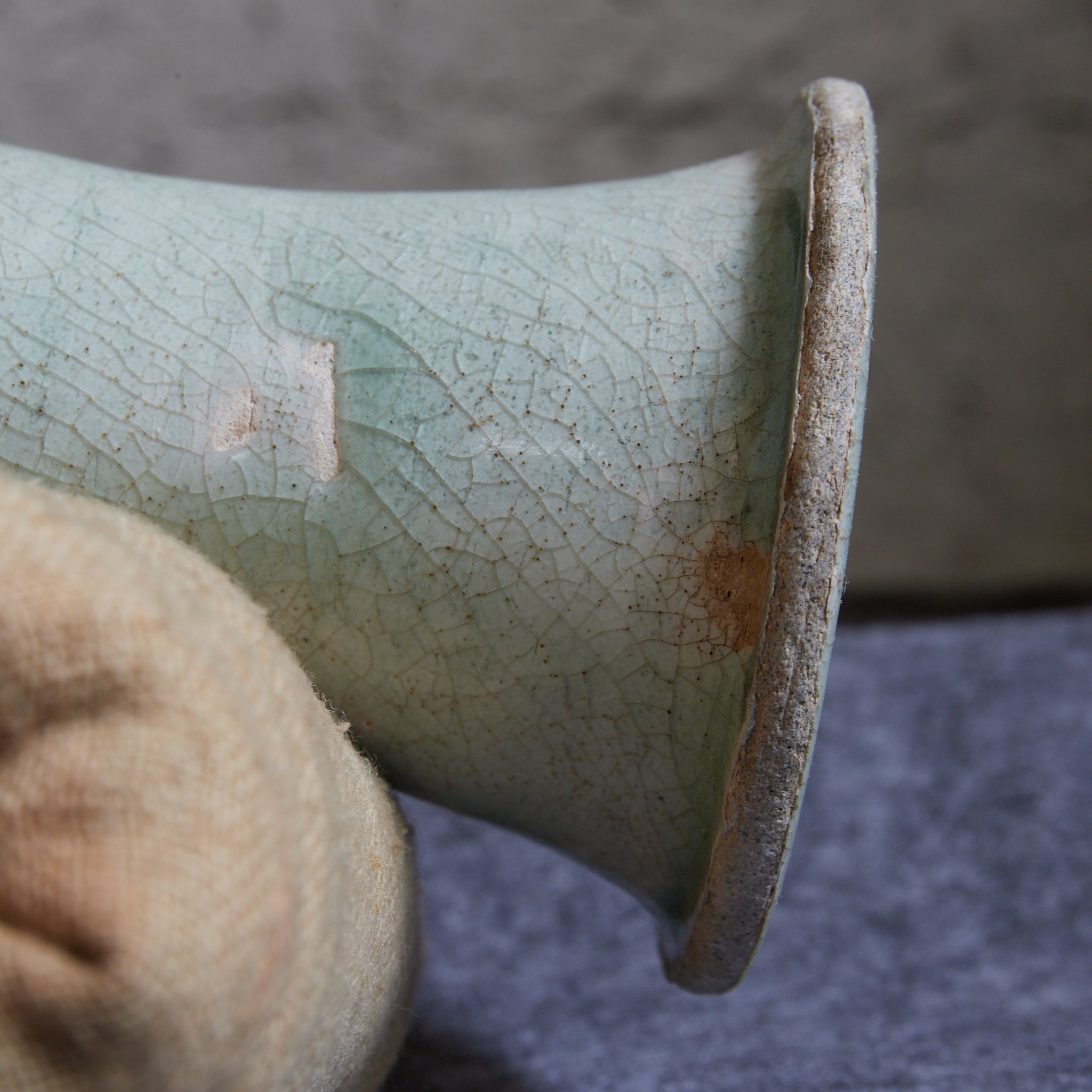
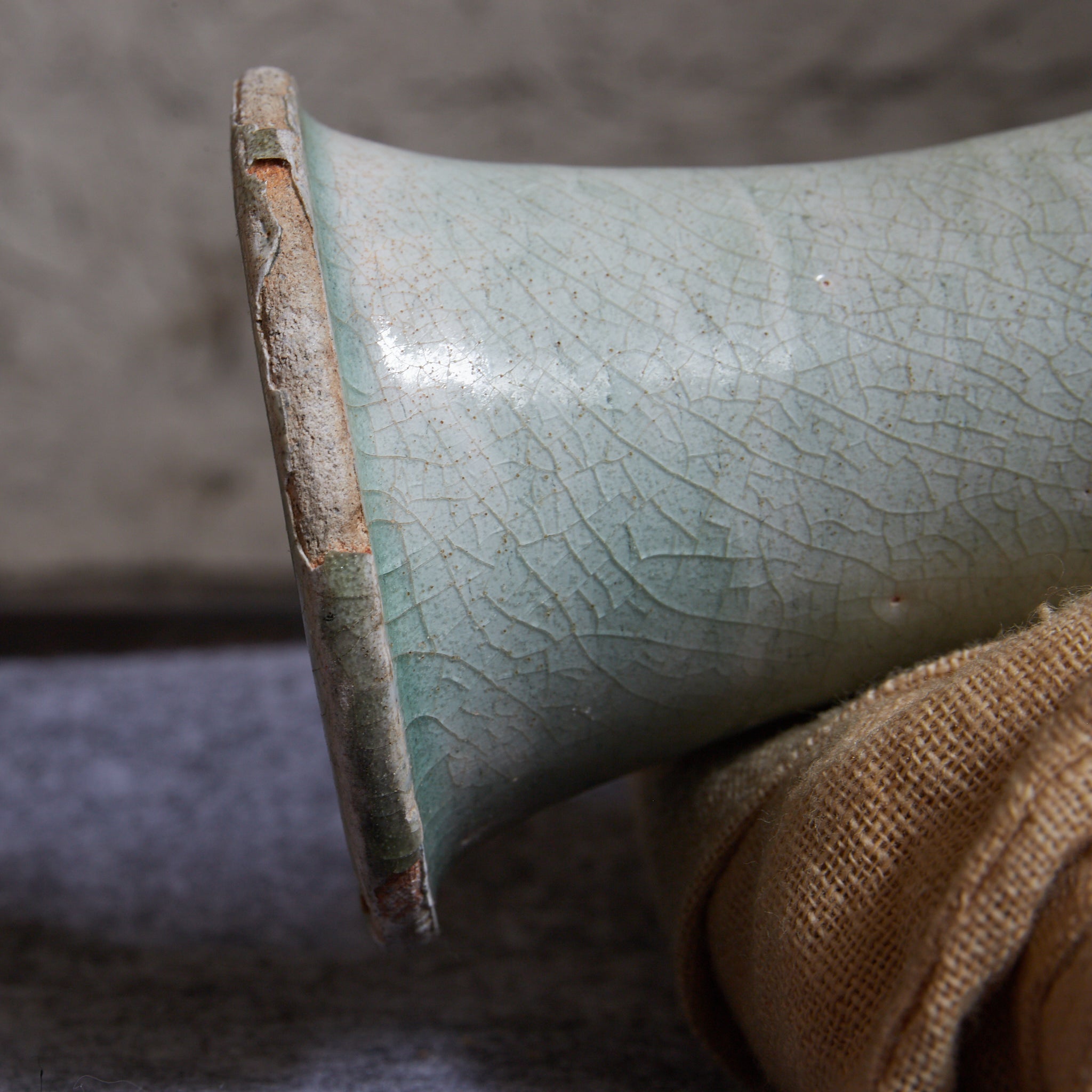
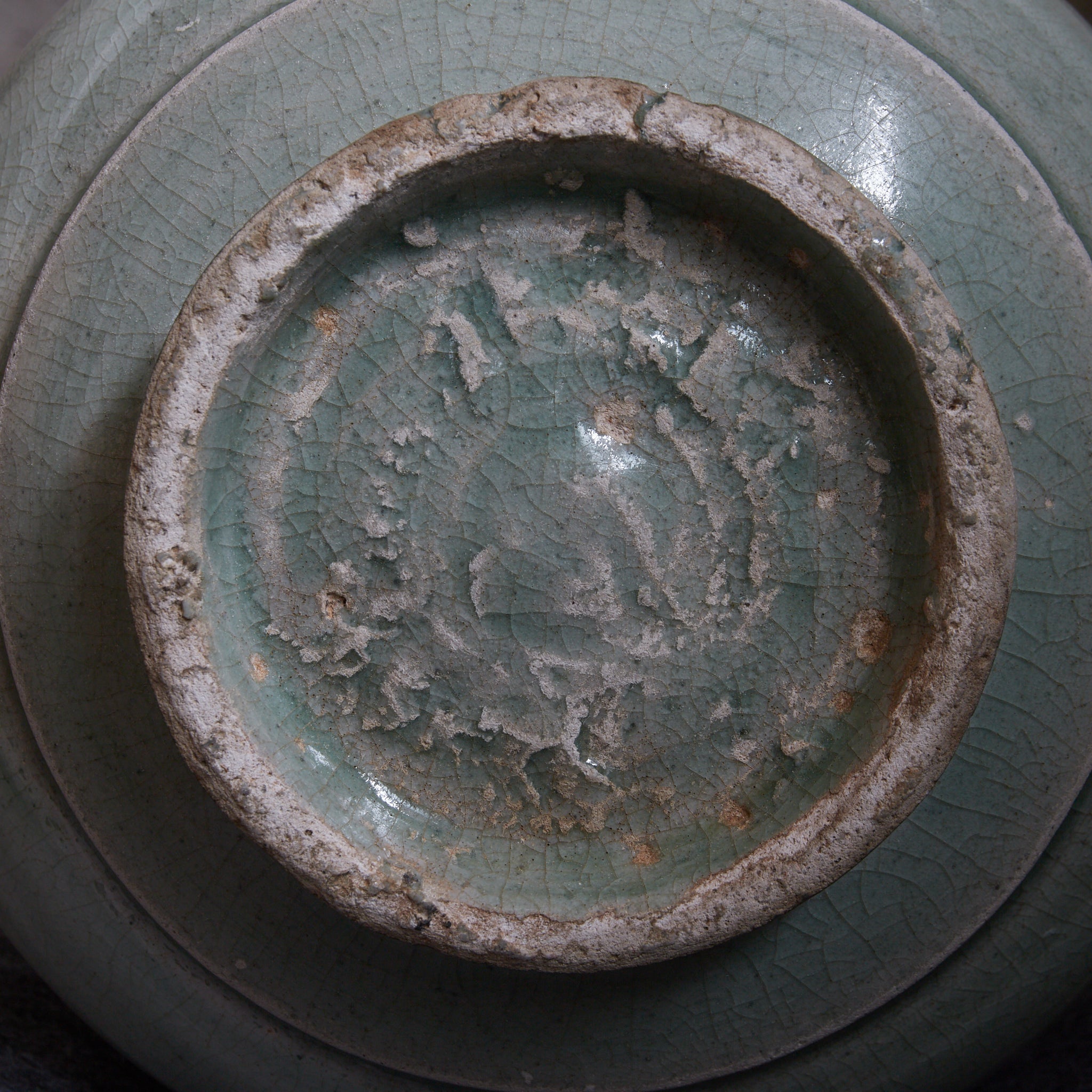
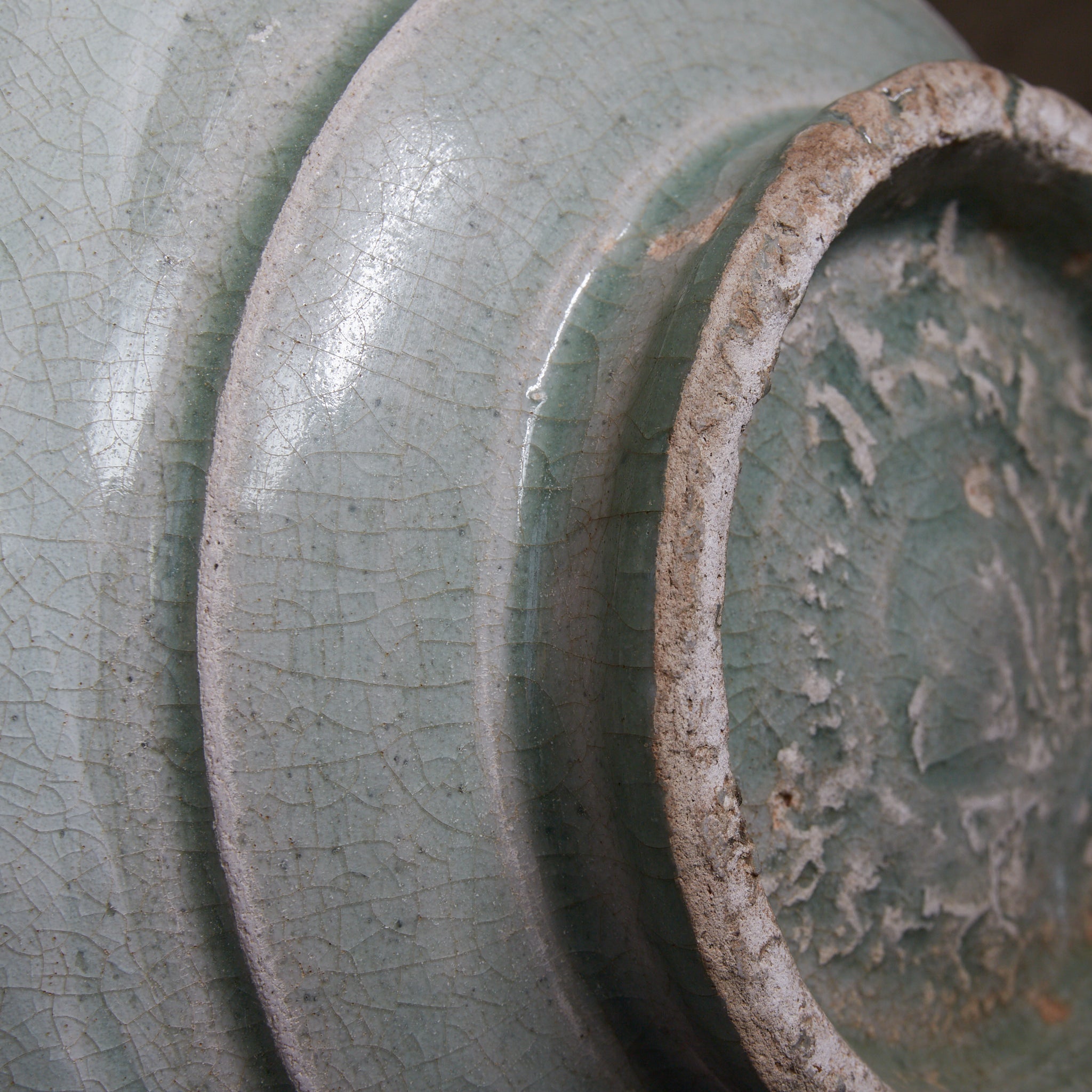
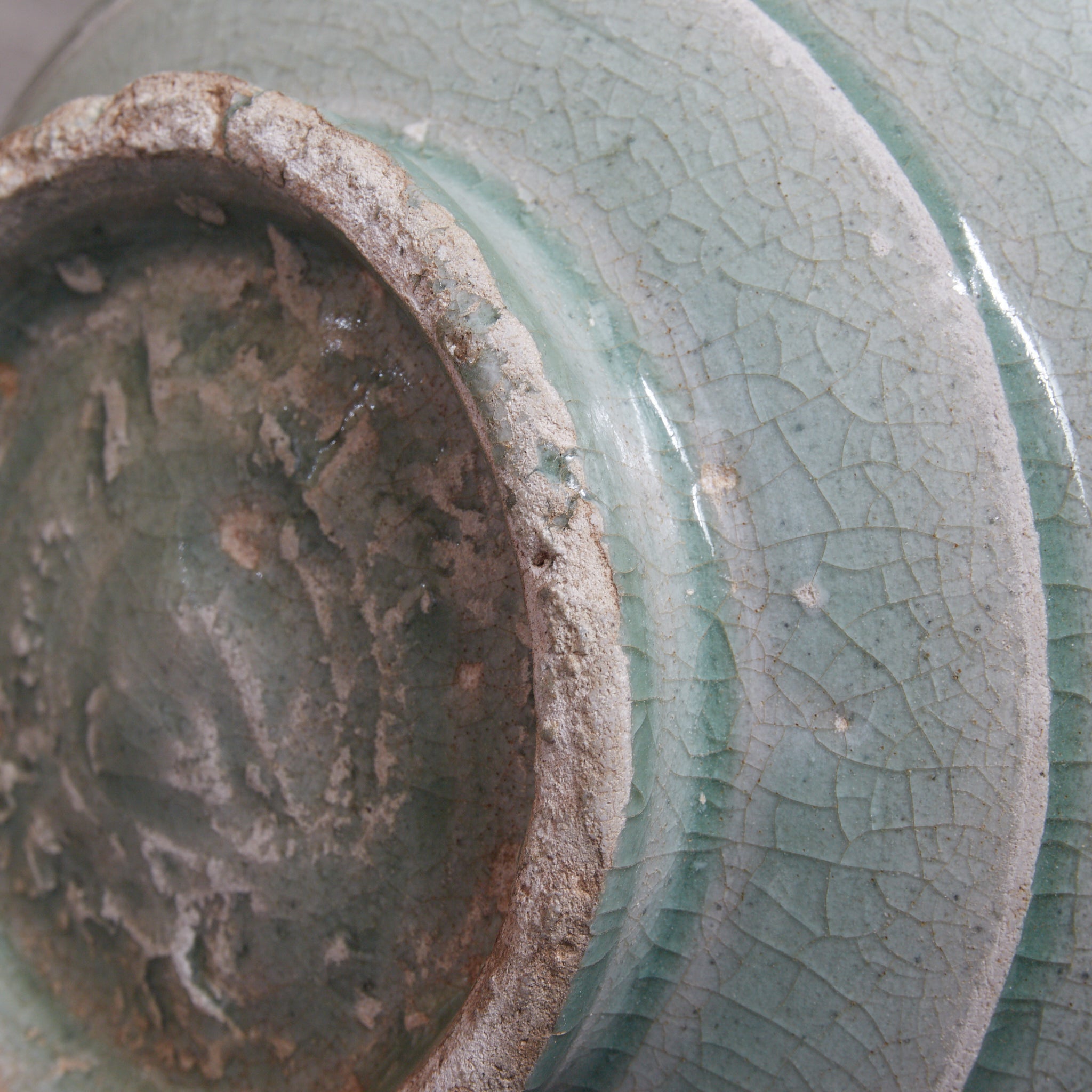
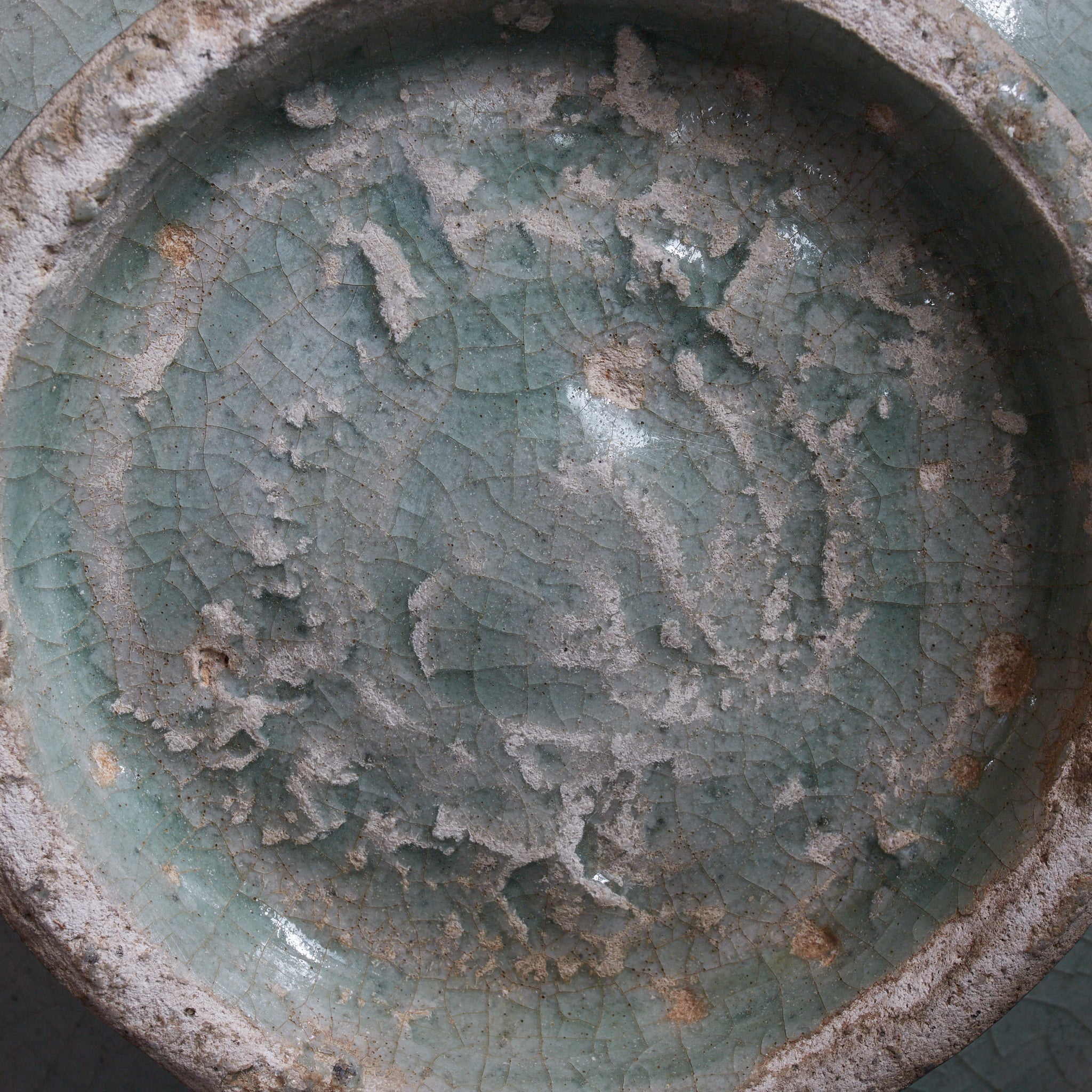
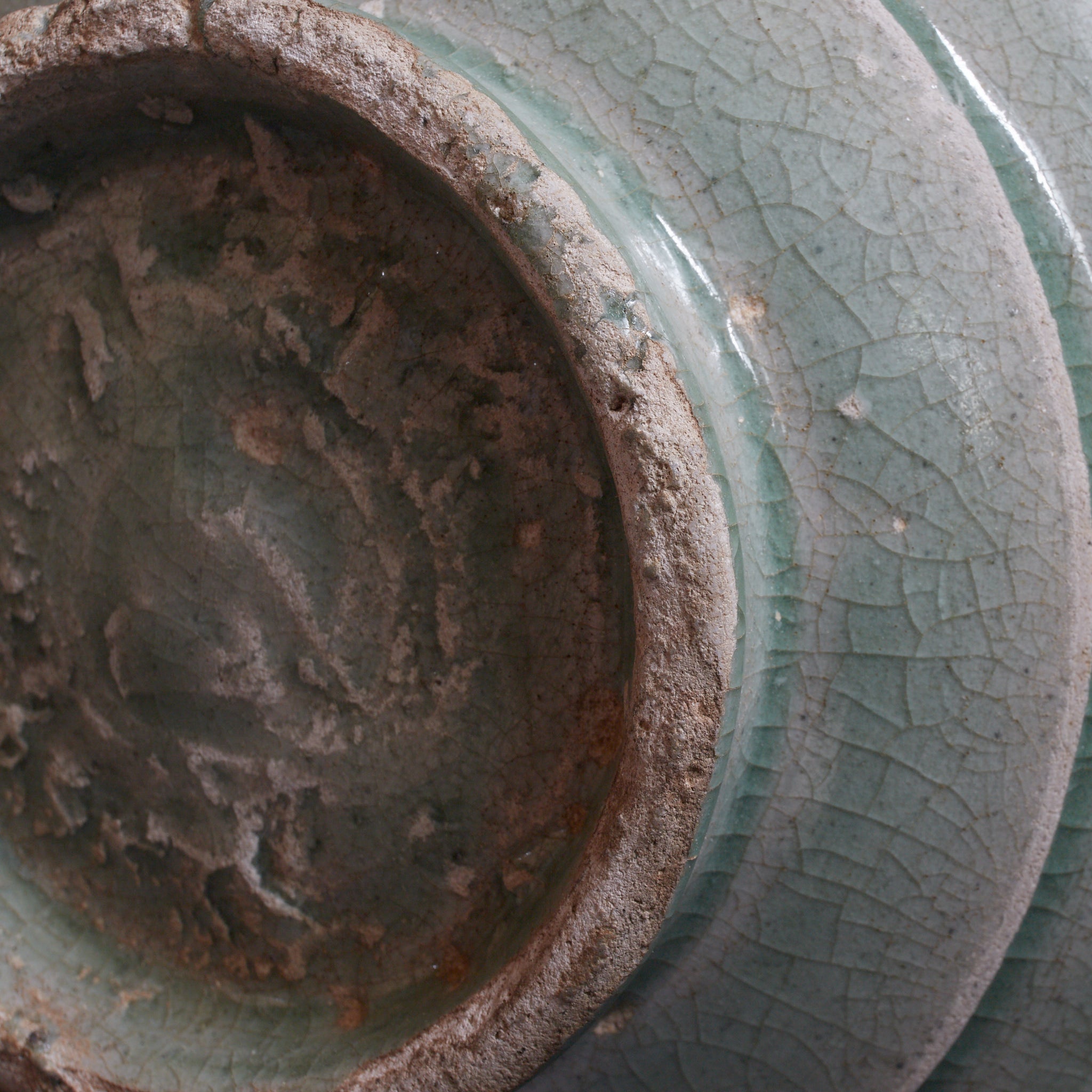
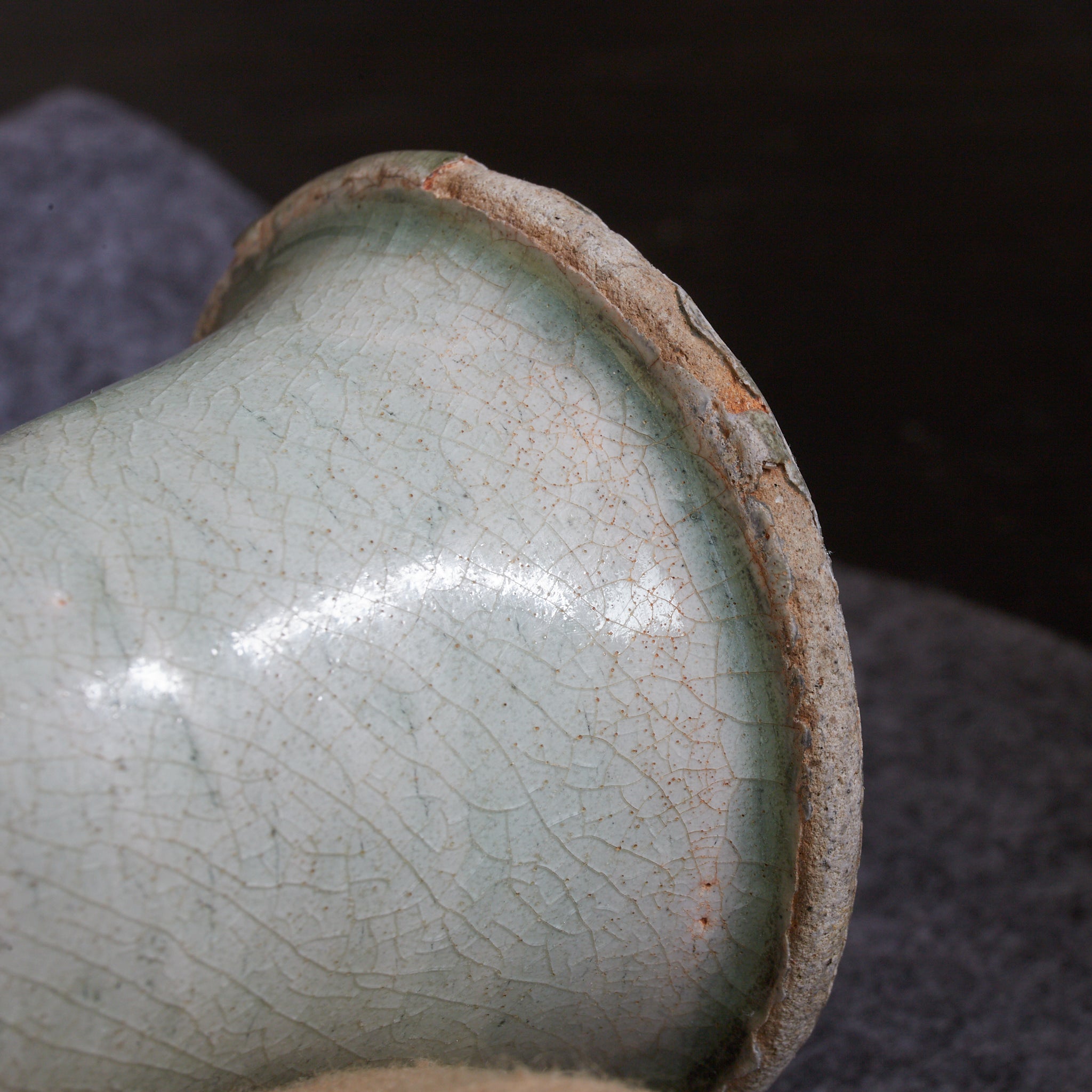
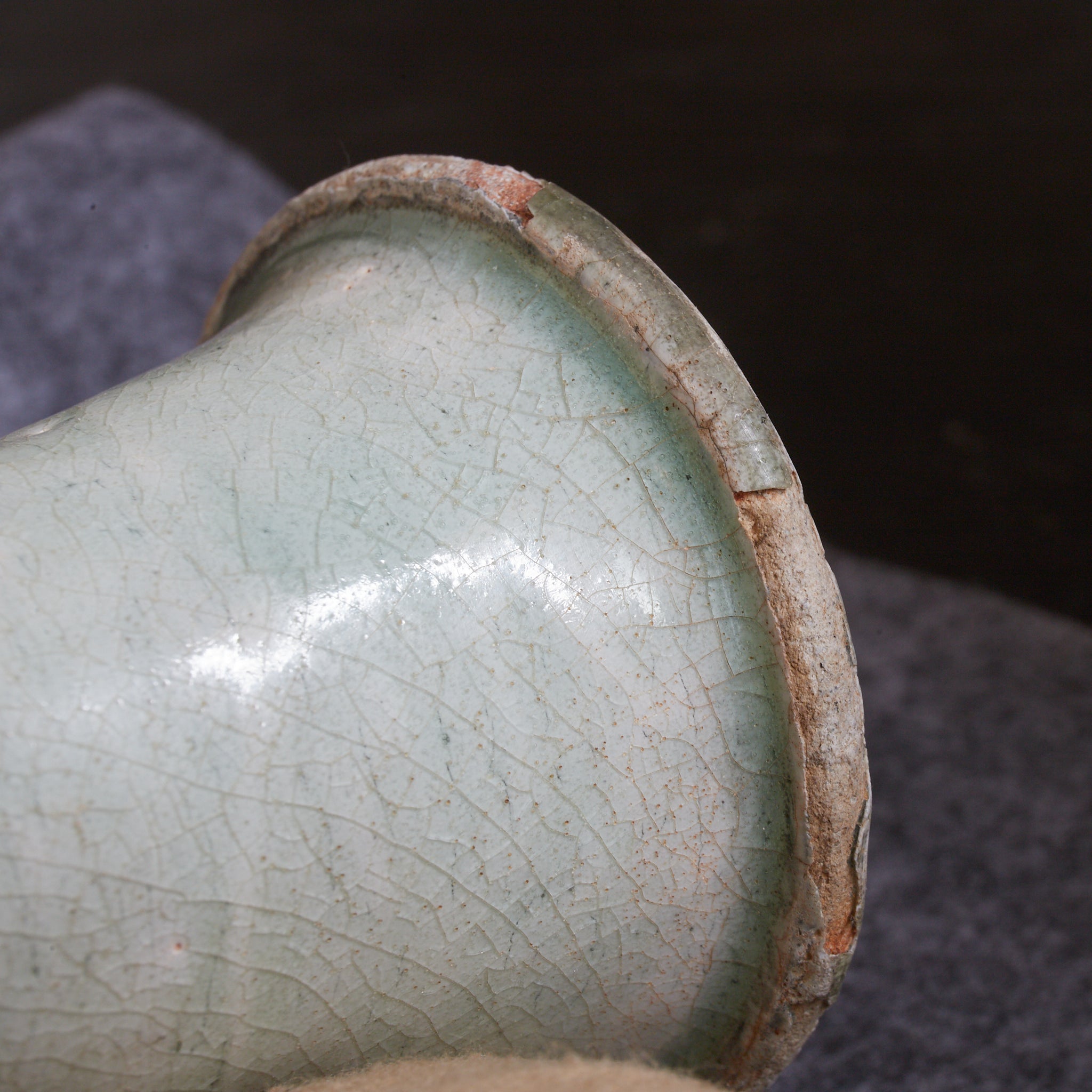
Glaze loss is visible along the rim. Around the footring there are adhering soil deposits and areas of glaze loss, and the base retains an aged patina consistent with prolonged use. The vessel’s form, glaze tone, and sgraffito decoration are well preserved, and among buncheong wares this piece displays a particularly pure character. A wooden box is included.
In the catalogue of the Yamaguchi Prefectural Hagi Museum and Uragami Memorial Museum, 蒐集家浦上敏朗の眼 館蔵名品展 開館記念 1 中国・朝鮮陶磁篇, entry no. 156, a buncheong bottle with a sgraffito lotus pattern nearly identical in hand to the present piece is reproduced. The composition—large lotus motifs encircling the body, with panelled designs and flame‑shaped motifs from the shoulder to the neck—and the bluish, white‑porcelain quality of the surface are closely comparable, so the present work may be regarded as belonging to the same group. Although of a different subject, a buncheong bottle with a lotus‑and‑fish design in the collection of the National Museum of Korea shares a similar form, demonstrating that this type of bottle occupied an important place among 15th‑century buncheong. The present work is museum‑quality, possessing both strong aesthetic appeal and significant documentary value.

Its aesthetic placed emphasis not on surface splendor or technical virtuosity, but on forms and modes of being that quietly support a person’s inner life. Vessels and furniture were not simply tools for use; they may also have served as a kind of “place of self-cultivation,” ordering one’s daily conduct and state of mind. A plain jar in a scholar’s study, a simple desk, an undecorated brush rest—these were objects before the eye, but also mirrors of one’s posture and thought.
It is no accident that crafts from the Joseon period possess a presence that “does not say too much.” They were made to accompany the inner life—not to overwhelm the viewer, but to breathe alongside us and quietly restore a sense of order.
In white porcelain, for example, such “unintended phenomena” as the slight flow of glaze, variations in the clay body, or slight irregularities of form were accepted as they were. They embody a spirit of broad acceptance, unlike the modern aesthetic that treats perfection and uniformity as the highest values. This view reconsiders the boundaries between nature and human making, beauty and imperfection, object and mind; it is not an exaggeration to say that it existed beyond the frame of craft as the spirit of an age.
If we were to name it, the beauty of Joseon is not a “beauty of display” but a “beauty of resonance.” Its beauty lies not solely in the attraction of the object itself, but in the opportunity it gives us to reconsider how a person ought to be through the object. For this reason, an object must not speak too much; it must contain intervals, open space, and silence. I cannot help feeling that such thought runs beneath the making of these objects.
These values eventually crossed the sea and took deep root in Japan. In the world of chanoyu in particular, Joseon white porcelain and buncheong ware were already being used by the Momoyama period. Their simple, quiet character—different from the solemn grandeur of Chinese karamono—came to be embraced. The tea aesthetic of “clearing the mind before what does not speak” resonated deeply with the silence and imperfection held in Joseon vessels, nurturing a gaze that found in them the spirit of wabi-sabi.
With the arrival of the modern era, thinkers of the Mingei movement such as Yanagi Sōetsu and Kawai Kanjirō found in Joseon vessels “the power to purify a person” and “a form of life as it ought to be.” At a time when craft was being forgotten, these objects were welcomed not merely as old vessels but, with profound sympathy and respect, as presences reflecting a way of living itself.
When I, living in the present day, encounter the crafts of Joseon, I am moved once again by their stillness. They contain the thought of an age that asked how a person should live and how one should be. That thought has not faded; it continues to resonate clearly even now.
Choose options
Tax excluded. Import duties may apply. Shipping costs are calculated at checkout.
Change language
