






TEA BOWL, Ko-Hagi / Gohonde, Edo Period (1603–1867 CE)
Each piece is carefully packed for international delivery.
This item has been sold. If you are looking for a similar piece or another work from the same period, please feel free to contact us.
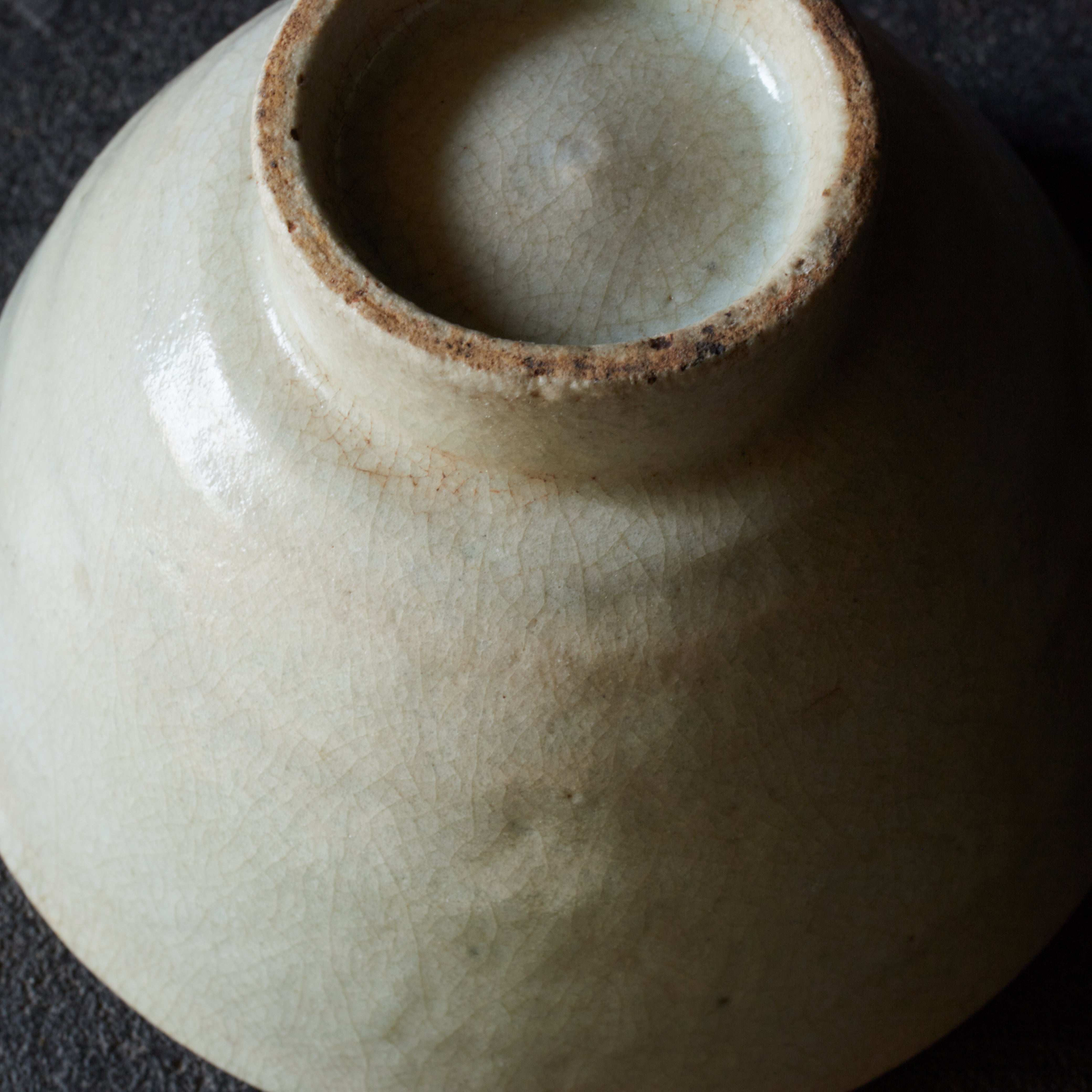
> Inquire about this or a similar itemThis exquisite piece is a Ko-Hagi tea bowl, crafted during the mid-Edo period (1603–1867 CE). The foot is slightly elevated, and the bowl gracefully flares out towards the base, while the body is pleasantly rounded, tapering gently towards the rim. This elegant yet relaxed curvature is inspired by the tea bowls of the Joseon Dynasty, vividly illustrating the profound influence of Joseon ceramics on Hagi ware.
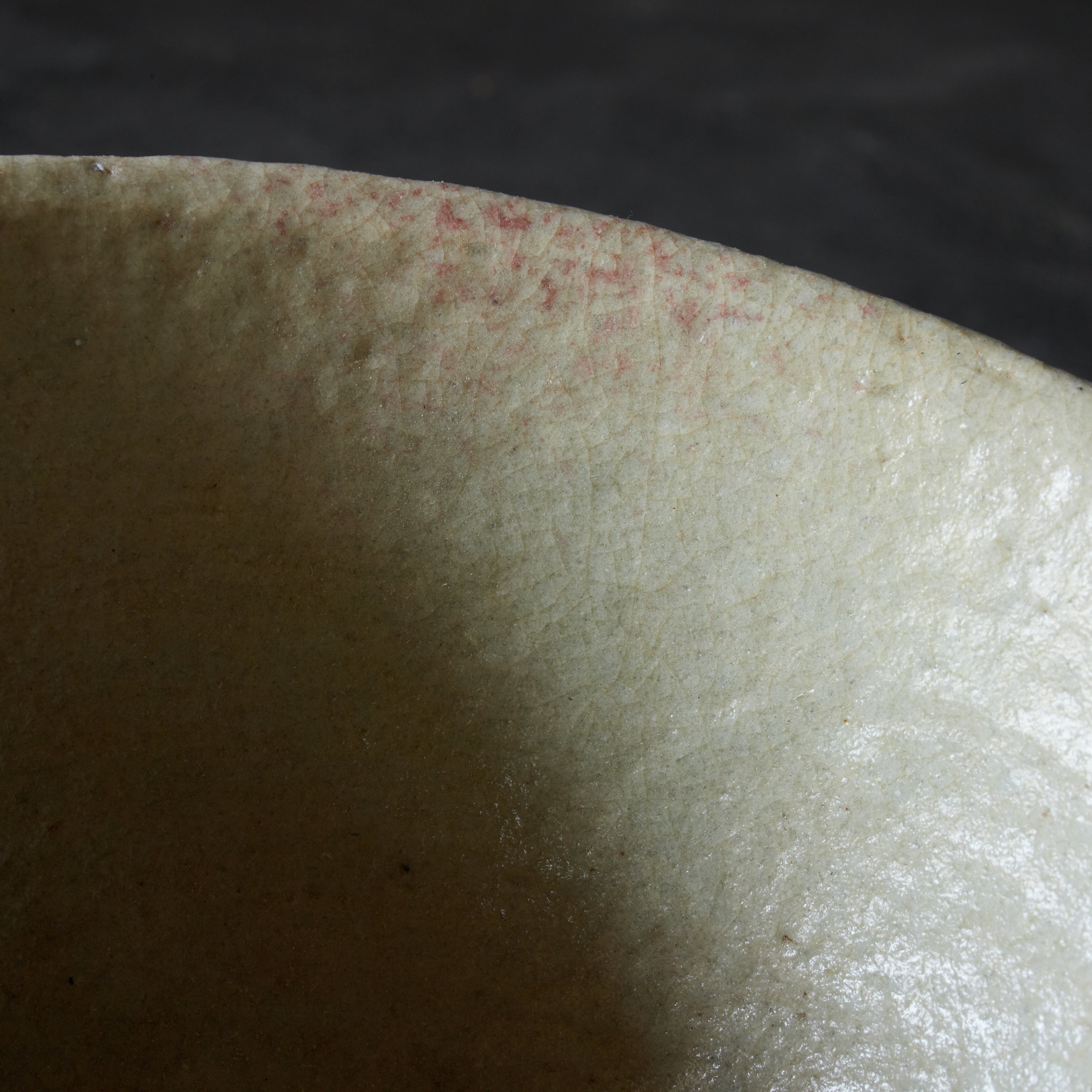
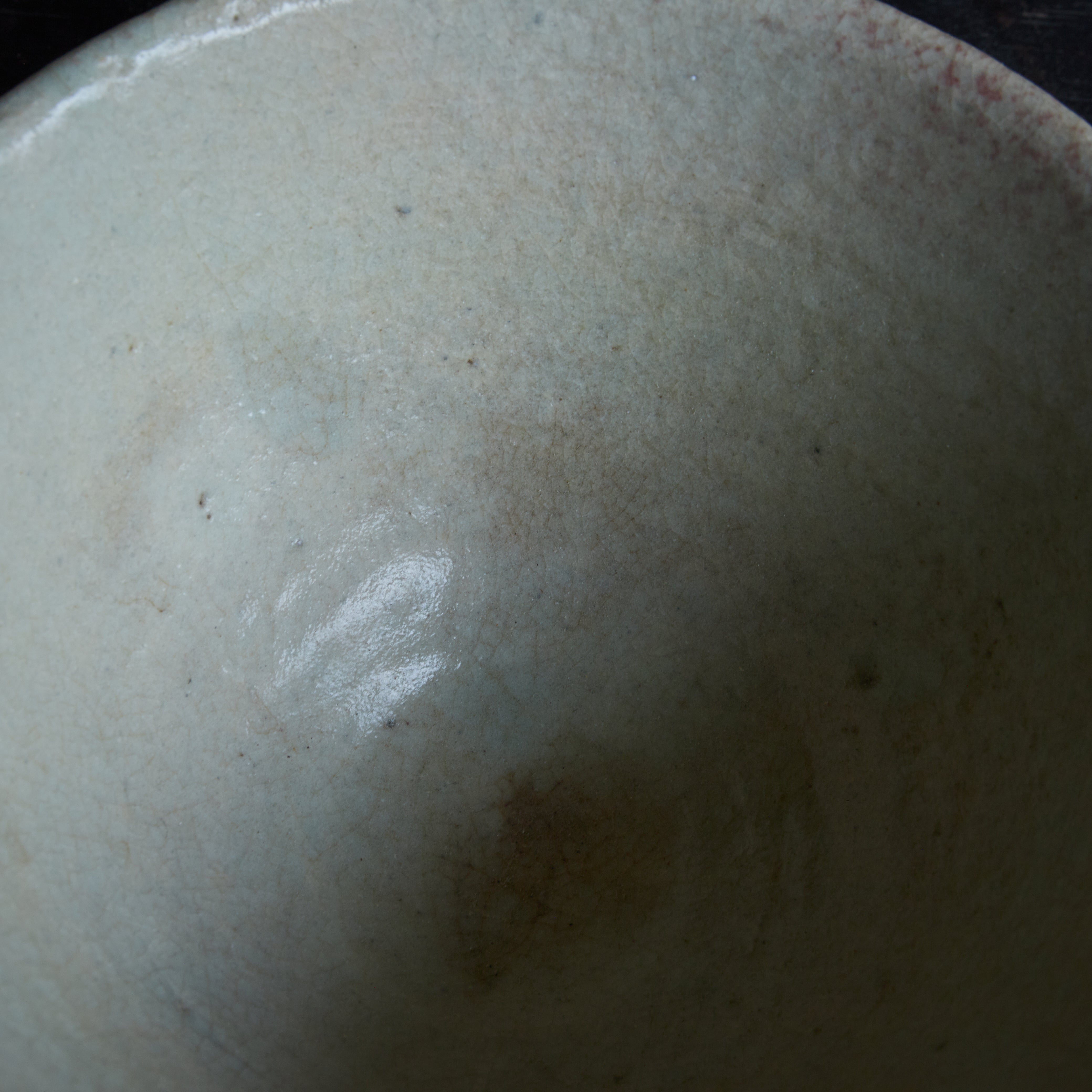
The term "Gohonde" refers to a phenomenon where faint reddish spots emerge beneath the glaze. It is believed that the minute traces of iron and copper present in the feldspathic glaze of Hagi ware develop these hues under specific reduction and oxidation conditions, representing one of the significant charms of this style. The glaze exhibits delicate crackling, and the passage of time, along with the absorption of tea stains, has created layers that tell the story of its use. This transformation was referred to by contemporary tea masters as "Hagi no Nanabake," symbolizing the subtleties of wabi-sabi aesthetics.
This piece displays the characteristic coloration of Gohonde, with a soft pink hue emerging from beneath the milky white glaze, creating a picturesque effect. The interior shows a slightly weathered texture, evoking a sense of age and refinement. When held, the bowl offers a gentle tactile sensation, and when filled with matcha, the pale white glaze enhances the vibrant green of the tea, harmonizing beautifully with the delicate blush of the Gohonde.
Choose options
Change language
