

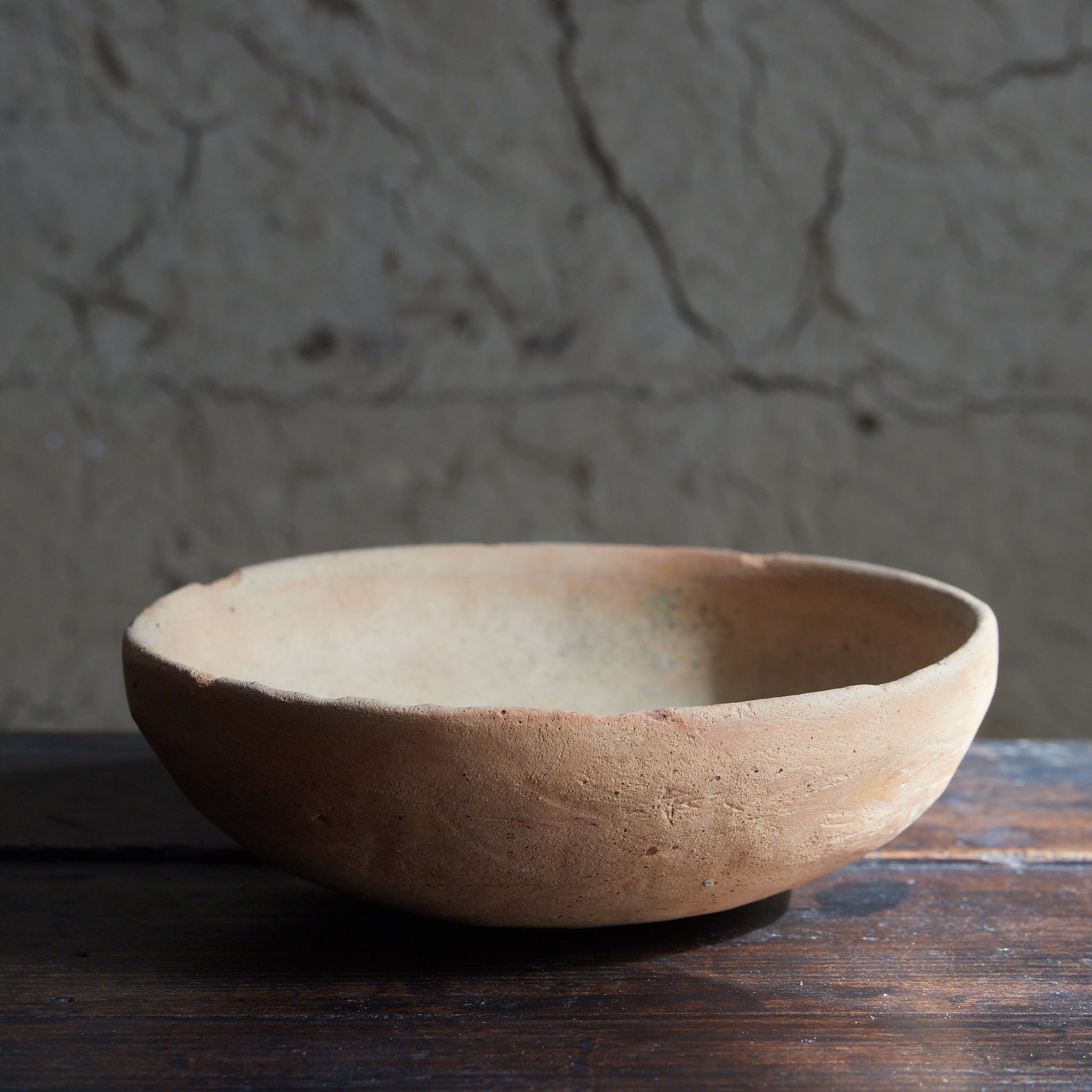
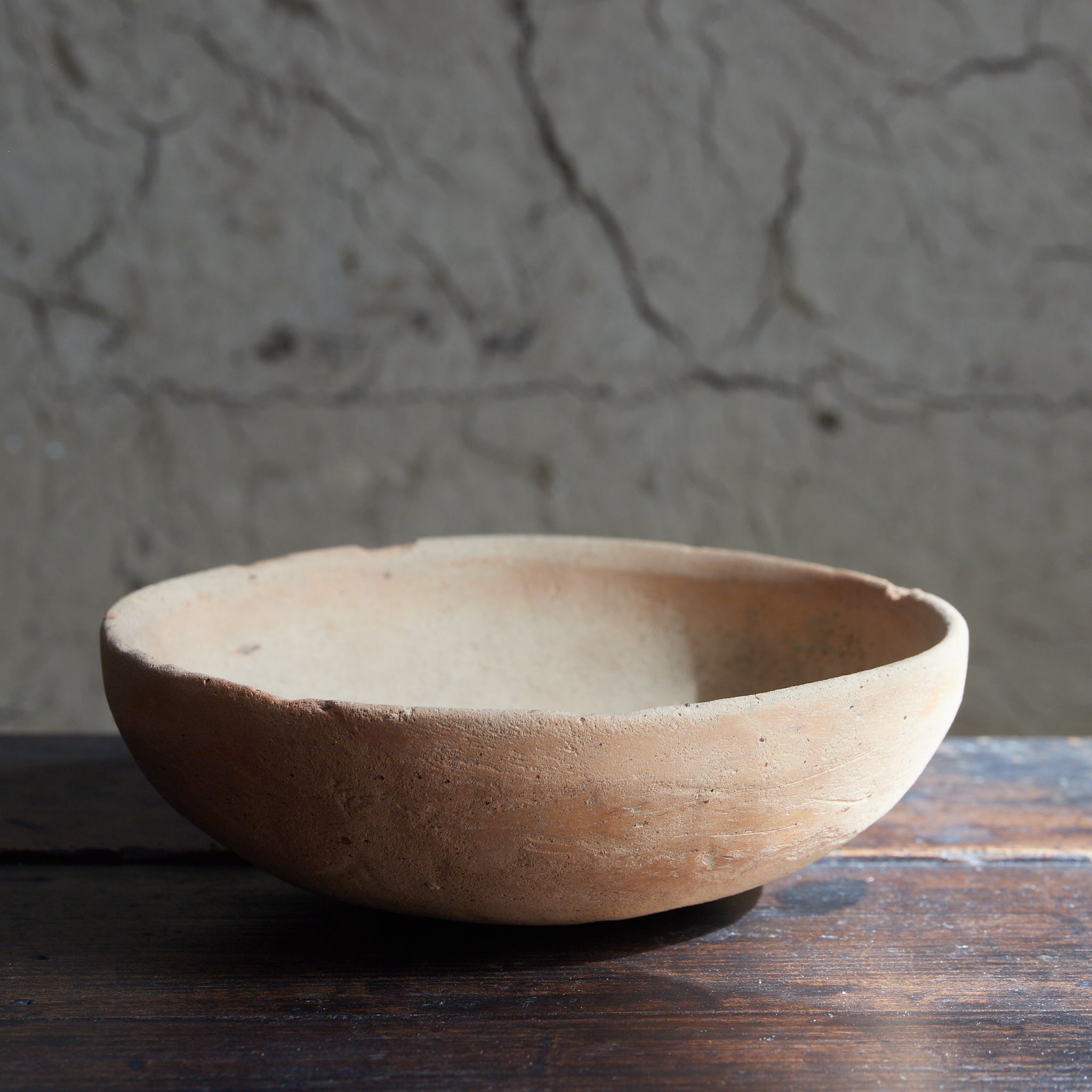
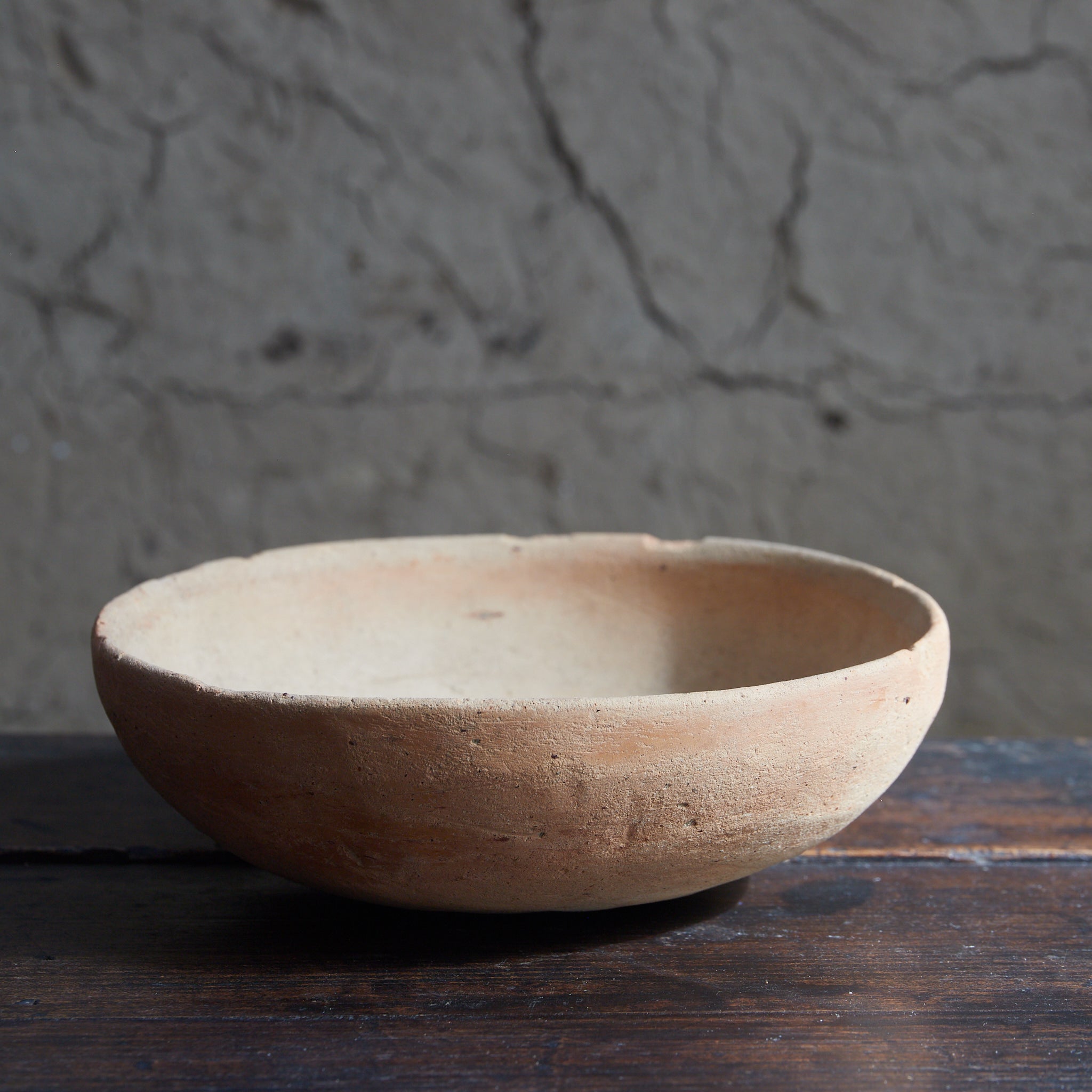
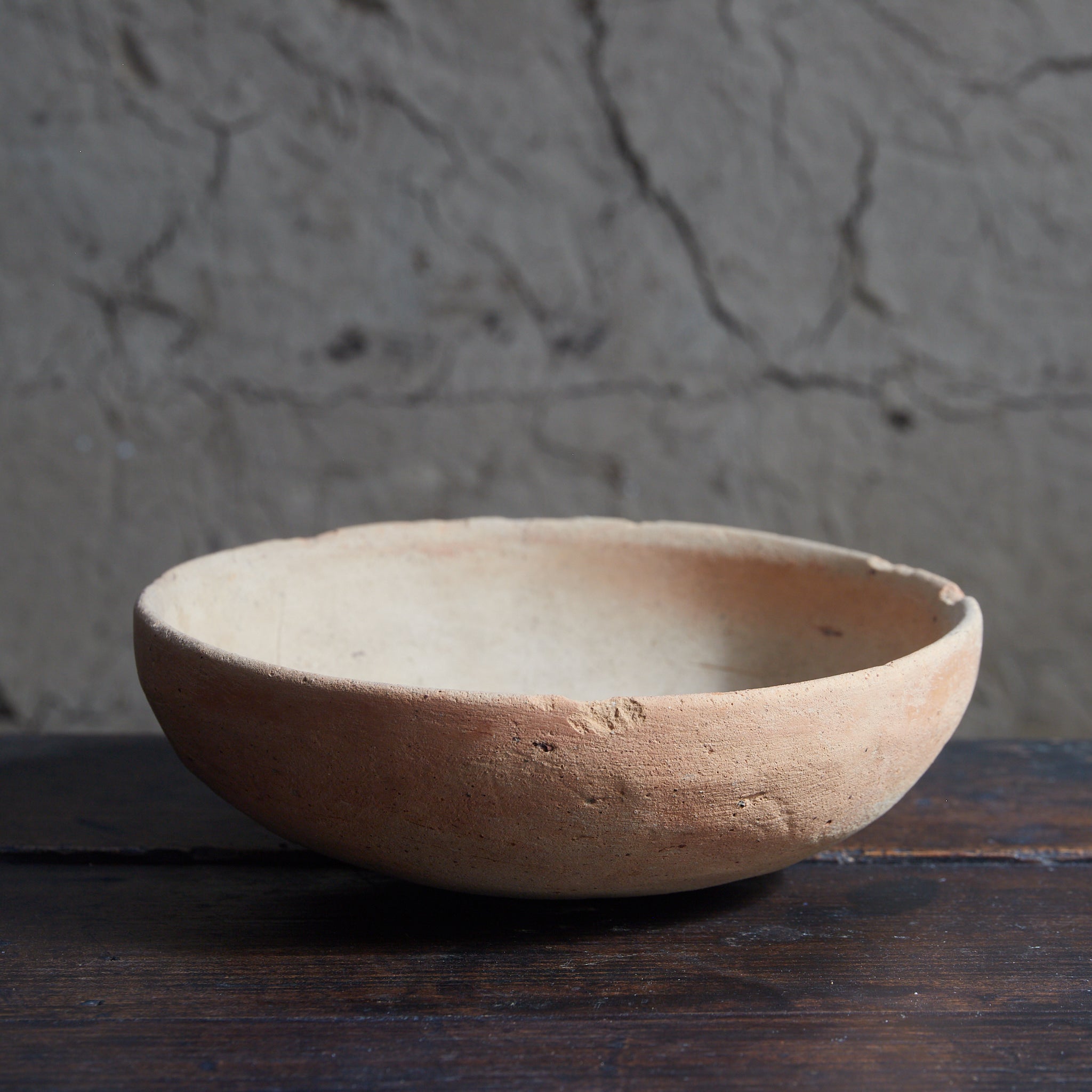
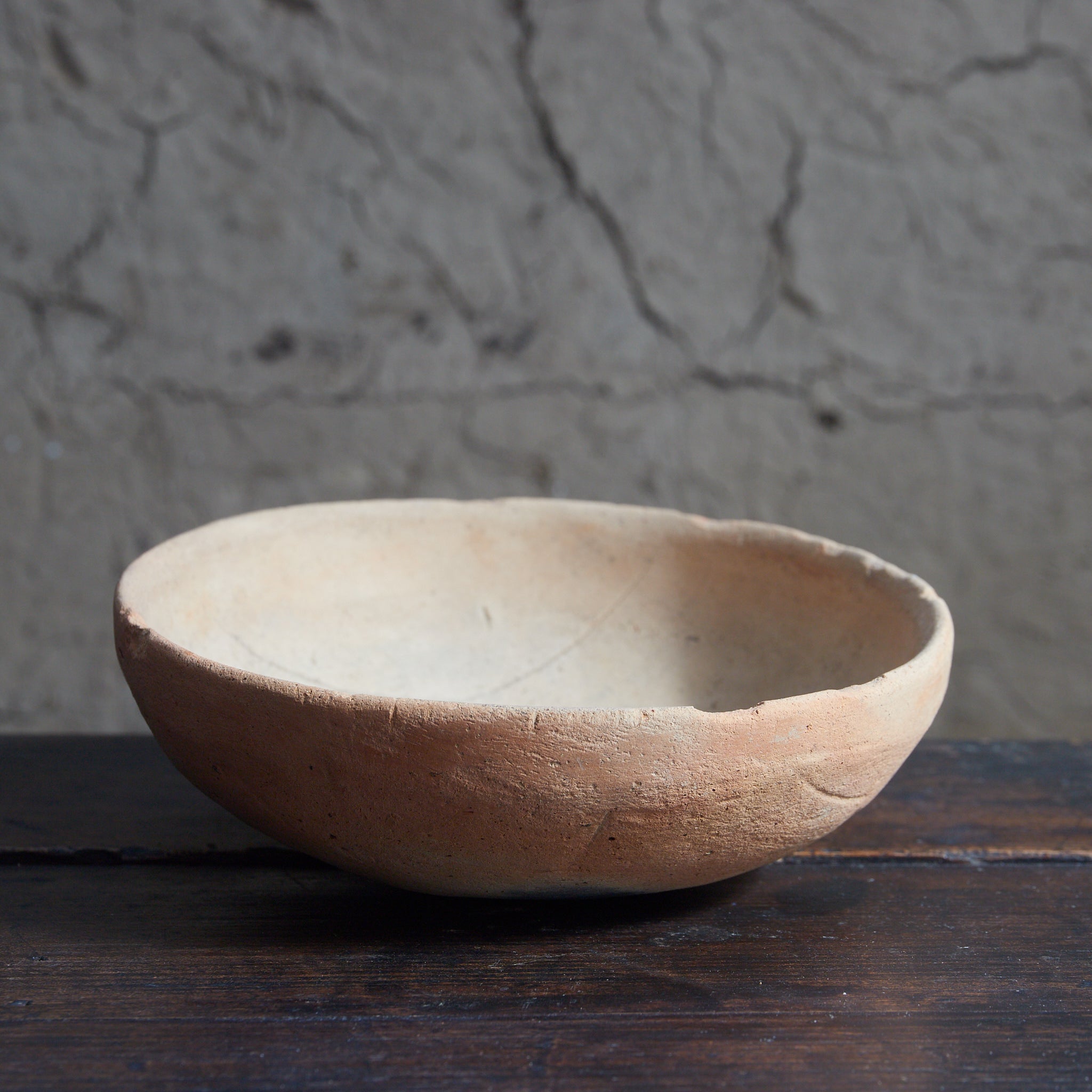
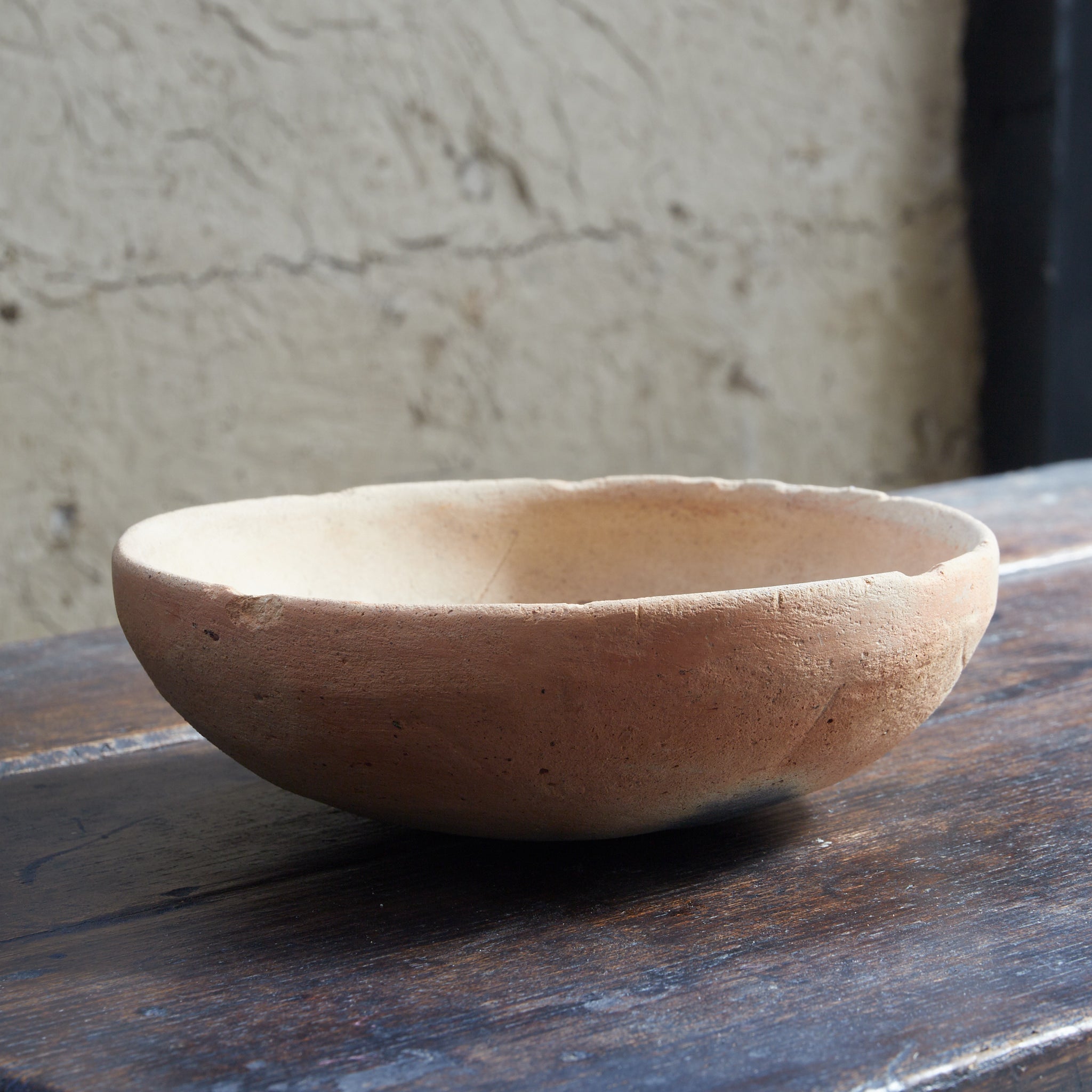
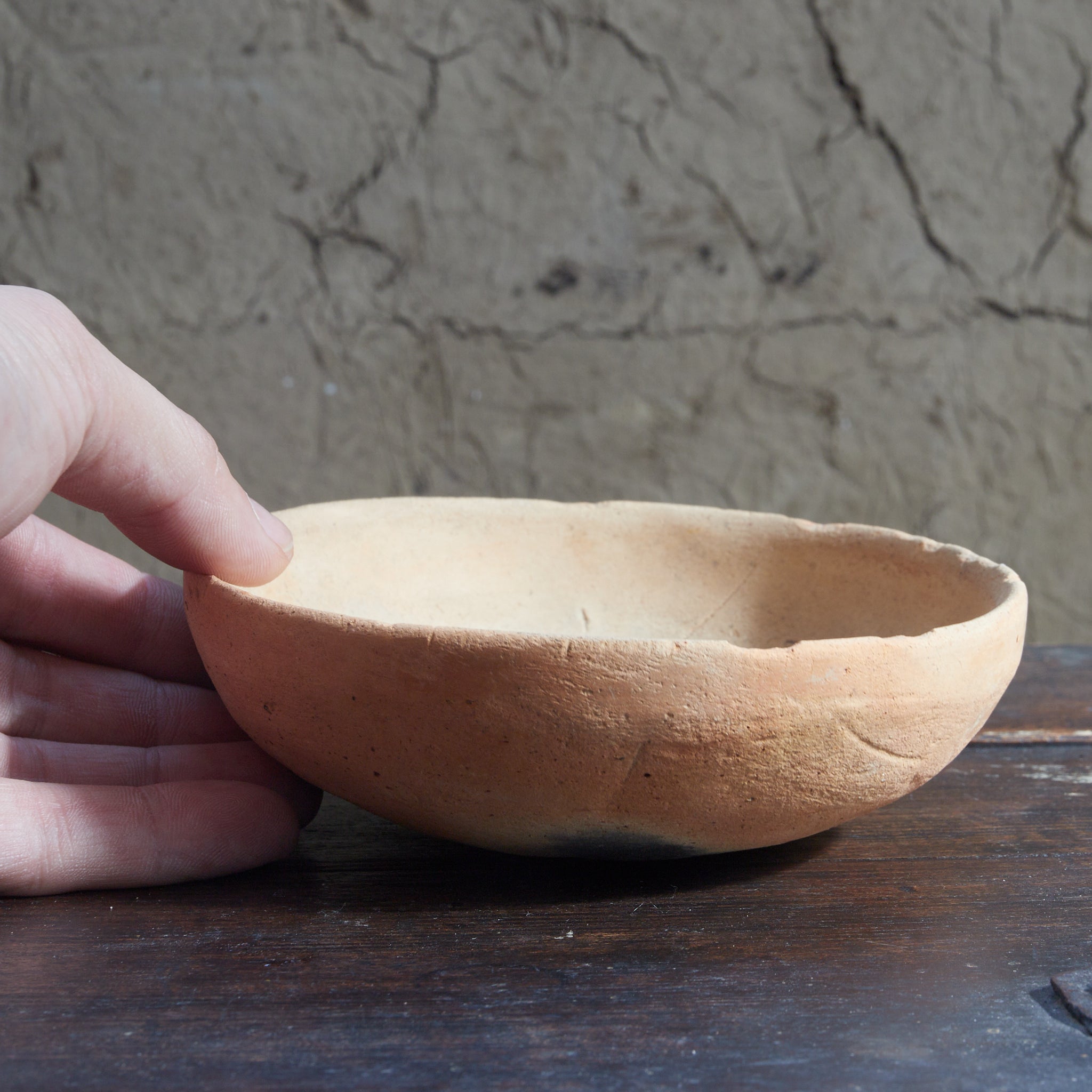
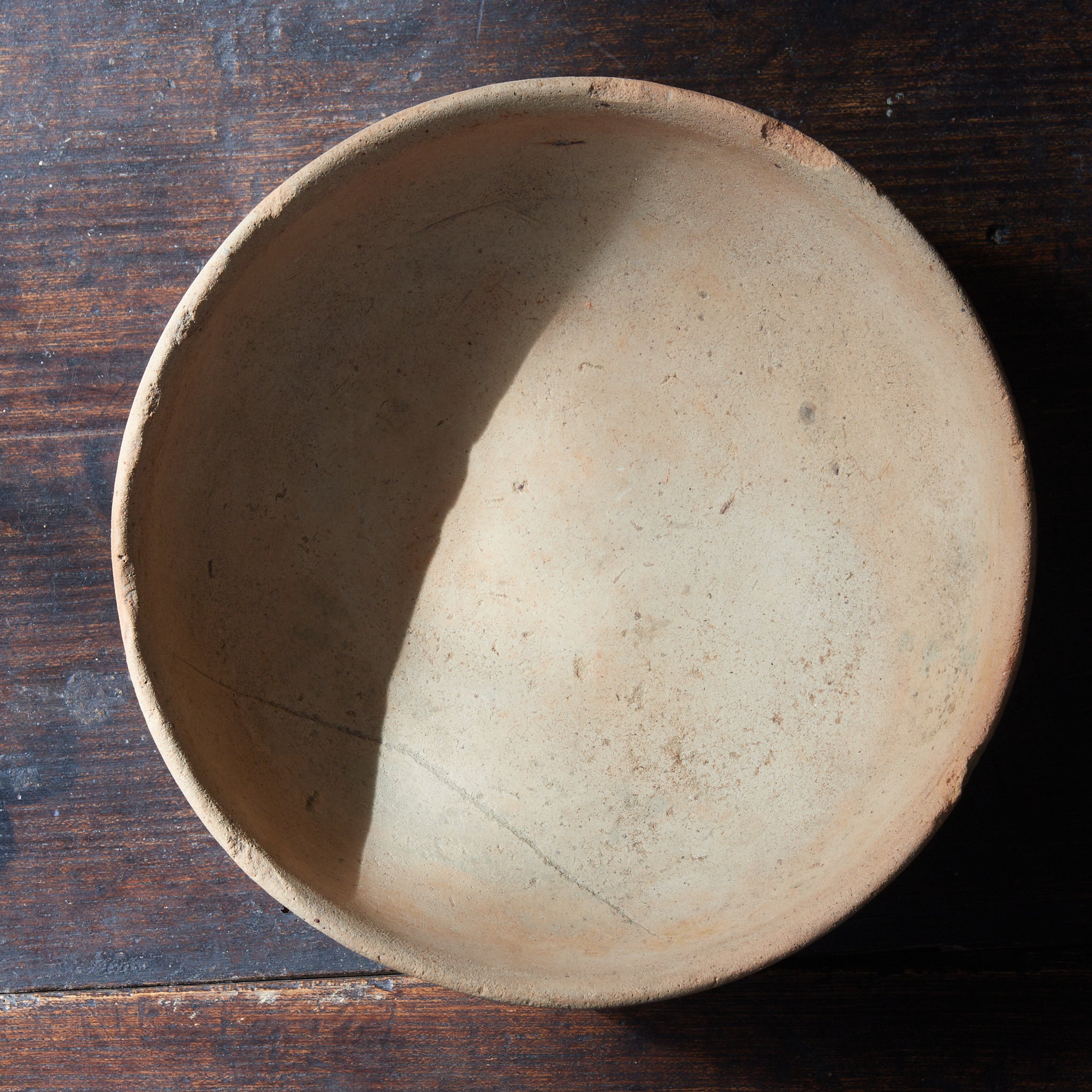
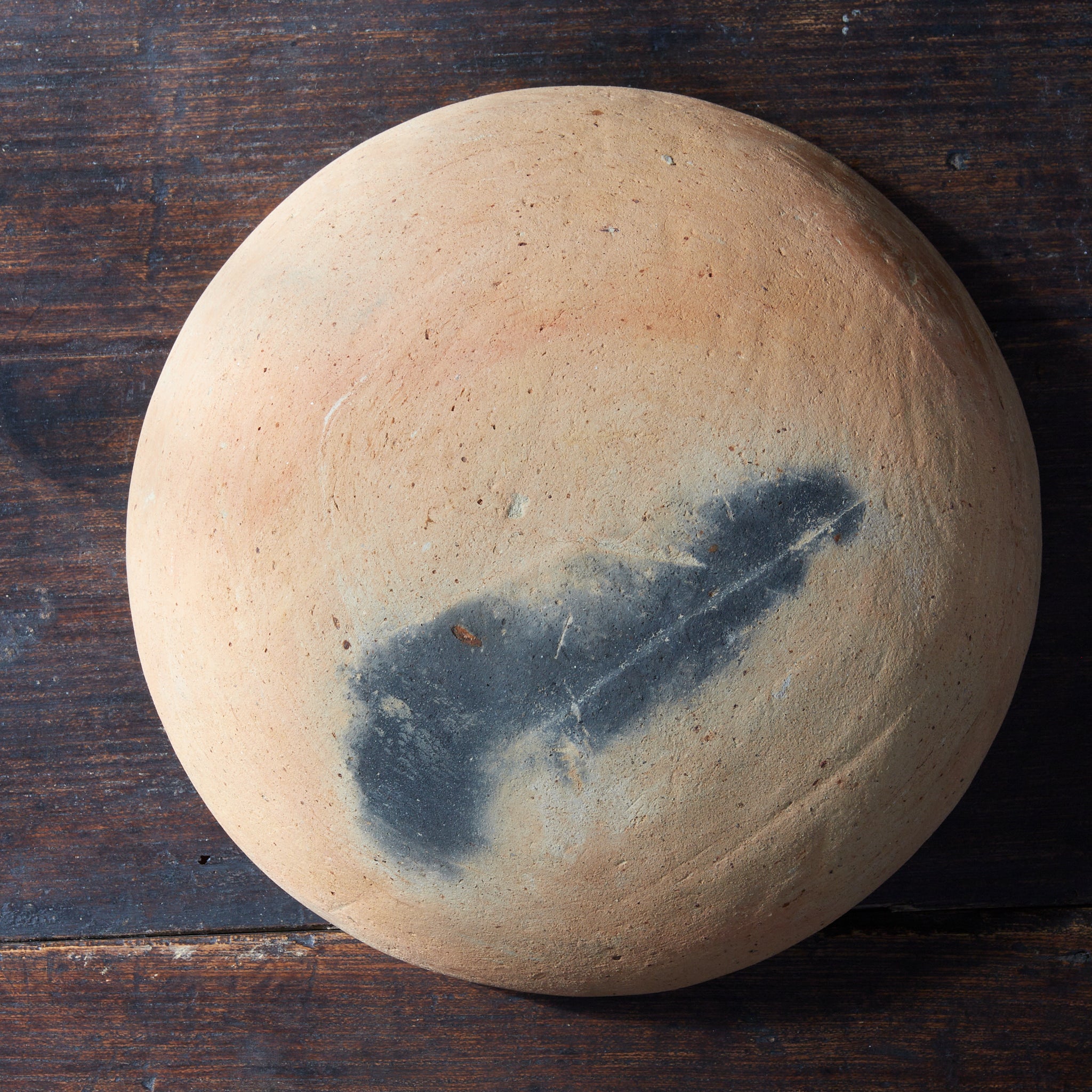
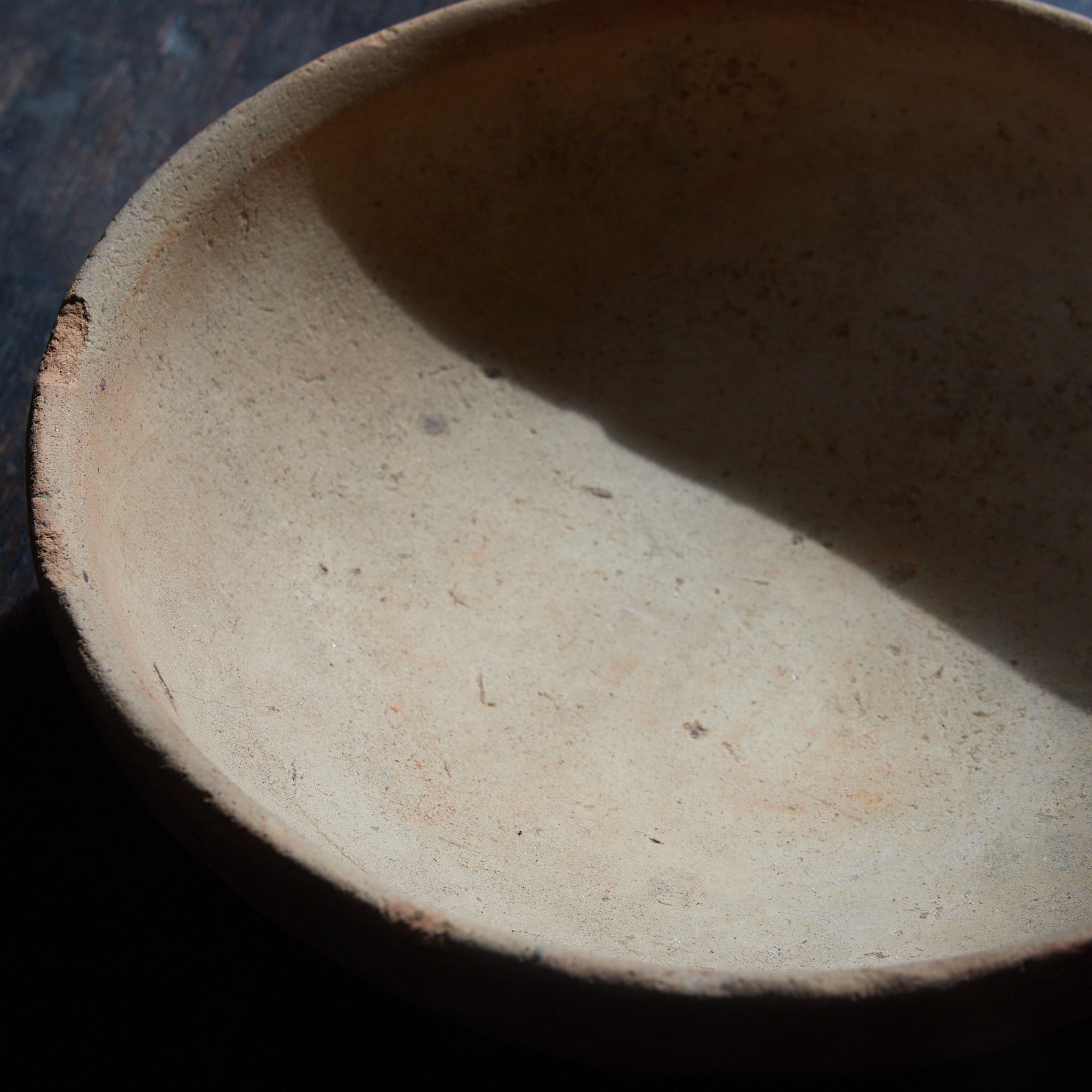
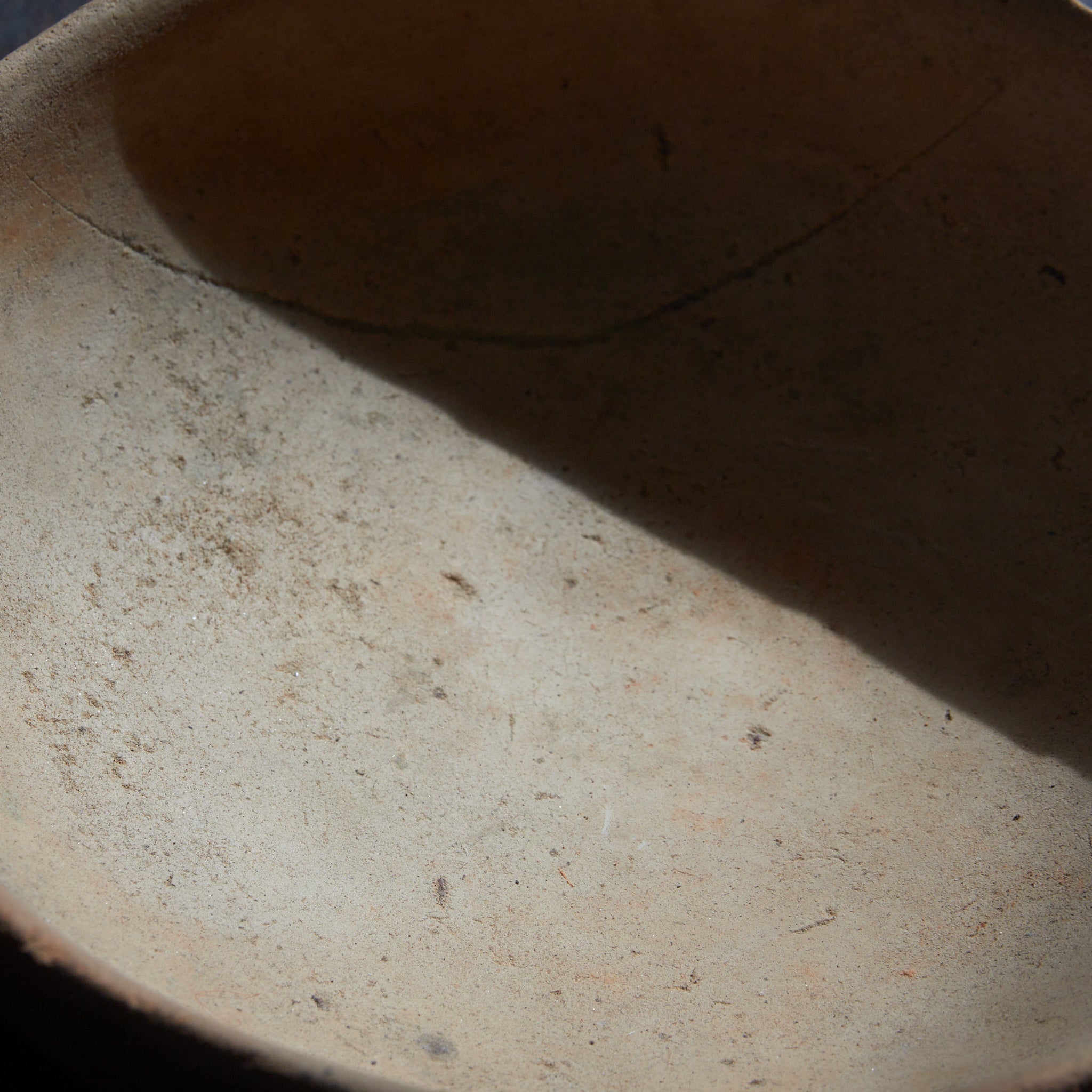
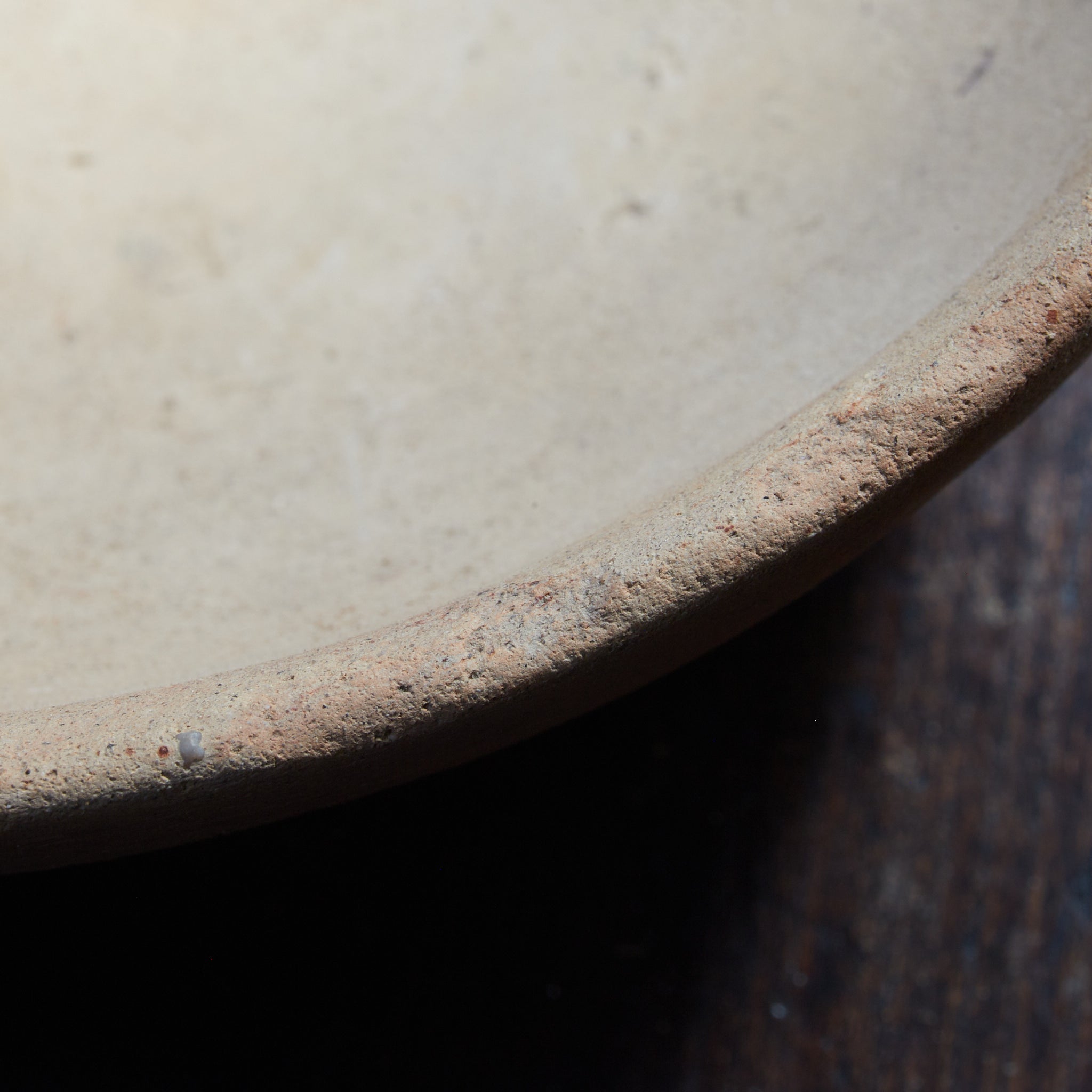
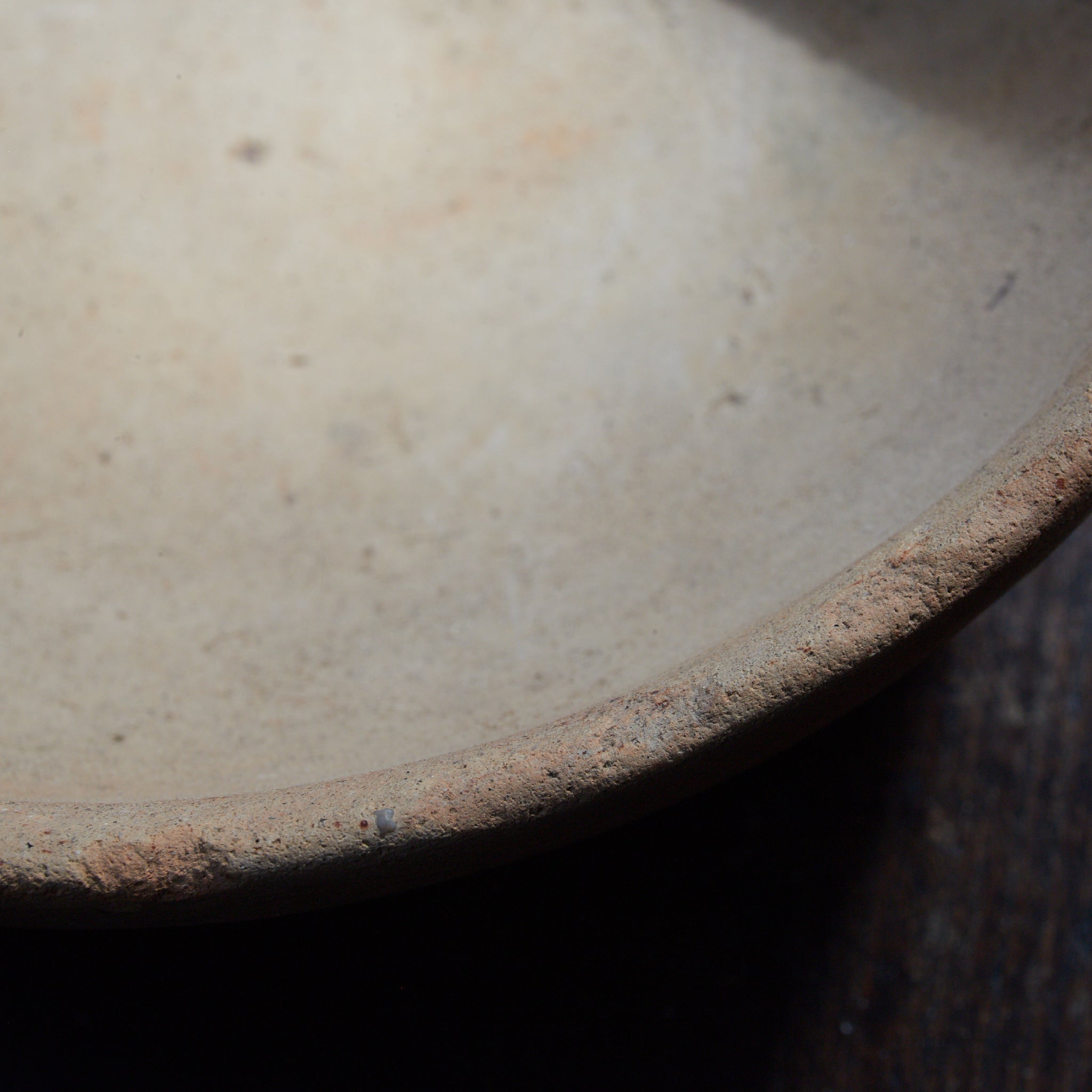
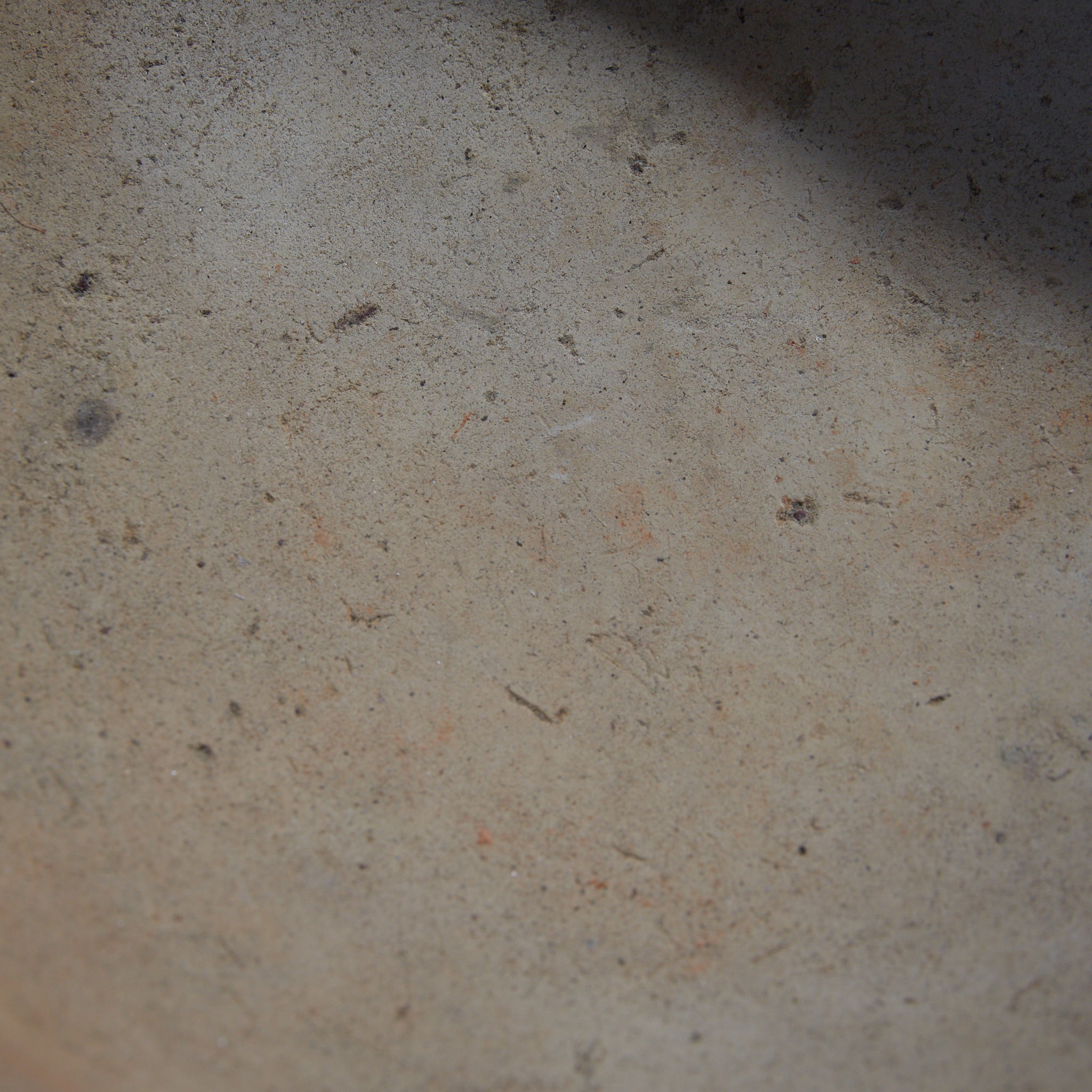
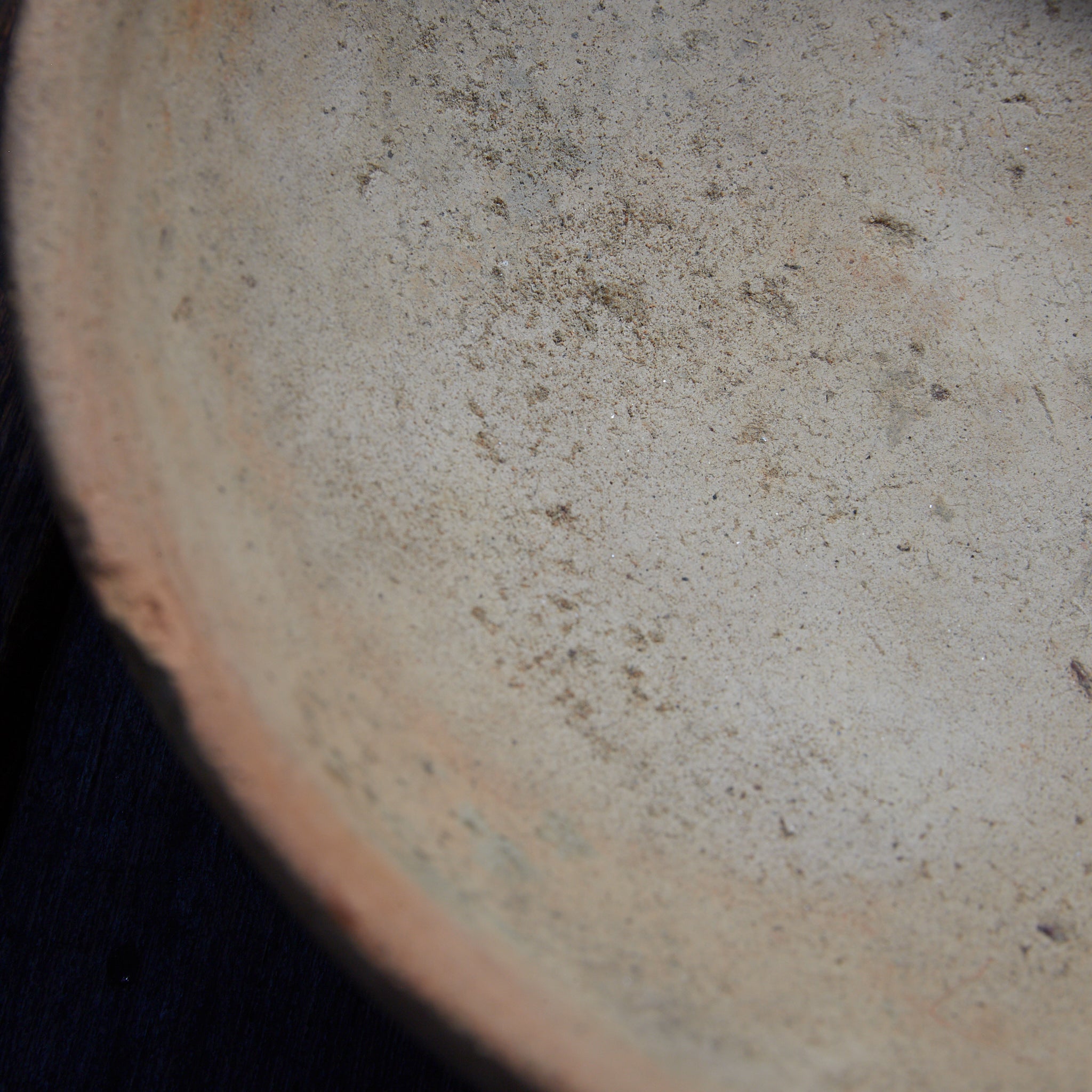
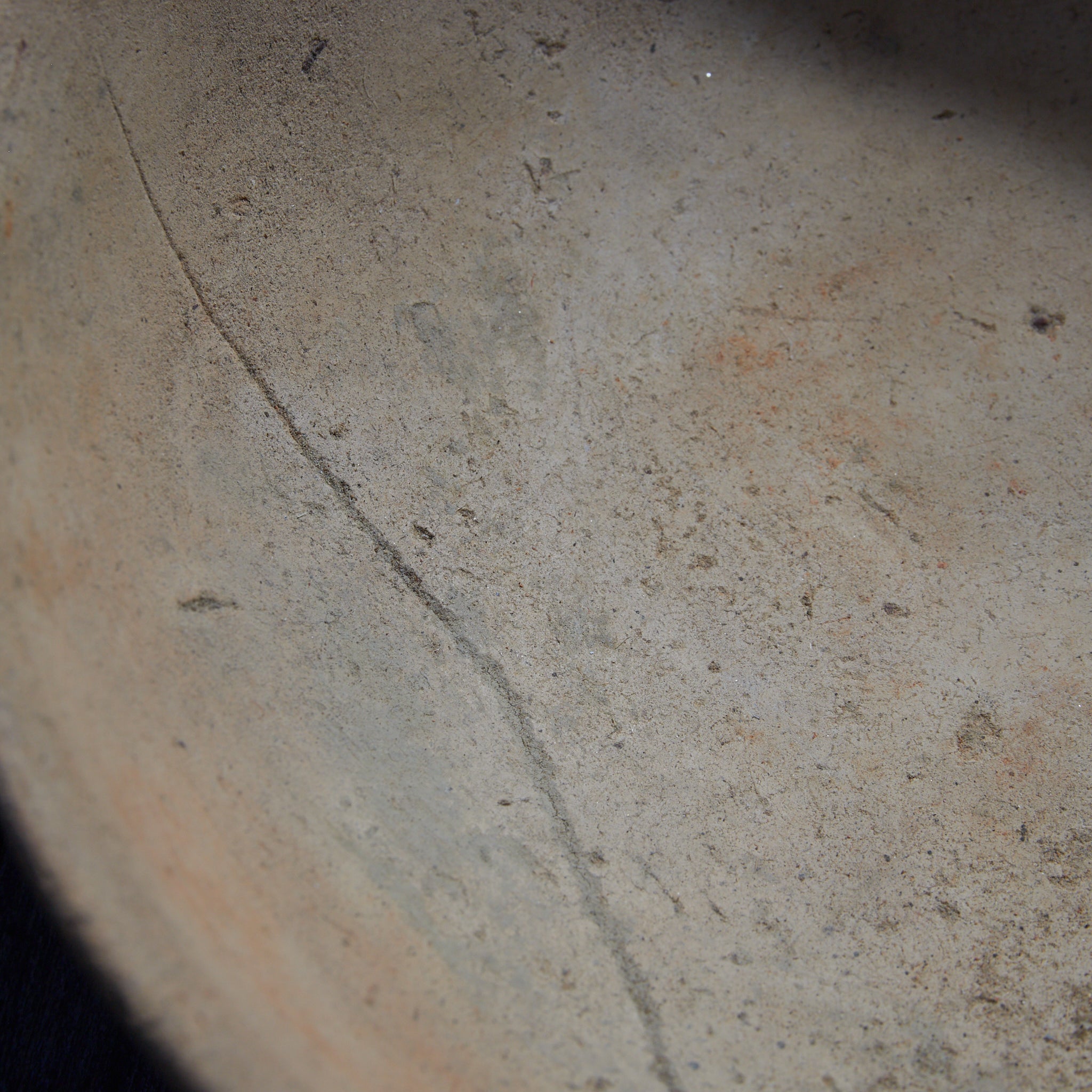
SMALL BOWL, Earthenware, Yayoi Period (300 BCE–250 CE)
Tax excluded. Import duties may apply. Shipping costs are calculated at checkout.
Each piece is carefully packed for international delivery.
Numerous product photos are available for you to examine the details and condition. Should you have any questions, please do not hesitate to contact us.
> Inquire about this productBowl-shaped earthenware from the Yayoi period.
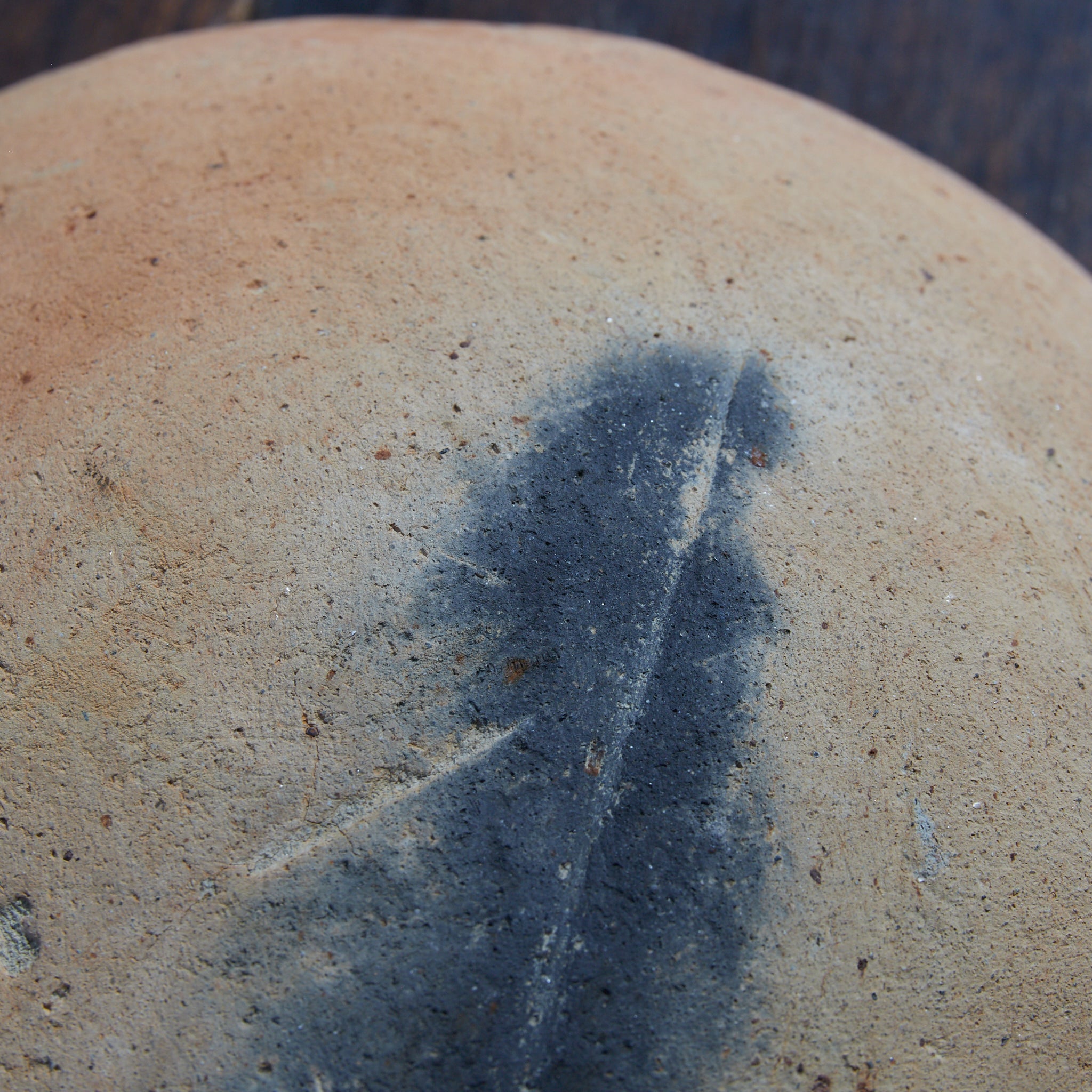
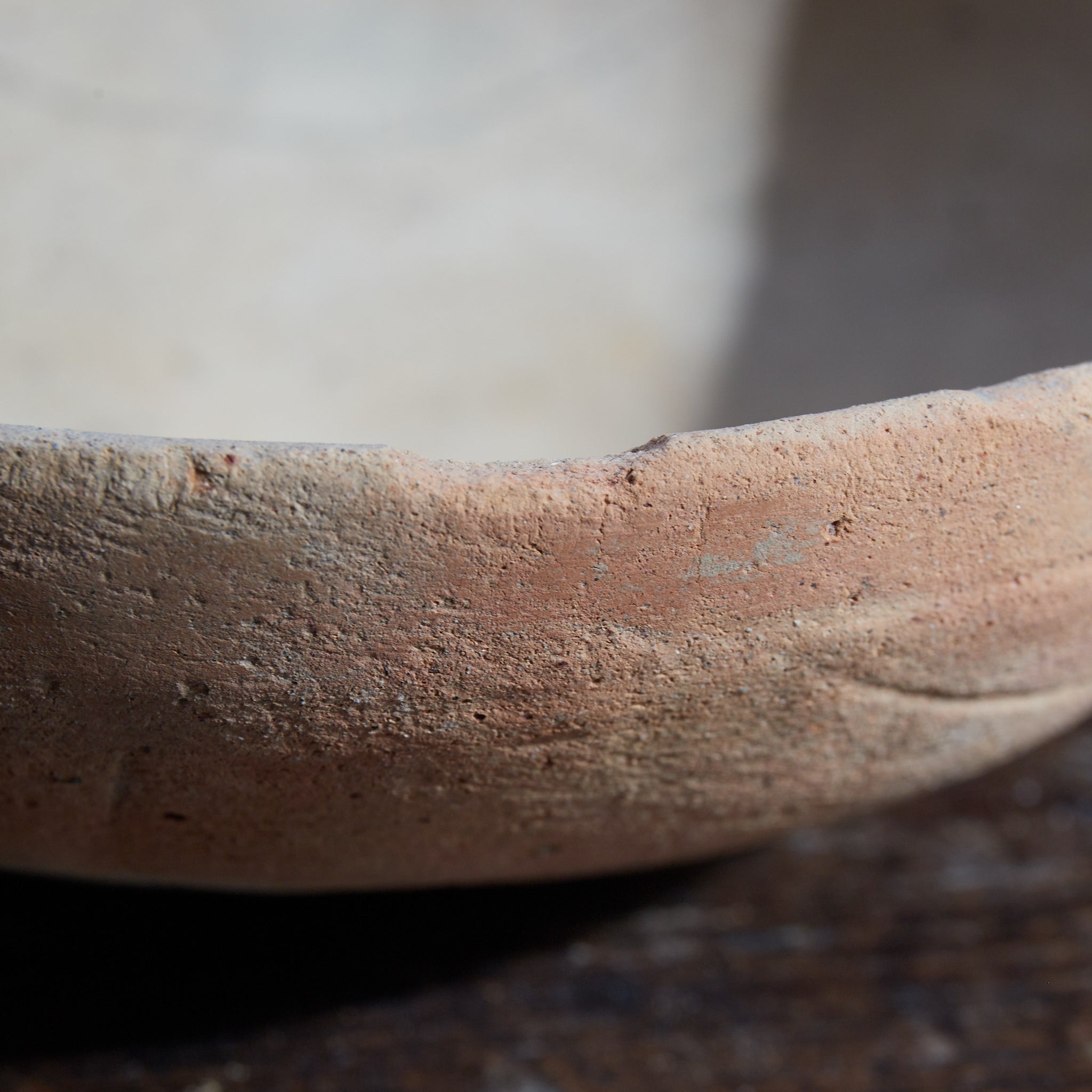
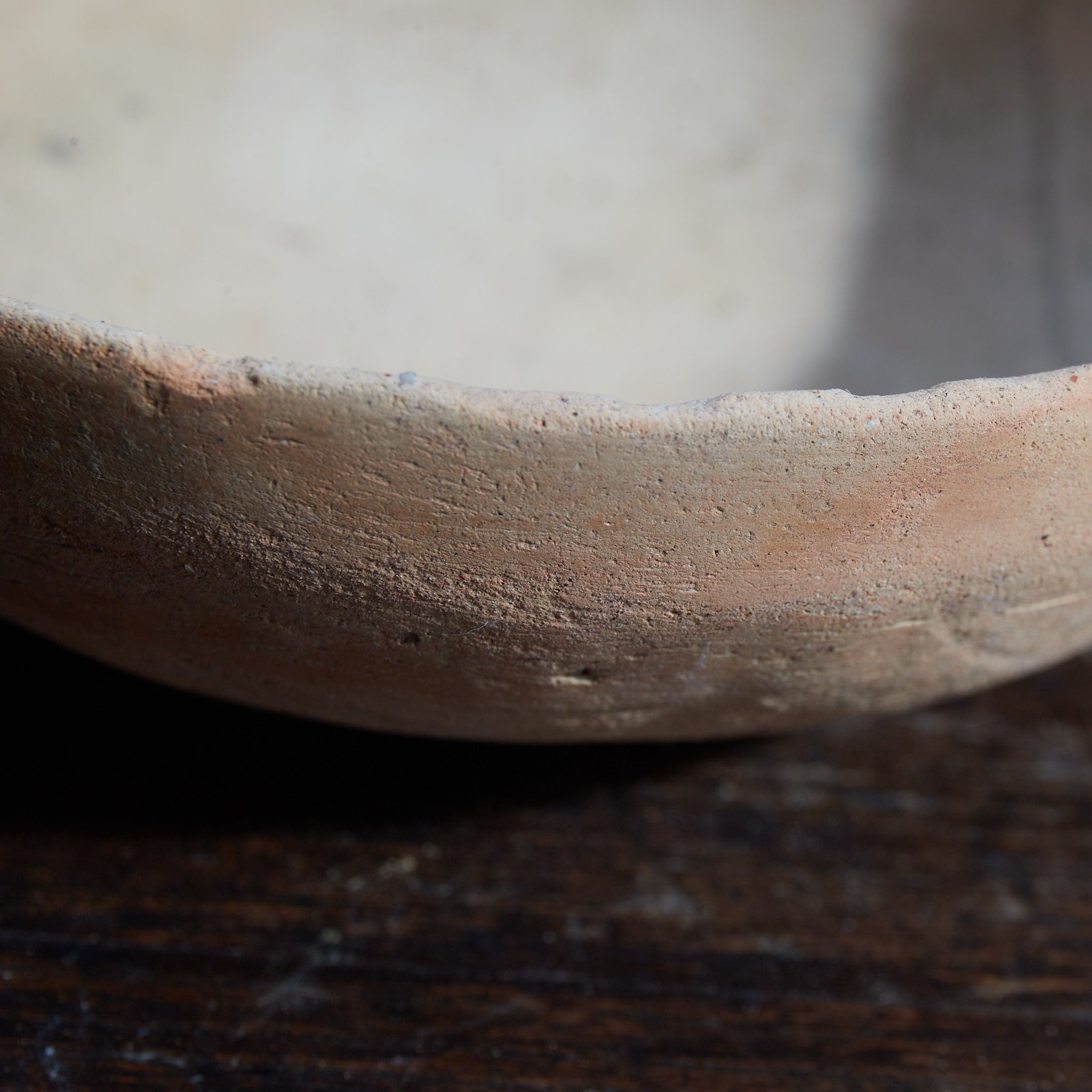
A small earthenware vessel with a low, rounded body and a gently flared rim. Shallow in depth, its profile is closer to a shallow dish than to a deep bowl, and its unadorned form fits comfortably in the hand.
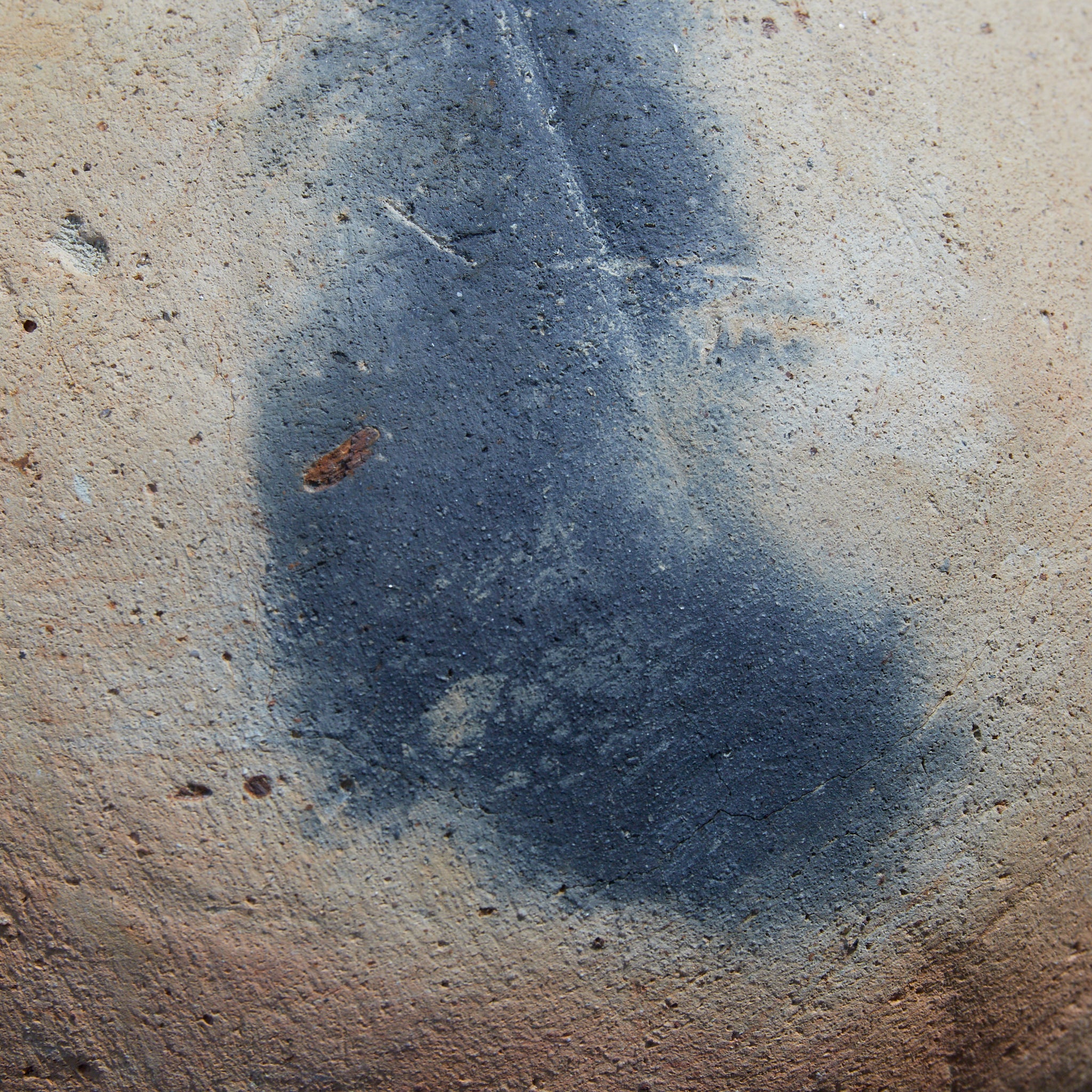
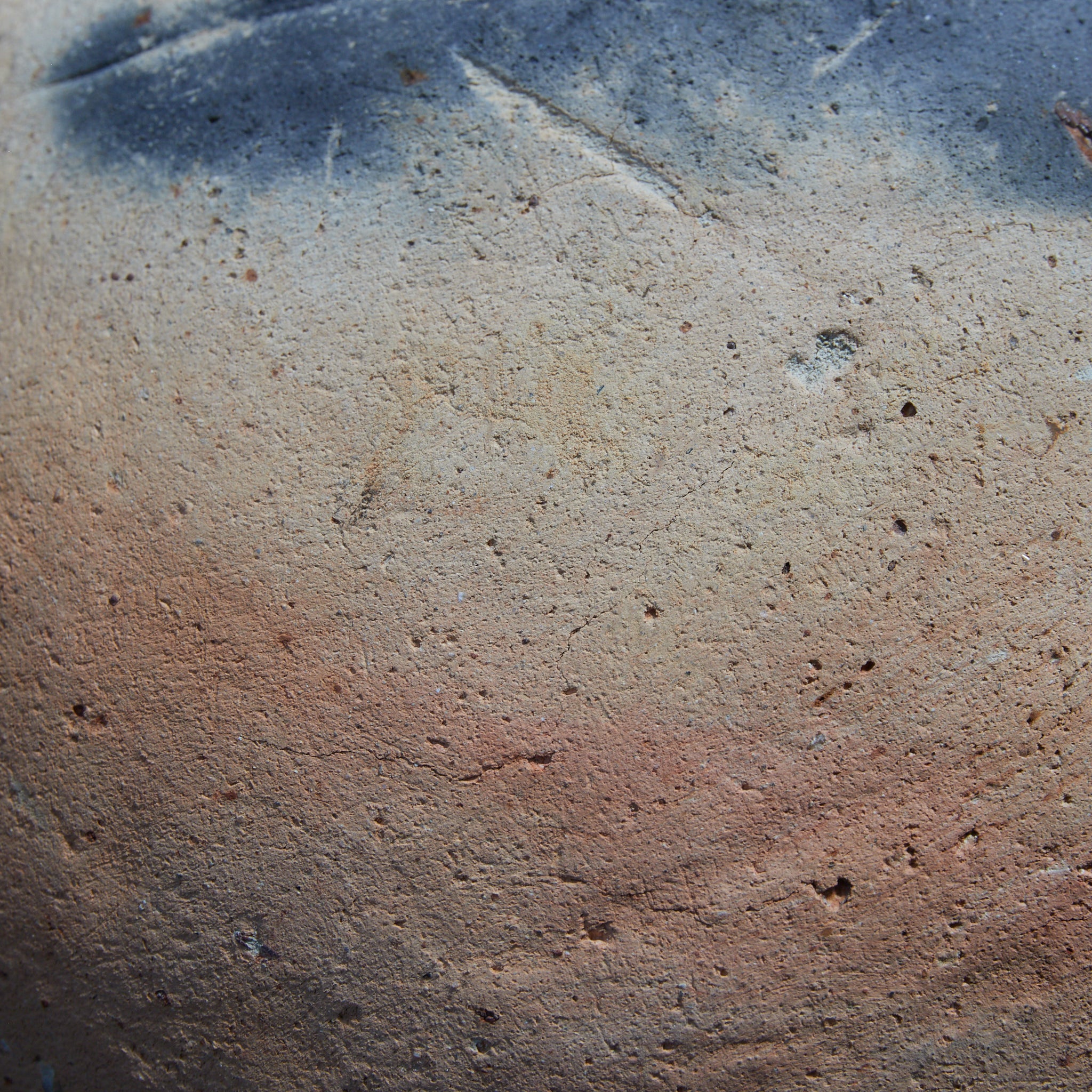
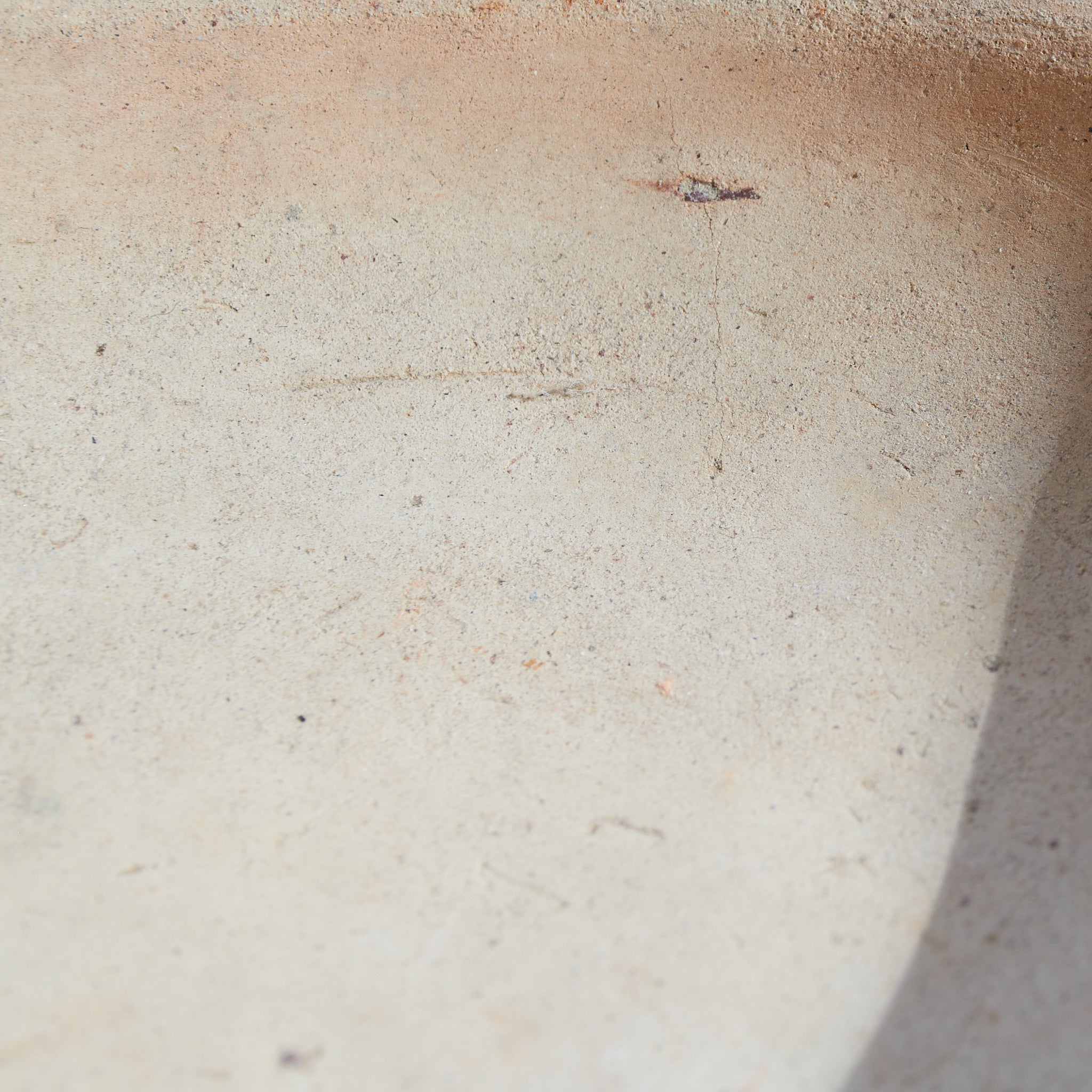
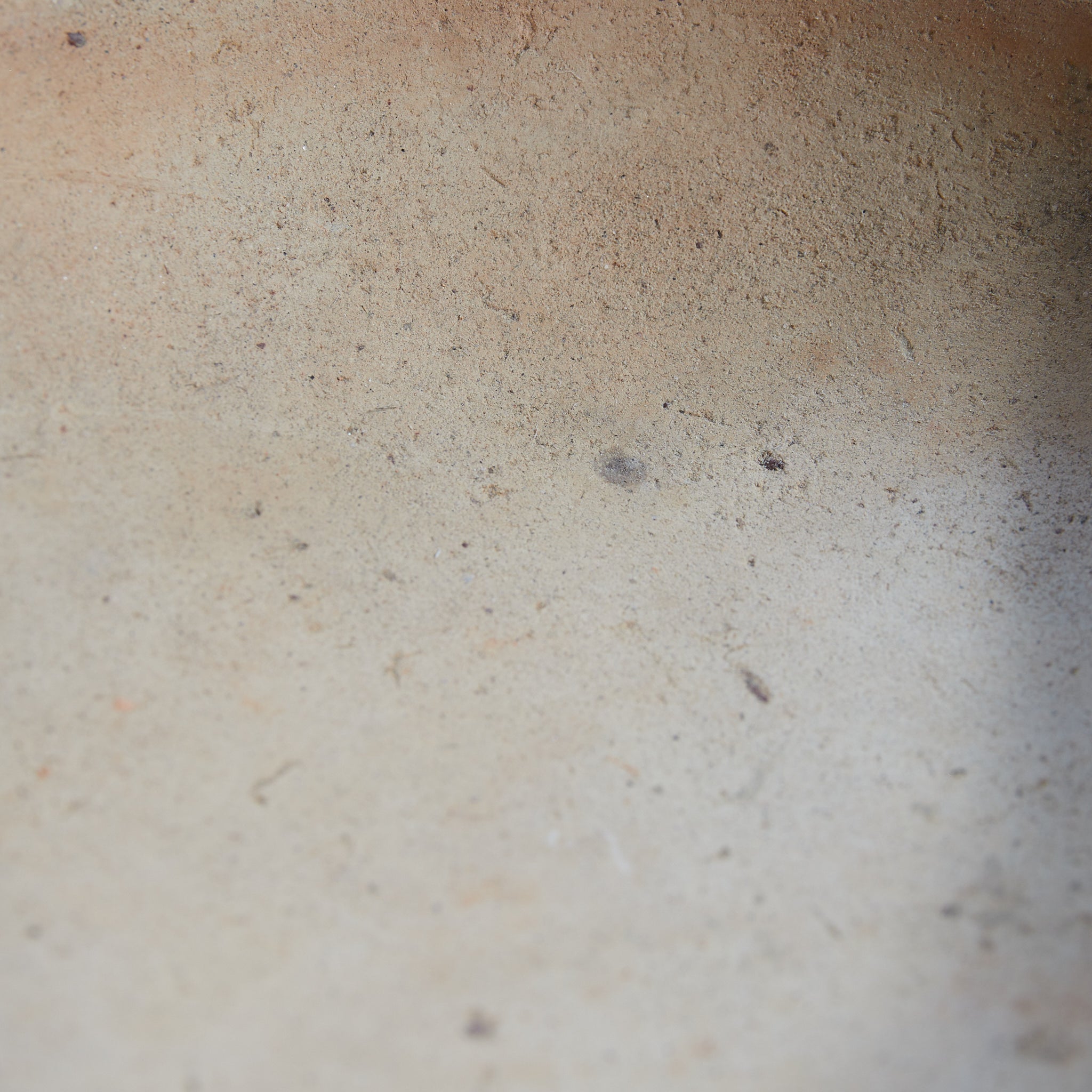
The clay is predominantly a pale reddish-brown, while the interior retains a soft, natural clay hue. The surface shows fine grains, scuffing and slight irregularities, and firing-related variations in color appear naturally. The base bears a darkened area from the fire, evoking the traces of heat characteristic of ancient pottery.
The form is exceptionally simple, yet the subtle irregularity of the rim and the rounded swell of the body reveal its handmade character. Without ornament, the texture of the clay itself and a quiet, time‑worn presence come through clearly.
The rim bears a small chip; the surface shows overall wear, roughened clay, soiling, and uneven coloration from firing. It is not ostentatious, but as a small ancient vessel it is well suited to rest on a shelf or occupy a corner of a tea display.

In early Yayoi settlements of northern Kyushu, iron axes and arrowheads believed to have arrived via the Korean Peninsula have been excavated, and their introduction supported the development of land clearing and agriculture. Pottery techniques also advanced. While inheriting the Jomon coiling method, surfaces were smoothed with clay slip and forms became organized according to use. Jars and pots for storage, spouted vessels for pouring hot water, and pedestal dishes used for food or ritual became increasingly formalized as vessels grew more deeply intertwined with society.
During the Middle Yayoi period, the introduction of covered firing made high-temperature firing at around 1000°C possible, leading to the mass production of thin, hard, reddish-brown pottery. Iron tools and weapons, including arrowheads and spears have been excavated around Lake Biwa and in the San’in region, revealing the spread of a social structure in which agriculture and warfare coexisted. At the same time, pottery retaining Jomon elements continued to be made from northern Kyushu to eastern Japan, suggesting a cultural fusion between agricultural migrants from the continent and local Jomon potters.
By the Late Yayoi period, domestic casting of iron implements had become established, and swords, arrowheads, axes, and other tools have been found across the country. Pottery retained its thin, reddish-brown forms and, used alongside iron farming implements, secured its place as indispensable equipment for cultivation, storage, and cooking. Its role expanded from that of a simple household tool to a form of social infrastructure supporting communal order, ritual, and technical systems.
Implements corresponding to “chopsticks” also appeared during this period. Sites dating to the Late Yayoi period have yielded oribashi—pieces of bamboo folded in half into a tweezer-like form—which are thought initially to have been used in religious rites and ceremonies. Chopsticks did not become widespread for ordinary meals until after the Asuka period, but the fact that the basic form of chopsticks had already been adopted in Yayoi society suggests changes in food ritual and ideas of hygiene.
Such inventions of form and technique created a broad current leading onward to the pottery and Sue ware of the Kofun and Heian periods. That current continues unbroken even today. “The beauty of use” was repeatedly emphasized by Yanagi Sōetsu, founder of the Mingei movement, yet its origins can be found in the Yayoi period. These vessels, which accompanied social transformation, speak as evidence of lives once lived. When I hold a piece of pottery weathered by time, unnamed makers and flames rising brightly against the mountains come to mind.
Choose options
Tax excluded. Import duties may apply. Shipping costs are calculated at checkout.
Change language
