


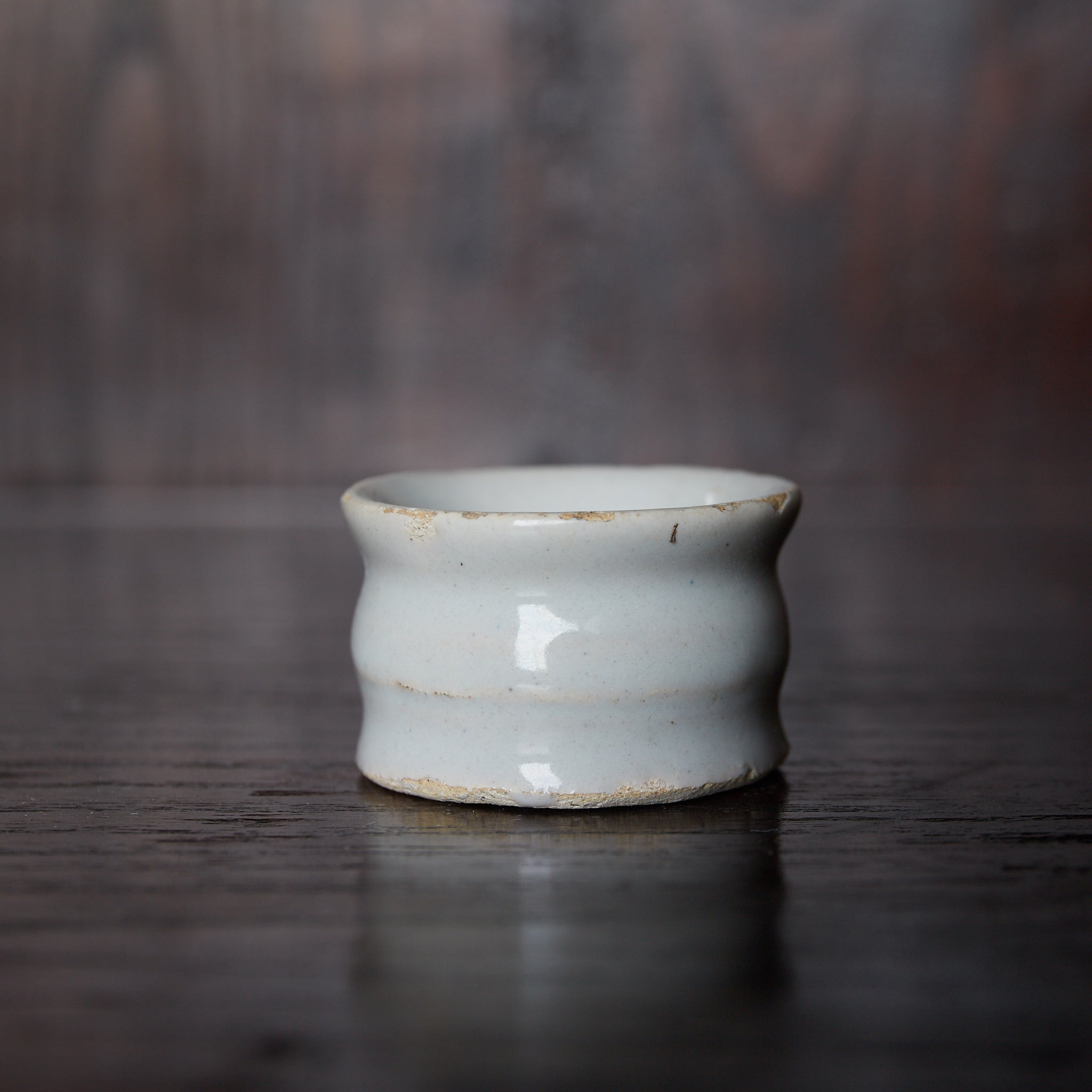

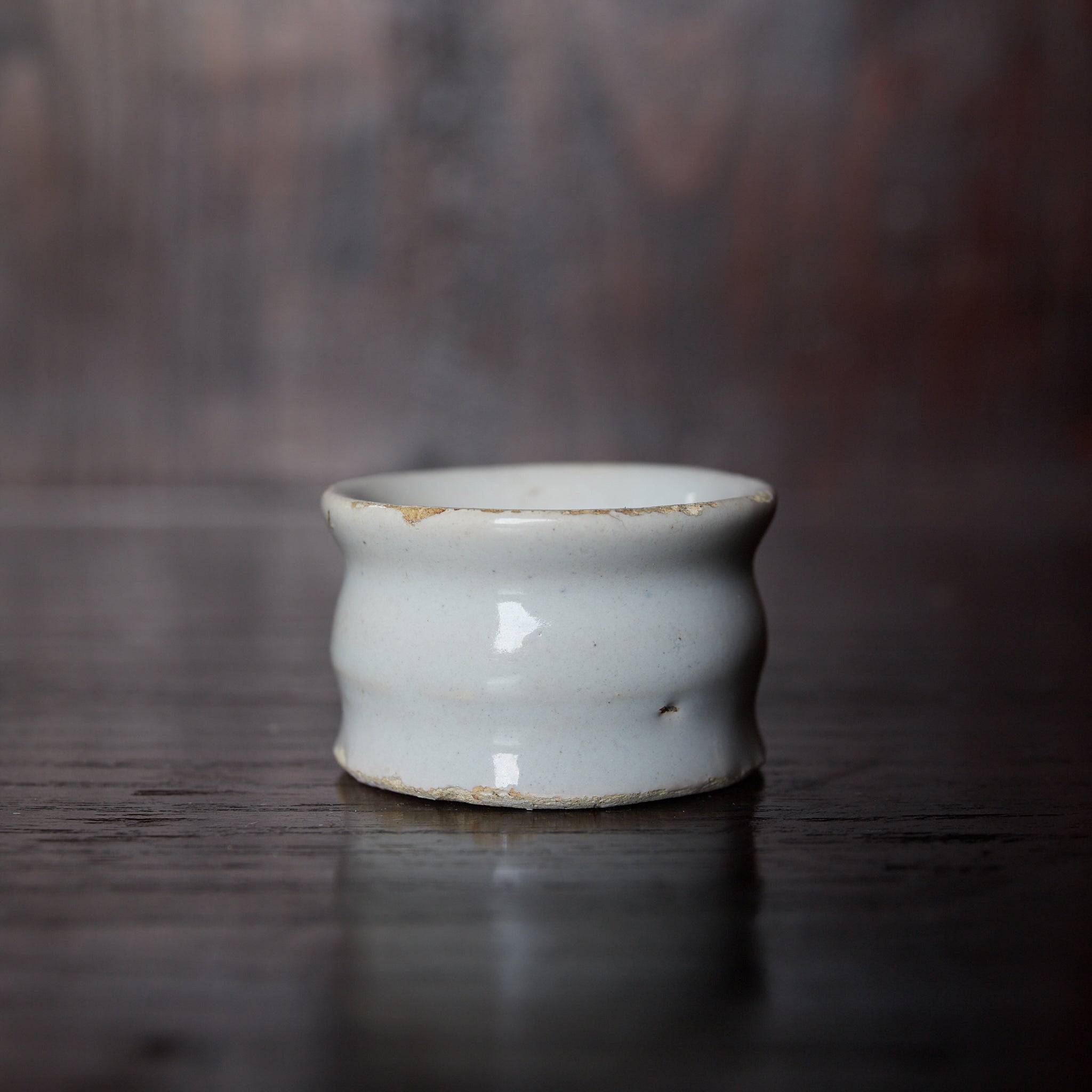
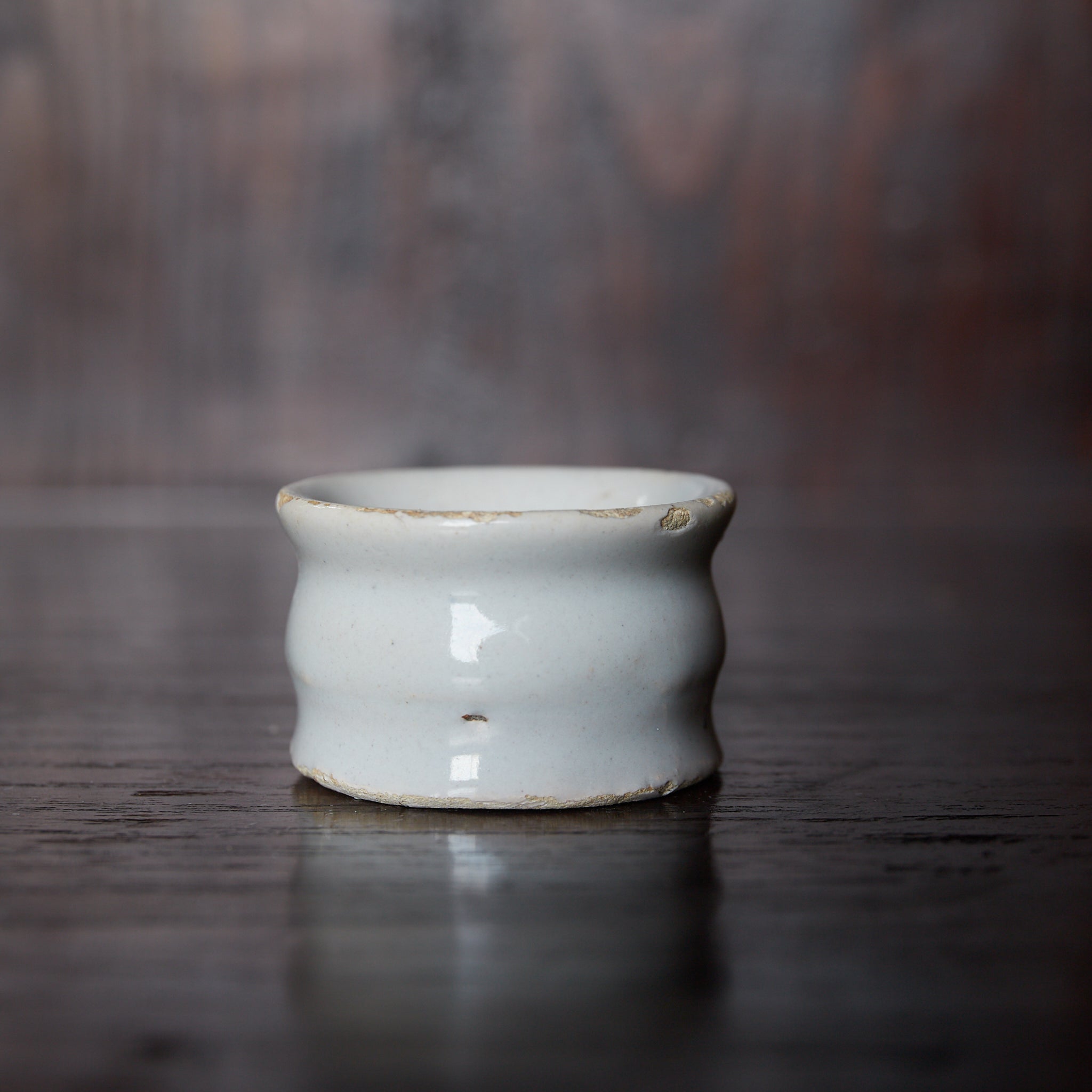


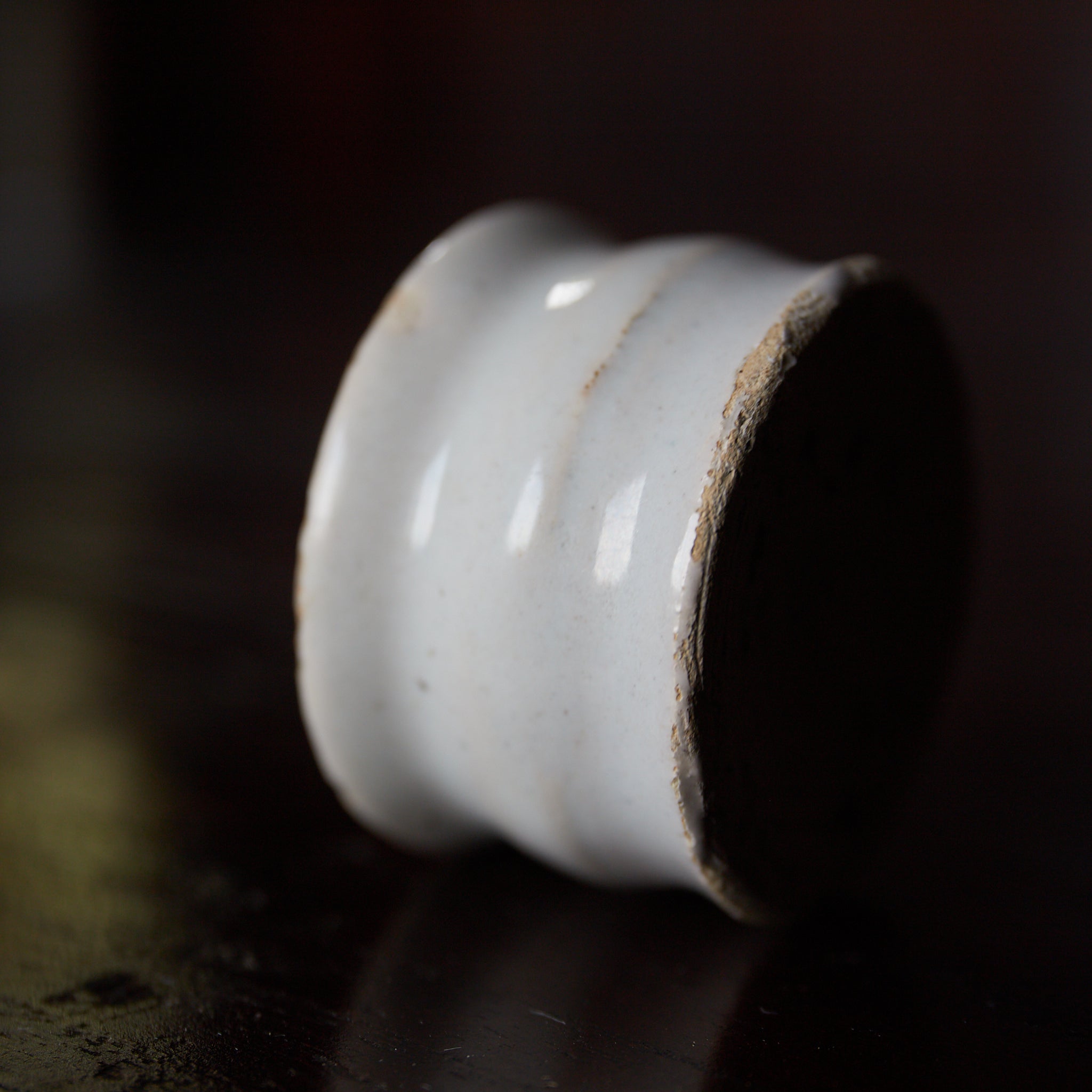
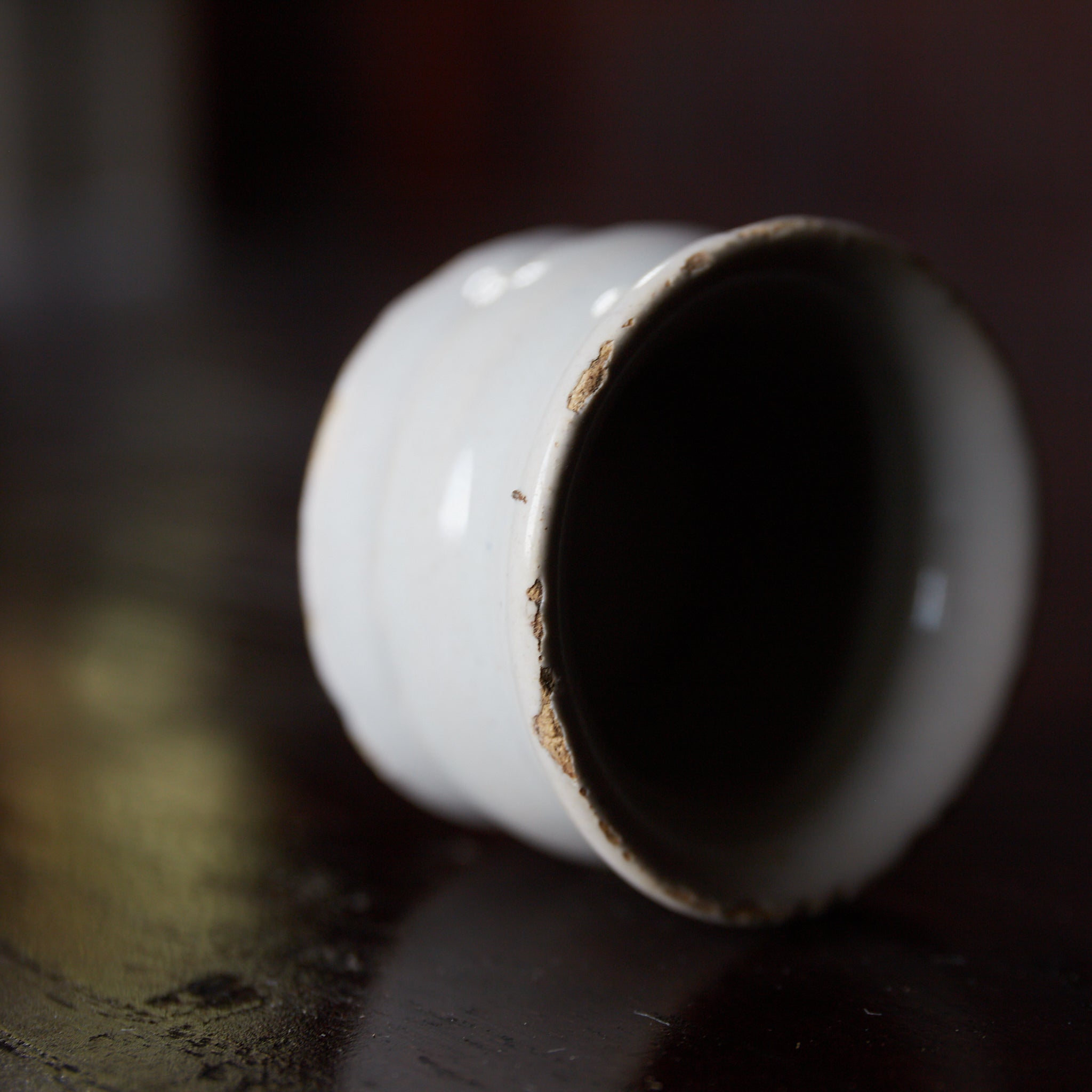
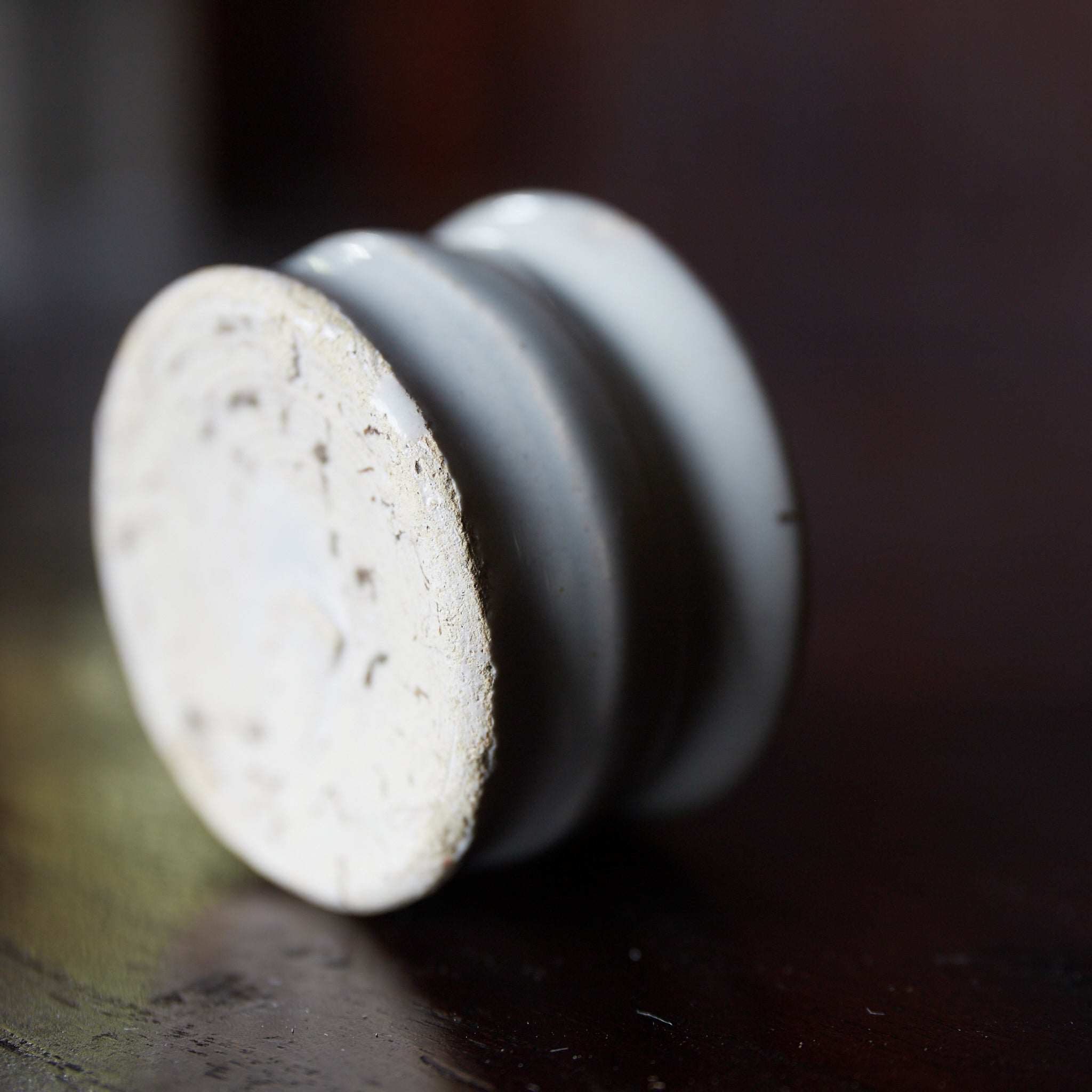
SMALL JAR, Delftware, white-glazed, Early Modern Period (16th–19th centuries)
Tax excluded. Import duties may apply. Shipping costs are calculated at checkout.
Each piece is carefully packed for international delivery.
Numerous product photos are available for you to examine the details and condition. Should you have any questions, please do not hesitate to contact us.
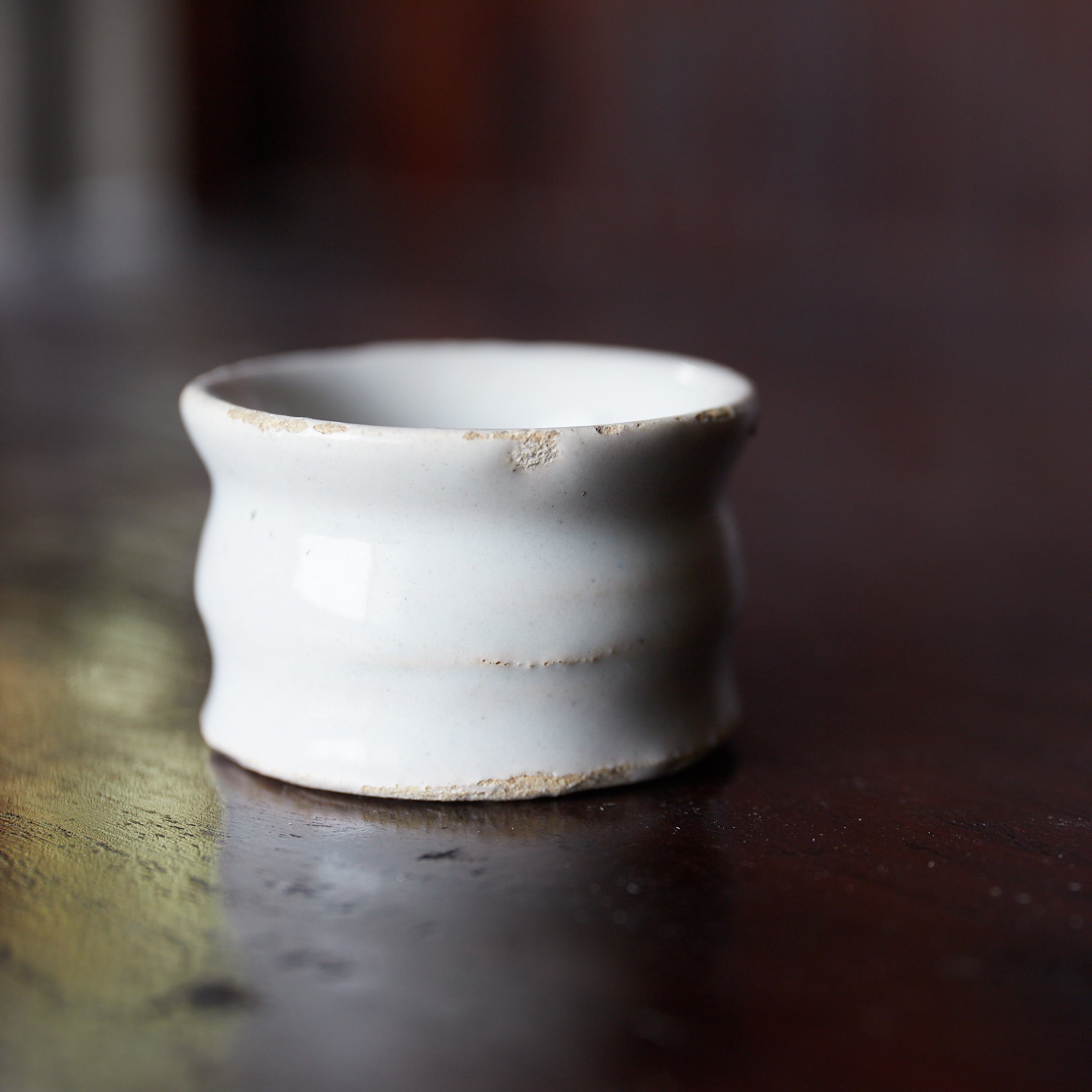
> Inquire about this productA small white-glazed Delftware jar.
Delftware is a tin-glazed earthenware produced widely in the Netherlands from the 17th century onward, used for everyday objects such as apothecary jars, plates, and tiles. The rich, opaque white surface created by adding tin to a transparent glaze also served as a ground for the development of underglaze blue and overglaze polychrome decoration.
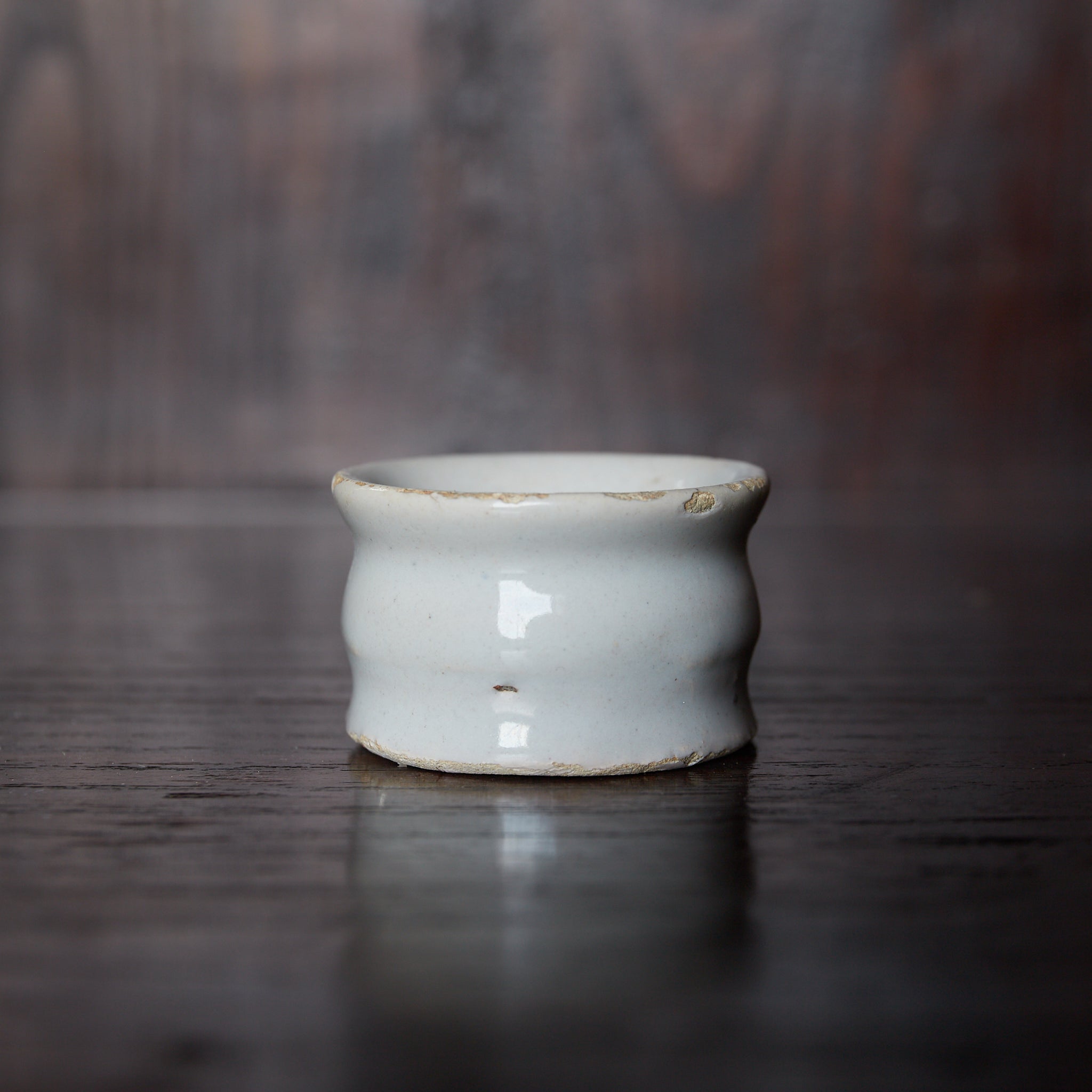
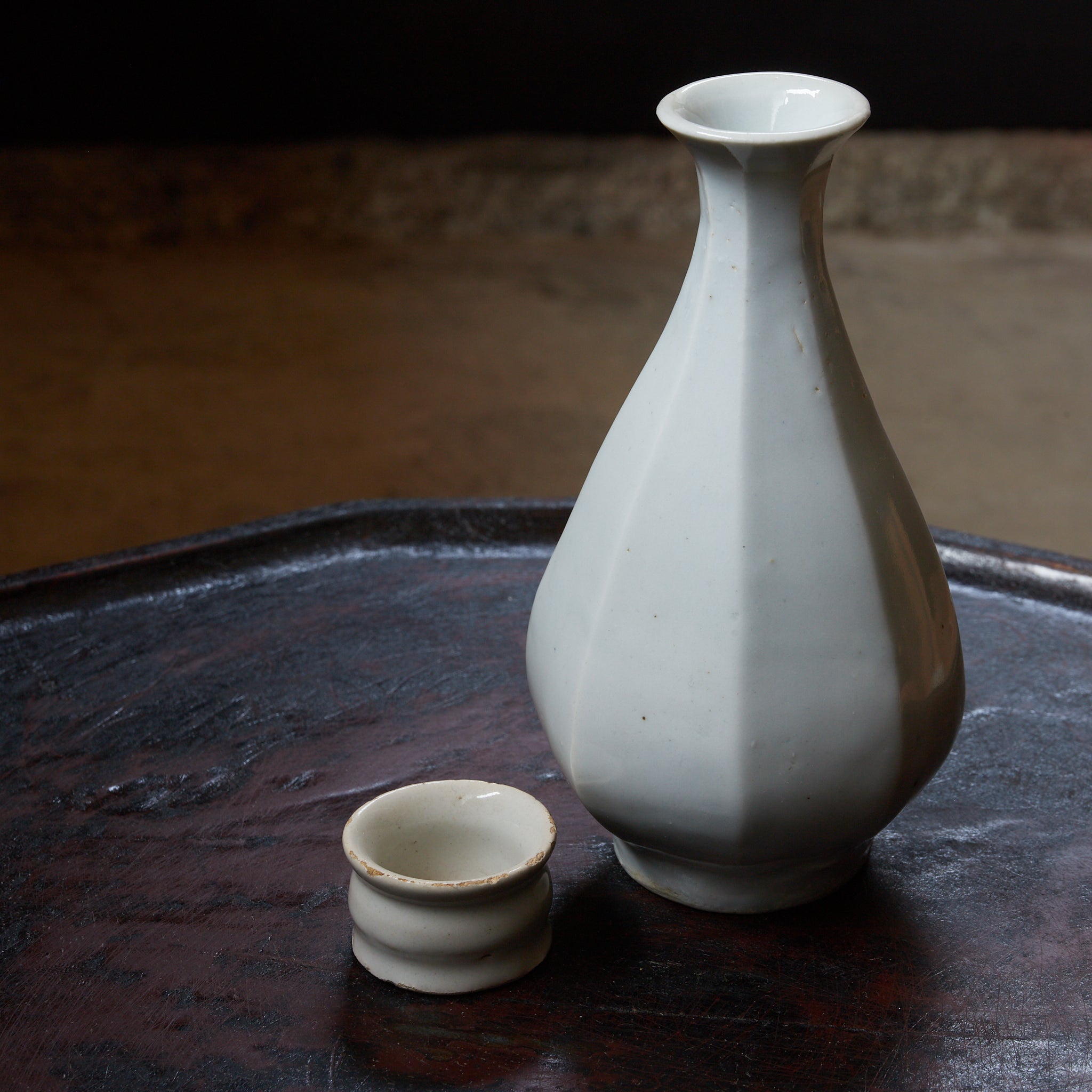
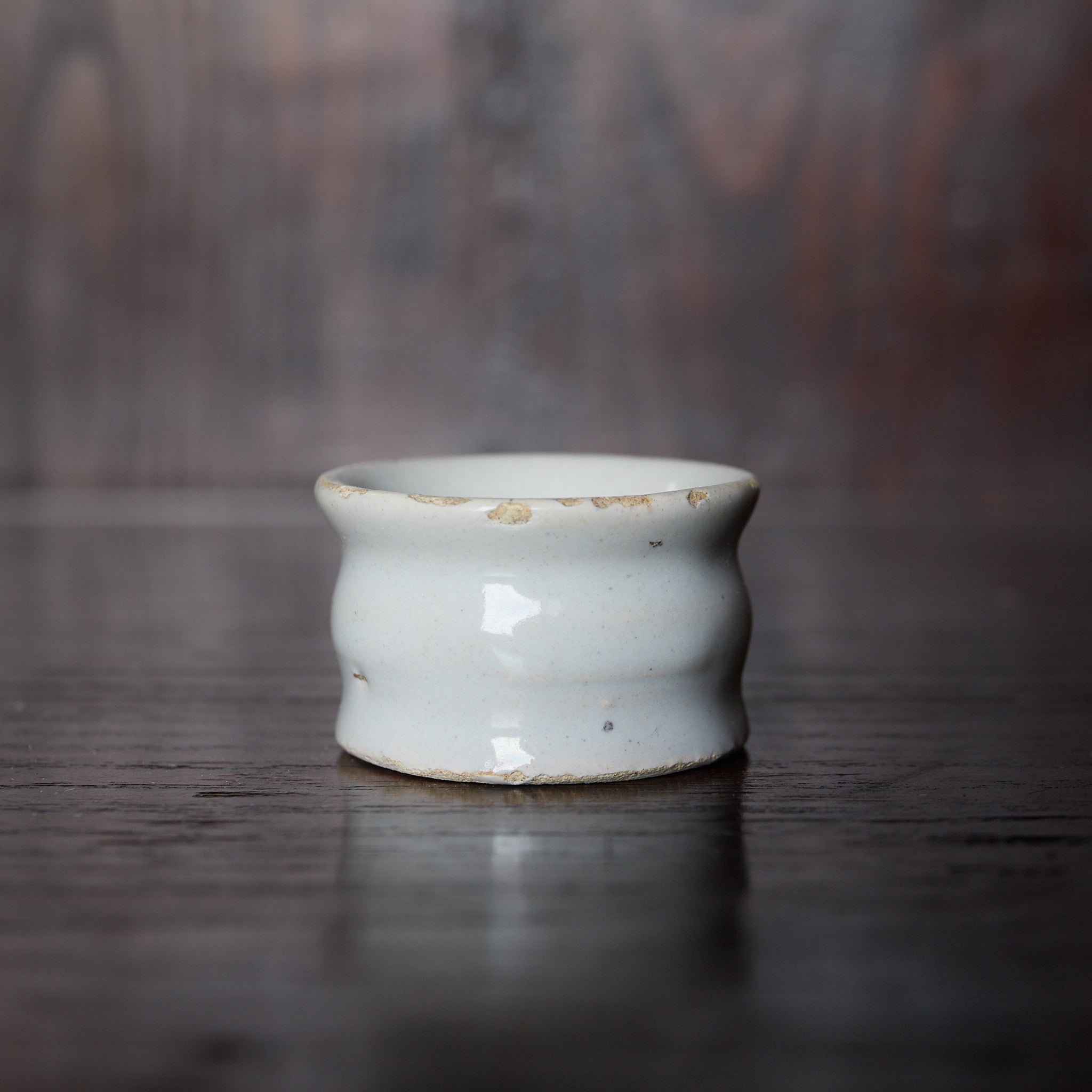
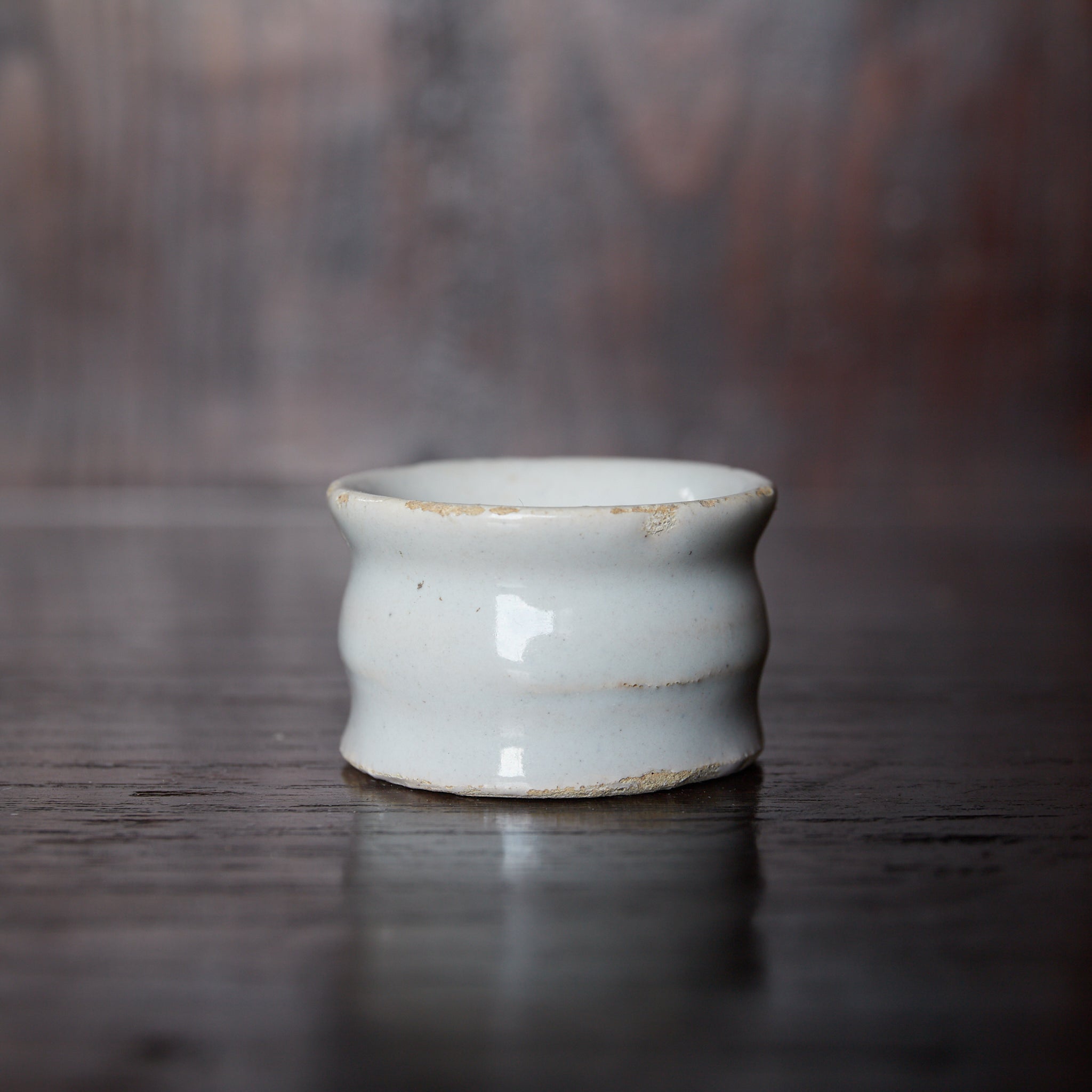
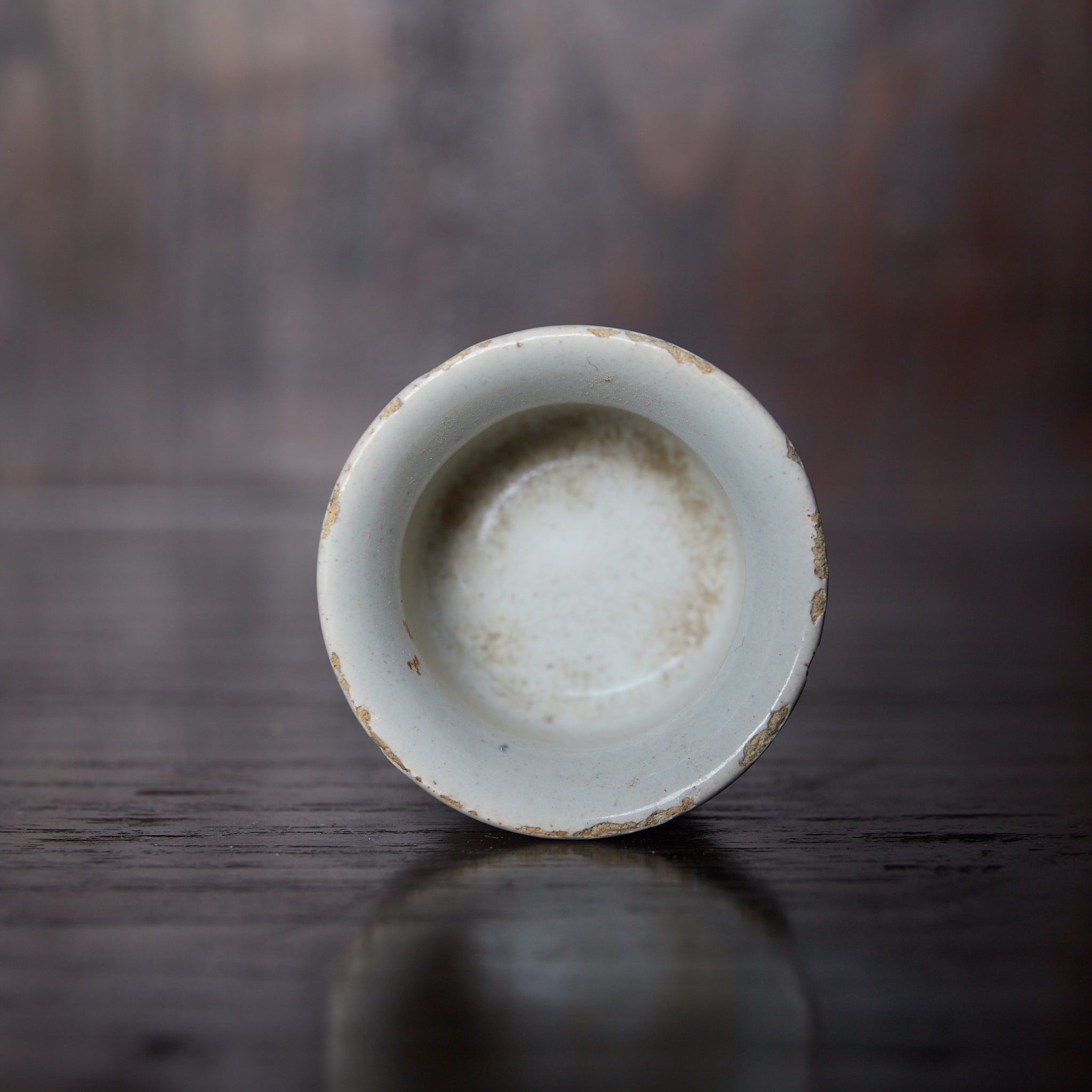
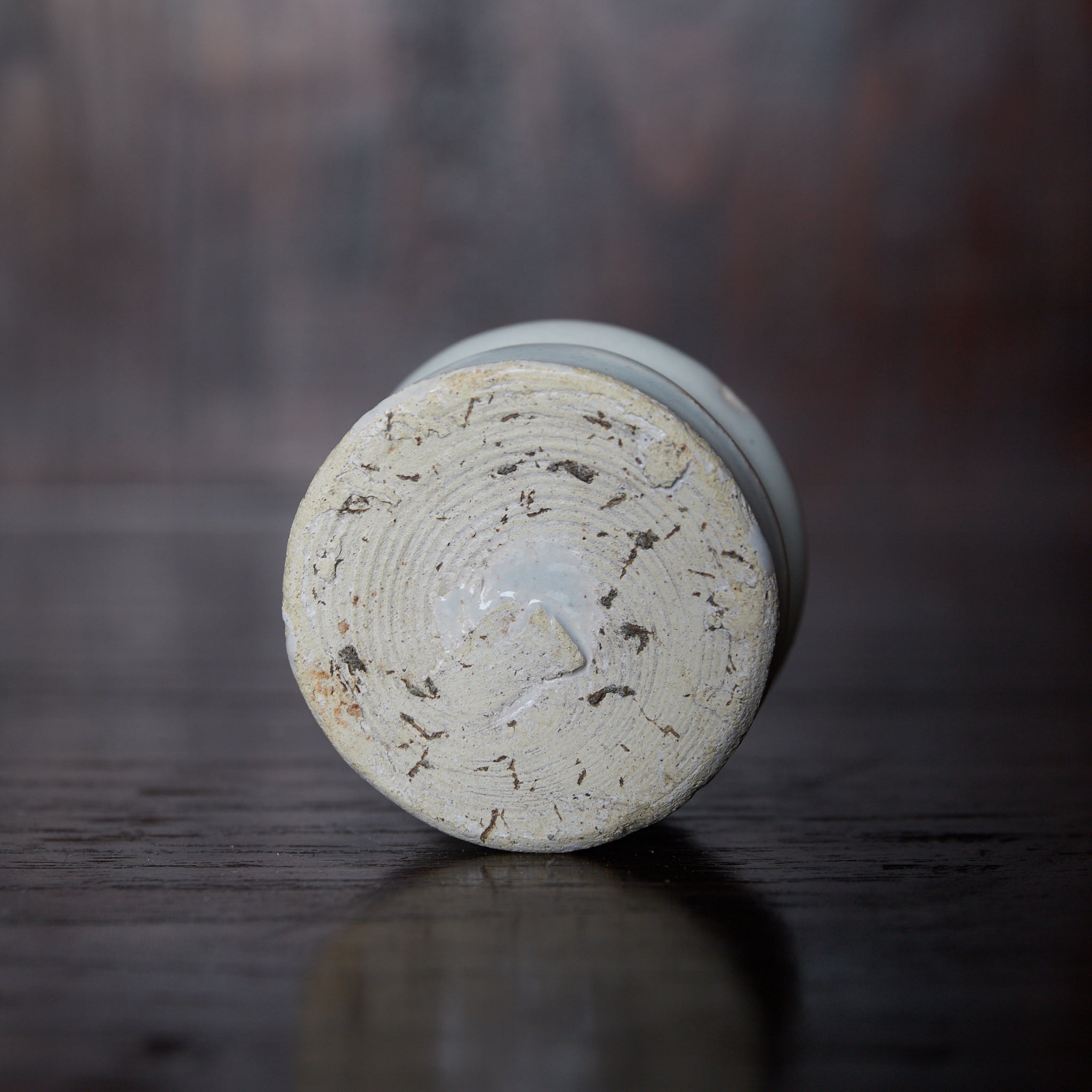
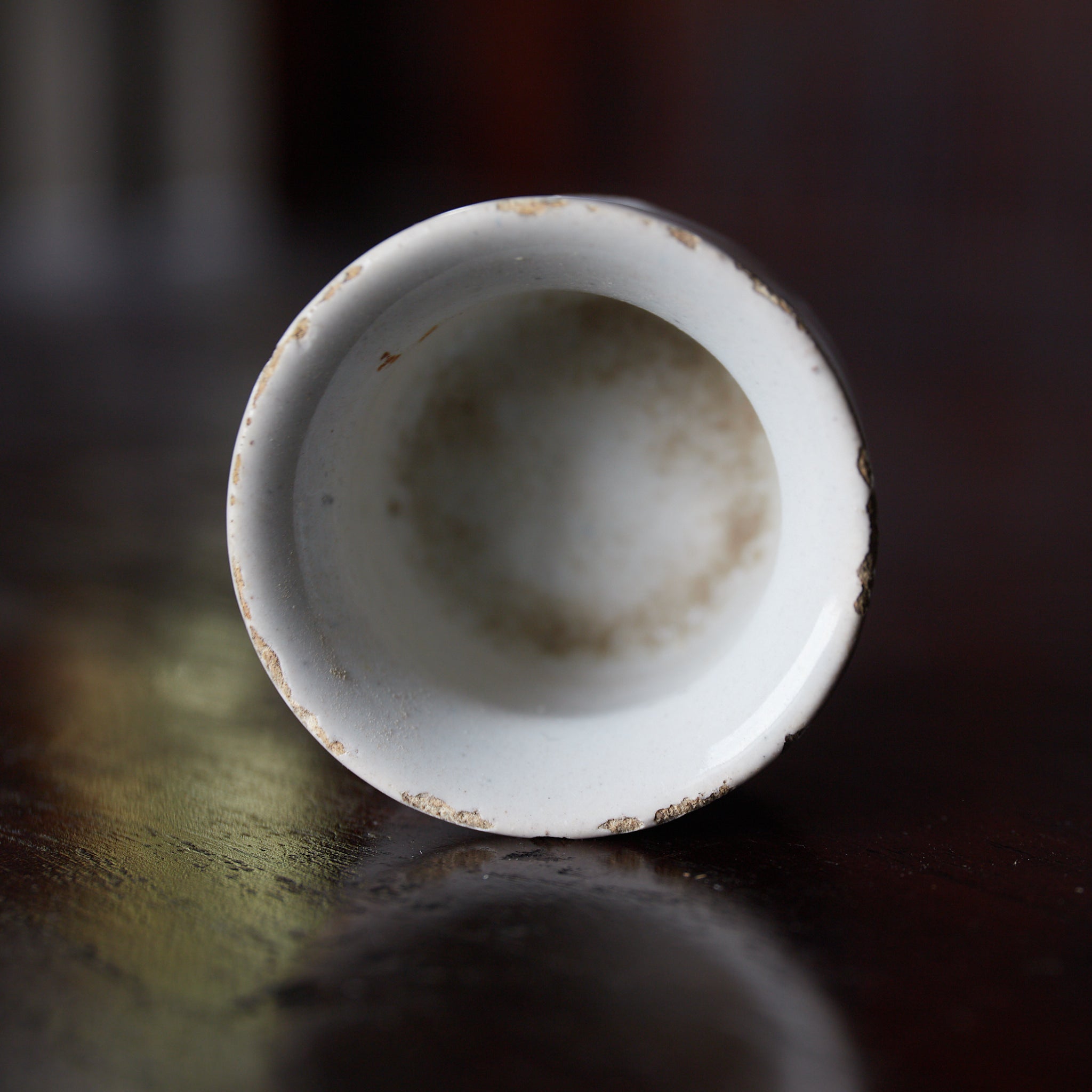
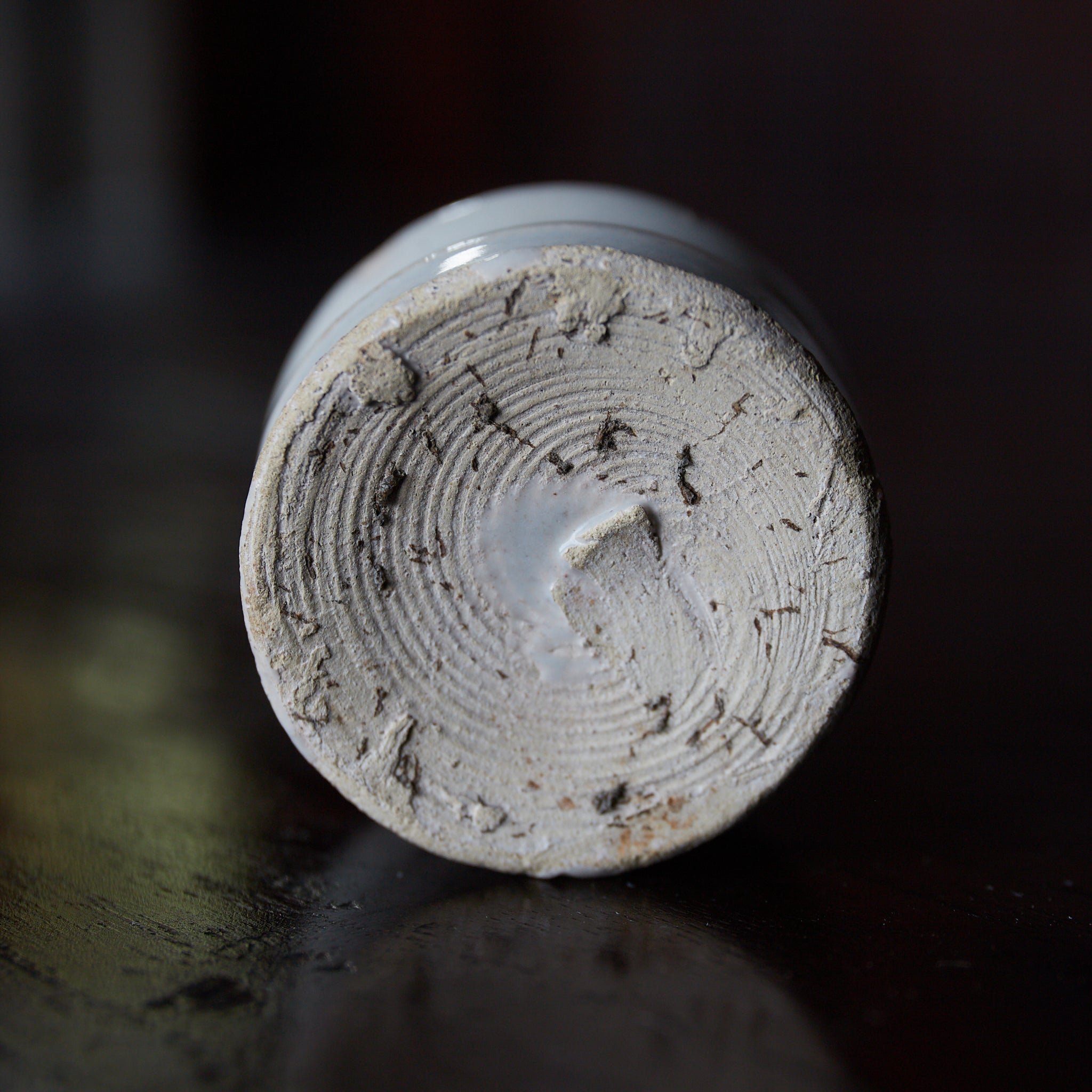
This small white‑glazed vessel fits in the palm of the hand. It has a slightly waisted cylindrical form; the rim and the area around the base show flaking of the glaze, revealing the gently friable clay surface characteristic of low‑fired Delftware.
The white-glazed surface shows occasional scuffs and small areas of loss, and the rim retains the timeworn wear characteristic of aged ceramics. Its appeal lies not in being a perfectly finished vessel but in its presence as a small everyday object that was used and has been preserved.
Its modest size makes it suitable as a small cup, and also as an incense box or a shelf ornament. When paired with Joseon wares or sake bottles of antique pottery, the soft white of the white-glazed Delftware harmonizes quietly with them.
There is glaze loss, abrasion, and exposure of the clay at the rim and around the base. In addition, there are minor scratches and glaze irregularities typical of an older ceramic; please appreciate these as part of its surface character.

I too was drawn to this striking white and to the appeal of authentic old ceramics, and it led me to travel through Europe in search of antique pottery. Before I knew it, more than three hundred pieces of White Delft had come into my care. Some had lain buried in the earth; others had been carefully passed down through generations. In this way they survived several centuries to reach us today. Yet few remain, and in recent years White Delft has been reassessed in Europe, making it unfortunately far from easy to collect.
After visiting local collectors, excavators, their friends and acquaintances, I would finally find these delicate, timeworn pieces of White Delft and carry them back to my lodging. Placed on a table by the window, they brought a strange calm, as though I were sitting in zazen. The shifting Dutch sunlight casts shadows across their surfaces; within the stillness lies open space. No two whites wear the same expression. Like canvases reflecting time itself, they continually preserve, with vivid clarity, the essence of old pottery.
This distinctive white was born from a transparent lead-glass glaze, common in medieval Europe from the thirteenth to fifteenth centuries, made opaque and white by the addition of tin oxide, a material used in Islamic ceramics. The greatest characteristic of this technique—commonly called tin glaze or tin-enamel glaze—is that it turns the color of the earthenware body into a white ground suitable for decoration.
Previously, coloring pottery required consideration of both “the color of the clay” and “the color of the glaze.” If the underlying clay was dark, the color of the finished glazed vessel also became dark, which was said to be a persistent problem for workshops seeking consistent quality. Once a ground of tin glaze was applied, however, bright colors could appear vividly, while darker colors could form designs with clear contrasts of light and shade. As the foundation for the brilliant painting and decoration seen in the majolica traditions developed in Spain and Italy, this method revolutionized European ceramics. Pottery made by this technique is called faience in France and Delftware in the Netherlands.
In Japan, by contrast, tin glaze was relatively unfamiliar. Whites were made with silica-based glazes using rice-husk ash or straw ash. When we compare the whites of ceramics, the histories and climates woven by each place emerge within the color: the white of the Song dynasty, the white of Joseon, the white of early Imari, and the white of Delft. Each holds a different story. Is it because I am Japanese that I am drawn to white and feel compelled to read something from its empty space?
In fact, White Delft has long had ties with Japan. Trade between Japan and the Dutch East India Company began after the Dutch trading post was established in Hirado in 1609. Old Imari and other Japanese ceramics remain in Europe, while ceramics from other parts of Asia and from the Netherlands reached Japan. Among these early imported wares, Delft was known as kōmō-de and especially prized by tea practitioners. It is said that pieces were imaginatively repurposed as tea utensils such as tea bowls and kensui waste-water vessels. Ogata Kenzan also made copies, and the ware appears to have enjoyed a quiet fashion, chiefly in the world of chanoyu.
At tea gatherings I host through ROCANIIRU, I sometimes fit a lid to a piece of White Delft and use it as a tea caddy (chaire). Such play makes me wonder what the tea practitioners of the time thought when they first encountered White Delft and saw a ware so full of foreign character. Surely they imagined, “this could become that,” or “that could become this,” their hearts stirred by the open space containing so many possibilities.
Although each takes its own form, the pieces share certain broad types, including shallow dishes and albarello jars. Their outlines may be uneven from side to side, and wave-like undulations may appear around the rims; they possess a warm presence in which one senses the maker’s breath. They may generally be described as anonymous ceramics. Their frequent appearance in sixteenth- and seventeenth-century Netherlandish paintings, including those of Bruegel, suggests how closely they belonged to everyday life.
The universal beauty held by such anonymous crafts of daily life may pose an intriguing question for contemporary craft. The beauty dwelling in an unnamed vessel: what do we find in a “white” marked by daily life? White Delft seems still to ask us, quietly.
Choose options
Tax excluded. Import duties may apply. Shipping costs are calculated at checkout.
Change language
