

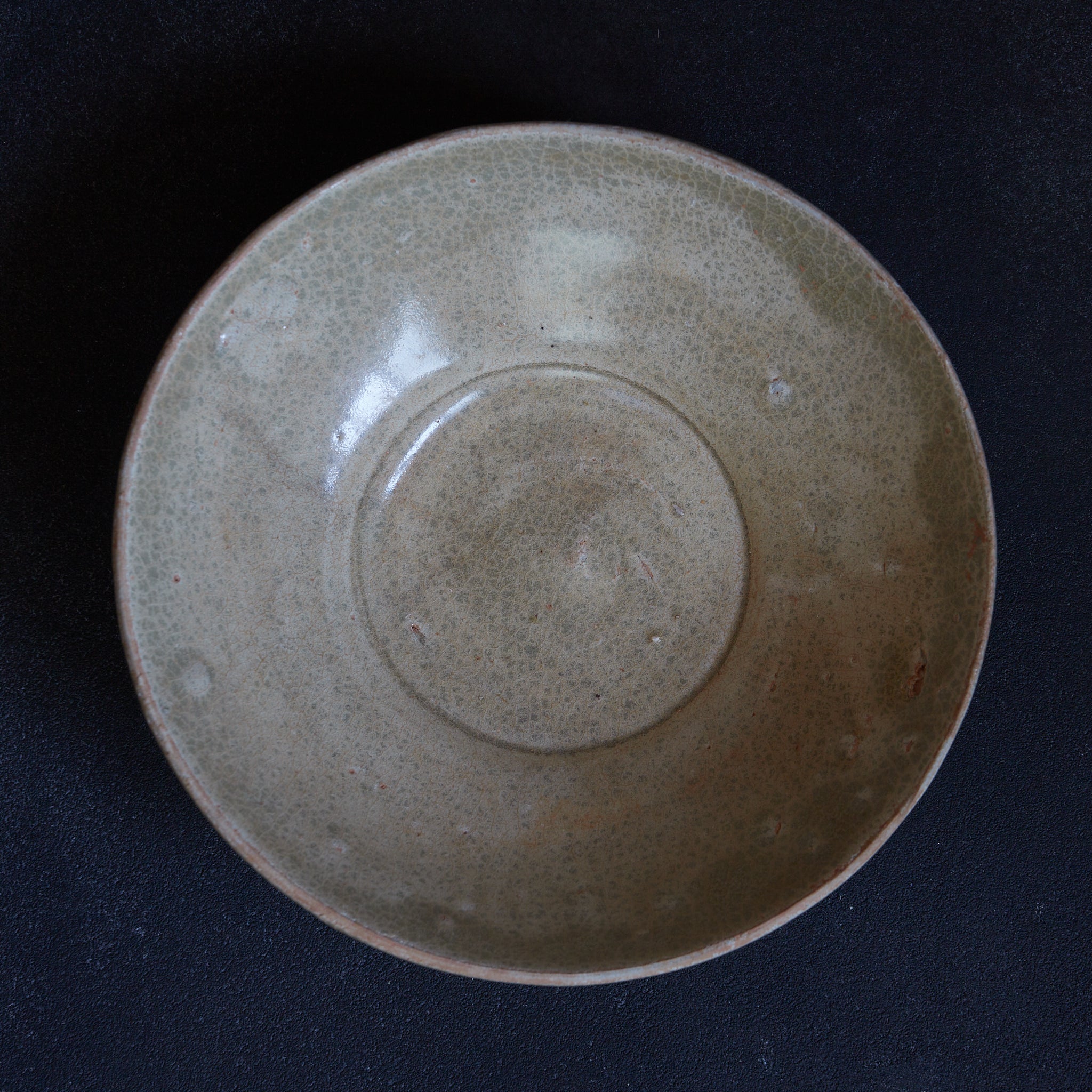
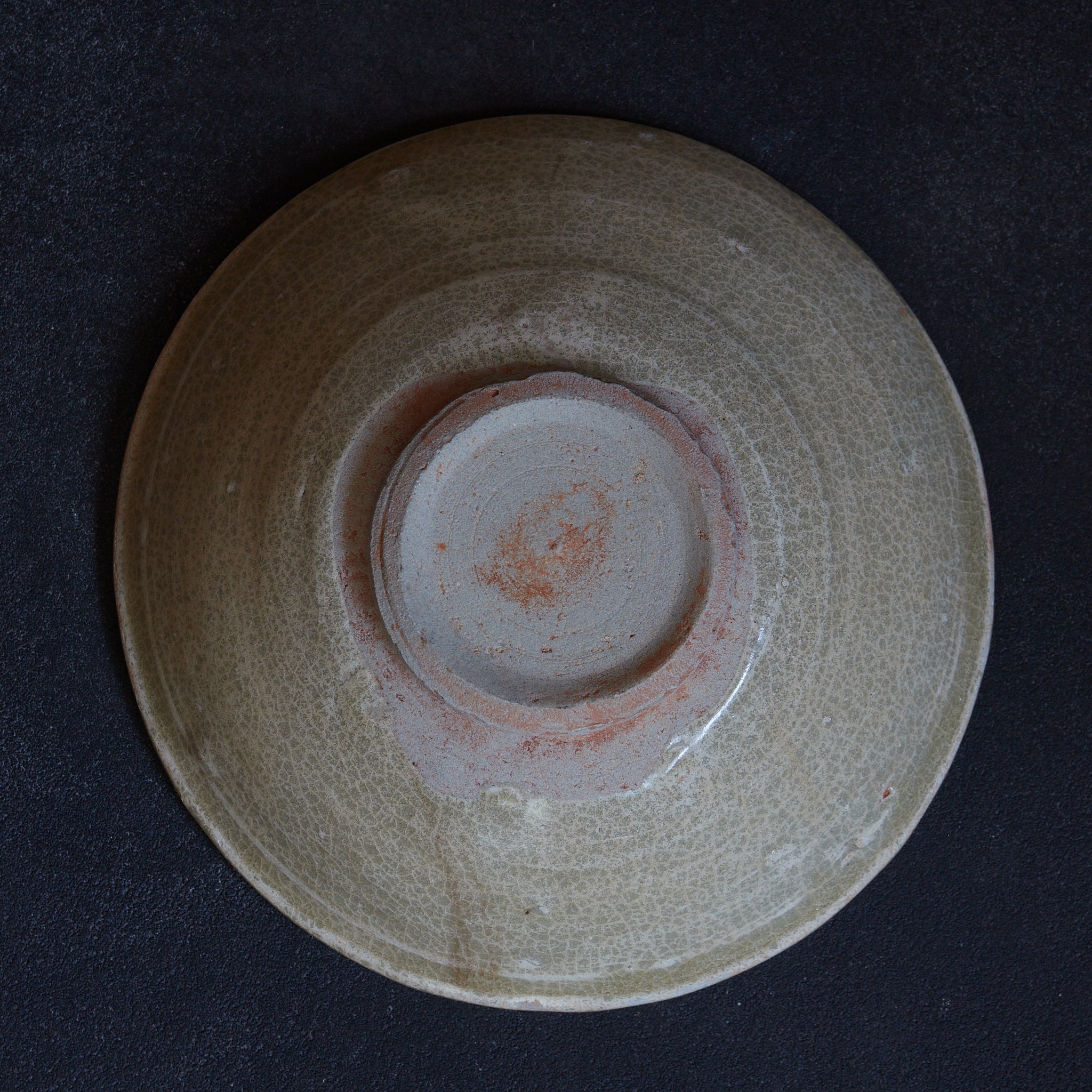
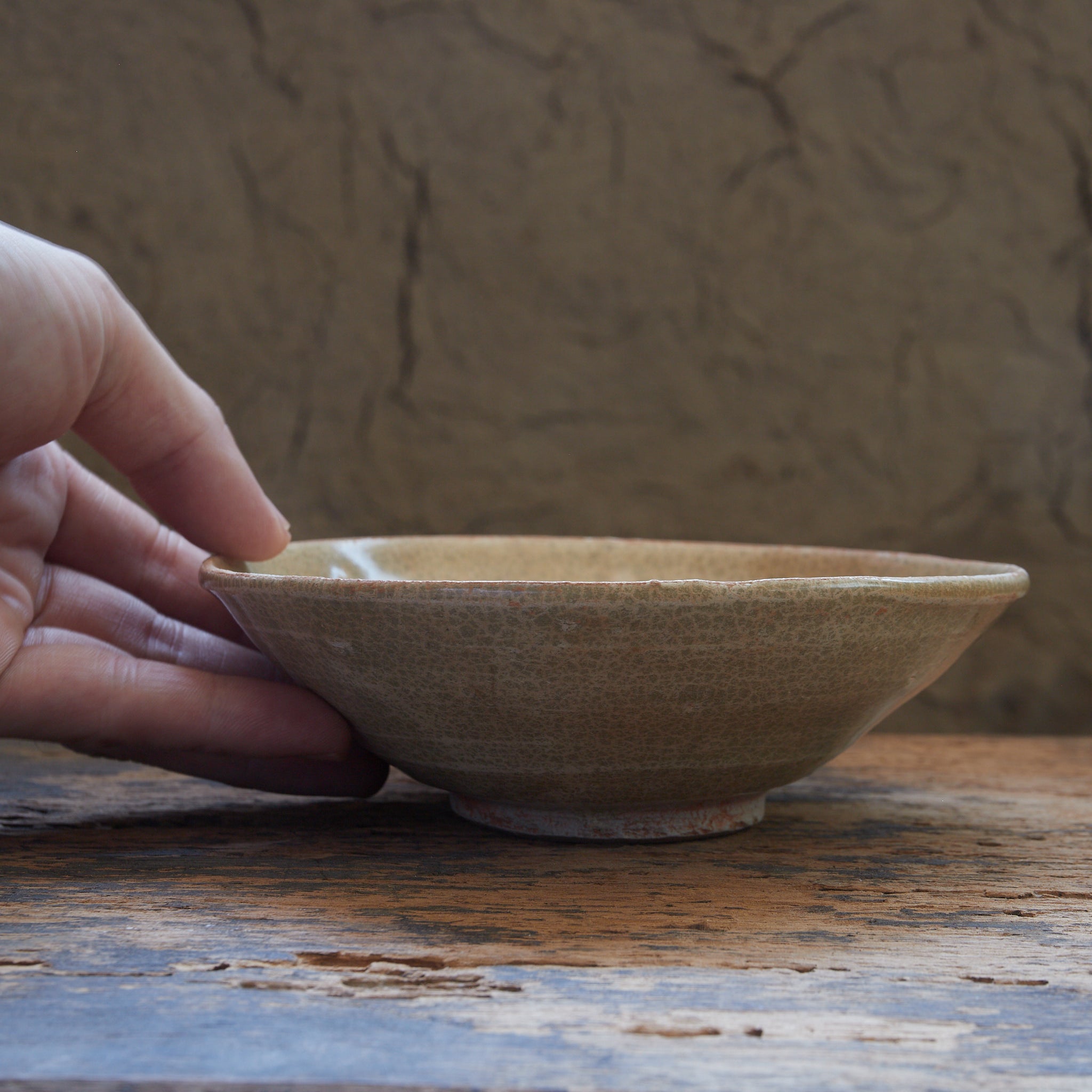
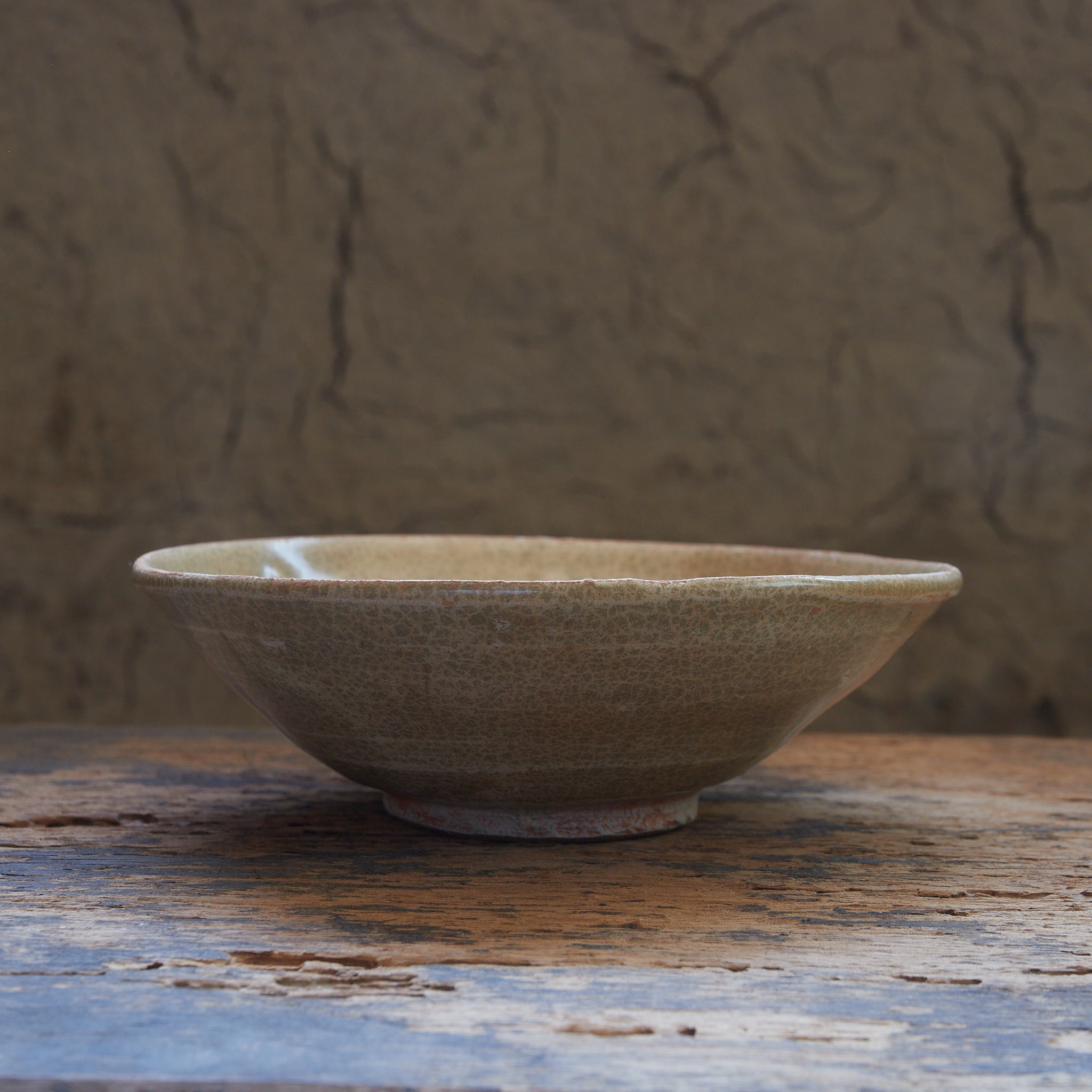
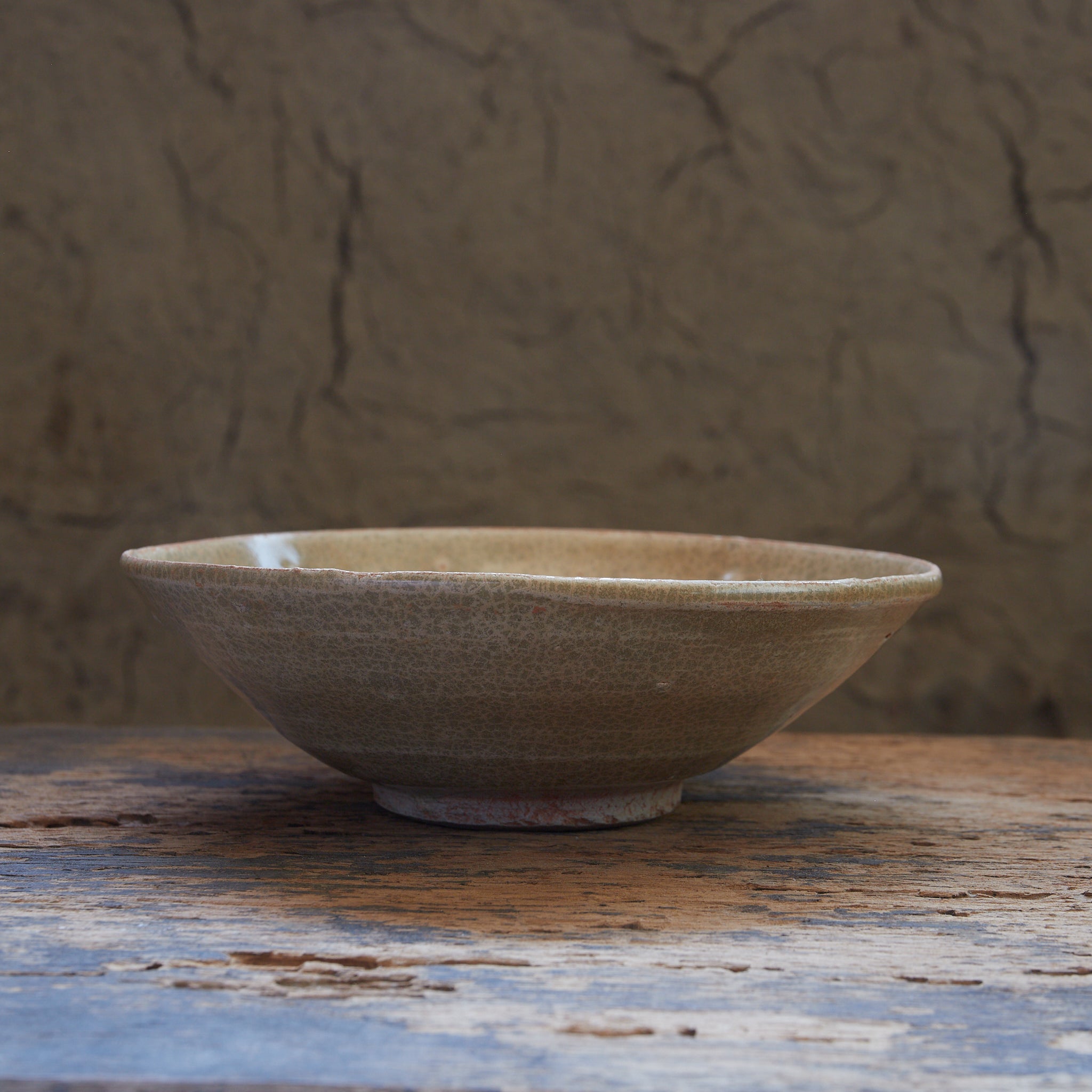
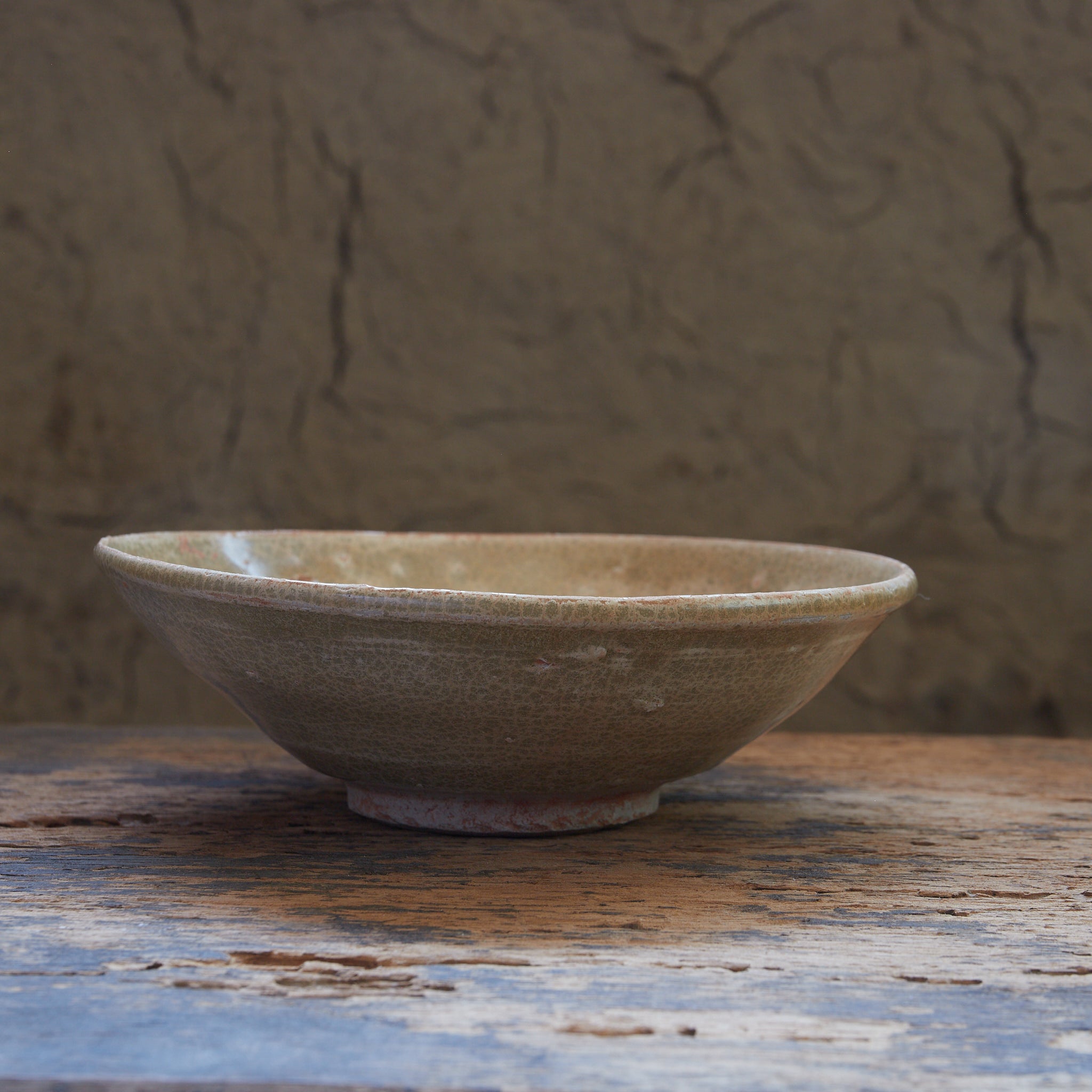
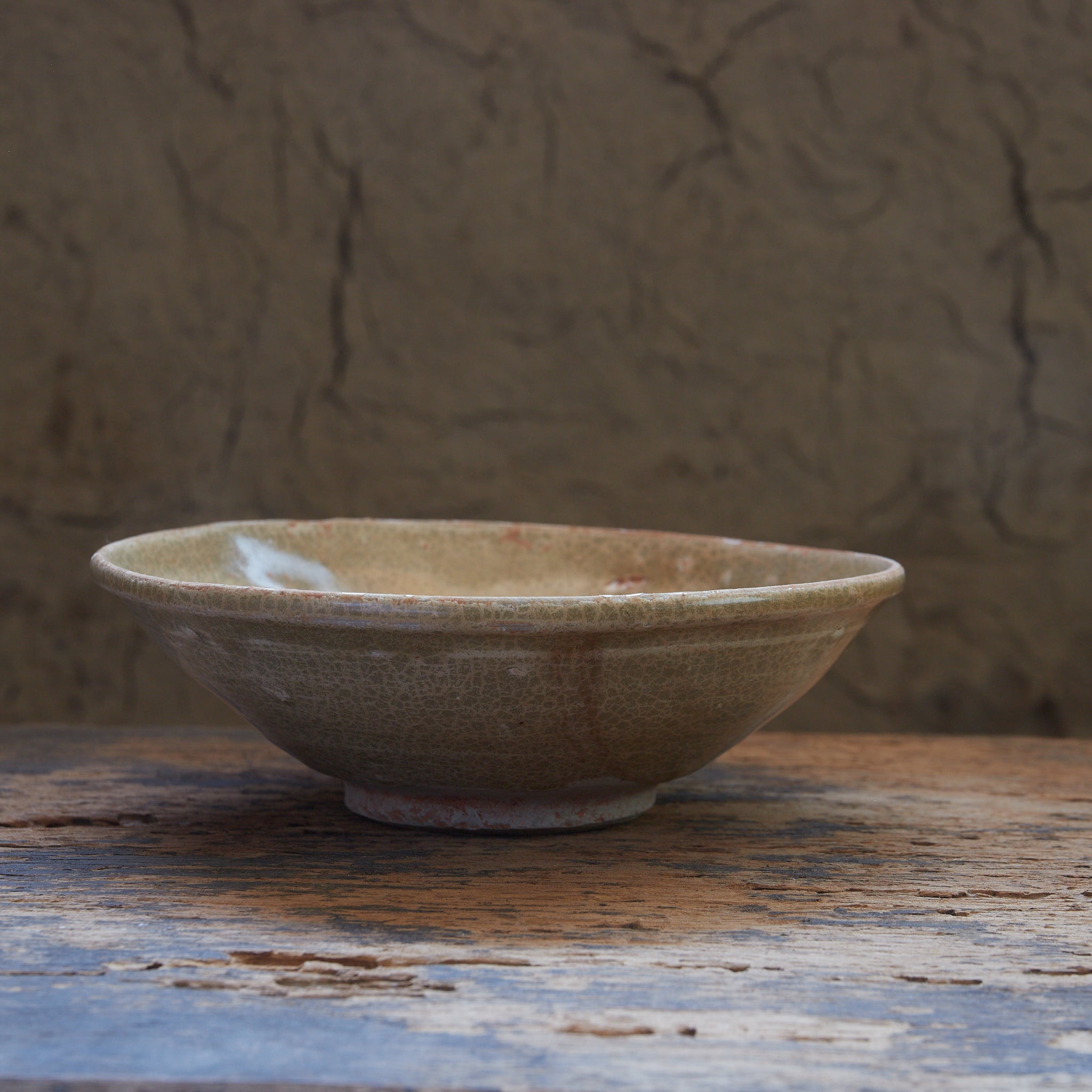
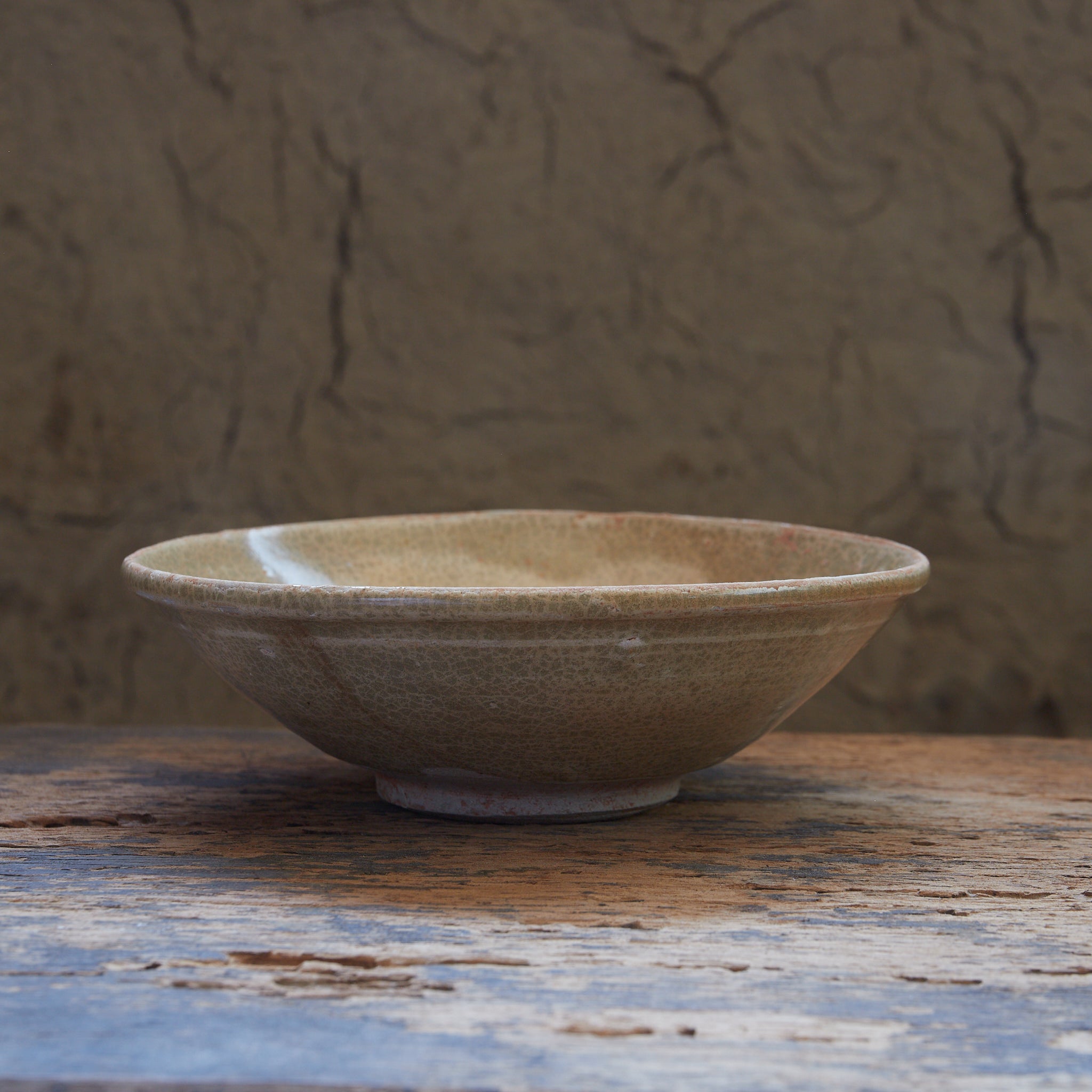
BOWL, Yuezhou kiln, celadon, Song Dynasty (960–1279 CE)
Tax excluded. Import duties may apply. Shipping costs are calculated at checkout.
However, we may respond individually to certain customers after reviewing the circumstances.
Please contact us for further details.
Shipping to the United Kingdom and Switzerland remains available.
Numerous product photos are available for you to examine the details and condition. Should you have any questions, please do not hesitate to contact us.
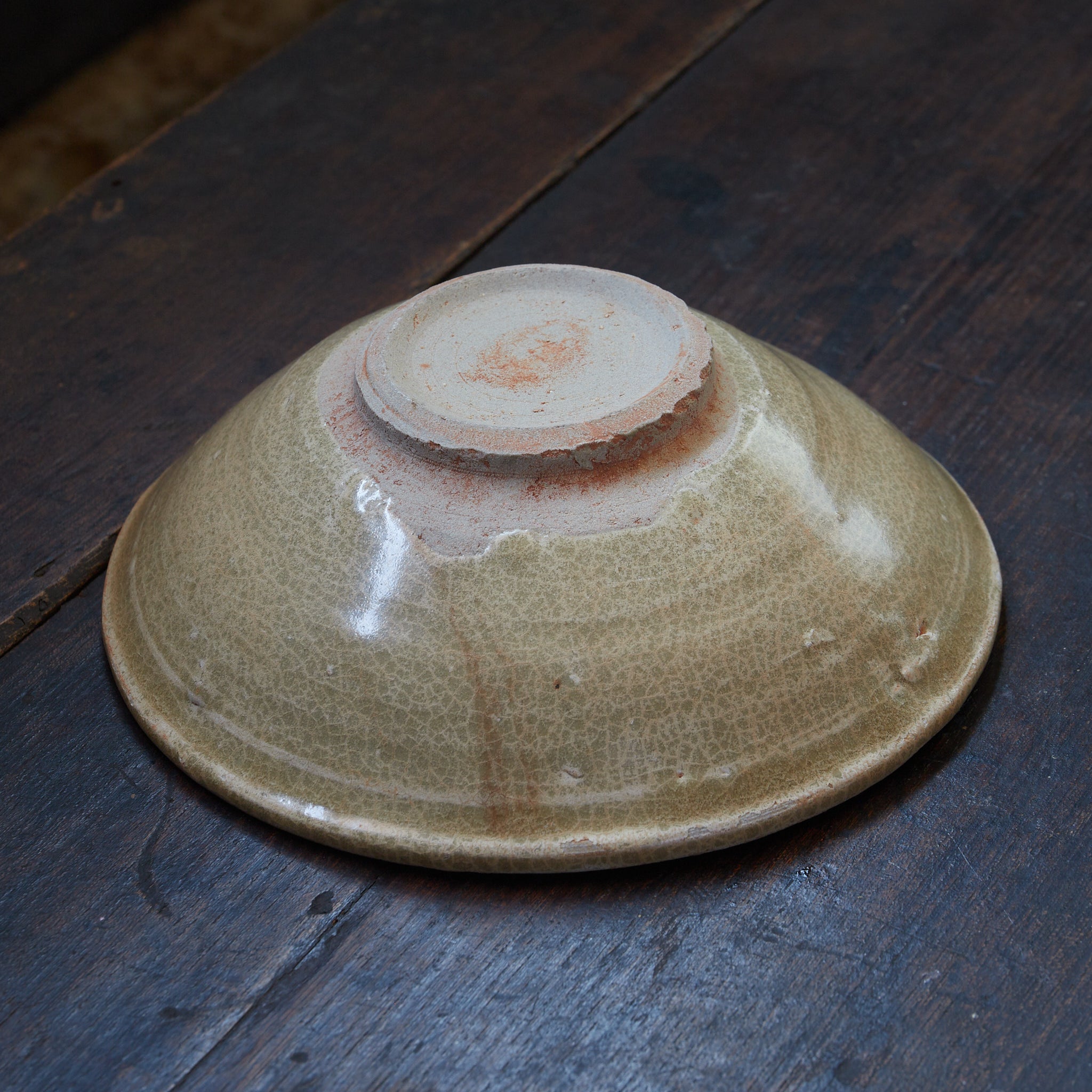
> Inquire about this productA celadon bowl from the Yuezhou kiln of the Song Dynasty.
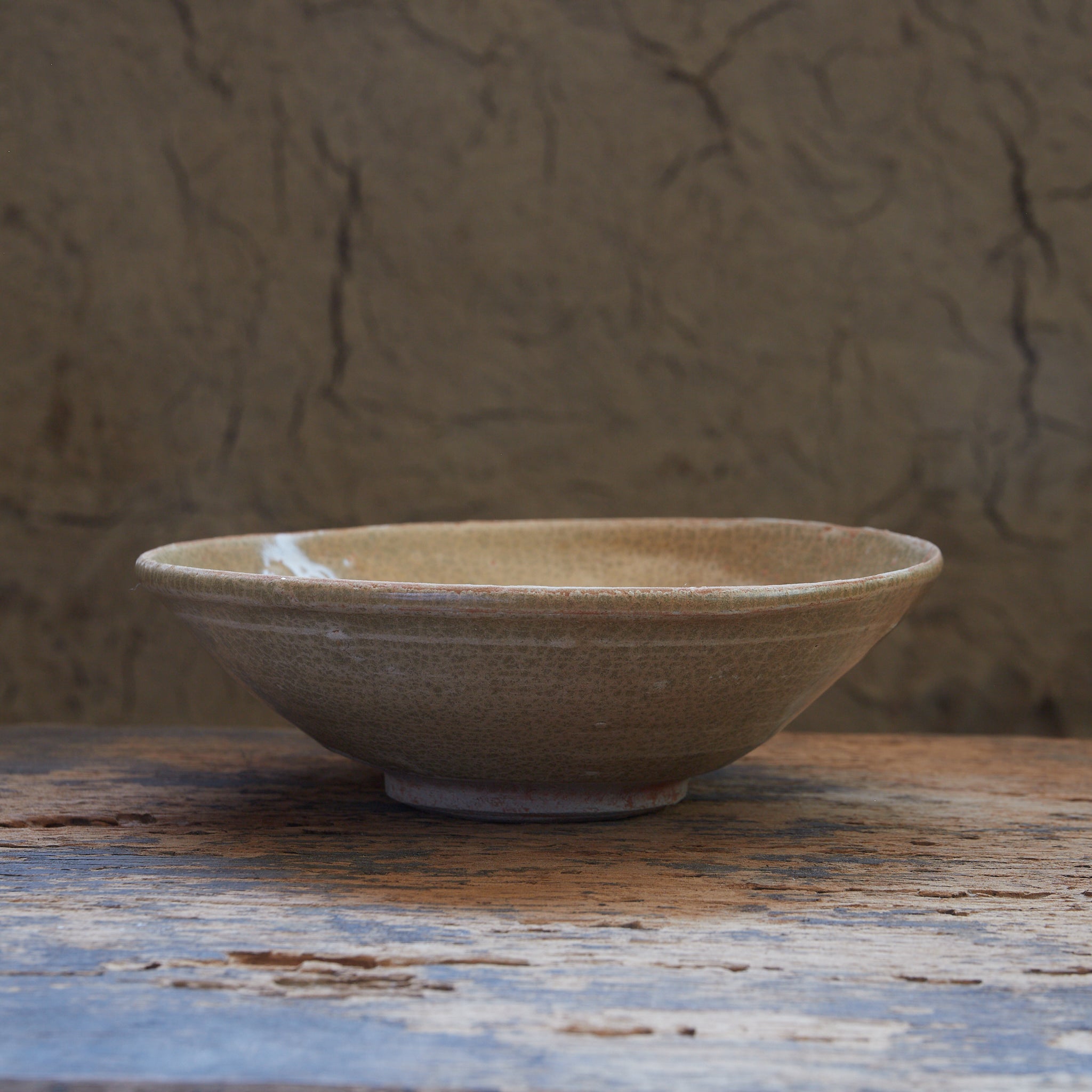
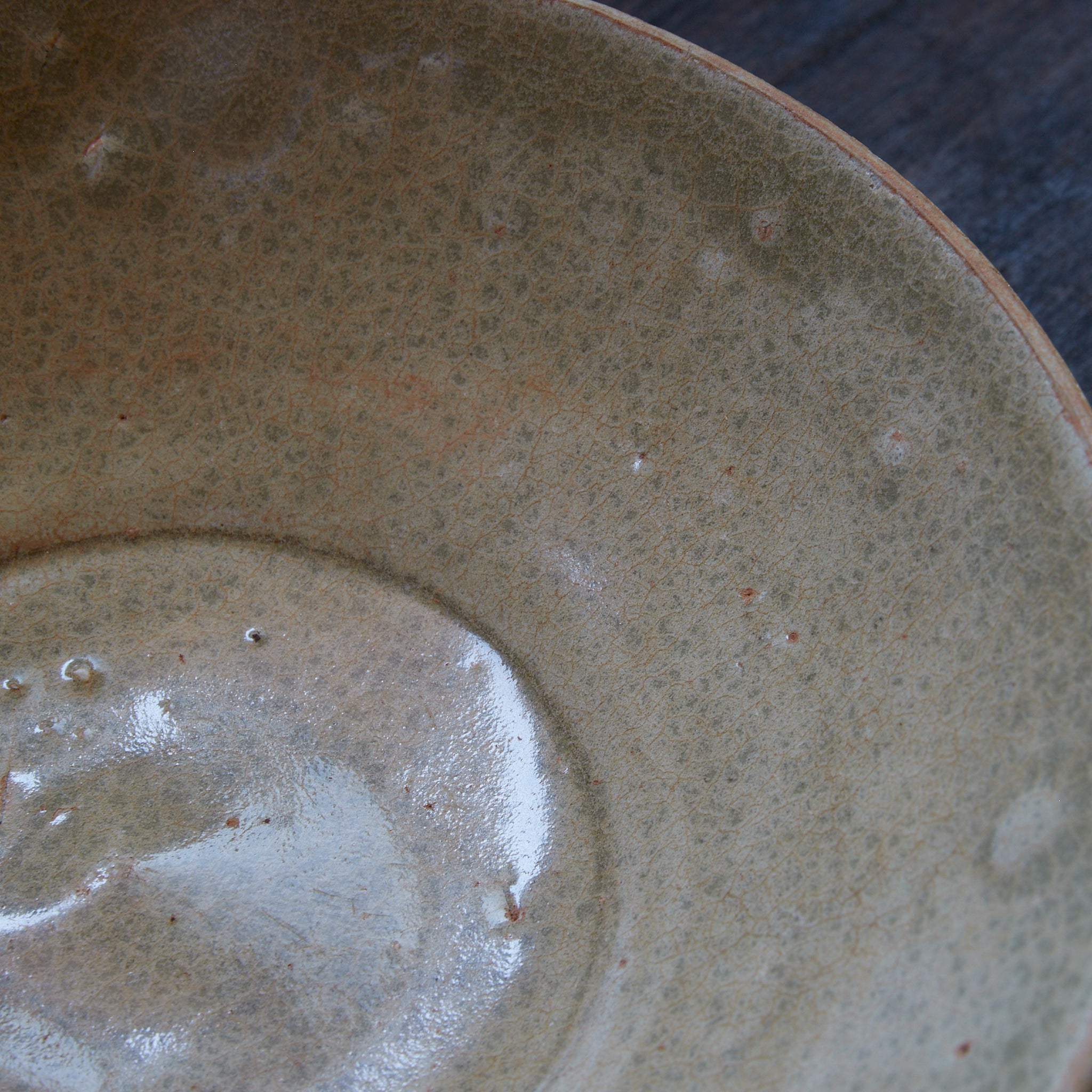
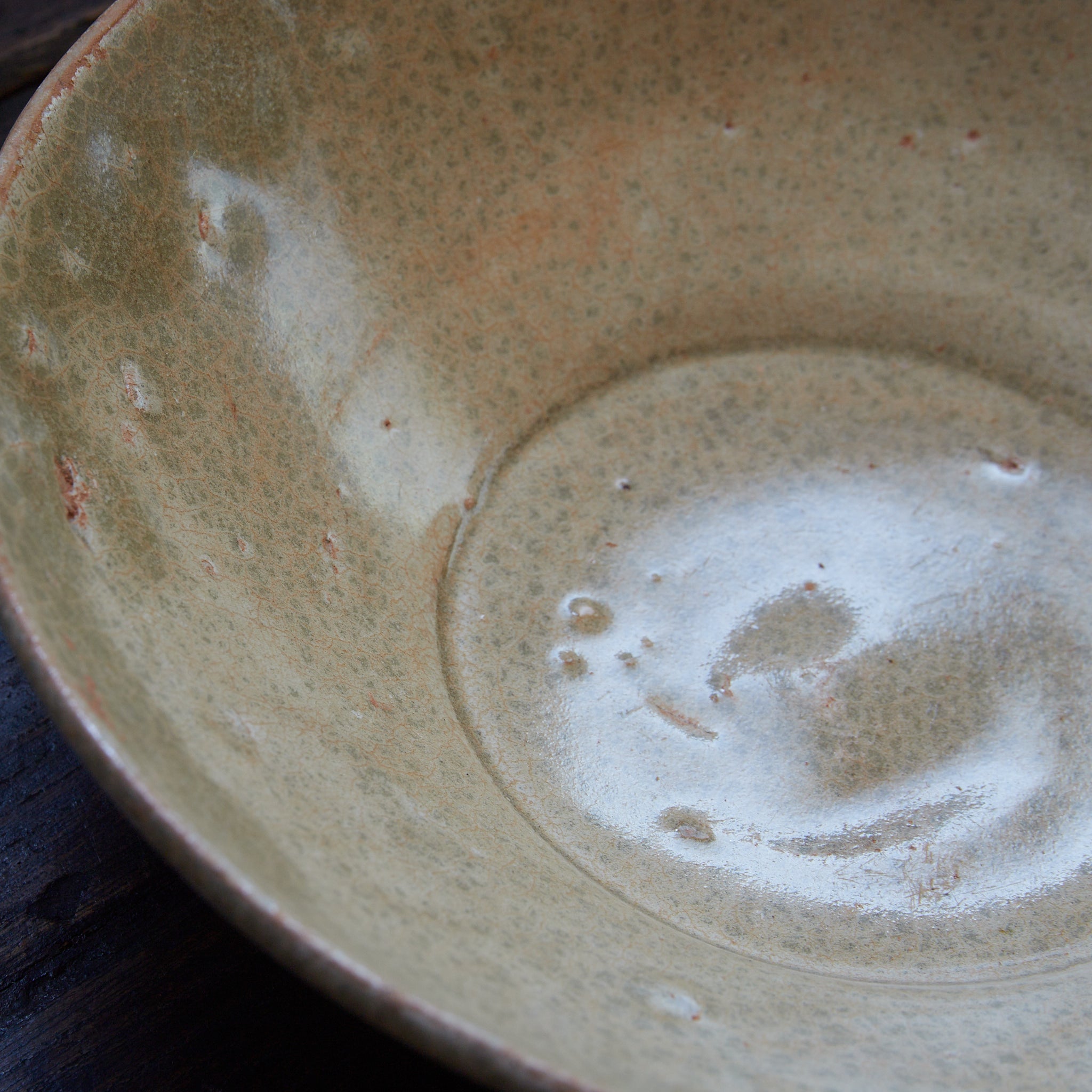
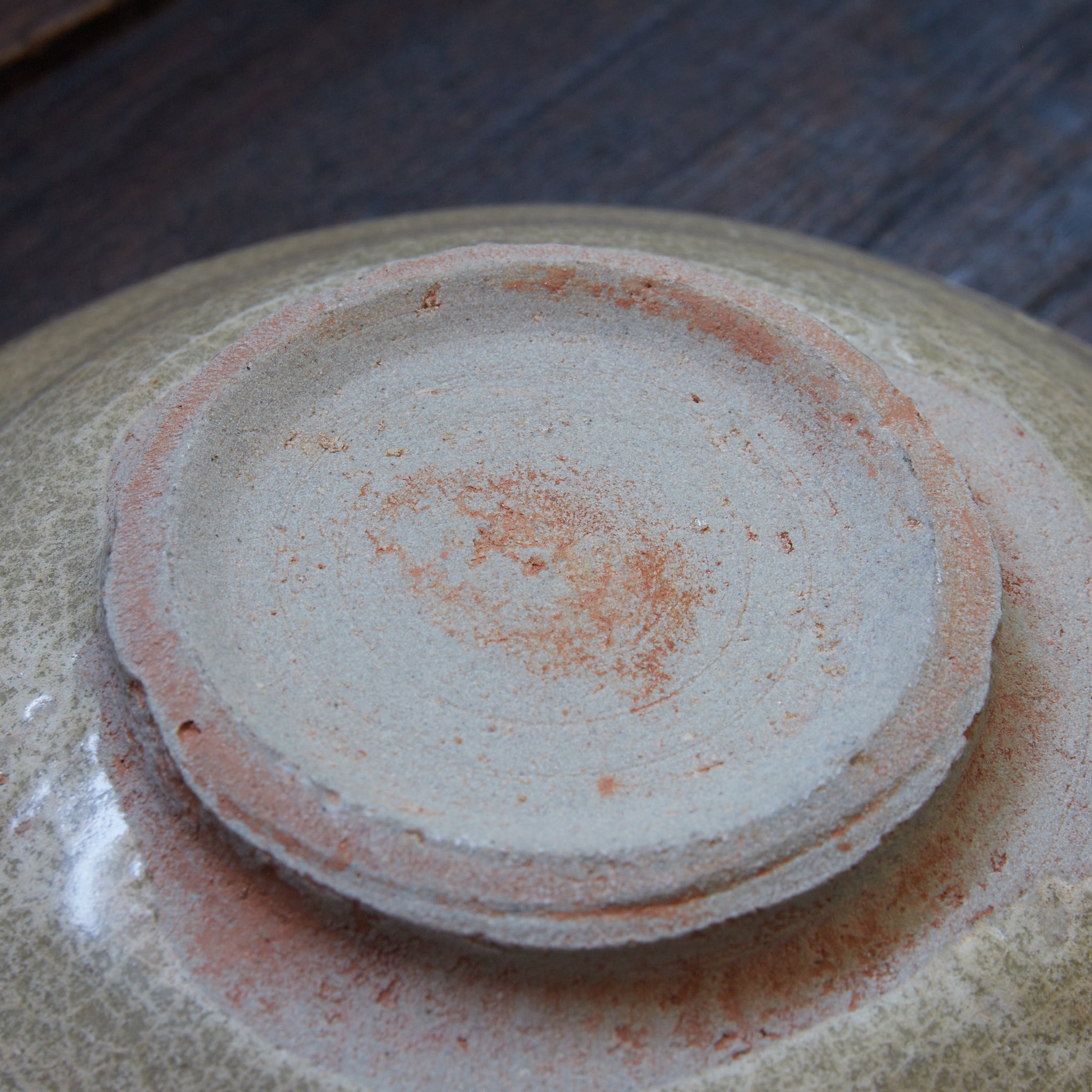
A broadly opening bowl form with the rim slightly everted and a low footring.
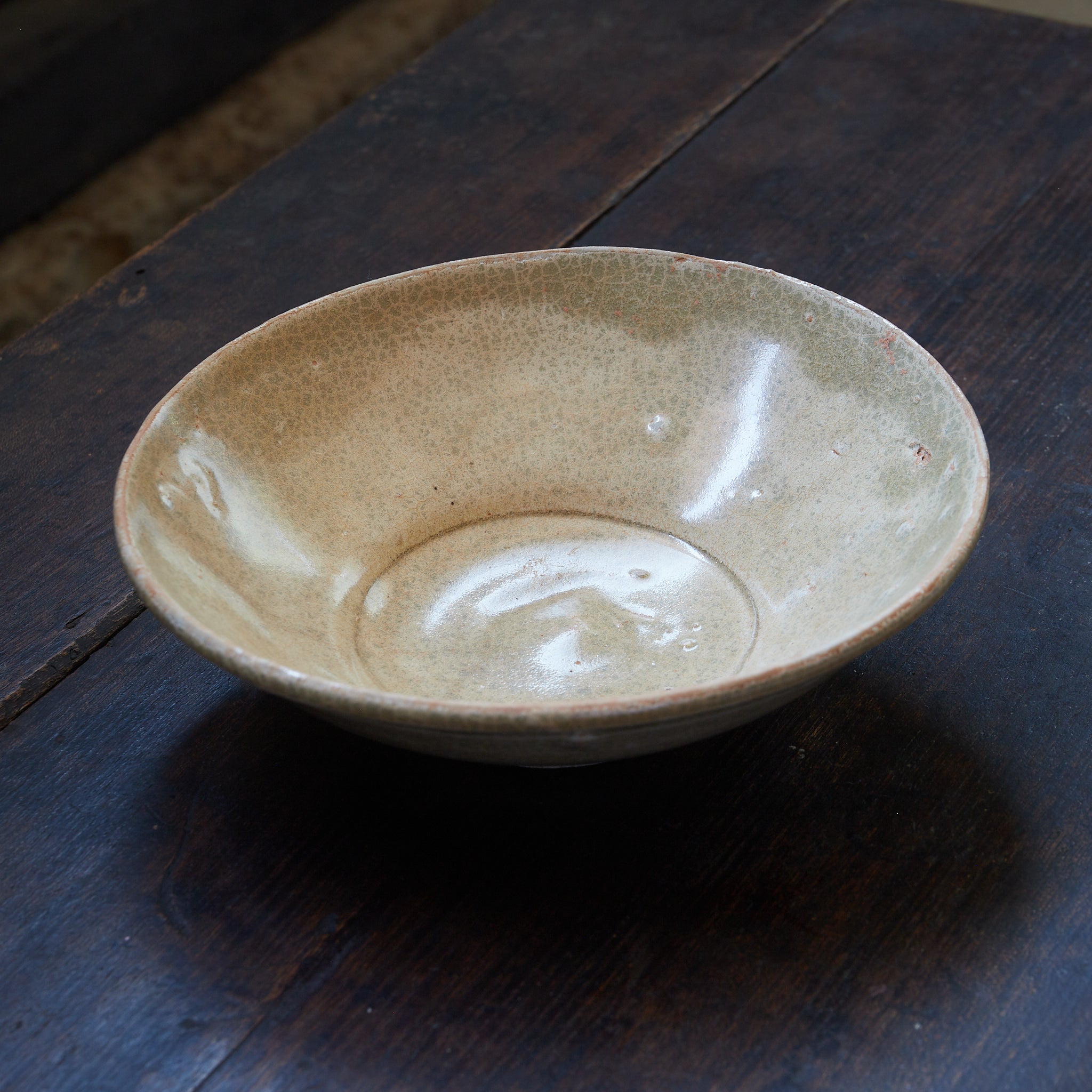
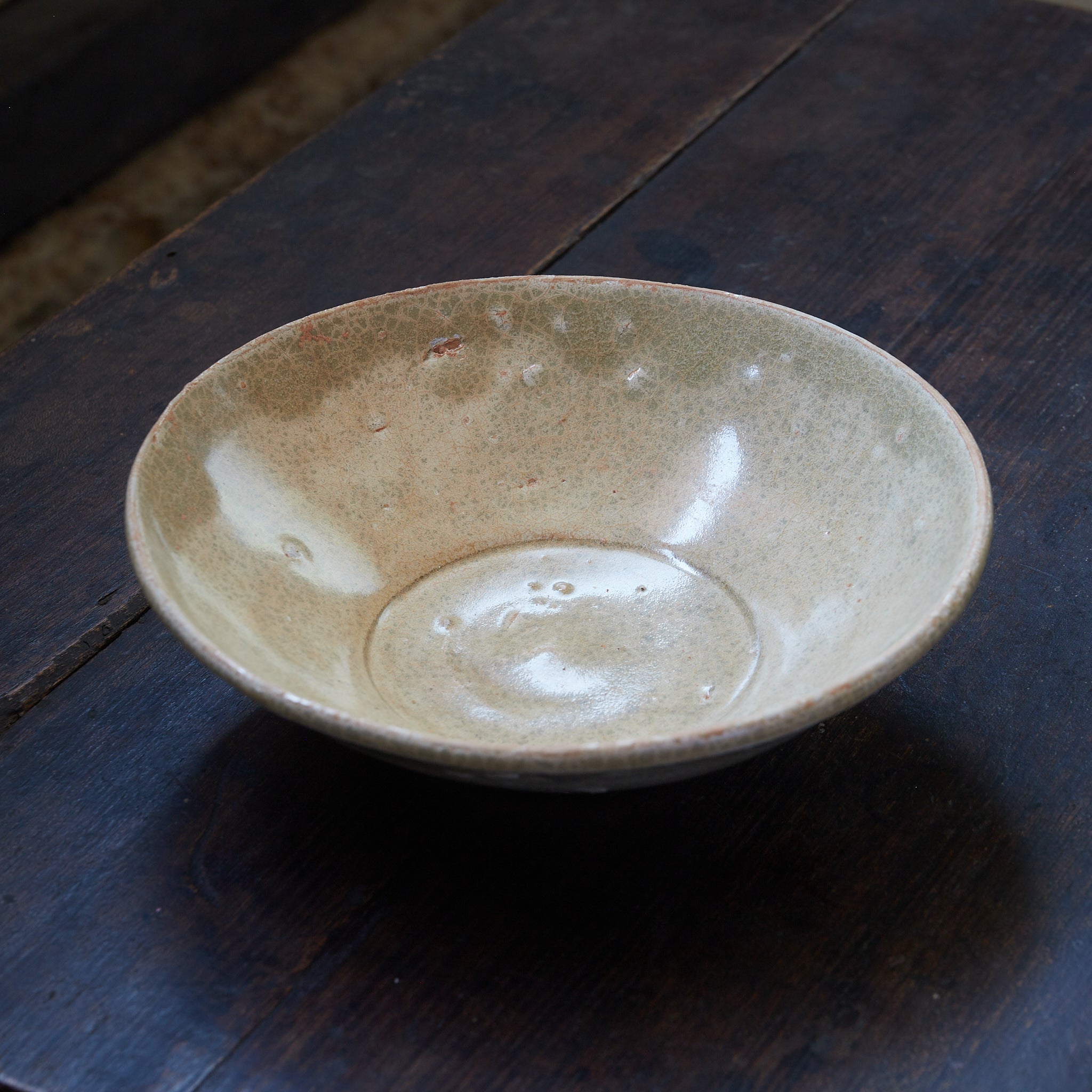
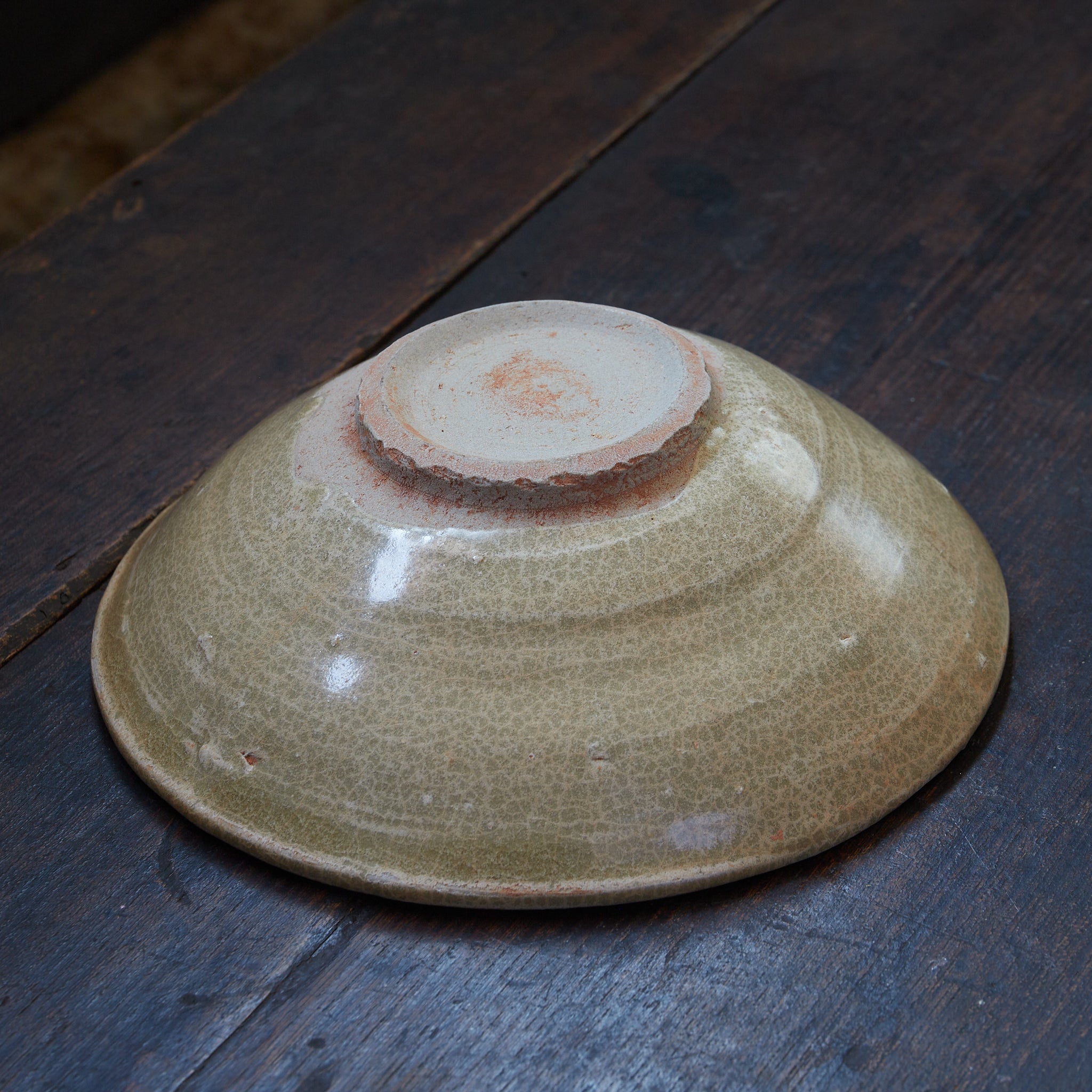
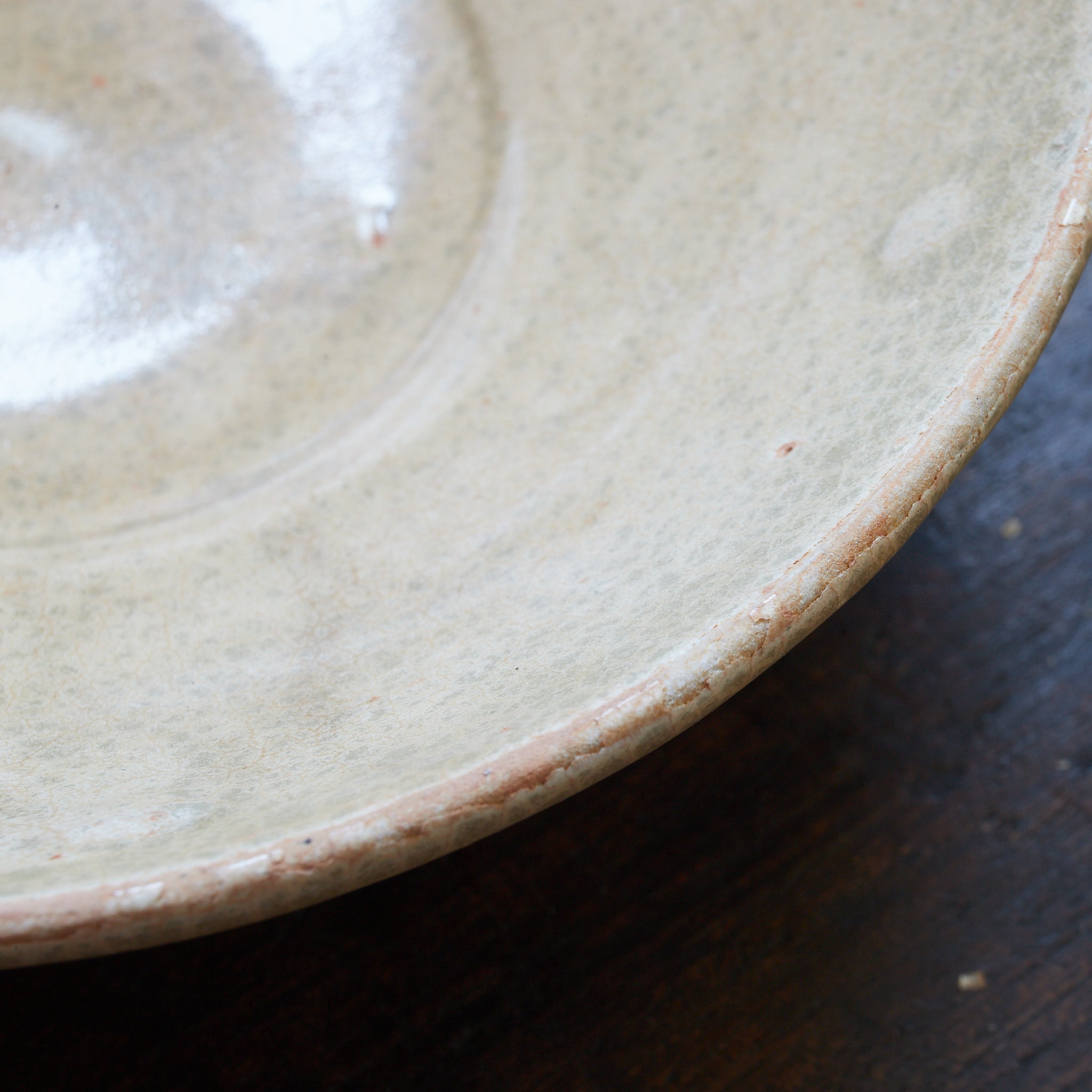
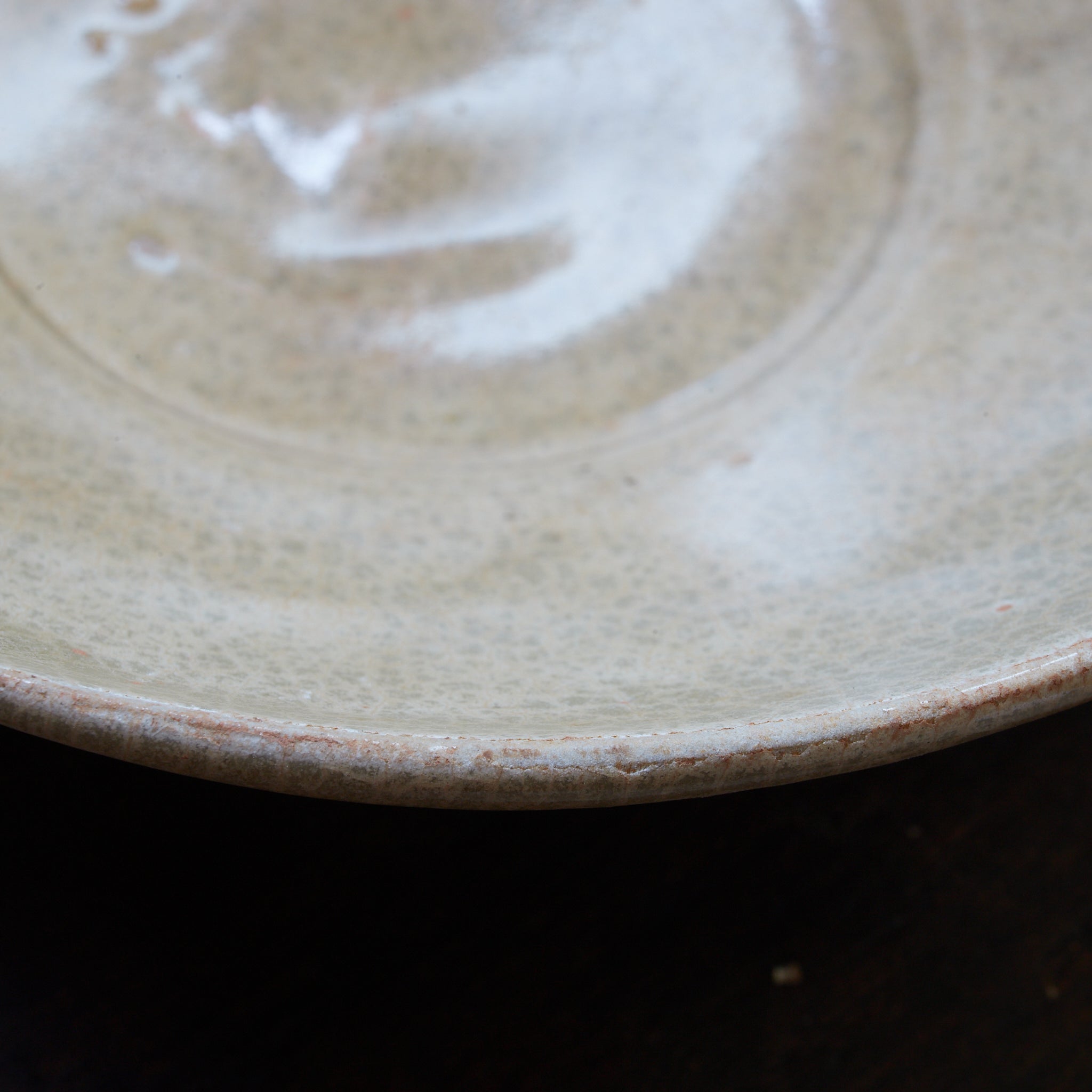
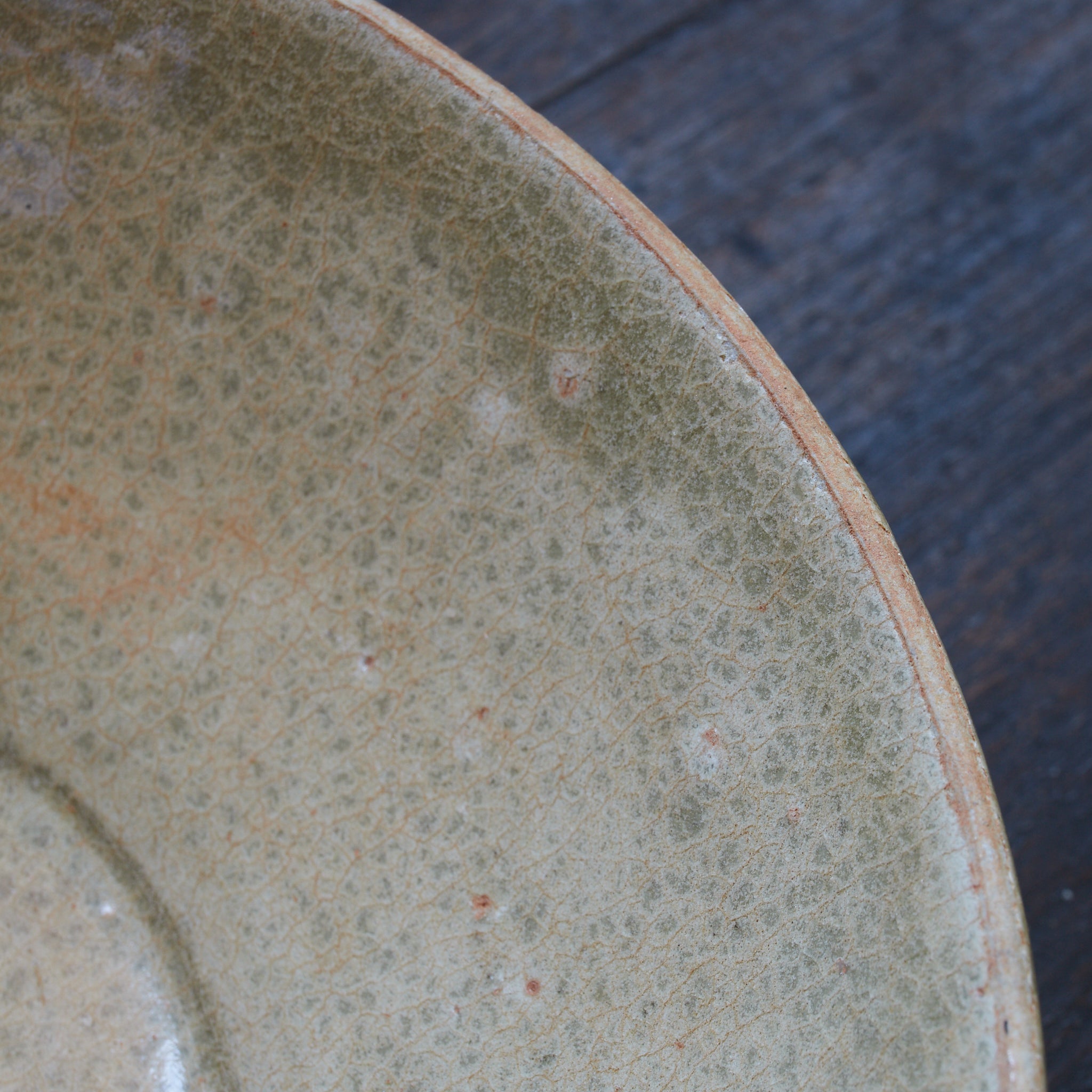
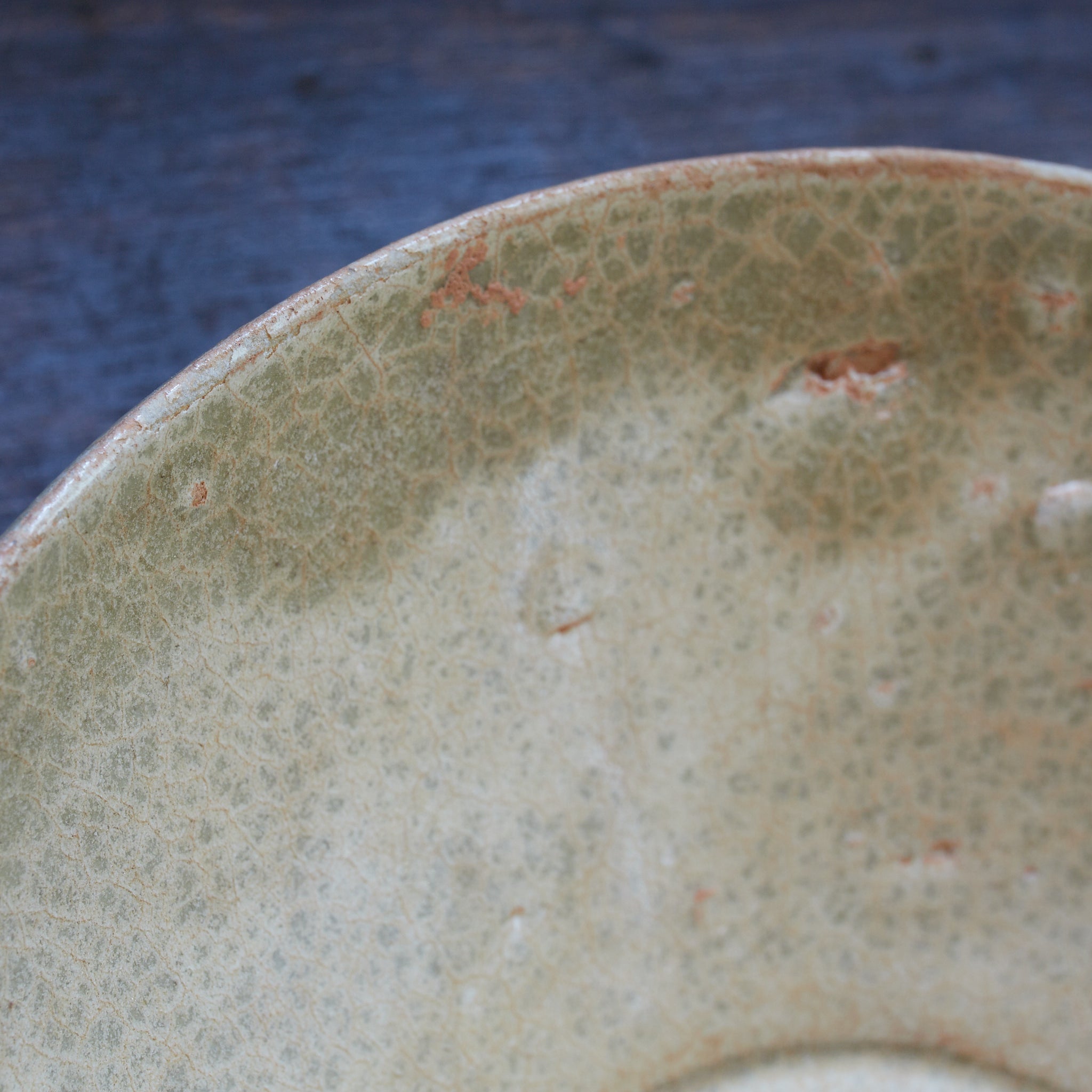
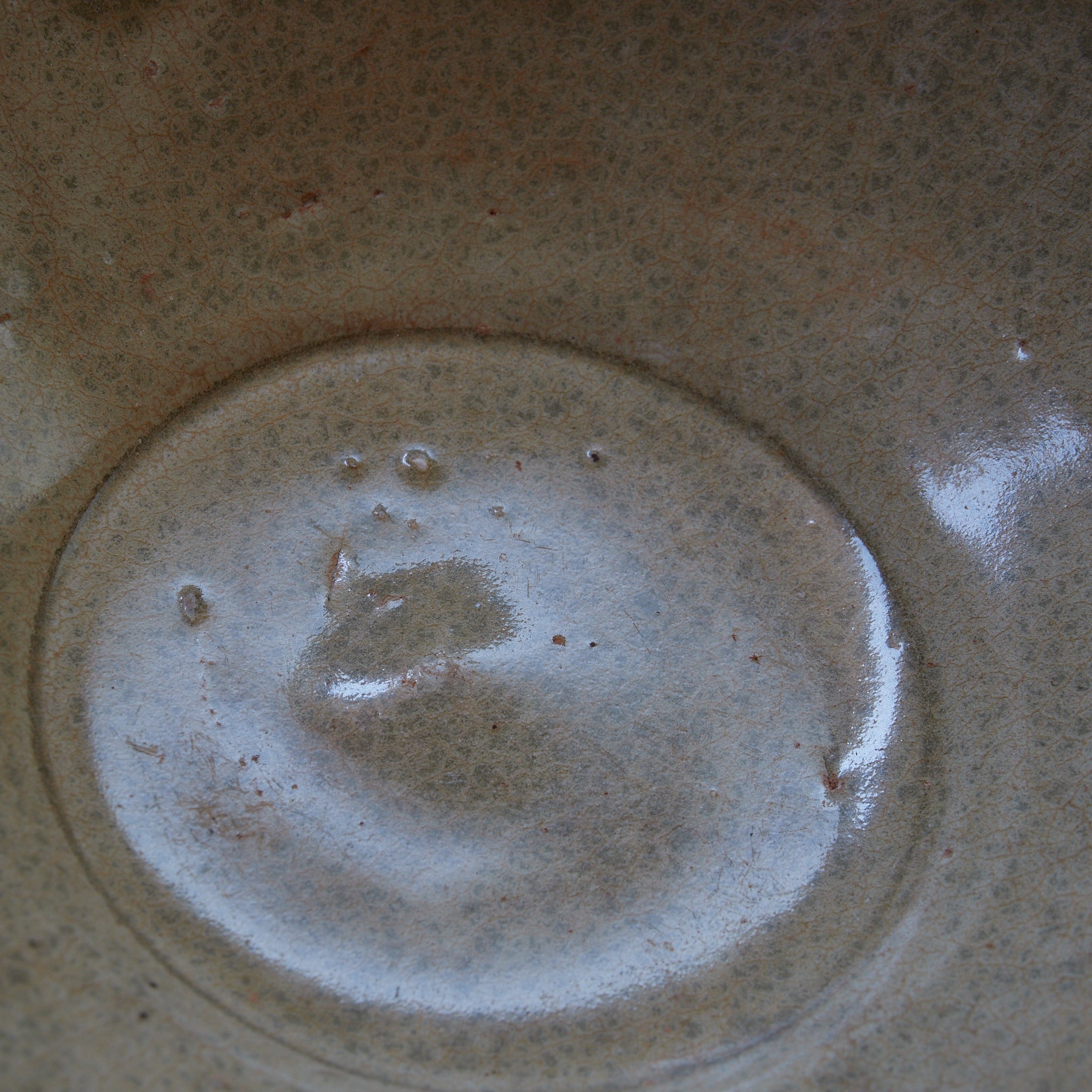
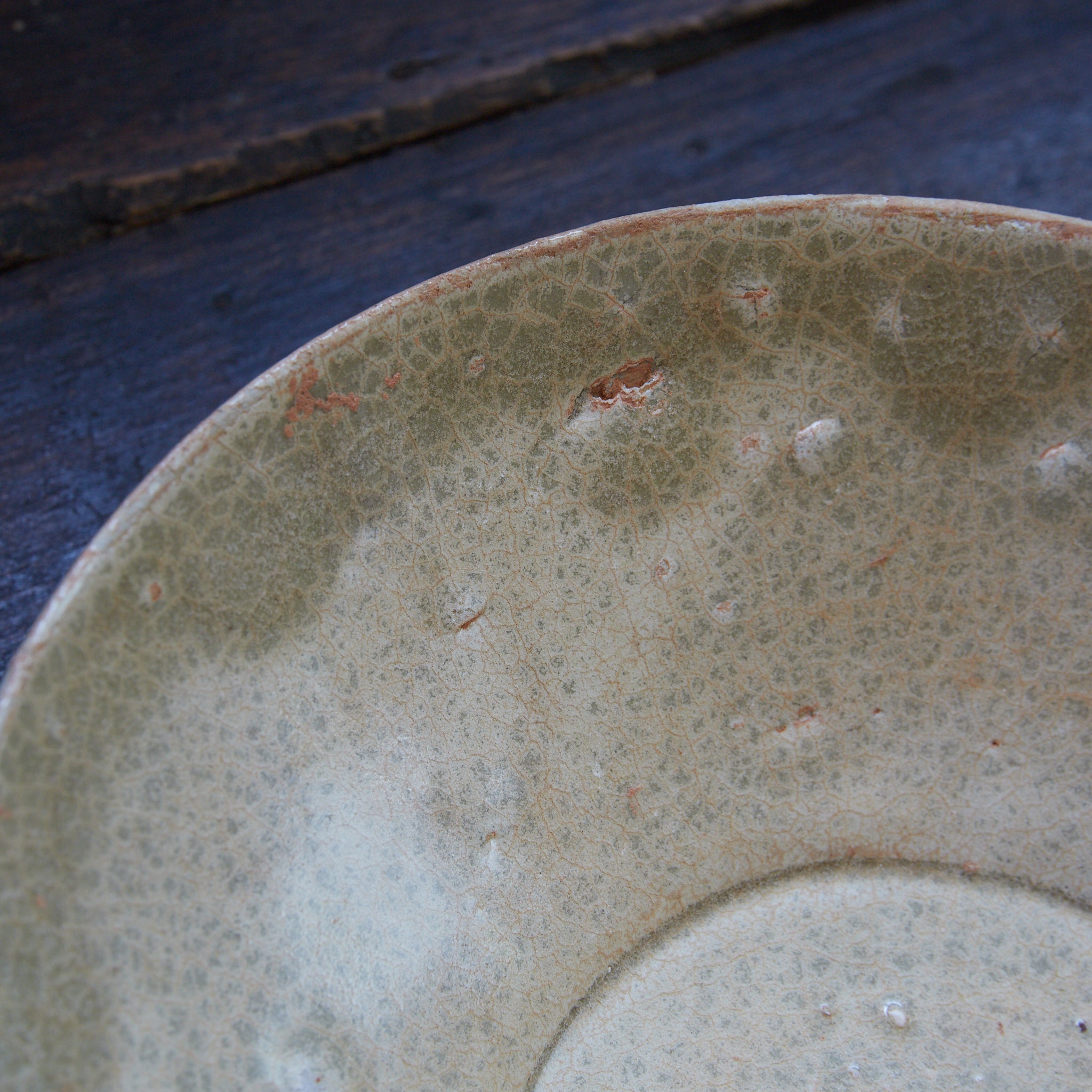
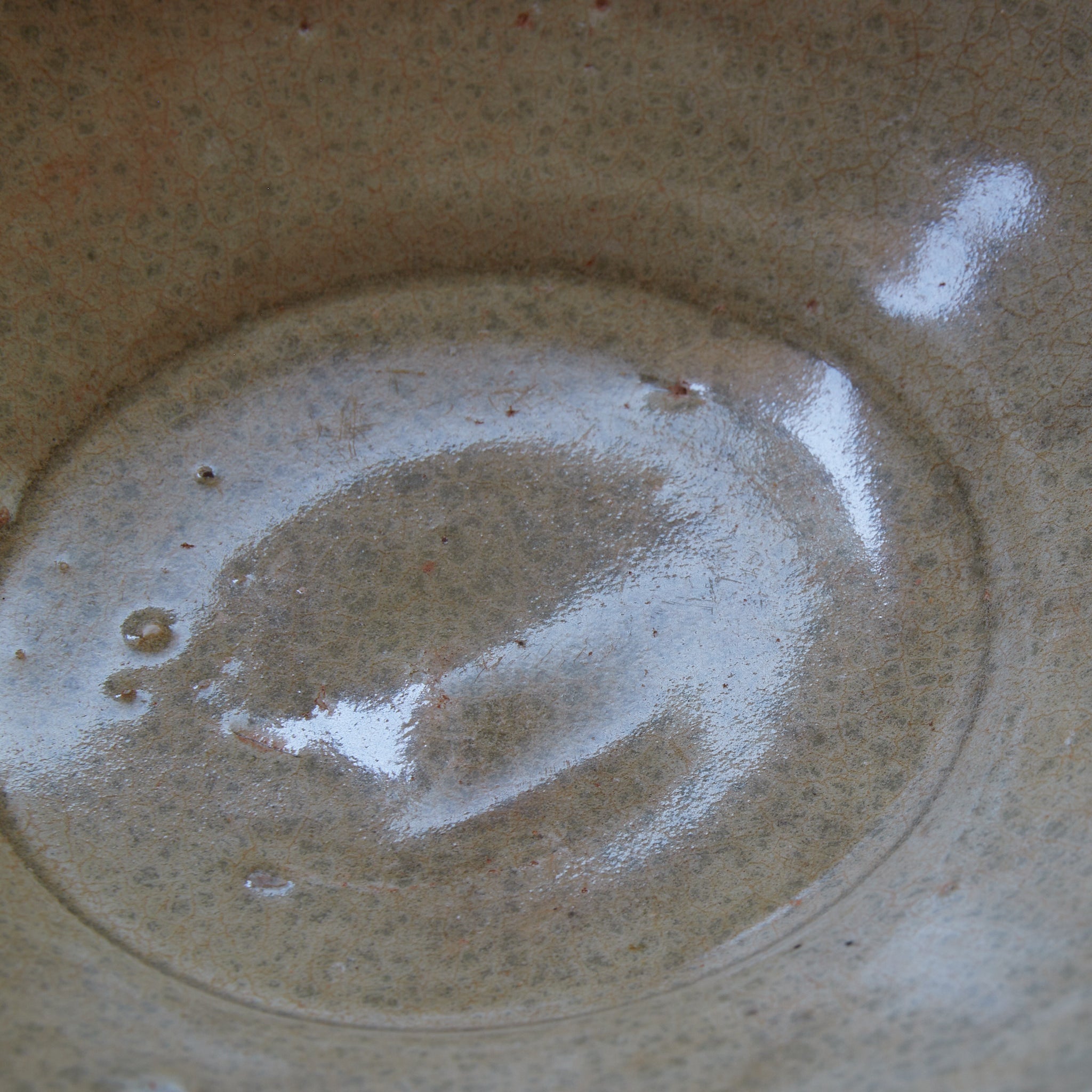
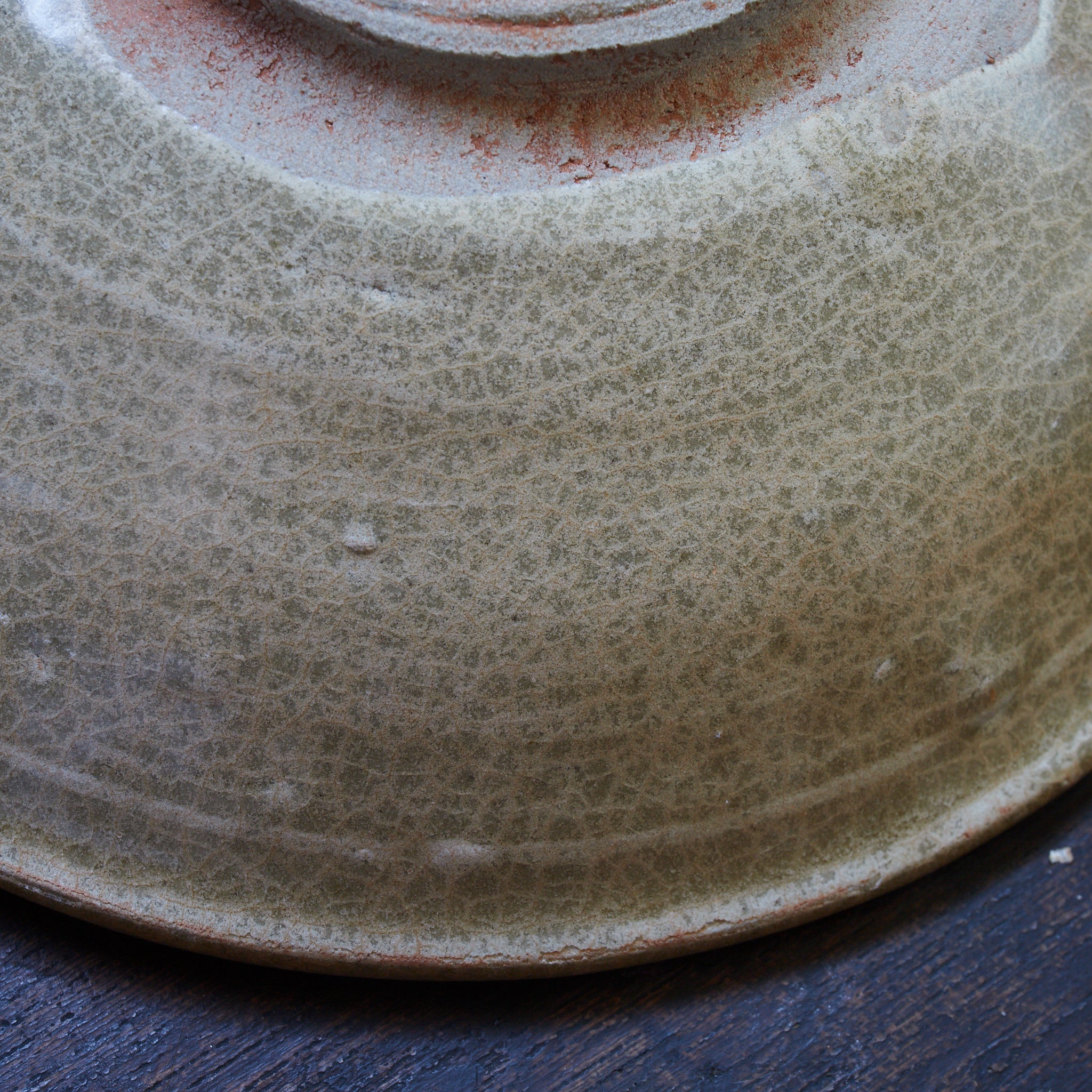
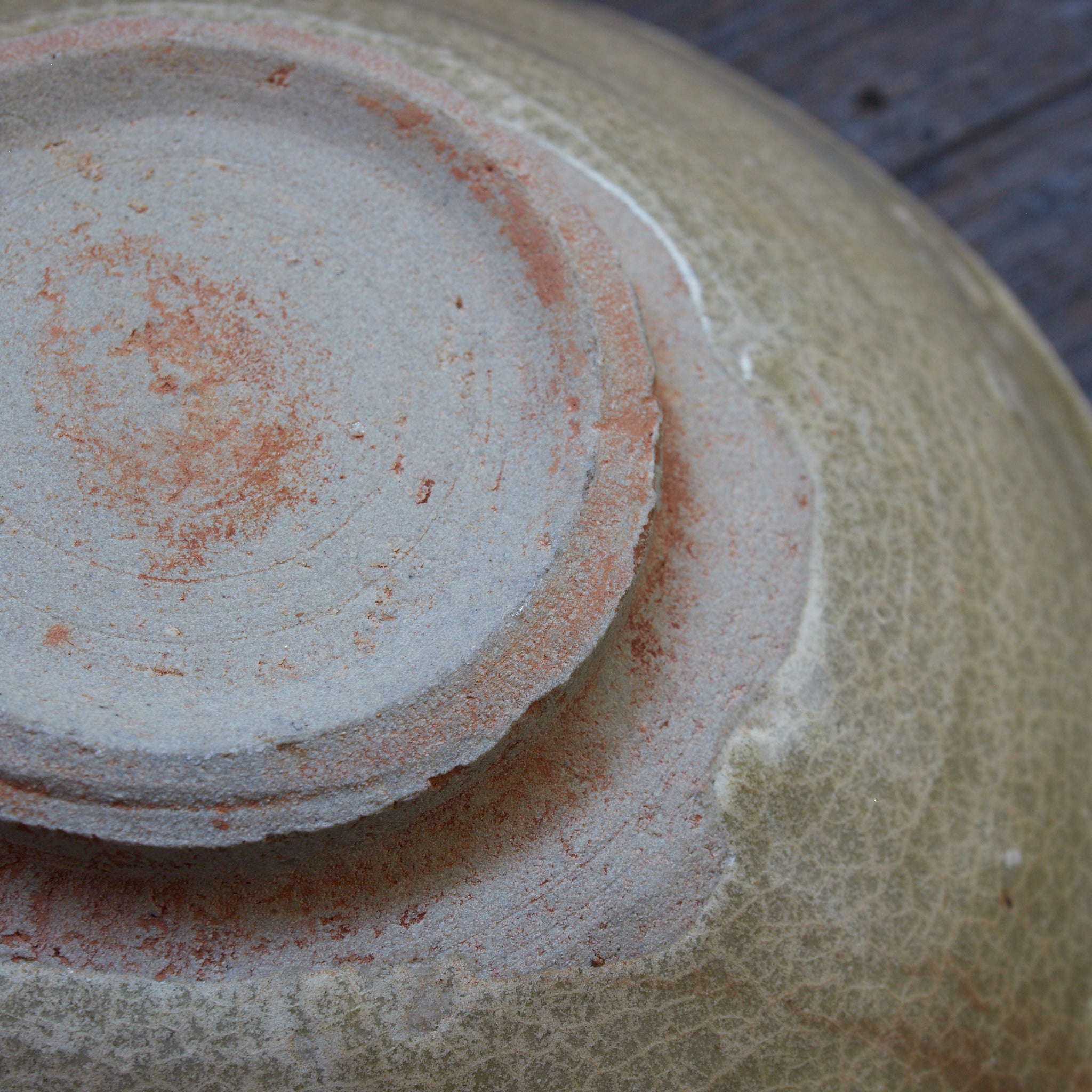
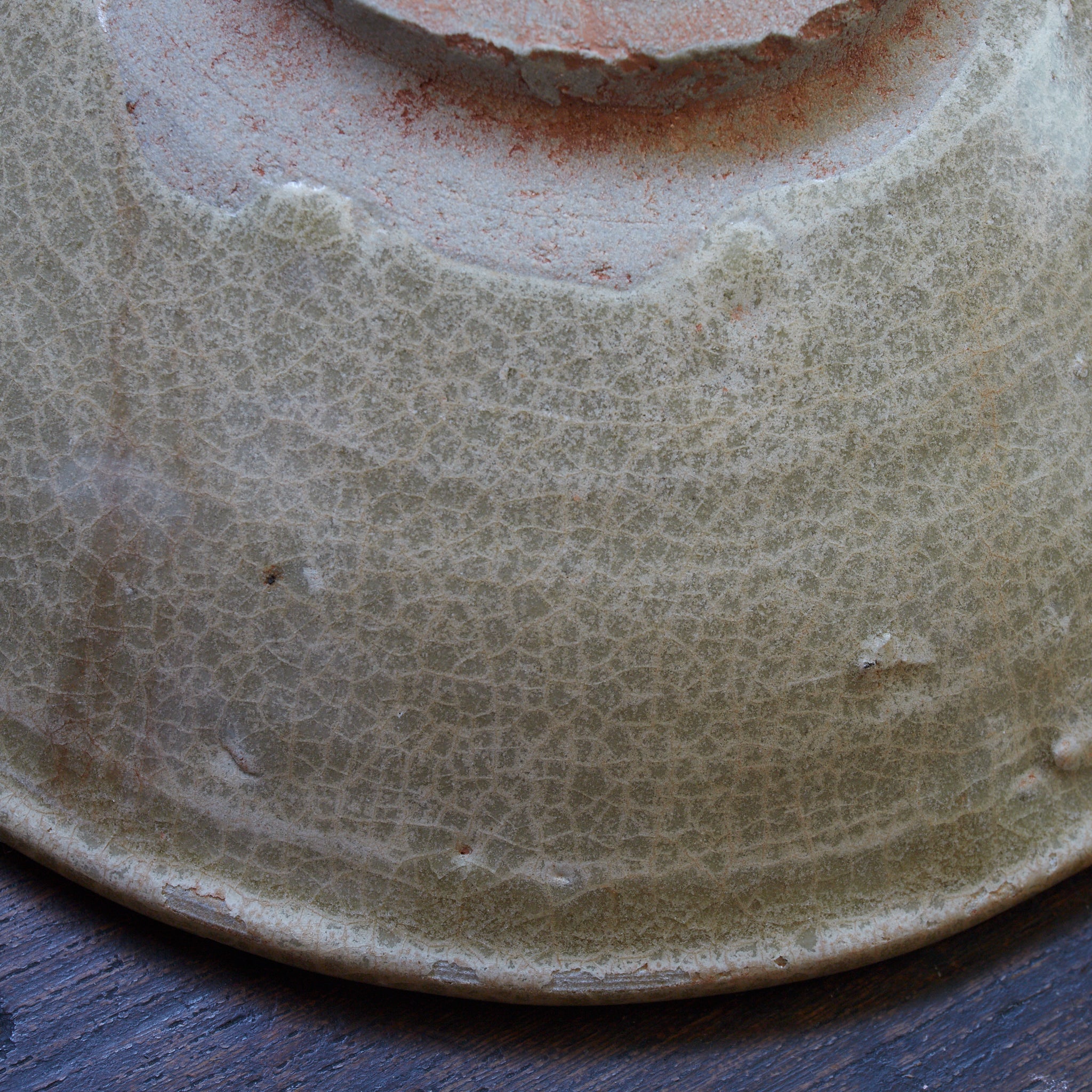
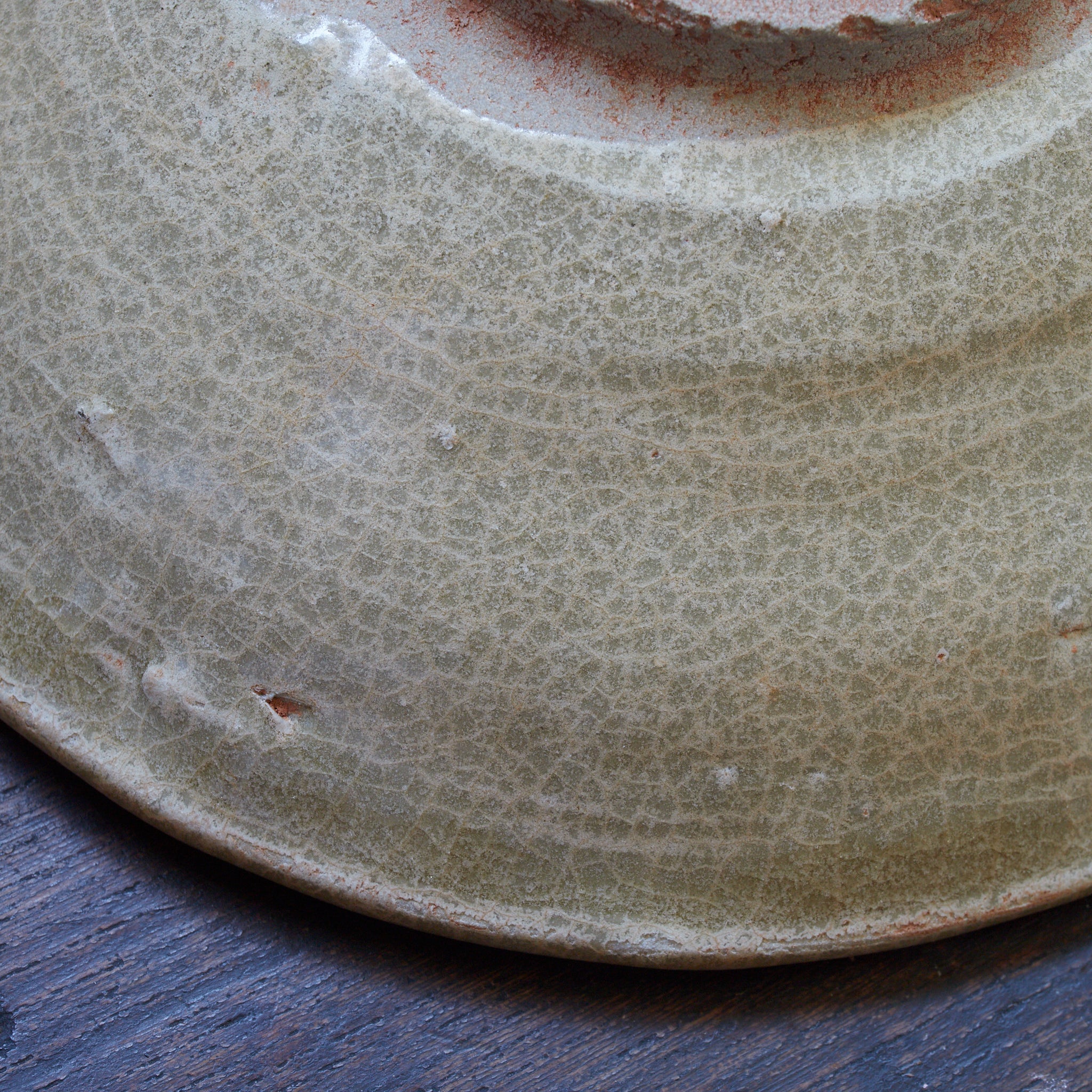
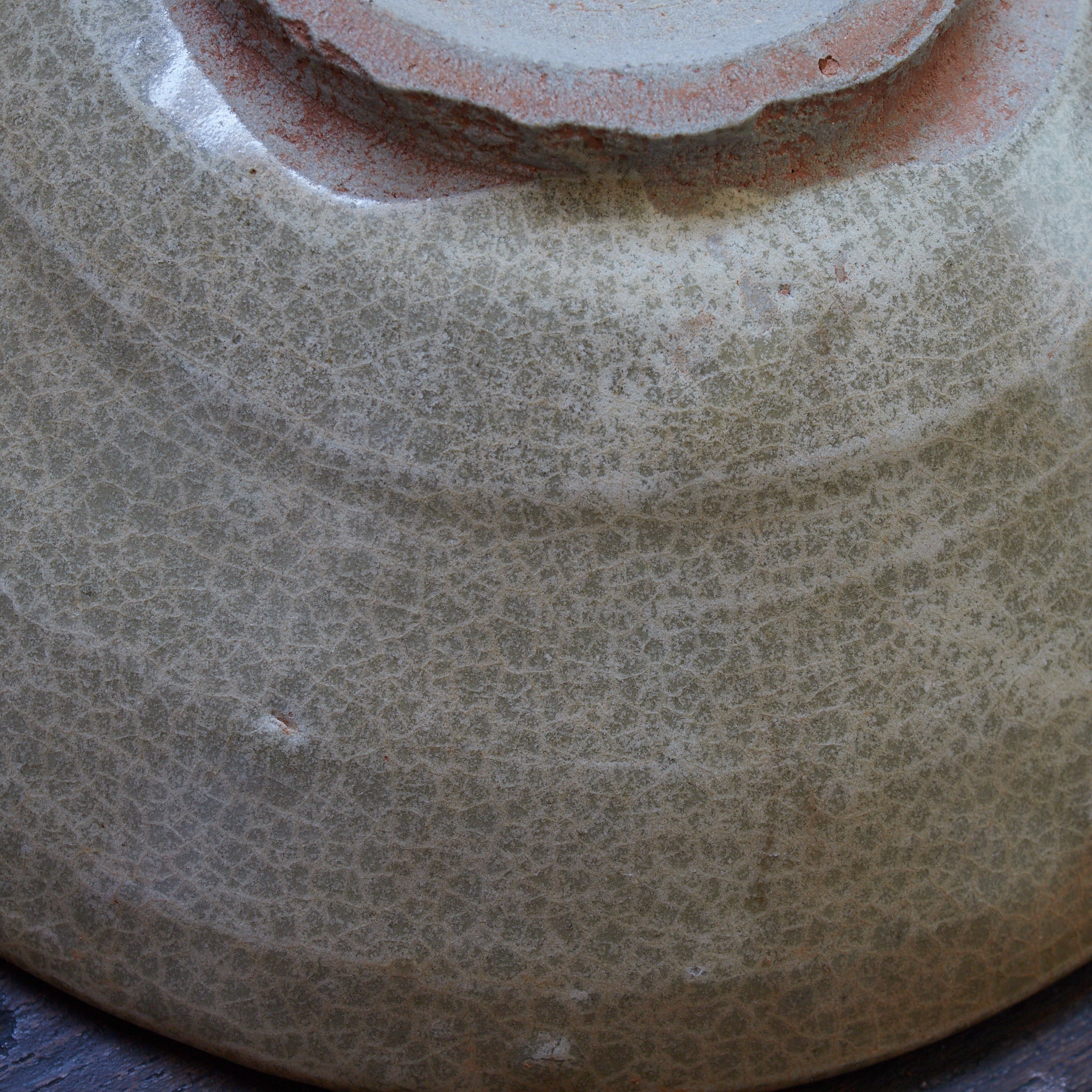
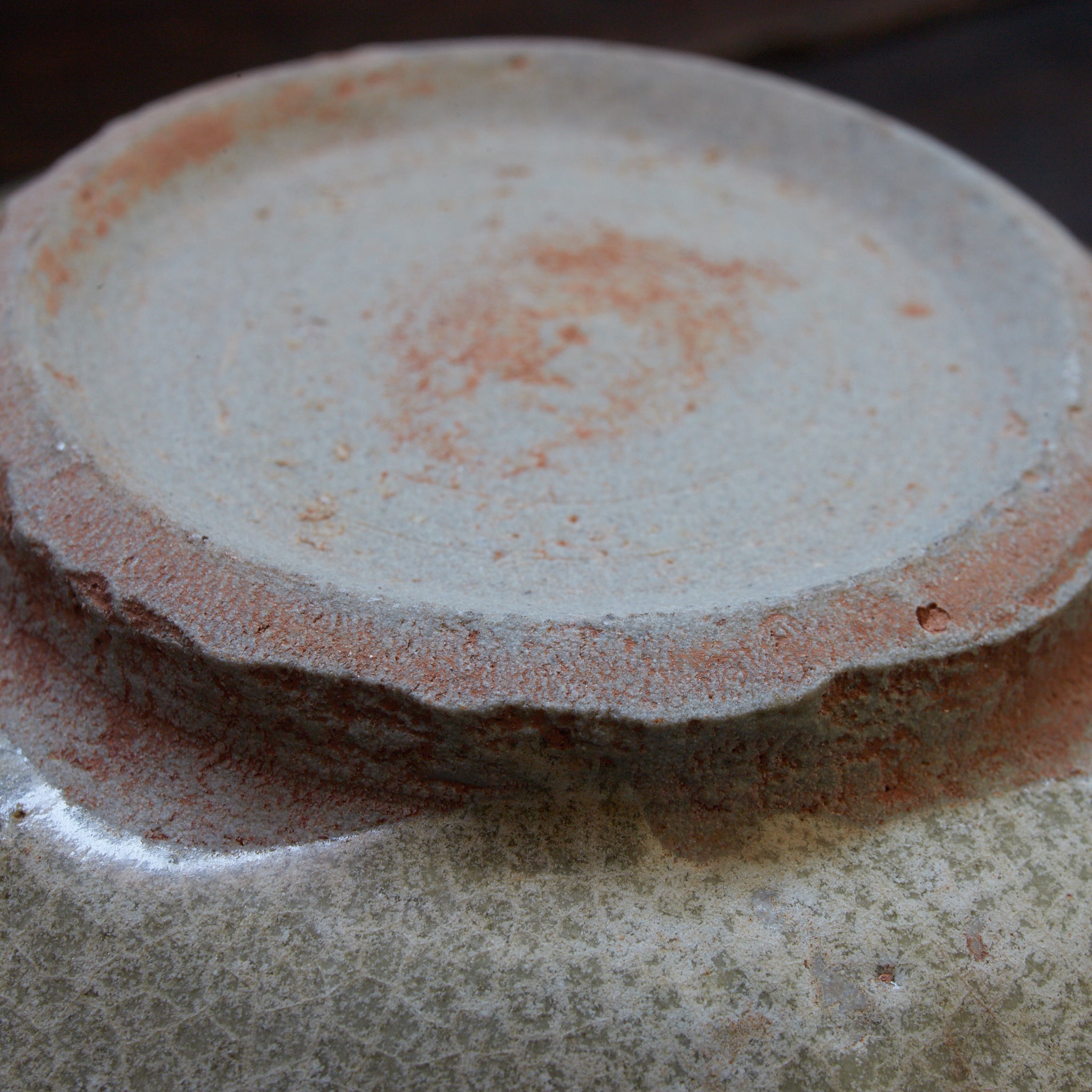
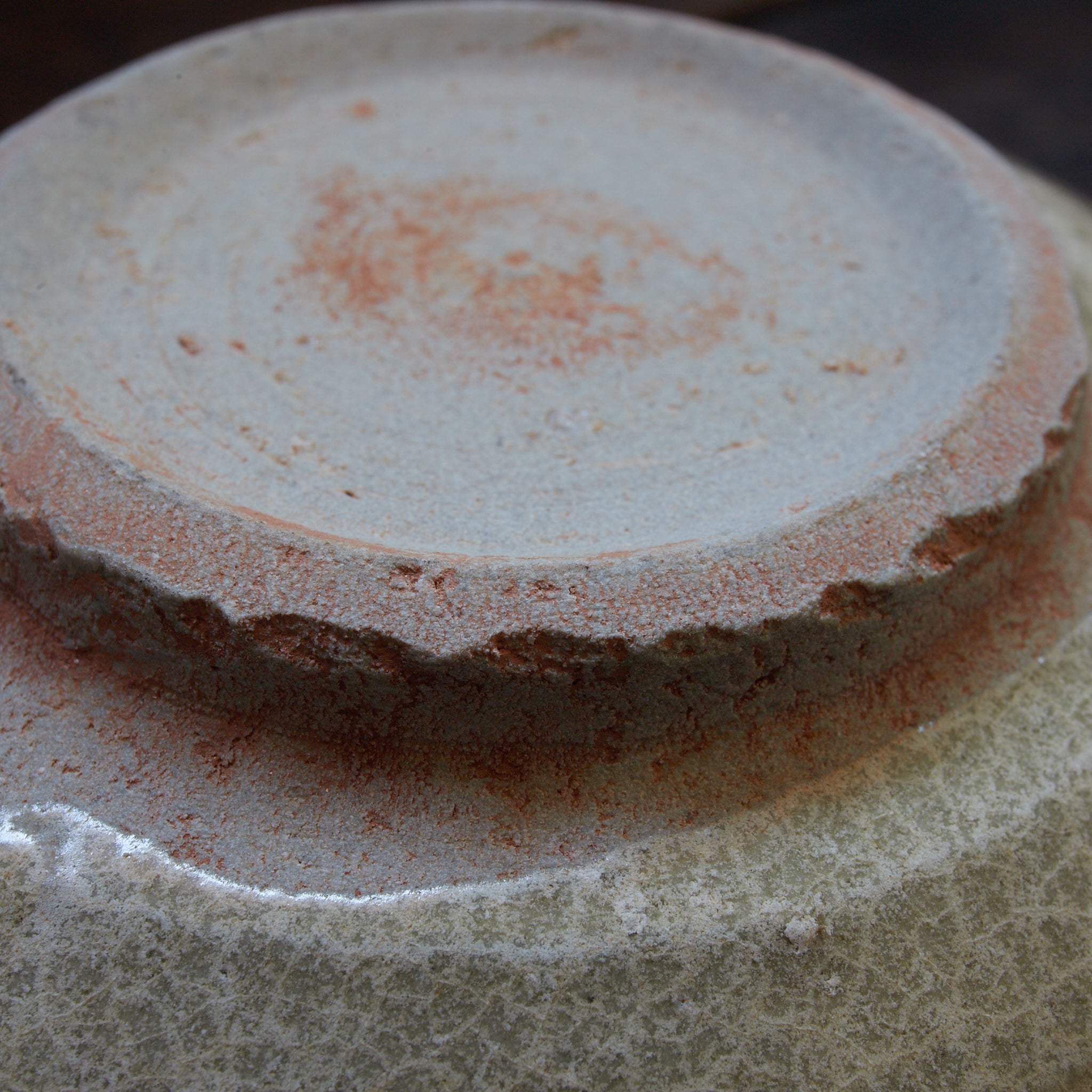
The glaze ranges from gray-green to a yellow-tinged celadon, with fine crackle spreading across both interior and exterior. A reddish soil stain, likely from burial, remains around the rim and footring, and the interplay of blue-green glaze and earth tones gives the surface the characteristic appearance of early Yuezhou kiln wares.
The Yuezhou kiln, in the Zhejiang region, was a center for celadon production that developed from the Tang through the Five Dynasties into the Song dynasty.
Unlike later celadons that sought a clear blue, its appeal lies in the thickness of its ash-rich glazes, the iron-bearing clay, and the ash-green variations produced during firing. This bowl, too, is not of uniform beauty but remains with crazing, earth staining, and glaze irregularities.
The interior bears a concentric stepped ring; the glaze surface shows fine crazing, iron spots, and soil staining.
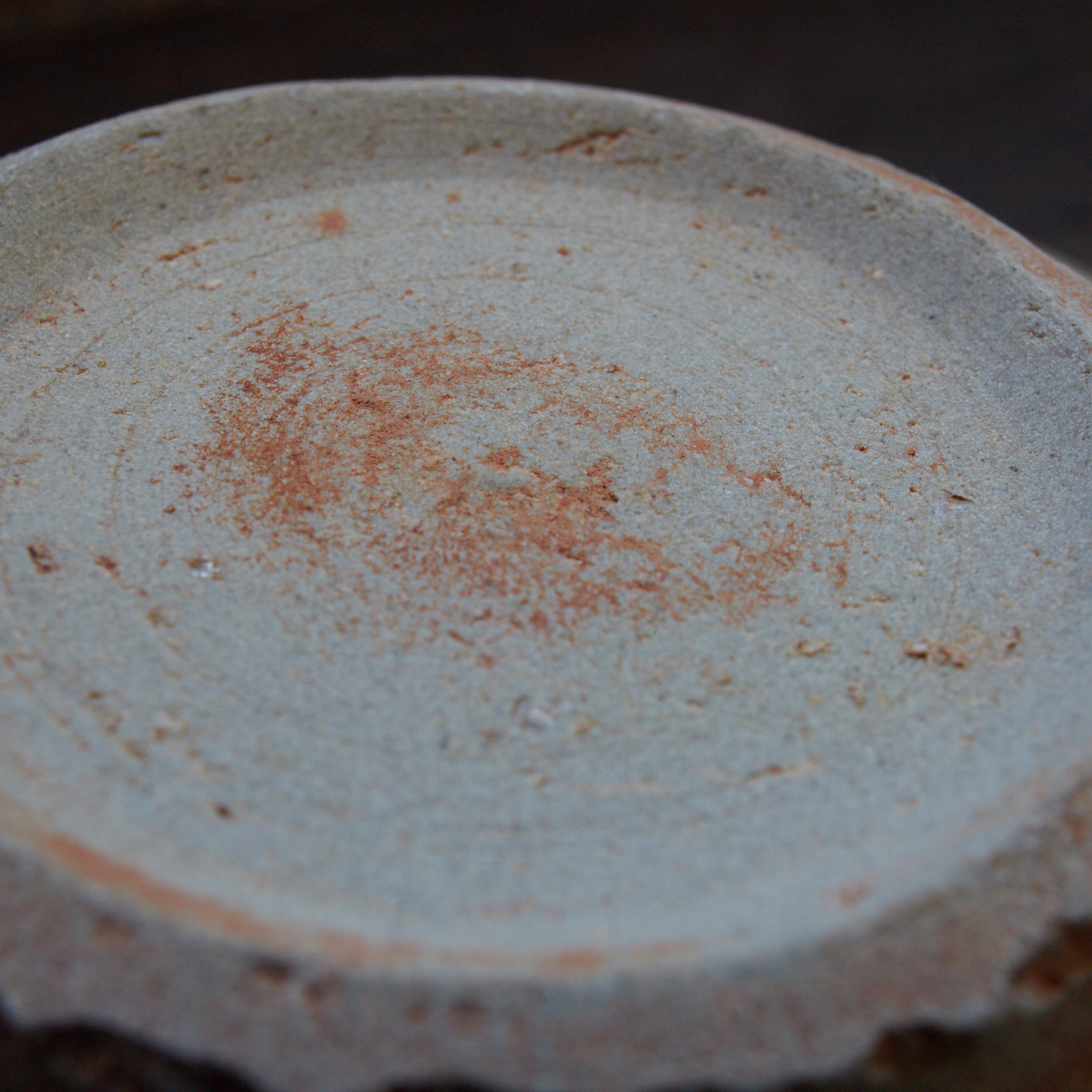
The exterior retains much of its gray-green glaze, while the area around the foot is unglazed, exposing the clay body. The rim shows abrasion, and overall, typical of excavated ceramics, it presents a mellow, soil-streaked appearance.
It could also be regarded as a stand for Chinese tea or sencha vessels.
Choose options
Tax excluded. Import duties may apply. Shipping costs are calculated at checkout.
Change language
