

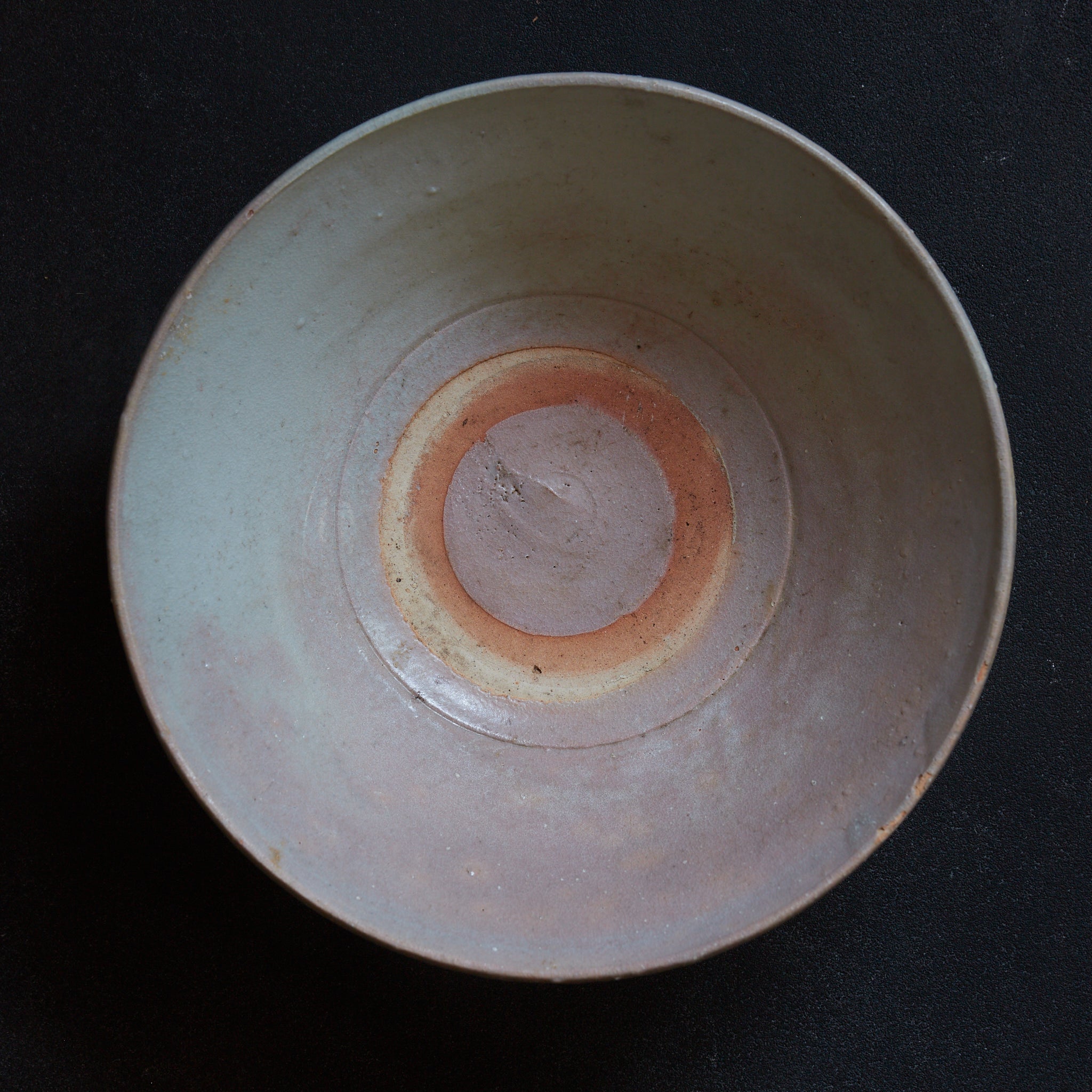

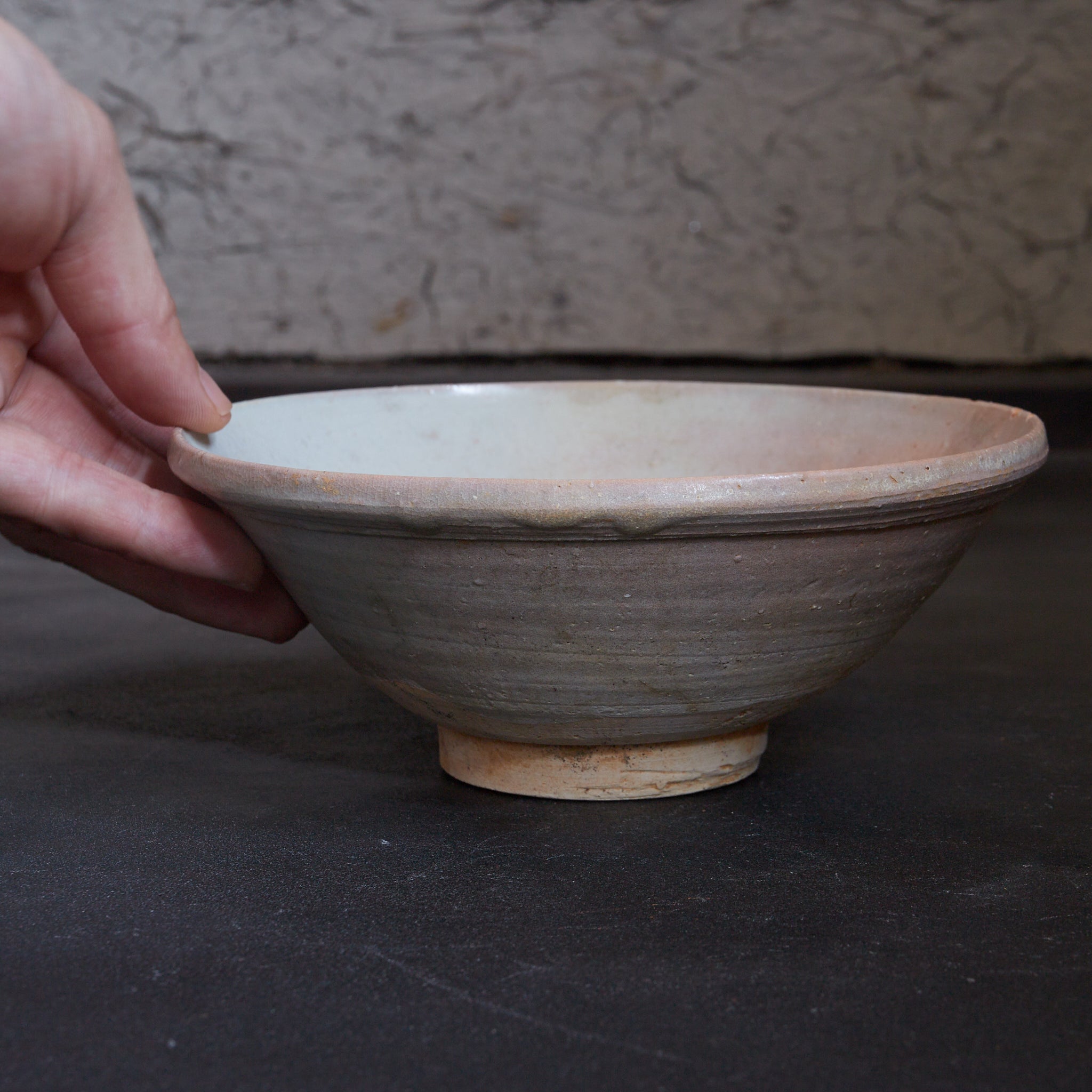
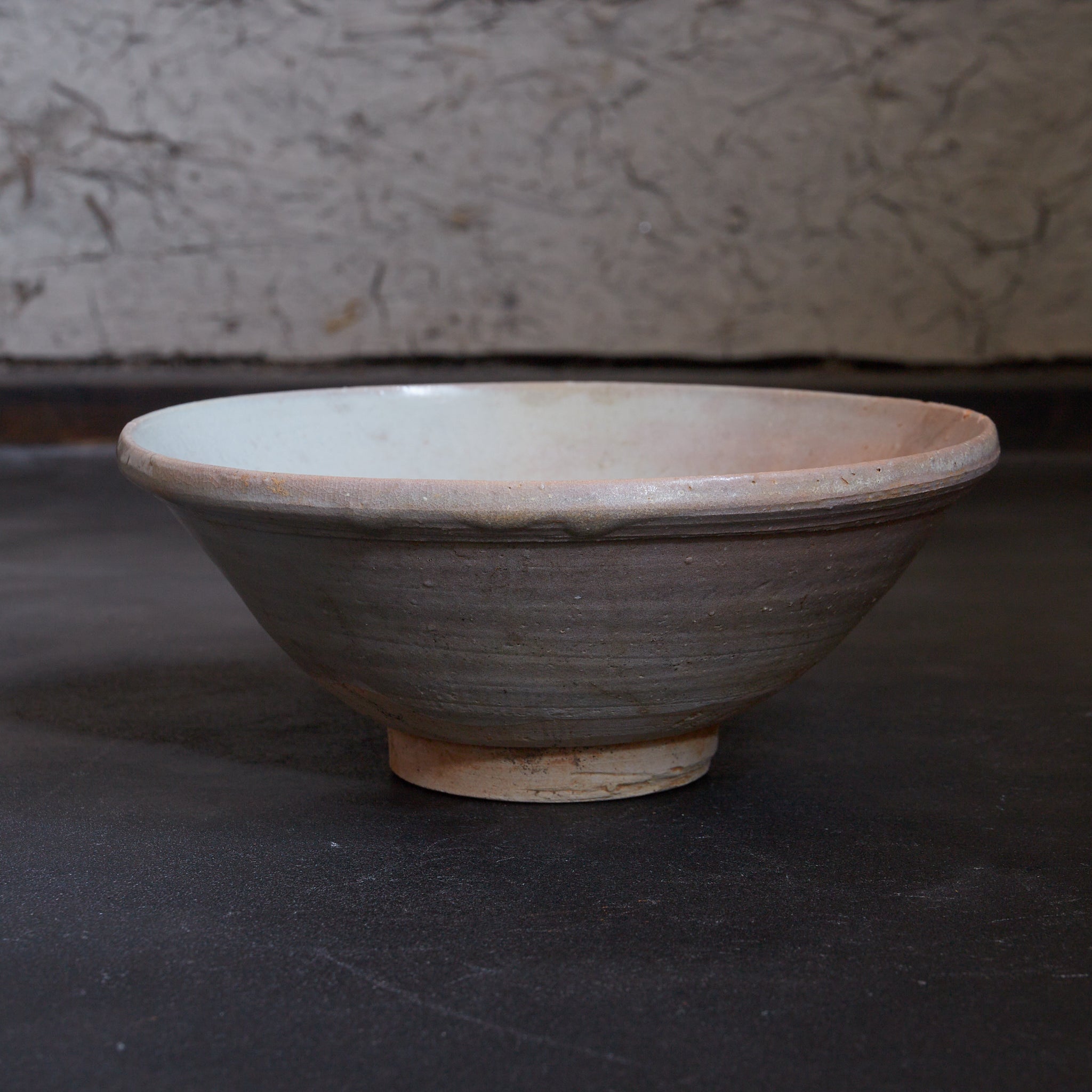
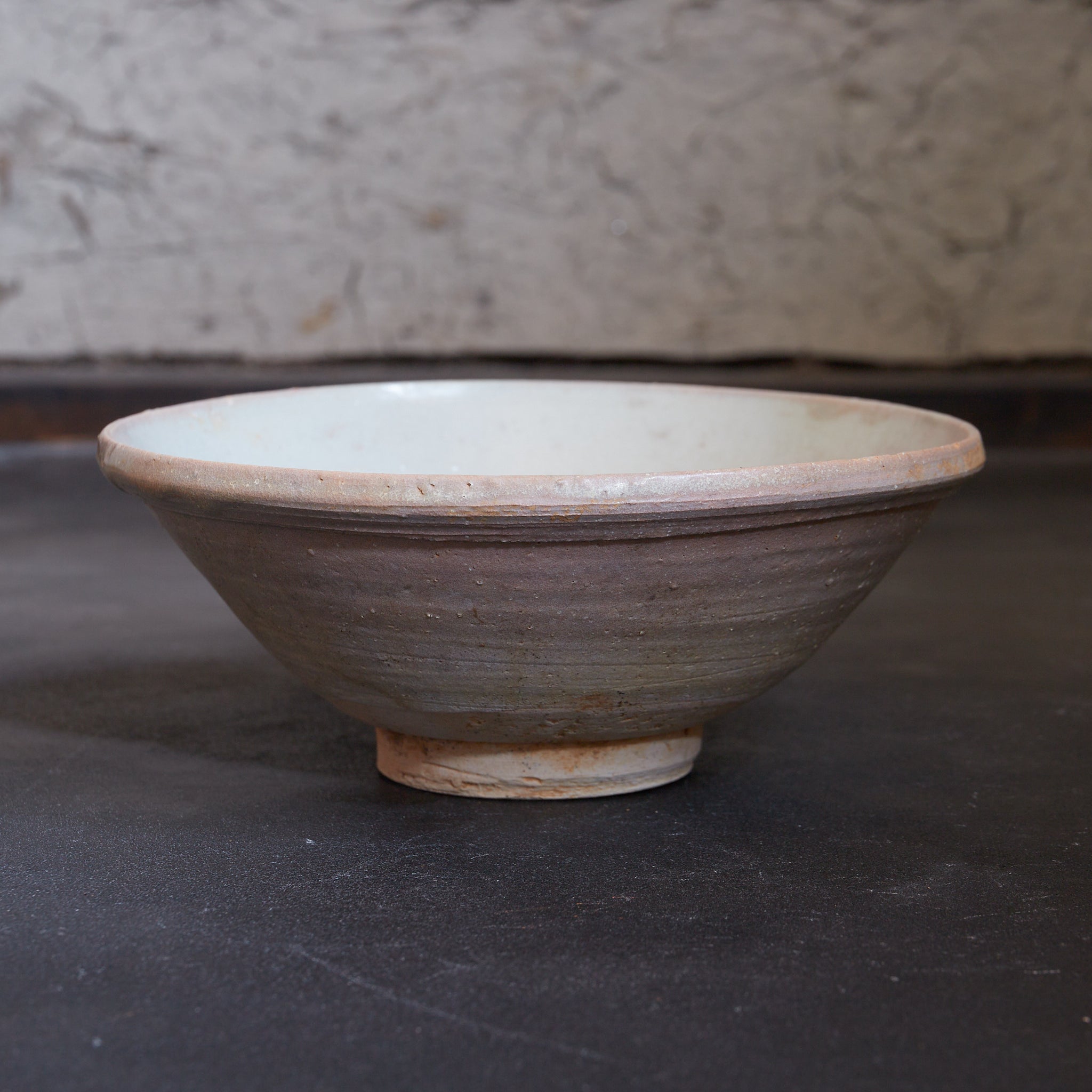
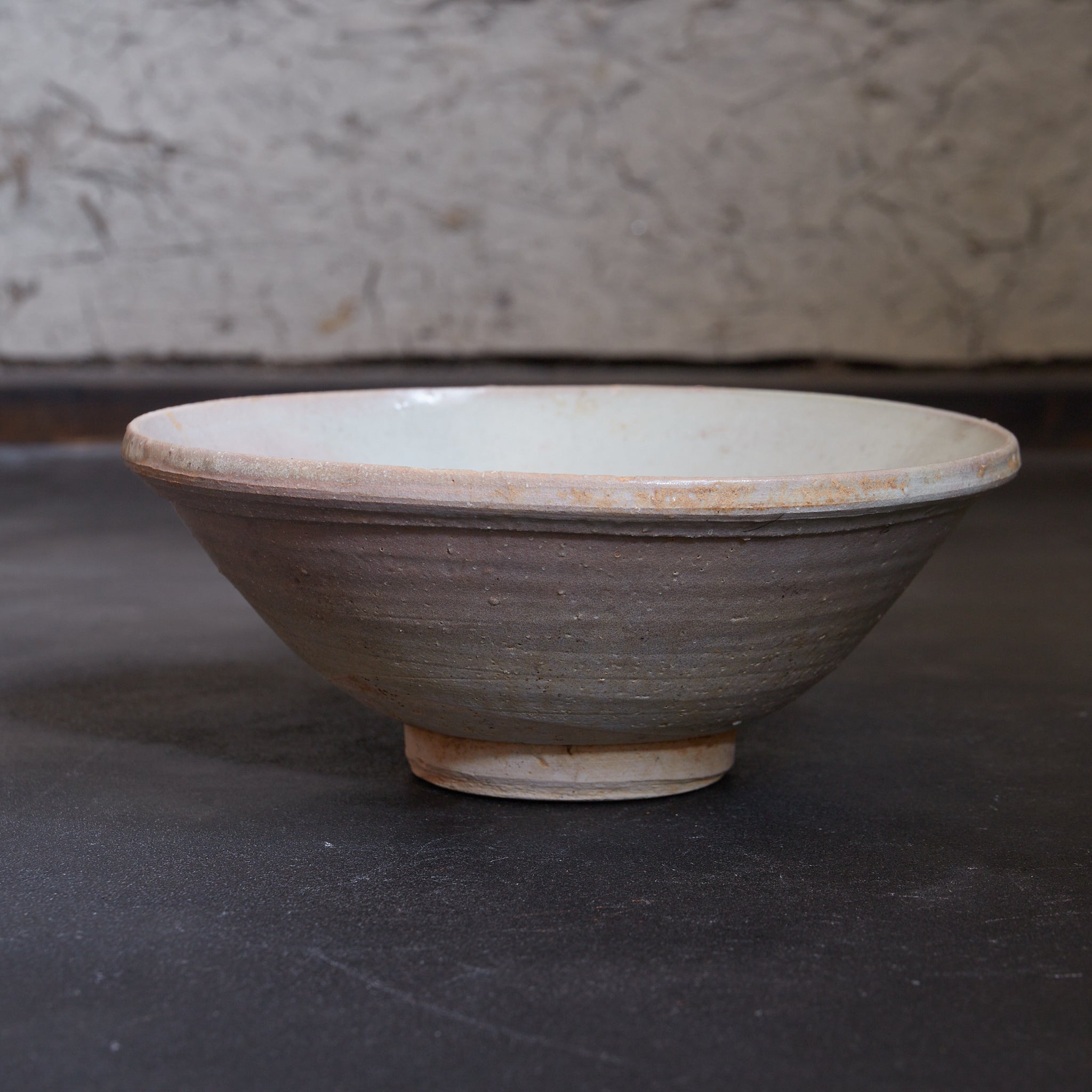
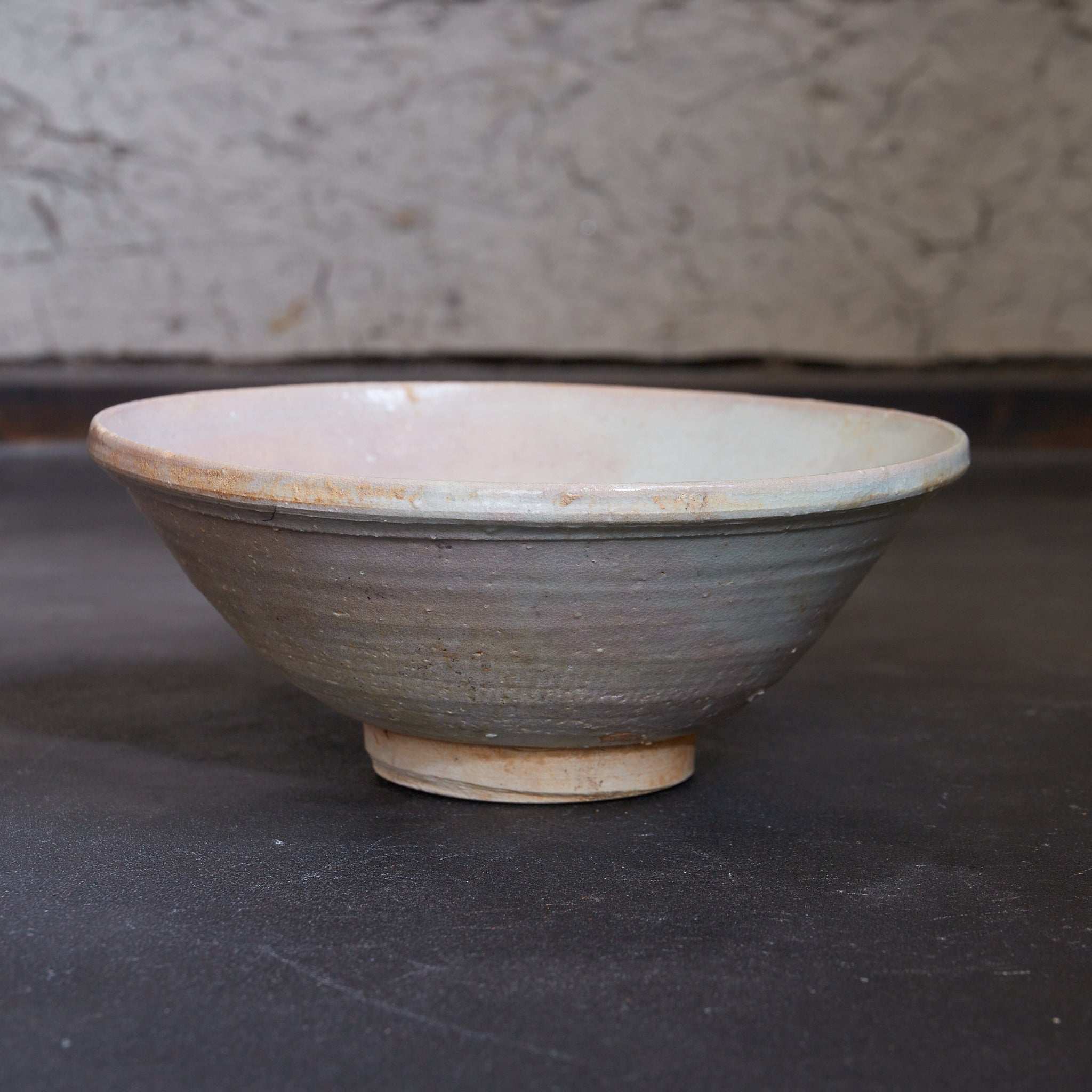
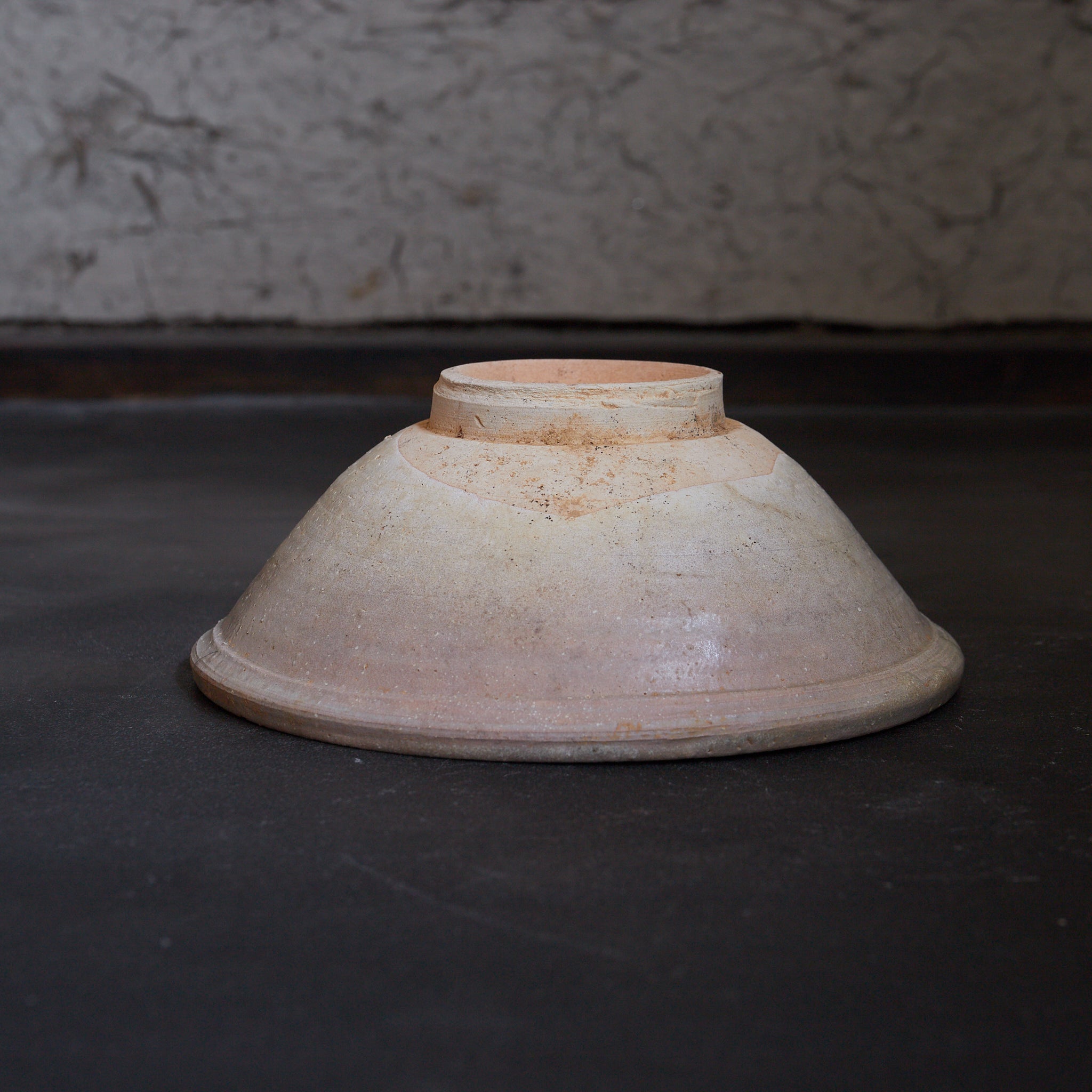
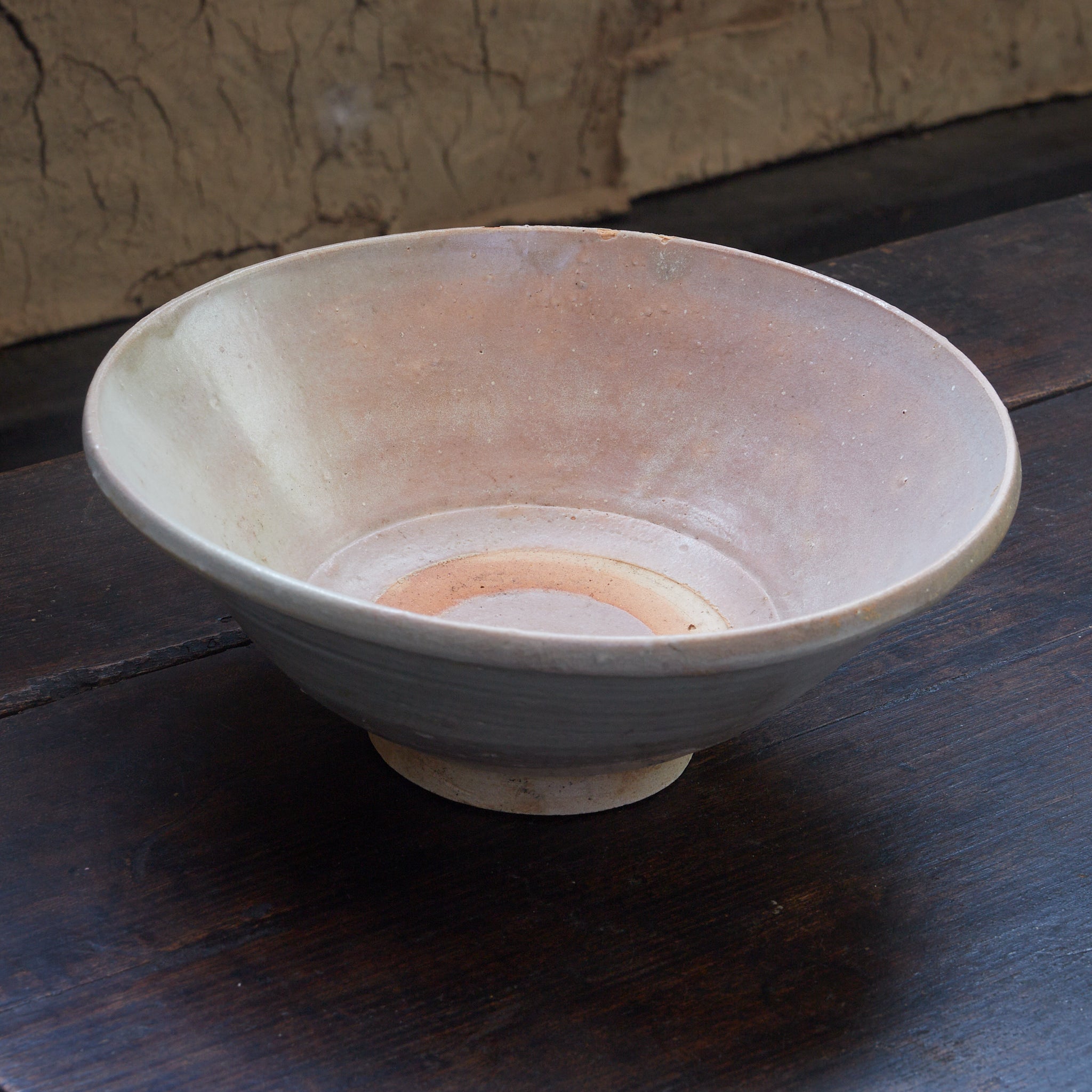

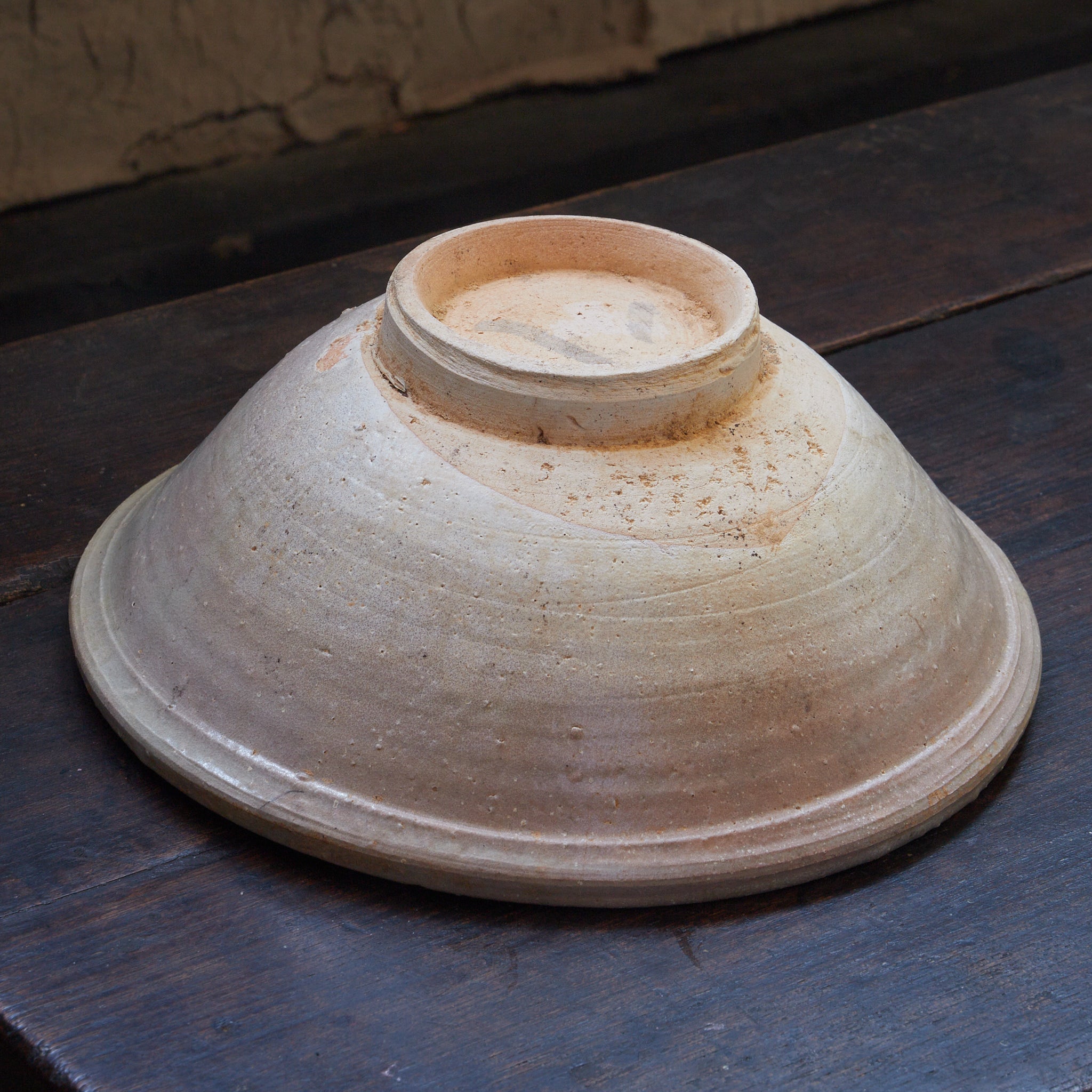
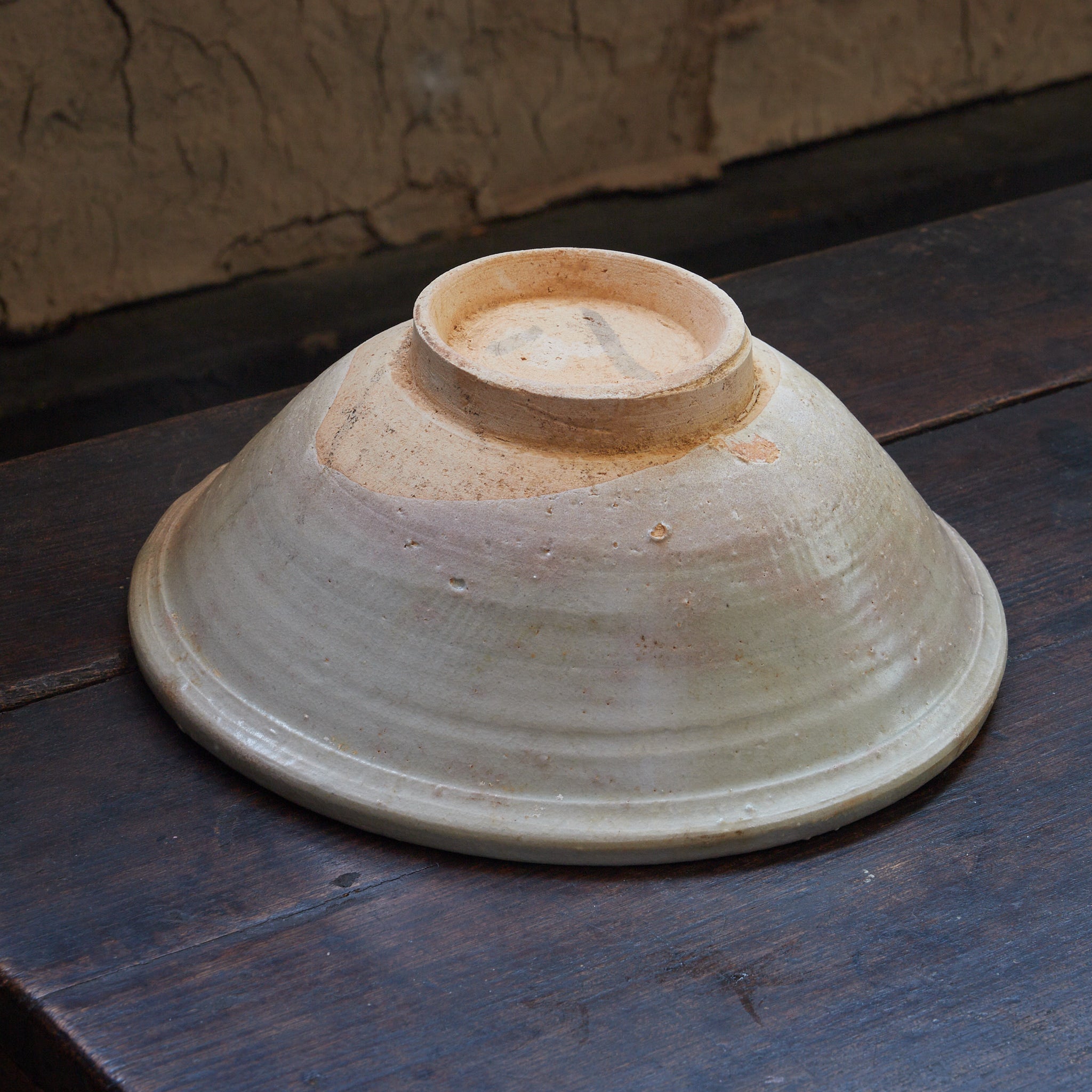
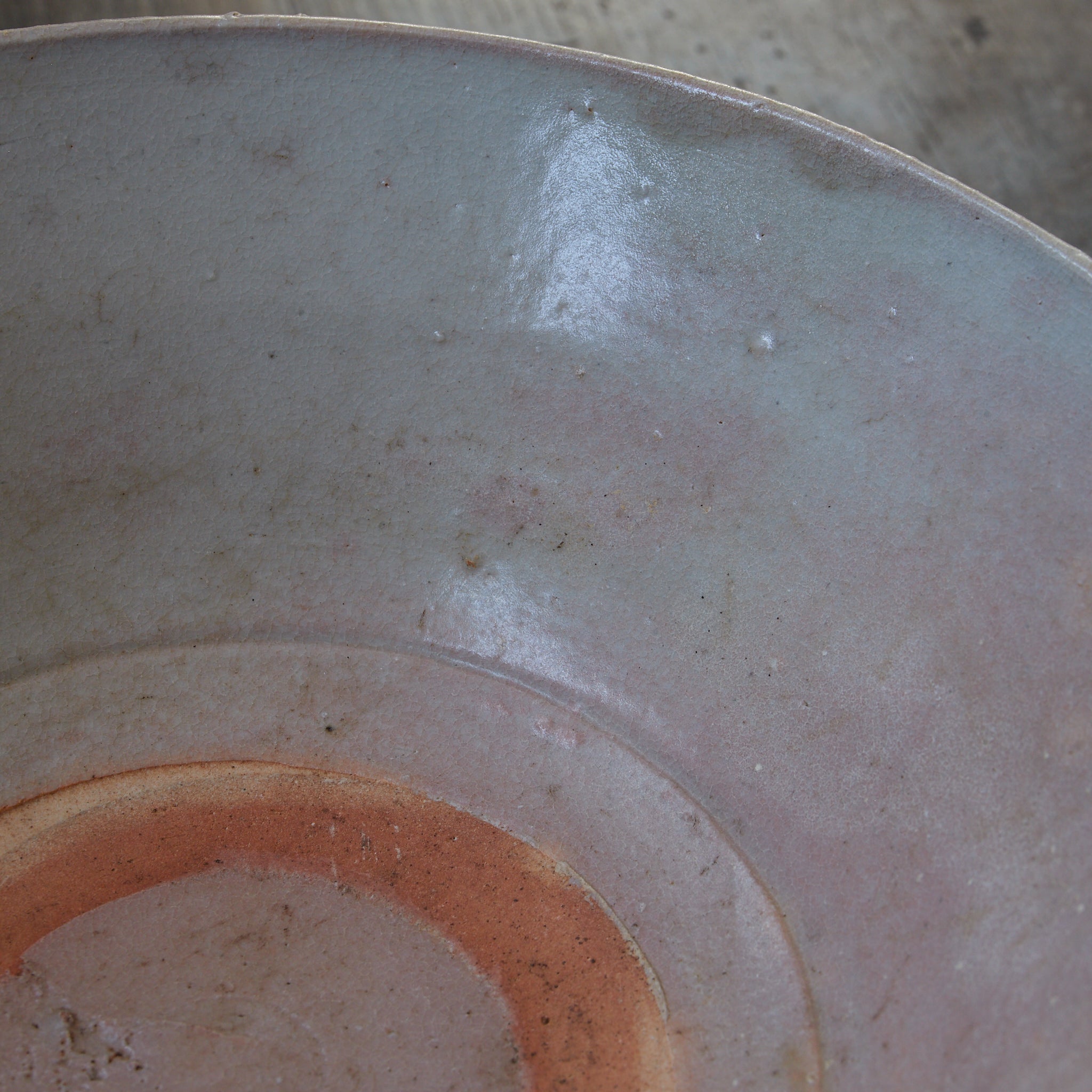
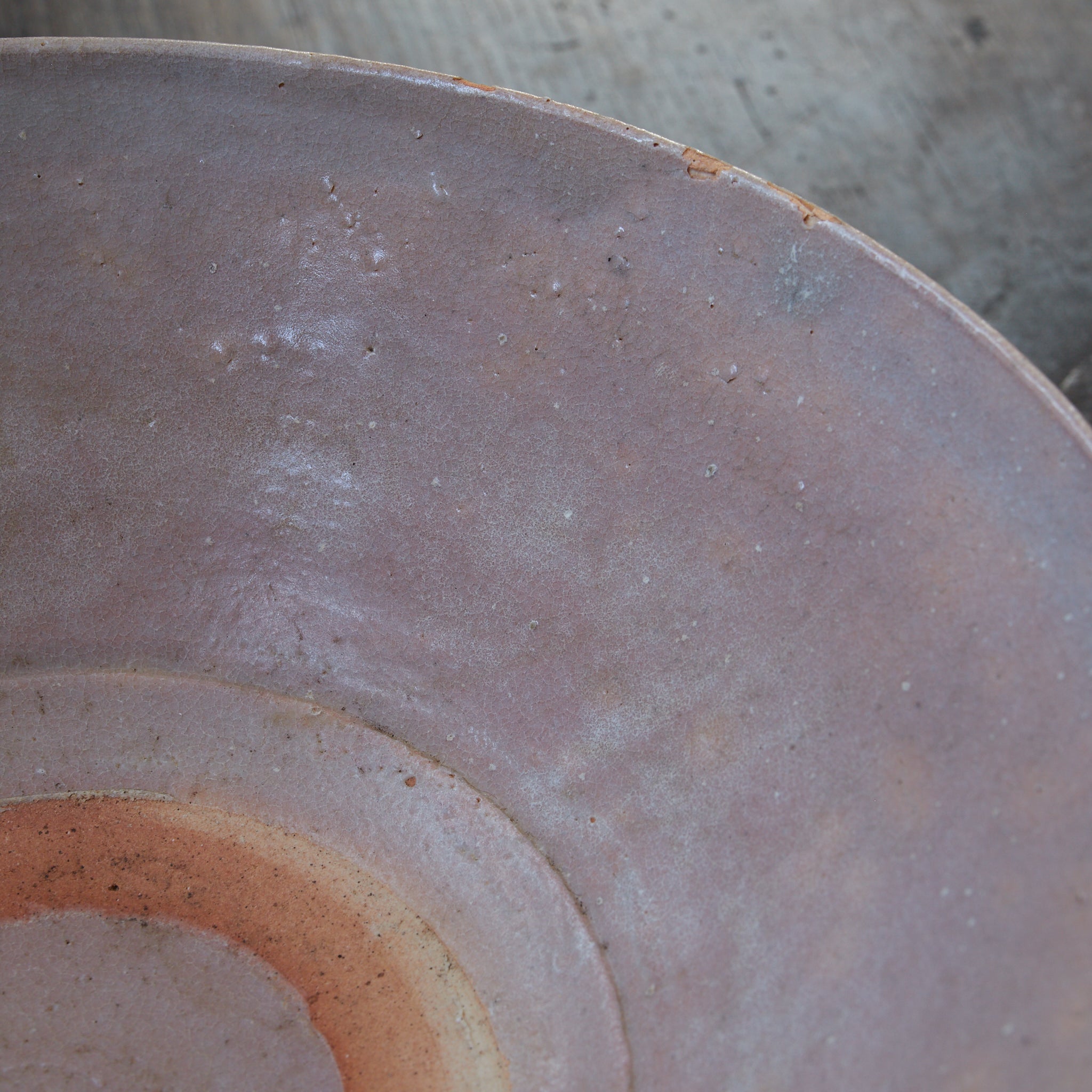
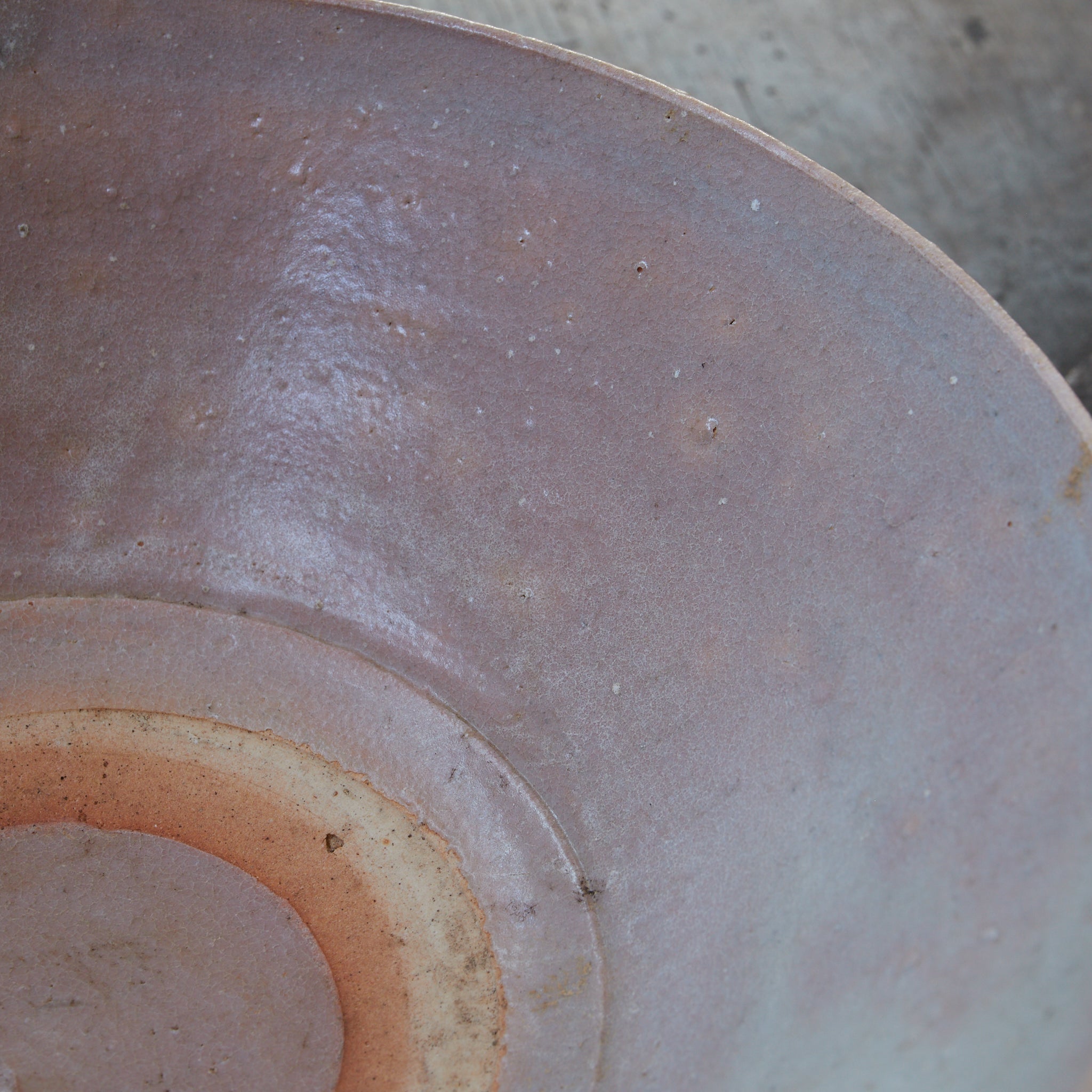
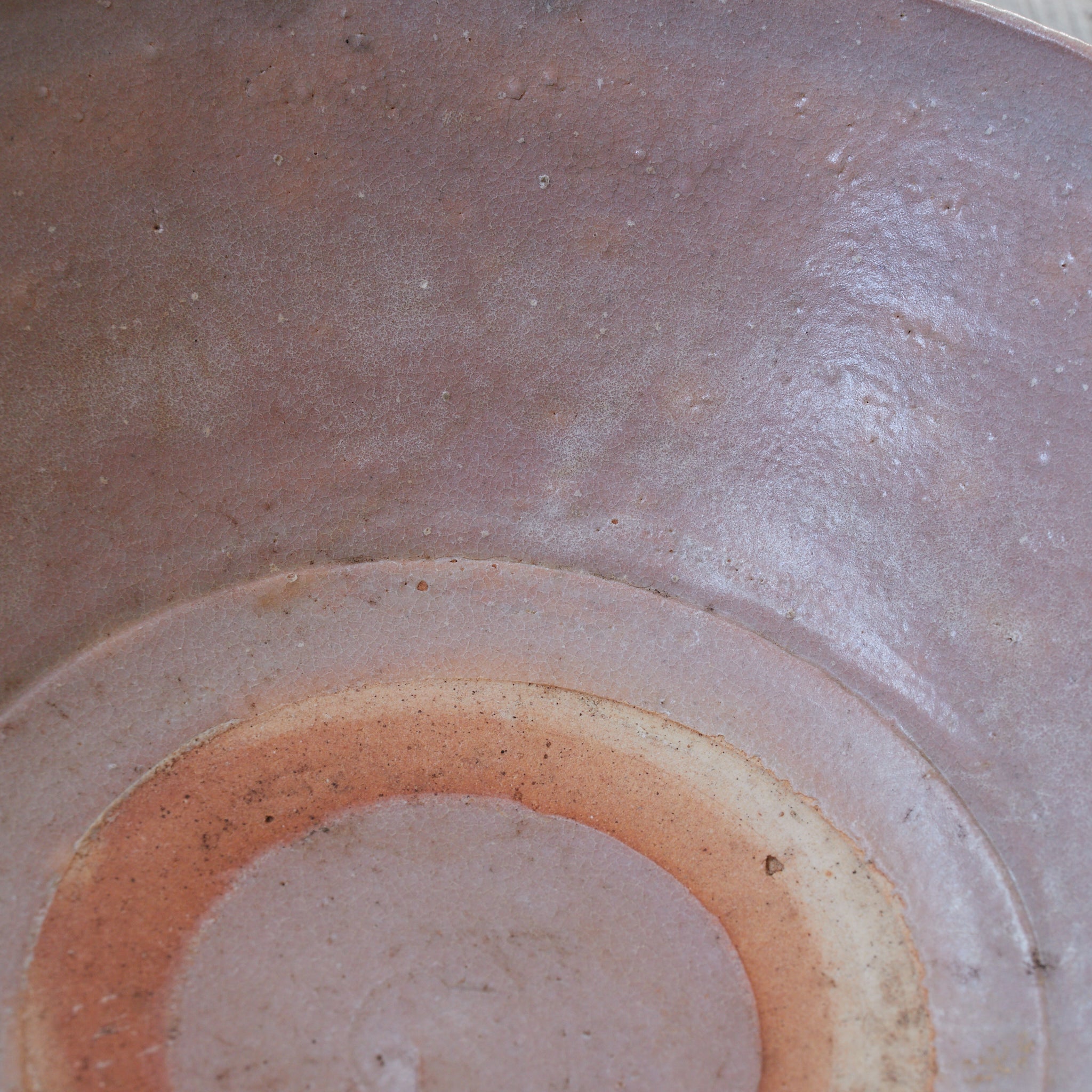
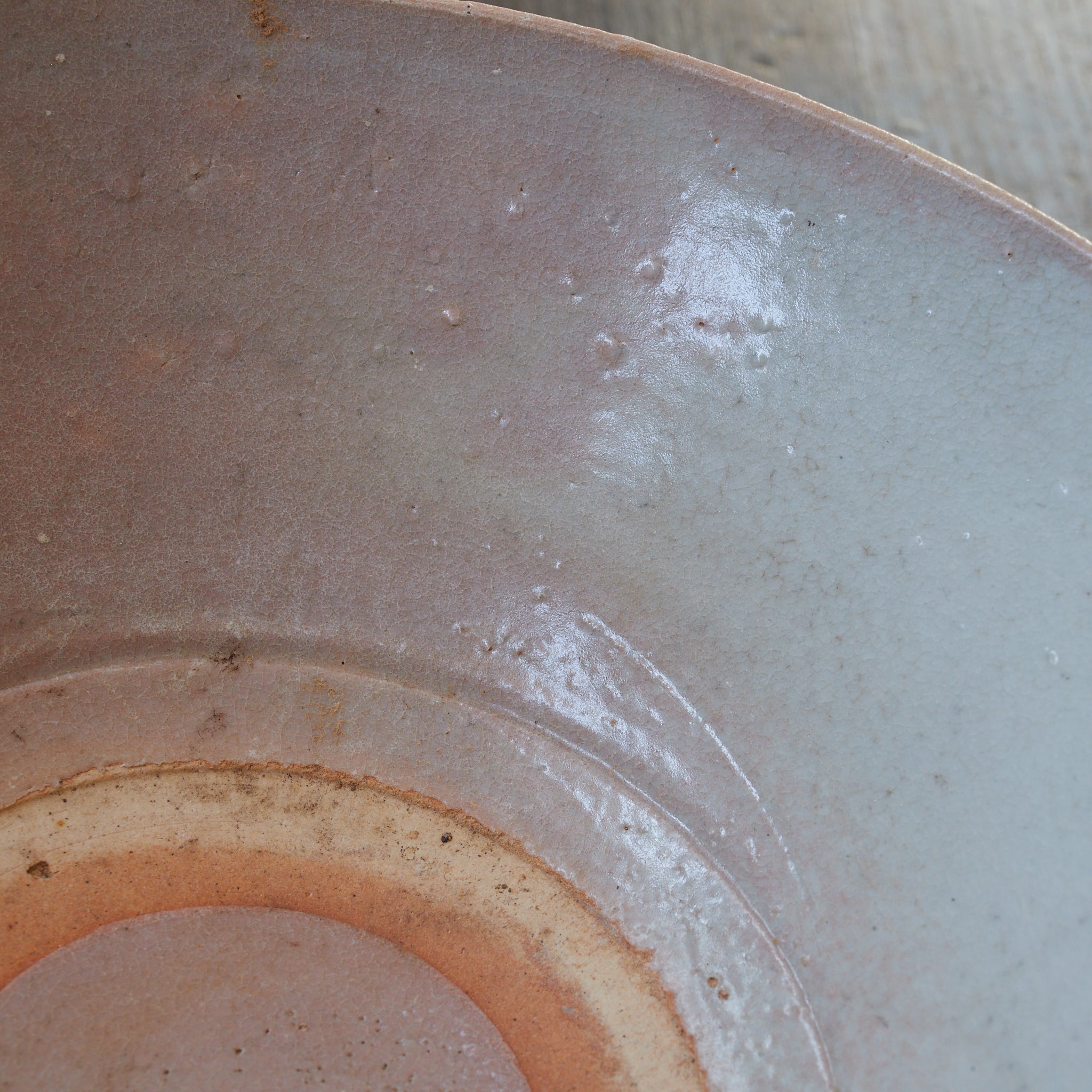
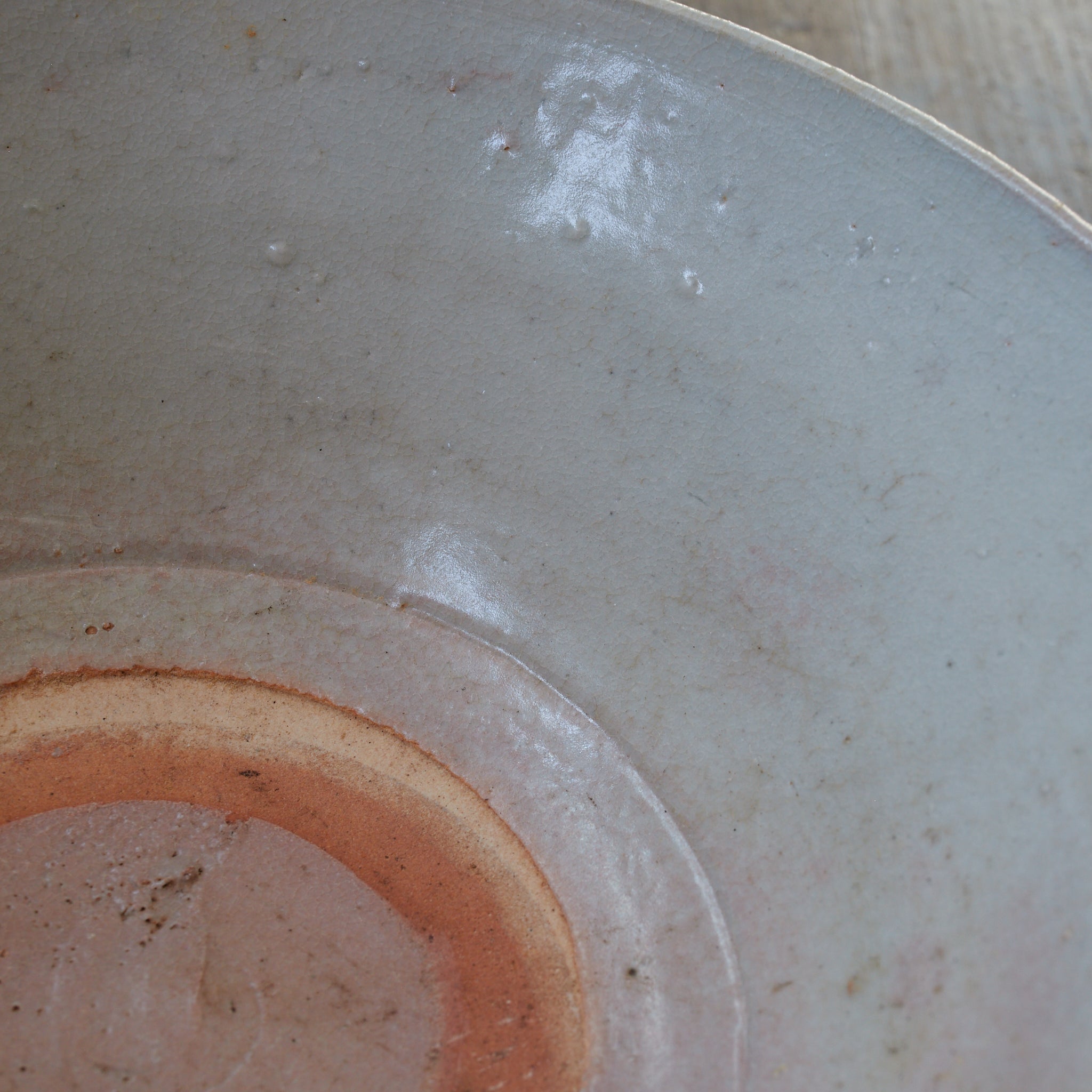
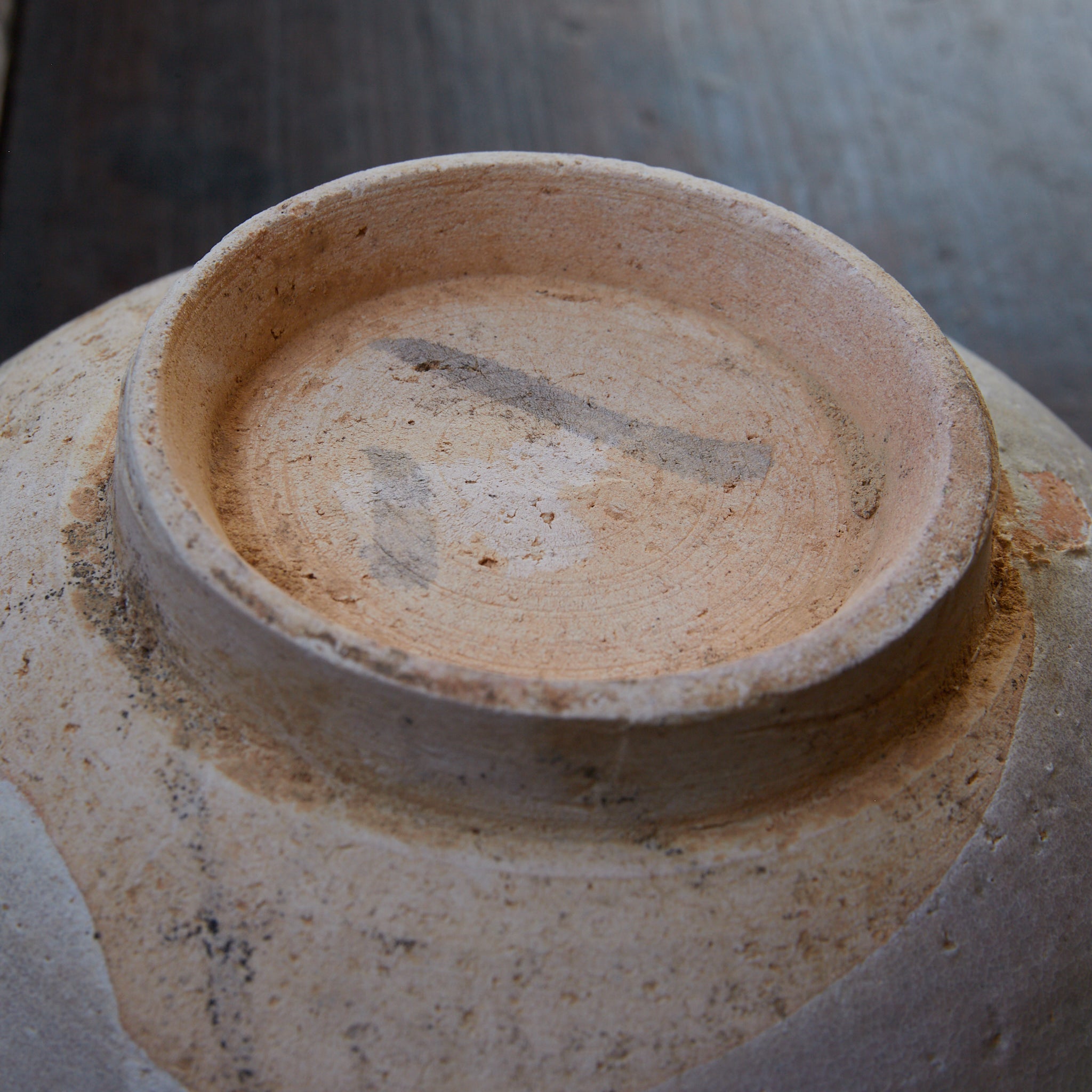
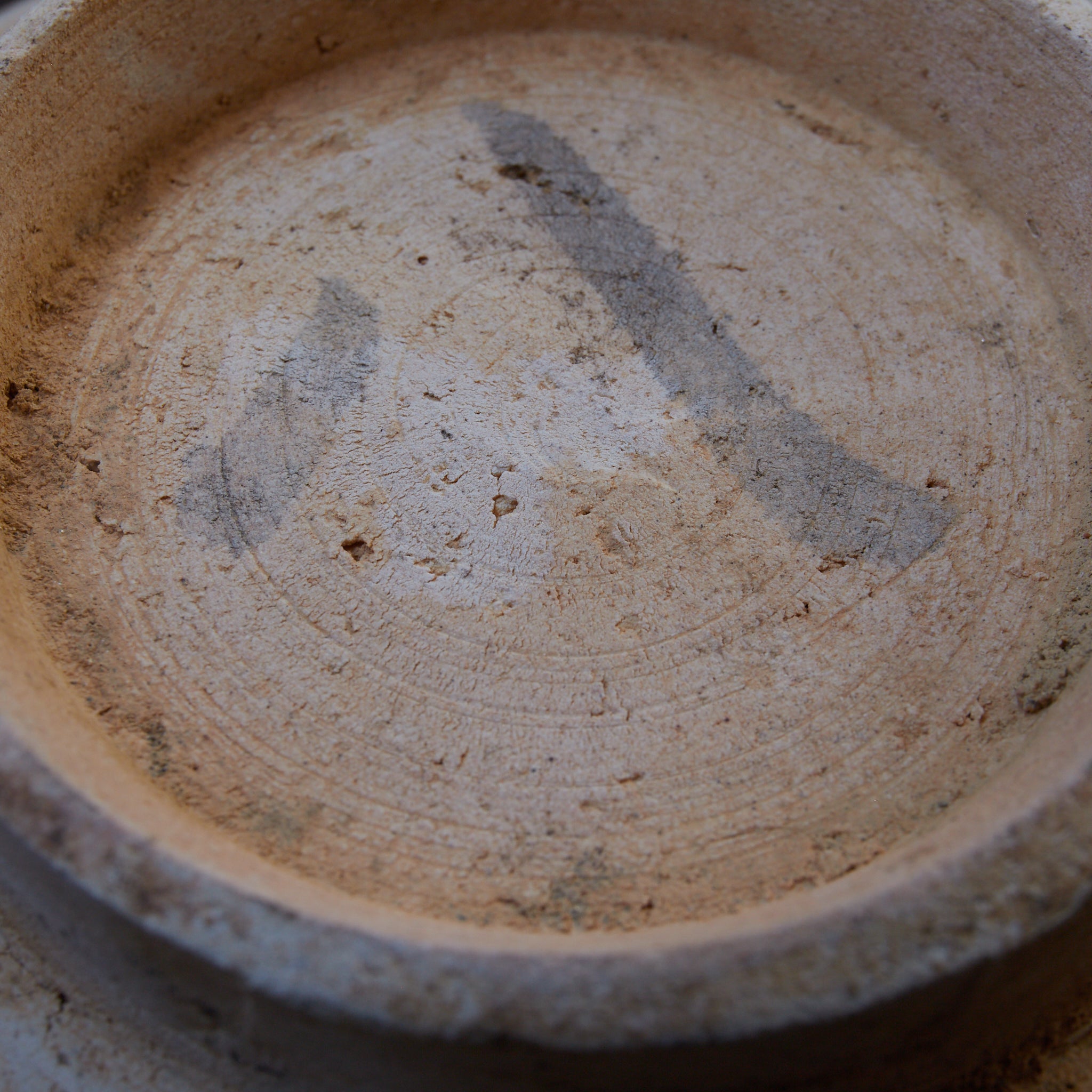
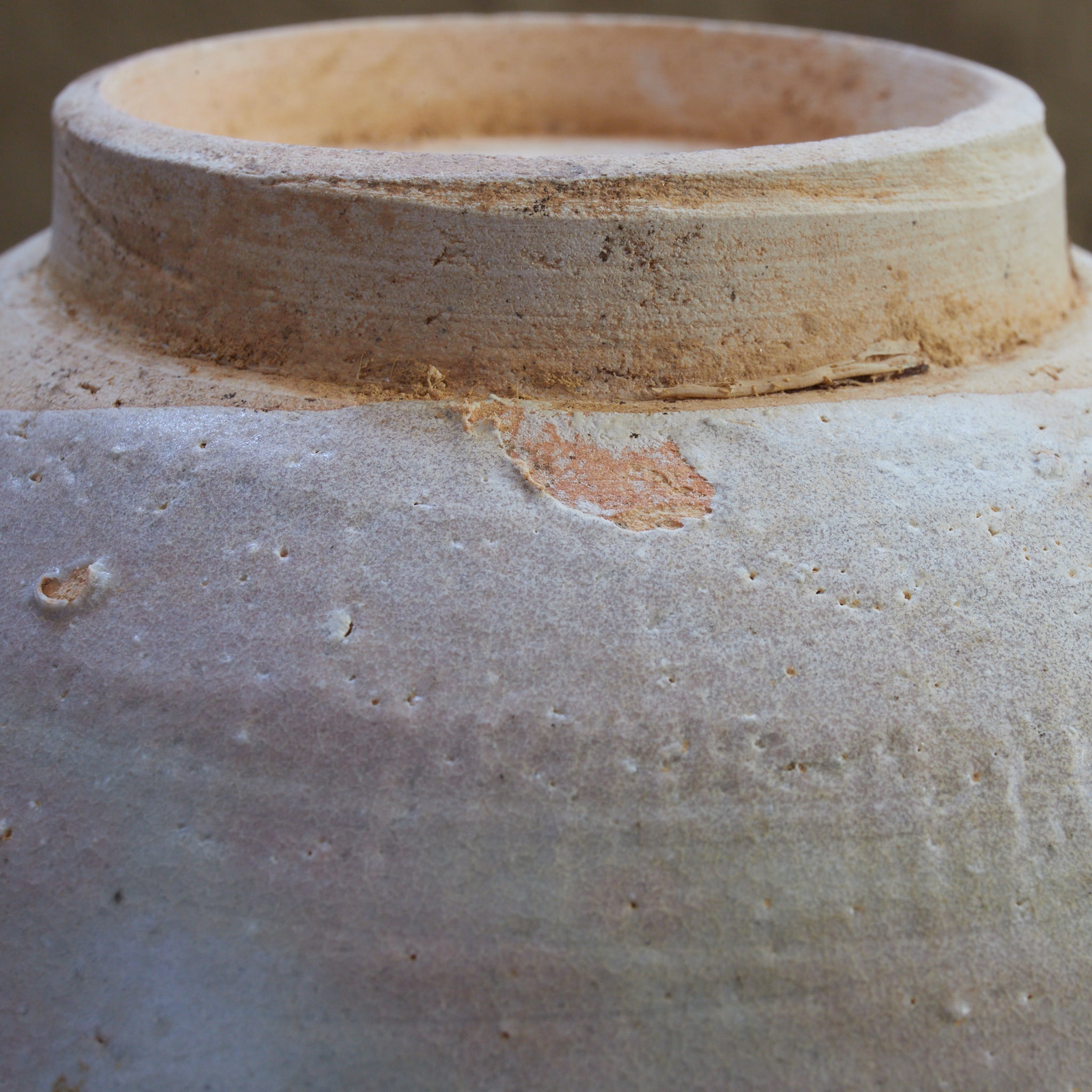
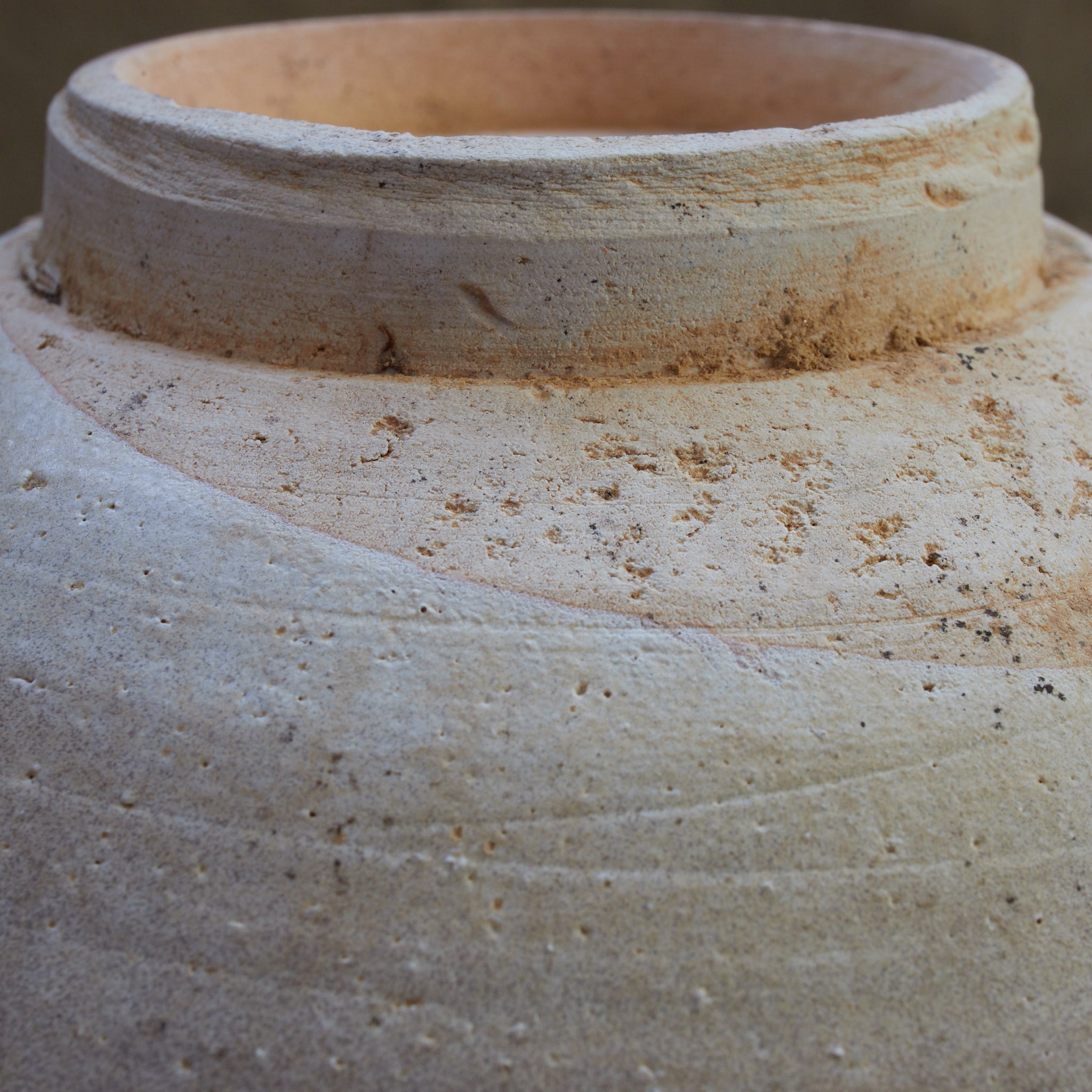
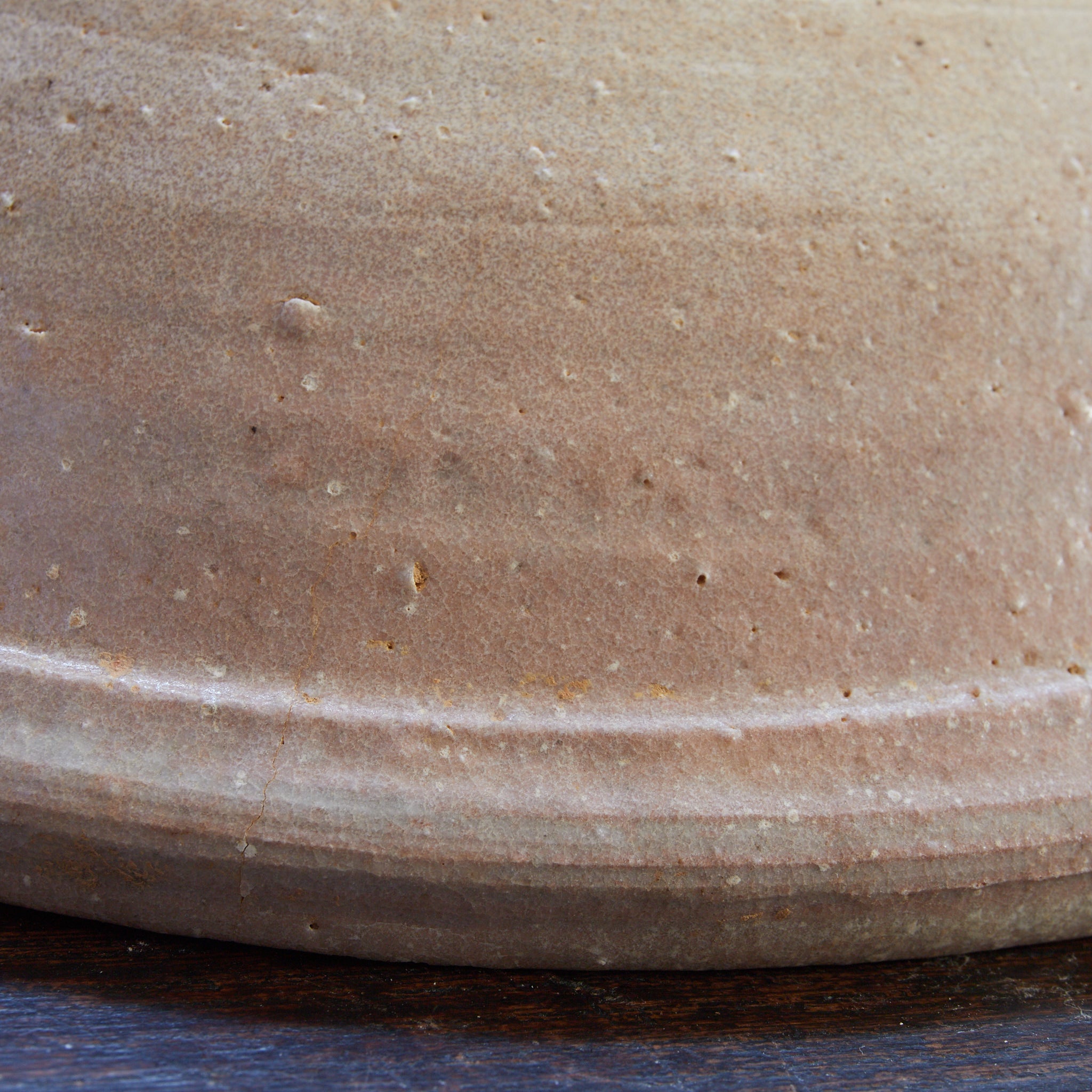
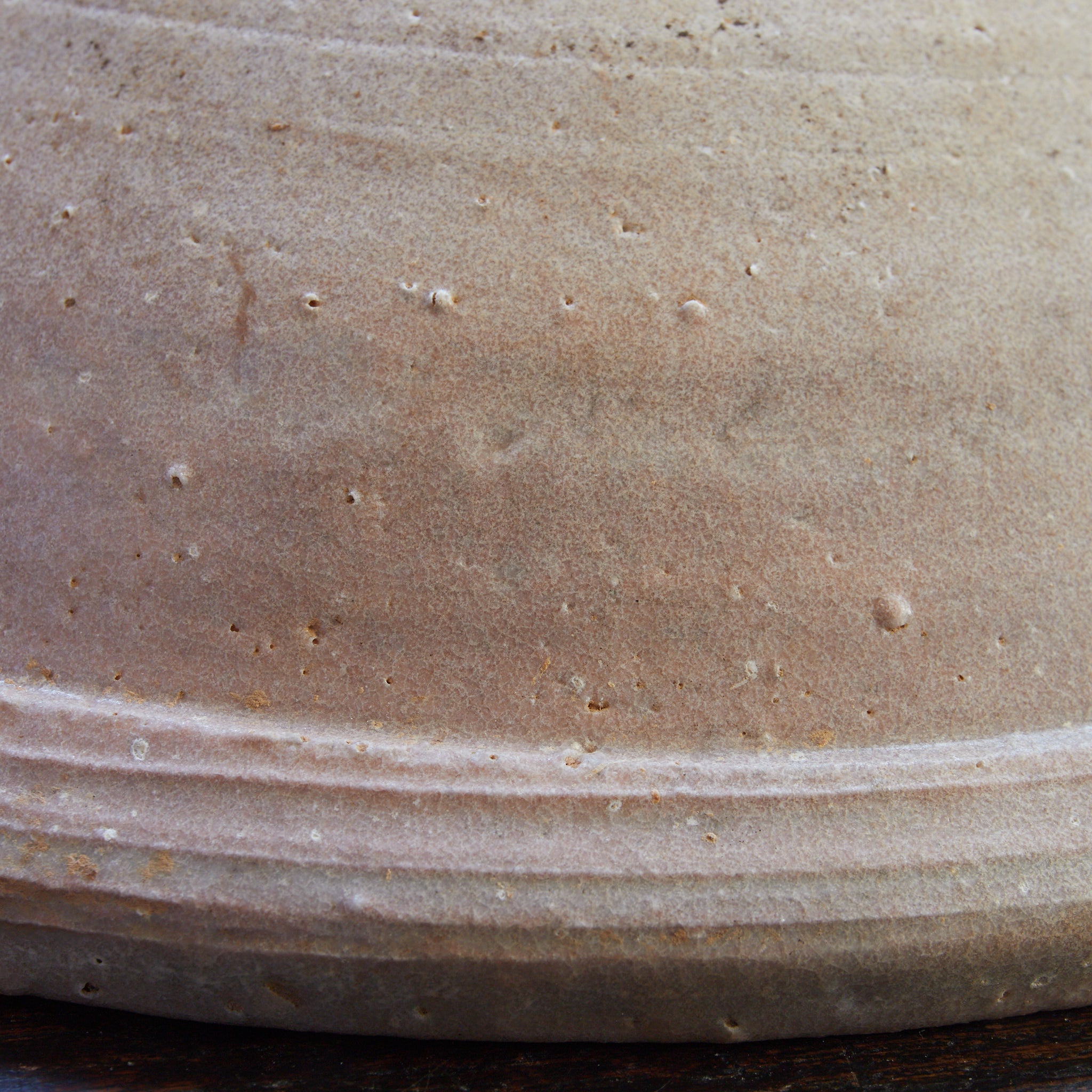
TEA BOWL, Pale pinkish white glaze, Song–Yuan Period (960–1368 CE)
Tax excluded. Import duties may apply. Shipping costs are calculated at checkout.
However, we may respond individually to certain customers after reviewing the circumstances.
Please contact us for further details.
Shipping to the United Kingdom and Switzerland remains available.
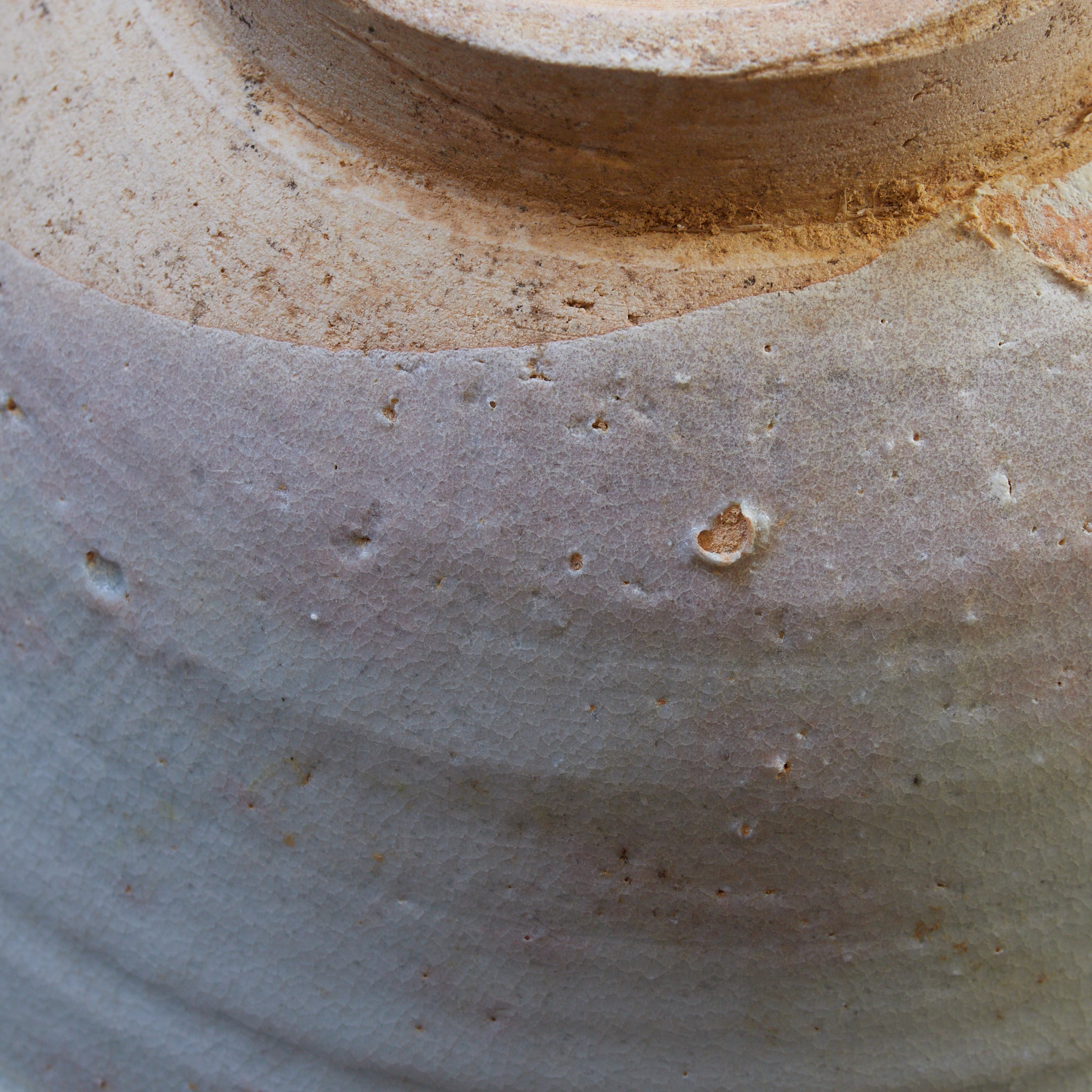
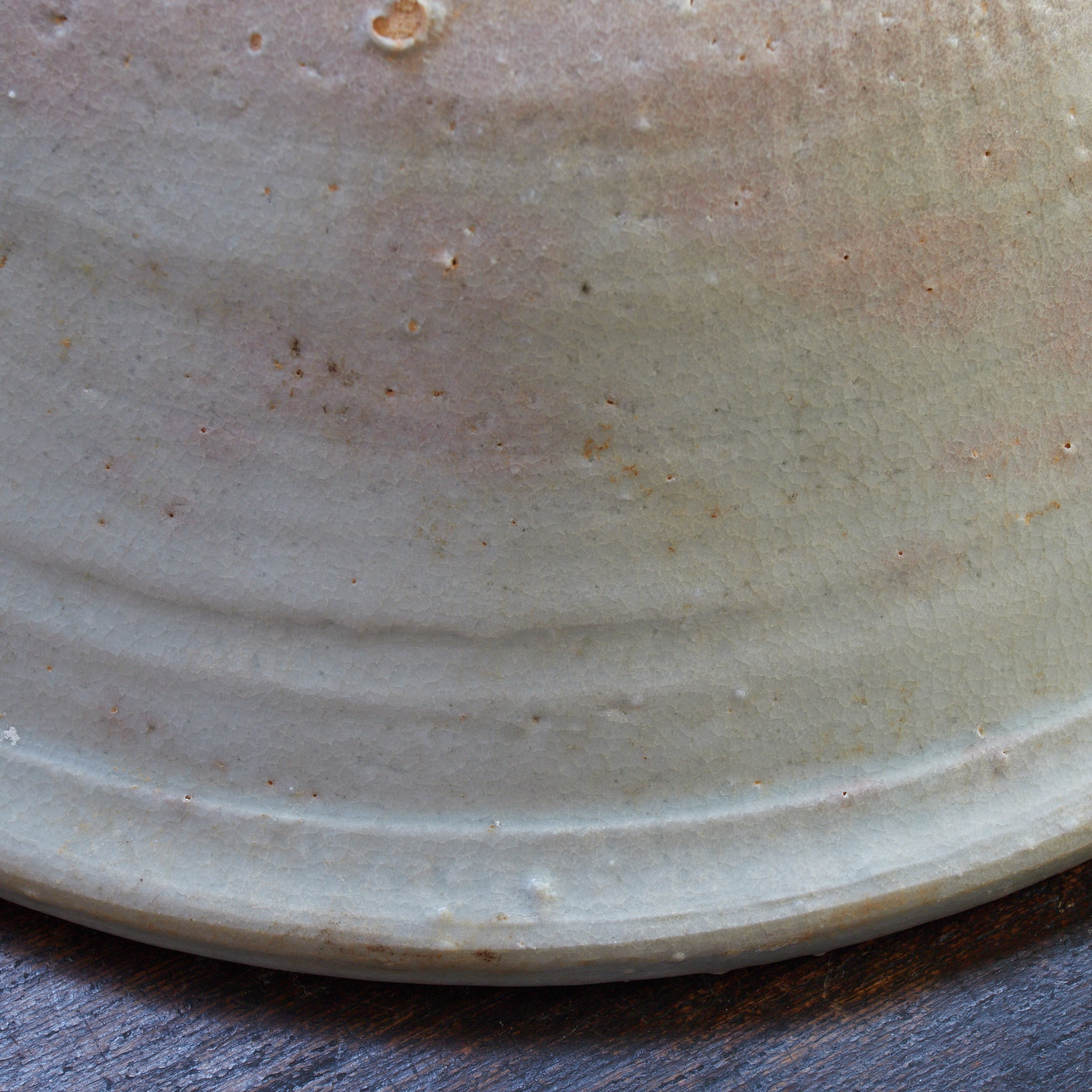
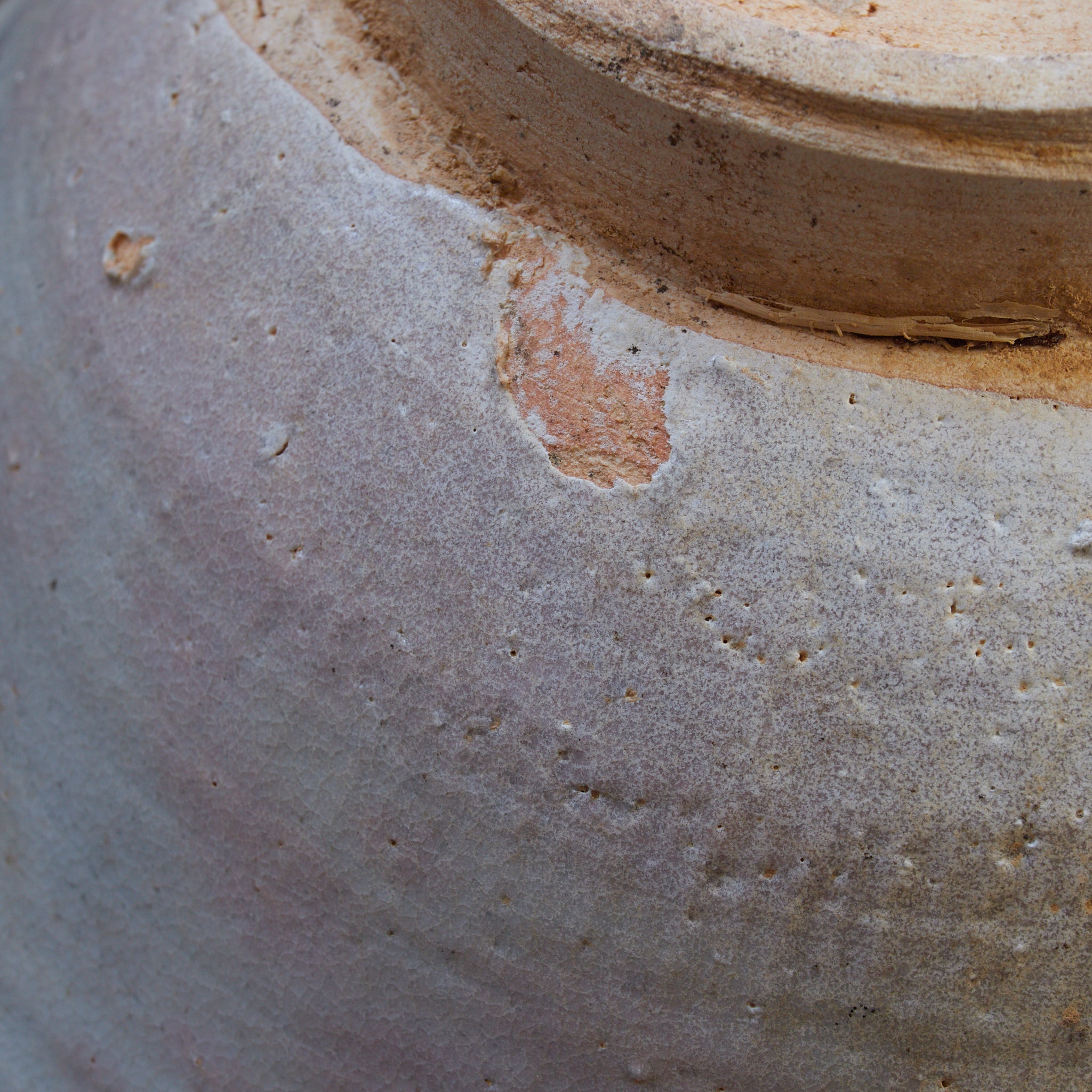
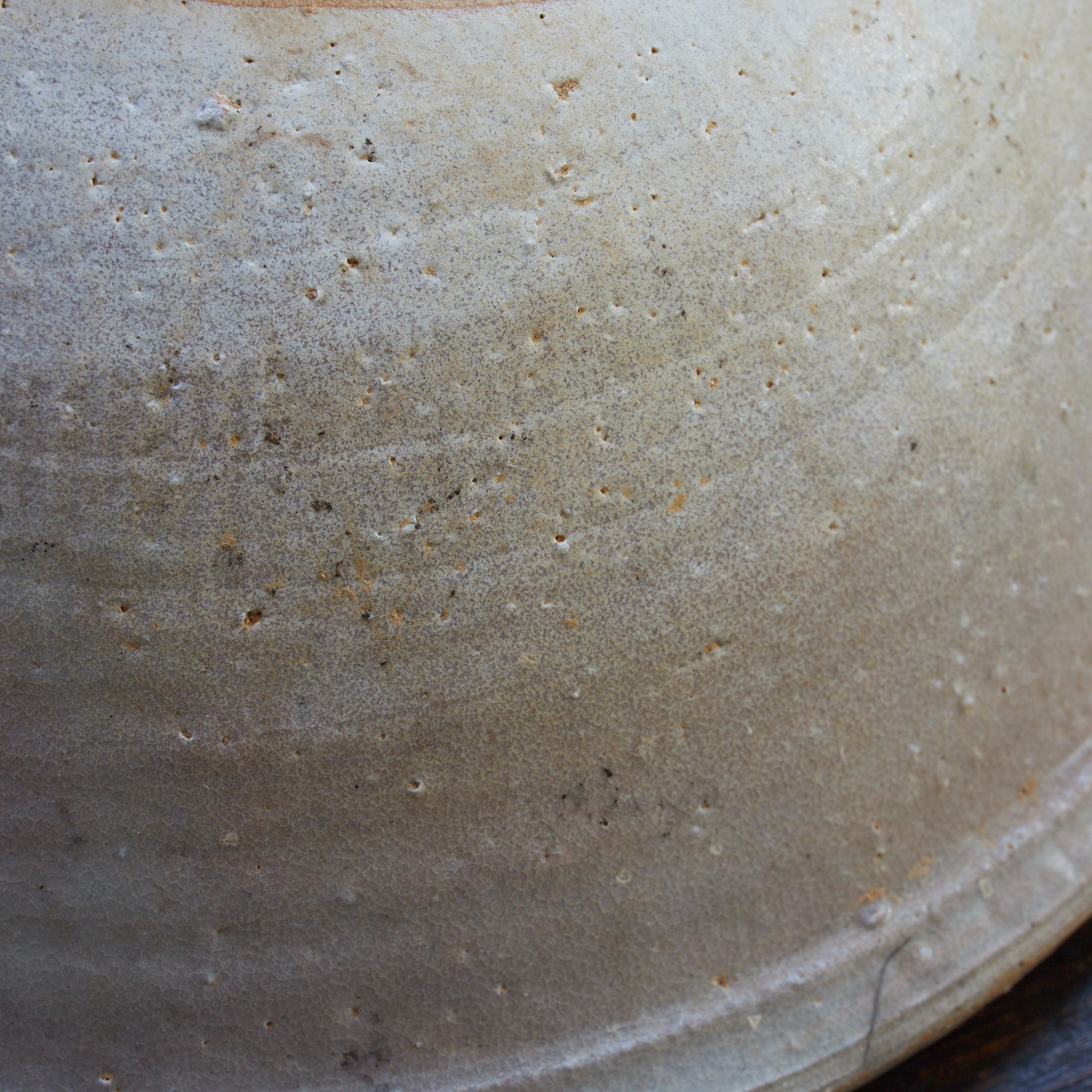
Numerous product photos are available for you to examine the details and condition. Should you have any questions, please do not hesitate to contact us.
> Inquire about this productA tea bowl with a pale pinkish-white glaze dating from the Song–Yuan periods.
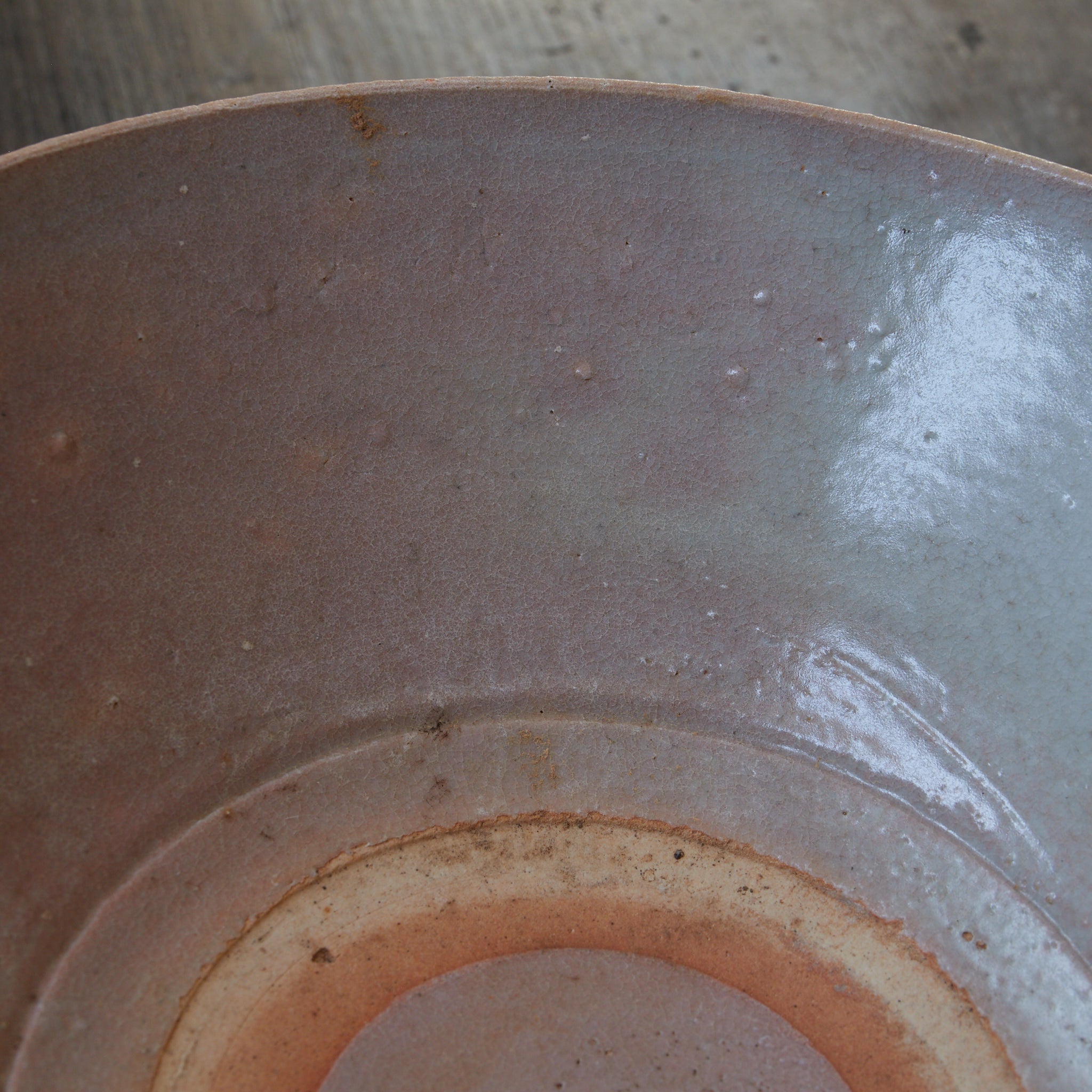
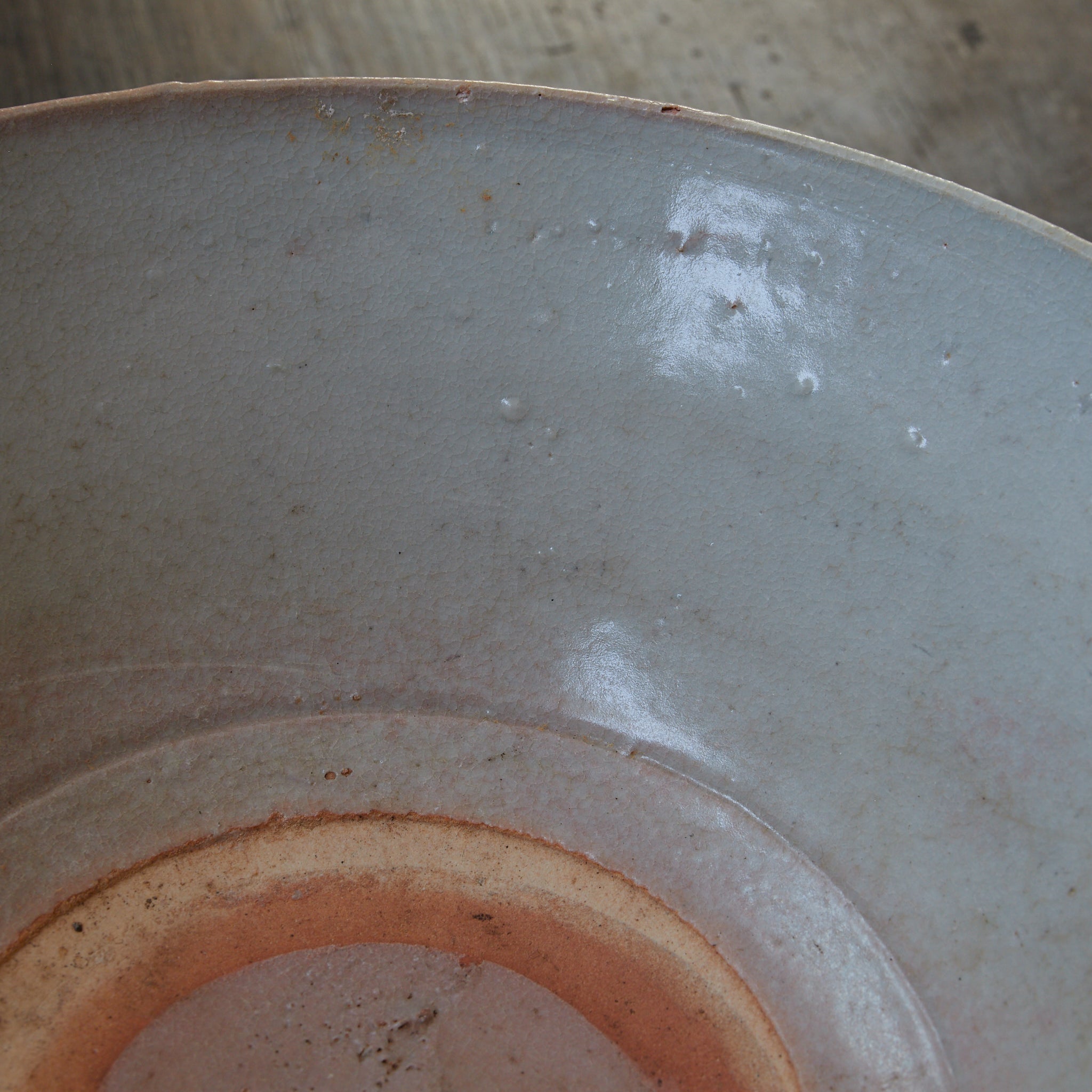
A somewhat deep bowl form whose rim flares gently outward, the body settling neatly from the shoulder to the footring. The rim diameter measures approximately 16.8cm, ample for use as a tea bowl. The footring is low and cleanly turned, conveying the simple weight characteristic of Song–Yuan ceramics.
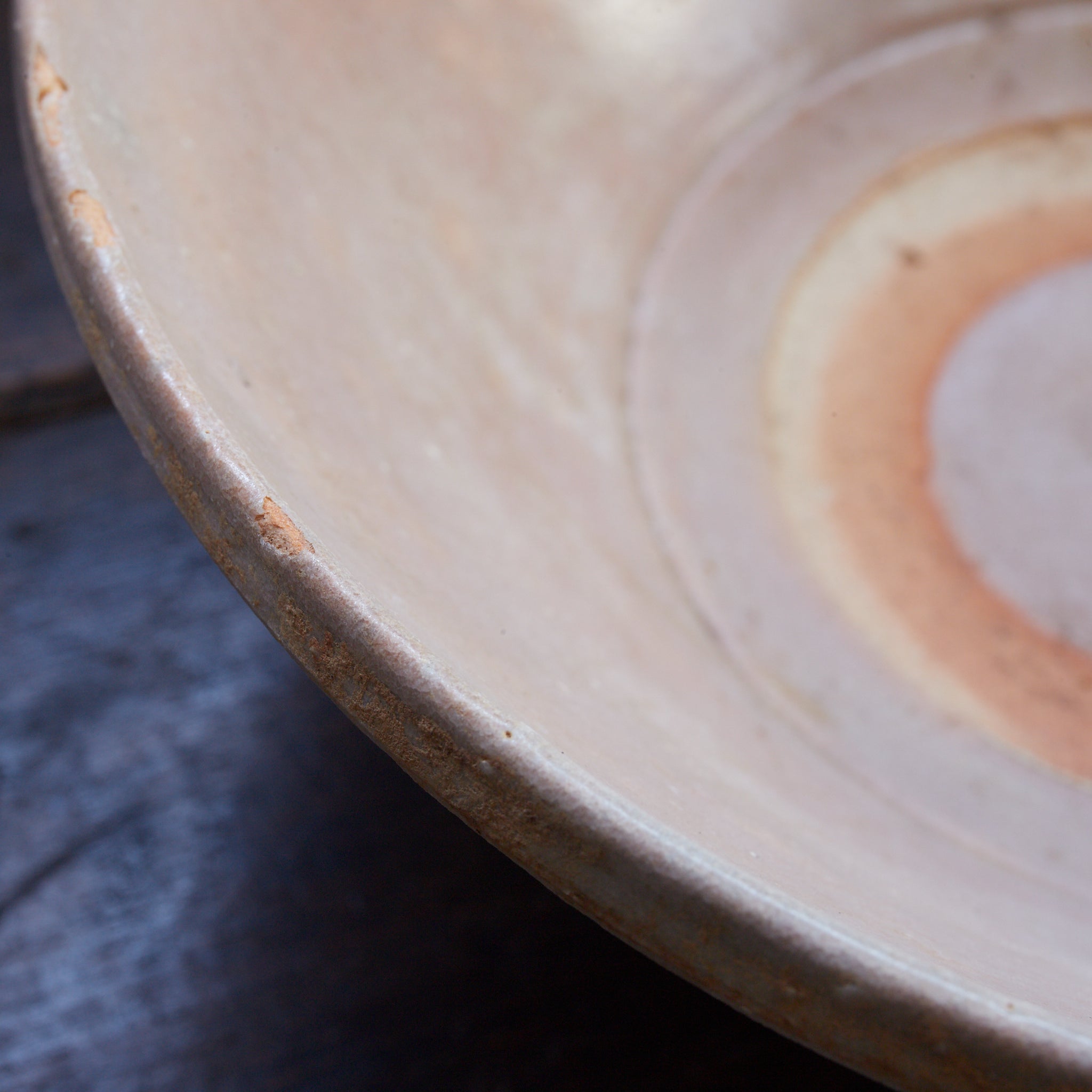
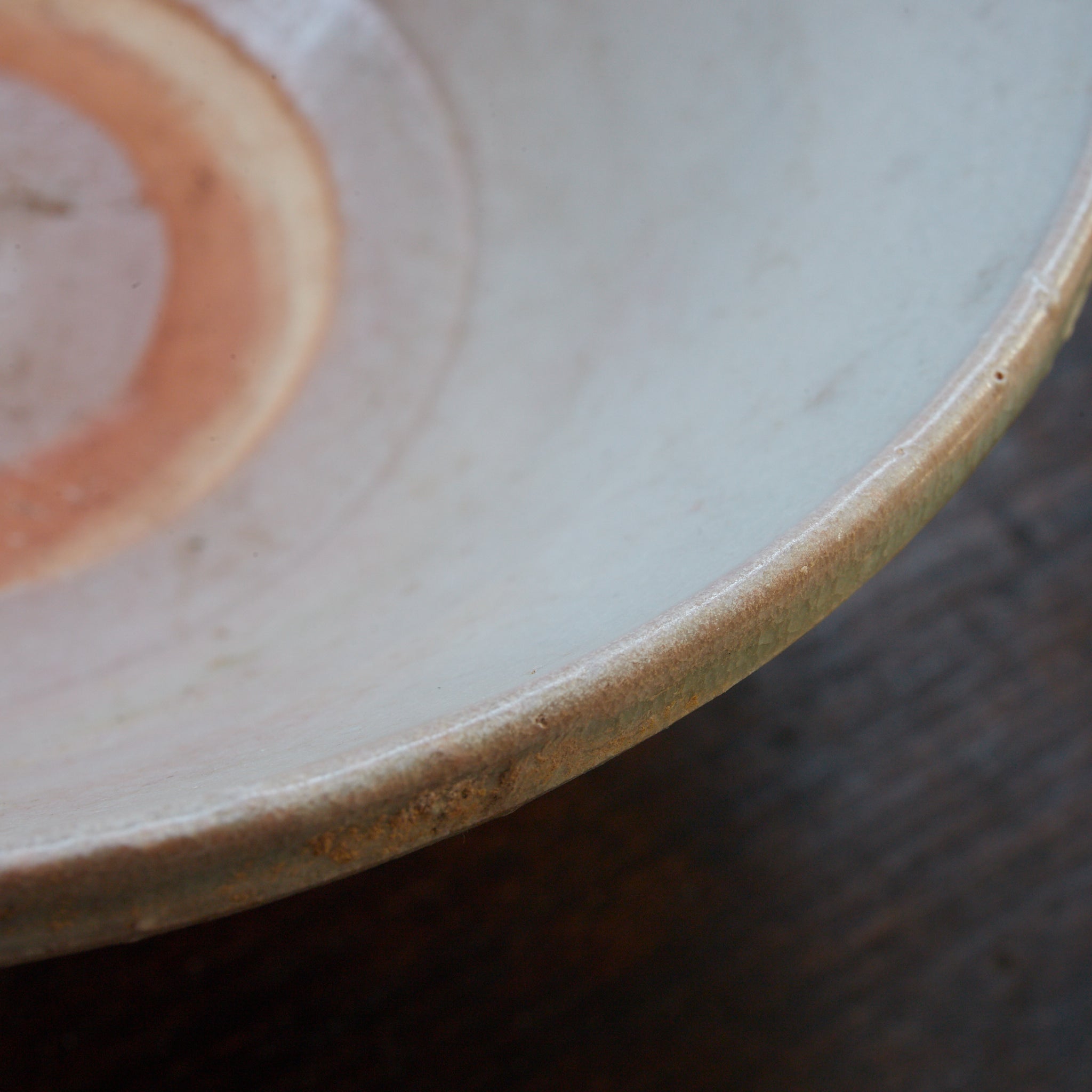
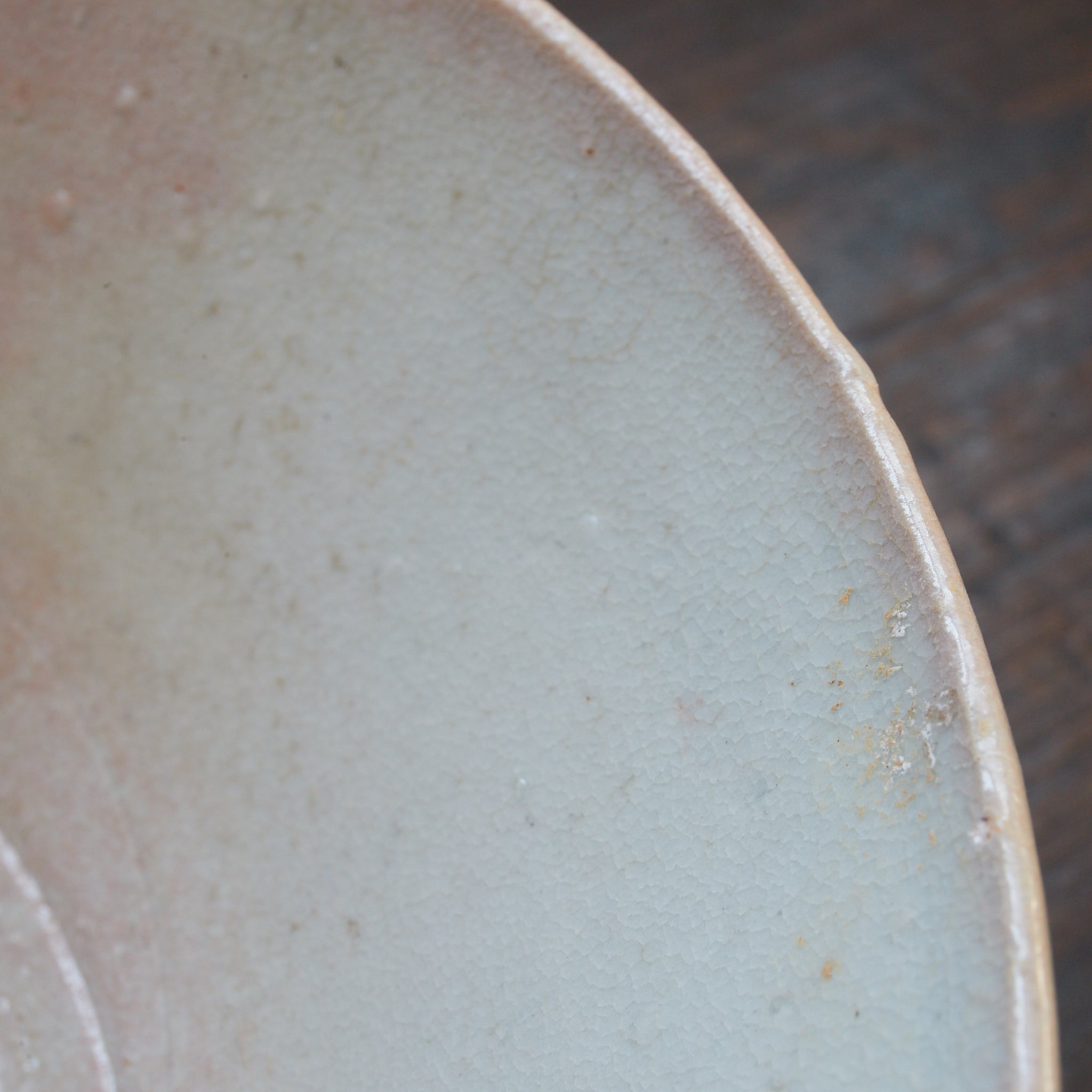
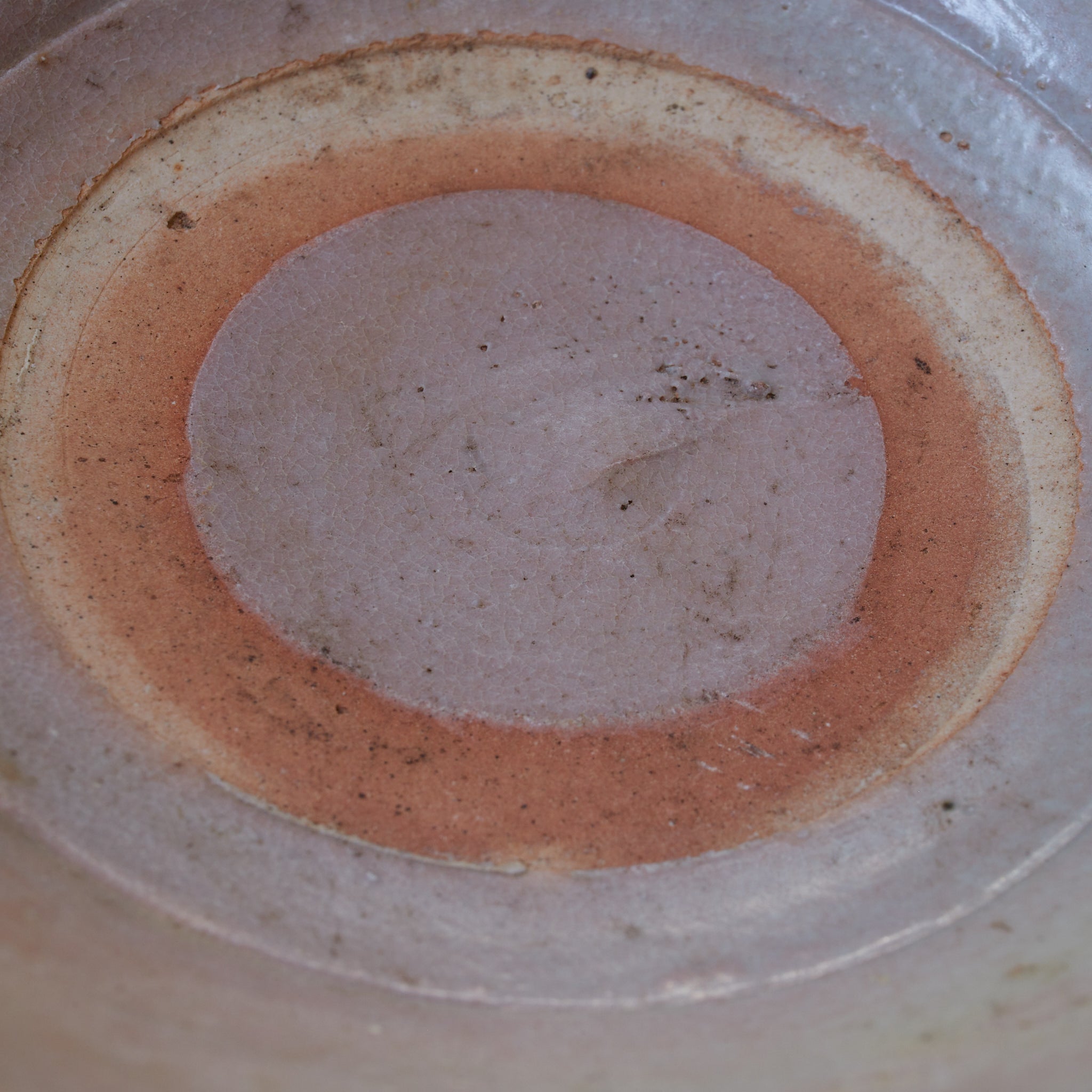
The interior is coated with a white glaze; within the pale, slightly bluish white a delicate pinkish‑red hue from firing appears. At the center of the interior a circular mark from repeated firings remains, and a reddish, ring‑like pattern has formed around it. The restrained tone of the white glaze, overlaid by the red of the clay, lends the interior a subtle, natural variation.
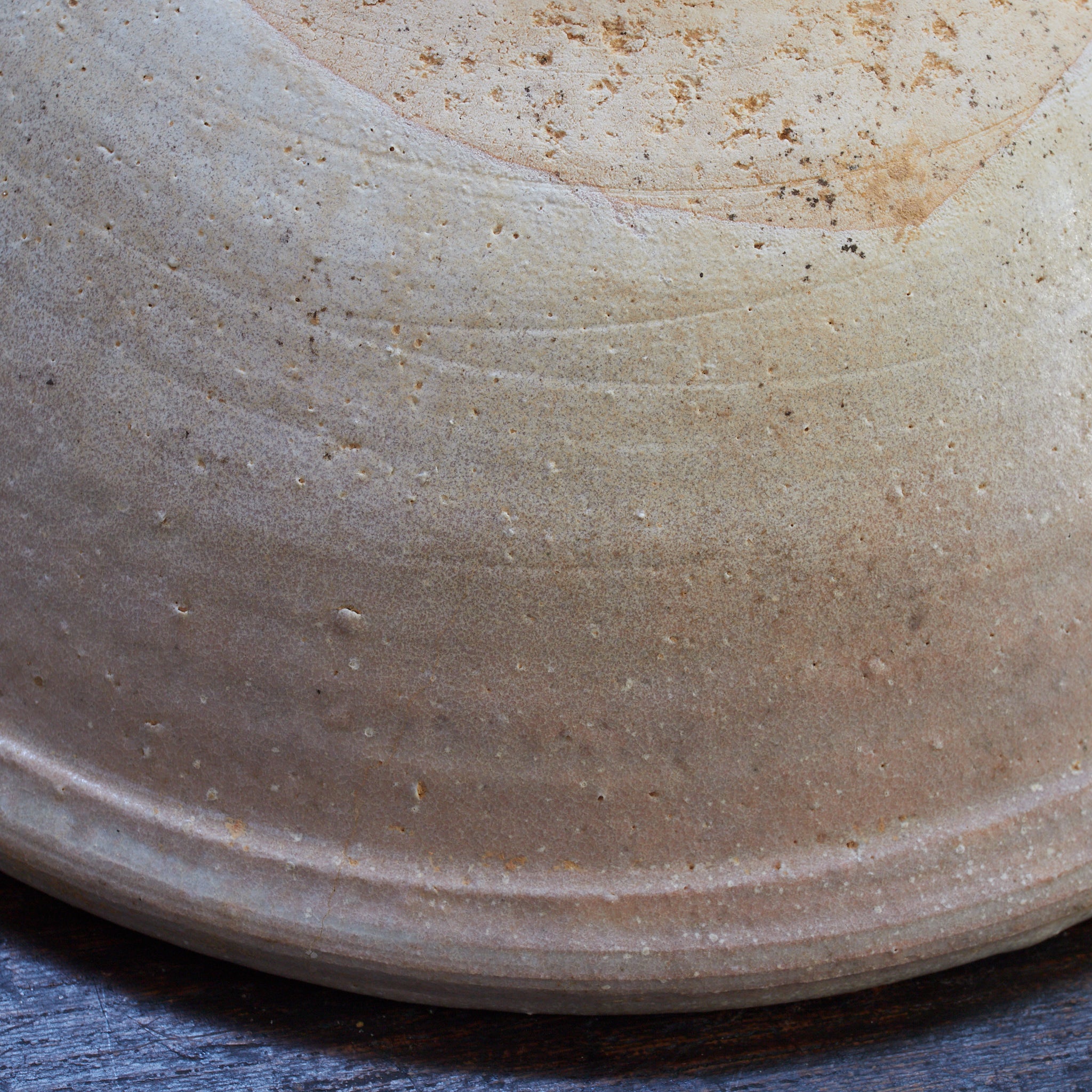
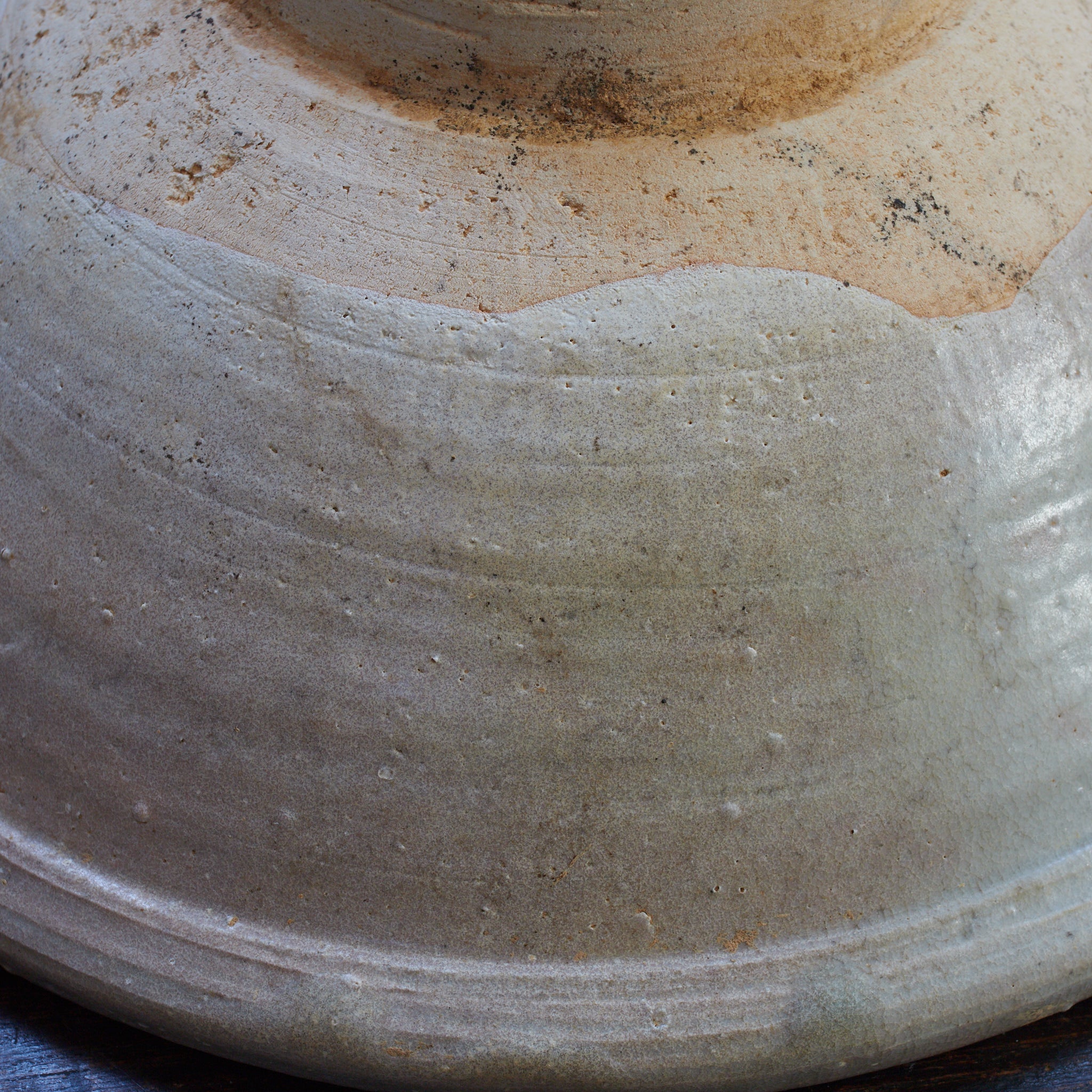
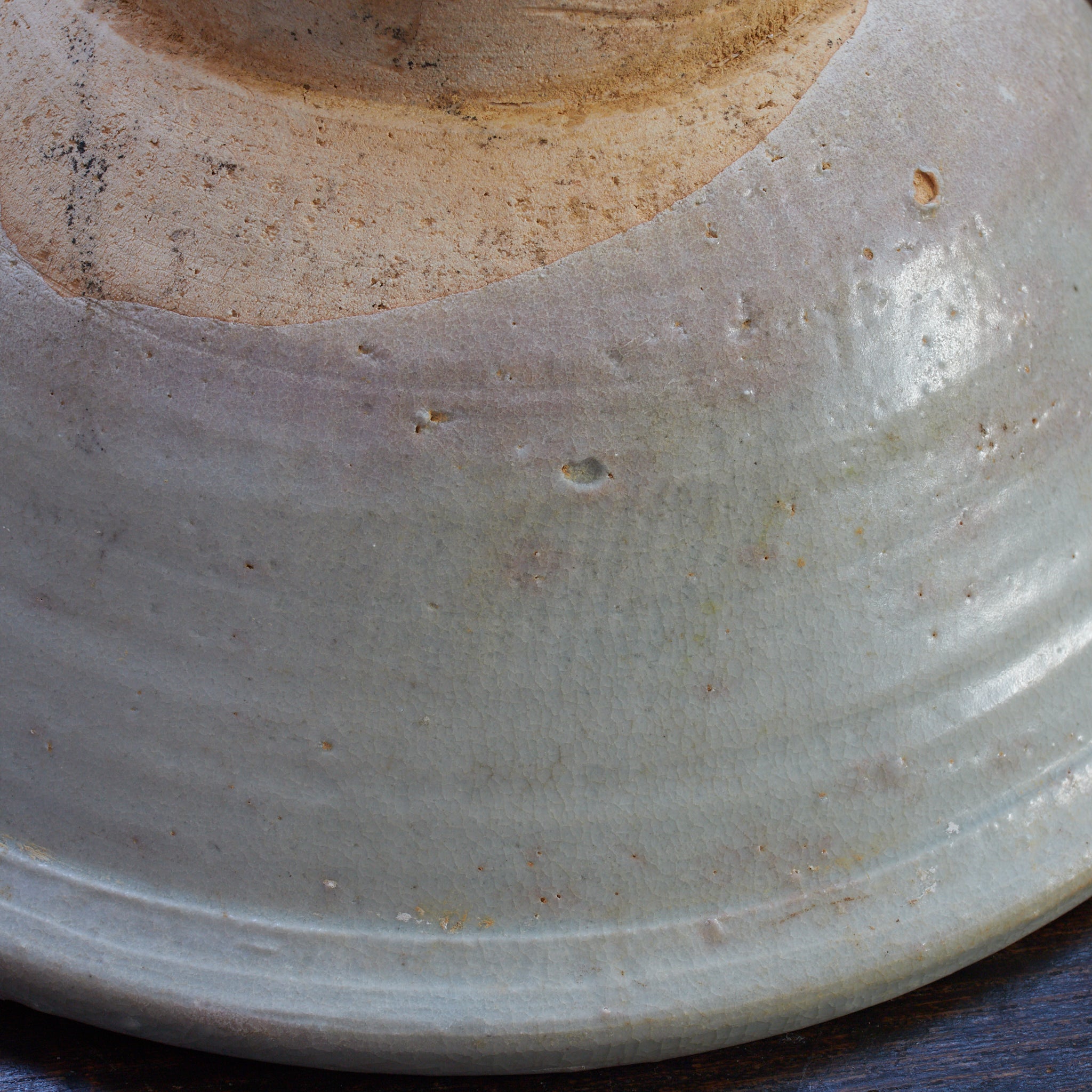
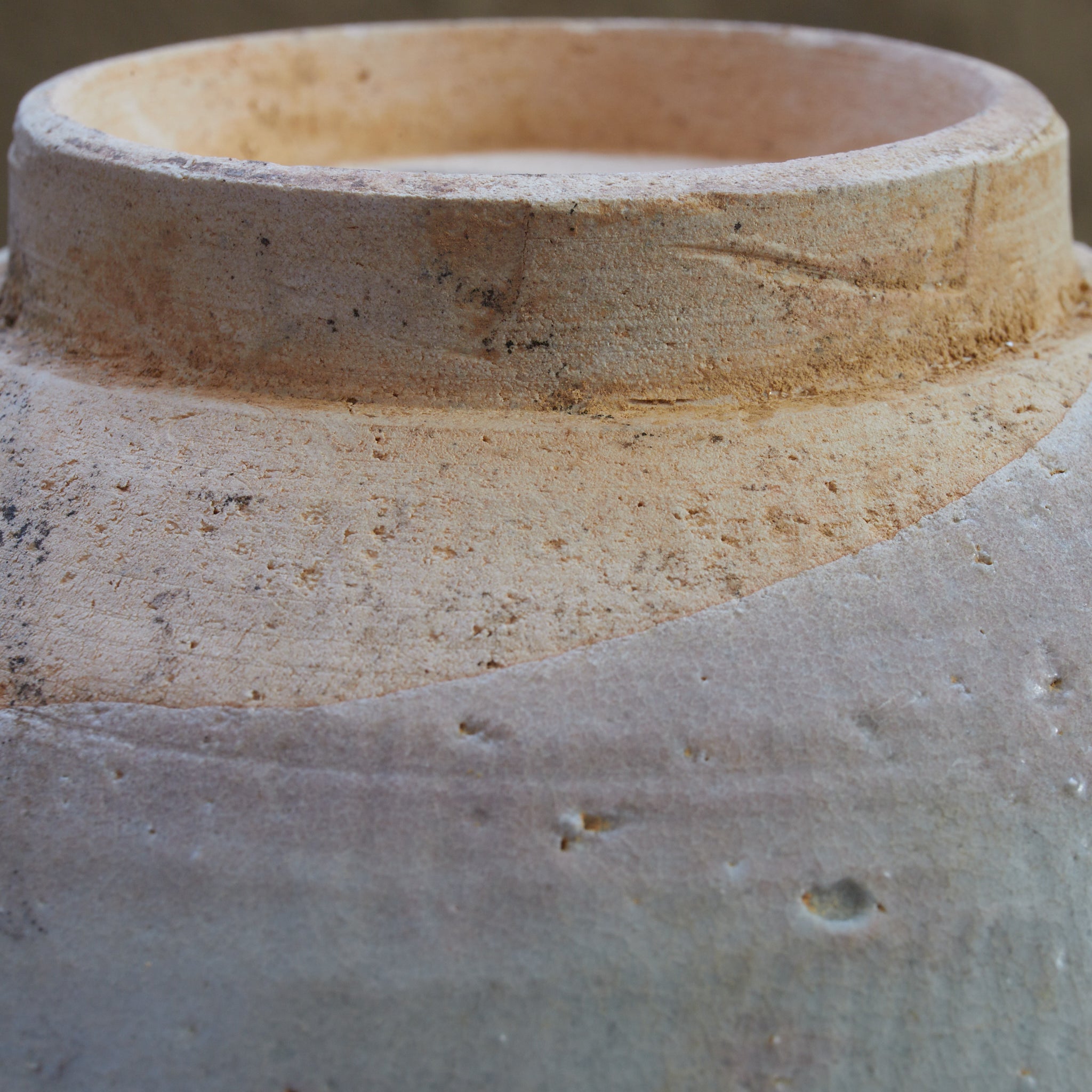
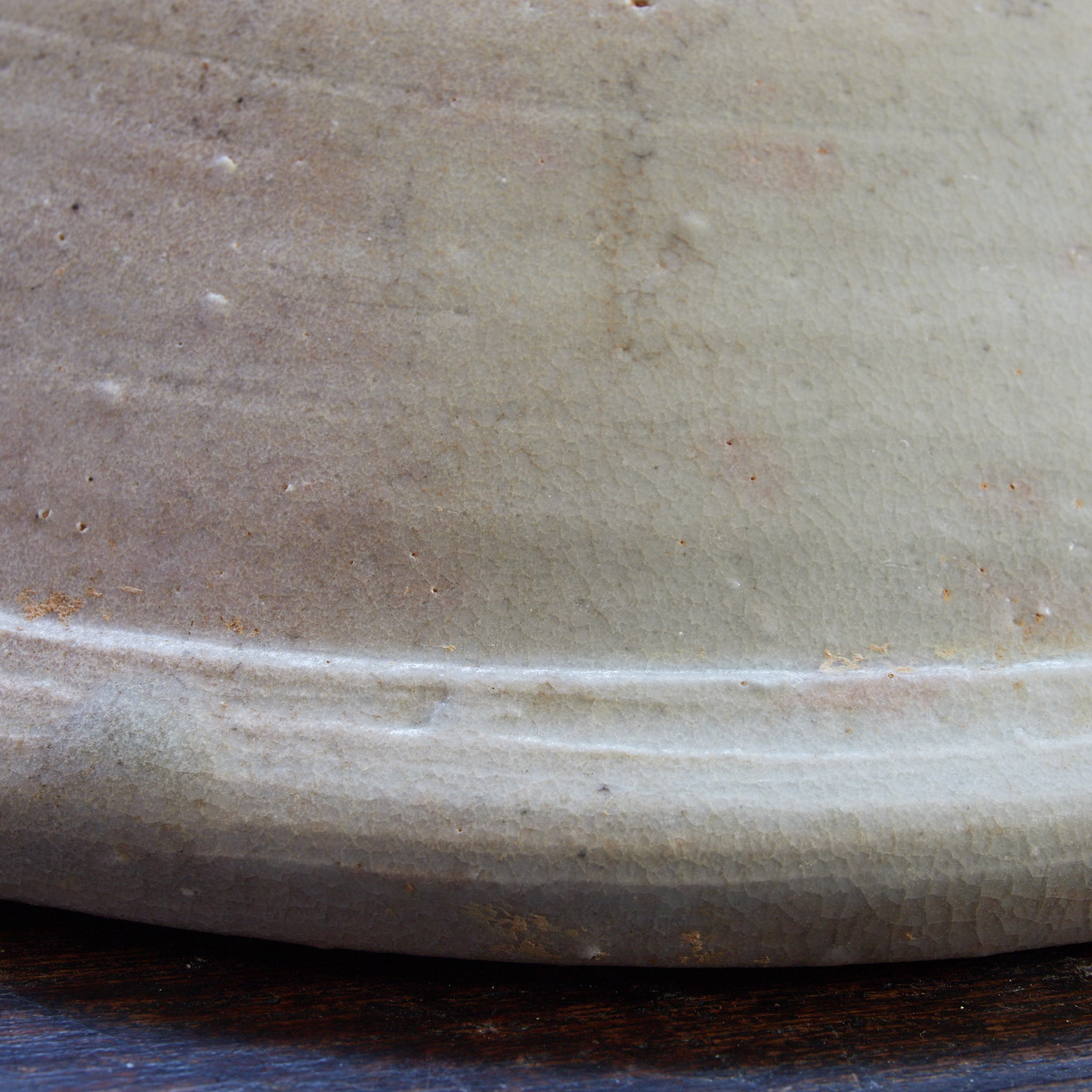
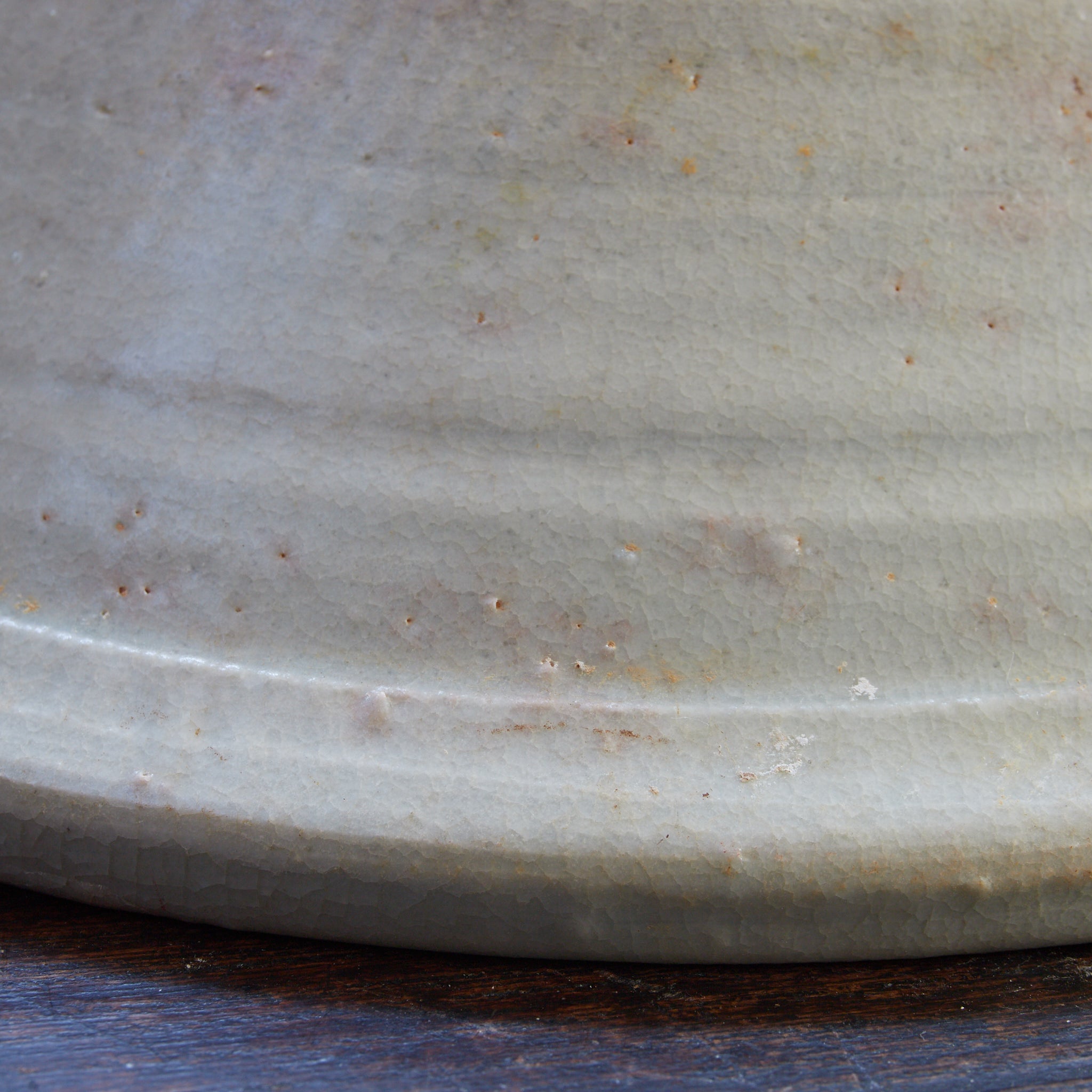
The exterior is thinly glazed, leaving wheel marks visible on a grayish surface. A few shallow incised lines run below the rim, serving as a pleasing accent within the spare form. Against the white of the interior, the exterior’s pronounced earthy character creates distinct expressions inside and out.
Among Song–Yuan white‑glazed ceramics there are examples that, distinct from refined white porcelain, retain the presence and utility of everyday vessels. This example belongs to that tradition: its unadorned form, the pale pinkish hue imparted by firing, and the soft tone of the white glaze harmonize well. In addition to use as a tea bowl, it also pairs naturally with utensils for sencha or Chinese tea.
Small chips and wear along the rim; the glaze displays age-related abrasion, fine crazing, and adhering soil. Areas of exposed body remain around the foot, clearly revealing the clay’s character developed during firing. The overall form is well preserved; highlights include overlapping firing marks in the interior and a delicate pale-pink fire color.
Choose options
Tax excluded. Import duties may apply. Shipping costs are calculated at checkout.
Change language
