



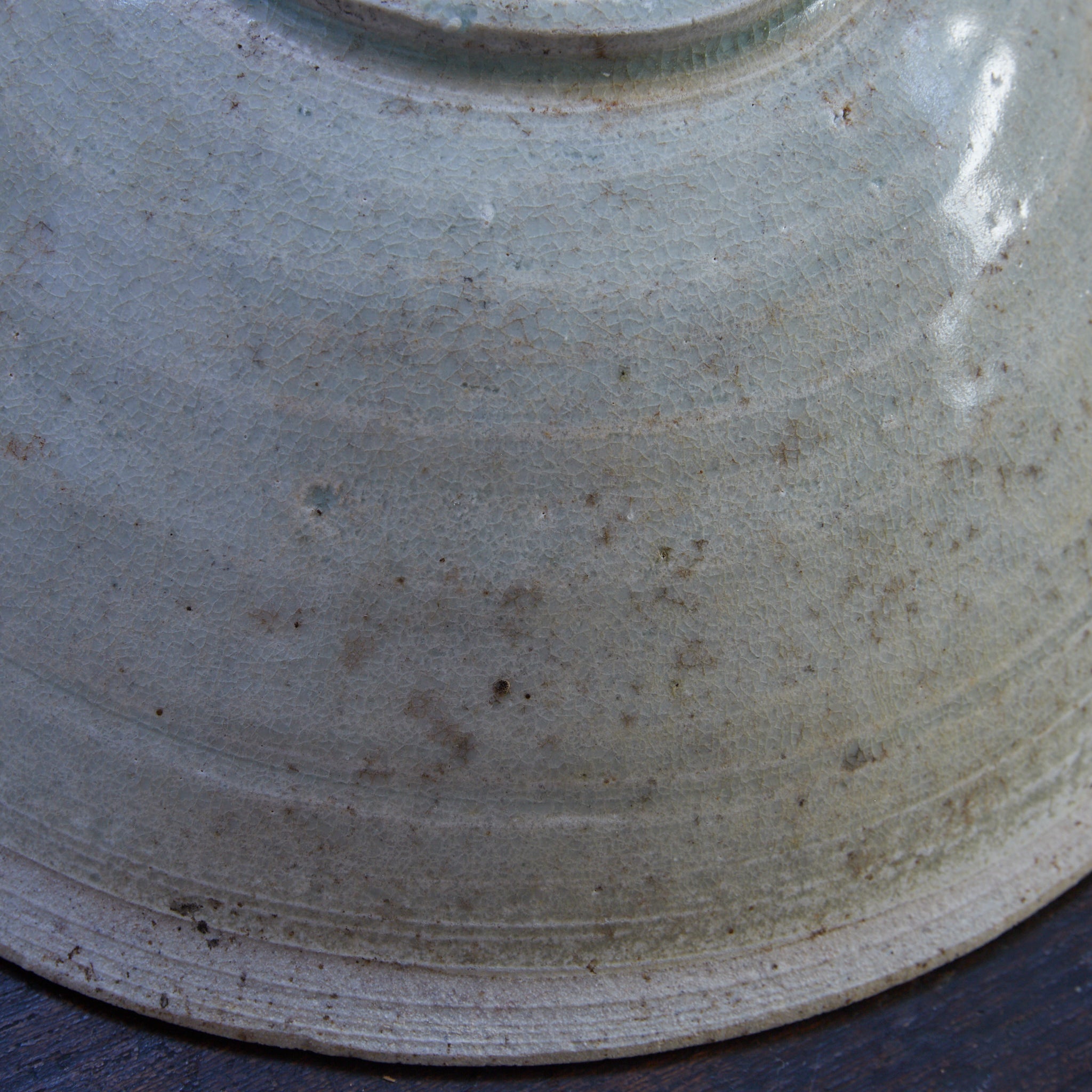
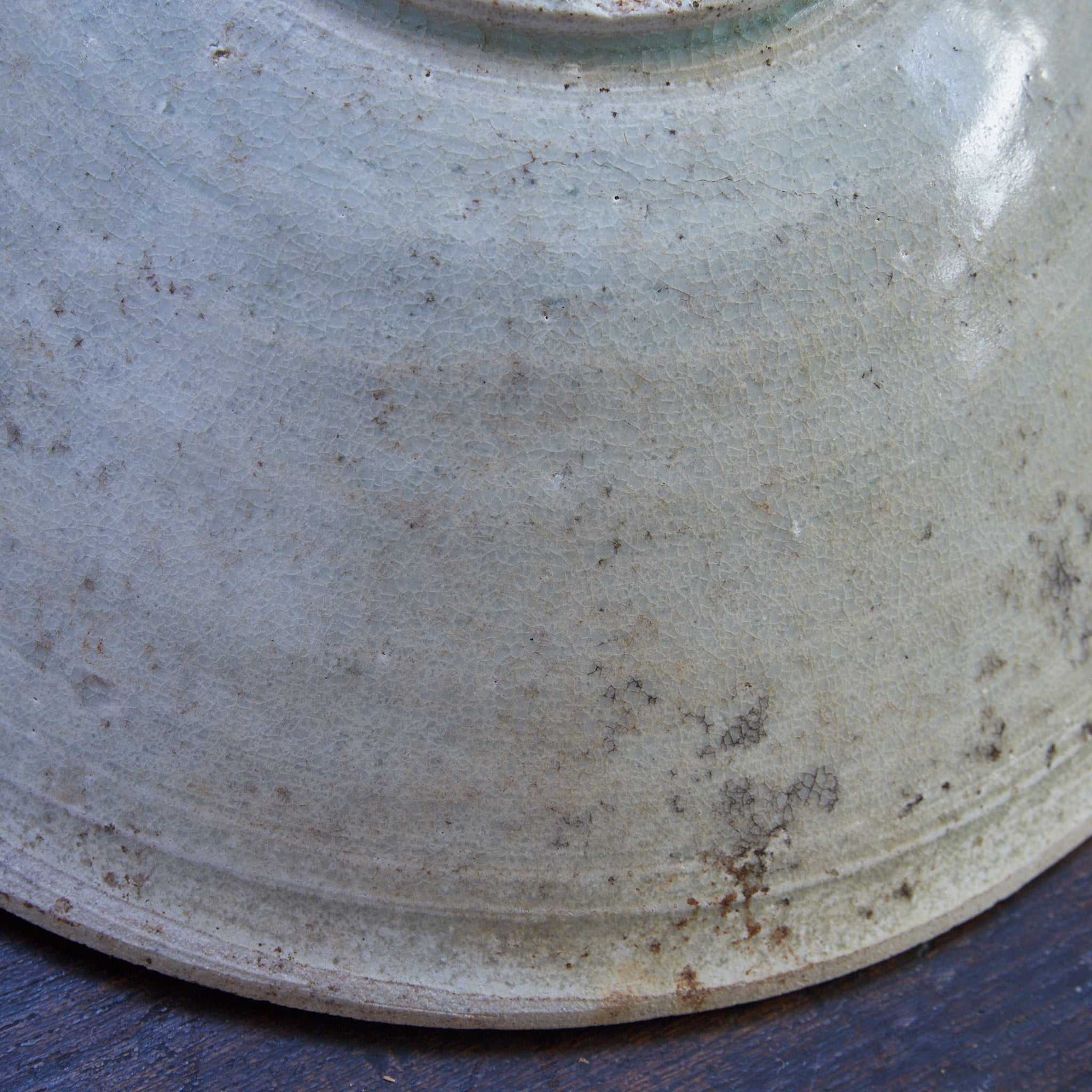
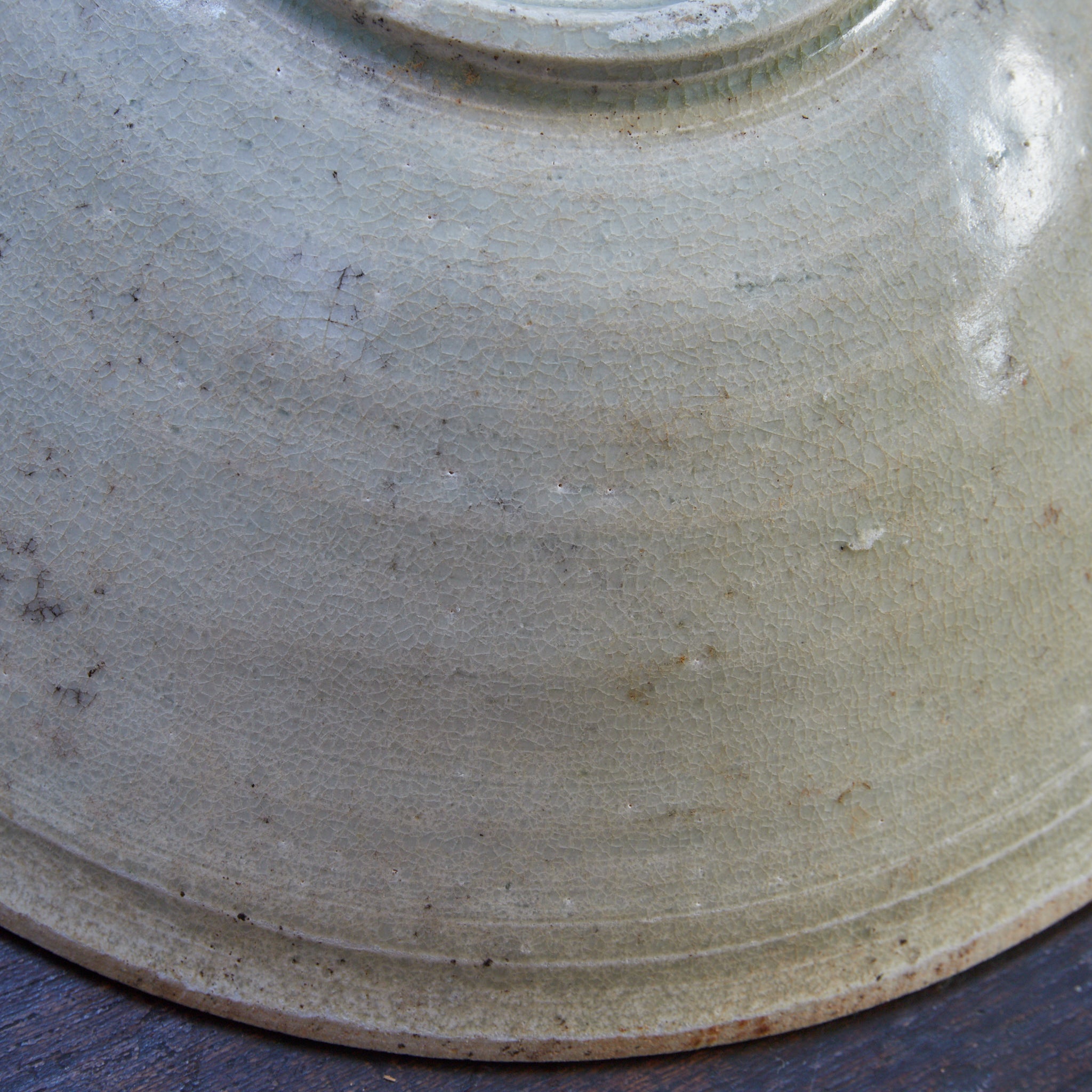
BOWL, Hutian Kiln, qingbai ware, Song Dynasty (960–1279 CE)
Tax excluded. Import duties may apply. Shipping costs are calculated at checkout.
However, we may respond individually to certain customers after reviewing the circumstances.
Please contact us for further details.
Shipping to the United Kingdom and Switzerland remains available.
Numerous product photos are available for you to examine the details and condition. Should you have any questions, please do not hesitate to contact us.
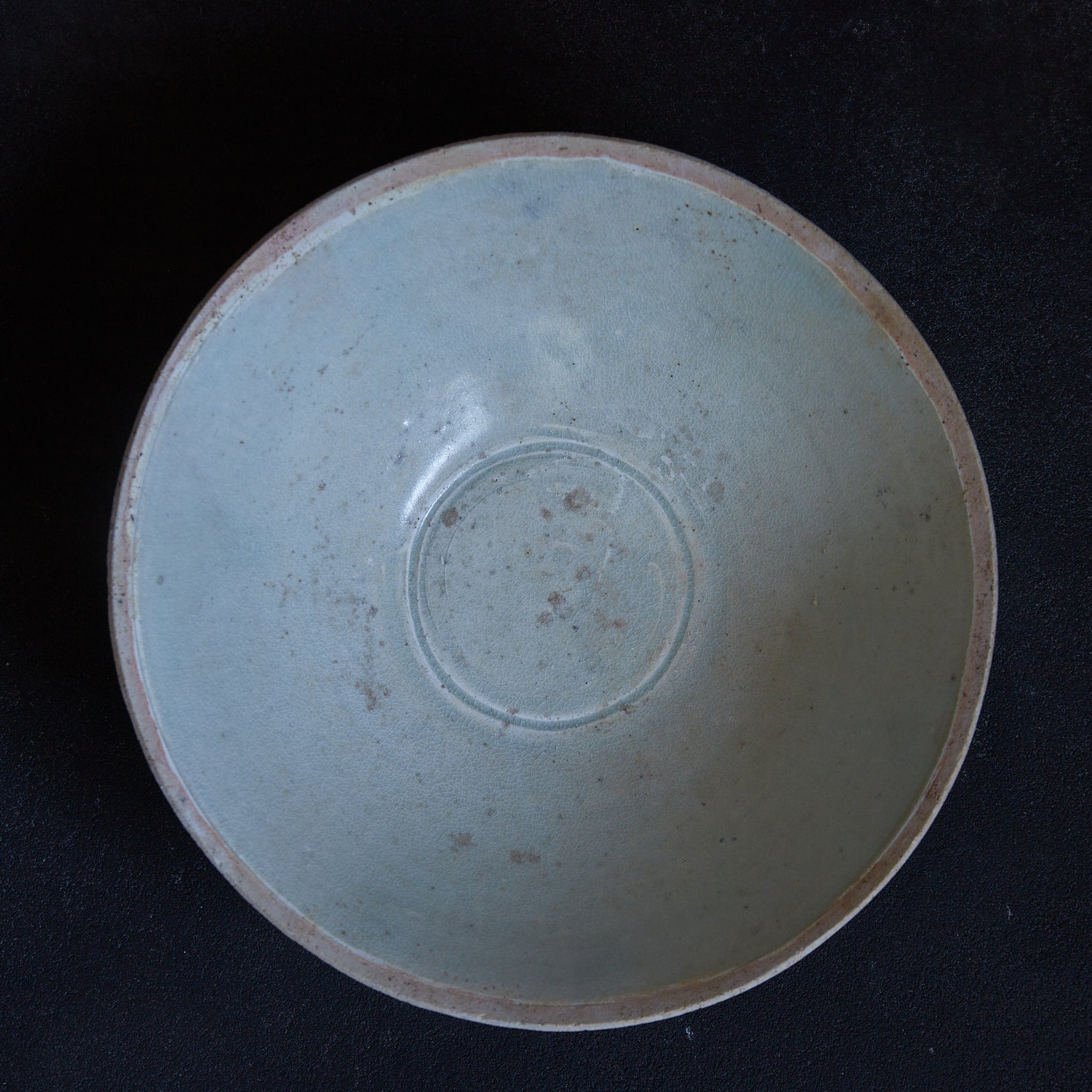
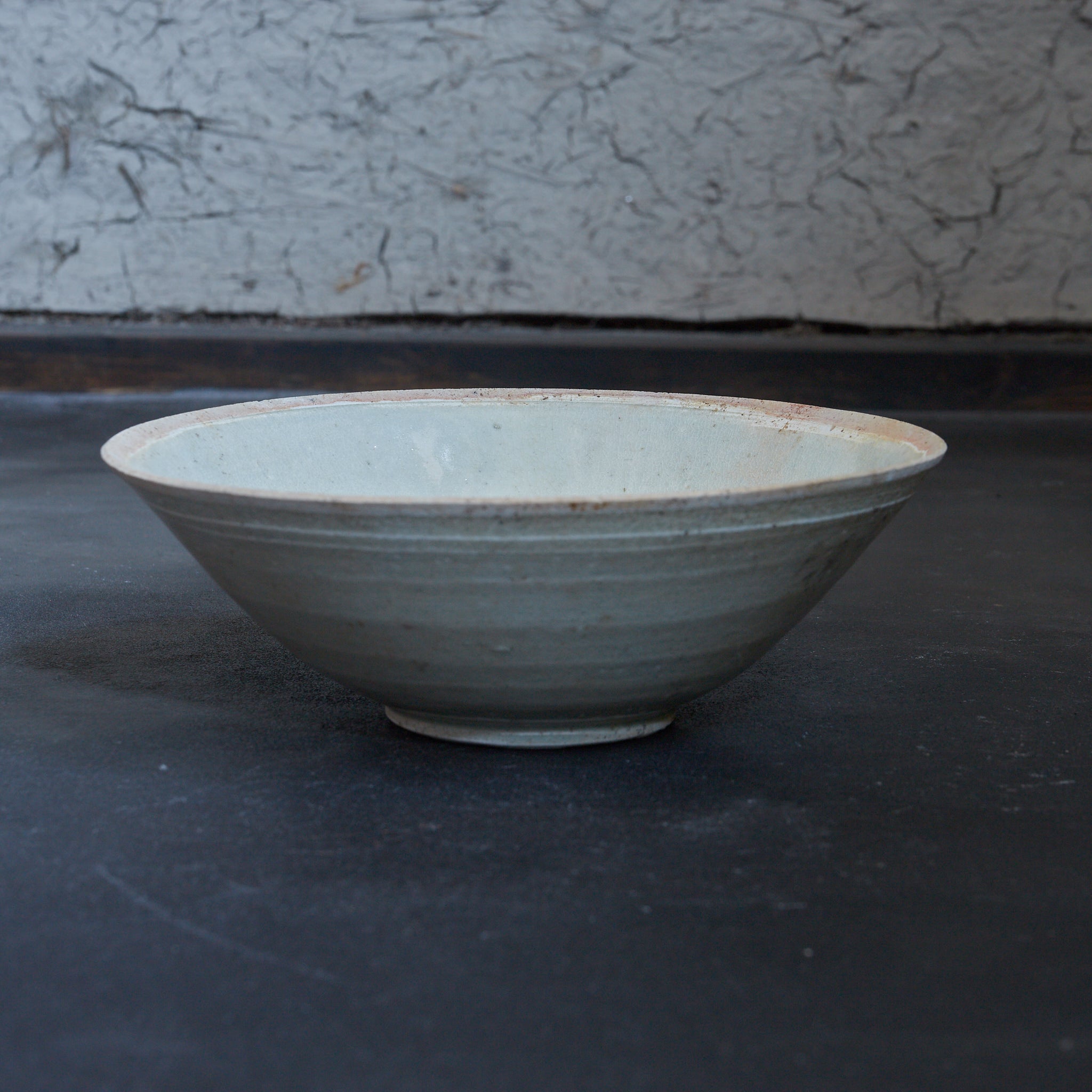
> Inquire about this productA shadow-celadon bowl from the Hutian kiln of the Song dynasty.
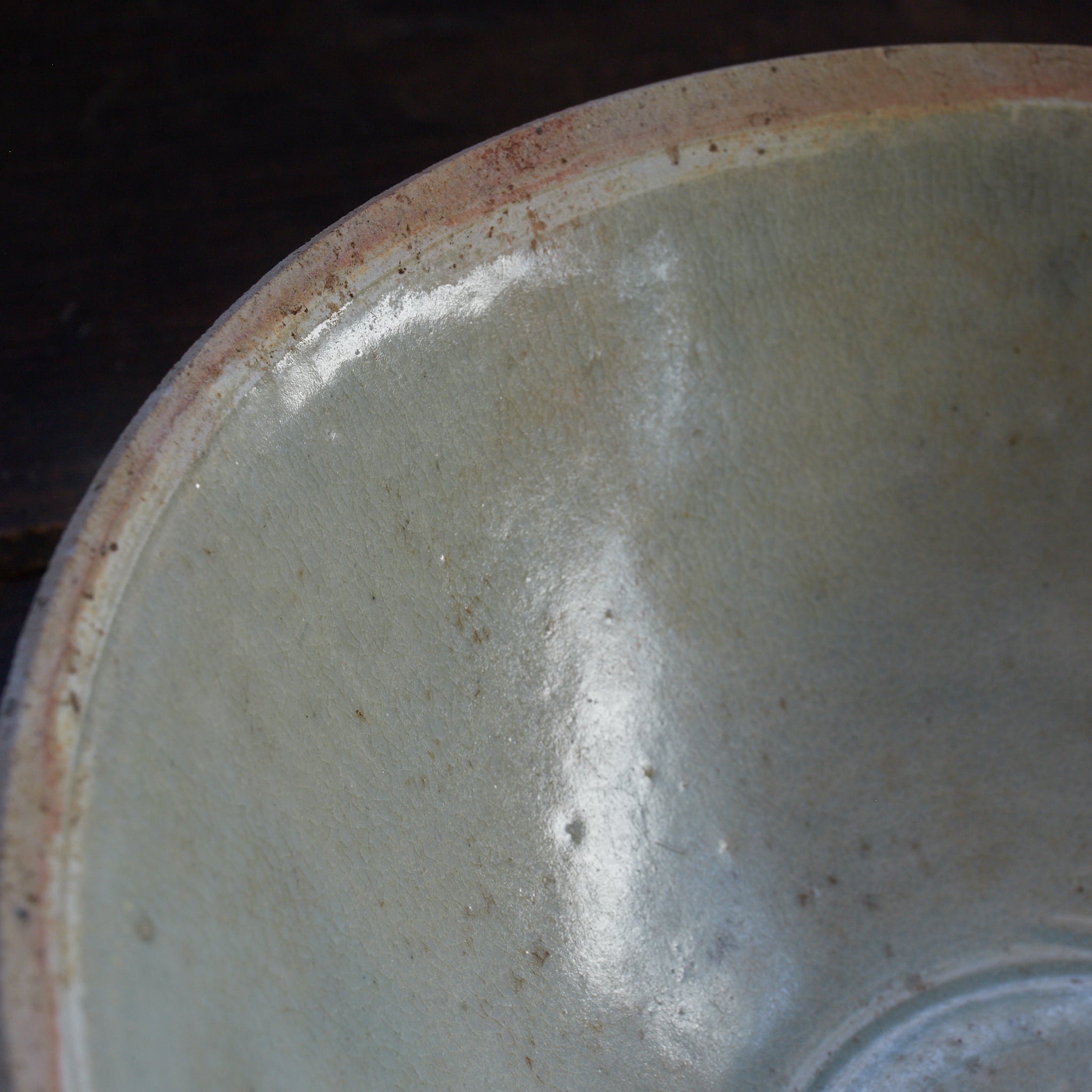
The Hutian Kiln, a representative Song Dynasty workshop in Jingdezhen, Jiangxi Province, produced many qingbai wares—white-bodied pieces covered with a highly transparent glaze. Qingbai, also called bluish-white ware, is distinguished by a delicate bluish cast where the glaze is thicker. This bowl likewise displays a pale bluish-white glaze complemented by areas of kiln-fired coloration.
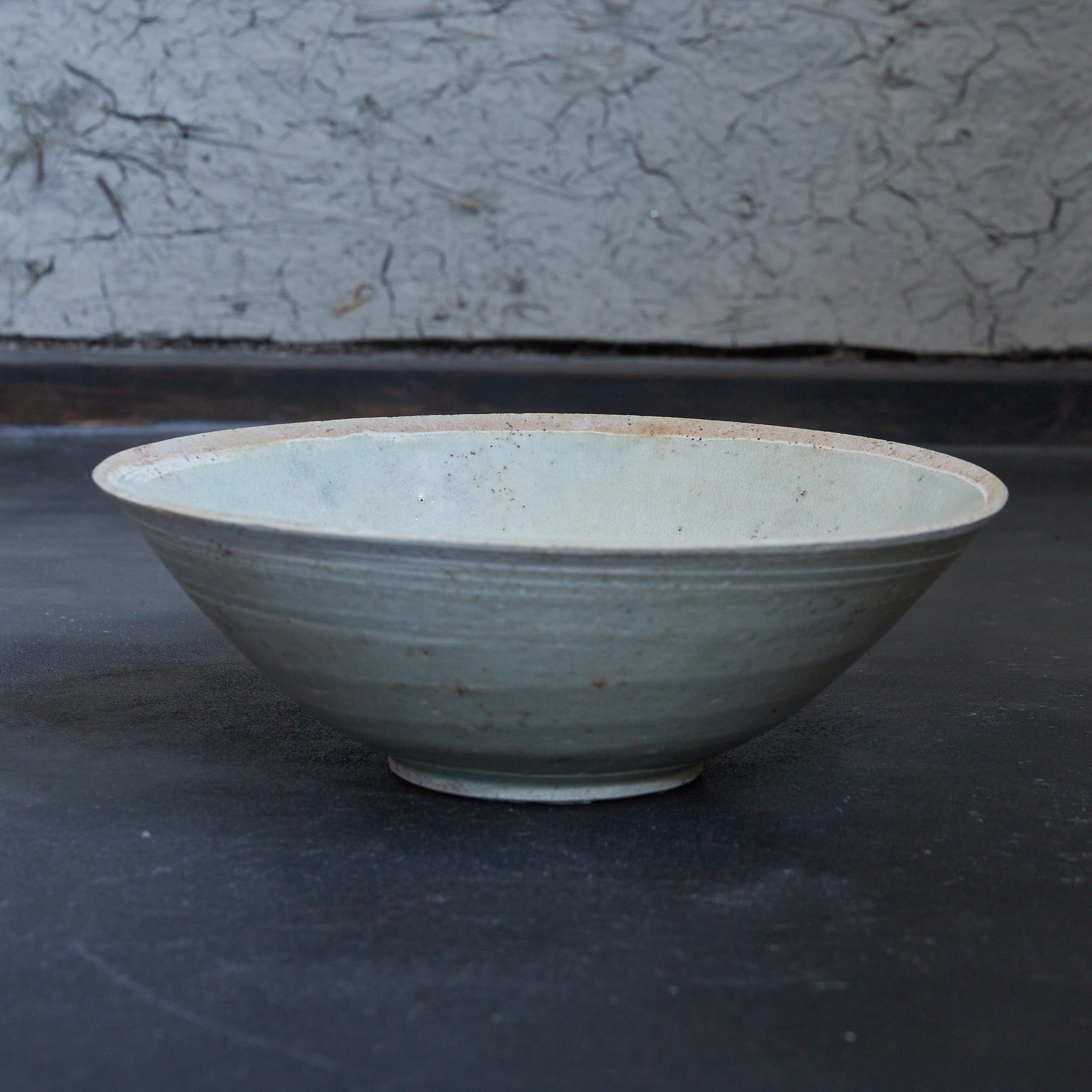
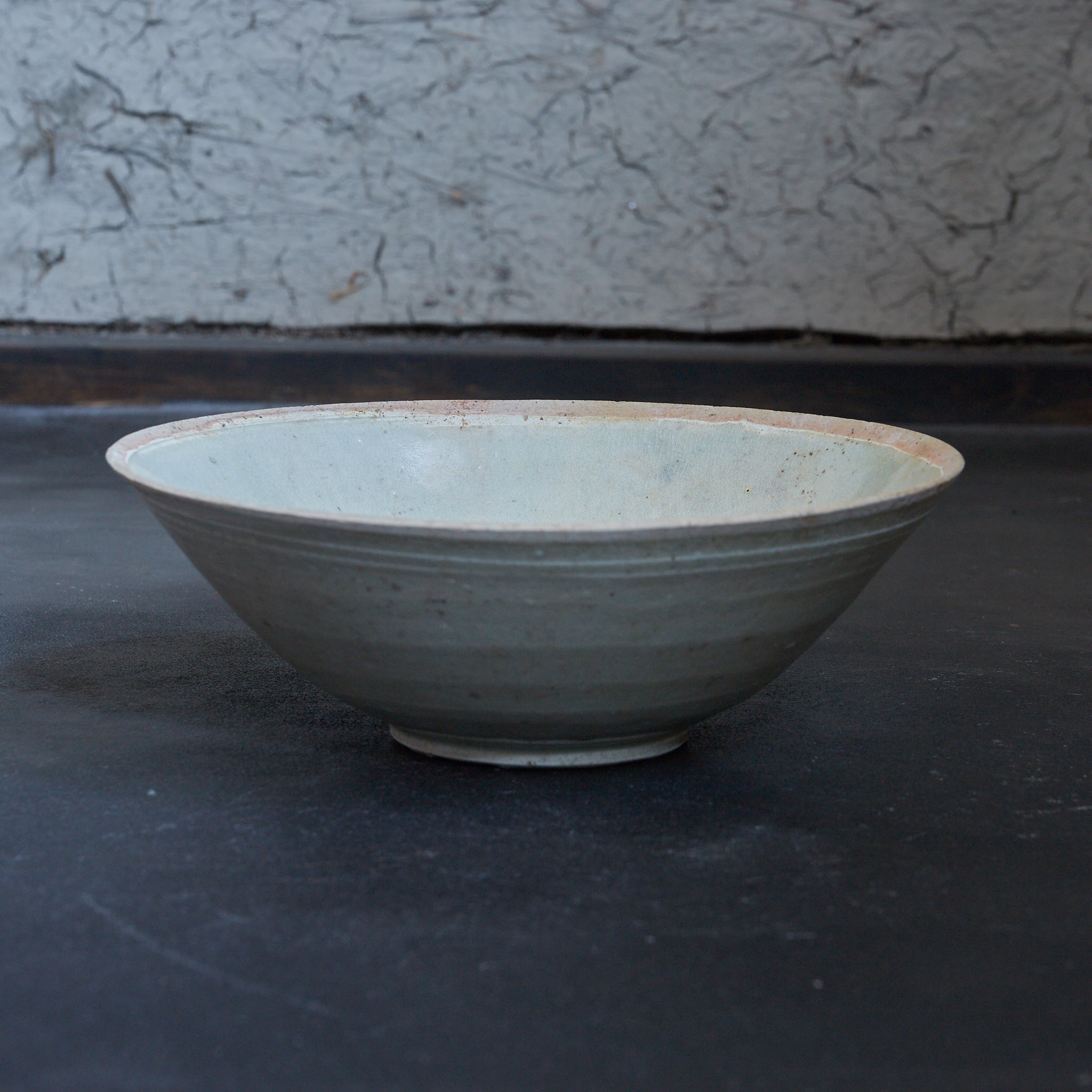
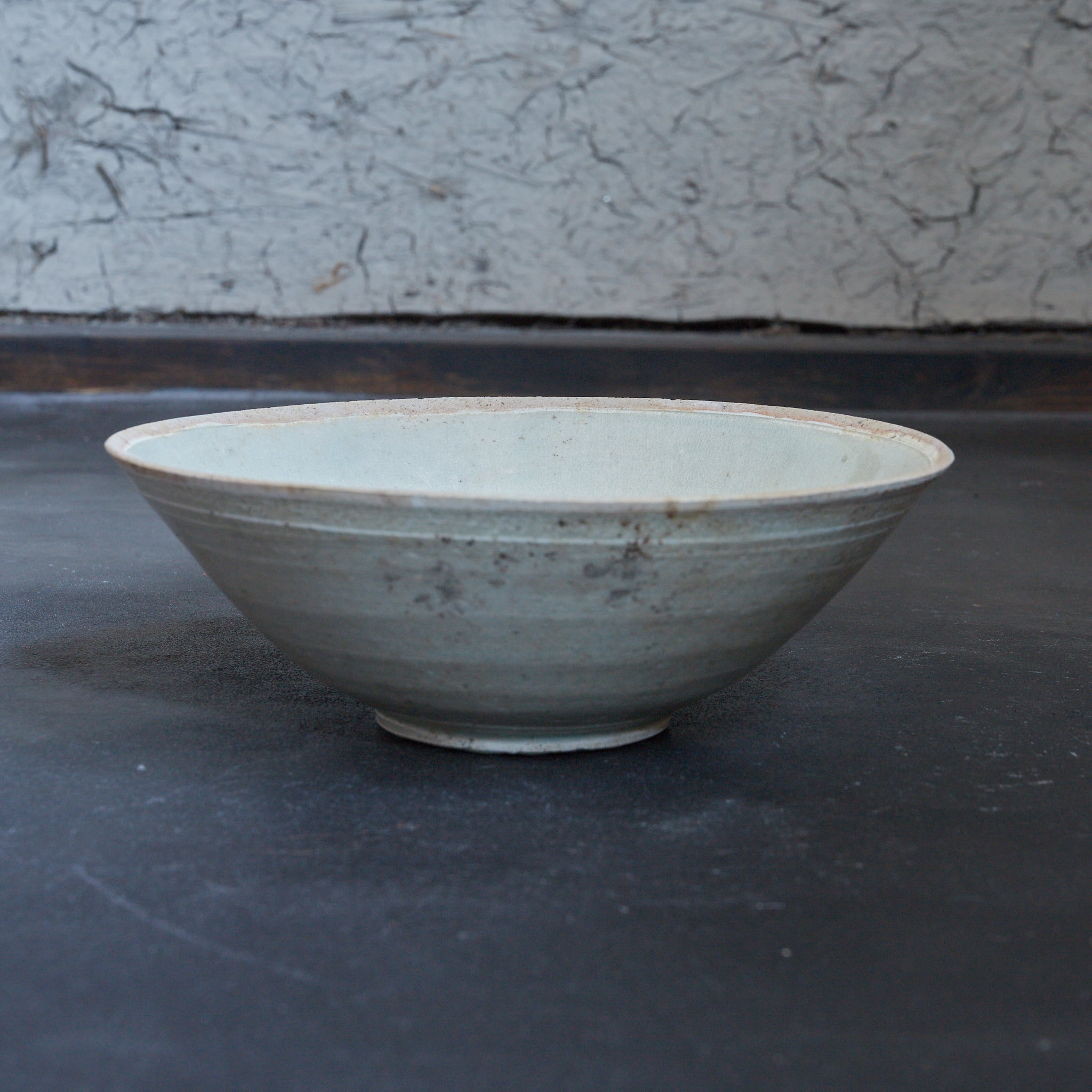
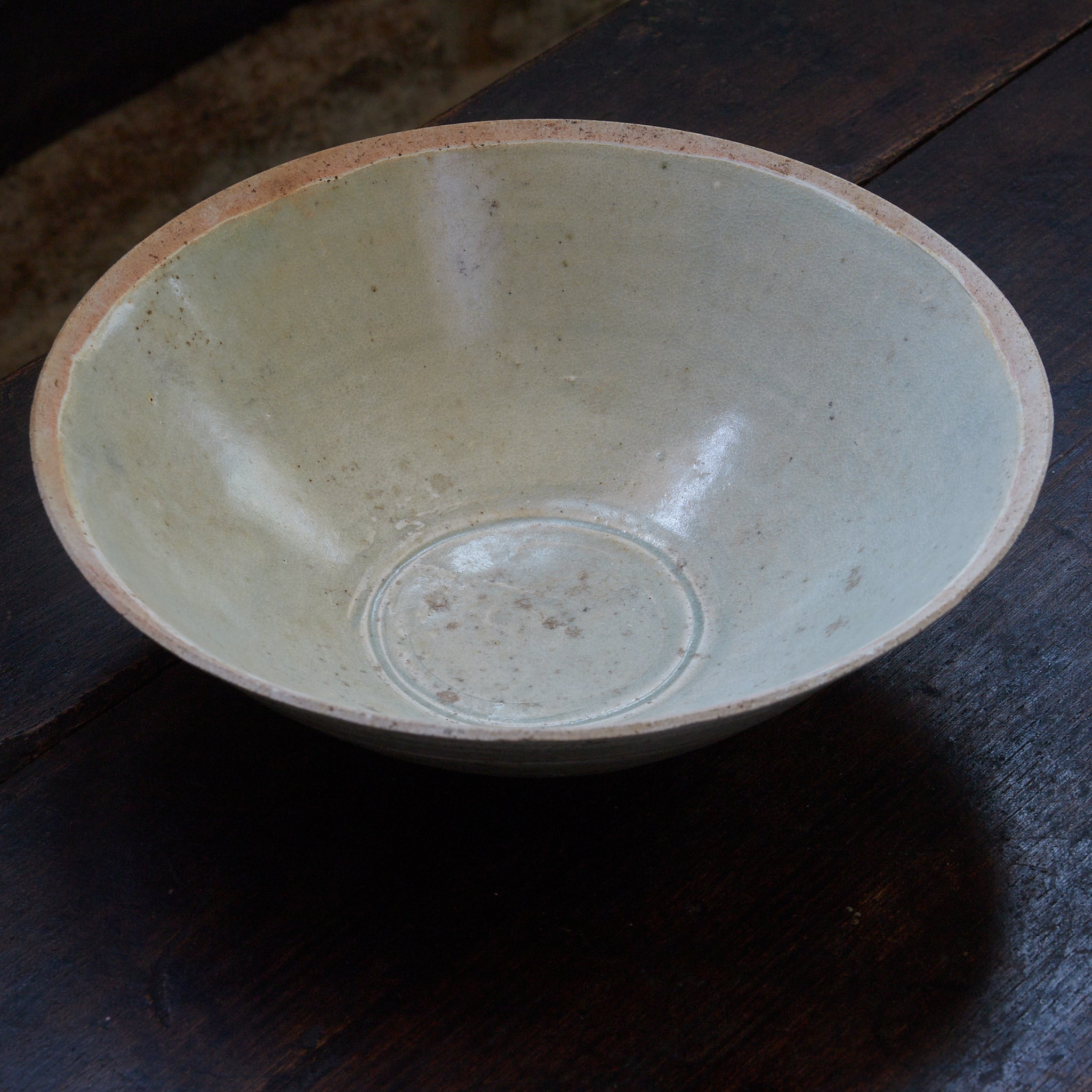
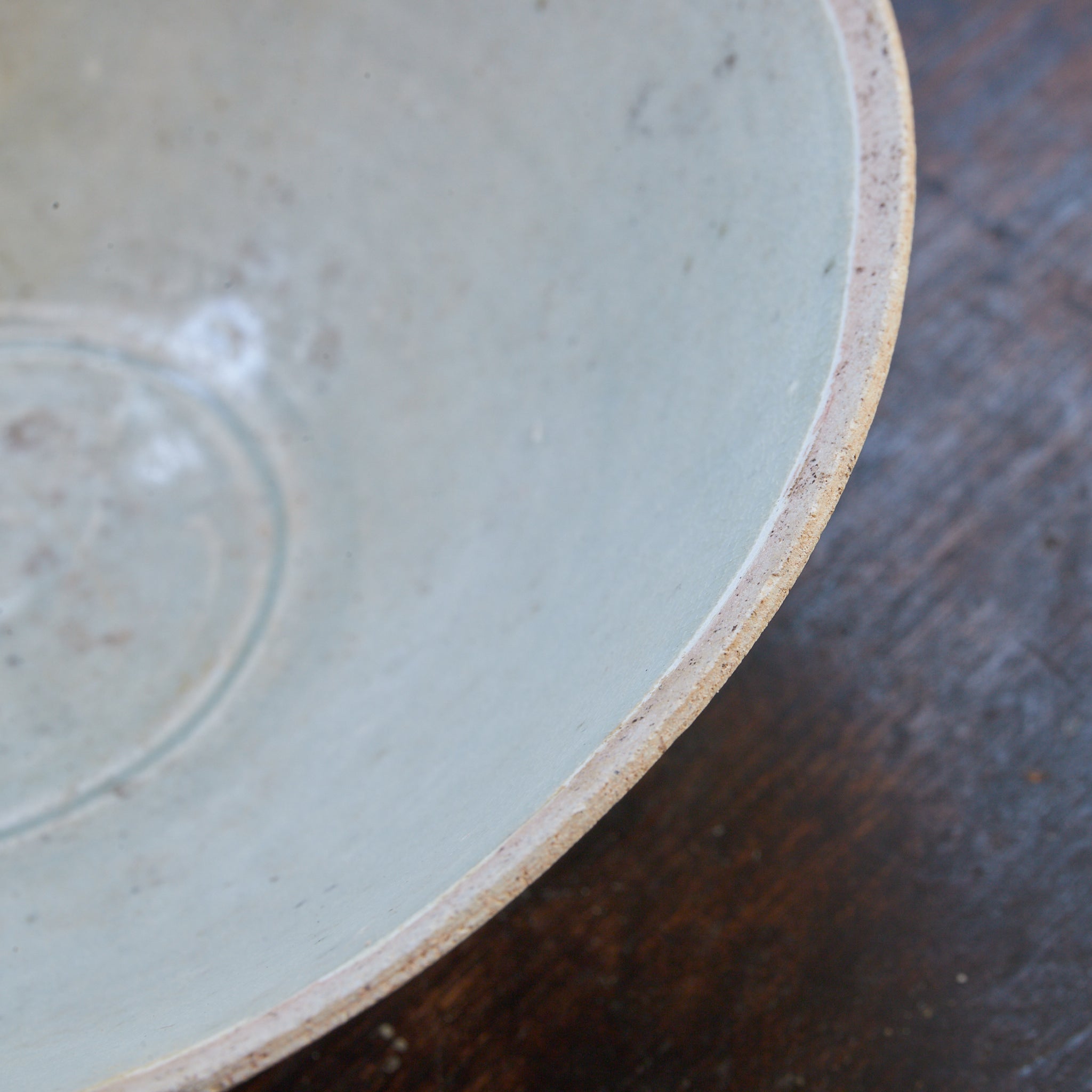
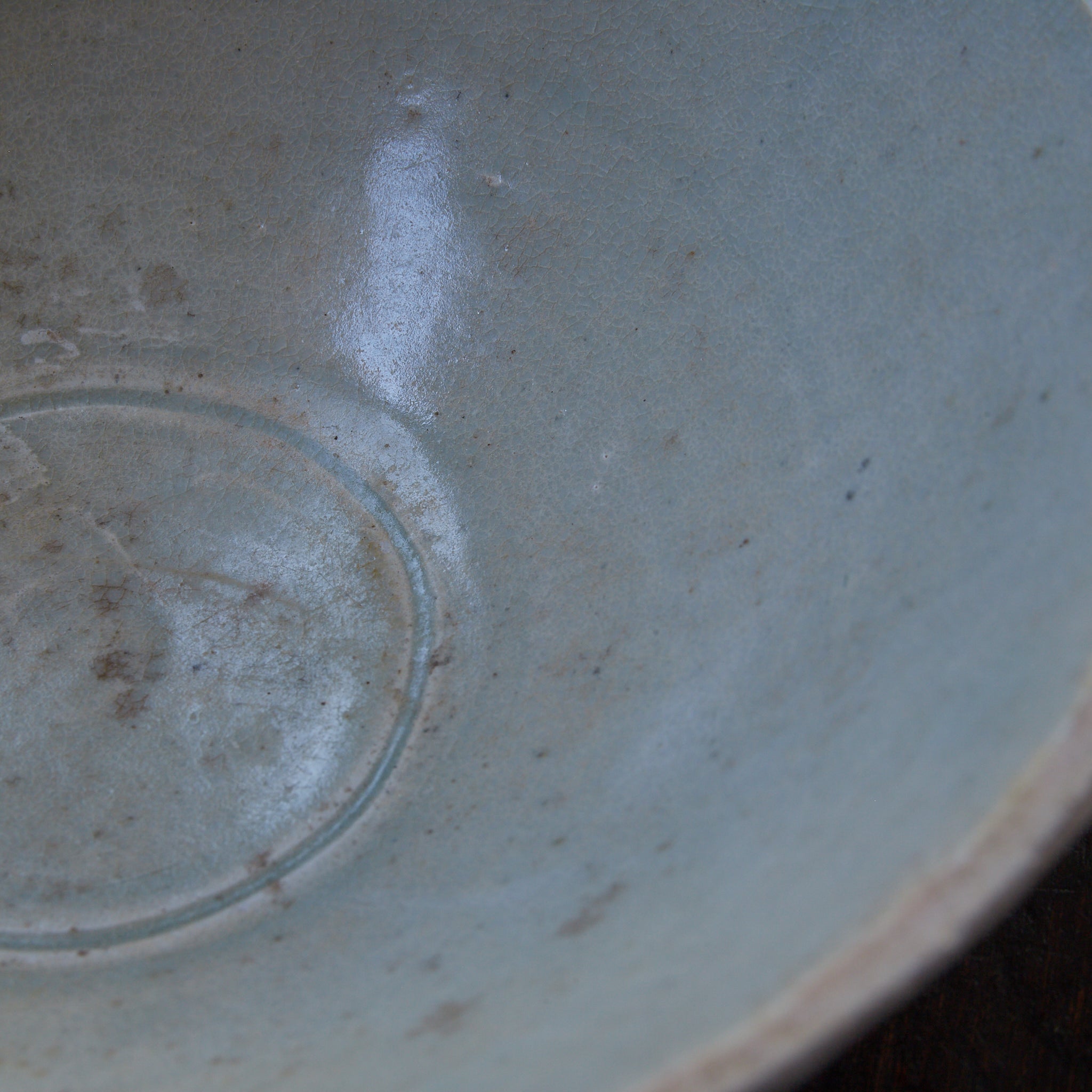
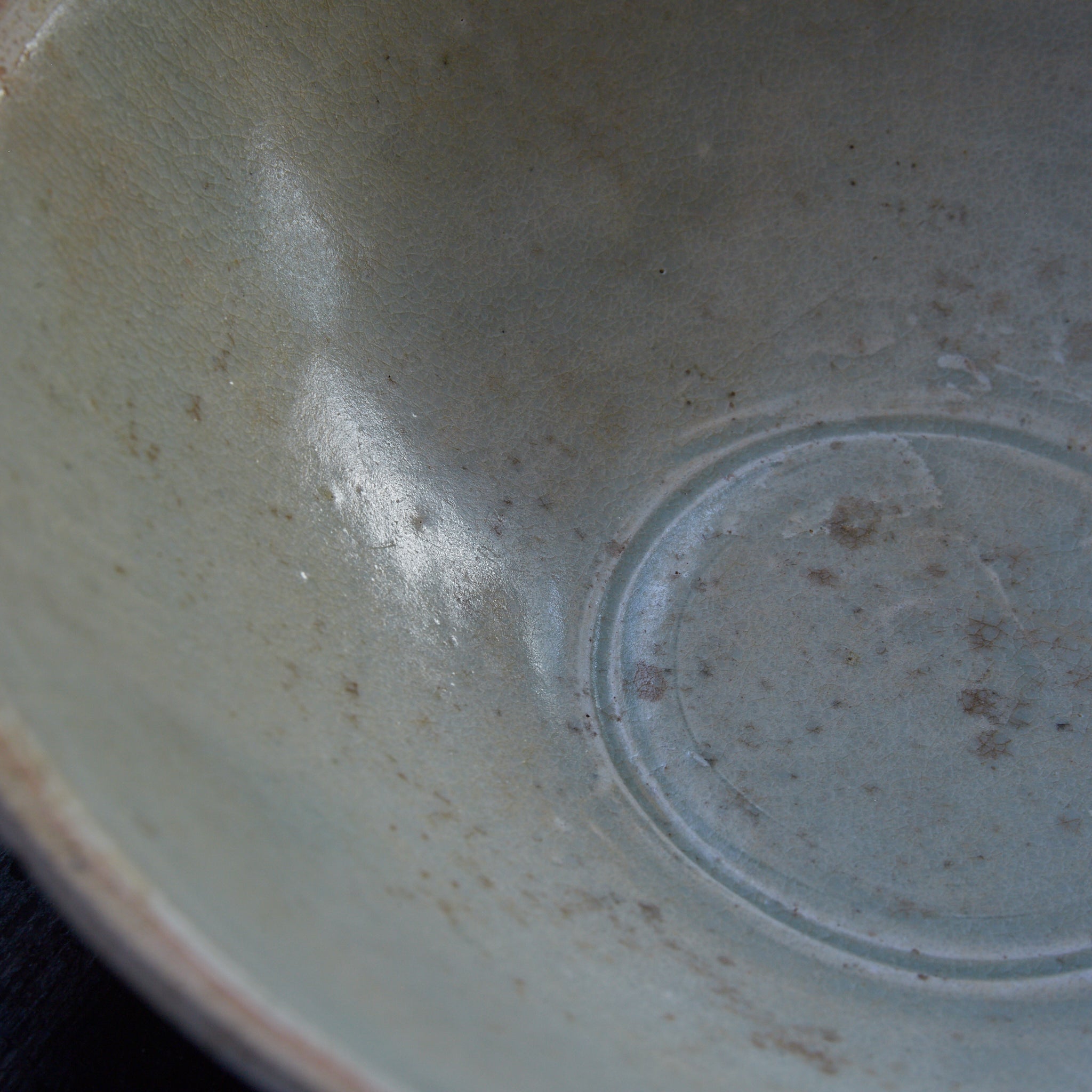
The vessel takes the form of a moderately deep bowl. The rim flares gently outward, the body has a natural rounded contour, and it stands on a low, stable foot. A fine concentric line runs around the interior, quietly refining the broad inner surface.
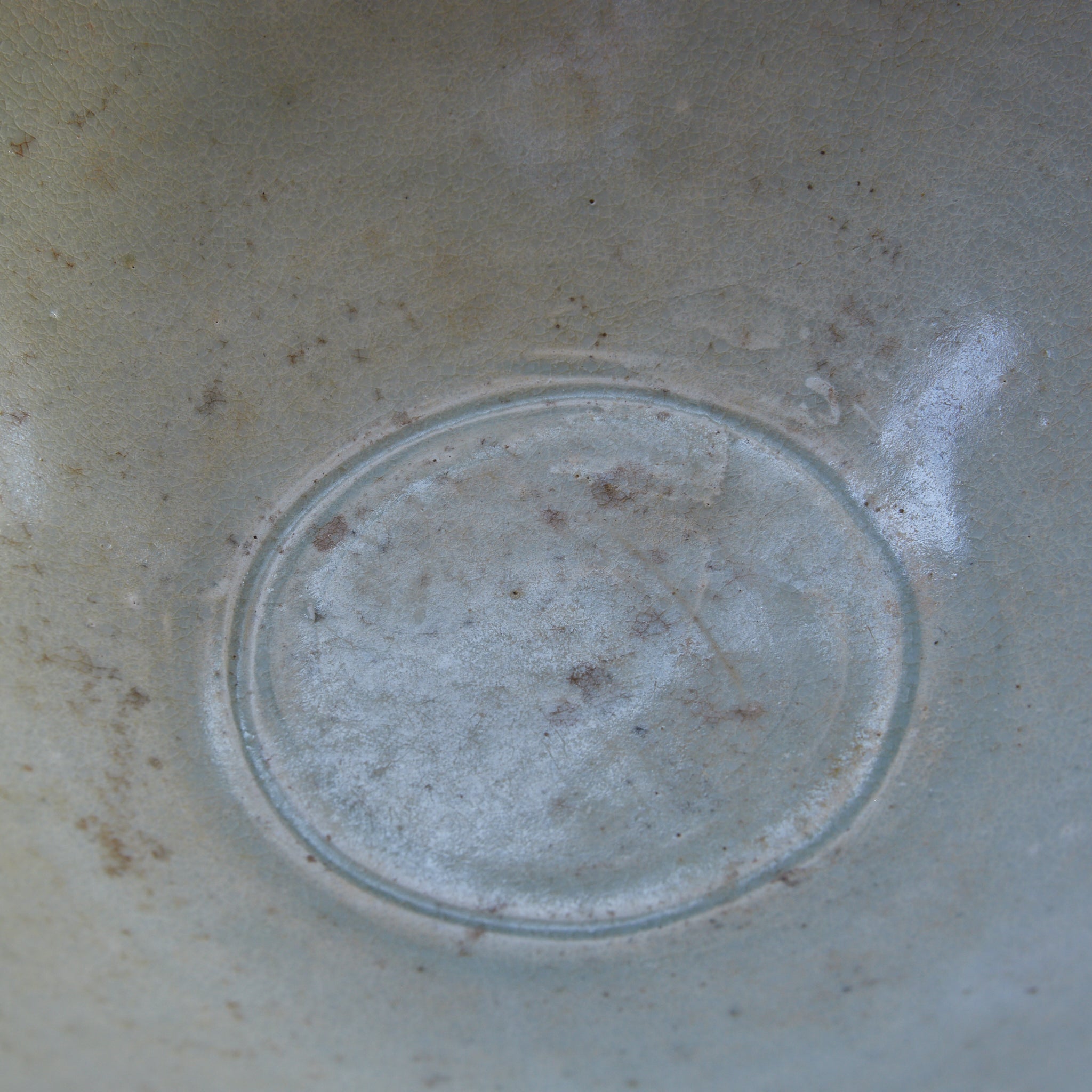
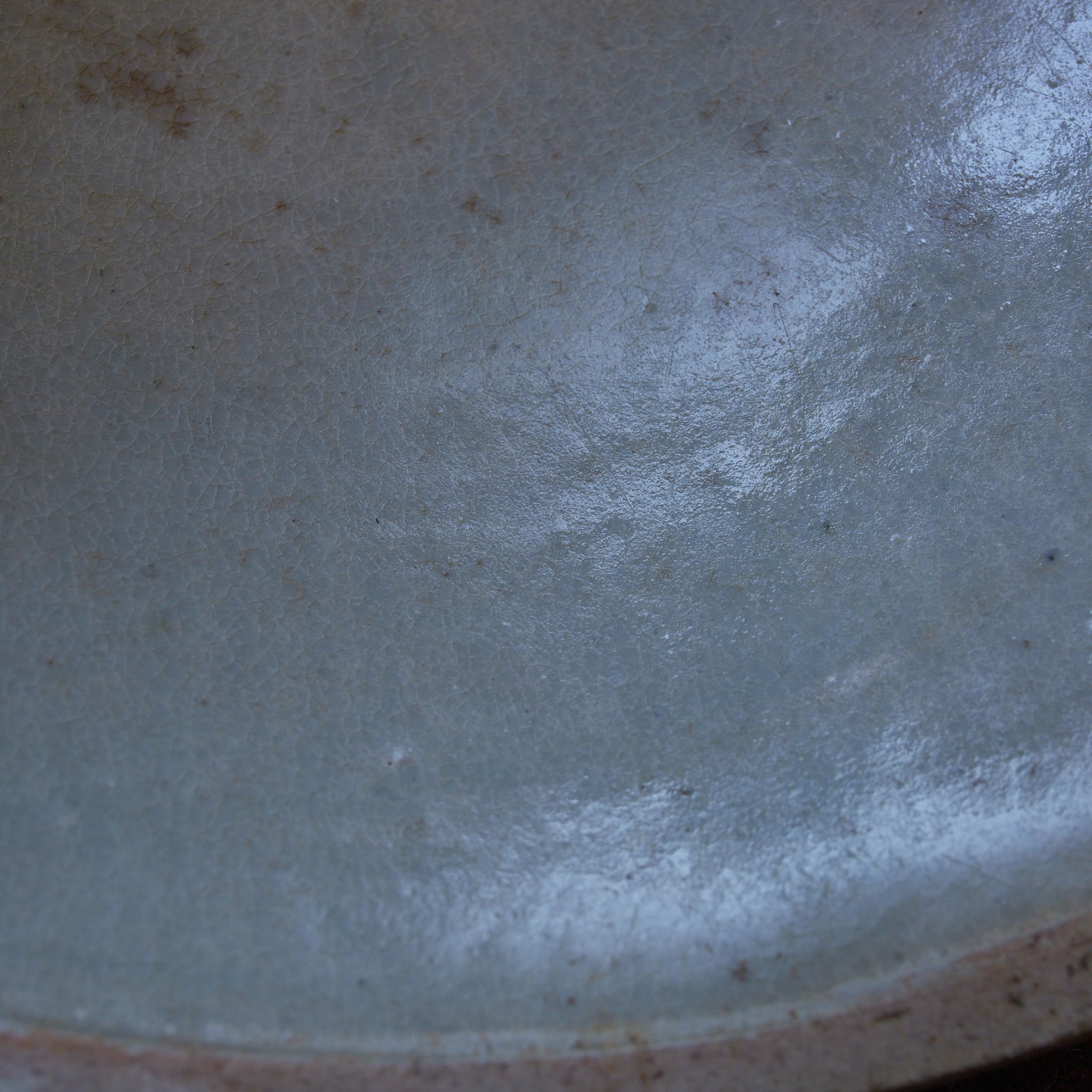
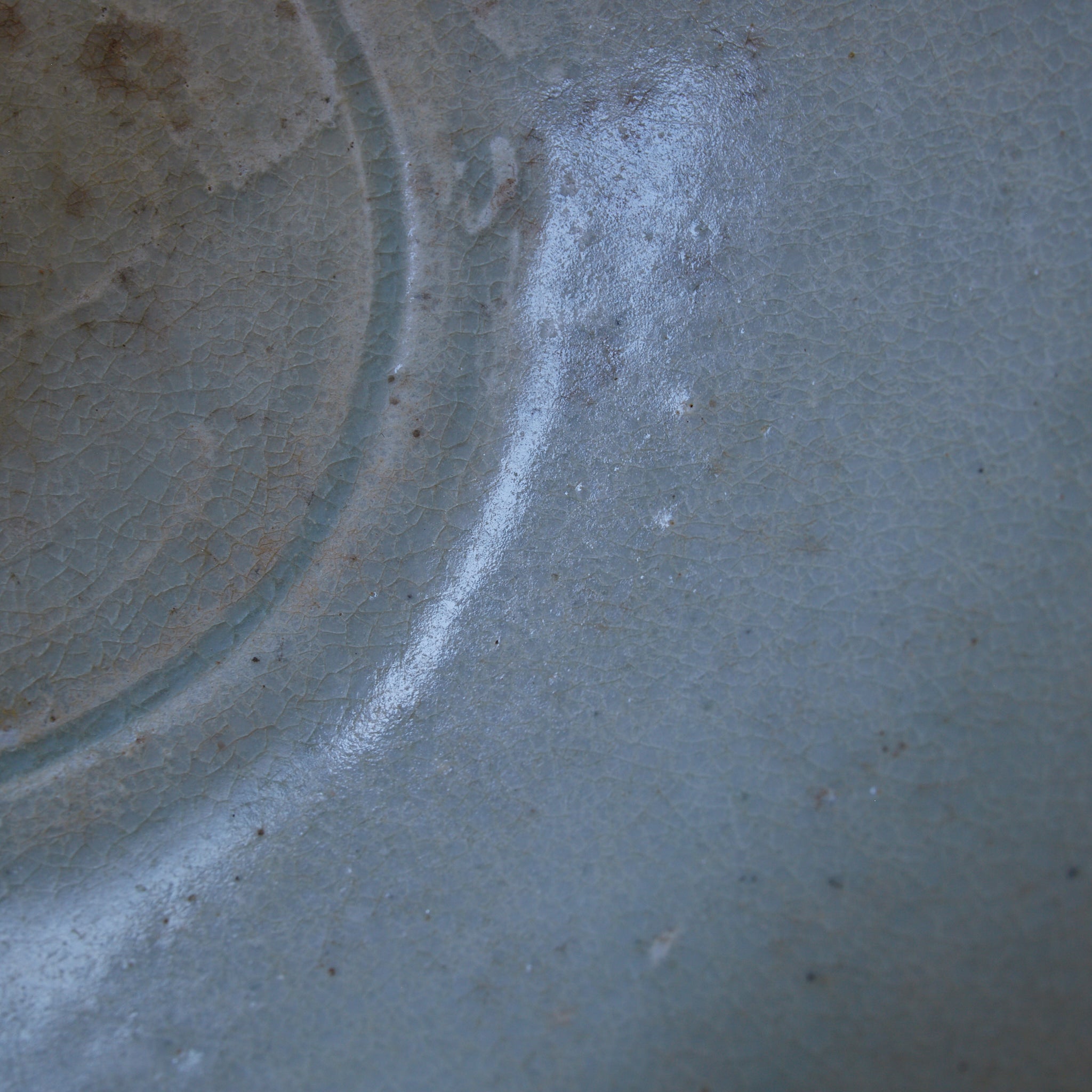
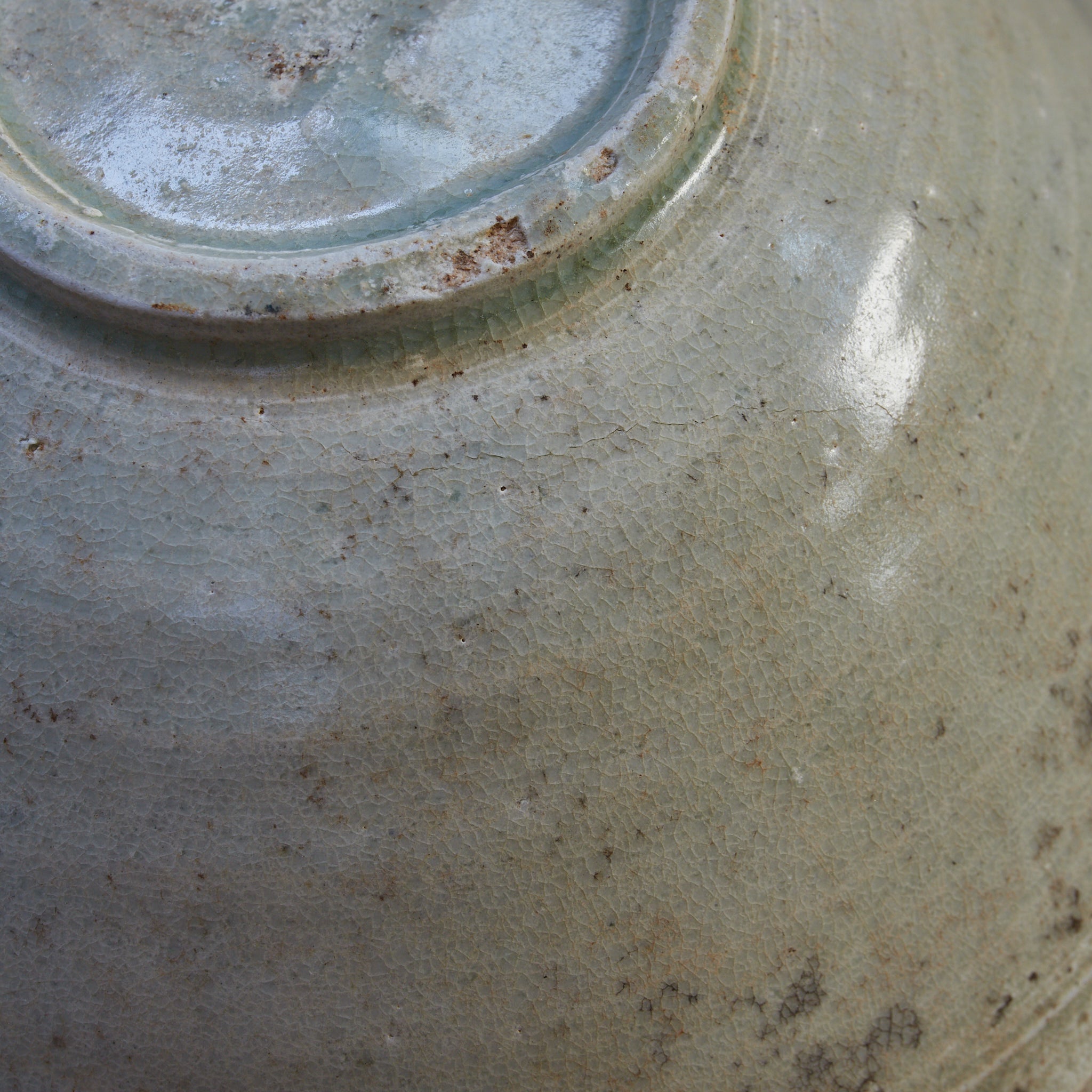
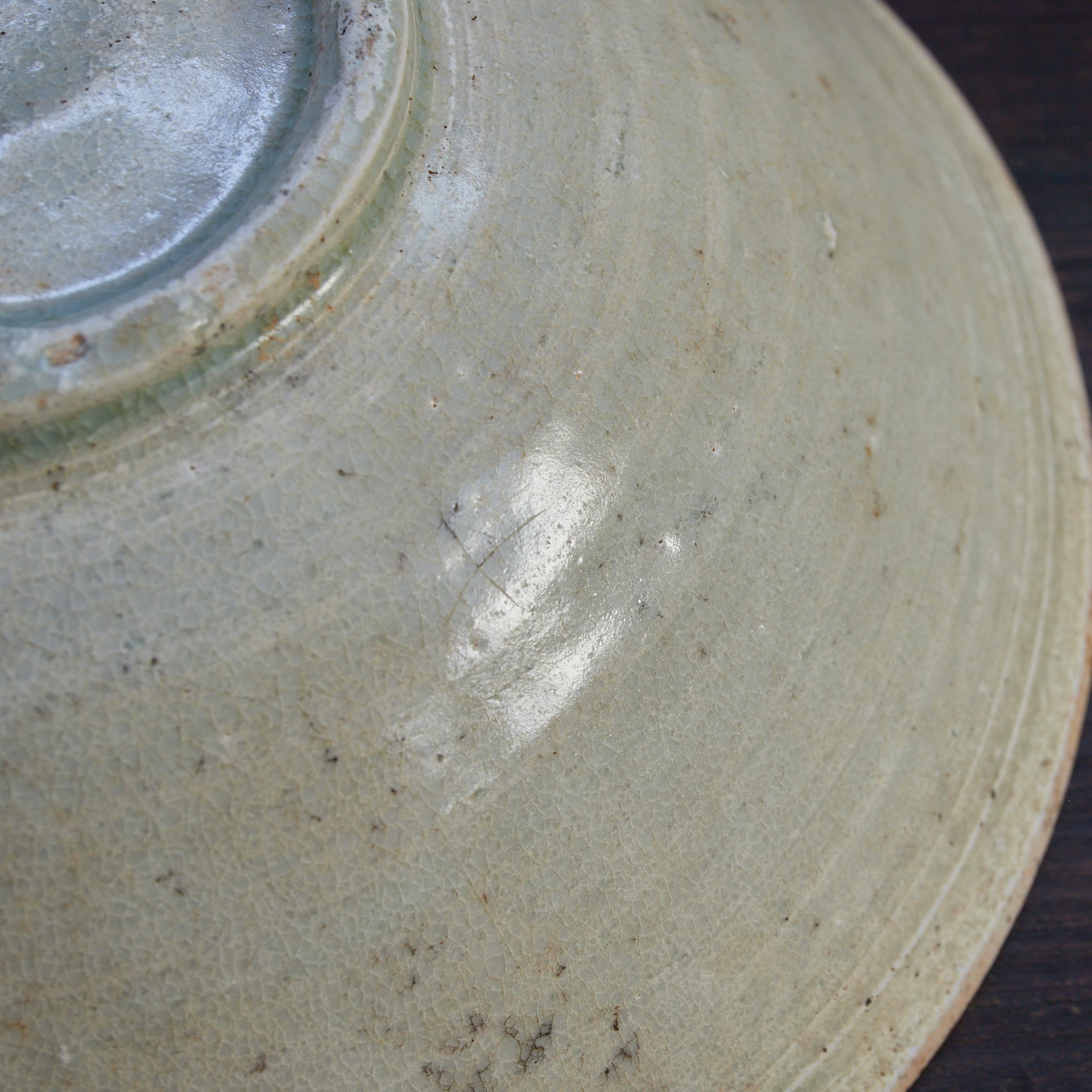
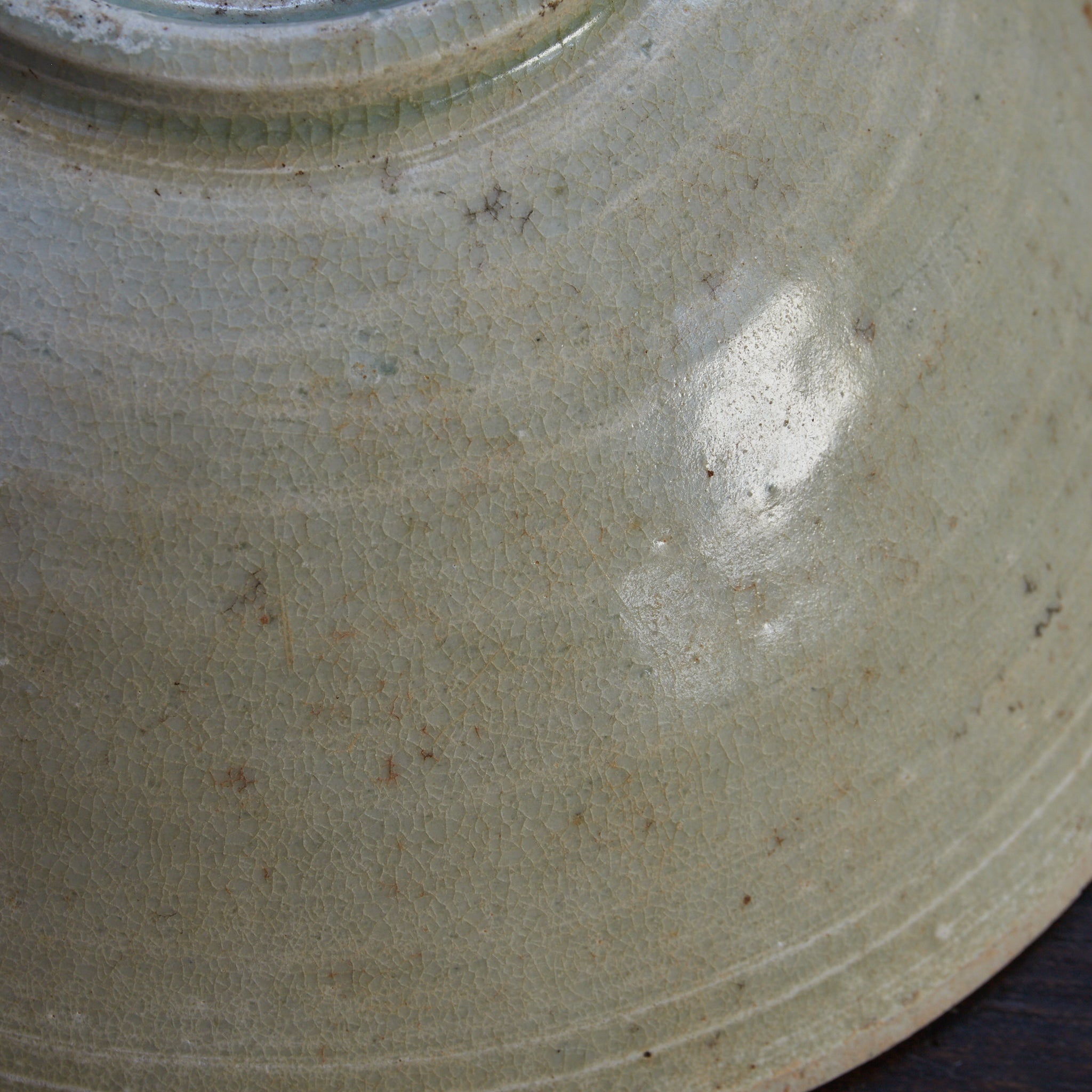
On the interior a smooth shadow-green glaze has been applied, producing a pale bluish-white tone. The glaze surface shows fine craquelure, with traces of iron and earth adhering in places. Rather than a uniform whiteness, it displays firing coloration and a faint cloudiness, giving it the restrained, composed appearance characteristic of Song ceramics.
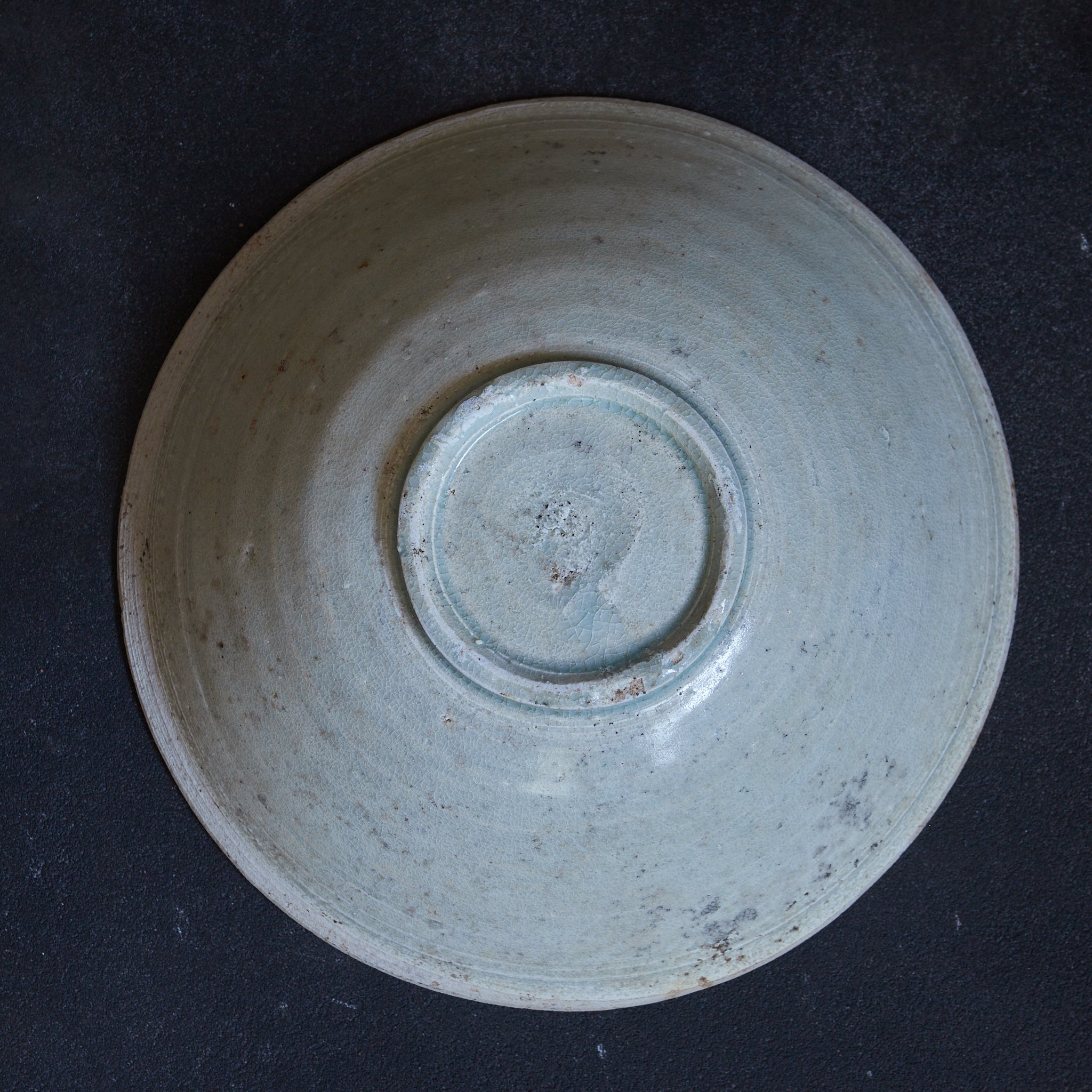
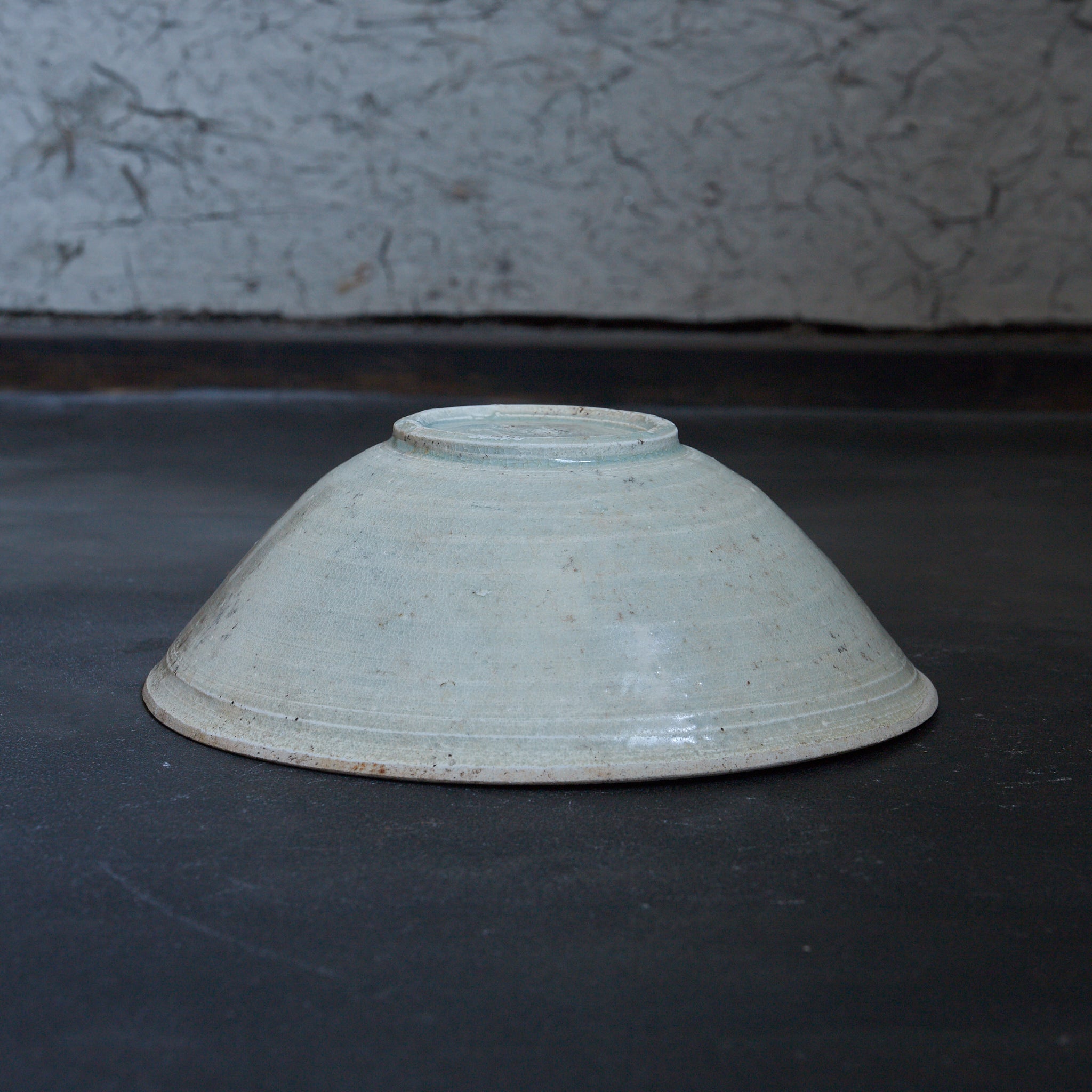
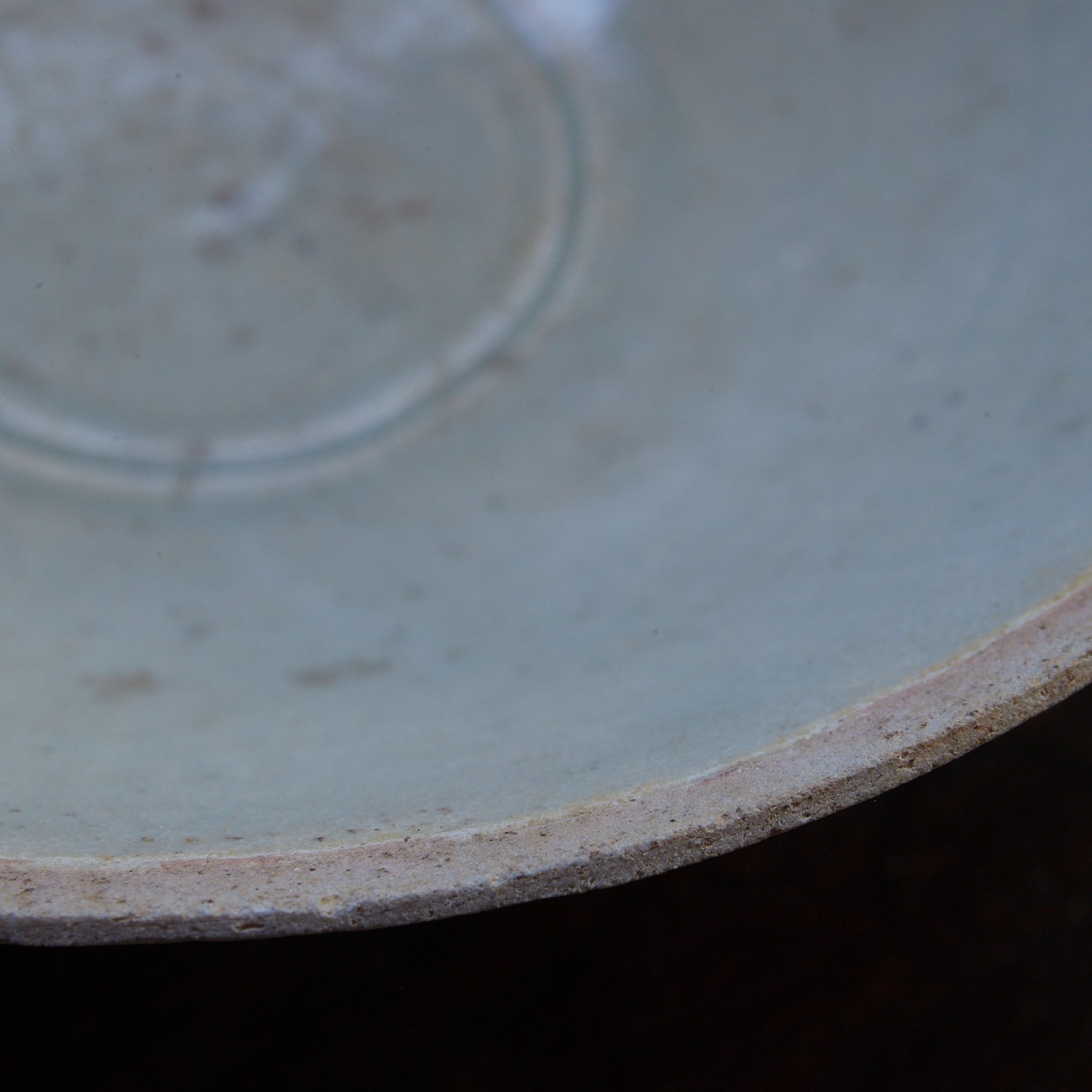
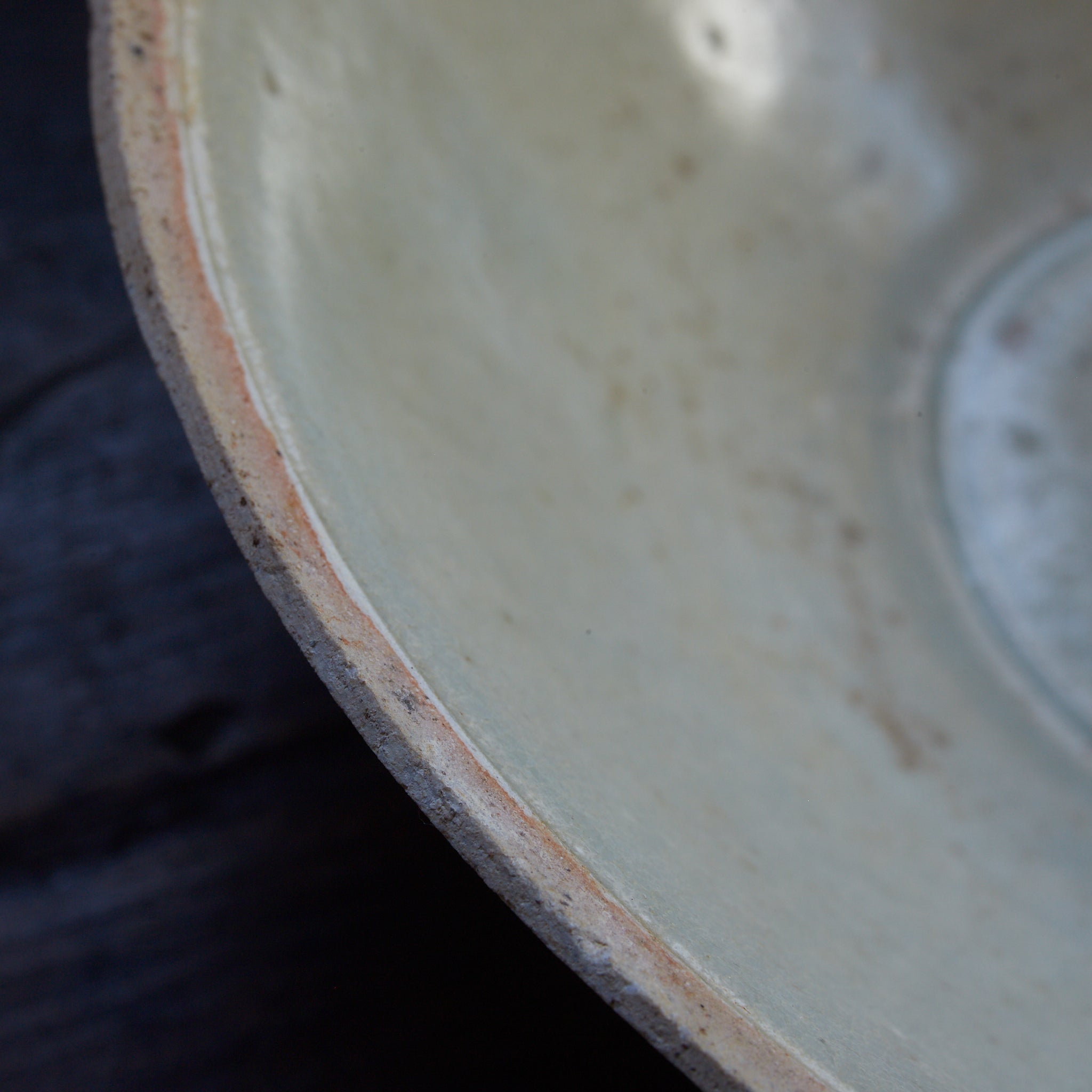
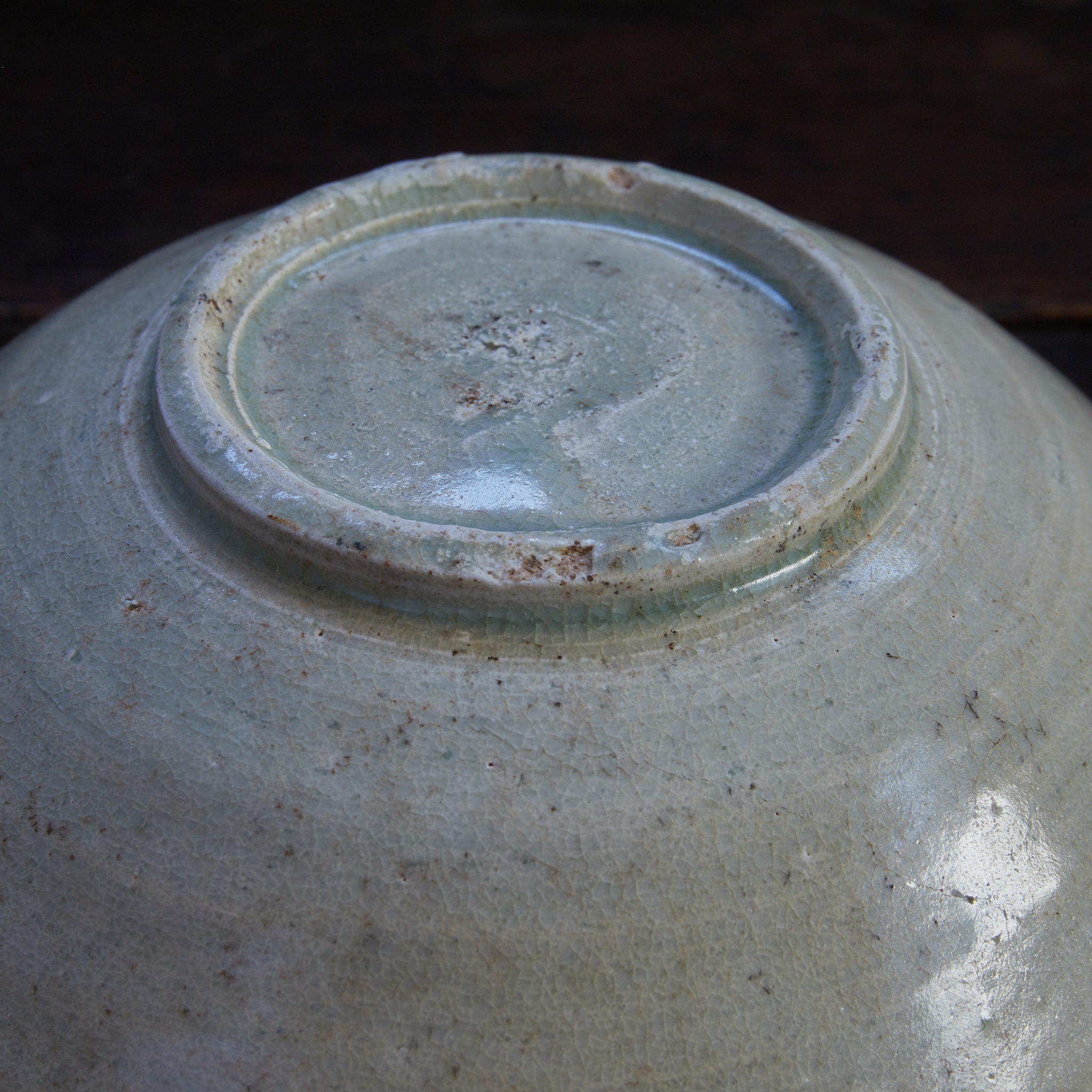
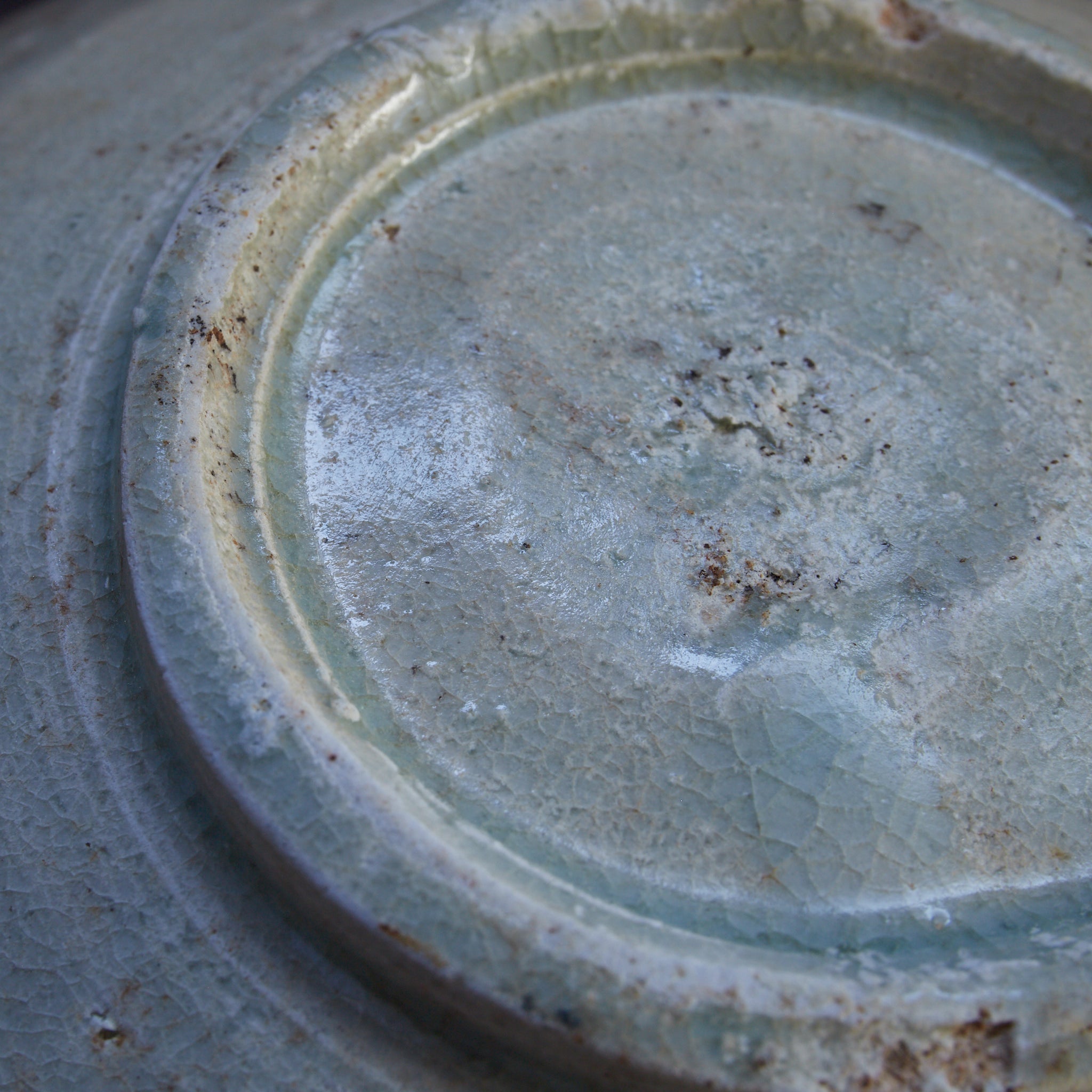
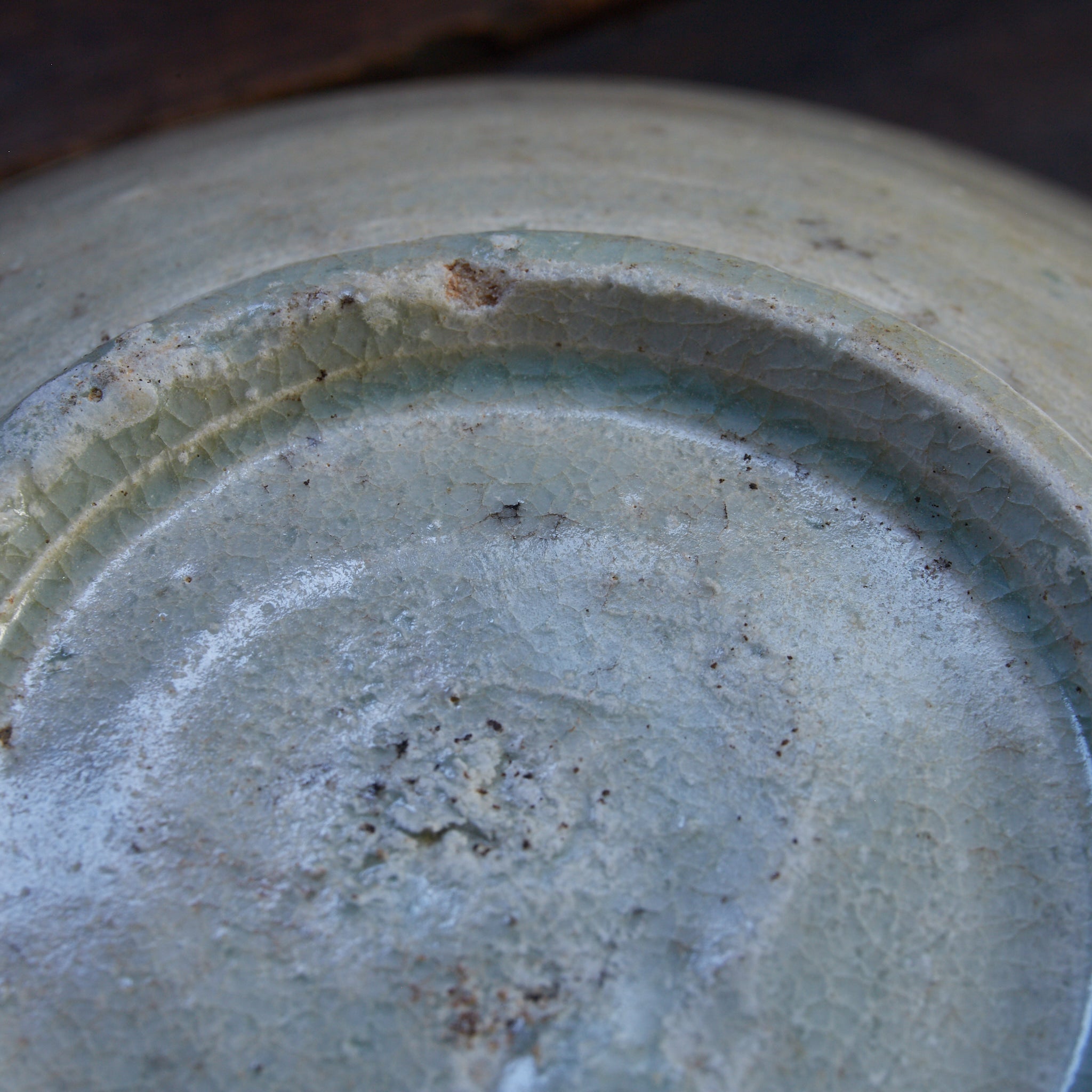
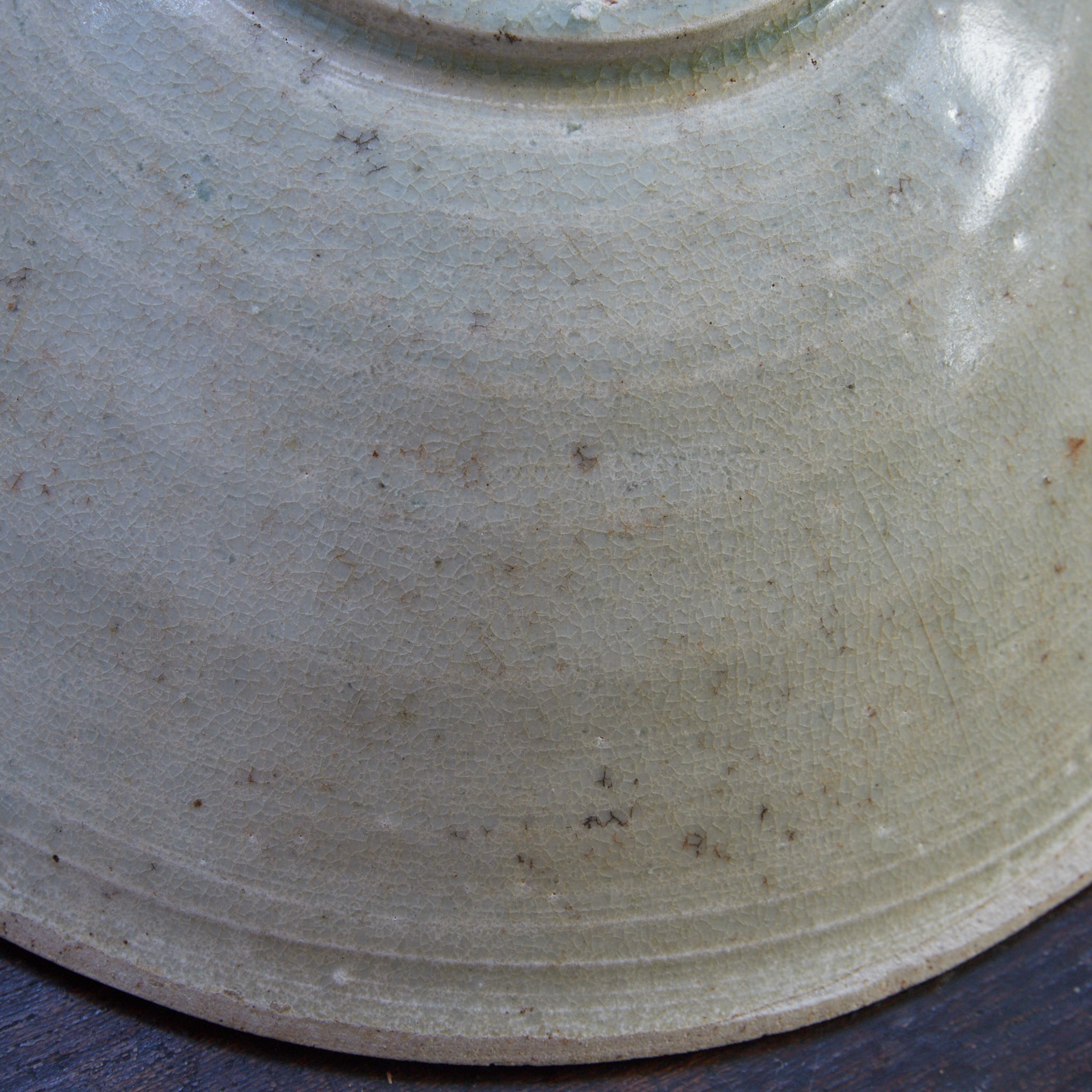
The exterior glaze is somewhat thin, revealing a bluish-white surface with a gray tinge that retains the potter’s wheel marks. The rim and the area around the foot reveal the reddish hue of the clay, providing a contrast to the clear glaze on the interior. The foot is left unglazed, exposing the white-fired body and traces of red clay.
With a rim diameter of approximately 16.7 cm, its proportions readily allow it to be read as a tea bowl. Although somewhat broad for a matcha chawan, it is well suited to sencha or Chinese tea, where it can serve as a vessel to receive a teapot.
The rim and glaze surface show wear from age, fine crazing, and traces of adhering soil, yet the overall form is well preserved. The contrast between the interior's pale bluish-green glaze and the flame-colored hues that have appeared on the exterior is particularly striking.
Choose options
Tax excluded. Import duties may apply. Shipping costs are calculated at checkout.
Change language
