

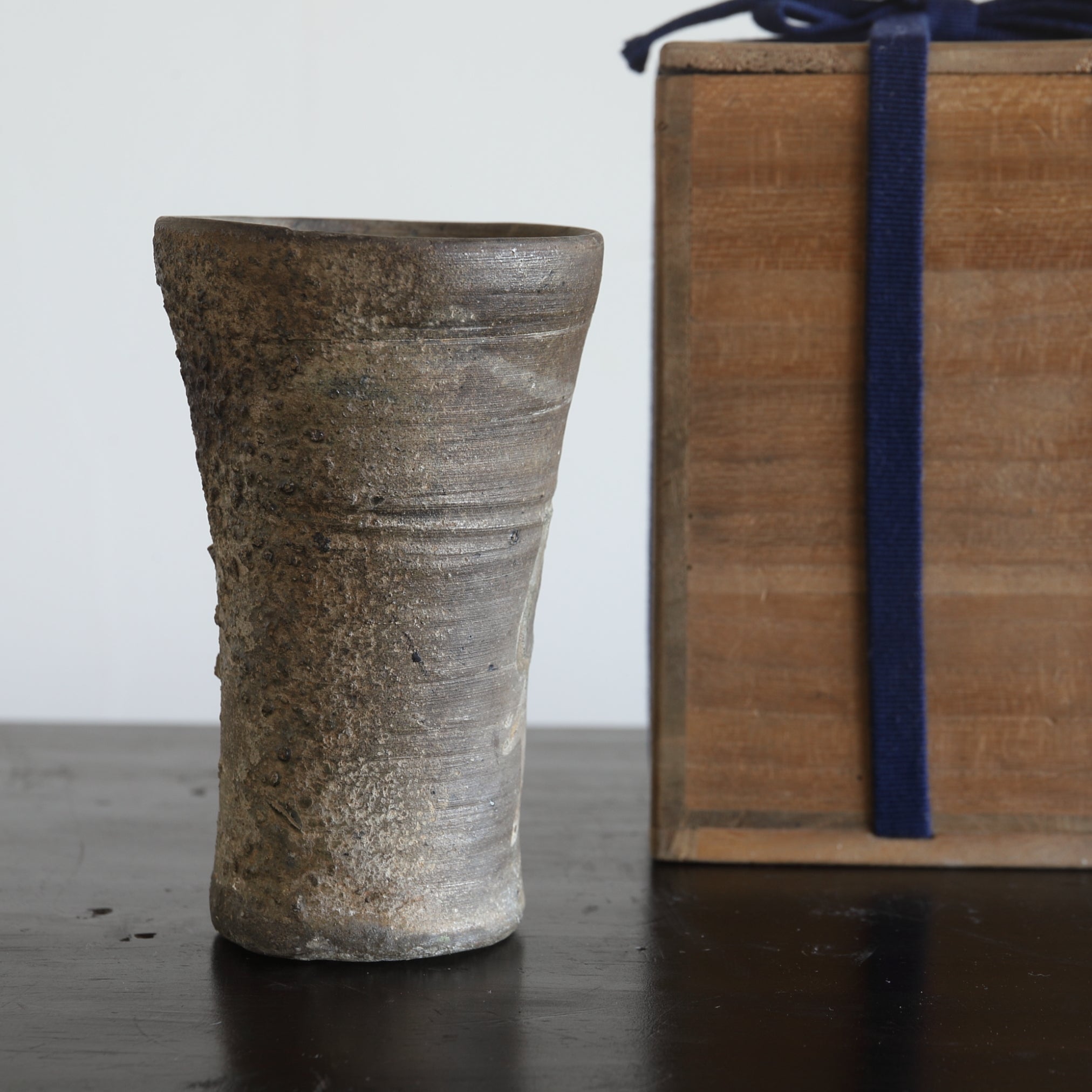
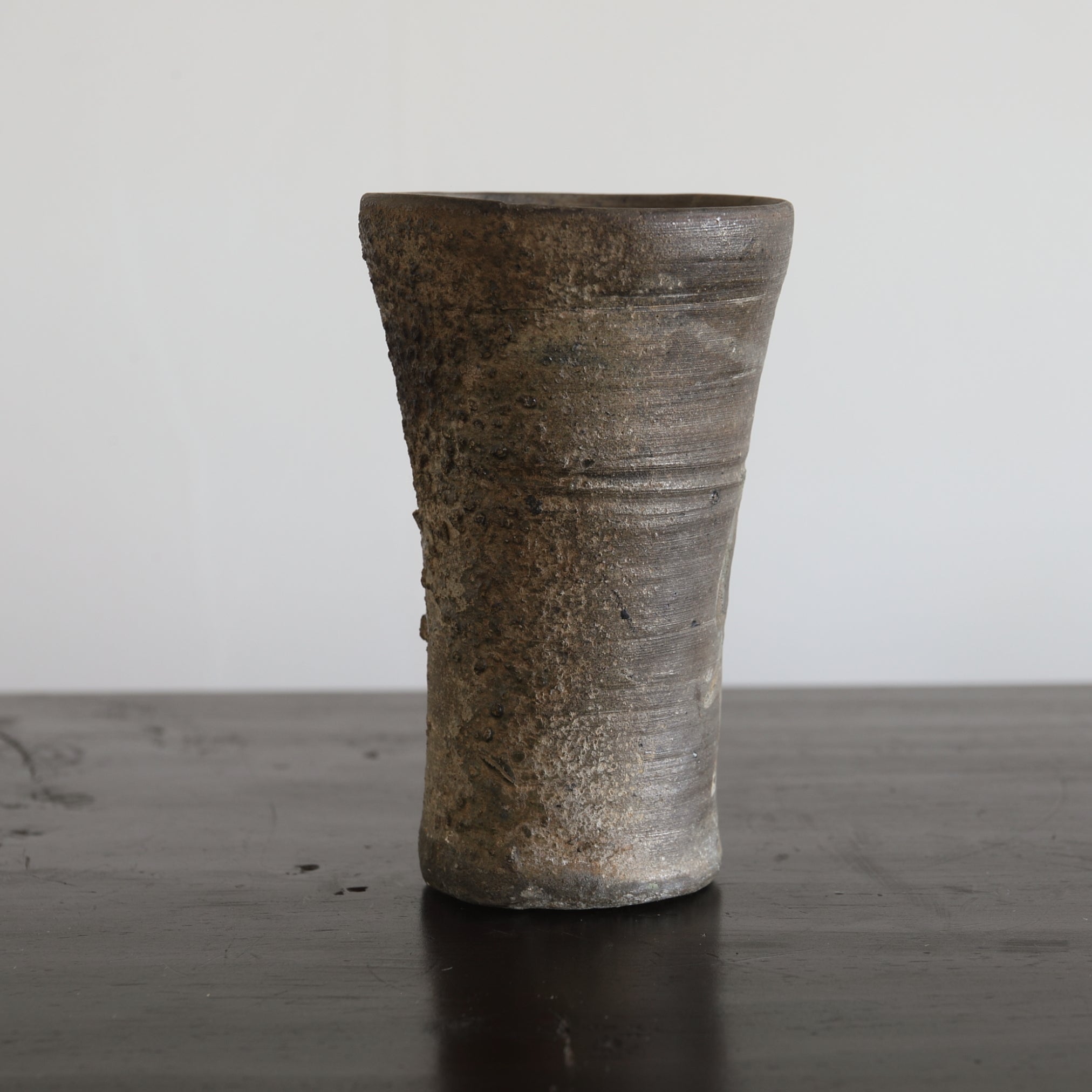
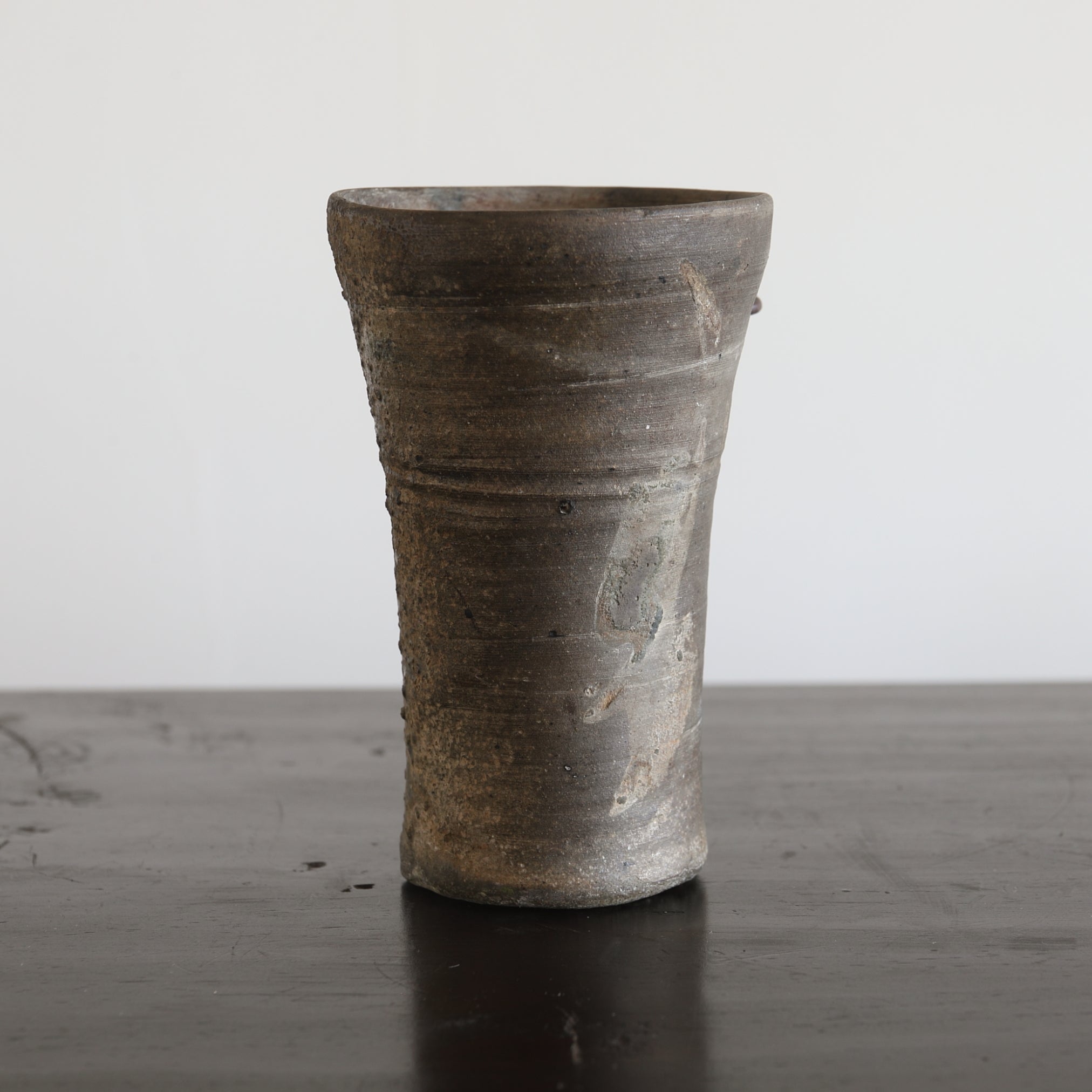
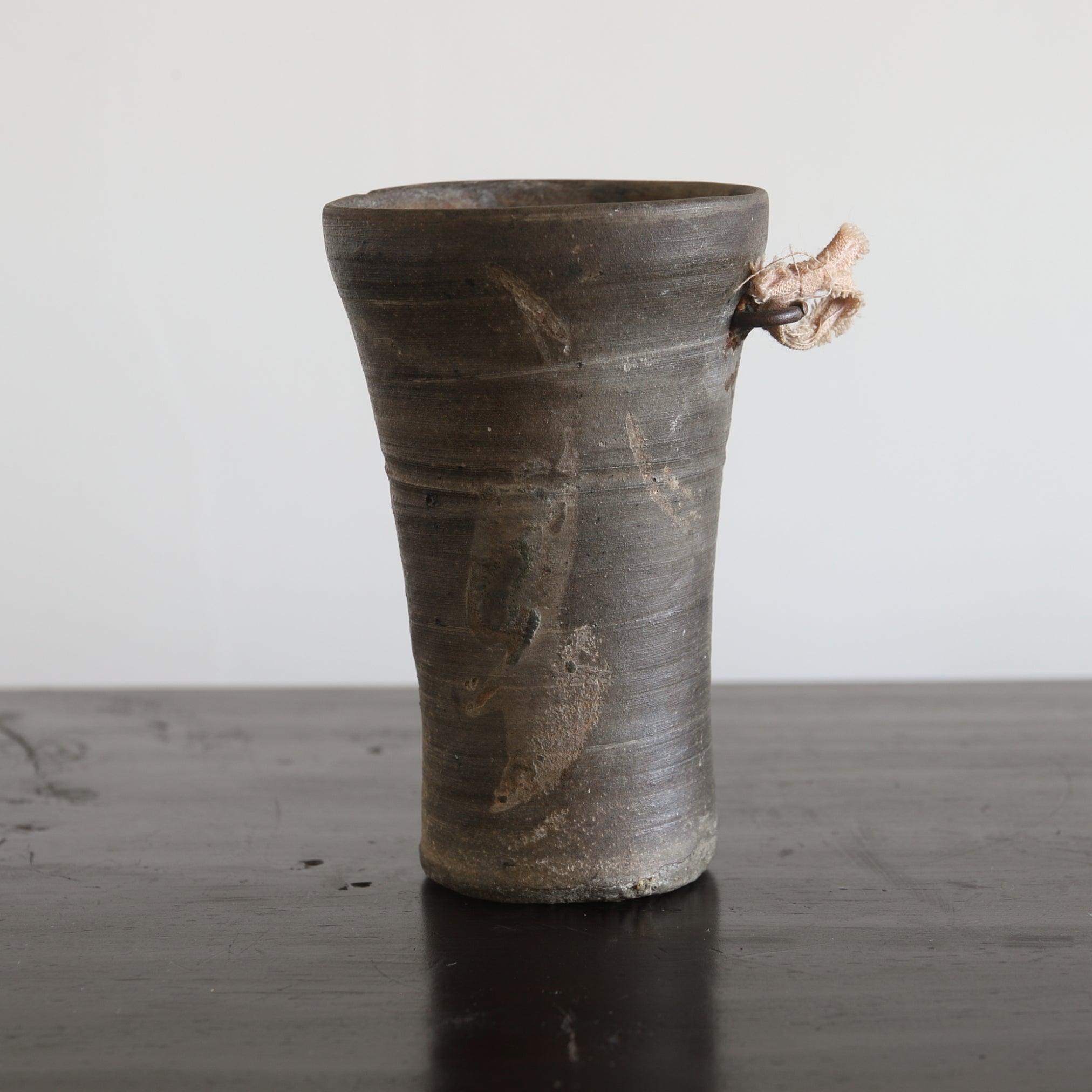
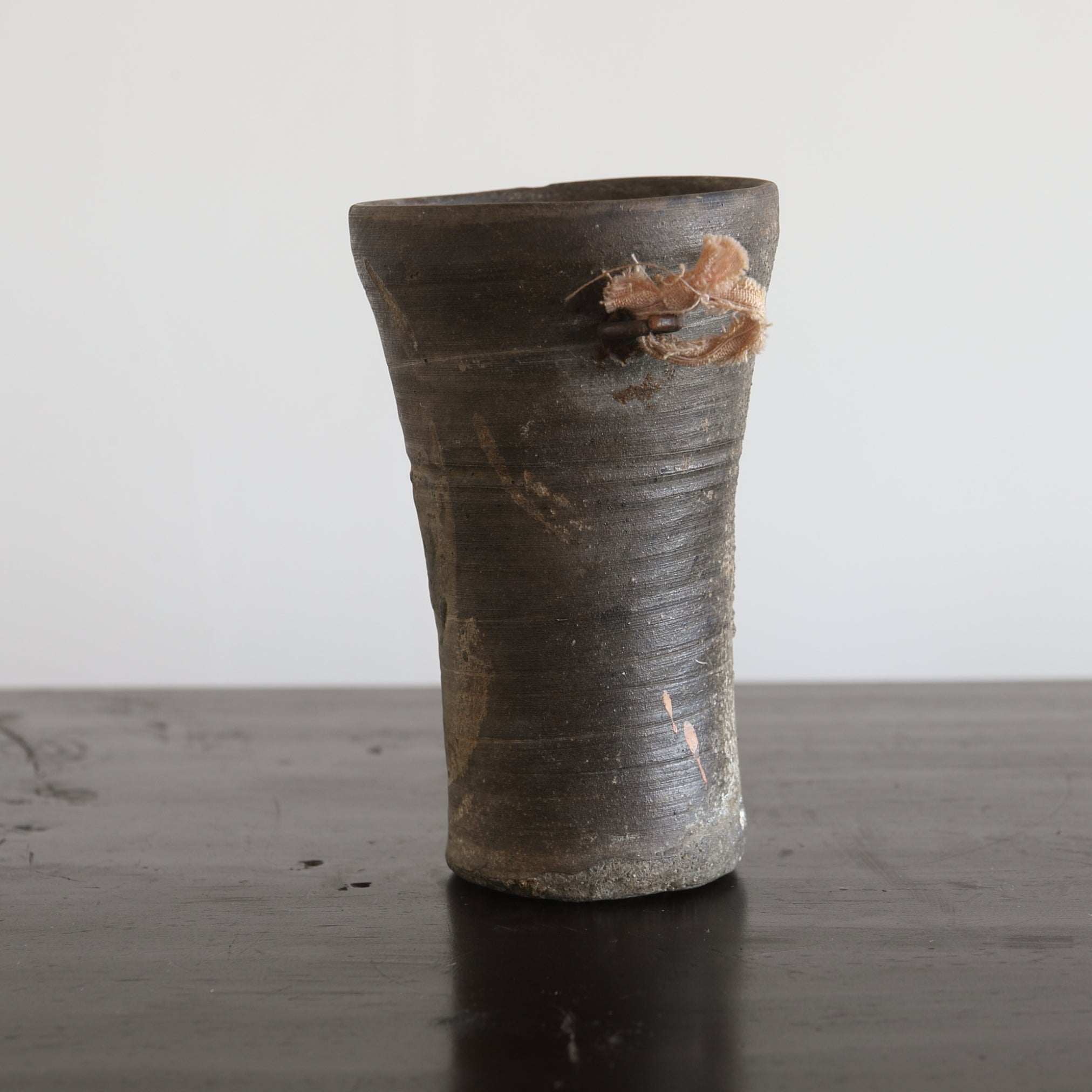
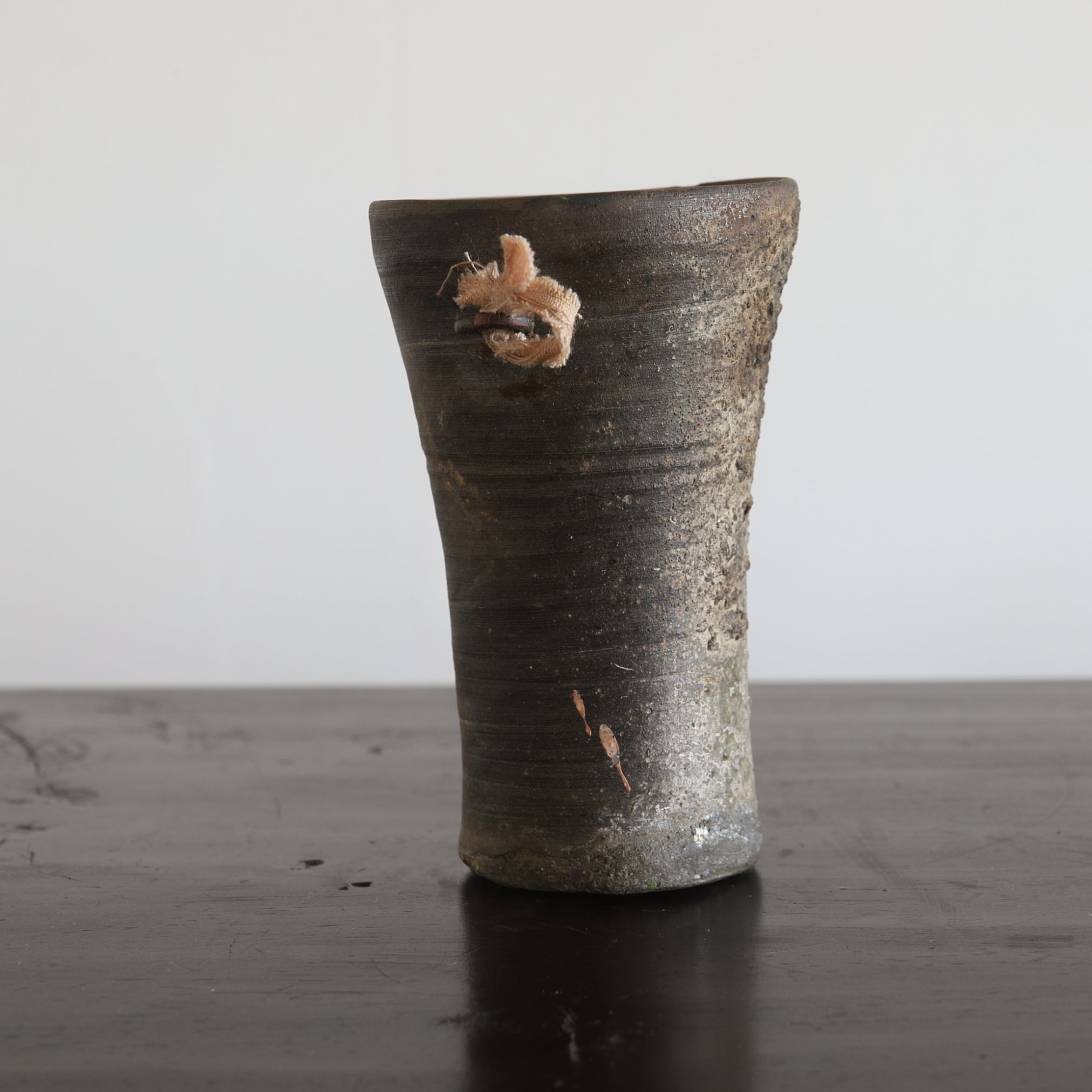
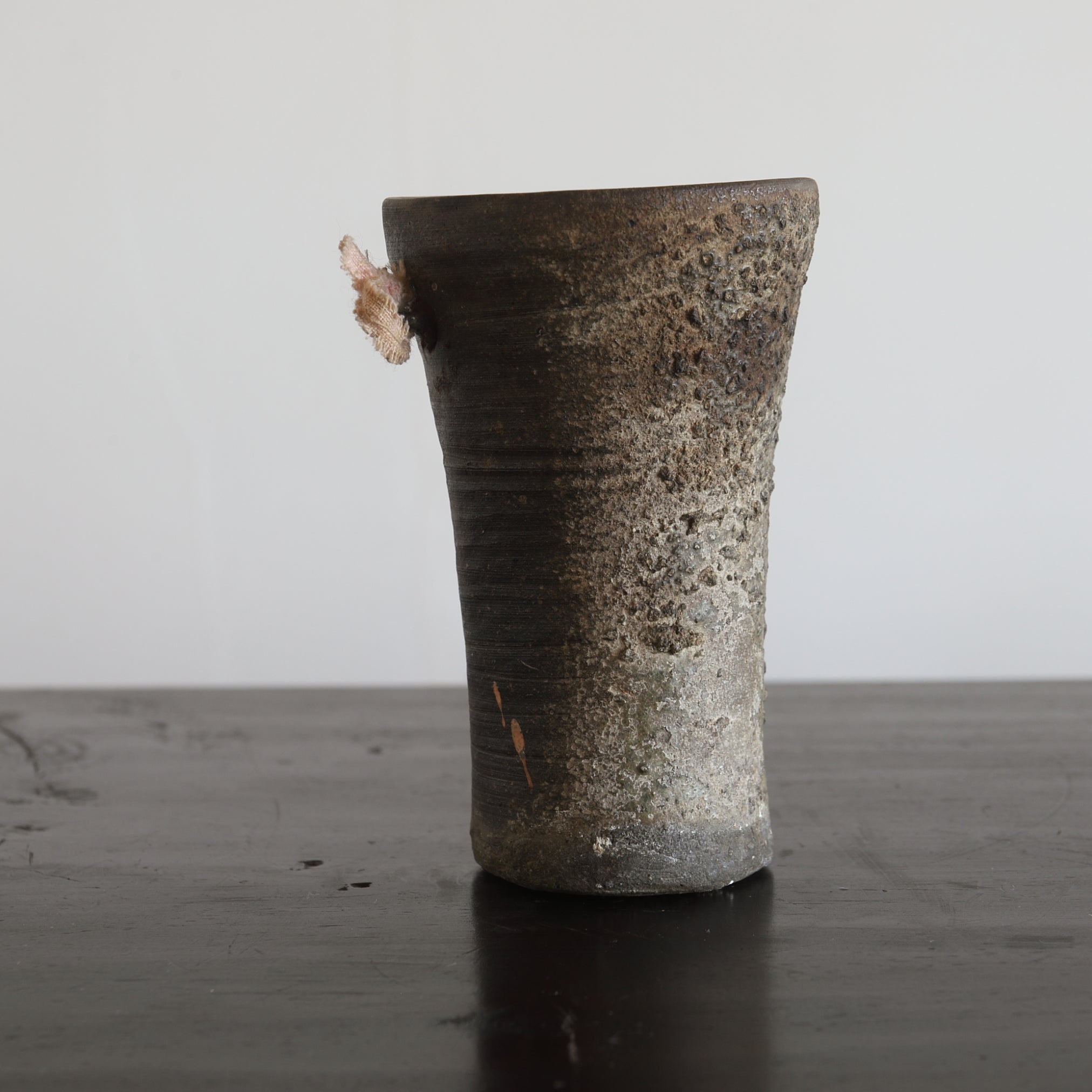
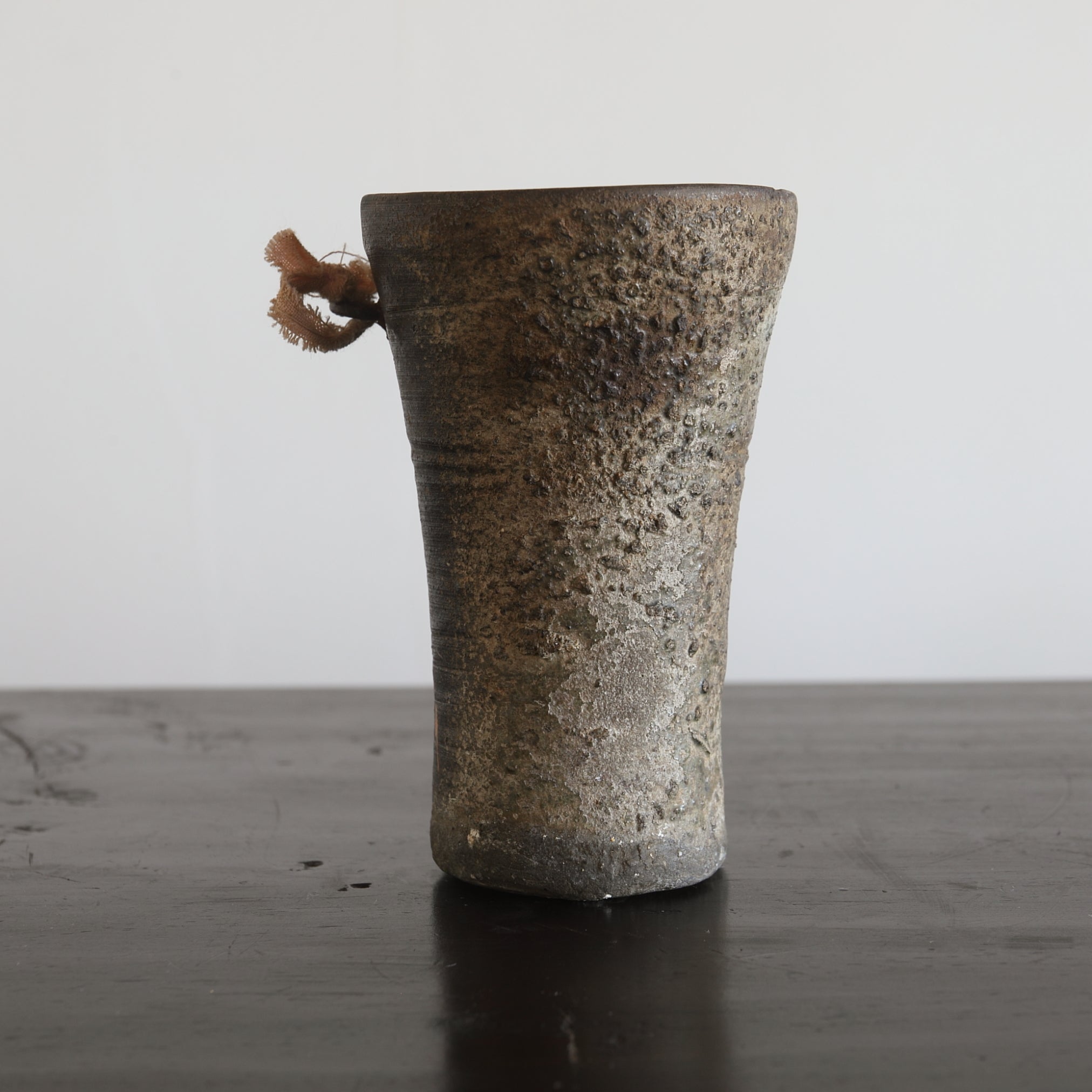
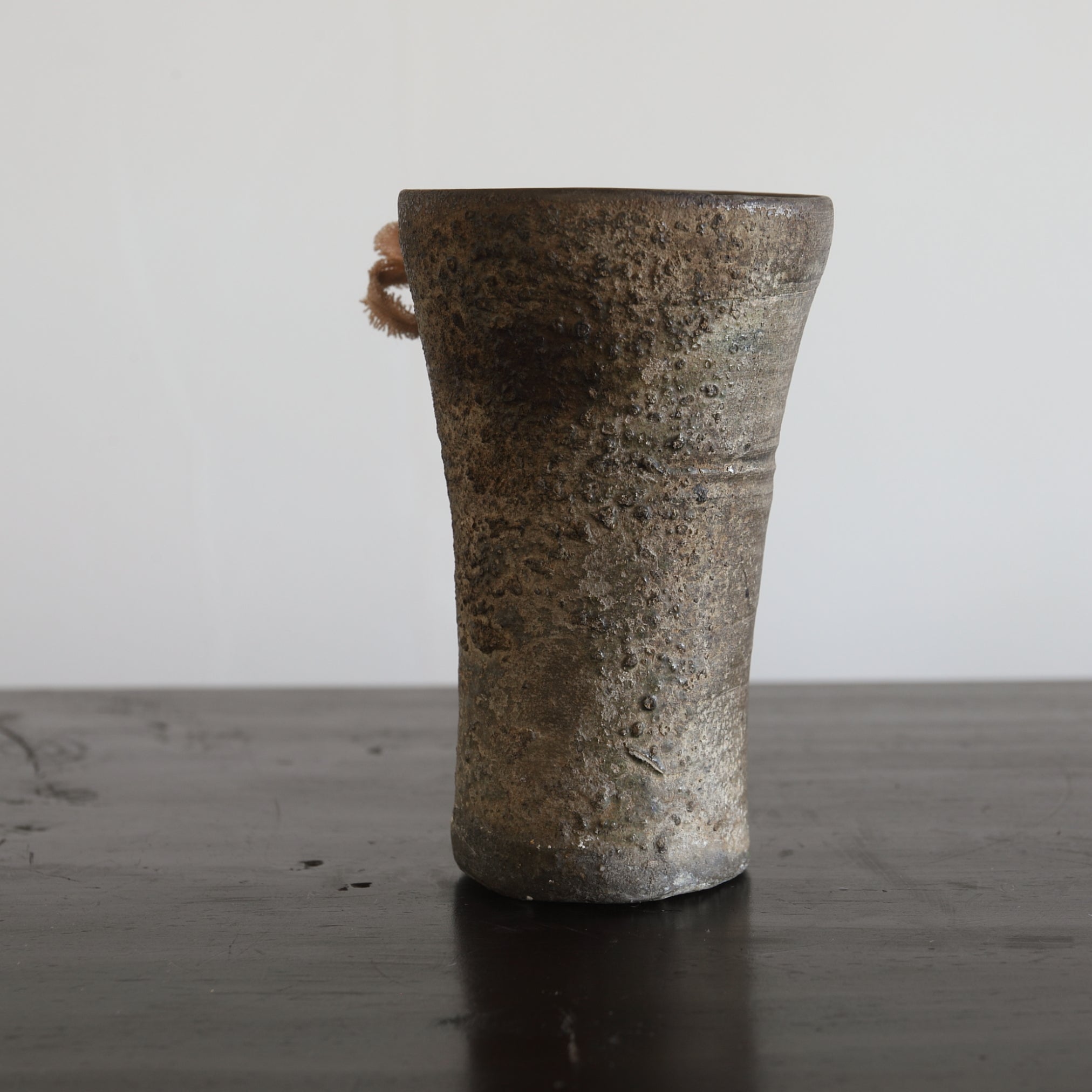
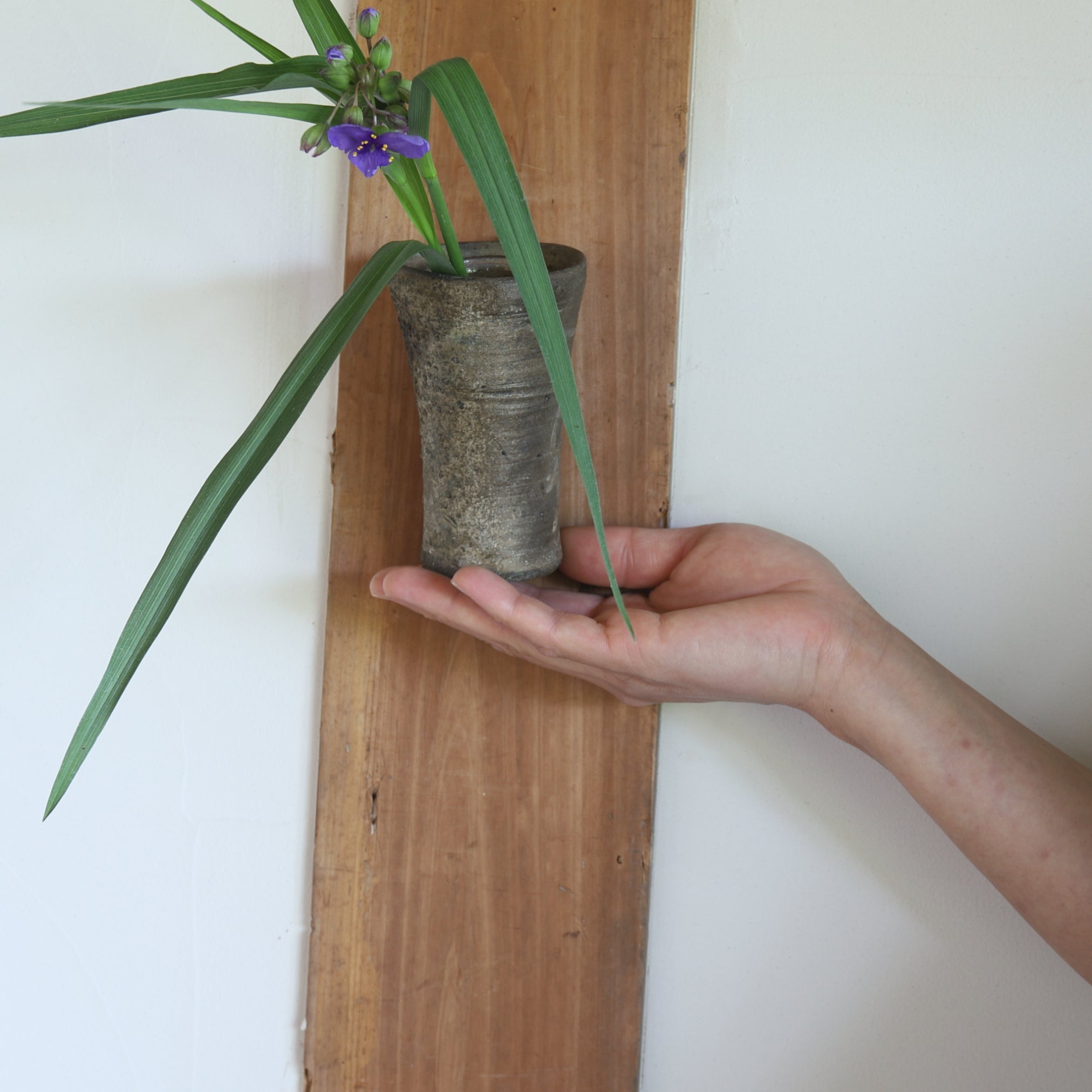
HANGING FLOWER VASE, Sue Ware, Kofun Period (250–581 CE)
Each piece is carefully packed for international delivery.
This item has been sold. If you are looking for a similar piece or another work from the same period, please feel free to contact us.
> Inquire about this or a similar itemSue ware refers to a type of hard, grayish-blue pottery that was introduced to Japan from the Korean Peninsula during the mid-Kofun Period (early 5th century).
In Japan, until the early Kofun Period, pottery such as Jomon, Yayoi, and Haji ware was produced using methods akin to pit firing. While these techniques allowed for easier production, they also resulted in pottery that was more porous and prone to brittleness over time due to insufficient firing.
In contrast, Sue ware is characterized by its formation on a potter's wheel and high-temperature firing in a kiln, resulting in thinner, more refined shapes that are also harder. However, due to its sensitivity to heat, it was primarily used for tableware and storage vessels.
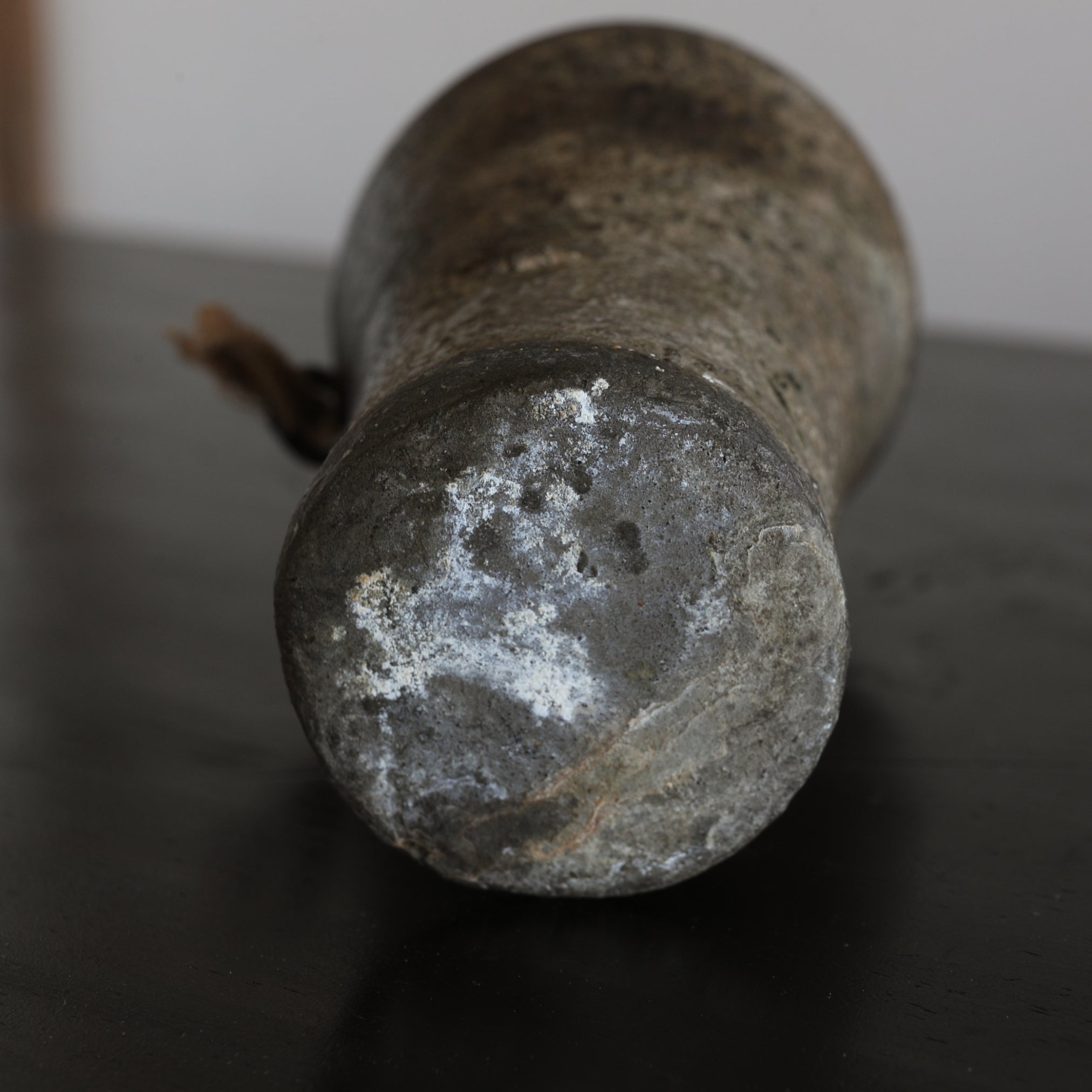
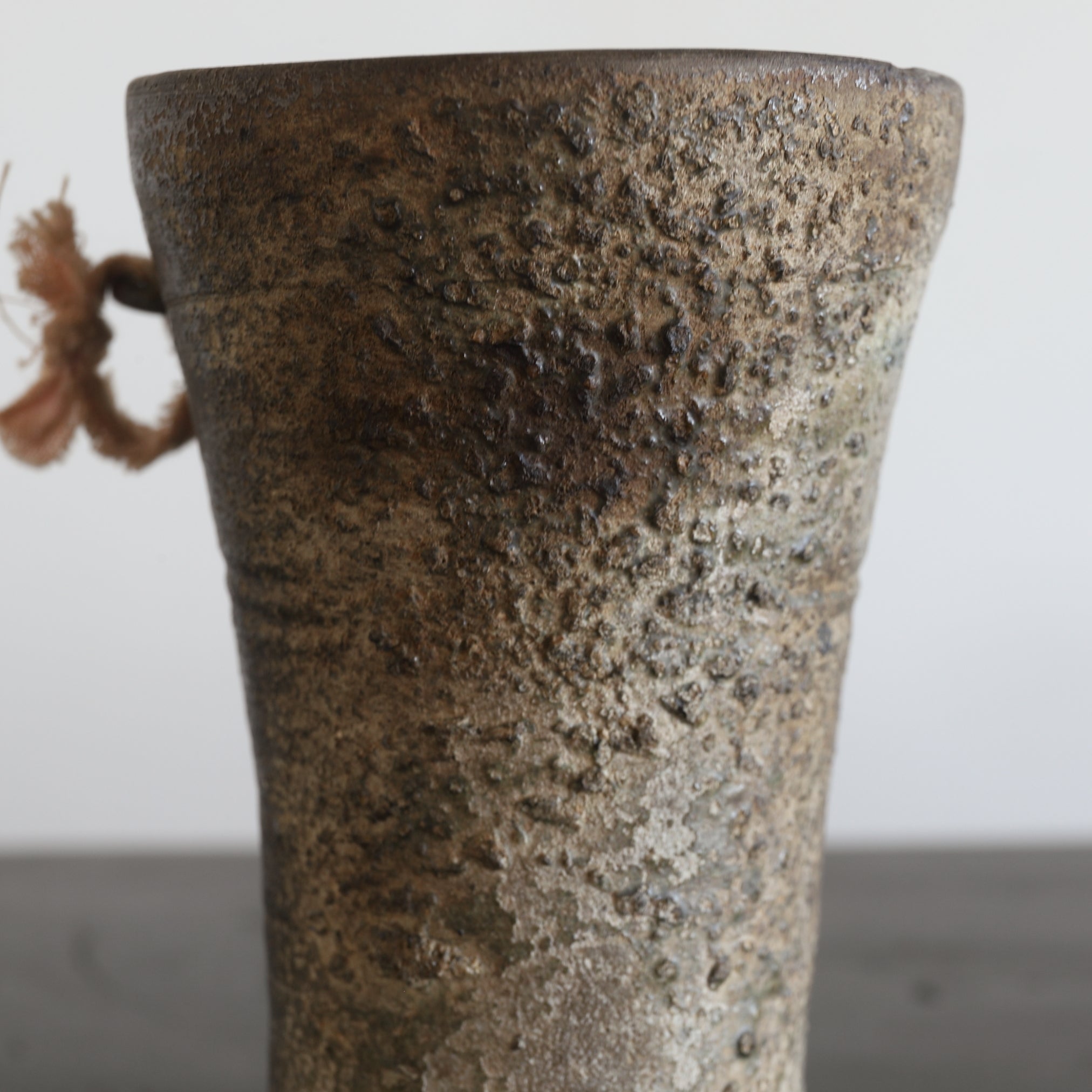
This piece is a rare cylindrical Sue ware vase, likely used as a cup. It features a robust natural glaze that presents a rustic aesthetic.
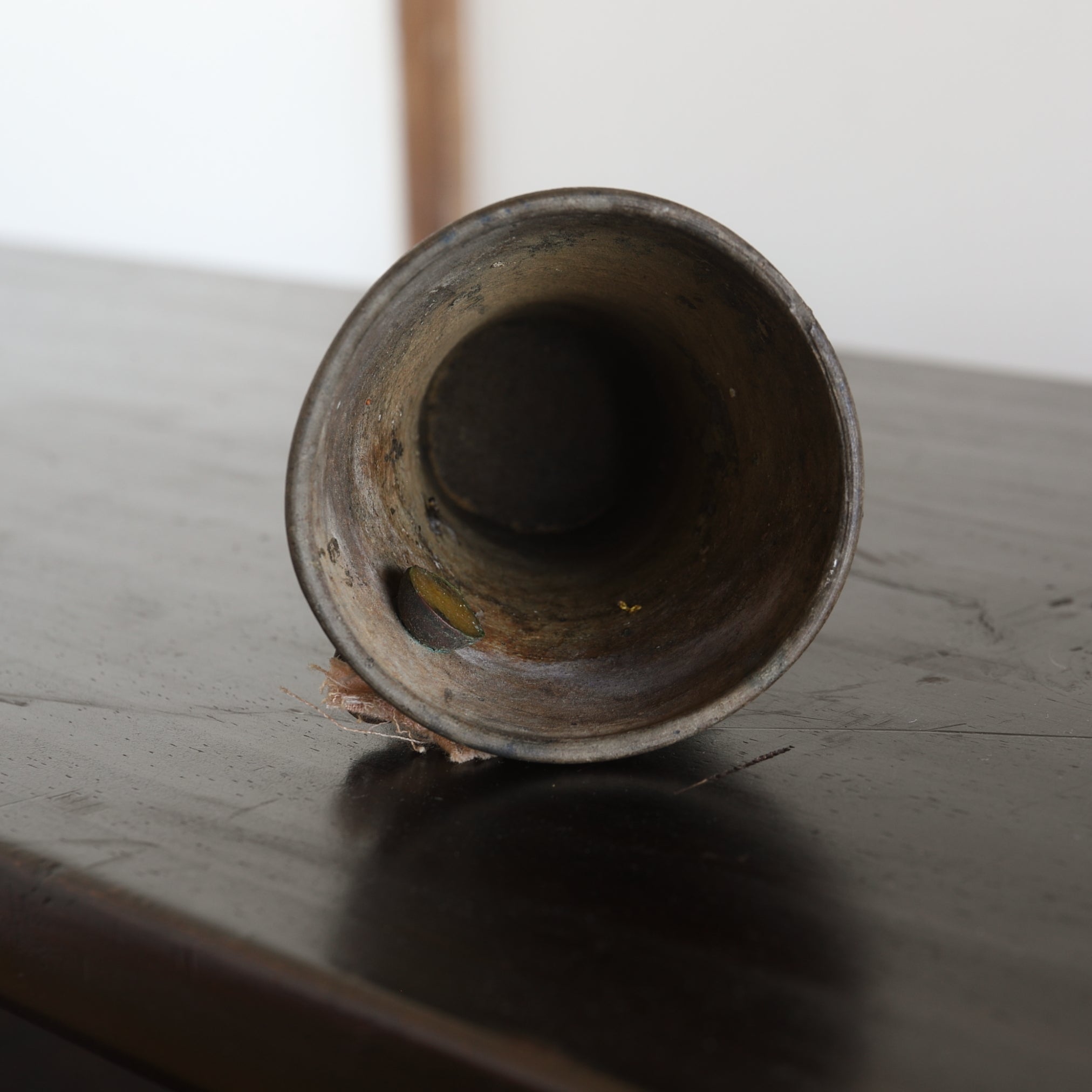
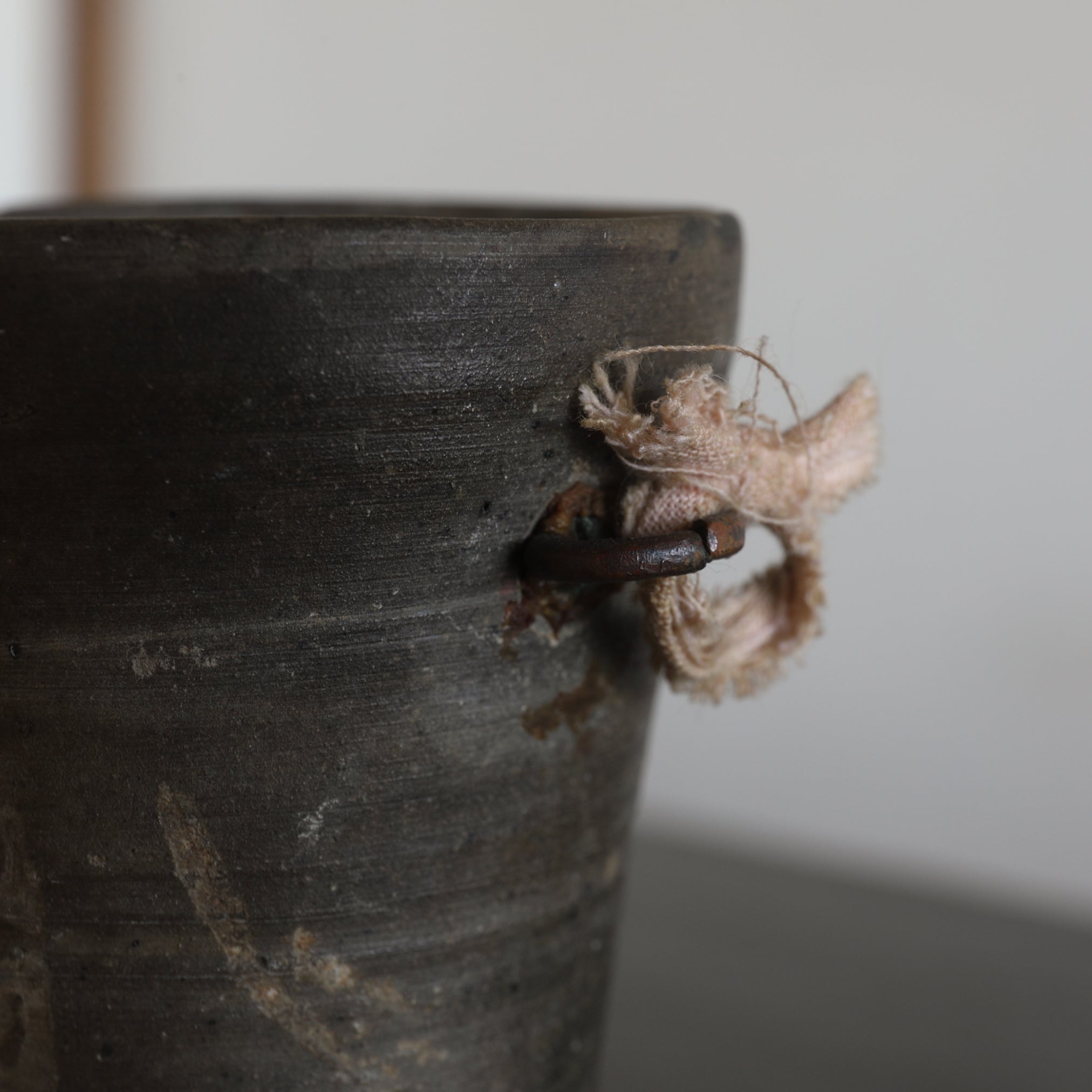
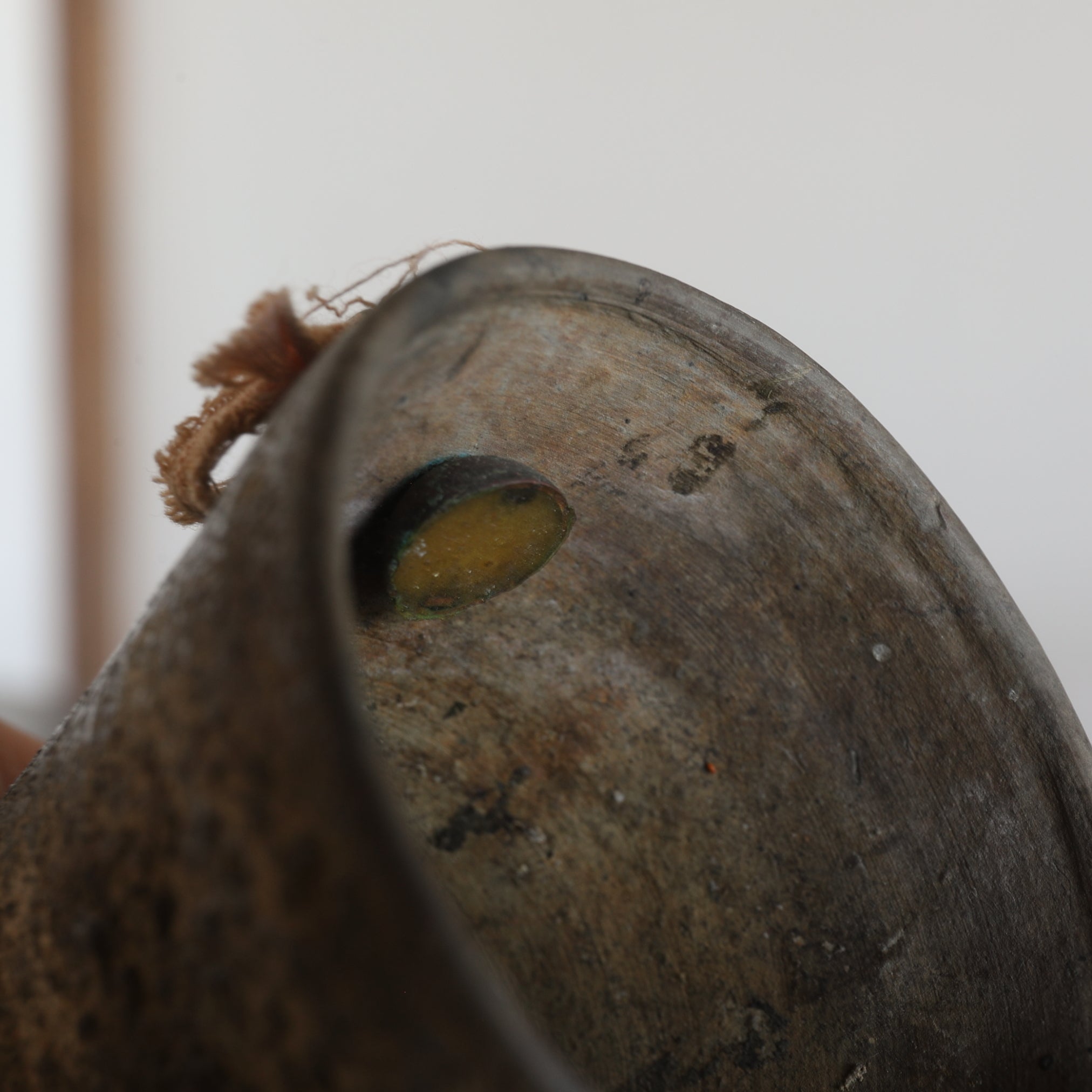
Equipped with a metal fitting for hanging, it is recommended as a flower vase for a tea room. I believe it would beautifully showcase wildflowers. When using it as a flower vase, please insert a drop-in liner for optimal use.
A wooden box is included, with inscriptions regarding the excavation site preserved on the underside of the lid.
Choose options
Change language
