




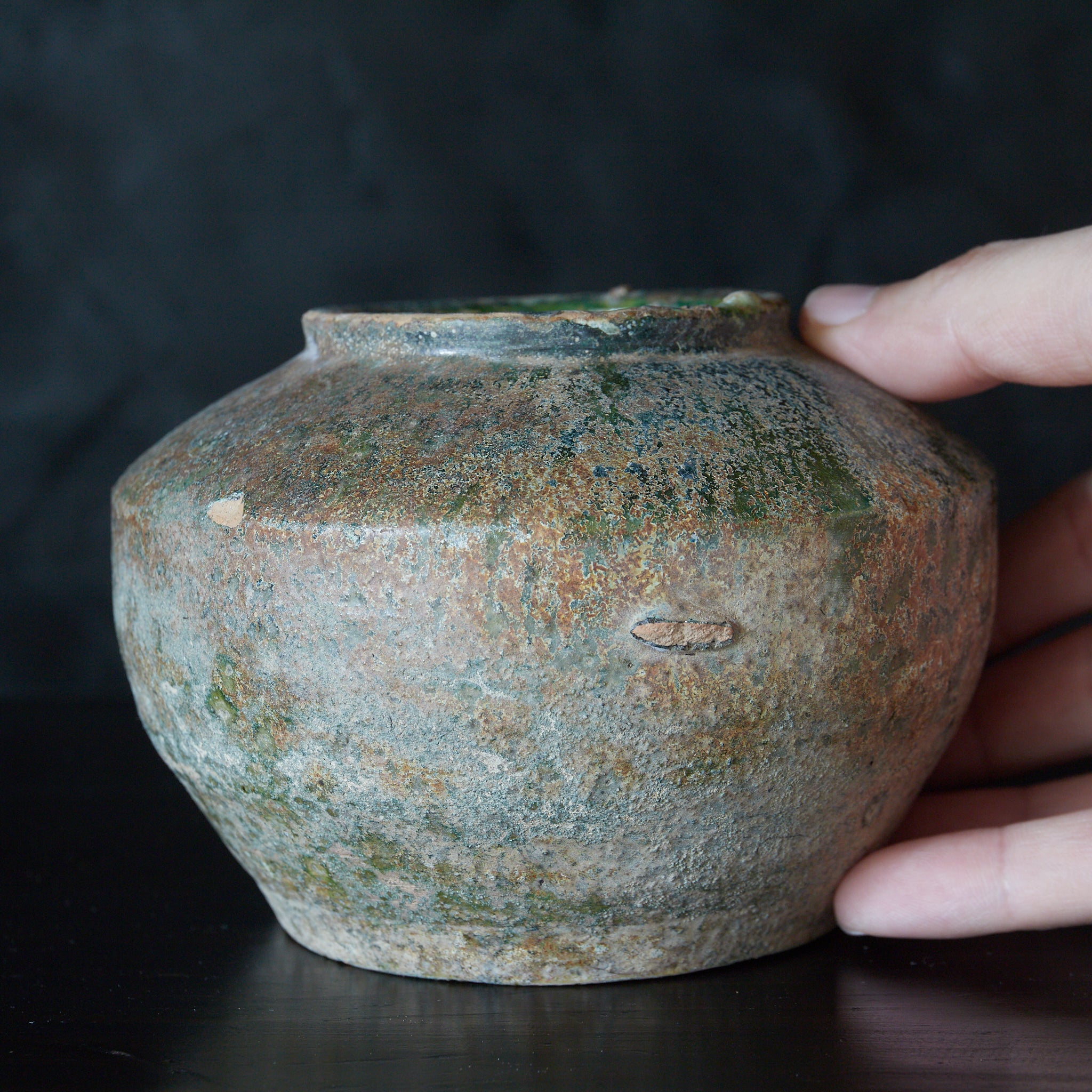





SMALL JAR, Iridescent green-glazed, Han Dynasty (206 BCE–220 CE)
Tax excluded. Import duties may apply. Shipping costs are calculated at checkout.
Each piece is carefully packed for international delivery.
Numerous product photos are available for you to examine the details and condition. Should you have any questions, please do not hesitate to contact us.
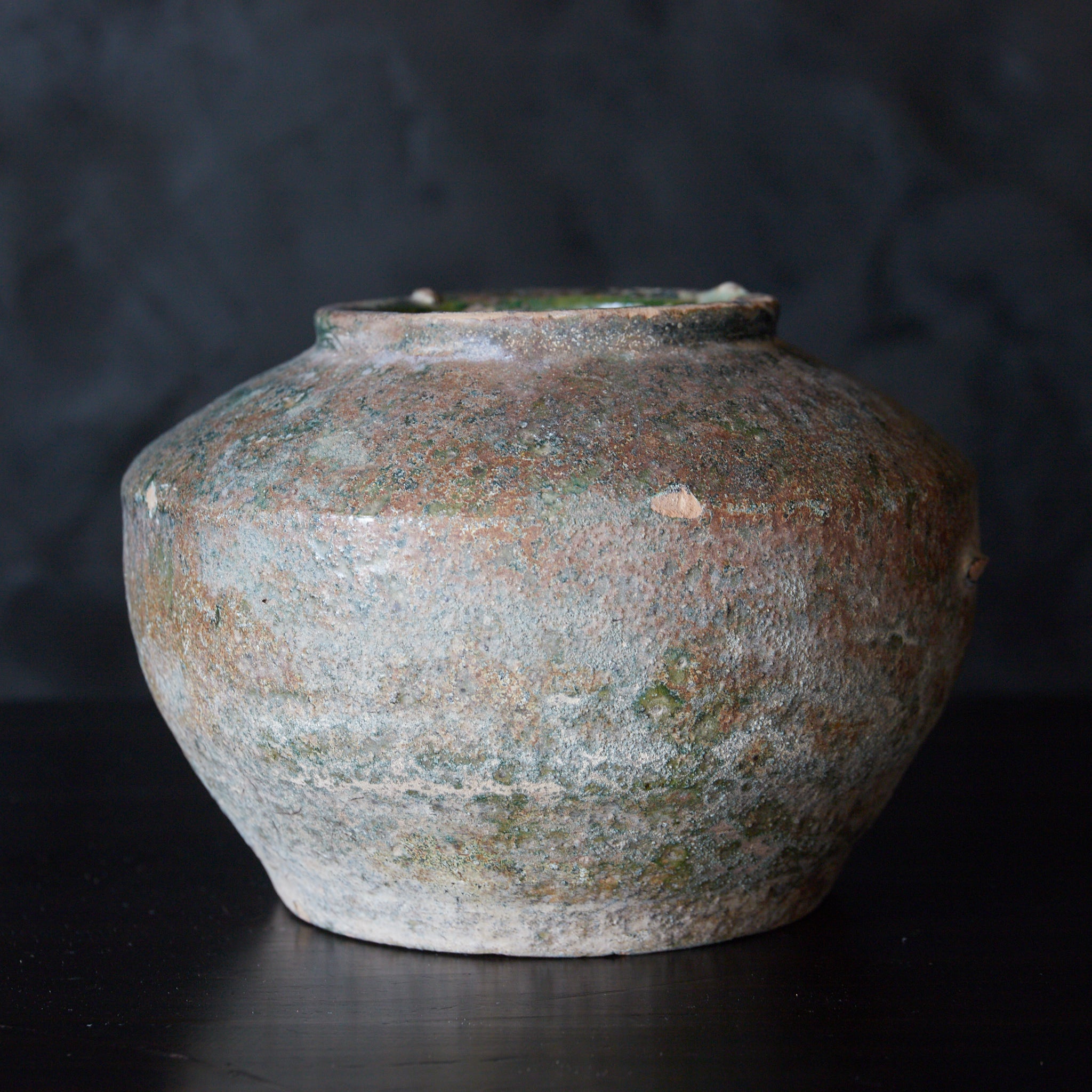
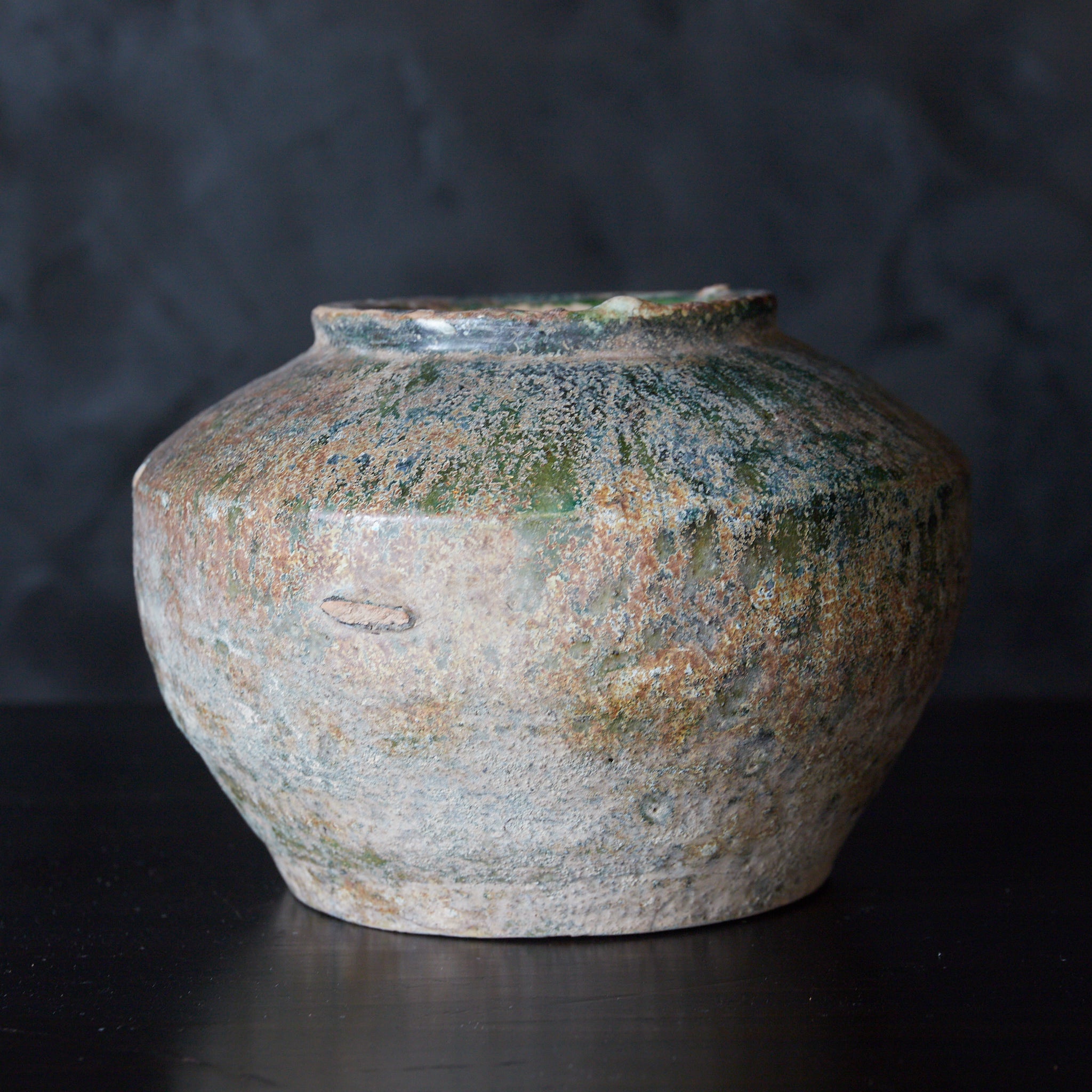
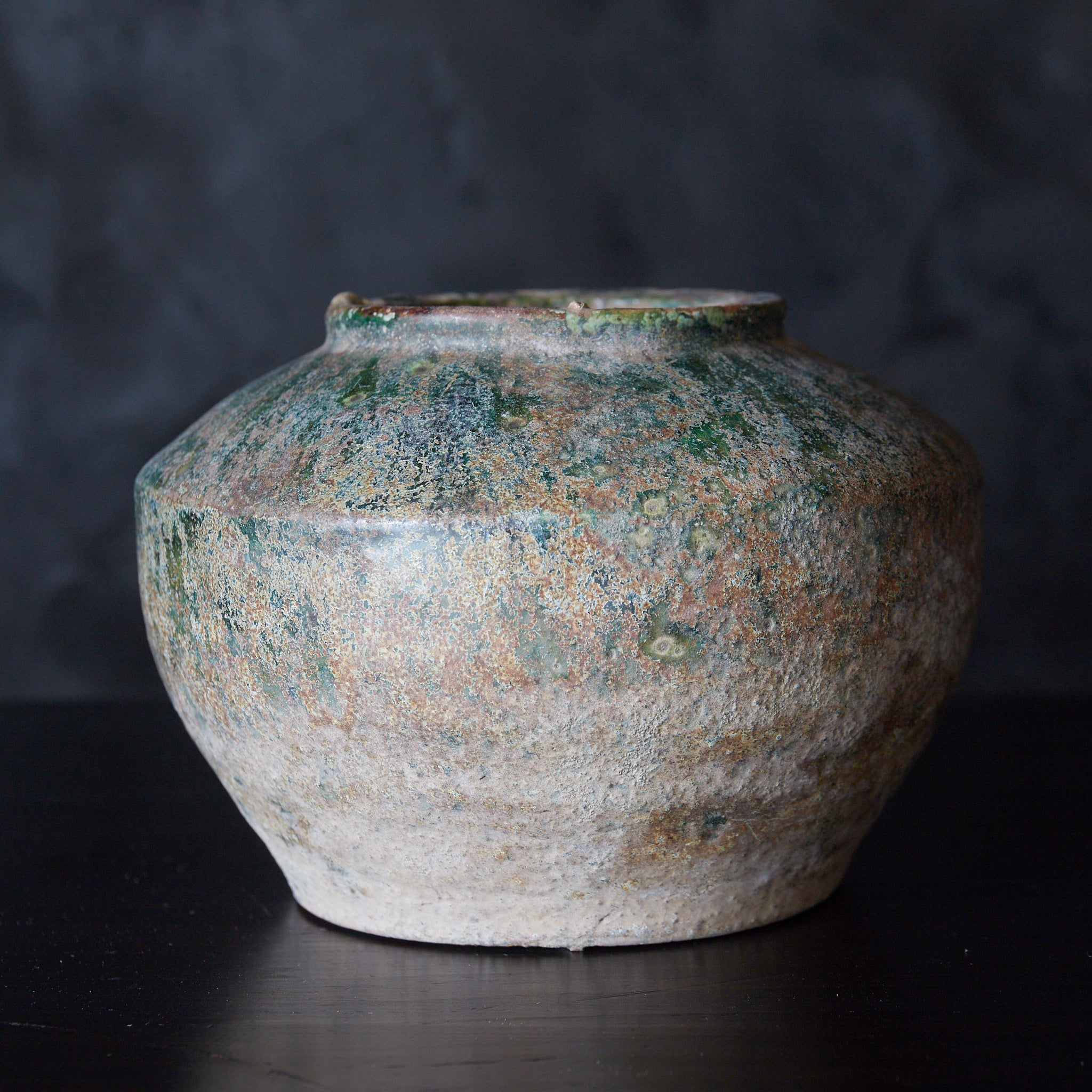
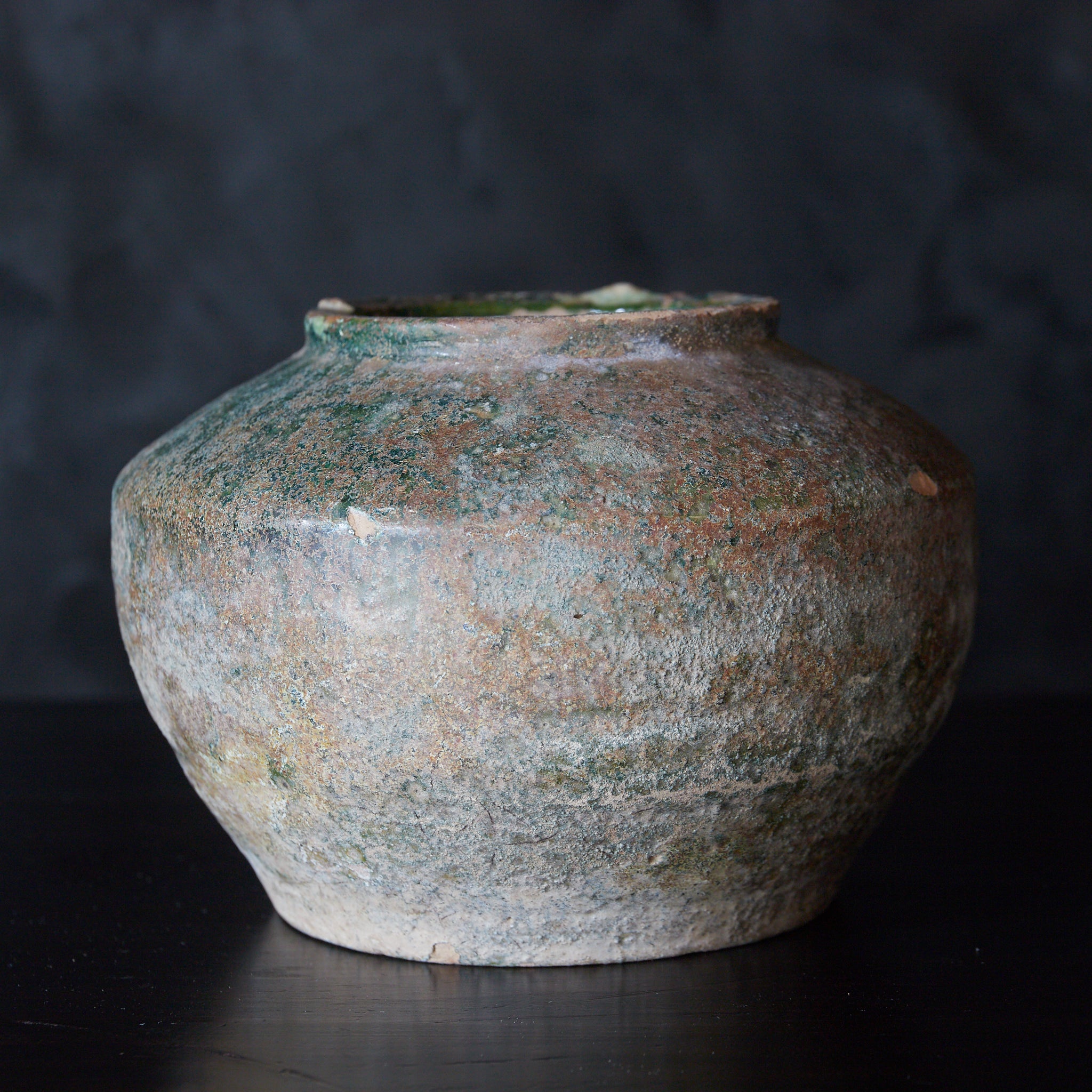
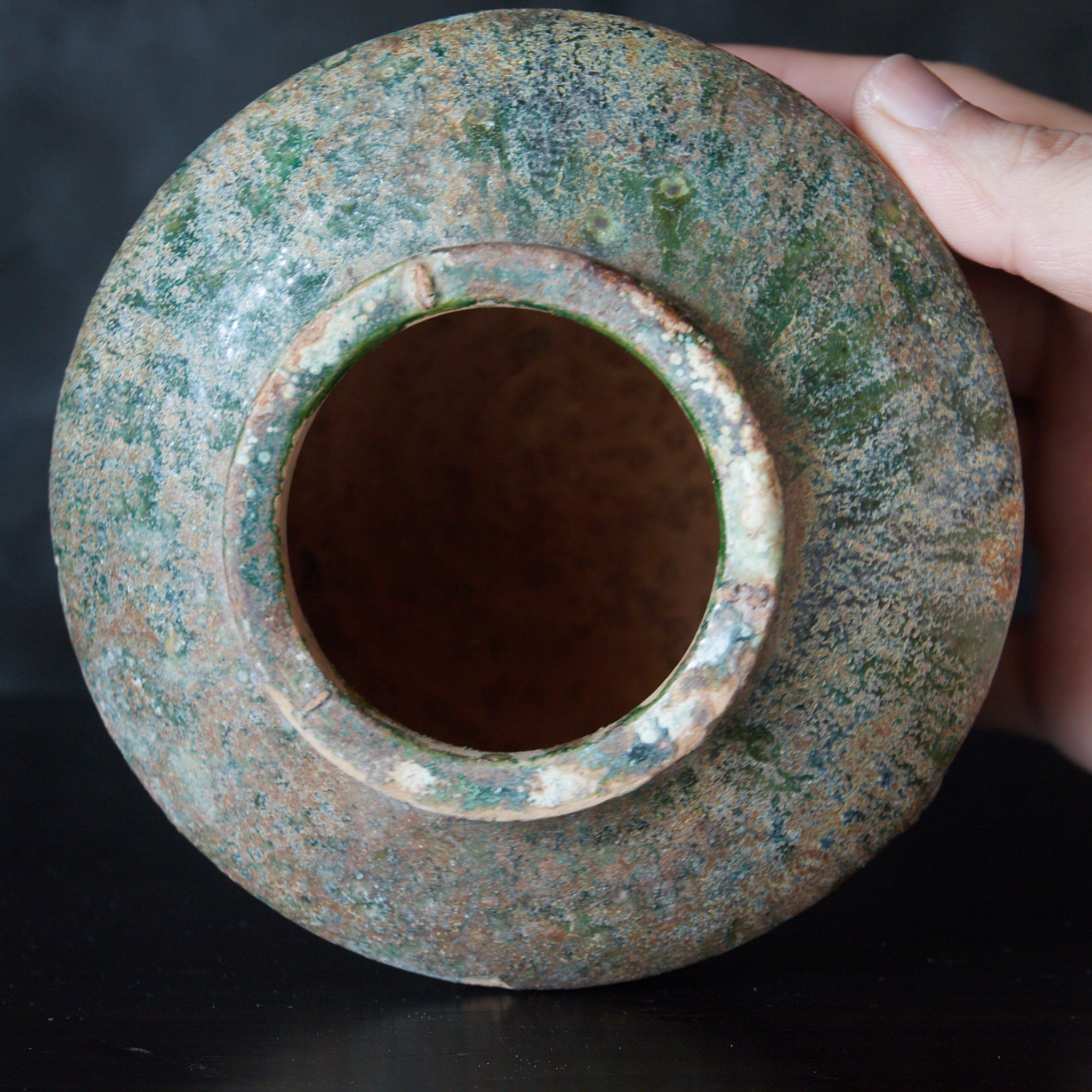
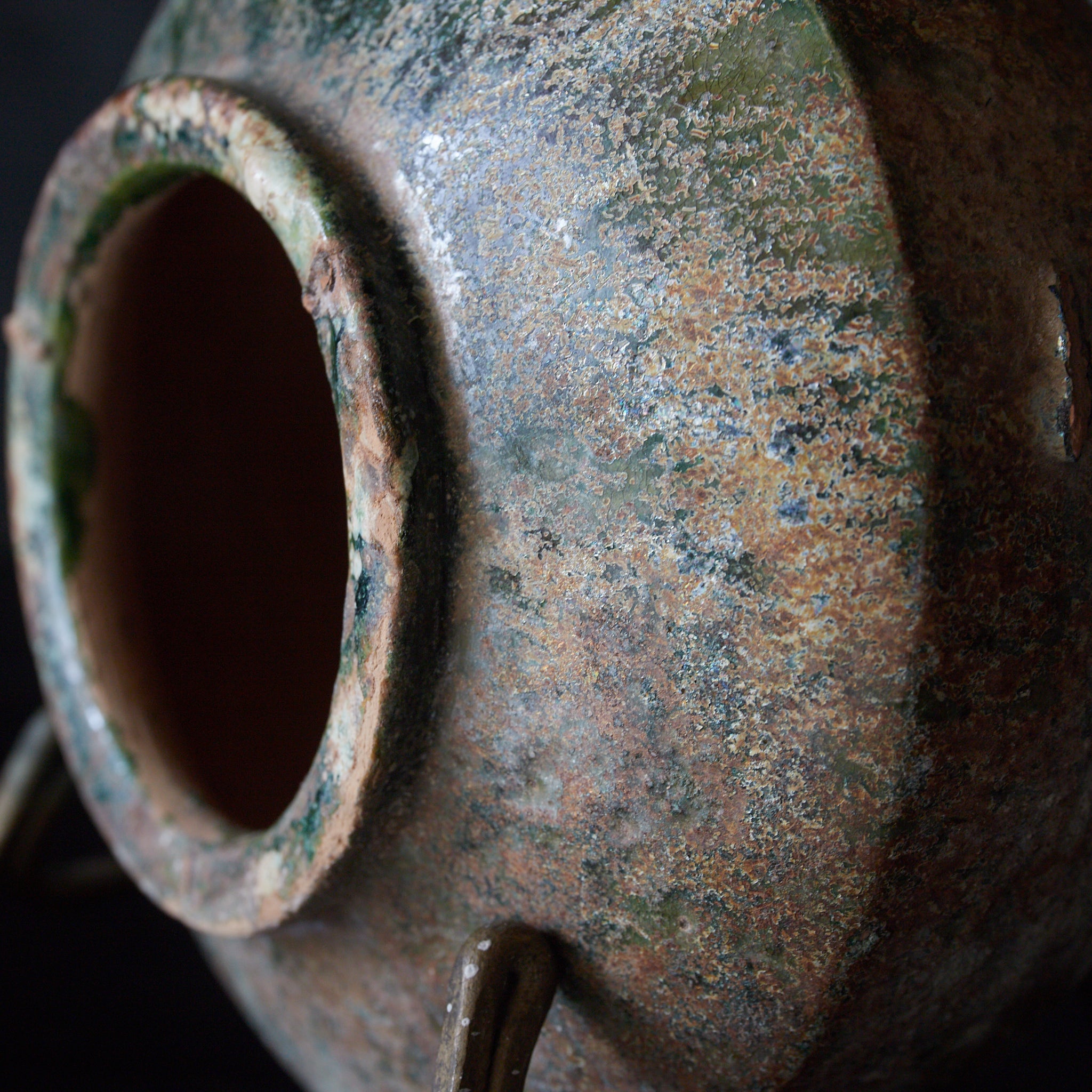
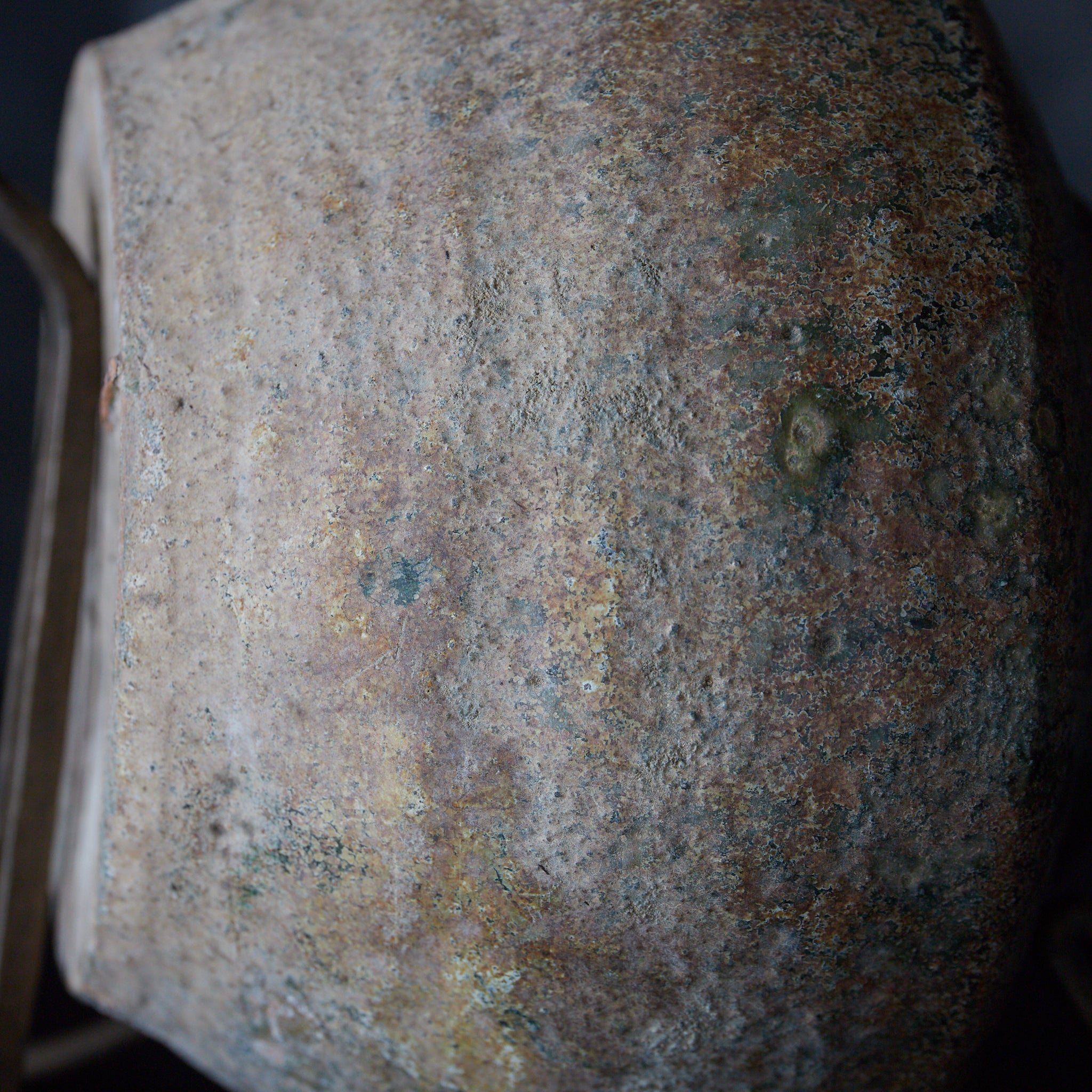
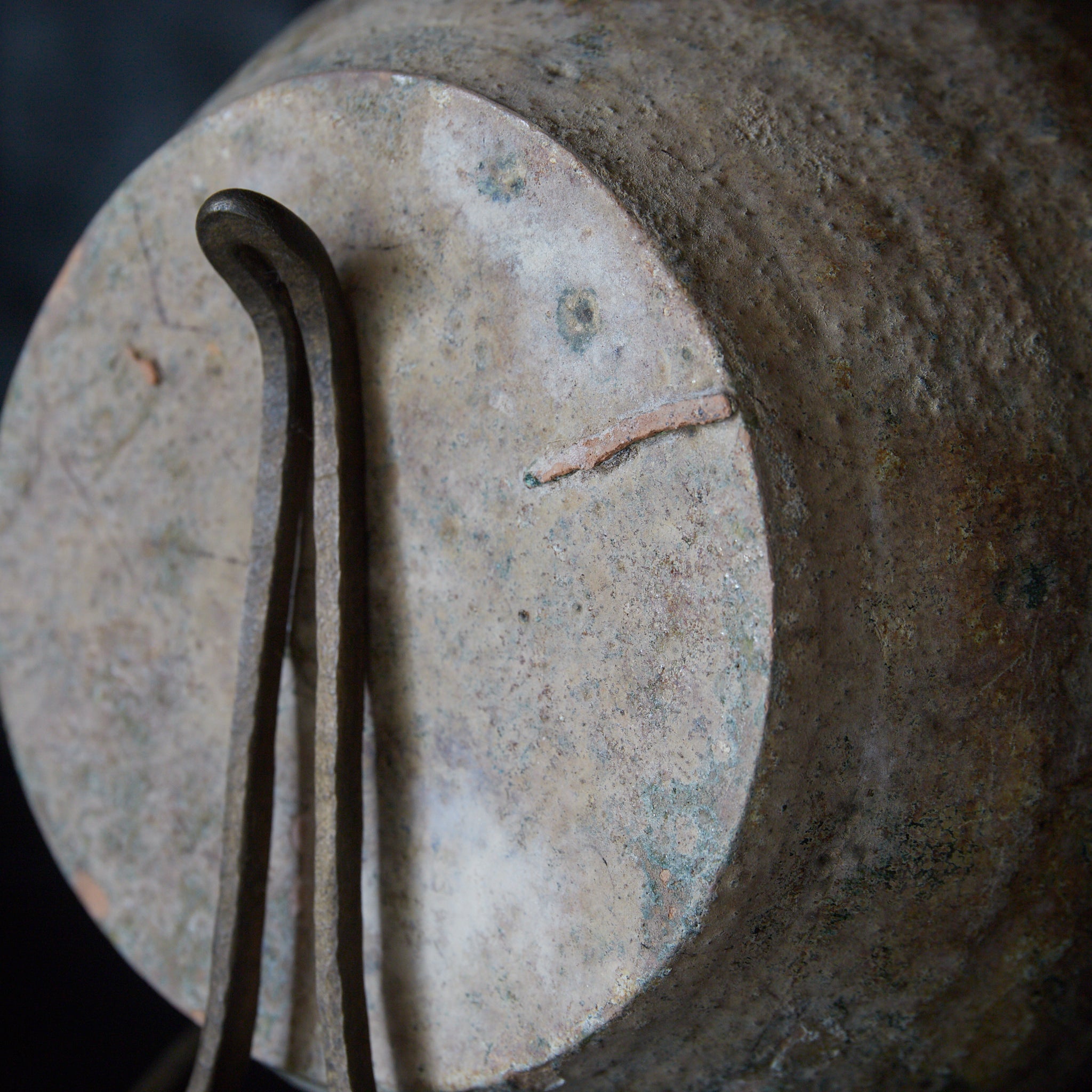
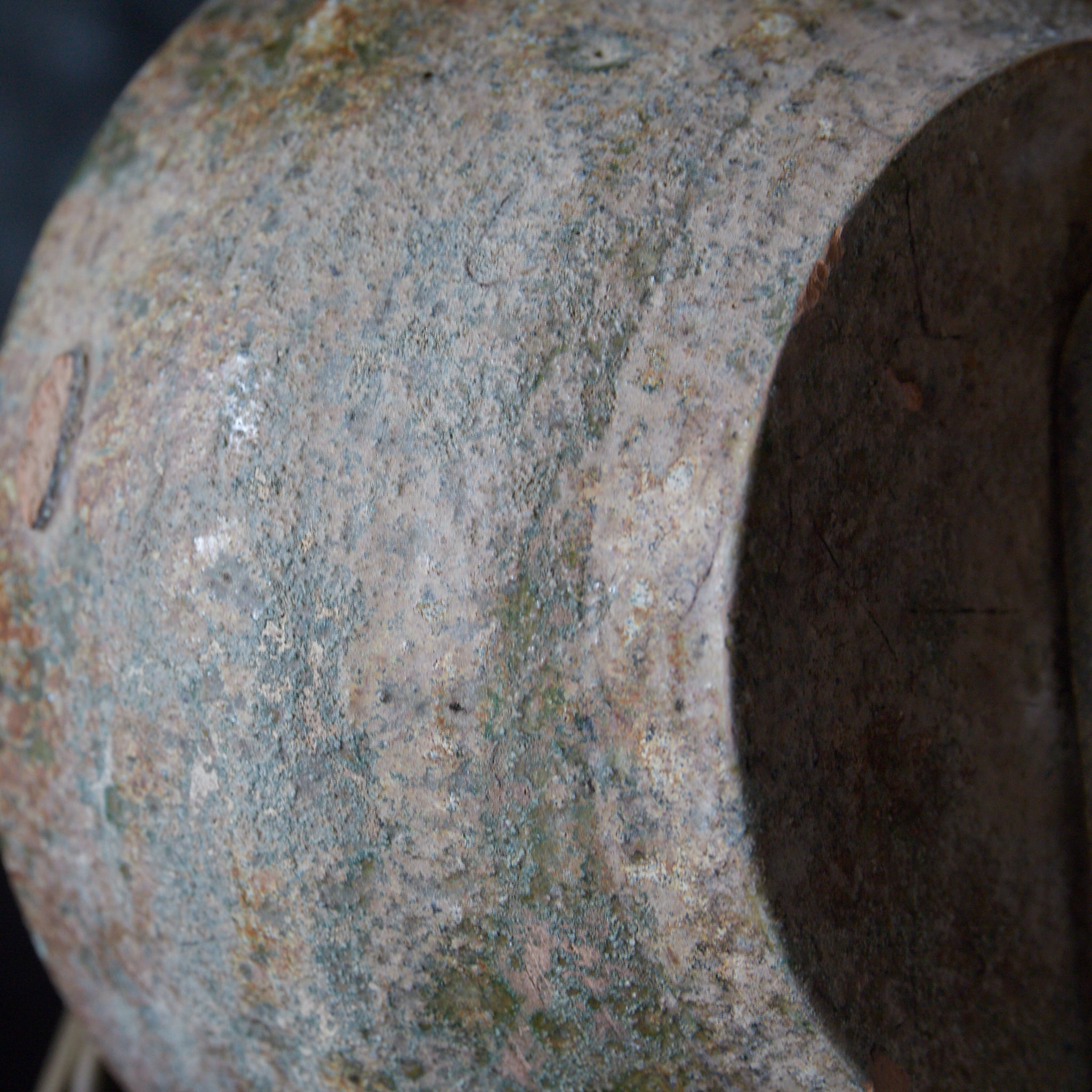
> Inquire about this productA small jar with green glaze produced in the Han dynasty (2nd century BCE–2nd century CE). The vessel has a squat body that swells toward the shoulder, and the rim is slightly constricted, giving it a composed, well-proportioned form. The lead glaze that covers the surface has devitrified after long burial, producing a silvery-white sheen and intermingled green-brown tones. This phenomenon, called "silvering," is a distinctive appearance of ancient ceramics that arises only through the cumulative effects of centuries of weathering and chemical change.
The burial environment has produced surface crystallization and mottling, and the vessel’s surface is variegated in bluish-green, brown, and ash-gray. This effect, transcending the original vivid green glaze, reads like a landscape painted by time. Compared with larger contemporary jars and funerary objects, the present piece is modest in scale and fits comfortably in the hand.
The silvery, ethereal surface resonates with the wabi aesthetic, revealing a singular natural pattern like snow crystals. Placed within a tea setting and glanced at, it evokes the mysterious sense of being drawn into a miniature universe. A captivating small jar.
Choose options
Tax excluded. Import duties may apply. Shipping costs are calculated at checkout.
Change language
