





CHRIST FIGURINE, Azuchi-Momoyama Period (1573–1603 CE)
Tax excluded. Import duties may apply. Shipping costs are calculated at checkout.
Each piece is carefully packed for international delivery.
Numerous product photos are available for you to examine the details and condition. Should you have any questions, please do not hesitate to contact us.
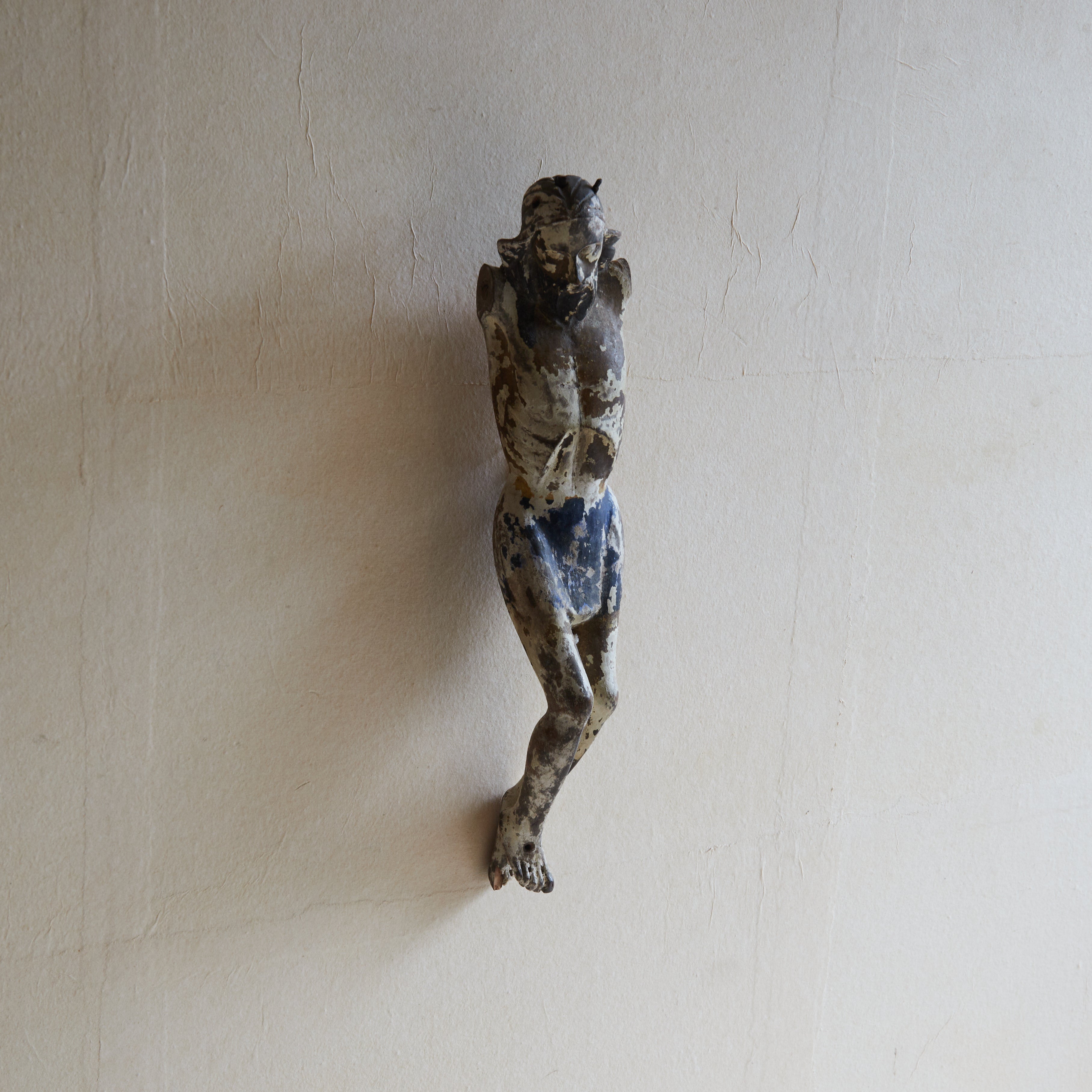
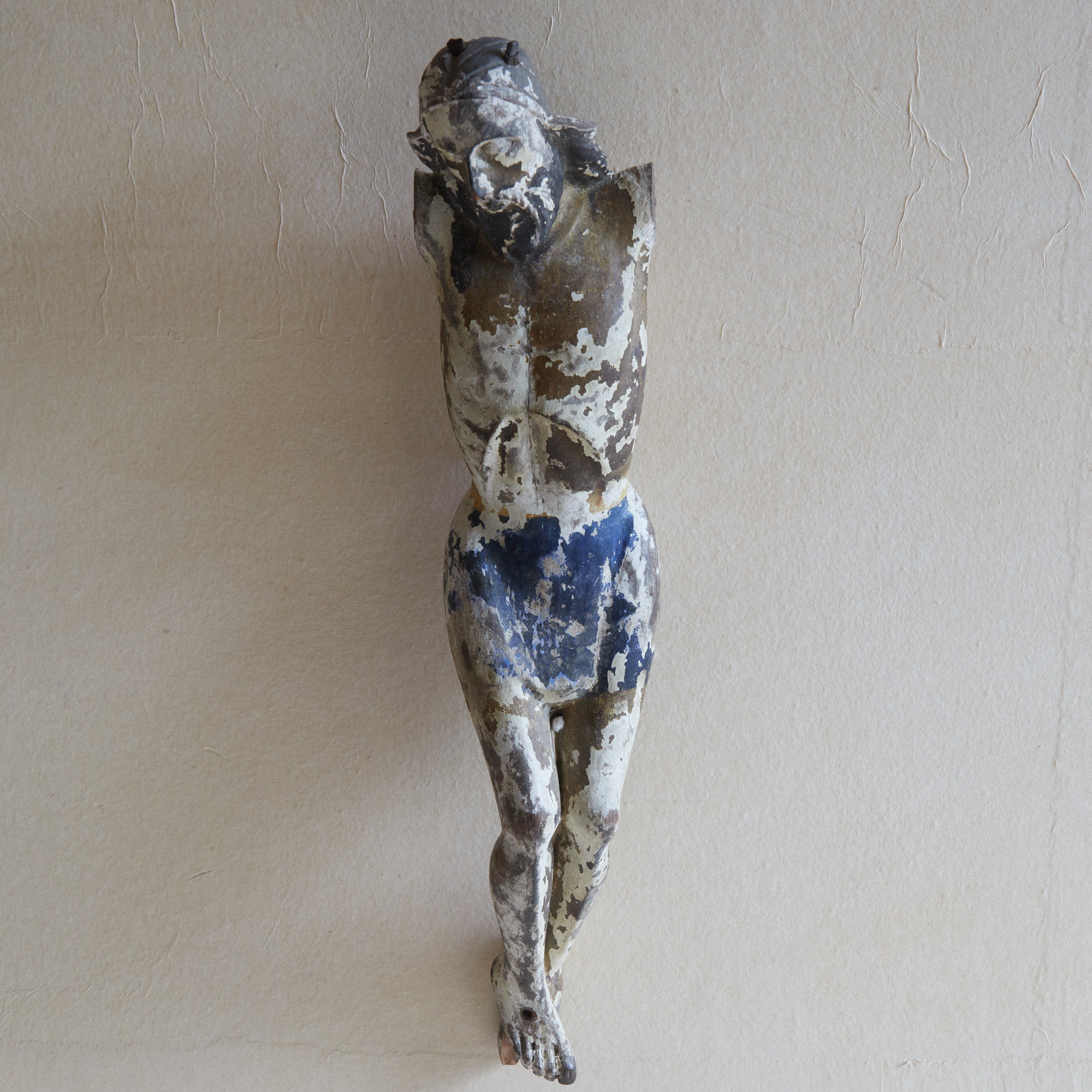
> Inquire about this productThis wooden crucifix figure of Christ, originating from the Nanban cultural sphere, dates back to the Azuchi-Momoyama period (1573–1603 CE). Standing at approximately 36 cm tall, it depicts Christ on the cross in a commanding posture. Although both arms are now missing, traces of the original polychrome decoration remain scattered across the surface. The figure's countenance reflects a serene expression of prayer, embodying a profound gaze that seems to communicate with the observer. Despite the weathered wood and flaking pigments that tell the tale of its long history, it continues to exude a sense of sublime sanctity and quiet presence.
The propagation of Christianity in Japan began with the arrival of Francis Xavier in 1549 and rapidly spread throughout the country during the tumultuous Sengoku period. By the Azuchi-Momoyama era, numerous followers emerged, ranging from feudal lords to commoners, and the sacred paintings and figures brought through Nanban trade became focal points for faith and evangelization. Churches, known as Nanban-ji, were established in Kyoto and Nagasaki. During my own visit to a historic residence in Kyoto, while assisting in the restoration of a garden, I came across a stone lantern marked with a cross, a testament to the new culture of prayer that crossed the seas and gradually took root in daily life across Honshu.
Missionaries of the time commissioned Japanese artisans to create crucifixes, images of the Virgin Mary, and altar furnishings, which were often adorned with lacquered maki-e decorations. The resulting Nanban art pieces are believed to have merged the religious spirituality of a foreign faith with Japanese aesthetic sensibilities, serving as symbols that connected belief with everyday life. However, this new faith was accompanied by a history of acceptance and conflict. Although Christianity flourished for a time under the patronage of Oda Nobunaga, Toyotomi Hideyoshi grew increasingly wary of its expansion and European influence, issuing the Edict of 1587 to expel missionaries and prohibit the faith. In 1597, 26 Catholic believers were executed by crucifixion in Nagasaki. Subsequently, under the Edo shogunate, anti-Christian edicts spread, forcing many believers to become hidden Christians, practicing their faith in secrecy.
This Christ figure, now devoid of arms, likely suffered damage amidst the storms of persecution or was intentionally altered to evade detection. Nevertheless, the gentle expression of its remaining face conveys the strength of faith that perseveres through long trials. Even as it decays over time, it continues to quietly embody a sense of sanctity.
Choose options
Tax excluded. Import duties may apply. Shipping costs are calculated at checkout.
Change language
