

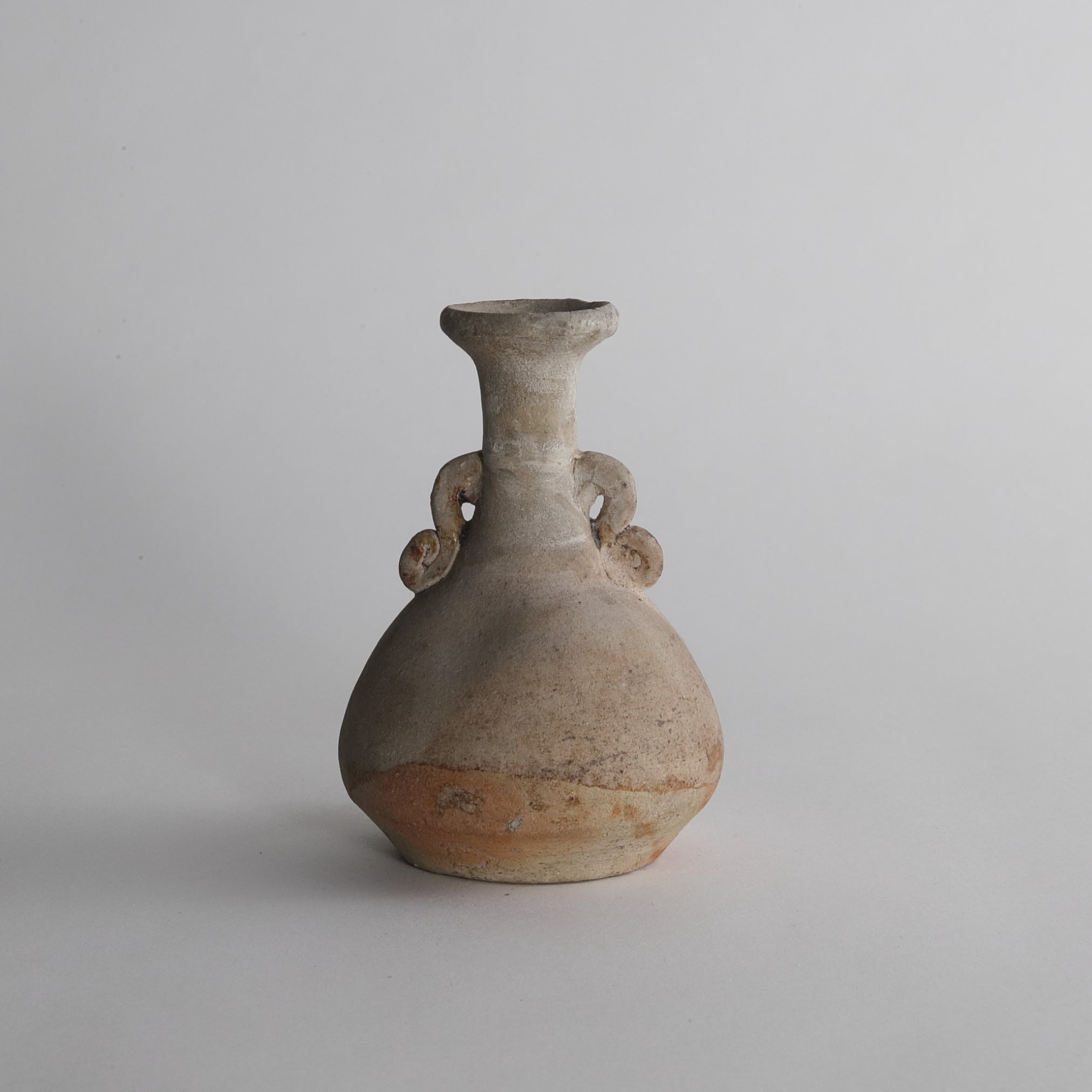
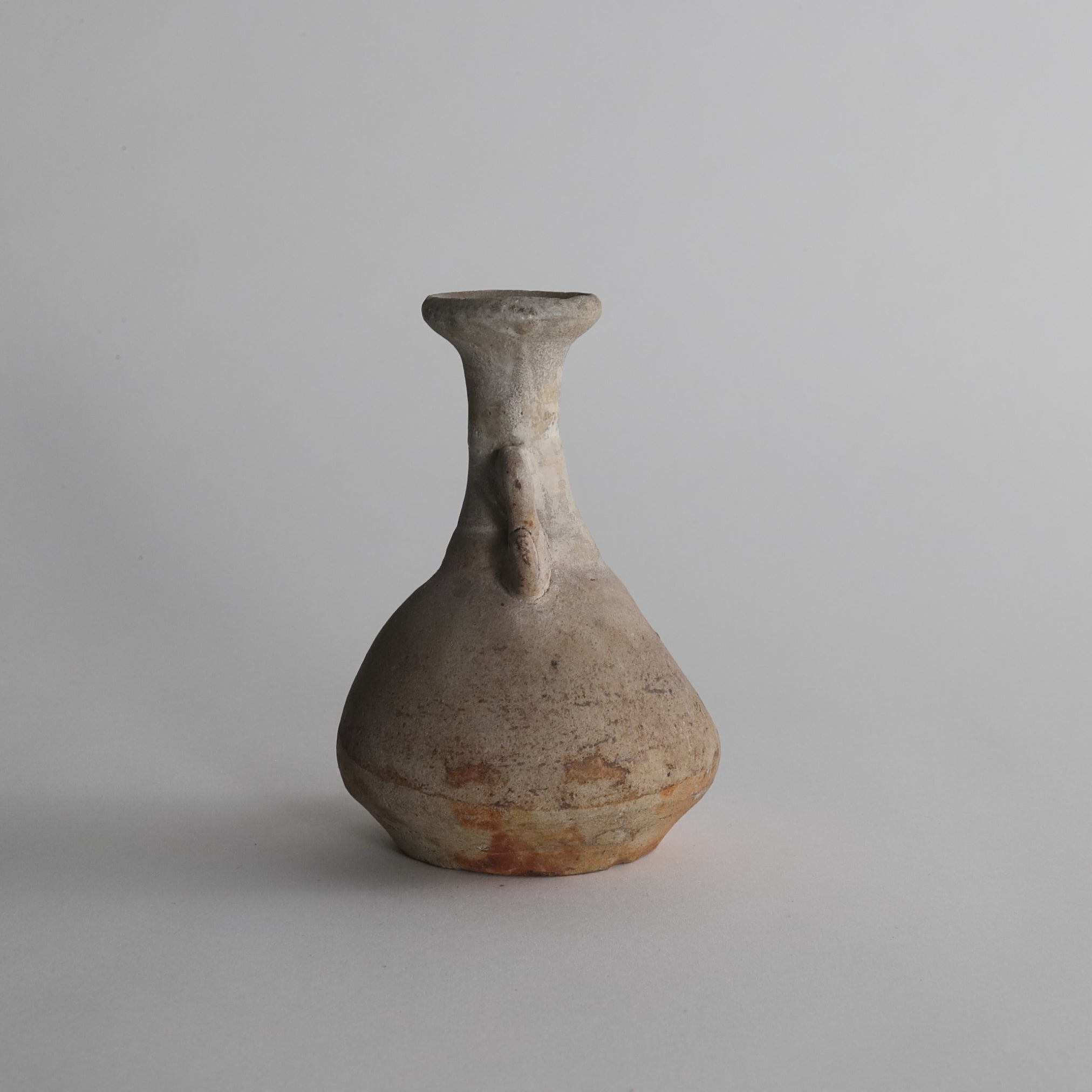
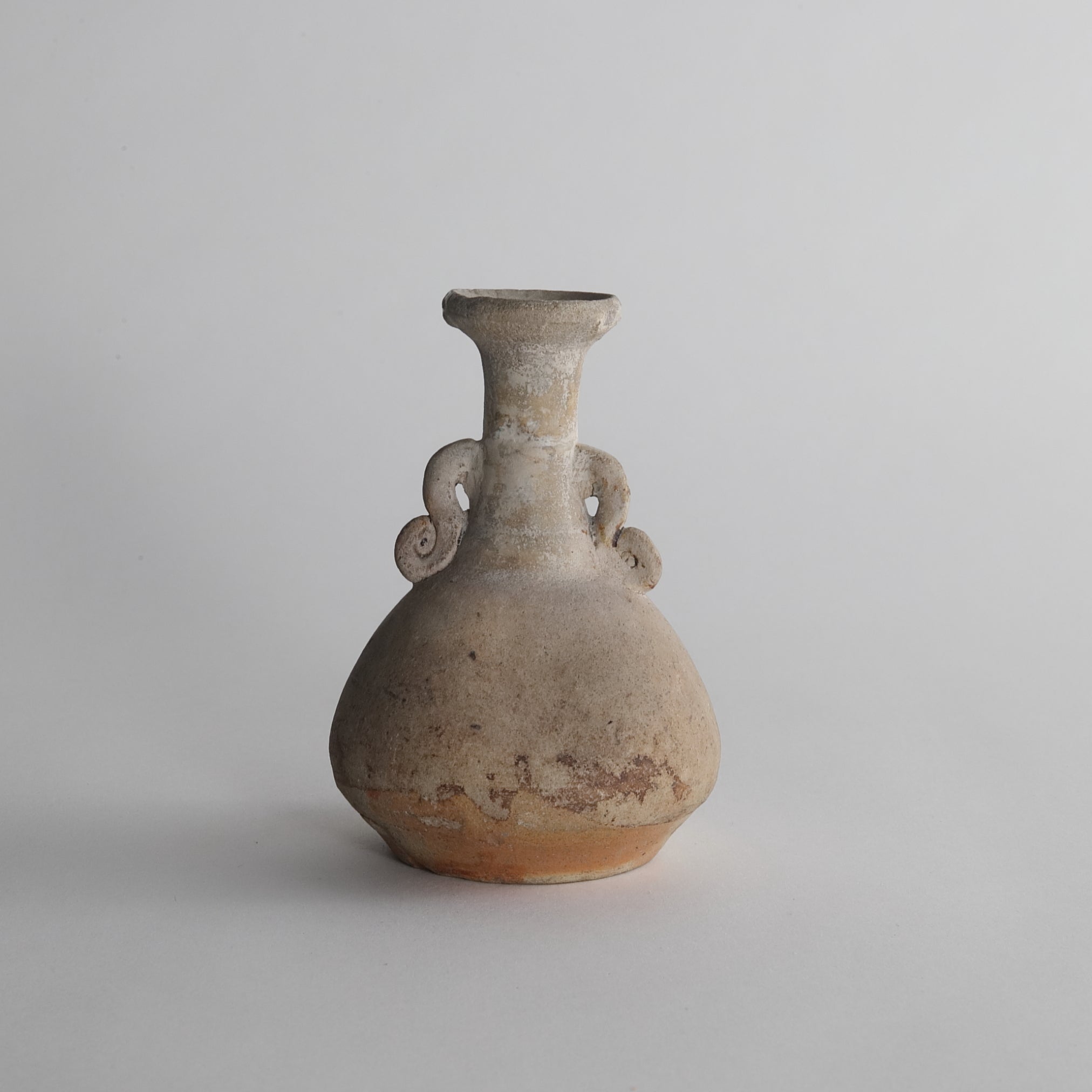
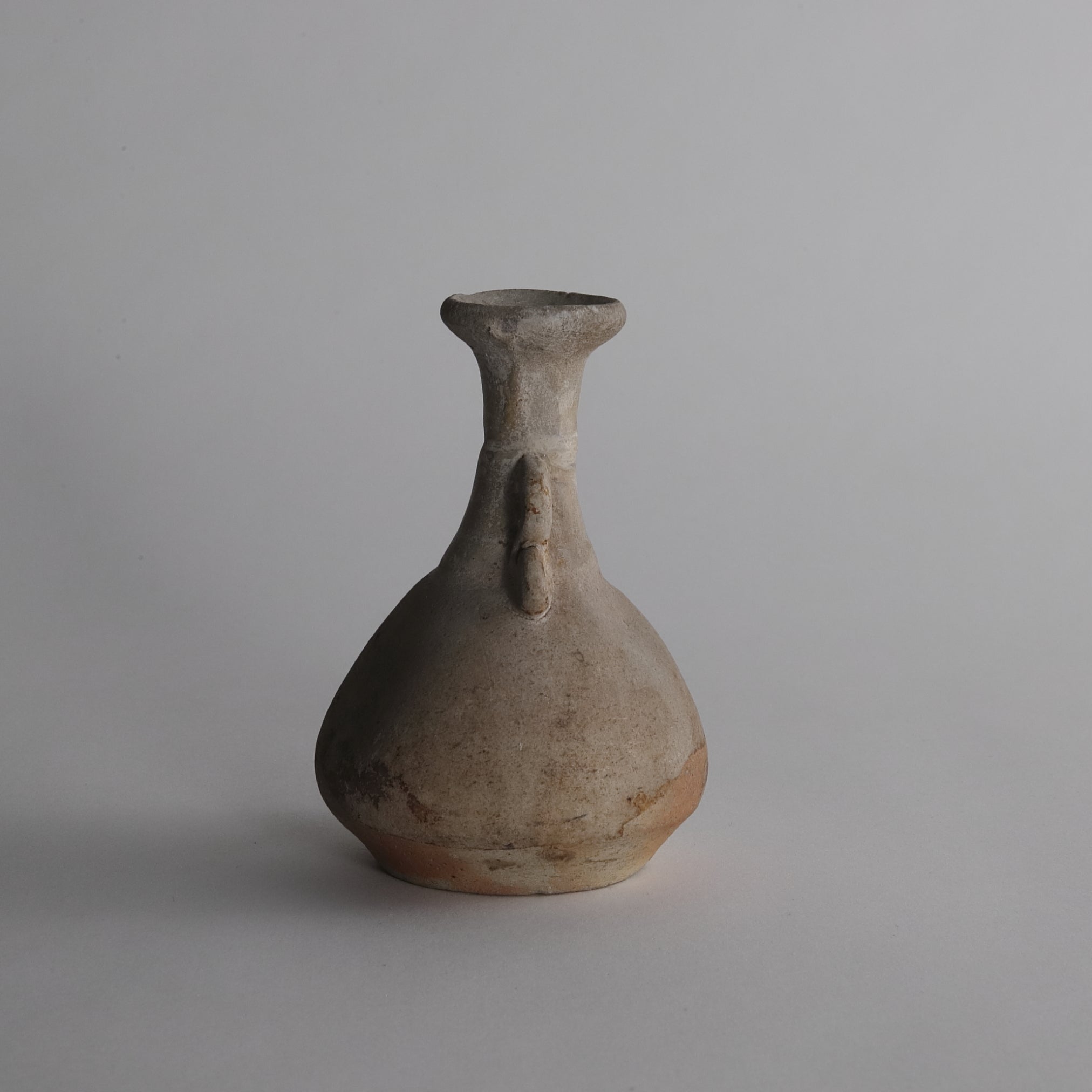

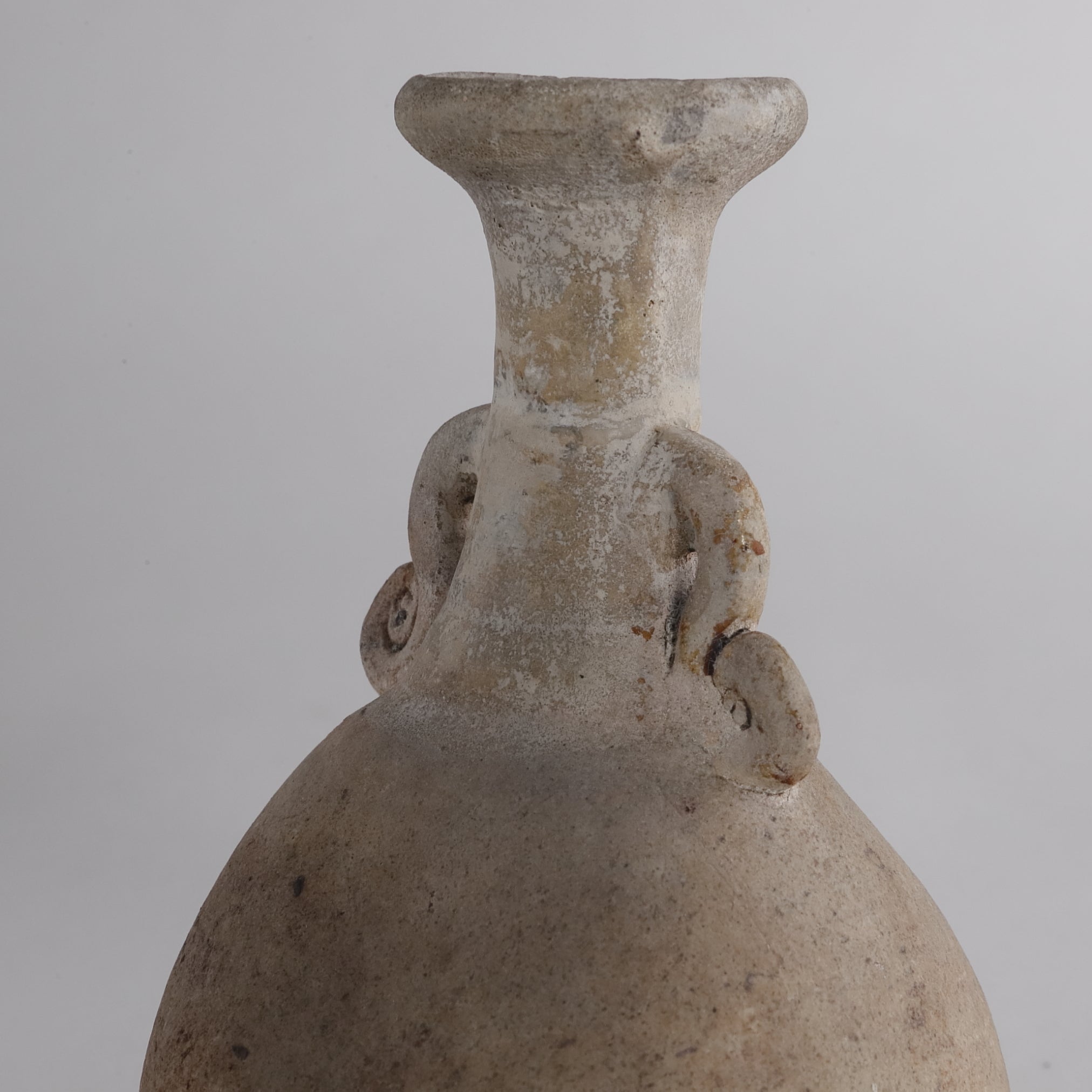
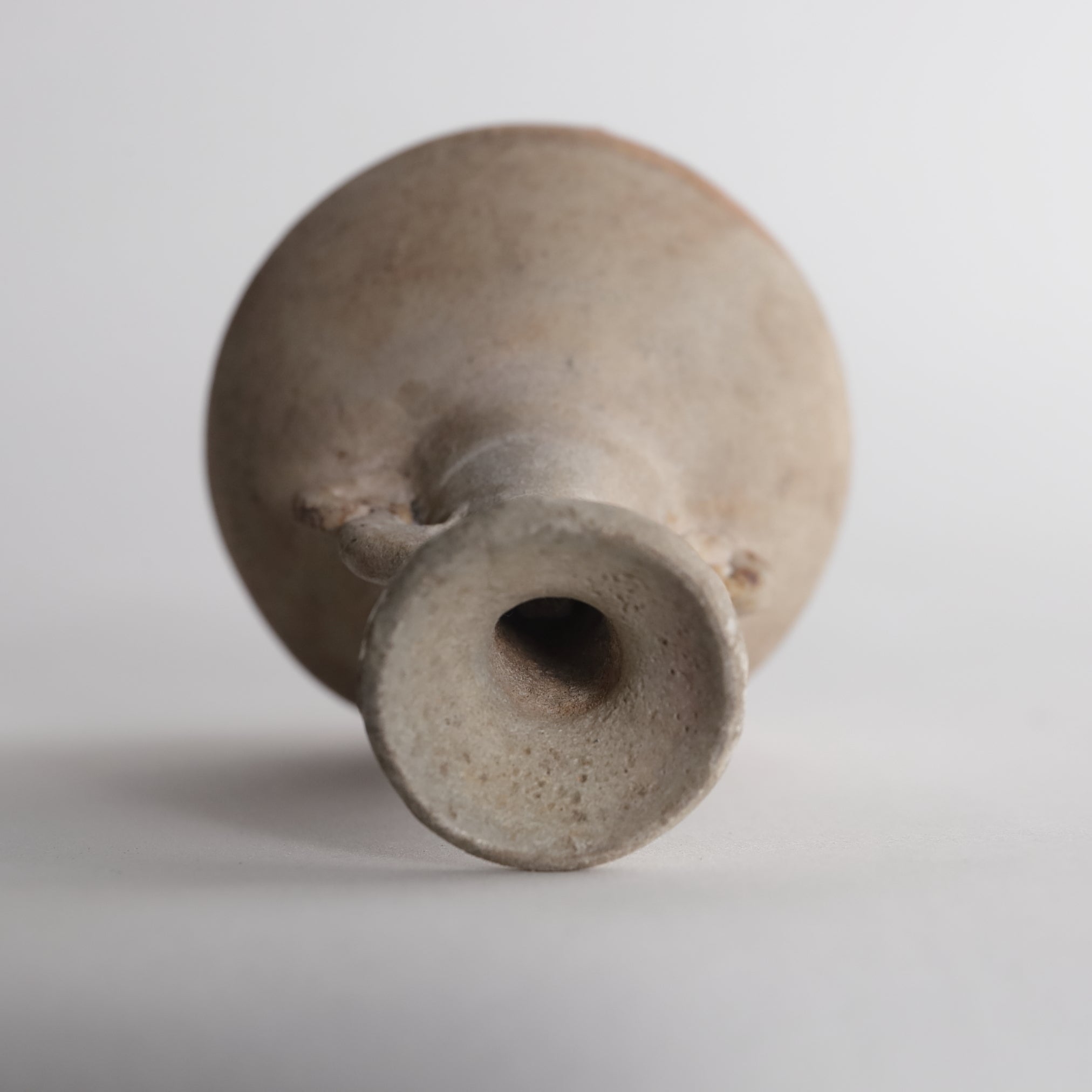

BUDDHIST ALTAR VASE, Ko-Seto, ash-glazed with handles, Kamakura Period (1185–1333 CE)
However, we may respond individually to certain customers after reviewing the circumstances.
Please contact us for further details.
Shipping to the United Kingdom and Switzerland remains available.
This item has been sold. If you are looking for a similar piece or another work from the same period, please feel free to contact us.
> Inquire about this or a similar itemA graceful presence that exudes tranquility. This ash-glazed Buddhist altar vase evokes a sense of the ancient Sue ware lineage.
Comprising three distinct sections—an elongated neck with a flared rim, a rounded body, and a pedestal base—this Buddhist altar vase was among the most frequently produced forms throughout the entire period of Ko-Seto. While this piece features dual handles at the neck, they are not decorative rings, and the body exhibits a gradual bulge from the upper to the lower section rather than a pronounced roundness. Its shape is inspired by Buddhist flower vases from the Song Dynasty.
As an excavation find, the interior of the vase retains solidified earth; however, this has been preserved in its original state due to its archaeological significance.
Choose options
Change language
