

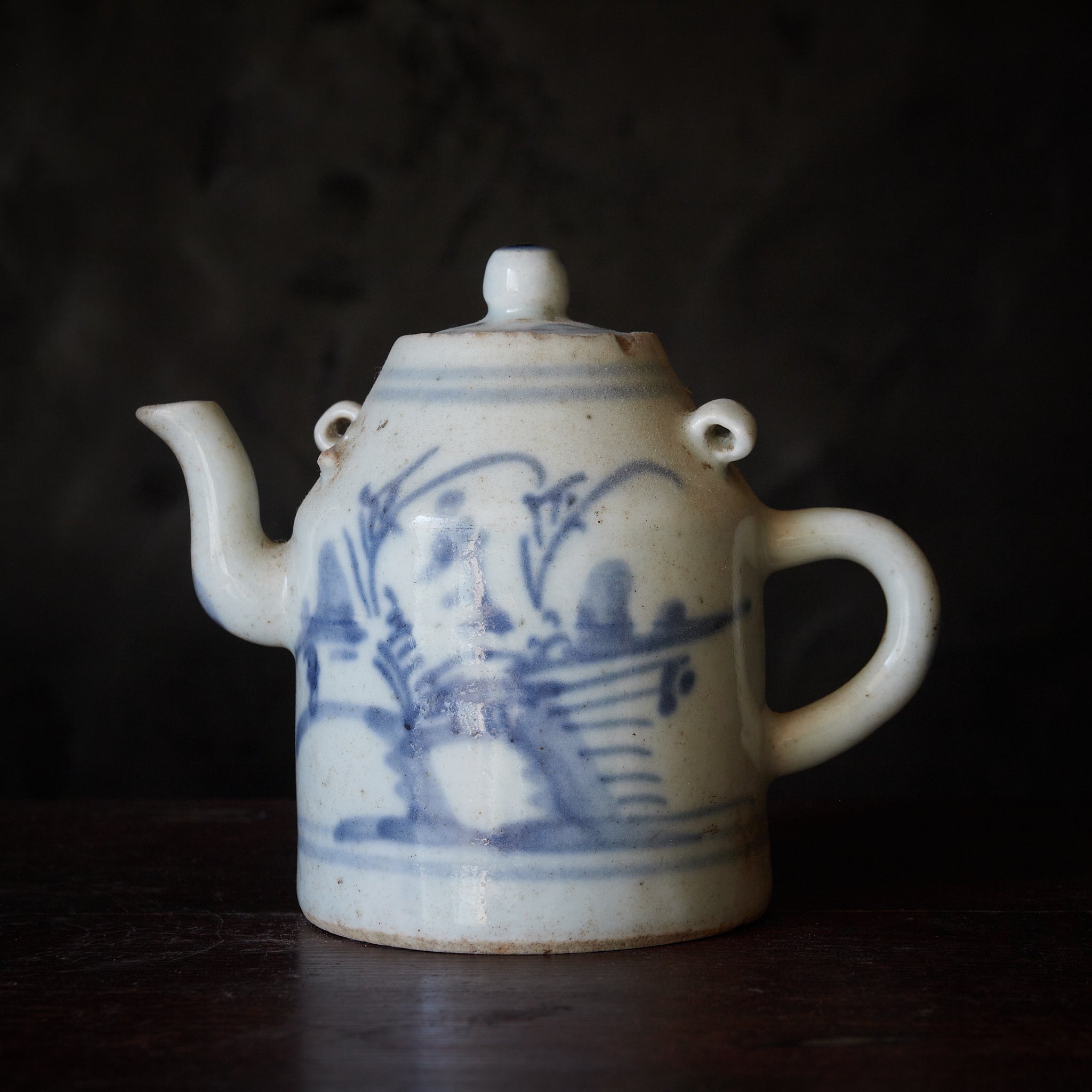


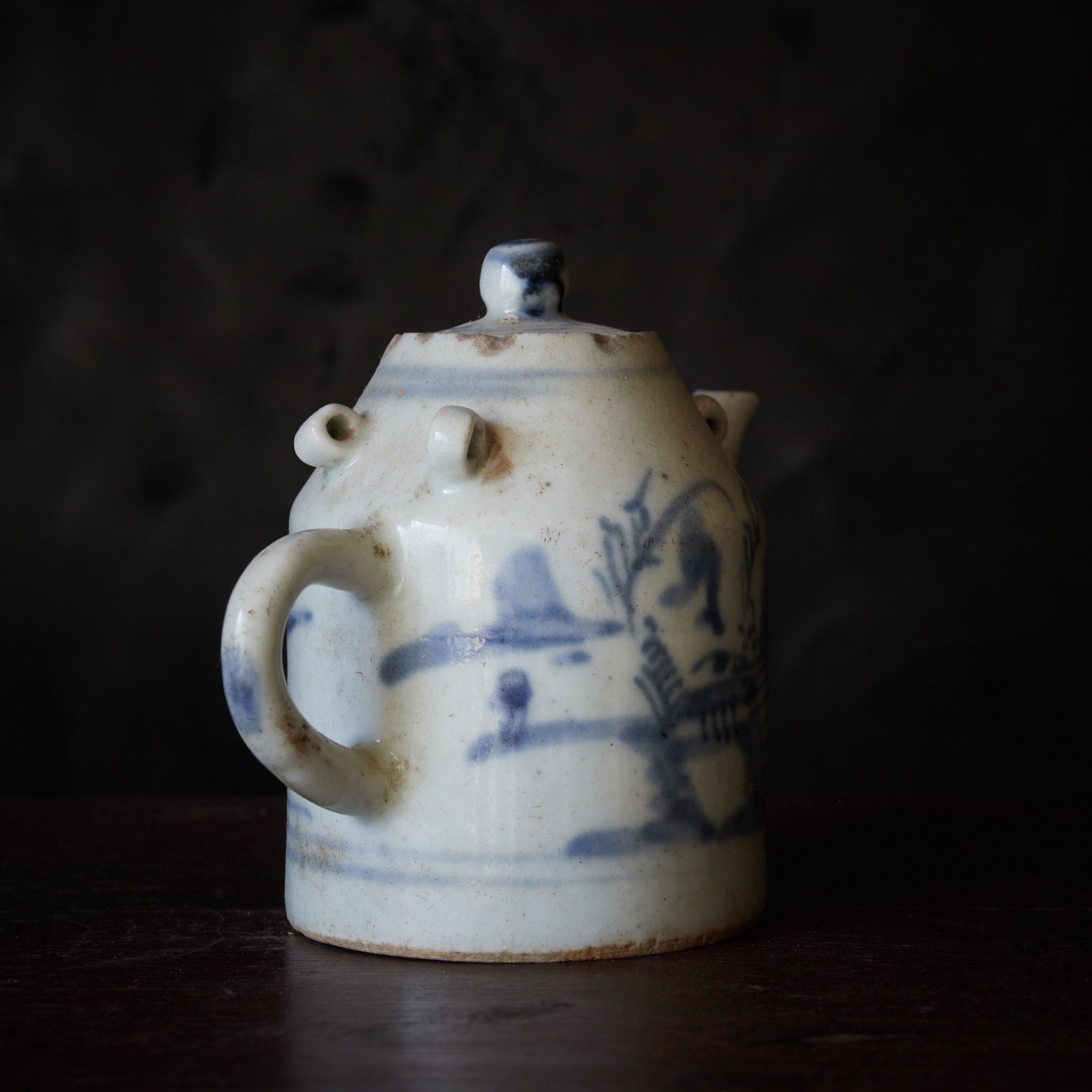
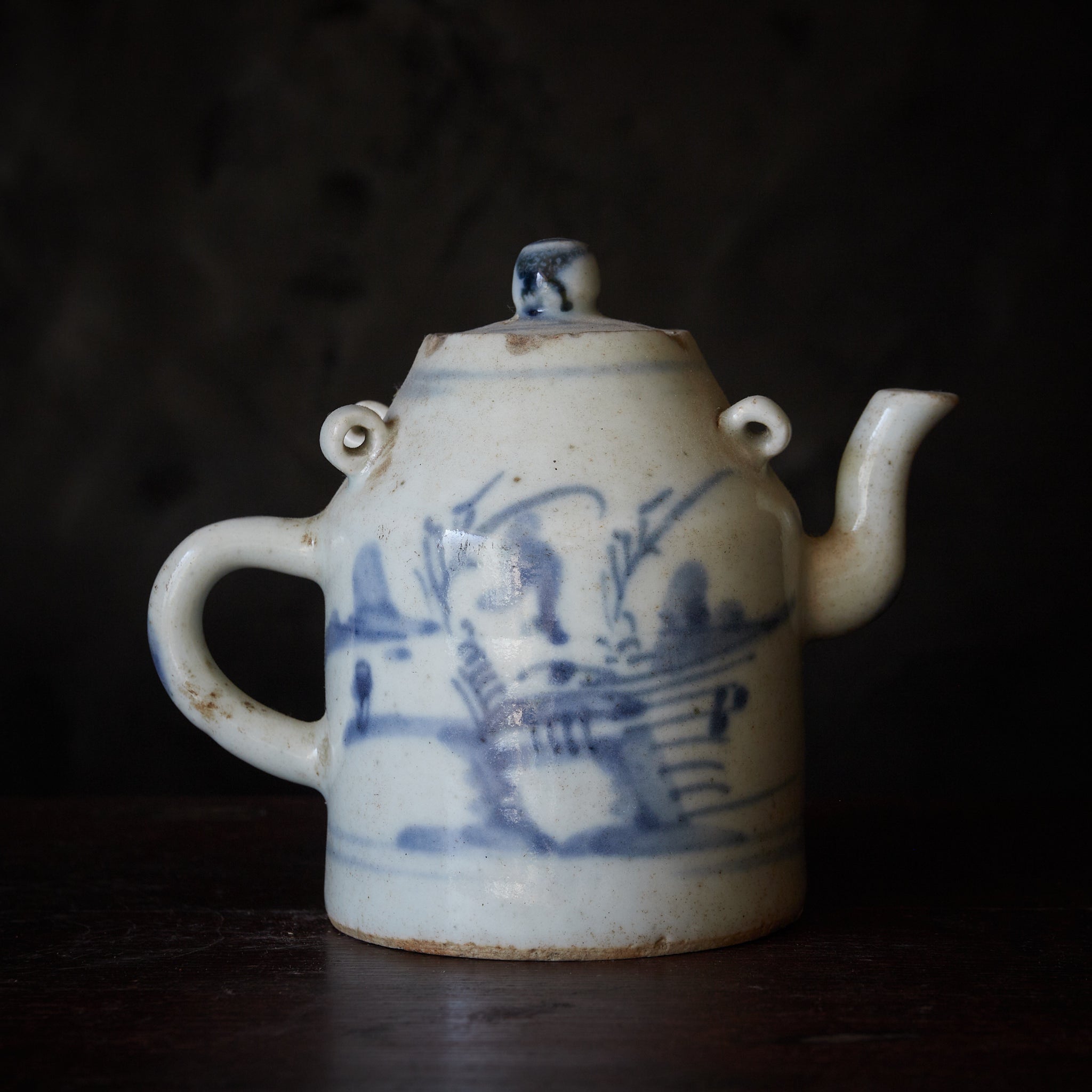


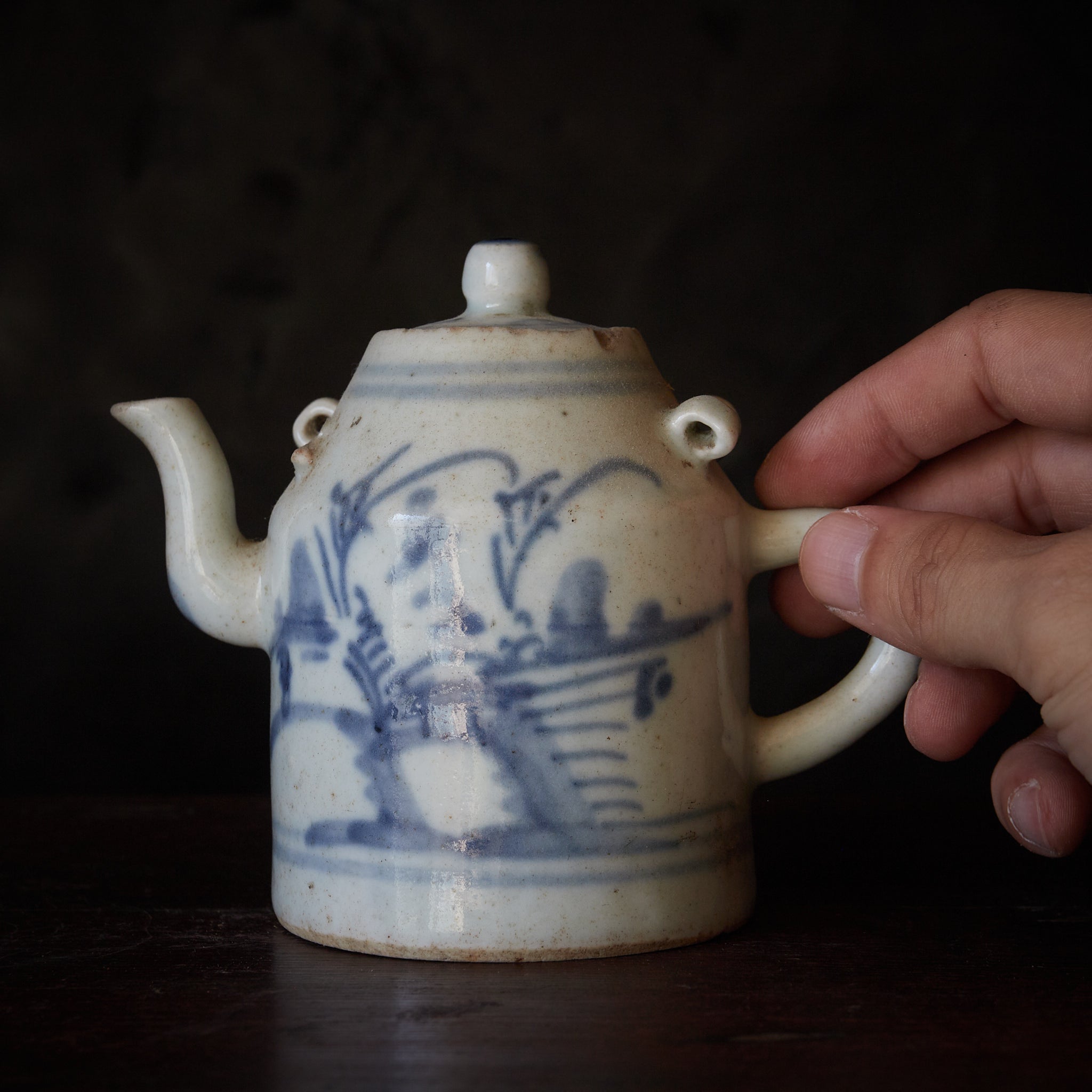





EWER, Ko-Sometsuke, Ming Dynasty (1368–1644 CE)
Each piece is carefully packed for international delivery.
This item has been sold. If you are looking for a similar piece or another work from the same period, please feel free to contact us.
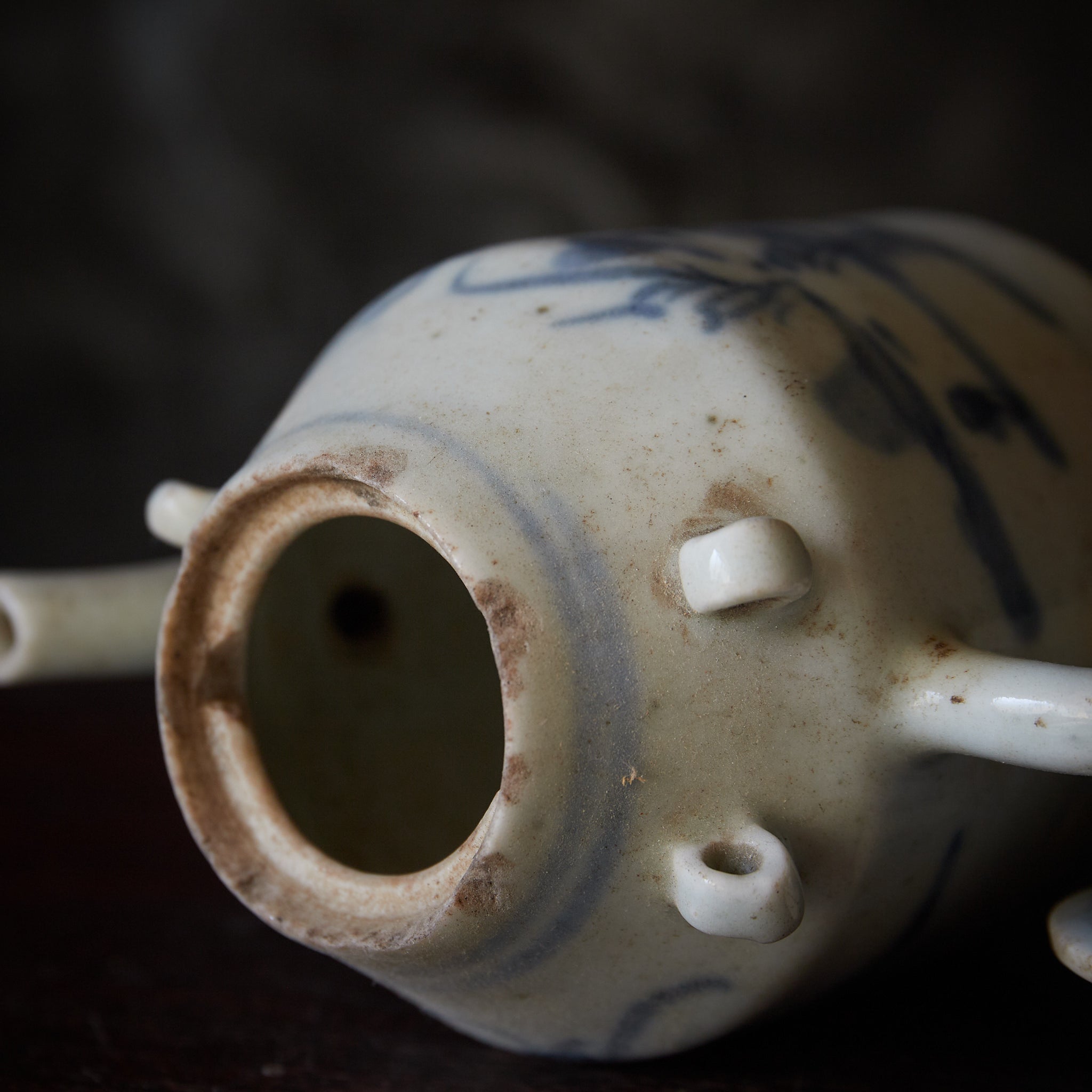
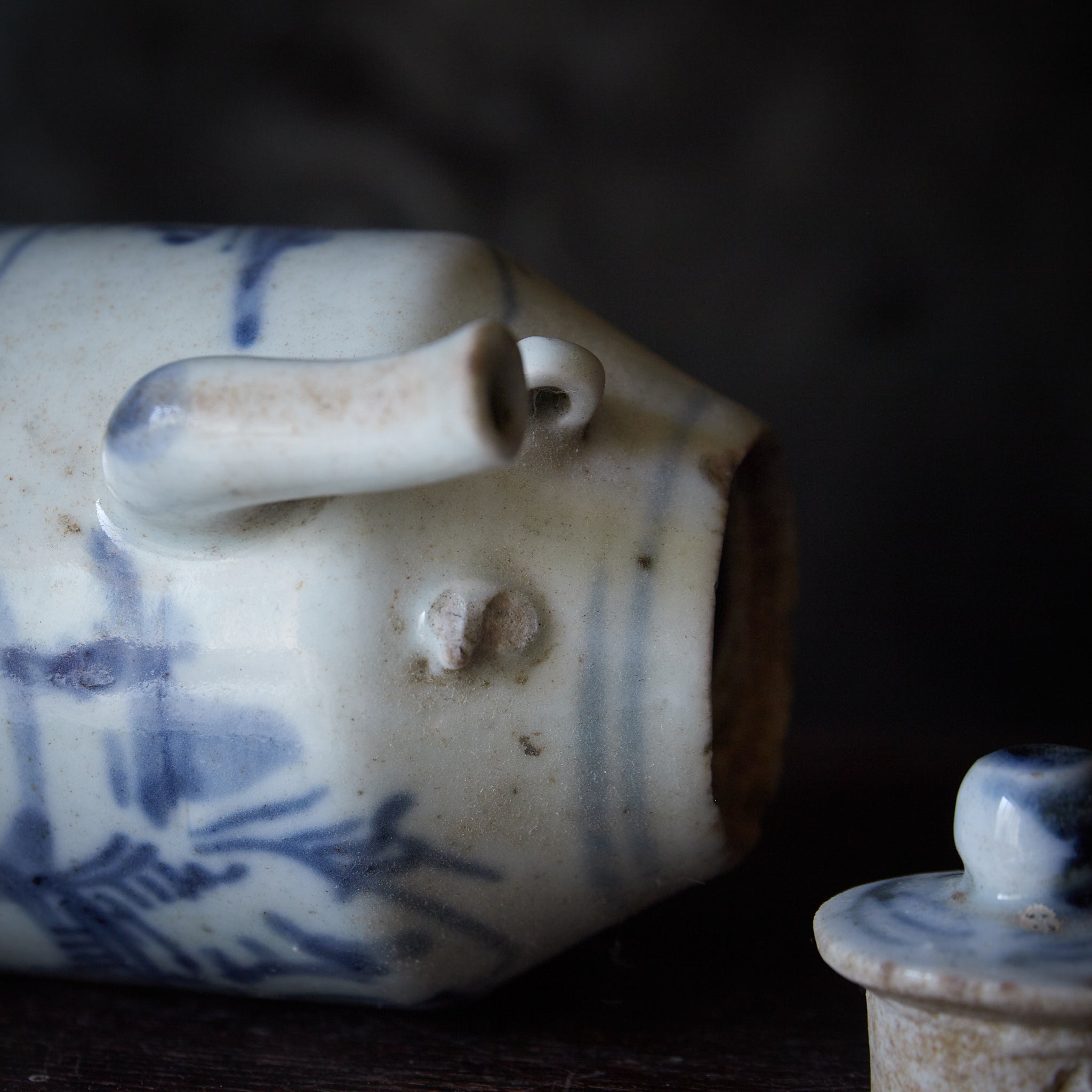
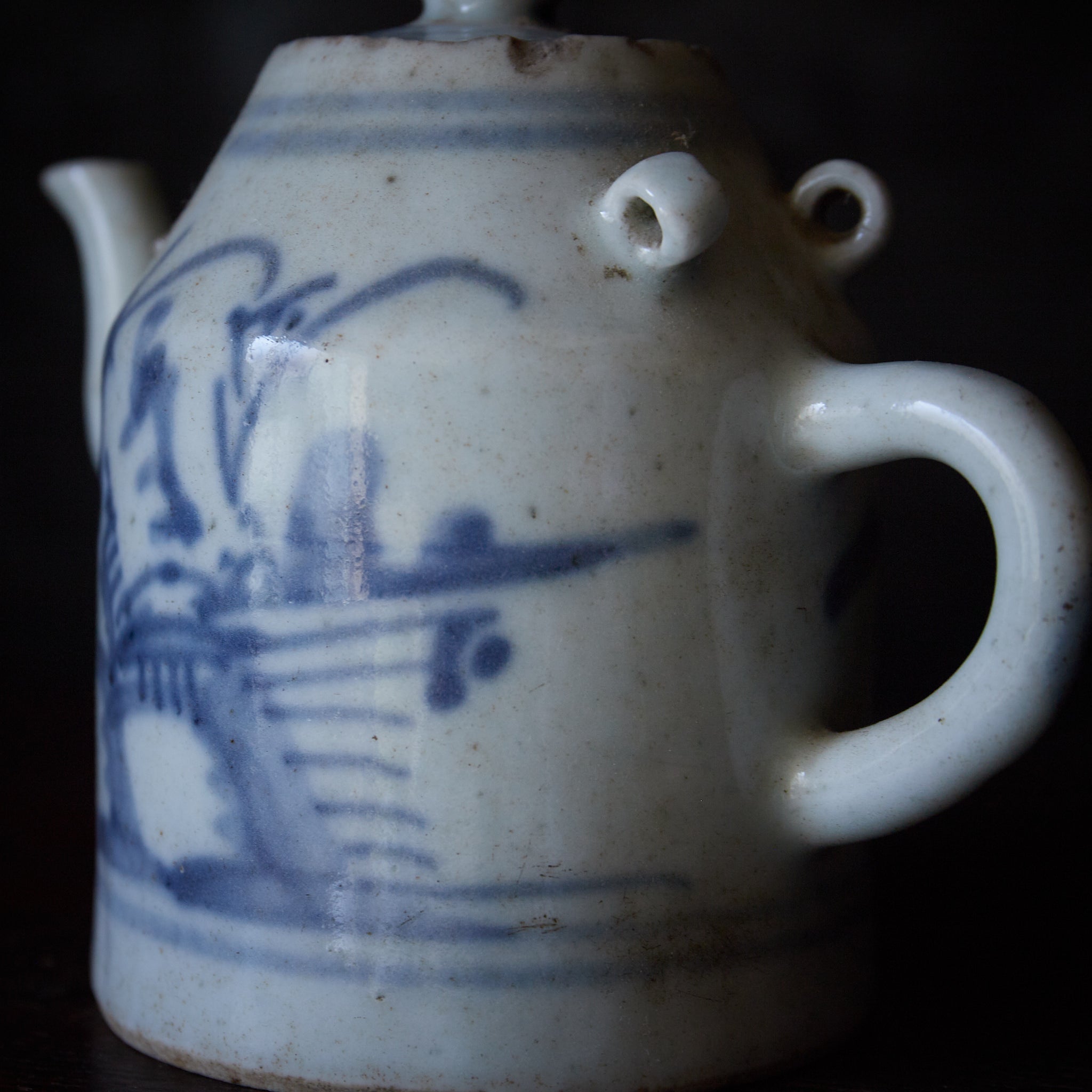
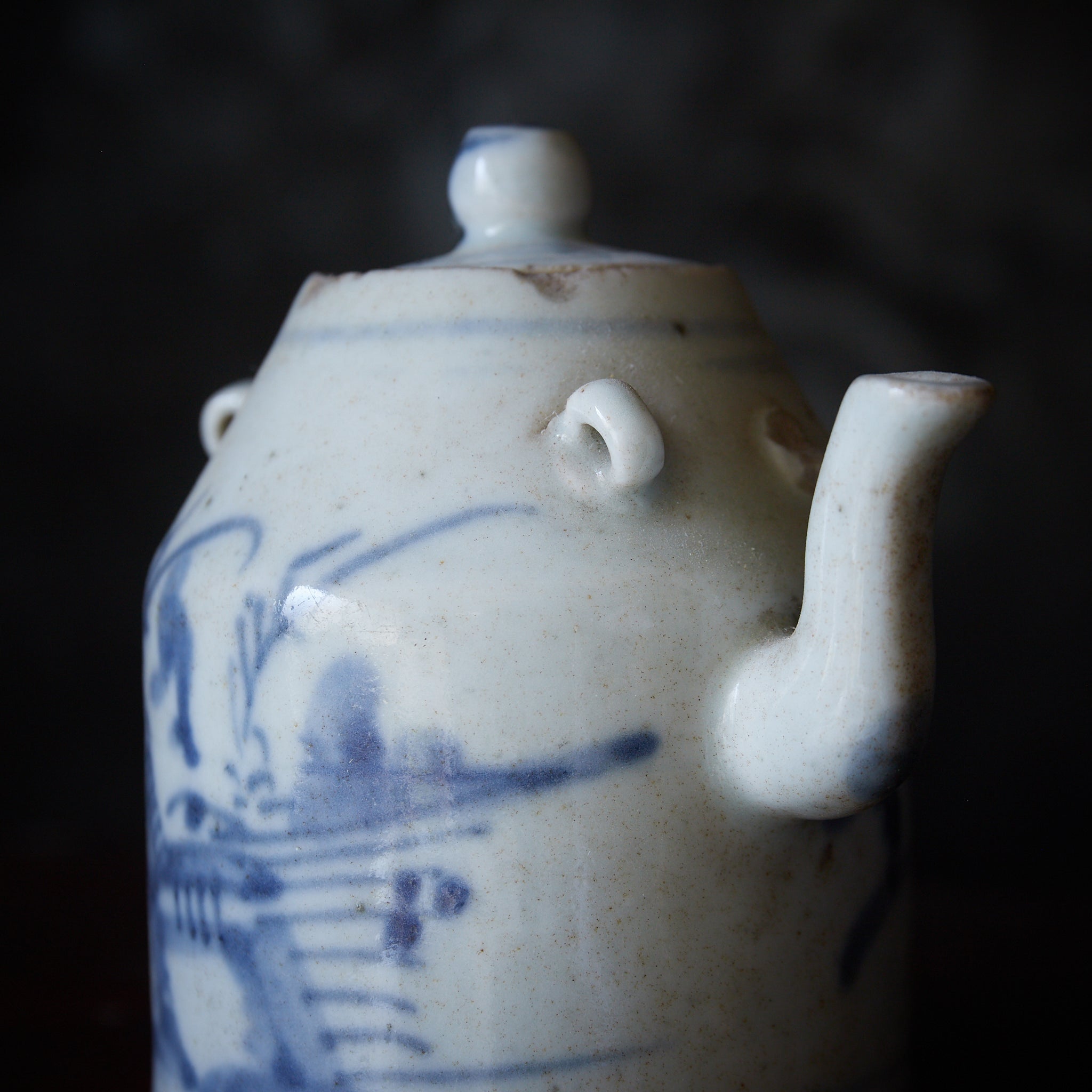
> Inquire about this or a similar itemThis exquisite ewer, crafted in the late Ming Dynasty at a folk kiln in Jingdezhen, showcases the artistry of ancient sometsuke (blue-and-white porcelain). The vessel features a straight cylindrical body adorned with a short spout and a circular handle, while the upper section is embellished with four ears, one of which is an ancient loss.
The clay body is composed of a somewhat coarse porcelain that contains iron, distinguishing it from the refined kaolin used in official kilns. The surface is decorated using the technique of "namakake," where the design is applied directly onto the unglazed body before glazing, resulting in a single firing. This method imparts a sense of spontaneity to the brushwork, characterized by subtle variations in line and tone.
The body is adorned with a landscape motif featuring figures, buildings, and trees. The ancient sometsuke style emerged after the cessation of operations at the imperial kilns in the late Ming, as skilled potters transitioned to more liberated production at folk kilns. The pigment used is Chinese cobalt (known as "tuching"), yielding a subdued blue with a slight grayish hue. The glaze seamlessly integrates with the overall surface, exhibiting minor rippling and insect bites, which are natural occurrences resulting from the differences in shrinkage rates between the coarse body and the glaze during firing.
Choose options
Change language
