

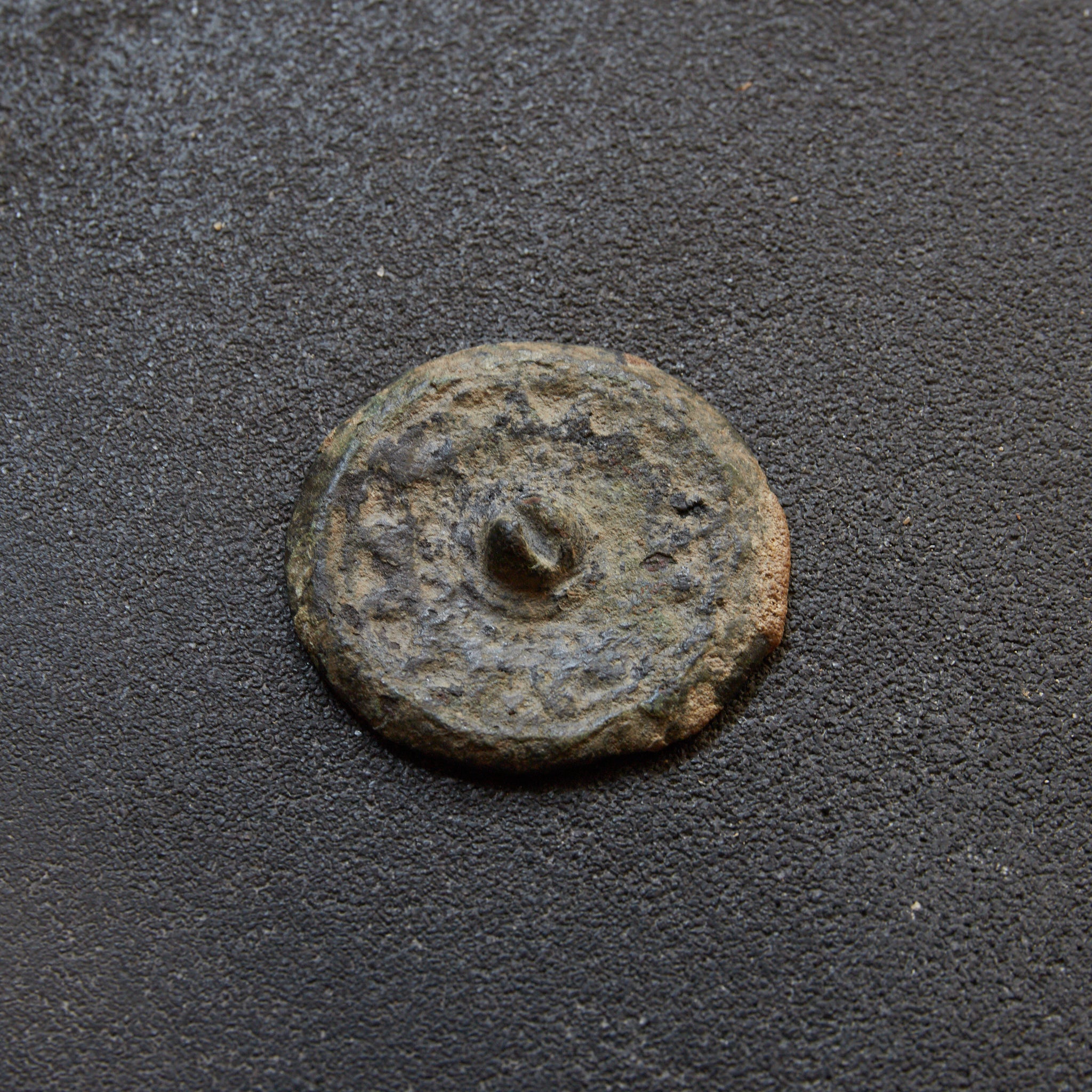
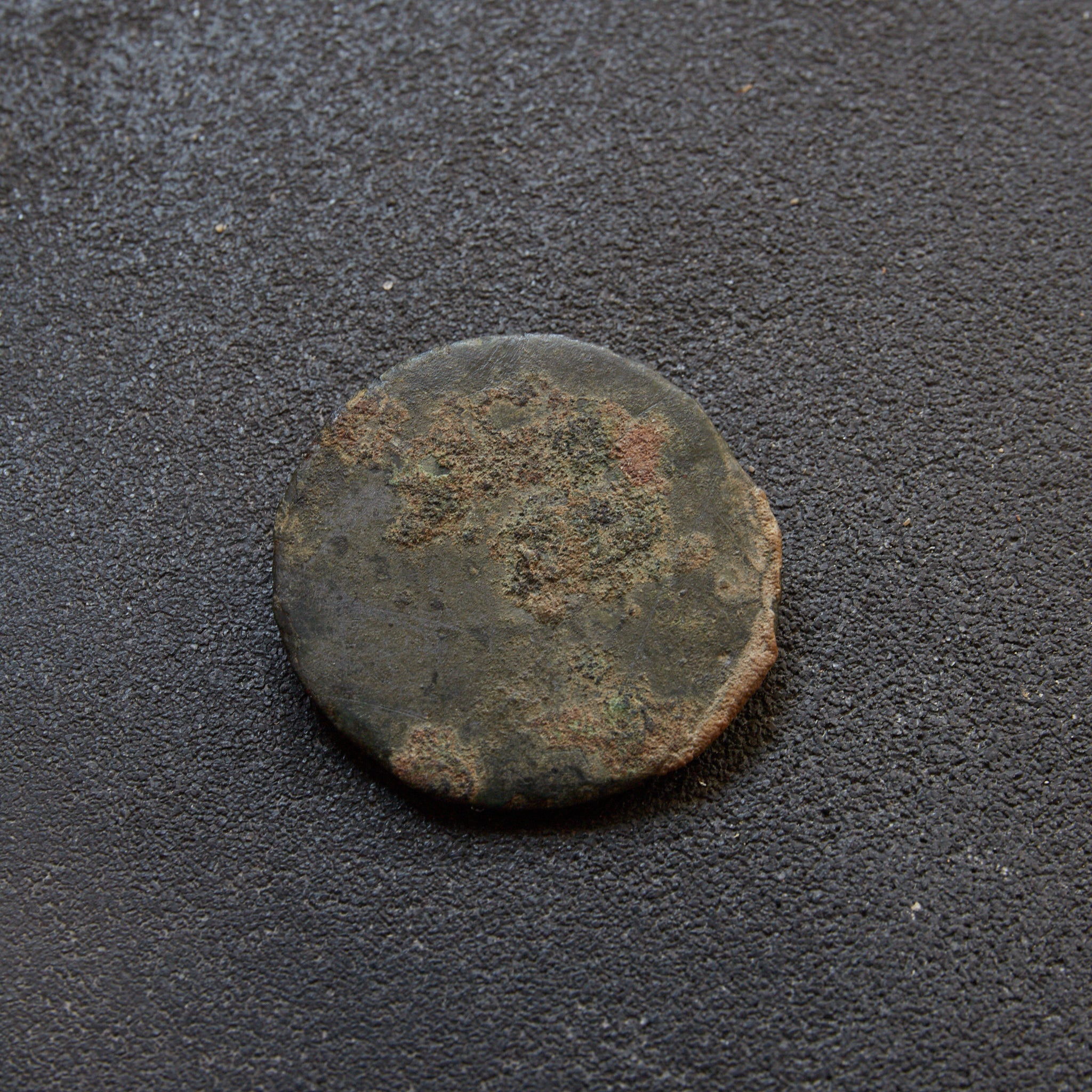
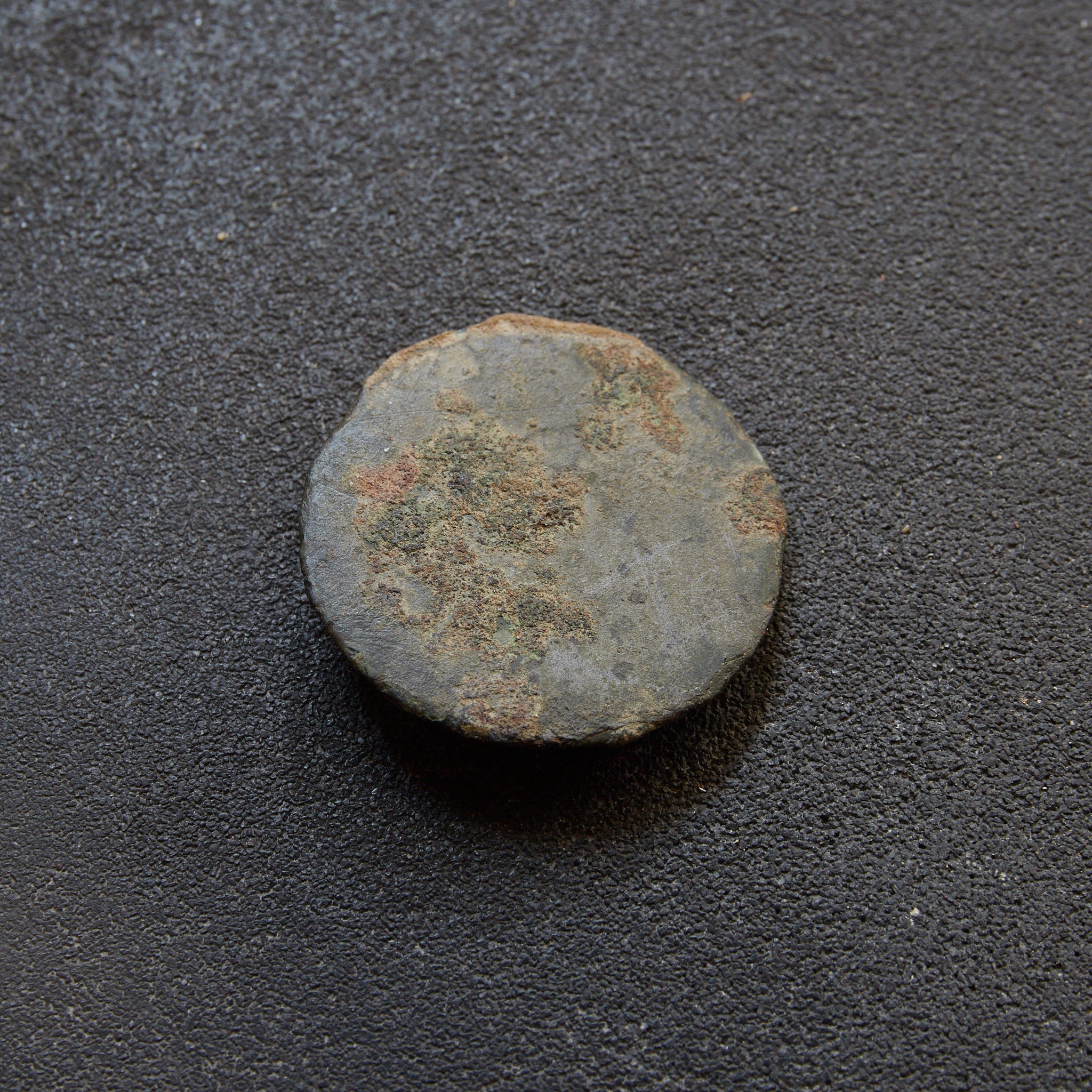
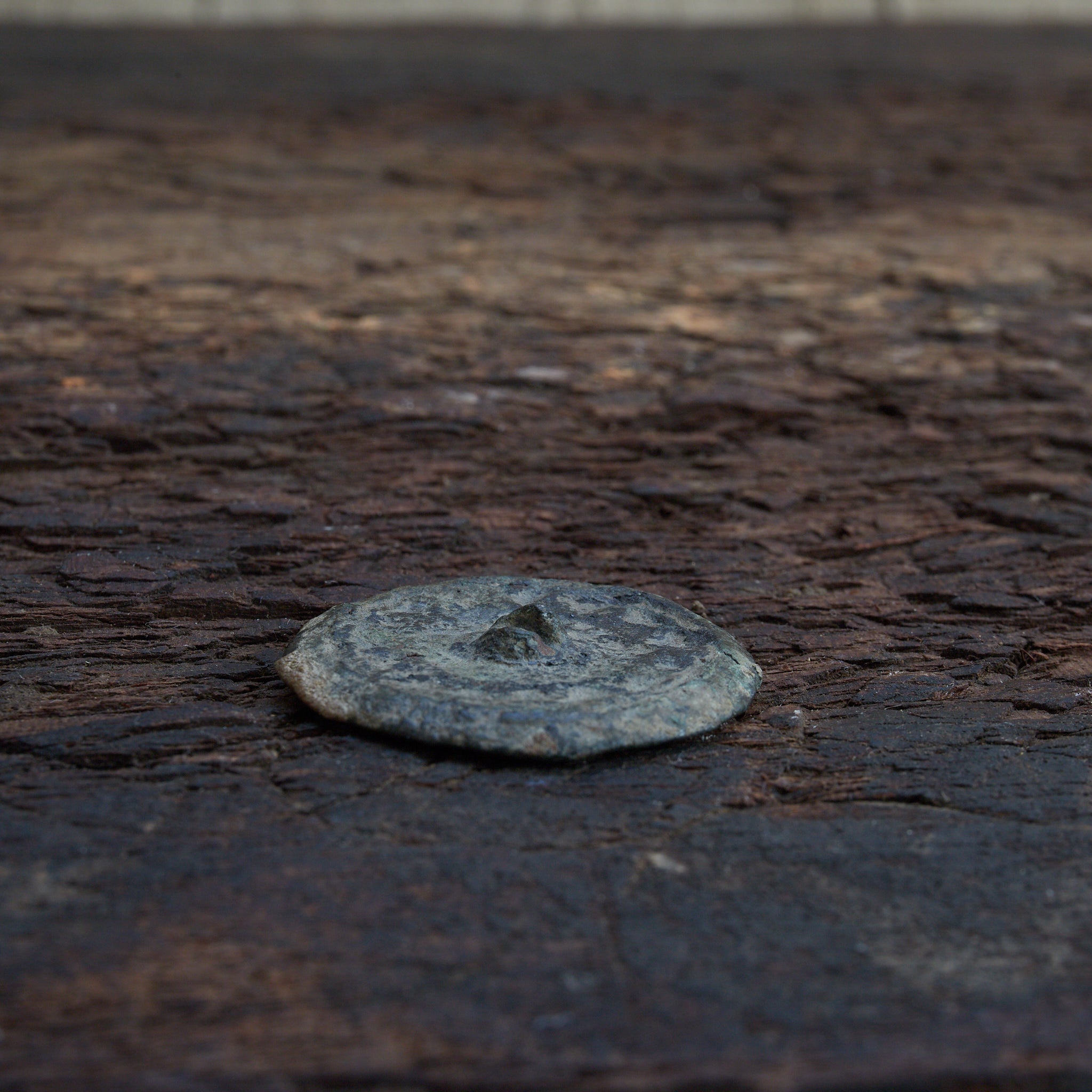
MIRROR, With linked arc design, Kofun Period (250–581 CE)
Tax included. | Flat ¥1,000 shipping (Honshu only, large items excluded)
Numerous product photos are available for you to examine the details and condition. Should you have any questions, please do not hesitate to contact us.
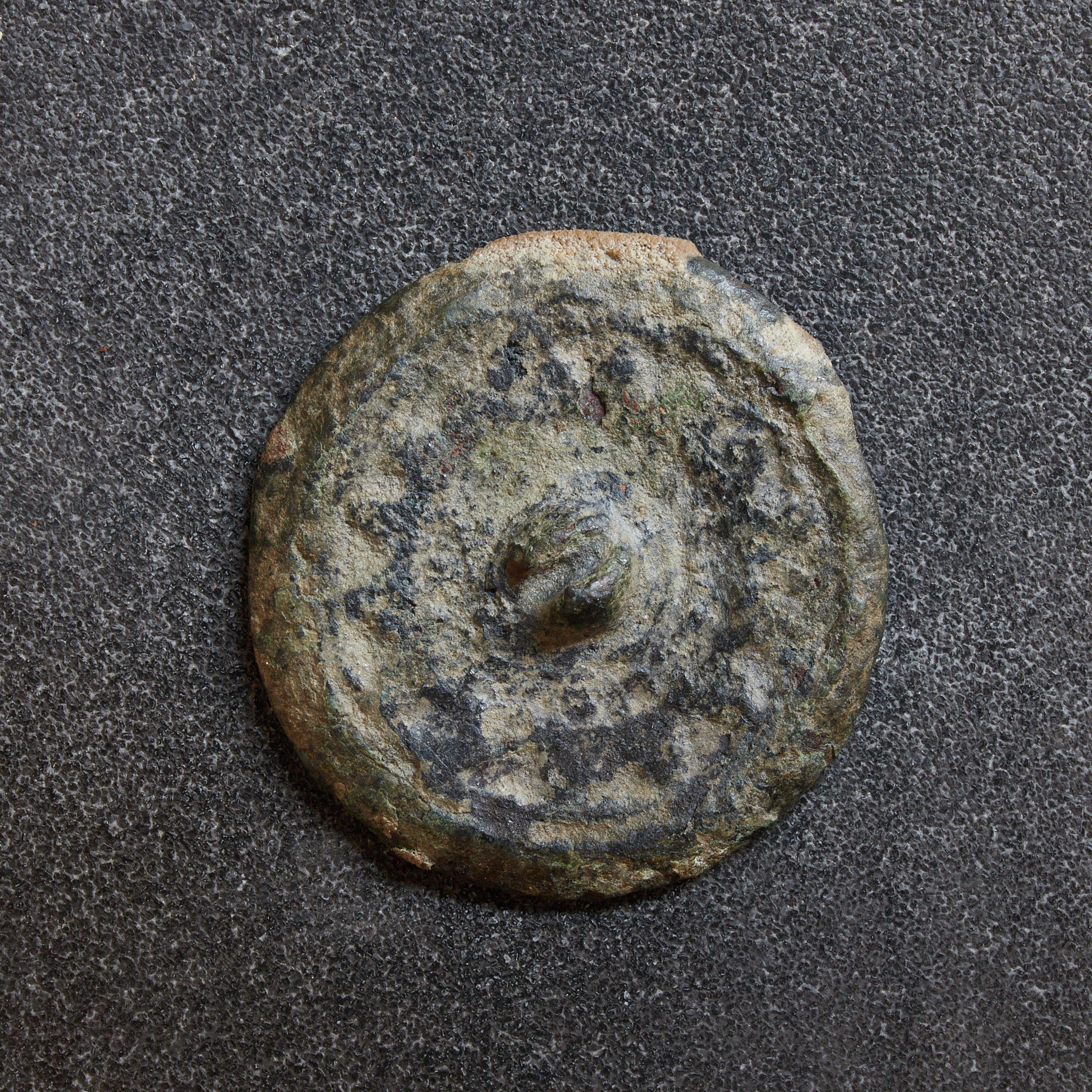
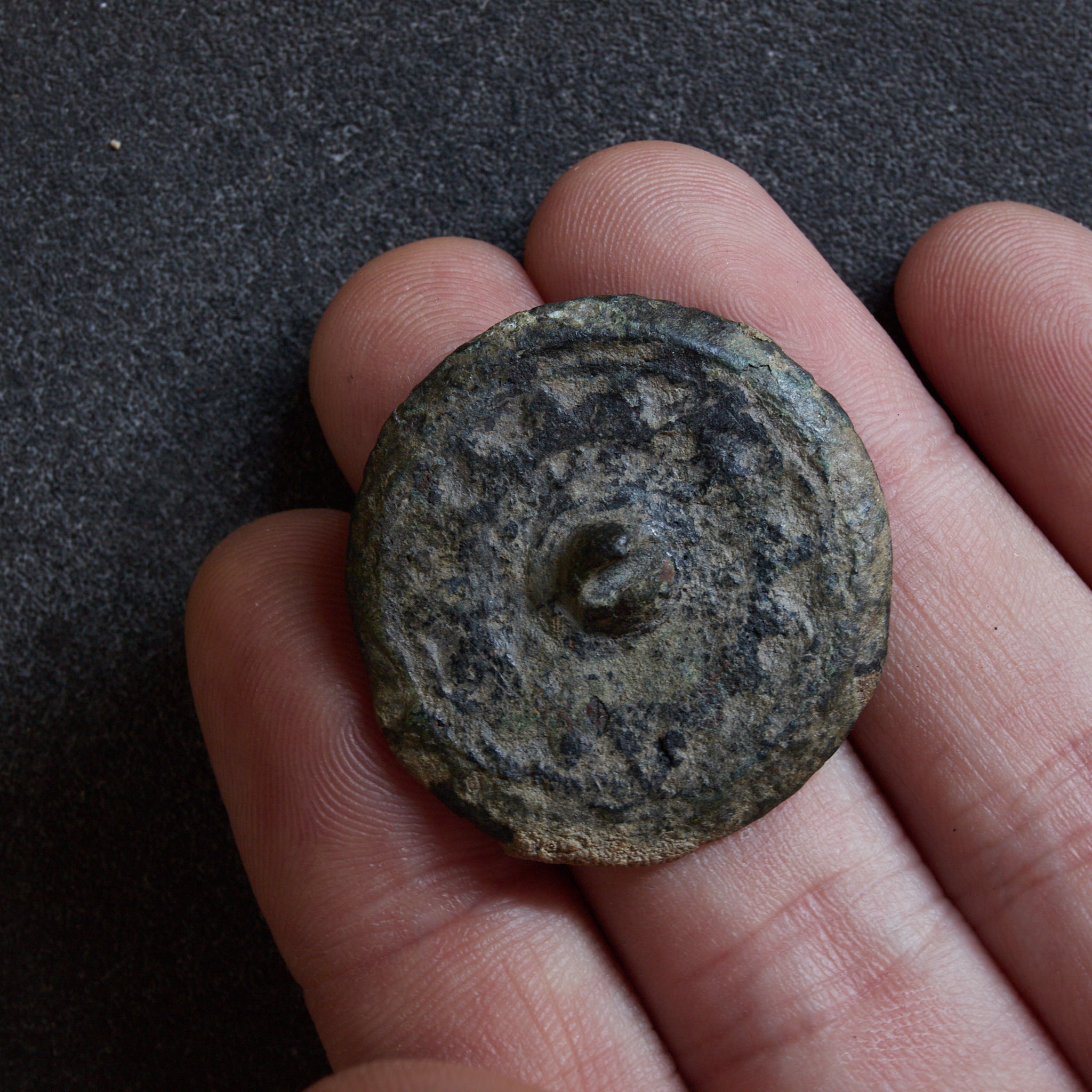
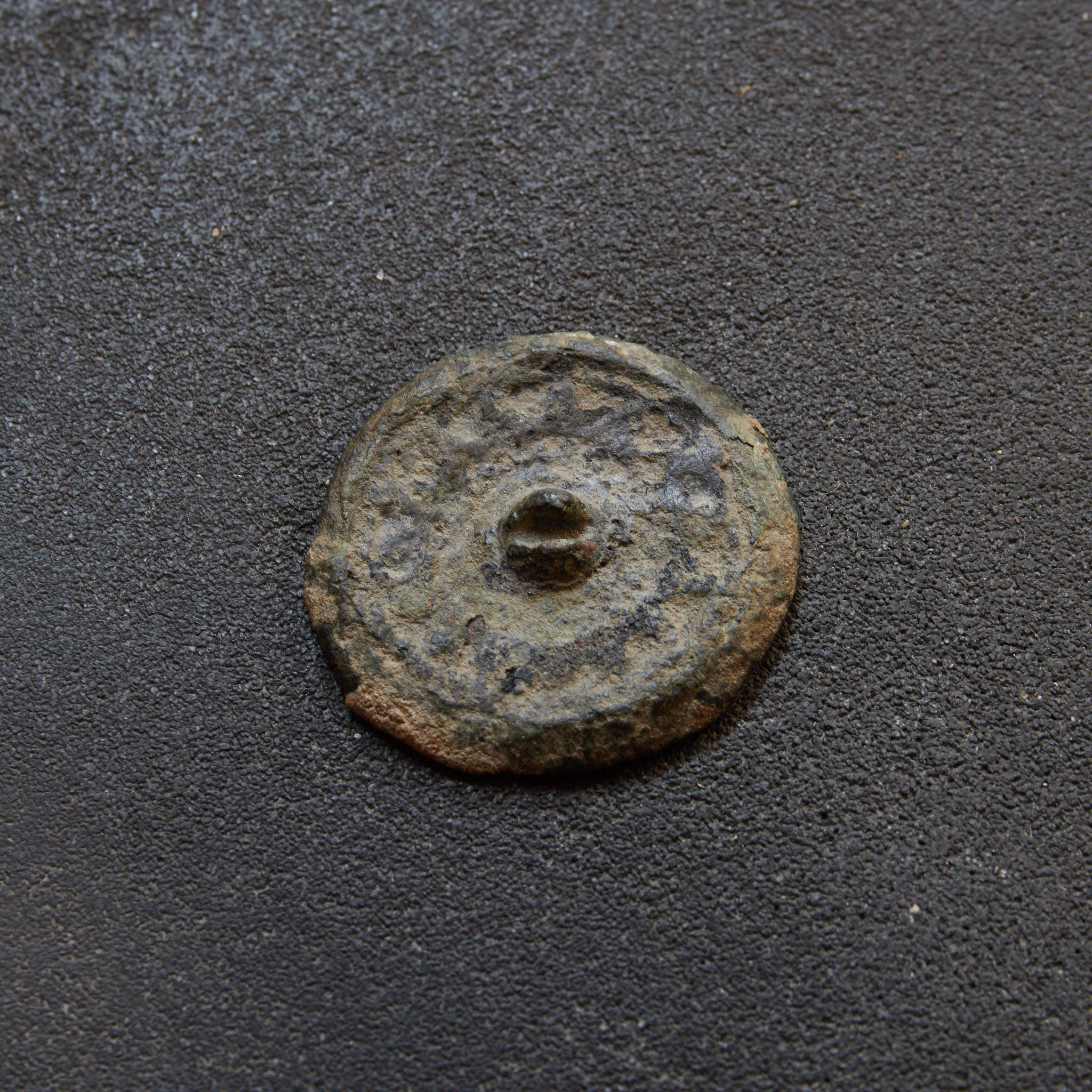
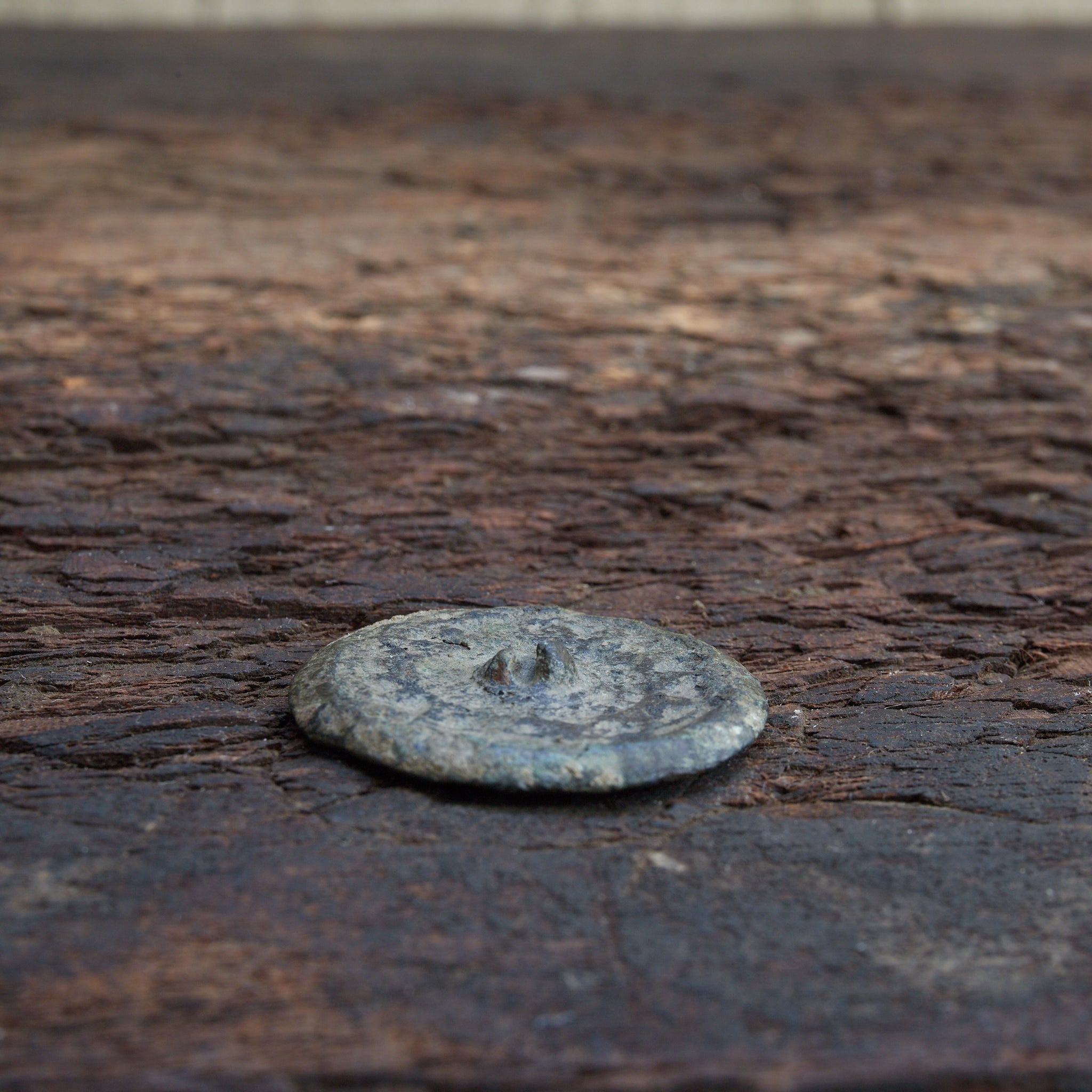
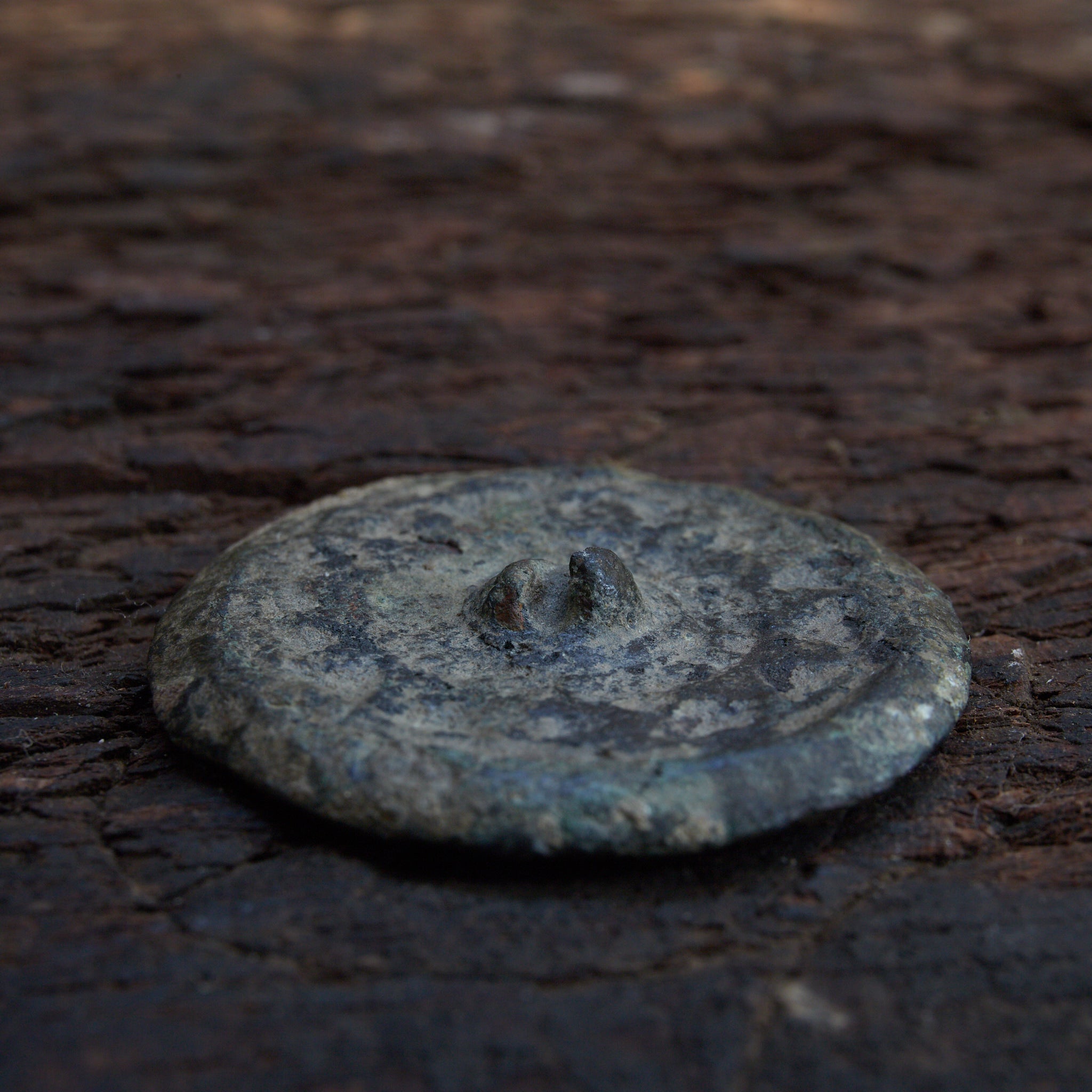
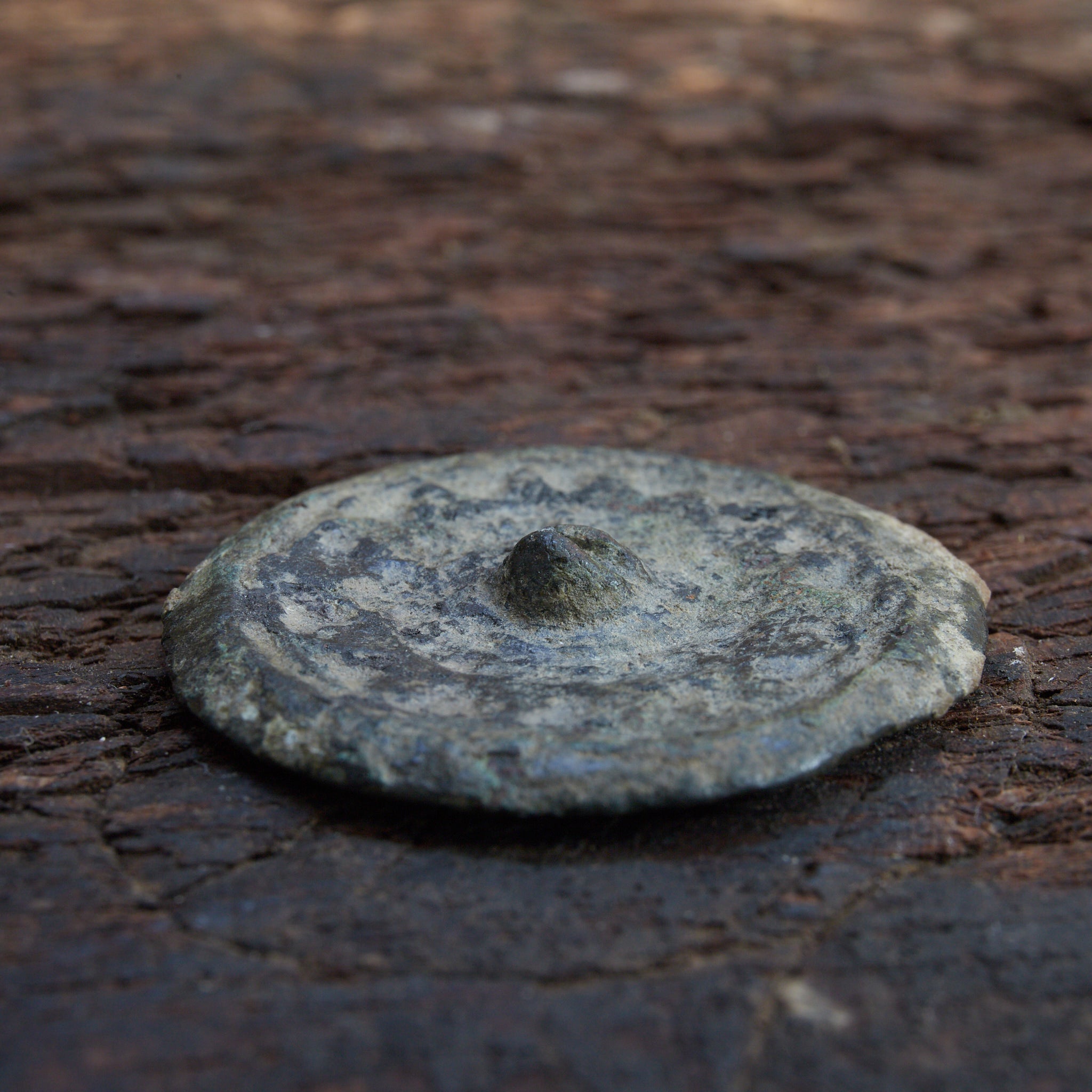
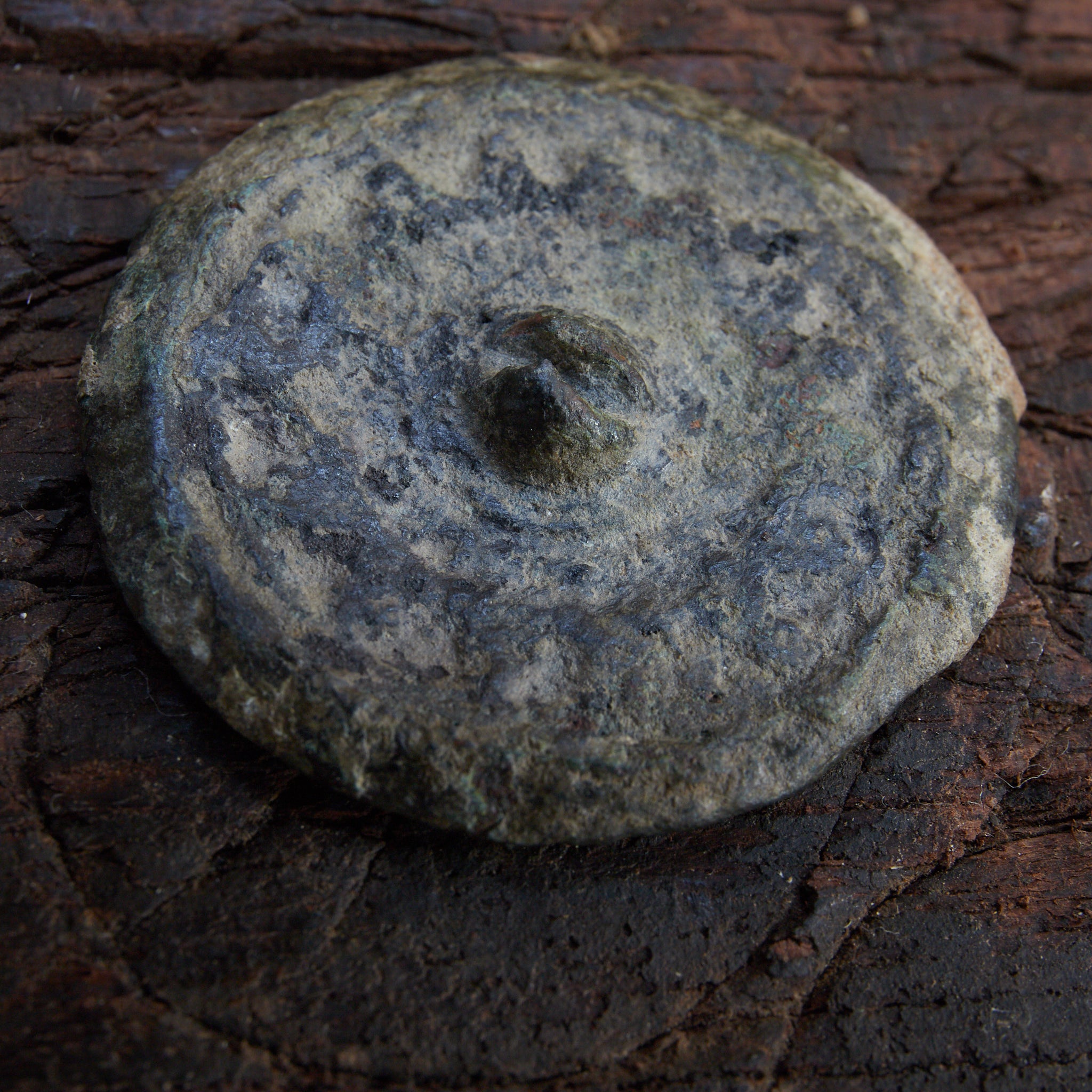
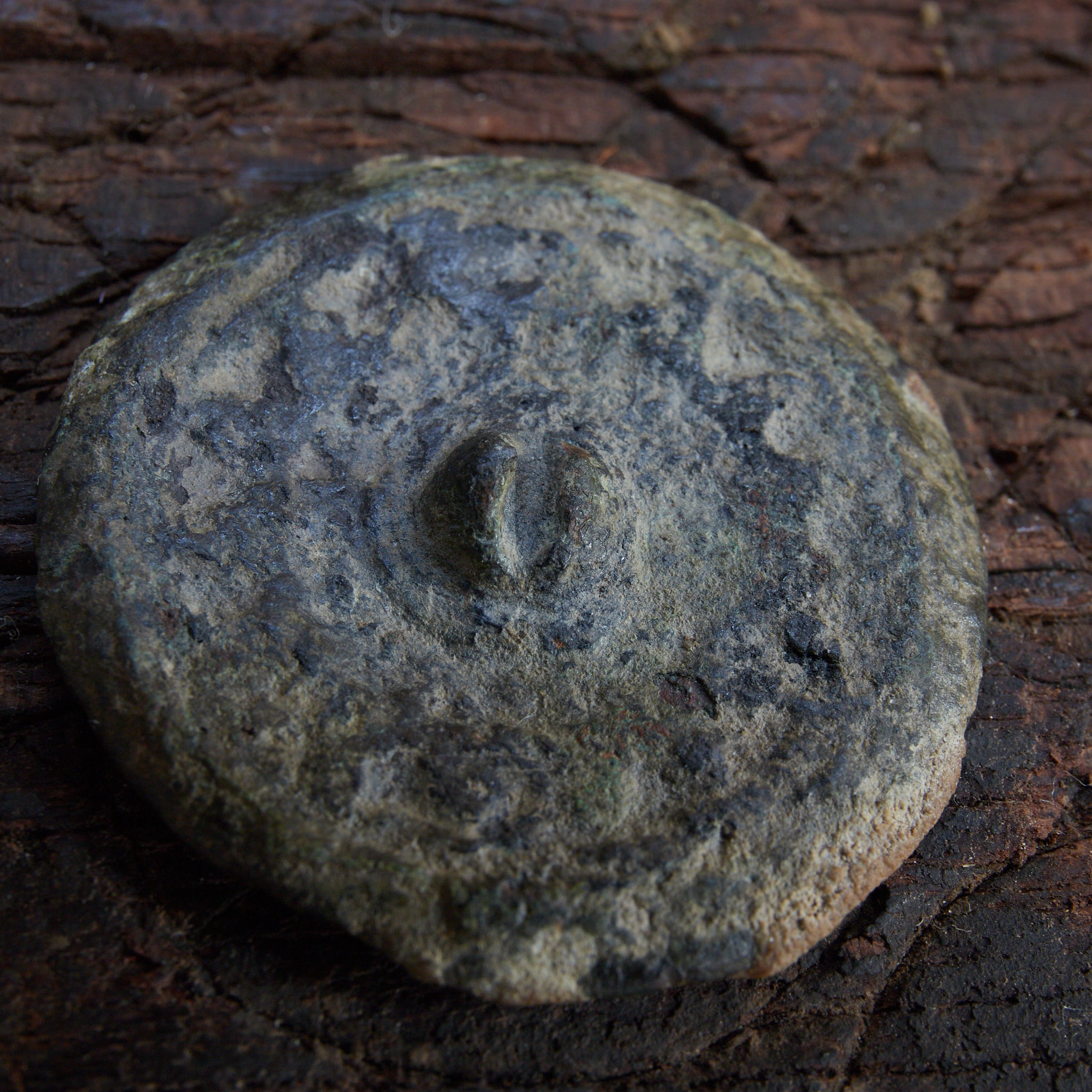
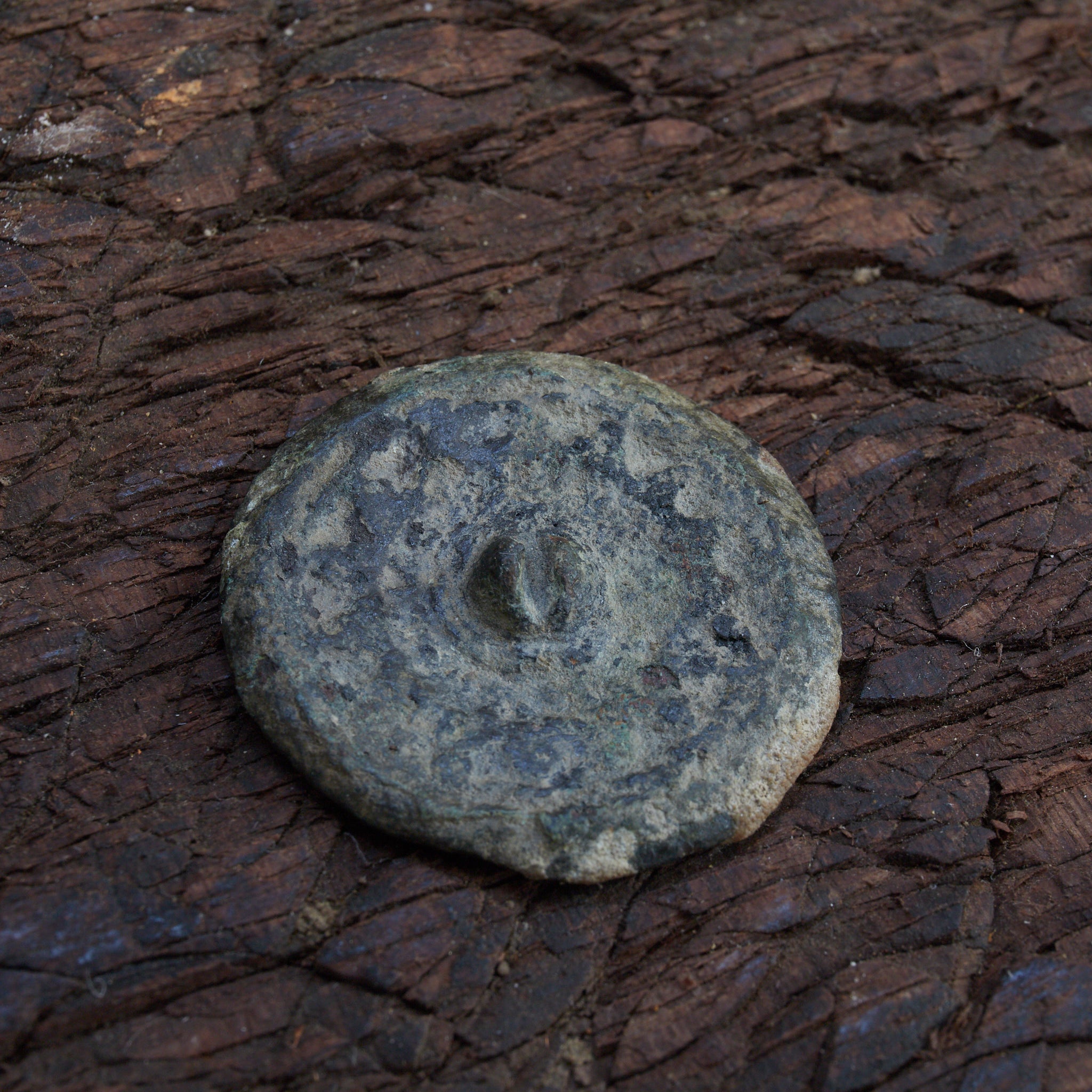
> Inquire about this productA Kofun-period mirror with an inner-arc floral design. This very small bronze mirror measures approximately 3.2 cm in diameter; a central boss is set on the reverse, around which the inner-arc floral pattern is cast. It is covered with soil encrustation and verdigris, and parts of the design are indistinct, but the boss and the circular field remain discernible.
The inner-line floral-pattern mirror is a style of mirror originating in China. It was introduced to Japan during the Yayoi period, and by the Kofun period mirrors produced in Japan are also known. Examples dating to the 4th–5th centuries of the Kofun period are held in the collections of the Tokyo National Museum, the Kyoto National Museum, and the Kyushu National Museum.
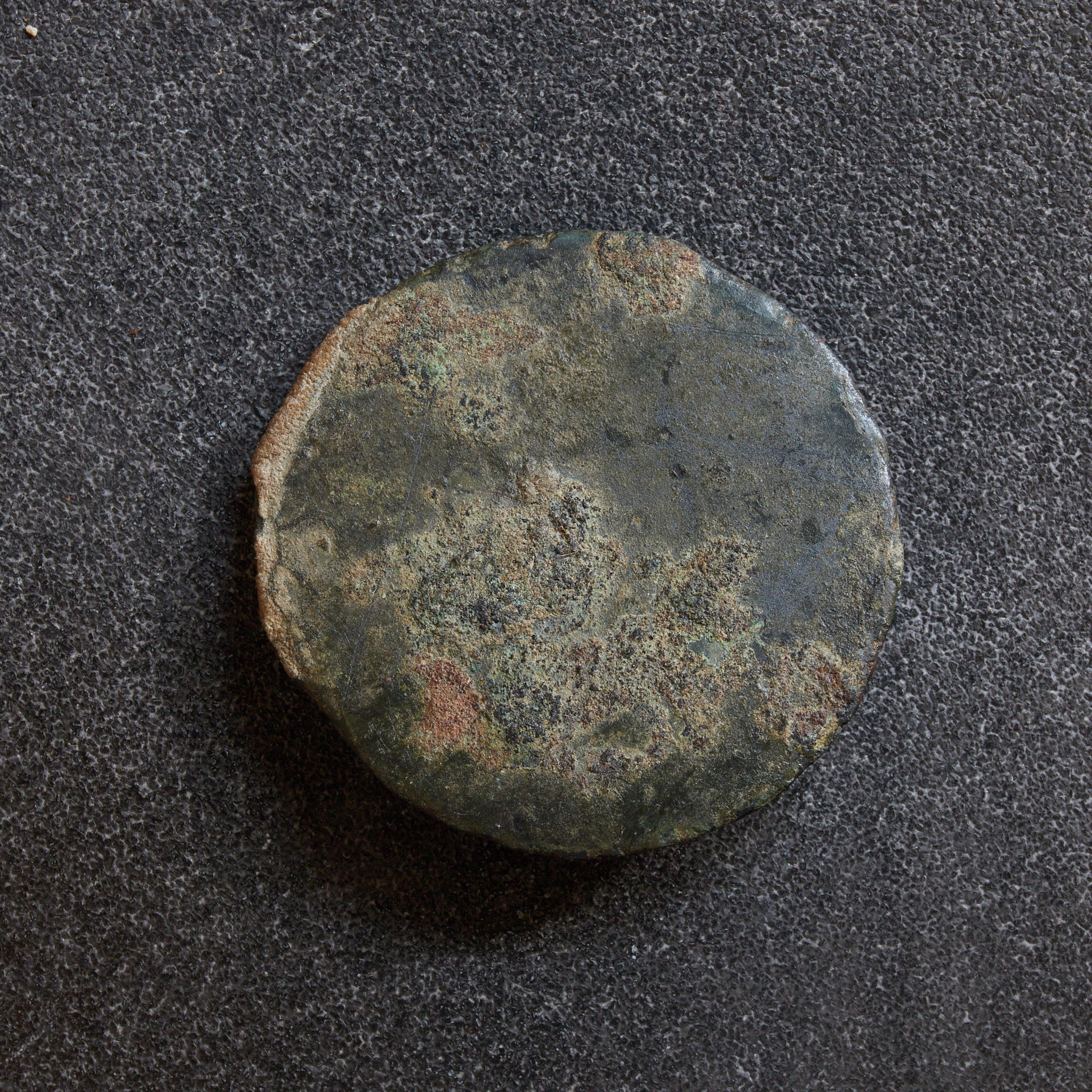
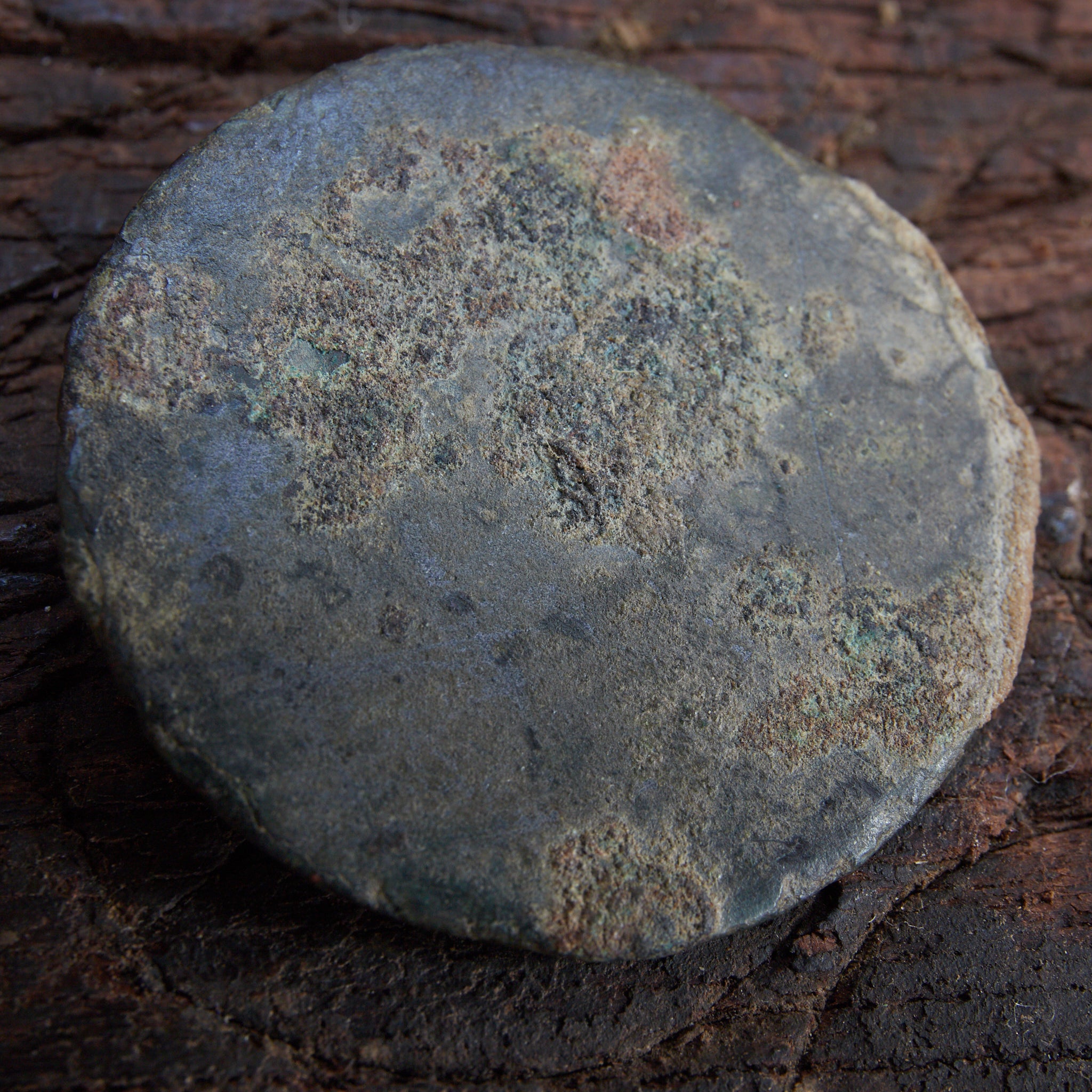
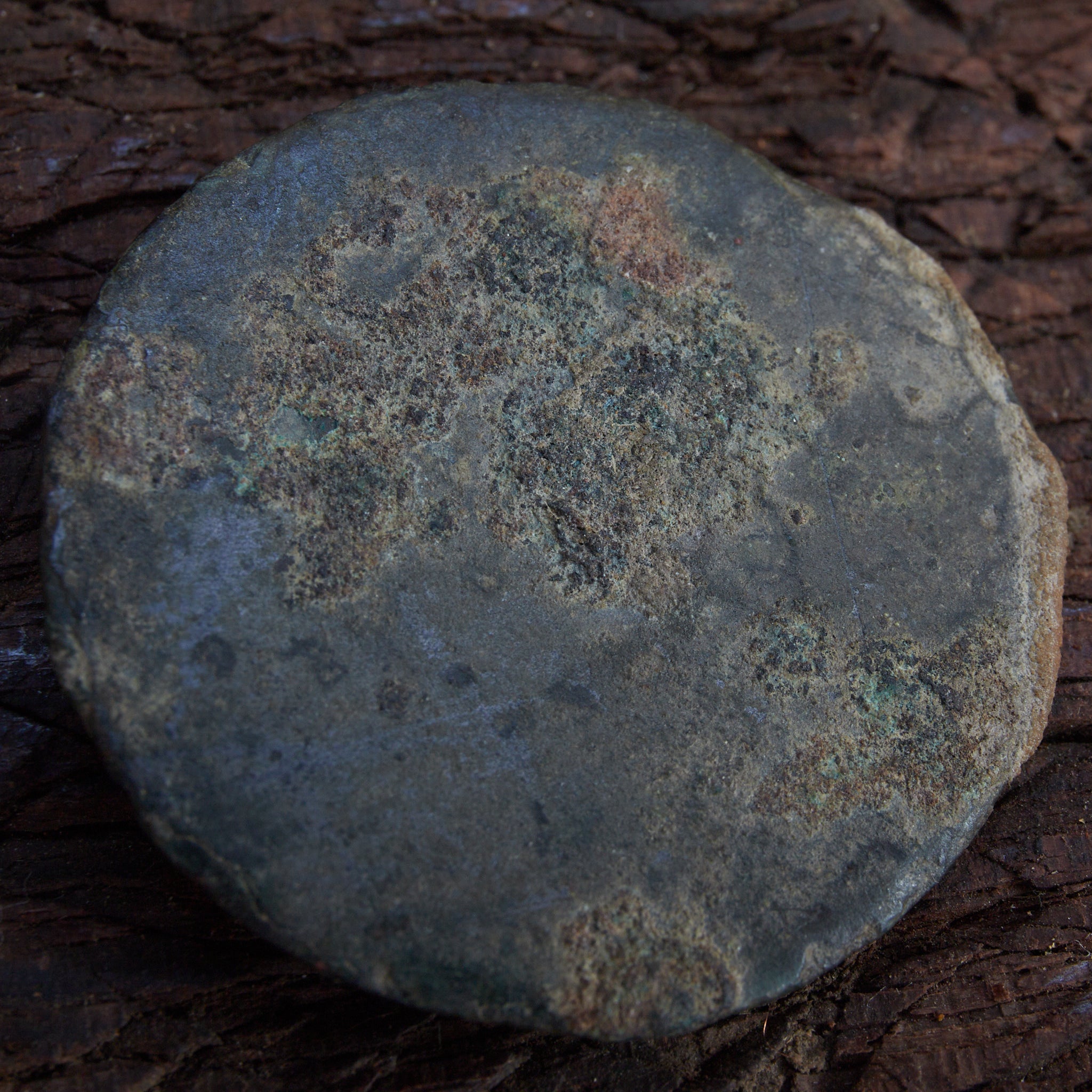
This example is noticeably smaller than a typical inner-arc floral-pattern mirror. The reflective surface is worked flat and displays widespread dark brown to green corrosion and adherent soil. The reverse also shows pronounced alteration from prolonged burial, the bronze surface intermingled with verdigris and earth encrustation.
The rim shows partial losses and wear, and the surface bears corrosion and adherent soil. Though small, the mirror preserves the components of an ancient mirror, including the central knob.
Choose options
Tax included. | Flat ¥1,000 shipping (Honshu only, large items excluded)
Change language
